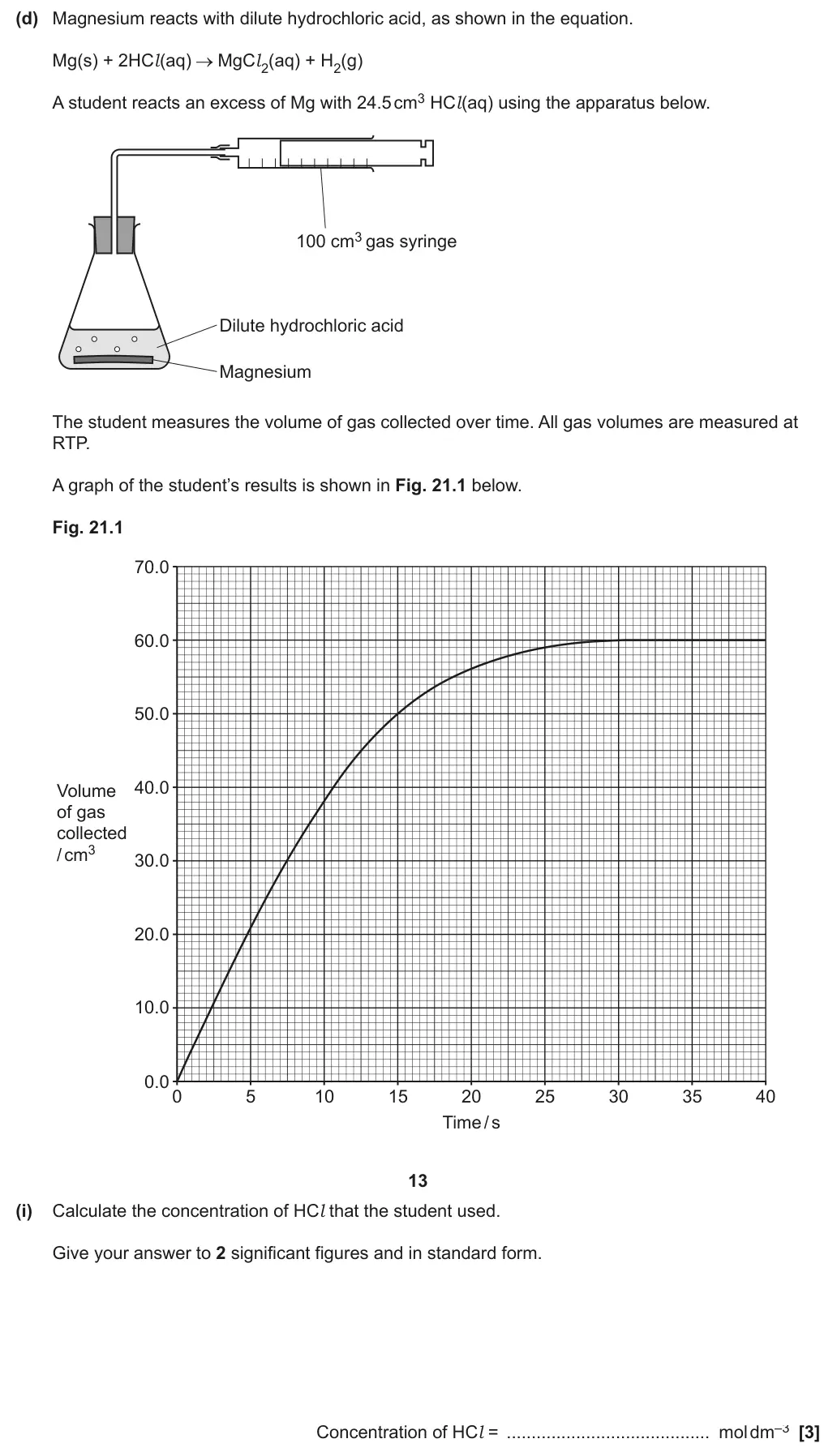
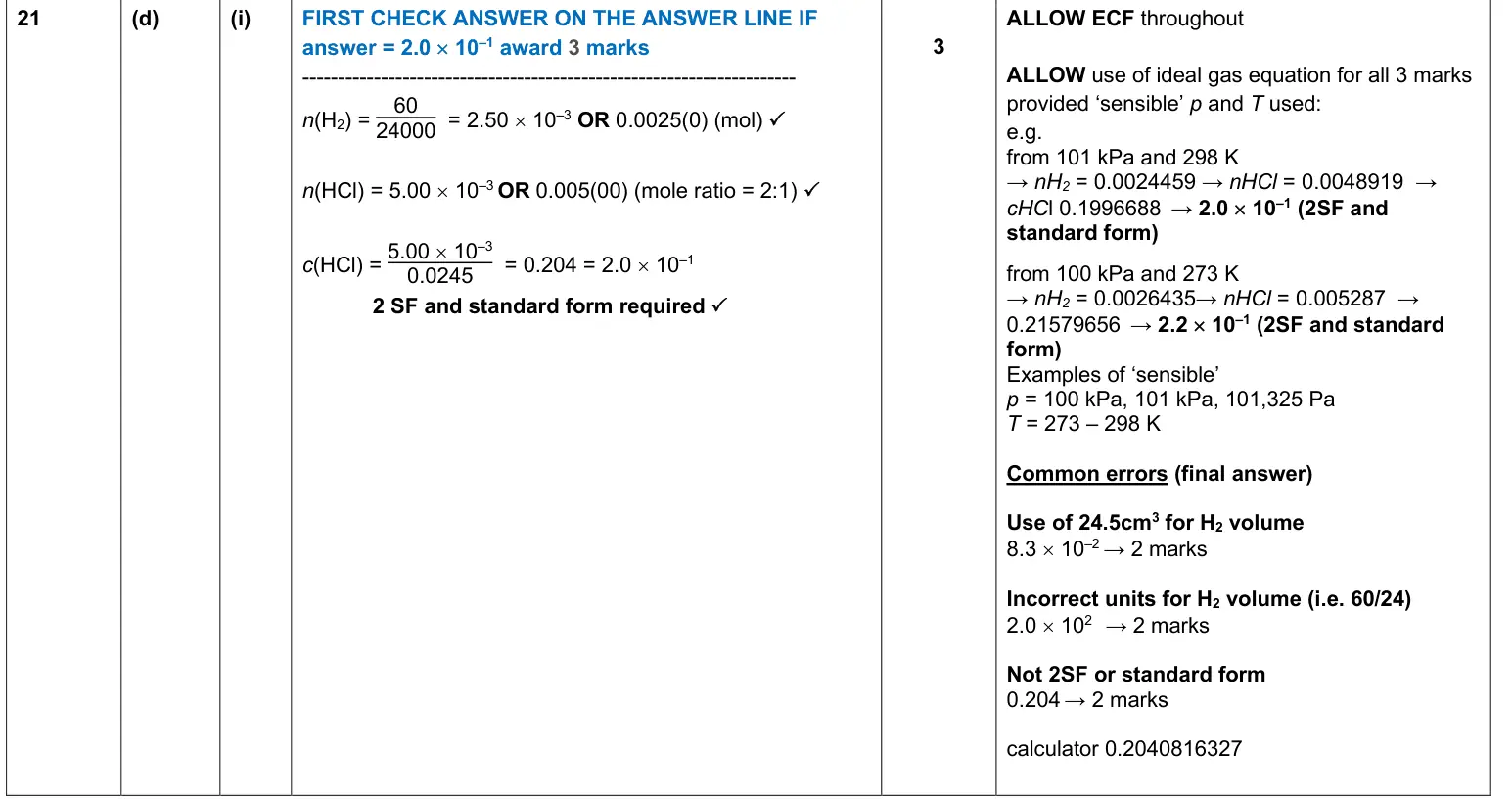
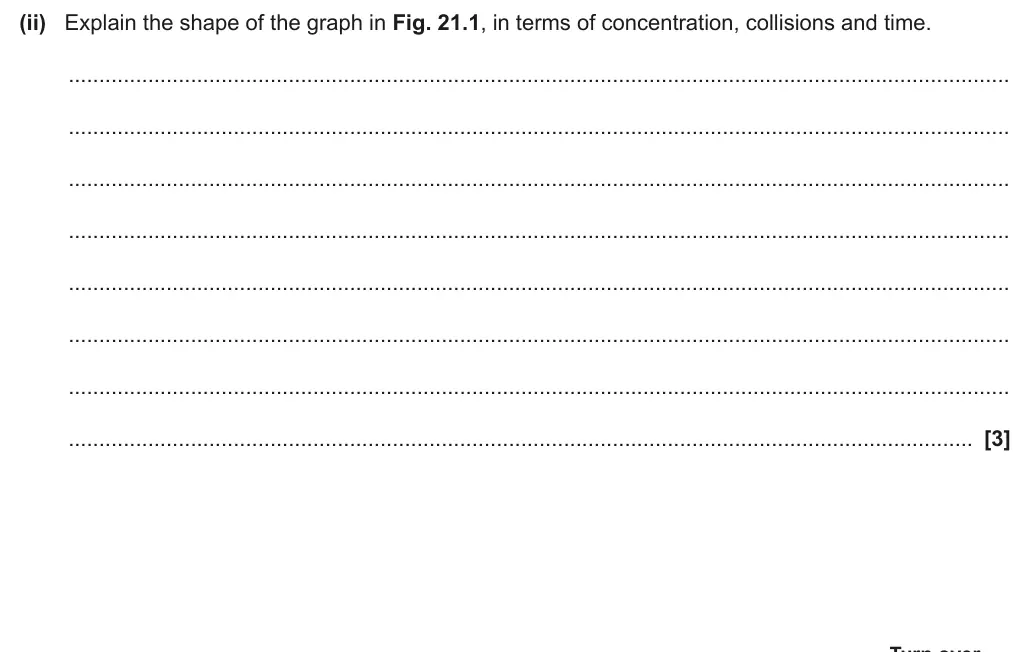
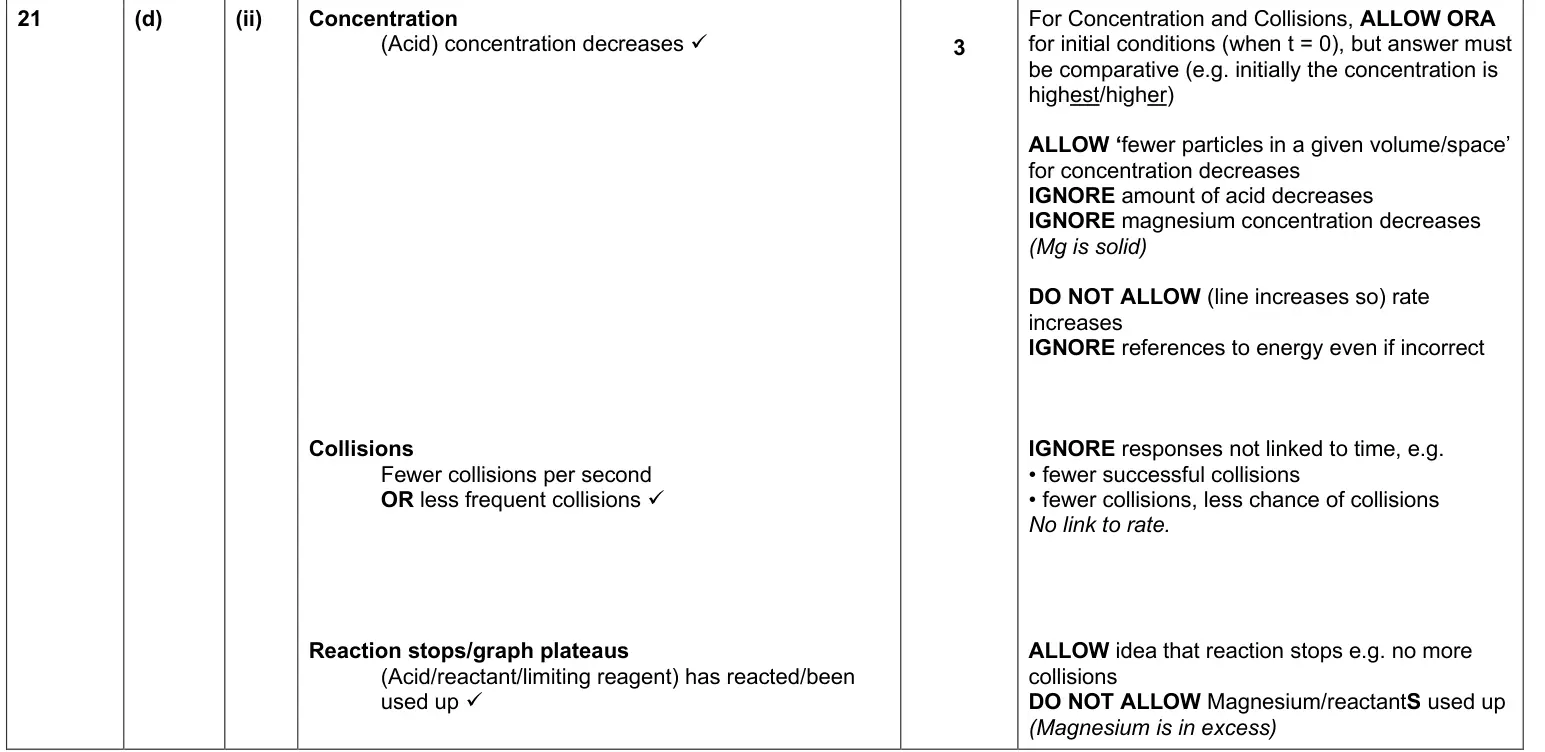
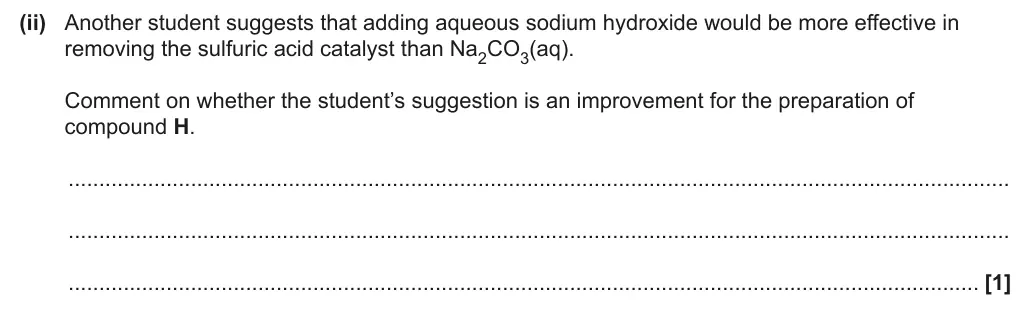
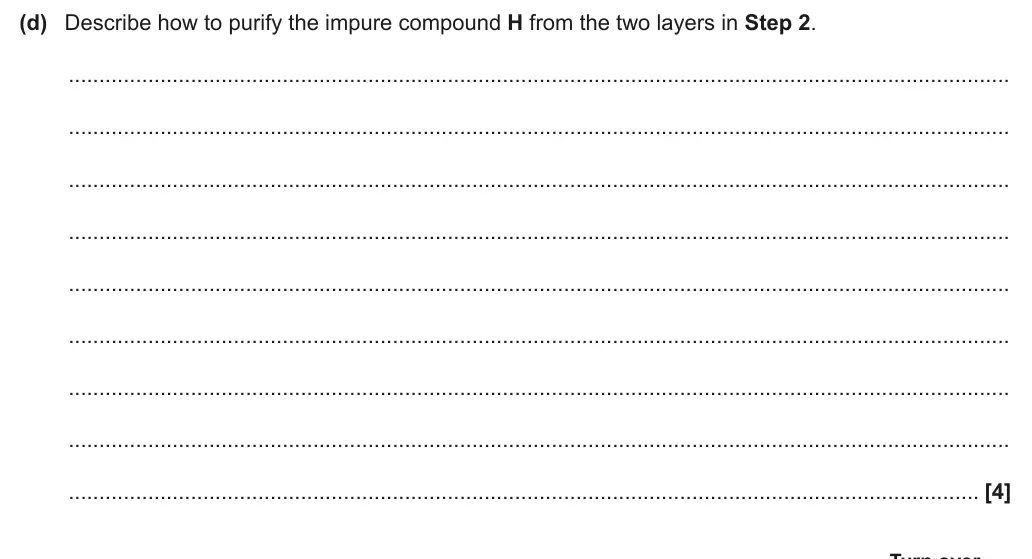
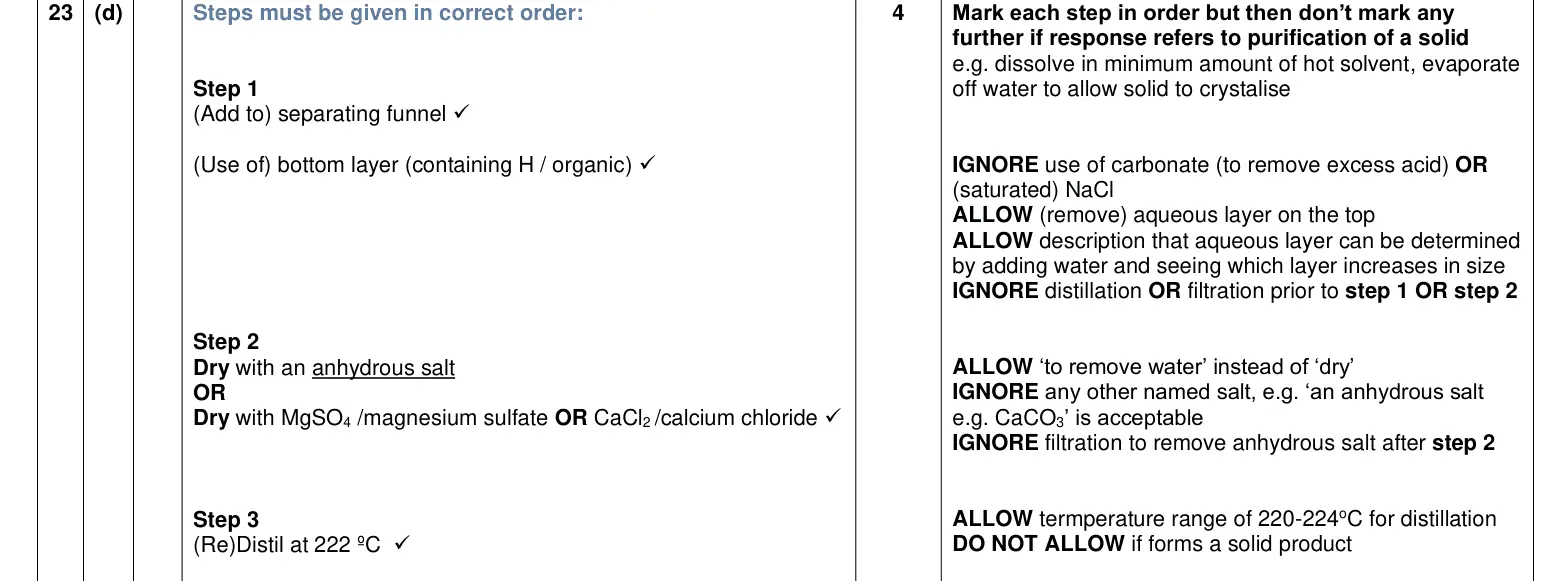
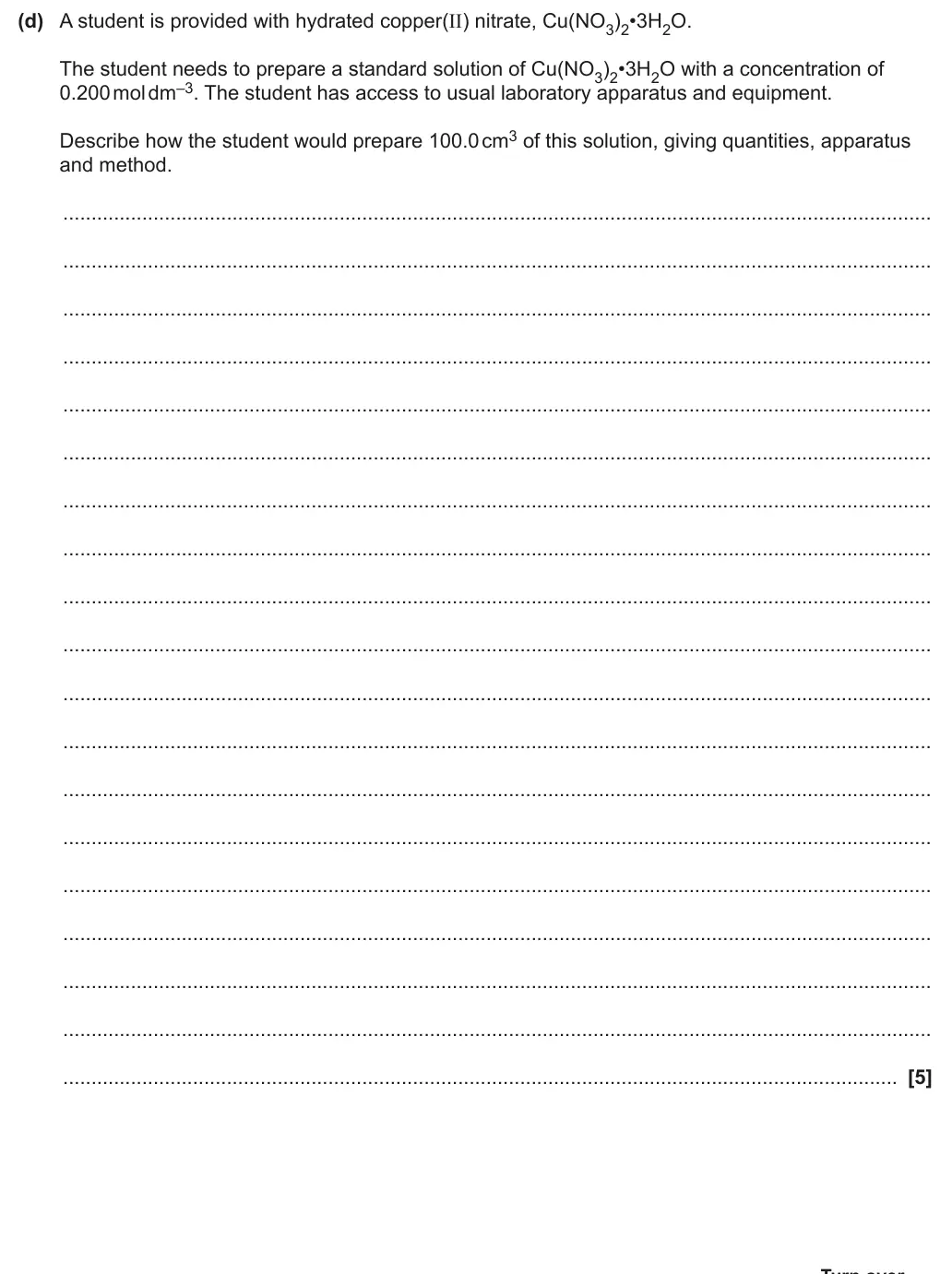
Examiner's comment
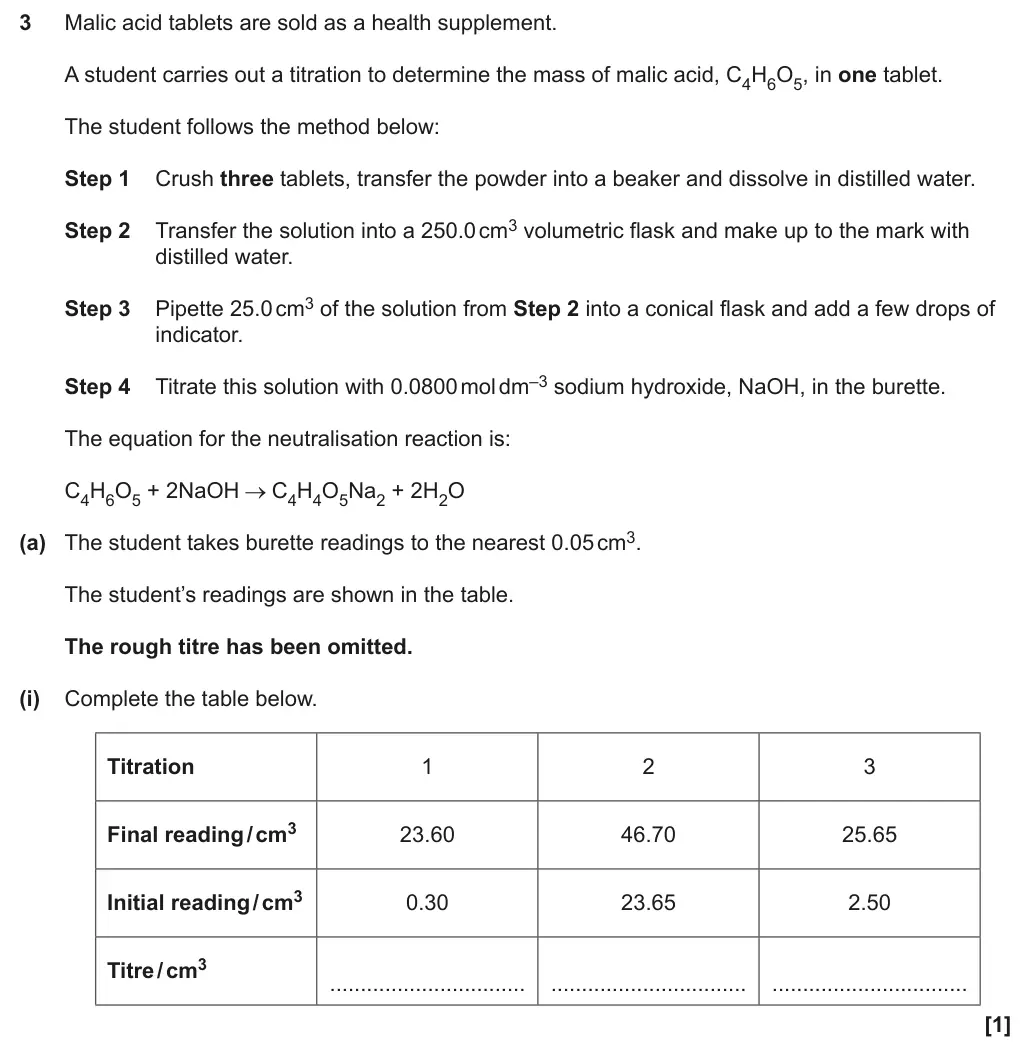
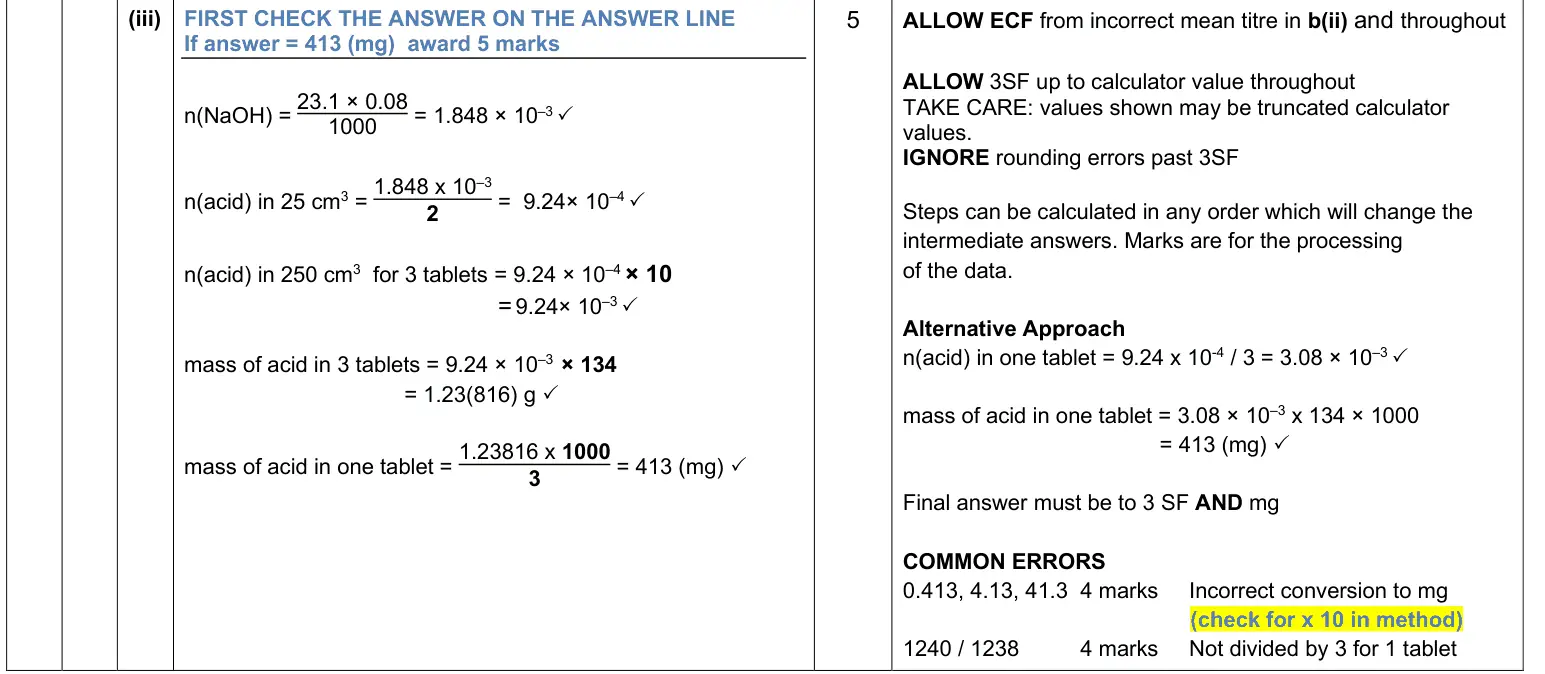
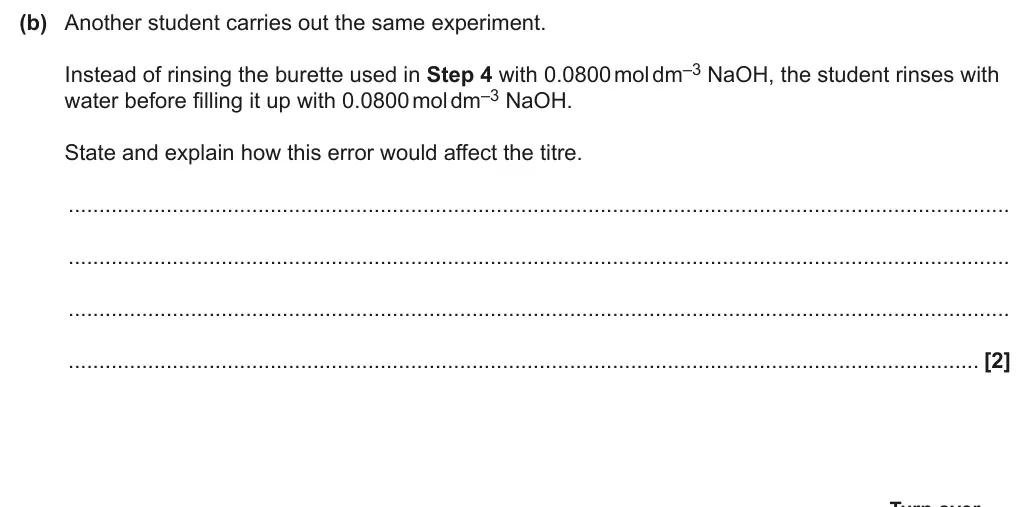
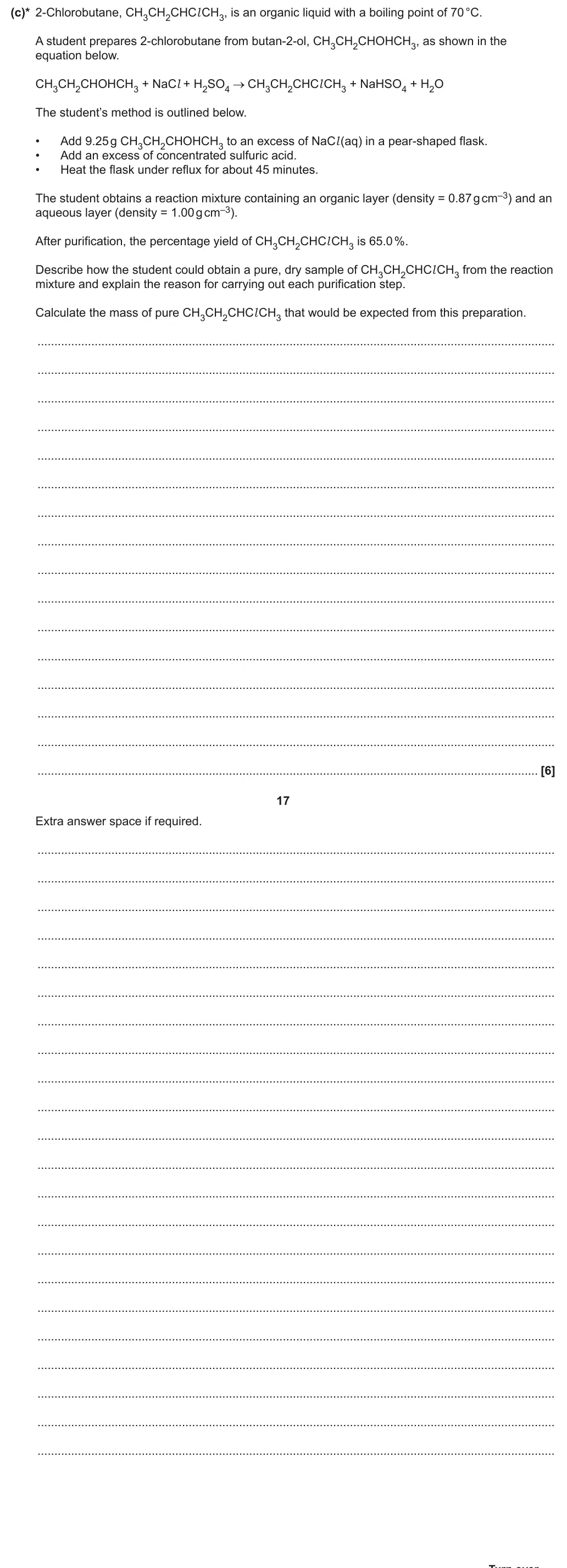
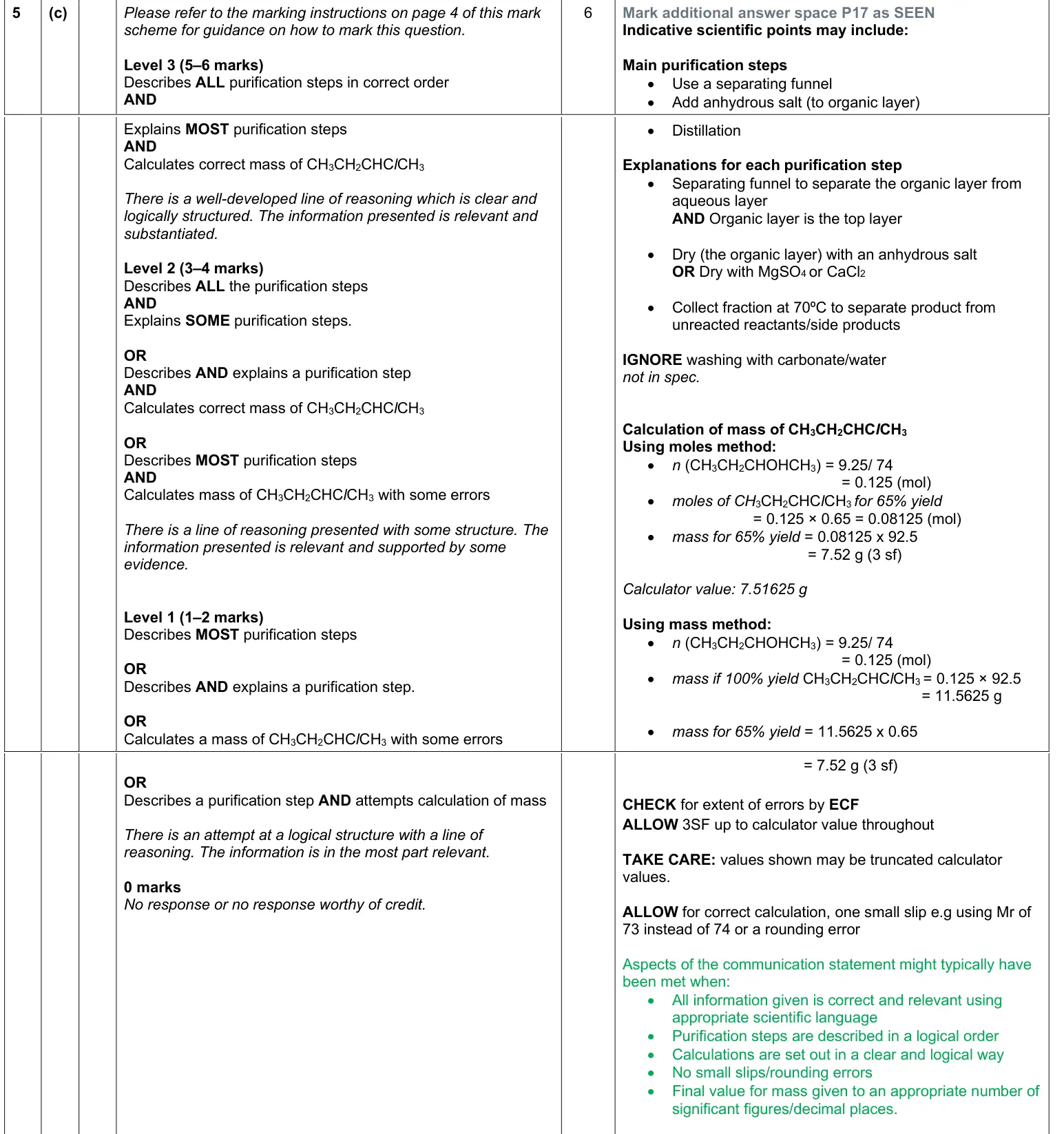
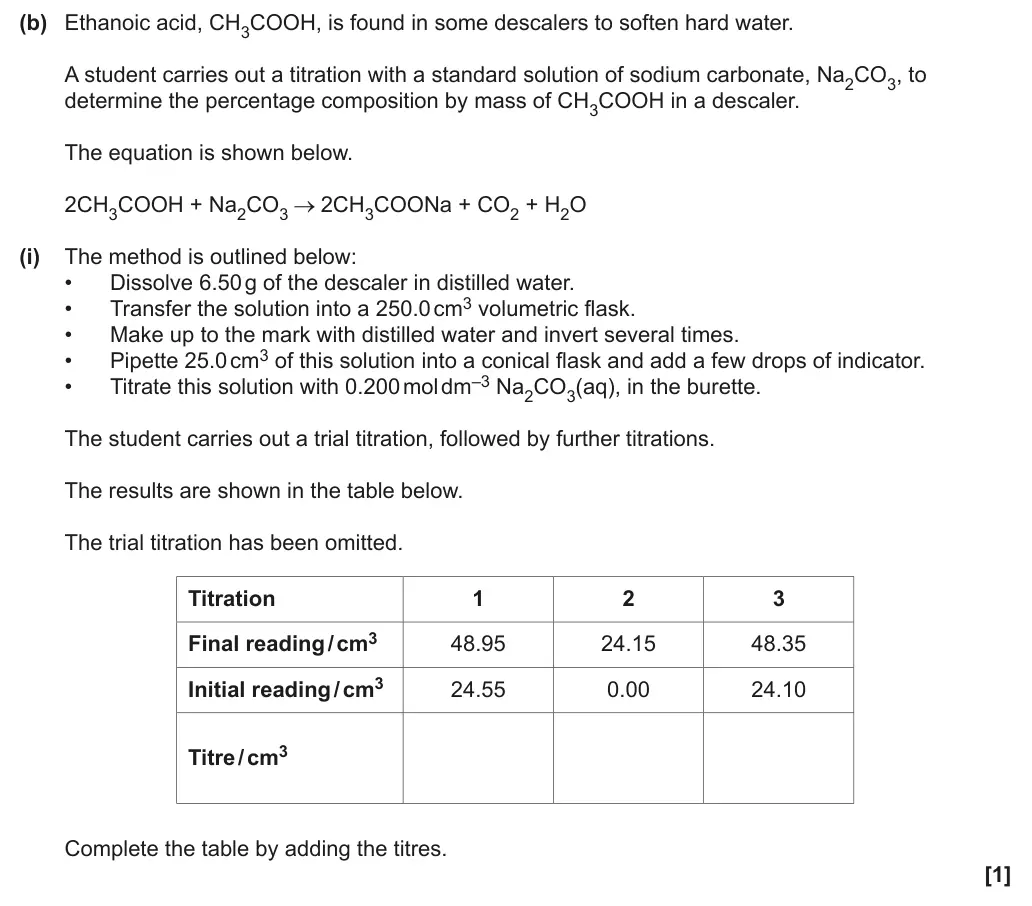
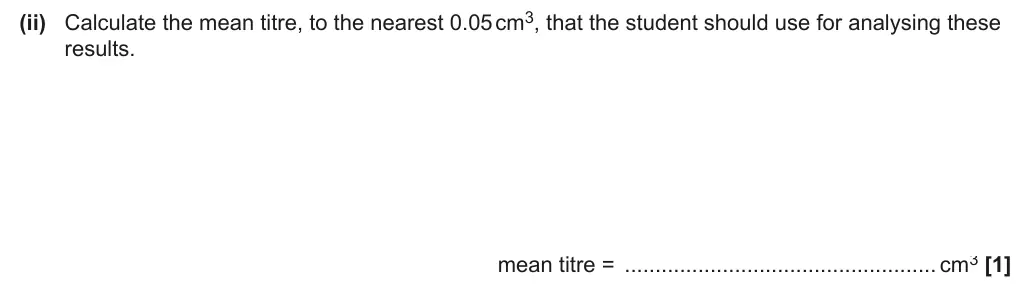
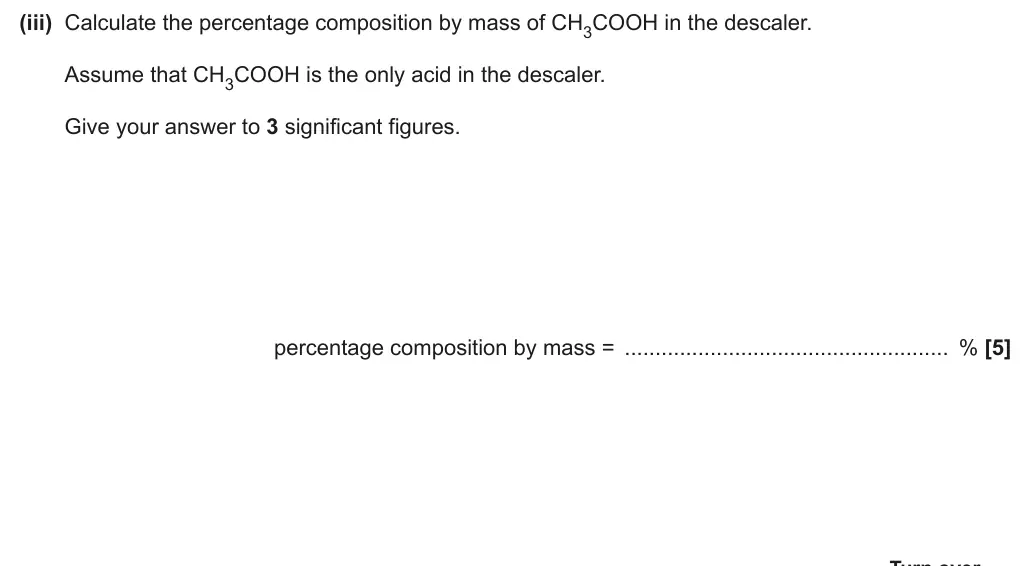
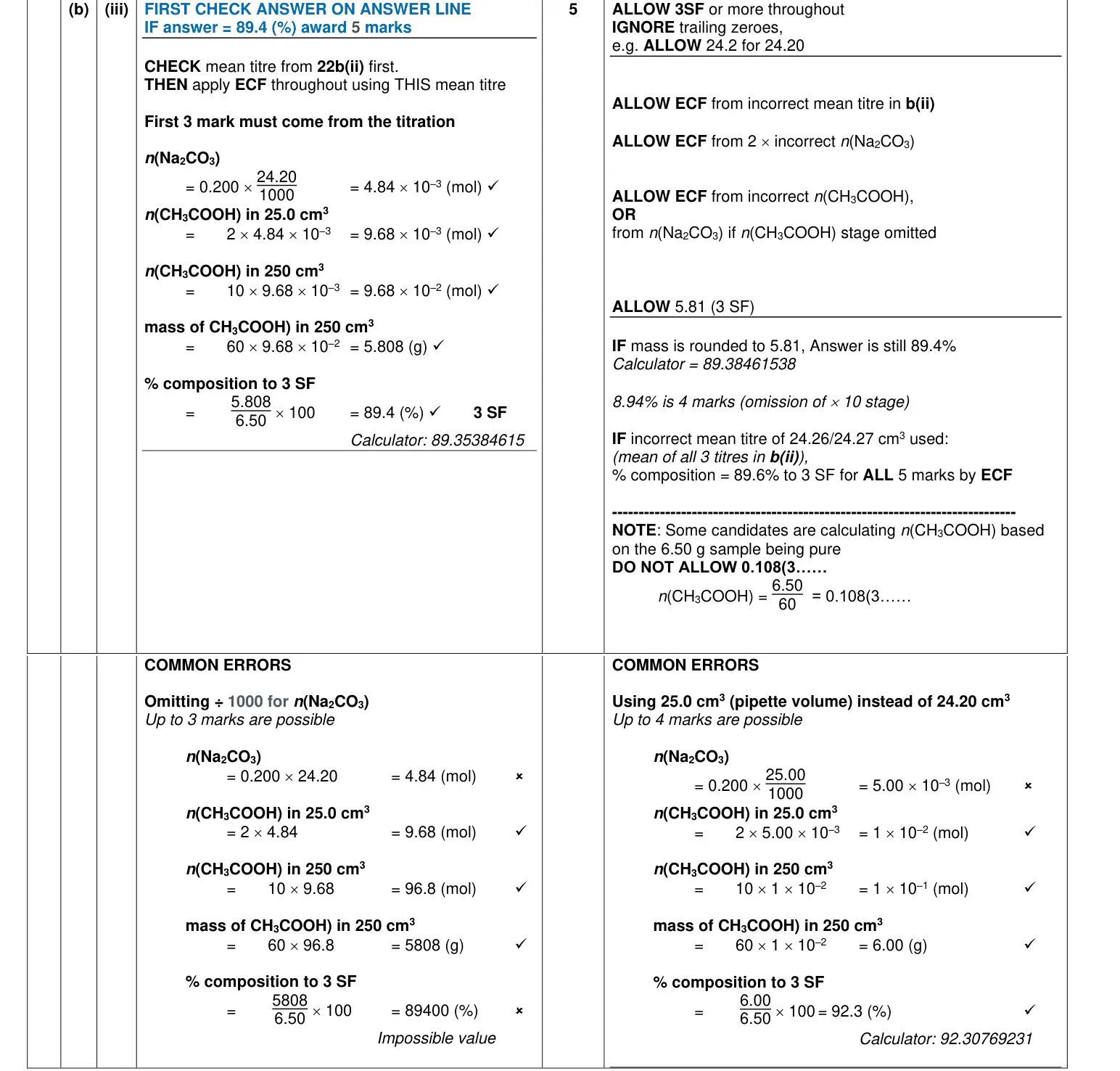
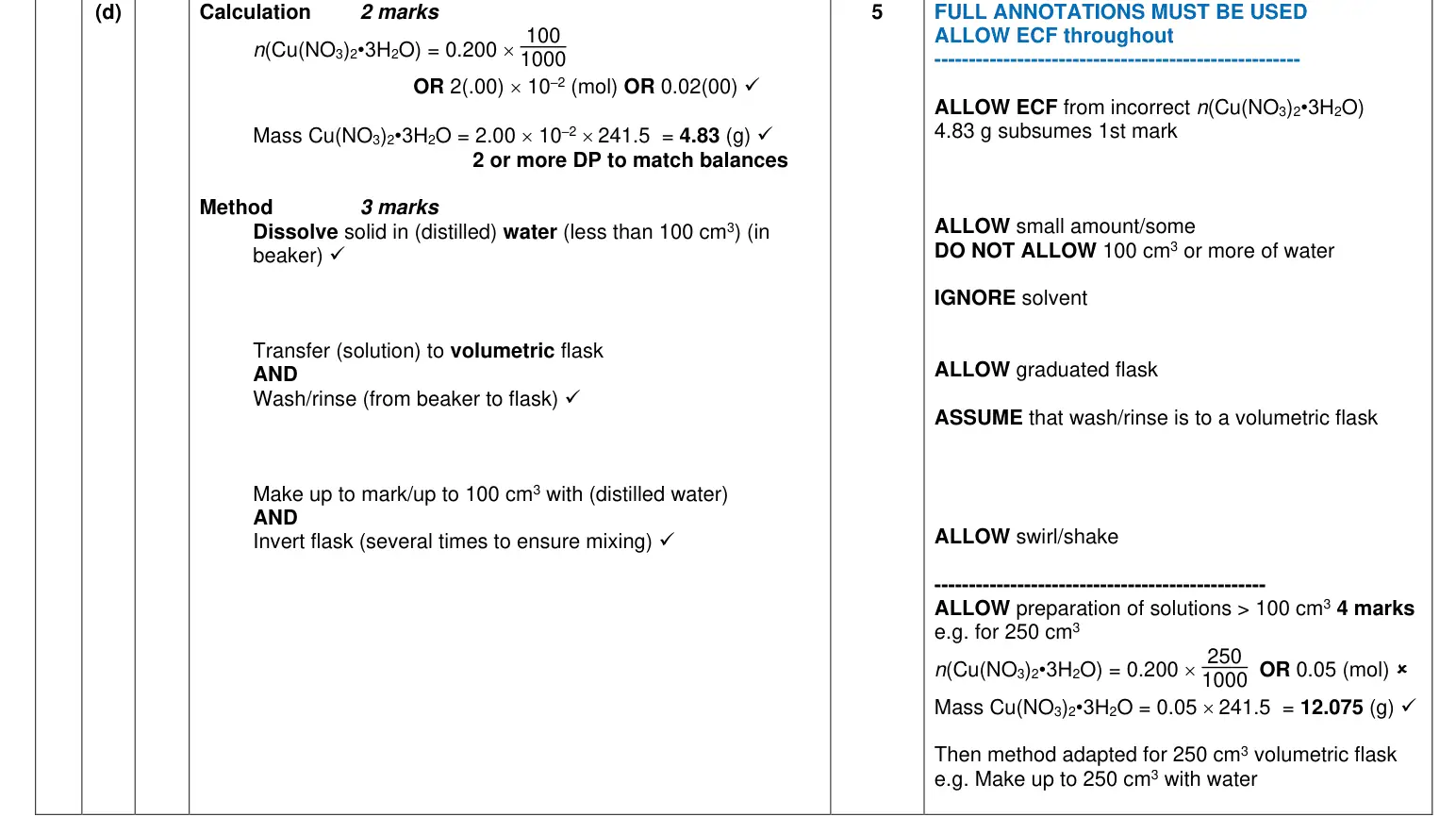
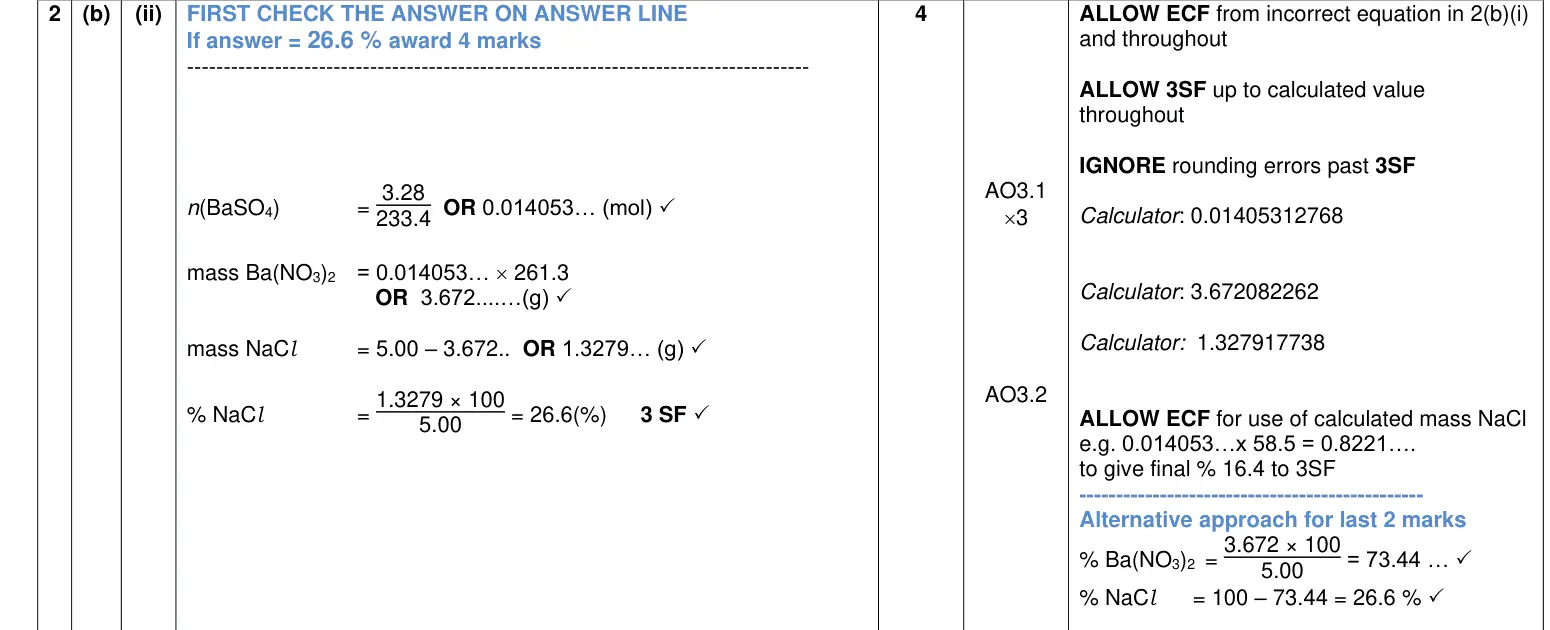
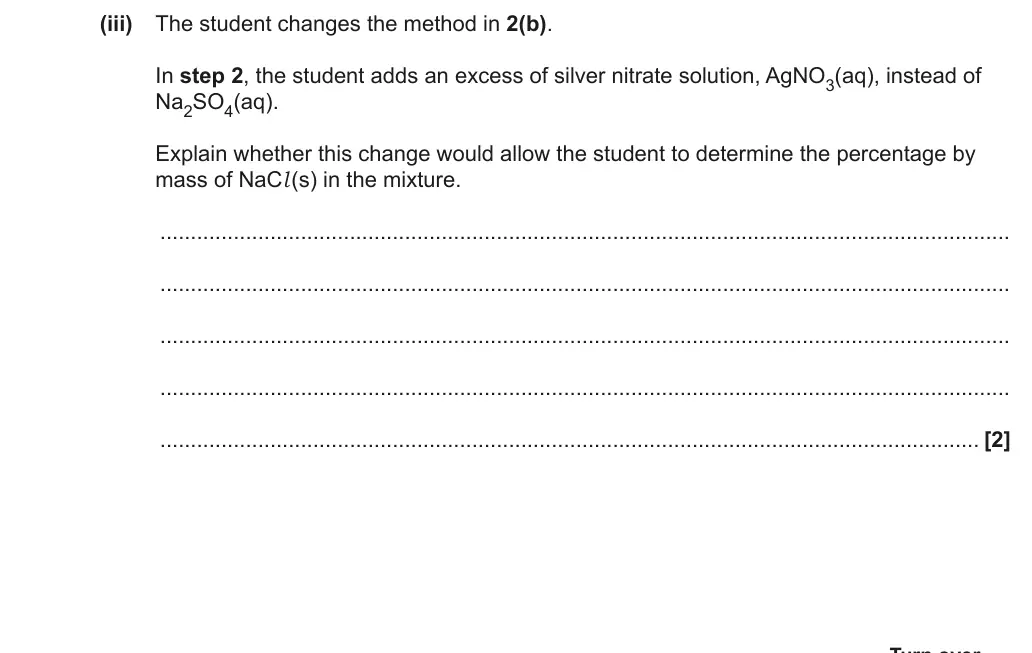
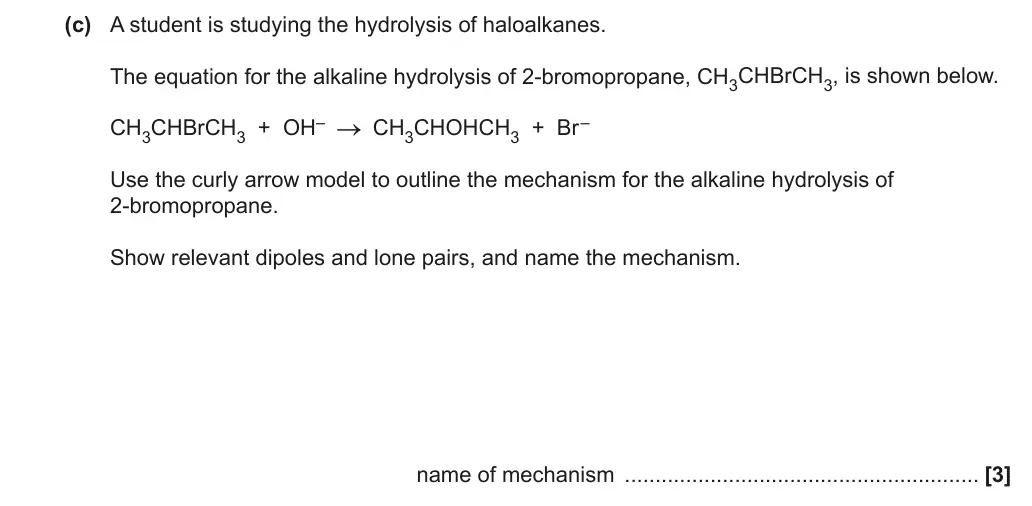
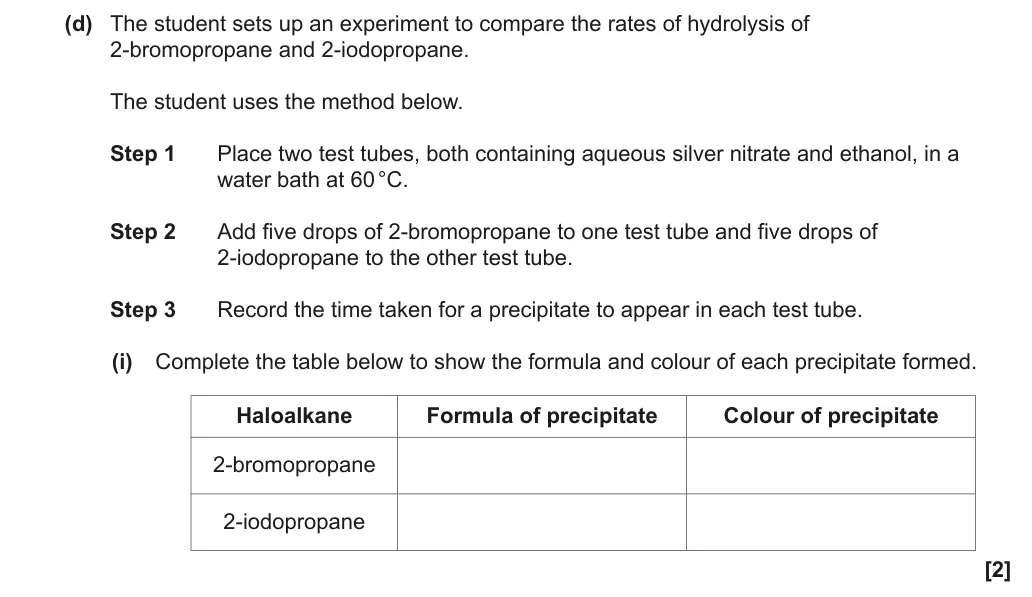
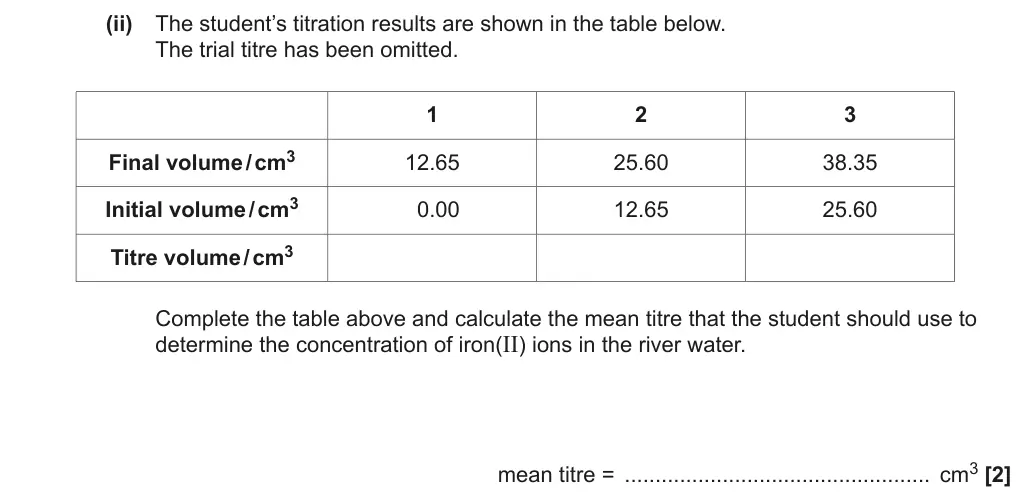
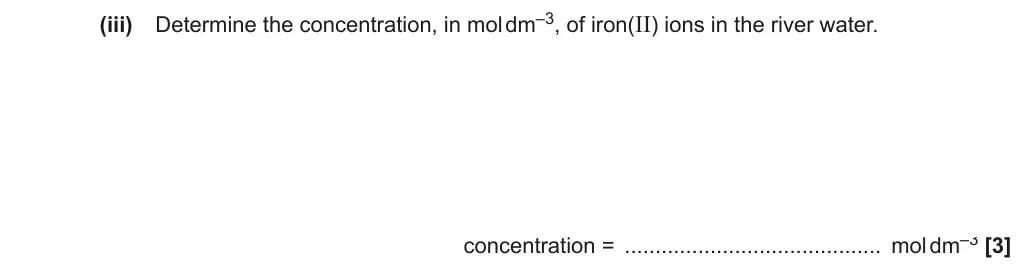
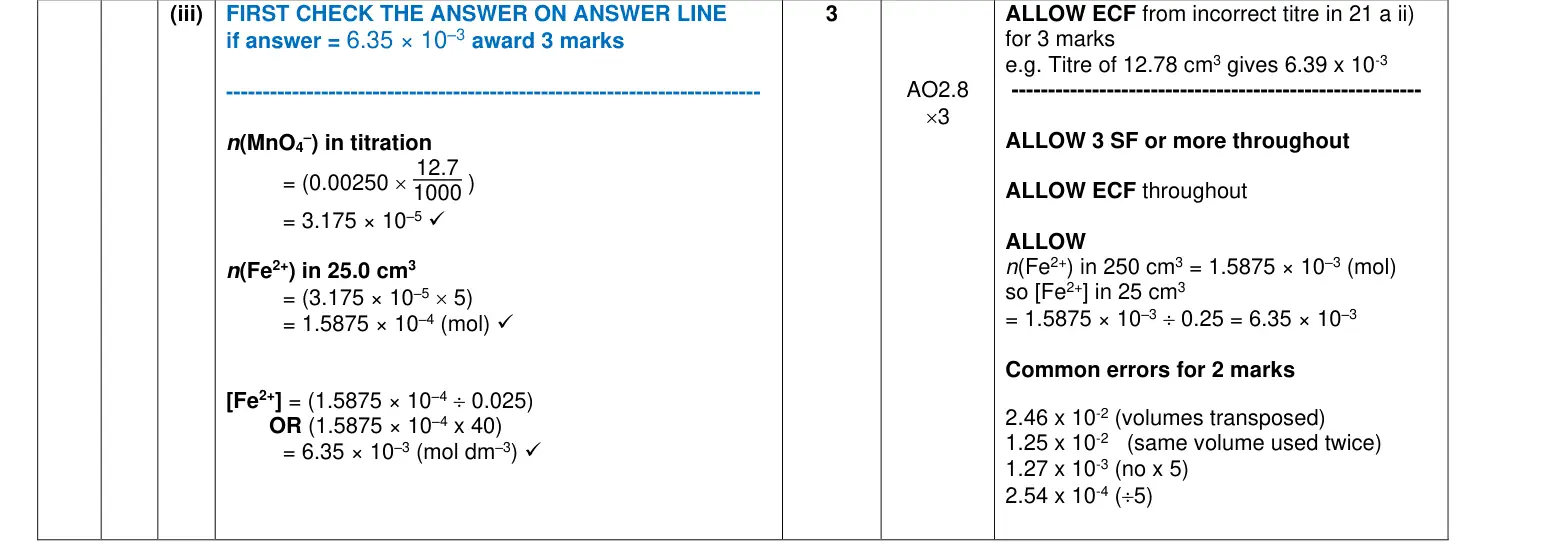
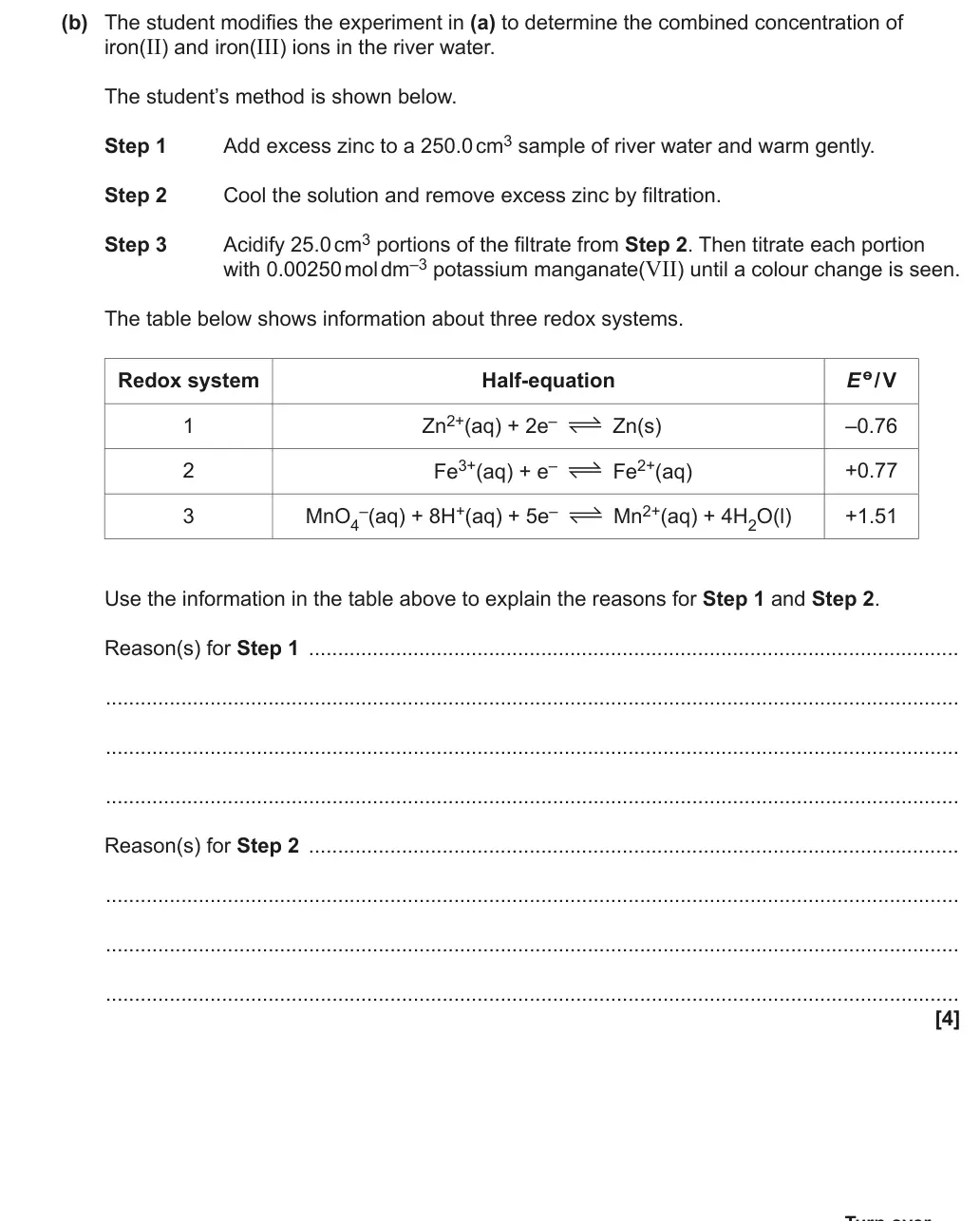
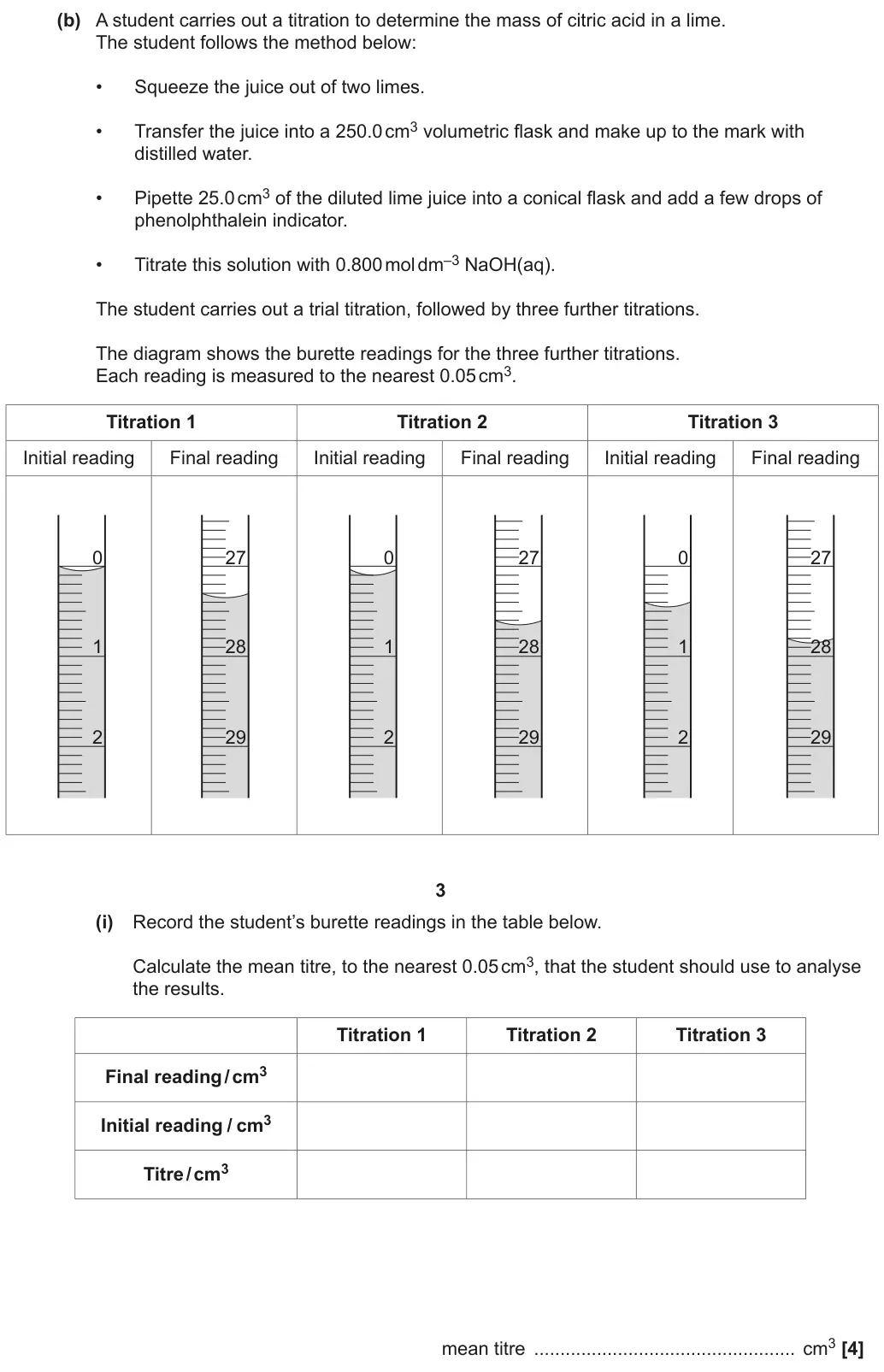
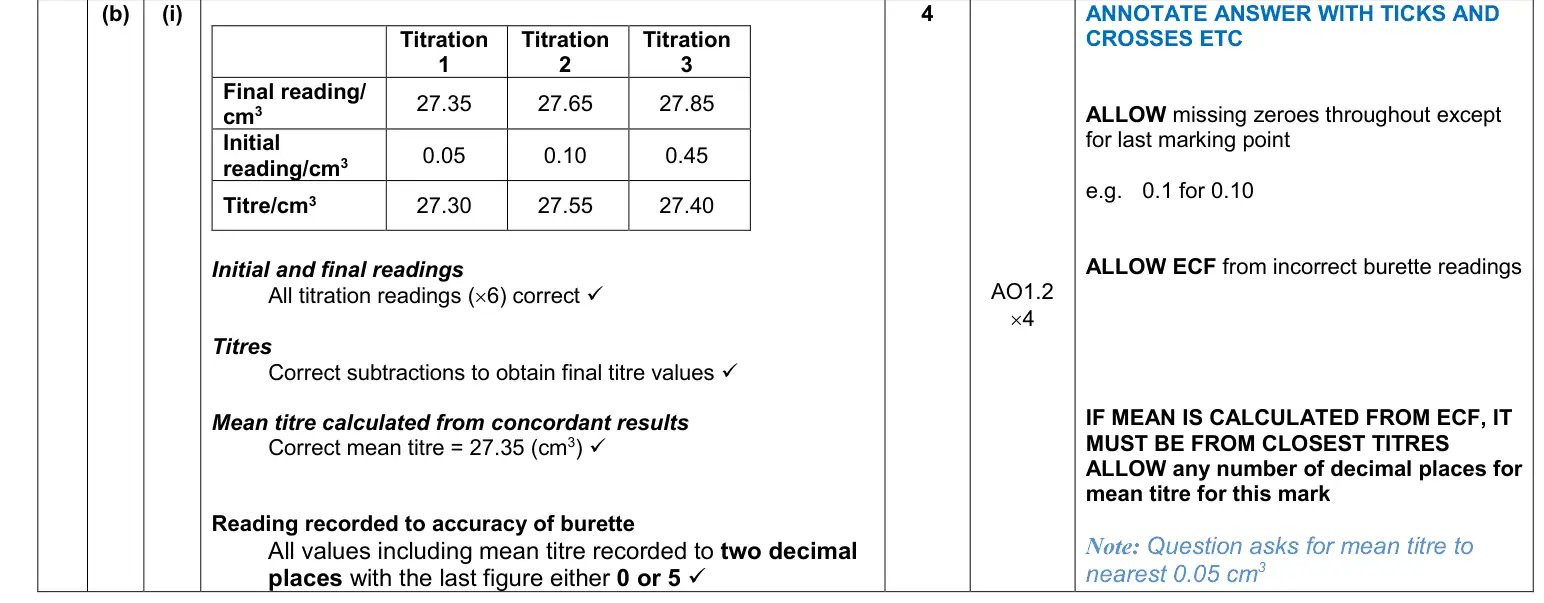
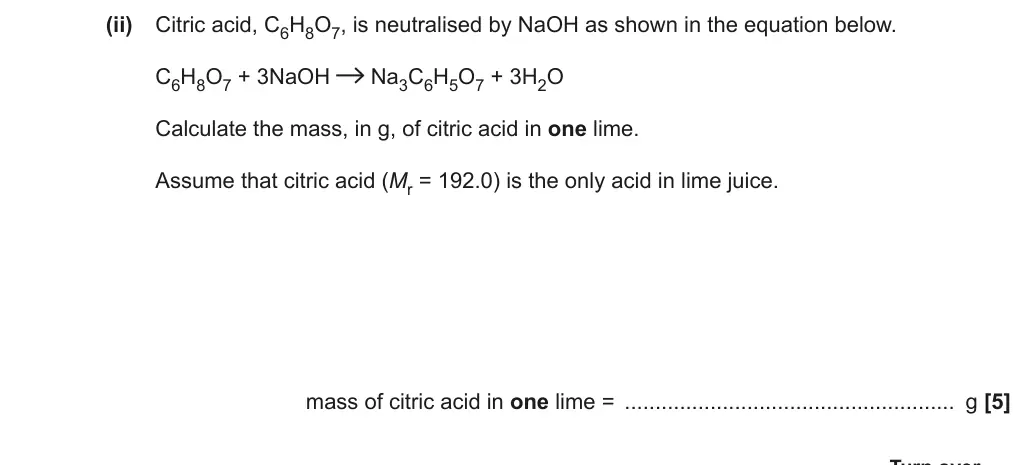
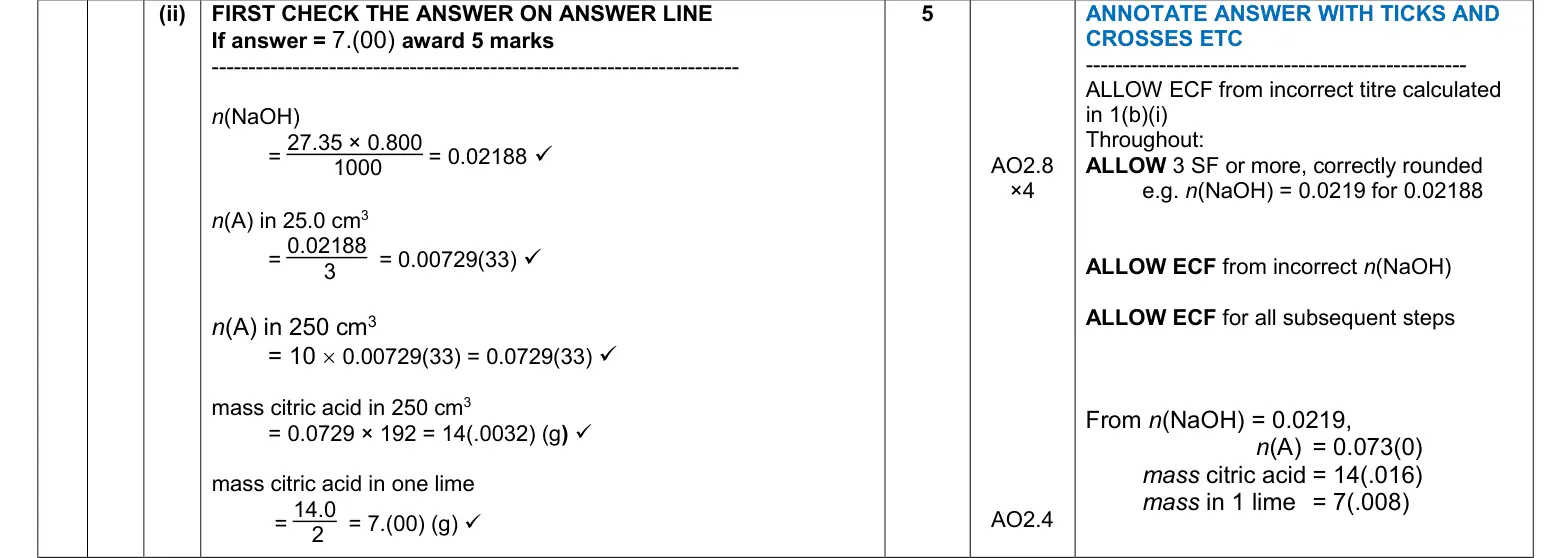
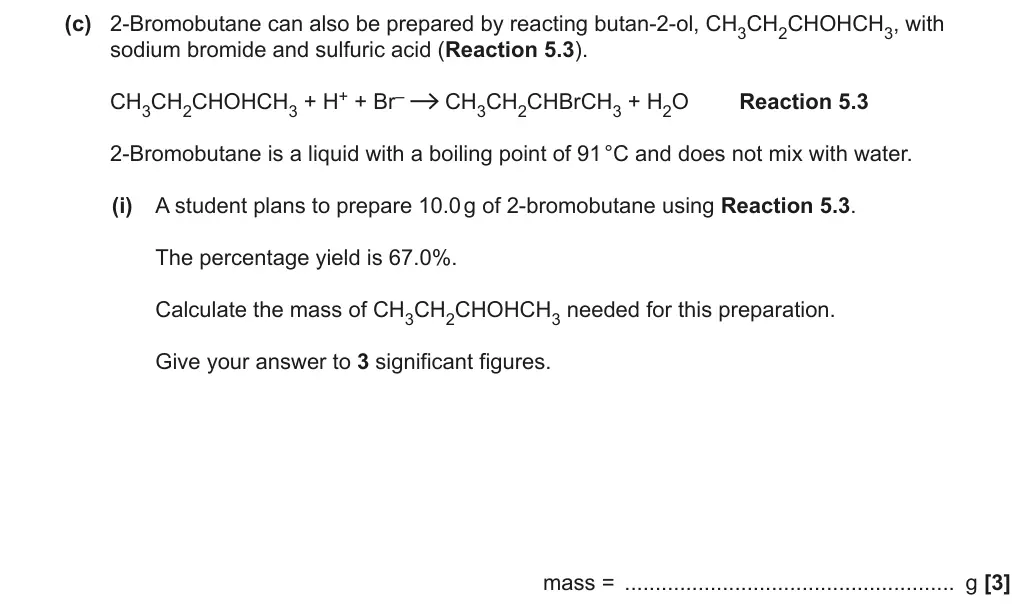
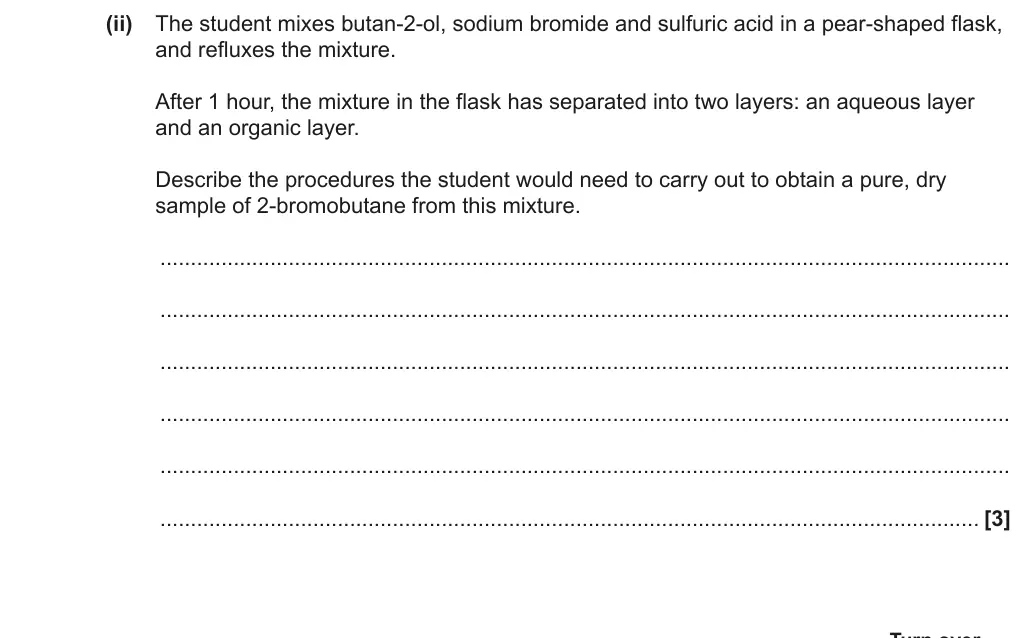
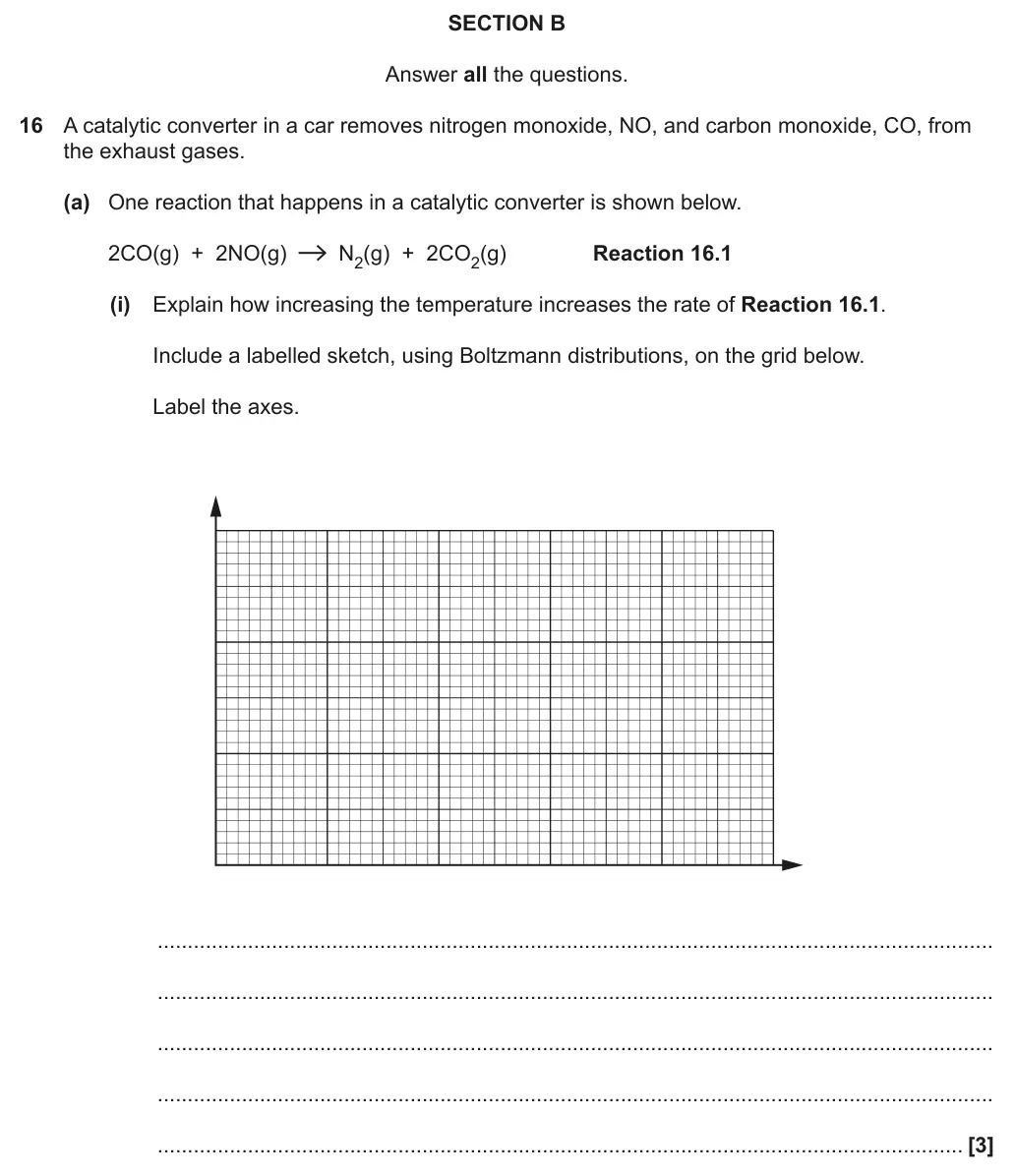
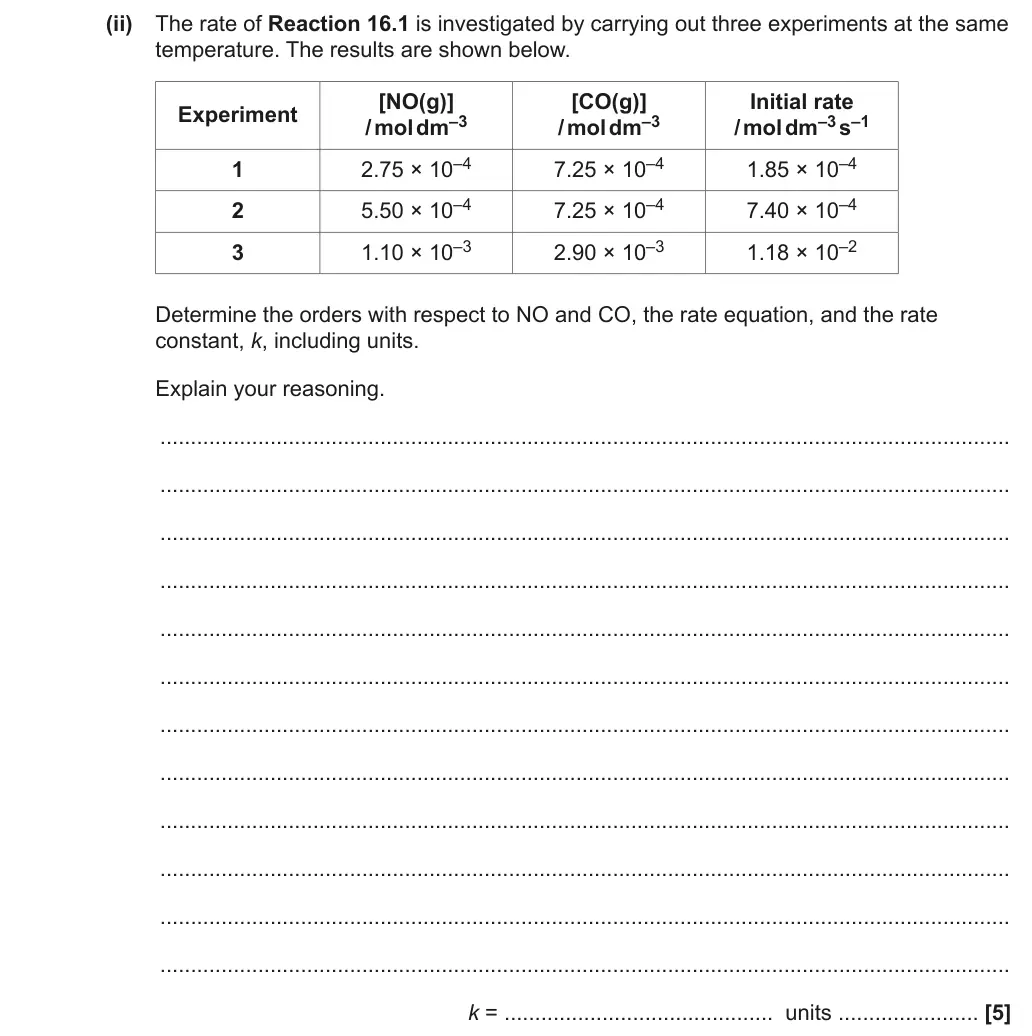
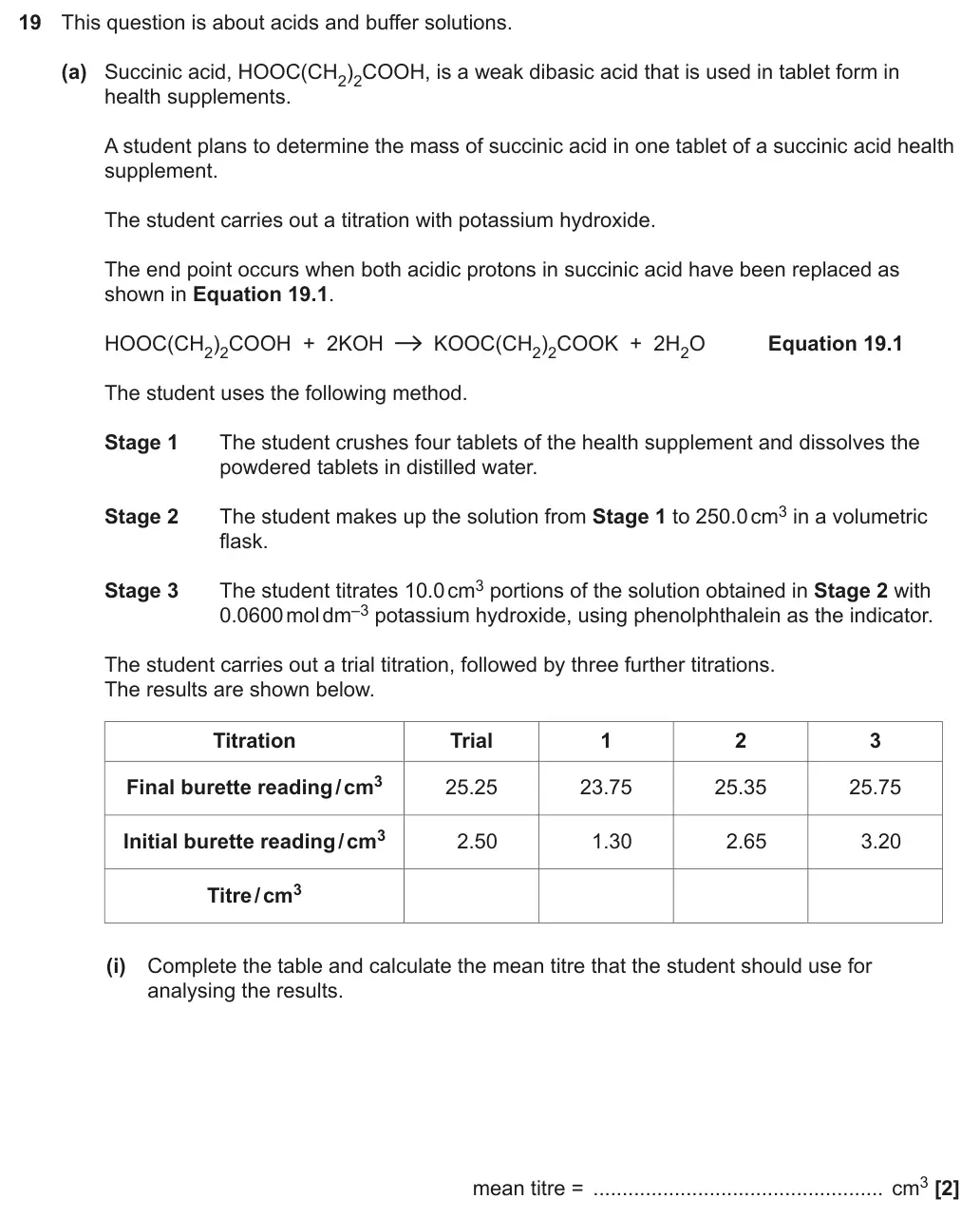
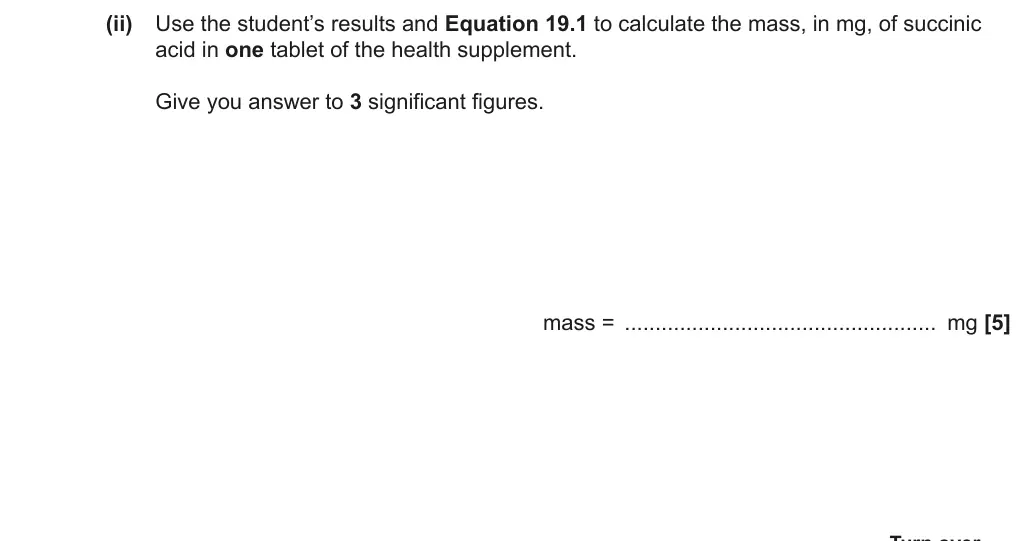
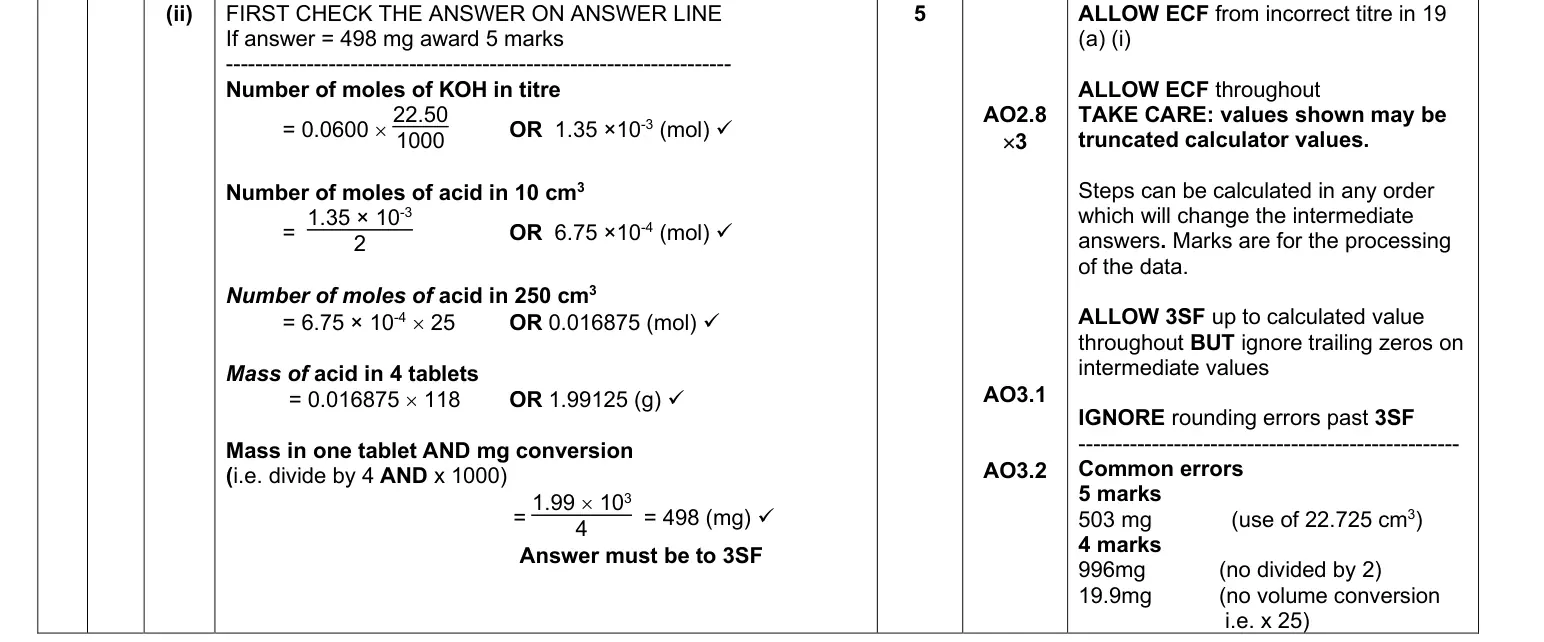
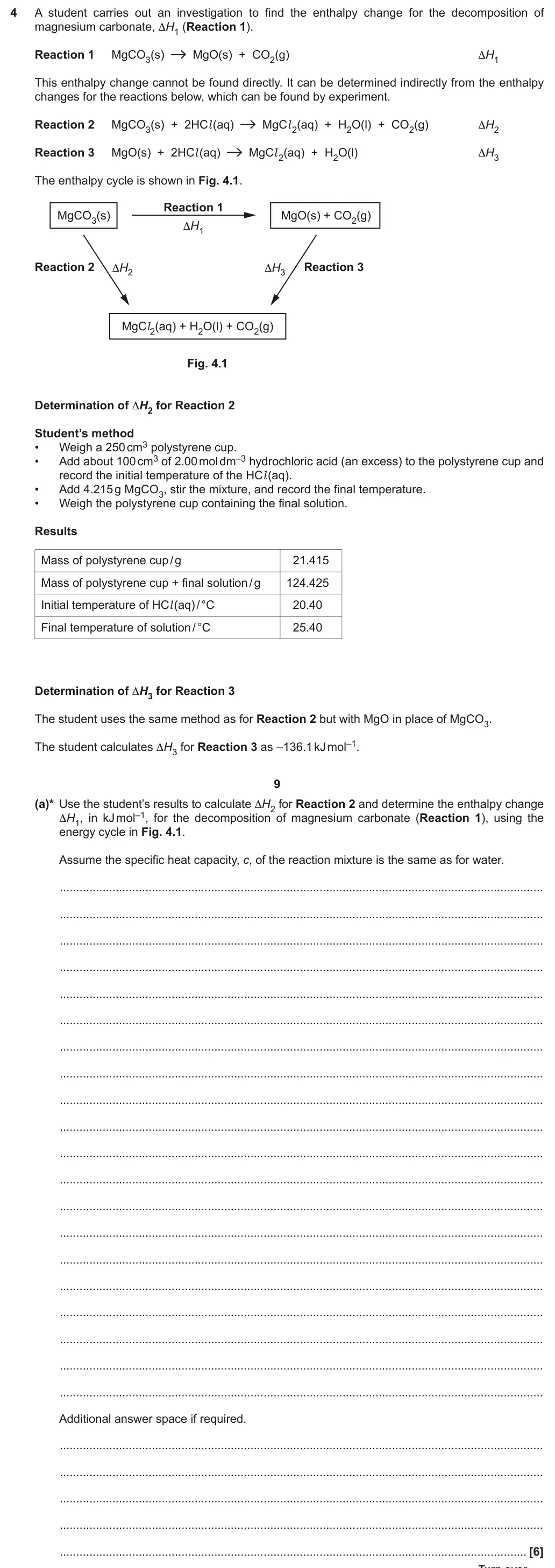
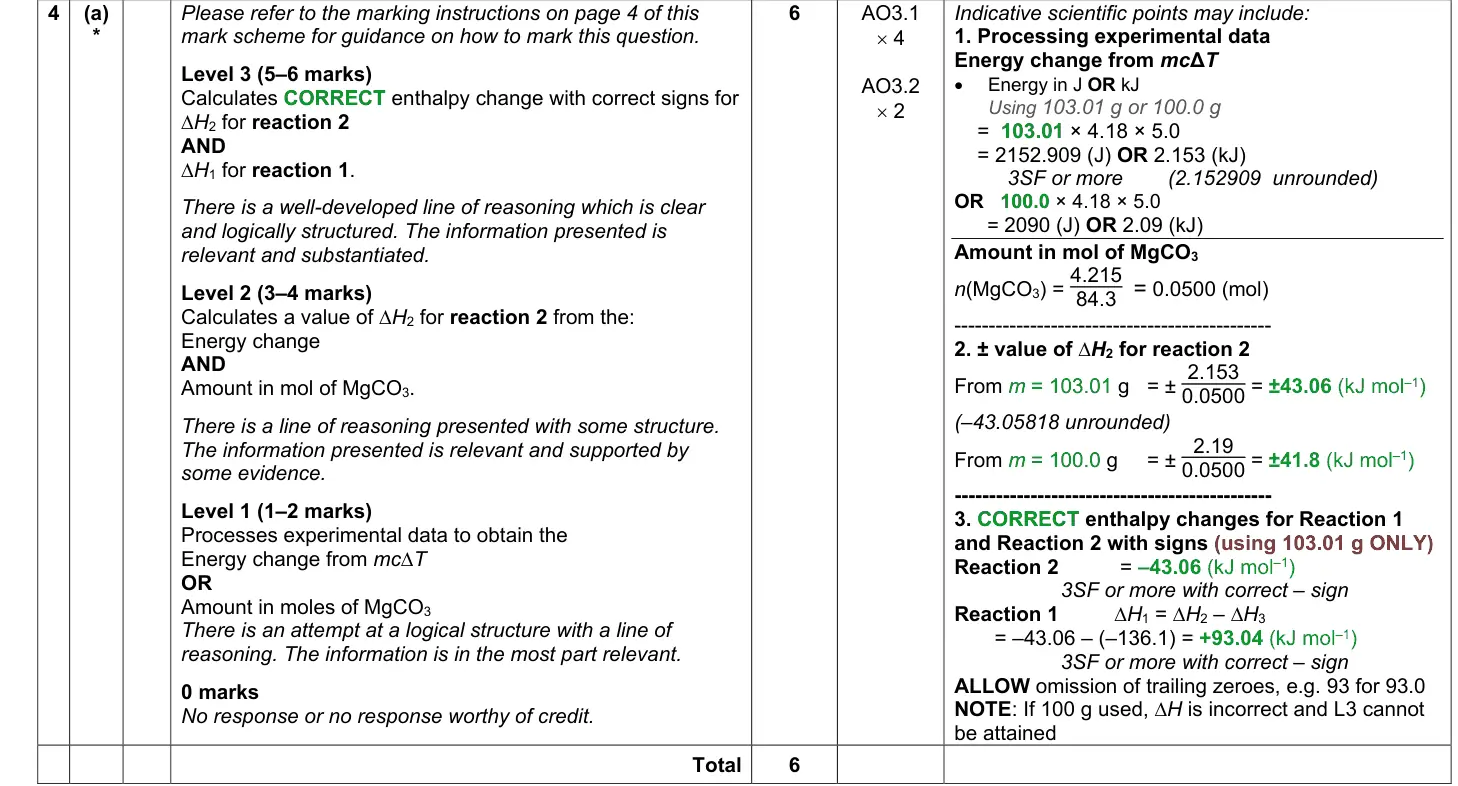
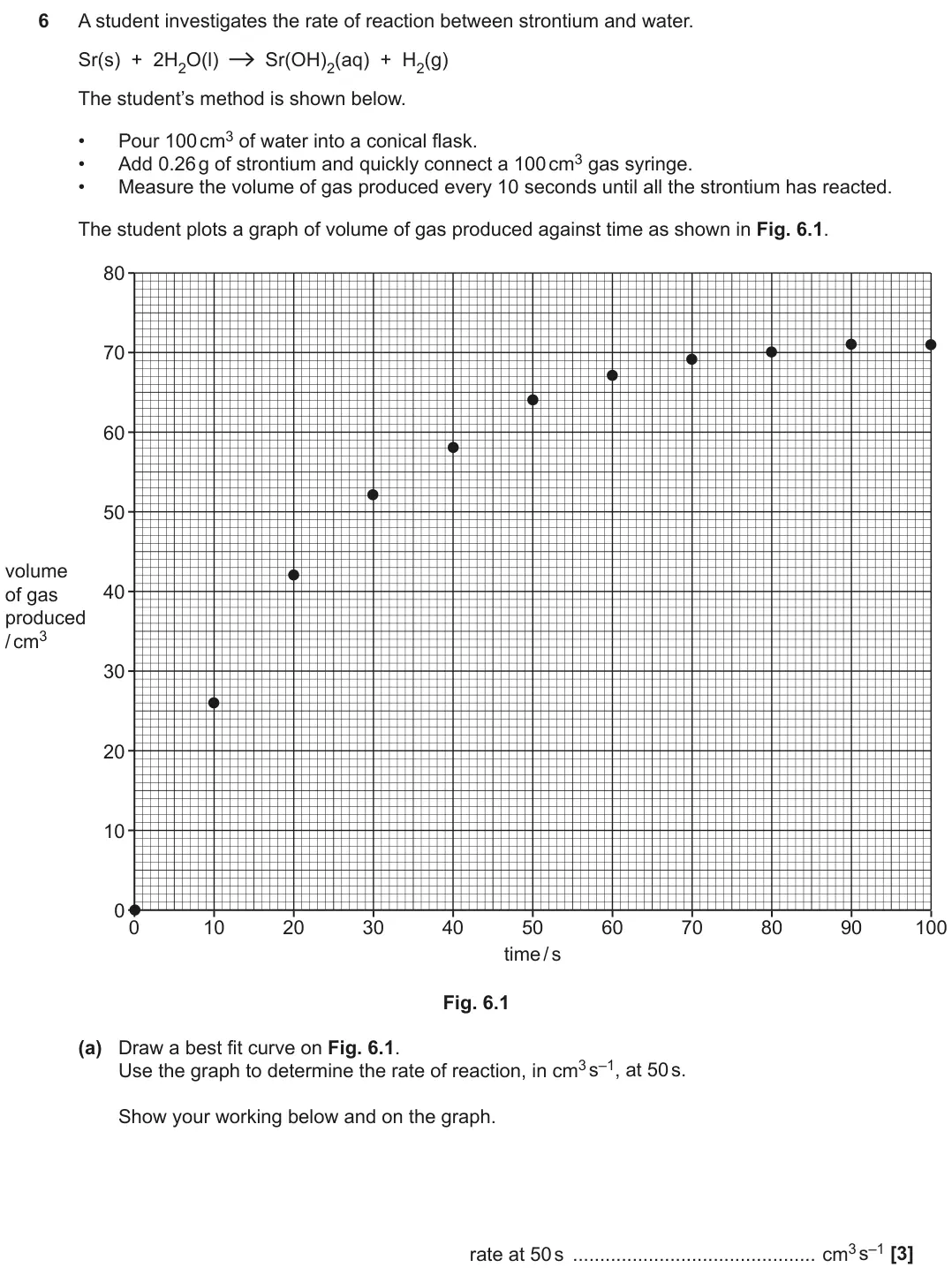
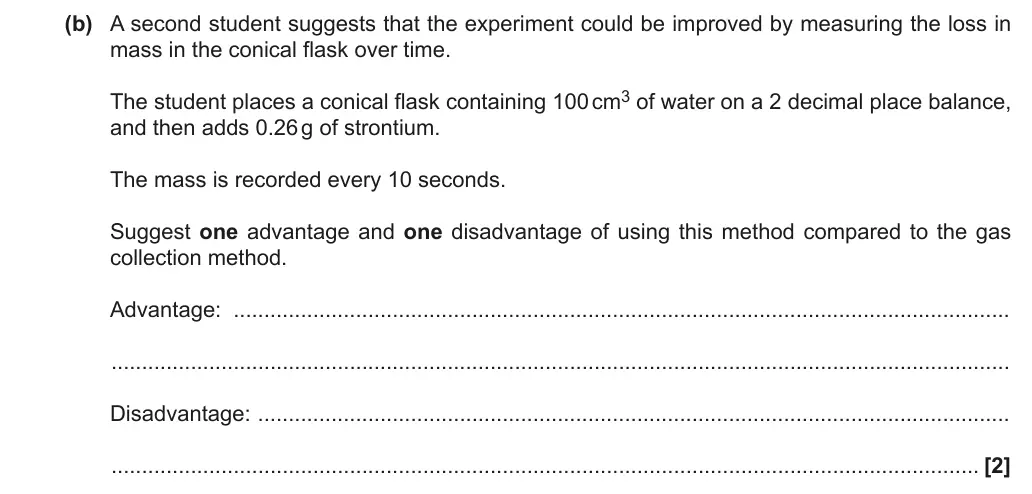
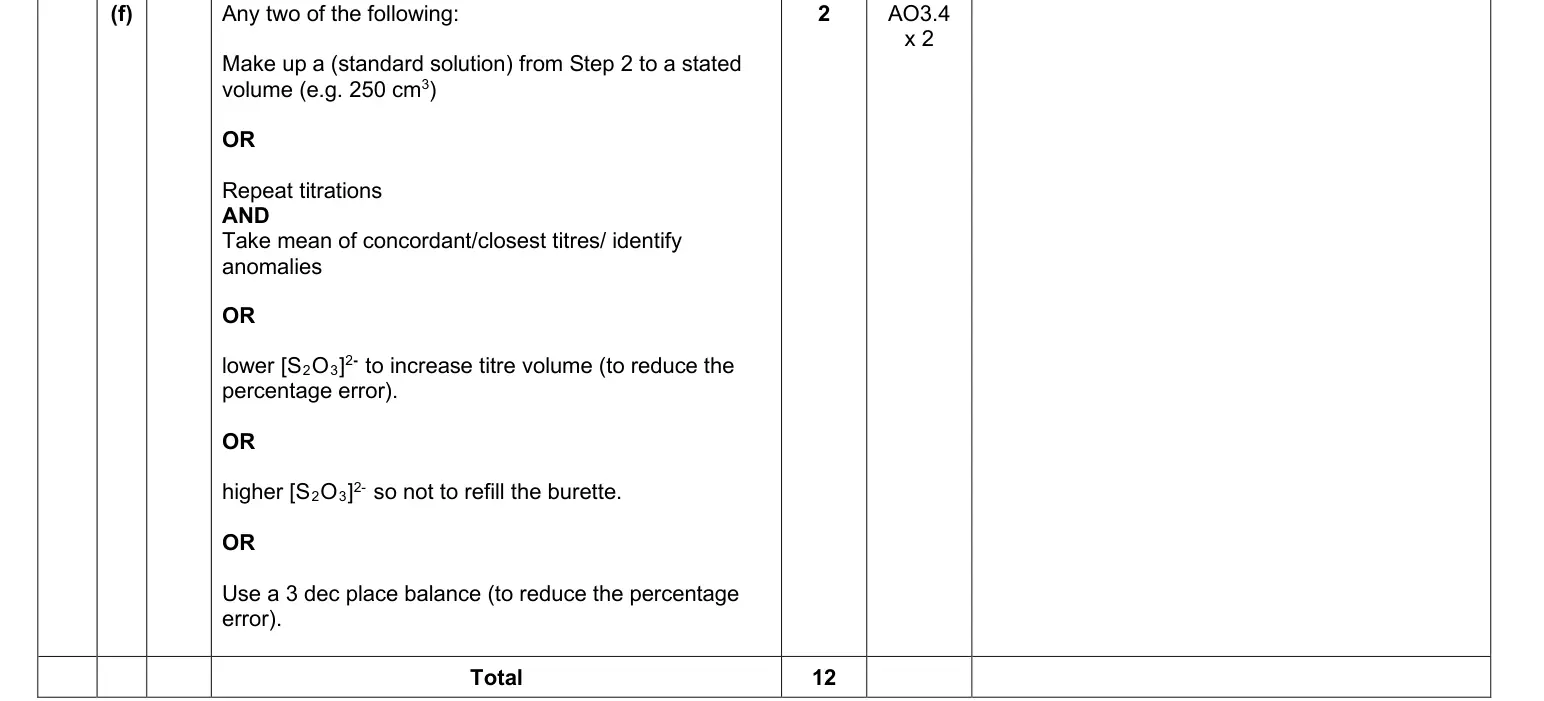
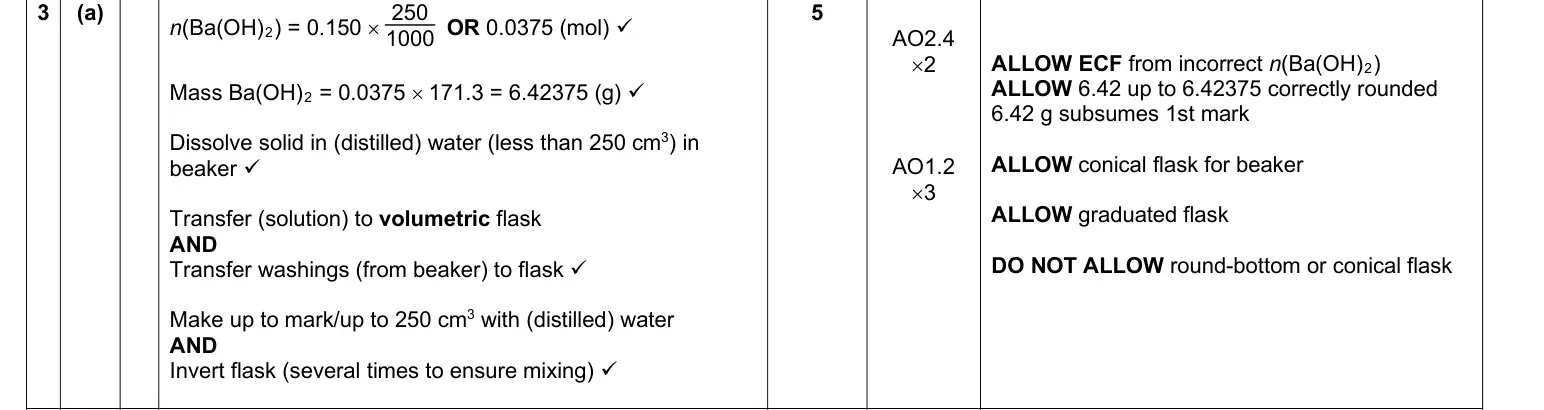
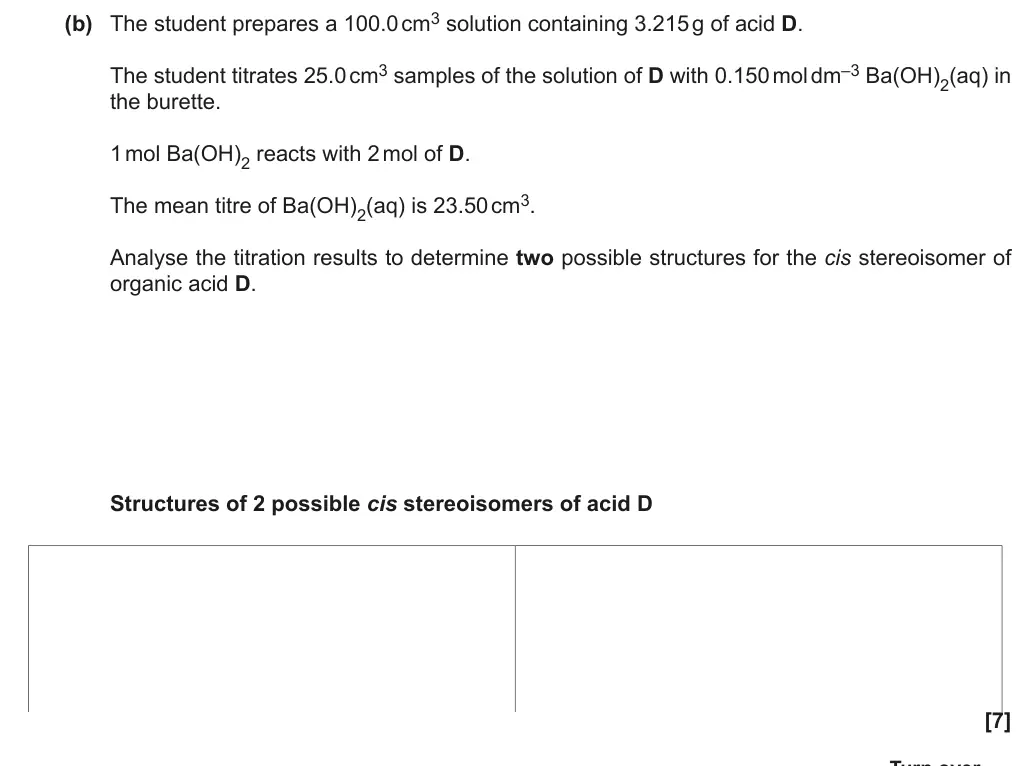
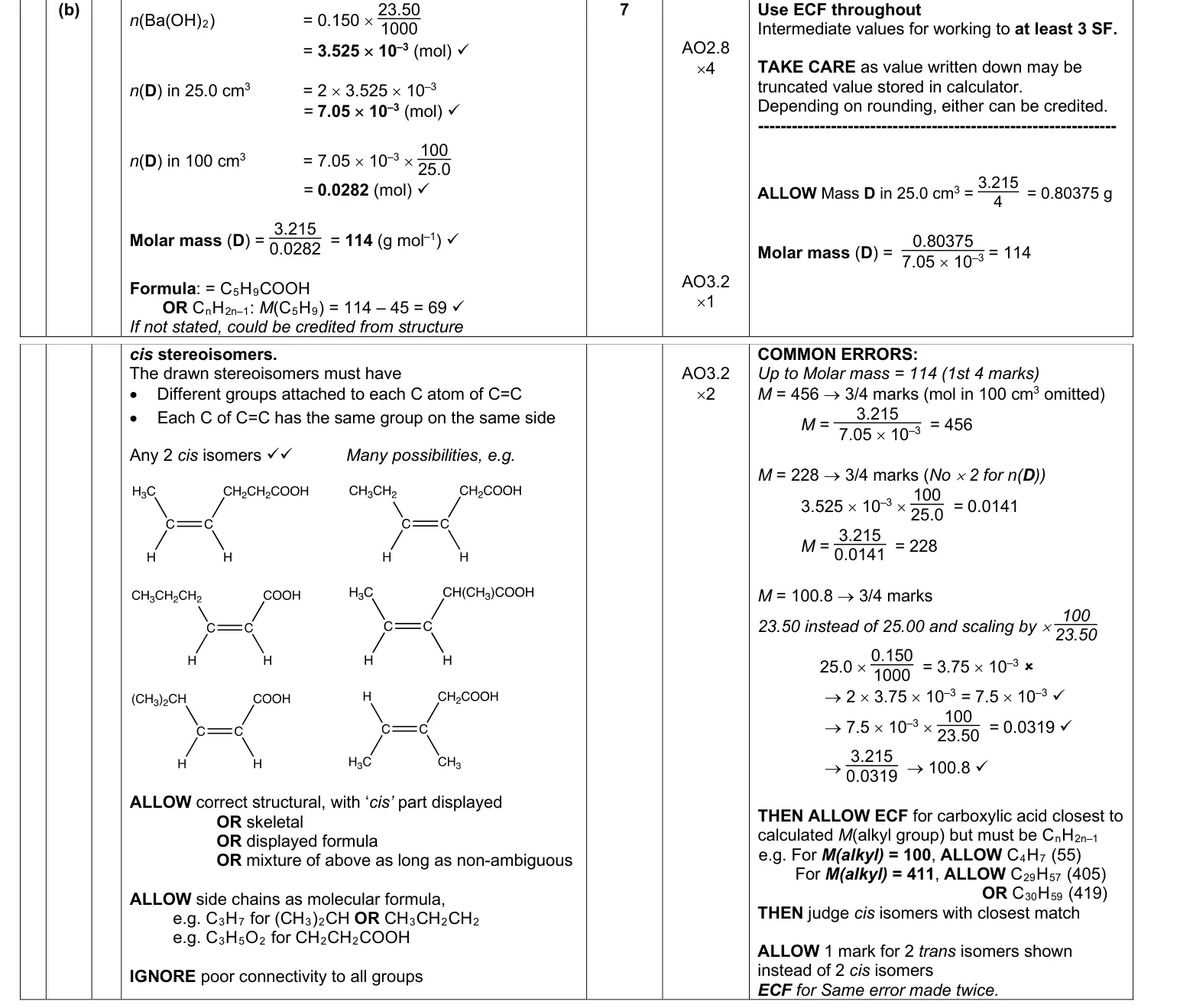
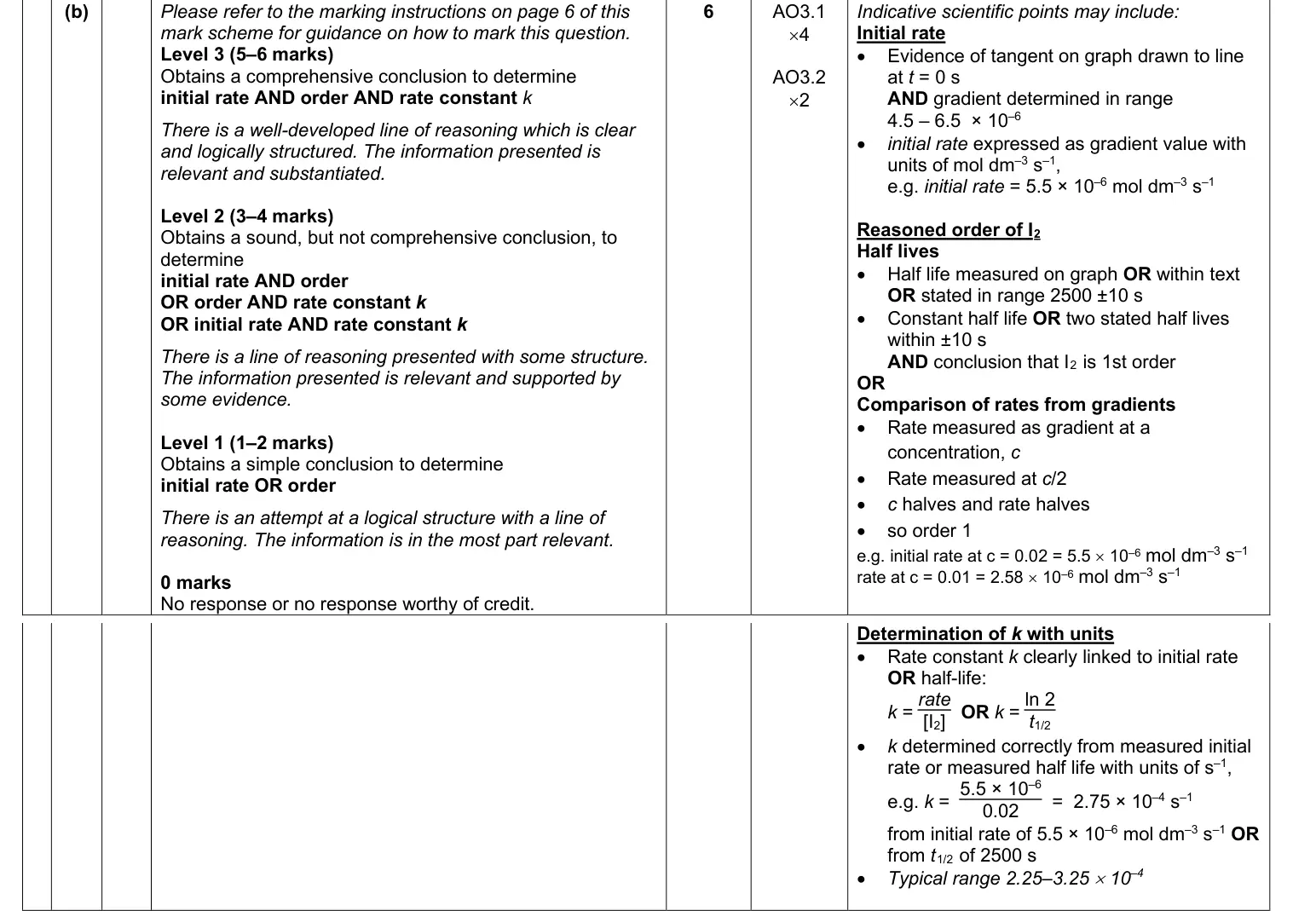
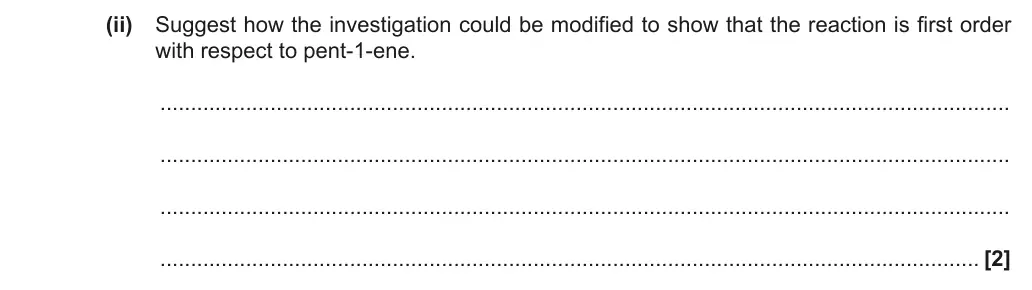
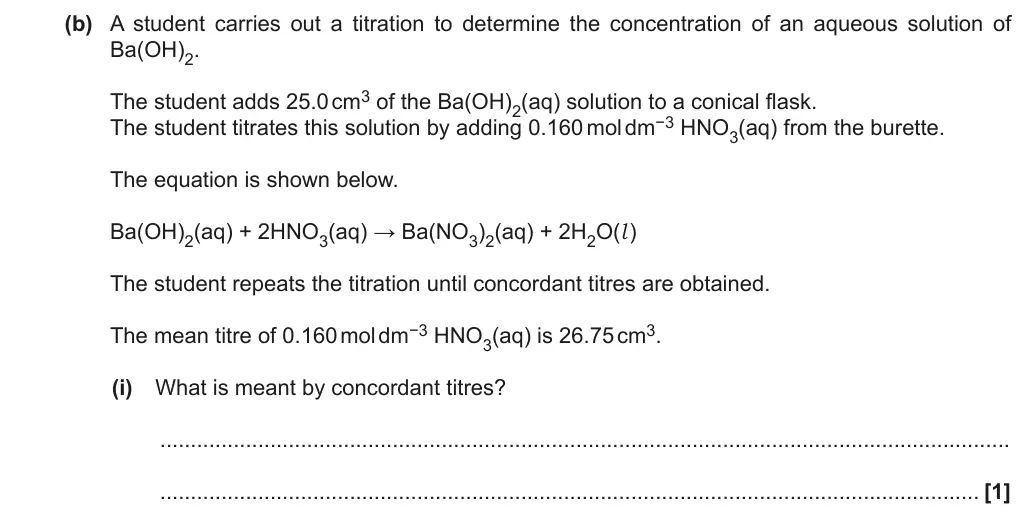
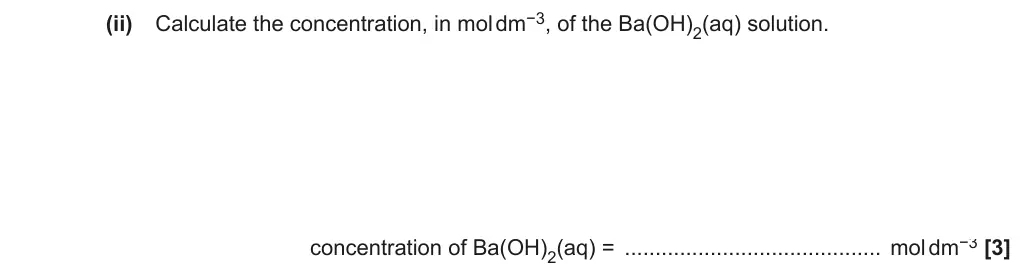
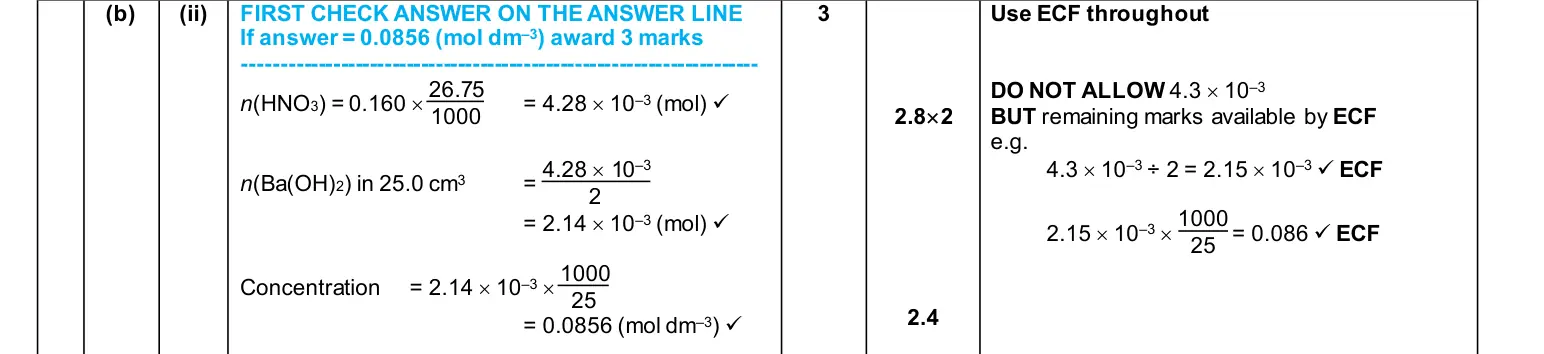
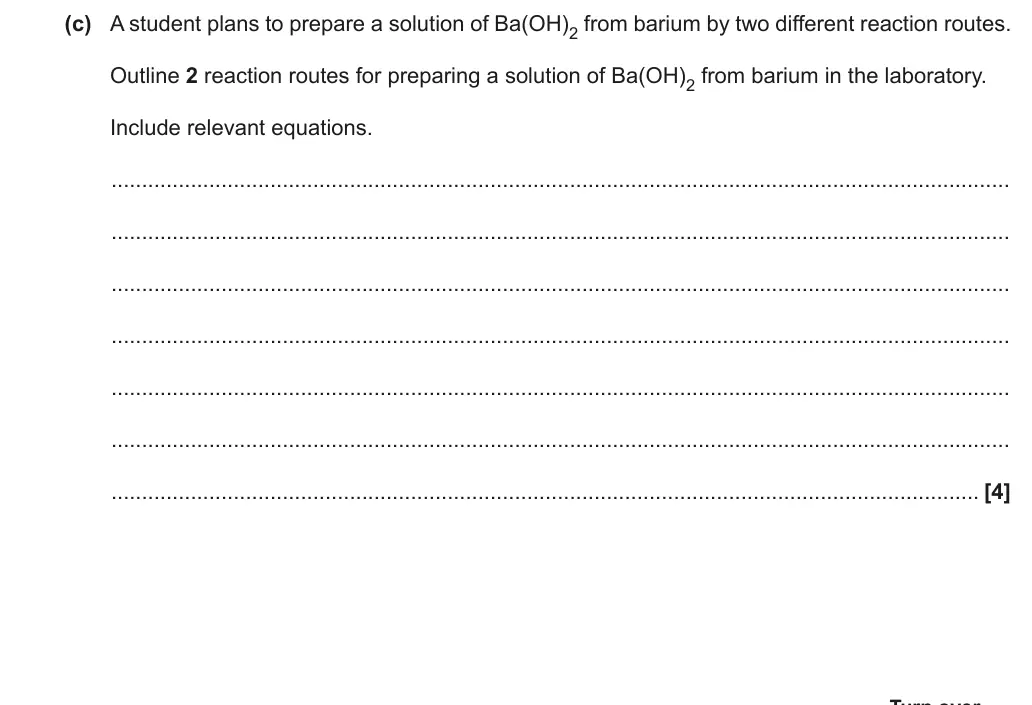
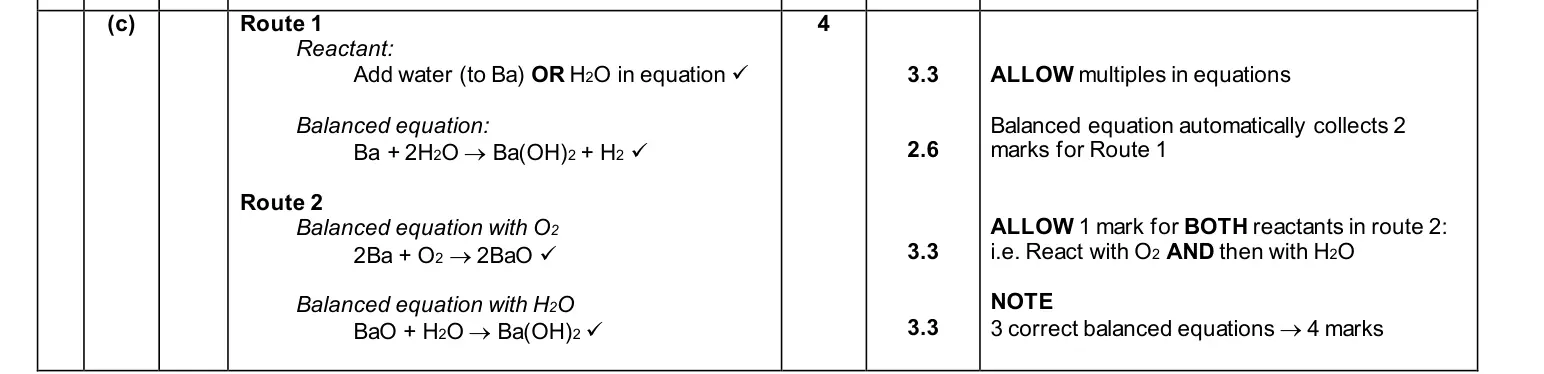
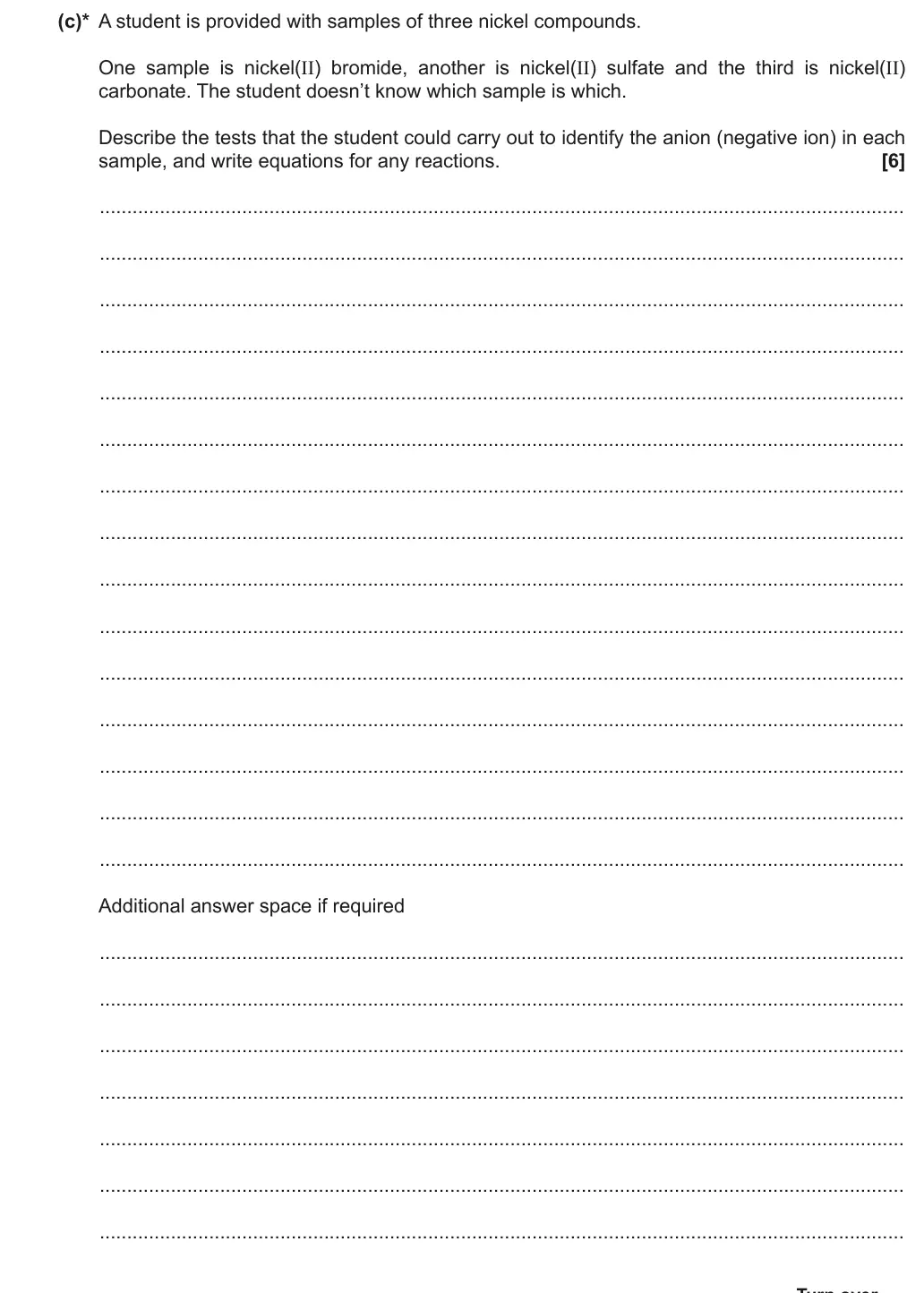
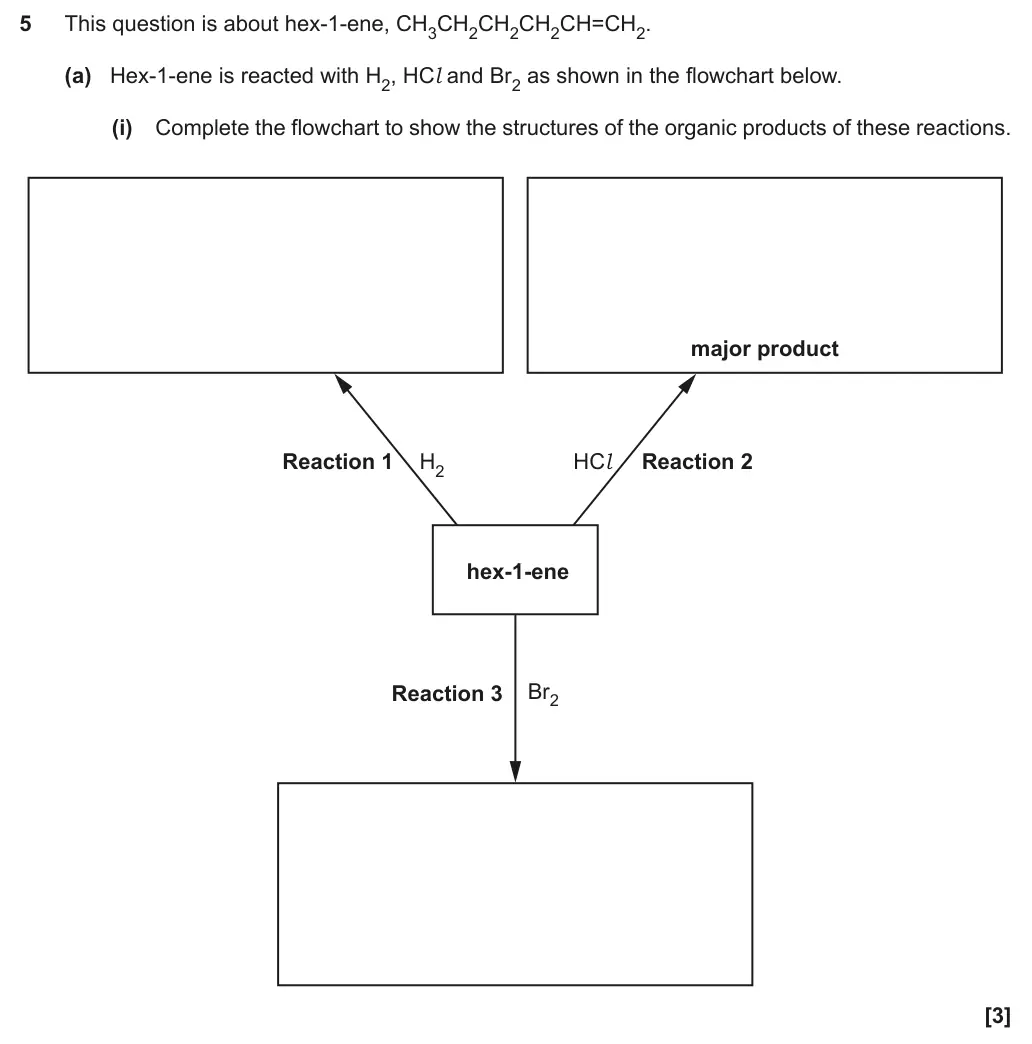
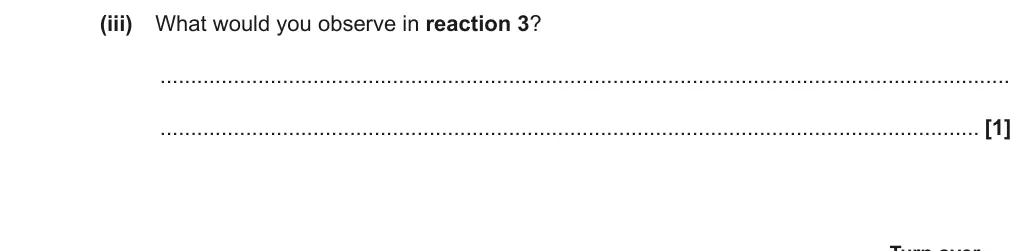
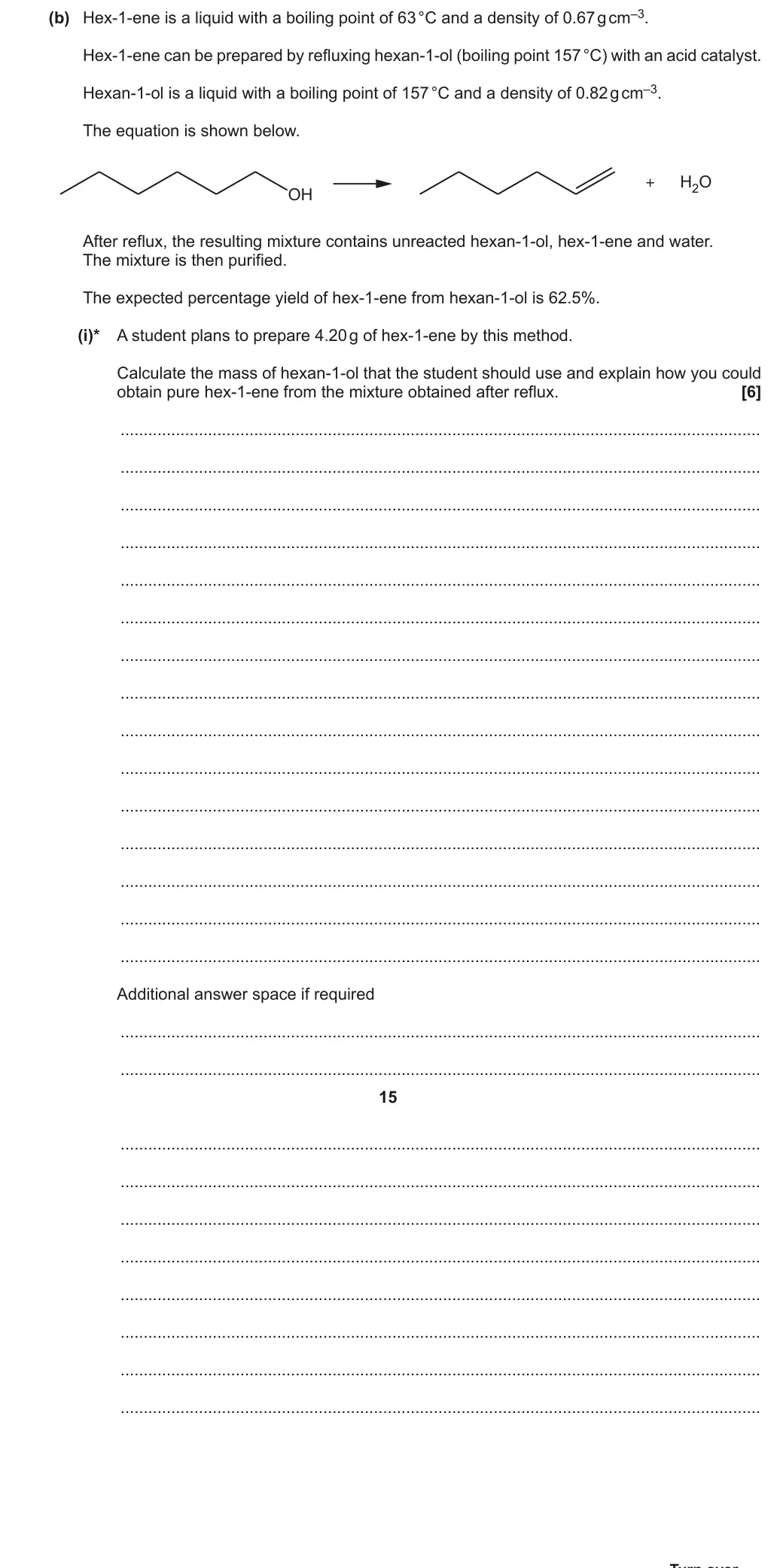
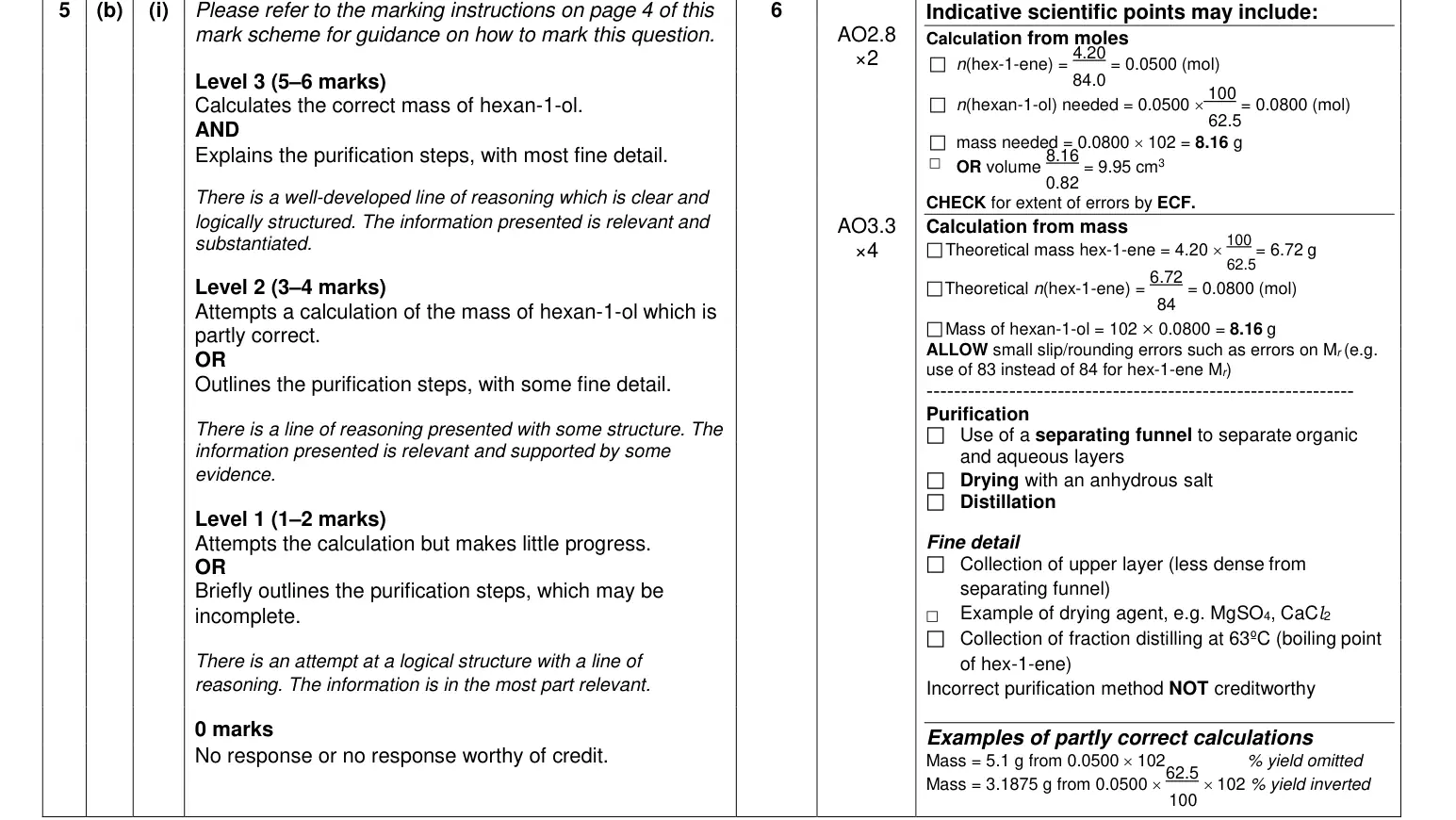
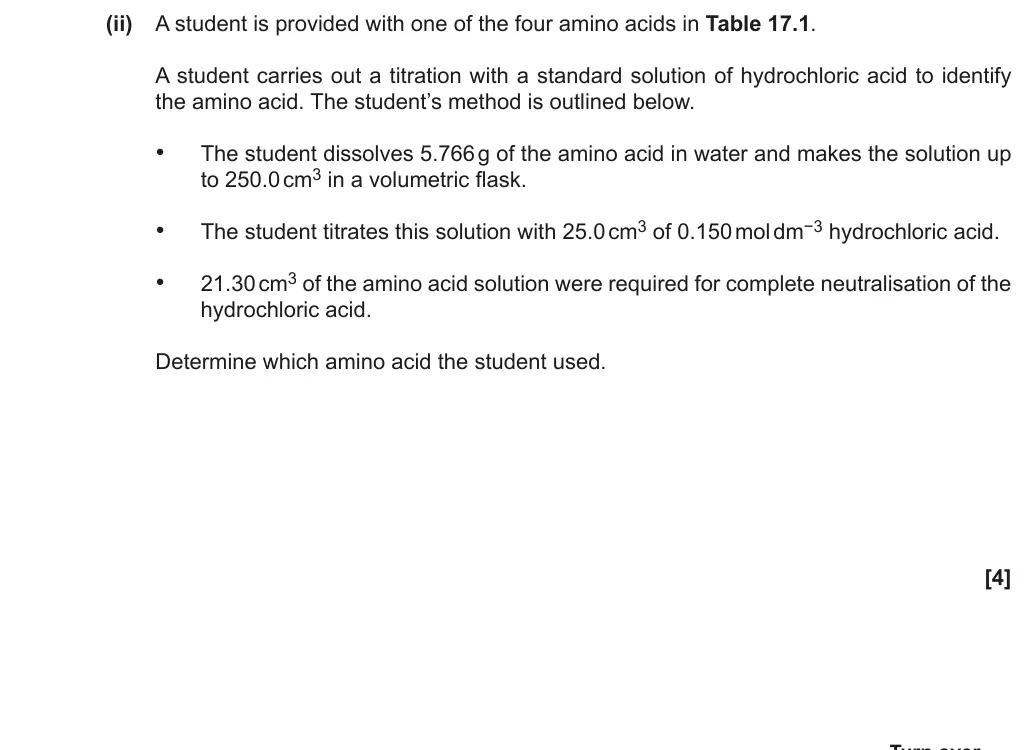
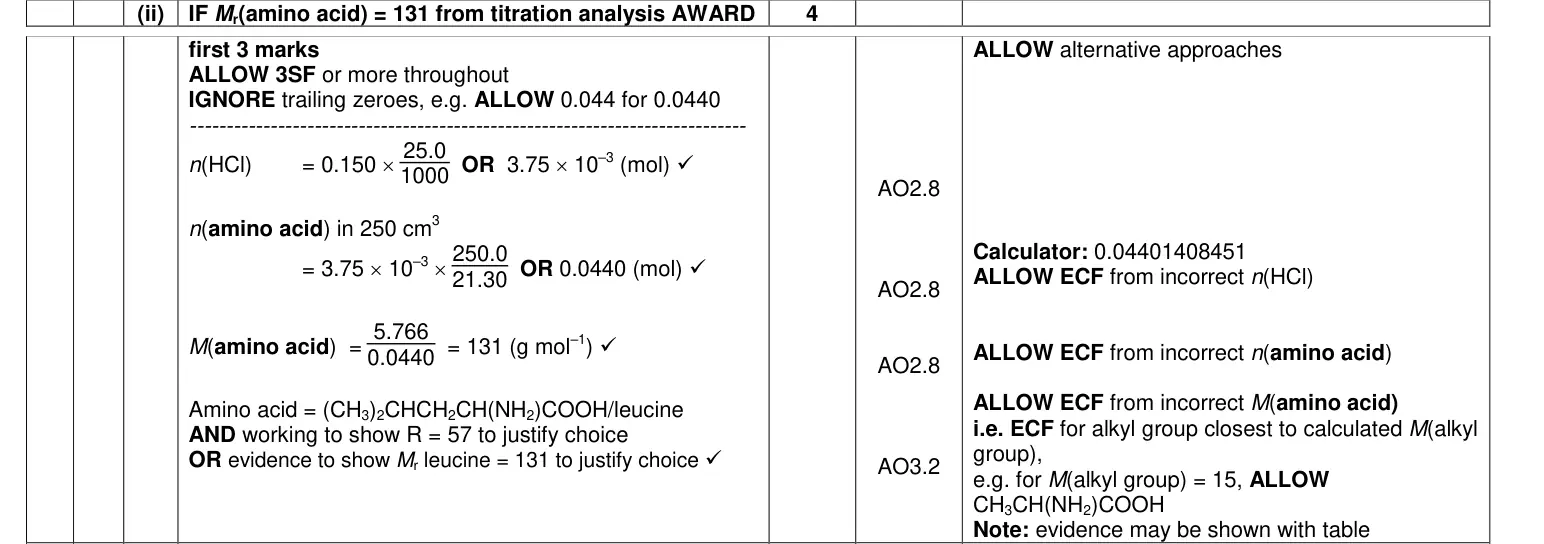
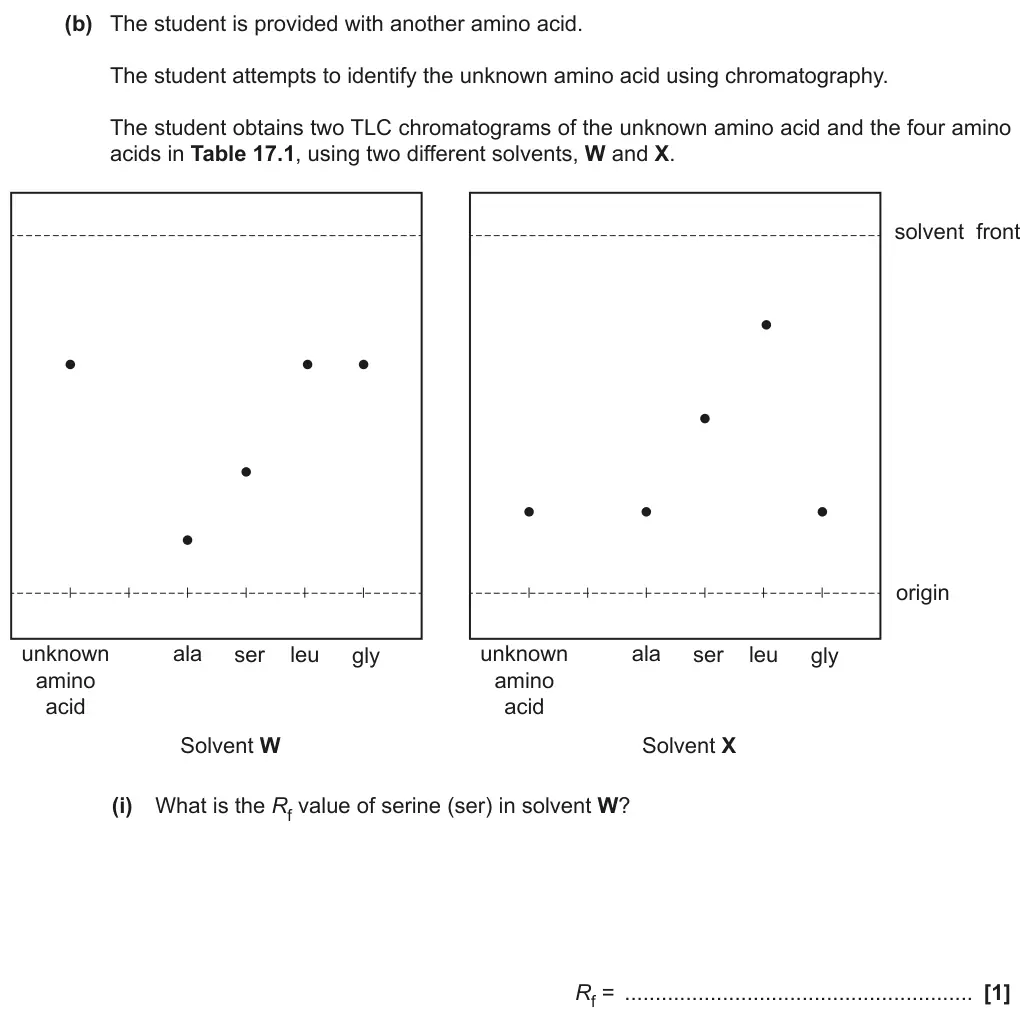
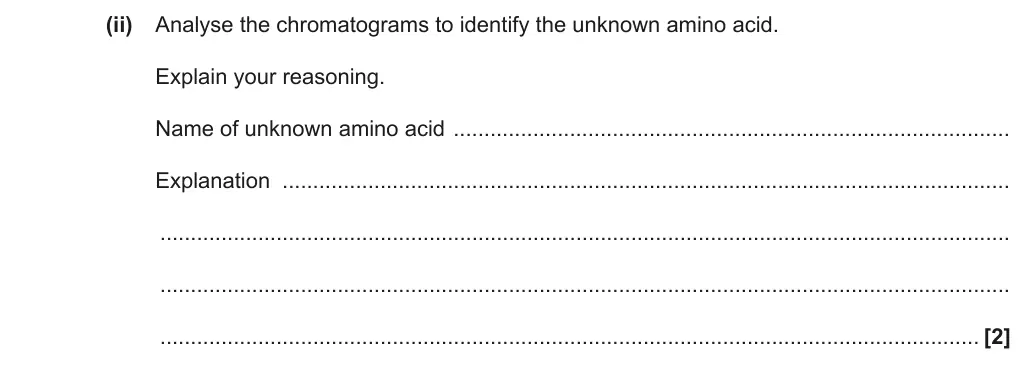
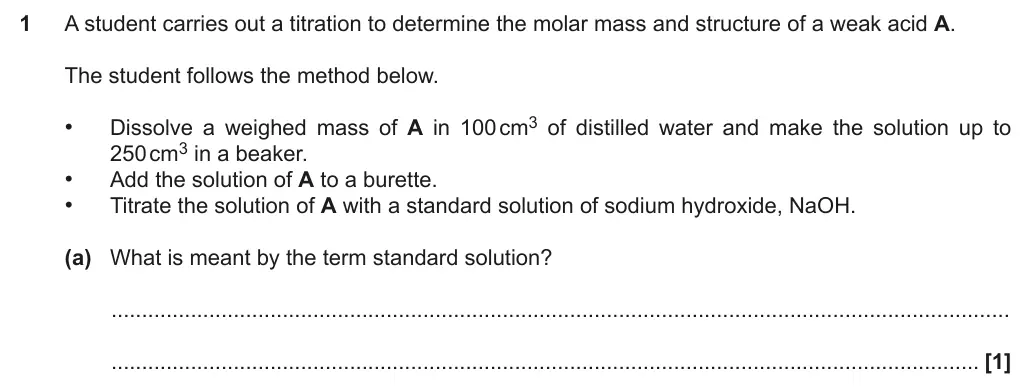
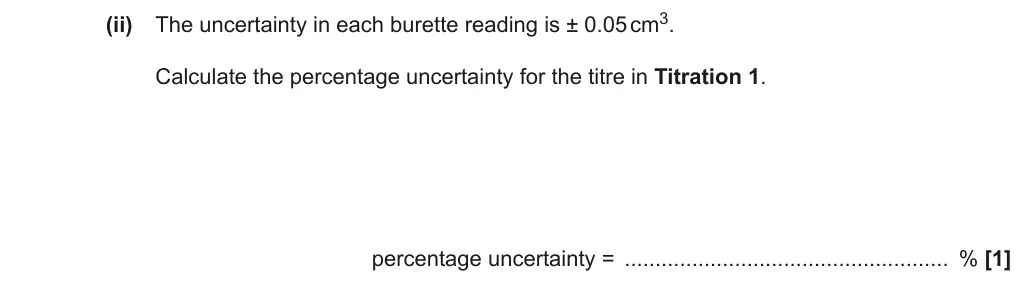
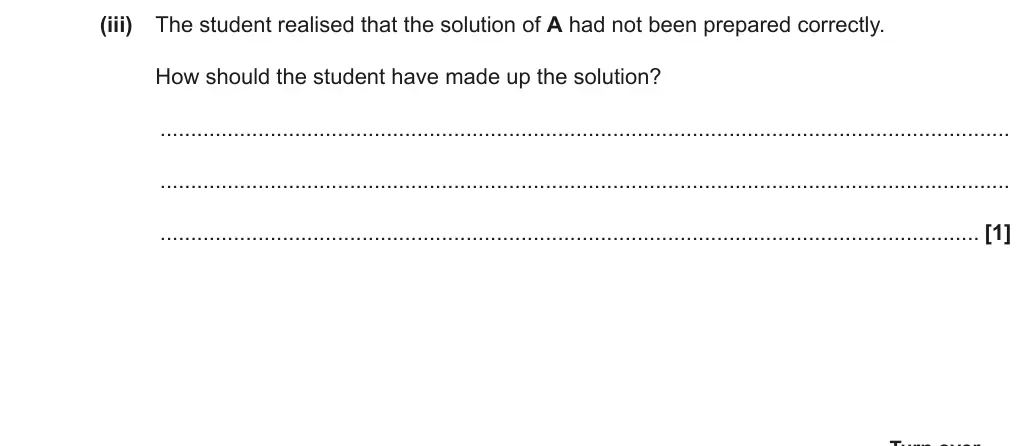
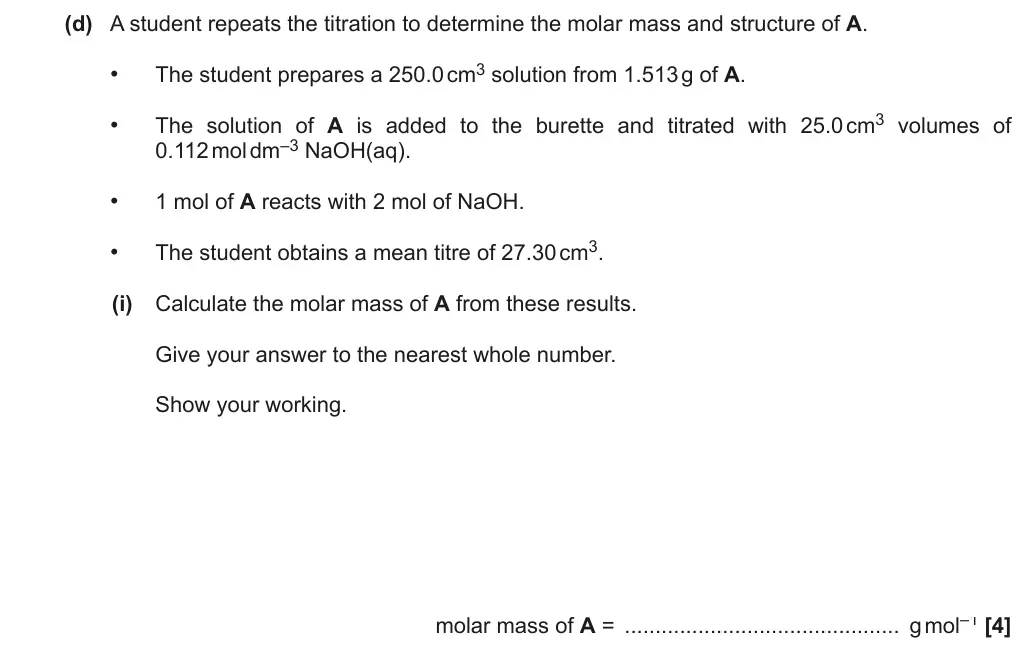
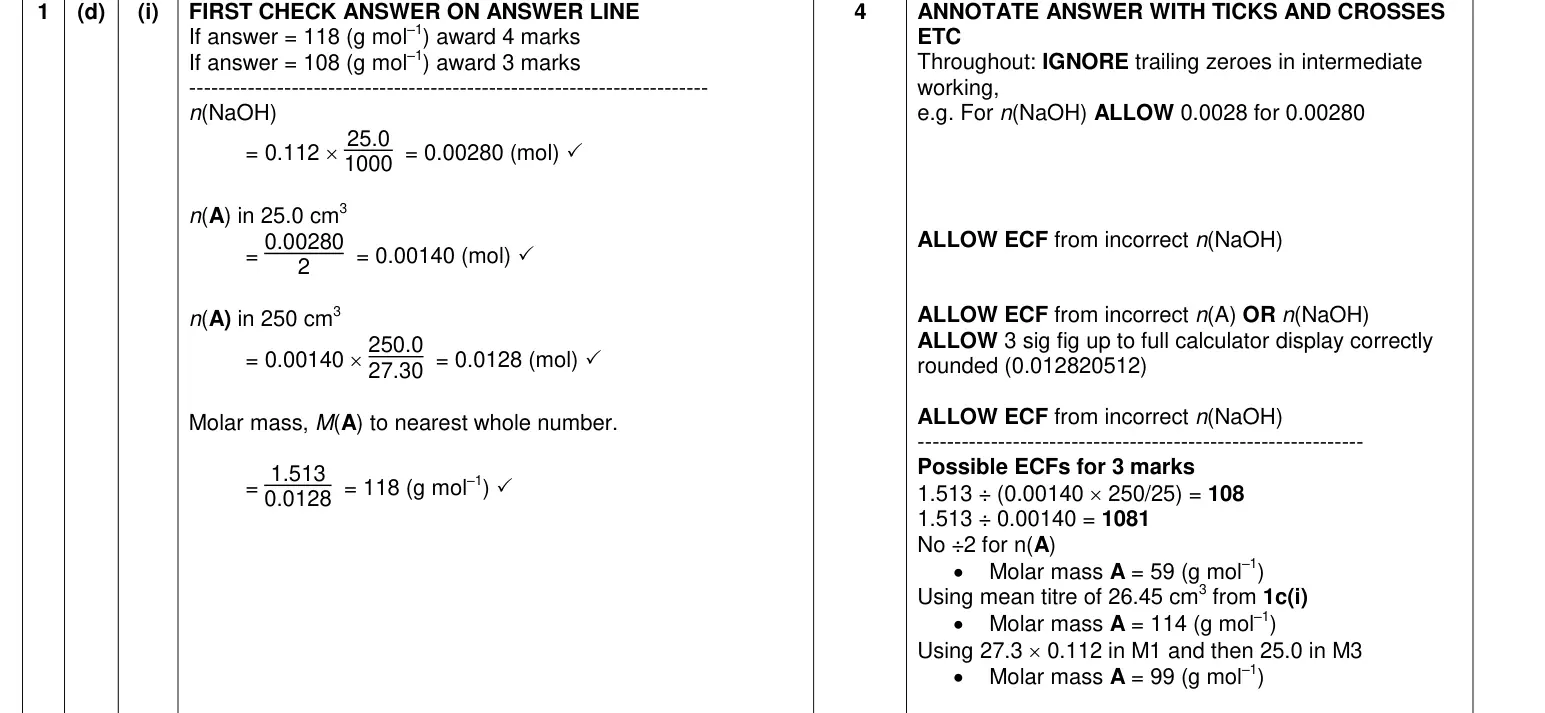
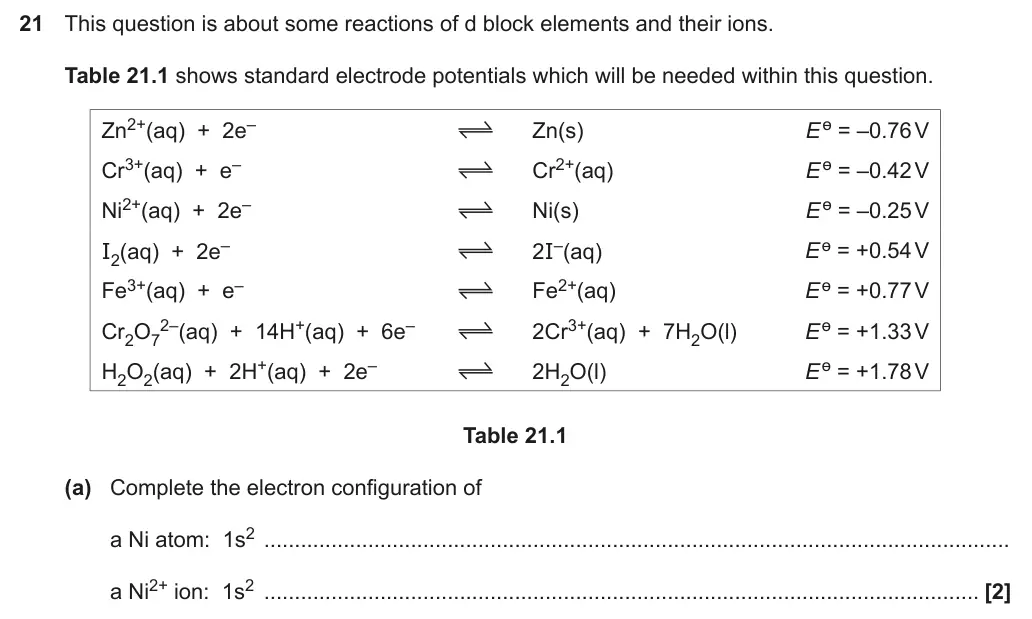
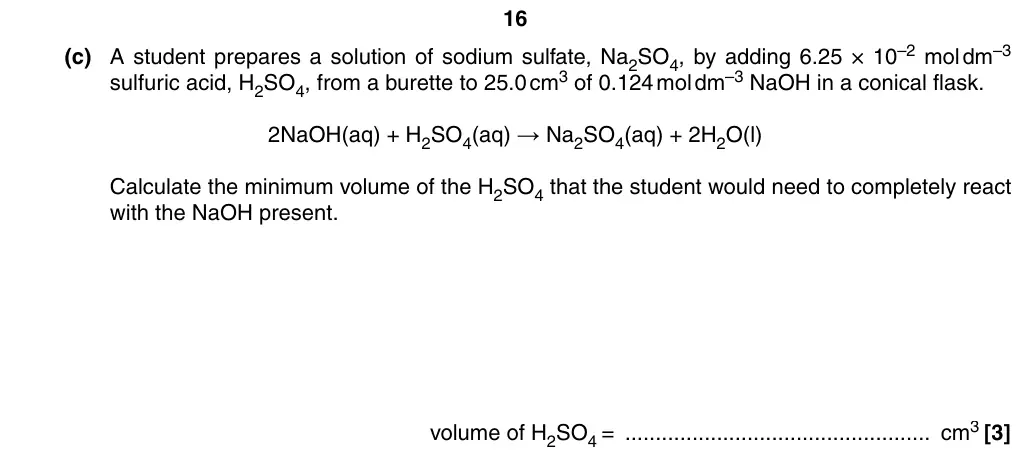
23(a) This question required candidates to calculate the moles of Ba(OH)2 in 100 cm3, to scale this value up to 1 dm3 for the concentration of Ba(OH)2 and finally to multiply this value by 2 to obtain the concentration of OH– ions of 0.454 mol dm–3. This part discriminated extremely well. Lower-attaining candidates would often calculate an incorrect molar mass of Ba(OH)2 and scale up by either 10 or 2. The commonest incorrect answer seen was 0.227, half of the correct answer by omitting the ×2 stage. Most candidates did supply their final answer to the required 3 significant figures. As with all calculations, candidates should round once, at the end of the calculation. Rounding of intermediate values can lead to significant rounding errors. Sometimes, intermediate values were rounded to 2 significant figures when the final value required 3. This use of maths will almost certainly lead to a rounding error in the final answer. Candidates should show clear working so that credit can be given for such responses by applying error carried forward. Many candidates produced largely unreferenced numbers. 23(b) Many candidates seemed to be unfamiliar with the term ‘concordant titres’. Acceptable responses were ‘within 0.1 cm3 and within 0.05 cm3. Common incorrect answers for this important term included ‘the closest titres’, ‘similar titres’, ‘repeated titres’ and ‘within 0.5 cm3’. 23(c) Many candidates were able to calculate the amount of HNO3 in the titration as 4.28 × 10⁻³ mol. Most candidates were credited for the amount of Ba(OH)2 as 2.14 × 10⁻³ mol, half the calculated amount of HNO3. Candidates then need to scale up this value by 1000/25 to obtain the concentration as 0.0856 mol dm–3. Unlike Q23(a), all intermediate calculations gave values to 3 significant figures. Candidates found this stock titration calculation easier than the more unfamiliar 23(a), with many scoring all 3 marks. Discrimination was extremely good, but about a third of candidates did not receive any marks. Candidates should be encouraged to practise stock titration calculations as part of their preparation for the examinations. Candidates should show clear working so that credit can be given for such responses by applying error carried forward. As with Q23(a), many candidates produced largely unreferenced numbers. 23(d) Candidates often find questions linked to practical work challenging. The two reaction routes involving Group 2 reactions are drawn directly from the specification: the reaction of barium with water, and the reaction of barium with oxygen, followed by water. Most candidates found this difficult, and the one-step route using barium and water was seen far more often than the two-step oxygen then water approach. Only the highest-attaining candidates were able to suggest two routes, with scores of 3/4 or 4/4 marks being comparatively rare. As with 21(c)(ii) and 25c(iii), candidates had difficulty in interpreting provided information. OCR support Our new practical question packs, split up by PAG, provide additional opportunities for students to practise questions relating to practical work. They are available on Interchange: https://interchange.ocr.org.uk/Downloads/H432_H433_Chemistry_PAG_ Practice_Question_Sets.zip