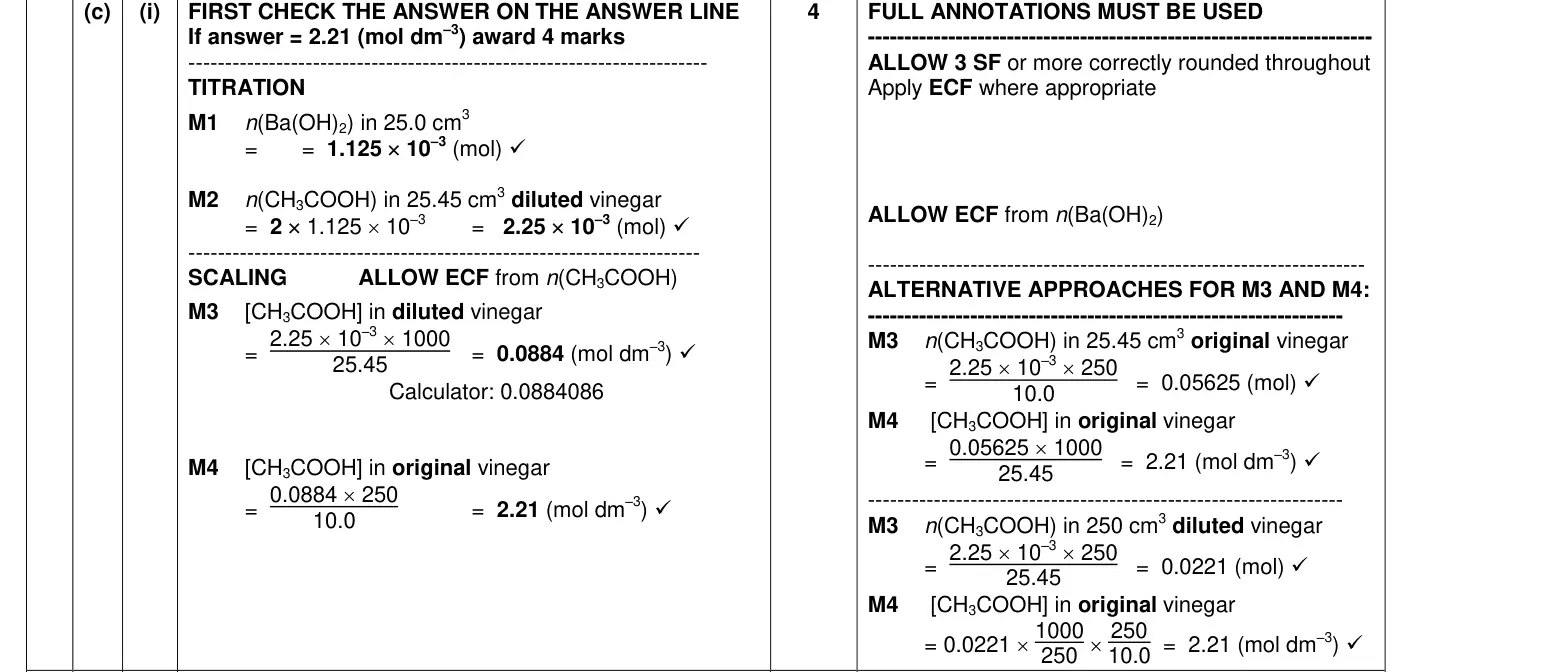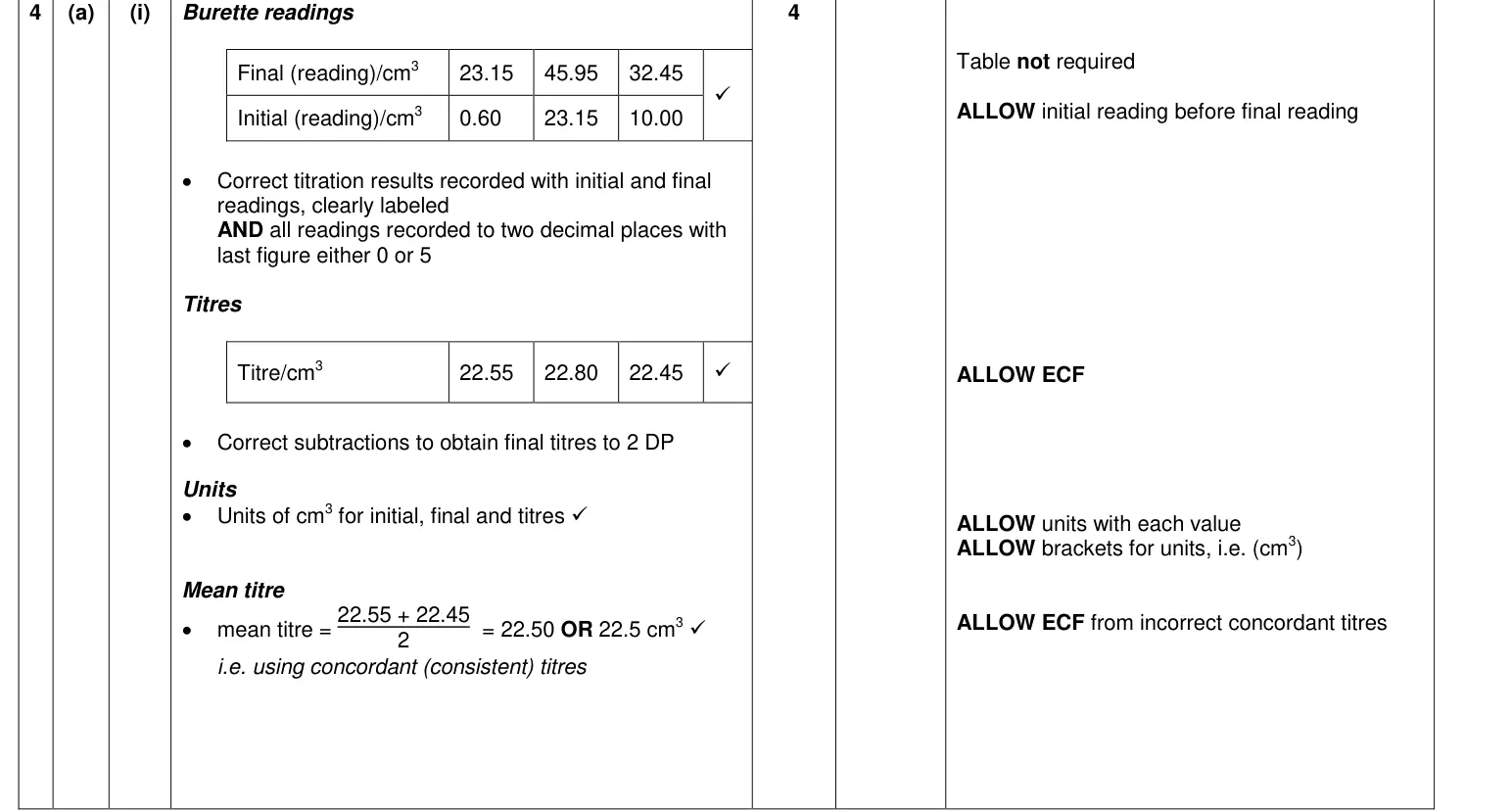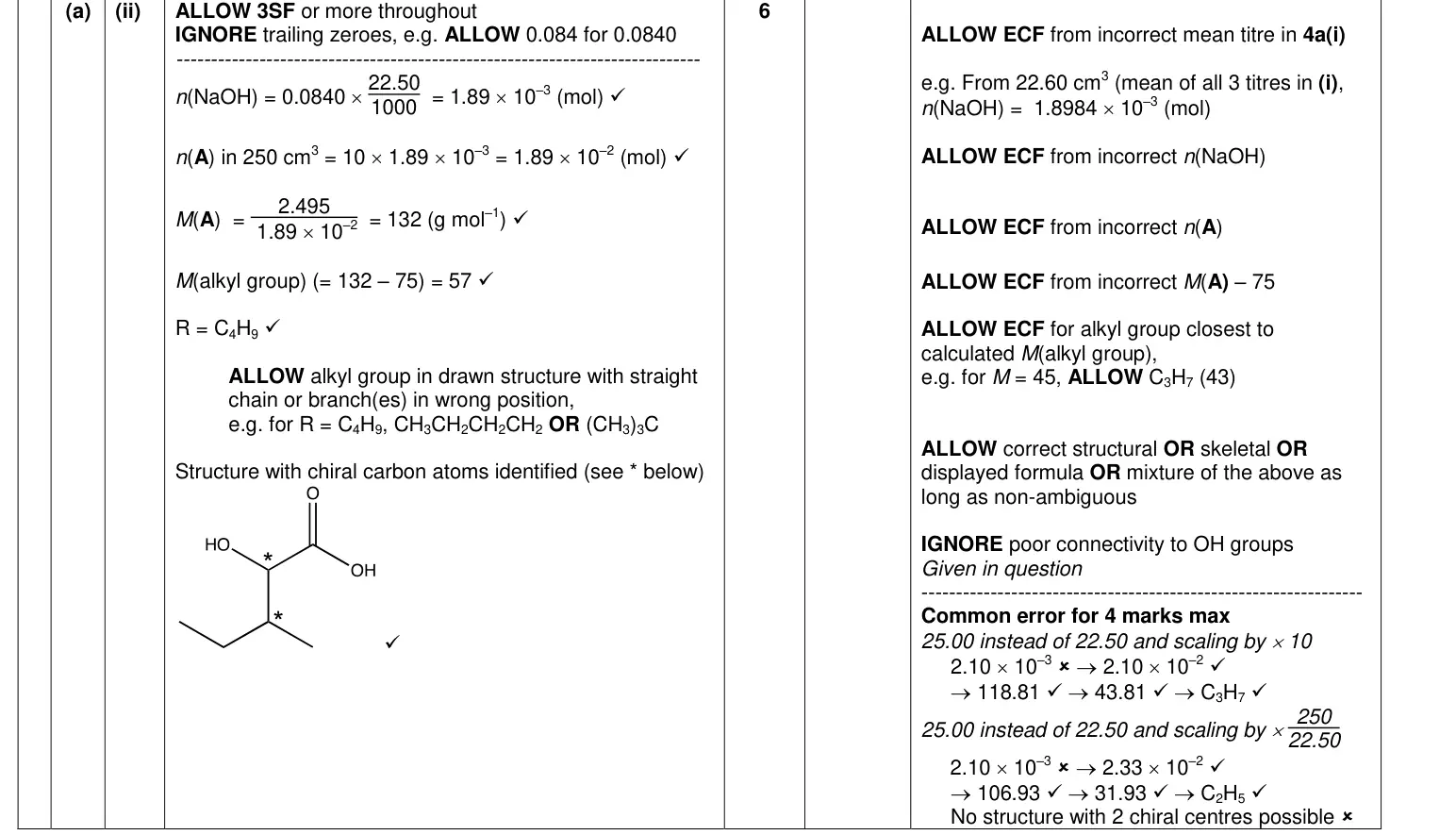
Answer
A
Mark scheme

Examiner's comment
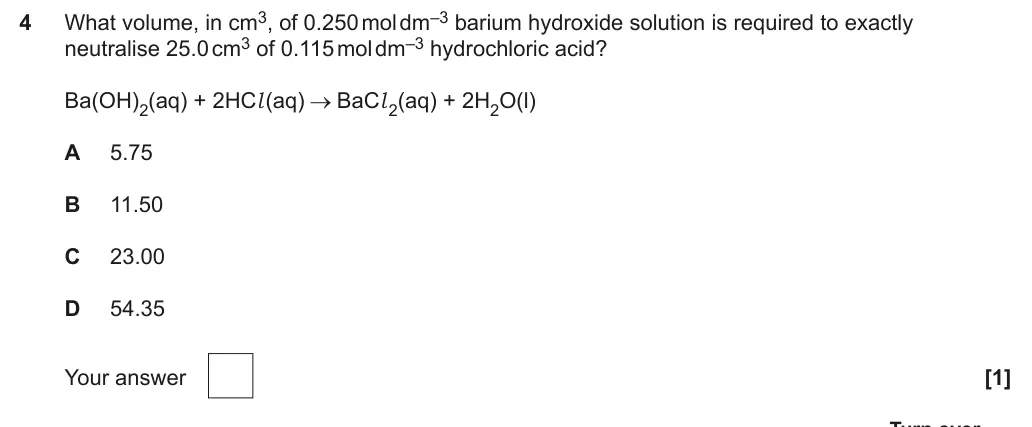
The correct answer was A. Most students were able to complete this titration calculation. B was a common incorrect answer seen as candidates did not consider the stoichiometry in the equation.
Notes and key-term cards for this topic are being written by our tutors. The past-paper questions below are ready now.
| Series | Paper | Q | What it asks |
|---|---|---|---|
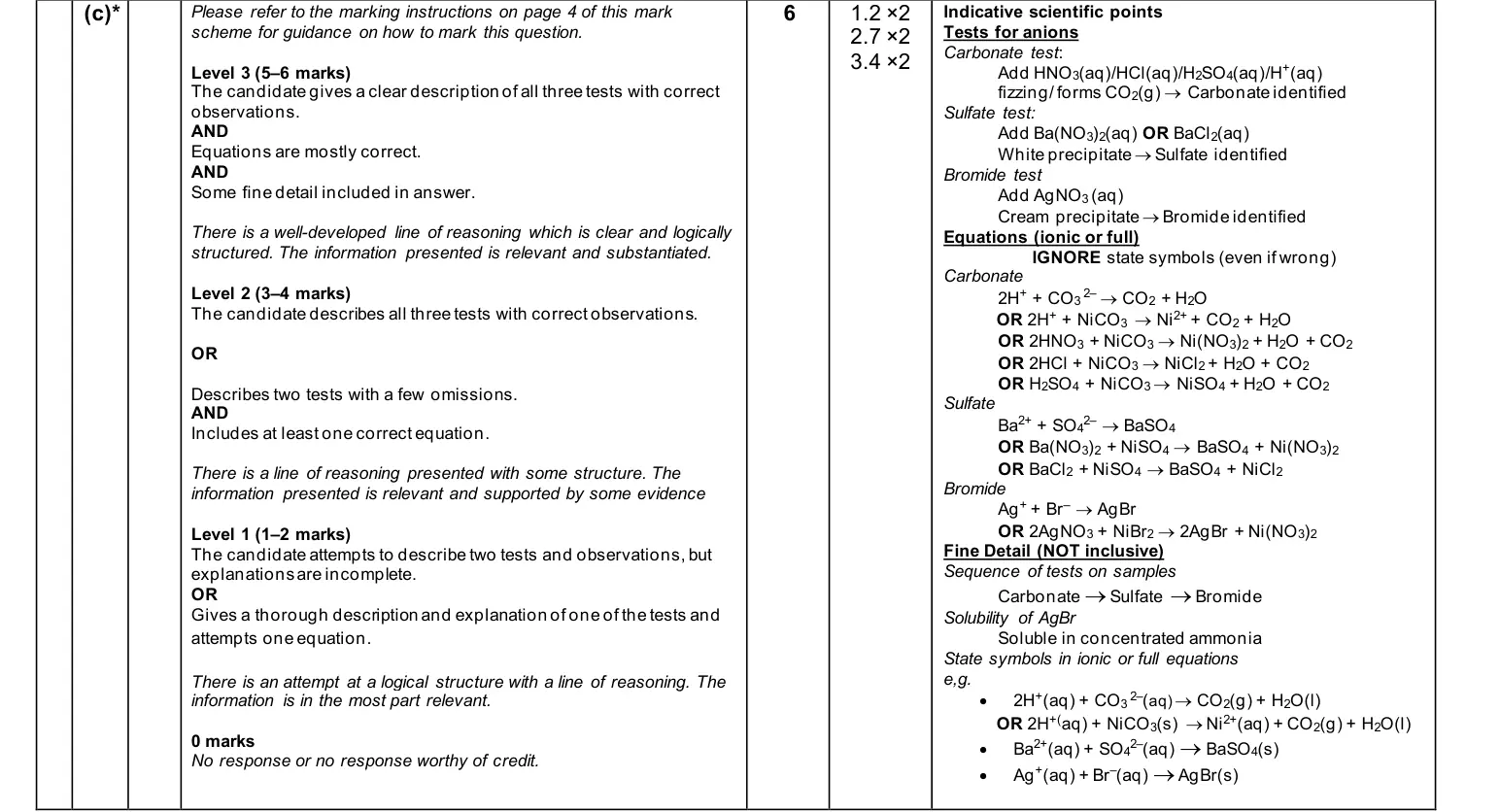
| November 2020 | AS Paper 2 | 1(c) | A student is provided with samples of three nickel compounds. Describe the tests that the student could carry out to identify the anion (negative ion) in each |
| June 2019 | AS Paper 2 | 2(a) | A student plans to prepare 250.0 cm3 of a 0.4000 mol dm–3 solution of magnesium nitrate, Describe how the student would prepare the solution, giving full details of quantities, |
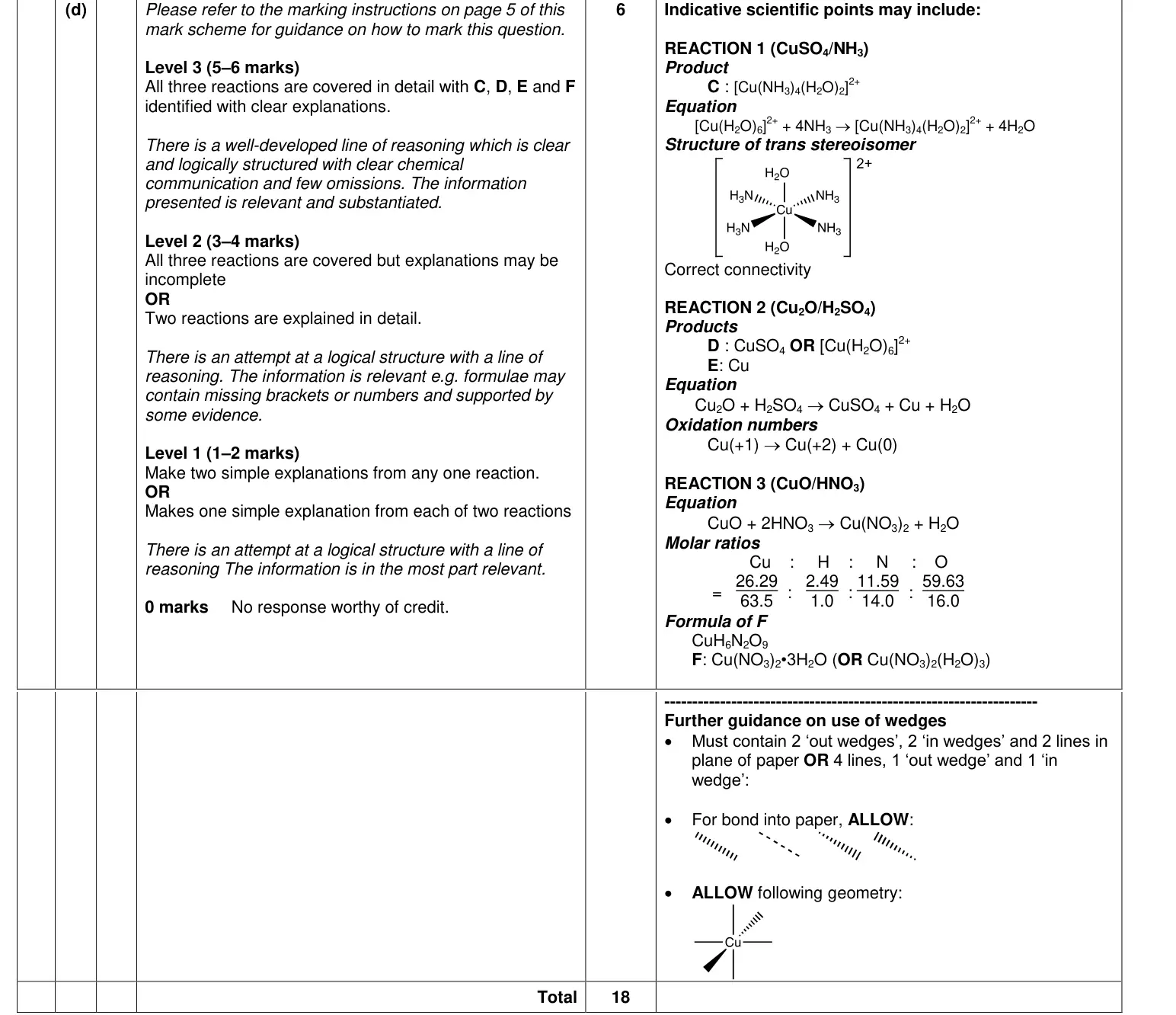
| June 2018 | Paper 1 | 21(d) | Three different reactions of copper compounds are described below. Identify C–F by formulae or structures, as appropriate. |
A
The correct answer was A. Most students were able to complete this titration calculation. B was a common incorrect answer seen as candidates did not consider the stoichiometry in the equation.
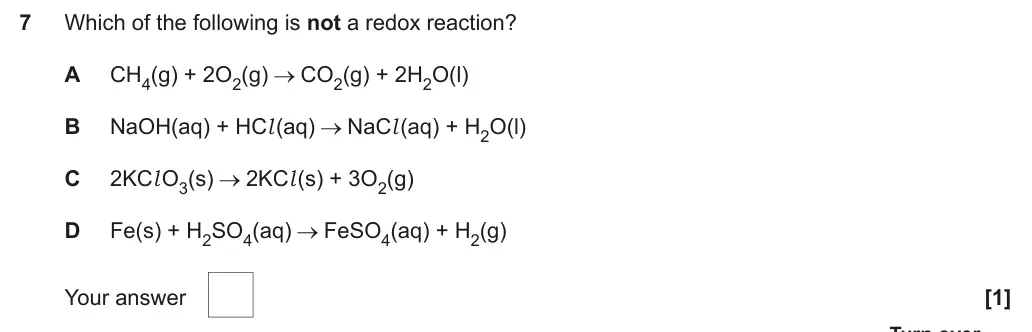
B
Many candidates wrote oxidation numbers below the equations, which is generally good practice. However, in this case, the incorrect options can be quickly excluded as they include an element with an oxidation state of zero, which clearly changes in the reaction. Over half obtained the correct response of B (a neutralisation reaction).
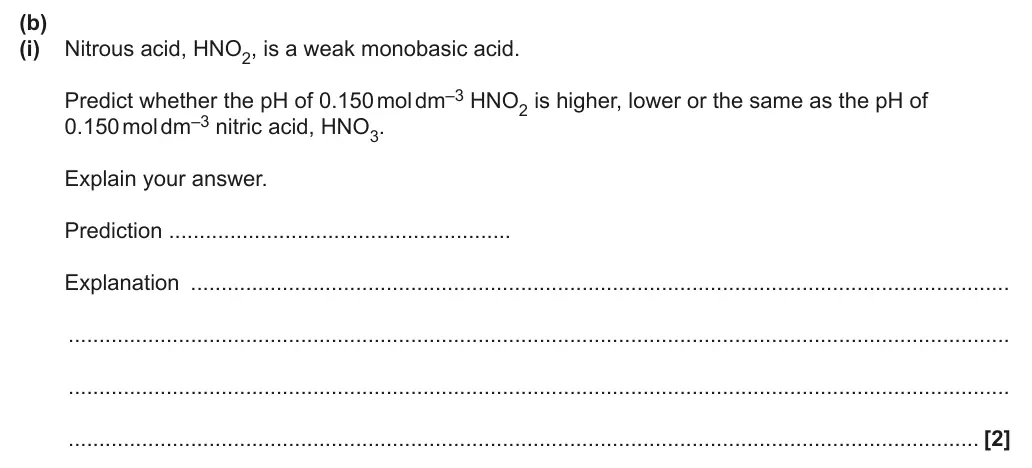
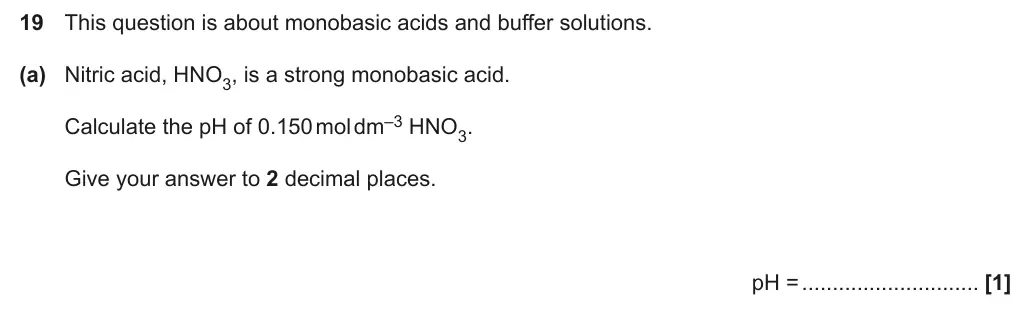
This question required that the candidate understood that pH was a function of both the dissociation and concentration of H+ for a weak acid. This did prove more challenging and often was not explained well. Less successful candidates often quoted a lower pH, explained that it didn’t fully dissociate (rather than partially dissociate) or didn’t link the number of H+ ions to a concentration.
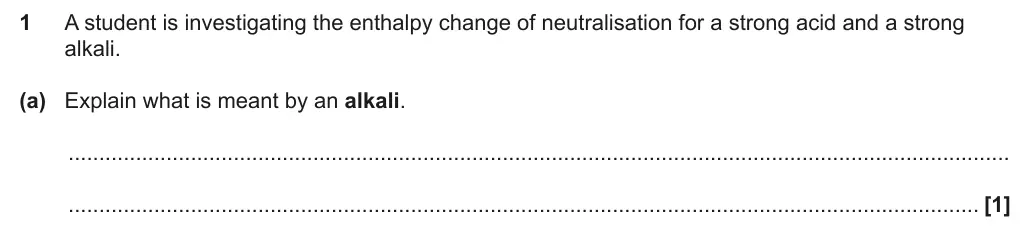
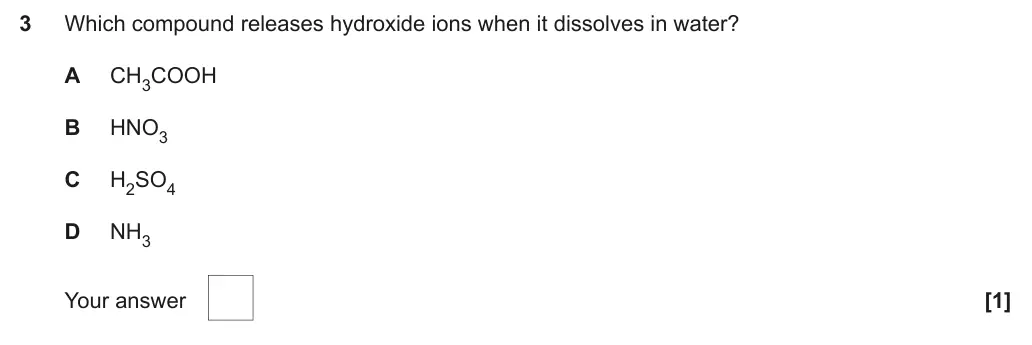
Most correctly related an alkali to the “release of OH- ions”. Responses which did not score a mark usu- ally stated that the ”pH is greater than 7” or an alkali is “a proton acceptor” or gave simple explanations such as a “soluble base” or “neutralises an acid”.

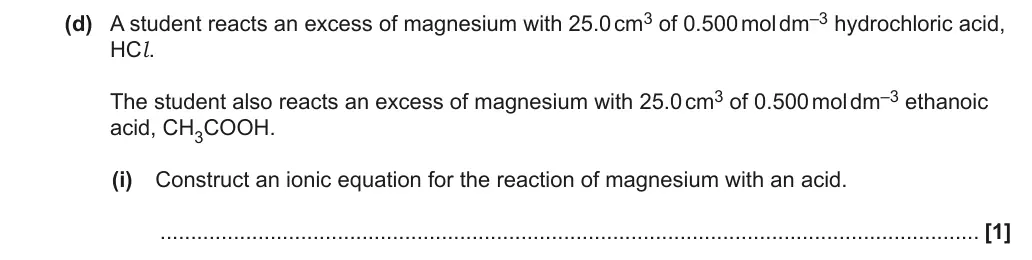
Most candidates were able to write the ionic equation. Common incorrect responses included giving the full equation, word equation or using the spectator ions i.e. Na+ + Cl- → NaCl
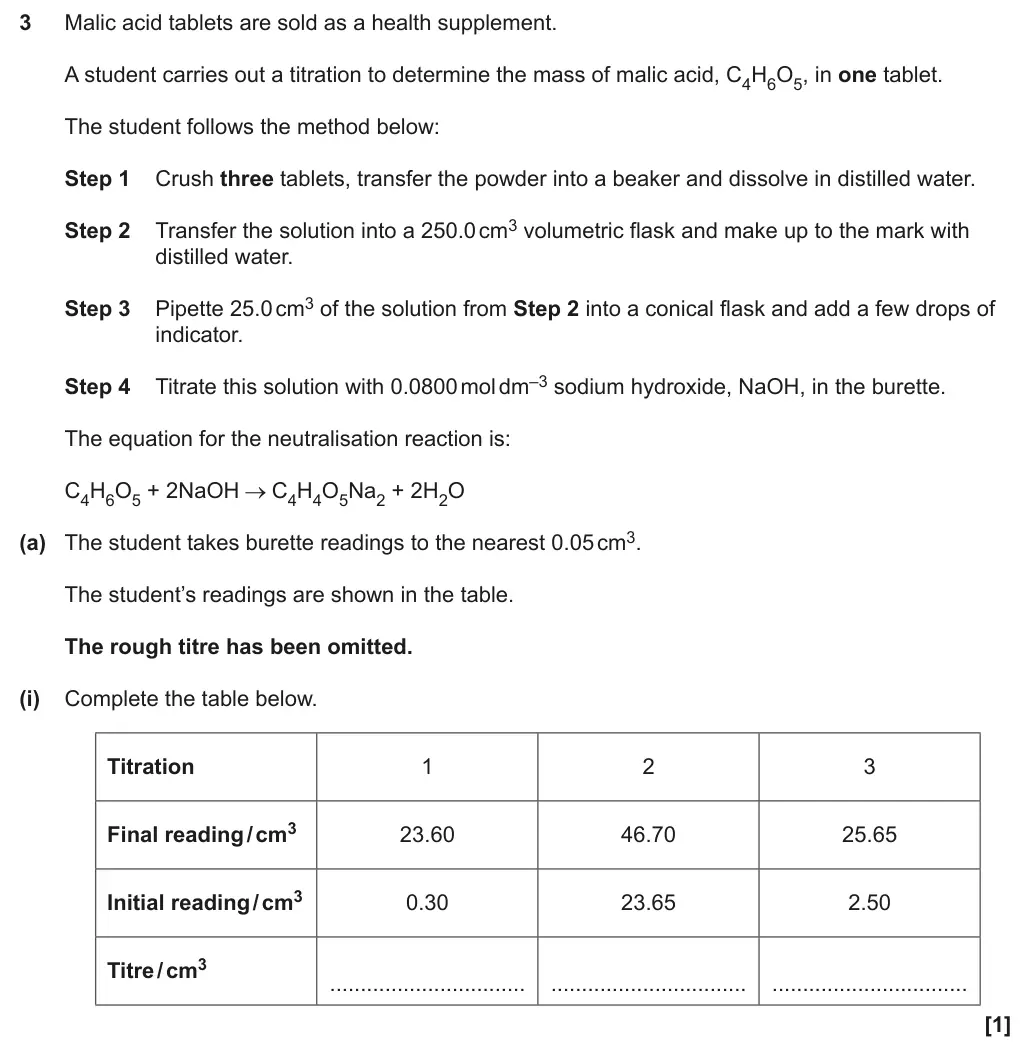
Very few lost this mark and when they did it was usually for the giving the first titre to only 1 decimal place. Occasionally arithmetic errors were seen.
Skills: PAG2 Acid–base titration
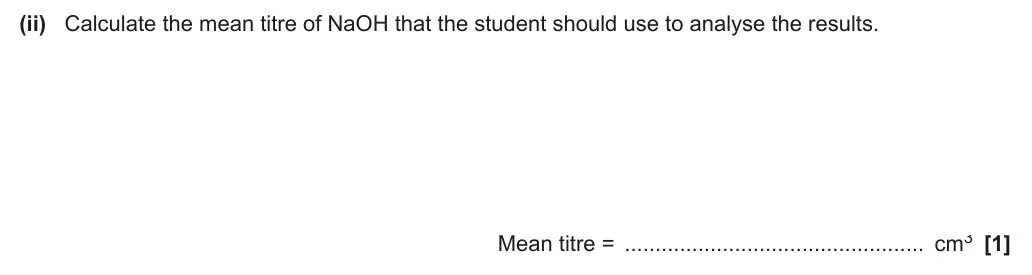
Most scored here. A minority used all three titres for the mean and even fewer used 23.30 in the calcula- tion with either of the other two values.
Skills: M1.2 Find arithmetic means; PAG2 Acid–base titration
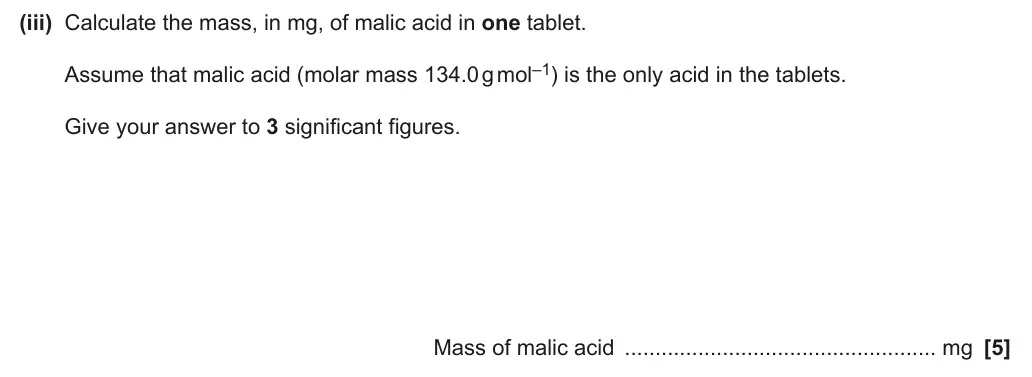
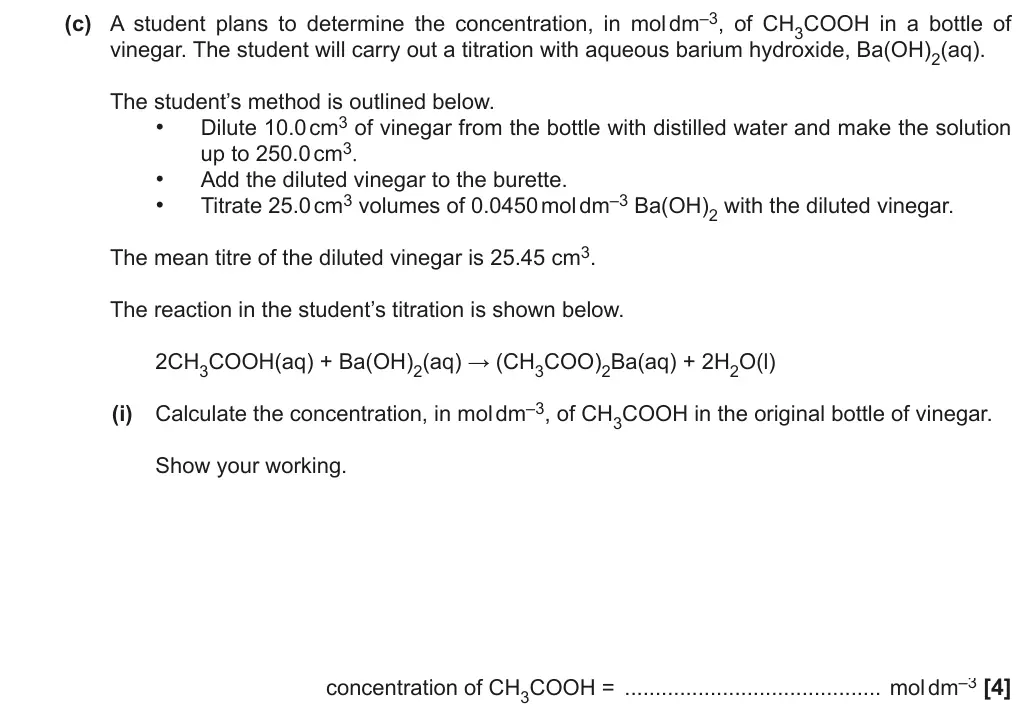
Many responses were well constructed and showed most of the stages. This made it much easier to award error carried forward (ECF) marks if a correct response was not obtained. Around a quarter of candidates were able to score all 5 marks. Almost all candidates scored the first 2 marks. However, it was sometimes hard to follow the steps a candidate had taken to obtaining a final response, due to: • Steps not being labelled • Steps merging into one another (all equalling each other despite different processes) • Competing alternative methods described without crossing through incorrect working. Many candidates did not gain marks for unit conversions i.e. not converting volumes from cm3 to dm3 and incorrectly converting g to mg. Some did not gain marks for missing the × 10 step. Lower-attaining candidates often didn’t use the titre value obtained in (ii) but used 25 cm3 instead, muddling which vol- ume value should be attributed to which reactant. Maths Skills for AS Chemistry It is important for candidates to have the opportunity to develop their maths skills as part of the course. Particular attention should be paid as to how to: • Setting out the working for calculations • Keeping the full value of any step in their calculator to use in the next step • Common unit conversions, e.g. dm3 to cm3 • Giving the final answer to an appropriate number of significant figures or that asked for in the question • Checking their working for any errors Some support can be found in our Maths Skills Handbook: https://www.ocr.org.uk/Images/295468-chemistry-mathematical-skills-handbook.pdf This article from the RSC contains some useful resources: https://edu.rsc.org/resources/maths-skills-for-chemistry/4013899.article
Skills: M0.0 Recognise and make use of appropriate units in calculations; M0.2 Use ratios, fractions and percentages; M1.1 Use an appropriate number of significant figures; M2.3 Substitute numerical values into algebraic equations using appropriate units for physical quantities; PAG2 Acid–base titration
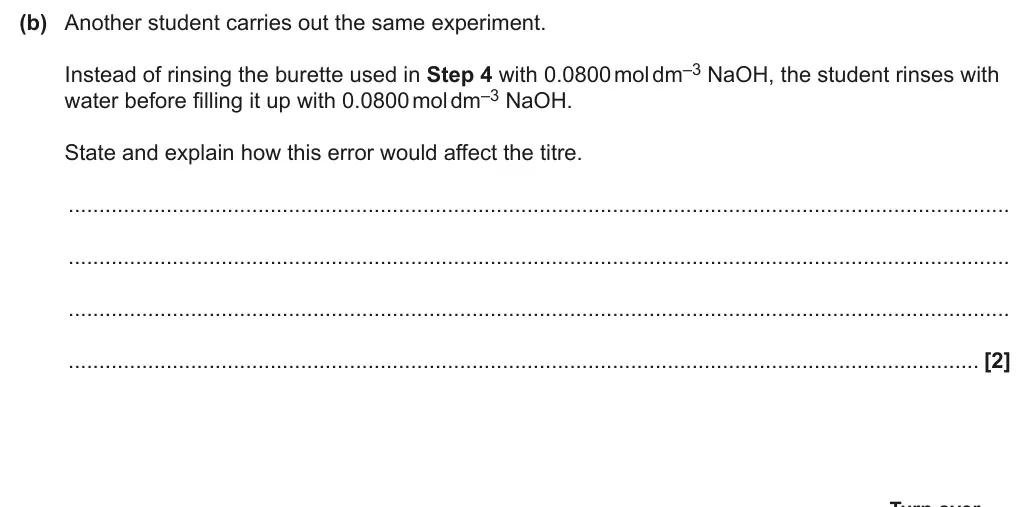
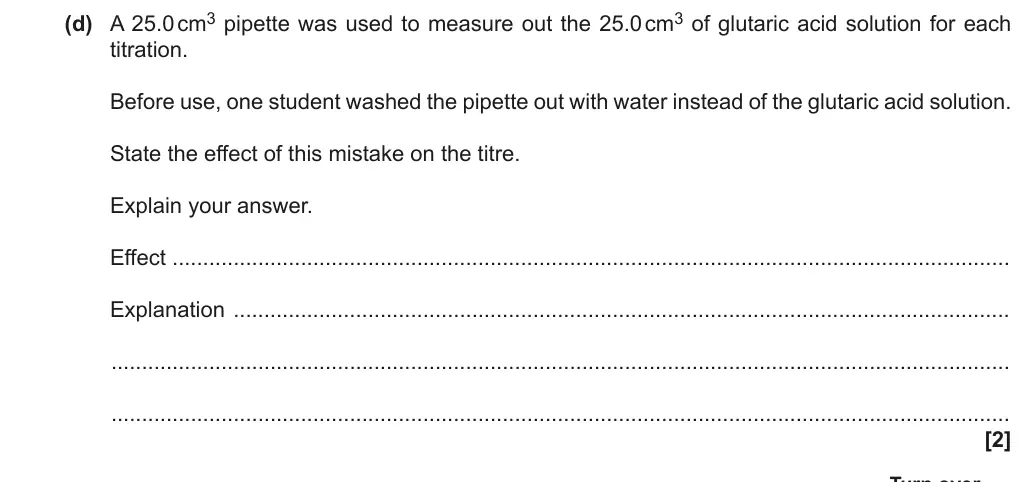
Around half of the candidates scored both marks, understanding the impact on the titre of rinsing the bu- rette with water. It was essential for candidates to refer to the “titre” and not just the volume in their re- sponse. Some understood that the NaOH would be more dilute but then suggested it would give a smaller titre or didn’t give impact on the titre value at all. Some suggested that the water provided OH- ions thus de- creasing the amount of NaOH required to neutralise. A few gave non-committal responses such as “Water would alter the concentration of NaOH, so you wouldn’t get an accurate titre” so scored 0 marks.
Skills: PAG2 Acid–base titration
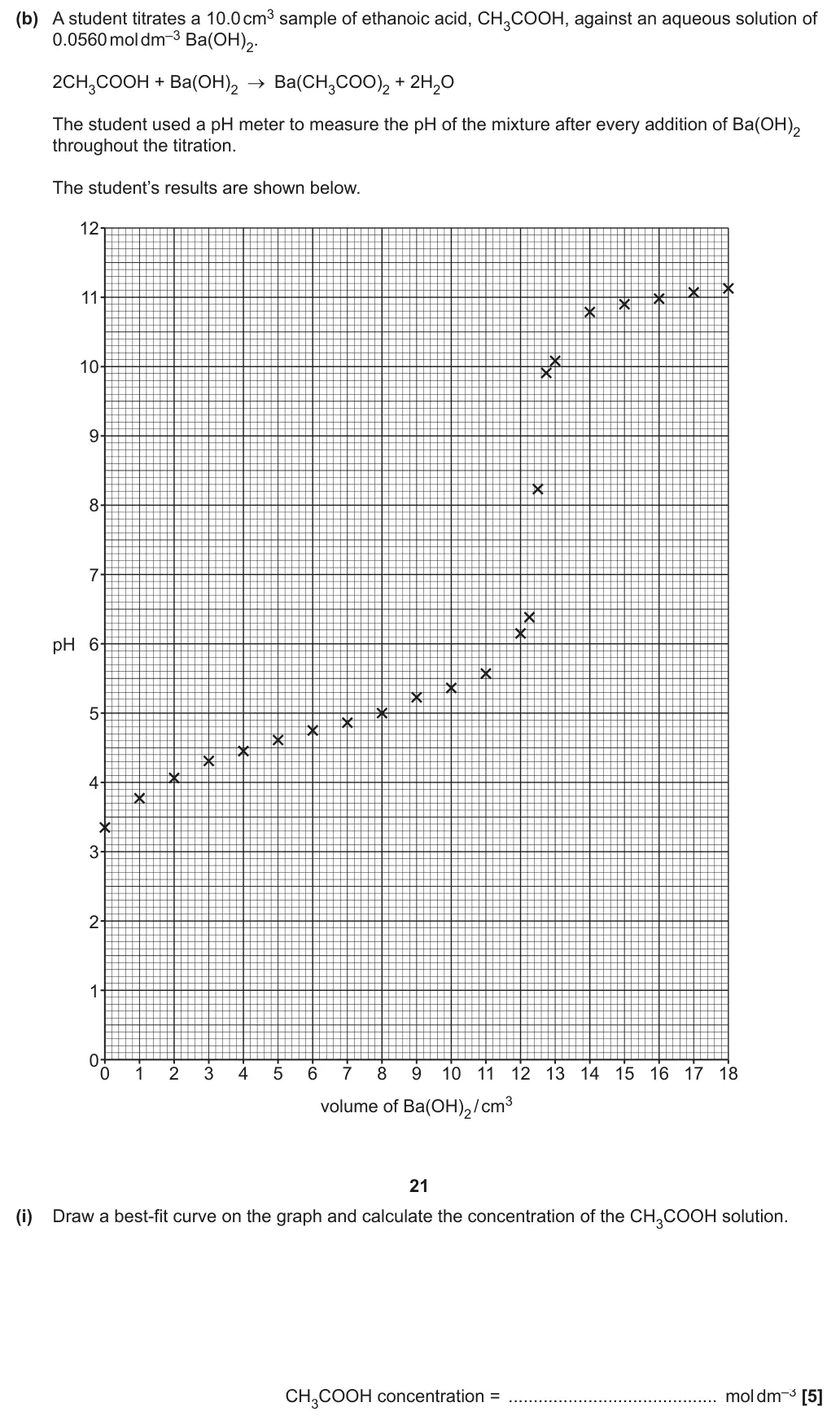
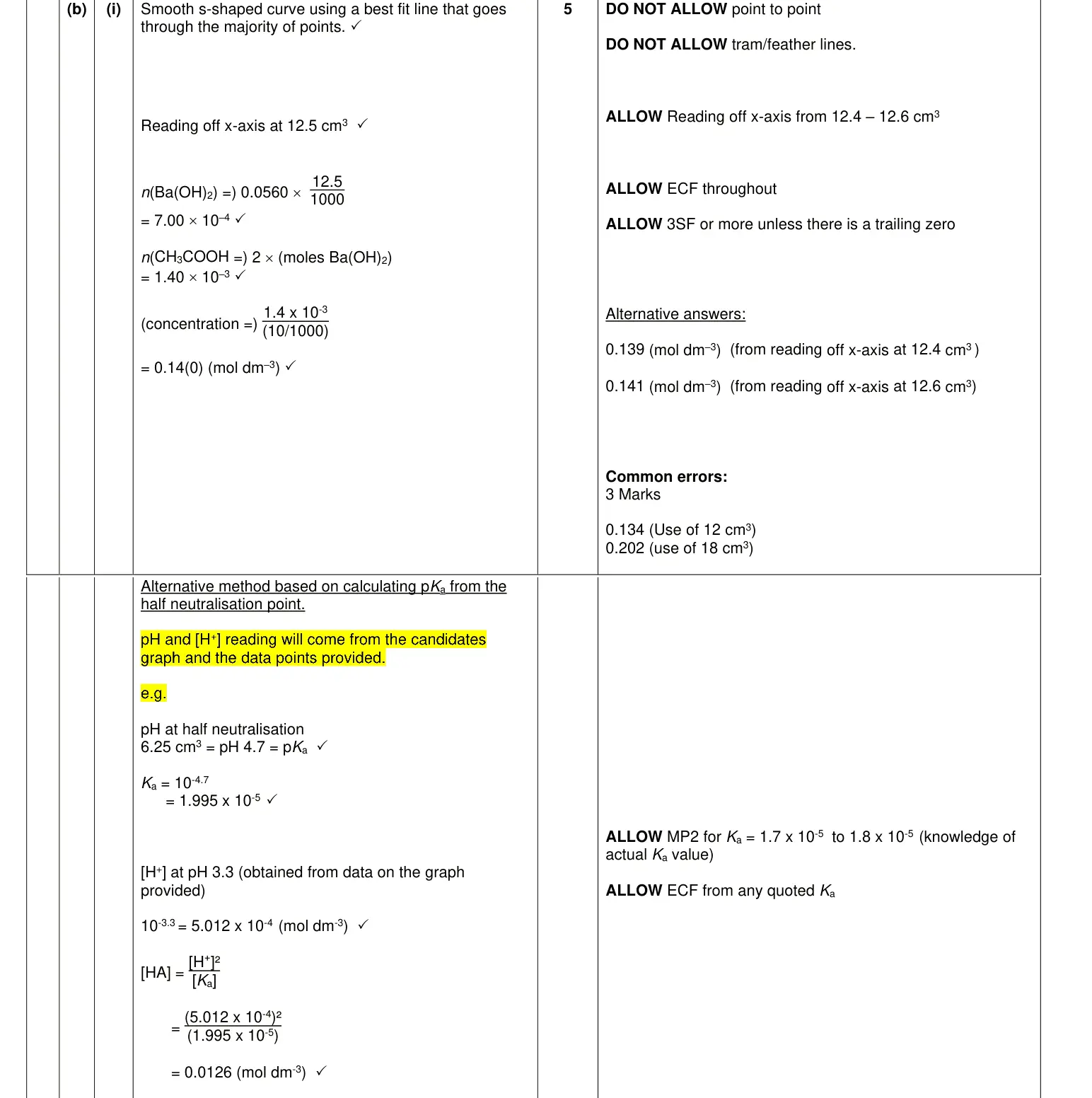
Nearly all candidates were able to draw the line of best fit and linked the sharp vertical section of the graph with the volume of Ba(OH)2 needed to neutralise the ethanoic acid. Candidates should aim to produce a smooth line of best fit and avoid ‘tram’ lines when the pencil is taken off the paper and the curve started again. The line should go through most points. Some candidates misinterpreted the graph and used values of 8, 12, 12.2, 12.25 and 18. However, the remainder of the calculation was accessible, and most candidates scored well with ECF marks from this point. There was occasional division of 2 for the moles of ethanoic acid and dividing by the original volume of Ba(OH)2 rather than the 10cm3 of ethanoic acid. This candidate scored all available marks. This is a very good example of a candidate displaying their working. The response was well communicated indicating the end point, links were made to what was being calculated and how the next number was obtained.
Skills: M0.0 Recognise and make use of appropriate units in calculations; M0.2 Use ratios, fractions and percentages; M3.2 Plot two variables from experimental or other data; PAG11 pH measurement; PAG2 Acid–base titration
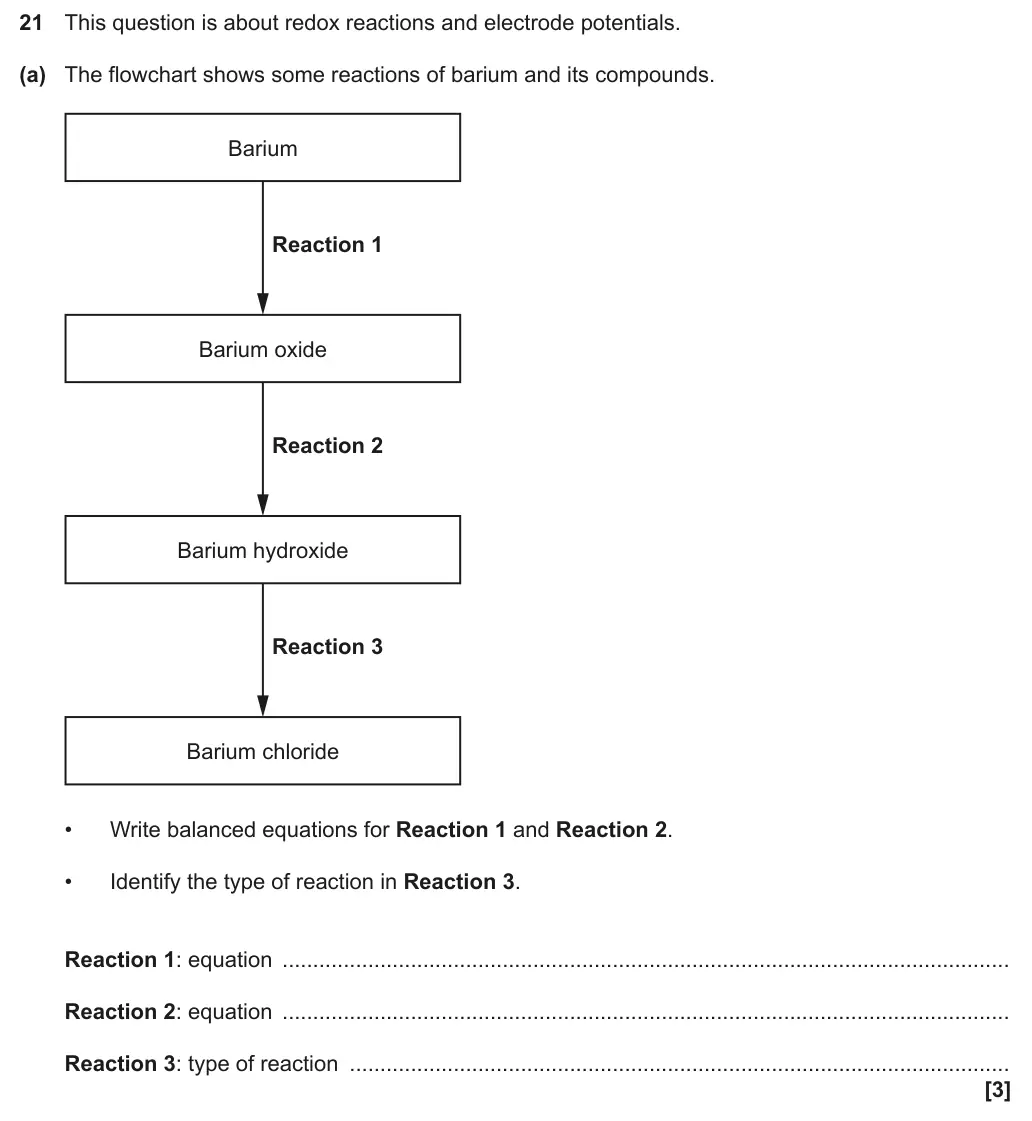
Some candidates coped well with this question which was based on the AS part of the specification and gained all three marks. Common errors were for unbalanced equations in reaction 1 or adding H2 to the product of reaction 2. Reaction 3 was often, incorrectly, considered as: redox, halogenation, nucleophilic substitution or a precipitation reaction.
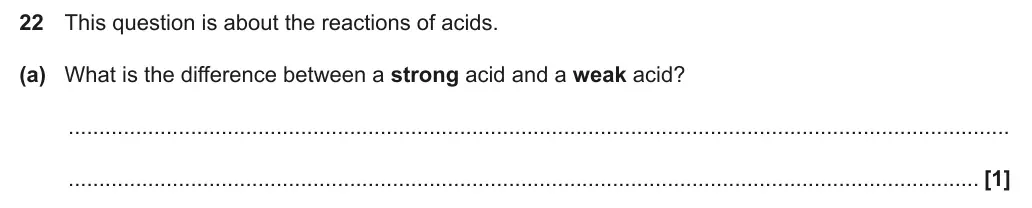
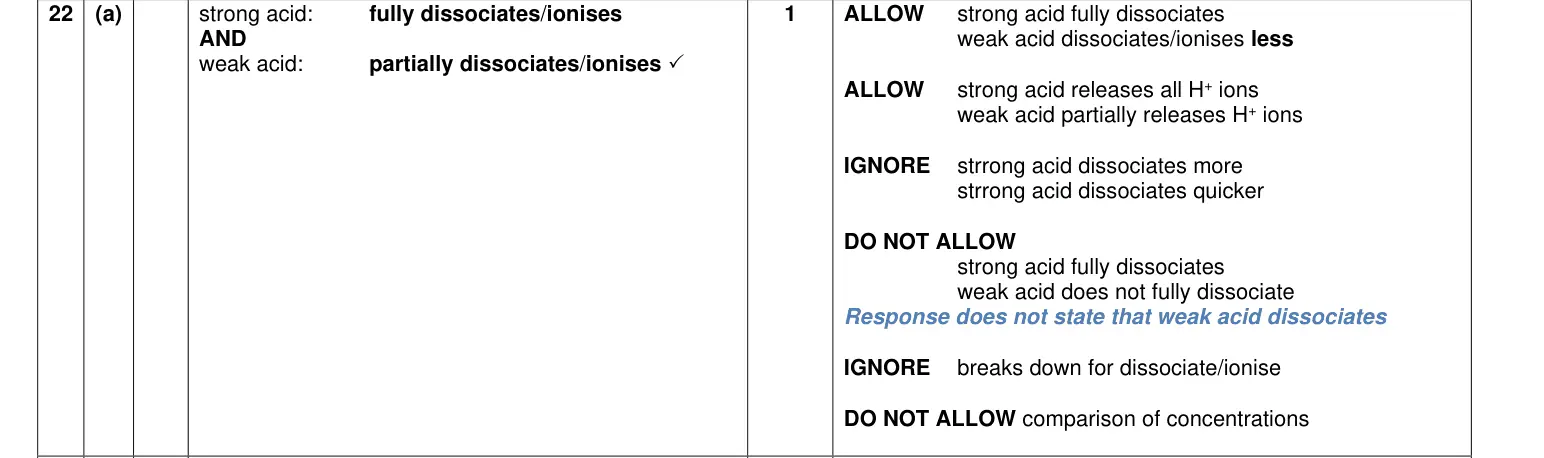
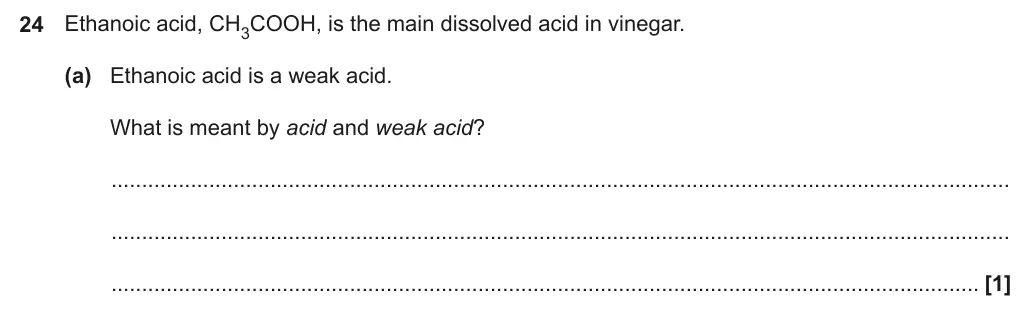
Most candidates described a strong and a weak acid in terms of dissociation or ionisation, with few just describing one of the two types of acid.
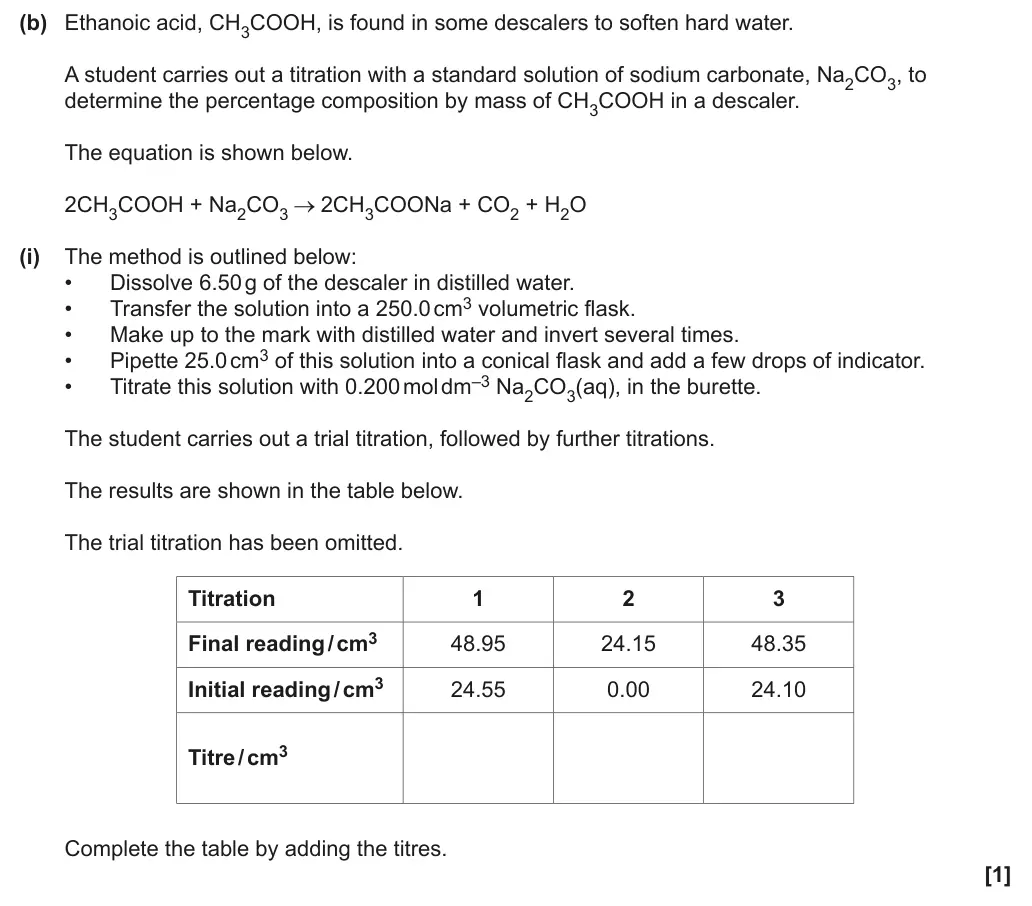
Most candidates were able to work out these simple subtractions. Candidates were told that the titration readings were read to the nearest 0.05 cm3, requiring volumes to be recorded to two decimal places, which may include a ‘0’. The right-hand initial reading is therefore 24.10 cm3 and not 24.1 cm3, which continues to be the commonest error seen.
Skills: PAG2 Acid–base titration
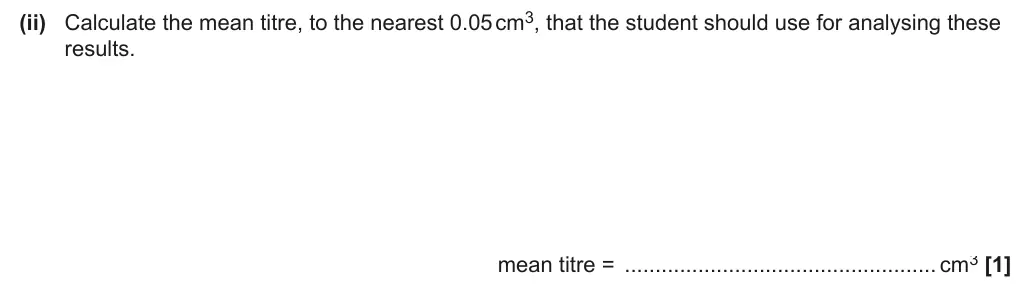
Candidates are expected to use only concordant titres when working out the mean titre and the left-hand titre of 24.40 cm3 should be rejected. Most candidates did this to produce 24.20 cm3 as their mean titre. Use of 24.2 was allowed because rounding of a ‘0’ as the second decimal place had already been penalised in Question 21 (b) (i). Predictably, the most common error was to use all three titres to produce the incorrect mean of 20.27 cm3.
Skills: M1.2 Find arithmetic means; PAG2 Acid–base titration
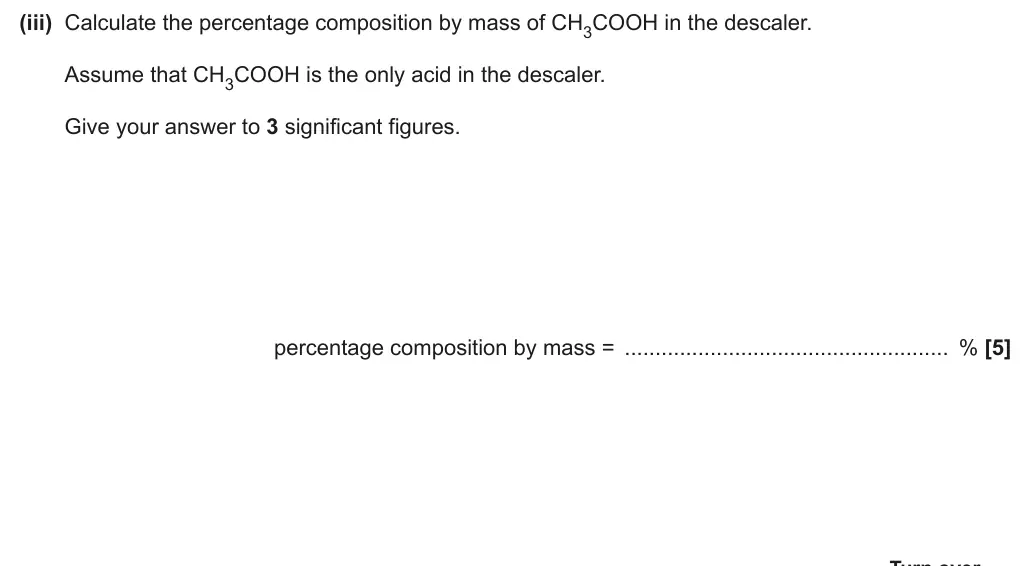
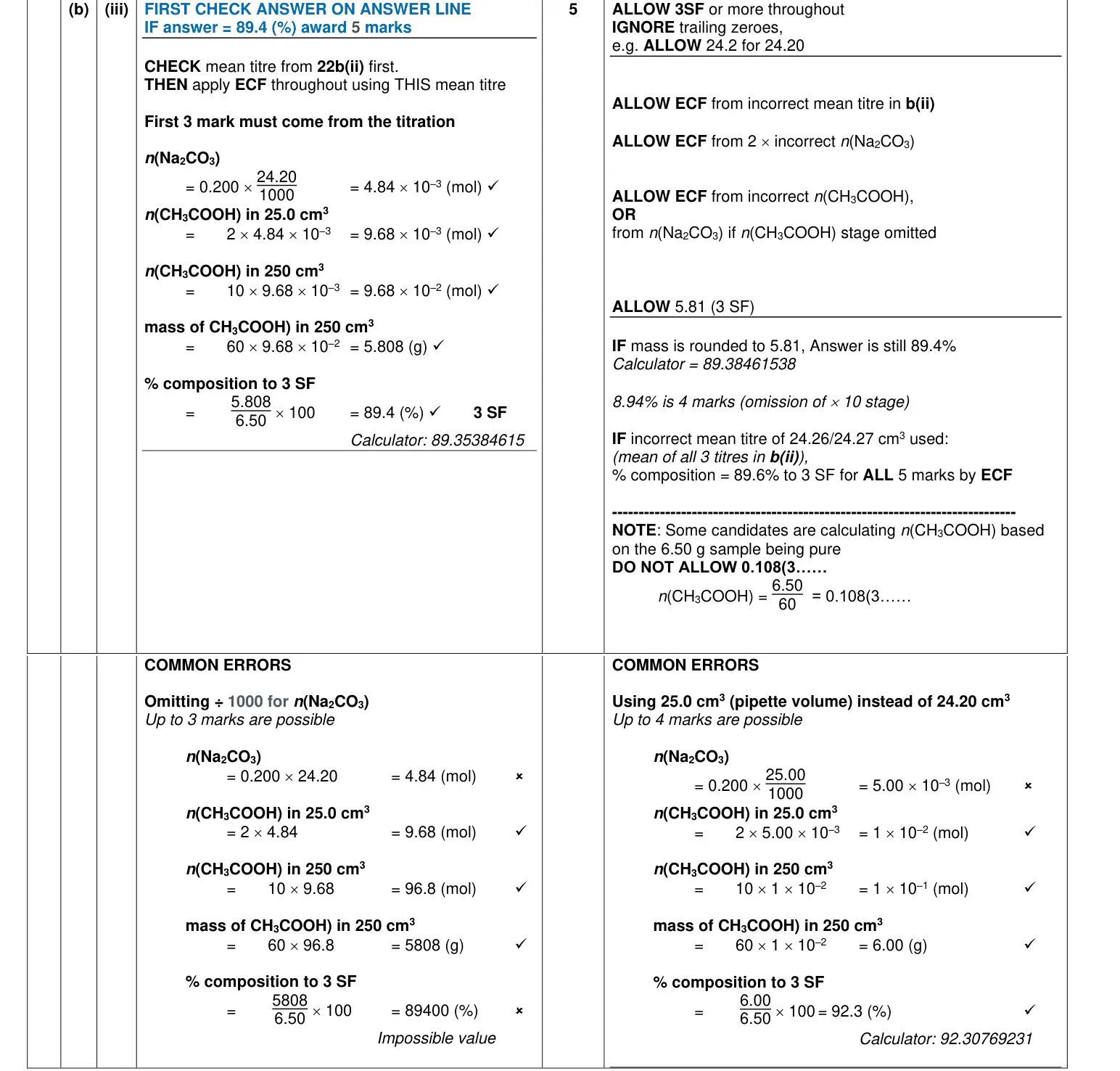
Many candidates followed a well drilled method to analyse their titration results: • Moles of Na2CO3 in the mean titre • Moles of CH3COOH in 25 cm3 • Scaling 10 for moles of CH3COOH in 250 cm3 Candidates then needed to process their titration results further to determine the percentage composition: • Mass of CH3COOH in 250 cm3 • Percentage composition of CH3COOH to 3 significant figures. Most candidates were able to make some progress through the analysis. Common errors included: • Not 2 to obtain the moles of CH3COOH • Omission of the scaling stage. Some candidates ignored the titration results entirely, instead calculating the number of moles of CH3COOH in 6.5 g of the descaler as 0.1083 mol by assuming that all of the descaler was CH3COOH. This approach was flawed and could not be given any marks. A final comment must be made about the presentation of many of the responses. Numbers had often been sprayed across the page and it could be difficult to see how these related to a cohesive solution. It was often impossible to give marks for such responses. The question discriminated extremely well with some candidates given all 5 marks. Less successful responses demonstrated problems with approaching this type of question and some were given no marks at all. CH3COOH from 25 to 250 cm3. The result is a percentage composition of 8.94 % instead of 89.4 %. The clear presentation allowed the examiner to follow how the incorrect response had been obtained. Error carried forward allowed marks can be given for a correct method, giving a total of 4 out of 5 marks.
Skills: M0.0 Recognise and make use of appropriate units in calculations; M0.2 Use ratios, fractions and percentages; M1.1 Use an appropriate number of significant figures; PAG2 Acid–base titration
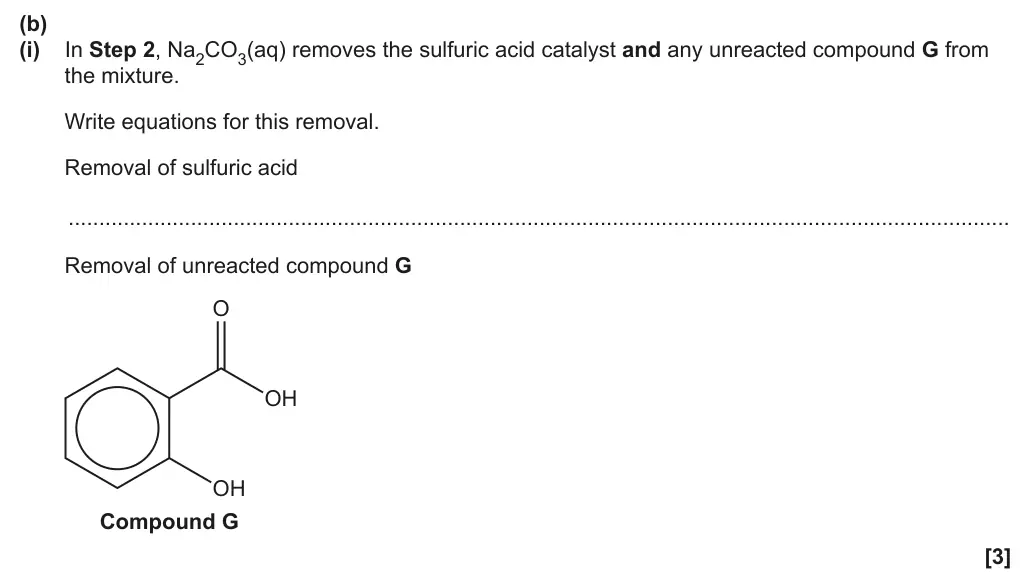
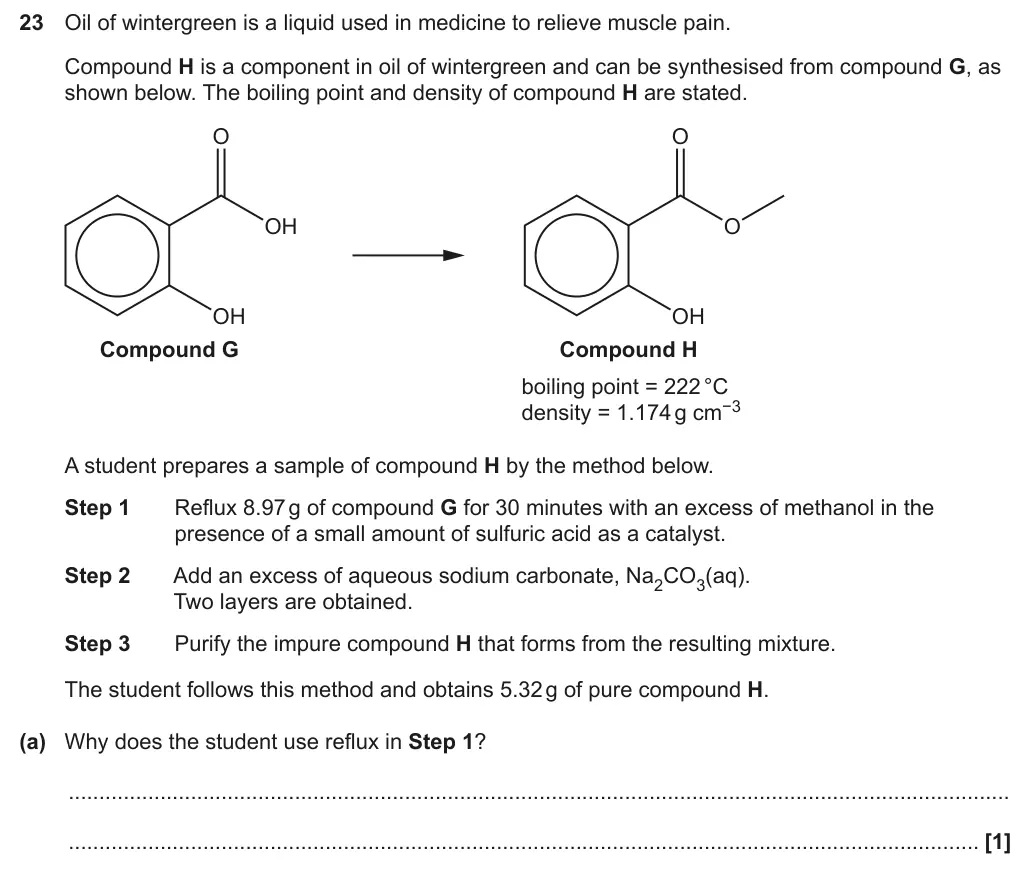
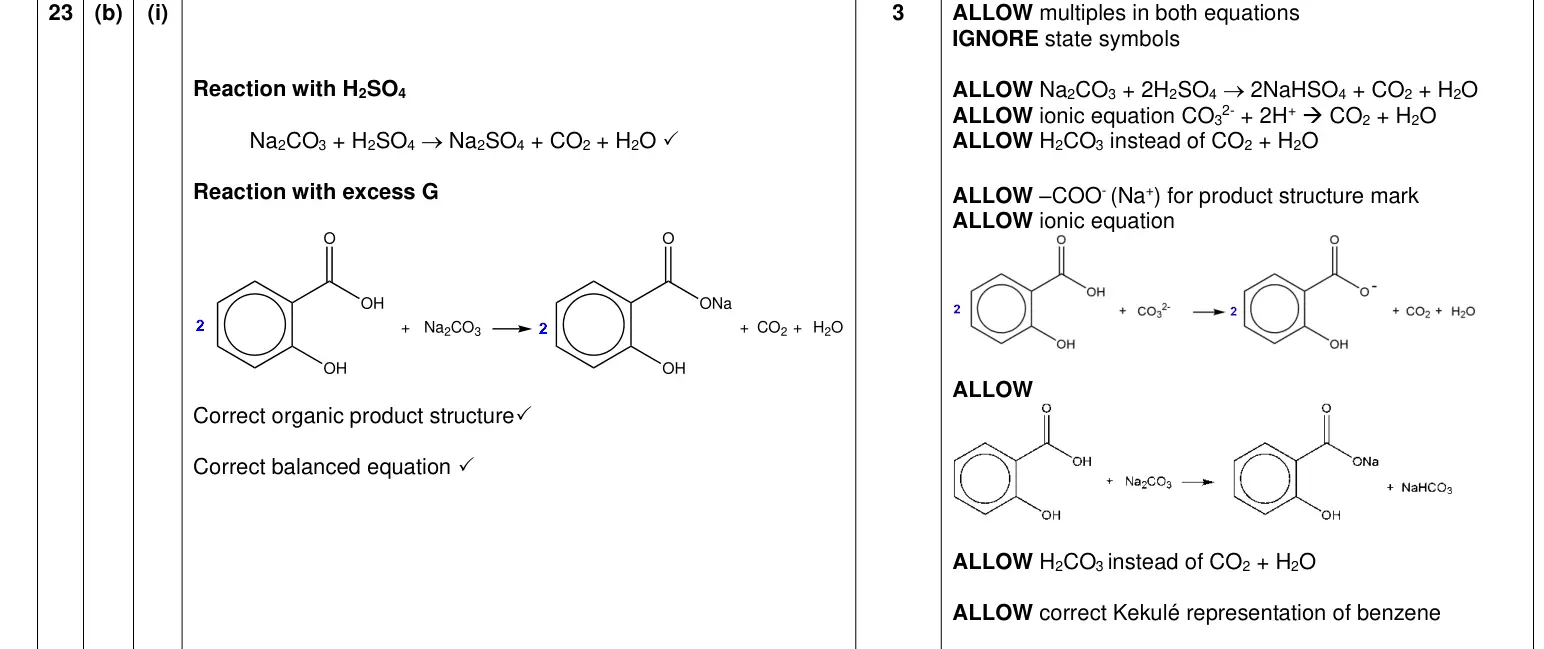
Another fairly challenging question, however most secured at least one mark for giving an equation for the reaction of sulfuric acid with sodium carbonate. Less confident candidates struggled to gain any marks as they were unable to give correct formula for sodium sulfate, giving NaSO4 for example. Although many attempted the equation showing the reaction of compound G with sodium carbonate, only some correctly identified that only the carboxyl group would react, not the phenol. A small minority of students were able to balance the second equation gaining all 3 marks.
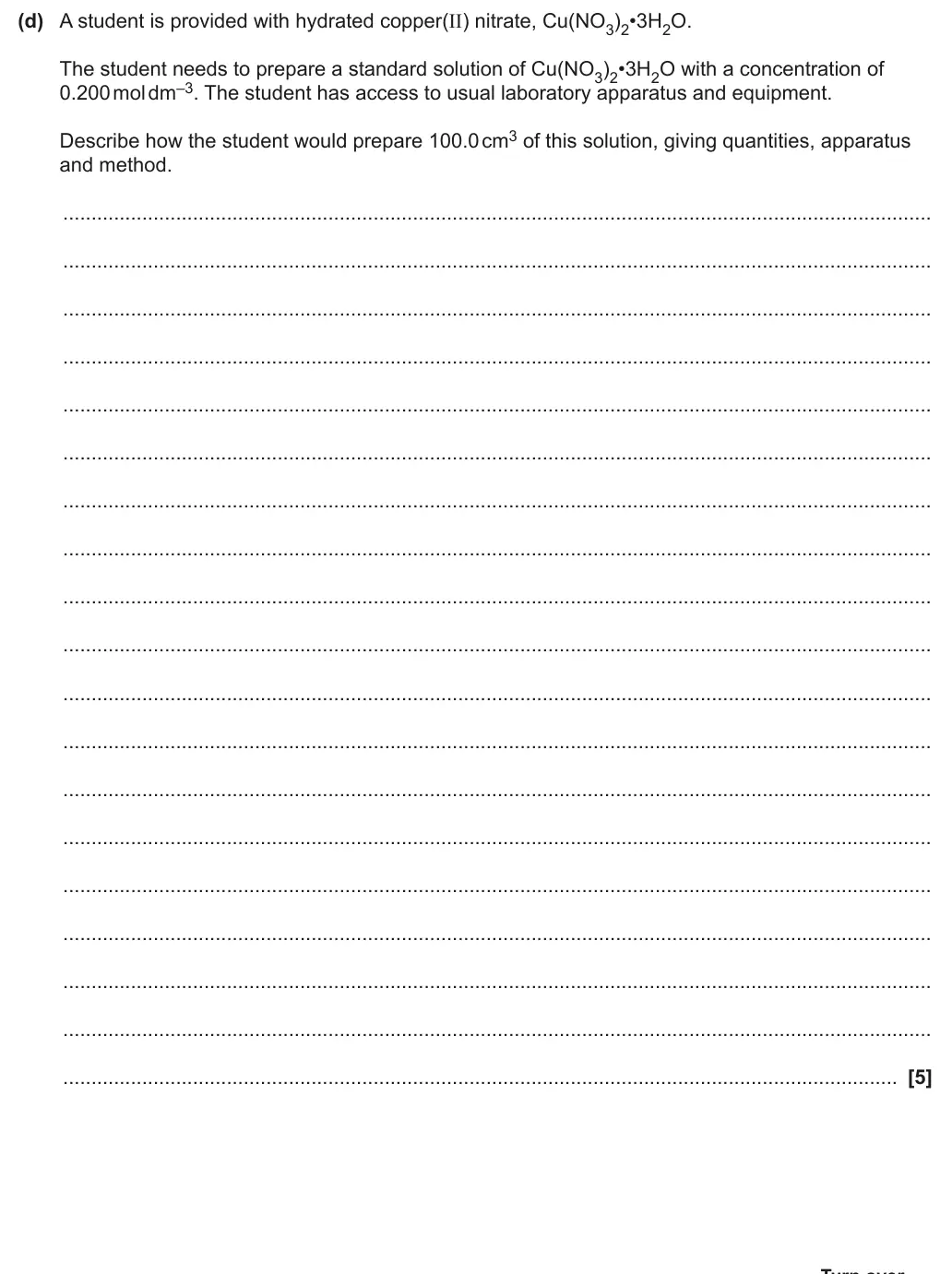
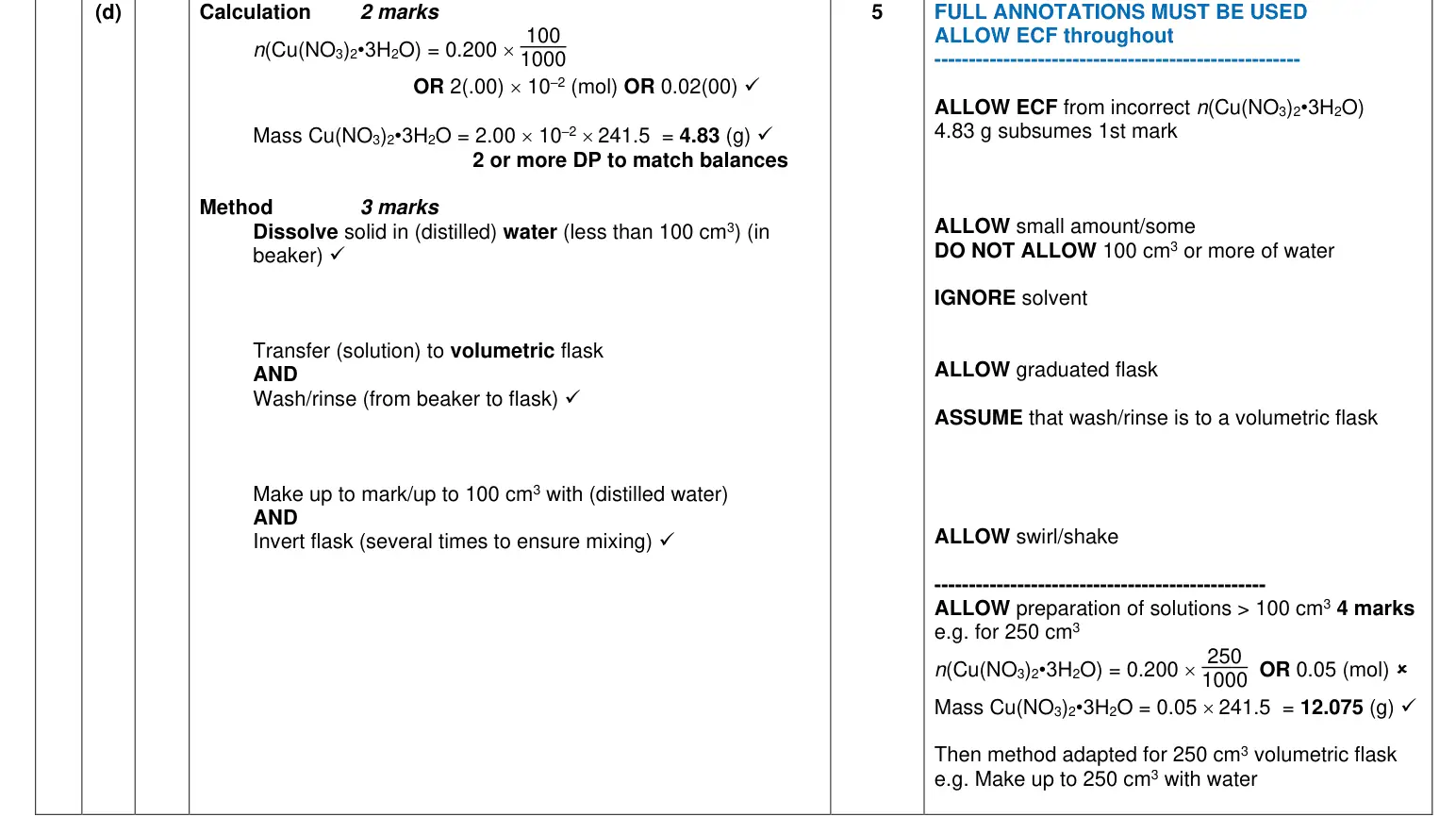
This question differentiated between candidates extremely well. See Exemplar 1 below. some of the issues encountered in the responses. Unfortunately, nearly a quarter of candidates could not be given any marks at all for their responses. To improve, it is worth studying Exemplar 1. The candidate has communicated the key steps required to prepare the standard solution: • Calculation of the mass of hydrated copper(II) nitrate required. • Dissolving the hydrated copper(II) nitrate in water in a suitable container (a beaker). • Transferring the solid to a 100 cm3 volumetric flask, washing the beaker with water and transferring the washings also to the volumetric flask. • Making the solution up to the 100 cm3 mark in the volumetric flask and inverting the flask to mix the contents thoroughly. Issues with responses which arose by not reading the question closely enough: • Omitting to calculate the mass of hydrated copper(II) nitrate required. • Calculating the mass of anhydrous copper(II) nitrate instead of the hydrated salt. • Dissolving in 100 cm3 of water and then adding more water for rinsing. • Not rinsing out the original container at all. • Making the solution up in the volumetric flask. • Using of a 250 cm3 volumetric flask for preparing 100 cm3 of solution. • Omitting the inversion stage. • Answering a different question, e.g. how to carry out a titration, how to determine an enthalpy change, how to work out the number of waters of crystallisation by heating in a crucible.
Skills: M0.0 Recognise and make use of appropriate units in calculations; M0.2 Use ratios, fractions and percentages; PAG2 Acid–base titration
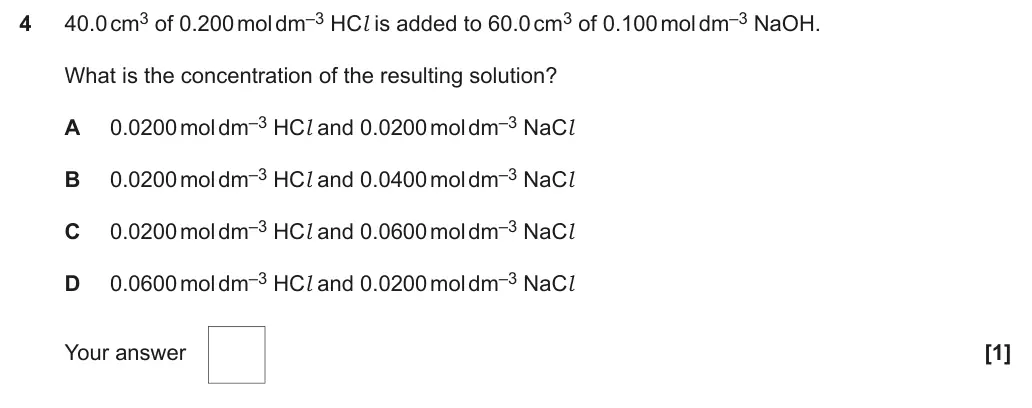
C
This question was answered correctly for the most part with the answer being C.

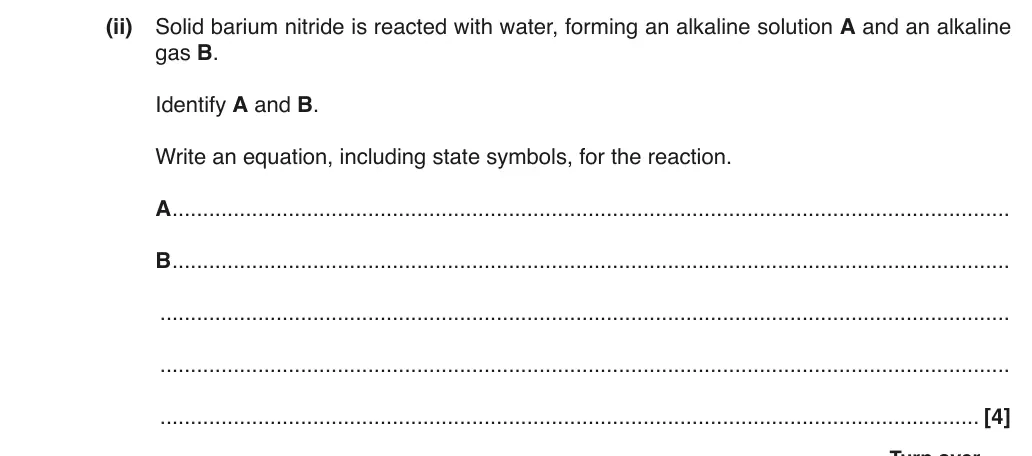
This was often answered correctly but some candidates gave the incorrect formulae for Sr(NO3)2 and either no other product or H2 gas.
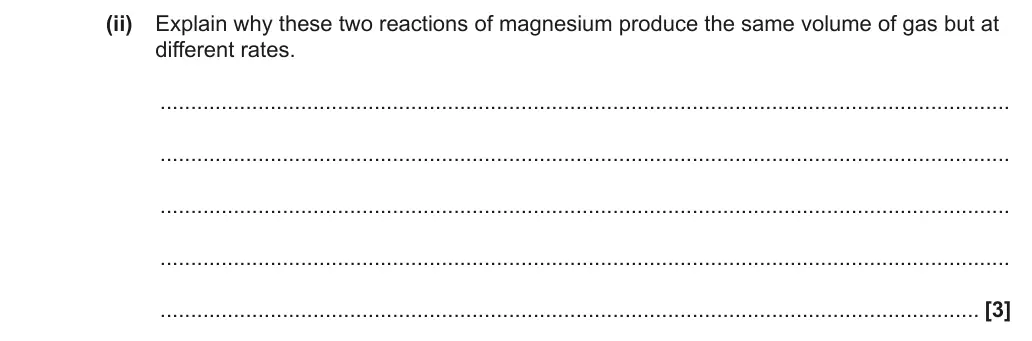
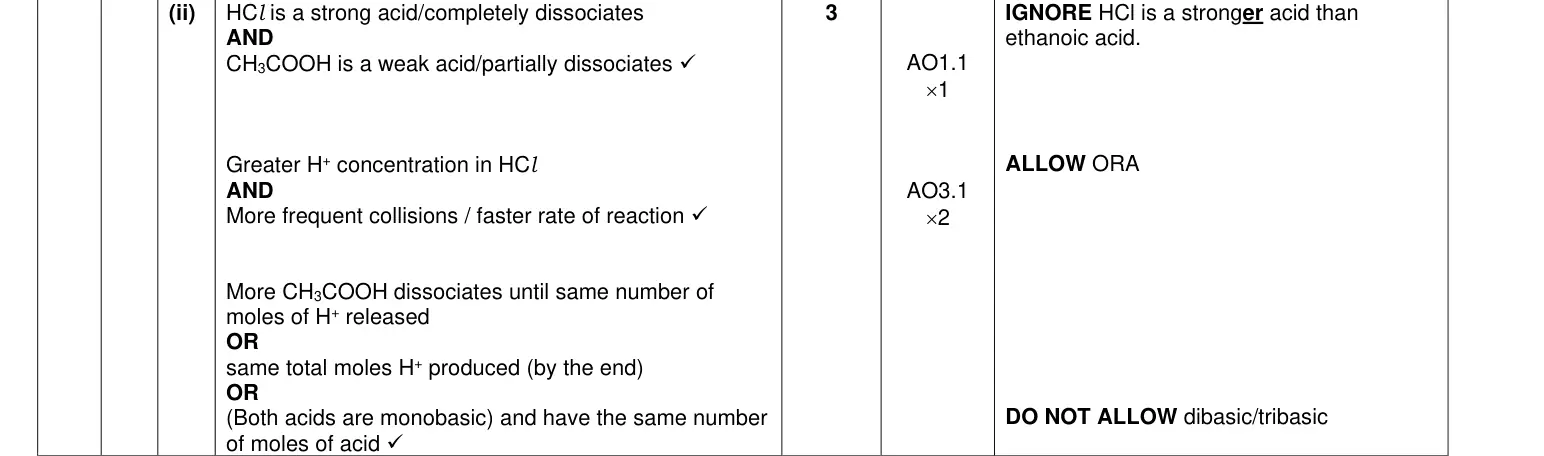
This question proved challenging for the candidates to identify the three ideas: Those of comparing acids, comparing moles and comparing rates. Very few candidates were able to score the 3 marks. Most candidates recognised the different strength of the two acids, but some only used comparative language. Some linked the moles of acid used to the volume of gas produced but many simply restated the same volume and concentration which is given within the question. Only a few candidates linked the higher initial [H+] in HCl to the increased rate through more frequent collisions. A common issue was describing the rate of dissociation rather than the [H+] present in determining the rate of the reactions or mentioning that it dissociates more but not linking this to the H+ concentration.
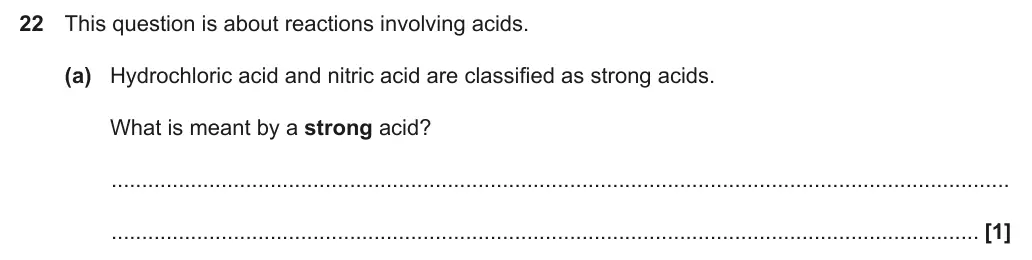
Most candidates knew that a strong acid completely dissociates. Only the lower-attaining candidates responded in terms of a low pH.

This question required candidates to recognise the reaction as being ‘acid–base’ and to interpret a formula from a name containing a Roman numeral. Candidates identifying the formula of copper(II) oxide as CuO were normally able to complete the equation. A reasonably large number identified the copper compounds as CuO2 and CuCl. Overall, most candidates produced a correct equation.
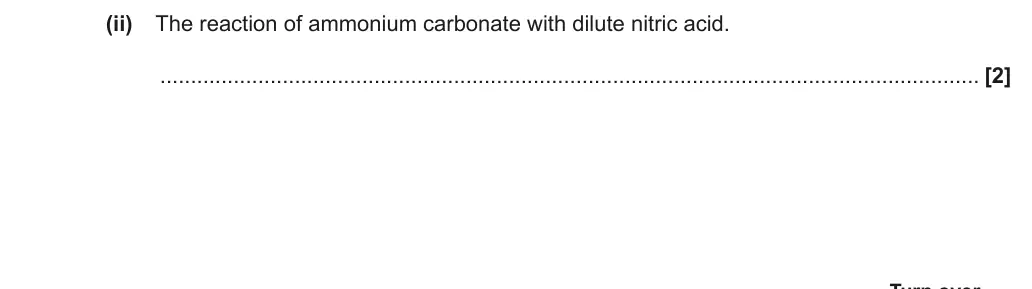
This item was much more demanding than the equation in 22(b)(i) and was often answered incorrectly. Most were unable to work out the formula of the two ammonium compounds, with NH3 often shown instead of NH4. A mark was available for 4 of the 5 formulae being correct but comparatively few were able to construct the correct balanced equation. Candidates are expected to know the formula and charge of ammonium and carbonate ions and the common acids (sulfuric, hydrochloric and nitric) and these are clearly listed in the specification.
Skills: M0.2 Use ratios, fractions and percentages
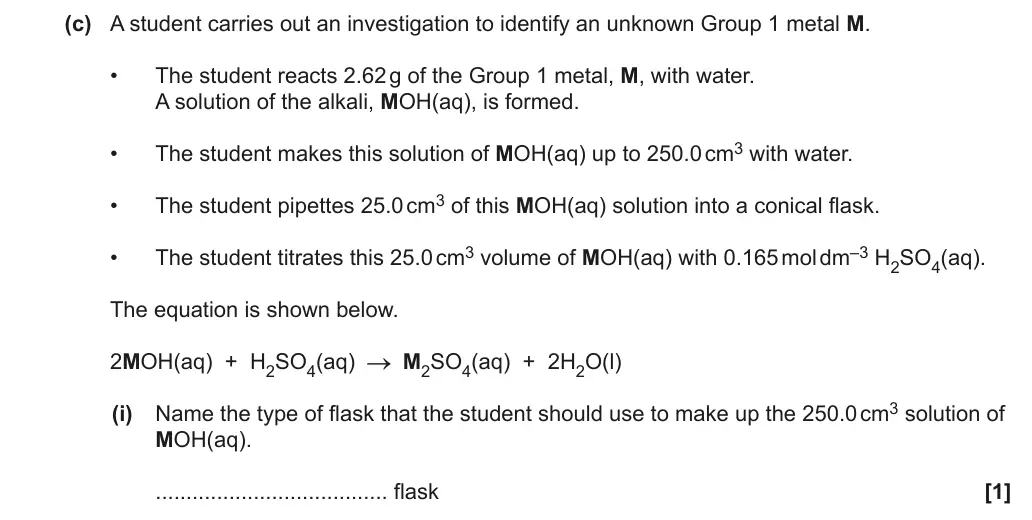
Most candidates recognised that a volumetric flask is used to accurately prepare volumes of solutions. A common error was a conical flask, perhaps by not reading the information clearly and giving the name of the flask used in the titration itself.
Skills: PAG2 Acid–base titration
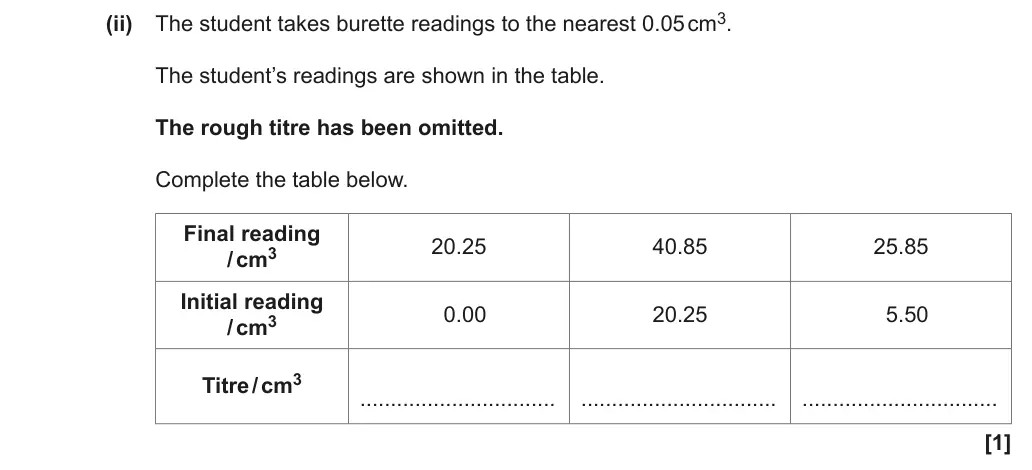
Most candidates were able to work out these simple subtractions. Candidates were told that the titration readings were read to the nearest 0.05 cm3, requiring titres to be shown to two decimal places, which includes a ‘0’. The middle titre is therefore 20.60 cm3 and not 20.6 cm3, which continues to be the commonest error seen.
Skills: PAG2 Acid–base titration
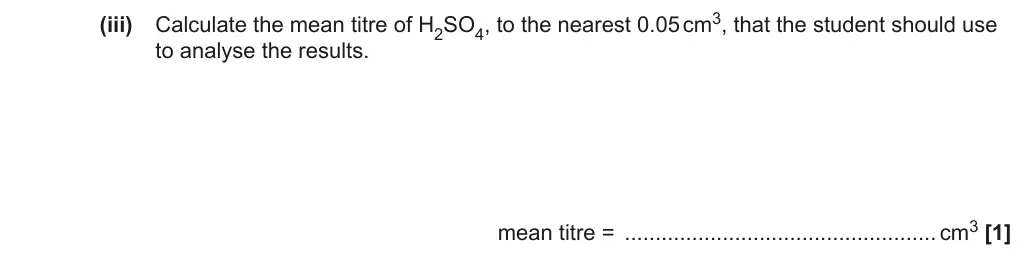
Candidates are expected to use only concordant titres when working out the mean titre and the middle titre of 20.60 cm3 should be rejected. Most candidates did this to produce 20.30 cm3 as their mean titre. Predictably, the commonest error was to use all three titres to produce the incorrect mean of 20.40 cm3.
Skills: M1.2 Find arithmetic means; PAG2 Acid–base titration
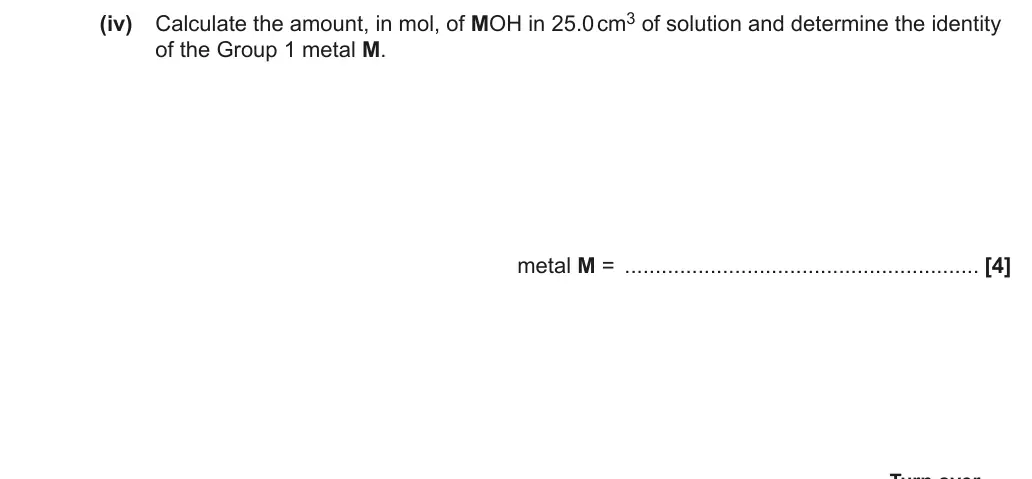
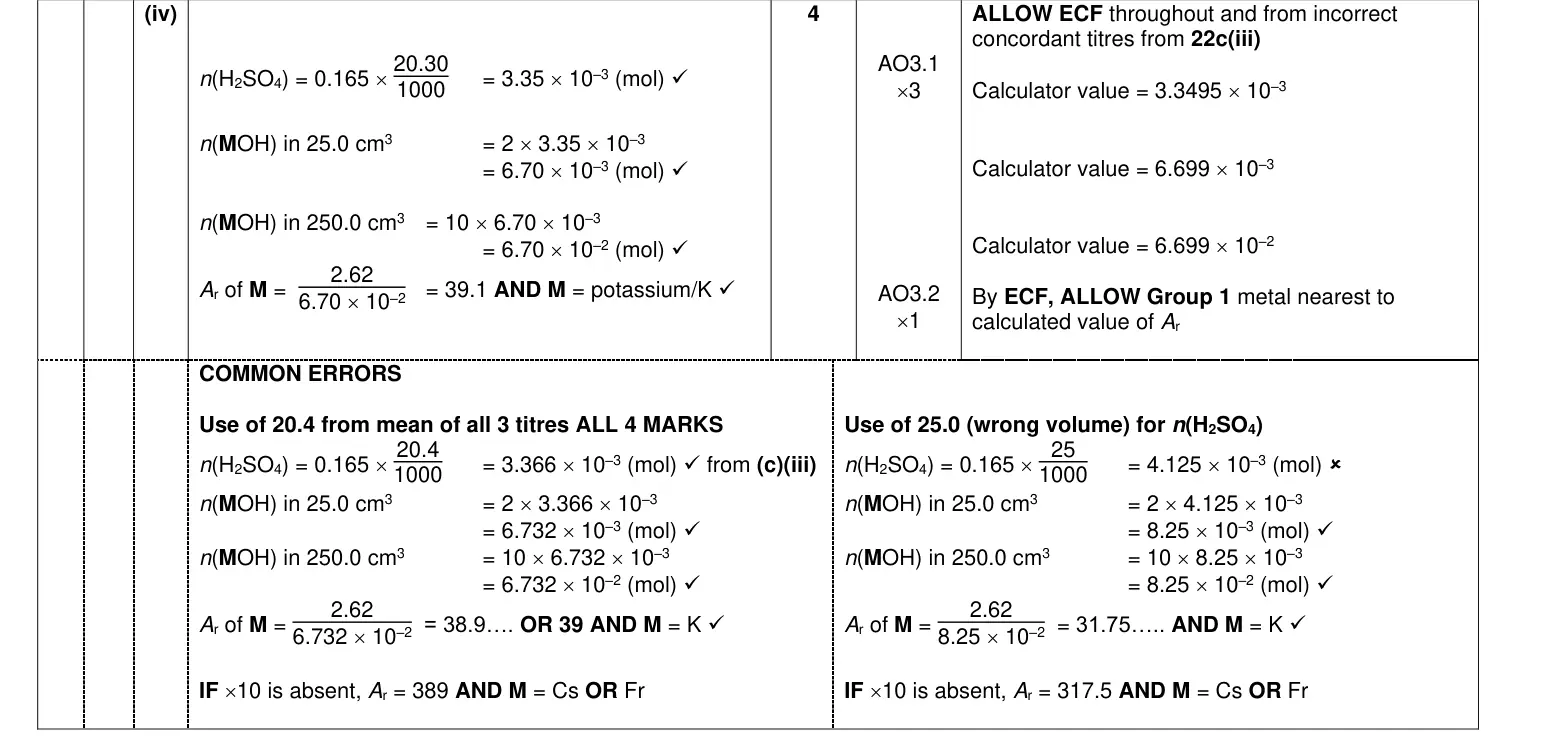
Many candidates followed a well drilled method to identify the unknown metal M as potassium: • Moles of H2SO4 in the mean titre • Moles of KOH in 25 cm3 • Scaling 10 for moles of KOH in 250 cm3 • Molar mass of the metal as 39.11 and identified as K. A number of candidates omitted the scaling stage to obtain a molar mass of 391.1. By ECF, the ‘correct’ identity would be caesium or francium. Some candidates then ‘fiddled’ their response, dividing by 10 to ‘identify’ the metal as K. This incorrect approach was not credited. A common error, illustrated in Exemplar 2, was for candidates to calculate 39.11 but to think that this was the mass of MOH and not M. They then subtracted 17 (for OH) from 39.11 to obtain a response of 22.11 and identified M as sodium instead of potassium. This error probably stems from candidates either not reading the question closely enough or confusion about the mole concept.
Skills: M0.2 Use ratios, fractions and percentages; M2.3 Substitute numerical values into algebraic equations using appropriate units for physical quantities; PAG2 Acid–base titration
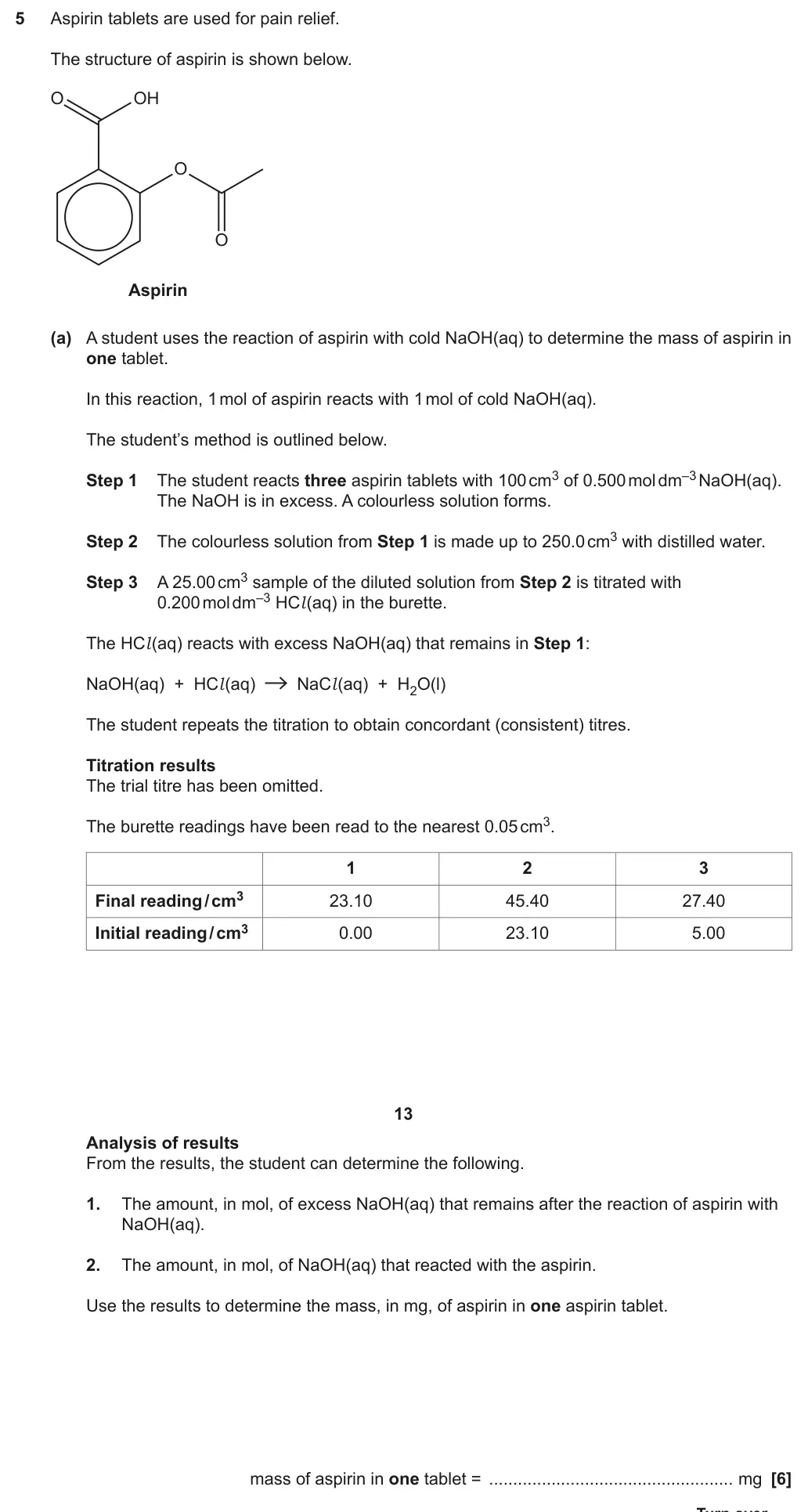
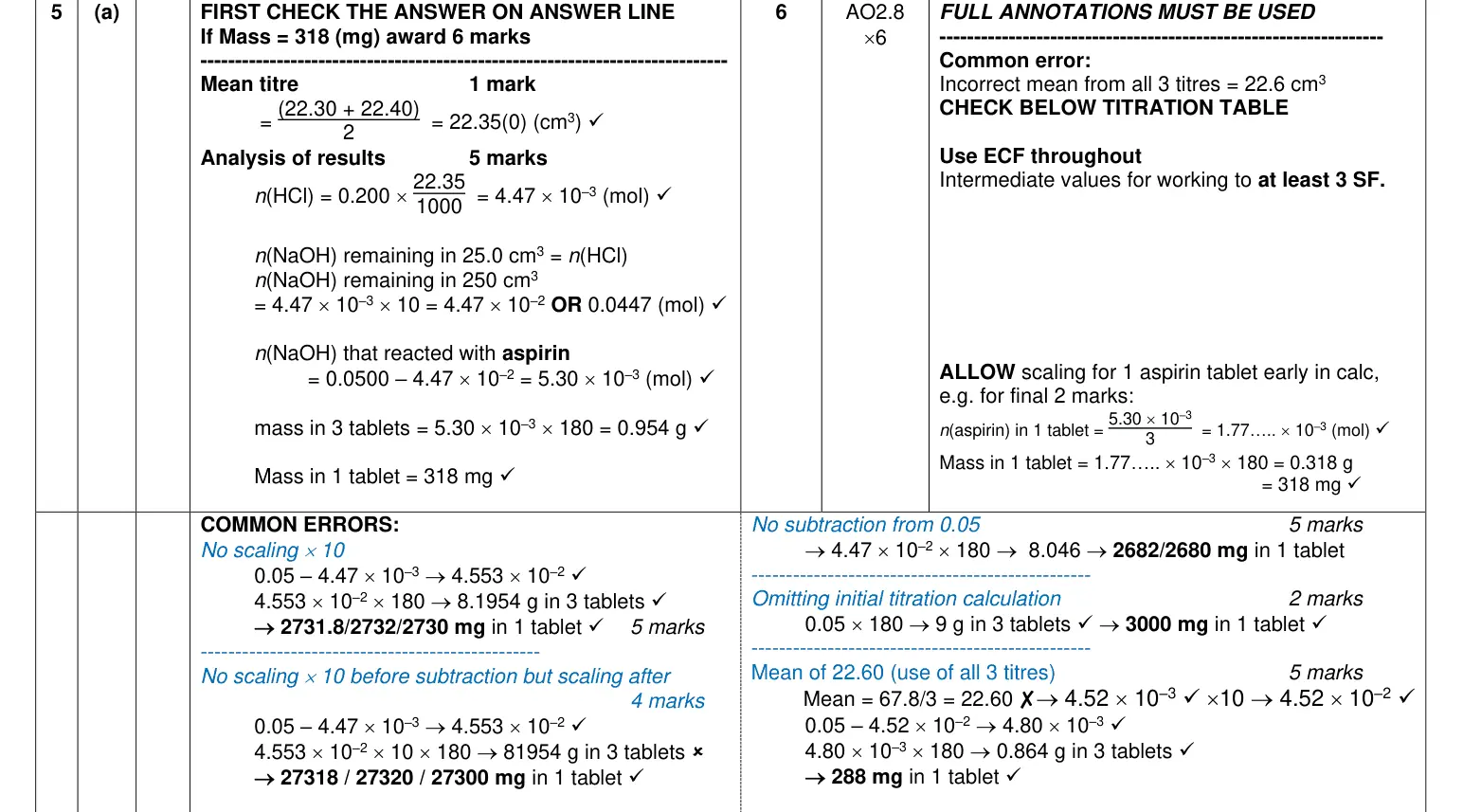
Compared with the application based Question 4, candidates answered this stock titration calculation well. Almost all candidates determined that the mean titre was 22.35 cm3 and went on to calculate the number of moles of HCl as 4.47 10–3 mol. Most scaled this value by 10 to determine the moles in 250 cm3. Most candidates then used the initial moles of HCl to determine the moles of aspirin in the 3 tablets as 5.30 10–3 moles. A significant number omitted this stage but they were able to be credited for the next stage of calculation using a correct method. Consequently over half the candidates were awarded 5 or 6 marks for this stock calculation.
Skills: M0.0 Recognise and make use of appropriate units in calculations; M0.2 Use ratios, fractions and percentages; M1.2 Find arithmetic means; M2.3 Substitute numerical values into algebraic equations using appropriate units for physical quantities; PAG2 Acid–base titration

Candidates were required to write a balanced equation for an acid–base reaction. As with Question 4 (b) (ii), candidates needed to write formulae from what should have been common ions, but the formulae for aluminium oxide and aluminium nitrate were often incorrect. In the equation, the reactants and products were sometimes unbalanced, or incorrectly balanced. A common error was H2 instead of H2O as the second product. The question was an excellent discriminator.
Skills: M0.2 Use ratios, fractions and percentages
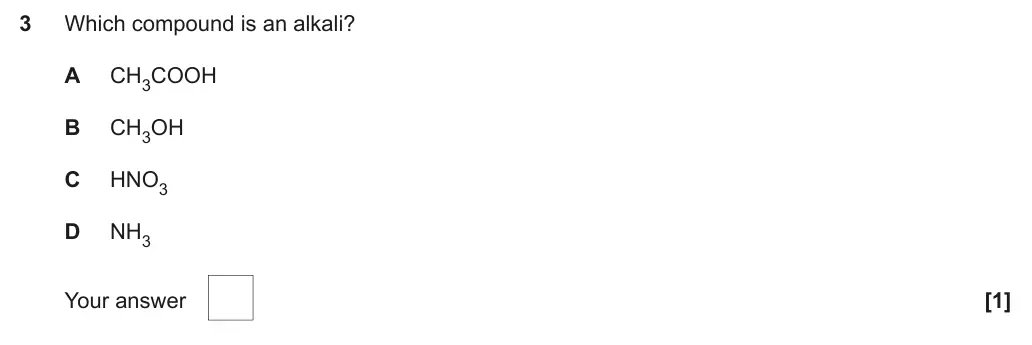
D
Candidates were less successful with this question than Questions 1 and 2, and it appeared as if many candidates did not recognise that ammonia was an alkali. Most candidates rejected A but a significant number selected C, suggesting that they did not recognise HNO3 as an acid or confused HNO3 with NH3.
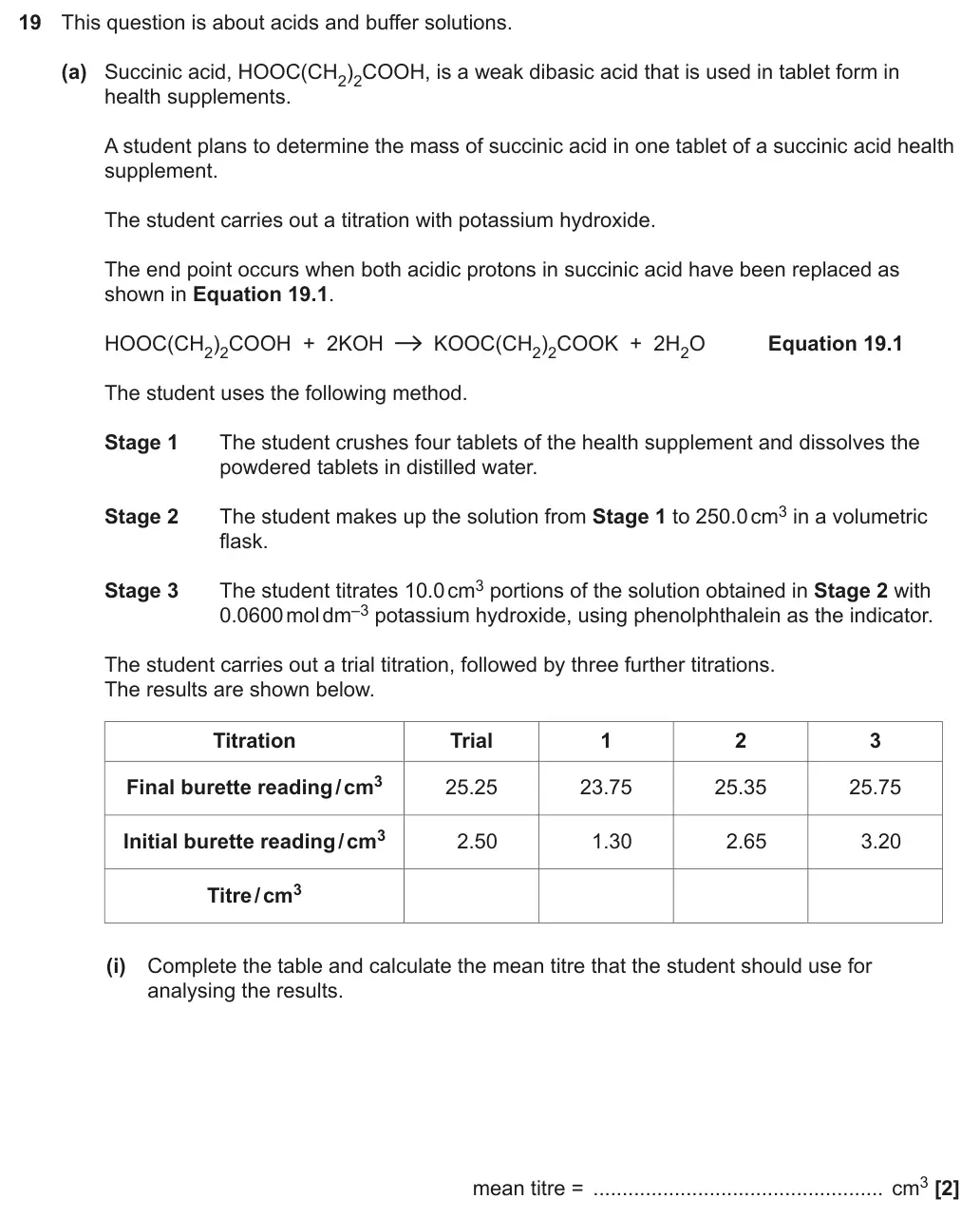
Almost all candidates calculated the titres correctly, but a significant number were penalised for recording 22.70 as 22.7. A significant number also used this result and the trial titre to derive their mean value. There were also very small numbers of candidates who used all 4, or all of titres 1, 2 and 3, to calculate their mean.
Skills: M1.2 Find arithmetic means; PAG2 Acid–base titration
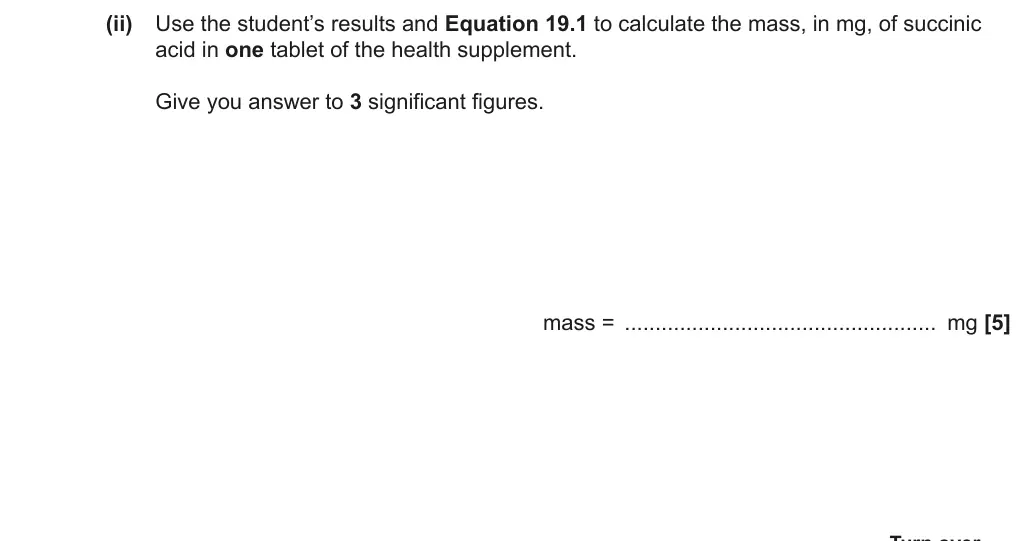
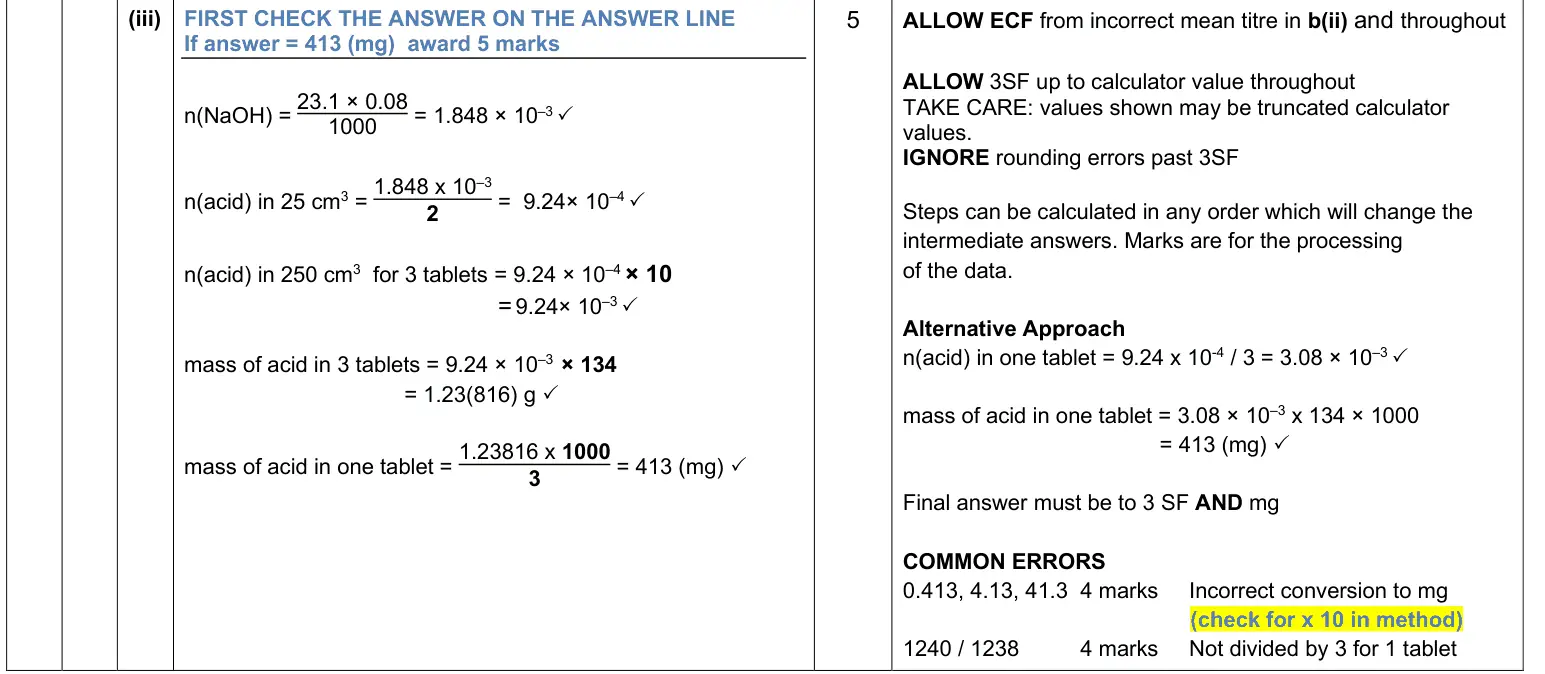
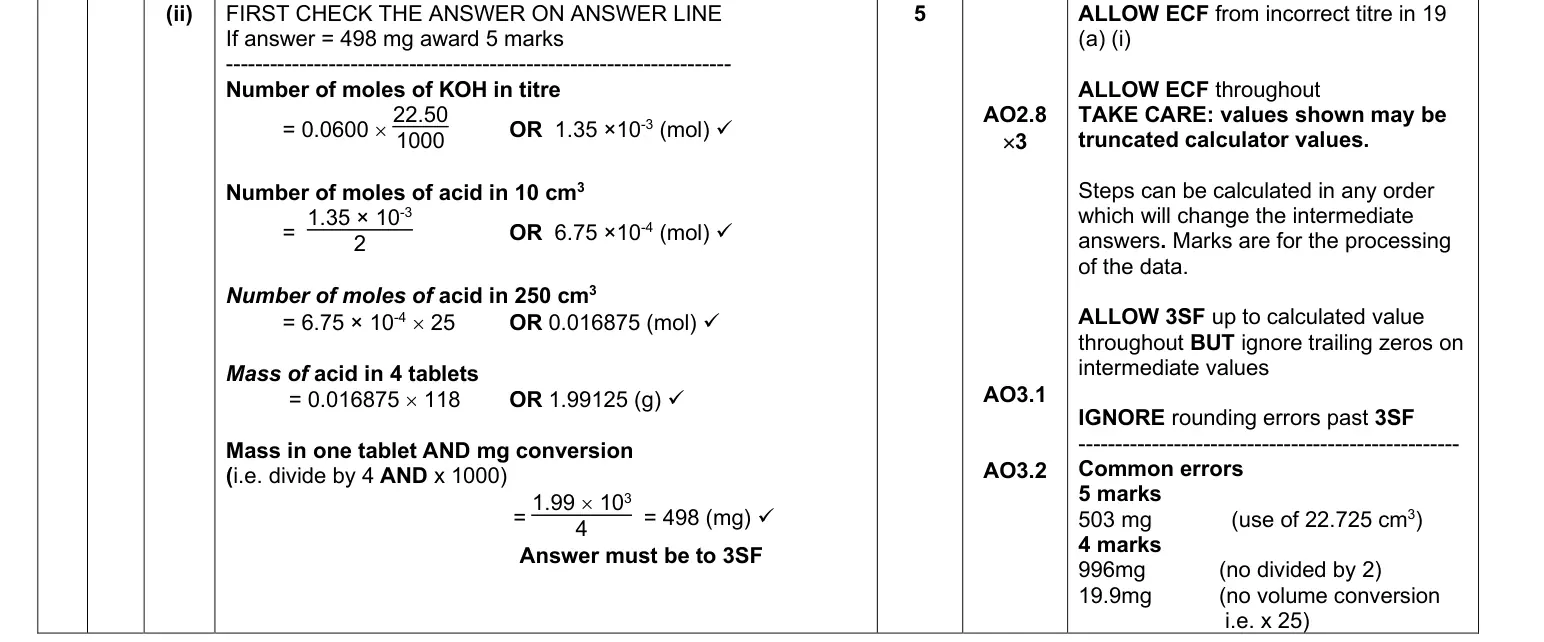
Candidates made good progress with this calculation, many gaining 4 or 5 marks, including error carried forward from incorrect titres. Common errors included, in various combinations: not converting the final answer into mg, not converting volume to dm3, missed ratio, multiplying the moles in 10cm3 acid by 10 instead of 25 and/or wrong Mr. Responses to Question 19 (a) (ii) often featured rows of figures and random sums without a single word about what the figures, or sums, were set to calculate. Candidates should remember to provide written indications of what it is they are working out – presenting the calculations without any annotations can make it harder for error carried forward marks to be given if there is an error in their calculation. The exemplar here shows a good use of annotation. There is a clear indication of the mathematical process so that the error carried forward is easily identified and the candidate gains the method marks.
Skills: M0.0 Recognise and make use of appropriate units in calculations; M0.2 Use ratios, fractions and percentages; M1.1 Use an appropriate number of significant figures; M2.3 Substitute numerical values into algebraic equations using appropriate units for physical quantities; PAG2 Acid–base titration

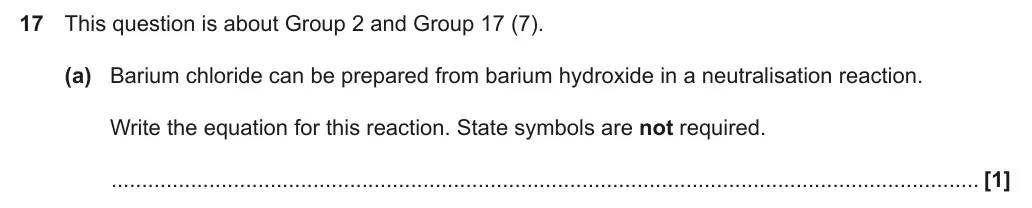
This question was answered well, with many candidates giving one of the equations in the ‘ALLOW’ part of the mark scheme. Those candidates who did not gain this mark gave full equations or missed out state symbols.
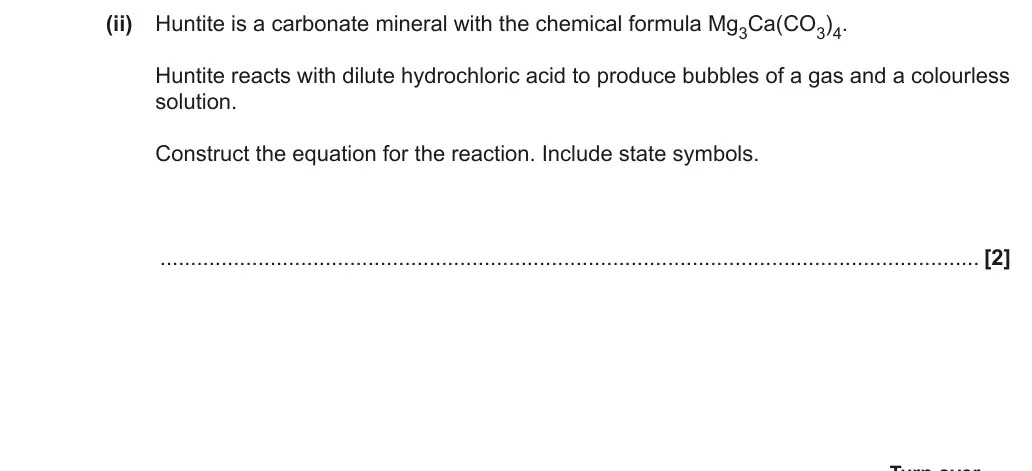
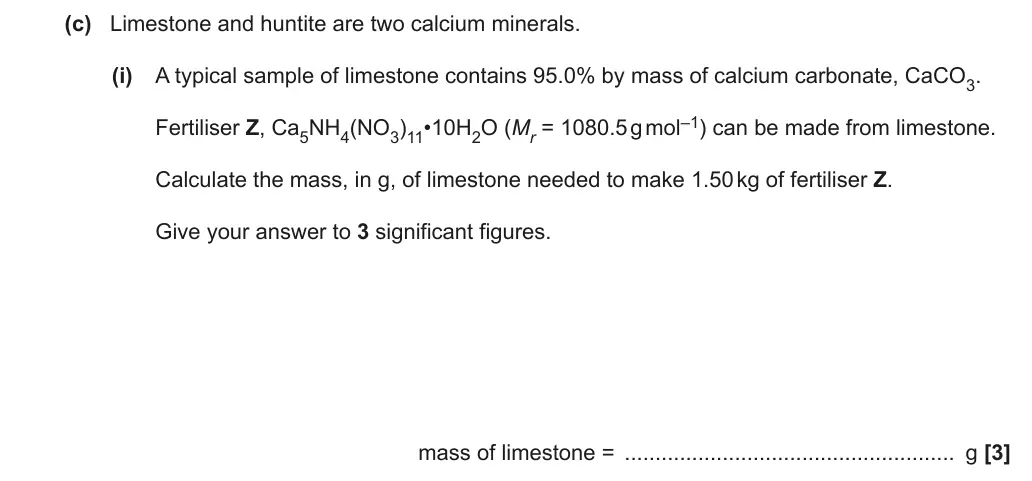
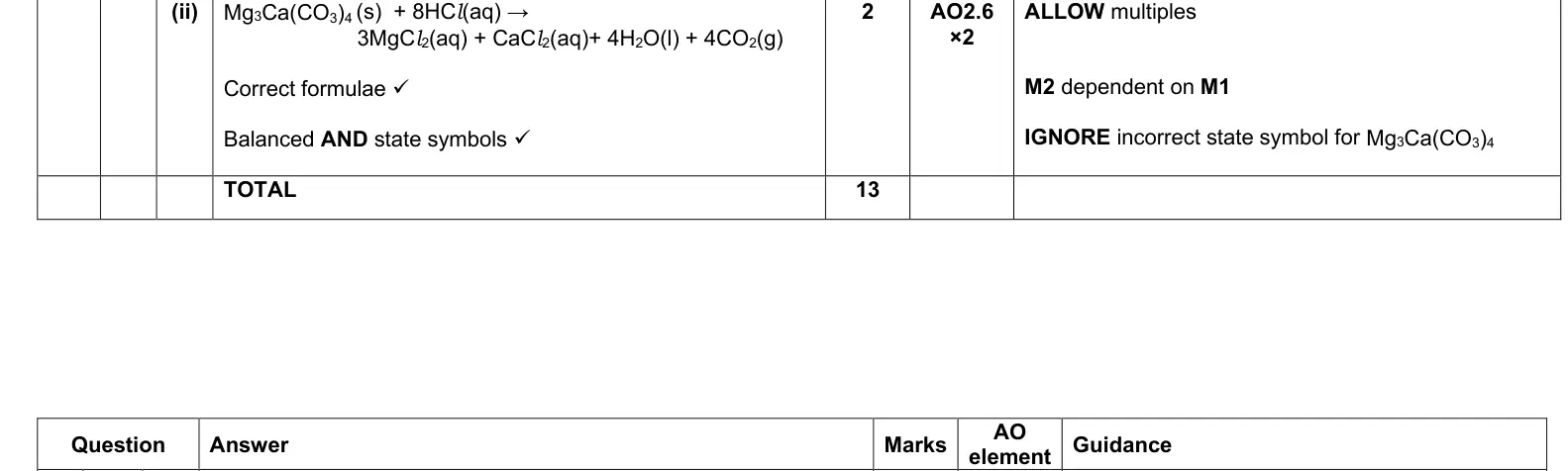
This was another very challenging question using an unfamiliar mineral. Most candidates identified a formula of salts containing both magnesium and calcium, or carbonates of the separate elements. Only the most successful candidates were able to give the correct formula. Common errors, for those who solved the formulae, were the use of “4”HCl in balancing and the absence of state symbols.
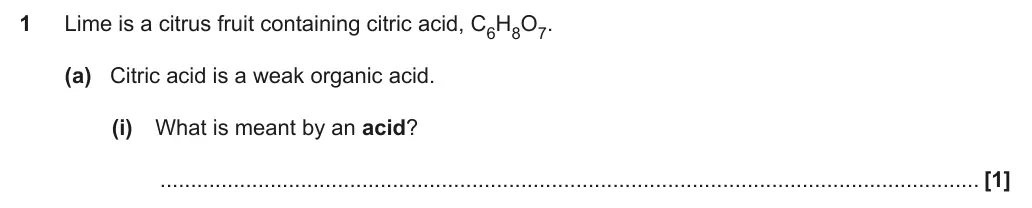
Most candidates scored this mark. Some candidates referred to acids having or containing H+ ions rather than indicating that H+ ions are donated or released. A small number of candidates gave simplistic responses in terms of pH only.

Again, this was well answered by most candidates. A few candidates gave responses in terms of pH or indicated that there were more OH- ions present.
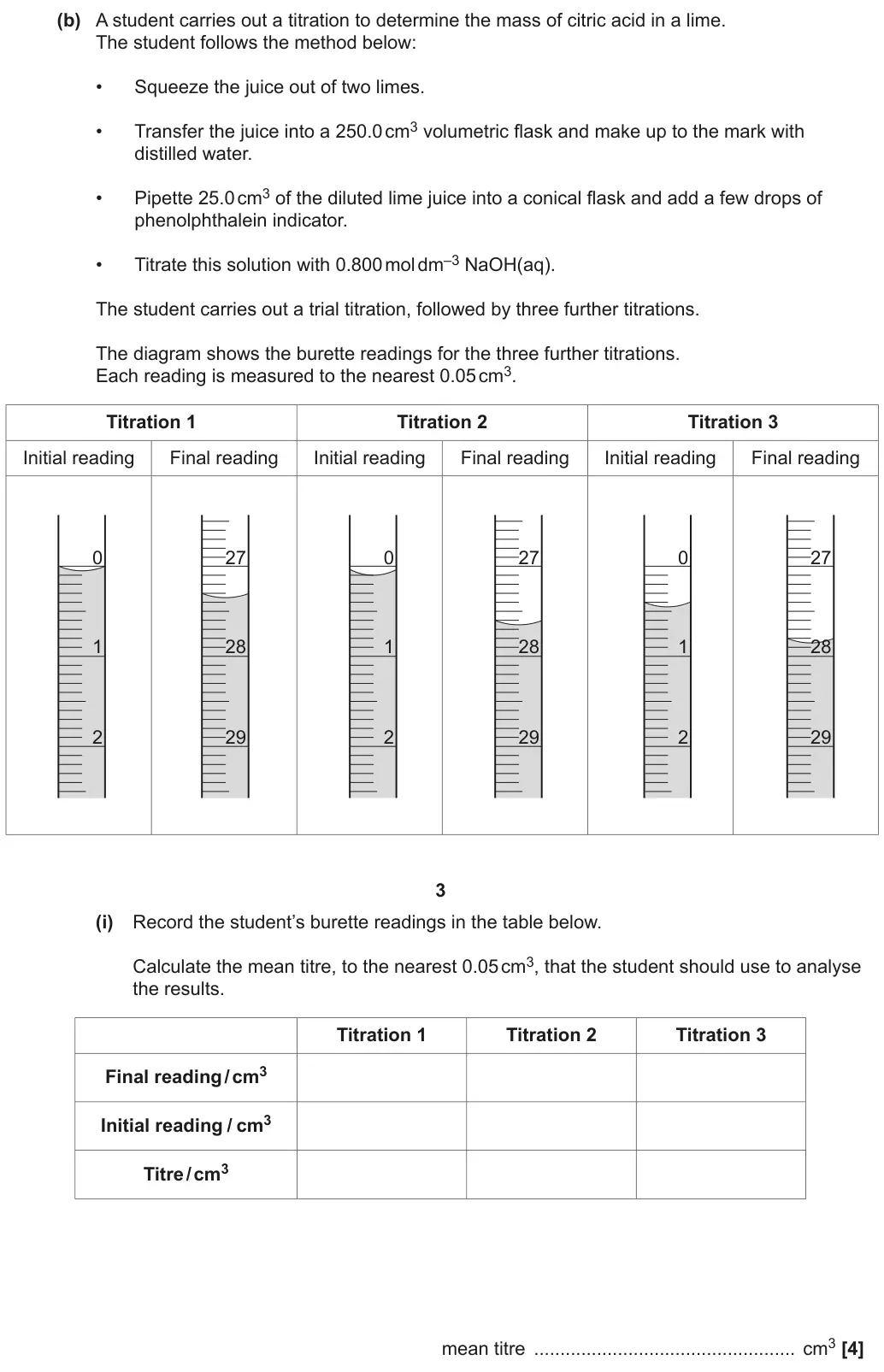
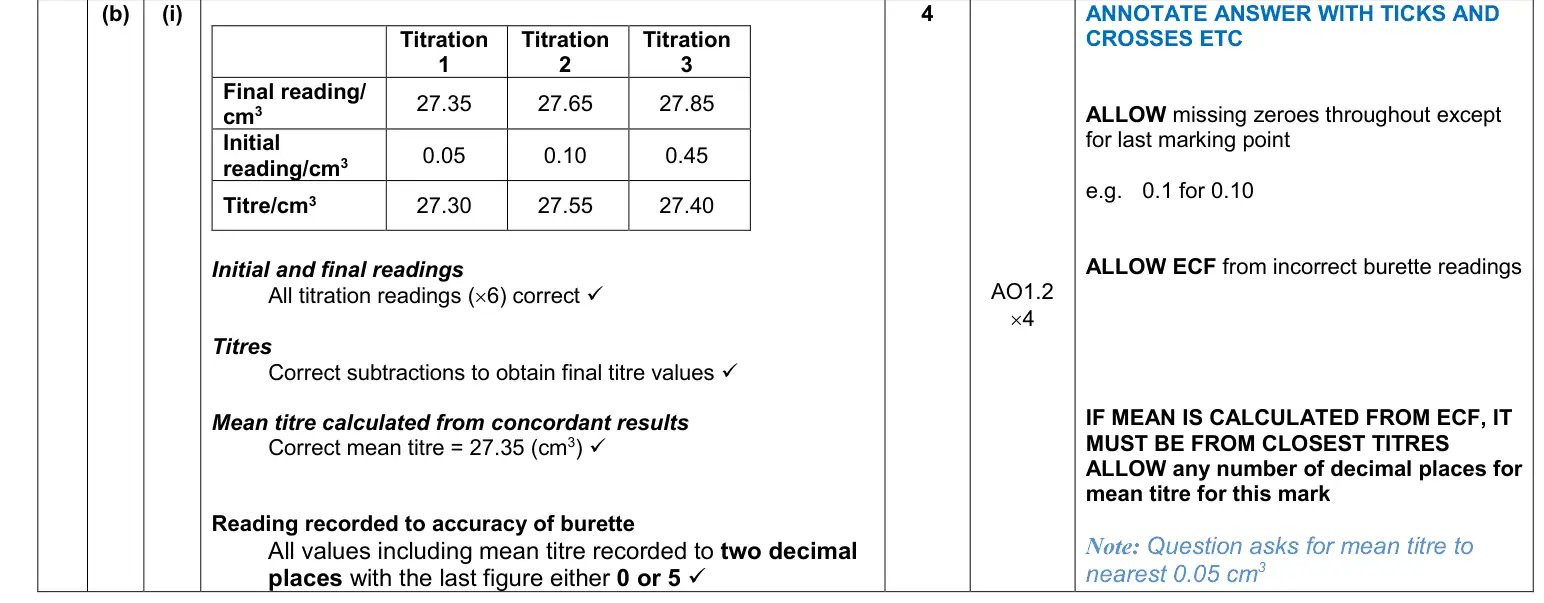
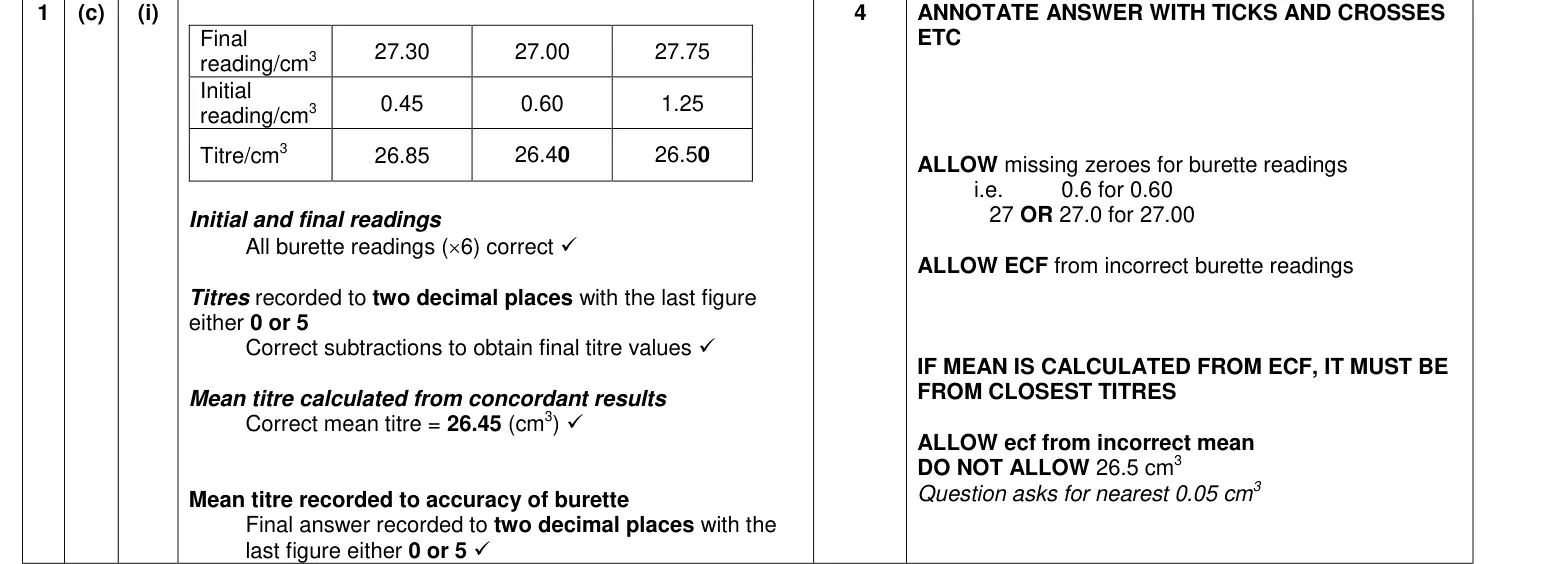
Although most candidates gained some marks here, there were a significant number who did not gain all 4 marks. Some candidates need to practice reading burettes and recording their values – this can be checked during practical work. The most common errors included not recording values to 2 decimal places (especially if final number was 0), readings recorded the wrong way round in the table, and misreading 0.05 as 0.5. Most candidates were able to identify concordant results, but some still calculated the mean from all values. This led to an average that needed to be rounded to the nearest 0.05, as asked for in the question, resulting in them losing both the mean titre mark and mark for accuracy. Some had errors which lead to values which weren’t concordant – this should be a flag to students that they have made a mistake.
Skills: M1.1 Use an appropriate number of significant figures; M1.2 Find arithmetic means; PAG2 Acid–base titration
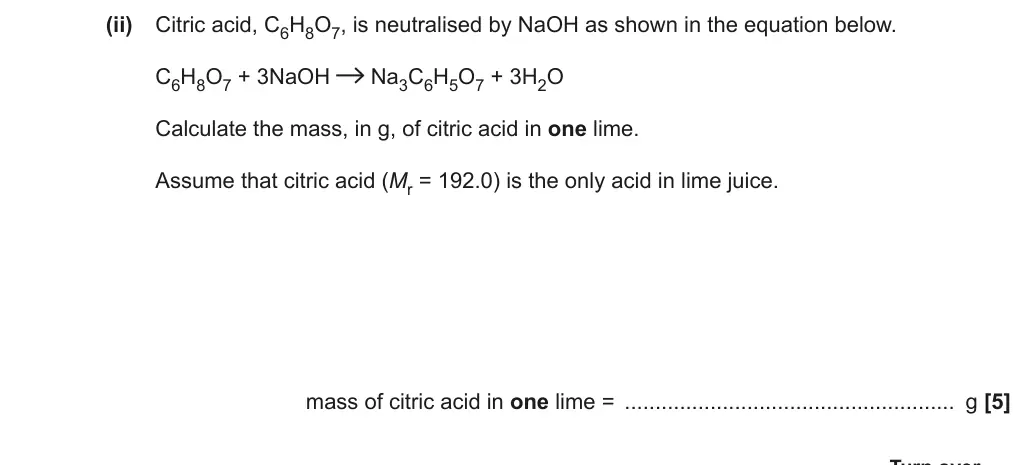
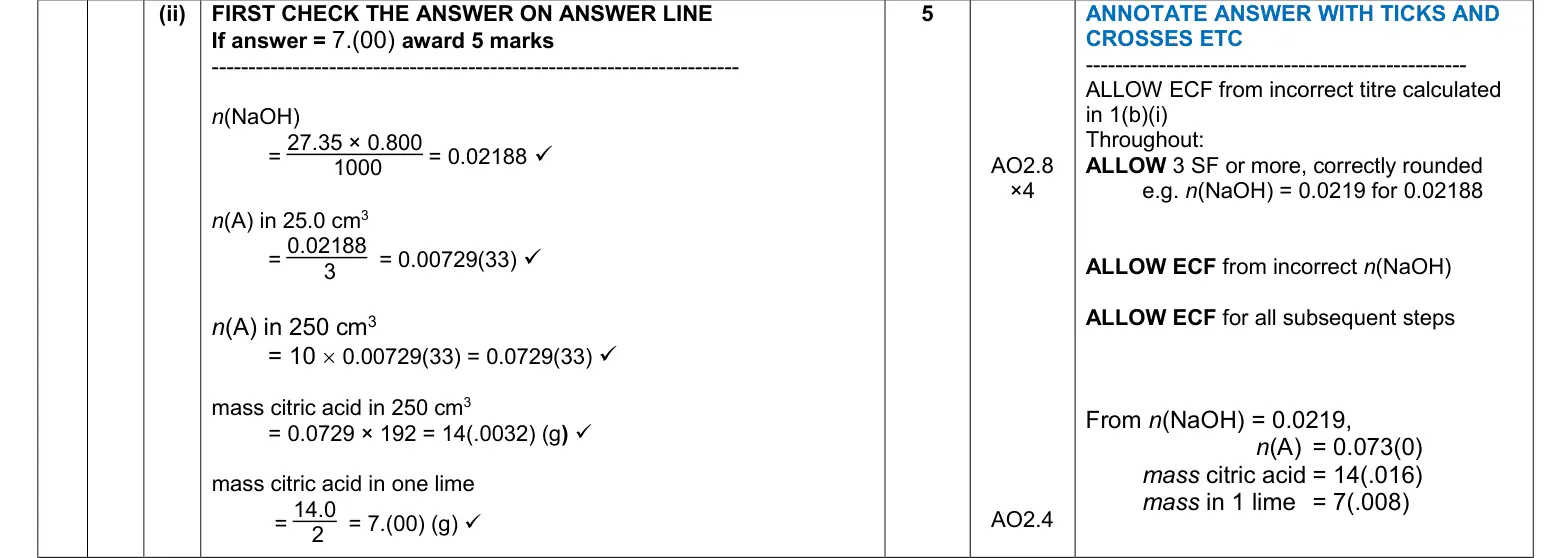
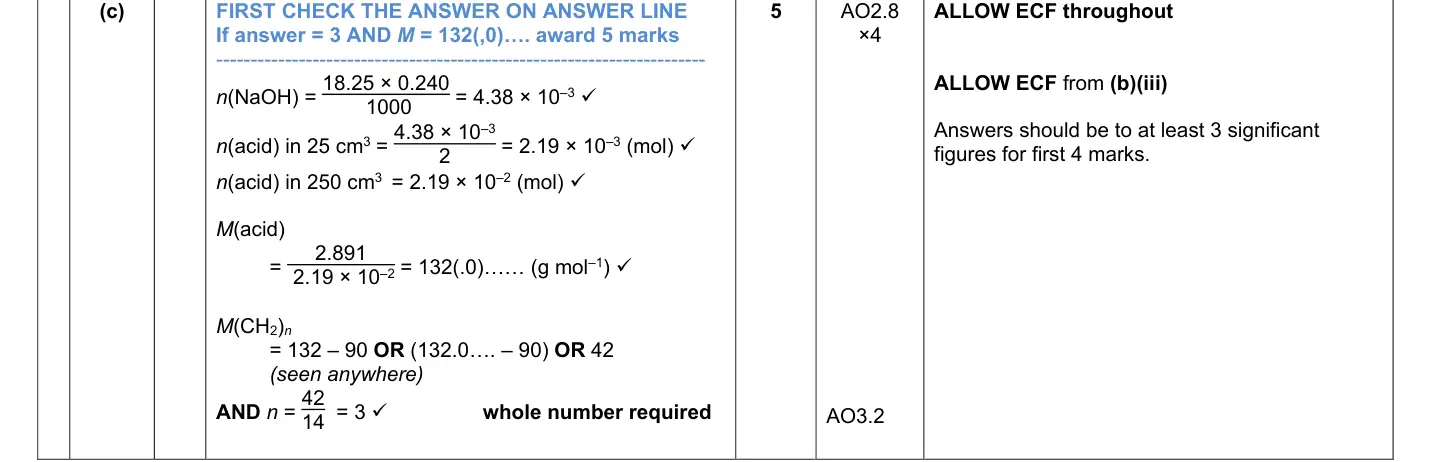
Most candidates managed to gain at least 1 mark for this question. The most common mark lost was for not multiplying by 10, having missed that only 25cm3 of 250 cm3 citric acid solution was used in the titration. Another mark that was often lost was for not dividing by 2 to find mass in 1 lime rather than the 2 used in experiment. Some candidates used 25cm3 to calculate their moles of NaOH rather than the titre value from (i). It is vital that candidates are given the opportunity to practice more complex multi-step calculations of this type, with modelling given for lower-attaining candidates. Identifying which information goes with each reactant is vital. All steps in the calculation should be separate and clearly labelled to help avoid confusion. Encourage candidates to keep full values in their calculators to avoid intermediate step rounding. When writing down intermediate values, ideally write down the full calculator value or where this is not possible the value must be given to at least 3 significant figures (correctly rounded). It is helpful to the examiner to know if calculator values are used and this could be indicated by using truncated answers followed by … , for example 0.00729… for n(A). The exemplar shows a response where each step of the calculation is shown clearly. The candidate has also used pictures to aid them, recognising that the NaOH is in the burette and lime juice in the conical flask. All values are identified and there is no intermediate rounding. All 5 marks are given here.
Skills: M0.0 Recognise and make use of appropriate units in calculations; M0.2 Use ratios, fractions and percentages; M2.3 Substitute numerical values into algebraic equations using appropriate units for physical quantities; PAG2 Acid–base titration
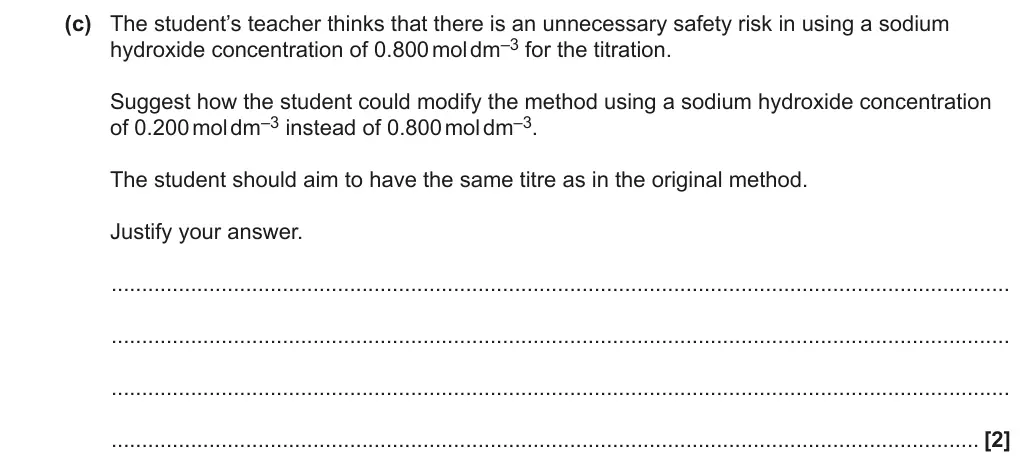
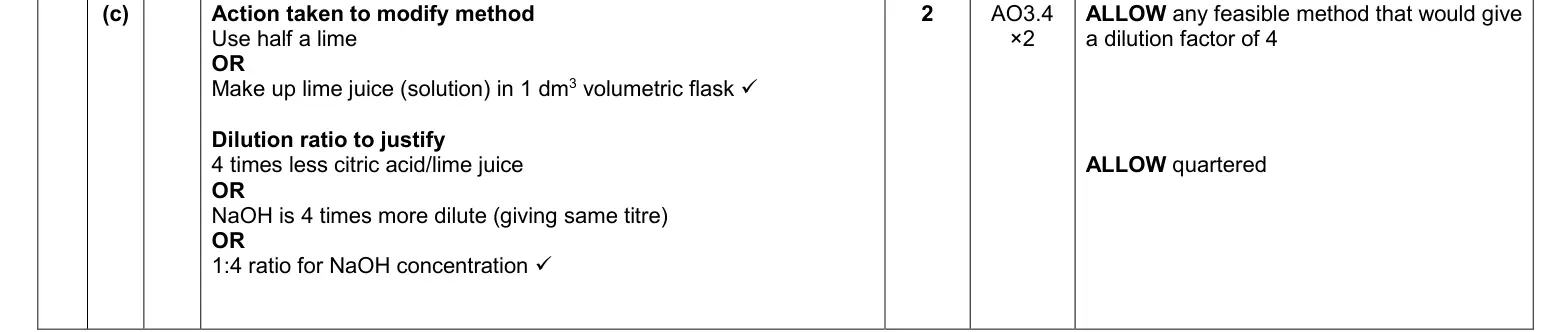
A very challenging question with very few candidates scoring both marks. The response needed a clear indication of how the method would be altered and a justification for why this would work. Lots of candidates recognised the need to dilute the citric acid to obtain the correct titre but were not able to give a method of how to do this or any indication of quantities needed. Some candidates said to use a larger volume of NaOH – not recognising that this would be the titre value, e.g. “in order to keep the same titre but lower concentration of NaOH the student should titre more NaOH”. Some gave the method of how to dilute the NaOH or even just said to add water. A few suggested using a higher concentration of lime juice. Candidates need to be given opportunities to plan practical work to fully appreciate the impact that any changes will have (specification 1.1.1).
Skills: M0.2 Use ratios, fractions and percentages; PAG2 Acid–base titration
D
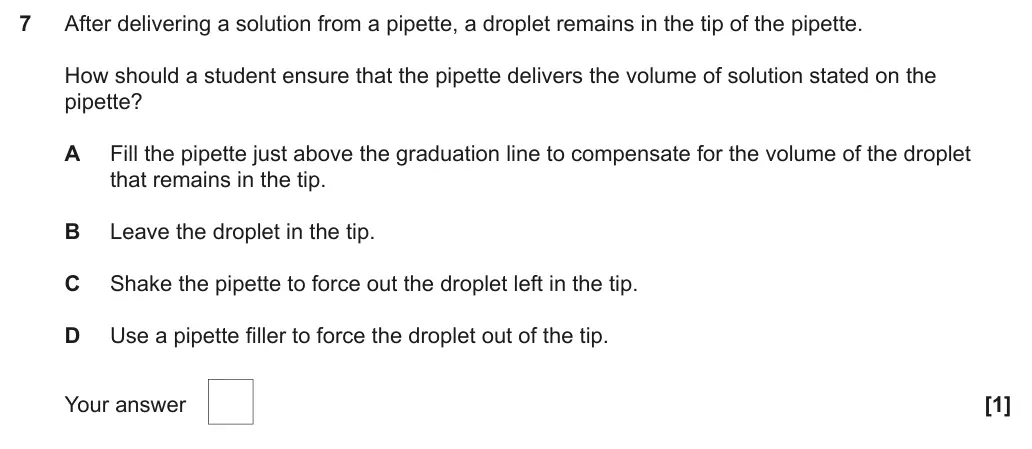
B
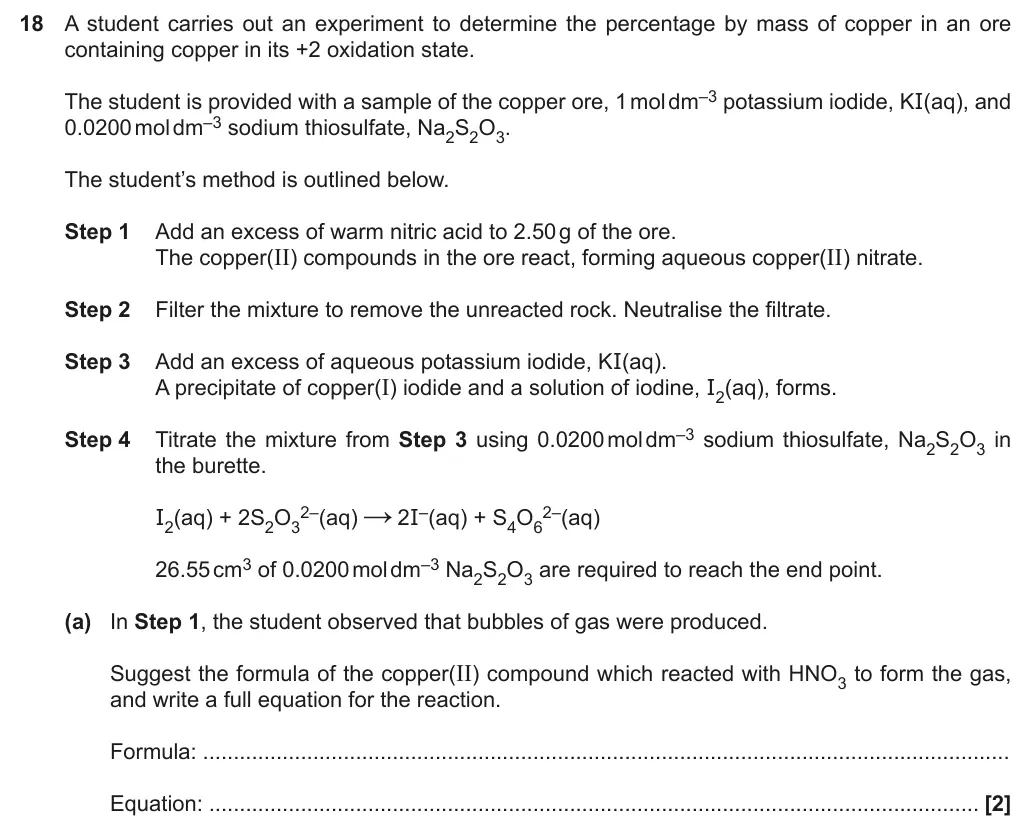
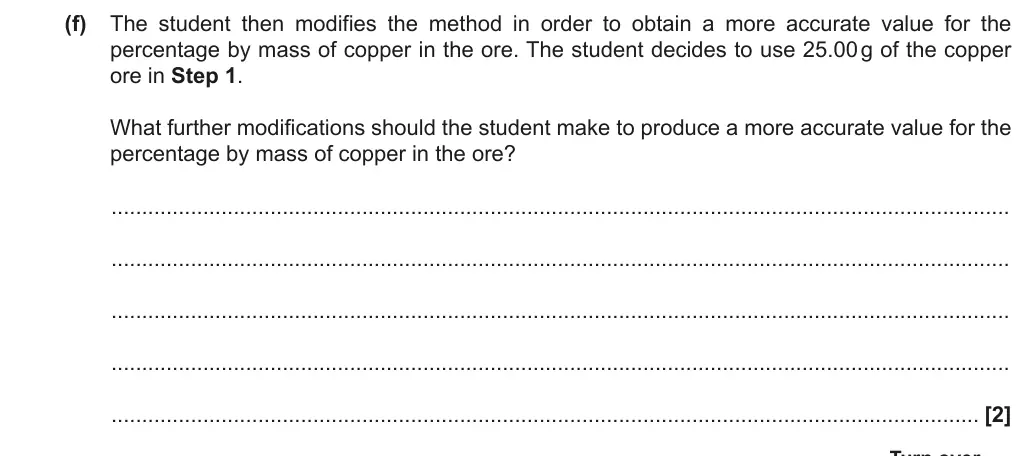
Skills: M1.3 Identify uncertainties in measurements and use simple techniques to determine uncertainty when data are combined; PAG2 Acid–base titration
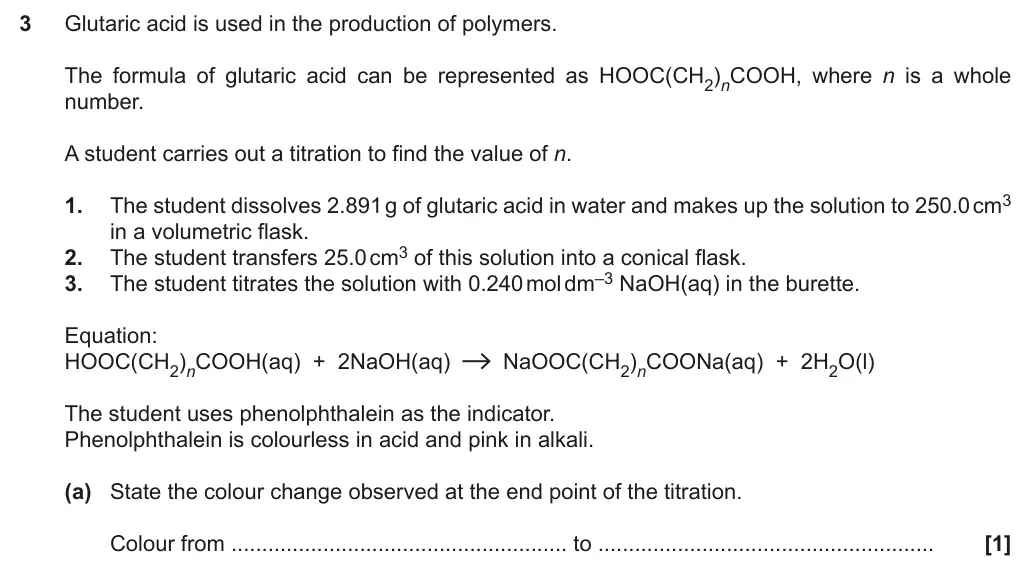
Skills: PAG2 Acid–base titration
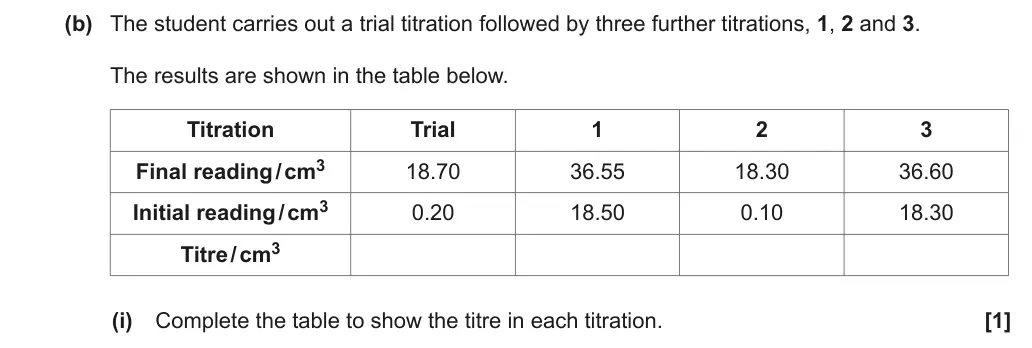
Skills: PAG2 Acid–base titration

Skills: PAG2 Acid–base titration
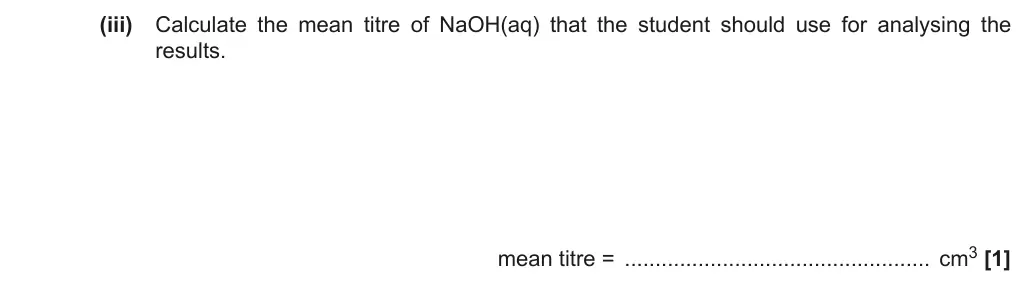
Skills: M1.2 Find arithmetic means; PAG2 Acid–base titration
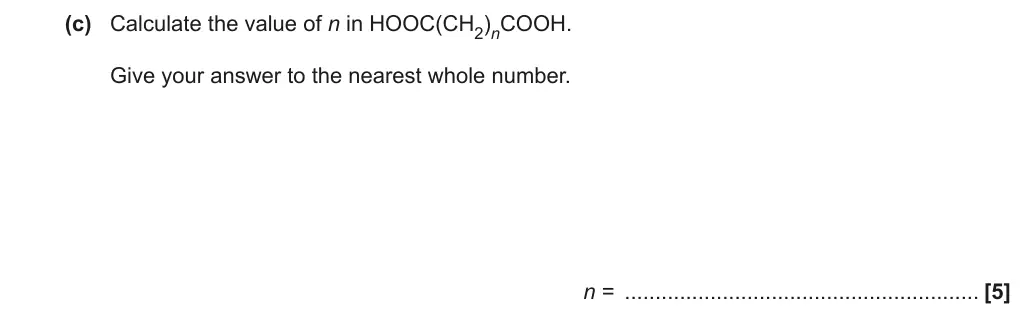
Skills: M0.2 Use ratios, fractions and percentages; M2.3 Substitute numerical values into algebraic equations using appropriate units for physical quantities; M2.4 Solve algebraic equations; PAG2 Acid–base titration
Skills: PAG2 Acid–base titration
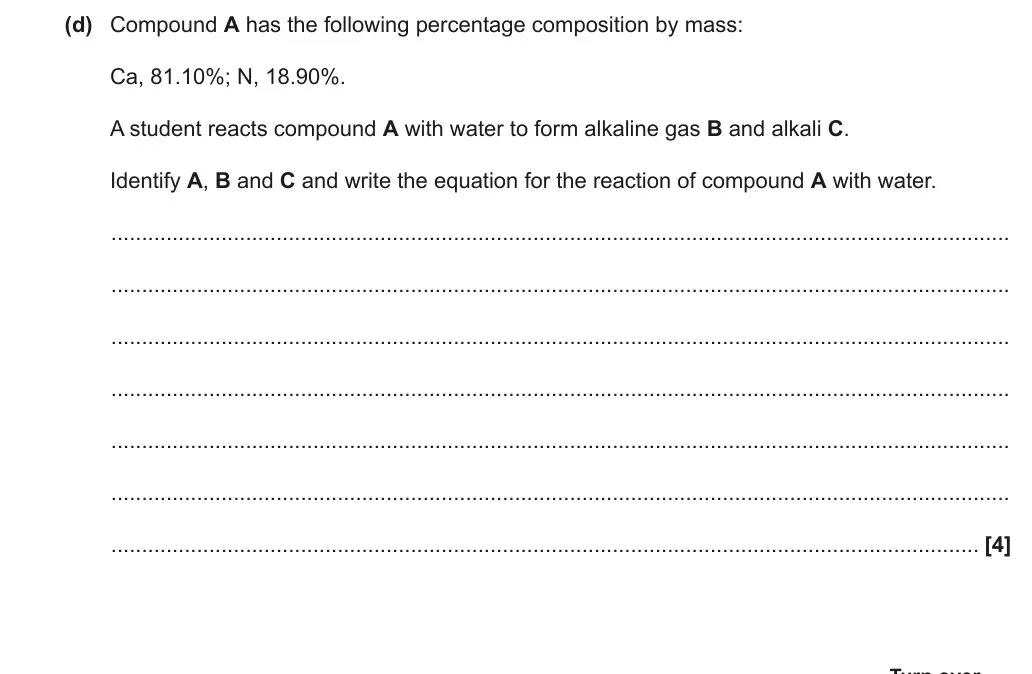
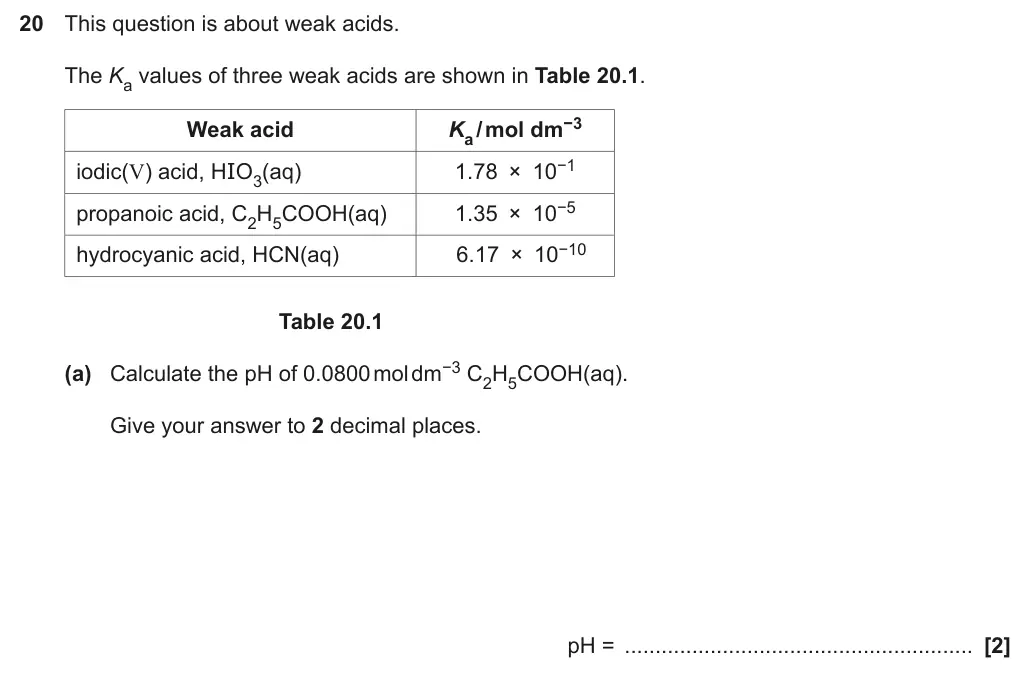
Q1(a) Partial pressure calculation Q1(d) Formula determination from percentage composition by mass Q2(b) Converting mass and volume into moles Q3(b) Unstructured titration calculation Q5(a)(ii) Ideal gas calculation Q5(b)(i) Calculation of the pH of a weak acid • Produced clear and concise responses for a Level of Response question based on a familiar context i.e., Q4(b) rates by continuous monitoring and graphical analysis. • Had difficulty when answering questions requiring application of knowledge and understanding on questions set in novel and unfamiliar contexts, e.g. Q1(d), Q1(e), Q5(a)(i) • Unclear drawing of diagrams and labelling of laboratory apparatus: Q2(a) • Had difficulty explaining chemical ideas, often repeating the same points several times, e.g. Q1(d) Candidates were required to analyse provided information to identify three unknown compounds and to write an equation.
Skills: M0.2 Use ratios, fractions and percentages
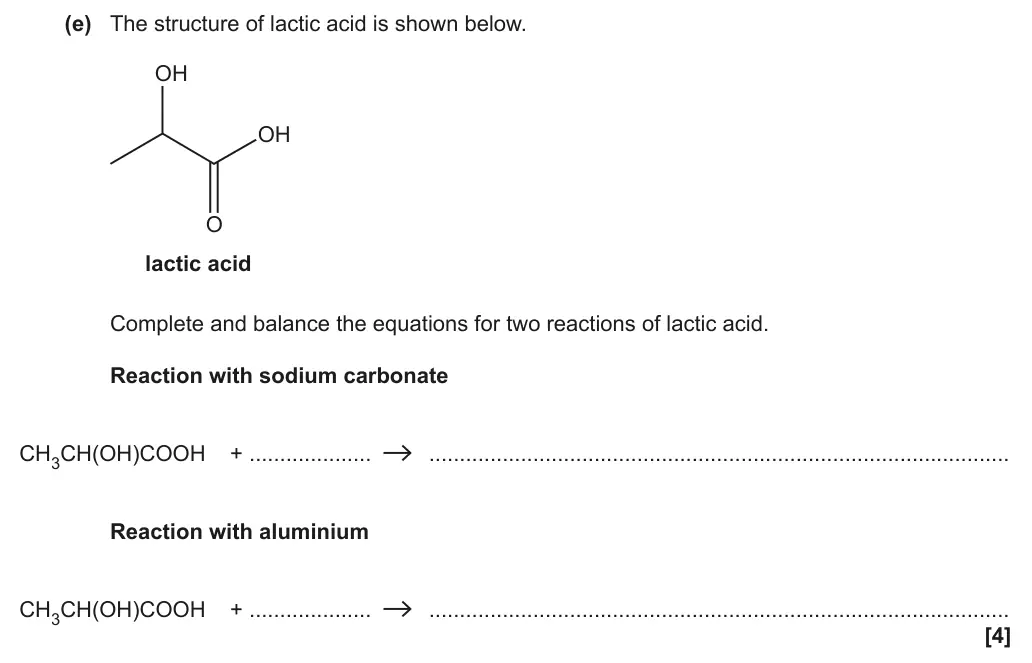
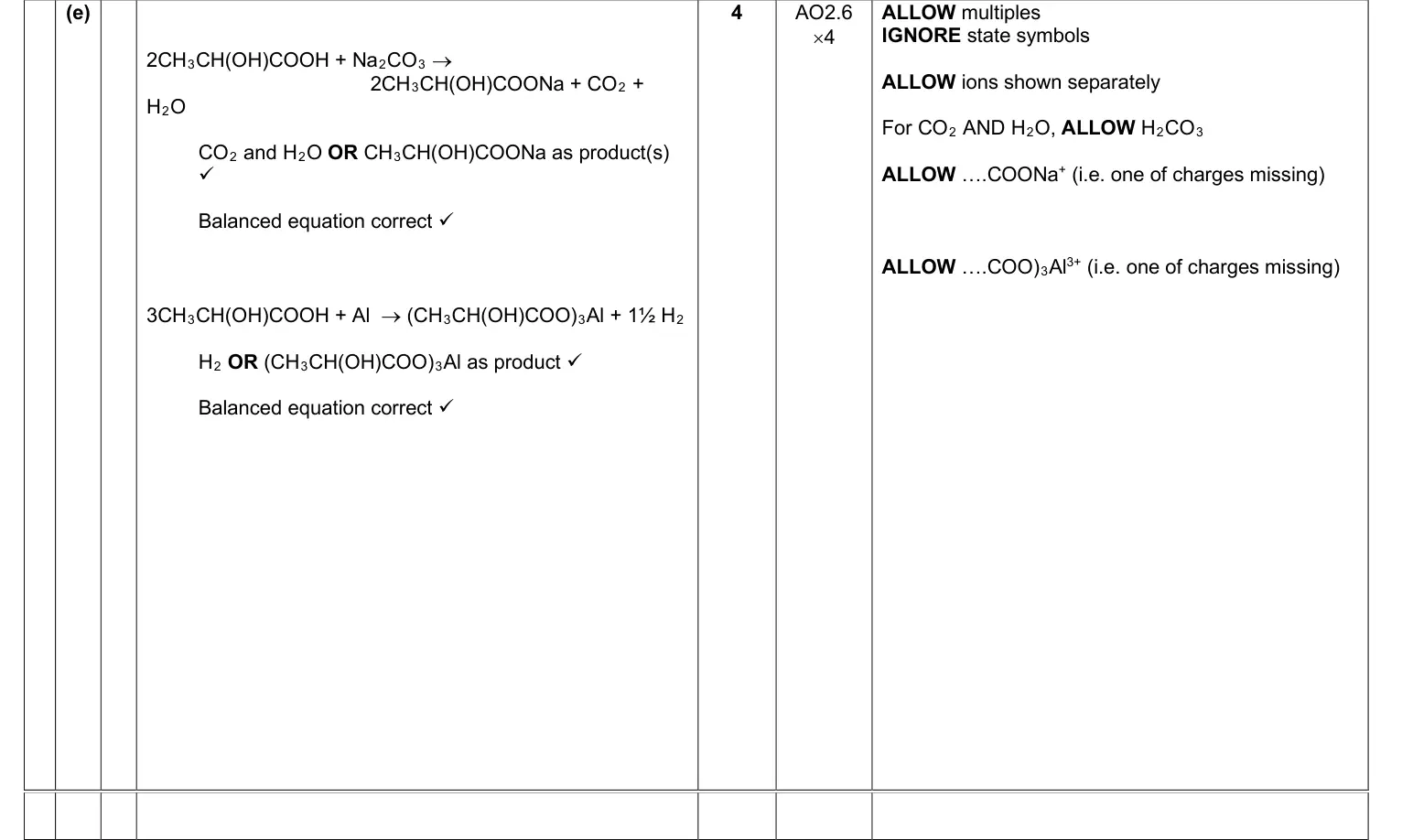
Q1(d), Q1(e), Q5(a)(i) • Unclear drawing of diagrams and labelling of laboratory apparatus: Q2(a) • Had difficulty explaining chemical ideas, often repeating the same points several times, e.g. Q1(e): Candidates needed to use their knowledge of reactions of carboxylic acids to construct two equations. See also comments made for Q1(e) and Q3(b).
Skills: M0.2 Use ratios, fractions and percentages
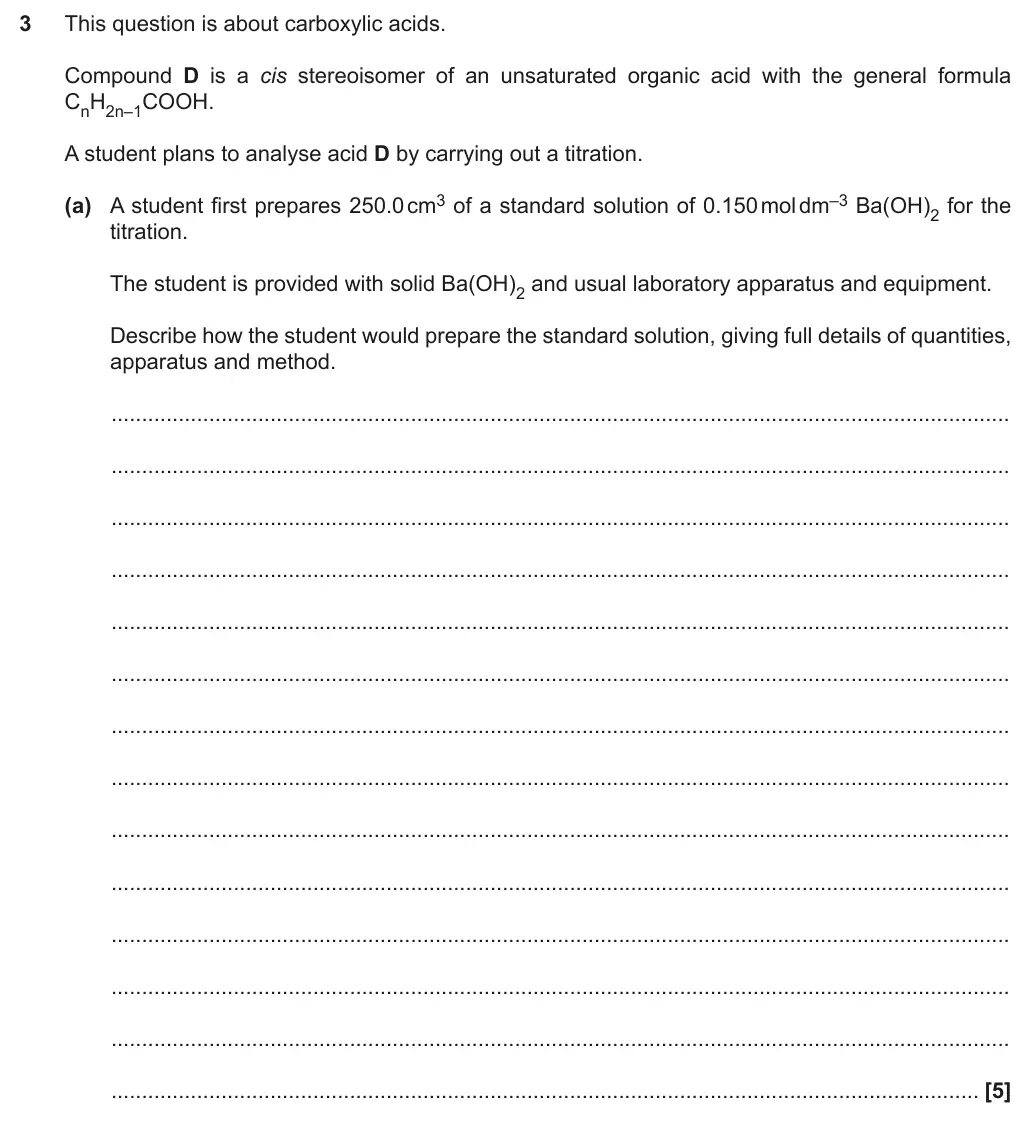
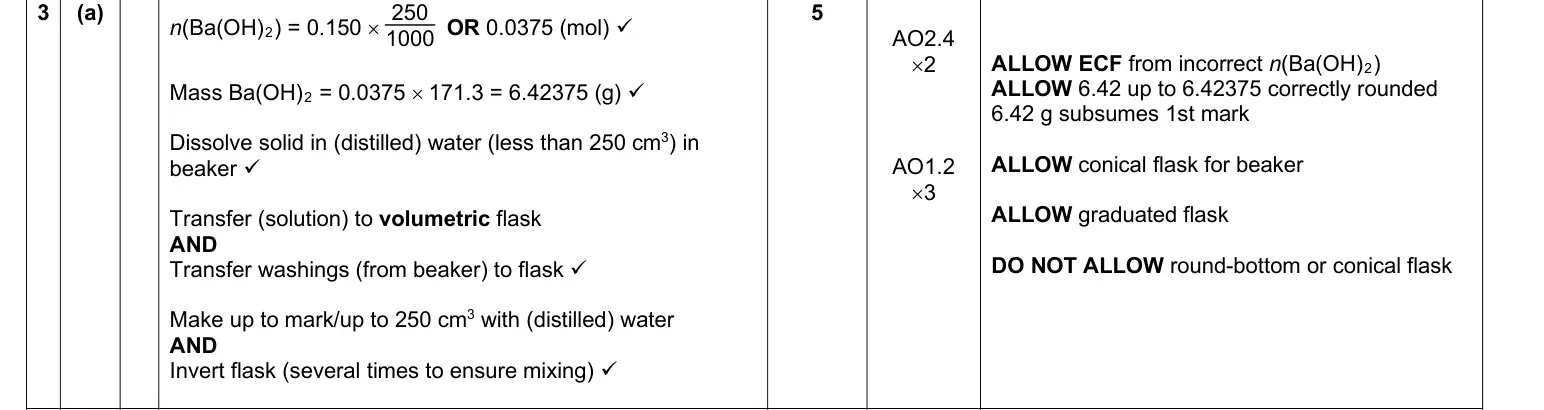
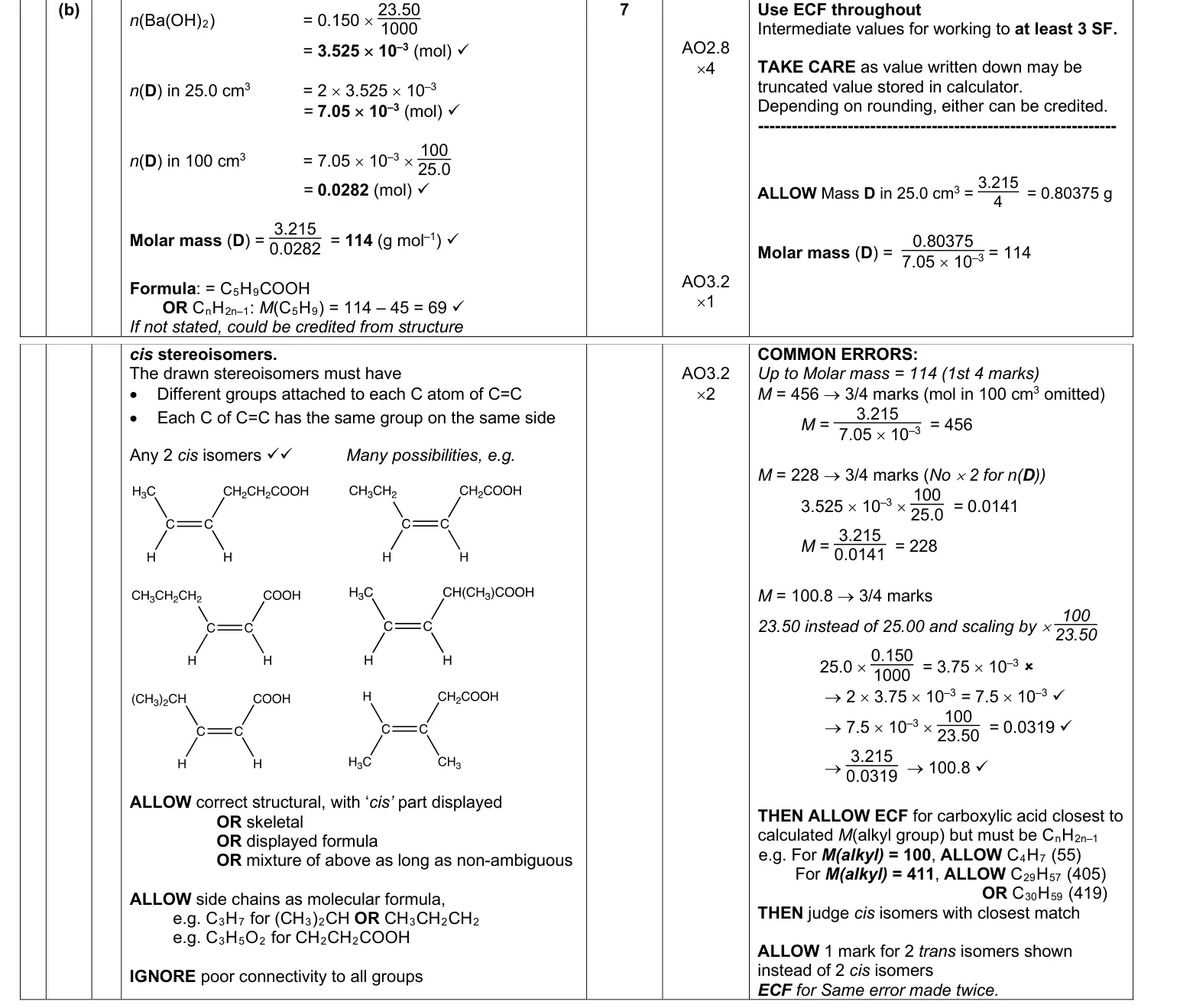
Q3(a): Candidates were required to describe how they would prepare 250 cm3 of a 0.150 mol dm–3 standard solution. Q3(b): As with Question 2, candidates had more success with the mole calculation in Q3(b) than the descriptive response in Q3(a).
Skills: M0.0 Recognise and make use of appropriate units in calculations; M2.3 Substitute numerical values into algebraic equations using appropriate units for physical quantities; PAG2 Acid–base titration
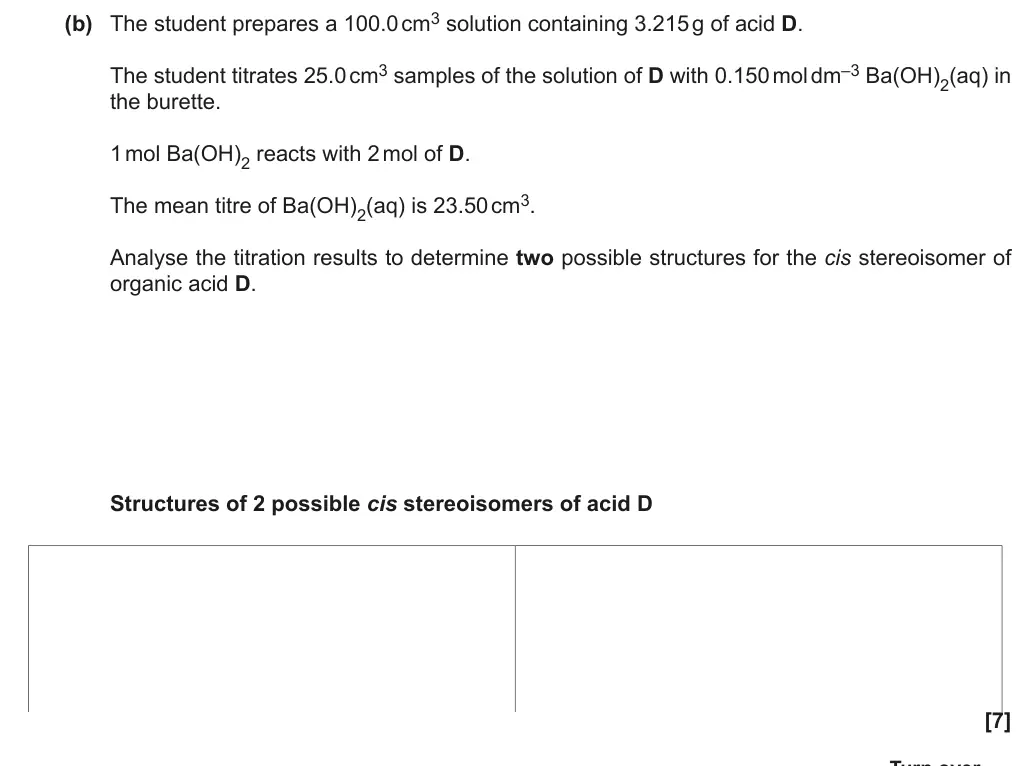
Q1(a) Partial pressure calculation Q1(d) Formula determination from percentage composition by mass Q2(b) Converting mass and volume into moles Q3(b) Unstructured titration calculation Q5(a)(ii) Ideal gas calculation Q5(b)(i) Calculation of the pH of a weak acid • Produced clear and concise responses for a Level of Response question based on a familiar context i.e., Q4(b) rates by continuous monitoring and graphical analysis. • Had difficulty when answering questions requiring application of knowledge and understanding on questions set in novel and unfamiliar contexts, e.g. Q3(b): As with Question 2, candidates had more success with the mole calculation in Q3(b) than the descriptive response in Q3(a). See also comments made for Q1(e) and Q3(b).
Skills: M0.2 Use ratios, fractions and percentages; M2.3 Substitute numerical values into algebraic equations using appropriate units for physical quantities; M4.2 Visualise and represent 2-D and 3-D forms including 2-D representations of 3-D objects; PAG2 Acid–base titration
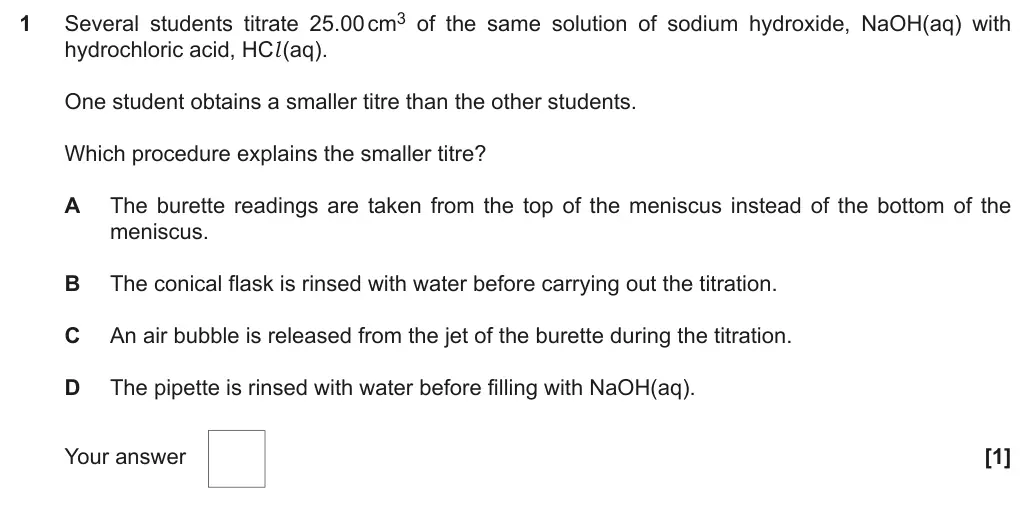
D
Skills: PAG2 Acid–base titration
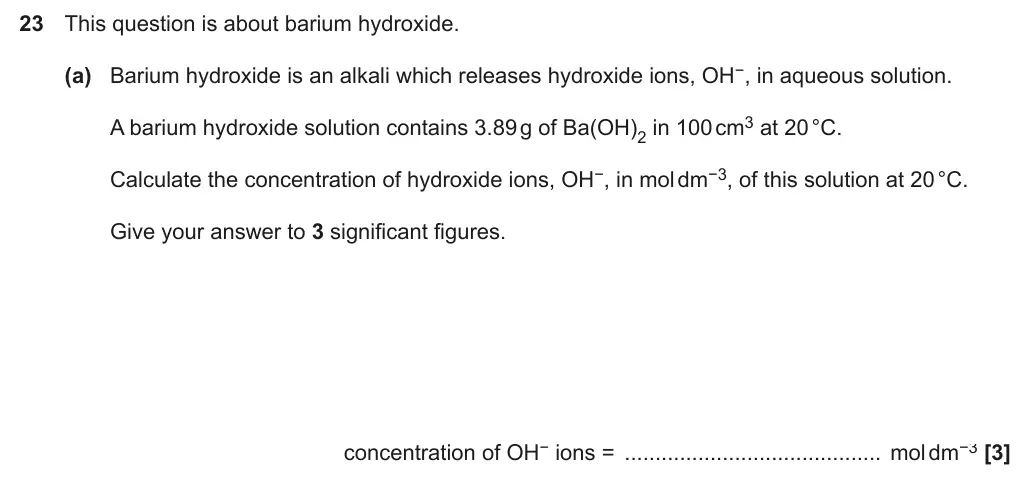
Unlike Q23(a), all intermediate calculations gave values to 3 significant figures. As with Q23(a), many candidates produced largely unreferenced numbers. 23(d) Candidates often find questions linked to practical work challenging.
Skills: M0.0 Recognise and make use of appropriate units in calculations; M0.2 Use ratios, fractions and percentages; M1.1 Use an appropriate number of significant figures
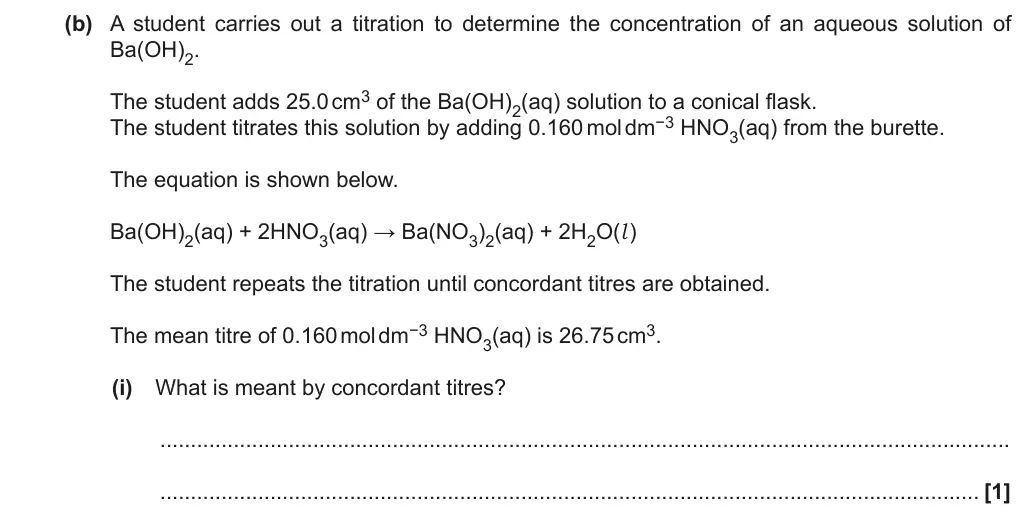
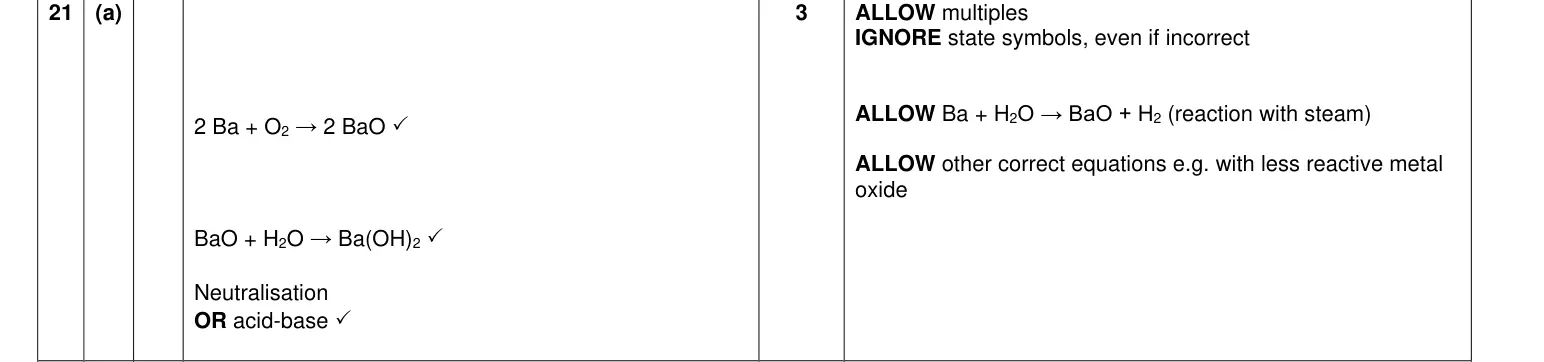
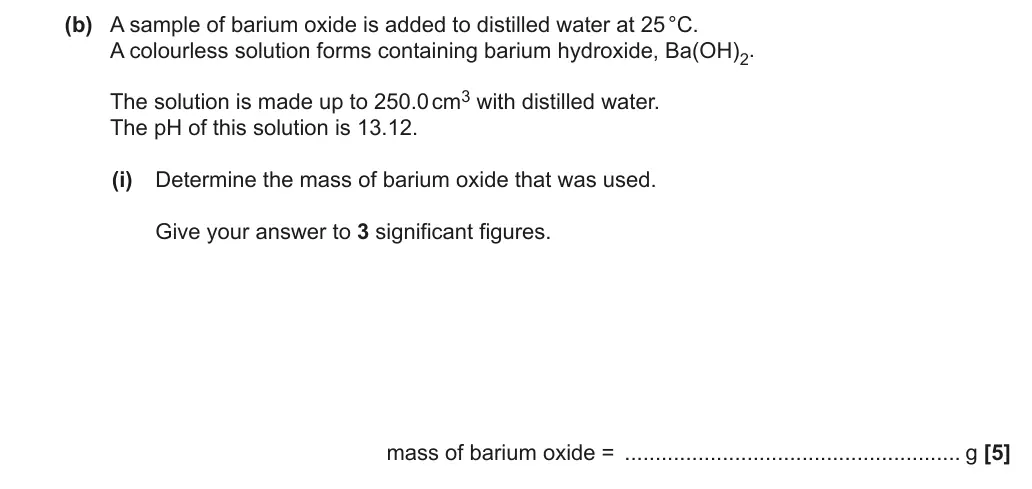
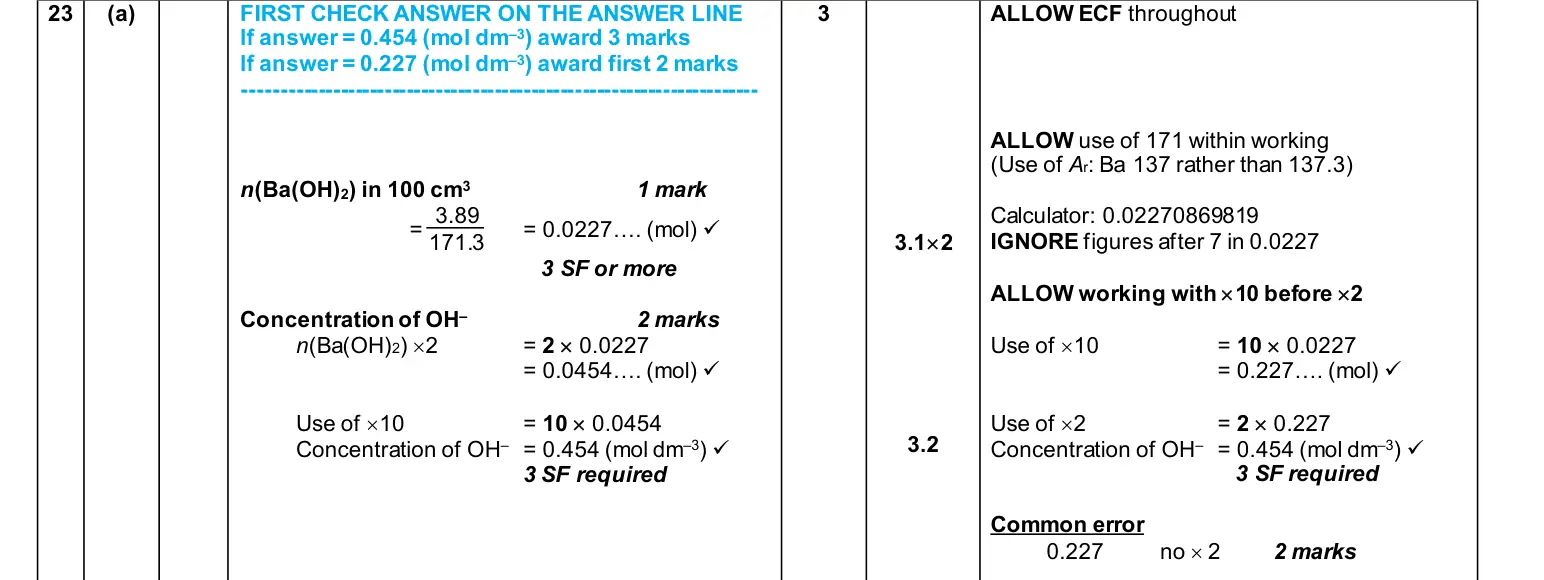
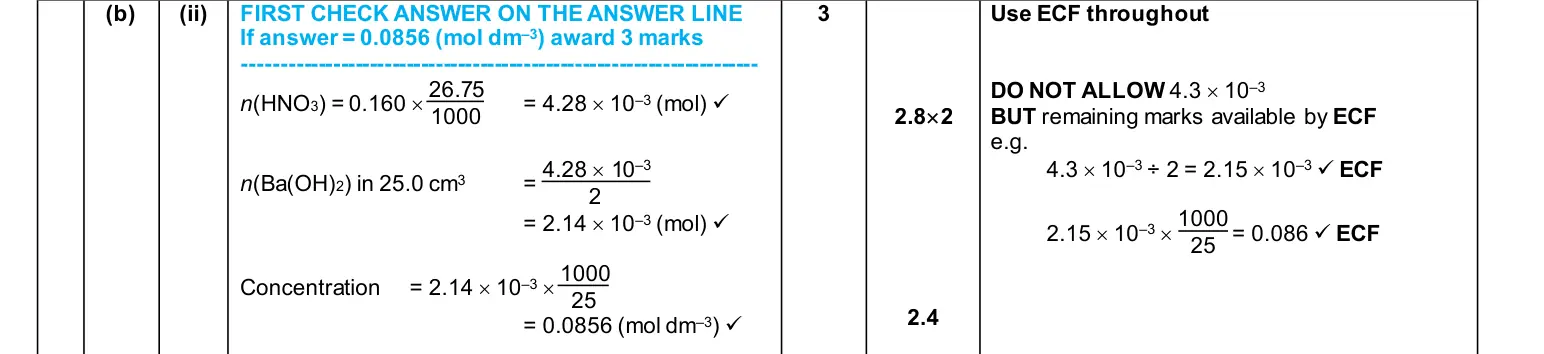
23(a) This question required candidates to calculate the moles of Ba(OH)2 in 100 cm3, to scale this value up to 1 dm3 for the concentration of Ba(OH)2 and finally to multiply this value by 2 to obtain the concentration of OH– ions of 0.454 mol dm–3. This part discriminated extremely well. Lower-attaining candidates would often calculate an incorrect molar mass of Ba(OH)2 and scale up by either 10 or 2. The commonest incorrect answer seen was 0.227, half of the correct answer by omitting the ×2 stage. Most candidates did supply their final answer to the required 3 significant figures. As with all calculations, candidates should round once, at the end of the calculation. Rounding of intermediate values can lead to significant rounding errors. Sometimes, intermediate values were rounded to 2 significant figures when the final value required 3. This use of maths will almost certainly lead to a rounding error in the final answer. Candidates should show clear working so that credit can be given for such responses by applying error carried forward. Many candidates produced largely unreferenced numbers. 23(b) Many candidates seemed to be unfamiliar with the term ‘concordant titres’. Acceptable responses were ‘within 0.1 cm3 and within 0.05 cm3. Common incorrect answers for this important term included ‘the closest titres’, ‘similar titres’, ‘repeated titres’ and ‘within 0.5 cm3’. 23(c) Many candidates were able to calculate the amount of HNO3 in the titration as 4.28 × 10⁻³ mol. Most candidates were credited for the amount of Ba(OH)2 as 2.14 × 10⁻³ mol, half the calculated amount of HNO3. Candidates then need to scale up this value by 1000/25 to obtain the concentration as 0.0856 mol dm–3. Unlike Q23(a), all intermediate calculations gave values to 3 significant figures. Candidates found this stock titration calculation easier than the more unfamiliar 23(a), with many scoring all 3 marks. Discrimination was extremely good, but about a third of candidates did not receive any marks. Candidates should be encouraged to practise stock titration calculations as part of their preparation for the examinations. Candidates should show clear working so that credit can be given for such responses by applying error carried forward. As with Q23(a), many candidates produced largely unreferenced numbers. 23(d) Candidates often find questions linked to practical work challenging. The two reaction routes involving Group 2 reactions are drawn directly from the specification: the reaction of barium with water, and the reaction of barium with oxygen, followed by water. Most candidates found this difficult, and the one-step route using barium and water was seen far more often than the two-step oxygen then water approach. Only the highest-attaining candidates were able to suggest two routes, with scores of 3/4 or 4/4 marks being comparatively rare. As with 21(c)(ii) and 25c(iii), candidates had difficulty in interpreting provided information. OCR support Our new practical question packs, split up by PAG, provide additional opportunities for students to practise questions relating to practical work. They are available on Interchange: https://interchange.ocr.org.uk/Downloads/H432_H433_Chemistry_PAG_ Practice_Question_Sets.zip
Skills: PAG2 Acid–base titration
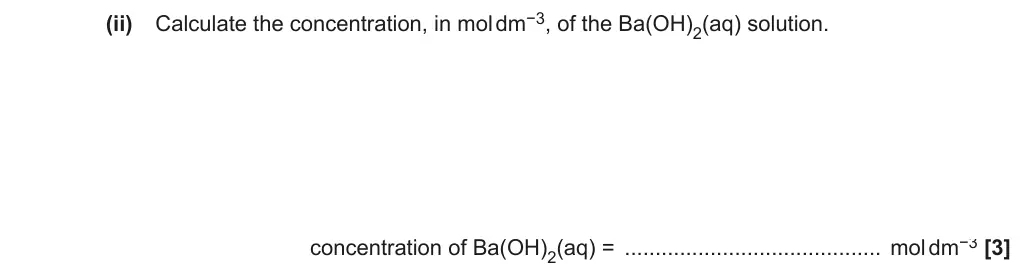
23(a) This question required candidates to calculate the moles of Ba(OH)2 in 100 cm3, to scale this value up to 1 dm3 for the concentration of Ba(OH)2 and finally to multiply this value by 2 to obtain the concentration of OH– ions of 0.454 mol dm–3. This part discriminated extremely well. Lower-attaining candidates would often calculate an incorrect molar mass of Ba(OH)2 and scale up by either 10 or 2. The commonest incorrect answer seen was 0.227, half of the correct answer by omitting the ×2 stage. Most candidates did supply their final answer to the required 3 significant figures. As with all calculations, candidates should round once, at the end of the calculation. Rounding of intermediate values can lead to significant rounding errors. Sometimes, intermediate values were rounded to 2 significant figures when the final value required 3. This use of maths will almost certainly lead to a rounding error in the final answer. Candidates should show clear working so that credit can be given for such responses by applying error carried forward. Many candidates produced largely unreferenced numbers. 23(b) Many candidates seemed to be unfamiliar with the term ‘concordant titres’. Acceptable responses were ‘within 0.1 cm3 and within 0.05 cm3. Common incorrect answers for this important term included ‘the closest titres’, ‘similar titres’, ‘repeated titres’ and ‘within 0.5 cm3’. 23(c) Many candidates were able to calculate the amount of HNO3 in the titration as 4.28 × 10⁻³ mol. Most candidates were credited for the amount of Ba(OH)2 as 2.14 × 10⁻³ mol, half the calculated amount of HNO3. Candidates then need to scale up this value by 1000/25 to obtain the concentration as 0.0856 mol dm–3. Unlike Q23(a), all intermediate calculations gave values to 3 significant figures. Candidates found this stock titration calculation easier than the more unfamiliar 23(a), with many scoring all 3 marks. Discrimination was extremely good, but about a third of candidates did not receive any marks. Candidates should be encouraged to practise stock titration calculations as part of their preparation for the examinations. Candidates should show clear working so that credit can be given for such responses by applying error carried forward. As with Q23(a), many candidates produced largely unreferenced numbers. 23(d) Candidates often find questions linked to practical work challenging. The two reaction routes involving Group 2 reactions are drawn directly from the specification: the reaction of barium with water, and the reaction of barium with oxygen, followed by water. Most candidates found this difficult, and the one-step route using barium and water was seen far more often than the two-step oxygen then water approach. Only the highest-attaining candidates were able to suggest two routes, with scores of 3/4 or 4/4 marks being comparatively rare. As with 21(c)(ii) and 25c(iii), candidates had difficulty in interpreting provided information. OCR support Our new practical question packs, split up by PAG, provide additional opportunities for students to practise questions relating to practical work. They are available on Interchange: https://interchange.ocr.org.uk/Downloads/H432_H433_Chemistry_PAG_ Practice_Question_Sets.zip
Skills: M0.2 Use ratios, fractions and percentages; M1.1 Use an appropriate number of significant figures; M2.3 Substitute numerical values into algebraic equations using appropriate units for physical quantities; PAG2 Acid–base titration
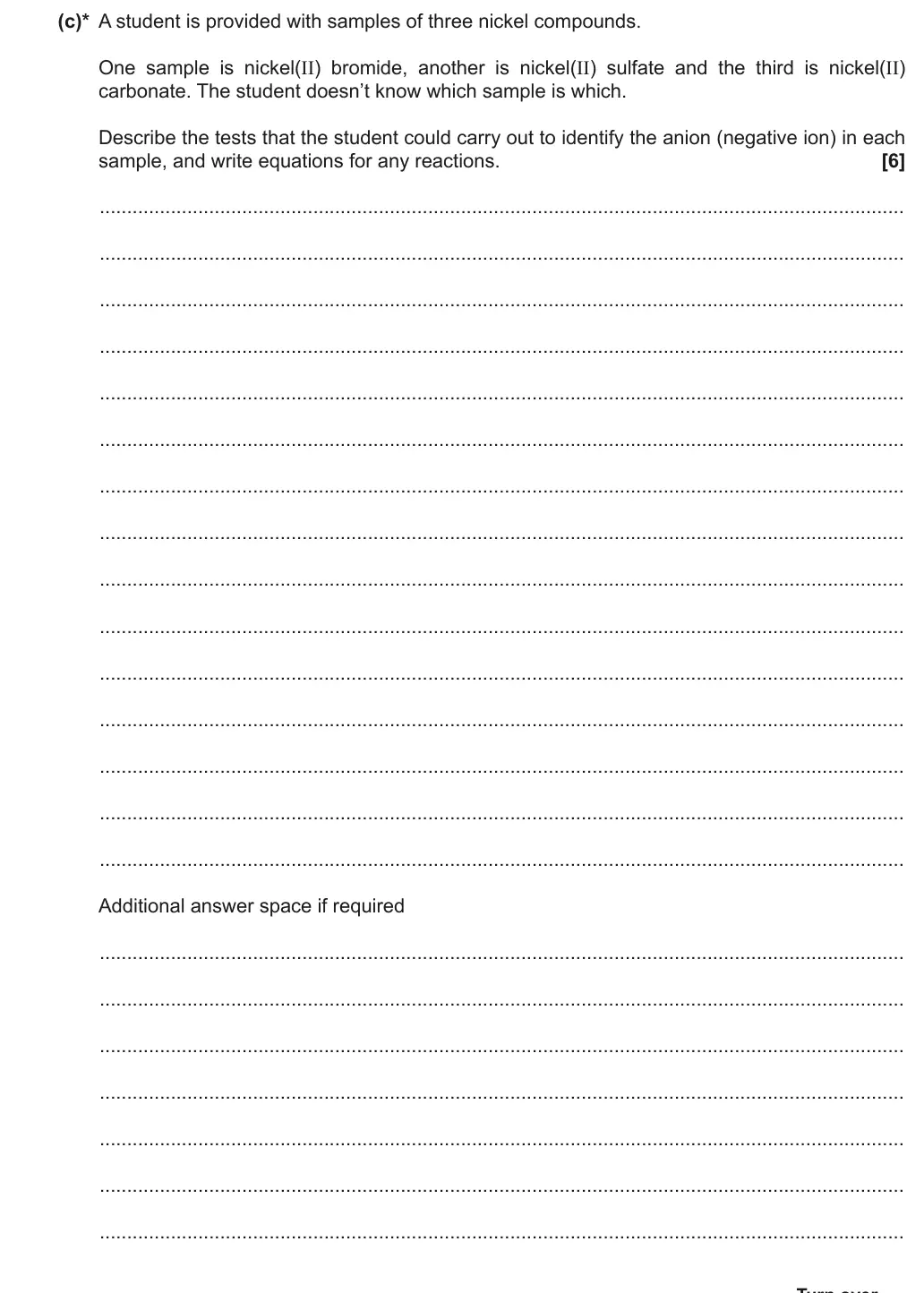
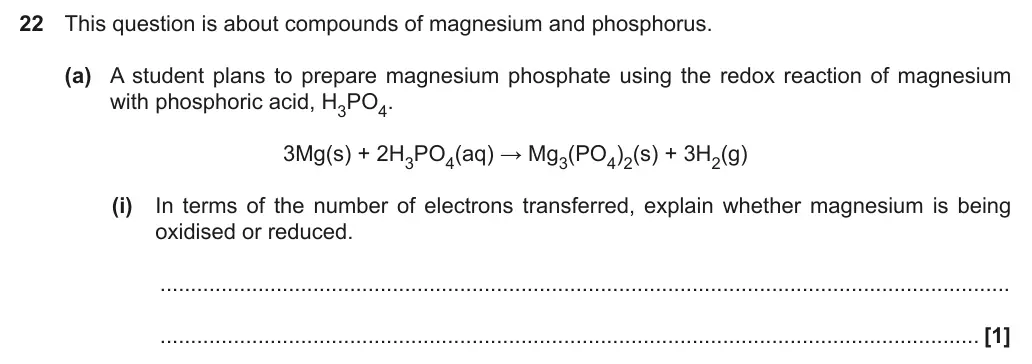
1(a) A considerable number of candidates did not score the mark here despite knowing that it was an oxidation reaction. They either omitted to give the number of electrons lost or gave their justification using oxidation numbers. This question highlights the importance of reading the question carefully and answering the question asked, not one that may have been seen previously. 1(b)(i) Most candidates were able to make some progress with this calculation. Common errors included omitting to multiply by two to find the number of moles of HCl or not multiplying their volume in dm3 by 1000 to give an answer in cm3. 1(b)(ii) More candidates struggled with this part of calculation. A significant number of candidates used the number of moles rounded to 3 SF but then gave a final answer to 4 SF, giving an answer of 78.48 cm3. This was given credit as correct calculation had been carried out for one mark. A couple of candidates correctly used the ideal gas equation and were given credit for this, but made it more complicated than necessary for one mark. 1(b)(iii) Very few candidates managed to gain marks here. Most did not recognise that HCl was the limiting reagent in the reaction and suggested that a greater volume of H2 would be produced, as same mass of Mg would give a greater number of moles. 1(c)* Very few candidates managed to score full marks for this question. Even the highest-attaining candidates struggled with writing balanced chemical equations. The most successful candidates used ionic equations with state symbols in their responses. A large proportion of candidates gave unnecessary details such as testing for CO2 using limewater or the colours of other silver halide precipitates. The best responses broken down their response to cover each test in turn, giving clear and concise details for each.
Skills: PAG4 Qualitative analysis of ions

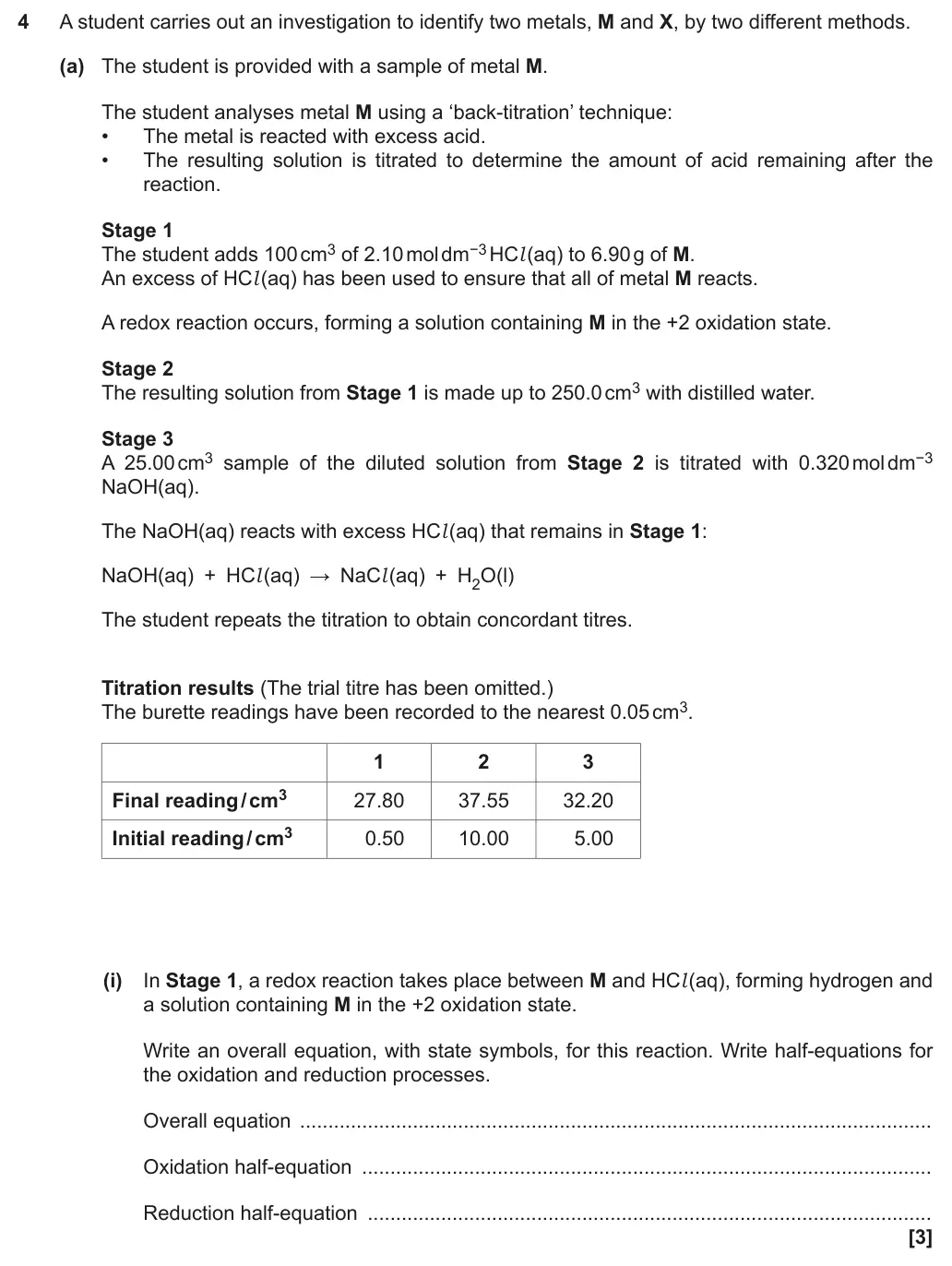
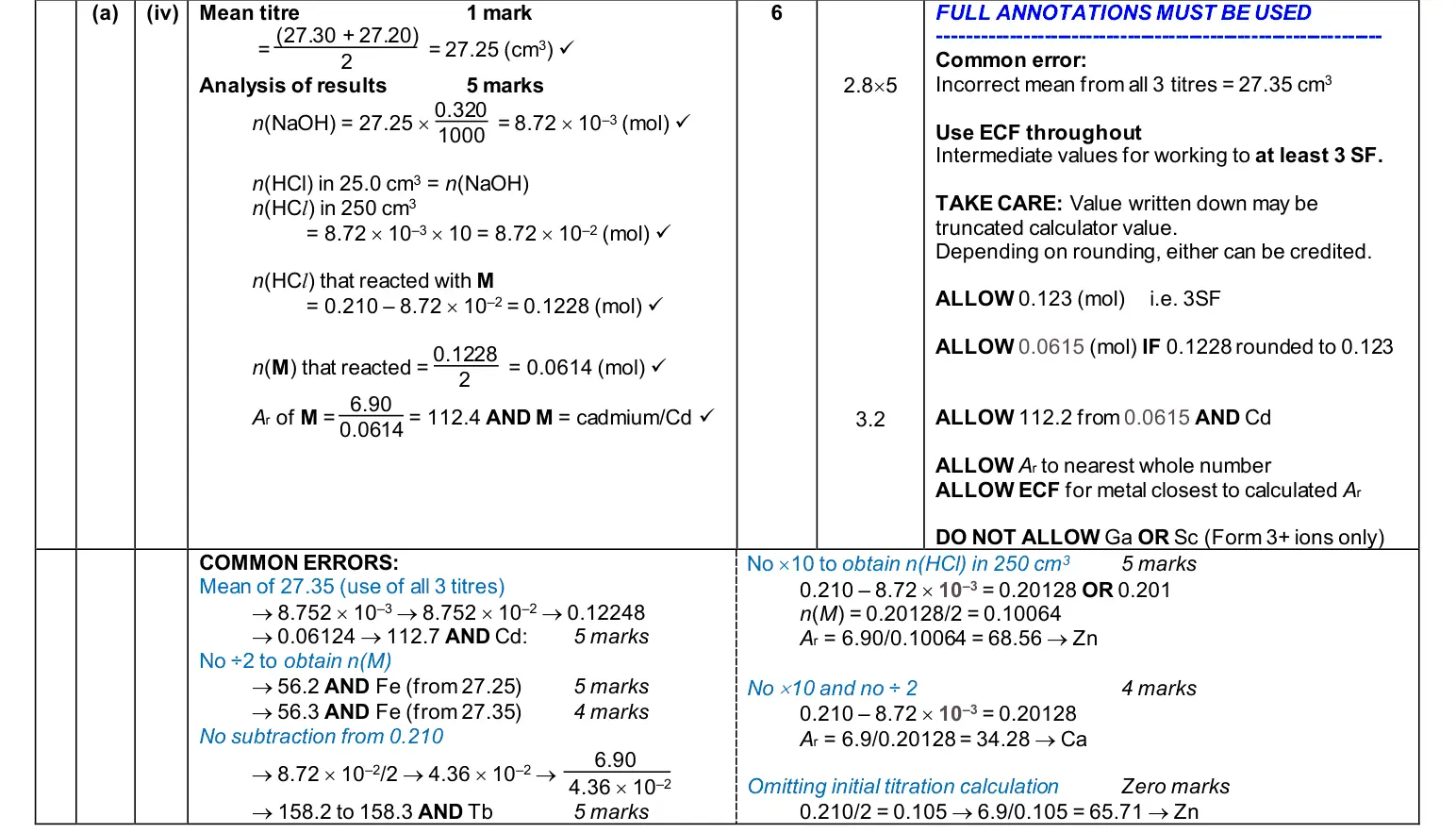
4(a)(i) This question required candidates to write an overall equation and half equations for oxidation and reduction. Many candidates made errors within one or more equations. The overall equation was often written without state symbols, despite the question instruction ‘with state symbols’. The oxidation half equation was more likely to be correct than the reduction half equation, which often used Cl instead of H+. When H+ was used, the half equation was often unbalanced or electrons had been omitted. It is recommended that candidates carefully use the chemical information in the question. 4(a)(ii) Most candidates identified that all the metal would have reacted when it had all disappeared and that gas bubbles from the reaction would have stopped. Some responses did not emphasise that these observations would have stopped and this prevented credit being given. 4(a)(iii) The ionic equation for neutralisation of an acid with an alkali was well known and this question was answered correctly by most candidates. 4(a)(iv) Candidates were presented with information about a back titration, a technique that they would be unlikely to have encountered during their course. The question stem to 4a(iv) suggested a three-step strategy. Many candidates followed this guidance and were credited with many of the available marks. Marks were given for a correct method (by error carried forward) even if there was an error or omission in the multi-step calculation. This emphasises the importance of clear working. Most candidates determined the correct mean titre of 27.25 cm3. A few candidates did take the mean of all three titres rather than the closest. Most calculated that 8.72 × 10⁻³ mol of NaOH reacted with the same number of moles of HCl in the titration and then scaled up the HCl by a factor of 10 to 8.72 × 10⁻² mol in the 250 cm3 volumetric flask. These steps are standard for many titration calculations and gave a route to three of the six available marks. The more difficult back titration steps then followed and the higher-attaining candidates recognised the need to subtract this amount of HCl from the original amount of HCl used to react with metal M. These candidates then divide this value by two to find the moles of M that reacted (from the 1 : 2 stoichiometry of M : HCl). The correct calculation then gave a relative atomic mass of M as 112 and its identity as cadmium. It was common for candidates to omit the division by two and to arrive at a relative atomic mass of 56 for iron. The mark scheme shows the variety of metals that candidates identified from their calculations, the errors made, and the error carried forward marks that resulted. Many lower-attaining candidates did not follow the 3 steps in the stem, using only the original amount of HCl and ignoring the titration. This approach was not credited with marks. A large range of marks was seen, and the question discriminated extremely well. 4(b)(i) This straightforward mole calculation required candidates to determine the mass of CO2 as 2.75 g from the table of results and to divide this value by the molar mass of CO2 to arrive at 0.0625 mol. Most candidates were successful. As with other questions providing raw experimental results, lower-attaining candidates often chose the wrong data from the supplied results. 4(b)(ii) Many candidates used their value from 4b(i) with the mass of X2CO3 from the results table to obtain a value for the molar mass (233.13 from 14.57 ÷ 0.0625). Higher-attaining candidates obtained a value for the atomic mass of X (86.56 from 233.13) and identified X as the Group 1 metal rubidium. Some candidates did not recognise the significance of the formula of X2CO3 and identified X instead as strontium (Ar = 87.6). Lower-attaining candidates often used incorrect data from the supplied information and made little progress with this calculation. 4(c)(i) Most candidates suggested that the mass of the flask and contents could be reweighed until the mass no longer changed. An alternative creditworthy suggestion was to attach a gas syringe and to measure the gas volume until it no longer changed. Vague suggestions such as ‘leave for longer’ were not credited with marks. 4(c)(ii) Candidates found this question challenging. Success required candidates to appreciate that some CO2 dissolving would result in less mass of CO2 being recorded as lost, meaning that less moles of CO2 had apparently been formed and so less moles of X2CO3 had reacted. Using n = m/M, this would show that the calculated molar mass of X2CO3 appears to be greater. Only the highest-attaining candidates successfully navigated this question.
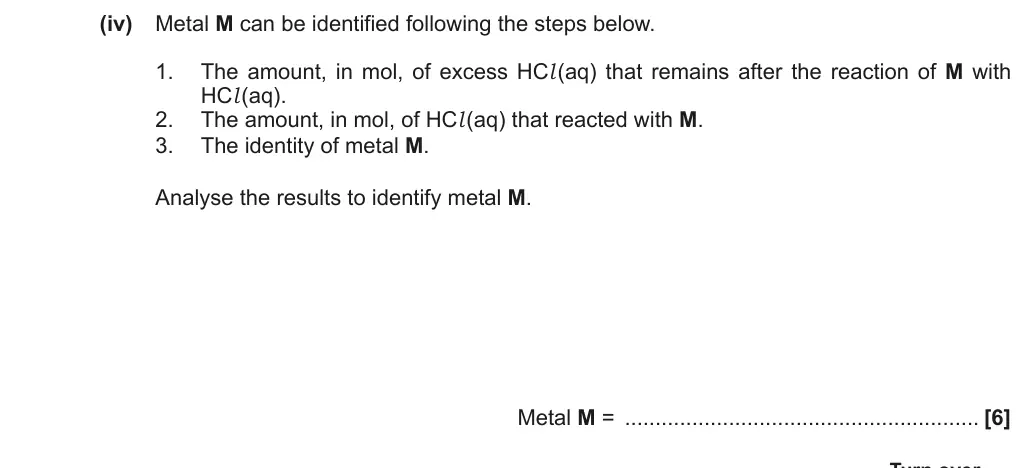
4(a)(i) This question required candidates to write an overall equation and half equations for oxidation and reduction. Many candidates made errors within one or more equations. The overall equation was often written without state symbols, despite the question instruction ‘with state symbols’. The oxidation half equation was more likely to be correct than the reduction half equation, which often used Cl instead of H+. When H+ was used, the half equation was often unbalanced or electrons had been omitted. It is recommended that candidates carefully use the chemical information in the question. 4(a)(ii) Most candidates identified that all the metal would have reacted when it had all disappeared and that gas bubbles from the reaction would have stopped. Some responses did not emphasise that these observations would have stopped and this prevented credit being given. 4(a)(iii) The ionic equation for neutralisation of an acid with an alkali was well known and this question was answered correctly by most candidates. 4(a)(iv) Candidates were presented with information about a back titration, a technique that they would be unlikely to have encountered during their course. The question stem to 4a(iv) suggested a three-step strategy. Many candidates followed this guidance and were credited with many of the available marks. Marks were given for a correct method (by error carried forward) even if there was an error or omission in the multi-step calculation. This emphasises the importance of clear working. Most candidates determined the correct mean titre of 27.25 cm3. A few candidates did take the mean of all three titres rather than the closest. Most calculated that 8.72 × 10⁻³ mol of NaOH reacted with the same number of moles of HCl in the titration and then scaled up the HCl by a factor of 10 to 8.72 × 10⁻² mol in the 250 cm3 volumetric flask. These steps are standard for many titration calculations and gave a route to three of the six available marks. The more difficult back titration steps then followed and the higher-attaining candidates recognised the need to subtract this amount of HCl from the original amount of HCl used to react with metal M. These candidates then divide this value by two to find the moles of M that reacted (from the 1 : 2 stoichiometry of M : HCl). The correct calculation then gave a relative atomic mass of M as 112 and its identity as cadmium. It was common for candidates to omit the division by two and to arrive at a relative atomic mass of 56 for iron. The mark scheme shows the variety of metals that candidates identified from their calculations, the errors made, and the error carried forward marks that resulted. Many lower-attaining candidates did not follow the 3 steps in the stem, using only the original amount of HCl and ignoring the titration. This approach was not credited with marks. A large range of marks was seen, and the question discriminated extremely well. 4(b)(i) This straightforward mole calculation required candidates to determine the mass of CO2 as 2.75 g from the table of results and to divide this value by the molar mass of CO2 to arrive at 0.0625 mol. Most candidates were successful. As with other questions providing raw experimental results, lower-attaining candidates often chose the wrong data from the supplied results. 4(b)(ii) Many candidates used their value from 4b(i) with the mass of X2CO3 from the results table to obtain a value for the molar mass (233.13 from 14.57 ÷ 0.0625). Higher-attaining candidates obtained a value for the atomic mass of X (86.56 from 233.13) and identified X as the Group 1 metal rubidium. Some candidates did not recognise the significance of the formula of X2CO3 and identified X instead as strontium (Ar = 87.6). Lower-attaining candidates often used incorrect data from the supplied information and made little progress with this calculation. 4(c)(i) Most candidates suggested that the mass of the flask and contents could be reweighed until the mass no longer changed. An alternative creditworthy suggestion was to attach a gas syringe and to measure the gas volume until it no longer changed. Vague suggestions such as ‘leave for longer’ were not credited with marks. 4(c)(ii) Candidates found this question challenging. Success required candidates to appreciate that some CO2 dissolving would result in less mass of CO2 being recorded as lost, meaning that less moles of CO2 had apparently been formed and so less moles of X2CO3 had reacted. Using n = m/M, this would show that the calculated molar mass of X2CO3 appears to be greater. Only the highest-attaining candidates successfully navigated this question.
Skills: M0.2 Use ratios, fractions and percentages; M1.2 Find arithmetic means; M2.3 Substitute numerical values into algebraic equations using appropriate units for physical quantities; PAG2 Acid–base titration
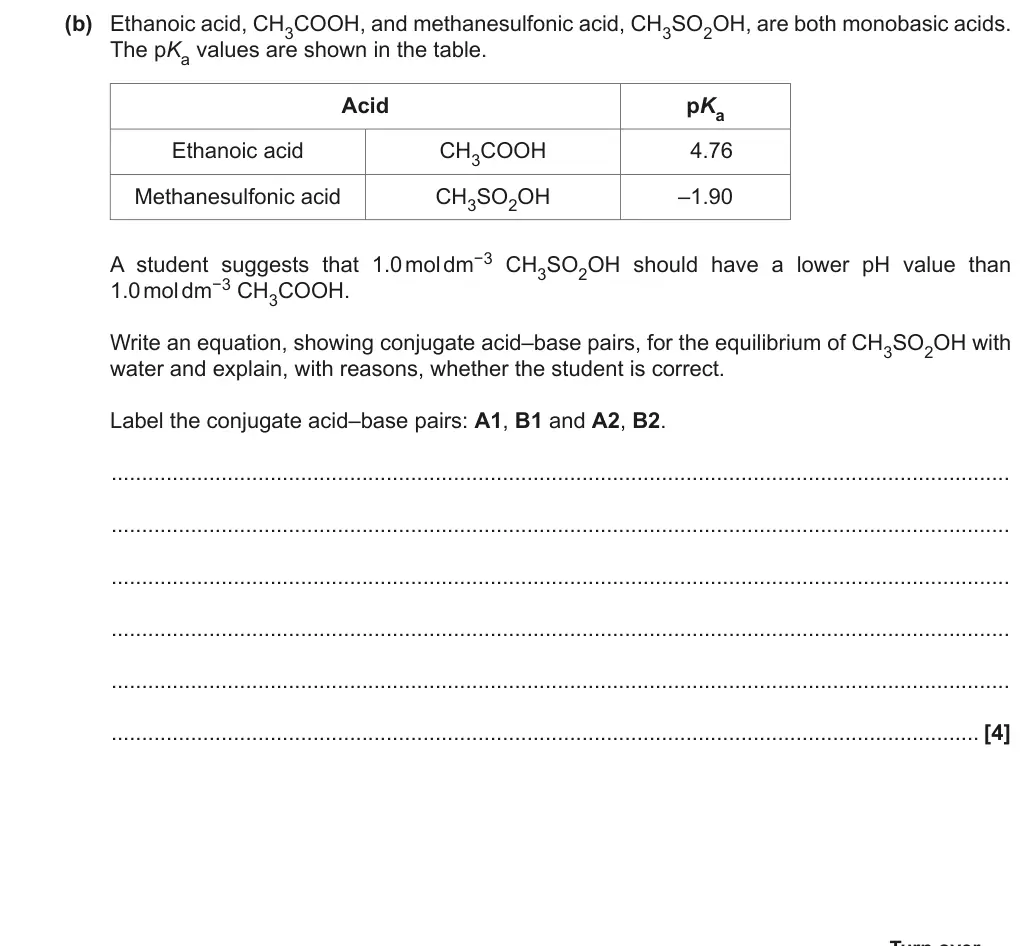
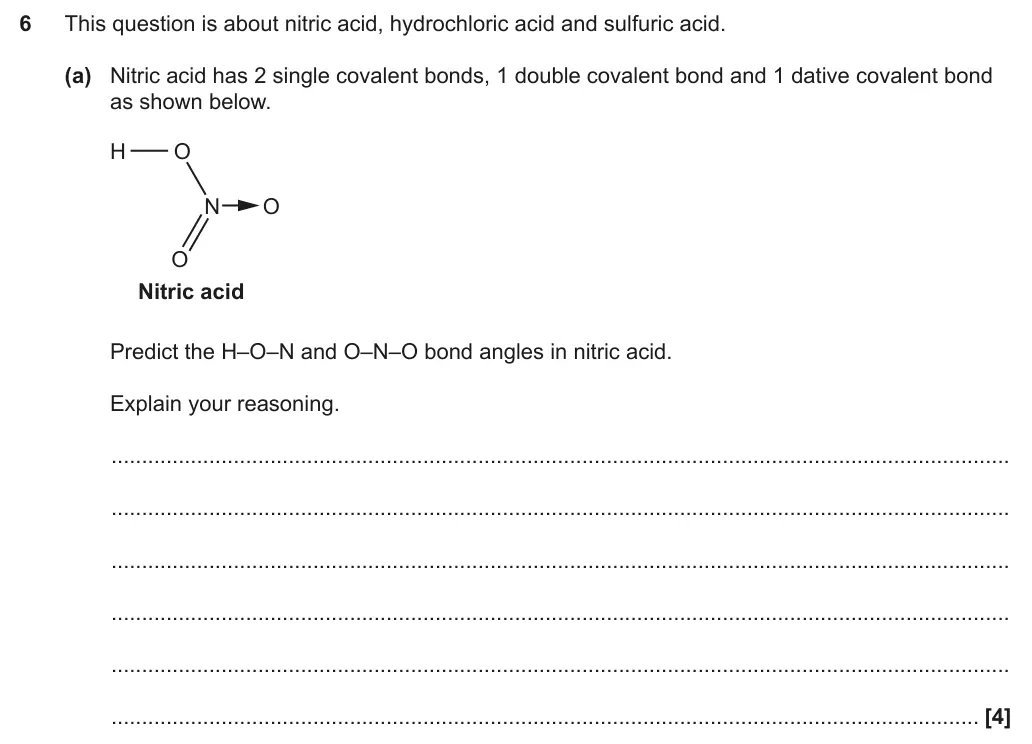
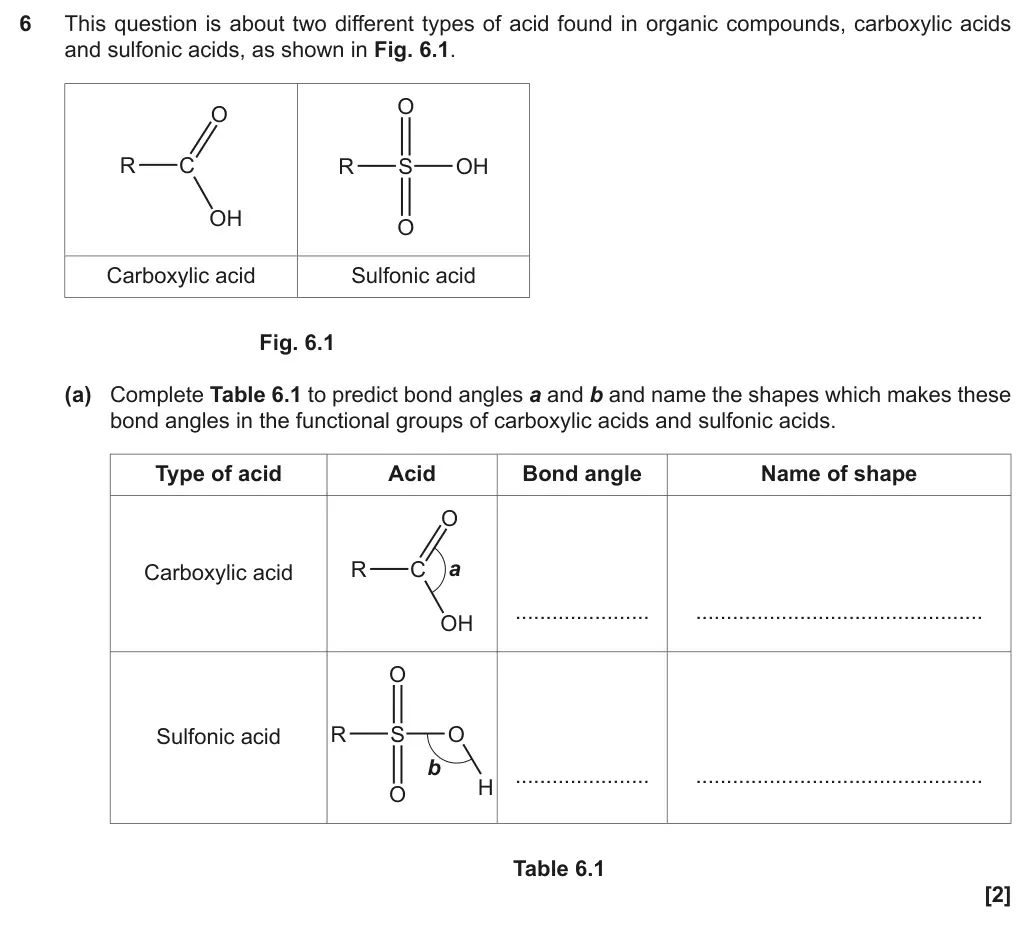
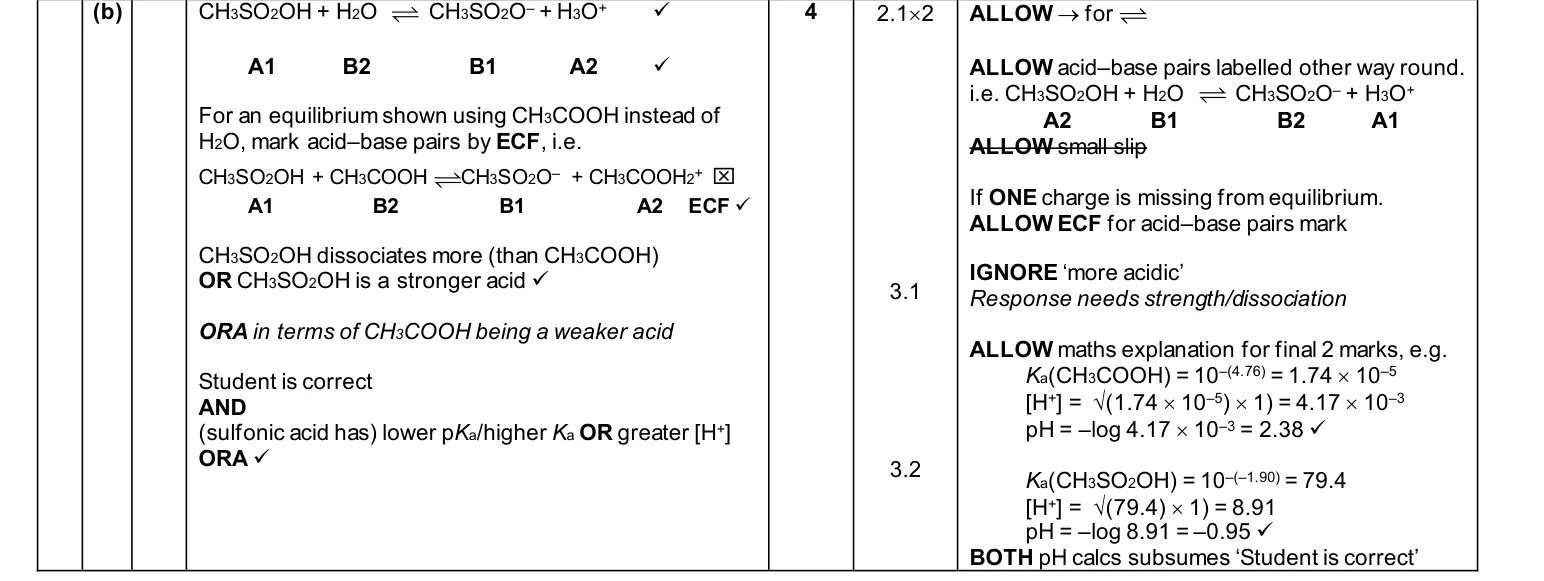
6(a) Candidates were expected to use their knowledge and understanding of bond angles and shapes. Most candidates were given both available marks. A significant number responded with incorrect names of shapes, or chose the wrong shape, such as pyramidal for the O–C–O bond angle in the carboxylic acid. Candidates are recommended to learn this basic area of chemistry. 6(b) Most candidates completed a correct equilibrium equation and assigned the correct acid-base pairs. A significant number of candidates used ethanoic acid instead of water in the equation. The examiners allowed error carried forward in this case for the acid-base pairs. Candidates found it much more difficult to explain whether the sulfonic acid had a lower pH value. The higher-attaining candidates answered concisely. They usually identifying that the sulfonic acid would have a lower pH as the pKa value was lower (or the Ka value greater), leading to more dissociation than ethanoic acid. Lower-attaining candidates often produced unfocussed and lengthy responses, sometimes relating increased dissociation in an acid to a higher, rather than a lower, pH. Some candidates approached their explanation mathematically, calculating pH values for ethanoic acid and sulfonic acid from their concentrations and pKa values. If correct, this approach was fully credited. 6(c) Most candidates showed a good understanding and appreciation of drawing curly arrows. It must be stressed that curly arrows that do not start from a lone pair, negative charge or a bond cannot be credited. Lower-attaining candidates often drew imprecisely positioned curly arrows, curly arrows in the wrong direction or to the wrong atoms. For their response to be credited with marks, candidates should position curly arrows to ensure credit when outlining reaction mechanisms. If any of your students’ results are not as expected, you may wish to consider one of our review of results services. For full information about the options available visit the OCR website. If university places are at stake you may wish to consider priority service 2 reviews of marking which have an earlier deadline to ensure your reviews are processed in time for university applications. Our priority is supporting you and your students this autumn and to support you as you prepare for summer 2021 exams. We’ll update our website information regularly with resources, guidance and key information. • Teachers • Students • Exams officers • Assessment specialists We are sending a weekly roundup to tell you about important updates. You can also sign up for your subject specific updates. If you haven’t already, sign up here. Attend one of our popular CPD courses to hear directly from a senior assessor or drop in to a Q&A session. All our courses for the academic year 2020-2021 are being delivered live via an online platform, so you can attend from any location. Please find details for all our courses on the relevant subject page on our website or visit OCR professional development. ExamBuilder is the question builder platform for a range of our GCSE, A Level, Cambridge Nationals, Cambridge Technicals and Functional Skills qualifications. See the full list of available qualifications in the sign up form. ExamBuilder is free for all OCR centres with an Interchange account and gives you unlimited users per centre. We need an Interchange username to validate the identity of your centre's first user account for ExamBuilder. If you do not have an Interchange account please contact your centre administrator (usually the Exams Officer) to request a username, or nominate an existing Interchange user in your department. Review of results
Skills: M0.4 Use calculators to find and use power, exponential and logarithmic functions; M2.5 Use logarithms in relation to quantities that range over several orders of magnitude
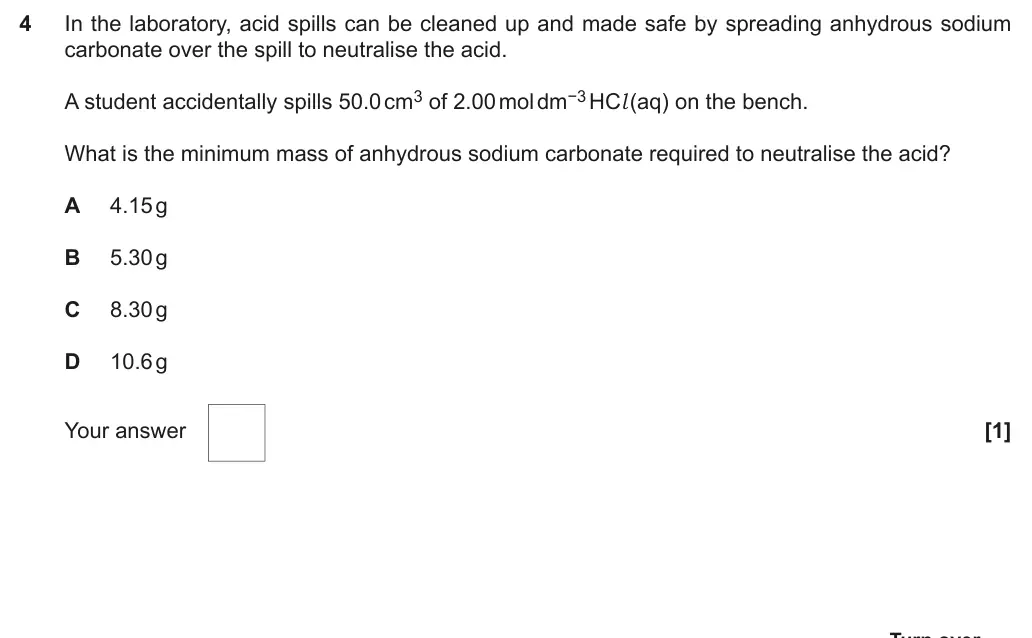
B
This was a challenging question, the correct answer being B. Candidates had to know the correct formula for sodium carbonate in order to deduce the 2:1 molar ratio of HCl to Na2CO3 and to calculate its Mr (106). Option D was arrived at by assuming the molar ratio was 1:1, option A by incorrectly thinking the formula was NaCO3 , and option C by making both of these mistakes.
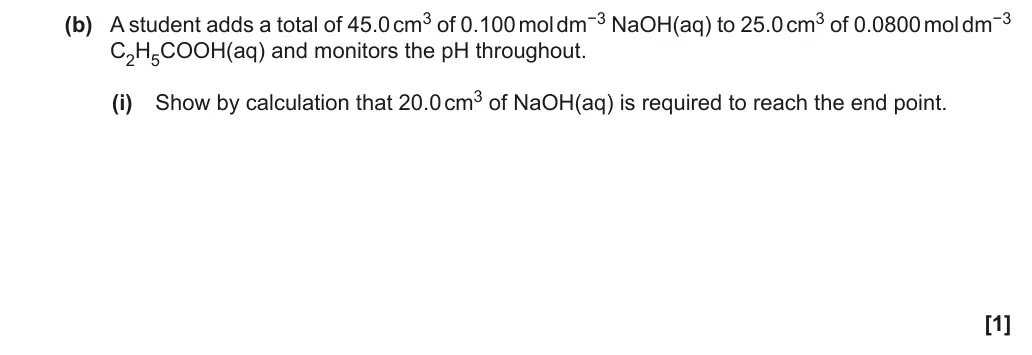
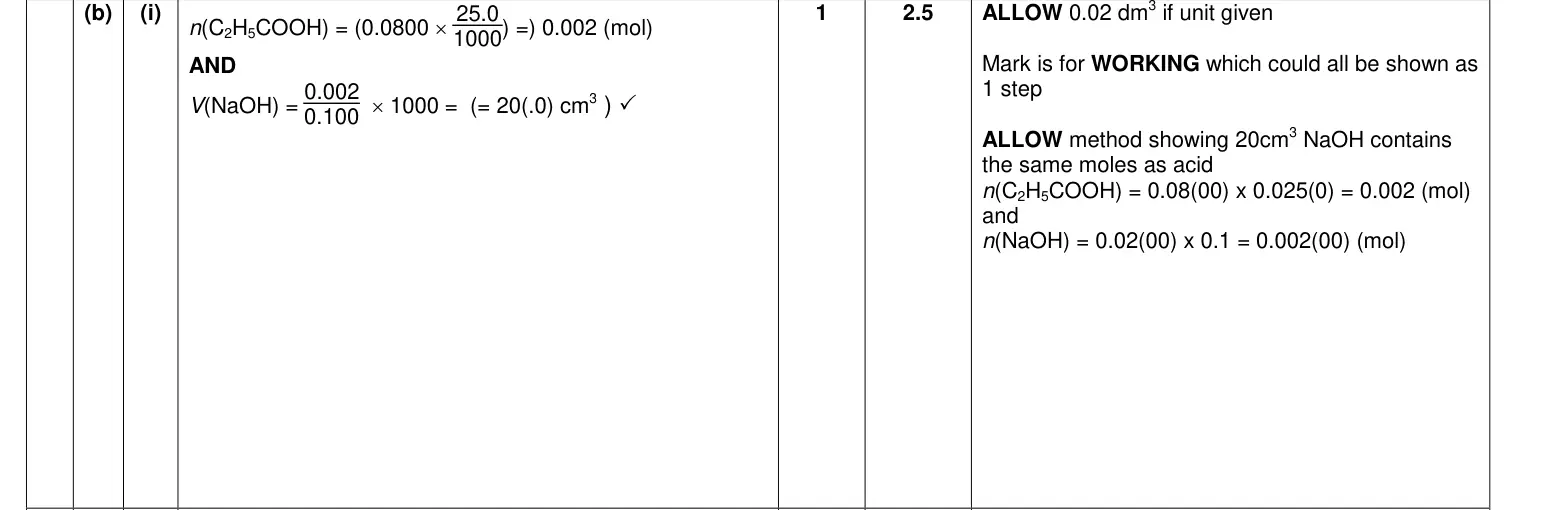
Showing by calculation something already known is a skill that some candidates find challenging. Many responses included rows of figures with ‘20 cm3’ appearing at the end. Clarity of working is essential and in questions such as this, candidates are advised to include word descriptions of what they are calculating, even if it is abbreviations such as ‘n’ for number of moles.
Skills: M0.2 Use ratios, fractions and percentages; M2.3 Substitute numerical values into algebraic equations using appropriate units for physical quantities
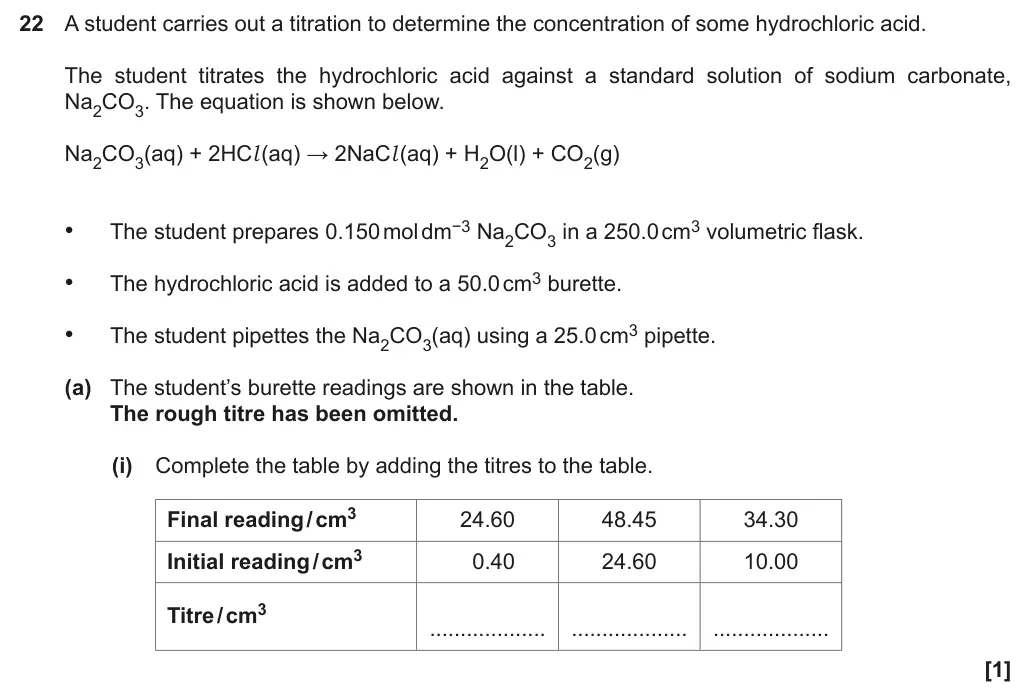
Most candidates added correct titres for the three titrations. However, an error made by a quarter of candidates was to omit the zero as the second decimal place in the first and third titres. This should have been usual practice from candidate experience of practical work and has also been highlighted as a common error in previous exam series.
Skills: PAG2 Acid–base titration

Most candidates identified that the first and third titres were concordant and calculated the mean titre that should be used as 24.25 cm3. About a third of candidates calculated the mean of all 3 titres as 24.10 or 24.12 cm3. Normal practice in titrations would be to select the closest titres.
Skills: M1.2 Find arithmetic means; PAG2 Acid–base titration
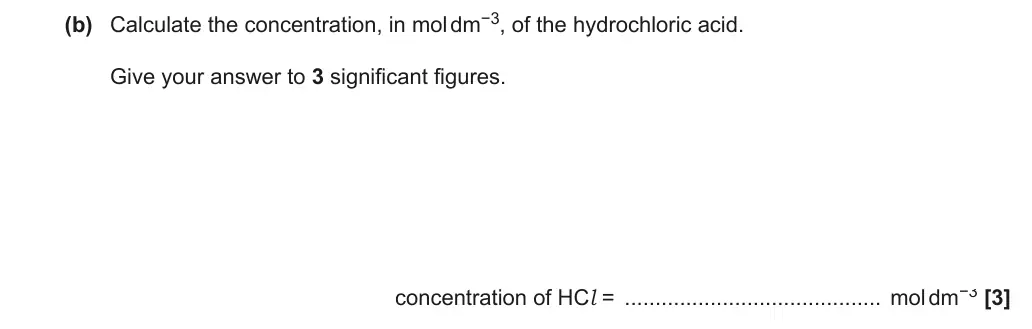
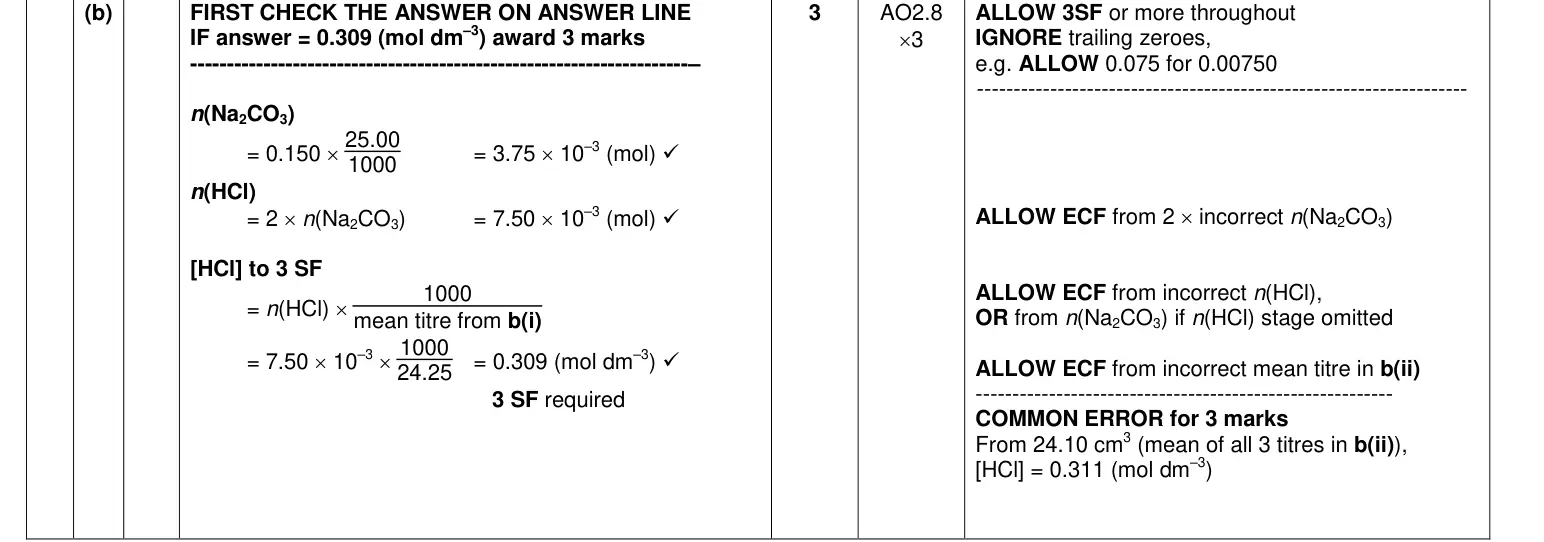
Many candidates were able to calculate the amount of Na2CO3 in the titration as 0.00375 mol although a common error was to calculate the amount of Na2CO3 in the 250 cm3 volumetric flask as 0.0375 mol. Most candidates were credited for the amount of HCl: twice their calculated amount of Na2CO3. Candidates then need to scale up this value by 1000/mean titre to obtain the concentration as 0.309 mol dm–3, and to quote the answer to 3 significant figures. Many candidates scaled up using 50.0, the burette volume, rather than their mean titre, resulting in a concentration 0.15 or 1.5 mol dm–3. A significant number also rounded their value to 2 rather than 3 significant figures. Candidates are advised to show clear working so that credit can be given for such responses by applying error carried forward. The working shown in this response is clear. Many candidates working was more jumbled, with unreferenced numbers common.
Skills: M0.2 Use ratios, fractions and percentages; M1.1 Use an appropriate number of significant figures; M2.2 Change the subject of an equation; PAG2 Acid–base titration
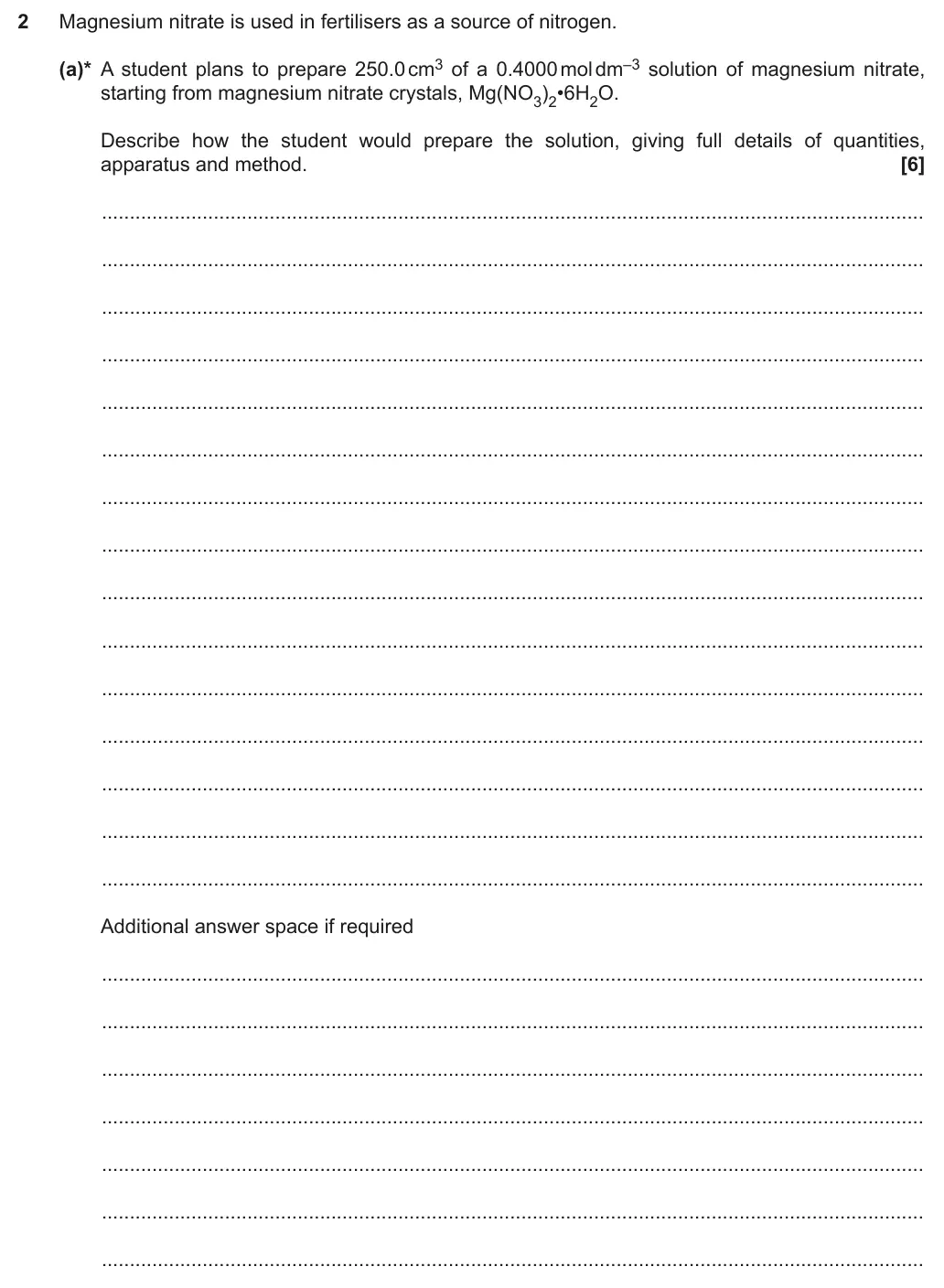
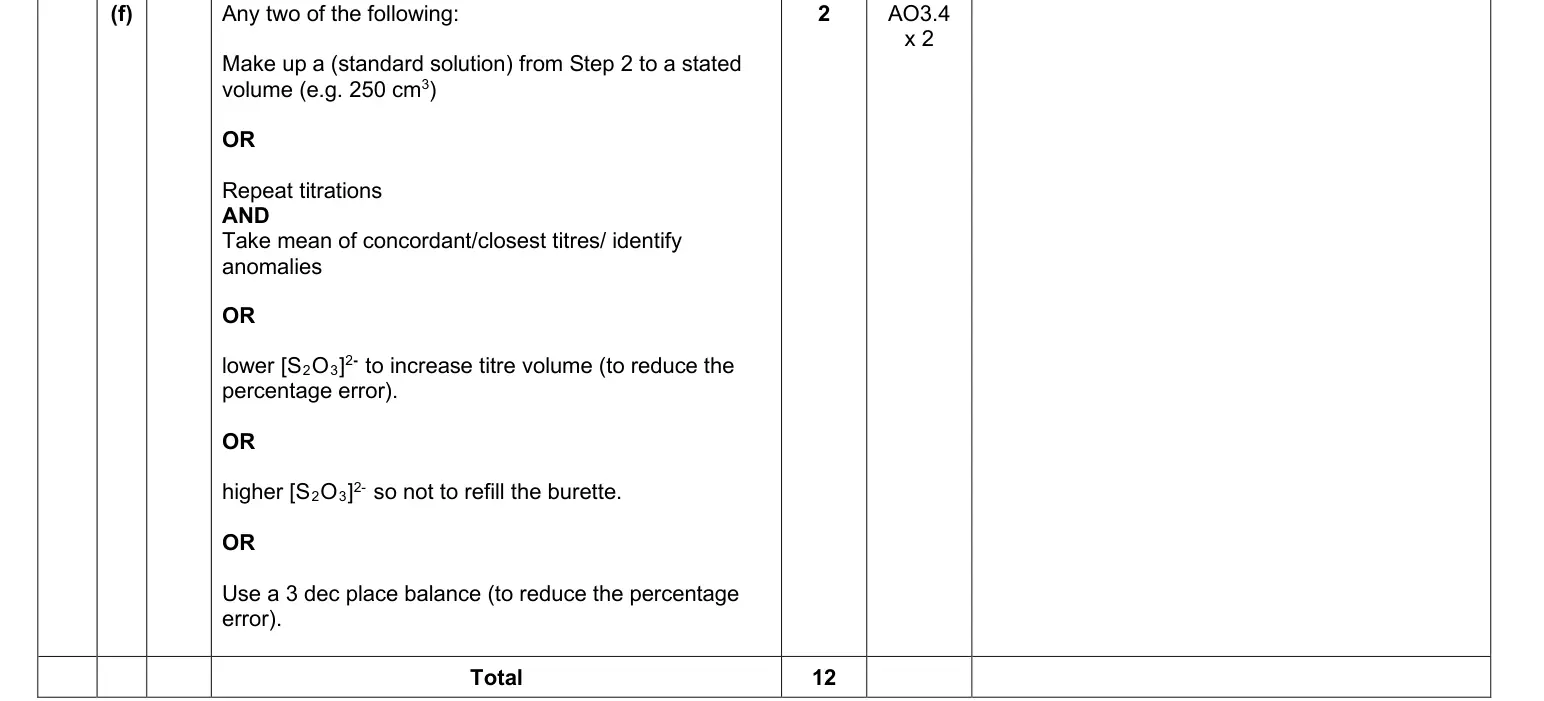
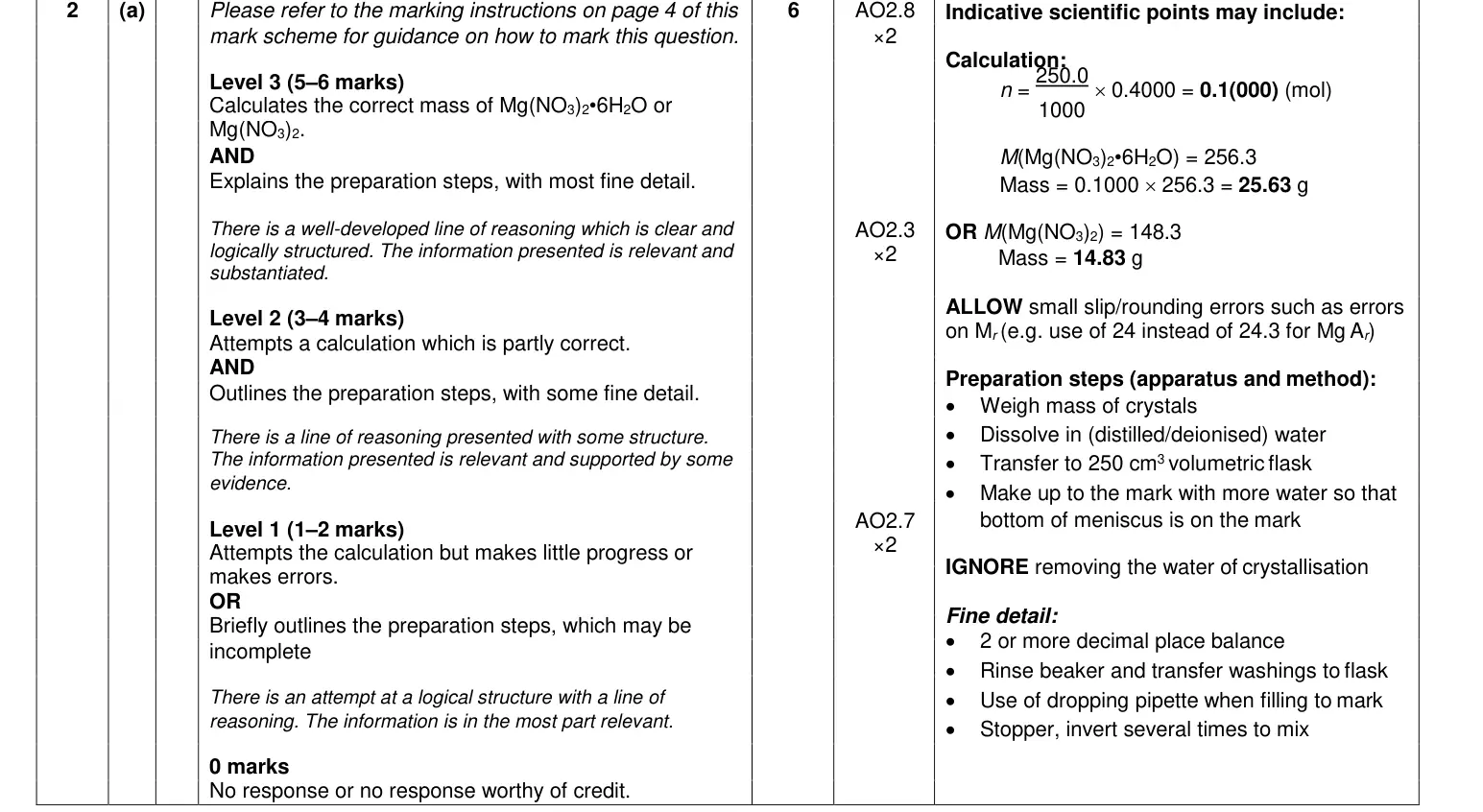
Most candidates focused on removing the water of crystallisation, often going to great depths of explanation, with apparatus diagrams, of how to remove it. Some candidates then went on to explain how to make a standard solution and could be given marks. Calculations for the mass required were often correct or could be given some marks. This in a response of a common approach to this question, it was given 4 marks. Despite calculating the mass properly, the candidate then put all their efforts into describing removing the water of crystallisation and left out the valuable fine detail required for a Level 3 response.
Skills: M0.0 Recognise and make use of appropriate units in calculations; M2.3 Substitute numerical values into algebraic equations using appropriate units for physical quantities; PAG2 Acid–base titration
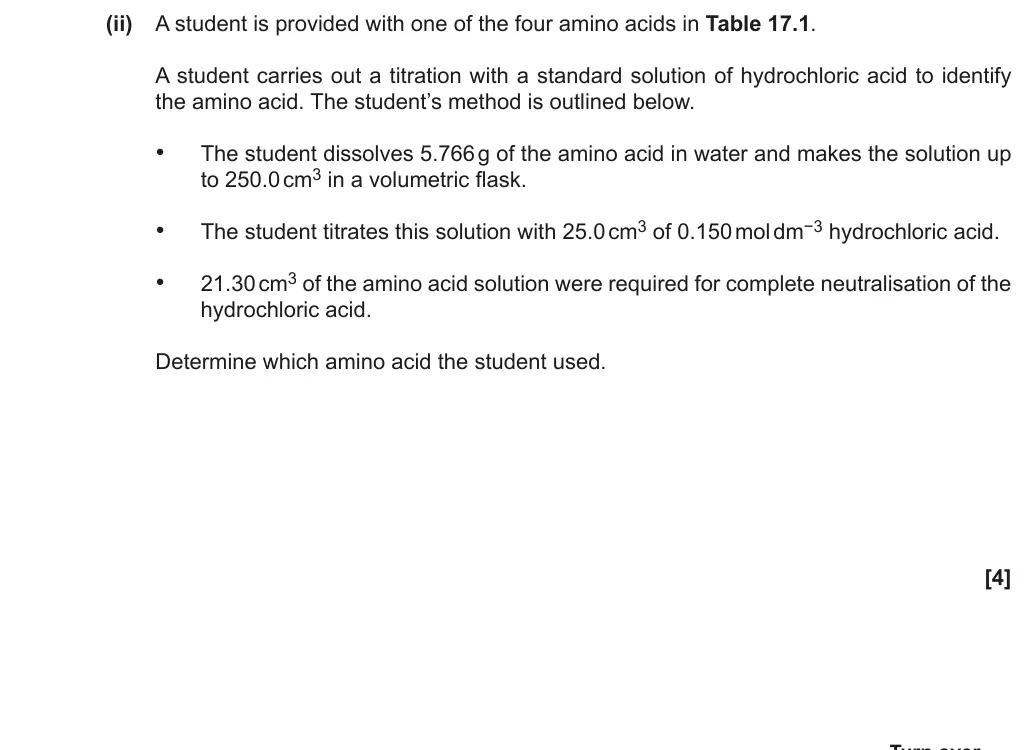
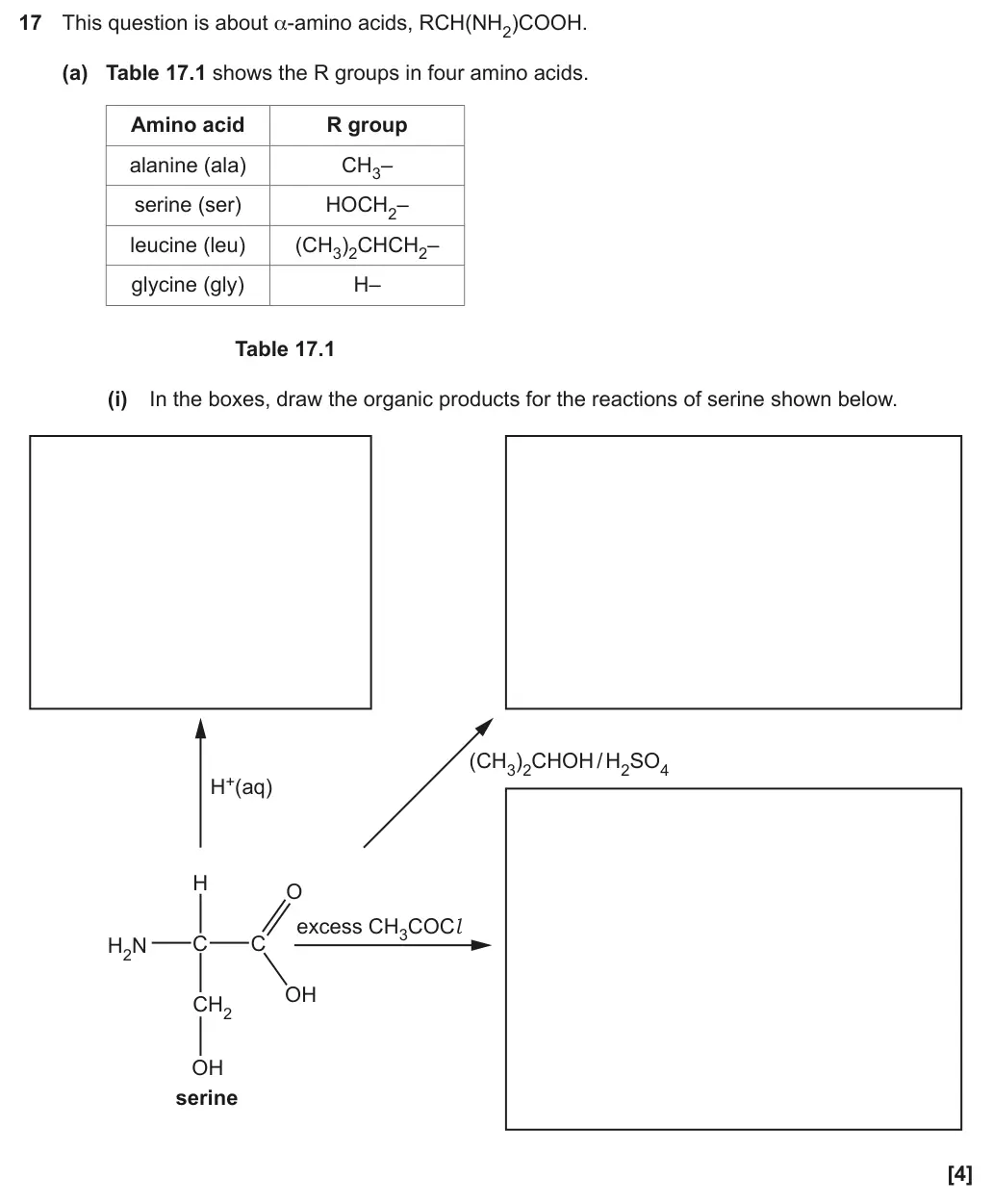
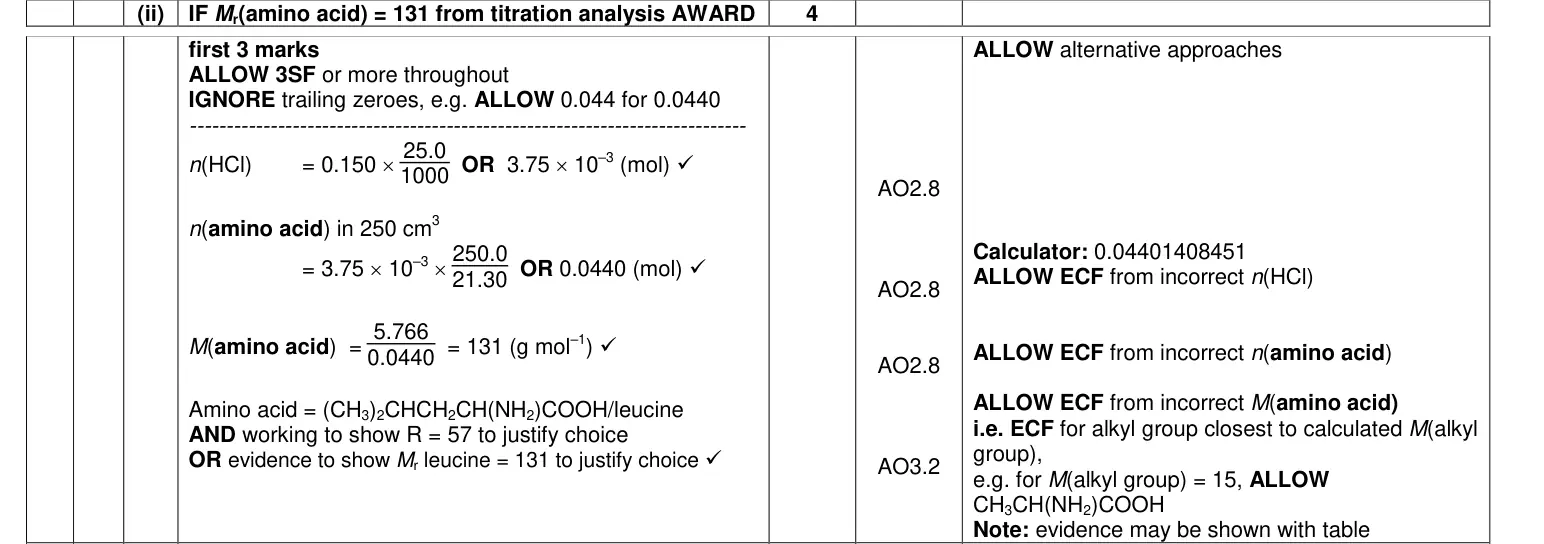
Candidates are confident in tackling titration analysis and the majority of responses were well structured. Most candidates used the results to determine the Mr of the unknown amino acid and hence identify it as leucine. However, other approaches were also seen and these were given full credit if correct. A common error was incorrect scaling to determine the amount of amino acid used to make the 250 cm3 solution. A significant number of responses simply multiplied the number of moles of acid by ten rather than using a factor of 250/21.30. Error carried forward marks were available and so the majority of candidates scored 3 or 4 marks.
Skills: M0.2 Use ratios, fractions and percentages; M1.1 Use an appropriate number of significant figures; M2.3 Substitute numerical values into algebraic equations using appropriate units for physical quantities; PAG2 Acid–base titration
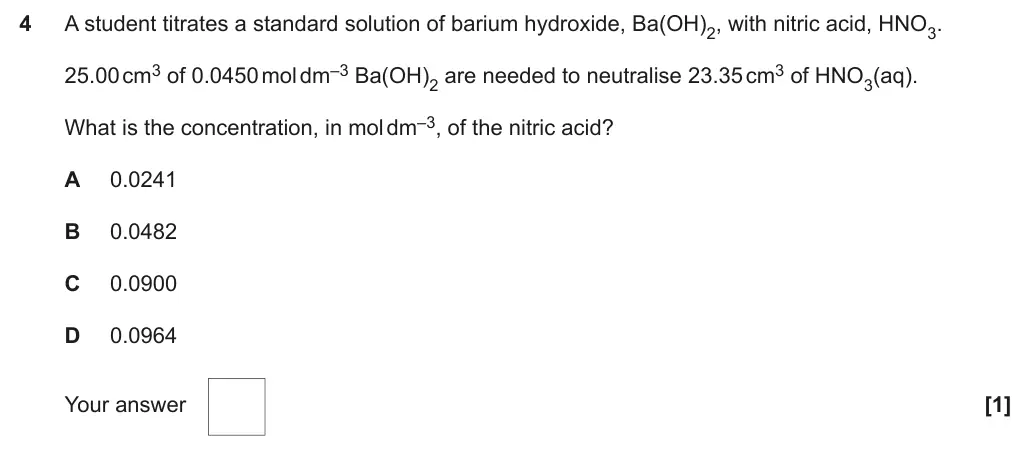
D
The majority of candidates were able to calculate the correct answer.
Skills: M0.2 Use ratios, fractions and percentages; M2.3 Substitute numerical values into algebraic equations using appropriate units for physical quantities; PAG2 Acid–base titration
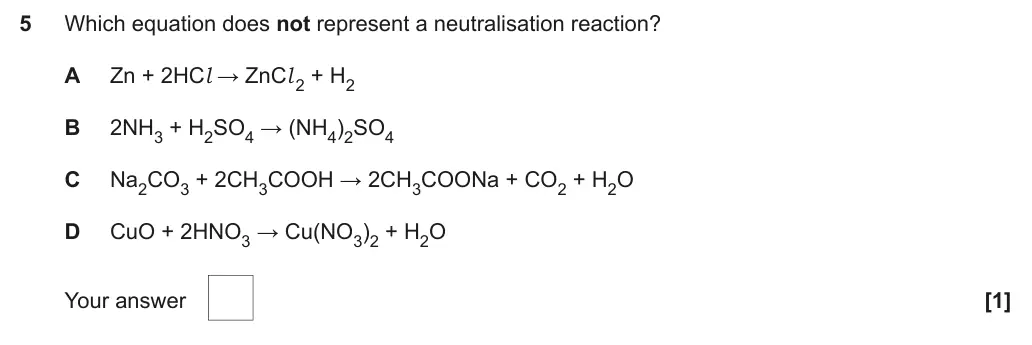
A
Candidates found this part difficult with many selecting B, the equation that looked a little different, rather than the correct answer of A (a redox equation). This suggests that many candidates are unaware of the role of ammonia as a base.
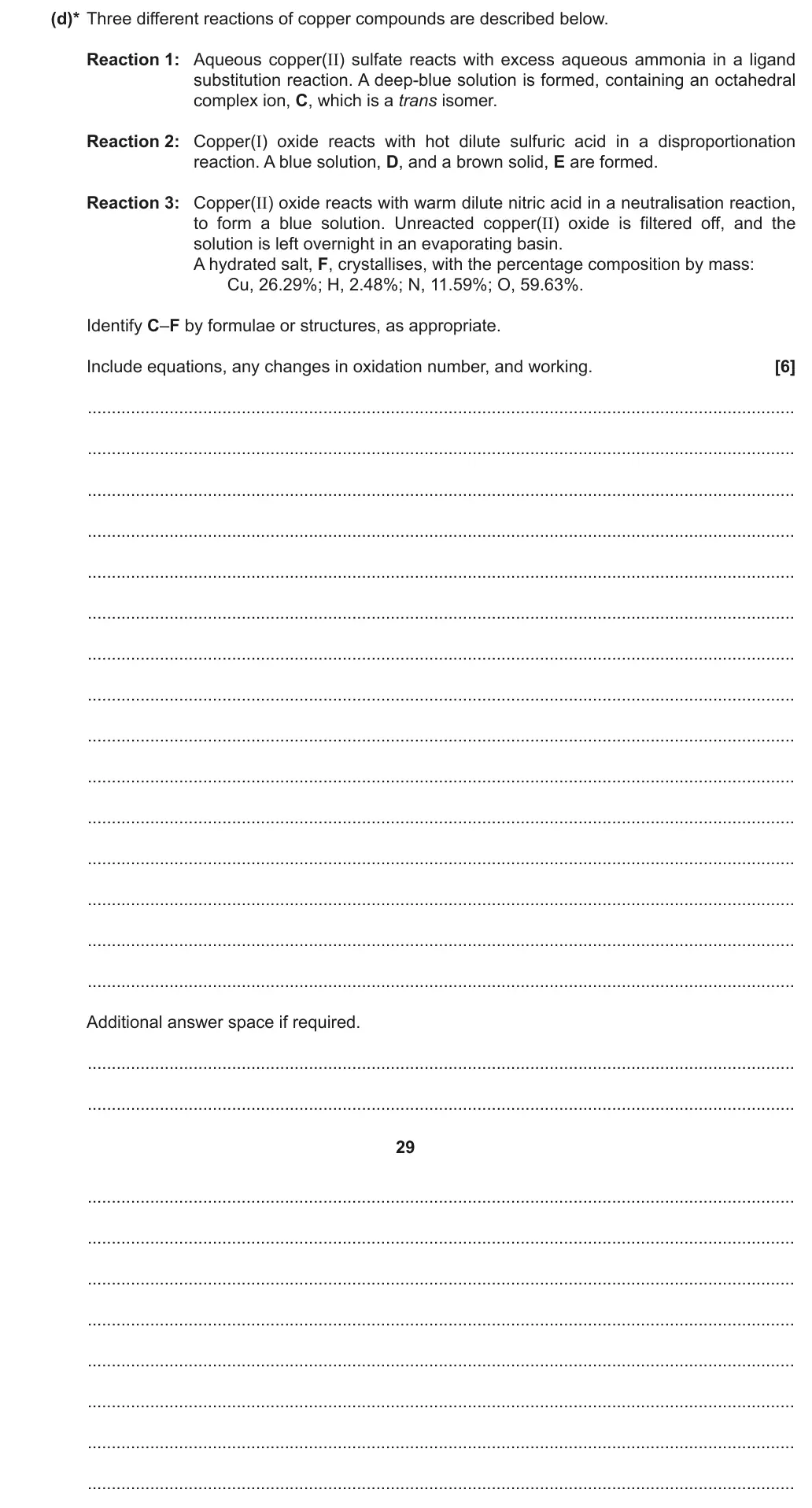
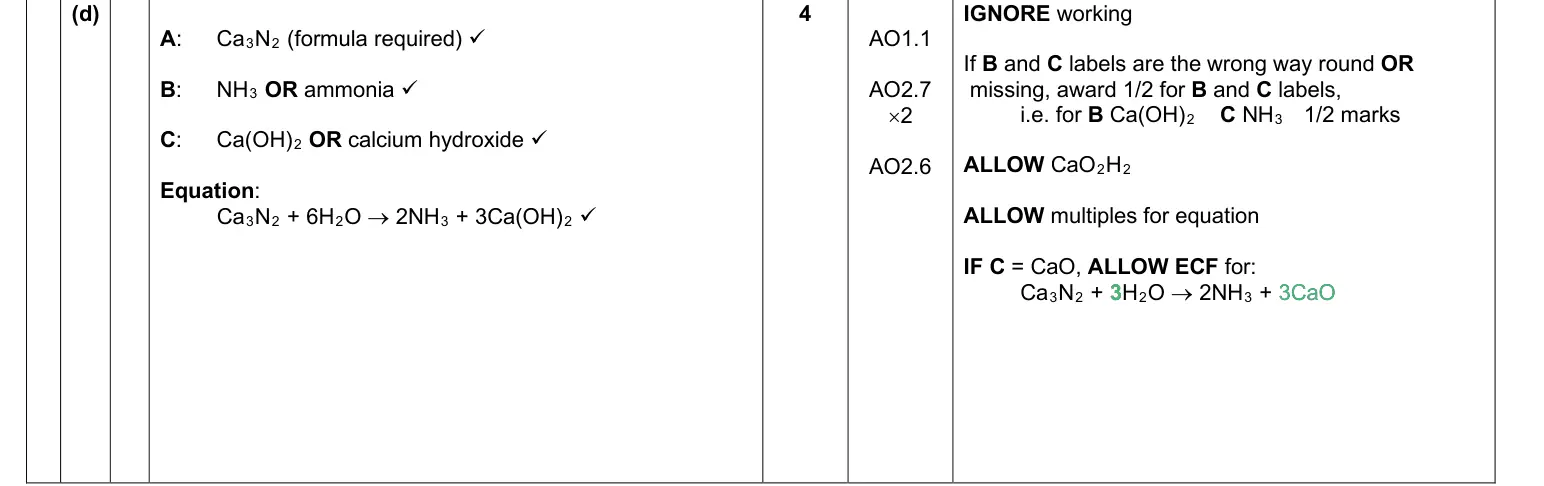
Many candidates had a stab at identifying C–F but neglected to include equations for the three reactions described or to show relevant working. Most candidates recognised C as the ammoniacal copper(II) ion but the formula was frequently incorrect and correct attempts at a ligand substitution equation from [Cu(H2O)6]2+ was rarely seen. Diagrams showing the trans isomer were attempted but often of poor quality due to incorrect linking. Candidates recognised D as being CuSO4 but often did not identify E as Cu due to a lack of familiarity with this common disproportionation reaction. Cu(OH)2(s) was a common incorrect identification of E. Only the best responses described the oxidation number changes which made this a disproportionation reaction. F was identified by a percentage by mass calculation to determine an empirical formula and then by deduction to produce Cu(NO3)2.3H2O. Having done this, many candidates did not give the relatively simple equation for reaction 3 between copper(II) oxide and dilute nitric acid. This exemplifies how considered structuring of candidate responses can enhance their clarity. The clear labelling of C-F in the response, along with numbering which corresponds to the reactions in the question stem, make the candidate’s line of reasoning easy to follow. The underlining and annotations in the question stem show good practice in picking out and interpreting key information.
Skills: M0.2 Use ratios, fractions and percentages; M4.2 Visualise and represent 2-D and 3-D forms including 2-D representations of 3-D objects
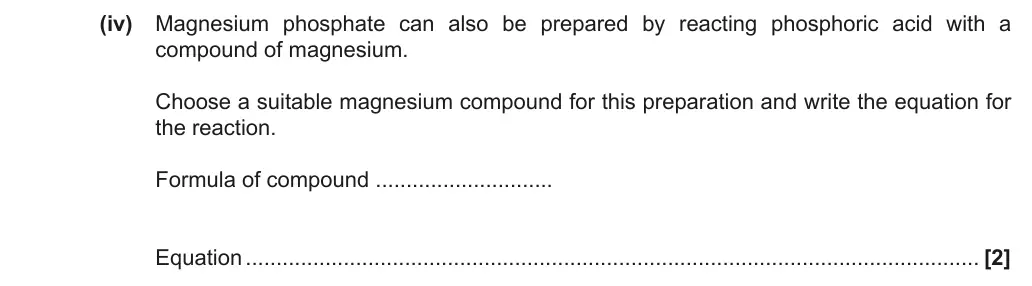
Candidates were expected to identify a suitable reagent for this reaction, with most choosing magnesium oxide, hydroxide or carbonate. Credit was also given for using a soluble magnesium salt such as its sulfate, chloride or nitrate. The correct equation often followed, but errors sometimes appeared in the form of incorrect formulae, such as MgOH for magnesium hydroxide. The exemplar shows a good clear response, using MgO as the reagent.
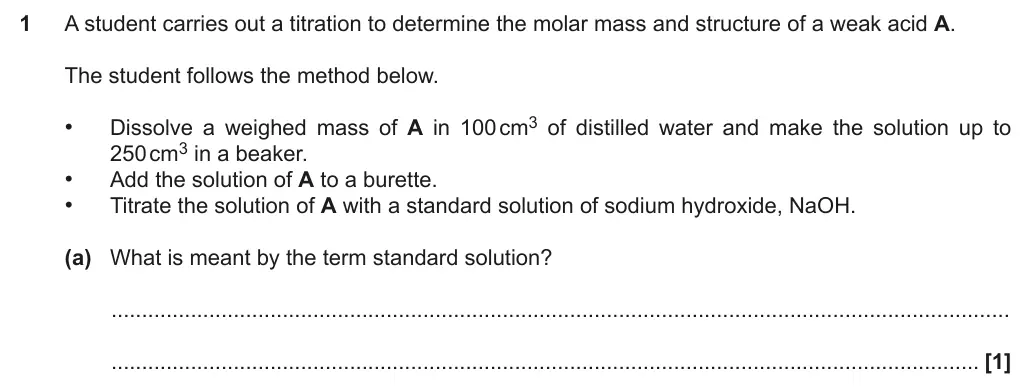
Many candidates gave a good description of standard conditions or stated 1 mol dm-3, but that did not answer the question so no marks could be credited.
Skills: PAG2 Acid–base titration
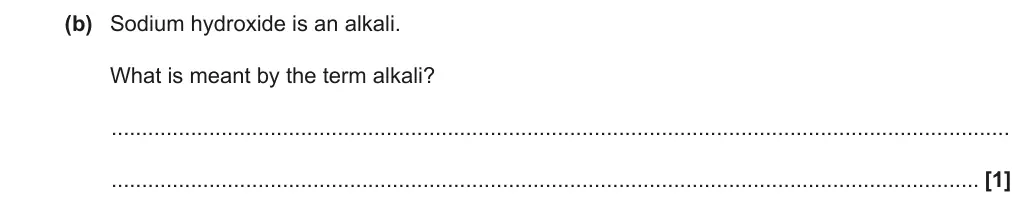
Many candidates stated a Brønsted–Lowry definition or gave pH values. Of the candidates that did mention OH- ions, most did not state ‘releases’ OH- ions in solution, although they were credited with the mark.
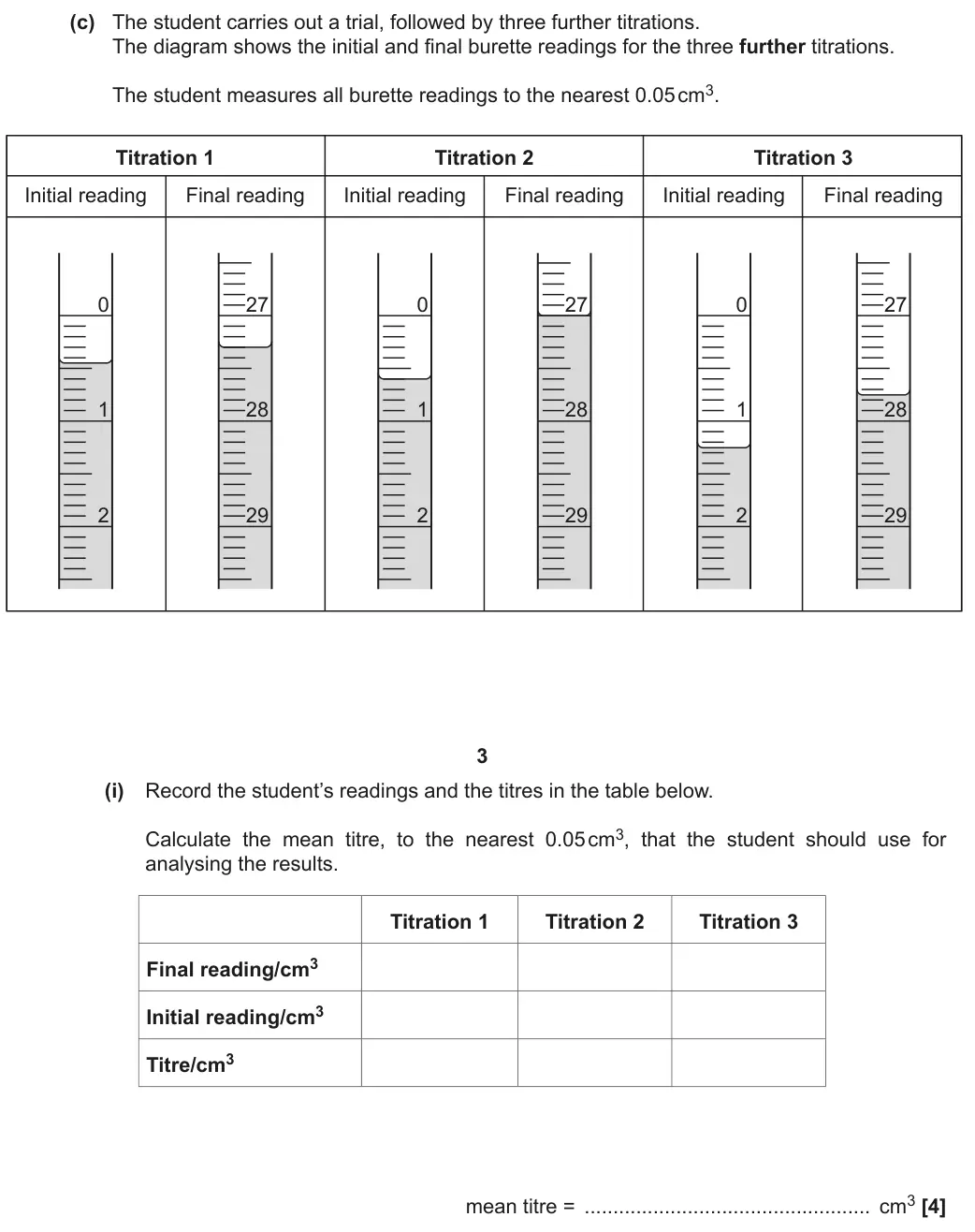
Most candidates were able to accurately record the burette readings and made the correct subtractions. Despite the examination question requesting the mean titre to be recorded to the accuracy of the burette, many candidates did not do this. A common error was taking a mean of all three readings instead of only the concordant results; this led the candidates to give an answer of 26.58 which lost them 2 marks.
Skills: M1.2 Find arithmetic means; PAG2 Acid–base titration
Although there were some excellent descriptions of the correct processes, such as inverting the apparatus to ensure mixing and then making the solution up to the mark, many candidates could not name a volumetric flask.
Skills: PAG2 Acid–base titration
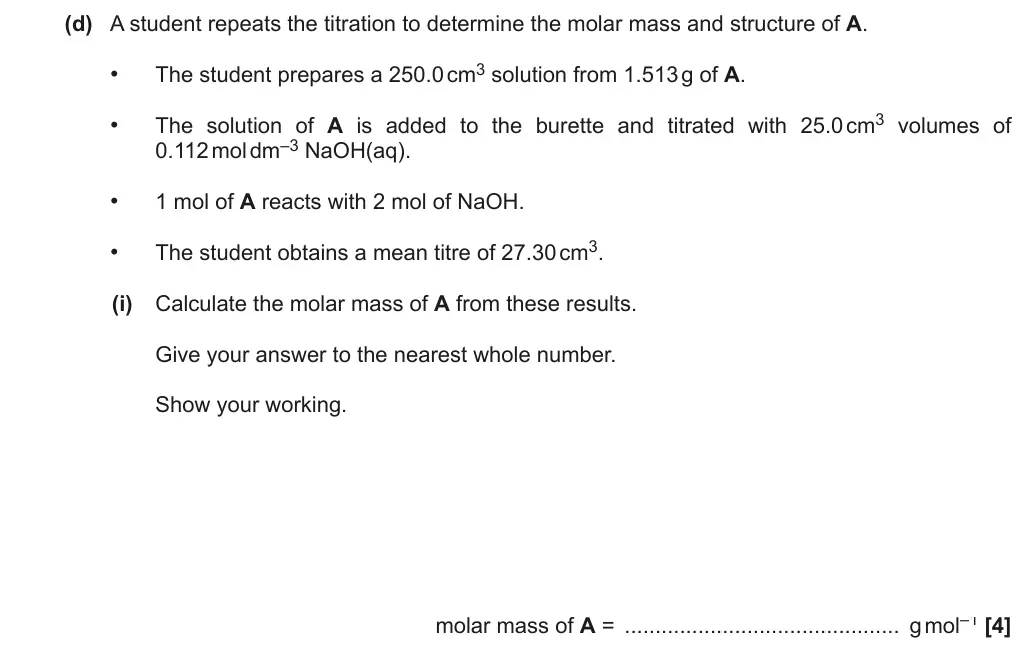
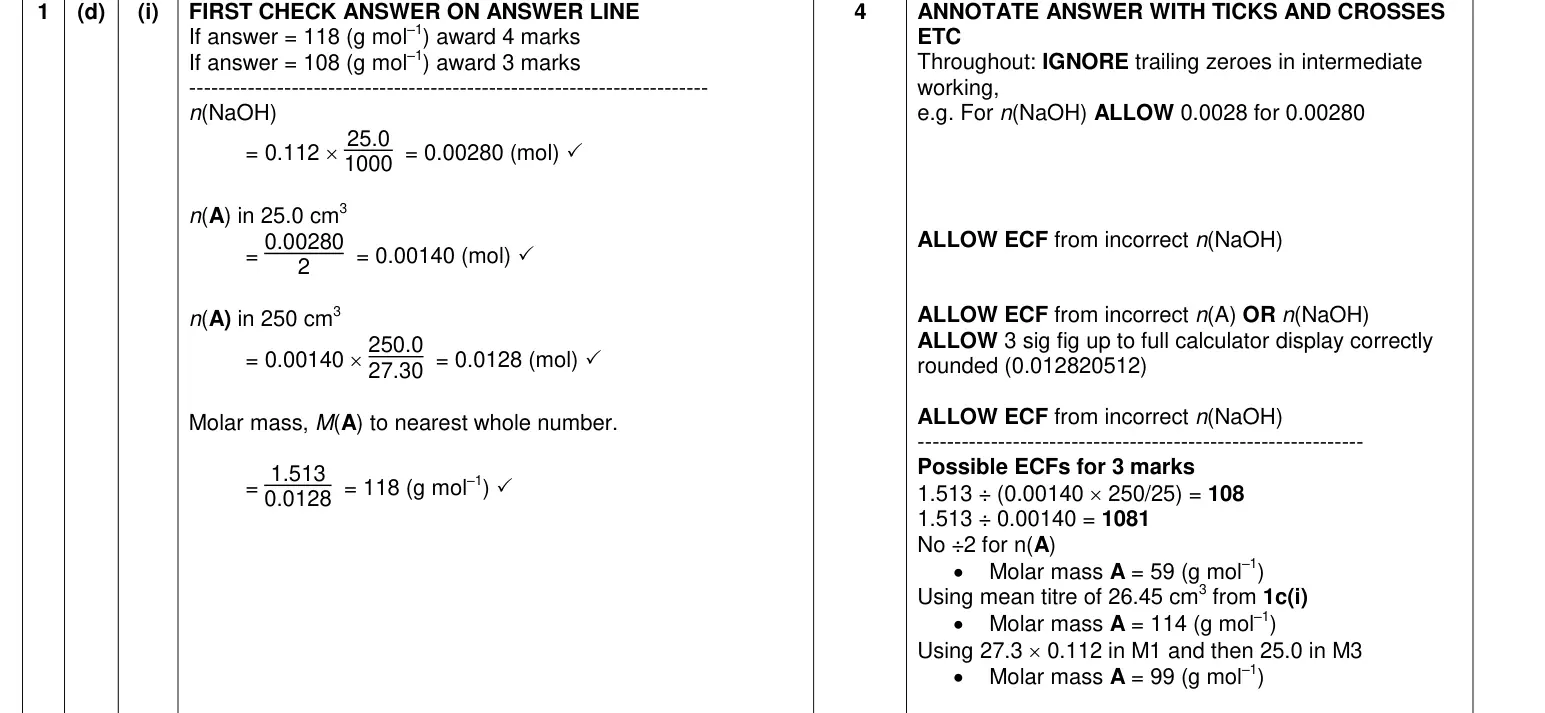
This was a good discriminator. Many candidates were credited the first two marks, and higher ability candidates went on to obtain 3 or 4 marks. Common errors were not rounding to a whole number at the end and not scaling up by 250/27.30. Many candidates did not scale up at all, obtaining an answer of 1081, or merely multiplied by 250/25 and obtained a molar mass of 108.
Skills: M0.2 Use ratios, fractions and percentages; M1.1 Use an appropriate number of significant figures; M2.3 Substitute numerical values into algebraic equations using appropriate units for physical quantities; PAG2 Acid–base titration
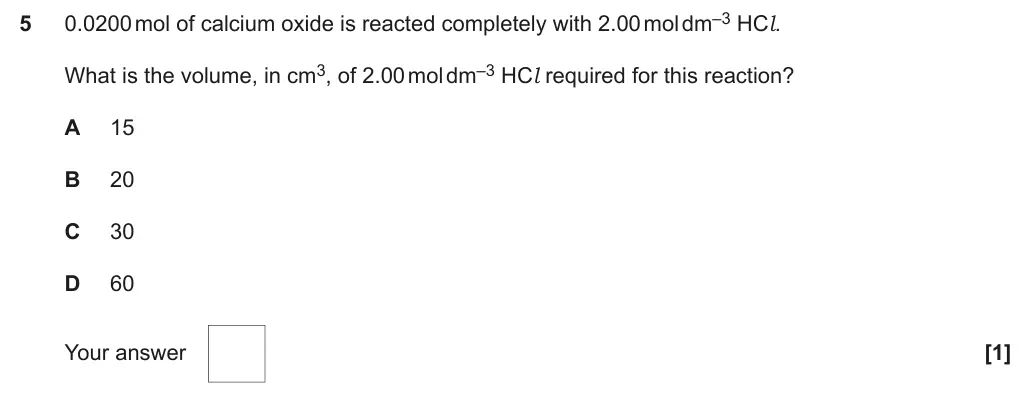
B
Skills: M0.0 Recognise and make use of appropriate units in calculations; M0.2 Use ratios, fractions and percentages; M1.1 Use an appropriate number of significant figures; M2.3 Substitute numerical values into algebraic equations using appropriate units for physical quantities; PAG2 Acid–base titration
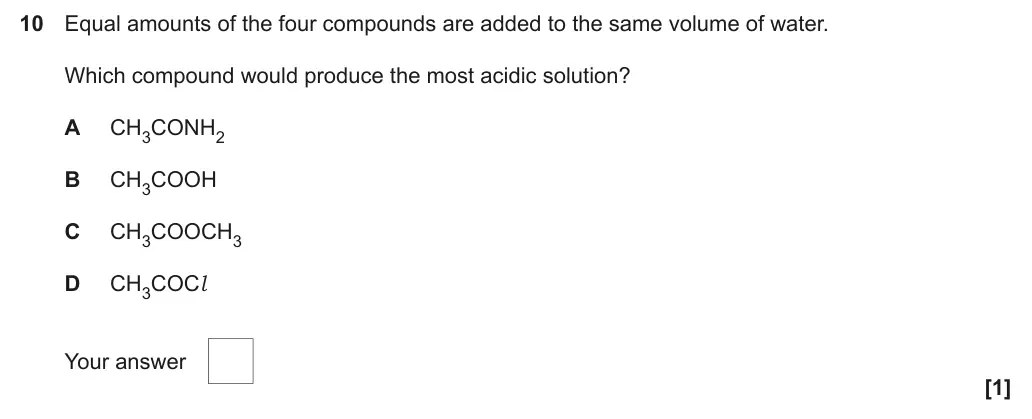
D
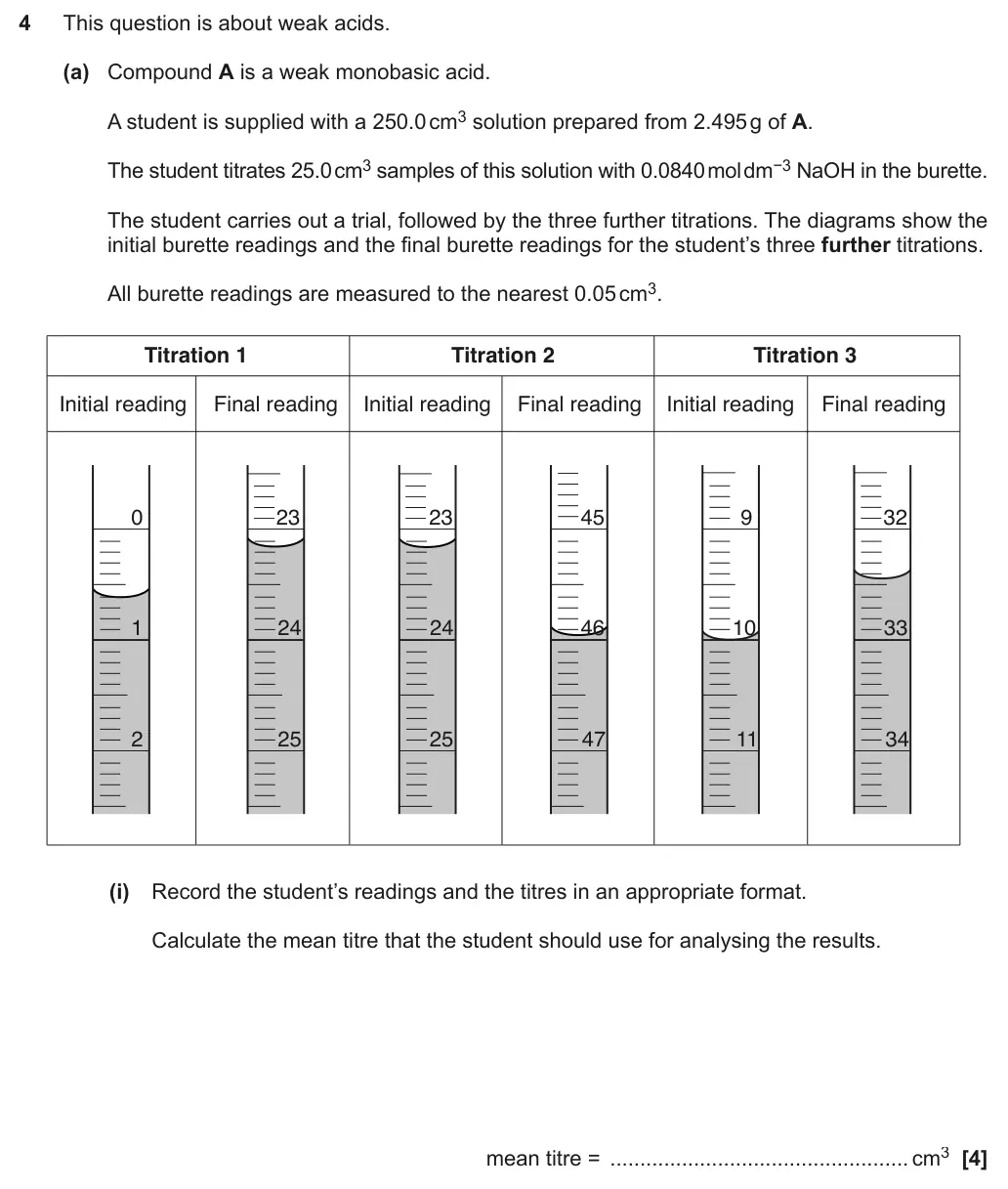
Skills: M1.2 Find arithmetic means; PAG2 Acid–base titration
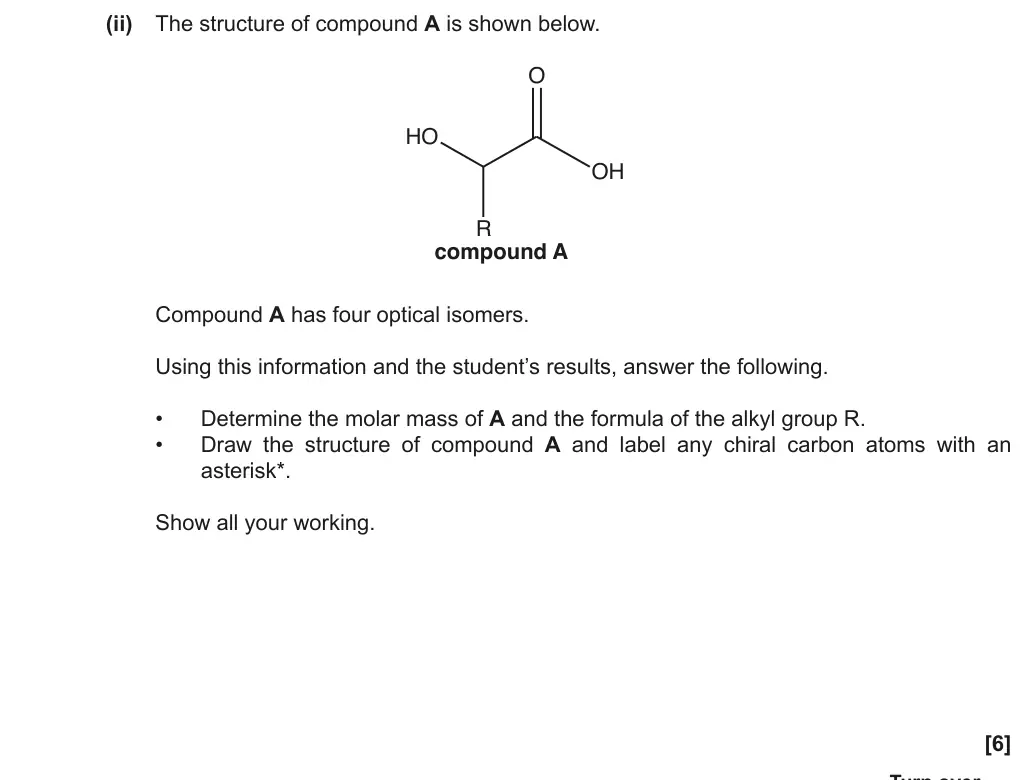
Skills: M0.2 Use ratios, fractions and percentages; M2.3 Substitute numerical values into algebraic equations using appropriate units for physical quantities; M4.2 Visualise and represent 2-D and 3-D forms including 2-D representations of 3-D objects; PAG2 Acid–base titration
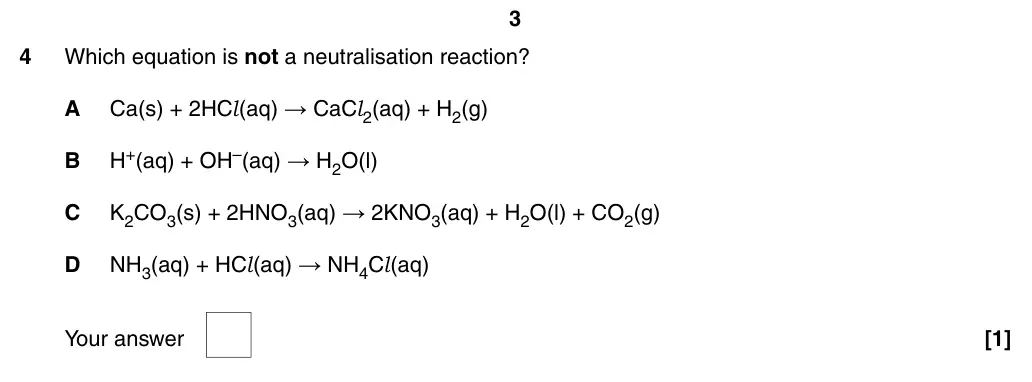
A
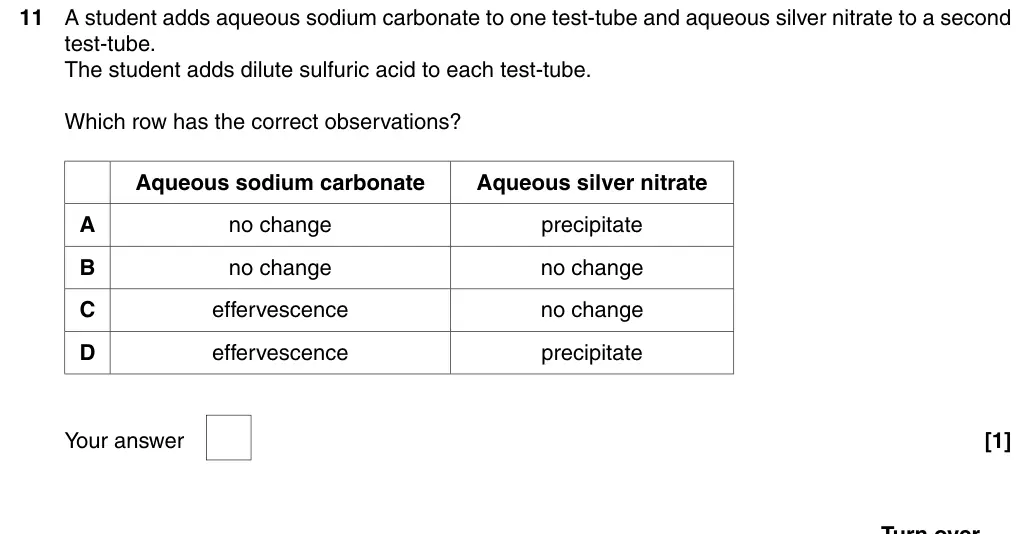
D

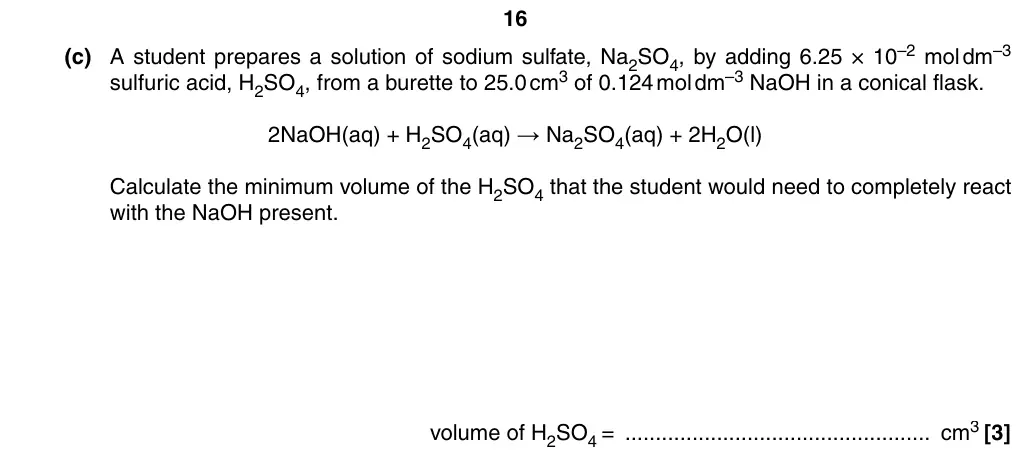
Skills: M0.0 Recognise and make use of appropriate units in calculations; M0.2 Use ratios, fractions and percentages; M2.2 Change the subject of an equation; PAG2 Acid–base titration
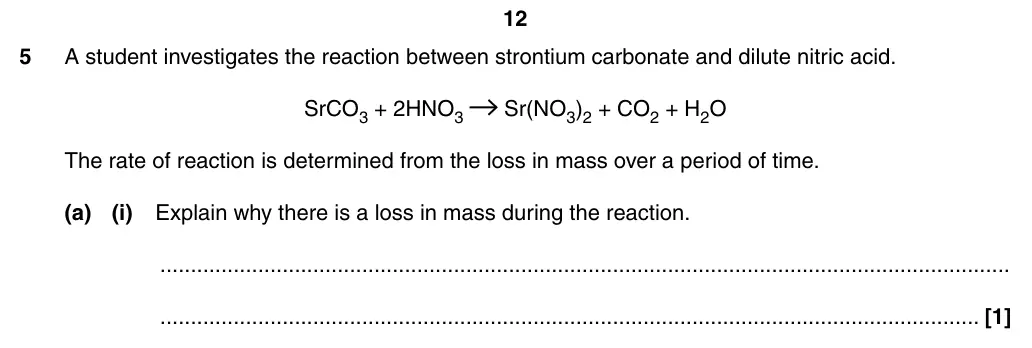
Skills: PAG9 Rates of reaction – continuous monitoring
Dropping marks on calculations, mechanisms or the six-markers? Book a trial session with a specialist OCR chemistry tutor.