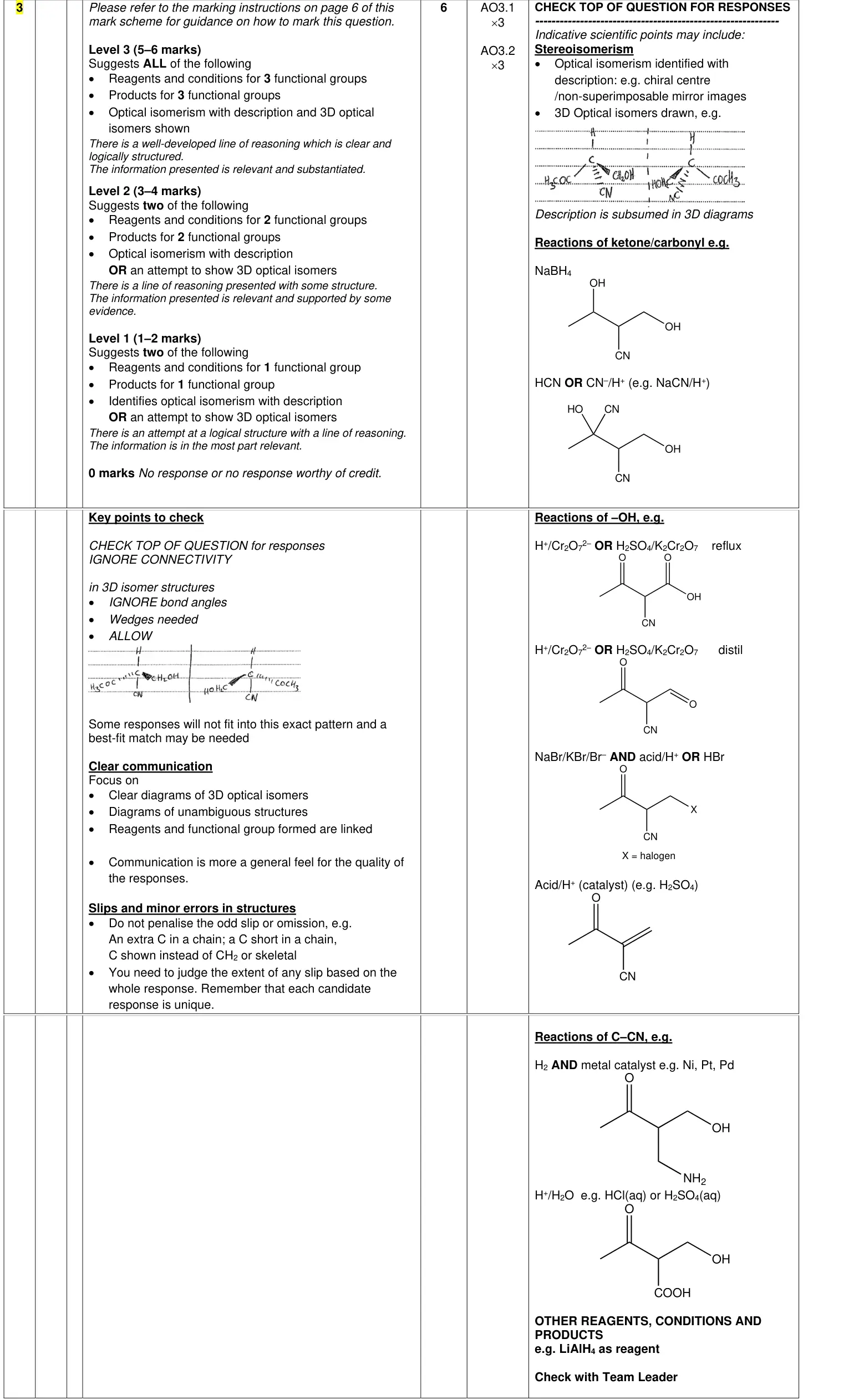
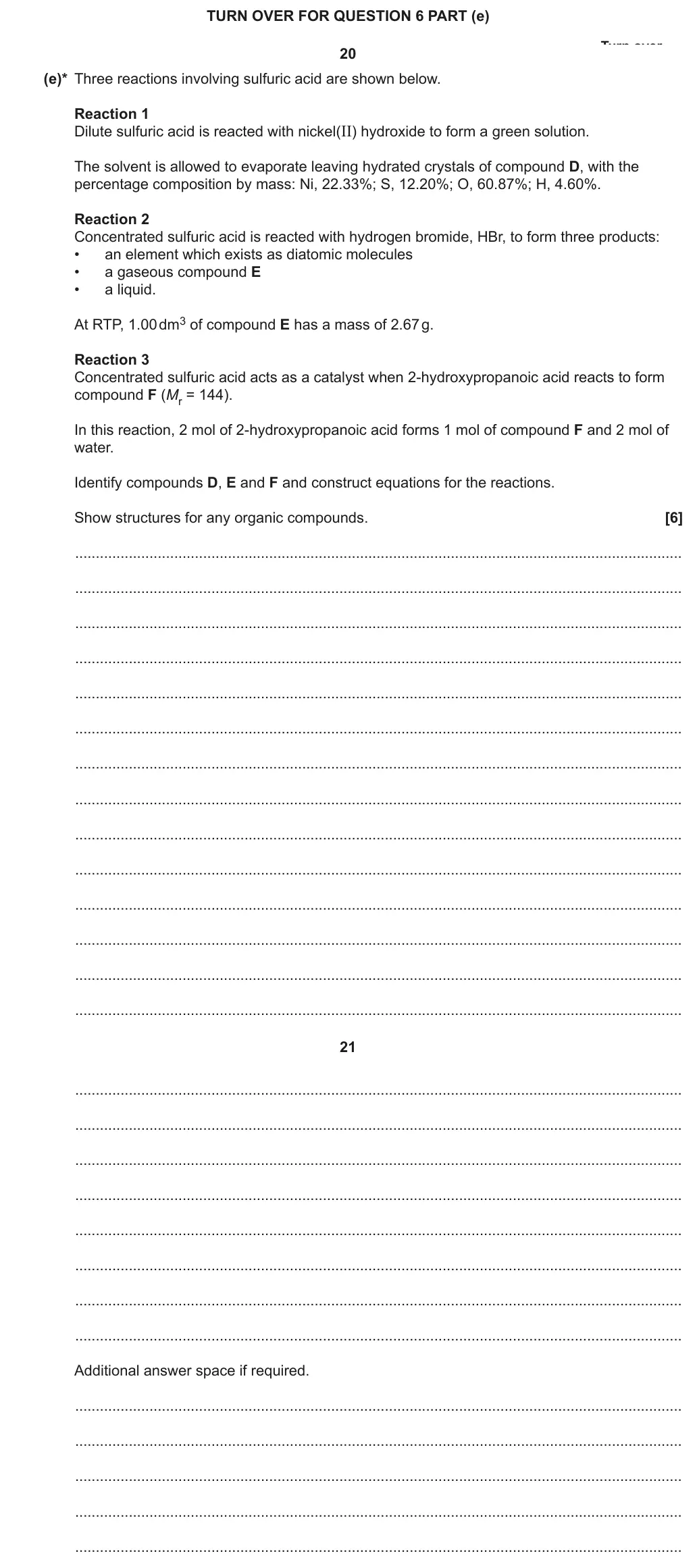
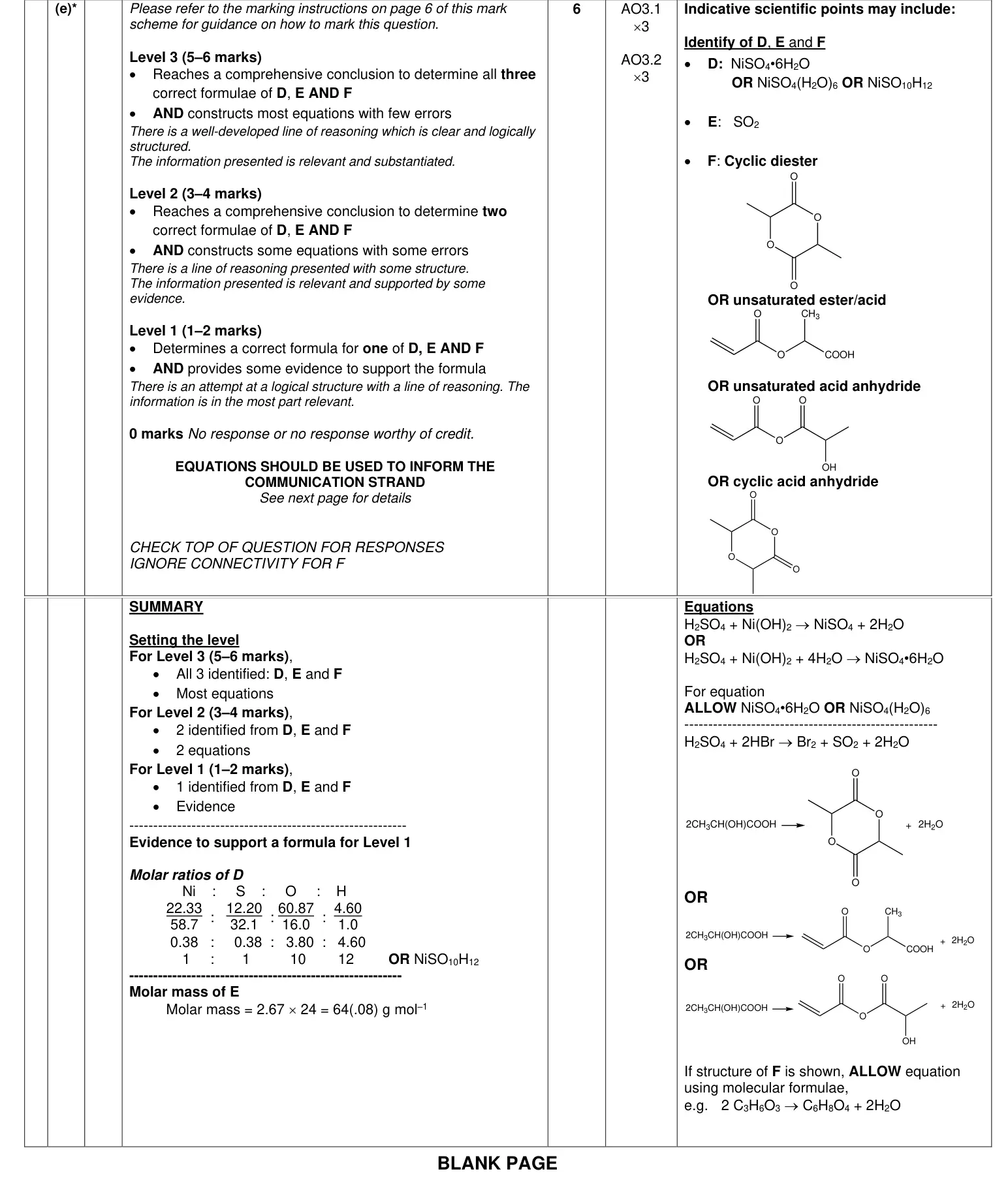
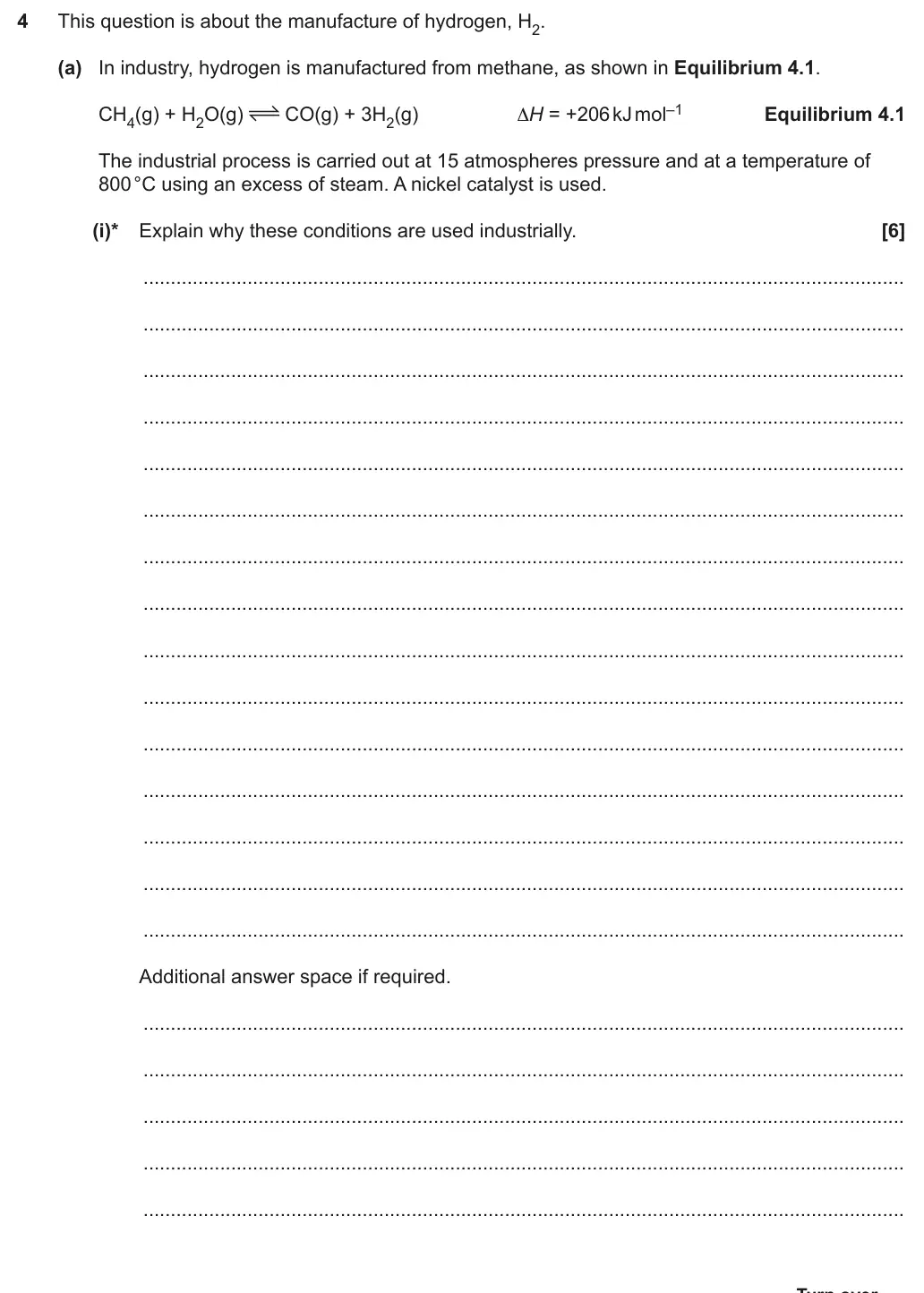
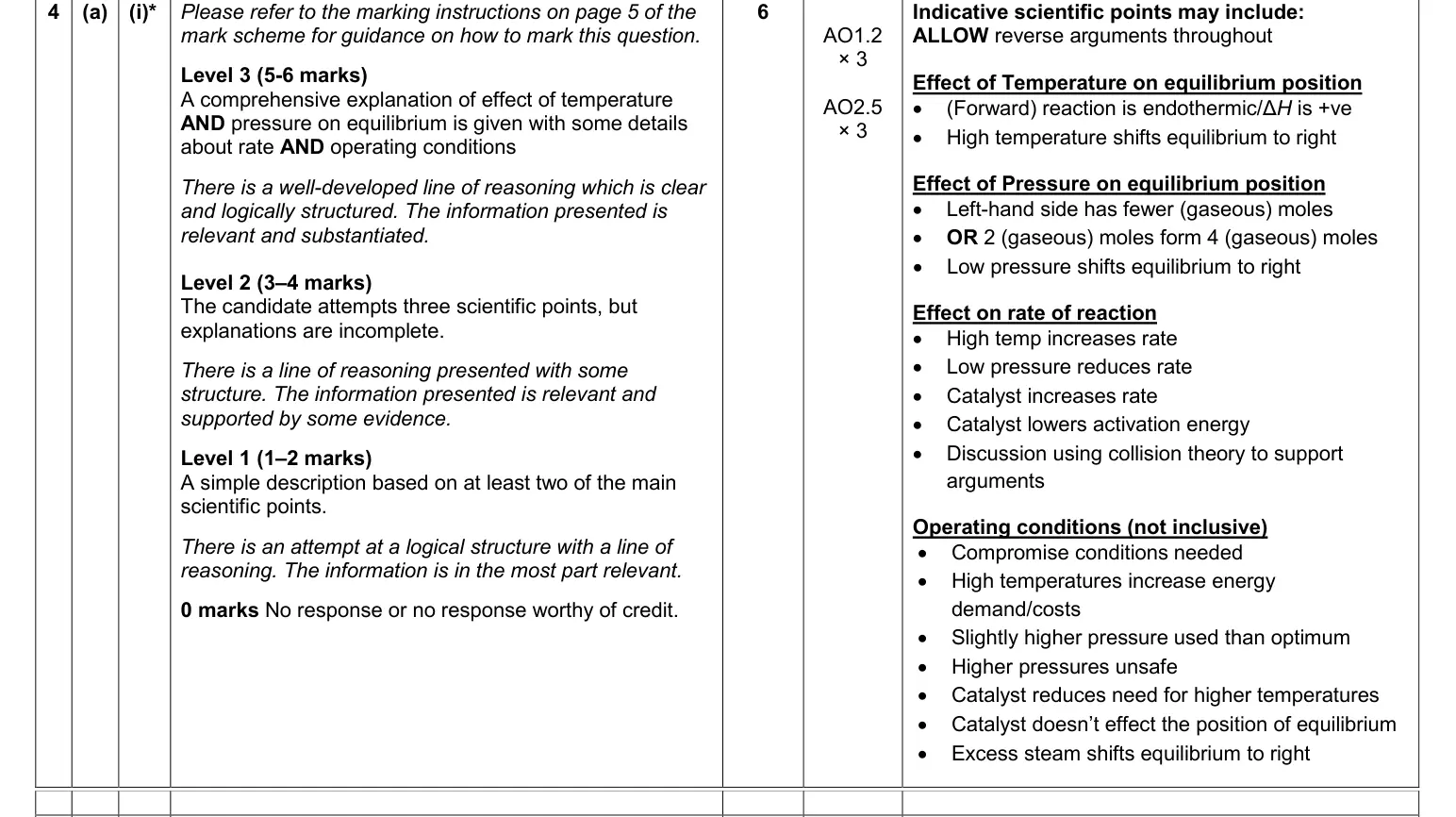
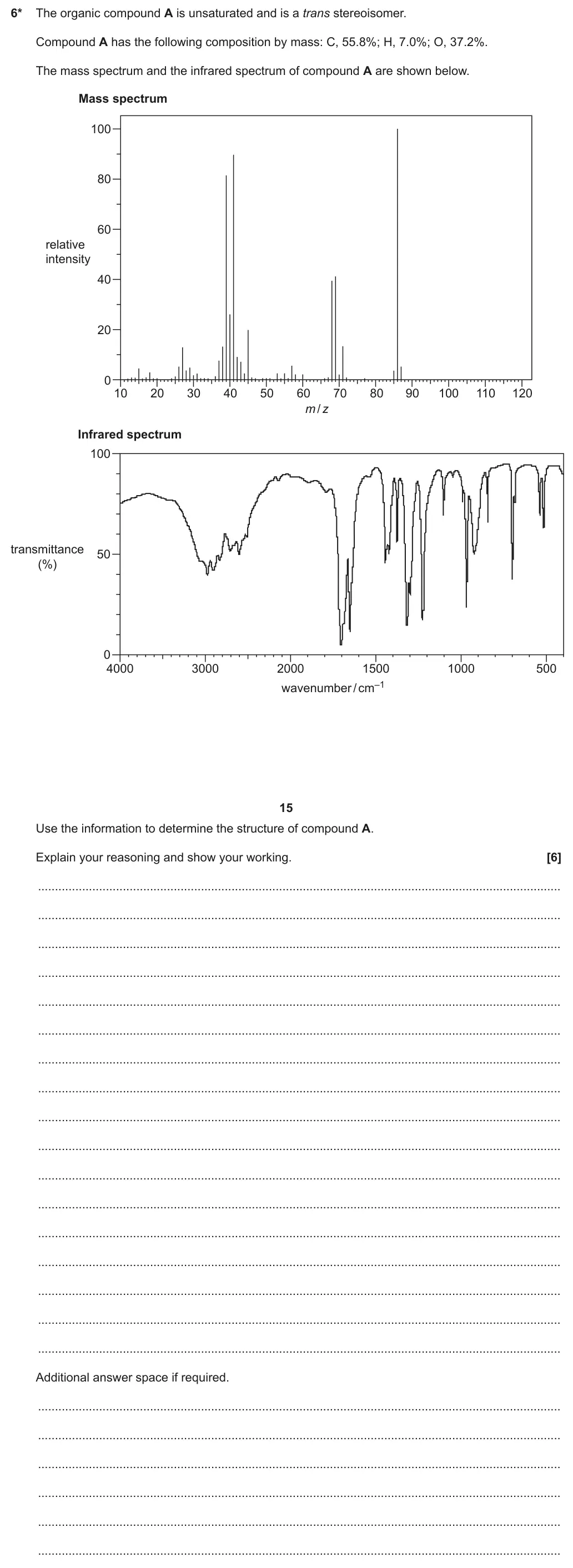
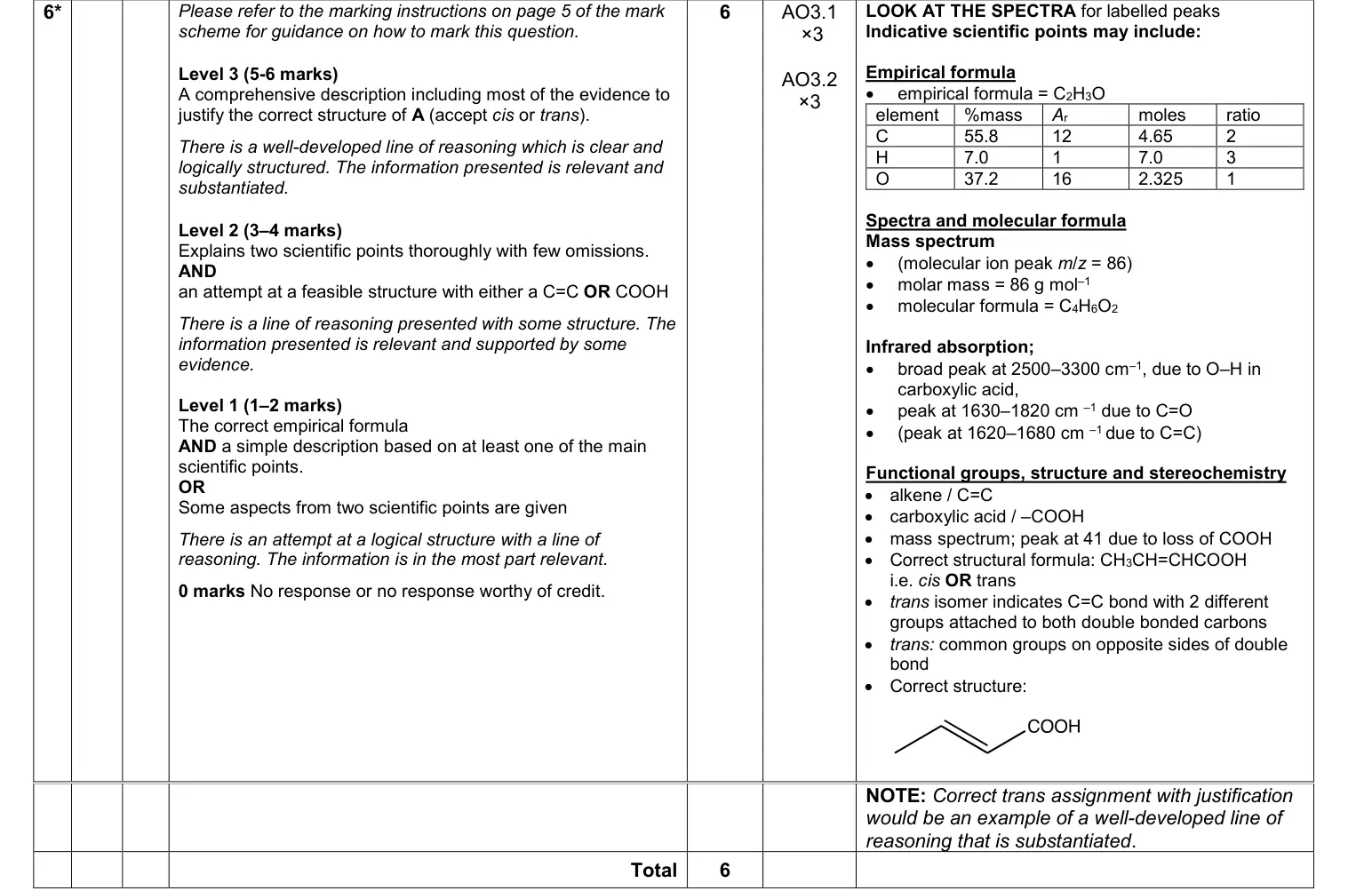
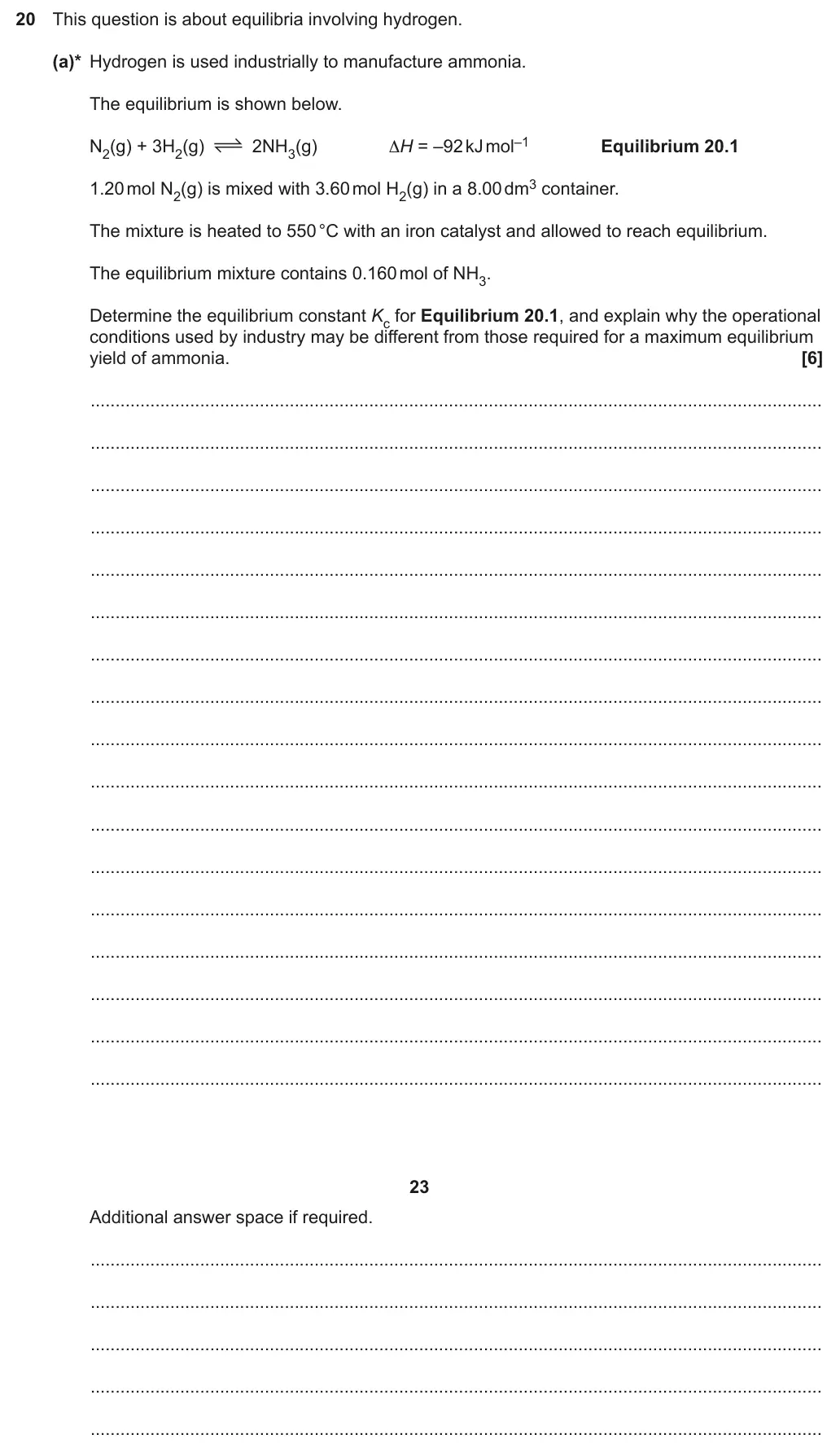
Six-mark level of response questions

The questions marked with an asterisk. They are marked by level (1 to 3) for the chemistry and then for how clearly the reasoning is set out. 74 questions.

Other types: Multiple-choice questions · Calculation questions · Equation questions · Mechanism questions · Structure and isomer questions · Practical questions · Graph and data questions · Short-answer questions

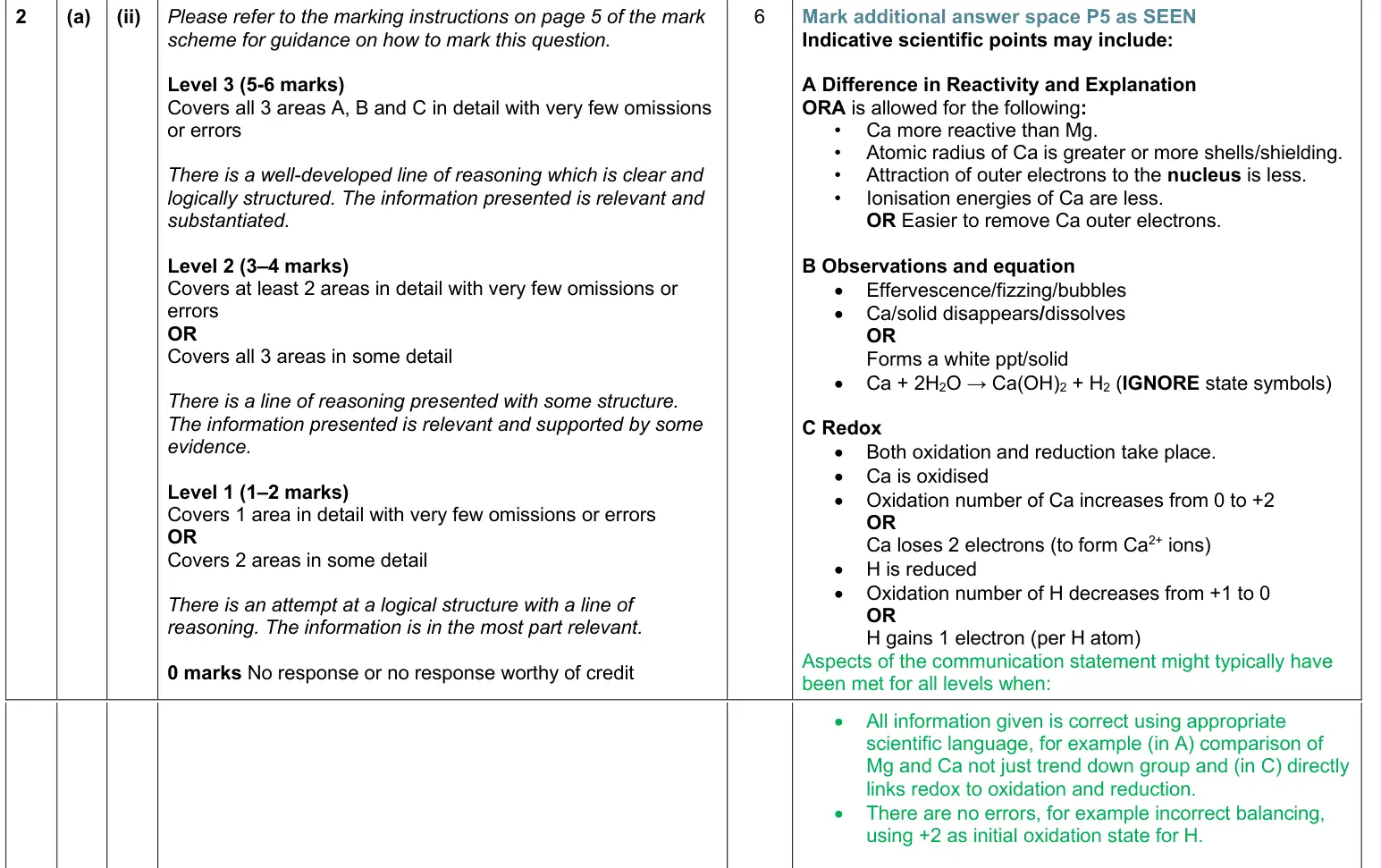
June 2025 · AS Paper 2 · Q2(a)(ii) 6 marks 6-mark level of response Medium group 2redoxperiodicity
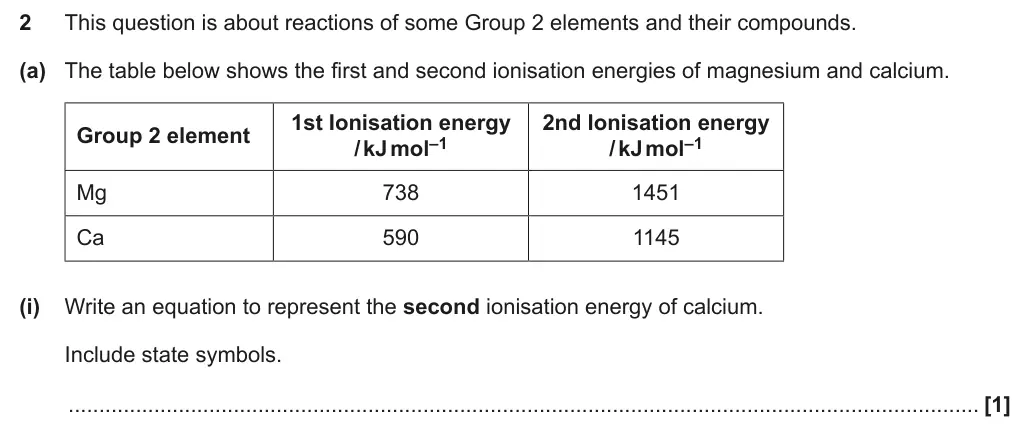
Earlier part of question 2 that this part usesEarlier part of June 2025 Paper 2 question 2
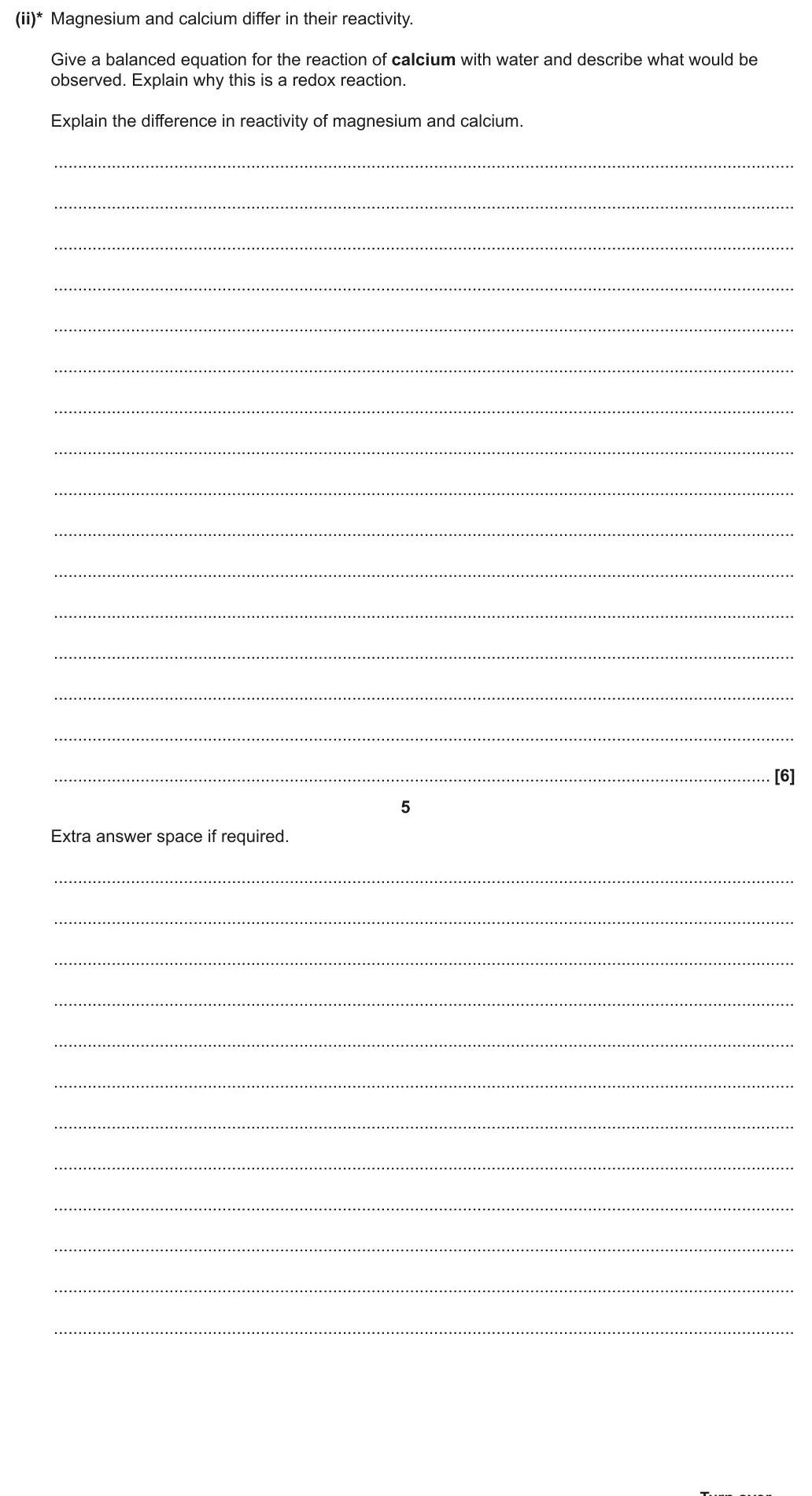
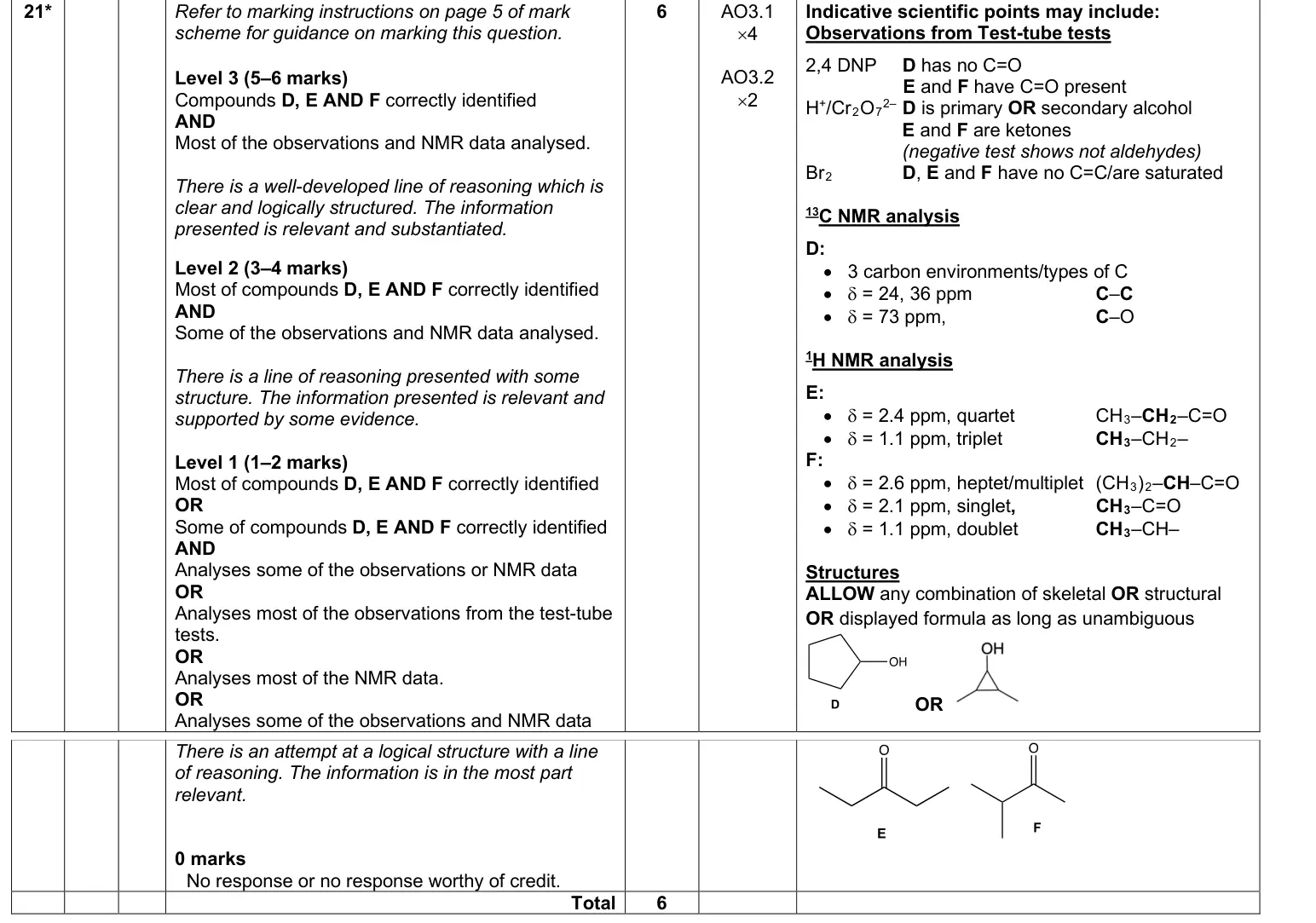
(ii)* Magnesium and calcium differ in their reactivity.
Give a balanced equation for the reaction of calcium with water and describe what would be
observed. Explain why this is a redox reaction.
Explain the difference in reactivity of magnesium and calcium.
..........................................................................................................................................................
..........................................................................................................................................................
..........................................................................................................................................................
..........................................................................................................................................................
..........................................................................................................................................................
..........................................................................................................................................................
..........................................................................................................................................................
..........................................................................................................................................................
..........................................................................................................................................................
..........................................................................................................................................................
..........................................................................................................................................................
..........................................................................................................................................................
..........................................................................................................................................................
..........................................................................................................................................................
..........................................................................................................................................................
..................................................................................................................................................... [6]
Extra answer space if required.
..........................................................................................................................................................
..........................................................................................................................................................
..........................................................................................................................................................
..........................................................................................................................................................
..........................................................................................................................................................
..........................................................................................................................................................
..........................................................................................................................................................
..........................................................................................................................................................
..........................................................................................................................................................
..........................................................................................................................................................
..........................................................................................................................................................
..........................................................................................................................................................
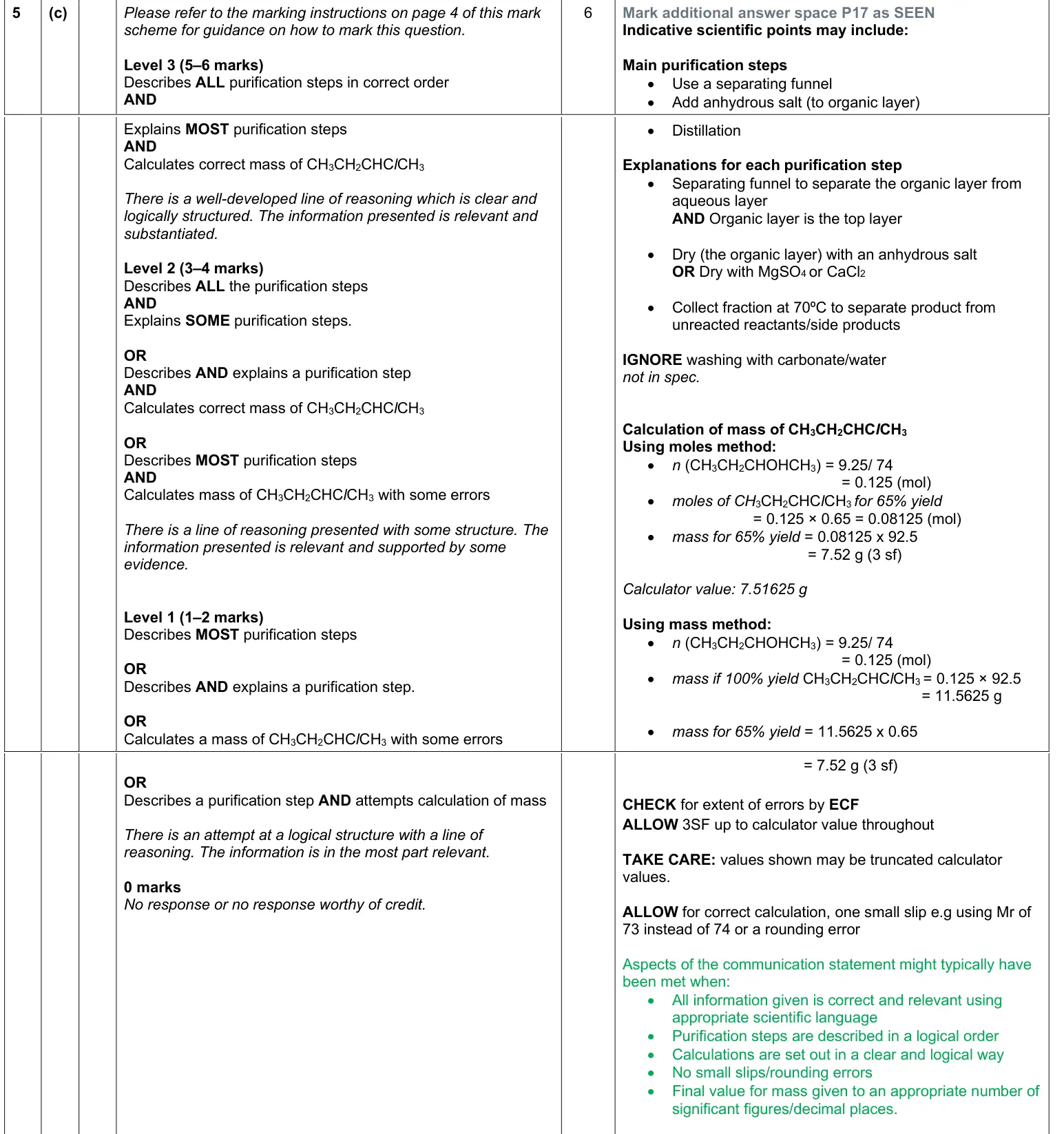
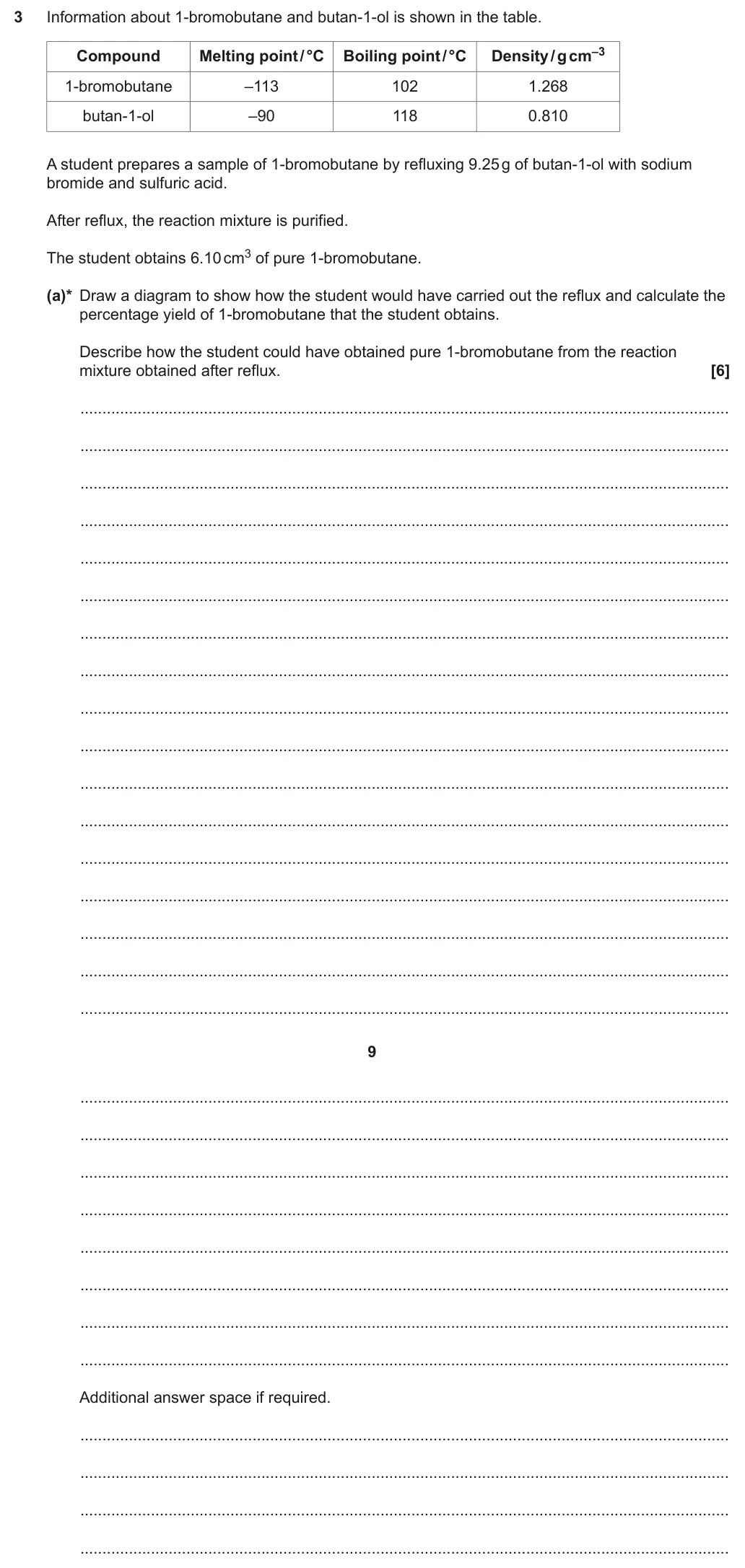
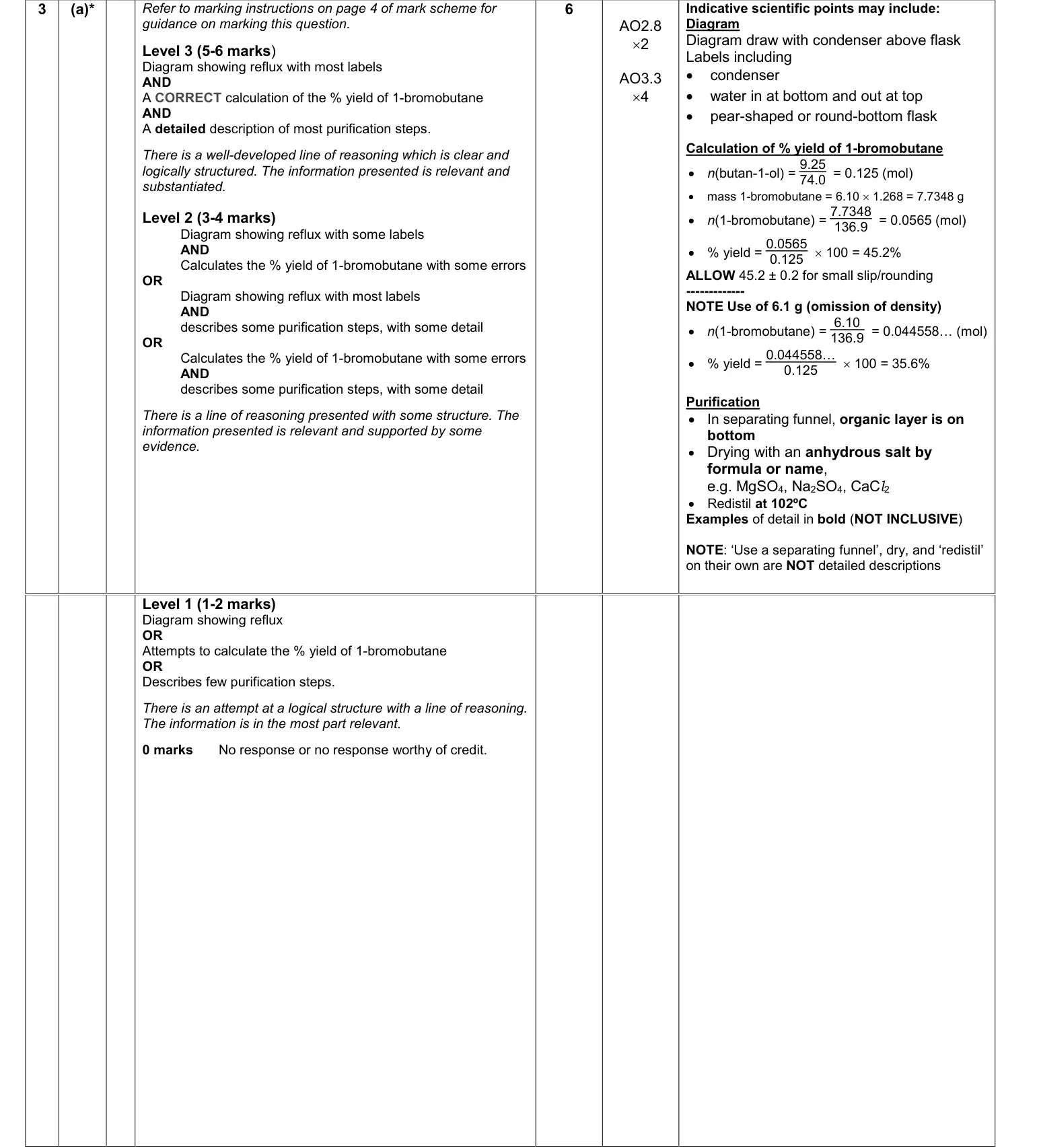
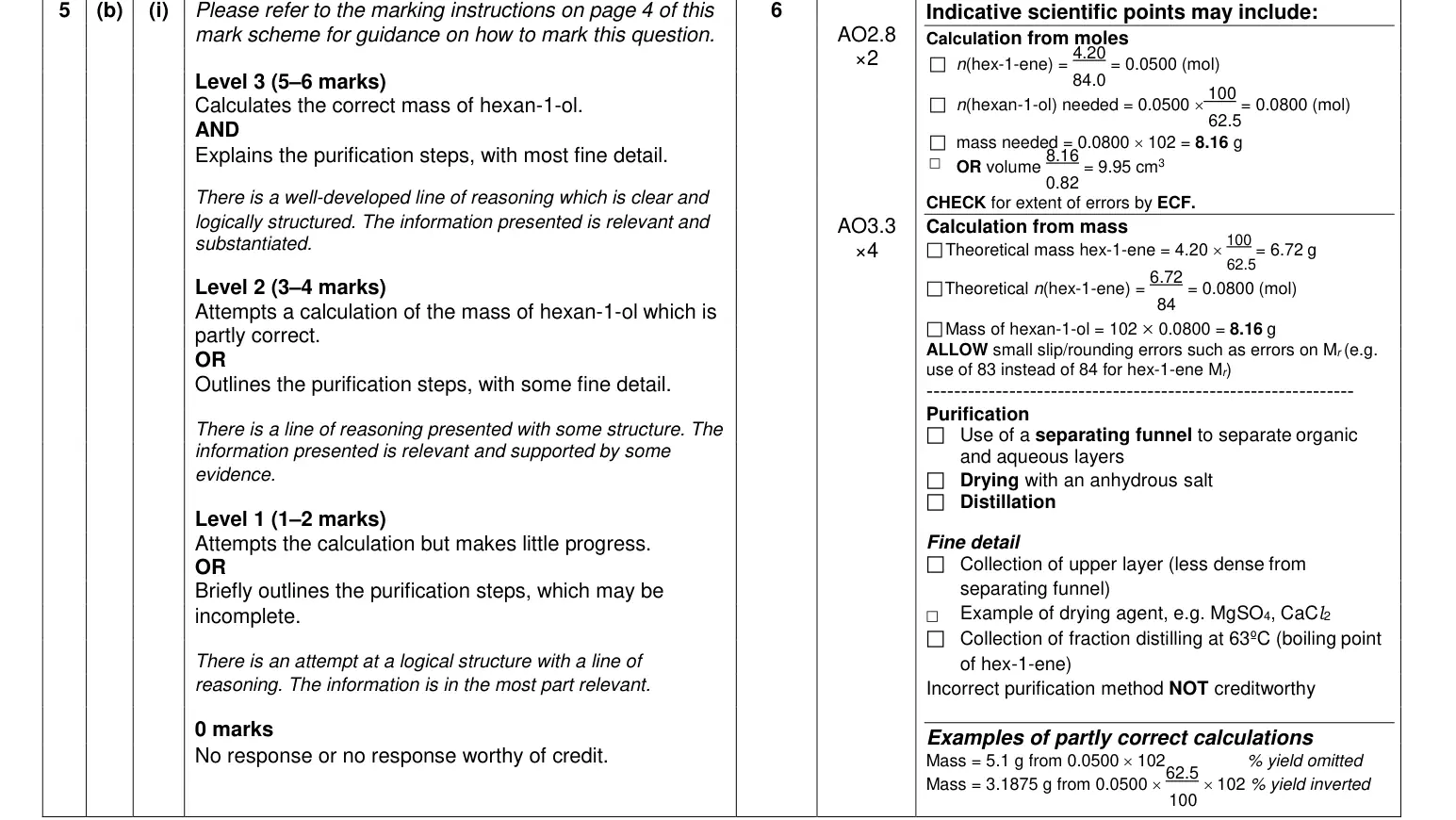
June 2025 · AS Paper 2 · Q5(c) 6 marks 6-mark level of response Medium organic synthesis aspractical techniquesamount of substance
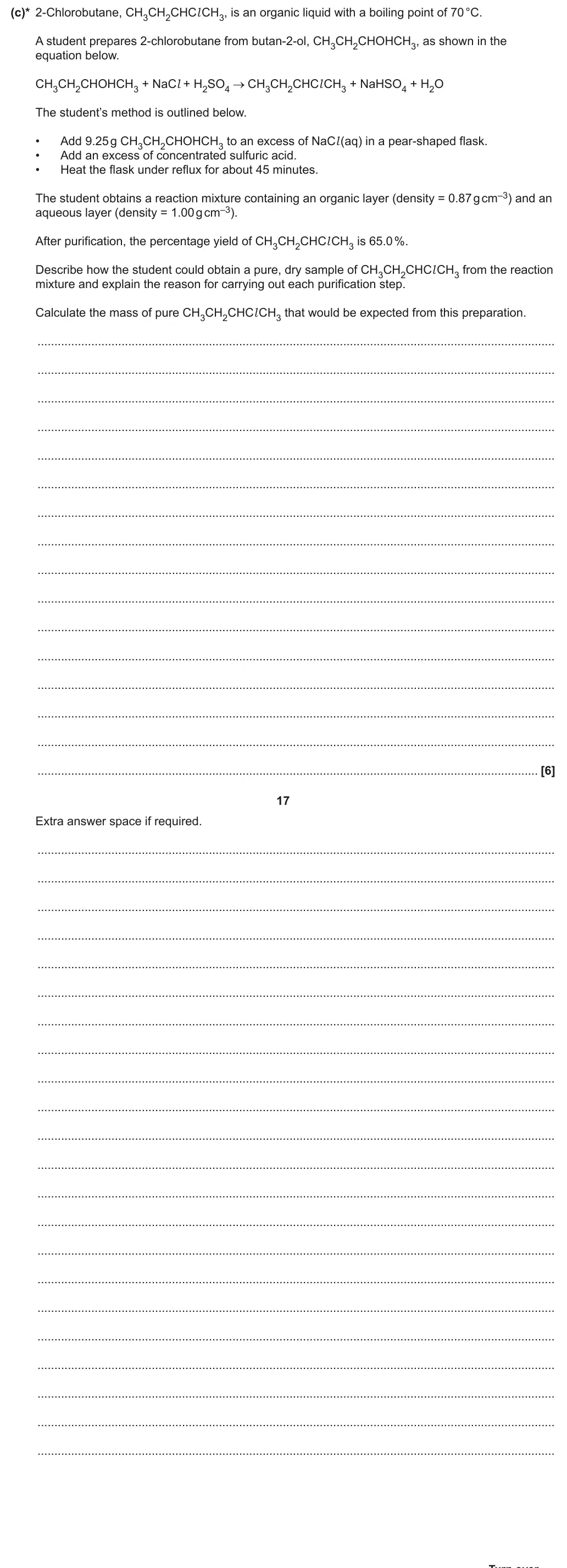
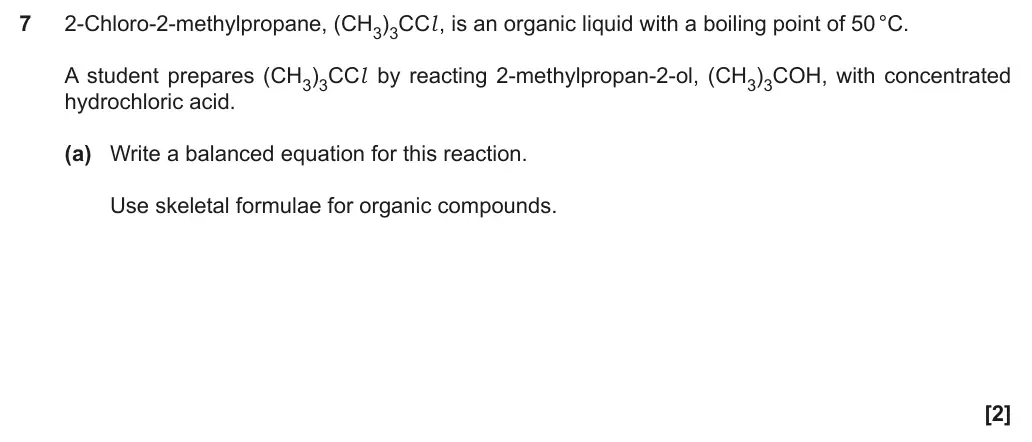
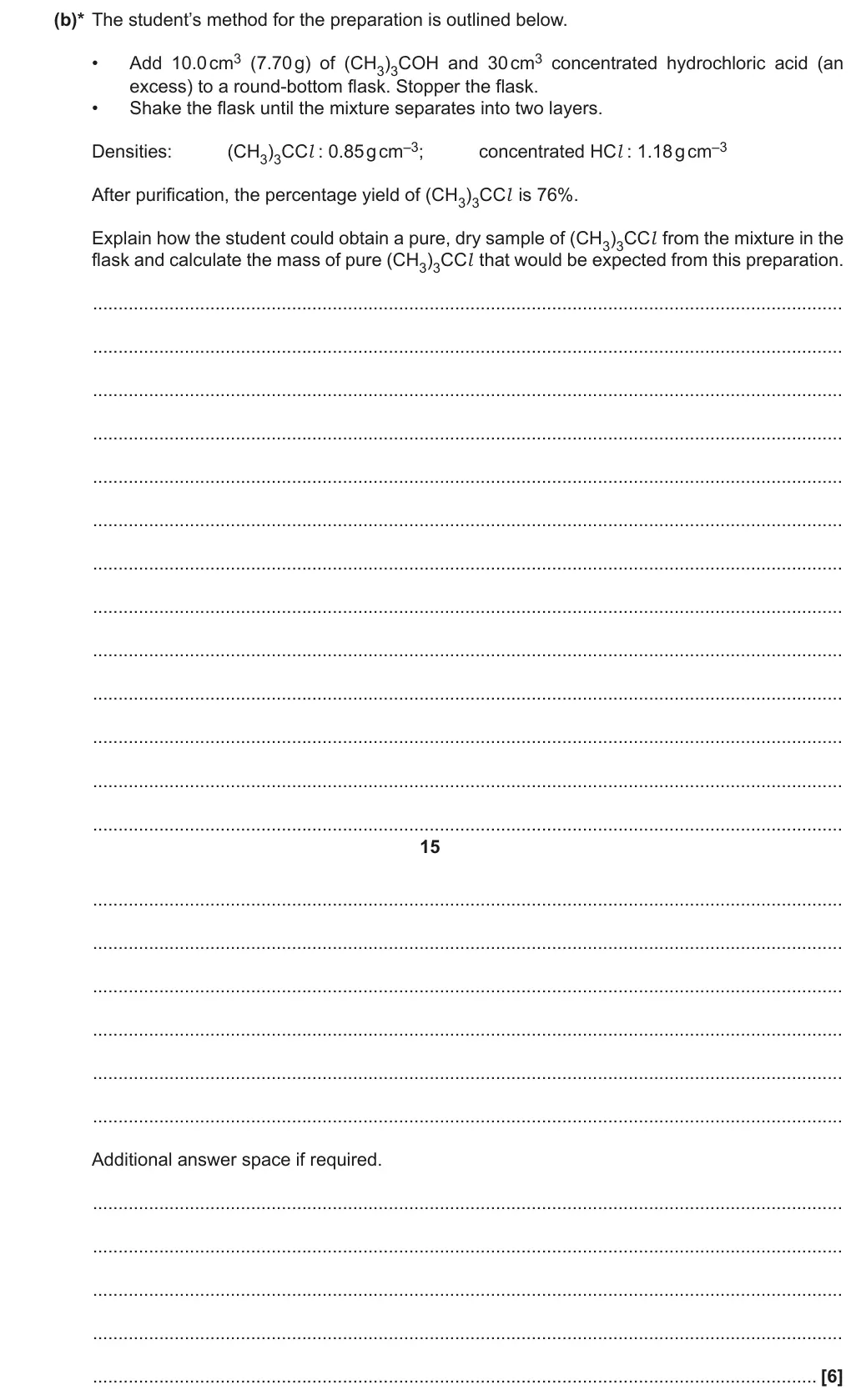
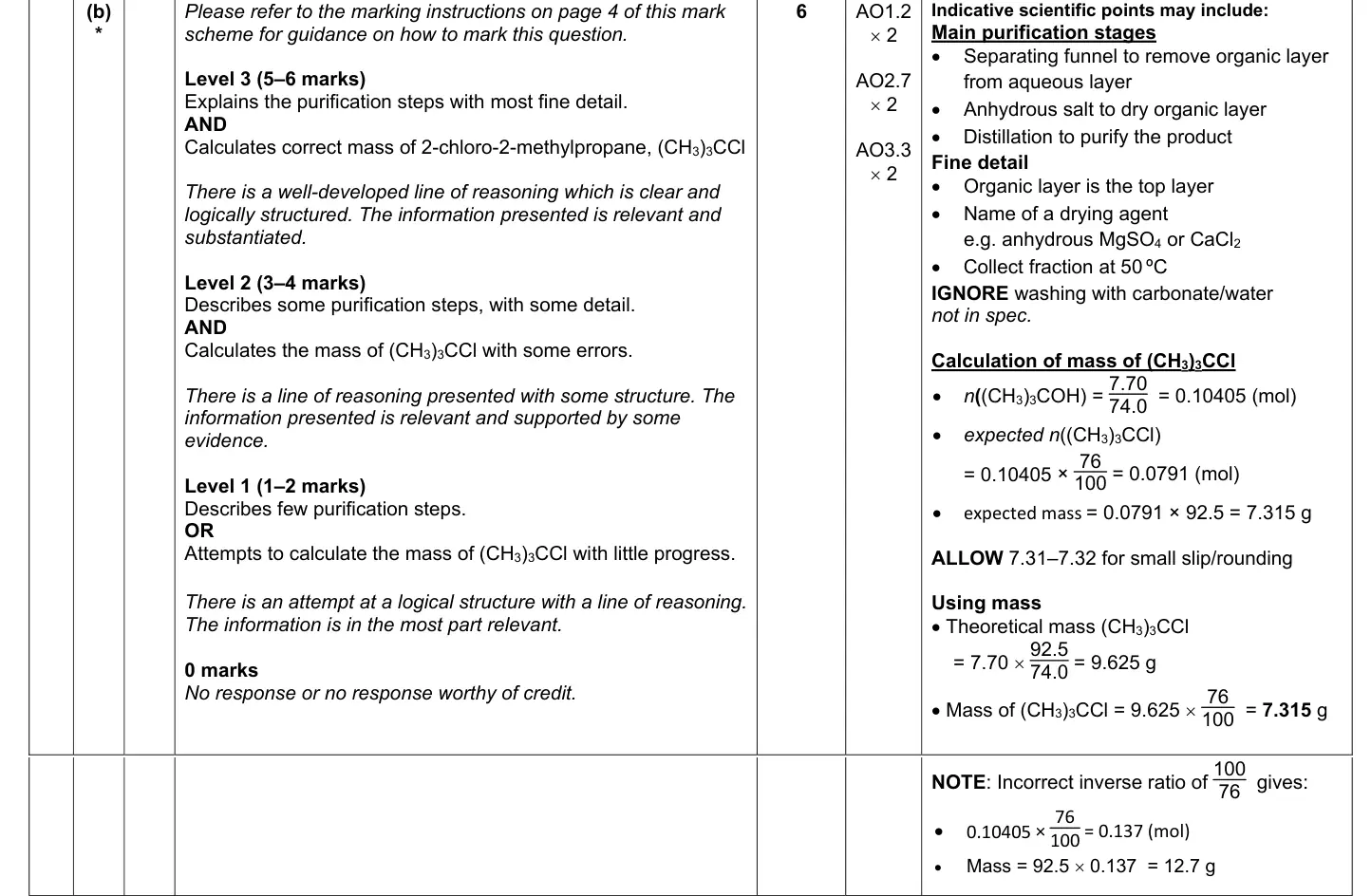
(c)* 2-Chlorobutane, CH3CH2CHCl CH3, is an organic liquid with a boiling point of 70 °C.
A student prepares 2-chlorobutane from butan-2-ol, CH3CH2CHOHCH3, as shown in the
equation below.
CH3CH2CHOHCH3 + NaCl + H2SO4 CH3CH2CHCl CH3 + NaHSO4 + H2O
The student’s method is outlined below.
• Add 9.25 g CH3CH2CHOHCH3 to an excess of NaCl (aq) in a pear-shaped flask.
• Add an excess of concentrated sulfuric acid.
• Heat the flask under reflux for about 45 minutes.
The student obtains a reaction mixture containing an organic layer (density = 0.87 g cm–3) and an
aqueous layer (density = 1.00 g cm–3).
After purification, the percentage yield of CH3CH2CHCl CH3 is 65.0 %.
Describe how the student could obtain a pure, dry sample of CH3CH2CHCl CH3 from the reaction
mixture and explain the reason for carrying out each purification step.
Calculate the mass of pure CH3CH2CHCl CH3 that would be expected from this preparation.
..........................................................................................................................................................
..........................................................................................................................................................
..........................................................................................................................................................
..........................................................................................................................................................
..........................................................................................................................................................
..........................................................................................................................................................
..........................................................................................................................................................
..........................................................................................................................................................
..........................................................................................................................................................
..........................................................................................................................................................
..........................................................................................................................................................
..........................................................................................................................................................
..........................................................................................................................................................
..........................................................................................................................................................
..........................................................................................................................................................
..................................................................................................................................................... [6]
Extra answer space if required.
..........................................................................................................................................................
..........................................................................................................................................................
..........................................................................................................................................................
..........................................................................................................................................................
..........................................................................................................................................................
..........................................................................................................................................................
..........................................................................................................................................................
..........................................................................................................................................................
..........................................................................................................................................................
..........................................................................................................................................................
..........................................................................................................................................................
..........................................................................................................................................................
..........................................................................................................................................................
..........................................................................................................................................................
..........................................................................................................................................................
..........................................................................................................................................................
..........................................................................................................................................................
..........................................................................................................................................................
..........................................................................................................................................................
..........................................................................................................................................................
..........................................................................................................................................................
..........................................................................................................................................................
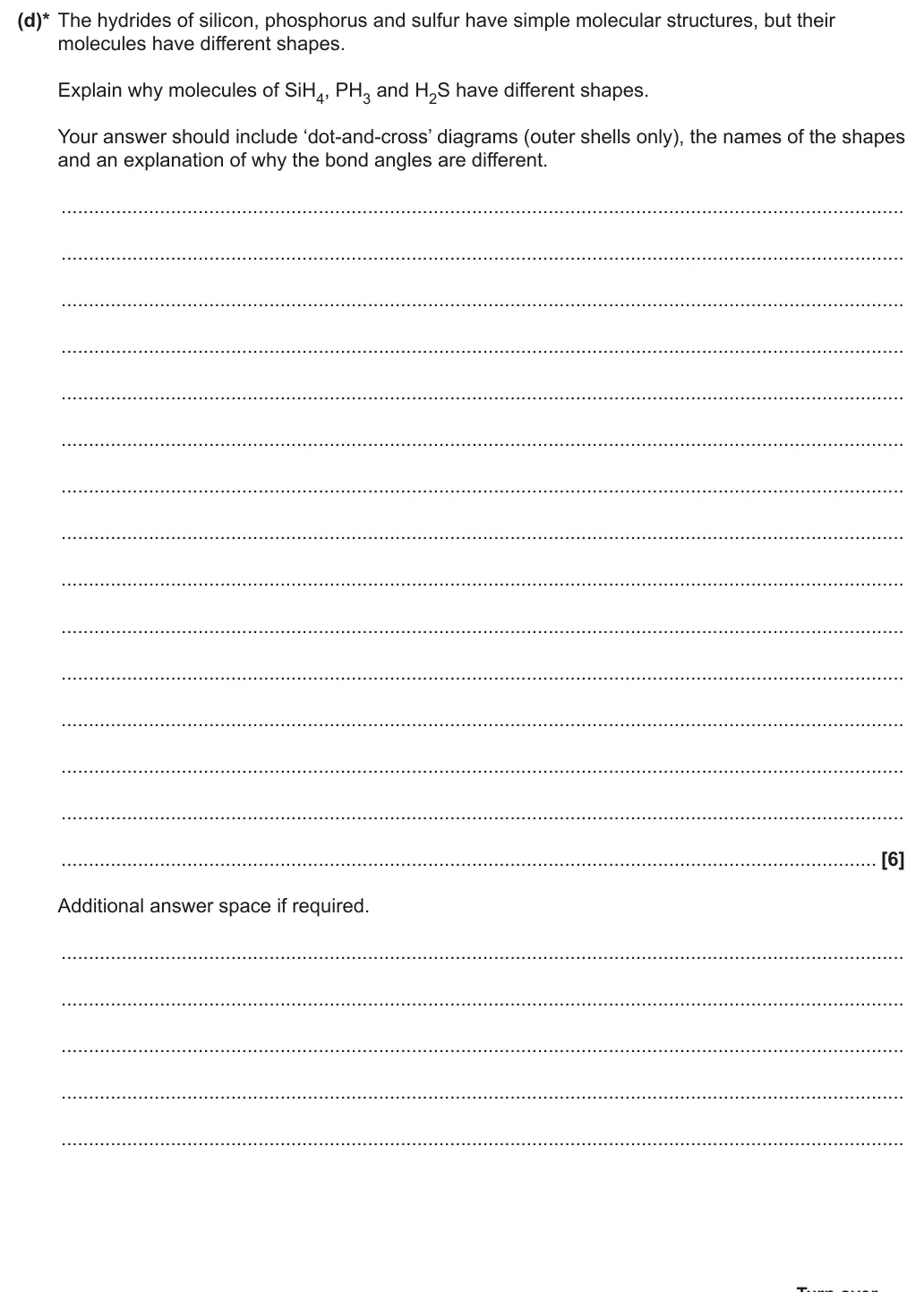
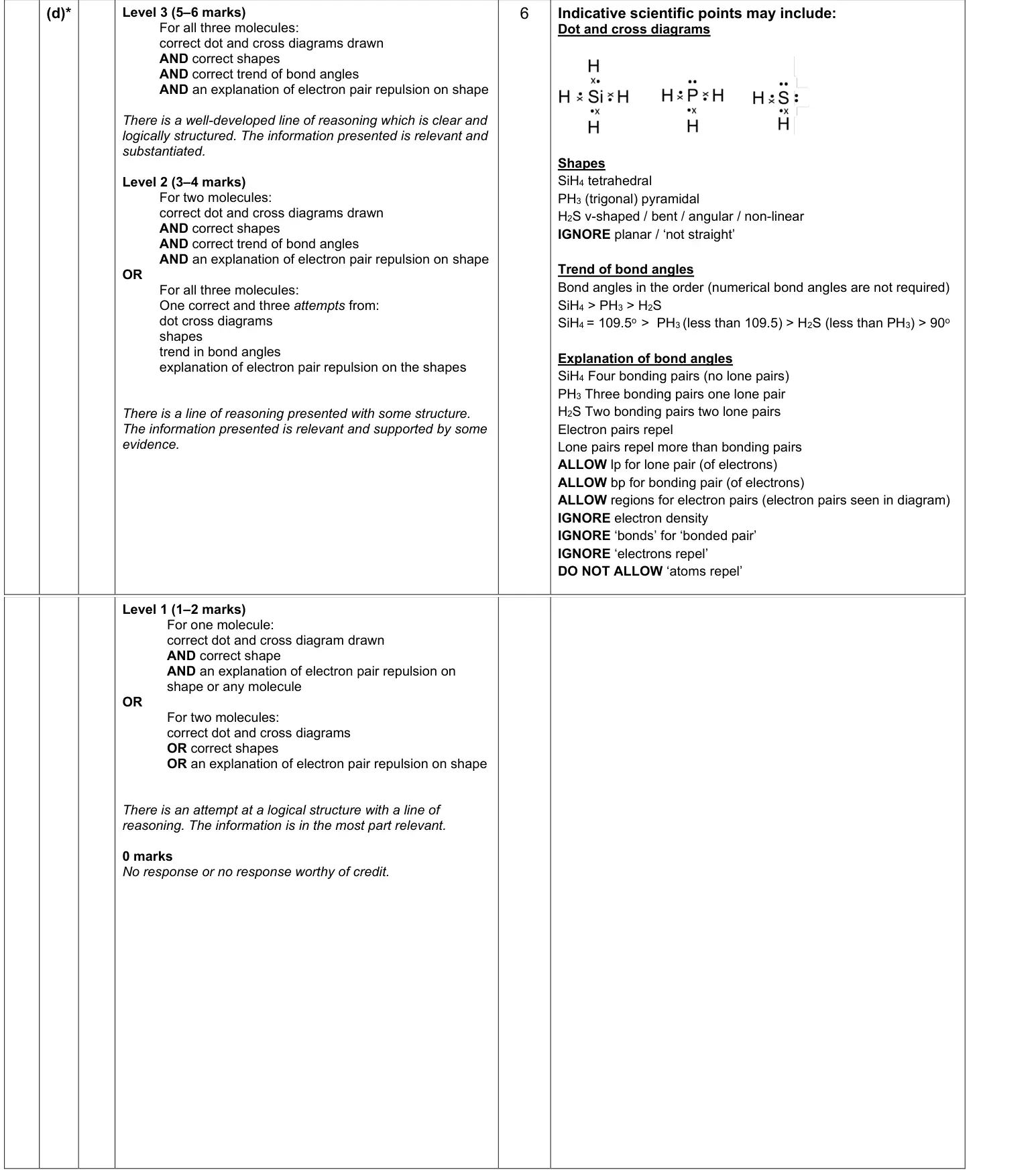
June 2025 · Paper 1 · Q16(d) 6 marks 6-mark level of response Easy bonding and structure
(d)* The hydrides of silicon, phosphorus and sulfur have simple molecular structures, but their
molecules have different shapes.
Explain why molecules of SiH4, PH3 and H2S have different shapes.
Your answer should include ‘dot-and-cross’ diagrams (outer shells only), the names of the shapes
and an explanation of why the bond angles are different.
..........................................................................................................................................................
..........................................................................................................................................................
..........................................................................................................................................................
..........................................................................................................................................................
..........................................................................................................................................................
..........................................................................................................................................................
..........................................................................................................................................................
..........................................................................................................................................................
..........................................................................................................................................................
..........................................................................................................................................................
..........................................................................................................................................................
..........................................................................................................................................................
..........................................................................................................................................................
..........................................................................................................................................................
..................................................................................................................................................... [6]
Additional answer space if required.
..........................................................................................................................................................
..........................................................................................................................................................
..........................................................................................................................................................
..........................................................................................................................................................
..........................................................................................................................................................
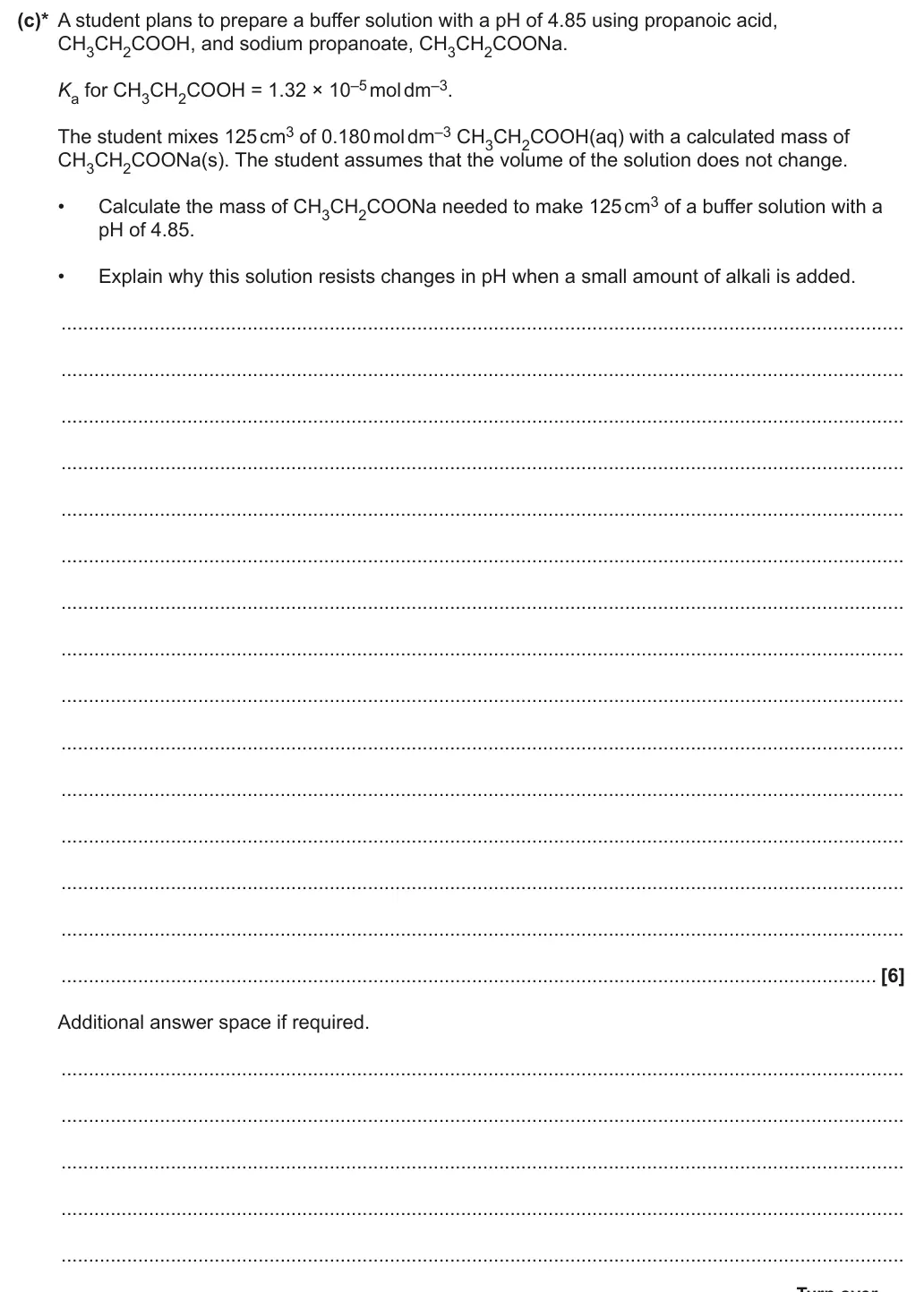
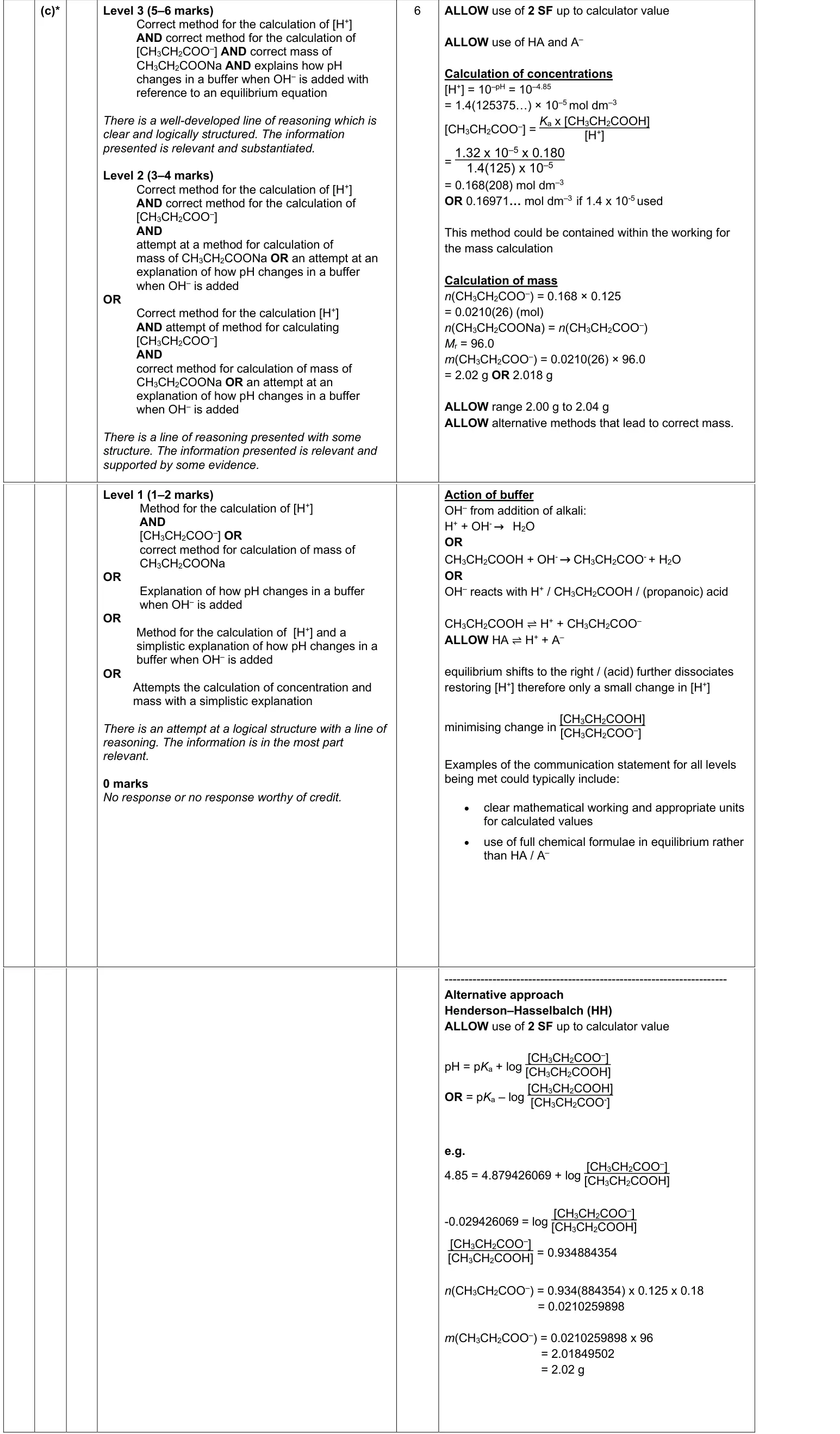
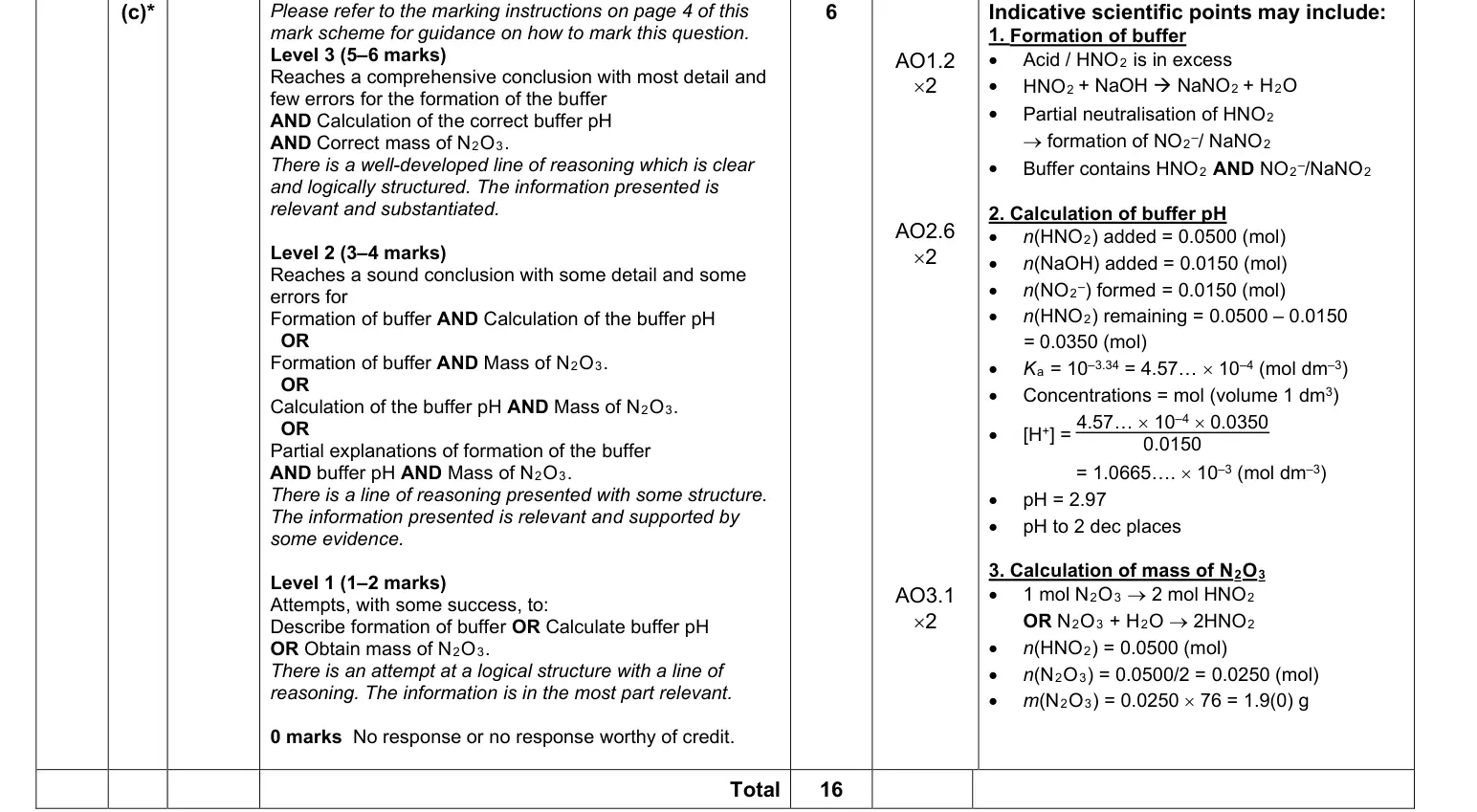
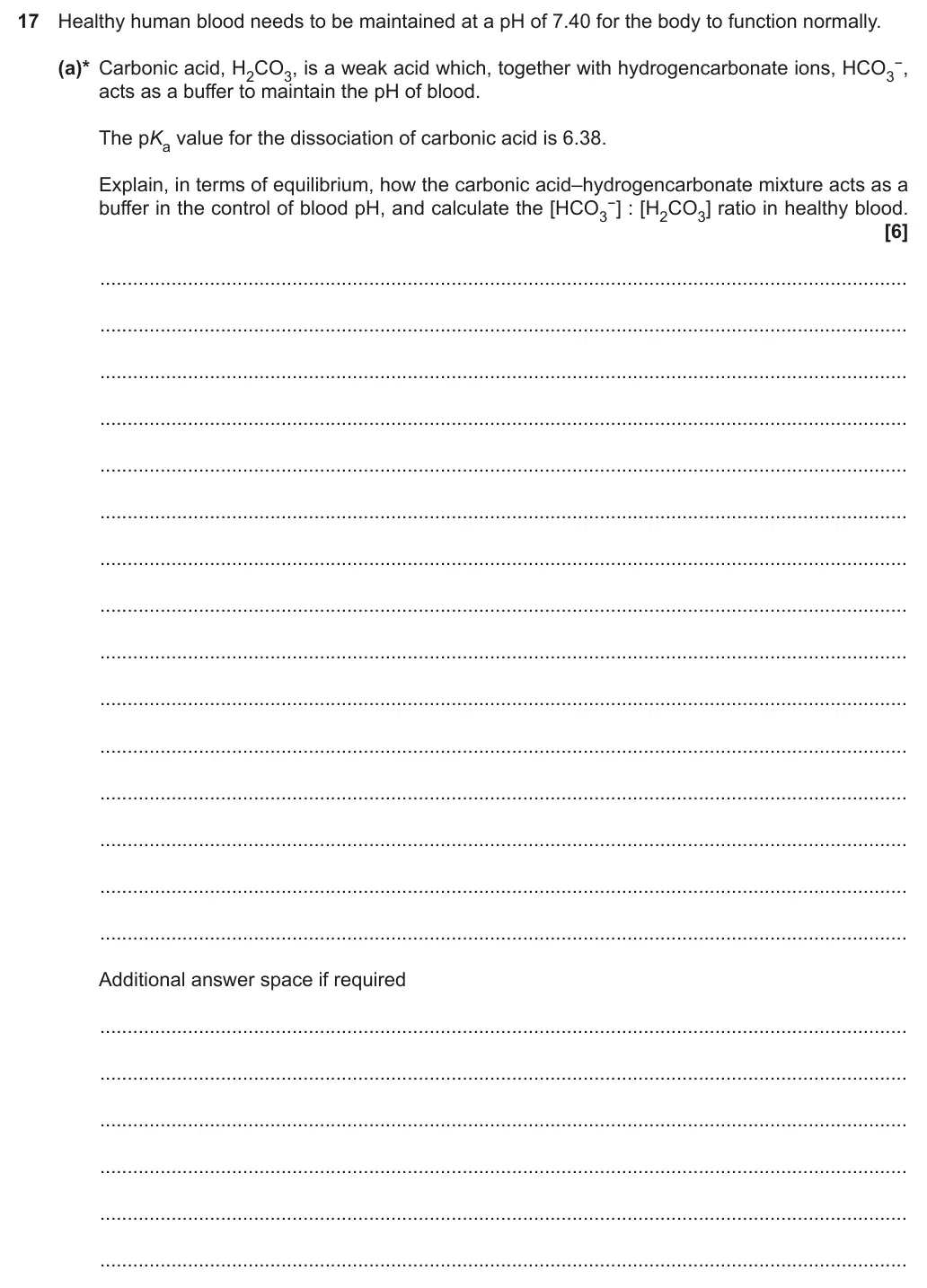
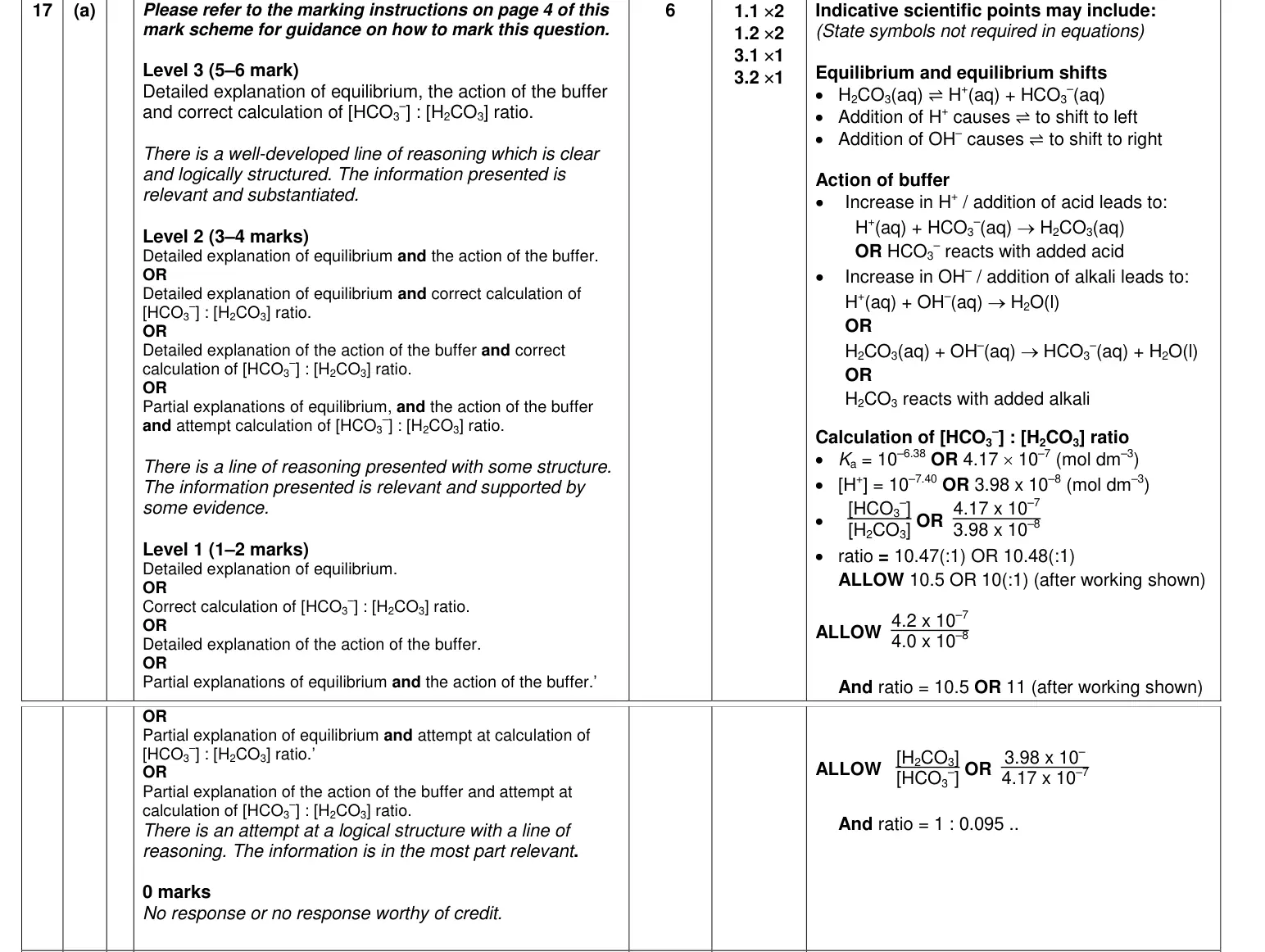
June 2025 · Paper 1 · Q19(c) 6 marks 6-mark level of response Hard acids bases and buffersamount of substance
(c)* A student plans to prepare a buffer solution with a pH of 4.85 using propanoic acid,
CH3CH2COOH, and sodium propanoate, CH3CH2COONa.
Ka for CH3CH2COOH = 1.32 × 10⁻⁵ mol dm–3.
The student mixes 125 cm3 of 0.180 mol dm–3 CH3CH2COOH(aq) with a calculated mass of
CH3CH2COONa(s). The student assumes that the volume of the solution does not change.
• Calculate the mass of CH3CH2COONa needed to make 125 cm3 of a buffer solution with a
pH of 4.85.
• Explain why this solution resists changes in pH when a small amount of alkali is added.
..........................................................................................................................................................
..........................................................................................................................................................
..........................................................................................................................................................
..........................................................................................................................................................
..........................................................................................................................................................
..........................................................................................................................................................
..........................................................................................................................................................
..........................................................................................................................................................
..........................................................................................................................................................
..........................................................................................................................................................
..........................................................................................................................................................
..........................................................................................................................................................
..........................................................................................................................................................
..........................................................................................................................................................
..................................................................................................................................................... [6]
Additional answer space if required.
..........................................................................................................................................................
..........................................................................................................................................................
..........................................................................................................................................................
..........................................................................................................................................................
..........................................................................................................................................................
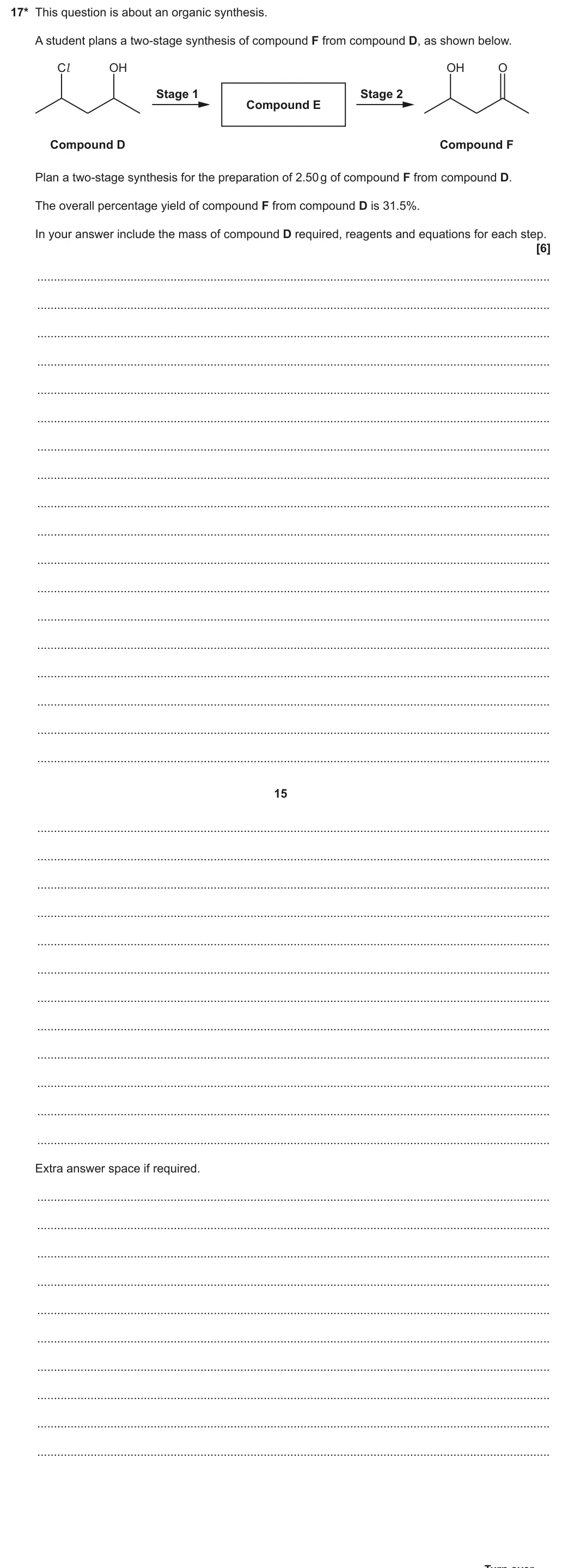
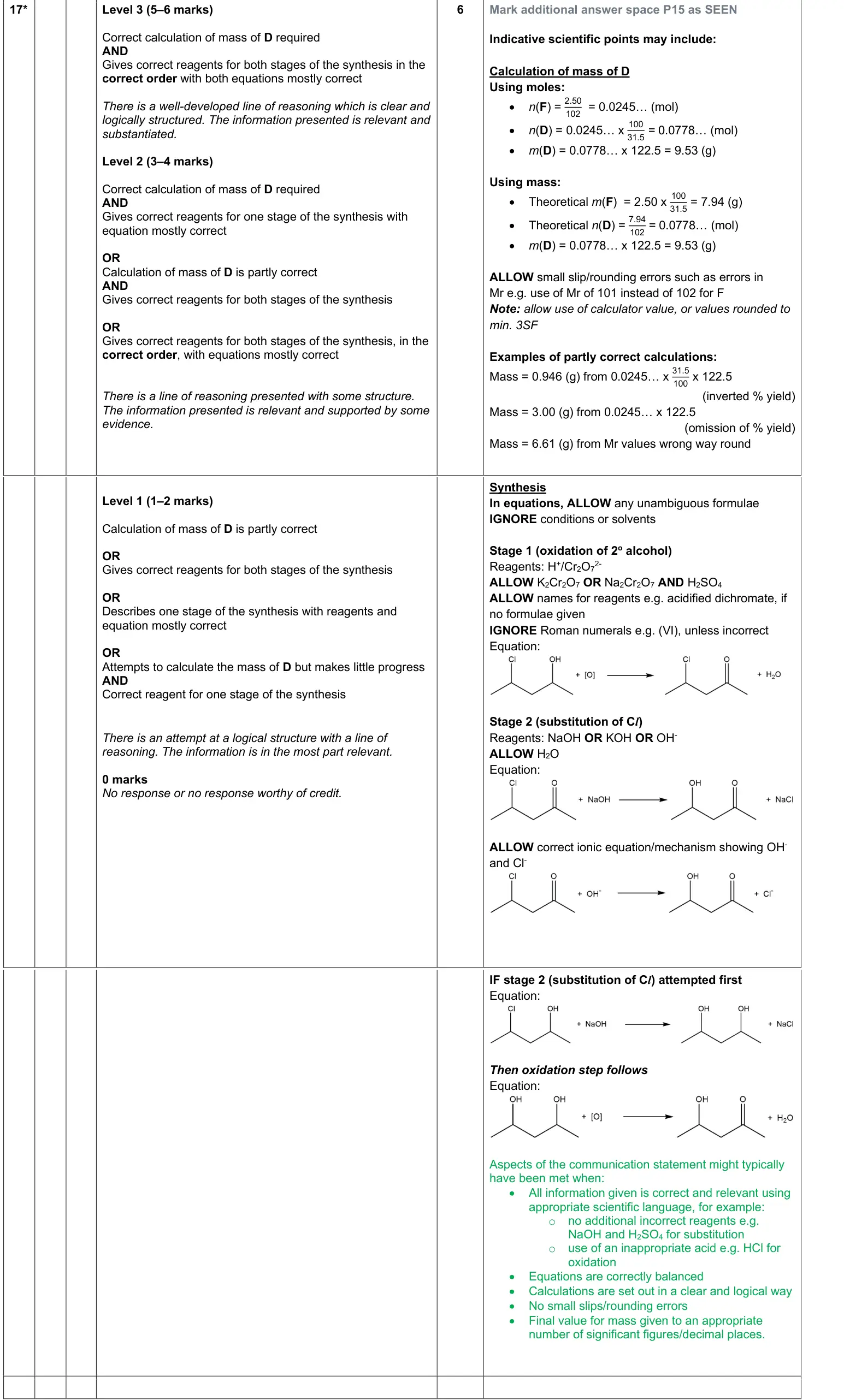
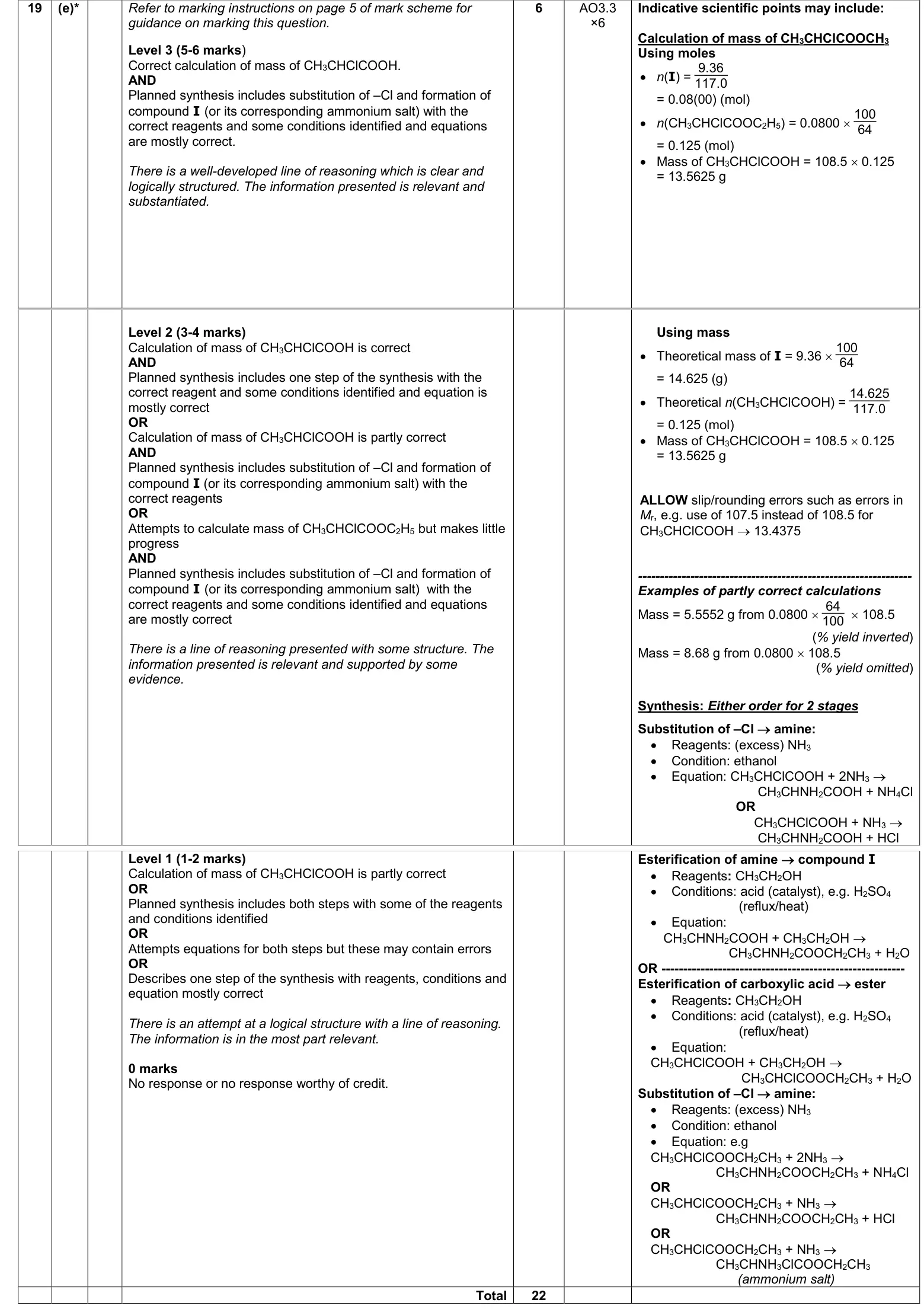
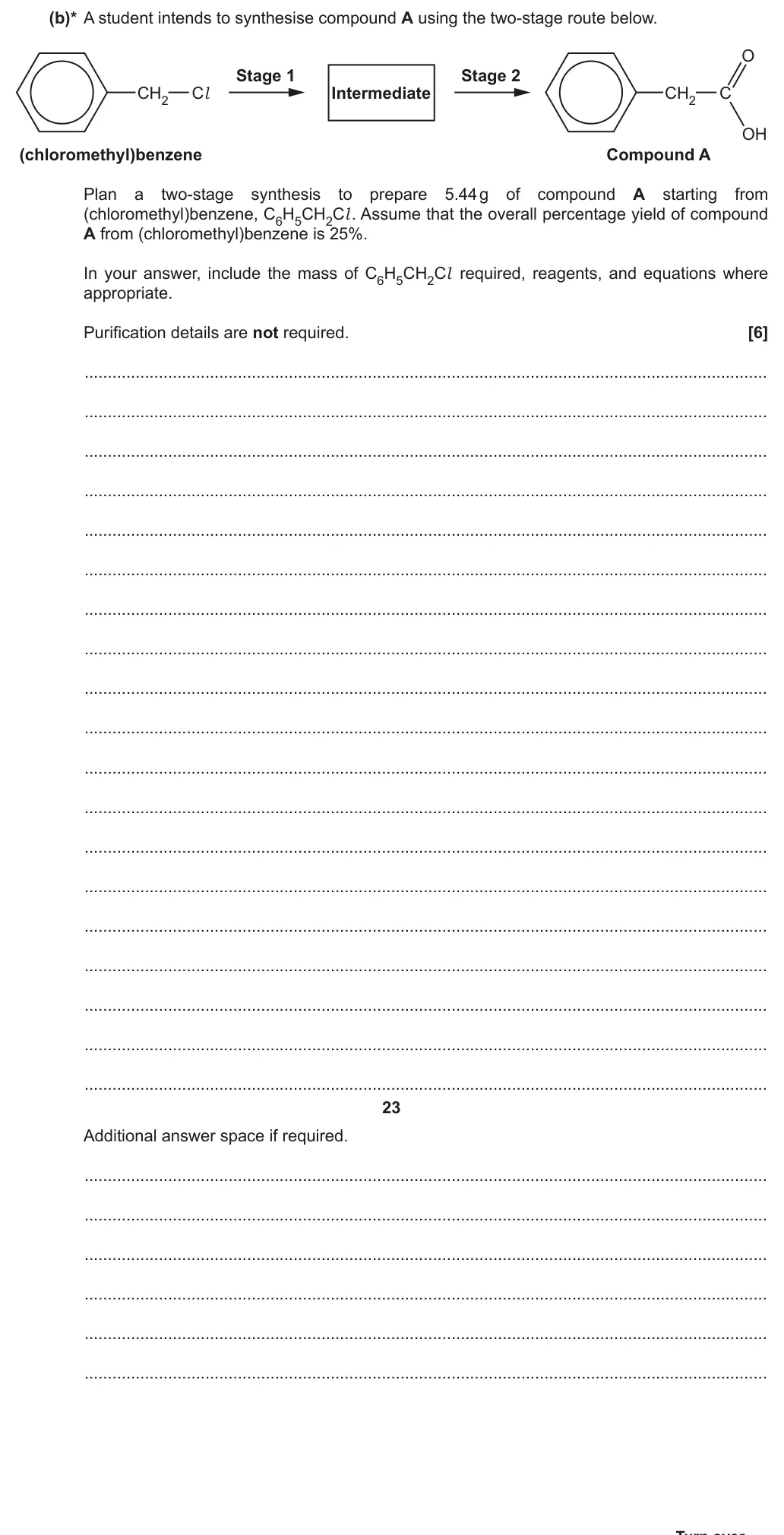
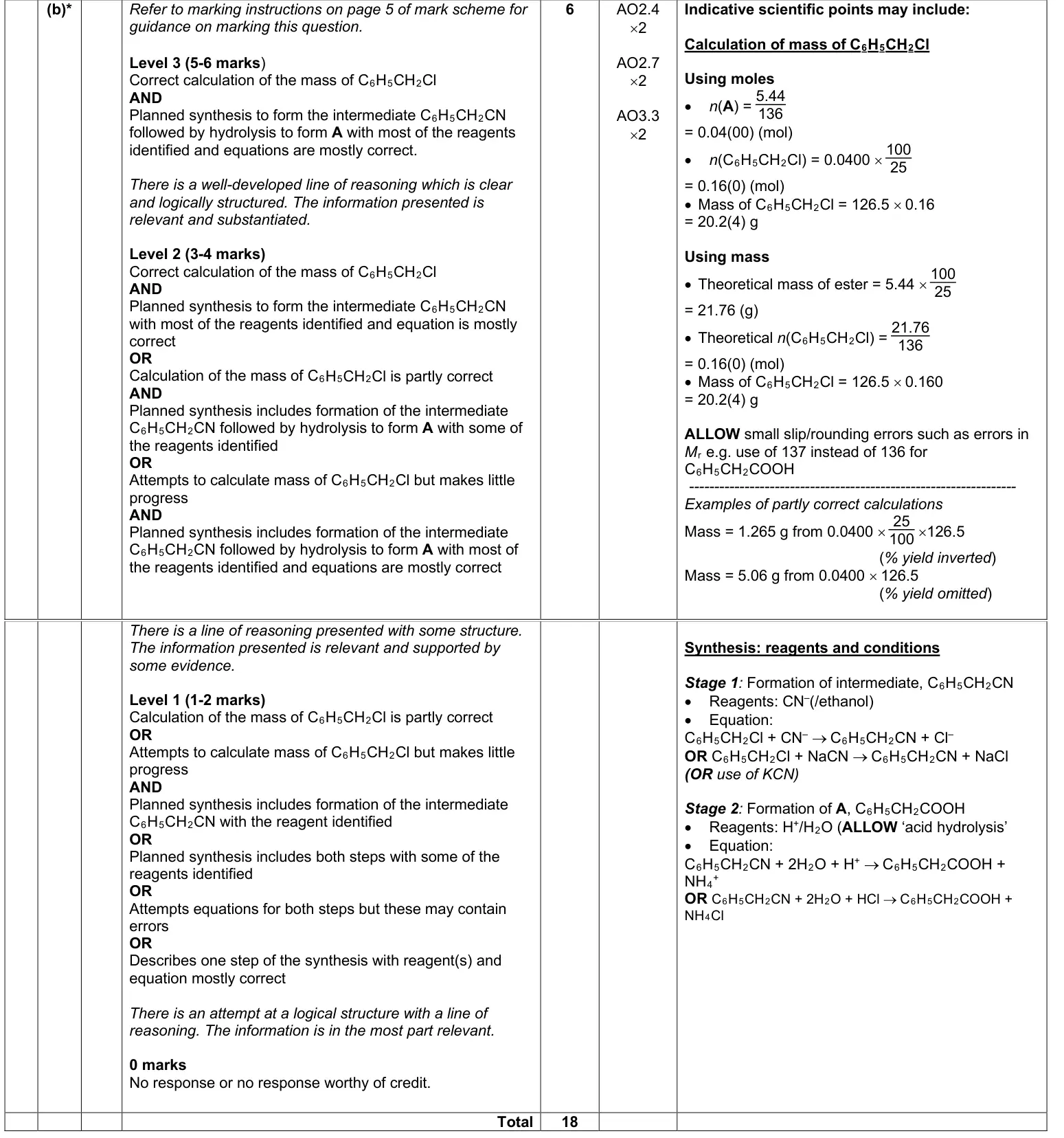
June 2025 · Paper 2 · Q17 6 marks 6-mark level of response Medium organic synthesis asamount of substancealcoholshaloalkanes
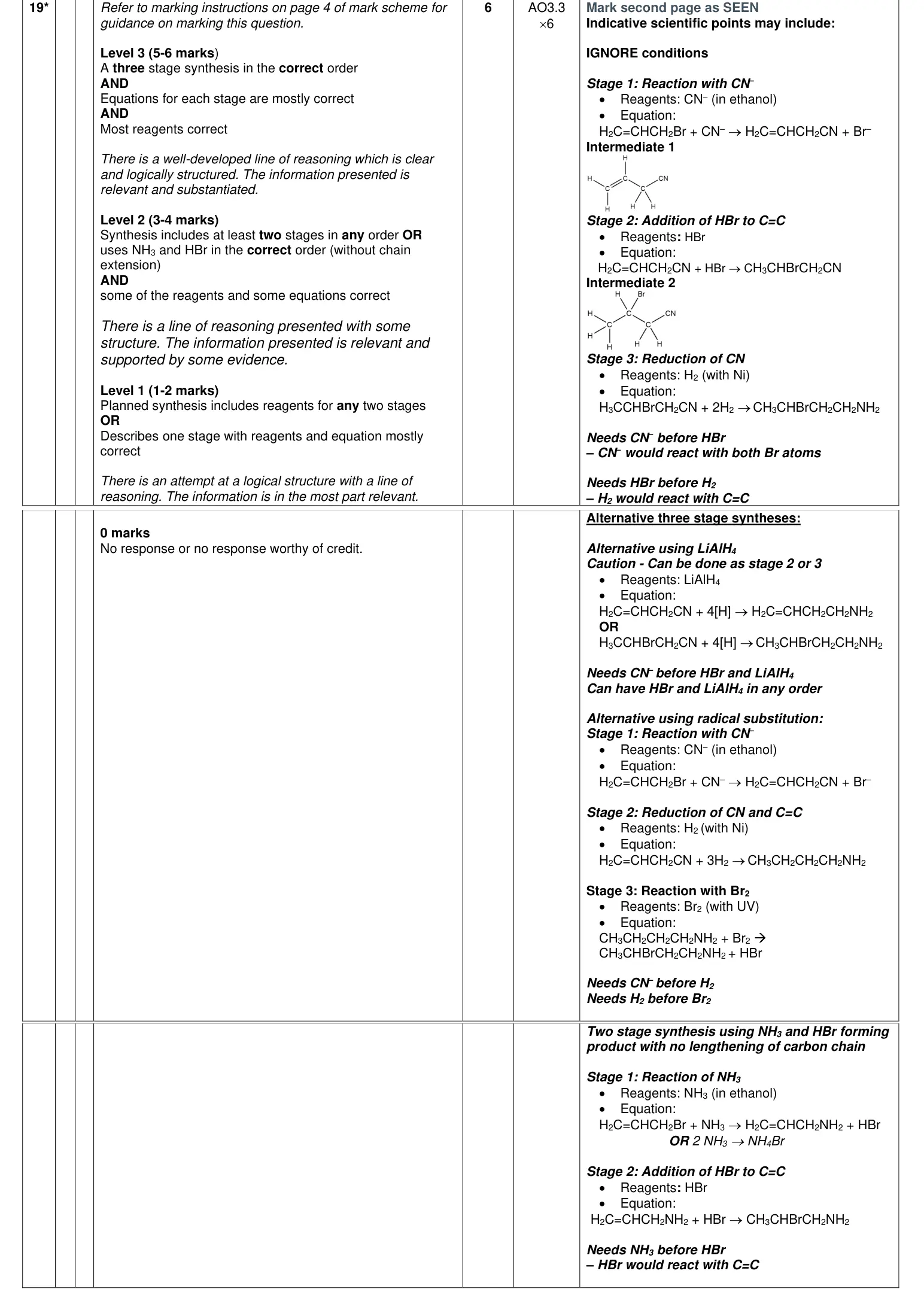
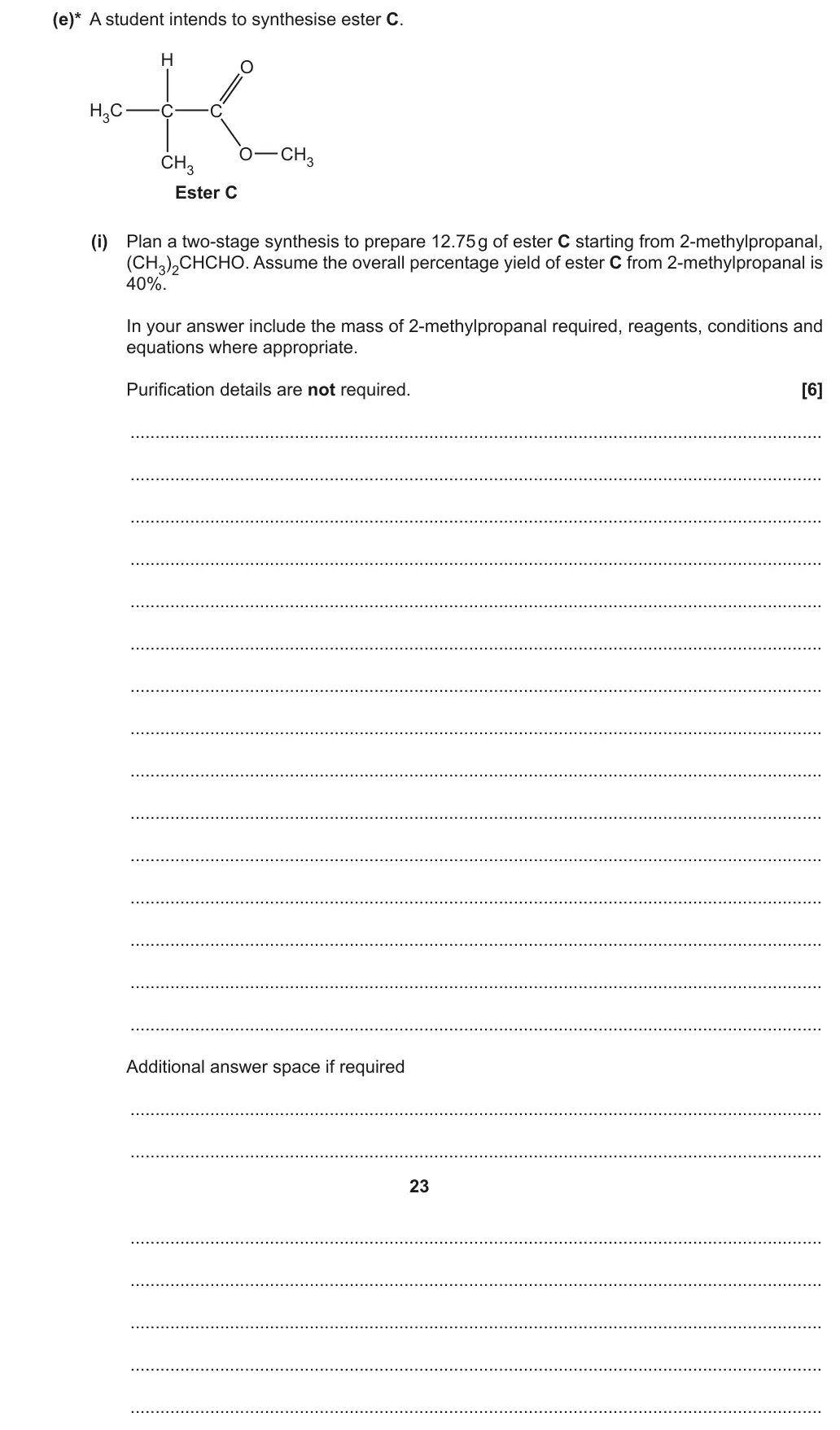
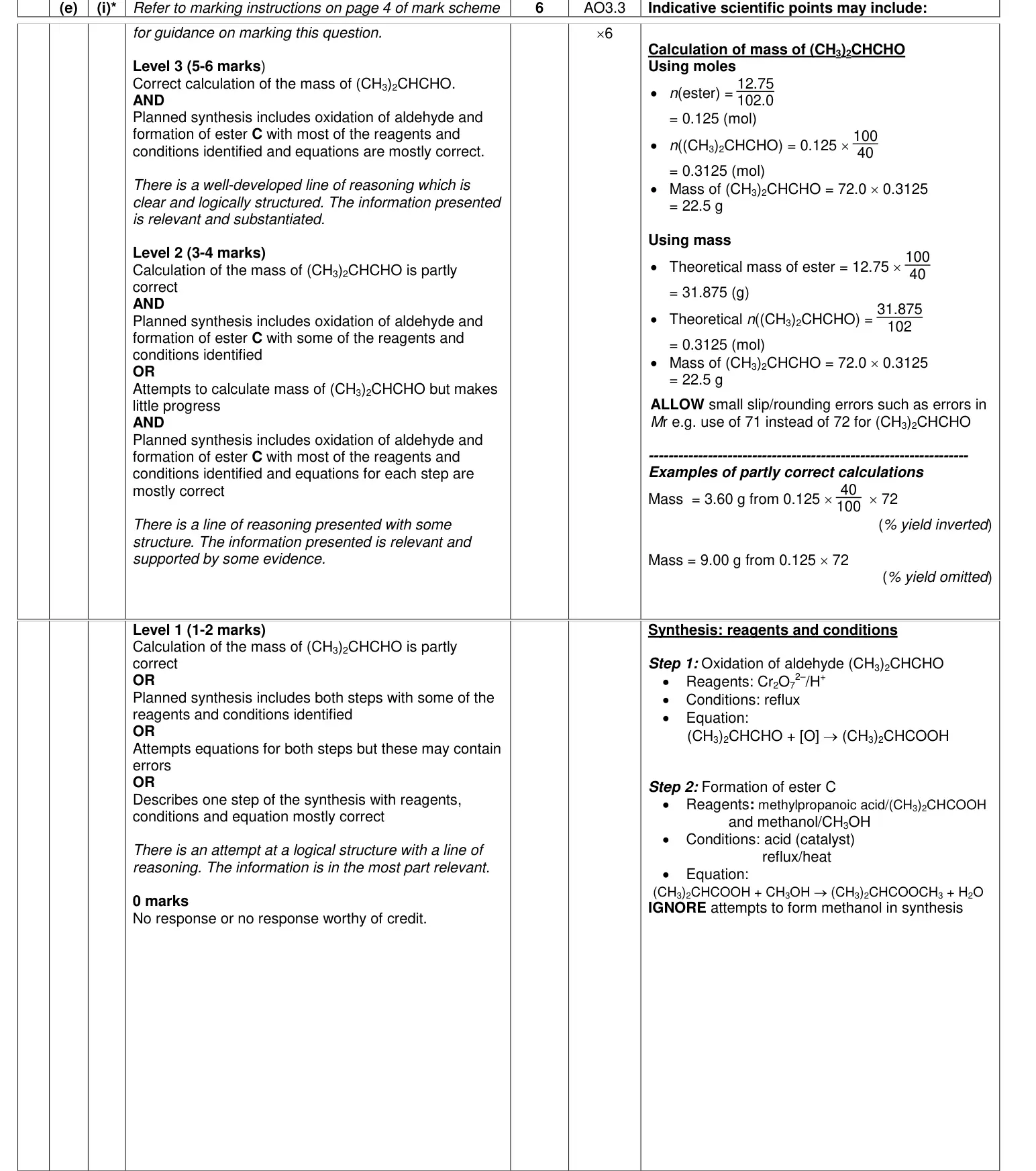
17* This question is about an organic synthesis.
A student plans a two-stage synthesis of compound F from compound D, as shown below.
Cl OH OH O
Stage 1 Stage 2
Compound E
Compound D Compound F
Plan a two-stage synthesis for the preparation of 2.50 g of compound F from compound D.
The overall percentage yield of compound F from compound D is 31.5%.
In your answer include the mass of compound D required, reagents and equations for each step.
[6]
..........................................................................................................................................................
..........................................................................................................................................................
..........................................................................................................................................................
..........................................................................................................................................................
..........................................................................................................................................................
..........................................................................................................................................................
..........................................................................................................................................................
..........................................................................................................................................................
..........................................................................................................................................................
..........................................................................................................................................................
..........................................................................................................................................................
..........................................................................................................................................................
..........................................................................................................................................................
..........................................................................................................................................................
..........................................................................................................................................................
..........................................................................................................................................................
..........................................................................................................................................................
..........................................................................................................................................................
..........................................................................................................................................................
..........................................................................................................................................................
..........................................................................................................................................................
..........................................................................................................................................................
..........................................................................................................................................................
..........................................................................................................................................................
..........................................................................................................................................................
..........................................................................................................................................................
..........................................................................................................................................................
..........................................................................................................................................................
..........................................................................................................................................................
..........................................................................................................................................................
Extra answer space if required.
..........................................................................................................................................................
..........................................................................................................................................................
..........................................................................................................................................................
..........................................................................................................................................................
..........................................................................................................................................................
..........................................................................................................................................................
..........................................................................................................................................................
..........................................................................................................................................................
..........................................................................................................................................................
..........................................................................................................................................................
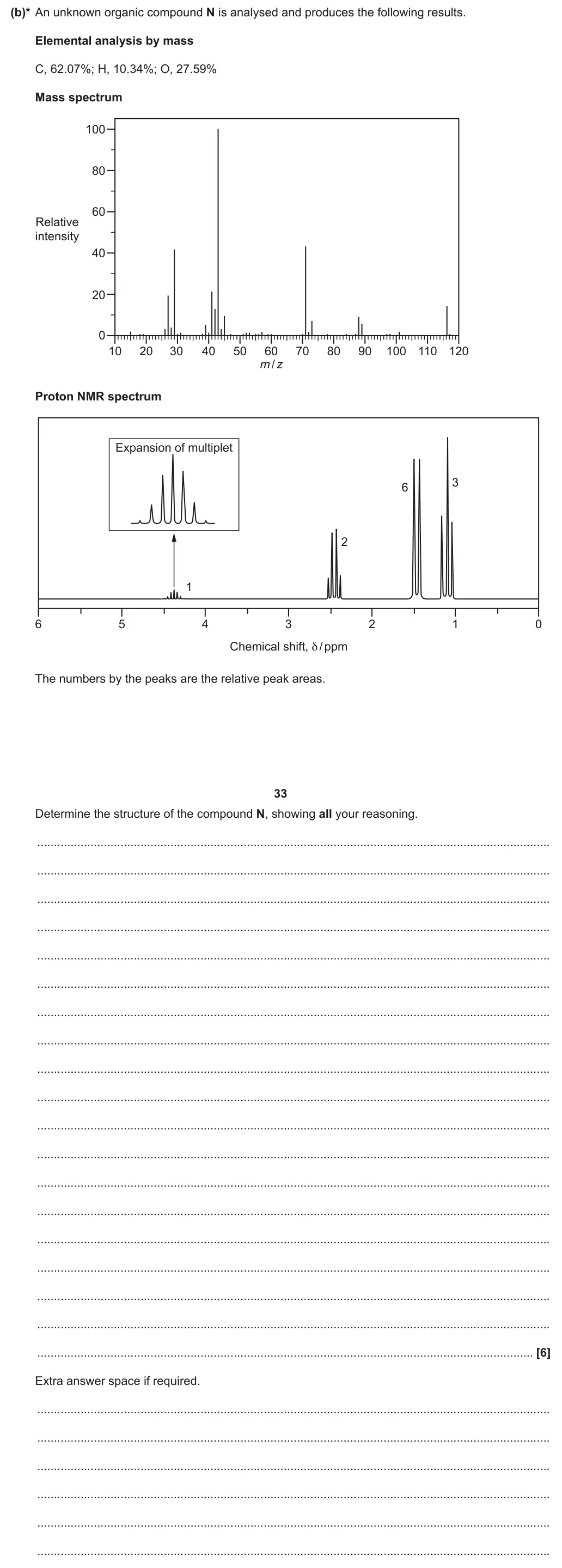
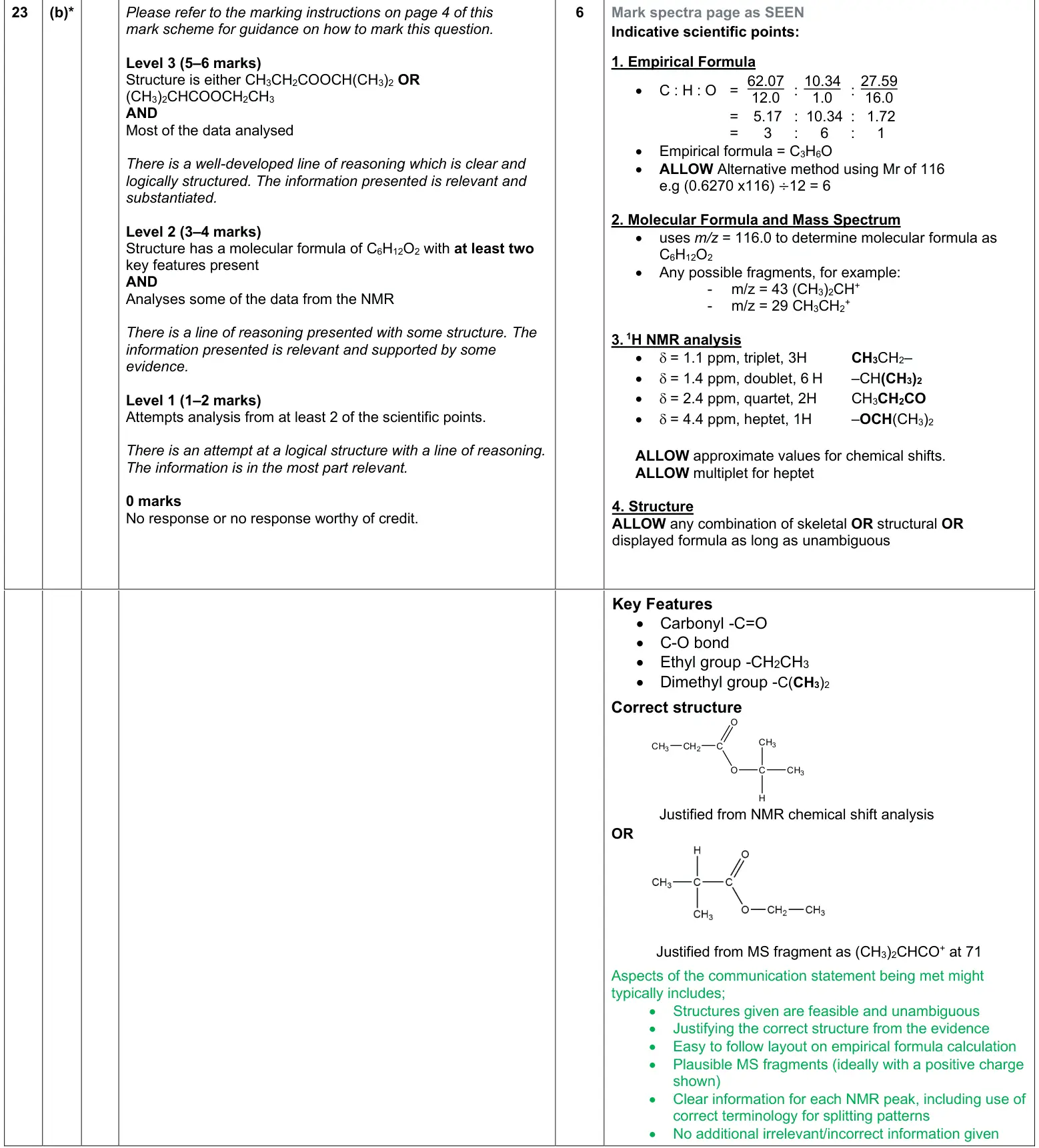
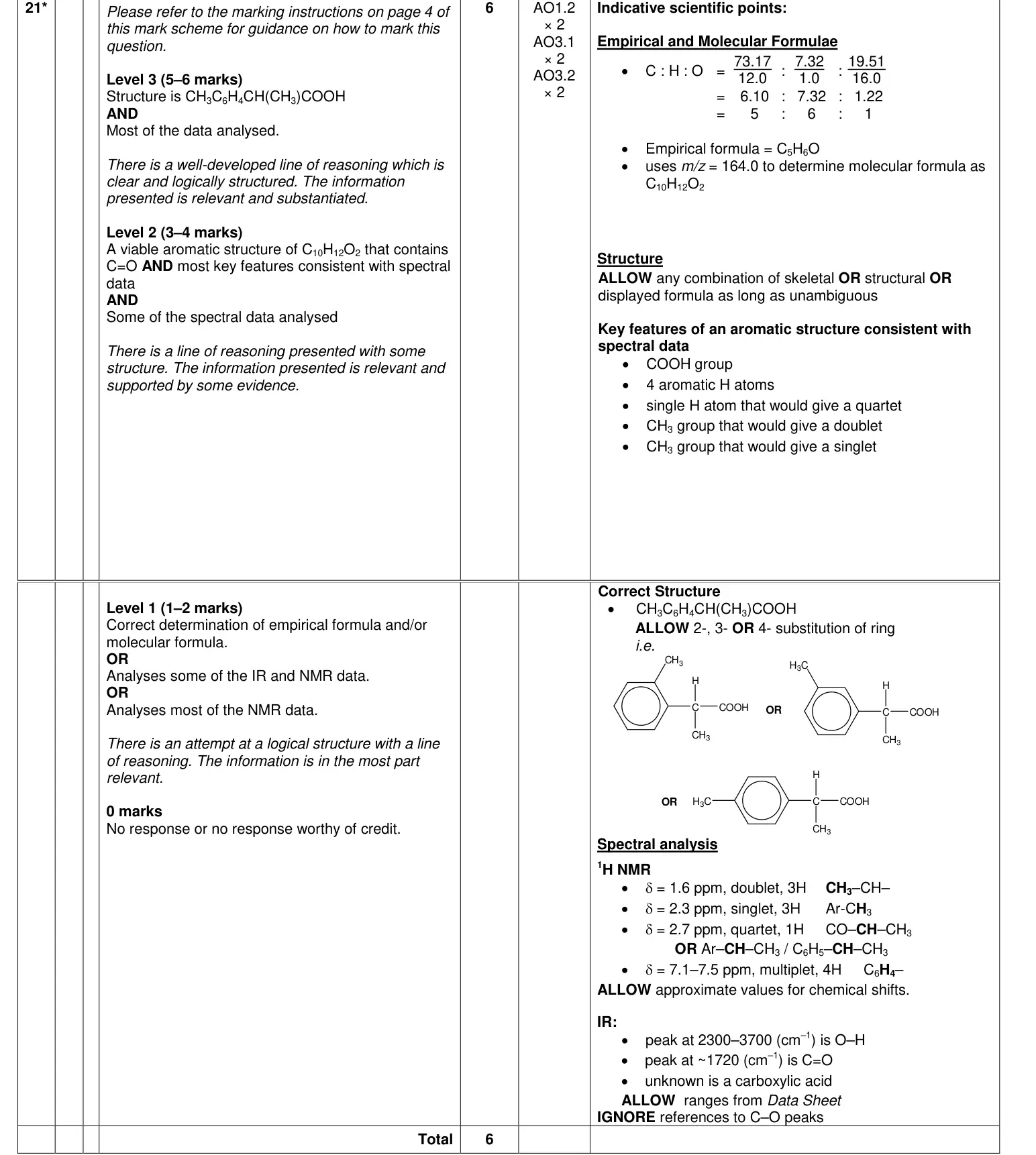
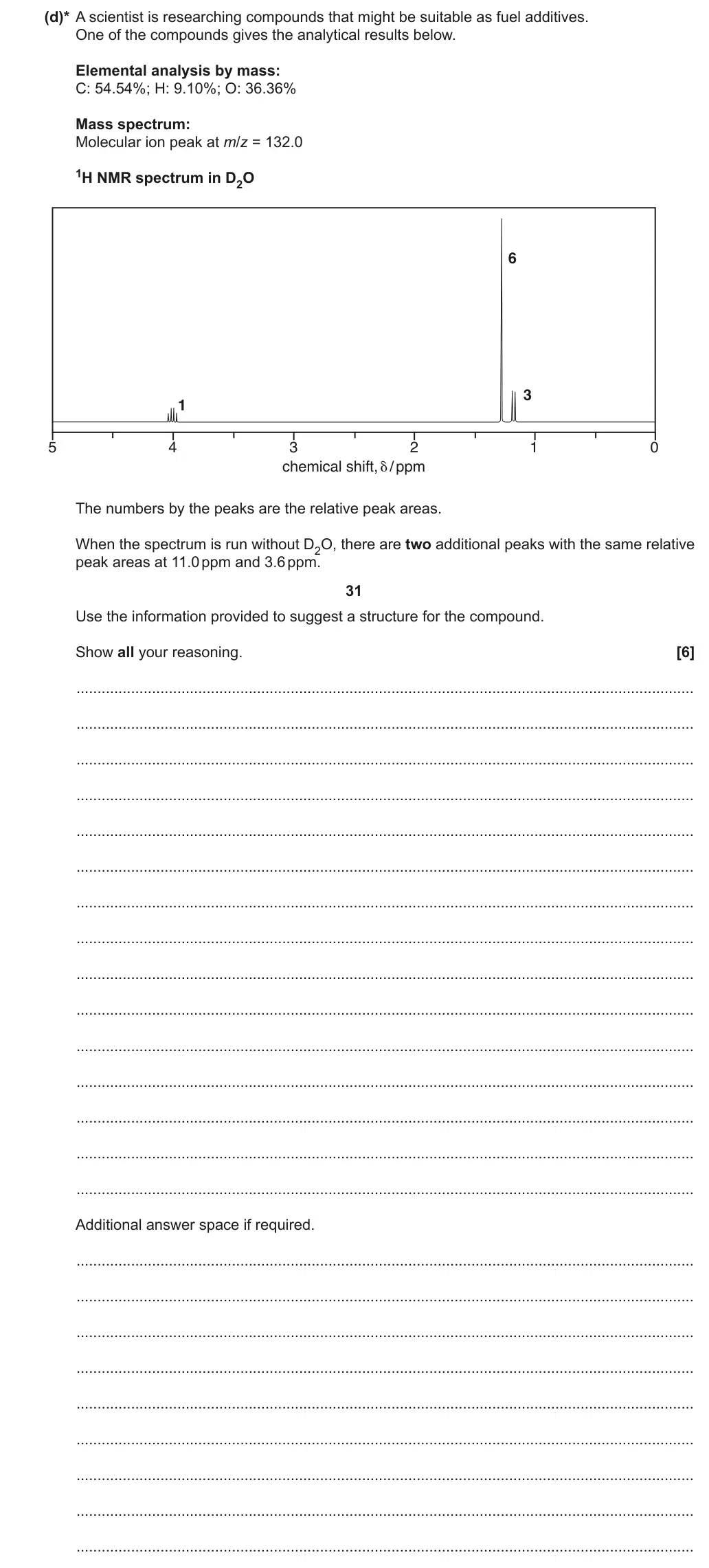
June 2025 · Paper 2 · Q23(b) 6 marks 6-mark level of response Medium infrared and mass spectrometrynmr spectroscopy
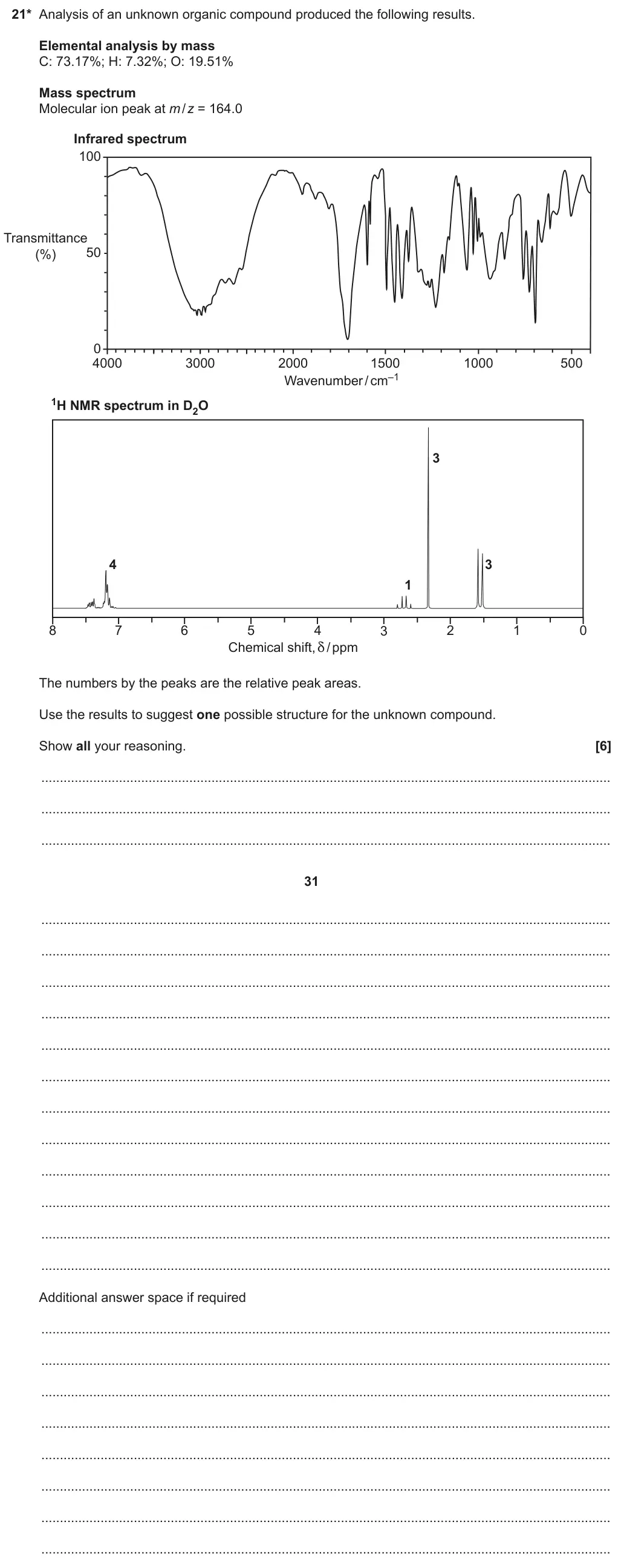
(b)* An unknown organic compound N is analysed and produces the following results.
Elemental analysis by mass
C, 62.07%; H, 10.34%; O, 27.59%
Mass spectrum
100
80
60
Relative
intensity
40
20
0
10 20 30 40 50 60 70 80 90 100 110 120
m / z
Proton NMR spectrum
Expansion of multiplet
3
6
2
1
6 5 4 3 2 1 0
Chemical shift, δ / ppm
The numbers by the peaks are the relative peak areas.
Determine the structure of the compound N, showing all your reasoning.
..........................................................................................................................................................
..........................................................................................................................................................
..........................................................................................................................................................
..........................................................................................................................................................
..........................................................................................................................................................
..........................................................................................................................................................
..........................................................................................................................................................
..........................................................................................................................................................
..........................................................................................................................................................
..........................................................................................................................................................
..........................................................................................................................................................
..........................................................................................................................................................
..........................................................................................................................................................
..........................................................................................................................................................
..........................................................................................................................................................
..........................................................................................................................................................
..........................................................................................................................................................
..........................................................................................................................................................
..................................................................................................................................................... [6]
Extra answer space if required.
..........................................................................................................................................................
..........................................................................................................................................................
..........................................................................................................................................................
..........................................................................................................................................................
..........................................................................................................................................................
..........................................................................................................................................................
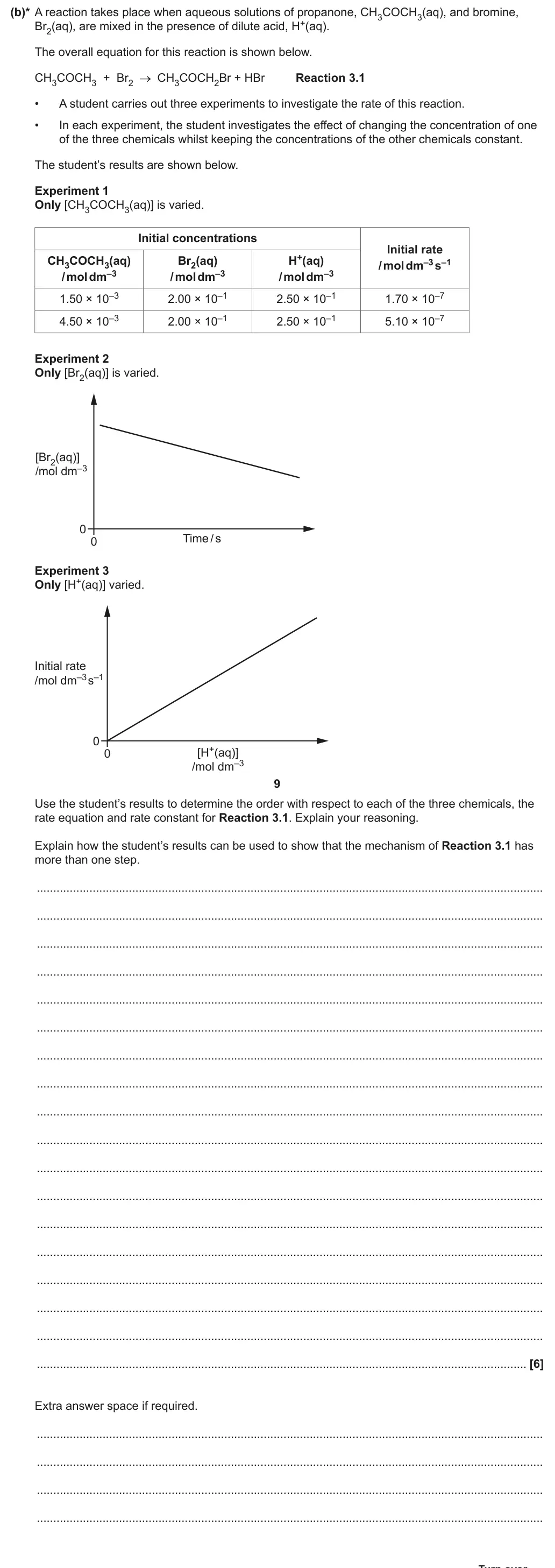
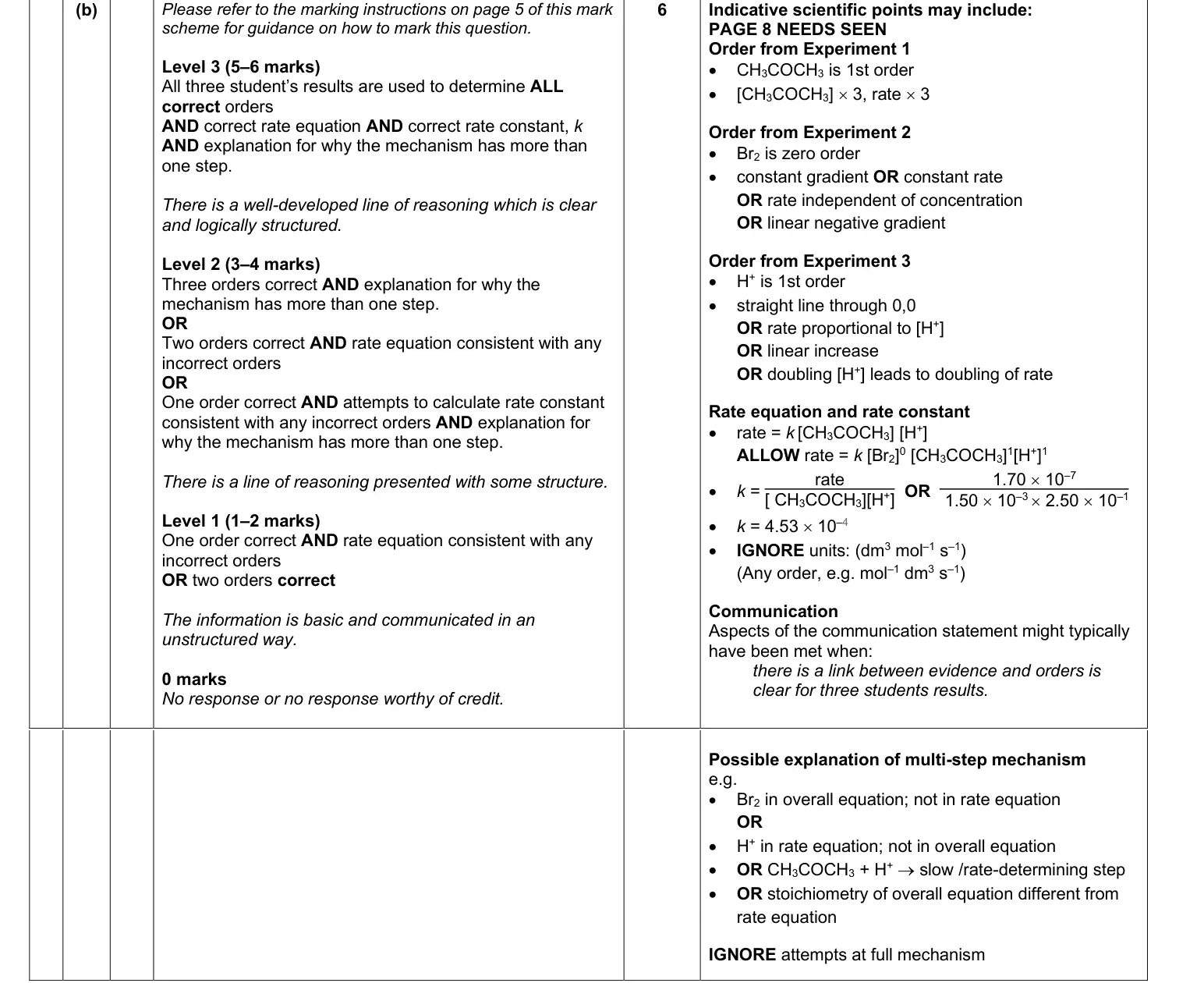
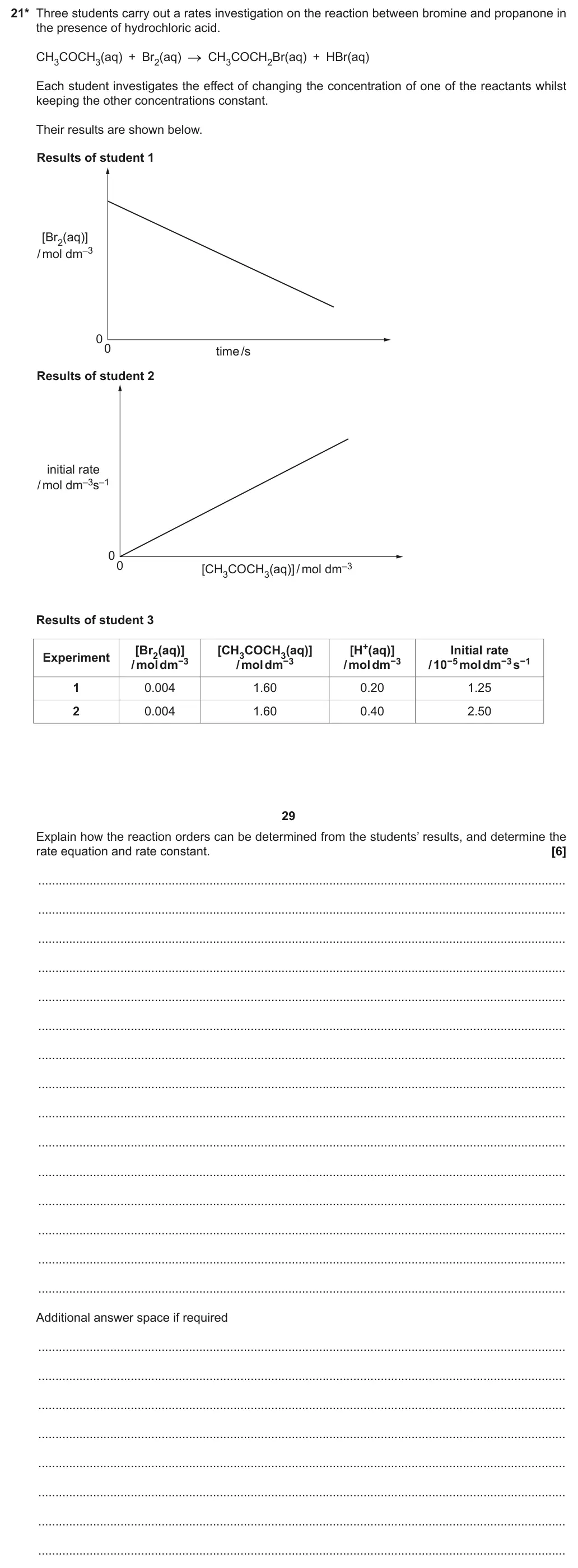
June 2025 · Paper 3 · Q3(b) 6 marks 6-mark level of response Medium rate equations
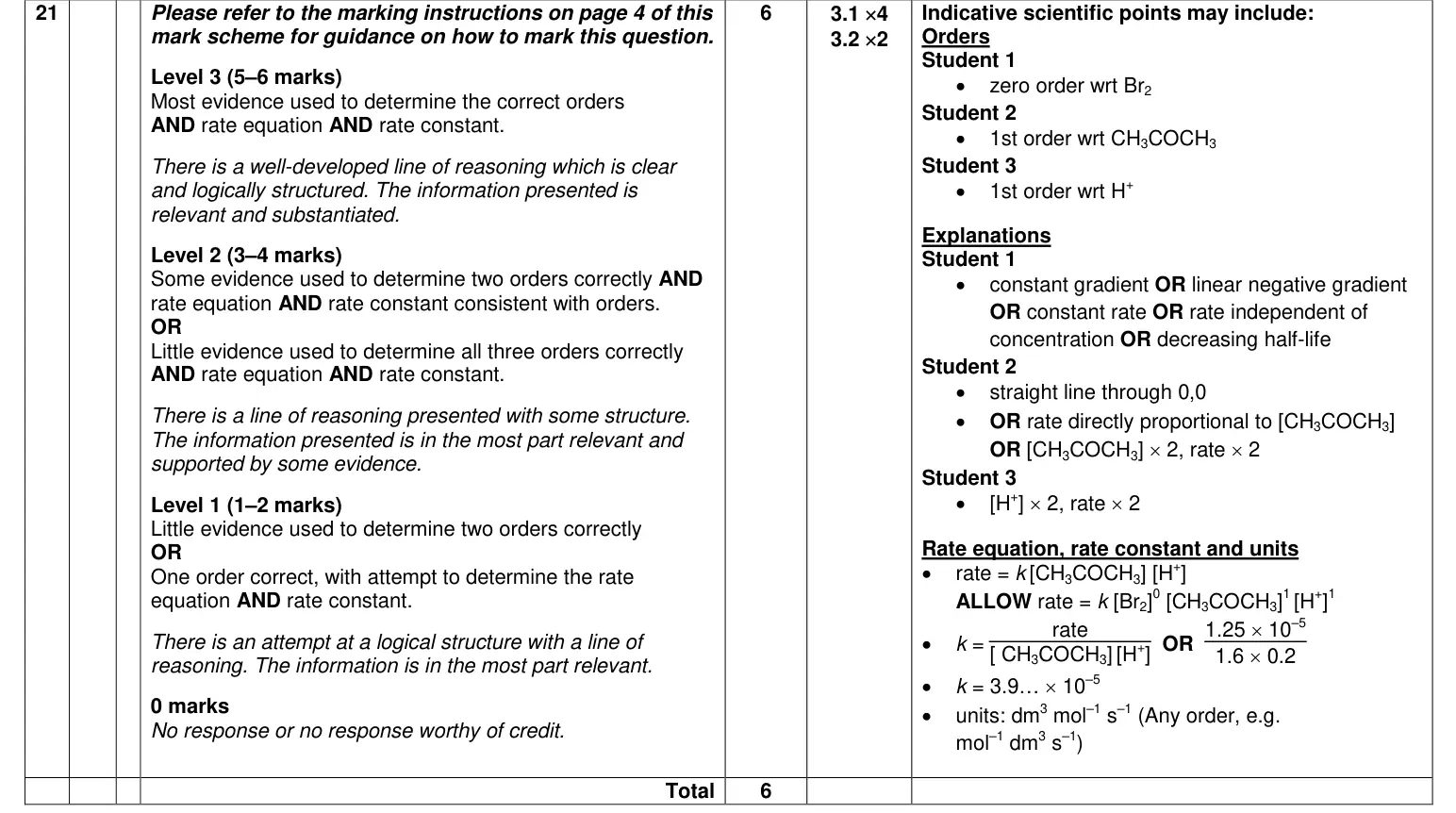
(b)* A reaction takes place when aqueous solutions of propanone, CH3COCH3(aq), and bromine,
Br2(aq), are mixed in the presence of dilute acid, H+(aq).
The overall equation for this reaction is shown below.
CH3COCH3  +  Br2 CH3COCH2Br + HBr Reaction 3.1
• A student carries out three experiments to investigate the rate of this reaction.
• In each experiment, the student investigates the effect of changing the concentration of one
of the three chemicals whilst keeping the concentrations of the other chemicals constant.
The student’s results are shown below.
Experiment 1
Only [CH3COCH3(aq)] is varied.
Initial concentrations
Initial rate
CH3COCH3(aq) Br2(aq) H+(aq)
/ mol dm–3 s–1
/ mol dm–3 / mol dm–3 / mol dm–3
1.50 × 10⁻³ 2.00 × 10⁻¹ 2.50 × 10⁻¹ 1.70 × 10⁻⁷
4.50 × 10⁻³ 2.00 × 10⁻¹ 2.50 × 10⁻¹ 5.10 × 10⁻⁷
Experiment 2
Only [Br2(aq)] is varied.
[Br2(aq)]
/mol dm–3
0
0 Time / s
Experiment 3
Only [H+(aq)] varied.
Initial rate
/mol dm–3 s–1
0
0 [H+(aq)]
/mol dm–3
Use the student’s results to determine the order with respect to each of the three chemicals, the
rate equation and rate constant for Reaction 3.1. Explain your reasoning.
Explain how the student’s results can be used to show that the mechanism of Reaction 3.1 has
more than one step.
..........................................................................................................................................................
..........................................................................................................................................................
..........................................................................................................................................................
..........................................................................................................................................................
..........................................................................................................................................................
..........................................................................................................................................................
..........................................................................................................................................................
..........................................................................................................................................................
..........................................................................................................................................................
..........................................................................................................................................................
..........................................................................................................................................................
..........................................................................................................................................................
..........................................................................................................................................................
..........................................................................................................................................................
..........................................................................................................................................................
..........................................................................................................................................................
..........................................................................................................................................................
..................................................................................................................................................... [6]
Extra answer space if required.
..........................................................................................................................................................
..........................................................................................................................................................
..........................................................................................................................................................
..........................................................................................................................................................
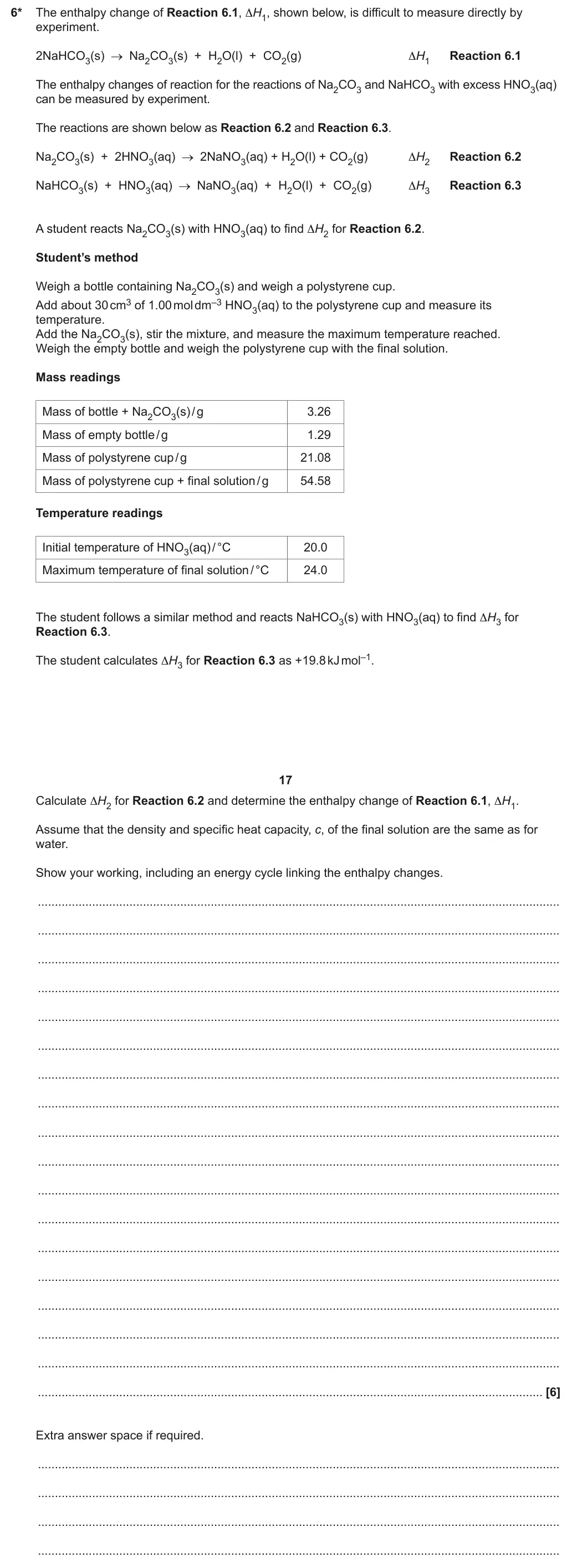
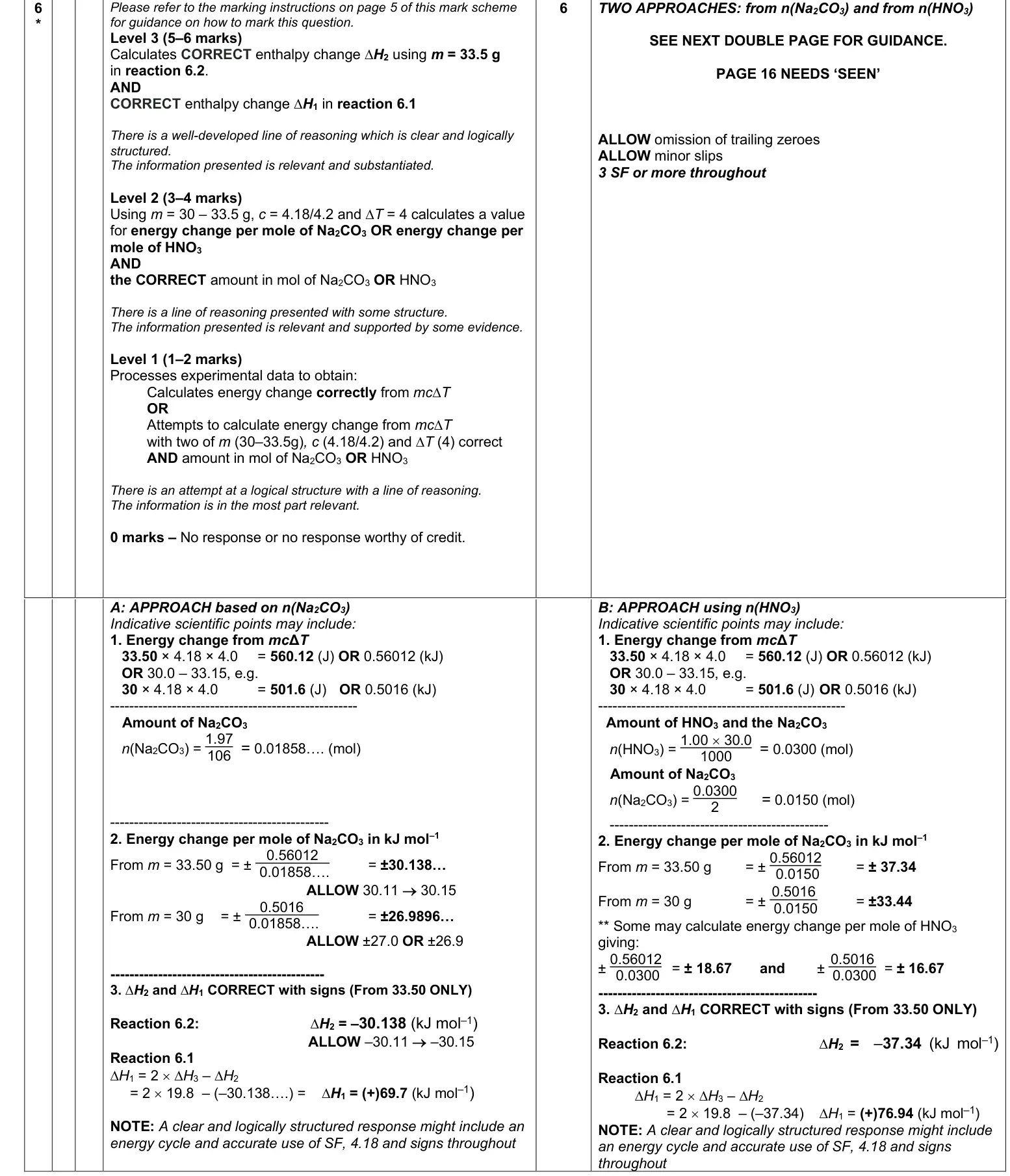
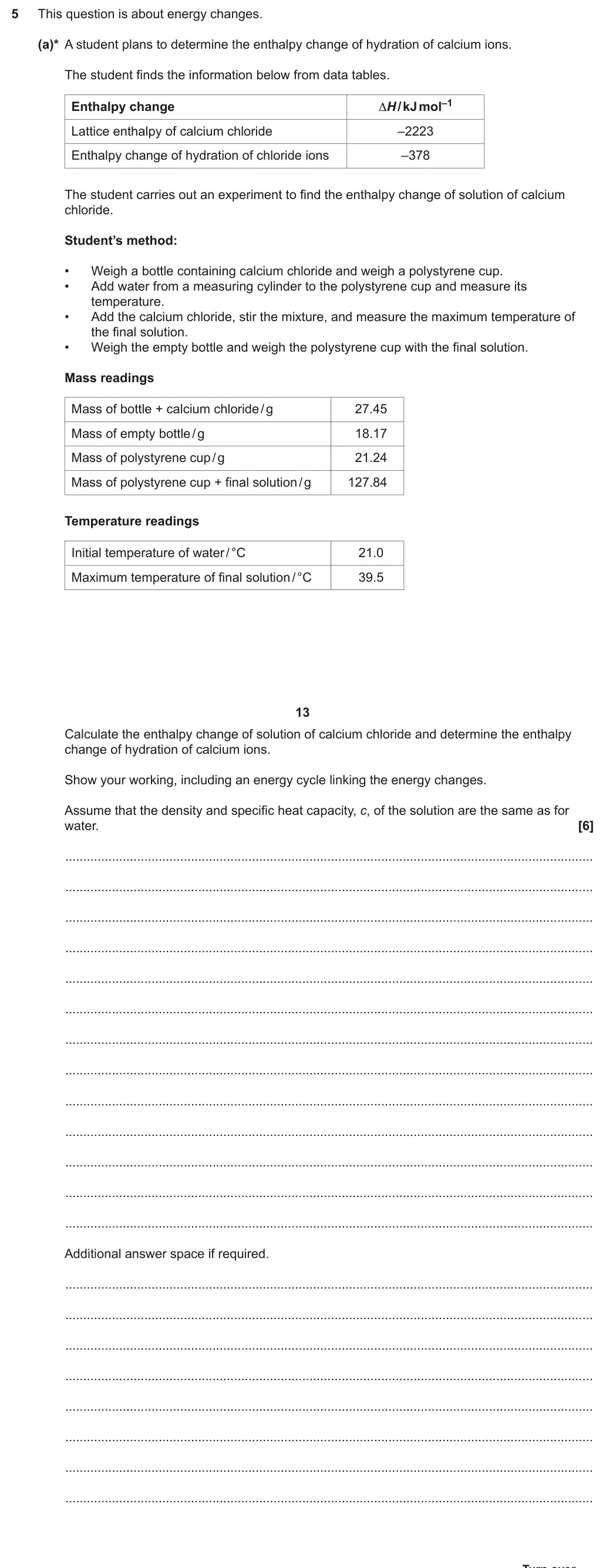
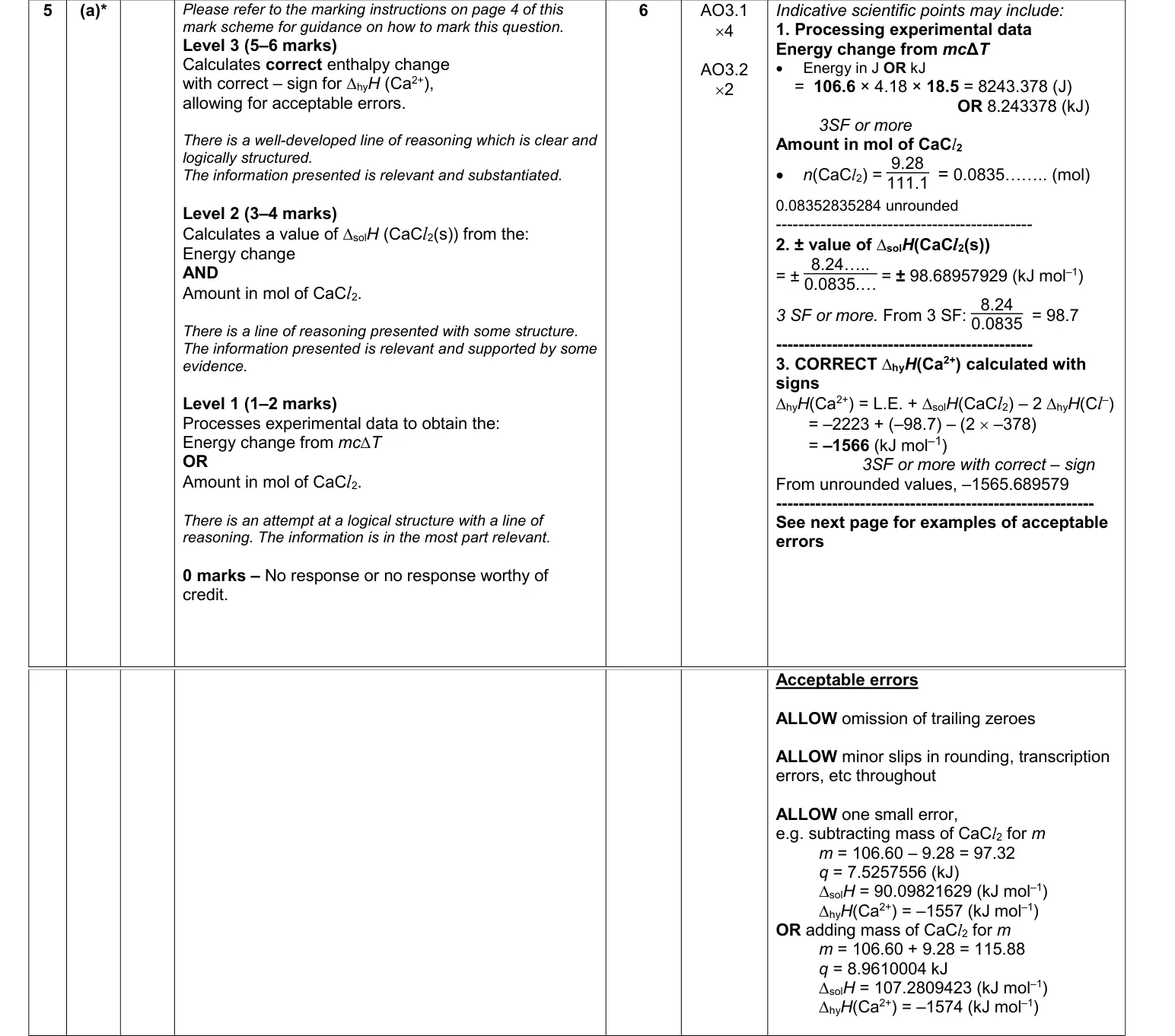
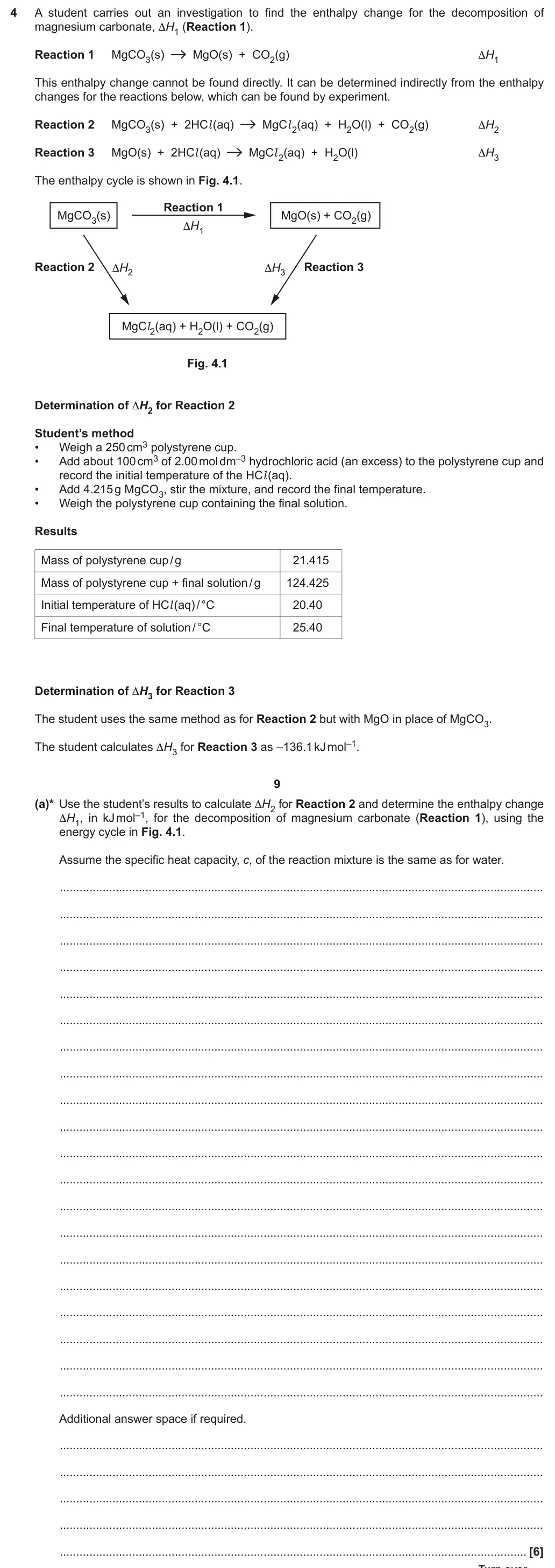
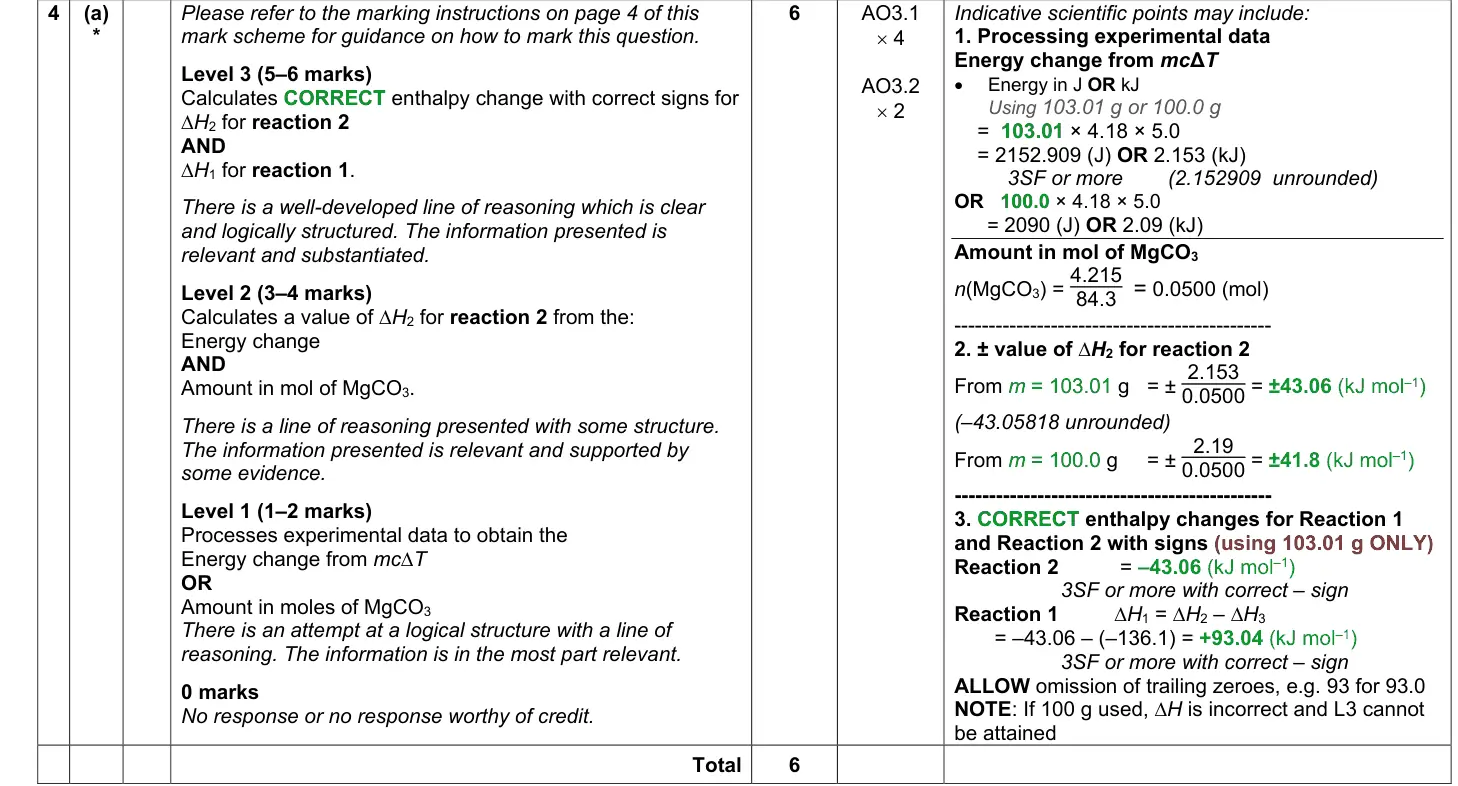
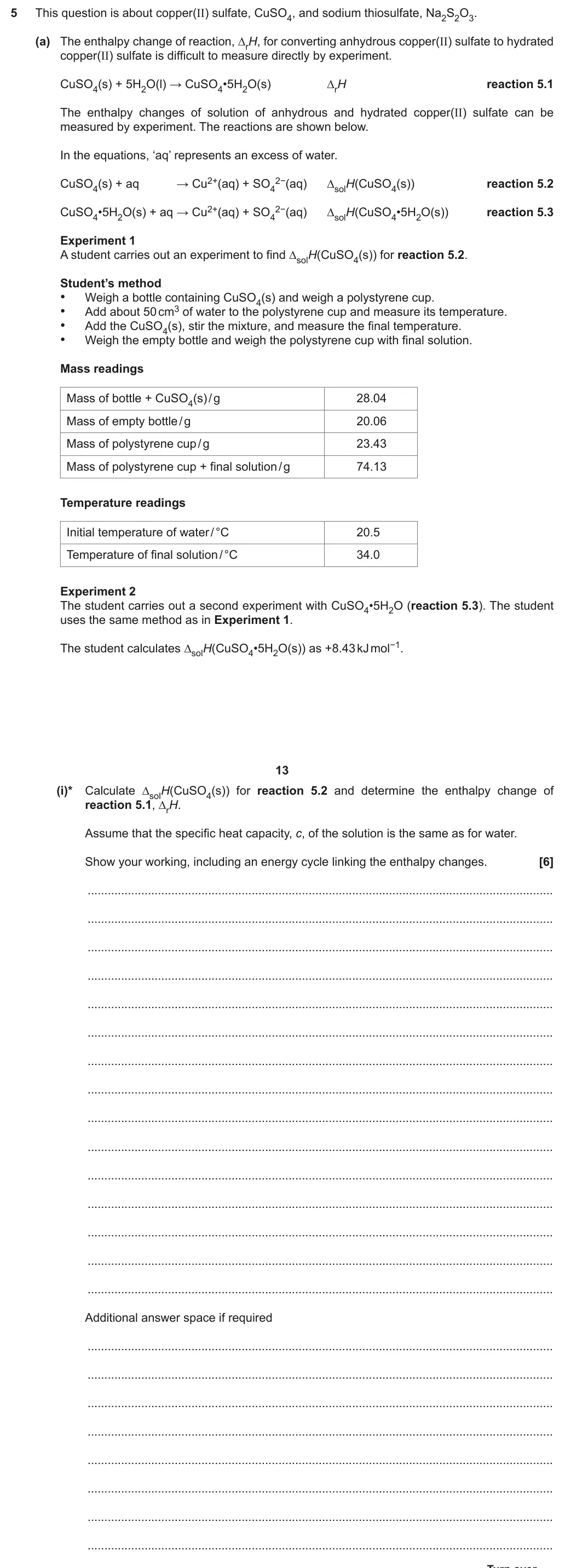
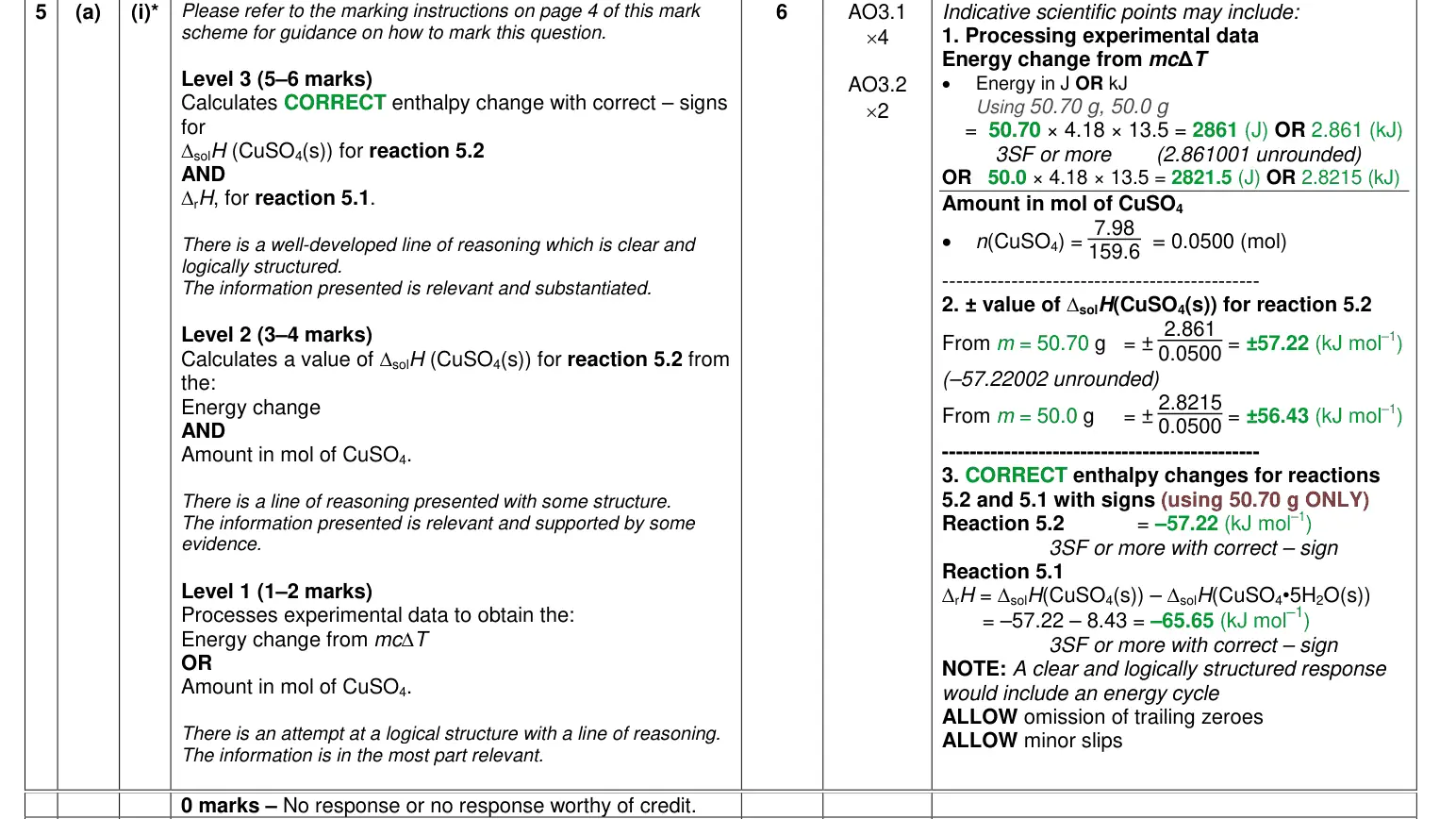
June 2025 · Paper 3 · Q6 6 marks 6-mark level of response Medium enthalpy changesamount of substance
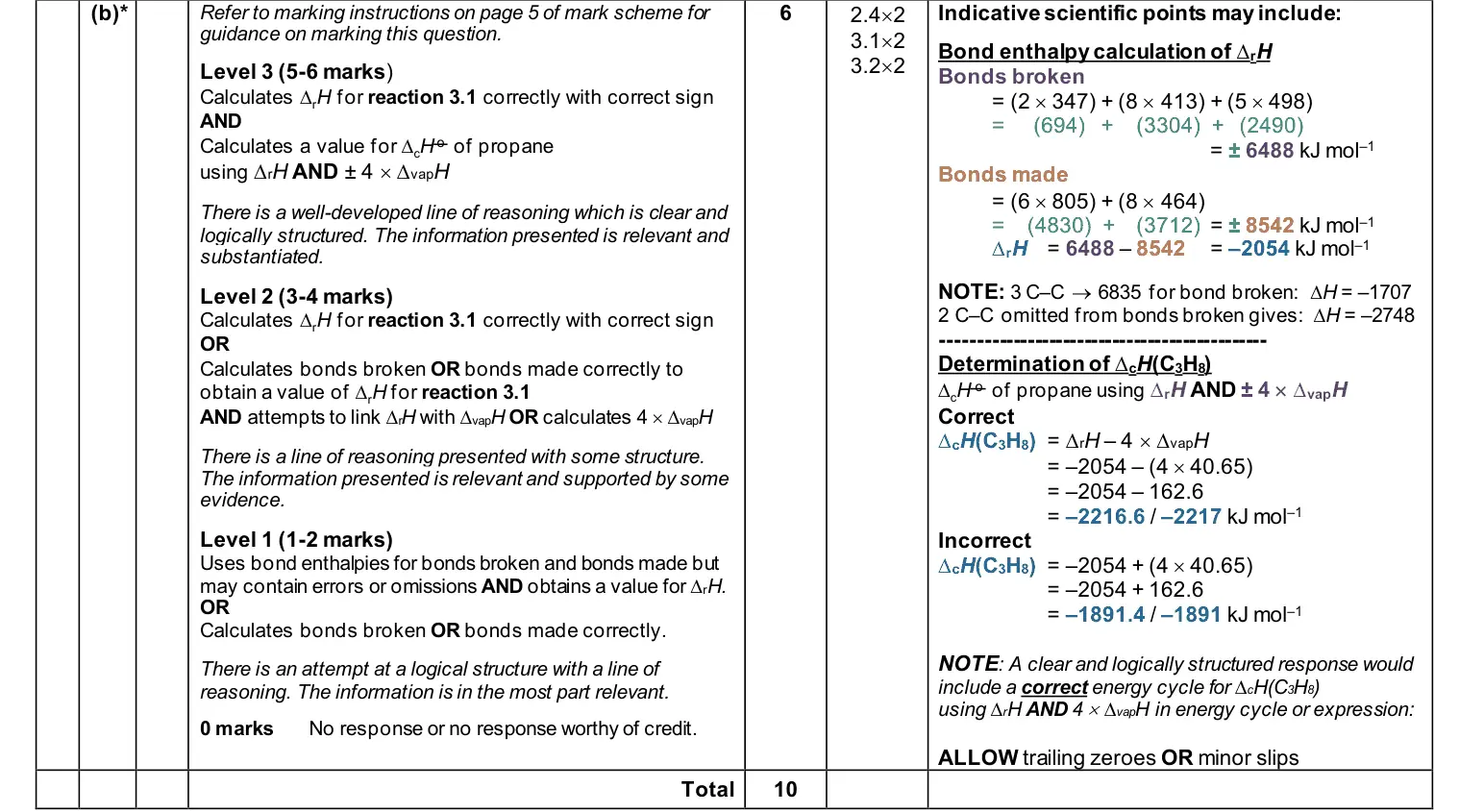
6* The enthalpy change of Reaction 6.1, ∆H1, shown below, is difficult to measure directly by
experiment.
2NaHCO3(s) Na2CO3(s)  +  H2O(l)  +  CO2(g) ∆H1 Reaction 6.1
The enthalpy changes of reaction for the reactions of Na2CO3 and NaHCO3 with excess HNO3(aq)
can be measured by experiment.
The reactions are shown below as Reaction 6.2 and Reaction 6.3.
Na2CO3(s)  +  2HNO3(aq) 2NaNO3(aq) + H2O(l) + CO2(g) ∆H2 Reaction 6.2
NaHCO3(s)  +  HNO3(aq) NaNO3(aq)  +  H2O(l)  +  CO2(g) ∆H3 Reaction 6.3
A student reacts Na2CO3(s) with HNO3(aq) to find ∆H2 for Reaction 6.2.
Student’s method
Weigh a bottle containing Na2CO3(s) and weigh a polystyrene cup.
Add about 30 cm3 of 1.00 mol dm–3 HNO3(aq) to the polystyrene cup and measure its
temperature.
Add the Na2CO3(s), stir the mixture, and measure the maximum temperature reached.
Weigh the empty bottle and weigh the polystyrene cup with the final solution.
Mass readings
Mass of bottle + Na2CO3(s) / g 3.26
Mass of empty bottle / g 1.29
Mass of polystyrene cup / g 21.08
Mass of polystyrene cup + final solution / g 54.58
Temperature readings
Initial temperature of HNO3(aq) / °C 20.0
Maximum temperature of final solution / °C 24.0
The student follows a similar method and reacts NaHCO3(s) with HNO3(aq) to find ∆H3 for
Reaction 6.3.
The student calculates ∆H3 for Reaction 6.3 as +19.8 kJ mol–1.
Calculate ∆H2 for Reaction 6.2 and determine the enthalpy change of Reaction 6.1, ∆H1.
Assume that the density and specific heat capacity, c, of the final solution are the same as for
water.
Show your working, including an energy cycle linking the enthalpy changes.
..........................................................................................................................................................
..........................................................................................................................................................
..........................................................................................................................................................
..........................................................................................................................................................
..........................................................................................................................................................
..........................................................................................................................................................
..........................................................................................................................................................
..........................................................................................................................................................
..........................................................................................................................................................
..........................................................................................................................................................
..........................................................................................................................................................
..........................................................................................................................................................
..........................................................................................................................................................
..........................................................................................................................................................
..........................................................................................................................................................
..........................................................................................................................................................
..........................................................................................................................................................
..................................................................................................................................................... [6]
Extra answer space if required.
..........................................................................................................................................................
..........................................................................................................................................................
..........................................................................................................................................................
..........................................................................................................................................................
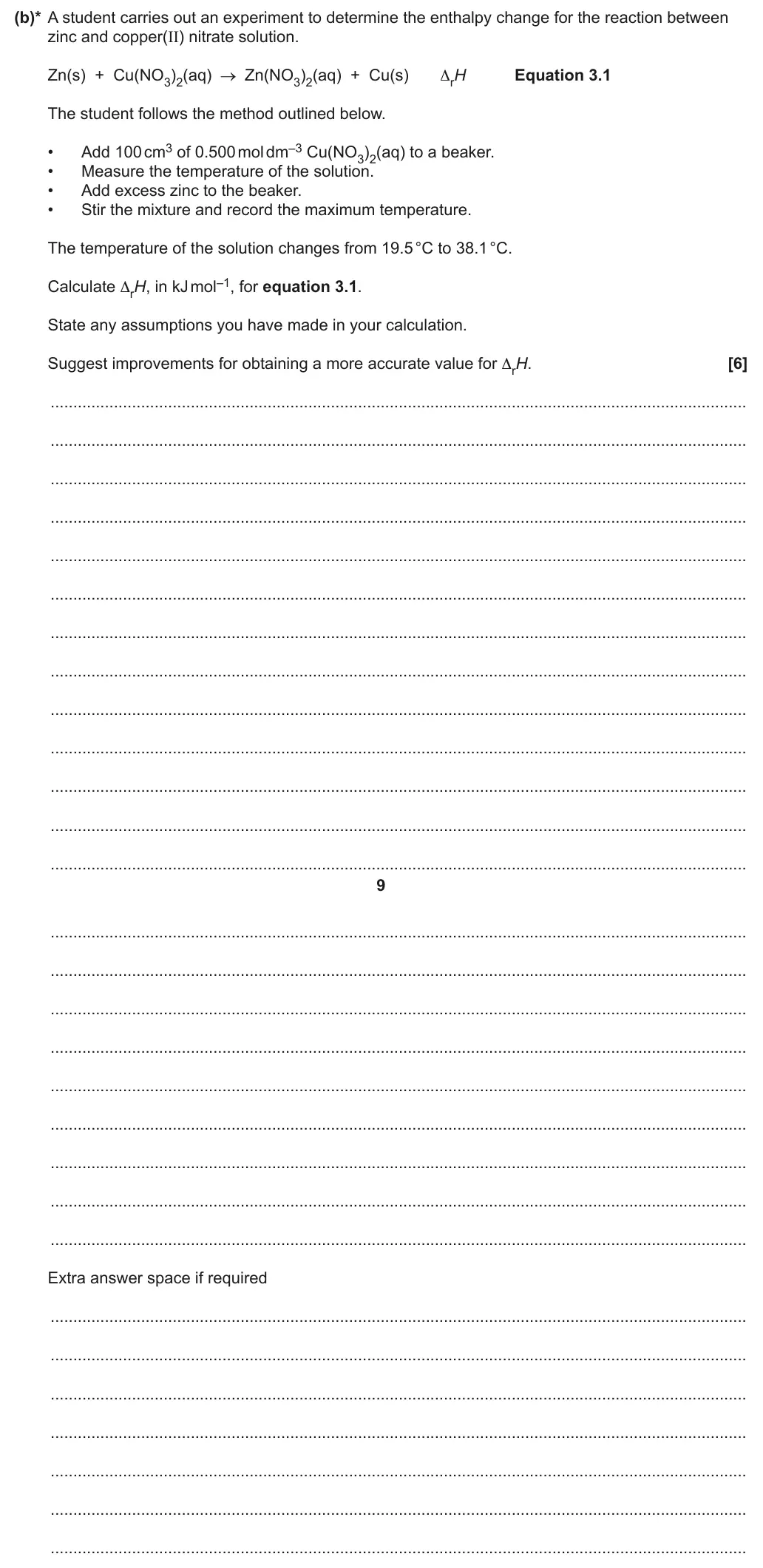
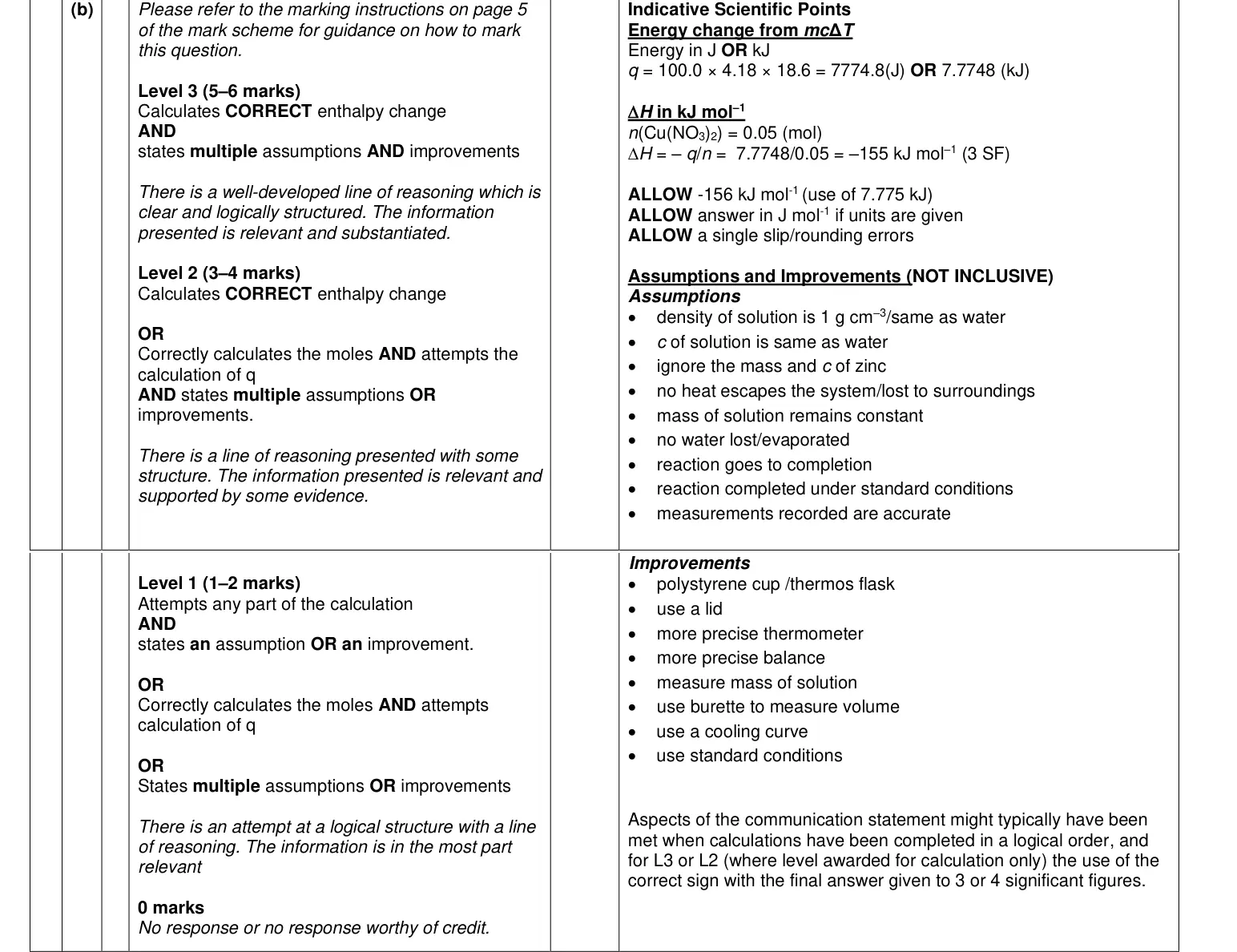
June 2024 · AS Paper 2 · Q3(b) 6 marks 6-mark level of response Hard enthalpy changespractical skillsamount of substance
Earlier part of question 3 that this part usesEarlier part of June 2024 Paper 2 question 3
(b)* A student carries out an experiment to determine the enthalpy change for the reaction between
zinc and copper(II) nitrate solution.
Zn(s)  +  Cu(NO3)2(aq) Zn(NO3)2(aq)  +  Cu(s) ΔrH   Equation 3.1
The student follows the method outlined below.
• Add 100 cm3 of 0.500 mol dm–3 Cu(NO3)2(aq) to a beaker.
• Measure the temperature of the solution.
• Add excess zinc to the beaker.
• Stir the mixture and record the maximum temperature.
The temperature of the solution changes from 19.5 °C to 38.1 °C.
Calculate ΔrH, in kJ mol–1, for equation 3.1.
State any assumptions you have made in your calculation.
Suggest improvements for obtaining a more accurate value for ΔrH. [6]
..........................................................................................................................................................
..........................................................................................................................................................
..........................................................................................................................................................
..........................................................................................................................................................
..........................................................................................................................................................
..........................................................................................................................................................
..........................................................................................................................................................
..........................................................................................................................................................
..........................................................................................................................................................
..........................................................................................................................................................
..........................................................................................................................................................
..........................................................................................................................................................
..........................................................................................................................................................
..........................................................................................................................................................
..........................................................................................................................................................
..........................................................................................................................................................
..........................................................................................................................................................
..........................................................................................................................................................
..........................................................................................................................................................
..........................................................................................................................................................
..........................................................................................................................................................
..........................................................................................................................................................
Extra answer space if required
..........................................................................................................................................................
..........................................................................................................................................................
..........................................................................................................................................................
..........................................................................................................................................................
..........................................................................................................................................................
..........................................................................................................................................................
..........................................................................................................................................................
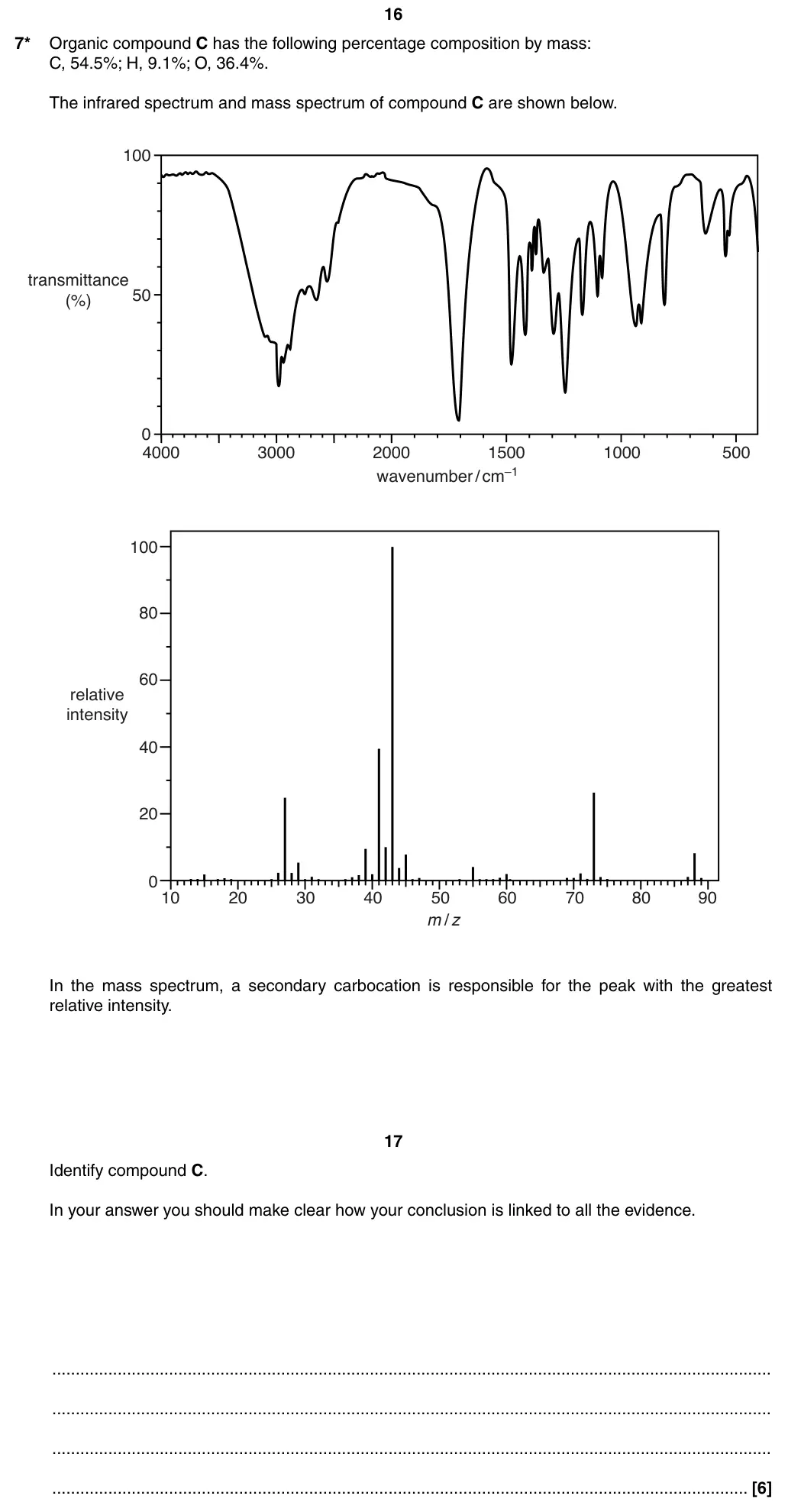
June 2024 · AS Paper 2 · Q6 6 marks 6-mark level of response Hard infrared and mass spectrometry
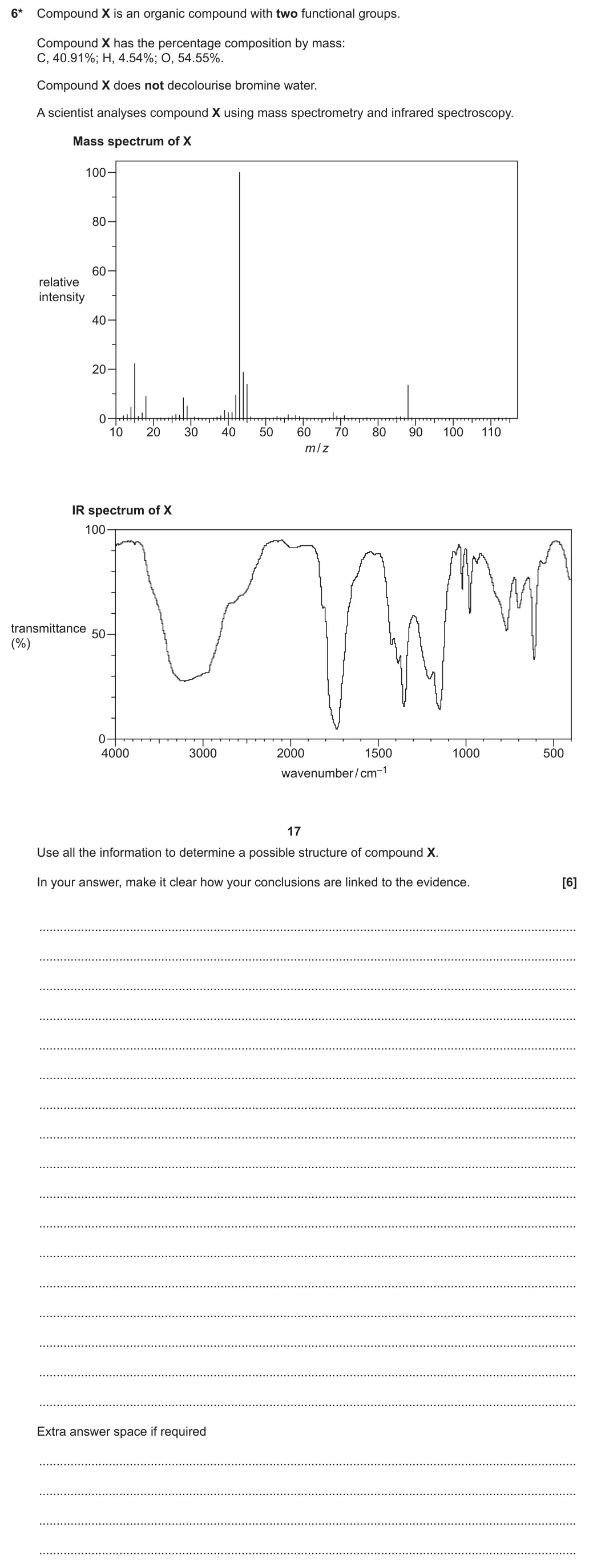
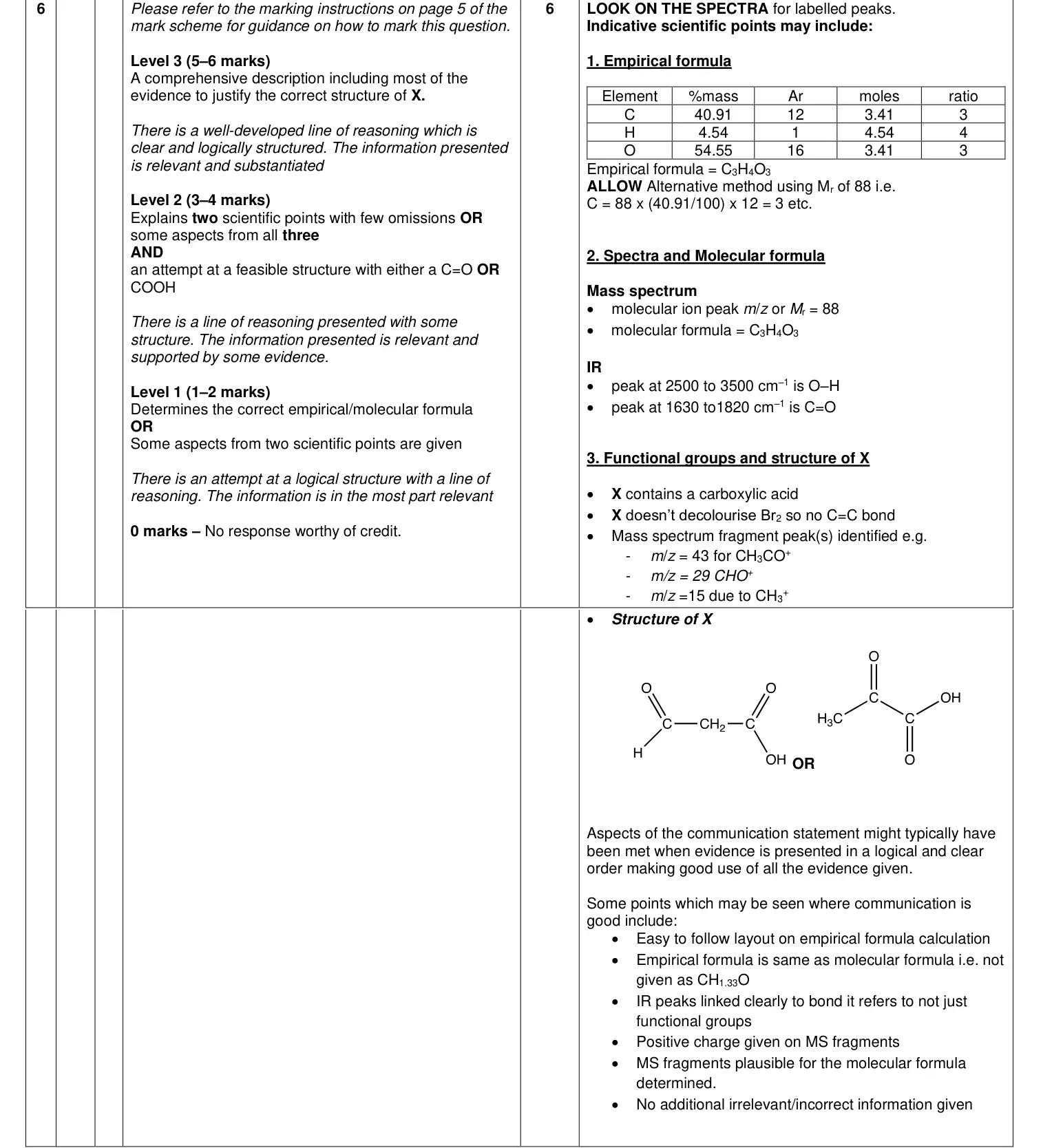
6* Compound X is an organic compound with two functional groups.
Compound X has the percentage composition by mass:
C, 40.91%; H, 4.54%; O, 54.55%.
Compound X does not decolourise bromine water.
A scientist analyses compound X using mass spectrometry and infrared spectroscopy.
Mass spectrum of X
100
80
60
relative
intensity
40
20
0
10 20 30 40 50 60 70 80 90 100 110
m / z
IR spectrum of X
100
transmittance
50
(%)
0
4000 3000 2000 1500 1000 500
wavenumber / cm–1
Use all the information to determine a possible structure of compound X.
In your answer, make it clear how your conclusions are linked to the evidence. [6]
..........................................................................................................................................................
..........................................................................................................................................................
..........................................................................................................................................................
..........................................................................................................................................................
..........................................................................................................................................................
..........................................................................................................................................................
..........................................................................................................................................................
..........................................................................................................................................................
..........................................................................................................................................................
..........................................................................................................................................................
..........................................................................................................................................................
..........................................................................................................................................................
..........................................................................................................................................................
..........................................................................................................................................................
..........................................................................................................................................................
..........................................................................................................................................................
..........................................................................................................................................................
Extra answer space if required
..........................................................................................................................................................
..........................................................................................................................................................
..........................................................................................................................................................
..........................................................................................................................................................
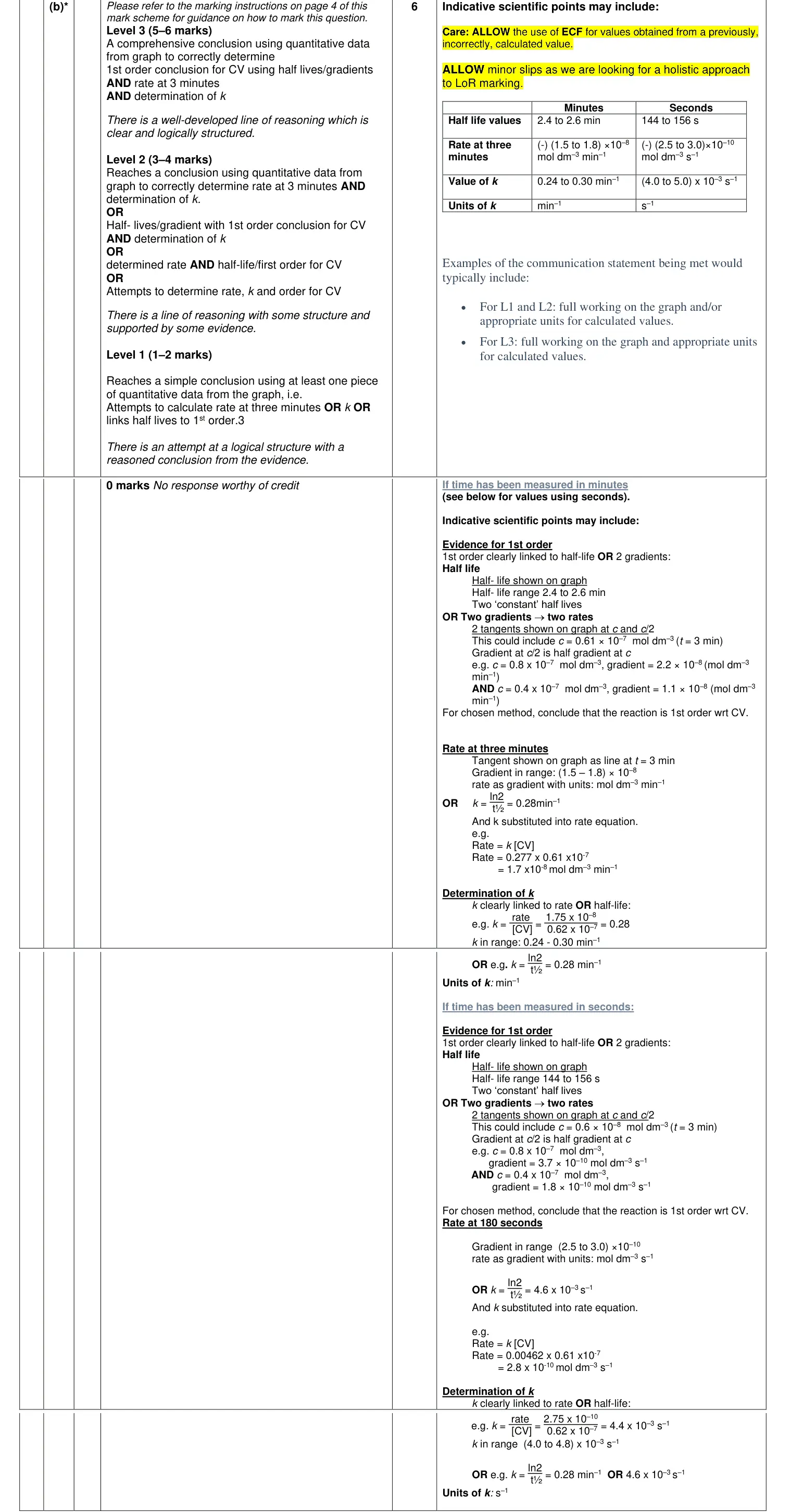
June 2024 · Paper 1 · Q17(b) 6 marks 6-mark level of response Easy rate equations
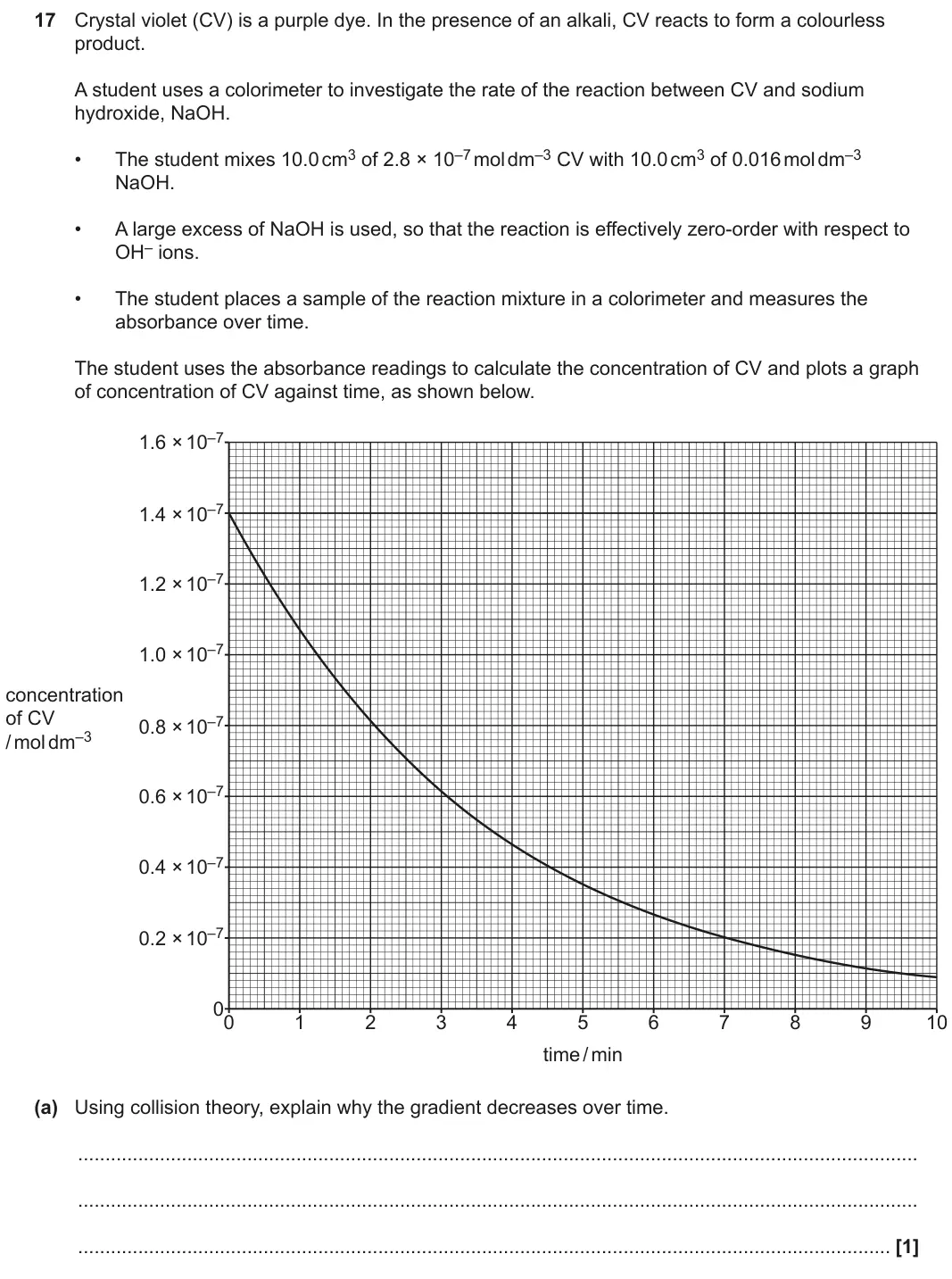
Earlier part of question 17 that this part usesEarlier part of June 2024 Paper 1 question 17
(b)* Use the graph to determine the order of reaction with respect to CV, the rate of the reaction at
three minutes and the rate constant, k.
Your answer must show full working on the graph and on the lines below. [6]
..........................................................................................................................................................
..........................................................................................................................................................
..........................................................................................................................................................
..........................................................................................................................................................
..........................................................................................................................................................
..........................................................................................................................................................
..........................................................................................................................................................
..........................................................................................................................................................
..........................................................................................................................................................
..........................................................................................................................................................
..........................................................................................................................................................
..........................................................................................................................................................
..........................................................................................................................................................
..........................................................................................................................................................
..........................................................................................................................................................
Extra answer space if required.
..........................................................................................................................................................
..........................................................................................................................................................
..........................................................................................................................................................
..........................................................................................................................................................
..........................................................................................................................................................
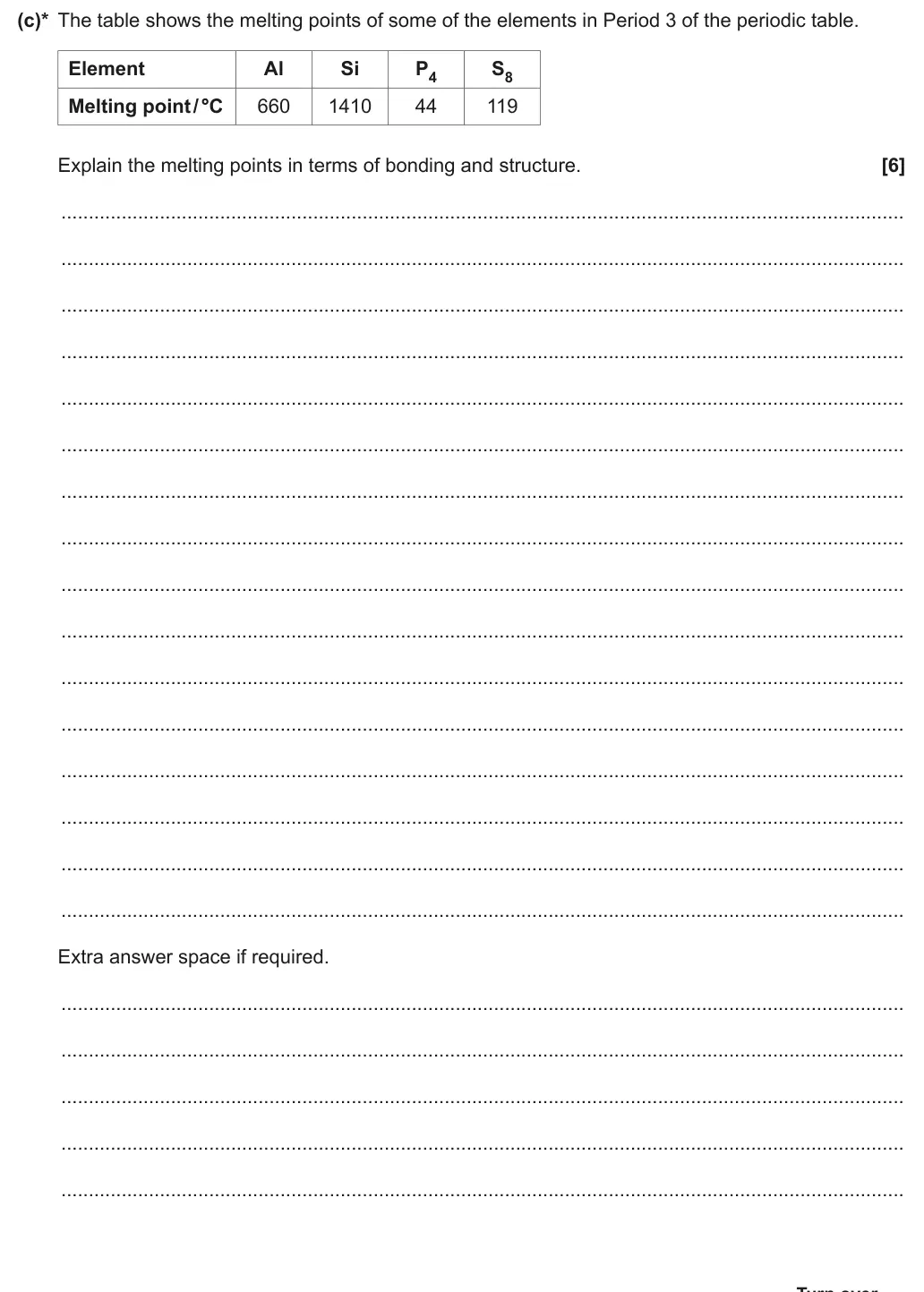
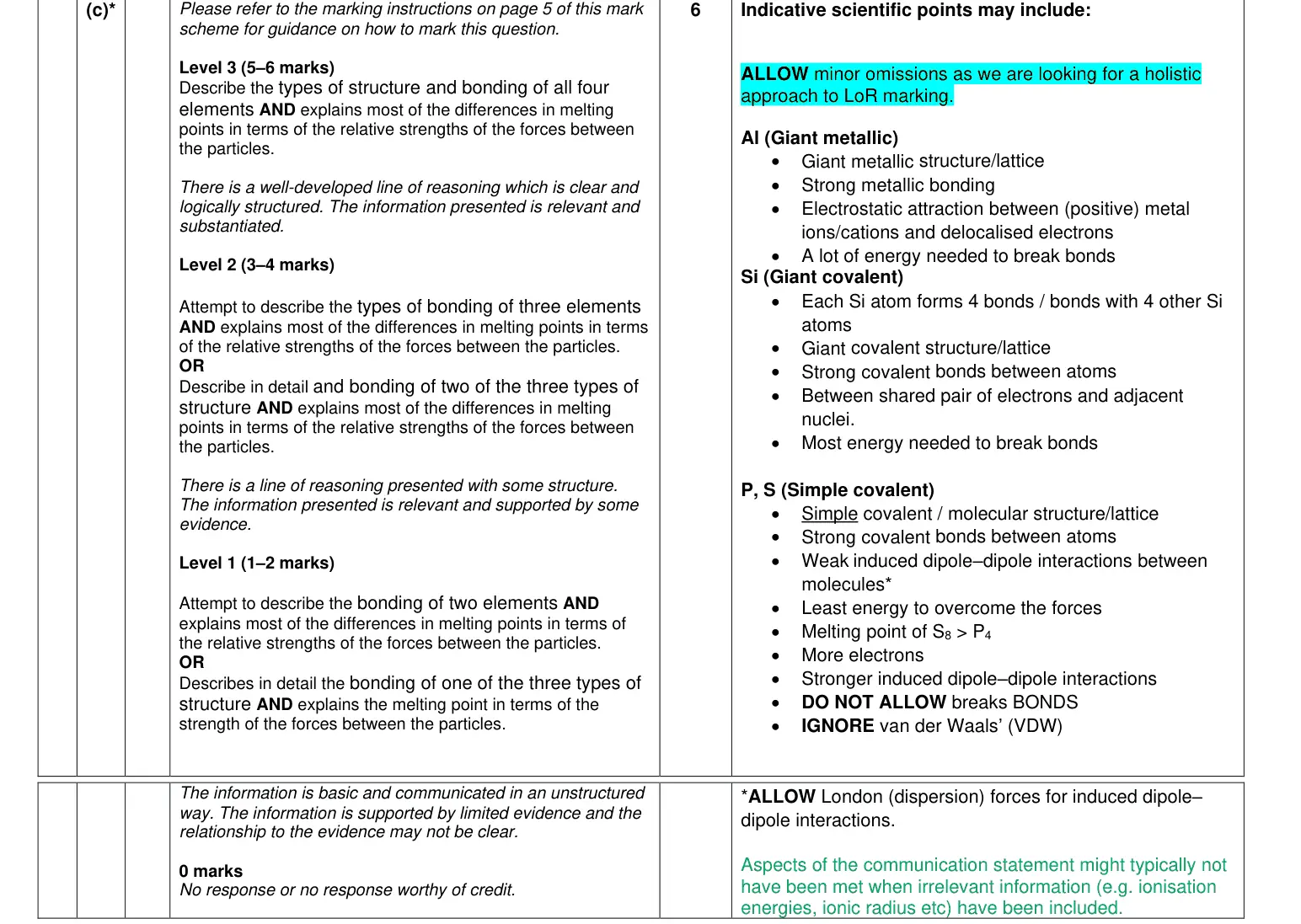
June 2024 · Paper 1 · Q20(c) 6 marks 6-mark level of response Hard periodicitybonding and structure
(c)* The table shows the melting points of some of the elements in Period 3 of the periodic table.
Element Al Si P4 S8
Melting point / °C 660 1410 44 119
Explain the melting points in terms of bonding and structure. [6]
..........................................................................................................................................................
..........................................................................................................................................................
..........................................................................................................................................................
..........................................................................................................................................................
..........................................................................................................................................................
..........................................................................................................................................................
..........................................................................................................................................................
..........................................................................................................................................................
..........................................................................................................................................................
..........................................................................................................................................................
..........................................................................................................................................................
..........................................................................................................................................................
..........................................................................................................................................................
..........................................................................................................................................................
..........................................................................................................................................................
..........................................................................................................................................................
Extra answer space if required.
..........................................................................................................................................................
..........................................................................................................................................................
..........................................................................................................................................................
..........................................................................................................................................................
..........................................................................................................................................................
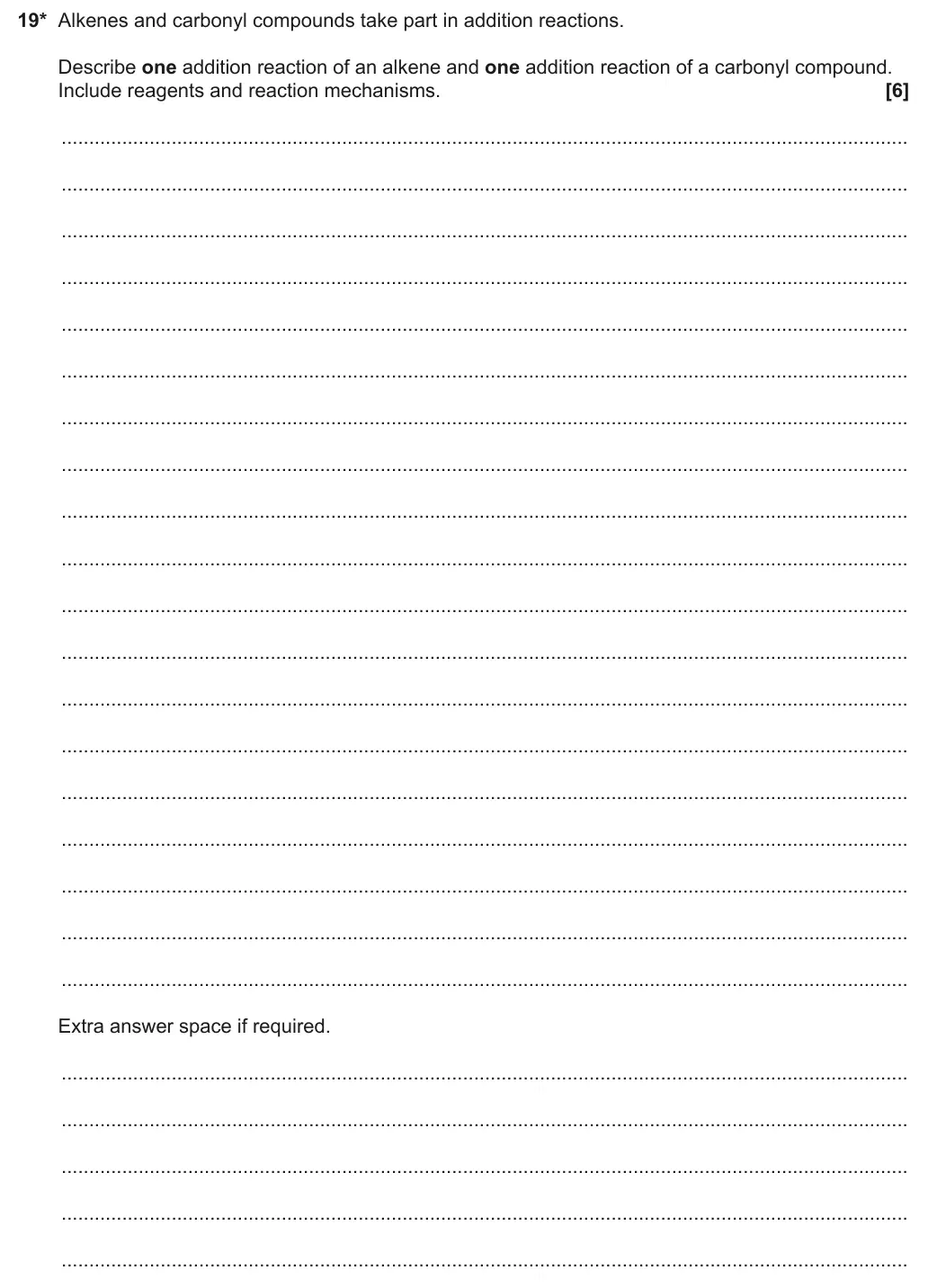
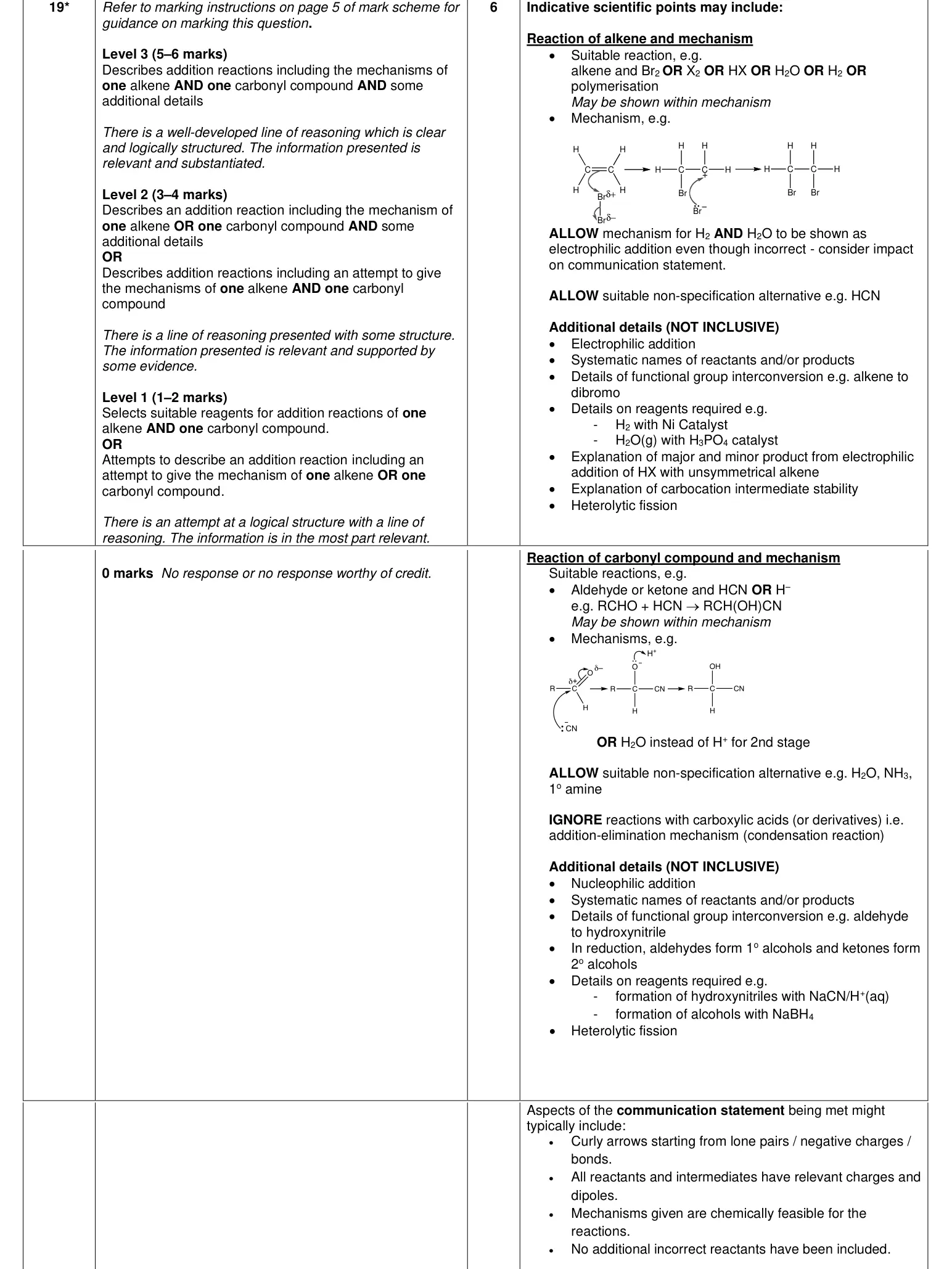
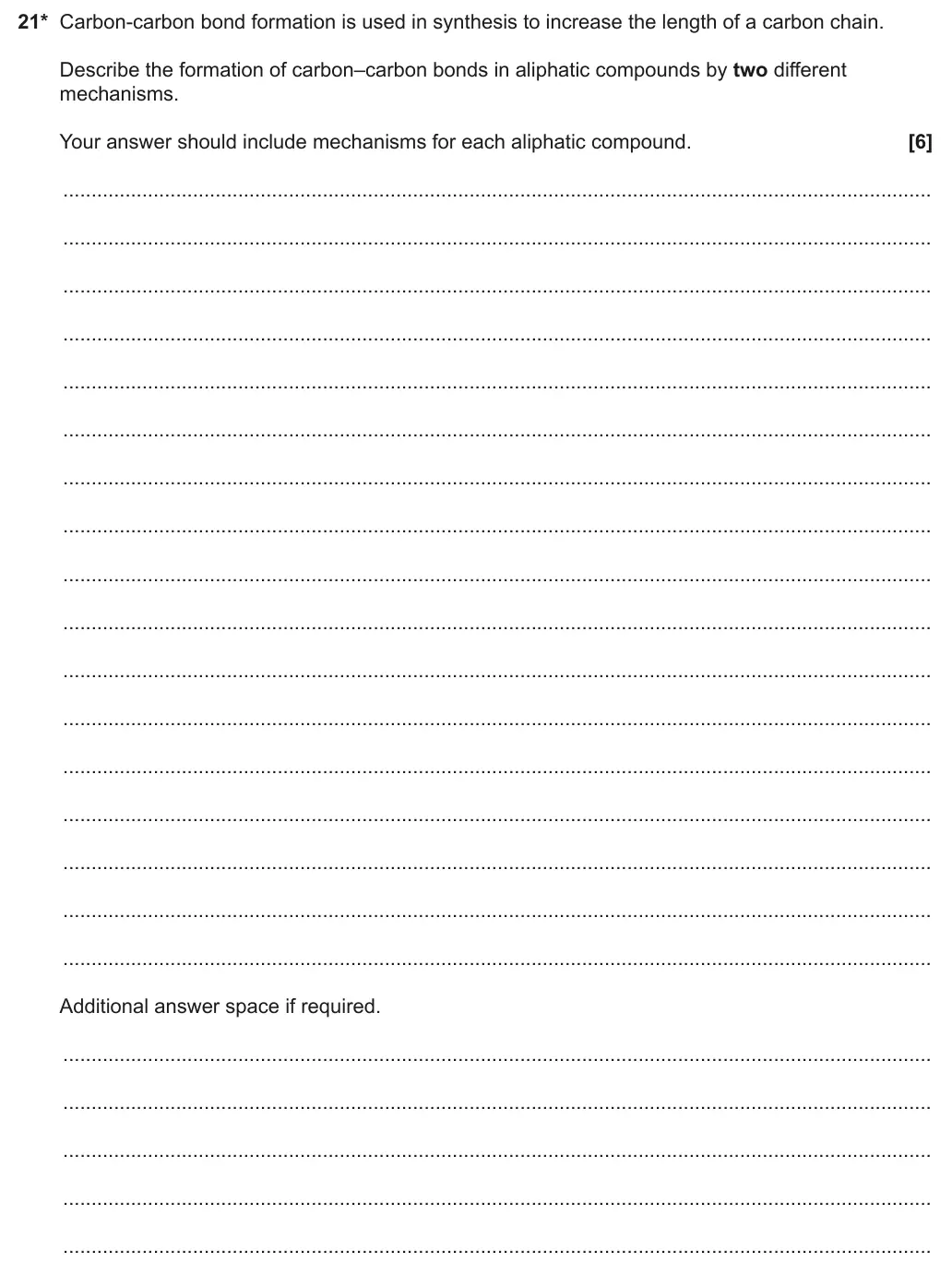
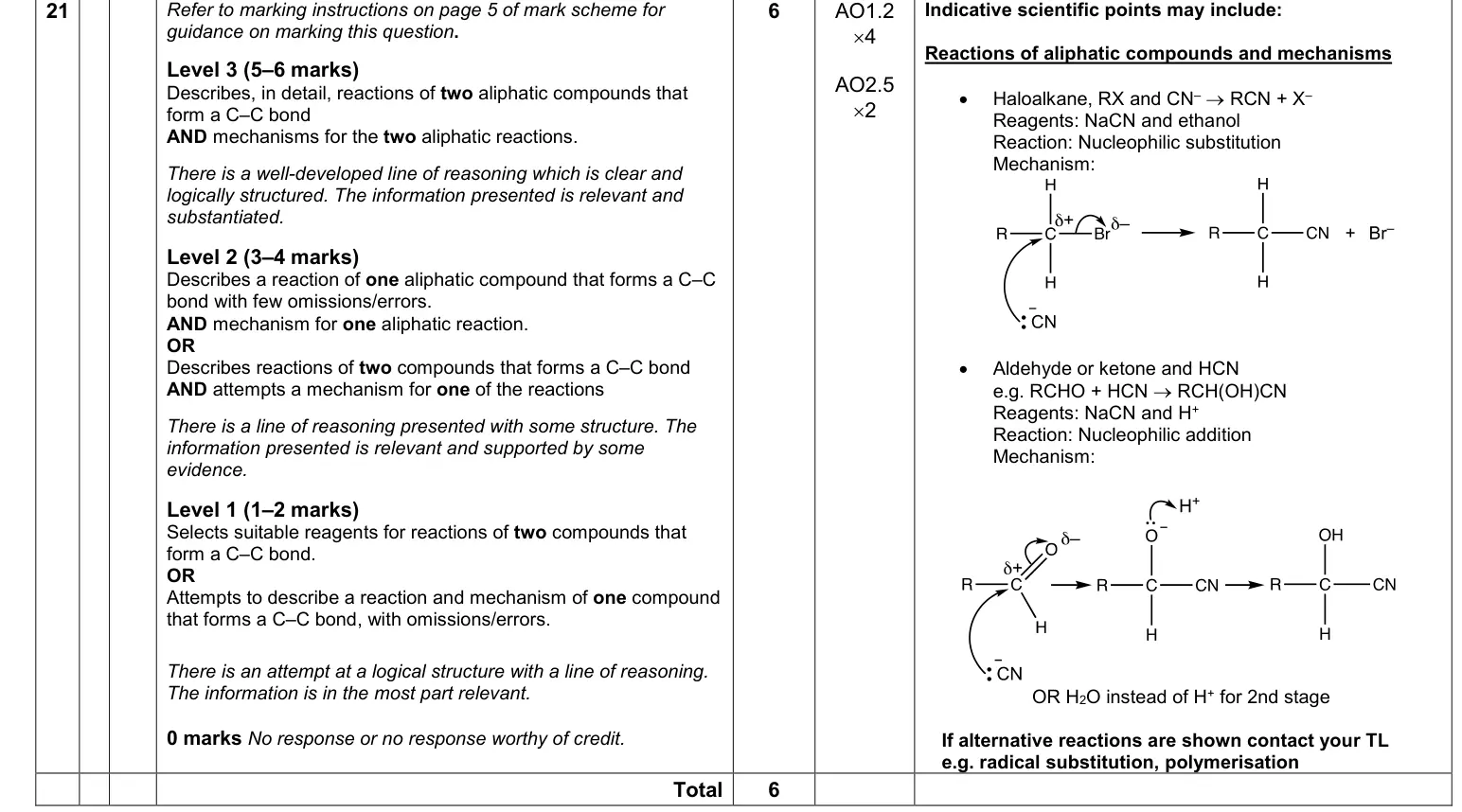
June 2024 · Paper 2 · Q19 6 marks 6-mark level of response Hard alkenesorganic basicscarbonyl compounds
19* Alkenes and carbonyl compounds take part in addition reactions.
Describe one addition reaction of an alkene and one addition reaction of a carbonyl compound.
Include reagents and reaction mechanisms. [6]
..........................................................................................................................................................
..........................................................................................................................................................
..........................................................................................................................................................
..........................................................................................................................................................
..........................................................................................................................................................
..........................................................................................................................................................
..........................................................................................................................................................
..........................................................................................................................................................
..........................................................................................................................................................
..........................................................................................................................................................
..........................................................................................................................................................
..........................................................................................................................................................
..........................................................................................................................................................
..........................................................................................................................................................
..........................................................................................................................................................
..........................................................................................................................................................
..........................................................................................................................................................
..........................................................................................................................................................
..........................................................................................................................................................
Extra answer space if required.
..........................................................................................................................................................
..........................................................................................................................................................
..........................................................................................................................................................
..........................................................................................................................................................
..........................................................................................................................................................
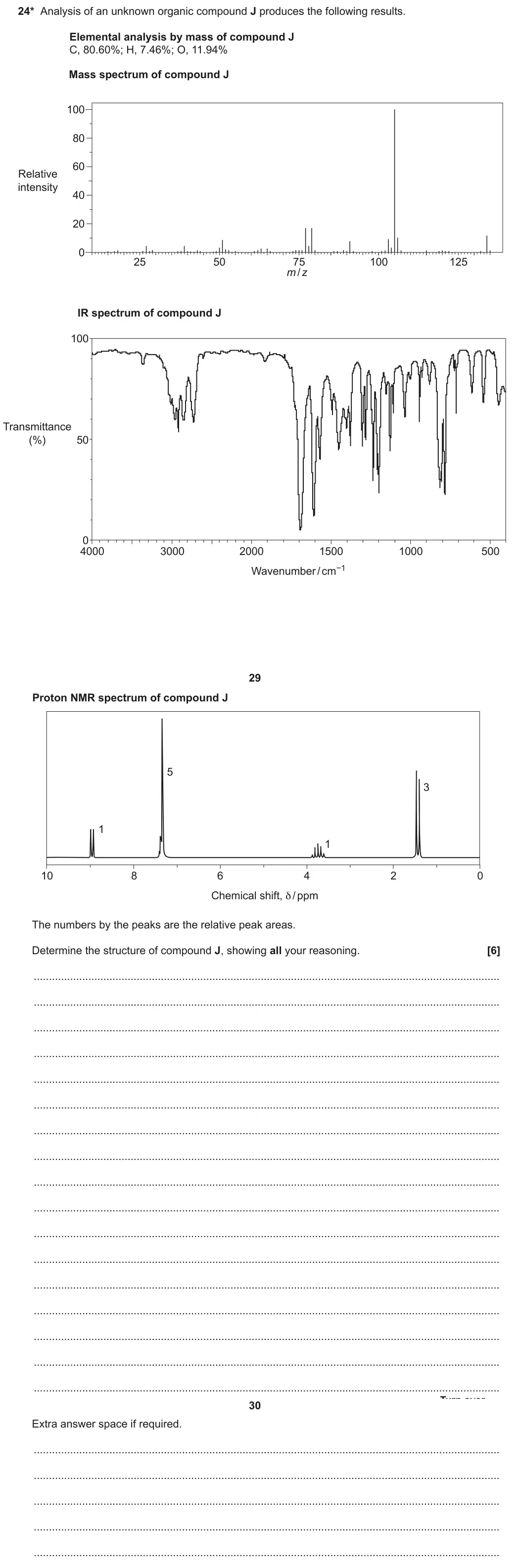
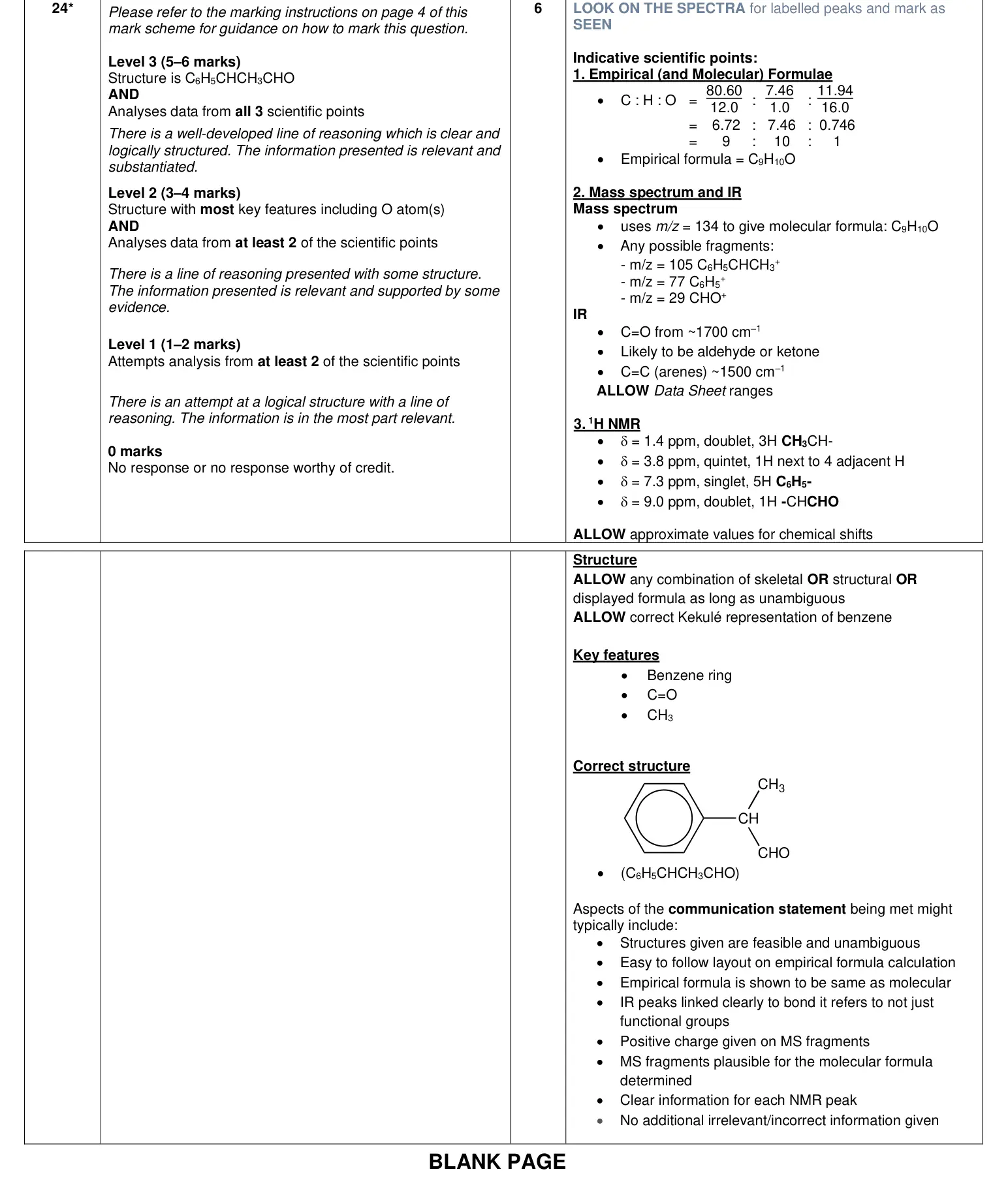
June 2024 · Paper 2 · Q24 6 marks 6-mark level of response Hard nmr spectroscopyinfrared and mass spectrometry
24* Analysis of an unknown organic compound J produces the following results.
Elemental analysis by mass of compound J
C, 80.60%; H, 7.46%; O, 11.94%
Mass spectrum of compound J
100
80
60
Relative
intensity
40
20
0
25 50 75 100 125
m / z
IR spectrum of compound J
100
Transmittance
(%) 50
0
4000 3000 2000 1500 1000 500
Wavenumber / cm−1
Proton NMR spectrum of compound J
5
3
1
1
10 8 6 4 2 0
Chemical shift, δ / ppm
The numbers by the peaks are the relative peak areas.
Determine the structure of compound J, showing all your reasoning. [6]
..........................................................................................................................................................
..........................................................................................................................................................
..........................................................................................................................................................
..........................................................................................................................................................
..........................................................................................................................................................
..........................................................................................................................................................
..........................................................................................................................................................
..........................................................................................................................................................
..........................................................................................................................................................
..........................................................................................................................................................
..........................................................................................................................................................
..........................................................................................................................................................
..........................................................................................................................................................
..........................................................................................................................................................
..........................................................................................................................................................
..........................................................................................................................................................
..........................................................................................................................................................
Extra answer space if required.
..........................................................................................................................................................
..........................................................................................................................................................
..........................................................................................................................................................
..........................................................................................................................................................
..........................................................................................................................................................
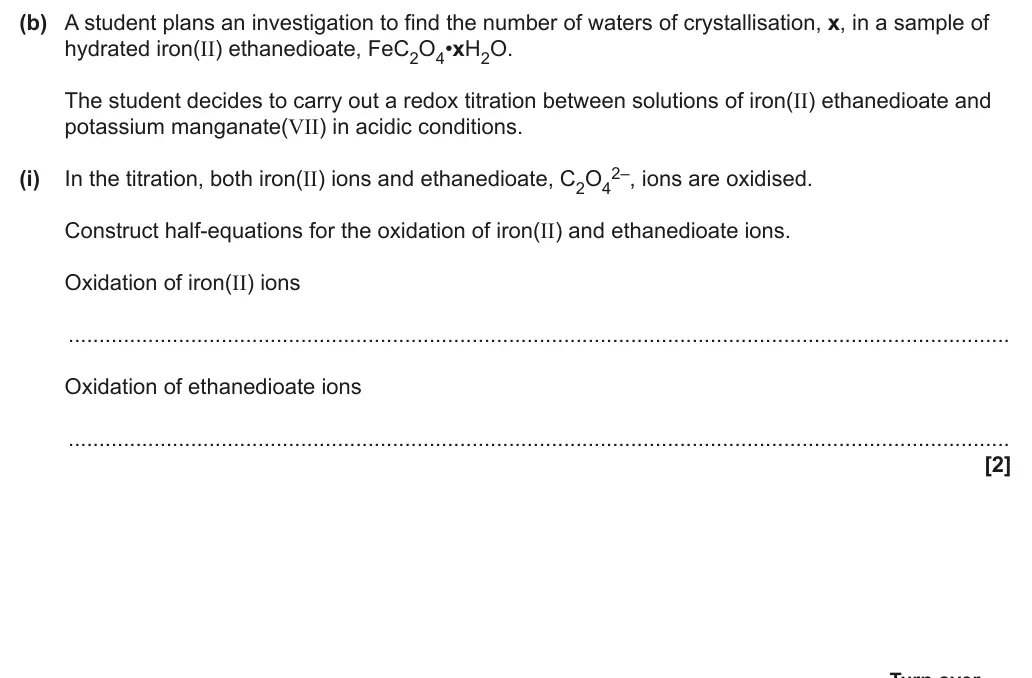
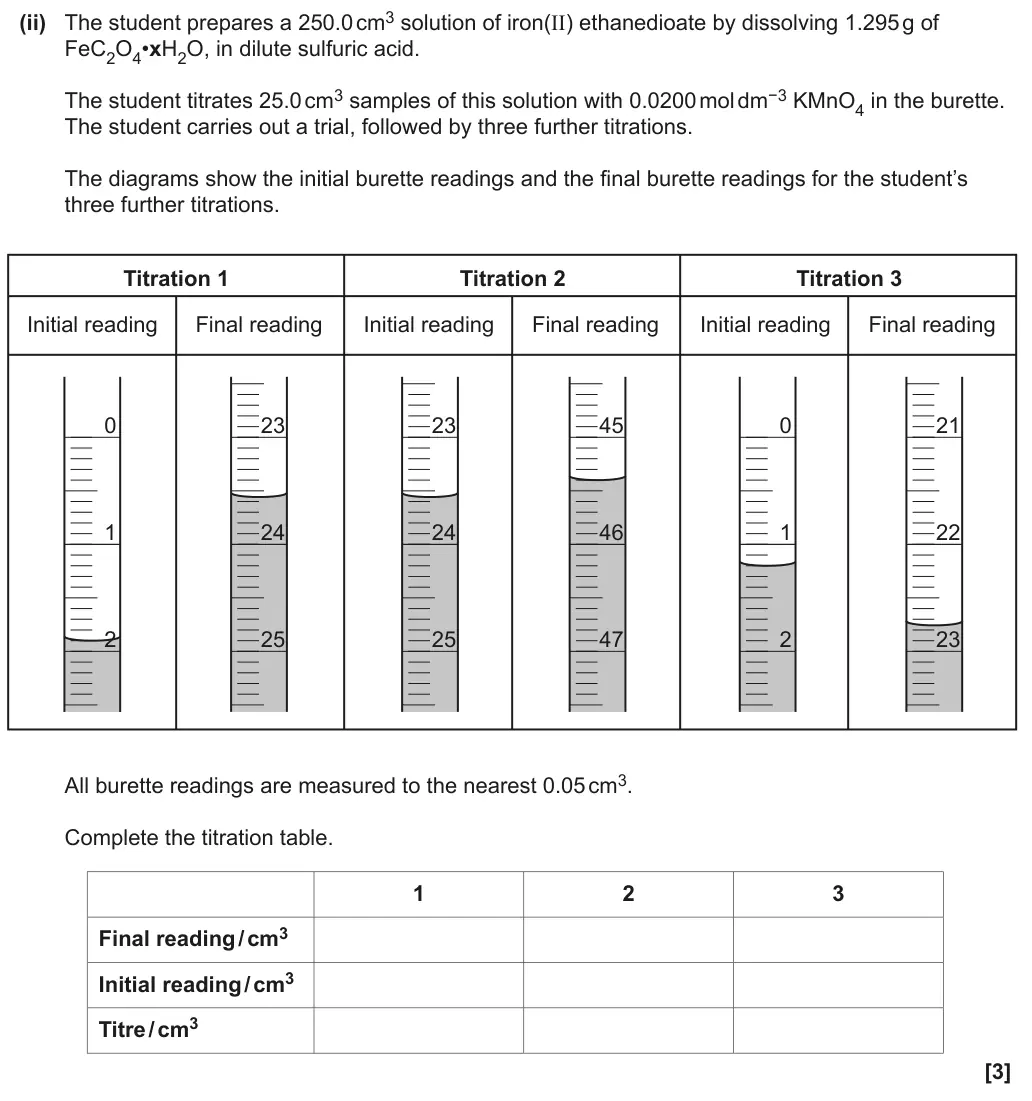
June 2024 · Paper 3 · Q3(b)(iv) 6 marks 6-mark level of response Medium redox and electrode potentialsamount of substance
Earlier parts of question 3 that this part usesEarlier part of June 2024 Paper 3 question 3Earlier part of June 2024 Paper 3 question 3
(iv)* In the titration, 5 mol of iron(II) ethanedioate reacts with 3 mol of manganate(VII) ions.
Analyse the student’s results to find the number of waters of crystallisation, x, in the hydrated
iron(II) ethanedioate, FeC2O4•xH2O. [6]
..........................................................................................................................................................
..........................................................................................................................................................
..........................................................................................................................................................
..........................................................................................................................................................
..........................................................................................................................................................
..........................................................................................................................................................
..........................................................................................................................................................
..........................................................................................................................................................
..........................................................................................................................................................
..........................................................................................................................................................
..........................................................................................................................................................
..........................................................................................................................................................
..........................................................................................................................................................
..........................................................................................................................................................
..........................................................................................................................................................
Extra answer space if required.
..........................................................................................................................................................
..........................................................................................................................................................
..........................................................................................................................................................
..........................................................................................................................................................
..........................................................................................................................................................
June 2024 · Paper 3 · Q5(b)(ii) 6 marks 6-mark level of response Easy chromatography and functional group testsorganic basics
Earlier part of question 5 that this part usesEarlier part of June 2024 Paper 3 question 5
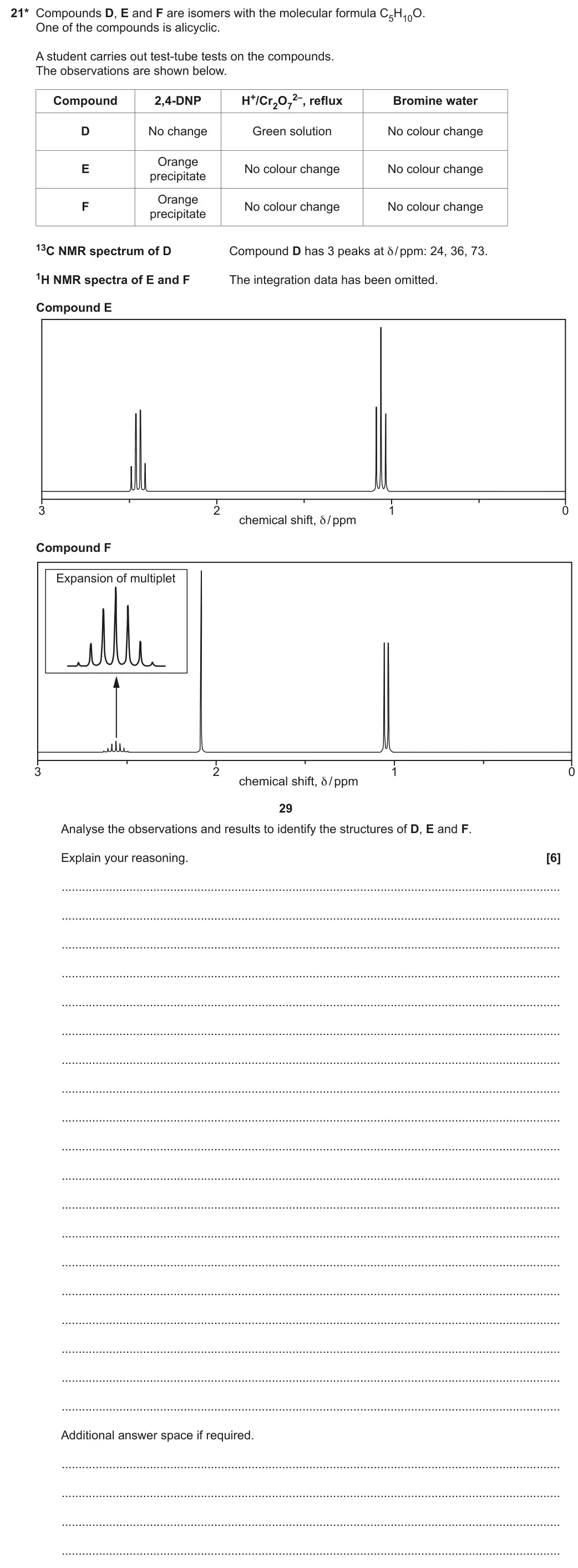
(ii)* The student is provided with further information about compounds F–I.
• They all have the molecular formula C5H10O.
• One of the compounds is alicyclic.
• The other compounds are unbranched.
Use this further information and the student’s observations in Table 5.1 to answer the following.
• How do the observations provide evidence for the possible functional groups in
compounds F–I?
• Suggest a possible structure for each of the compounds F–I.
Show your reasoning. [6]
..........................................................................................................................................................
..........................................................................................................................................................
..........................................................................................................................................................
..........................................................................................................................................................
..........................................................................................................................................................
..........................................................................................................................................................
..........................................................................................................................................................
..........................................................................................................................................................
..........................................................................................................................................................
..........................................................................................................................................................
..........................................................................................................................................................
..........................................................................................................................................................
..........................................................................................................................................................
..........................................................................................................................................................
..........................................................................................................................................................
Extra answer space if required.
..........................................................................................................................................................
..........................................................................................................................................................
..........................................................................................................................................................
..........................................................................................................................................................
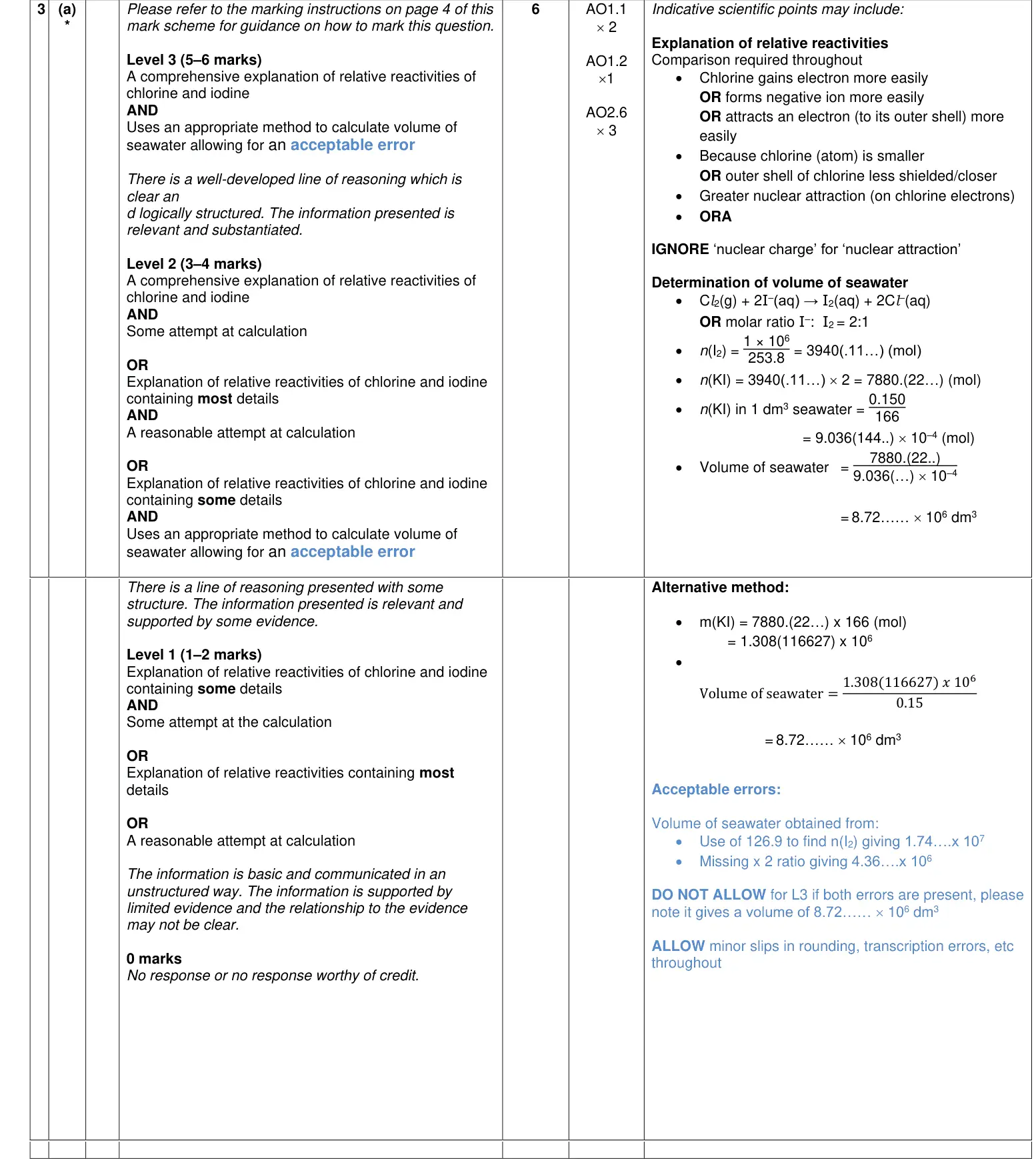
June 2023 · AS Paper 2 · Q3(a) 6 marks AO1, 2 6-mark level of response Hard halogensamount of substance
3 This question is about halogens and halogen compounds.
(a)* Seawater contains very small quantities of dissolved iodide ions.
The concentration of potassium iodide, KI, in seawater is 0.150 g dm–3.
Iodine can be extracted by bubbling chlorine gas through seawater.
Explain why chlorine is more reactive than iodine and determine the volume, in dm3, of
seawater that is needed to manufacture 1.00 tonne of iodine, I2. [6]
...................................................................................................................................................
...................................................................................................................................................
...................................................................................................................................................
...................................................................................................................................................
...................................................................................................................................................
...................................................................................................................................................
...................................................................................................................................................
...................................................................................................................................................
...................................................................................................................................................
...................................................................................................................................................
...................................................................................................................................................
...................................................................................................................................................
...................................................................................................................................................
...................................................................................................................................................
...................................................................................................................................................
Additional answer space if required.
...................................................................................................................................................
...................................................................................................................................................
...................................................................................................................................................
...................................................................................................................................................
...................................................................................................................................................
June 2023 · AS Paper 2 · Q4(b)(ii) 6 marks AO2, 3 6-mark level of response Medium enthalpy changespractical skills
Earlier part of question 4 that this part usesEarlier part of June 2023 Paper 2 question 4
(ii)* Use the student’s results to determine ∆cH of butan-1-ol in kJ mol–1.
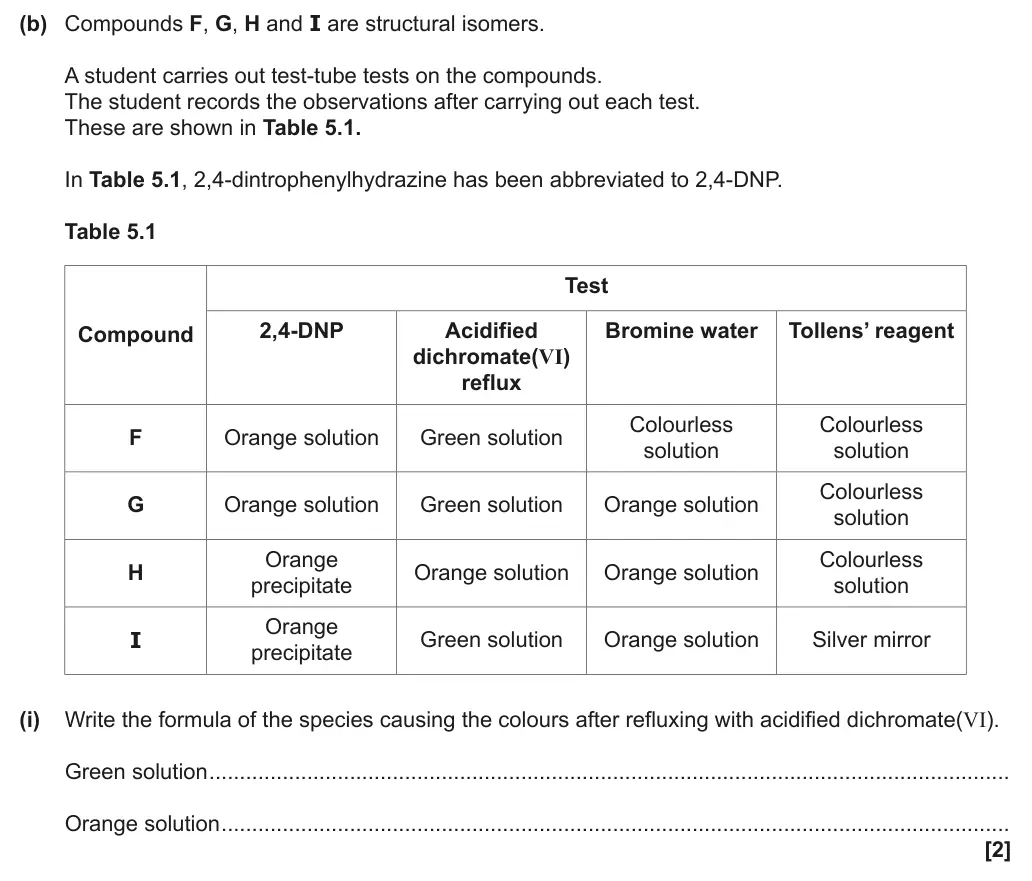
Explain why this value of ΔcH is different from the data book value and suggest how
the experimental design could be modified to improve the accuracy of the ΔcH value
obtained. [6]
...........................................................................................................................................
...........................................................................................................................................
...........................................................................................................................................
...........................................................................................................................................
...........................................................................................................................................
...........................................................................................................................................
...........................................................................................................................................
...........................................................................................................................................
...........................................................................................................................................
...........................................................................................................................................
...........................................................................................................................................
...........................................................................................................................................
...........................................................................................................................................
...........................................................................................................................................
...........................................................................................................................................
...........................................................................................................................................
...........................................................................................................................................
Additional answer space if required.
...........................................................................................................................................
...........................................................................................................................................
...........................................................................................................................................
...........................................................................................................................................
...........................................................................................................................................
June 2023 · Paper 1 · Q17 6 marks AO3 6-mark level of response Easy rate equations
17* Bromine, Br2, can be produced by the reaction:
5Br –(aq) + BrO3 –(aq) + 6H+(aq) 3Br2(aq) + 3H2O(l)
A student investigates the rate of this reaction by carrying out four experiments at the same
temperature. The student’s results are shown below.
[Br – ] [BrO3 – ] [H+ ] Initial rate
Experiment
/ mol dm–3 / mol dm–3 / mol dm–3 / mol dm–3 s–1
1 2.00 × 10⁻² 1.20 × 10⁻¹ 8.00 × 10⁻² 2.52 × 10⁻⁴
2 6.00 × 10⁻² 1.20 × 10⁻¹ 8.00 × 10⁻² 7.56 × 10⁻⁴
3 4.00 × 10⁻² 6.00 × 10⁻² 8.00 × 10⁻² 2.52 × 10⁻⁴
4 2.00 × 10⁻² 6.00 × 10⁻² 4.00 × 10⁻¹ 3.15 × 10⁻³
Explain how the reaction orders can be determined from the student’s results, and determine the
rate equation and rate constant for this reaction.
..........................................................................................................................................................
..........................................................................................................................................................
..........................................................................................................................................................
..........................................................................................................................................................
..........................................................................................................................................................
..........................................................................................................................................................
..........................................................................................................................................................
..........................................................................................................................................................
..........................................................................................................................................................
..........................................................................................................................................................
..........................................................................................................................................................
..........................................................................................................................................................
..........................................................................................................................................................
..........................................................................................................................................................
..........................................................................................................................................................
..........................................................................................................................................................
..................................................................................................................................................... [6]
Additional answer space if required.
..........................................................................................................................................................
..........................................................................................................................................................
..........................................................................................................................................................
..........................................................................................................................................................
..........................................................................................................................................................
June 2023 · Paper 1 · Q22(a) 6 marks AO1 6-mark level of response Hard transition elementselectron structureperiodicity
22 This question is about the d-block elements in Period 4 of the periodic table (Sc to Zn).
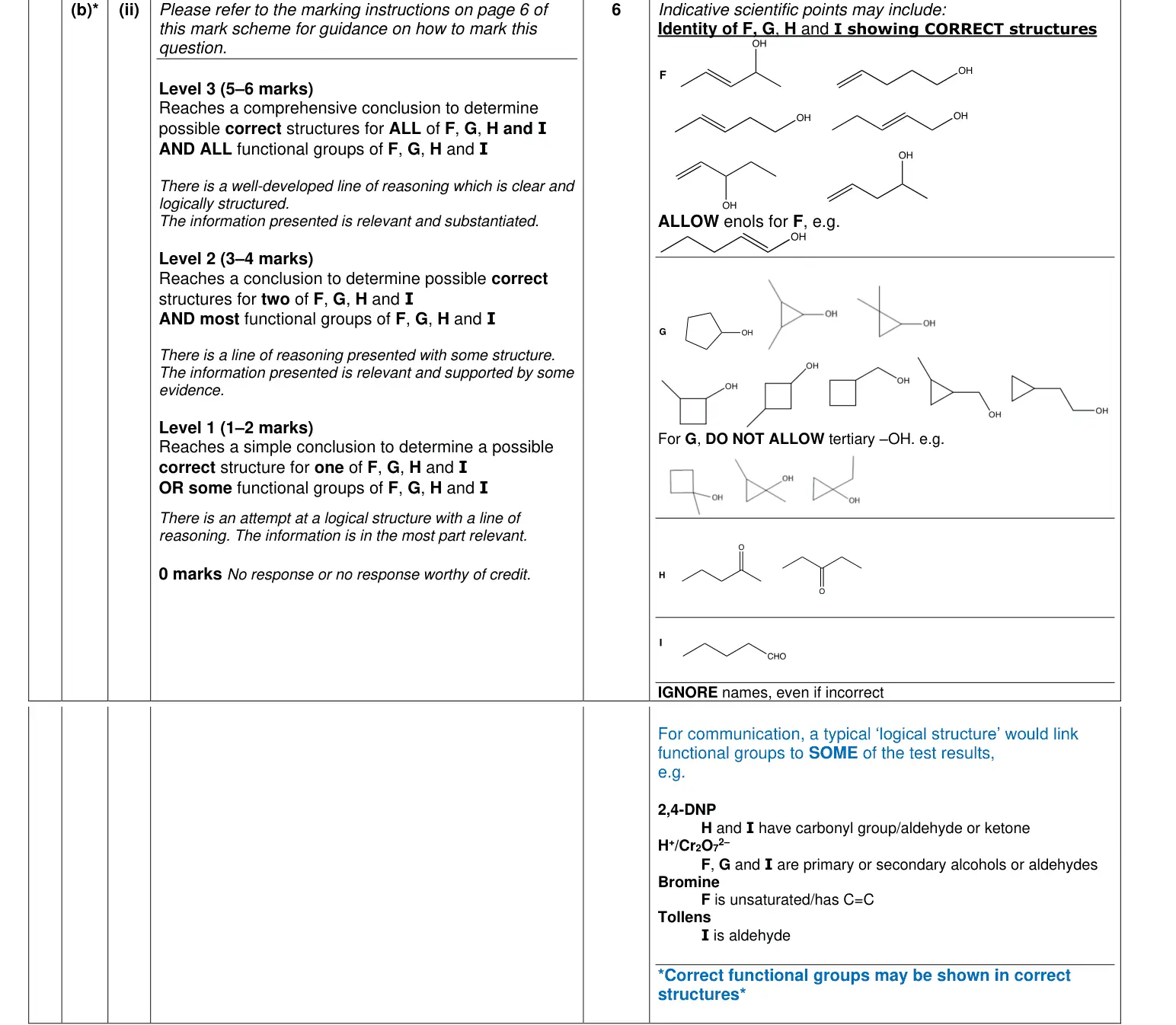
(a)* Explain, with examples from Period 4, what is meant by the terms d-block element and
transition element.
Explain why some d-block elements are not transition elements.
Use electron configurations to support your explanations.
...................................................................................................................................................
...................................................................................................................................................
...................................................................................................................................................
...................................................................................................................................................
...................................................................................................................................................
...................................................................................................................................................
...................................................................................................................................................
...................................................................................................................................................
...................................................................................................................................................
...................................................................................................................................................
...................................................................................................................................................
...................................................................................................................................................
...................................................................................................................................................
...................................................................................................................................................
...................................................................................................................................................
.............................................................................................................................................. [6]
Additional answer space if required.
...................................................................................................................................................
...................................................................................................................................................
...................................................................................................................................................
...................................................................................................................................................
...................................................................................................................................................
June 2023 · Paper 2 · Q19 6 marks AO3 6-mark level of response Medium organic synthesisalkenescarbon carbon bond formation
19* A student intends to synthesise compound Z, as shown in the flowchart below.
H
H C Br
C C
H H
H
Stage 1
Intermediate 1
Stage 2
Intermediate 2
Stage 3
Br
H H
H
H C C
C C NH2
H
H H
H
Compound Z
Plan this synthesis showing reagents, the structures of intermediate 1 and intermediate 2, and
equations. [6]
..........................................................................................................................................................
..........................................................................................................................................................
..........................................................................................................................................................
..........................................................................................................................................................
..........................................................................................................................................................
..........................................................................................................................................................
..........................................................................................................................................................
..........................................................................................................................................................
..........................................................................................................................................................
..........................................................................................................................................................
..........................................................................................................................................................
..........................................................................................................................................................
..........................................................................................................................................................
..........................................................................................................................................................
..........................................................................................................................................................
..........................................................................................................................................................
..........................................................................................................................................................
..........................................................................................................................................................
..........................................................................................................................................................
..........................................................................................................................................................
..........................................................................................................................................................
..........................................................................................................................................................
Additional answer space if required.
..........................................................................................................................................................
..........................................................................................................................................................
..........................................................................................................................................................
..........................................................................................................................................................
..........................................................................................................................................................
June 2023 · Paper 2 · Q23 6 marks AO1, 3 6-mark level of response Easy amount of substanceinfrared and mass spectrometrynmr spectroscopy
23* An unknown organic compound is analysed.
The results are shown below.
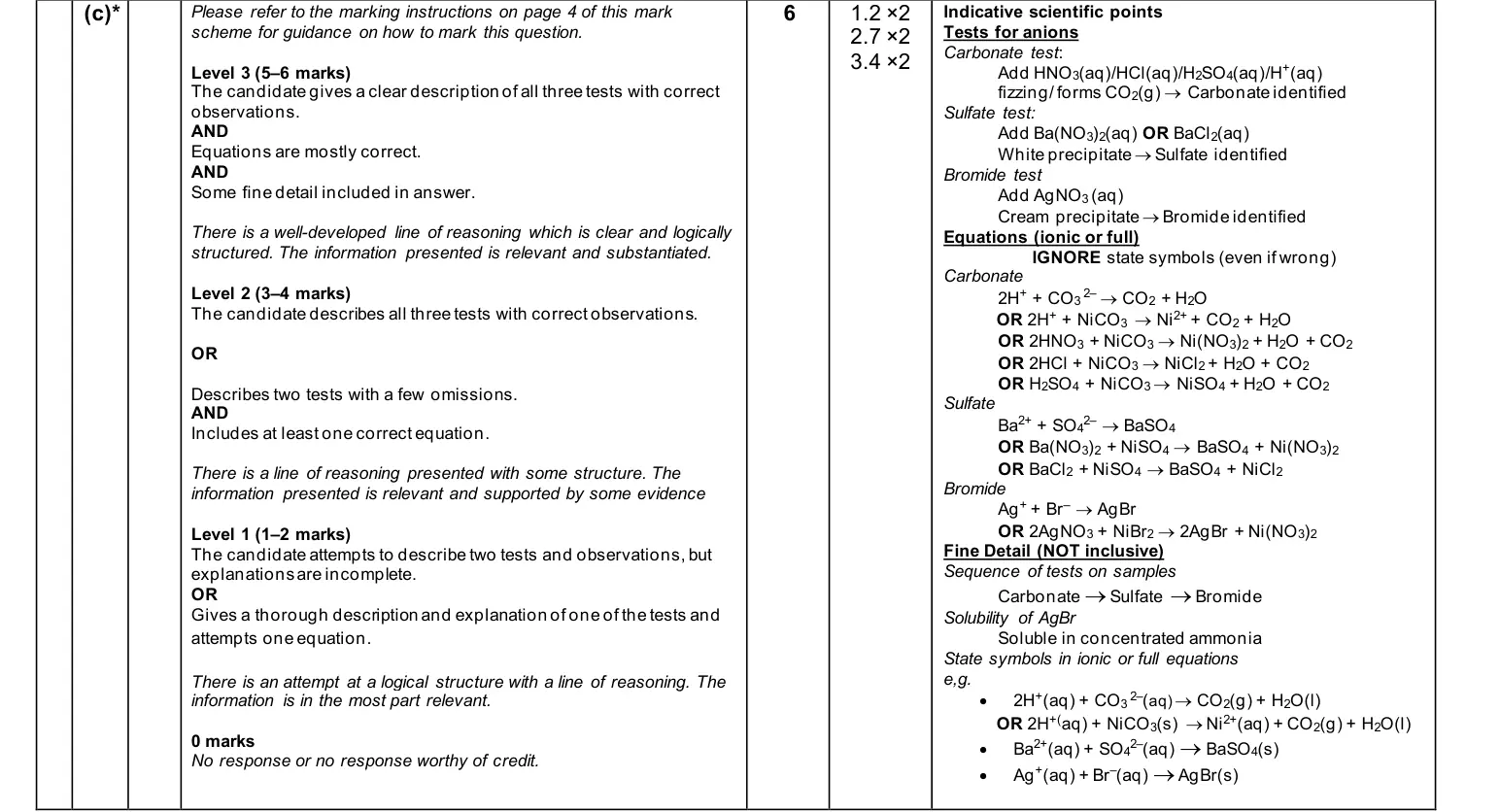
Addition of 2,4-DNP
No visible change
Elemental analysis by mass
C, 66.63%; H, 11.18%; O, 22.19%
Mass spectrum
Molecular ion peak at m / z = 144.0
IR spectrum
100
transmittance
(%) 50
0
4000 3000 2000 1500 1000 500
wavenumber / cm–1
Proton NMR spectrum
The numbers by each peak are the relative peak areas.
9
2
3
2
5 4 3 2 1 0
chemical shift, δ / ppm
Use the information to identify the organic compound.
Show all your reasoning.
..........................................................................................................................................................
..........................................................................................................................................................
..........................................................................................................................................................
..........................................................................................................................................................
..........................................................................................................................................................
..........................................................................................................................................................
..........................................................................................................................................................
..........................................................................................................................................................
..........................................................................................................................................................
..........................................................................................................................................................
..........................................................................................................................................................
..........................................................................................................................................................
..........................................................................................................................................................
..........................................................................................................................................................
..........................................................................................................................................................
..........................................................................................................................................................
..................................................................................................................................................... [6]
Additional answer space if required.
..........................................................................................................................................................
..........................................................................................................................................................
..........................................................................................................................................................
..........................................................................................................................................................
..........................................................................................................................................................
June 2023 · Paper 3 · Q3 6 marks AO3 6-mark level of response Medium amino acids amides and chiralityalcoholscarbonyl compoundscarbon carbon bond formationorganic synthesis
3* A chemist is investigating compound A, shown below, as a potential organic intermediate.
O
OH
CN
Compound A
Describe the type of stereoisomerism shown by compound A and suggest three reactions of
compound A, one for each of the three functional groups using reagents of your choice.
In your answer, show stereoisomers of compound A, your chosen reactants and conditions, and
the structures for the organic products produced.
Mechanisms and equations are not required. [6]
..........................................................................................................................................................
..........................................................................................................................................................
..........................................................................................................................................................
..........................................................................................................................................................
..........................................................................................................................................................
..........................................................................................................................................................
..........................................................................................................................................................
..........................................................................................................................................................
..........................................................................................................................................................
..........................................................................................................................................................
..........................................................................................................................................................
..........................................................................................................................................................
..........................................................................................................................................................
..........................................................................................................................................................
..........................................................................................................................................................
..........................................................................................................................................................
..........................................................................................................................................................
..........................................................................................................................................................
..........................................................................................................................................................
..........................................................................................................................................................
..........................................................................................................................................................
..........................................................................................................................................................
..........................................................................................................................................................
..........................................................................................................................................................
..........................................................................................................................................................
..........................................................................................................................................................
..........................................................................................................................................................
Additional answer space if required.
..........................................................................................................................................................
..........................................................................................................................................................
..........................................................................................................................................................
..........................................................................................................................................................
..........................................................................................................................................................
June 2023 · Paper 3 · Q6(e) 6 marks AO3 6-mark level of response Hard amount of substanceredoxcarboxylic acids and esters
TURN OVER FOR QUESTION 6 PART (e)
(e)* Three reactions involving sulfuric acid are shown below.
Reaction 1
Dilute sulfuric acid is reacted with nickel(II) hydroxide to form a green solution.
The solvent is allowed to evaporate leaving hydrated crystals of compound D, with the
percentage composition by mass: Ni, 22.33%; S, 12.20%; O, 60.87%; H, 4.60%.
Reaction 2
Concentrated sulfuric acid is reacted with hydrogen bromide, HBr, to form three products:
• an element which exists as diatomic molecules
• a gaseous compound E
• a liquid.
At RTP, 1.00 dm3 of compound E has a mass of 2.67 g.
Reaction 3
Concentrated sulfuric acid acts as a catalyst when 2-hydroxypropanoic acid reacts to form
compound F (Mr = 144).
In this reaction, 2 mol of 2-hydroxypropanoic acid forms 1 mol of compound F and 2 mol of
water.
Identify compounds D, E and F and construct equations for the reactions.
Show structures for any organic compounds. [6]
...................................................................................................................................................
...................................................................................................................................................
...................................................................................................................................................
...................................................................................................................................................
...................................................................................................................................................
...................................................................................................................................................
...................................................................................................................................................
...................................................................................................................................................
...................................................................................................................................................
...................................................................................................................................................
...................................................................................................................................................
...................................................................................................................................................
...................................................................................................................................................
...................................................................................................................................................
...................................................................................................................................................
...................................................................................................................................................
...................................................................................................................................................
...................................................................................................................................................
...................................................................................................................................................
...................................................................................................................................................
...................................................................................................................................................
...................................................................................................................................................
Additional answer space if required.
...................................................................................................................................................
...................................................................................................................................................
...................................................................................................................................................
...................................................................................................................................................
...................................................................................................................................................
June 2022 · AS Paper 2 · Q4(a)(i) 6 marks AO1, 2 6-mark level of response Hard chemical equilibriumreaction rates
4 This question is about the manufacture of hydrogen, H2.
(a) In industry, hydrogen is manufactured from methane, as shown in Equilibrium 4.1.
CH4(g) + H2O(g) CO(g) + 3H2(g)     ΔH = +206 kJ mol–1 Equilibrium 4.1
The industrial process is carried out at 15 atmospheres pressure and at a temperature of
800 °C using an excess of steam. A nickel catalyst is used.
(i)* Explain why these conditions are used industrially. [6]
...........................................................................................................................................
...........................................................................................................................................
...........................................................................................................................................
...........................................................................................................................................
...........................................................................................................................................
...........................................................................................................................................
...........................................................................................................................................
...........................................................................................................................................
...........................................................................................................................................
...........................................................................................................................................
...........................................................................................................................................
...........................................................................................................................................
...........................................................................................................................................
...........................................................................................................................................
...........................................................................................................................................
Additional answer space if required.
...........................................................................................................................................
...........................................................................................................................................
...........................................................................................................................................
...........................................................................................................................................
...........................................................................................................................................
June 2022 · AS Paper 2 · Q6 6 marks AO3 6-mark level of response Medium infrared and mass spectrometryalkenes
6* The organic compound A is unsaturated and is a trans stereoisomer.
Compound A has the following composition by mass: C, 55.8%; H, 7.0%; O, 37.2%.
The mass spectrum and the infrared spectrum of compound A are shown below.
Mass spectrum
100
80
60
relative
intensity
40
20
0
10 20 30 40 50 60 70 80 90 100 110 120
m / z
Infrared spectrum
100
transmittance
50
(%)
0
4000 3000 2000 1500 1000 500
wavenumber / cm–1
Use the information to determine the structure of compound A.
Explain your reasoning and show your working. [6]
..........................................................................................................................................................
..........................................................................................................................................................
..........................................................................................................................................................
..........................................................................................................................................................
..........................................................................................................................................................
..........................................................................................................................................................
..........................................................................................................................................................
..........................................................................................................................................................
..........................................................................................................................................................
..........................................................................................................................................................
..........................................................................................................................................................
..........................................................................................................................................................
..........................................................................................................................................................
..........................................................................................................................................................
..........................................................................................................................................................
..........................................................................................................................................................
..........................................................................................................................................................
Additional answer space if required.
..........................................................................................................................................................
..........................................................................................................................................................
..........................................................................................................................................................
..........................................................................................................................................................
..........................................................................................................................................................
..........................................................................................................................................................
June 2022 · Paper 1 · Q20(a) 6 marks AO1, 2 6-mark level of response Easy equilibrium constantschemical equilibrium
20 This question is about equilibria involving hydrogen.
(a)* Hydrogen is used industrially to manufacture ammonia.
The equilibrium is shown below.
N2(g) + 3H2(g) 2NH3(g)    ∆H = –92 kJ mol–1    Equilibrium 20.1
1.20 mol N2(g) is mixed with 3.60 mol H2(g) in a 8.00 dm3 container.
The mixture is heated to 550 °C with an iron catalyst and allowed to reach equilibrium.
The equilibrium mixture contains 0.160 mol of NH3.
Determine the equilibrium constant Kc for Equilibrium 20.1, and explain why the operational
conditions used by industry may be different from those required for a maximum equilibrium
yield of ammonia. [6]
...................................................................................................................................................
...................................................................................................................................................
...................................................................................................................................................
...................................................................................................................................................
...................................................................................................................................................
...................................................................................................................................................
...................................................................................................................................................
...................................................................................................................................................
...................................................................................................................................................
...................................................................................................................................................
...................................................................................................................................................
...................................................................................................................................................
...................................................................................................................................................
...................................................................................................................................................
...................................................................................................................................................
...................................................................................................................................................
...................................................................................................................................................
Additional answer space if required.
...................................................................................................................................................
...................................................................................................................................................
...................................................................................................................................................
...................................................................................................................................................
...................................................................................................................................................
June 2022 · Paper 1 · Q22(c) 6 marks AO3 6-mark level of response Hard transition elementsamount of substanceredox
TURN OVER FOR QUESTION 22(c)
(c)* This question is about copper and copper compounds.
Experiment 1
Hydrochloric acid, HCl (aq), is added to an aqueous solution containing [Cu(H2O)6]2+
complex ions.
A yellow-green solution forms containing complex ion B.
Experiment 2
A piece of copper metal is heated with concentrated sulfuric acid.
A reaction takes place forming a pale blue solution C and 45 cm3 of a gas D, measured at
RTP. The mass of gas D is 0.12 g.
Experiment 3
An excess of copper(II) oxide is heated with dilute nitric acid. The resulting mixture is
filtered. The filtrate is a blue solution E.
Aqueous potassium iodide, KI(aq), is added to the blue solution E.
A white precipitate F and a brown solution G form.
Determine the formulae of B–G.
Construct equations for the reactions taking place, include any changes in oxidation number,
and show your working where appropriate. [6]
...................................................................................................................................................
...................................................................................................................................................
...................................................................................................................................................
...................................................................................................................................................
...................................................................................................................................................
...................................................................................................................................................
...................................................................................................................................................
...................................................................................................................................................
...................................................................................................................................................
...................................................................................................................................................
...................................................................................................................................................
...................................................................................................................................................
...................................................................................................................................................
...................................................................................................................................................
...................................................................................................................................................
...................................................................................................................................................
Additional answer space if required.
...................................................................................................................................................
...................................................................................................................................................
...................................................................................................................................................
...................................................................................................................................................
...................................................................................................................................................
June 2022 · Paper 2 · Q19(e) 6 marks AO3 6-mark level of response Medium organic synthesisamount of substanceaminesamino acids amides and chirality
(e)* A student intends to synthesise compound I.
O
O
NH2
Compound I
Plan a synthesis to prepare 9.36 g of compound I starting from 2-chloropropanoic acid,
CH3CHCl COOH. The overall percentage yield of compound I from 2-chloropropanoic acid
is 64%.
In your answer, include starting mass of 2-chloropropanoic acid, reagents, conditions and
equations where appropriate. [6]
...................................................................................................................................................
...................................................................................................................................................
...................................................................................................................................................
...................................................................................................................................................
...................................................................................................................................................
...................................................................................................................................................
...................................................................................................................................................
...................................................................................................................................................
...................................................................................................................................................
...................................................................................................................................................
...................................................................................................................................................
...................................................................................................................................................
...................................................................................................................................................
...................................................................................................................................................
...................................................................................................................................................
...................................................................................................................................................
...................................................................................................................................................
...................................................................................................................................................
...................................................................................................................................................
...................................................................................................................................................
...................................................................................................................................................
...................................................................................................................................................
Additional answer space if required.
...................................................................................................................................................
...................................................................................................................................................
...................................................................................................................................................
...................................................................................................................................................
...................................................................................................................................................
...................................................................................................................................................
June 2022 · Paper 2 · Q21 6 marks AO1, 2 6-mark level of response Medium carbon carbon bond formationcarbonyl compounds
21* Carbon-carbon bond formation is used in synthesis to increase the length of a carbon chain.
Describe the formation of carbon–carbon bonds in aliphatic compounds by two different
mechanisms.
Your answer should include mechanisms for each aliphatic compound. [6]
..........................................................................................................................................................
..........................................................................................................................................................
..........................................................................................................................................................
..........................................................................................................................................................
..........................................................................................................................................................
..........................................................................................................................................................
..........................................................................................................................................................
..........................................................................................................................................................
..........................................................................................................................................................
..........................................................................................................................................................
..........................................................................................................................................................
..........................................................................................................................................................
..........................................................................................................................................................
..........................................................................................................................................................
..........................................................................................................................................................
..........................................................................................................................................................
..........................................................................................................................................................
Additional answer space if required.
..........................................................................................................................................................
..........................................................................................................................................................
..........................................................................................................................................................
..........................................................................................................................................................
..........................................................................................................................................................
June 2022 · Paper 3 · Q3(a) 6 marks AO2, 3 6-mark level of response Medium organic synthesis aspractical techniquesamount of substance
3 Information about 1-bromobutane and butan-1-ol is shown in the table.
Compound Melting point / °C Boiling point / °C Density / g cm–3
1-bromobutane –113 102 1.268
butan-1-ol –90 118 0.810
A student prepares a sample of 1-bromobutane by refluxing 9.25 g of butan-1-ol with sodium
bromide and sulfuric acid.
After reflux, the reaction mixture is purified.
The student obtains 6.10 cm3 of pure 1-bromobutane.
(a)* Draw a diagram to show how the student would have carried out the reflux and calculate the
percentage yield of 1-bromobutane that the student obtains.
Describe how the student could have obtained pure 1-bromobutane from the reaction
mixture obtained after reflux. [6]
...................................................................................................................................................
...................................................................................................................................................
...................................................................................................................................................
...................................................................................................................................................
...................................................................................................................................................
...................................................................................................................................................
...................................................................................................................................................
...................................................................................................................................................
...................................................................................................................................................
...................................................................................................................................................
...................................................................................................................................................
...................................................................................................................................................
...................................................................................................................................................
...................................................................................................................................................
...................................................................................................................................................
...................................................................................................................................................
...................................................................................................................................................
...................................................................................................................................................
...................................................................................................................................................
...................................................................................................................................................
...................................................................................................................................................
...................................................................................................................................................
...................................................................................................................................................
...................................................................................................................................................
...................................................................................................................................................
Additional answer space if required.
...................................................................................................................................................
...................................................................................................................................................
...................................................................................................................................................
...................................................................................................................................................
June 2022 · Paper 3 · Q5(a) 6 marks AO3 6-mark level of response Hard lattice enthalpyenthalpy changes
5 This question is about energy changes.
(a)* A student plans to determine the enthalpy change of hydration of calcium ions.
The student finds the information below from data tables.
Enthalpy change ∆H / kJ mol–1
Lattice enthalpy of calcium chloride –2223
Enthalpy change of hydration of chloride ions –378
The student carries out an experiment to find the enthalpy change of solution of calcium
chloride.
Student’s method:
• Weigh a bottle containing calcium chloride and weigh a polystyrene cup.
• Add water from a measuring cylinder to the polystyrene cup and measure its
temperature.
• Add the calcium chloride, stir the mixture, and measure the maximum temperature of
the final solution.
• Weigh the empty bottle and weigh the polystyrene cup with the final solution.
Mass readings
Mass of bottle + calcium chloride / g 27.45
Mass of empty bottle / g 18.17
Mass of polystyrene cup / g 21.24
Mass of polystyrene cup + final solution / g 127.84
Temperature readings
Initial temperature of water / °C 21.0
Maximum temperature of final solution / °C 39.5
Calculate the enthalpy change of solution of calcium chloride and determine the enthalpy
change of hydration of calcium ions.
Show your working, including an energy cycle linking the energy changes.
Assume that the density and specific heat capacity, c, of the solution are the same as for
water. [6]
...................................................................................................................................................
...................................................................................................................................................
...................................................................................................................................................
...................................................................................................................................................
...................................................................................................................................................
...................................................................................................................................................
...................................................................................................................................................
...................................................................................................................................................
...................................................................................................................................................
...................................................................................................................................................
...................................................................................................................................................
...................................................................................................................................................
...................................................................................................................................................
Additional answer space if required.
...................................................................................................................................................
...................................................................................................................................................
...................................................................................................................................................
...................................................................................................................................................
...................................................................................................................................................
...................................................................................................................................................
...................................................................................................................................................
...................................................................................................................................................
November 2021 · AS Paper 2 · Q4(a) 6 marks AO3 6-mark level of response enthalpy changesamount of substance
4 A student carries out an investigation to find the enthalpy change for the decomposition of
magnesium carbonate, ∆H1 (Reaction 1).
Reaction 1 MgCO3(s) MgO(s)  +  CO2(g) ∆H1
This enthalpy change cannot be found directly. It can be determined indirectly from the enthalpy
changes for the reactions below, which can be found by experiment.
Reaction 2 MgCO3(s)  +  2HCl (aq) MgCl 2(aq)  +  H2O(l)  +  CO2(g) ∆H2
Reaction 3 MgO(s)  +  2HCl (aq) MgCl 2(aq)  +  H2O(l) ∆H3
The enthalpy cycle is shown in Fig. 4.1.
Reaction 1
MgCO3(s) MgO(s) + CO2(g)
ΔH1
Reaction 2 ΔH2 ΔH3 Reaction 3
MgCl2(aq) + H2O(l) + CO2(g)
Fig. 4.1
Determination of ∆H2 for Reaction 2
Student’s method
• Weigh a 250 cm3 polystyrene cup.
• Add about 100 cm3 of 2.00 mol dm–3 hydrochloric acid (an excess) to the polystyrene cup and
record the initial temperature of the HCl (aq).
• Add 4.215 g MgCO3, stir the mixture, and record the final temperature.
• Weigh the polystyrene cup containing the final solution.
Results
Mass of polystyrene cup / g 21.415
Mass of polystyrene cup + final solution / g 124.425
Initial temperature of HCl (aq) / °C 20.40
Final temperature of solution / °C 25.40
Determination of ∆H3 for Reaction 3
The student uses the same method as for Reaction 2 but with MgO in place of MgCO3.
The student calculates ∆H3 for Reaction 3 as –136.1 kJ mol–1.
(a)* Use the student’s results to calculate ∆H2 for Reaction 2 and determine the enthalpy change
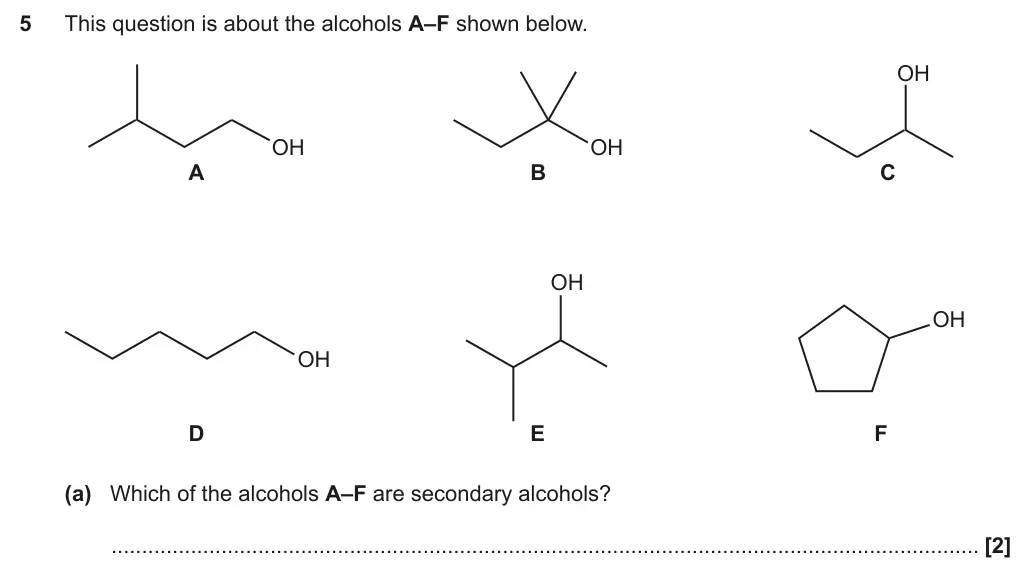
∆H1, in kJ mol–1, for the decomposition of magnesium carbonate (Reaction 1), using the
energy cycle in Fig. 4.1.
Assume the specific heat capacity, c, of the reaction mixture is the same as for water.
...................................................................................................................................................
...................................................................................................................................................
...................................................................................................................................................
...................................................................................................................................................
...................................................................................................................................................
...................................................................................................................................................
...................................................................................................................................................
...................................................................................................................................................
...................................................................................................................................................
...................................................................................................................................................
...................................................................................................................................................
...................................................................................................................................................
...................................................................................................................................................
...................................................................................................................................................
...................................................................................................................................................
...................................................................................................................................................
...................................................................................................................................................
...................................................................................................................................................
...................................................................................................................................................
...................................................................................................................................................
Additional answer space if required.
...................................................................................................................................................
...................................................................................................................................................
...................................................................................................................................................
...................................................................................................................................................
.............................................................................................................................................. [6]
November 2021 · AS Paper 2 · Q7(b) 6 marks AO1, 2, 3 6-mark level of response organic synthesis aspractical techniquesamount of substance
Earlier part of question 7 that this part usesEarlier part of November 2021 Paper 2 question 7
(b)* The student’s method for the preparation is outlined below.
• Add 10.0 cm3 (7.70 g) of (CH3)3COH and 30 cm3 concentrated hydrochloric acid (an
excess) to a round-bottom flask. Stopper the flask.
• Shake the flask until the mixture separates into two layers.
Densities:   (CH3)3CCl : 0.85 g cm–3;   concentrated HCl : 1.18 g cm–3
After purification, the percentage yield of (CH3)3CCl  is 76%.
Explain how the student could obtain a pure, dry sample of (CH3)3CCl  from the mixture in the
flask and calculate the mass of pure (CH3)3CCl  that would be expected from this preparation.
...................................................................................................................................................
...................................................................................................................................................
...................................................................................................................................................
...................................................................................................................................................
...................................................................................................................................................
...................................................................................................................................................
...................................................................................................................................................
...................................................................................................................................................
...................................................................................................................................................
...................................................................................................................................................
...................................................................................................................................................
...................................................................................................................................................
...................................................................................................................................................
...................................................................................................................................................
...................................................................................................................................................
...................................................................................................................................................
...................................................................................................................................................
...................................................................................................................................................
...................................................................................................................................................
Additional answer space if required.
...................................................................................................................................................
...................................................................................................................................................
...................................................................................................................................................
...................................................................................................................................................
.............................................................................................................................................. [6]
November 2021 · Paper 1 · Q17(b)(ii) 6 marks AO2, 3 6-mark level of response amount of substancetransition elements
Earlier part of question 17 that this part usesEarlier part of November 2021 Paper 1 question 17
(ii)* Determine the formulae of A and B. Write the ionic equation for the ligand substitution
and show 3D structures for the three stereoisomers of B.
...........................................................................................................................................
...........................................................................................................................................
...........................................................................................................................................
...........................................................................................................................................
...........................................................................................................................................
...........................................................................................................................................
...........................................................................................................................................
...........................................................................................................................................
...........................................................................................................................................
...........................................................................................................................................
...........................................................................................................................................
...........................................................................................................................................
...........................................................................................................................................
...........................................................................................................................................
...........................................................................................................................................
...........................................................................................................................................
...........................................................................................................................................
...........................................................................................................................................
...........................................................................................................................................
...........................................................................................................................................
...................................................................................................................................... [6]
Additional answer space if required.
...........................................................................................................................................
...........................................................................................................................................
...........................................................................................................................................
...........................................................................................................................................
...........................................................................................................................................
November 2021 · Paper 1 · Q22(c) 6 marks AO1, 2, 3 6-mark level of response acids bases and buffersamount of substance
(c)* Nitrous acid, HNO2, is a weak Brønsted–Lowry acid with a pKa value of 3.34 at room
temperature.
HNO2 can be prepared by reacting N2O3 with water.
HNO2 is the only product.
A chemist makes up a buffer solution by the following method.
Step 1 The chemist weighs a sample of N2O3.
Water is then added to form 100 cm3 of 0.500 mol dm–3 HNO2(aq).
Step 2 The chemist adds 100 cm3 of 0.150 mol dm–3 NaOH(aq) to the 100 cm3 solution
of 0.500 mol dm–3 solution of HNO2(aq).
The resulting solution is made up to 1.00 dm3.
Explain why a buffer solution forms in Step 2. Determine the pH of this buffer solution and the
mass of N2O3 that was used in Step 1.
...................................................................................................................................................
...................................................................................................................................................
...................................................................................................................................................
...................................................................................................................................................
...................................................................................................................................................
...................................................................................................................................................
...................................................................................................................................................
...................................................................................................................................................
...................................................................................................................................................
...................................................................................................................................................
...................................................................................................................................................
...................................................................................................................................................
...................................................................................................................................................
...................................................................................................................................................
...................................................................................................................................................
...................................................................................................................................................
...................................................................................................................................................
...................................................................................................................................................
...................................................................................................................................................
...................................................................................................................................................
.............................................................................................................................................. [6]
Additional answer space if required.
...................................................................................................................................................
...................................................................................................................................................
...................................................................................................................................................
...................................................................................................................................................
...................................................................................................................................................
November 2021 · Paper 2 · Q19(b) 6 marks AO2, 3 6-mark level of response Medium organic synthesisamount of substancecarbon carbon bond formation
(b)* A student intends to synthesise compound A using the two-stage route below.
O
Stage 1 Stage 2
CH2 Cl Intermediate CH2 C
OH
(chloromethyl)benzene Compound A
Plan a two-stage synthesis to prepare 5.44 g of compound A starting from
(chloromethyl)benzene, C6H5CH2Cl . Assume that the overall percentage yield of compound
A from (chloromethyl)benzene is 25%.
In your answer, include the mass of C6H5CH2Cl  required, reagents, and equations where
appropriate.
Purification details are not required. [6]
...................................................................................................................................................
...................................................................................................................................................
...................................................................................................................................................
...................................................................................................................................................
...................................................................................................................................................
...................................................................................................................................................
...................................................................................................................................................
...................................................................................................................................................
...................................................................................................................................................
...................................................................................................................................................
...................................................................................................................................................
...................................................................................................................................................
...................................................................................................................................................
...................................................................................................................................................
...................................................................................................................................................
...................................................................................................................................................
...................................................................................................................................................
...................................................................................................................................................
...................................................................................................................................................
Additional answer space if required.
...................................................................................................................................................
...................................................................................................................................................
...................................................................................................................................................
...................................................................................................................................................
...................................................................................................................................................
...................................................................................................................................................
November 2021 · Paper 2 · Q21 6 marks AO3 6-mark level of response chromatography and functional group testsnmr spectroscopy
21* Compounds D, E and F are isomers with the molecular formula C5H10O.
One of the compounds is alicyclic.
A student carries out test-tube tests on the compounds.
The observations are shown below.
Compound 2,4-DNP H+/Cr2O7 2–, reflux Bromine water
D No change Green solution No colour change
Orange
E No colour change No colour change
precipitate
Orange
F No colour change No colour change
precipitate
13C NMR spectrum of D Compound D has 3 peaks at δ / ppm: 24, 36, 73.
1H NMR spectra of E and F The integration data has been omitted.
Compound E
3 2 1 0
chemical shift, δ / ppm
Compound F
Expansion of multiplet
3 2 1 0
chemical shift, δ / ppm
Analyse the observations and results to identify the structures of D, E and F.
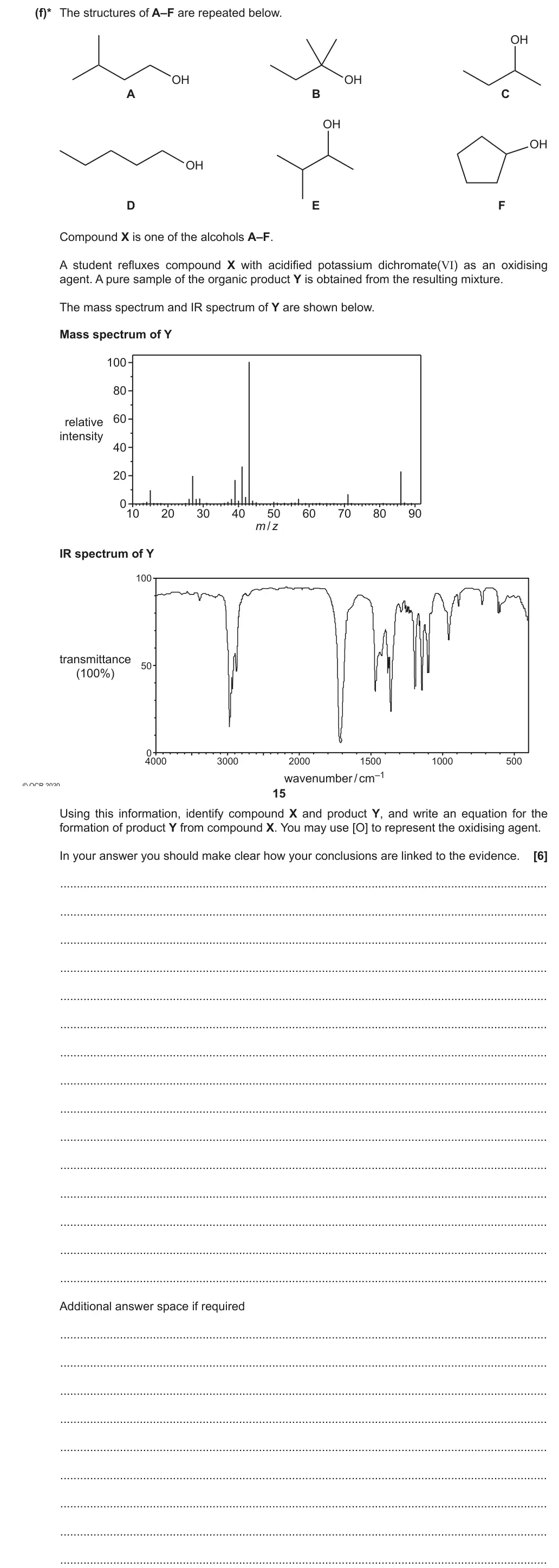
Explain your reasoning. [6]
...................................................................................................................................................
...................................................................................................................................................
...................................................................................................................................................
...................................................................................................................................................
...................................................................................................................................................
...................................................................................................................................................
...................................................................................................................................................
...................................................................................................................................................
...................................................................................................................................................
...................................................................................................................................................
...................................................................................................................................................
...................................................................................................................................................
...................................................................................................................................................
...................................................................................................................................................
...................................................................................................................................................
...................................................................................................................................................
...................................................................................................................................................
...................................................................................................................................................
...................................................................................................................................................
Additional answer space if required.
...................................................................................................................................................
...................................................................................................................................................
...................................................................................................................................................
...................................................................................................................................................
November 2021 · Paper 3 · Q4(b) 6 marks AO3 6-mark level of response Hard rate equations
Earlier part of question 4 that this part usesEarlier part of November 2021 Paper 3 question 4
(b)* The student’s experimental procedure shows that the reaction is first order with respect to
iodine.
Show that this statement is true and determine the initial rate of reaction and rate constant.
Assume that the reaction is zero order with respect to pent-1-ene. Show your working on the
graph on page 10 and the lines below as appropriate. [6]
...................................................................................................................................................
...................................................................................................................................................
...................................................................................................................................................
...................................................................................................................................................
...................................................................................................................................................
...................................................................................................................................................
...................................................................................................................................................
...................................................................................................................................................
...................................................................................................................................................
...................................................................................................................................................
...................................................................................................................................................
...................................................................................................................................................
...................................................................................................................................................
...................................................................................................................................................
...................................................................................................................................................
...................................................................................................................................................
Additional answer space if required.
...................................................................................................................................................
...................................................................................................................................................
...................................................................................................................................................
...................................................................................................................................................
...................................................................................................................................................
November 2021 · Paper 3 · Q5(c) 6 marks AO3 6-mark level of response Hard amount of substanceformulae and equationsinfrared and mass spectrometrycarboxylic acids and esters
(c)* This question is about two reactions of ammonia.
Reaction 1
Excess ammonia is reacted with 4.77 g of copper(II) oxide. The reaction produces 3.81 g of
solid E, liquid F and 0.560 g of gas G, which has a volume of 480 cm3 at RTP.
Reaction 2
Ammonia reacts with compound H to form compound I, C2H5NO, and chloride salt J.
The IR spectrum of I is shown below.
100
transmittance
50
(%)
0
4000 3000 2000 1500 1000 500
wavenumber / cm–1
Identify E, F, G, H, I and J, and write equations for the two reactions.
Show your reasoning. [6]
...................................................................................................................................................
...................................................................................................................................................
...................................................................................................................................................
...................................................................................................................................................
...................................................................................................................................................
...................................................................................................................................................
...................................................................................................................................................
...................................................................................................................................................
...................................................................................................................................................
...................................................................................................................................................
...................................................................................................................................................
...................................................................................................................................................
...................................................................................................................................................
...................................................................................................................................................
...................................................................................................................................................
...................................................................................................................................................
...................................................................................................................................................
...................................................................................................................................................
...................................................................................................................................................
...................................................................................................................................................
...................................................................................................................................................
...................................................................................................................................................
...................................................................................................................................................
...................................................................................................................................................
...................................................................................................................................................
...................................................................................................................................................
...................................................................................................................................................
...................................................................................................................................................
Additional answer space if required.
...................................................................................................................................................
...................................................................................................................................................
...................................................................................................................................................
...................................................................................................................................................
...................................................................................................................................................
November 2020 · AS Paper 2 · Q1(c) 6 marks AO1, 2, 3 6-mark level of response Medium qualitative analysisformulae and equationsacids and titrationshalogens
(c)* A student is provided with samples of three nickel compounds.
One sample is nickel(II) bromide, another is nickel(II) sulfate and the third is nickel(II)
carbonate. The student doesn’t know which sample is which.
Describe the tests that the student could carry out to identify the anion (negative ion) in each
sample, and write equations for any reactions. [6]
...................................................................................................................................................
...................................................................................................................................................
...................................................................................................................................................
...................................................................................................................................................
...................................................................................................................................................
...................................................................................................................................................
...................................................................................................................................................
...................................................................................................................................................
...................................................................................................................................................
...................................................................................................................................................
...................................................................................................................................................
...................................................................................................................................................
...................................................................................................................................................
...................................................................................................................................................
...................................................................................................................................................
Additional answer space if required
...................................................................................................................................................
...................................................................................................................................................
...................................................................................................................................................
...................................................................................................................................................
...................................................................................................................................................
...................................................................................................................................................
...................................................................................................................................................
November 2020 · AS Paper 2 · Q5(f) 6 marks AO2, 3 6-mark level of response Medium infrared and mass spectrometryalcohols
Earlier part of question 5 that this part usesEarlier part of November 2020 Paper 2 question 5
(f)* The structures of A–F are repeated below.
OH
OH OH
A B C
OH
OH
OH
D E F
Compound X is one of the alcohols A–F.
A student refluxes compound X with acidified potassium dichromate(VI) as an oxidising
agent. A pure sample of the organic product Y is obtained from the resulting mixture.
The mass spectrum and IR spectrum of Y are shown below.
Mass spectrum of Y
100
80
relative 60
intensity
40
20
0
10 20 30 40 50 60 70 80 90
m / z
IR spectrum of Y
100
transmittance
50
(100%)
0
4000 3000 2000 1500 1000 500
wavenumber / cm–1
Using this information, identify compound X and product Y, and write an equation for the
formation of product Y from compound X. You may use [O] to represent the oxidising agent.
In your answer you should make clear how your conclusions are linked to the evidence. [6]
...................................................................................................................................................
...................................................................................................................................................
...................................................................................................................................................
...................................................................................................................................................
...................................................................................................................................................
...................................................................................................................................................
...................................................................................................................................................
...................................................................................................................................................
...................................................................................................................................................
...................................................................................................................................................
...................................................................................................................................................
...................................................................................................................................................
...................................................................................................................................................
...................................................................................................................................................
...................................................................................................................................................
Additional answer space if required
...................................................................................................................................................
...................................................................................................................................................
...................................................................................................................................................
...................................................................................................................................................
...................................................................................................................................................
...................................................................................................................................................
...................................................................................................................................................
...................................................................................................................................................
...................................................................................................................................................
November 2020 · Paper 1 · Q16(c) 6 marks AO1, 2 6-mark level of response periodicitybonding and structure
(c)* Table 16.1 shows some physical properties of magnesium, bromine and magnesium bromide.
Electrical conductivity
Substance Melting point / °C
Solid Liquid
Magnesium 711 Good Good
Bromine −7 Poor Poor
Magnesium bromide 650 Poor Good
Table 16.1
Explain the physical properties shown in Table 16.1 using your knowledge of structure and
bonding. [6]
...................................................................................................................................................
...................................................................................................................................................
...................................................................................................................................................
...................................................................................................................................................
...................................................................................................................................................
...................................................................................................................................................
...................................................................................................................................................
...................................................................................................................................................
...................................................................................................................................................
...................................................................................................................................................
...................................................................................................................................................
...................................................................................................................................................
...................................................................................................................................................
...................................................................................................................................................
...................................................................................................................................................
Additional answer space if required
...................................................................................................................................................
...................................................................................................................................................
...................................................................................................................................................
...................................................................................................................................................
...................................................................................................................................................
...................................................................................................................................................
...................................................................................................................................................
...................................................................................................................................................
November 2020 · Paper 1 · Q22(a) 6 marks AO3 6-mark level of response qualitative analysisformulae and equationstransition elements
22 (a)* B and C are compounds of two different transition elements.
A student carries out test tube reactions on aqueous solutions of B and C.
The observations of the student’s tests are shown below.
Test B(aq) C(aq)
NH3(aq) added dropwise green precipitate D grey-green precipitate E
1
excess NH3(aq) added no further change purple solution F
HNO3(aq) no change no change
2
followed by Ba(NO3)2(aq) white precipitate G no change
HNO3(aq) no change no change
3
followed by AgNO3(aq) no change white precipitate H
Analyse the results to identify B to H, and construct ionic equations for the formation of
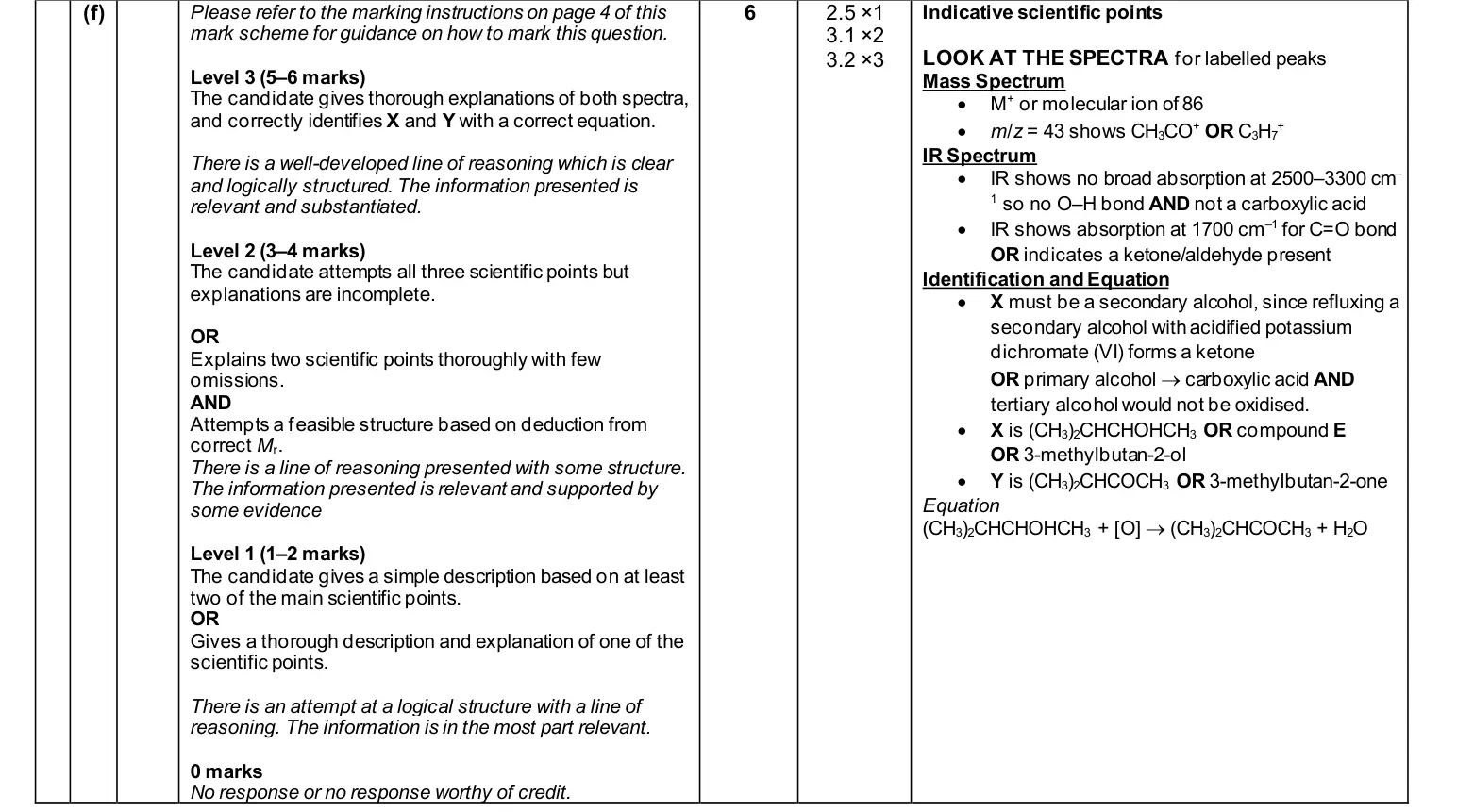
products D to H. [6]
...................................................................................................................................................
...................................................................................................................................................
...................................................................................................................................................
...................................................................................................................................................
...................................................................................................................................................
...................................................................................................................................................
...................................................................................................................................................
...................................................................................................................................................
...................................................................................................................................................
...................................................................................................................................................
...................................................................................................................................................
...................................................................................................................................................
...................................................................................................................................................
...................................................................................................................................................
...................................................................................................................................................
Additional answer space if required
...................................................................................................................................................
...................................................................................................................................................
...................................................................................................................................................
...................................................................................................................................................
...................................................................................................................................................
...................................................................................................................................................
...................................................................................................................................................
...................................................................................................................................................
...................................................................................................................................................
November 2020 · Paper 2 · Q20(a) 6 marks AO2, 3 6-mark level of response Medium amount of substancepractical techniquesorganic synthesis as
20 Cyclopentanol can be reacted to form cyclopentene.
Cyclopentene is a liquid with a boiling point of 44 °C and a density of 0.74 g cm−3.
A student plans to prepare 4.00 g of cyclopentene by reacting cyclopentanol (boiling point 140 °C)
with an acid catalyst.
Equation
OH
+ H2O
The expected percentage yield of cyclopentene is 64.0%.
Method
The student carries out the preparation using apparatus set up for distillation, as shown below.
1 The reaction mixture is heated gently, and a distillate containing impure cyclopentene is
collected.
cyclopentanol
and water
concentrated out
phosphoric
acid
water in
water bath
distillate
ice-water
mixture
2 The distillate has an aqueous layer and an organic layer.
The student purifies the cyclopentene from the distillate.
(a)* Calculate the mass of cyclopentanol that the student should use and explain how pure
cyclopentene could be obtained from the distillate. [6]
...................................................................................................................................................
...................................................................................................................................................
...................................................................................................................................................
...................................................................................................................................................
...................................................................................................................................................
...................................................................................................................................................
...................................................................................................................................................
...................................................................................................................................................
...................................................................................................................................................
...................................................................................................................................................
...................................................................................................................................................
...................................................................................................................................................
...................................................................................................................................................
...................................................................................................................................................
...................................................................................................................................................
Additional answer space if required
...................................................................................................................................................
...................................................................................................................................................
...................................................................................................................................................
...................................................................................................................................................
...................................................................................................................................................
...................................................................................................................................................
...................................................................................................................................................
...................................................................................................................................................
November 2020 · Paper 2 · Q22(b) 6 marks AO3 6-mark level of response Medium nmr spectroscopyamount of substanceinfrared and mass spectrometry
Earlier part of question 22 that this part usesEarlier part of November 2020 Paper 2 question 22
(b)* Determine the structure of compound I, showing all your reasoning. [6]
...................................................................................................................................................
...................................................................................................................................................
...................................................................................................................................................
...................................................................................................................................................
...................................................................................................................................................
...................................................................................................................................................
...................................................................................................................................................
...................................................................................................................................................
...................................................................................................................................................
...................................................................................................................................................
...................................................................................................................................................
...................................................................................................................................................
...................................................................................................................................................
...................................................................................................................................................
...................................................................................................................................................
Additional answer space if required
...................................................................................................................................................
...................................................................................................................................................
...................................................................................................................................................
...................................................................................................................................................
...................................................................................................................................................
...................................................................................................................................................
...................................................................................................................................................
...................................................................................................................................................
November 2020 · Paper 3 · Q2 6 marks AO1, 2 6-mark level of response Hard transition elements
2* Transition metal ions can bond to ligands to form complex ions with different shapes.
Explain what is meant by the terms ligand, coordination number and ligand substitution, using
suitable examples of complex ions with different shapes, limited to monodentate ligands.
Your answer should include diagrams and equations where appropriate. [6]
..........................................................................................................................................................
..........................................................................................................................................................
..........................................................................................................................................................
..........................................................................................................................................................
..........................................................................................................................................................
..........................................................................................................................................................
..........................................................................................................................................................
..........................................................................................................................................................
..........................................................................................................................................................
..........................................................................................................................................................
..........................................................................................................................................................
..........................................................................................................................................................
..........................................................................................................................................................
..........................................................................................................................................................
..........................................................................................................................................................
Additional answer space if required
..........................................................................................................................................................
..........................................................................................................................................................
..........................................................................................................................................................
..........................................................................................................................................................
..........................................................................................................................................................
..........................................................................................................................................................
..........................................................................................................................................................
..........................................................................................................................................................
November 2020 · Paper 3 · Q3(b) 6 marks AO2, 3 6-mark level of response Hard enthalpy changes
Earlier part of question 3 that this part usesEarlier part of November 2020 Paper 3 question 3
(b)* The student determines the standard enthalpy change of combustion of propane using the
bond enthalpies in the table. An experiment is not needed.
Bond enthalpy
Bond
/ kJ mol−1
C−H +413
C−C +347
C=O +805
O=O +498
O−H +464
The bond enthalpies can be used to determine the standard enthalpy change of reaction,
∆rH, for equation 3.1:
C3H8(g) + 5O2(g) → 3CO2(g) + 4H2O(g)   ∆rH     Equation 3.1
Enthalpy change of vaporisation, ∆ vapH
The standard enthalpy change of vaporisation of water, ∆vapH, is the enthalpy change for the
conversion of 1 mol of H2O(l) into 1 mol of H2O(g) under standard conditions:
H2O(l) → H2O(g)   ∆vapH = +40.65 kJ mol−1
Determine the standard enthalpy change of combustion of propane (boiling point −42 °C)
using the ∆rH value for equation 3.1 and ∆vapH for water. [6]
...................................................................................................................................................
...................................................................................................................................................
...................................................................................................................................................
...................................................................................................................................................
...................................................................................................................................................
...................................................................................................................................................
...................................................................................................................................................
...................................................................................................................................................
...................................................................................................................................................
...................................................................................................................................................
...................................................................................................................................................
...................................................................................................................................................
...................................................................................................................................................
...................................................................................................................................................
...................................................................................................................................................
Additional answer space if required
...................................................................................................................................................
...................................................................................................................................................
...................................................................................................................................................
...................................................................................................................................................
...................................................................................................................................................
...................................................................................................................................................
...................................................................................................................................................
...................................................................................................................................................
...................................................................................................................................................
June 2019 · AS Paper 2 · Q2(a) 6 marks AO2 6-mark level of response Medium acids and titrationspractical skillspractical techniquesamount of substance
2 Magnesium nitrate is used in fertilisers as a source of nitrogen.
(a)* A student plans to prepare 250.0 cm3 of a 0.4000 mol dm–3 solution of magnesium nitrate,
starting from magnesium nitrate crystals, Mg(NO3)2•6H2O.
Describe how the student would prepare the solution, giving full details of quantities,
apparatus and method. [6]
...................................................................................................................................................
...................................................................................................................................................
...................................................................................................................................................
...................................................................................................................................................
...................................................................................................................................................
...................................................................................................................................................
...................................................................................................................................................
...................................................................................................................................................
...................................................................................................................................................
...................................................................................................................................................
...................................................................................................................................................
...................................................................................................................................................
...................................................................................................................................................
...................................................................................................................................................
...................................................................................................................................................
Additional answer space if required
...................................................................................................................................................
...................................................................................................................................................
...................................................................................................................................................
...................................................................................................................................................
...................................................................................................................................................
...................................................................................................................................................
...................................................................................................................................................
June 2019 · AS Paper 2 · Q5(b)(i) 6 marks AO2, 3 6-mark level of response Hard organic synthesis aspractical techniquesamount of substance
(b) Hex-1-ene is a liquid with a boiling point of 63 °C and a density of 0.67 g cm–3.
Hex-1-ene can be prepared by refluxing hexan-1-ol (boiling point 157 °C) with an acid catalyst.
Hexan-1-ol is a liquid with a boiling point of 157 °C and a density of 0.82 g cm–3.
The equation is shown below.
+ H2O
OH
After reflux, the resulting mixture contains unreacted hexan-1-ol, hex-1-ene and water.
The mixture is then purified.
The expected percentage yield of hex-1-ene from hexan-1-ol is 62.5%.
(i)* A student plans to prepare 4.20 g of hex-1-ene by this method.
Calculate the mass of hexan-1-ol that the student should use and explain how you could
obtain pure hex-1-ene from the mixture obtained after reflux. [6]
...........................................................................................................................................
...........................................................................................................................................
...........................................................................................................................................
...........................................................................................................................................
...........................................................................................................................................
...........................................................................................................................................
...........................................................................................................................................
...........................................................................................................................................
...........................................................................................................................................
...........................................................................................................................................
...........................................................................................................................................
...........................................................................................................................................
...........................................................................................................................................
...........................................................................................................................................
...........................................................................................................................................
Additional answer space if required
...........................................................................................................................................
...........................................................................................................................................
...........................................................................................................................................
...........................................................................................................................................
...........................................................................................................................................
...........................................................................................................................................
...........................................................................................................................................
...........................................................................................................................................
...........................................................................................................................................
...........................................................................................................................................
June 2019 · Paper 1 · Q17(a) 6 marks AO1, 3 6-mark level of response Easy acids bases and buffers
17 Healthy human blood needs to be maintained at a pH of 7.40 for the body to function normally.
(a)* Carbonic acid, H2CO3, is a weak acid which, together with hydrogencarbonate ions, HCO3 −,
acts as a buffer to maintain the pH of blood.
The pKa value for the dissociation of carbonic acid is 6.38.
Explain, in terms of equilibrium, how the carbonic acid–hydrogencarbonate mixture acts as a
buffer in the control of blood pH, and calculate the [HCO3 −] : [H2CO3] ratio in healthy blood.
[6]
...................................................................................................................................................
...................................................................................................................................................
...................................................................................................................................................
...................................................................................................................................................
...................................................................................................................................................
...................................................................................................................................................
...................................................................................................................................................
...................................................................................................................................................
...................................................................................................................................................
...................................................................................................................................................
...................................................................................................................................................
...................................................................................................................................................
...................................................................................................................................................
...................................................................................................................................................
...................................................................................................................................................
Additional answer space if required
...................................................................................................................................................
...................................................................................................................................................
...................................................................................................................................................
...................................................................................................................................................
...................................................................................................................................................
...................................................................................................................................................
June 2019 · Paper 1 · Q21 6 marks AO3 6-mark level of response Easy rate equations
21* Three students carry out a rates investigation on the reaction between bromine and propanone in
the presence of hydrochloric acid.
CH3COCH3(aq) + Br2(aq) CH3COCH2Br(aq) + HBr(aq)
Each student investigates the effect of changing the concentration of one of the reactants whilst
keeping the other concentrations constant.
Their results are shown below.
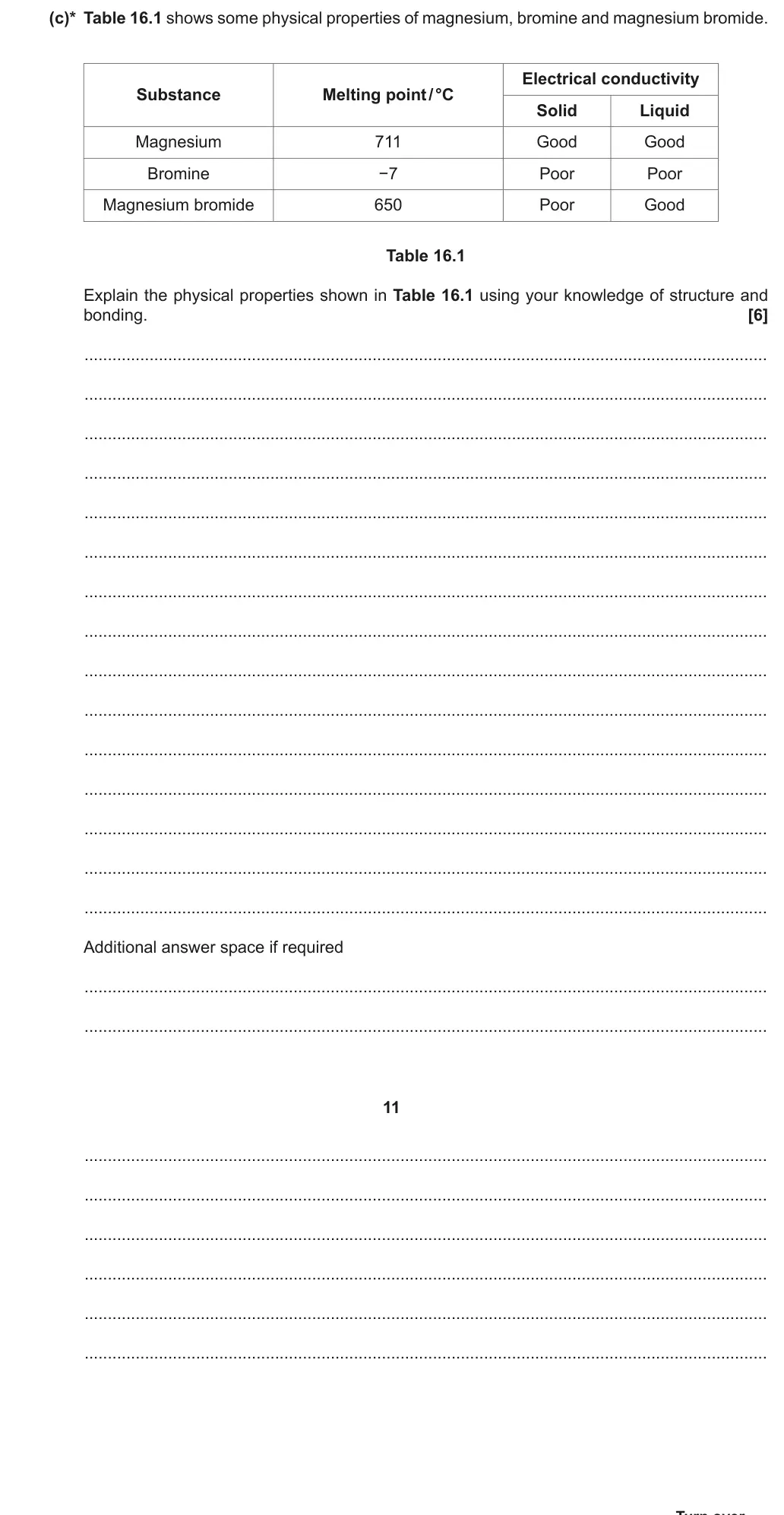
Results of student 1
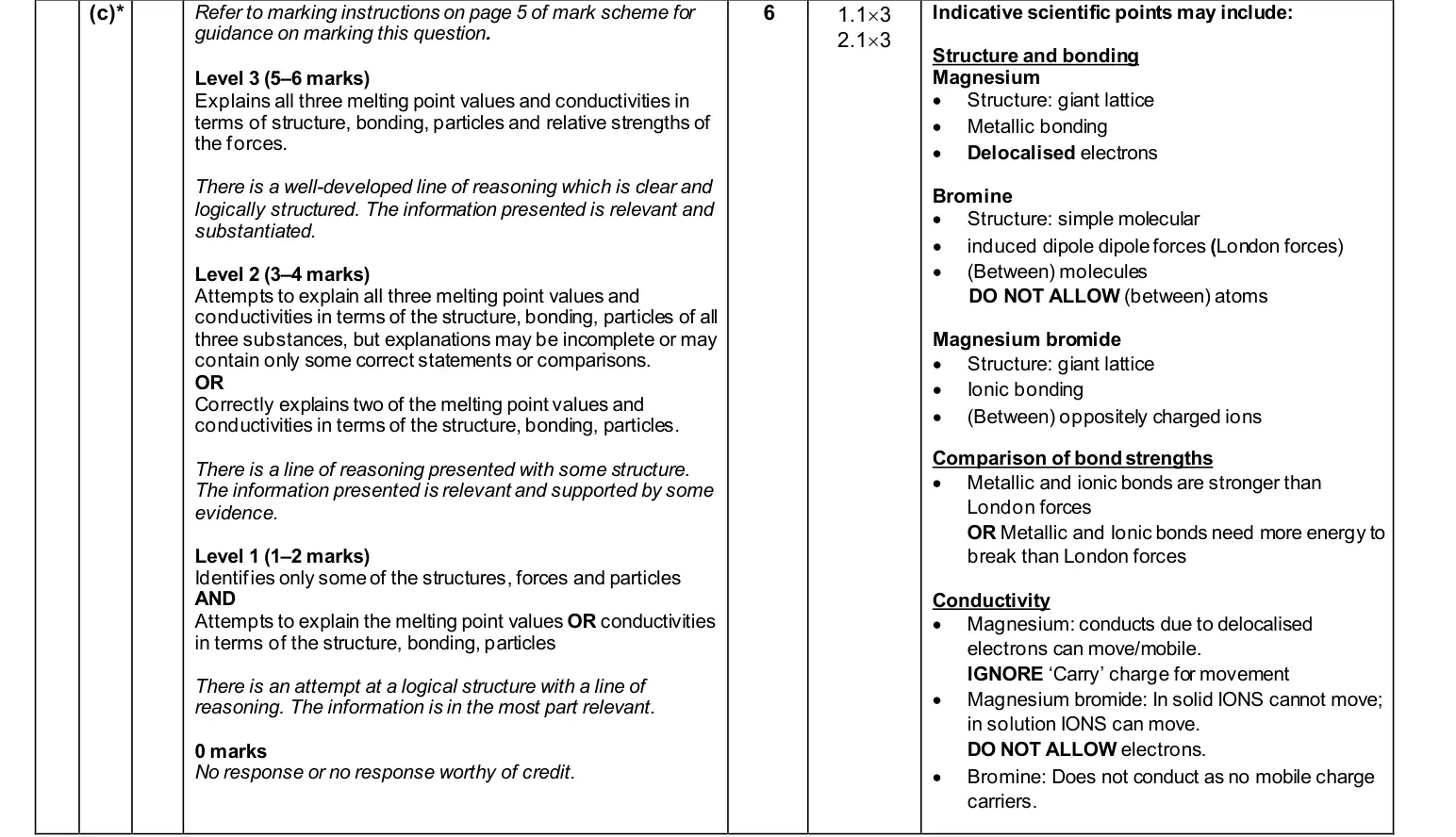
[Br2(aq)]
/ mol dm–3
00
time /s
Results of student 2
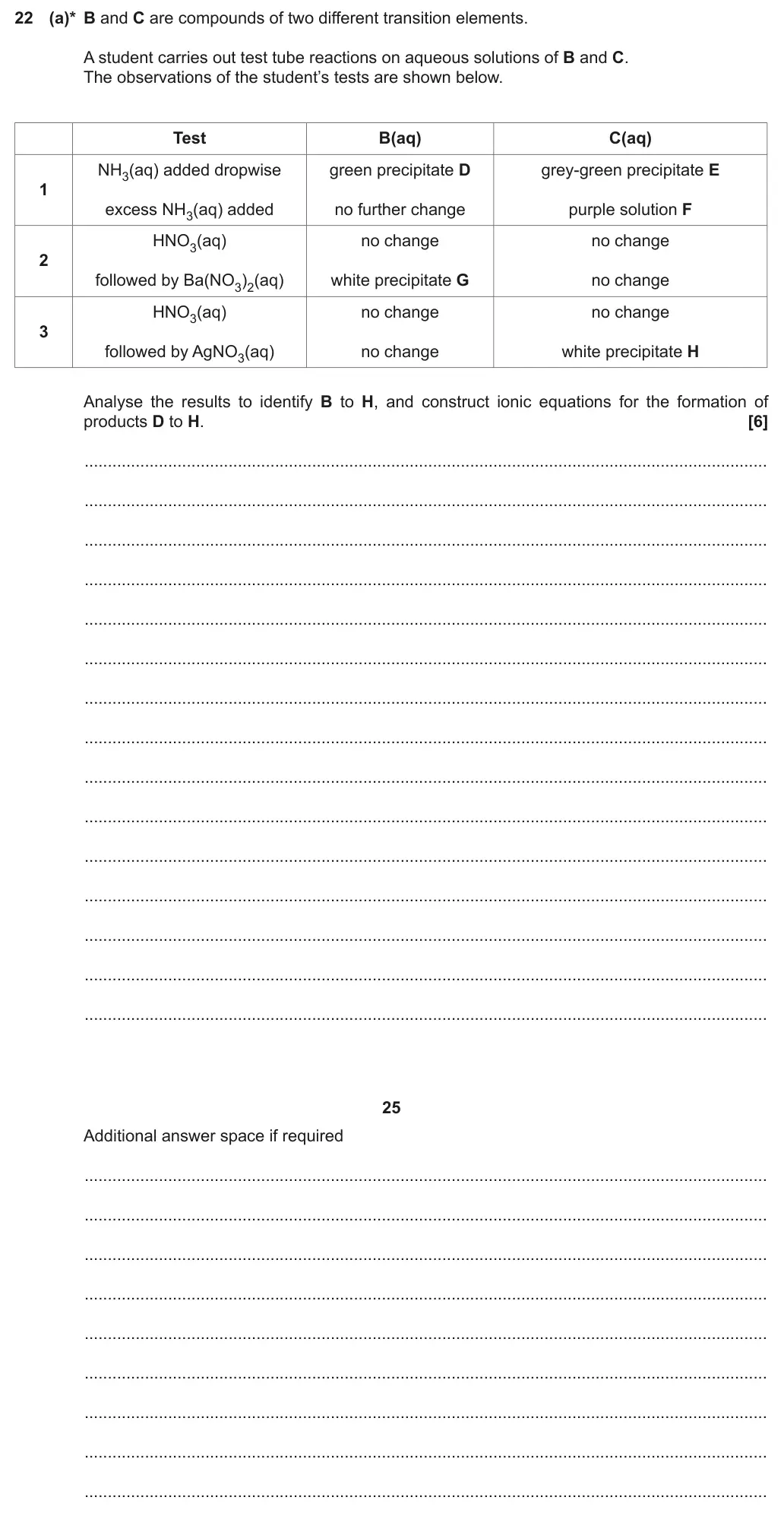
initial rate
/ mol dm–3s–1
00
[CH3COCH3(aq)] / mol dm–3
Results of student 3
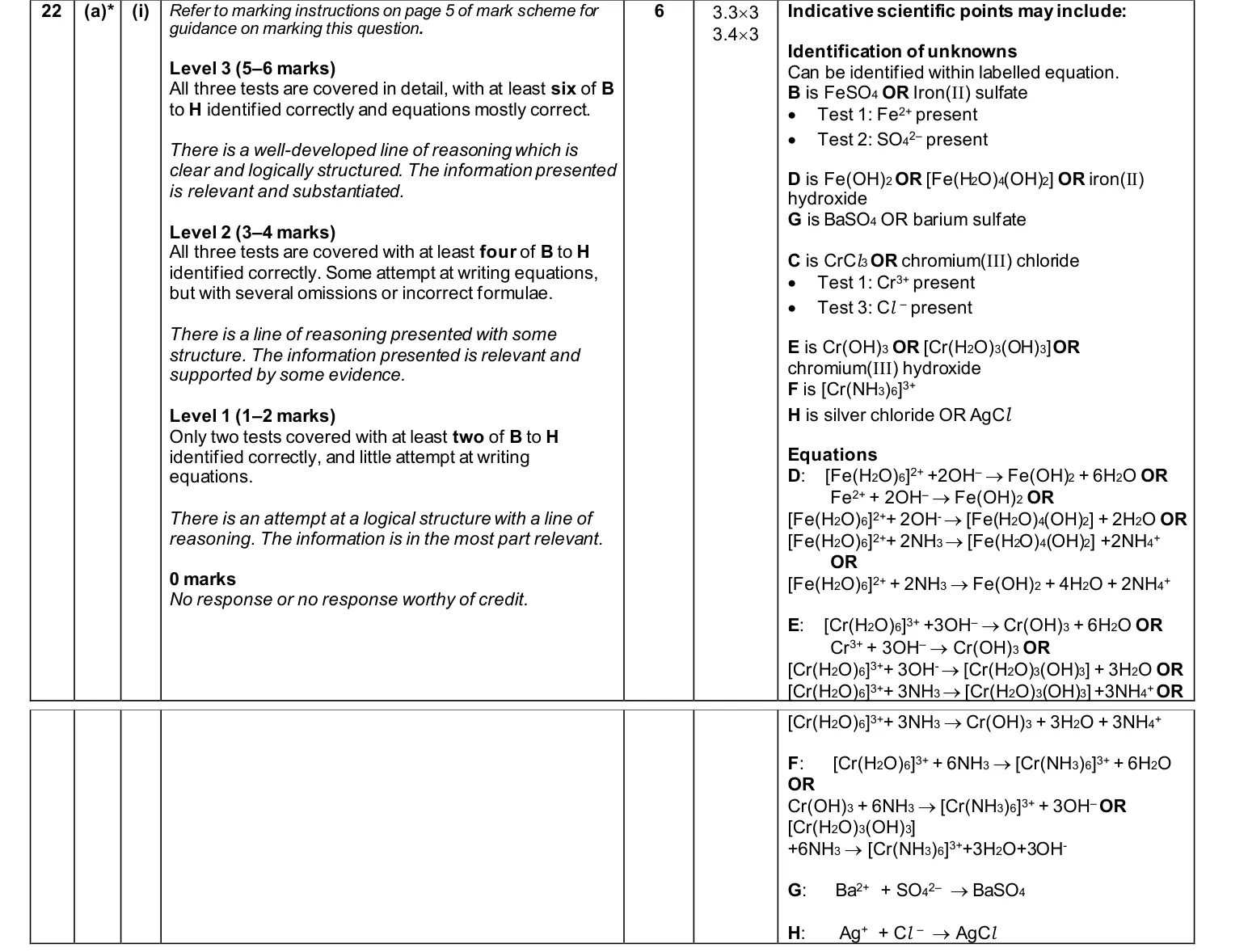
[Br2(aq)] [CH3COCH3(aq)] [H+(aq)] Initial rate
Experiment
/ mol dm−3 / mol dm−3 / mol dm−3 / 10−5 mol dm−3 s−1
1 0.004 1.60 0.20 1.25
2 0.004 1.60 0.40 2.50
Explain how the reaction orders can be determined from the students’ results, and determine the
rate equation and rate constant. [6]
..........................................................................................................................................................
..........................................................................................................................................................
..........................................................................................................................................................
..........................................................................................................................................................
..........................................................................................................................................................
..........................................................................................................................................................
..........................................................................................................................................................
..........................................................................................................................................................
..........................................................................................................................................................
..........................................................................................................................................................
..........................................................................................................................................................
..........................................................................................................................................................
..........................................................................................................................................................
..........................................................................................................................................................
..........................................................................................................................................................
Additional answer space if required
..........................................................................................................................................................
..........................................................................................................................................................
..........................................................................................................................................................
..........................................................................................................................................................
..........................................................................................................................................................
..........................................................................................................................................................
..........................................................................................................................................................
..........................................................................................................................................................
June 2019 · Paper 2 · Q18(e)(i) 6 marks AO3 6-mark level of response Medium organic synthesisamount of substancecarbonyl compoundscarboxylic acids and esters
(e)* A student intends to synthesise ester C.
H
O
H3C C C
O CH3
CH3
Ester C
(i) Plan a two-stage synthesis to prepare 12.75 g of ester C starting from 2-methylpropanal,
(CH3)2CHCHO. Assume the overall percentage yield of ester C from 2-methylpropanal is
40%.
In your answer include the mass of 2-methylpropanal required, reagents, conditions and
equations where appropriate.
Purification details are not required. [6]
...........................................................................................................................................
...........................................................................................................................................
...........................................................................................................................................
...........................................................................................................................................
...........................................................................................................................................
...........................................................................................................................................
...........................................................................................................................................
...........................................................................................................................................
...........................................................................................................................................
...........................................................................................................................................
...........................................................................................................................................
...........................................................................................................................................
...........................................................................................................................................
...........................................................................................................................................
...........................................................................................................................................
Additional answer space if required
...........................................................................................................................................
...........................................................................................................................................
...........................................................................................................................................
...........................................................................................................................................
...........................................................................................................................................
...........................................................................................................................................
...........................................................................................................................................
June 2019 · Paper 2 · Q21 6 marks 6-mark level of response Medium amount of substanceinfrared and mass spectrometrynmr spectroscopy
21* Analysis of an unknown organic compound produced the following results.
Elemental analysis by mass
C: 73.17%; H: 7.32%; O: 19.51%
Mass spectrum
Molecular ion peak at m / z = 164.0
Infrared spectrum
100
Transmittance
(%) 50
0
4000 3000 2000 1500 1000 500
Wavenumber / cm–1
1H NMR spectrum in D2O
3
4 3
1
8 7 6 5 4 3 2 1 0
Chemical shift, d / ppm
The numbers by the peaks are the relative peak areas.
Use the results to suggest one possible structure for the unknown compound.
Show all your reasoning. [6]
..........................................................................................................................................................
..........................................................................................................................................................
..........................................................................................................................................................
..........................................................................................................................................................
..........................................................................................................................................................
..........................................................................................................................................................
..........................................................................................................................................................
..........................................................................................................................................................
..........................................................................................................................................................
..........................................................................................................................................................
..........................................................................................................................................................
..........................................................................................................................................................
..........................................................................................................................................................
..........................................................................................................................................................
..........................................................................................................................................................
Additional answer space if required
..........................................................................................................................................................
..........................................................................................................................................................
..........................................................................................................................................................
..........................................................................................................................................................
..........................................................................................................................................................
..........................................................................................................................................................
..........................................................................................................................................................
..........................................................................................................................................................
June 2019 · Paper 3 · Q5(a)(i) 6 marks AO3 6-mark level of response Hard enthalpy changesamount of substancelattice enthalpy
5 This question is about copper(II) sulfate, CuSO4, and sodium thiosulfate, Na2S2O3.
(a) The enthalpy change of reaction, ∆rH, for converting anhydrous copper(II) sulfate to hydrated
copper(II) sulfate is difficult to measure directly by experiment.
CuSO4(s) + 5H2O(l) → CuSO4•5H2O(s) ∆rH reaction 5.1
The enthalpy changes of solution of anhydrous and hydrated copper(II) sulfate can be
measured by experiment. The reactions are shown below.
In the equations, ‘aq’ represents an excess of water.
CuSO4(s) + aq → Cu2+(aq) + SO4 2−(aq) ∆solH(CuSO4(s)) reaction 5.2
CuSO4•5H2O(s) + aq → Cu2+(aq) + SO4 2−(aq) ∆solH(CuSO4•5H2O(s)) reaction 5.3
Experiment 1
A student carries out an experiment to find ∆solH(CuSO4(s)) for reaction 5.2.
Student’s method
• Weigh a bottle containing CuSO4(s) and weigh a polystyrene cup.
• Add about 50 cm3 of water to the polystyrene cup and measure its temperature.
• Add the CuSO4(s), stir the mixture, and measure the final temperature.
• Weigh the empty bottle and weigh the polystyrene cup with final solution.
Mass readings
Mass of bottle + CuSO4(s) / g 28.04
Mass of empty bottle / g 20.06
Mass of polystyrene cup / g 23.43
Mass of polystyrene cup + final solution / g 74.13
Temperature readings
Initial temperature of water / °C 20.5
Temperature of final solution / °C 34.0
Experiment 2
The student carries out a second experiment with CuSO4•5H2O (reaction 5.3). The student
uses the same method as in Experiment 1.
The student calculates ∆solH(CuSO4•5H2O(s)) as +8.43 kJ mol−1.
(i)* Calculate ∆solH(CuSO4(s)) for reaction 5.2 and determine the enthalpy change of
reaction 5.1, ∆rH.
Assume that the specific heat capacity, c, of the solution is the same as for water.
Show your working, including an energy cycle linking the enthalpy changes. [6]
...........................................................................................................................................
...........................................................................................................................................
...........................................................................................................................................
...........................................................................................................................................
...........................................................................................................................................
...........................................................................................................................................
...........................................................................................................................................
...........................................................................................................................................
...........................................................................................................................................
...........................................................................................................................................
...........................................................................................................................................
...........................................................................................................................................
...........................................................................................................................................
...........................................................................................................................................
...........................................................................................................................................
Additional answer space if required
...........................................................................................................................................
...........................................................................................................................................
...........................................................................................................................................
...........................................................................................................................................
...........................................................................................................................................
...........................................................................................................................................
...........................................................................................................................................
...........................................................................................................................................
June 2019 · Paper 3 · Q6(b) 6 marks AO1, 3 6-mark level of response Hard amount of substanceformulae and equations
(b)* Compound C is a hydrated ionic compound with the empirical formula: FeH18N3O18.
A student investigates the thermal decomposition of compound C as outlined below.
Stage 1
The student gently heats 0.00300 mol of compound C to remove the water of crystallisation.
0.486 g of water is collected, leaving 0.00300 mol of the anhydrous compound D.
Stage 2
The student strongly heats 0.00300 mol of compound D, which decomposes to form a solid
oxide E (molar mass of 159.6 g mol−1) and 270 cm3 of a gas mixture, measured at RTP,
containing gases F and G.
Stage 3
The student cools the 270 cm3 gas mixture of F and G.
• Gas F is a compound that condenses to form 0.414 g of a liquid.
• Gas G remains and has a volume of 54 cm3, measured at RTP.
Gas G is tested and it relights a glowing splint.
Determine the formulae of C, D, E, F and G.
Show all your working and equations for the reactions. [6]
...................................................................................................................................................
...................................................................................................................................................
...................................................................................................................................................
...................................................................................................................................................
...................................................................................................................................................
...................................................................................................................................................
...................................................................................................................................................
...................................................................................................................................................
...................................................................................................................................................
...................................................................................................................................................
...................................................................................................................................................
...................................................................................................................................................
...................................................................................................................................................
...................................................................................................................................................
...................................................................................................................................................
Additional answer space if required.
...................................................................................................................................................
...................................................................................................................................................
...................................................................................................................................................
...................................................................................................................................................
...................................................................................................................................................
...................................................................................................................................................
...................................................................................................................................................
...................................................................................................................................................
June 2018 · AS Paper 2 · Q5(a)(i) 6 marks 6-mark level of response Hard organic synthesis aspractical techniques
5 (a) 1-Bromobutane is an organic liquid with a boiling point of 102 °C.
A student prepares 1-bromobutane by reacting butan-1-ol with sulfuric acid and sodium
bromide. The student boils the mixture for one hour.
The equation is shown below.
CH3CH2CH2CH2OH + H+ + Br – CH3CH2CH2CH2Br + H2O
The student obtains a reaction mixture containing an organic layer (density = 1.27 g cm–3)
and an aqueous layer (density = 1.00 g cm–3).
(i)* Draw a labelled diagram to show how you would safely set up apparatus for the
preparation. Outline a method to obtain a pure sample of 1-bromobutane from the
reaction mixture.
...........................................................................................................................................
...........................................................................................................................................
...........................................................................................................................................
...........................................................................................................................................
...........................................................................................................................................
...........................................................................................................................................
...........................................................................................................................................
...........................................................................................................................................
...........................................................................................................................................
...........................................................................................................................................
...........................................................................................................................................
...........................................................................................................................................
...........................................................................................................................................
...........................................................................................................................................
...................................................................................................................................... [6]
June 2018 · AS Paper 2 · Q7 6 marks 6-mark level of response Medium infrared and mass spectrometryalkenes
7* Compound F is a trans stereoisomer which is a useful intermediate in organic synthesis.
The results of elemental and spectral analysis of compound F are shown below.
Percentage composition by mass: C, 68.6 %; H, 8.6 %; O, 22.8 %.
Infrared spectrum
100
transmittance
(%)
50
0
4000 3000 2000 1500 1000 500
wavenumber / cm–1
Mass spectrum
100
80
60
relative
intensity
40
20
0
10 20 30 40 50 60 70 80
m/z
In the mass spectrum, the peak with the greatest relative intensity is caused by the loss of a
functional group from the molecular ion of compound F.
Determine the structure of compound F.
Explain your reasoning and show your working.
..........................................................................................................................................................
..........................................................................................................................................................
..........................................................................................................................................................
..........................................................................................................................................................
..........................................................................................................................................................
..........................................................................................................................................................
..........................................................................................................................................................
..........................................................................................................................................................
..........................................................................................................................................................
..........................................................................................................................................................
..........................................................................................................................................................
..........................................................................................................................................................
..........................................................................................................................................................
..........................................................................................................................................................
..................................................................................................................................................... [6]
June 2018 · Paper 1 · Q17(a) 6 marks 6-mark level of response Easy rate equations
17 This question is about reaction rates.
Aqueous iron(III) ions, Fe3+(aq), react with aqueous iodide ions, I–(aq), as shown below.
2Fe3+(aq) + 2I–(aq) 2Fe2+(aq) + I2(aq)
A student carries out three experiments to investigate how different concentrations of Fe3+(aq)
and I–(aq) affect the initial rate of this reaction. The results are shown below.
[Fe3+(aq)] [I–(aq)] Initial rate
Experiment
/ mol dm–3 / mol dm–3 / mol dm–3 s–1
1 4.00 × 10⁻² 3.00 × 10⁻² 8.10 × 10⁻⁴
2 8.00 × 10⁻² 3.00 × 10⁻² 1.62 × 10⁻³
3 4.00 × 10⁻² 6.00 × 10⁻² 3.24 × 10⁻³
(a)* Determine the rate constant and a possible two-step mechanism for this reaction that are
consistent with these results. [6]
...................................................................................................................................................
...................................................................................................................................................
...................................................................................................................................................
...................................................................................................................................................
...................................................................................................................................................
...................................................................................................................................................
...................................................................................................................................................
...................................................................................................................................................
...................................................................................................................................................
...................................................................................................................................................
...................................................................................................................................................
...................................................................................................................................................
...................................................................................................................................................
...................................................................................................................................................
...................................................................................................................................................
Additional answer space if required
...................................................................................................................................................
...................................................................................................................................................
...................................................................................................................................................
...................................................................................................................................................
...................................................................................................................................................
...................................................................................................................................................
...................................................................................................................................................
...................................................................................................................................................
...................................................................................................................................................
...................................................................................................................................................
June 2018 · Paper 1 · Q21(d) 6 marks 6-mark level of response Hard transition elementsamount of substanceacids and titrations
(d)* Three different reactions of copper compounds are described below.
Reaction 1: Aqueous copper(II) sulfate reacts with excess aqueous ammonia in a ligand
substitution reaction. A deep-blue solution is formed, containing an octahedral
complex ion, C, which is a trans isomer.
Reaction 2: Copper(I) oxide reacts with hot dilute sulfuric acid in a disproportionation
reaction. A blue solution, D, and a brown solid, E are formed.
Reaction 3: Copper(II) oxide reacts with warm dilute nitric acid in a neutralisation reaction,
to form a blue solution. Unreacted copper(II) oxide is filtered off, and the
solution is left overnight in an evaporating basin.
A hydrated salt, F, crystallises, with the percentage composition by mass:
Cu, 26.29%; H, 2.48%; N, 11.59%; O, 59.63%.
Identify C–F by formulae or structures, as appropriate.
Include equations, any changes in oxidation number, and working. [6]
...................................................................................................................................................
...................................................................................................................................................
...................................................................................................................................................
...................................................................................................................................................
...................................................................................................................................................
...................................................................................................................................................
...................................................................................................................................................
...................................................................................................................................................
...................................................................................................................................................
...................................................................................................................................................
...................................................................................................................................................
...................................................................................................................................................
...................................................................................................................................................
...................................................................................................................................................
...................................................................................................................................................
Additional answer space if required.
...................................................................................................................................................
...................................................................................................................................................
...................................................................................................................................................
...................................................................................................................................................
...................................................................................................................................................
...................................................................................................................................................
...................................................................................................................................................
...................................................................................................................................................
...................................................................................................................................................
...................................................................................................................................................
June 2018 · Paper 2 · Q20(d) 6 marks 6-mark level of response Medium alkenesbonding and structureorganic basics
Earlier part of question 20 that this part usesEarlier part of June 2018 Paper 2 question 20
(d)* Methylcinnamaldehyde reacts with iodine monochloride, ICl, by electrophilic addition. The
reaction produces a mixture containing two different organic products.
CHO
methylcinnamaldehyde
The electronegativity values of chlorine and iodine are given in the table below.
Pauling electronegativity value
Cl 3.0
I 2.5
Outline the mechanism, using the ‘curly arrow’ model, for the formation of one of the organic
products and explain which of the two possible organic products is more likely to be formed.
In your mechanism, you can show the phenyl group as C6H5. [6]
...................................................................................................................................................
...................................................................................................................................................
...................................................................................................................................................
...................................................................................................................................................
...................................................................................................................................................
...................................................................................................................................................
...................................................................................................................................................
...................................................................................................................................................
...................................................................................................................................................
...................................................................................................................................................
...................................................................................................................................................
...................................................................................................................................................
...................................................................................................................................................
...................................................................................................................................................
...................................................................................................................................................
Additional answer space if required.
...................................................................................................................................................
...................................................................................................................................................
...................................................................................................................................................
...................................................................................................................................................
...................................................................................................................................................
...................................................................................................................................................
...................................................................................................................................................
...................................................................................................................................................
...................................................................................................................................................
...................................................................................................................................................
June 2018 · Paper 2 · Q22(d) 6 marks 6-mark level of response Easy nmr spectroscopyamount of substanceinfrared and mass spectrometry
(d)* A scientist is researching compounds that might be suitable as fuel additives.
One of the compounds gives the analytical results below.
Elemental analysis by mass:
C: 54.54%; H: 9.10%; O: 36.36%
Mass spectrum:
Molecular ion peak at m/z = 132.0
1H NMR spectrum in D2O
6
3
1
5 4 3 2 1 0
chemical shift,  / ppm
The numbers by the peaks are the relative peak areas.
When the spectrum is run without D2O, there are two additional peaks with the same relative
peak areas at 11.0 ppm and 3.6 ppm.
Use the information provided to suggest a structure for the compound.
Show all your reasoning. [6]
...................................................................................................................................................
...................................................................................................................................................
...................................................................................................................................................
...................................................................................................................................................
...................................................................................................................................................
...................................................................................................................................................
...................................................................................................................................................
...................................................................................................................................................
...................................................................................................................................................
...................................................................................................................................................
...................................................................................................................................................
...................................................................................................................................................
...................................................................................................................................................
...................................................................................................................................................
...................................................................................................................................................
Additional answer space if required.
...................................................................................................................................................
...................................................................................................................................................
...................................................................................................................................................
...................................................................................................................................................
...................................................................................................................................................
...................................................................................................................................................
...................................................................................................................................................
...................................................................................................................................................
...................................................................................................................................................
June 2018 · Paper 3 · Q4(b)(ii) 6 marks 6-mark level of response Hard organic synthesisamount of substancecarboxylic acids and estersamines
Earlier part of question 4 that this part usesEarlier part of June 2018 Paper 3 question 4
(ii)* A chemist prepares a pure solid sample of paracetamol from 4-nitrophenol in two stages:
H
Stage 1 Stage 2
HO NO2 Intermediate HO N
CH3COCl
C CH3
4-nitrophenol paracetamol
O
Describe a two-stage synthesis of 5.00 g of pure paracetamol from 4-nitrophenol. The
overall percentage yield of paracetamol from 4-nitrophenol is 40.0%.
In your answer, include the mass of 4-nitrophenol required, the reagents and intermediate,
and details of the purification of paracetamol. [6]
...........................................................................................................................................
...........................................................................................................................................
...........................................................................................................................................
...........................................................................................................................................
...........................................................................................................................................
...........................................................................................................................................
...........................................................................................................................................
...........................................................................................................................................
...........................................................................................................................................
...........................................................................................................................................
...........................................................................................................................................
...........................................................................................................................................
...........................................................................................................................................
...........................................................................................................................................
...........................................................................................................................................
Additional answer space if required.
...........................................................................................................................................
...........................................................................................................................................
...........................................................................................................................................
...........................................................................................................................................
June 2018 · Paper 3 · Q6(b) 6 marks 6-mark level of response Medium alkenesaromatic compounds
(b)* Many organic reactions use electrophiles as reagents.
Explain the role of electrophiles in organic chemistry.
Your answer should include one reaction of an aliphatic compound and one reaction of an
aromatic compound, including relevant mechanisms. [6]
...................................................................................................................................................
...................................................................................................................................................
...................................................................................................................................................
...................................................................................................................................................
...................................................................................................................................................
...................................................................................................................................................
...................................................................................................................................................
...................................................................................................................................................
...................................................................................................................................................
...................................................................................................................................................
...................................................................................................................................................
...................................................................................................................................................
...................................................................................................................................................
...................................................................................................................................................
...................................................................................................................................................
Additional answer space if required.
...................................................................................................................................................
...................................................................................................................................................
...................................................................................................................................................
...................................................................................................................................................
...................................................................................................................................................
...................................................................................................................................................
...................................................................................................................................................
June 2017 · AS Paper 2 · Q2 6 marks 6-mark level of response practical skillsamount of substancereaction rates
2* A student was asked to carry out an experiment to determine the initial rate of reaction of zinc and
hydrochloric acid.
The student plans to collect a total of about 72 cm3 of hydrogen at RTP and to use an excess of
zinc.
The student selects the following apparatus:
• the apparatus shown in the diagram
• 100 cm3 measuring cylinder
• stop clock
• 2 decimal place balance 100 cm3 gas syringe
Outline how the student could carry out the experiment and explain how the results could be
processed graphically.
Show all working in your calculations.
..........................................................................................................................................................
..........................................................................................................................................................
..........................................................................................................................................................
..........................................................................................................................................................
..........................................................................................................................................................
..........................................................................................................................................................
..........................................................................................................................................................
..........................................................................................................................................................
..........................................................................................................................................................
..........................................................................................................................................................
..........................................................................................................................................................
..........................................................................................................................................................
..........................................................................................................................................................
..................................................................................................................................................... [6]
June 2017 · AS Paper 2 · Q4(c) 6 marks 6-mark level of response alcoholsorganic synthesis as
(c)* Describe the oxidation reactions of butan-1-ol forming an aldehyde and a carboxylic acid.
Explain, using a diagram, how the aldehyde can be produced in the laboratory by controlling
the reaction conditions.
...................................................................................................................................................
...................................................................................................................................................
...................................................................................................................................................
...................................................................................................................................................
...................................................................................................................................................
...................................................................................................................................................
...................................................................................................................................................
...................................................................................................................................................
...................................................................................................................................................
...................................................................................................................................................
...................................................................................................................................................
...................................................................................................................................................
...................................................................................................................................................
.............................................................................................................................................. [6]
June 2017 · Paper 1 · Q19(c) 6 marks 6-mark level of response rate equations
Earlier part of question 19 that this part usesEarlier part of June 2017 Paper 1 question 19
(c)* Determine the initial rate of reaction, the order with respect to H2O2, and the rate constant.
Your answer must show full working on the graph and on the lines below.
...................................................................................................................................................
...................................................................................................................................................
...................................................................................................................................................
...................................................................................................................................................
...................................................................................................................................................
...................................................................................................................................................
...................................................................................................................................................
...................................................................................................................................................
...................................................................................................................................................
...................................................................................................................................................
...................................................................................................................................................
...................................................................................................................................................
...................................................................................................................................................
.............................................................................................................................................. [6]
June 2017 · Paper 1 · Q23(b) 6 marks 6-mark level of response amount of substancetransition elements
(b)* A hydrated nickel(II) complex, A, is heated in a crucible to remove the water of crystallisation.
The anhydrous complex B is formed. The results are shown below.
Mass of crucible + hydrated complex A = 59.554 g
Mass of crucible + anhydrous complex B = 58.690 g
Mass of crucible = 51.257 g
The anhydrous complex B is analysed and found to have a molar mass of 309.7 g mol–1 and
to contain the following percentage composition by mass:
Ni, 18.95%; C, 23.25%; N, 27.12%; H, 7.75%; Cl, 22.93%.
The anhydrous complex B contains a cation C comprising Ni, C, N and H only.
Cation C is six-coordinate, contains three molecules of the bidentate ligand D, and exists as
optical isomers.
Determine the formula of A, B, C and D and show the 3D structures for the optical isomers
of C.
Show all your working.
...................................................................................................................................................
...................................................................................................................................................
...................................................................................................................................................
...................................................................................................................................................
...................................................................................................................................................
...................................................................................................................................................
...................................................................................................................................................
...................................................................................................................................................
...................................................................................................................................................
...................................................................................................................................................
...................................................................................................................................................
...................................................................................................................................................
...................................................................................................................................................
.............................................................................................................................................. [6]
June 2017 · Paper 2 · Q17(a)(ii) 6 marks 6-mark level of response organic synthesisamount of substance
Earlier part of question 17 that this part usesEarlier part of June 2017 Paper 2 question 17
(ii)* A chemist carries out the reaction in Equation 17.1 using 4.97 g of benzoic acid.
The chemist obtains 3-nitrobenzoic acid as an impure solid.
The chemist purifies the solid to obtain 4.85 g of 3-nitrobenzoic acid.
Describe a method to obtain a pure sample of 3-nitrobenzoic acid from the impure solid,
determine the percentage yield and check its purity.
...........................................................................................................................................
...........................................................................................................................................
...........................................................................................................................................
...........................................................................................................................................
...........................................................................................................................................
...........................................................................................................................................
...........................................................................................................................................
...........................................................................................................................................
...........................................................................................................................................
...........................................................................................................................................
...........................................................................................................................................
...........................................................................................................................................
...........................................................................................................................................
...........................................................................................................................................
...........................................................................................................................................
..................................................................................................................................... [6]
June 2017 · Paper 2 · Q21 6 marks 6-mark level of response nmr spectroscopyinfrared and mass spectrometrycarboxylic acids and esters
21* Compound L is an organic compound containing carbon, hydrogen and oxygen only.
The 1H NMR spectrum of compound L is shown below.
The numbers by the peaks are the relative peak areas.
9
3
2
2
5 4 3 2 1 0
chemical shift,   / ppm δ
Compound L is refluxed with aqueous hydrochloric acid, forming two organic compounds M
and N. The infrared spectra of M and N are shown below.
Infrared spectrum of M
Item removed due to third party copyright restrictions.
Infrared spectrum of N
100
transmittance
(%) 50
0
4000 3000 2000 1500 1000 500
wavenumber / cm–1
Use the information provided to suggest a structure for compound L.
Show all of your reasoning.
..........................................................................................................................................................
..........................................................................................................................................................
..........................................................................................................................................................
..........................................................................................................................................................
..........................................................................................................................................................
..........................................................................................................................................................
..........................................................................................................................................................
..........................................................................................................................................................
..........................................................................................................................................................
..........................................................................................................................................................
..........................................................................................................................................................
..........................................................................................................................................................
..........................................................................................................................................................
..........................................................................................................................................................
.................................................................................................................................................... [6]
June 2017 · Paper 3 · Q2(a) 6 marks 6-mark level of response enthalpy changesamount of substance
2 A student plans to determine the enthalpy change of reaction 3.1 shown below.
Na2O(s) + 2HCl(aq) 2NaCl(aq) + H2O(l) reaction 3.1
This enthalpy change can be determined indirectly using Hess’ Law from the enthalpy changes of
reaction 3.2 and reaction 3.3 shown below.
Na2O(s) + H2O(l) 2NaOH(aq) reaction 3.2
HCl(aq) + NaOH(aq) NaCl(aq) + H2O(l)    ∆rH = −57.6 kJ mol−1 reaction 3.3
The student will determine the enthalpy change of reaction 3.2 as outlined below.
• Weigh a bottle containing Na2O(s) and weigh a polystyrene cup.
• Add about 25 cm3 of water to the polystyrene cup and measure its temperature.
• Add the Na2O(s), stir the mixture, and measure the maximum temperature reached.
• Weigh the empty bottle and weigh the polystyrene cup with the final solution.
Mass readings
Mass of bottle + Na2O(s) = 16.58 g
Mass of empty bottle = 15.34 g
Mass of empty polystyrene cup = 21.58 g
Mass of polystyrene cup + final solution = 47.33 g
Temperature readings
Initial temperature of water = 20.5 °C
Maximum temperature of final solution = 55.5 °C
The density and specific heat capacity, c, of the solution are the same as for water.
(a)* Calculate the enthalpy change of reaction 3.2 and the enthalpy change of reaction 3.1.
Show all your working.
...................................................................................................................................................
...................................................................................................................................................
...................................................................................................................................................
...................................................................................................................................................
...................................................................................................................................................
...................................................................................................................................................
...................................................................................................................................................
...................................................................................................................................................
...................................................................................................................................................
...................................................................................................................................................
...................................................................................................................................................
...................................................................................................................................................
...................................................................................................................................................
...................................................................................................................................................
............................................................................................................................................. [6]
June 2017 · Paper 3 · Q5(b) 6 marks 6-mark level of response chromatography and functional group testsorganic synthesis
(b)* The structures for six naturally occurring organic compounds with pleasant smells, B–G, are
shown below. The common names in brackets relate to their source and smell.
OH
O
B C
(linalool) (citral)
O
OH
D
(geraniol)
E
(camphor)
O
OH
F G
(menthol) (ionone)
Explain how chemical tests would allow each compound to be distinguished from the other
compounds.
In your answer, include essential details for all test procedures and observations.
Details of apparatus and quantities are not required.
...................................................................................................................................................
...................................................................................................................................................
...................................................................................................................................................
...................................................................................................................................................
...................................................................................................................................................
...................................................................................................................................................
...................................................................................................................................................
...................................................................................................................................................
...................................................................................................................................................
...................................................................................................................................................
...................................................................................................................................................
...................................................................................................................................................
...................................................................................................................................................
...................................................................................................................................................
............................................................................................................................................. [6]
June 2016 · AS Paper 2 · Q3(c) 6 marks 6-mark level of response alkenesorganic basics
Earlier part of question 3 that this part usesEarlier part of June 2016 Paper 2 question 3
8
(c)* Compound A reacts with hydrogen bromide to form a mixture of two different organic products.
H3C CH3
C C
H CH3
compound A
Give the structures of the two possible organic products of the reaction.
Outline the mechanism, using the ‘curly arrow’ model, for the formation of one of the organic
products from compound A.
Explain which of the two organic products is more likely to be formed.
...................................................................................................................................................
...................................................................................................................................................
...................................................................................................................................................
...................................................................................................................................................
.............................................................................................................................................. [6]
June 2016 · AS Paper 2 · Q7 6 marks AO3 6-mark level of response infrared and mass spectrometry
16
7* Organic compound C has the following percentage composition by mass:
C, 54.5%; H, 9.1%; O, 36.4%.
The infrared spectrum and mass spectrum of compound C are shown below.
100
transmittance
50
(%)
0
4000 3000 2000 1500 1000 500
wavenumber / cm–1
100
80
60
relative
intensity
40
20
0
10 20 30 40 50 60 70 80 90
m / z
In the mass spectrum, a secondary carbocation is responsible for the peak with the greatest
relative intensity.
17
Identify compound C.
In your answer you should make clear how your conclusion is linked to all the evidence.
..........................................................................................................................................................
..........................................................................................................................................................
..........................................................................................................................................................
..................................................................................................................................................... [6]

Work with an OCR chemistry tutor

Dropping marks on calculations, mechanisms or the six-markers? Book a trial session with a specialist OCR chemistry tutor.

Prefer email? Send an enquiry

If you are under 18, please include a parent's contact details. Enquiries go to enquiries@chemistryaleveltutor.com and are deleted once handled. All tutoring is online.