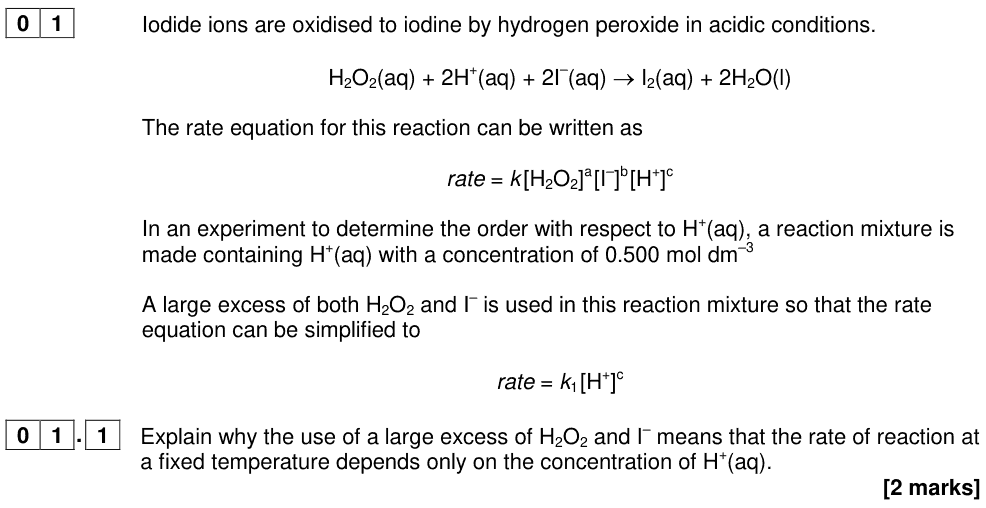
| 01.1 | Rate equations | 2 | | Explanation |
| 01.2 | Rate equations | 2 | | Practical and data analysis |
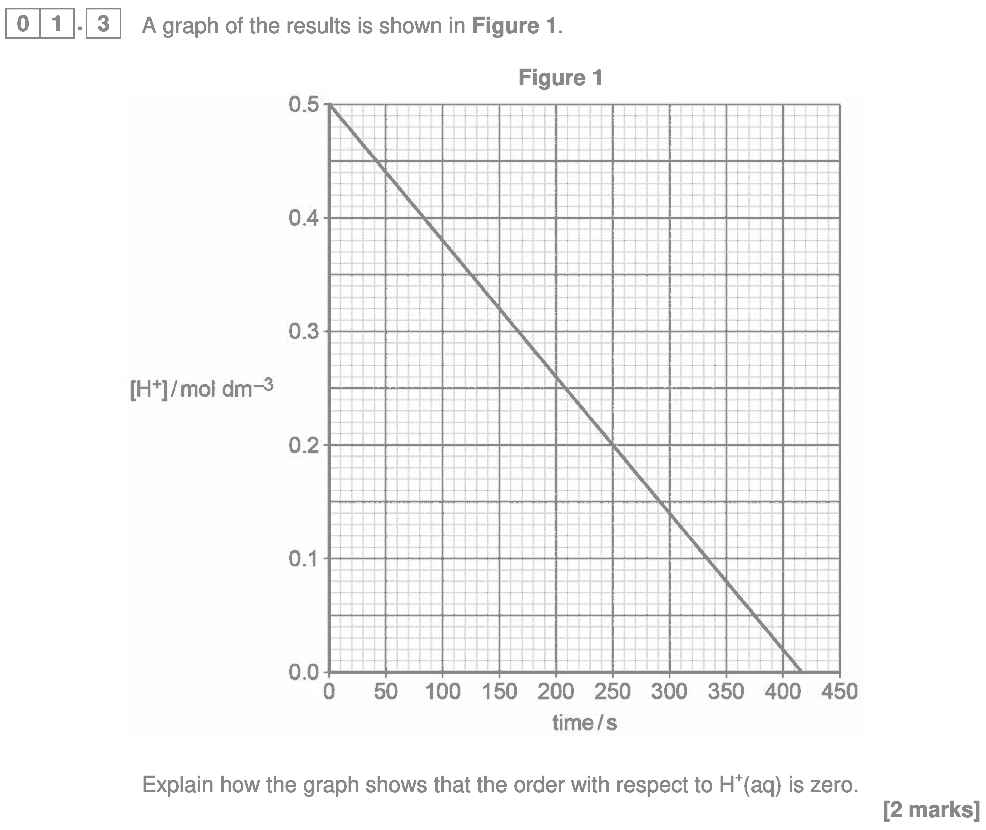
| 01.3 | Rate equations | 2 | | Explanation |
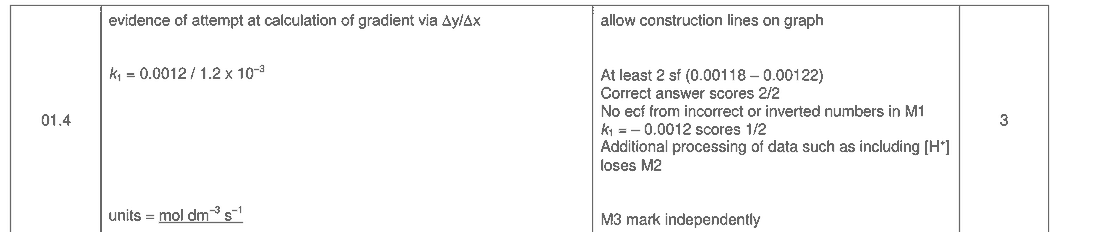
| 01.4 | Rate equations | 3 | | Calculation |
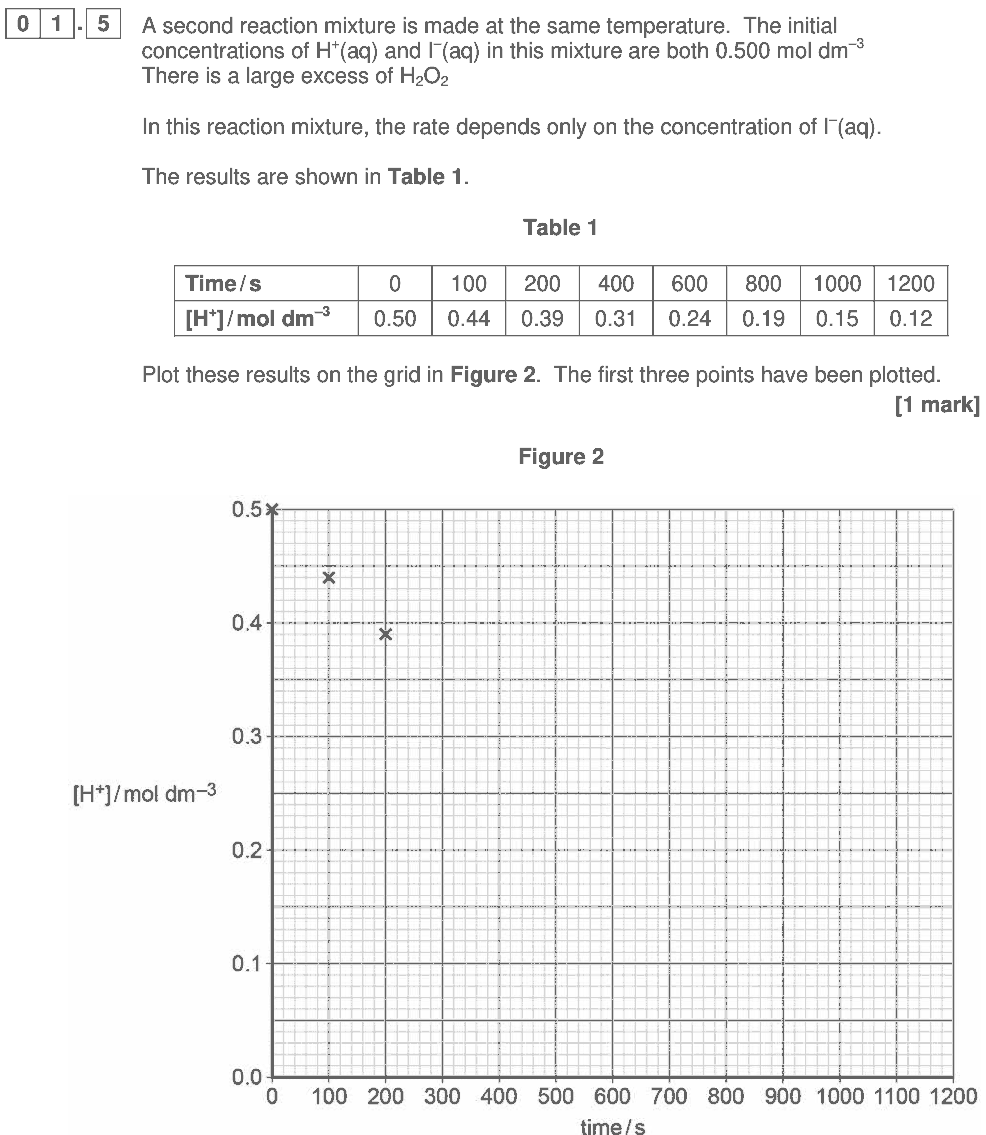
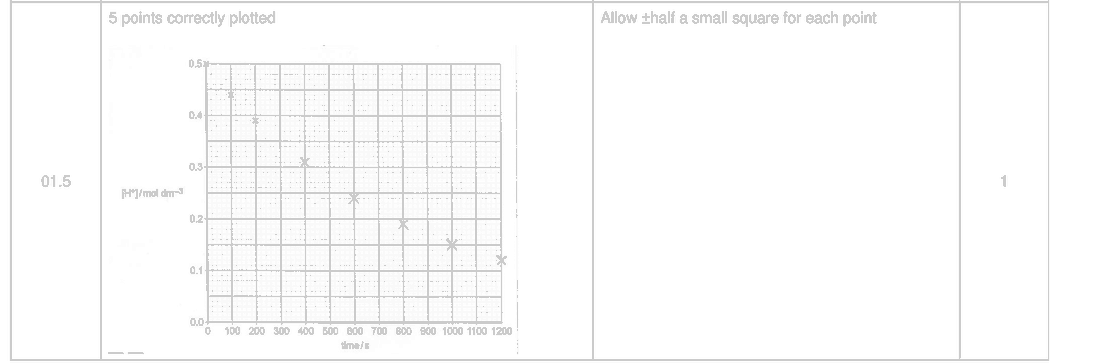
| 01.5 | Rate equations | 1 | | Practical and data analysis |
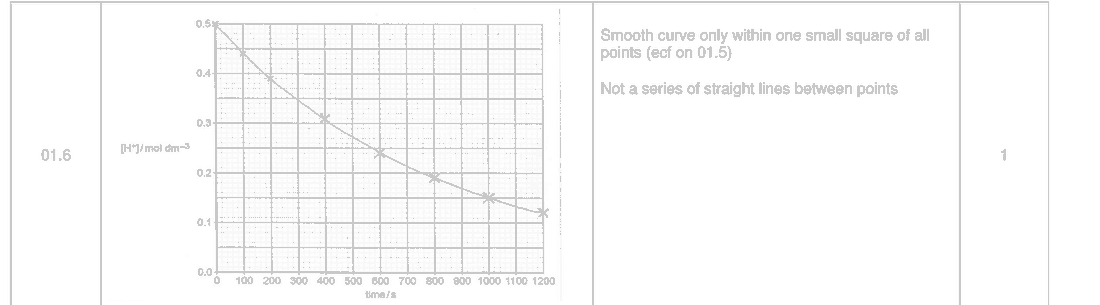
| 01.6 | Rate equations | 1 | | Practical and data analysis |
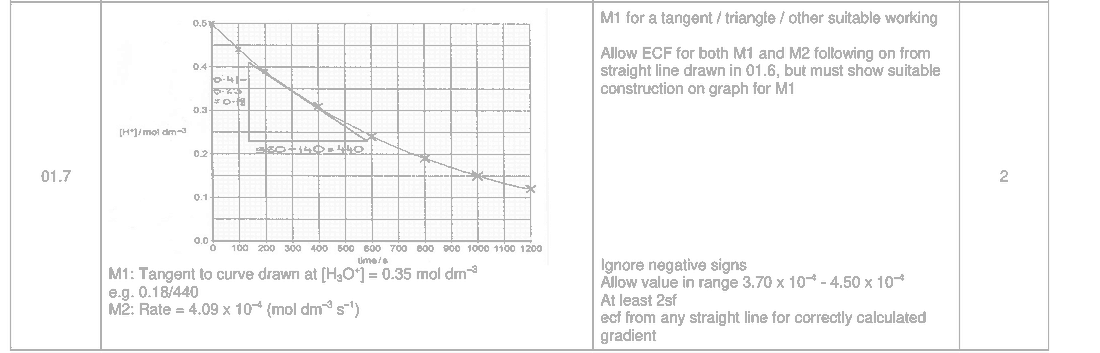
| 01.7 | Rate equations | 2 | | Calculation |
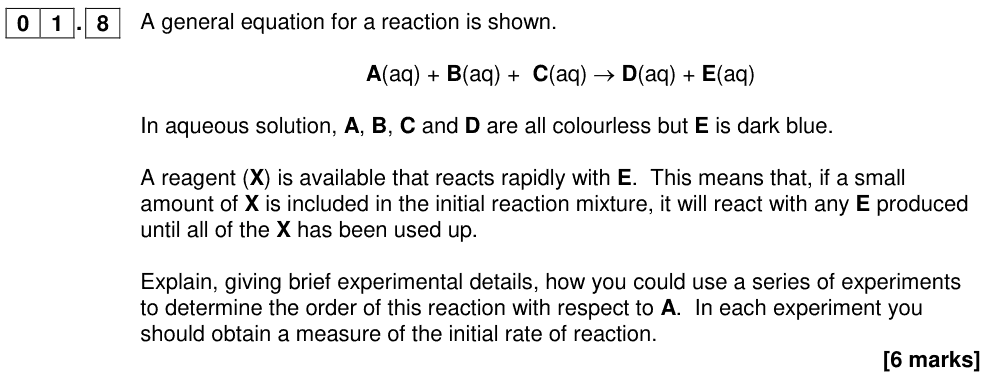
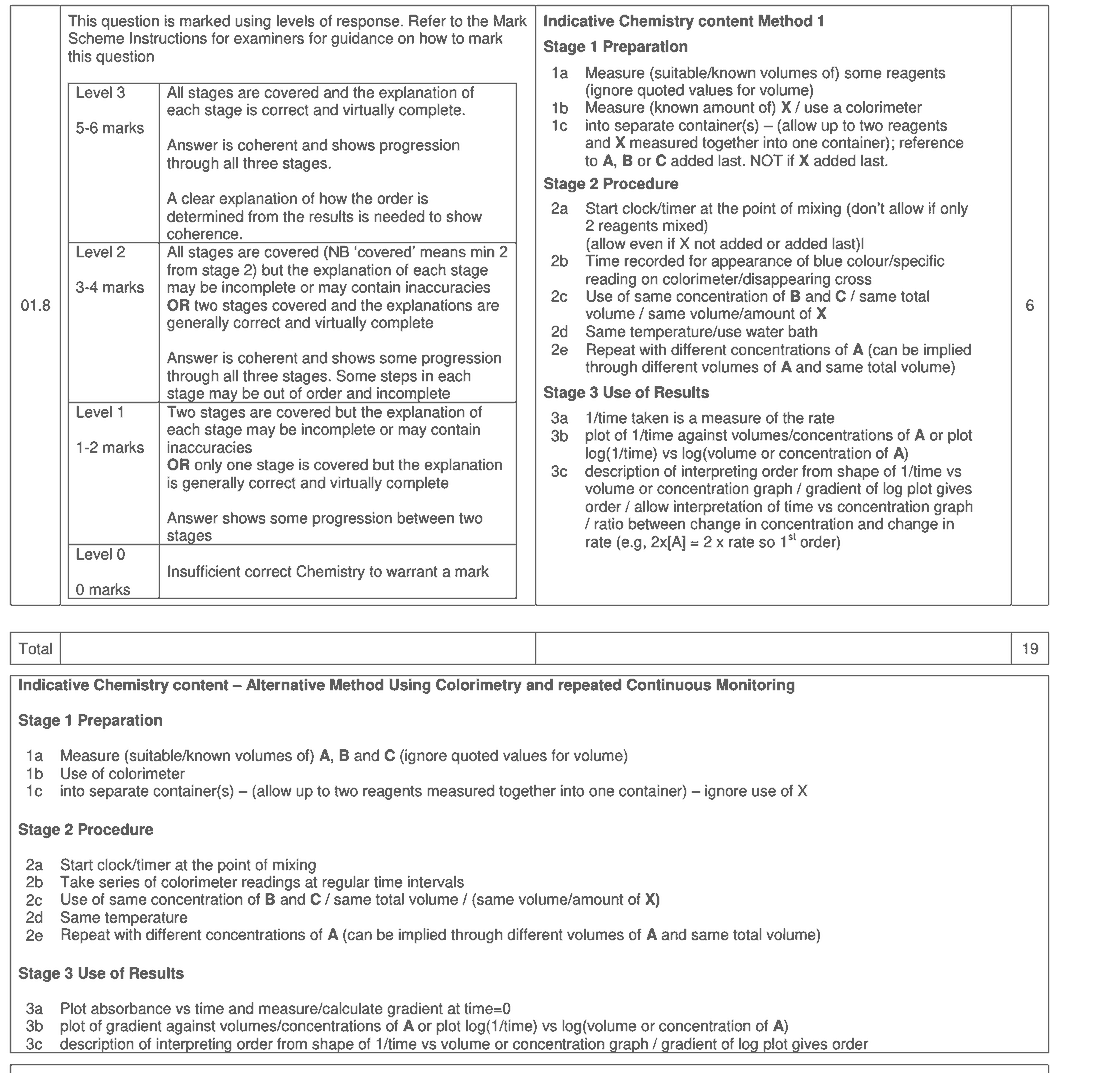
| 01.8 | Rate equations | 6 | | Level of response |
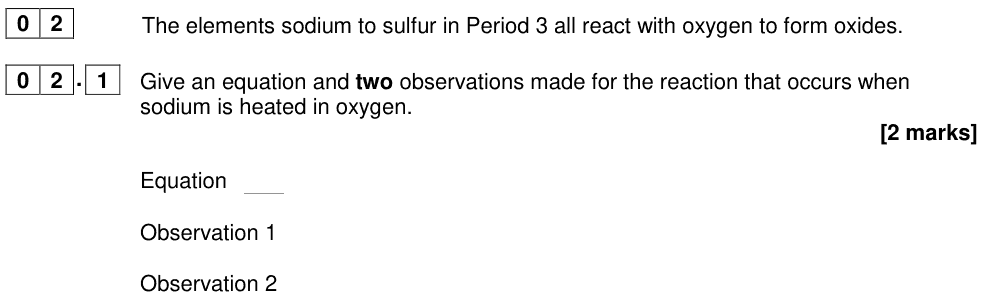
| 02.1 | Period 3 elements and their oxides | 2 | | Equation writing |
| 02.2 | Period 3 elements and their oxides | 2 | | Equation writing |
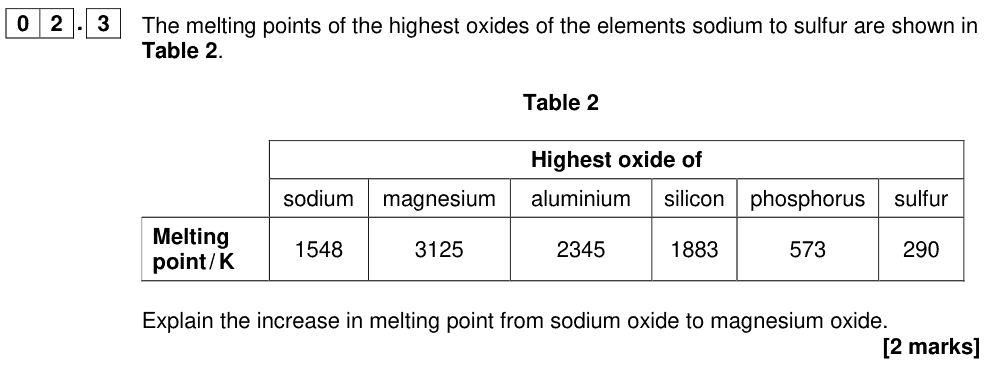
| 02.3 | Period 3 elements and their oxides | 2 | | Explanation |
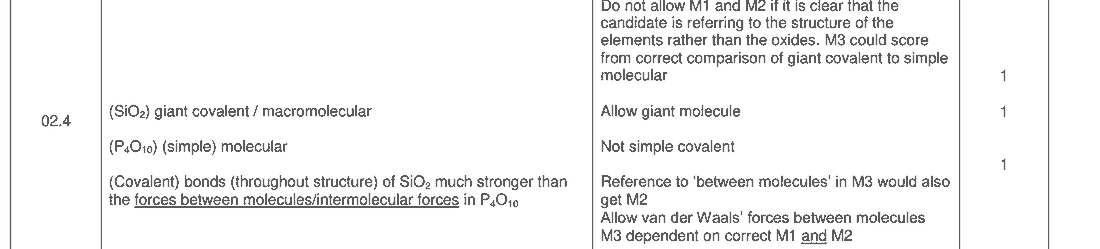
| 02.4 | Period 3 elements and their oxides | 3 | | Explanation |
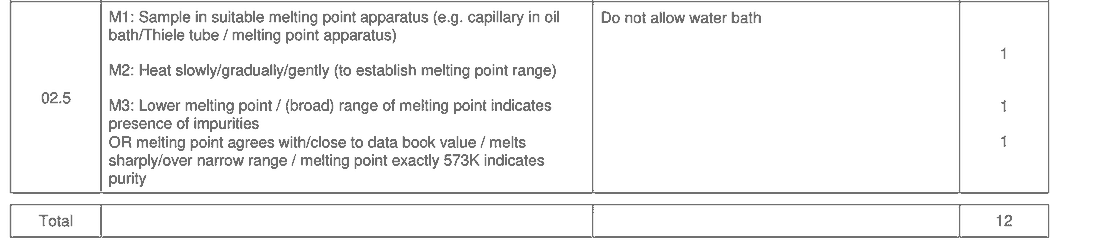
| 02.5 | Carboxylic acids and derivatives | 3 | | Practical and data analysis |
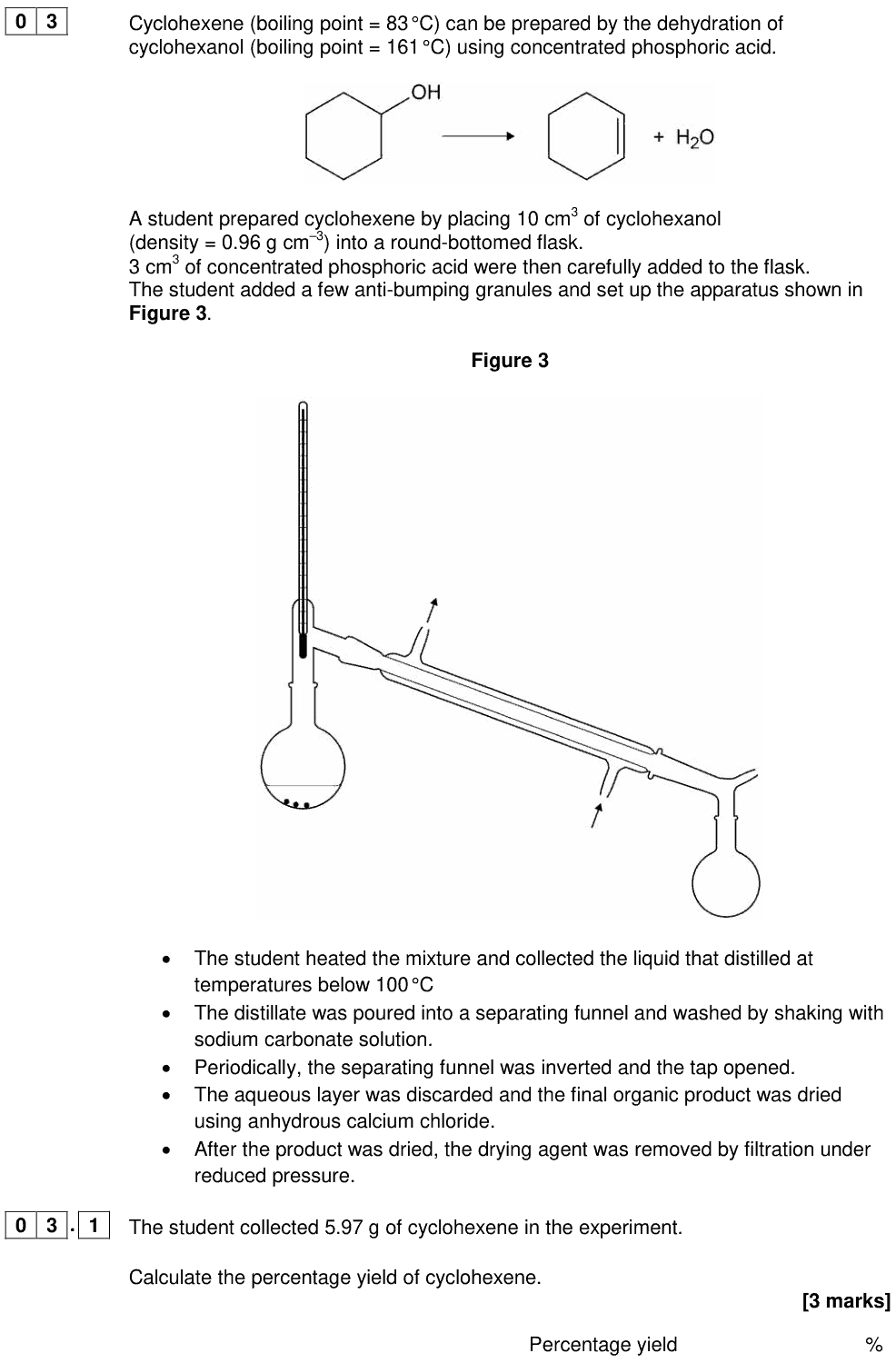
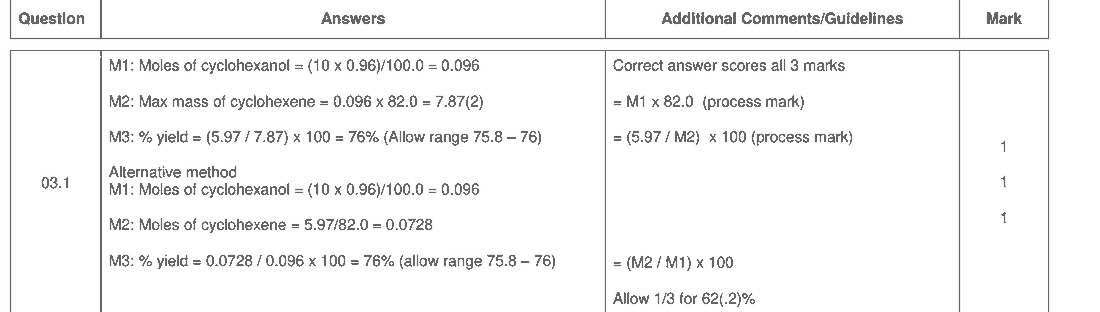
| 03.1 | Amount of substance | 3 | | Calculation |
| 03.2 | Alkenes, Organic analysis: test-tube reactions, mass spectrometry and infrared | 2 | | Practical and data analysis |
| 03.3 | Carboxylic acids and derivatives | 1 | | Short answer |
| 03.4 | Carboxylic acids and derivatives | 1 | | Short answer |
| 03.5 | Carboxylic acids and derivatives | 1 | | Short answer |
| 03.6 | Carboxylic acids and derivatives | 2 | | Practical and data analysis |
| 03.7 | Chromatography | 2 | | Explanation |
| 03.8 | Organic analysis: test-tube reactions, mass spectrometry and infrared | 1 | | Short answer |
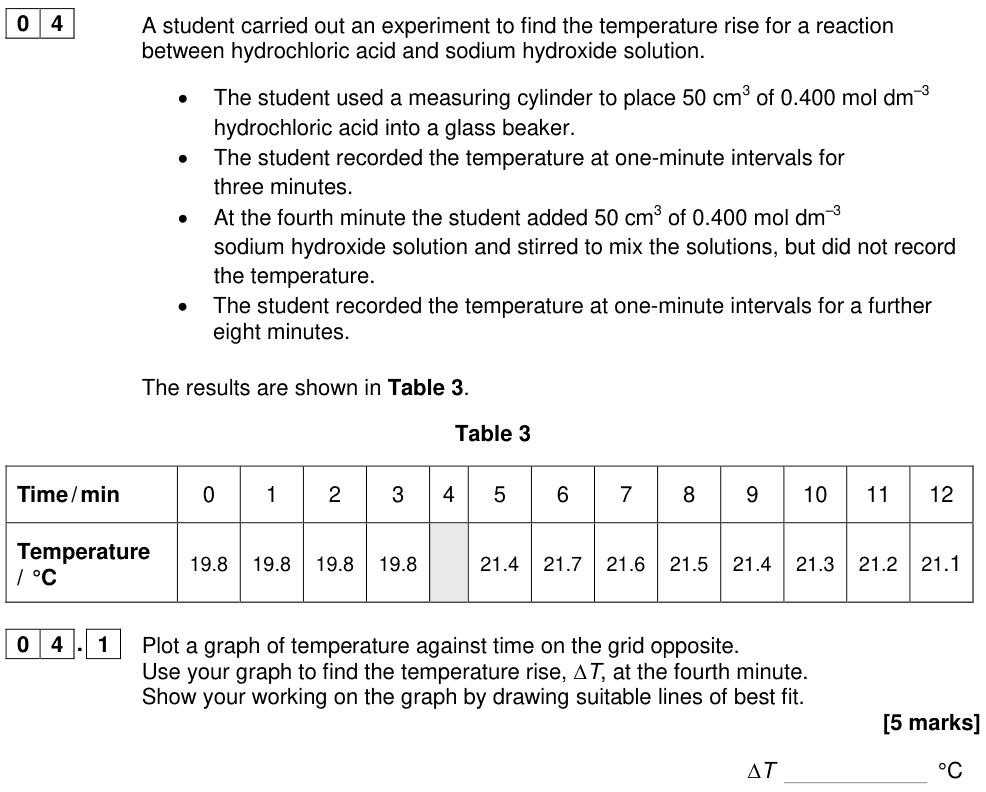
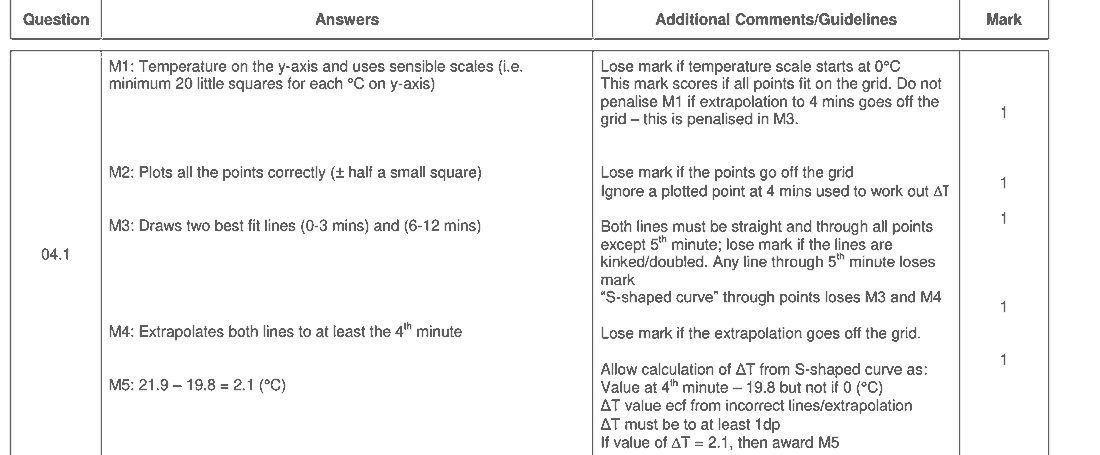
| 04.1 | Energetics | 5 | | Practical and data analysis |
| 04.2 | Energetics | 1 | | Calculation |
| 04.3 | Energetics | 1 | | Practical and data analysis |
| 04.4 | Energetics | 2 | | Practical and data analysis |
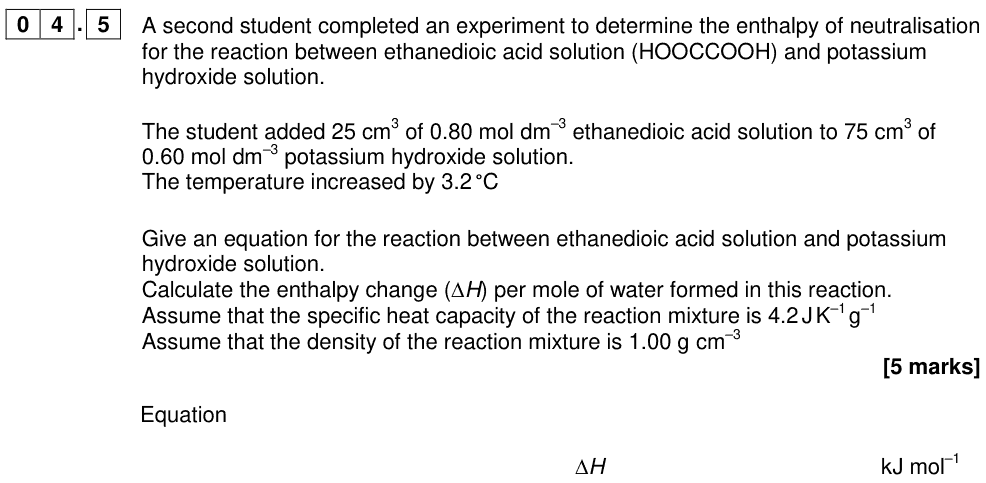
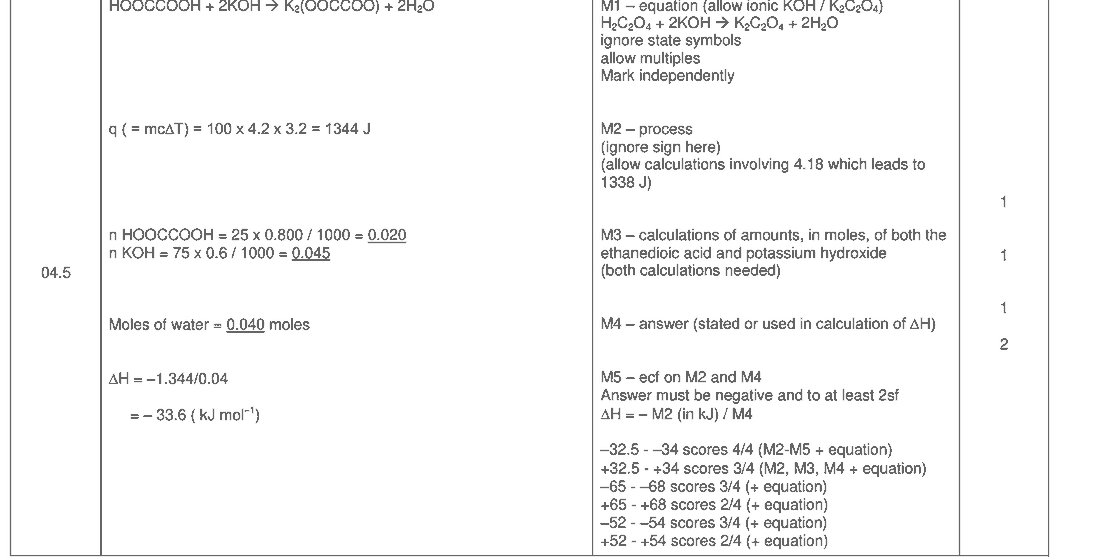
| 04.5 | Energetics, Amount of substance | 5 | | Calculation |
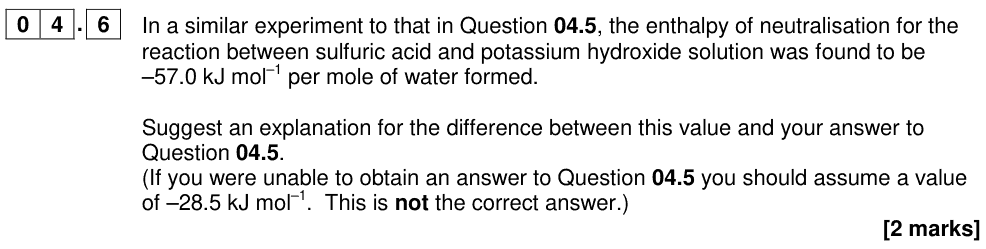
| 04.6 | Acids and bases: pH, Ka, titration curves and buffers | 2 | | Explanation |
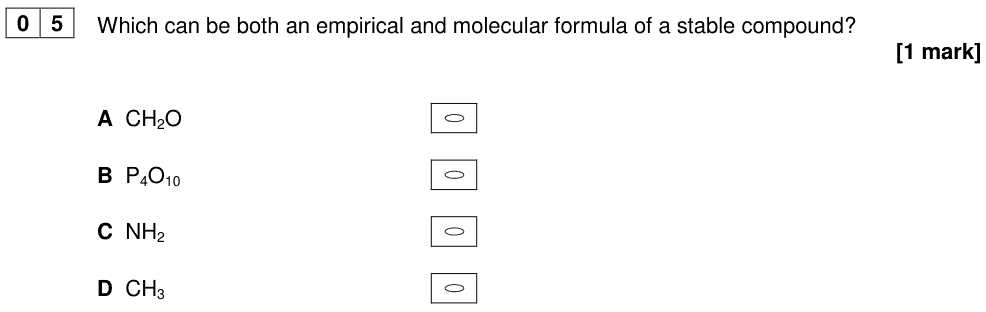
| 05 | Amount of substance | 1 | | Multiple choice |
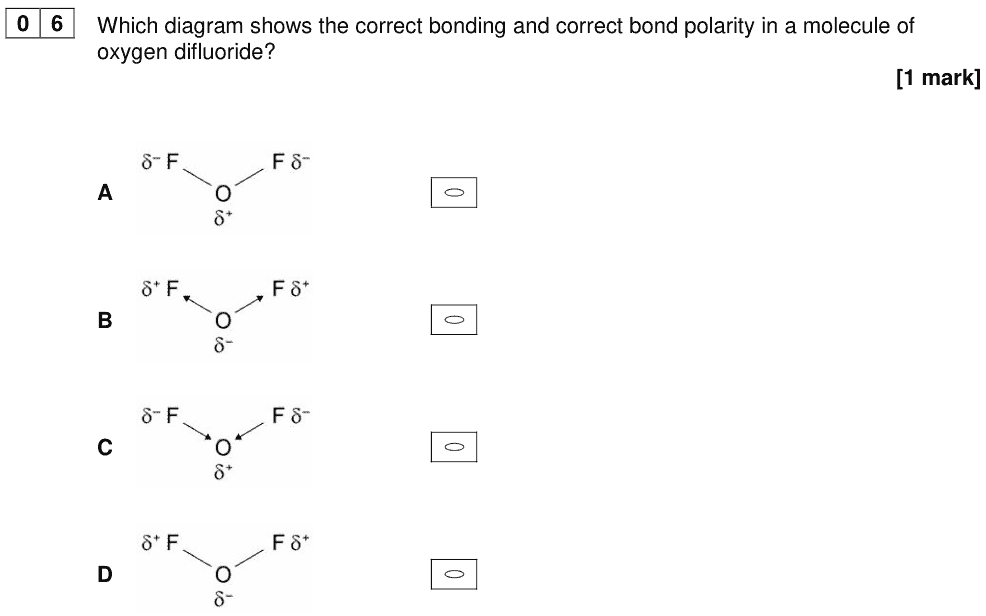
| 06 | Bonding | 1 | | Multiple choice |
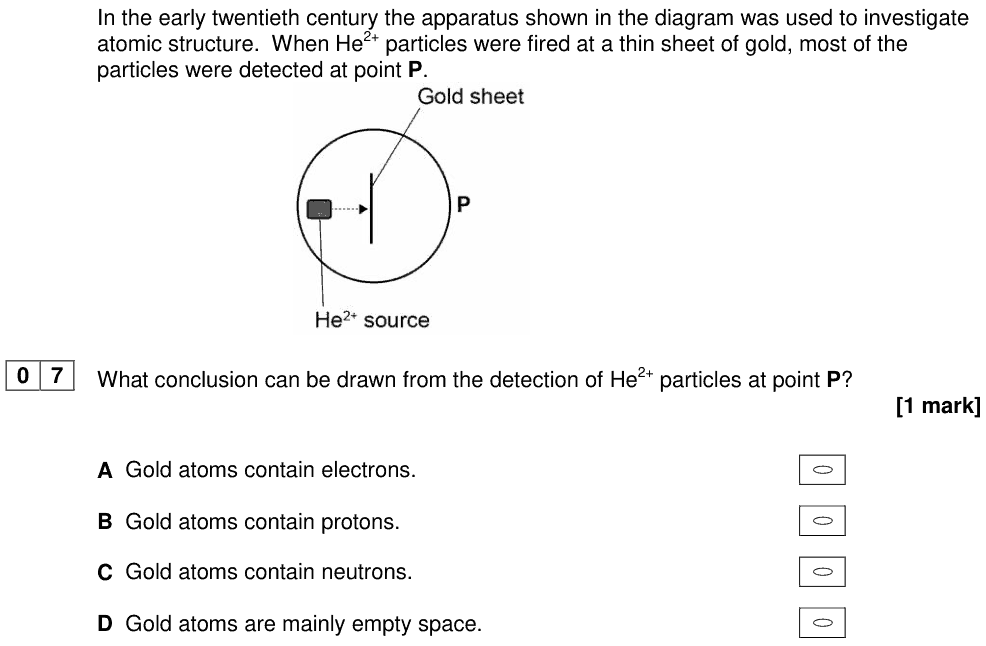
| 07 | Atomic structure | 1 | | Multiple choice |
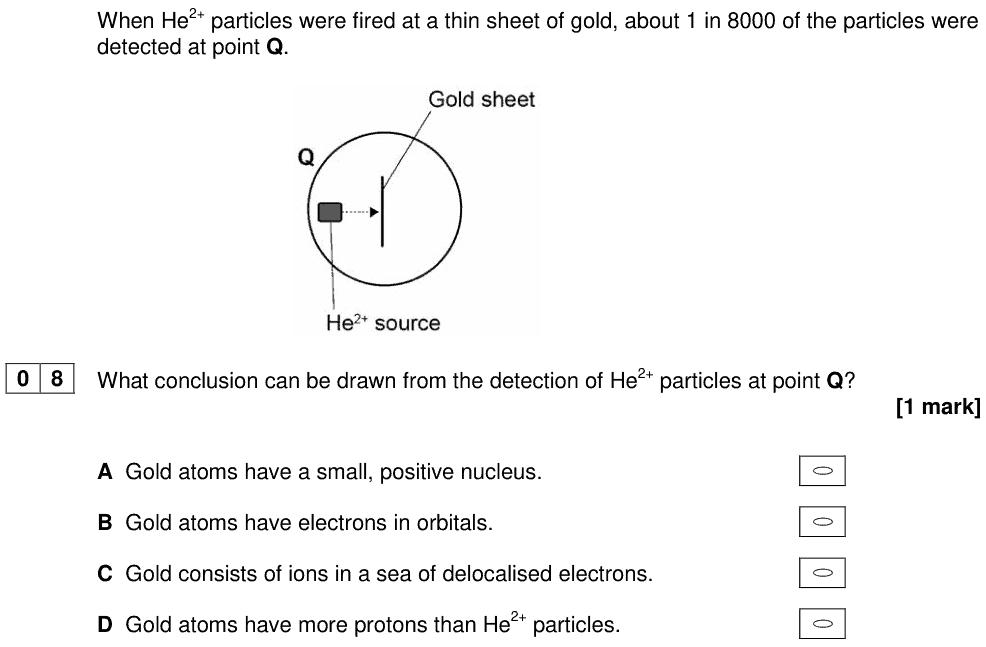
| 08 | Atomic structure | 1 | | Multiple choice |
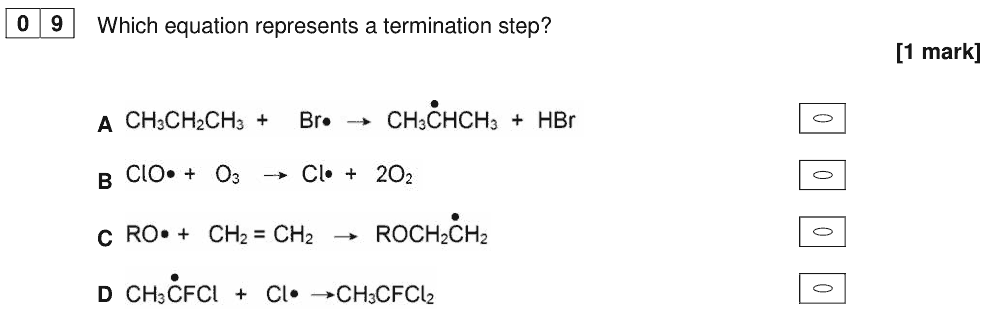
| 09 | Introduction to organic chemistry: nomenclature, mechanisms and isomerism, Alkanes | 1 | | Multiple choice |
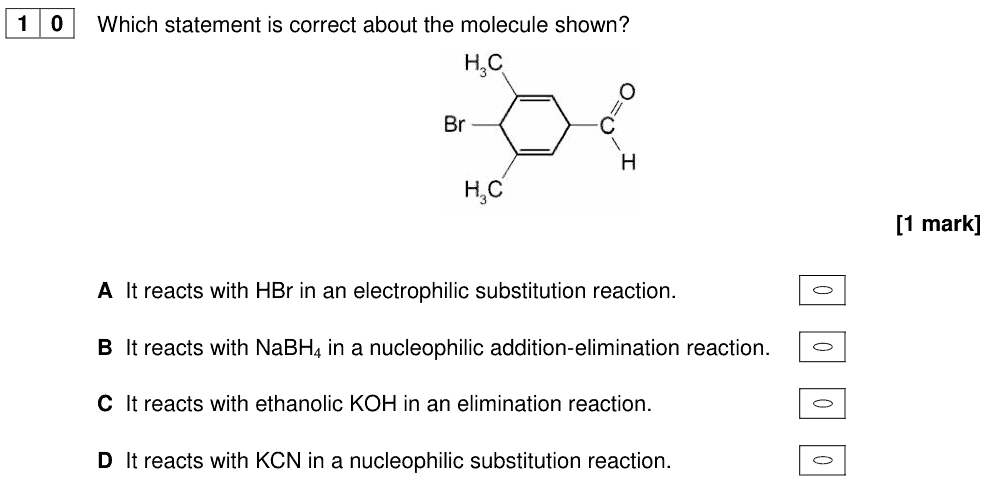
| 10 | Halogenoalkanes | 1 | | Multiple choice |
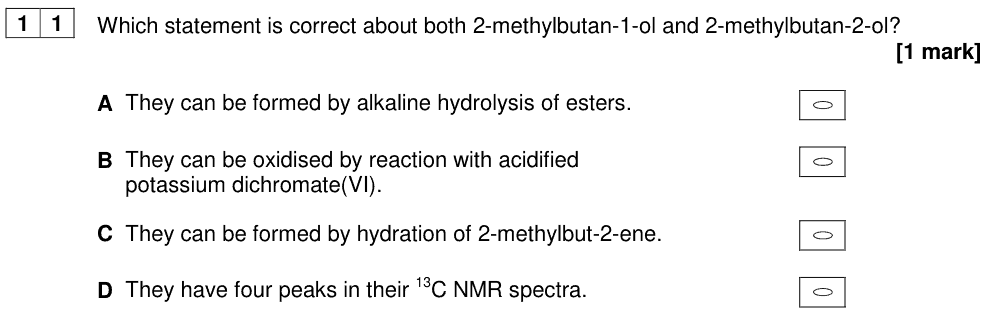
| 11 | Carboxylic acids and derivatives | 1 | | Multiple choice |
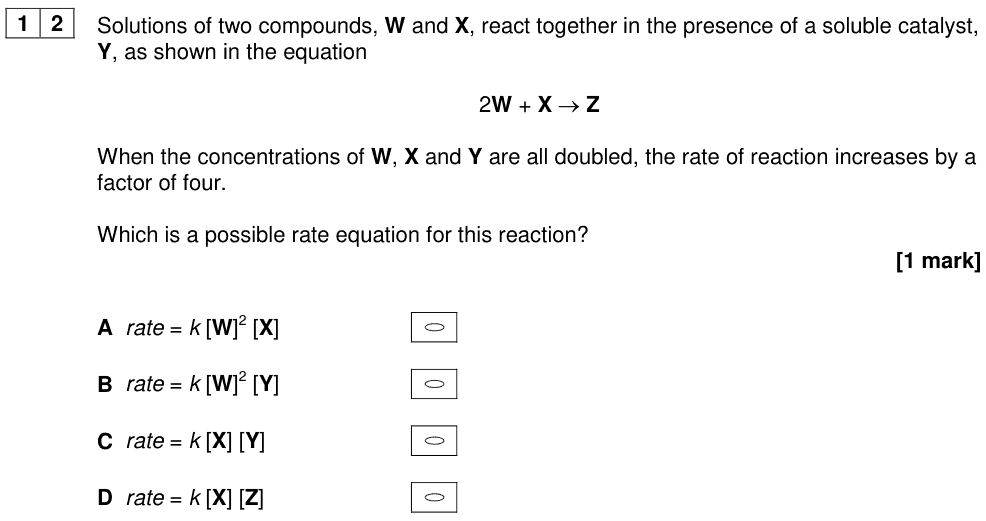
| 12 | Rate equations | 1 | | Multiple choice |
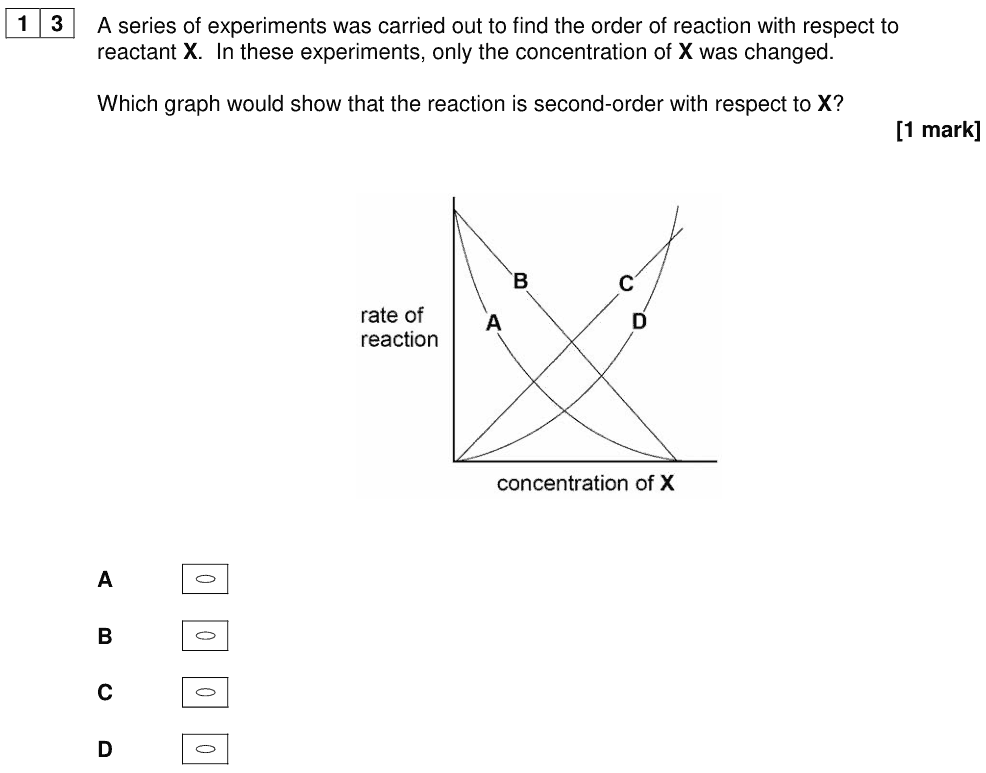
| 13 | Rate equations | 1 | | Multiple choice |
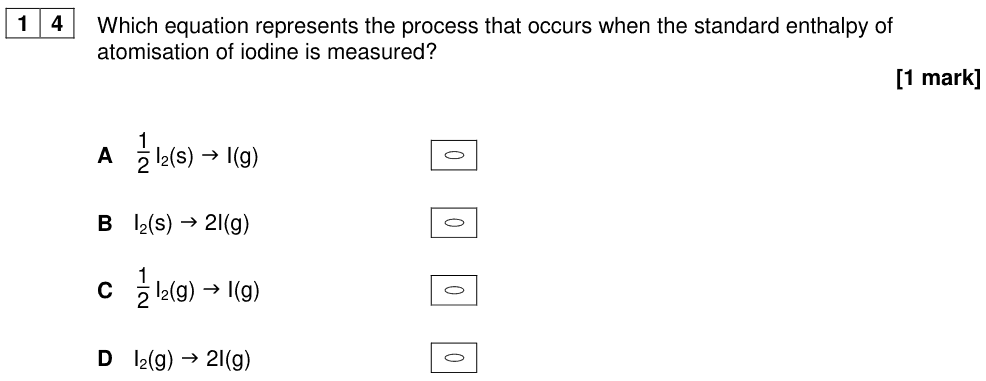
| 14 | Thermodynamics: Born–Haber cycles, entropy and Gibbs free energy | 1 | | Multiple choice |
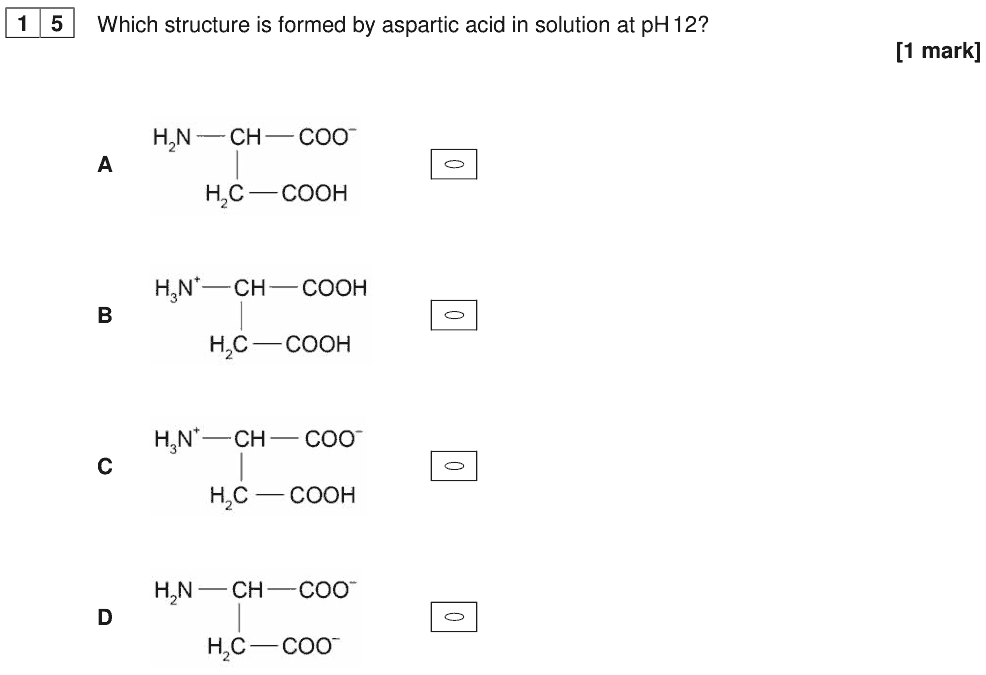
| 15 | Amino acids, proteins and DNA | 1 | | Multiple choice |
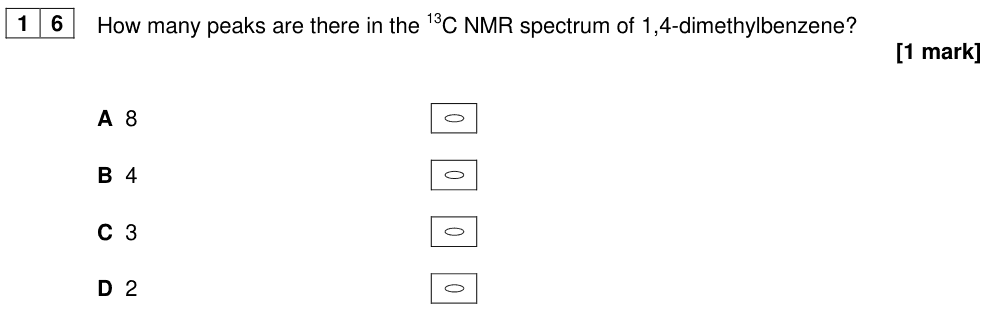
| 16 | Nuclear magnetic resonance spectroscopy | 1 | | Multiple choice |
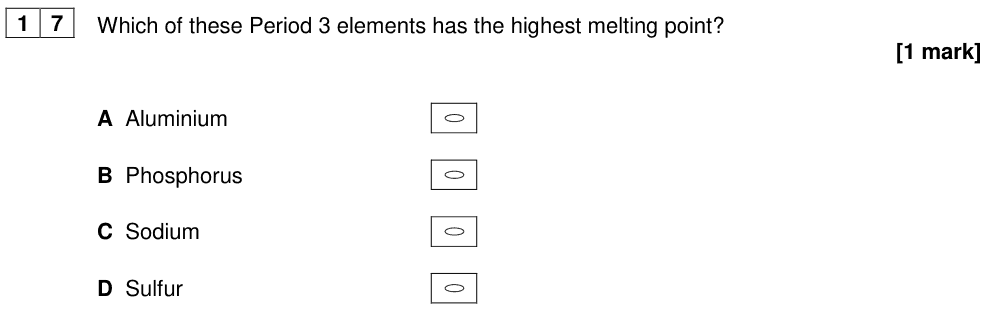
| 17 | Periodicity | 1 | | Multiple choice |
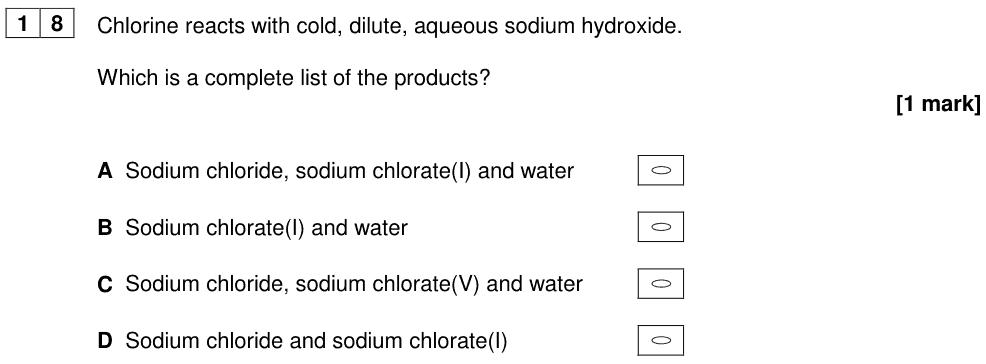
| 18 | Group 7(17), the halogens | 1 | | Multiple choice |
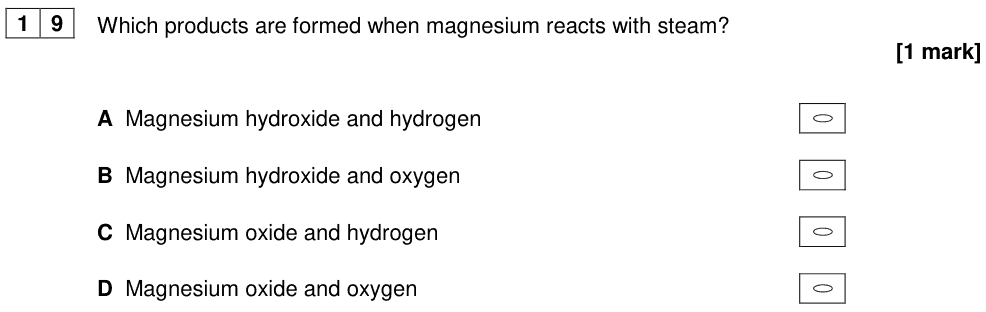
| 19 | Group 2, the alkaline earth metals | 1 | | Multiple choice |
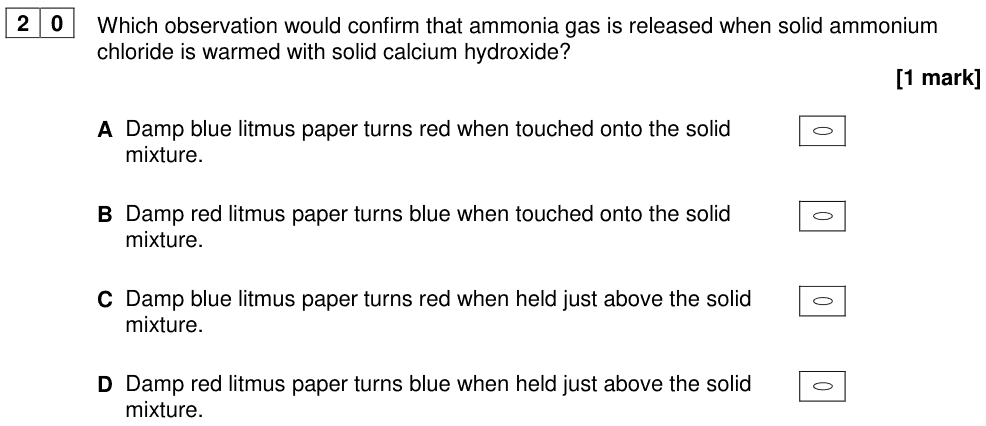
| 20 | Group 7(17), the halogens | 1 | | Multiple choice |
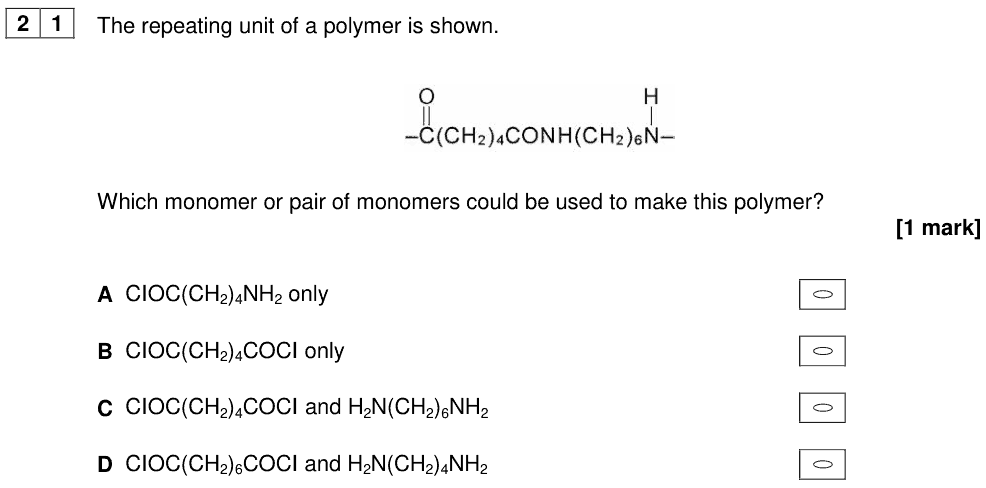
| 21 | Polymers | 1 | | Multiple choice |
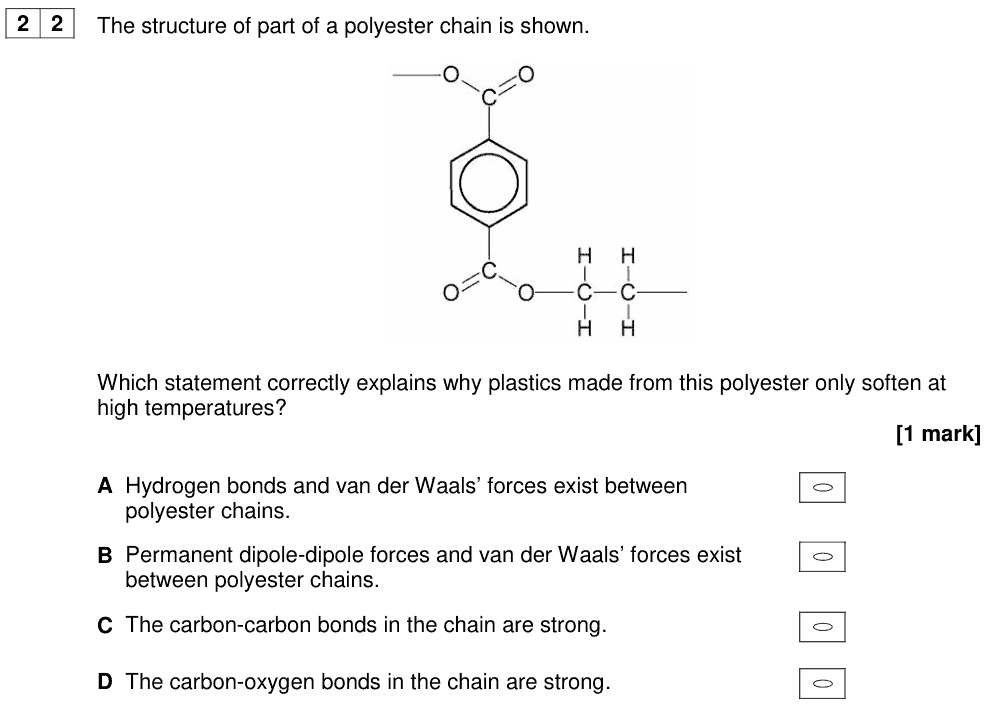
| 22 | Polymers | 1 | | Multiple choice |
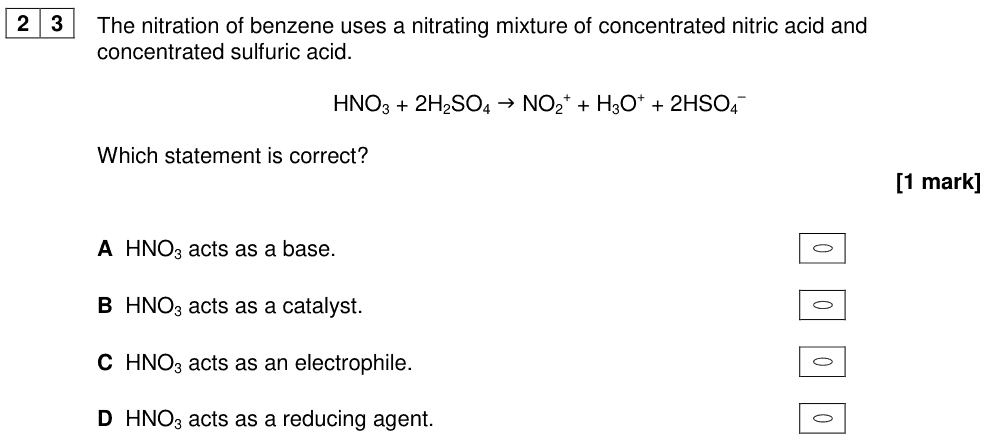
| 23 | Aromatic chemistry, Acids and bases: pH, Ka, titration curves and buffers | 1 | | Multiple choice |
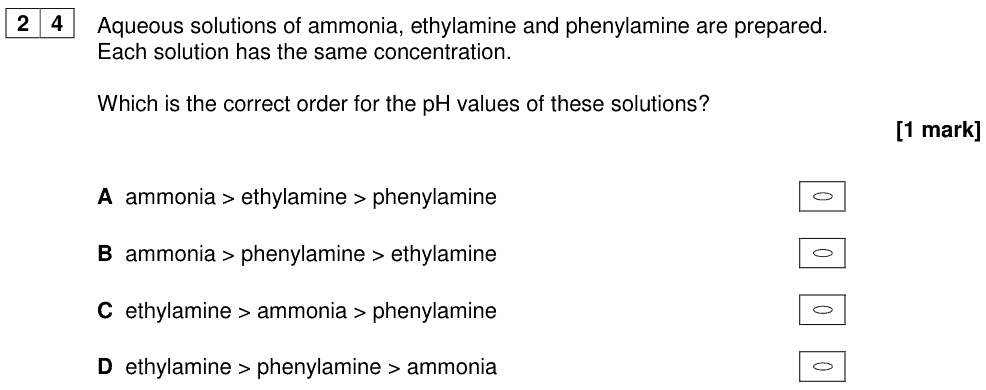
| 24 | Amines | 1 | | Multiple choice |
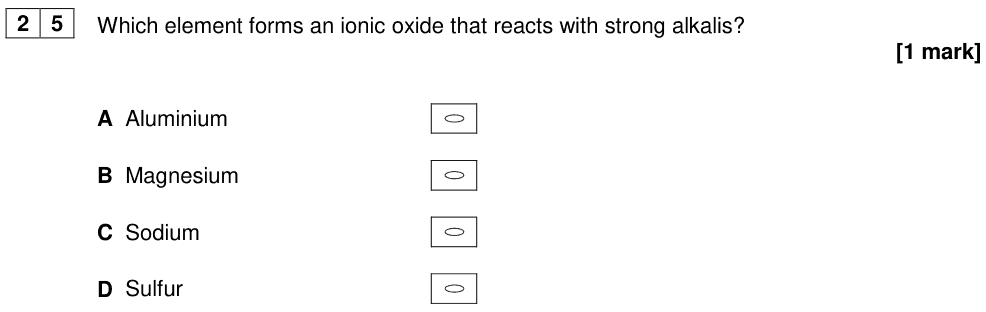
| 25 | Period 3 elements and their oxides | 1 | | Multiple choice |
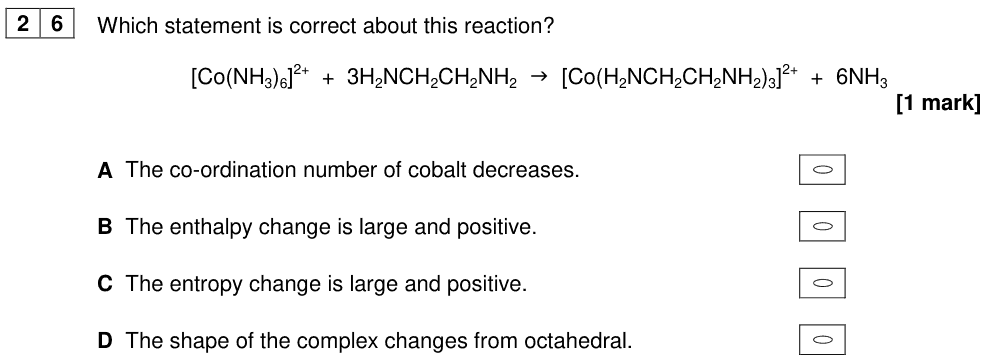
| 26 | Transition metals | 1 | | Multiple choice |
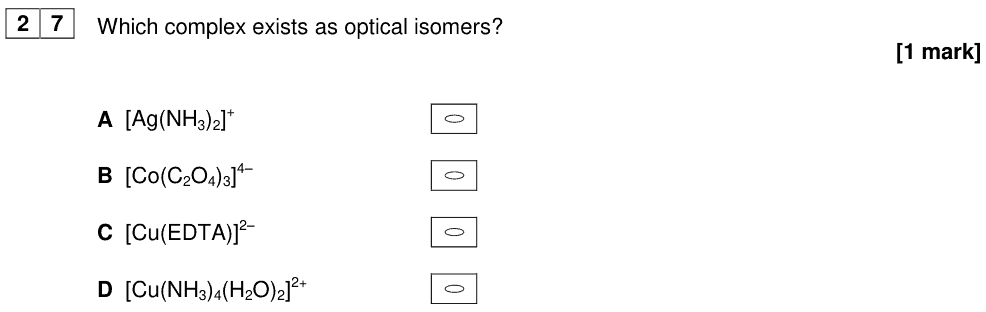
| 27 | Transition metals | 1 | | Multiple choice |
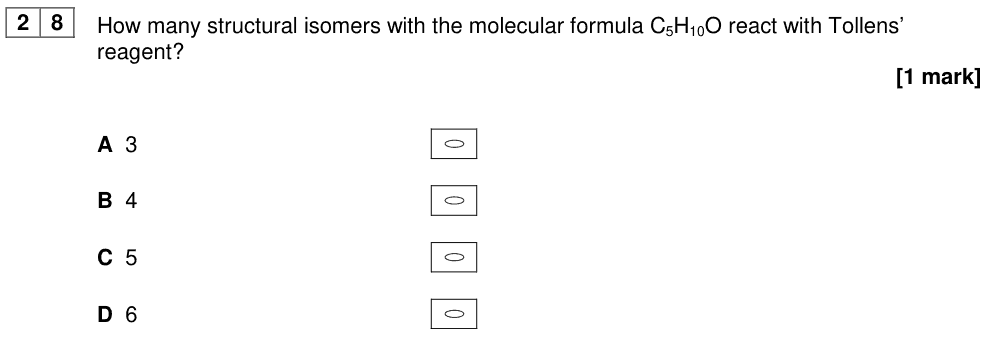
| 28 | Introduction to organic chemistry: nomenclature, mechanisms and isomerism, Aldehydes and ketones | 1 | | Multiple choice |
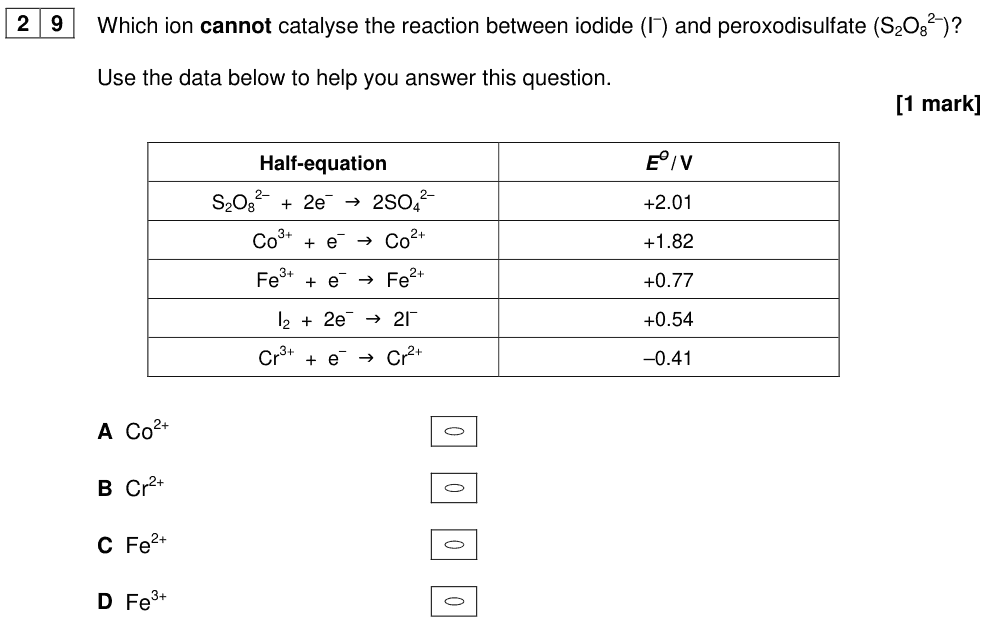
| 29 | Transition metals, Electrode potentials and electrochemical cells | 1 | | Multiple choice |
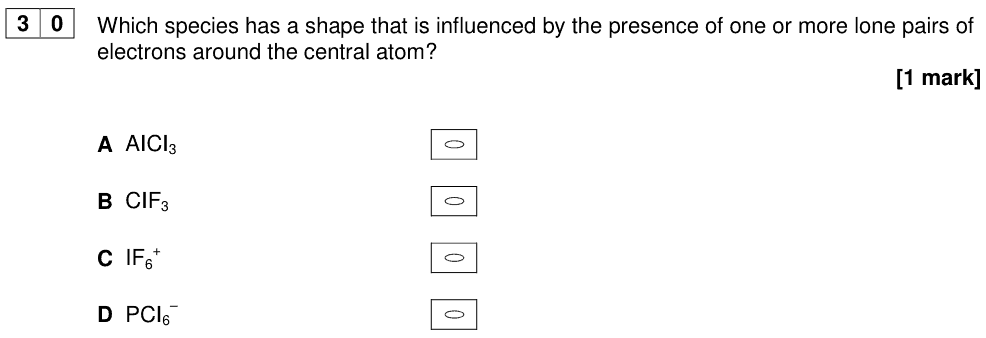
| 30 | Bonding | 1 | | Multiple choice |
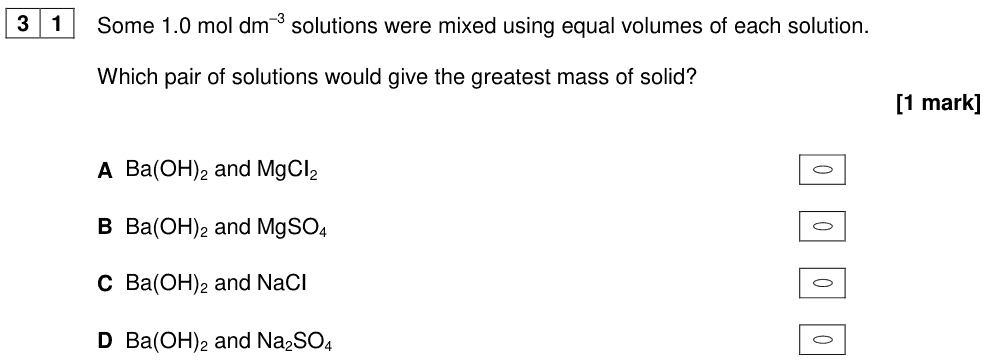
| 31 | Group 2, the alkaline earth metals | 1 | | Multiple choice |
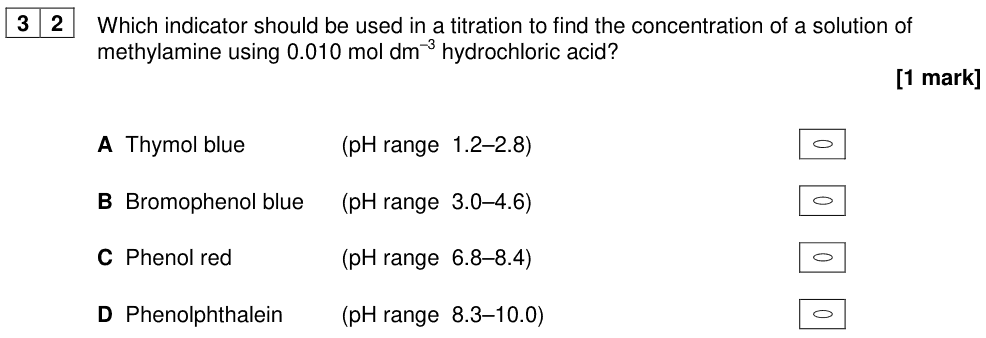
| 32 | Acids and bases: pH, Ka, titration curves and buffers | 1 | | Multiple choice |
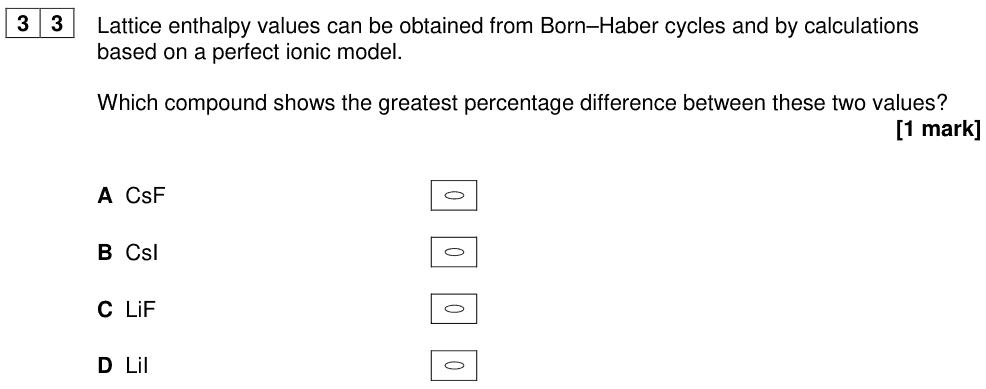
| 33 | Thermodynamics: Born–Haber cycles, entropy and Gibbs free energy | 1 | | Multiple choice |
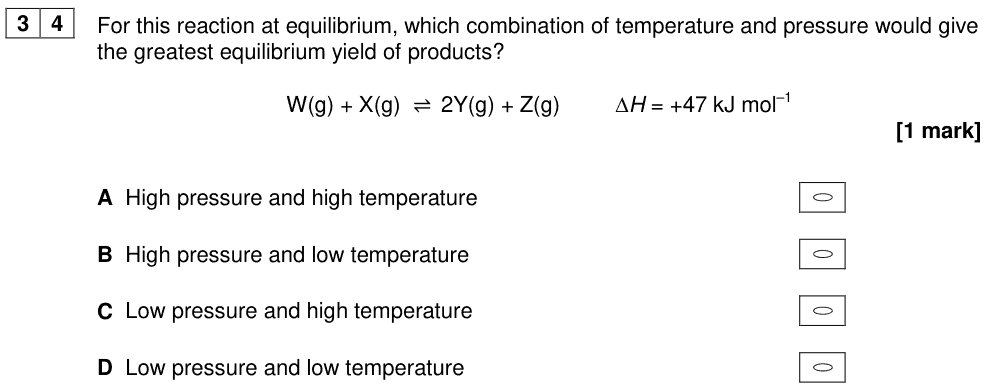
| 34 | Chemical equilibria, Le Chatelier's principle and Kc | 1 | | Multiple choice |