Examiner's comment
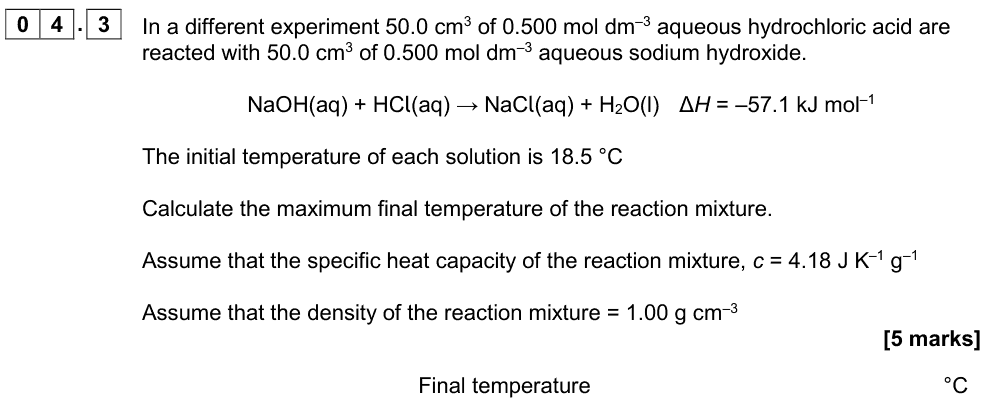
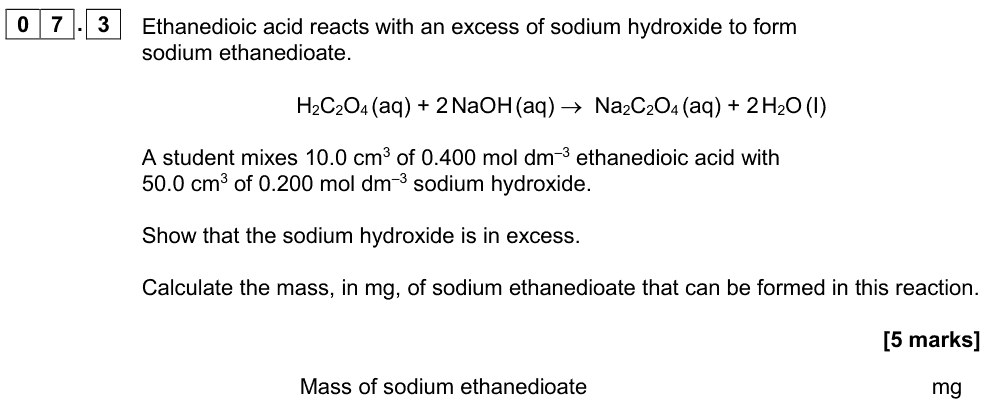
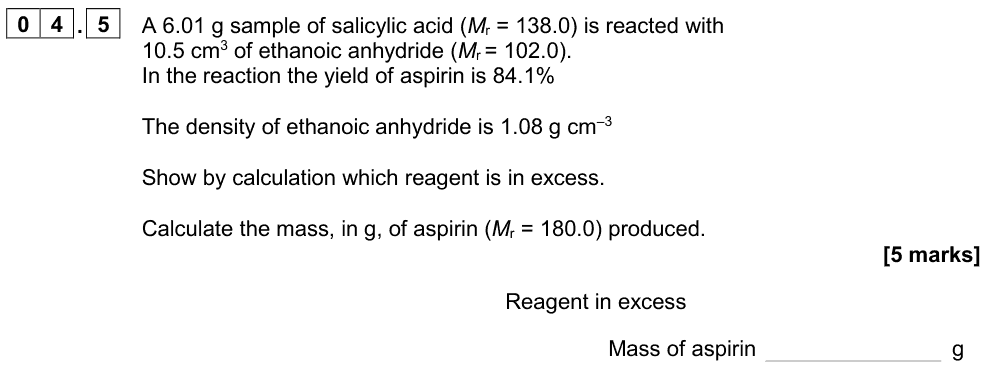
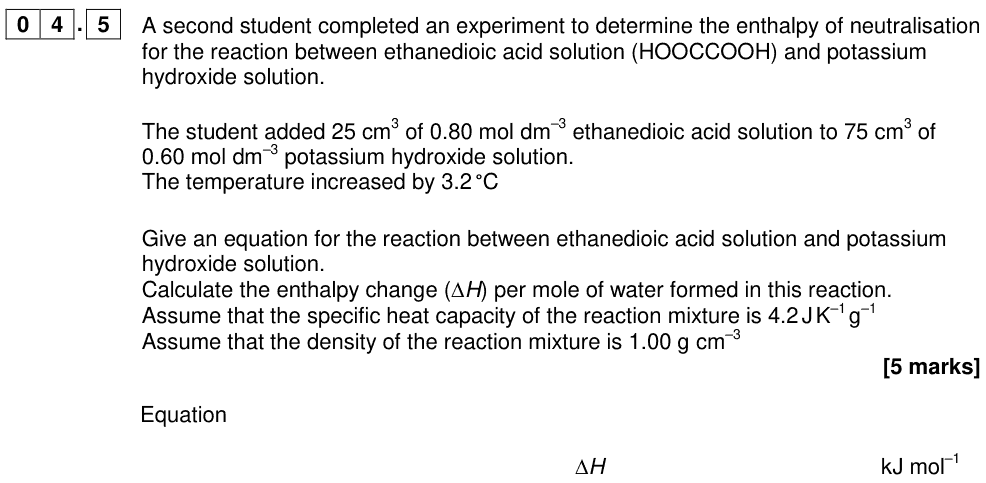
04.5 Despite the formula and name being given in the question, many students failed to recognise that ethanedioic acid is diprotic, which affected their equation and subsequent calculation. In the calculation, most were able to calculate the initial amounts of each reactant, but many then failed to recognise the idea that one is present in excess so that the other would be the limiting reagent and so determine the amount of water formed. Calculations involving adding 0.02 to 0.045, or subtracting 0.02 from 0.045, were frequently seen, although it was not always clear what students thought they were calculating when they did so, due to poor layout of calculations. There were also a lot of variations seen in the mass used for the mcΔT calculation. In any enthalpy change or calorimetry experiment of this type, it is the solution that is increasing in temperature, so it is the mass of solution that needs to be used (100 g here as 25 cm3 of one solution was added to 75 cm3 of another and all have a density of 1.00 g cm−3). This calculation discriminated extremely well between students of different abilities; 21.2% scored maximum marks and only 6.4% failed to score anything.
Notes from the mark scheme and report
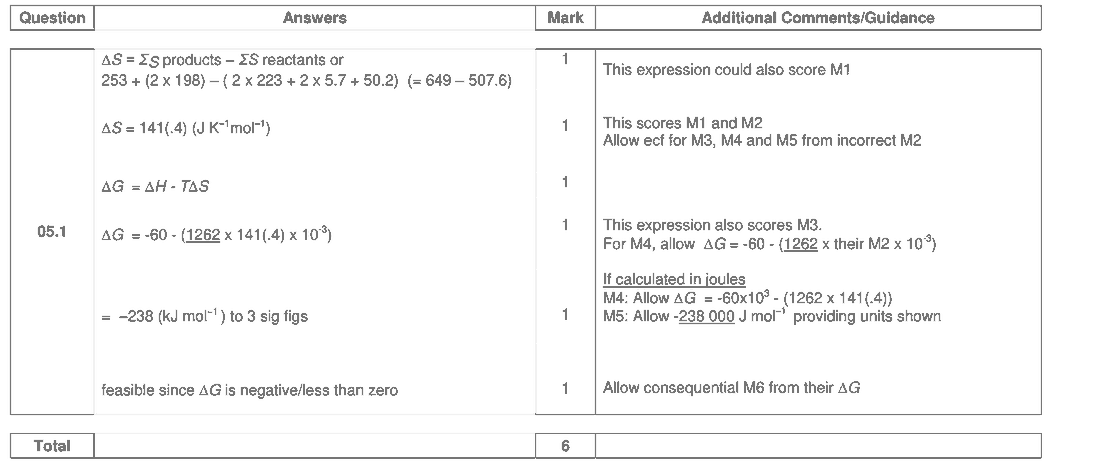
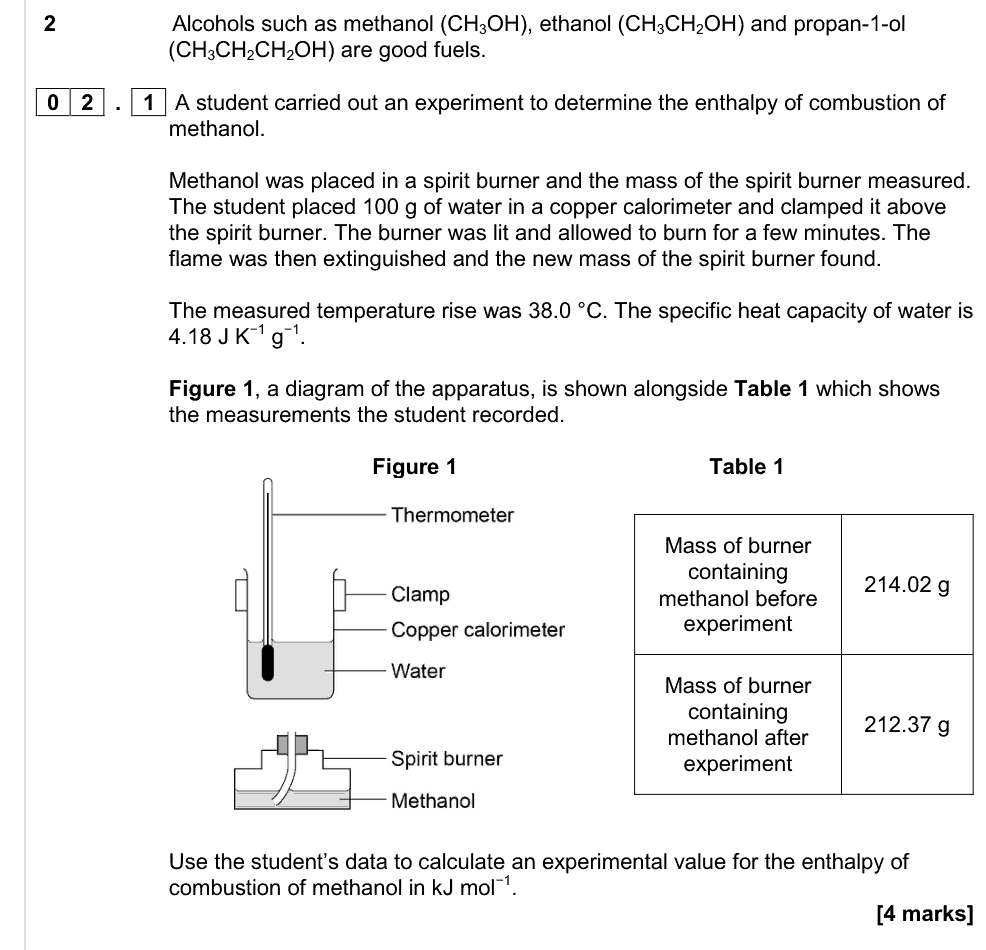
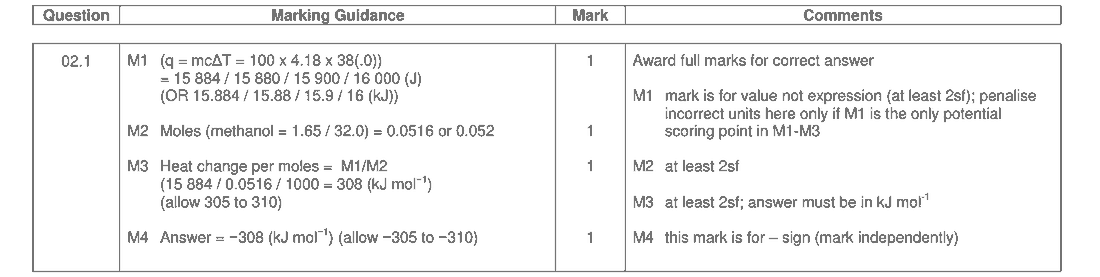
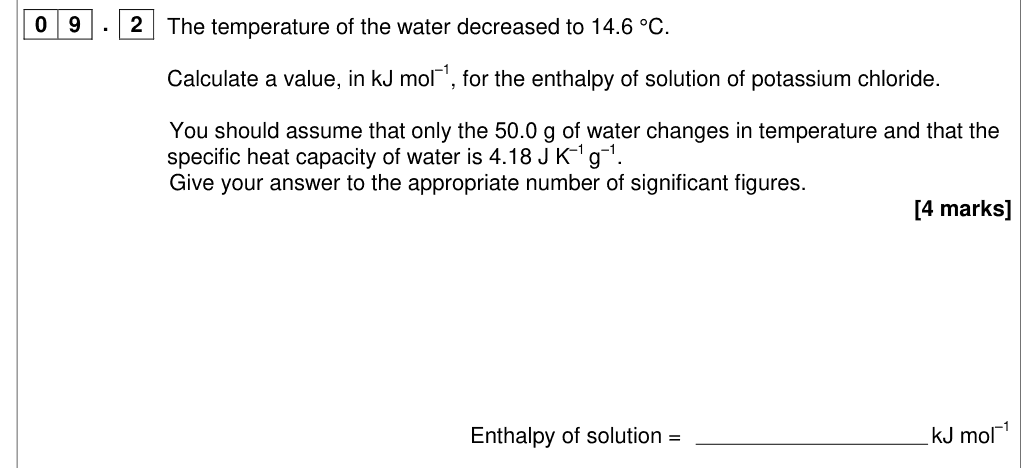
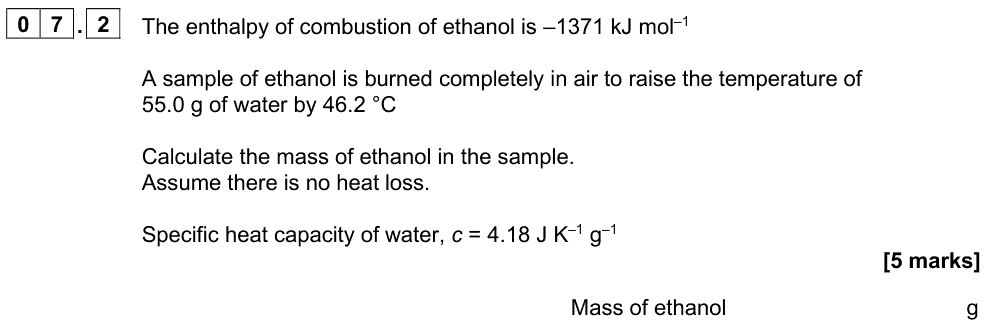
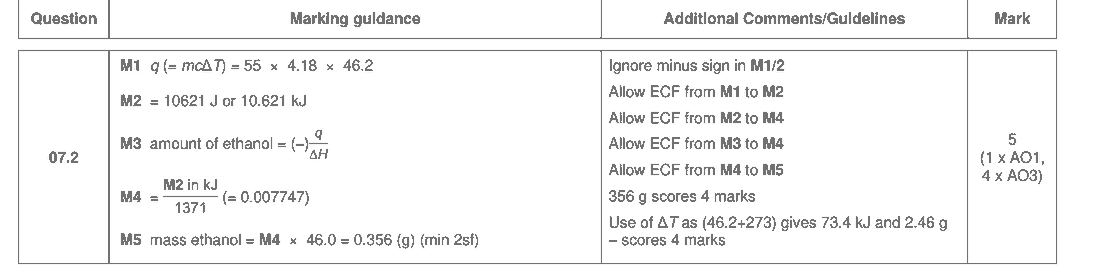
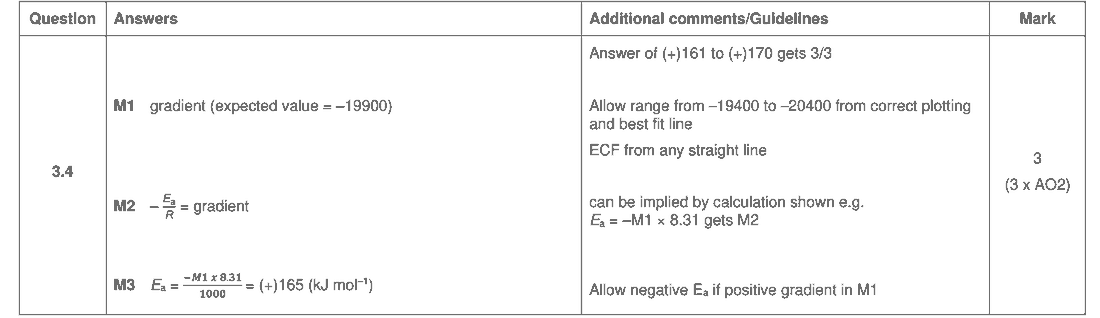
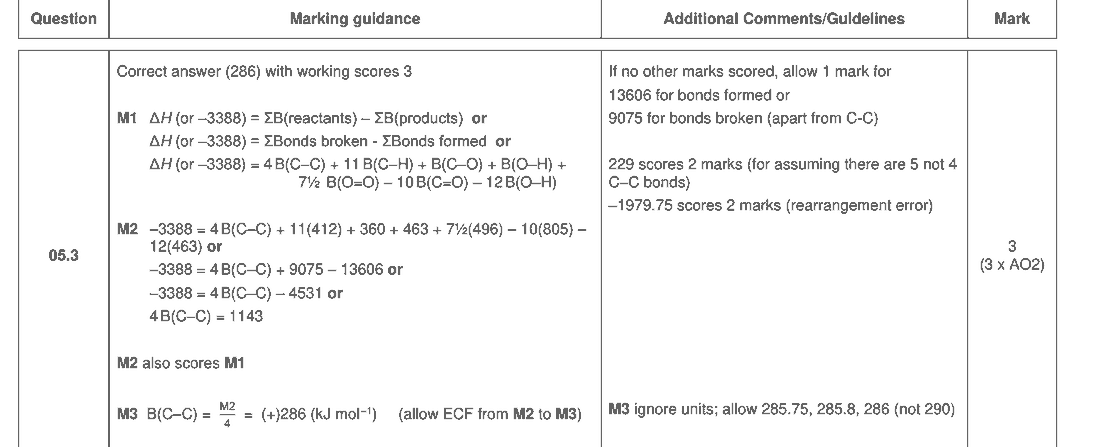
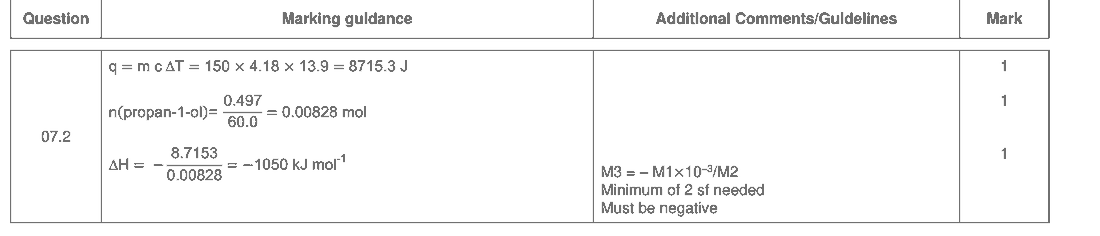
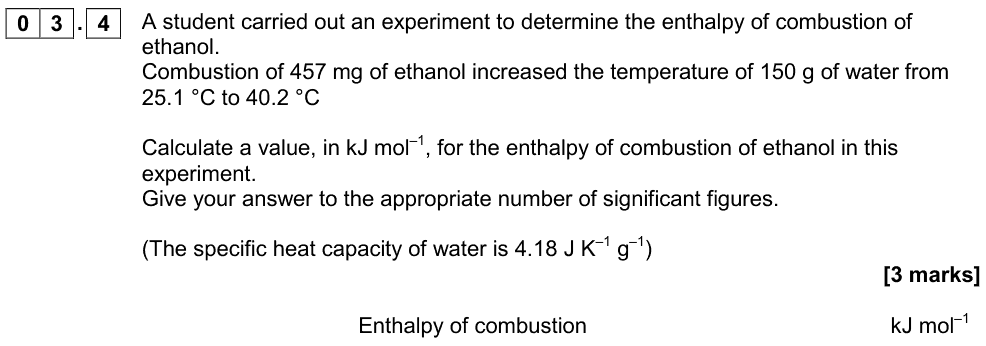
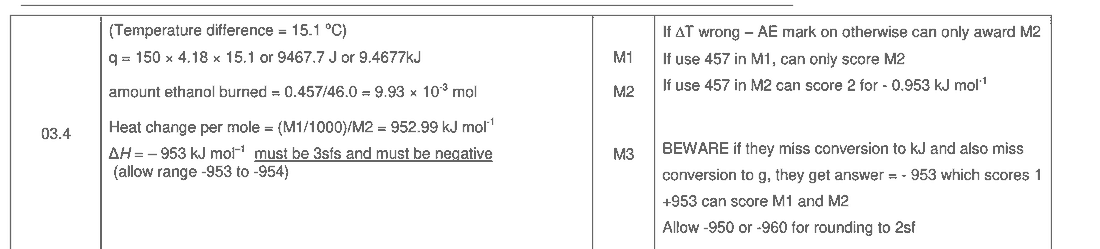
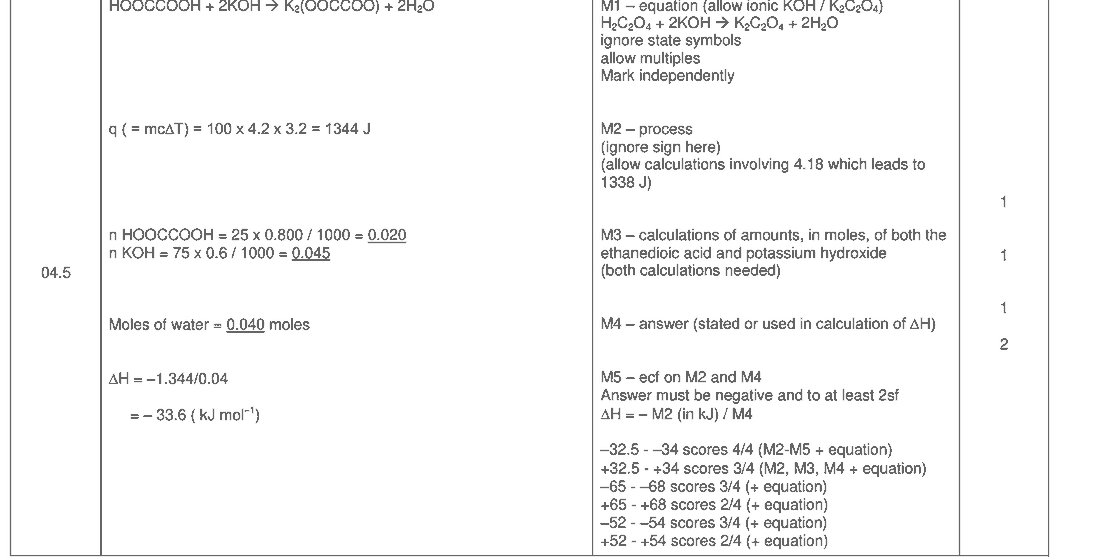
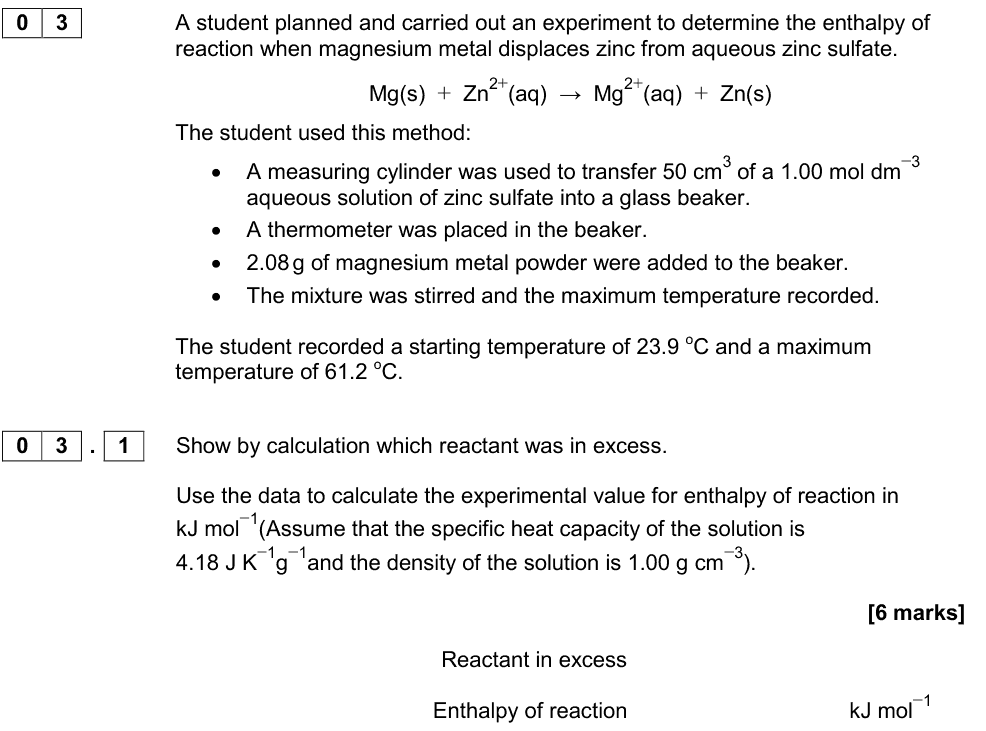
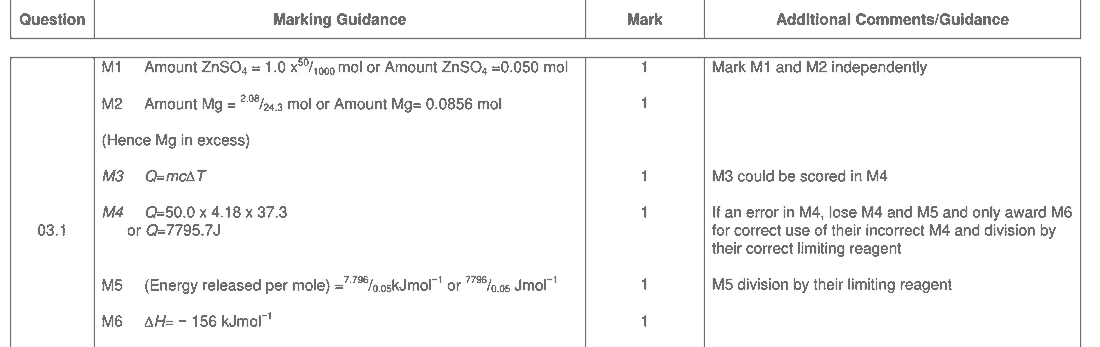
- Answer: –33.6 kJ mol–1 (allow –32.5 to –34). H2C2O4 + 2KOH → K2C2O4 + 2H2O. q = 100 × 4.2 × 3.2 = 1344 J
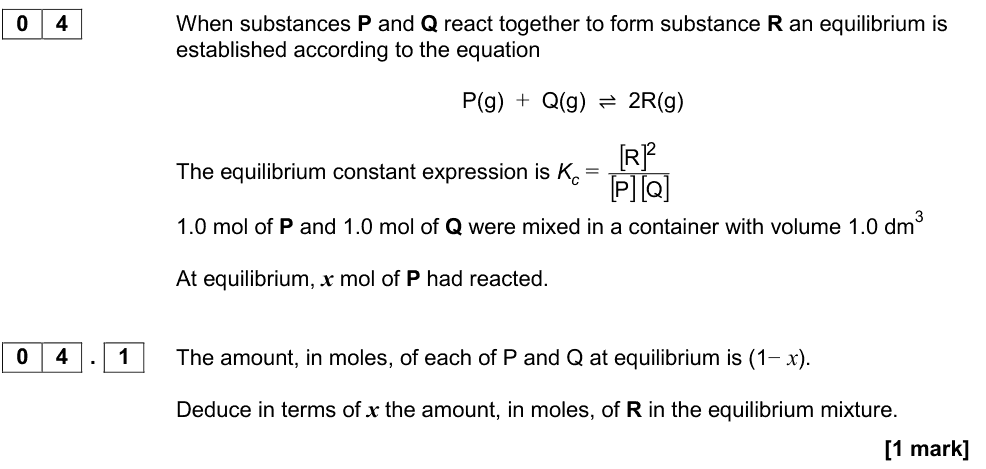
- n(acid) = 0.020, n(KOH) = 0.045, so KOH is in excess and water formed = 0.040 mol
- ∆H = –1.344 ÷ 0.040. Errors: acid treated as monoprotic
- limiting reagent not identified (–67 scores 3 of 4)
- wrong mass in mc∆T
- positive sign
Skills: MS0.0 Recognise and make use of appropriate units in calculation; MS0.2 Use ratios, fractions and percentages; MS2.3 Substitute numerical values into algebraic equations using appropriate units for physical quantities; PS3.2 Process and analyse data using appropriate mathematical skills as exemplified in the mathematical appendix for each science; RP2 Measurement of an enthalpy change




































































































































































































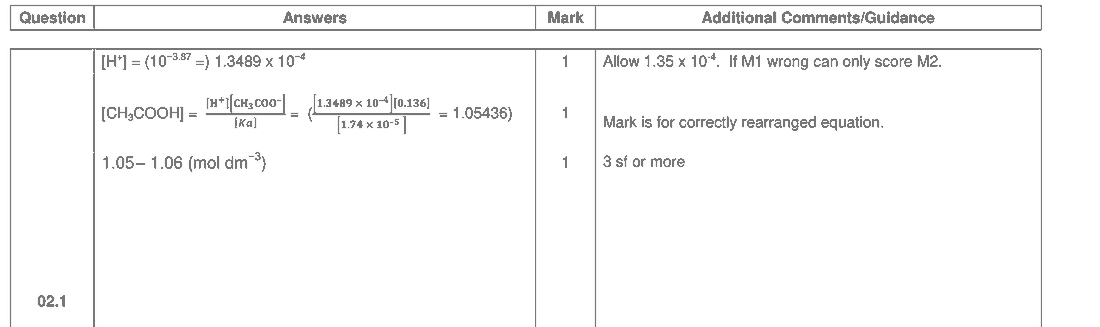
![This question is about acidic solutions.
The acid dissociation constant, Ka, for ethanoic acid is given by the expression
Ka =
COOH]
[CH
]
[H
]
COO
[CH
3
3
+
−
The value of Ka for ethanoic acid is 1.74 × 10⁻⁵ mol dm−3 at 25 °C
A buffer solution with a pH of 3.87 was prepared using ethanoic acid and
sodium ethanoate. In the buffer solution, the concentration of ethanoate ions
was 0.136 mol dm−3
Calculate the concentration of the ethanoic acid in the buffer solution.
Give your answer to three significant figures.
[3 marks]
Concentration of acid
mol dm−3](/img/JUN17_74051/JUN17_74051_02.1.webp)