November 2021: Paper 3, General and Practical Principles in Chemistry

120 marks · 51 question parts · Paper, mark scheme and report on Edexcel's site · An autumn series, sat in place of the cancelled summer exams · Have the Data Booklet beside you

Question by question

QTopicMarksAOType
1(a)(i) Atomic structure and the Periodic Table 2Short answer
1(a)(ii) Atomic structure and the Periodic Table 2Diagram or structure
1(b) Redox I 1Short answer
1(c) Energetics II: lattice energy 2Equation writing
1(d)(i) Redox II 1Short answer
1(d)(ii) Redox II 1Calculation
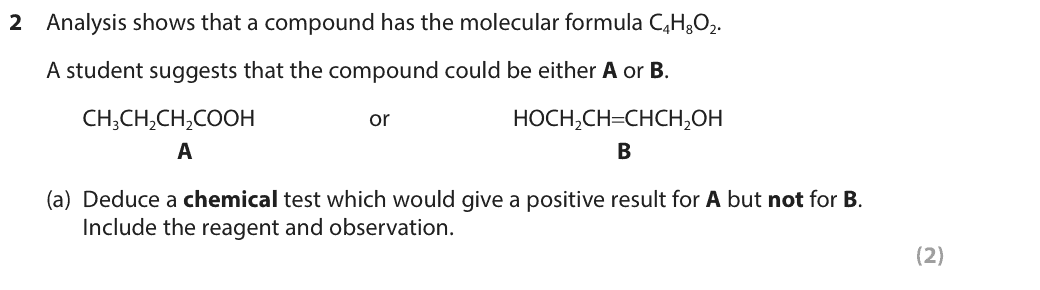
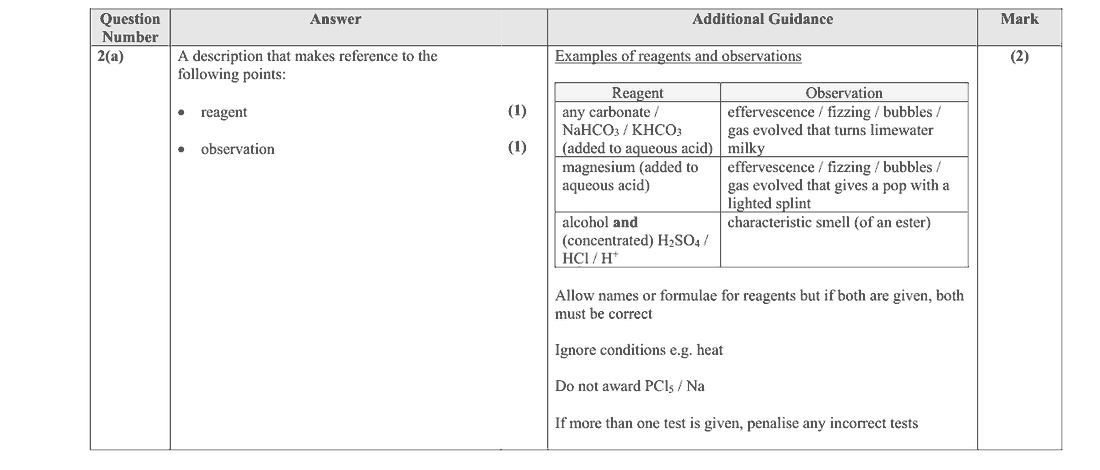
2(a) Carboxylic acids 2Practical and data analysis
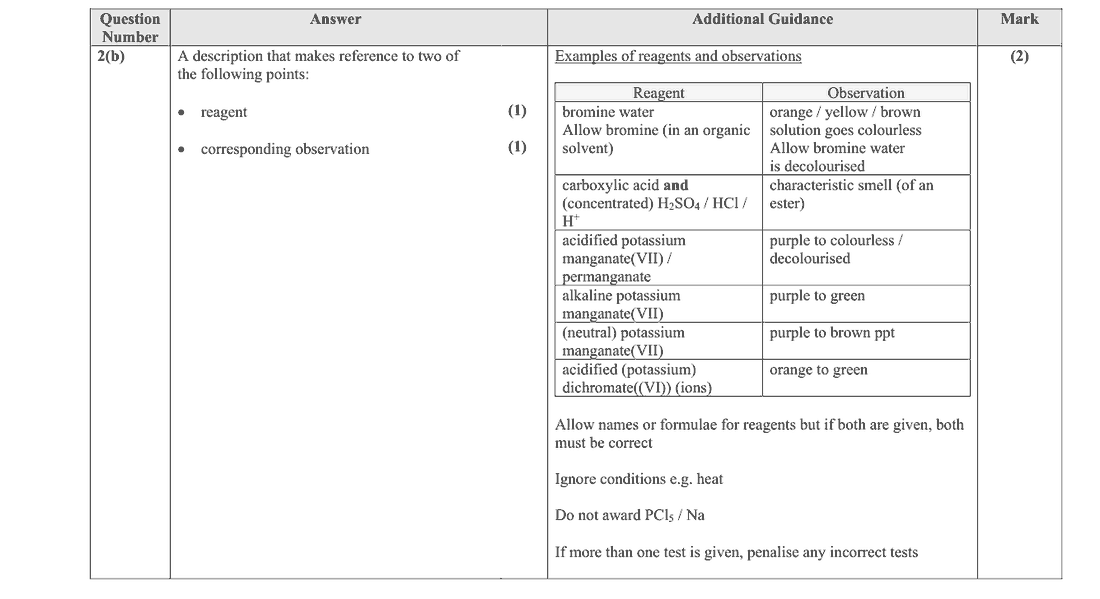
2(b) Alkenes 2Practical and data analysis
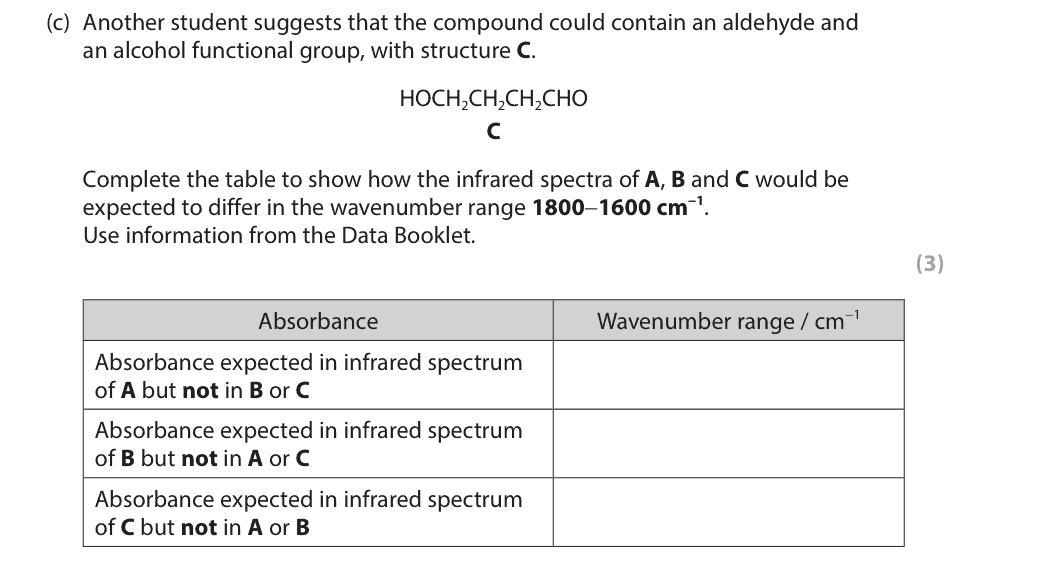
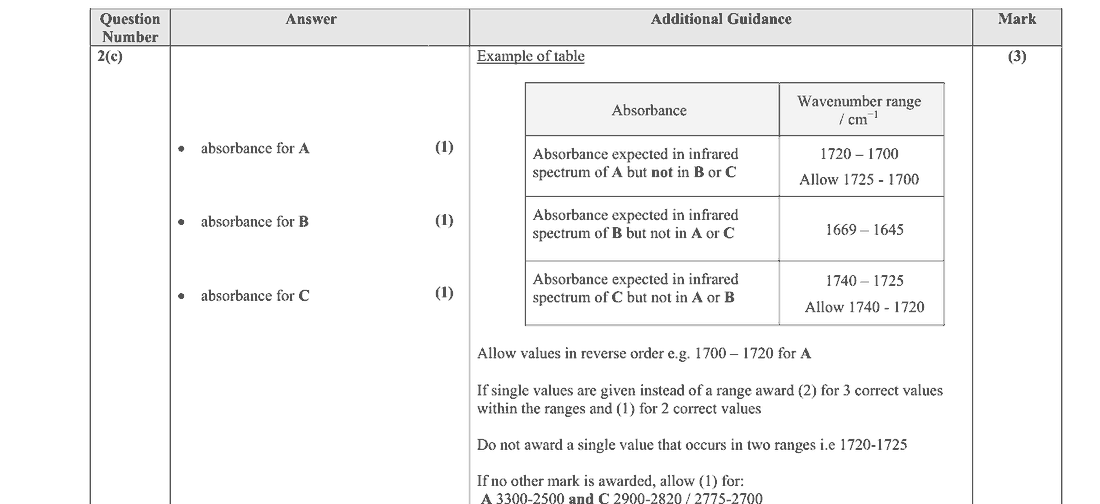
2(c) Modern analytical techniques I: mass spectrometry and infrared 3Short answer
3(a) Atomic structure and the Periodic Table 1Short answer
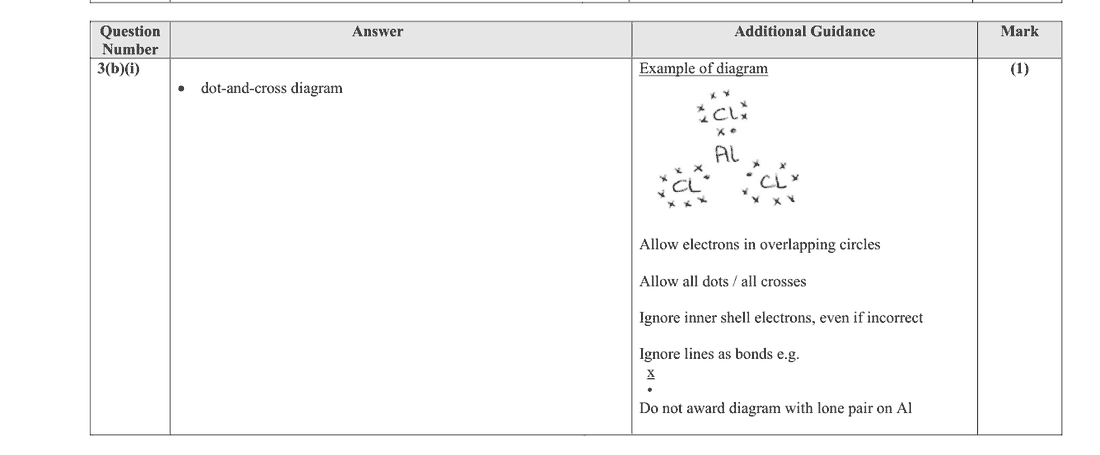
3(b)(i) Bonding 1Diagram or structure
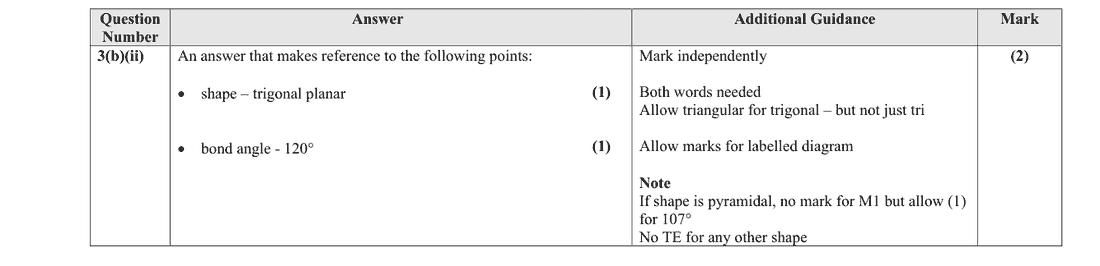
3(b)(ii) Bonding 2Short answer
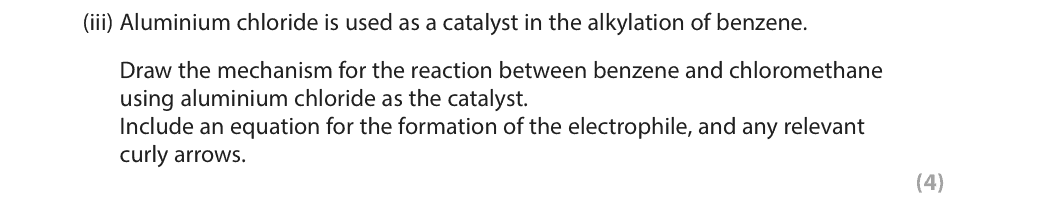
3(b)(iii) Arenes: benzene 4Mechanism
3(c)(i) Bonding 1Diagram or structure
3(c)(ii) Bonding 1Short answer
4(a) Kinetics I 3Diagram or structure
4(b) Kinetics I 3Calculation
4(c) Kinetics II 4Practical and data analysis
5(a)(i) Transition metals: reactions, Analysis of inorganic compounds 2Practical and data analysis
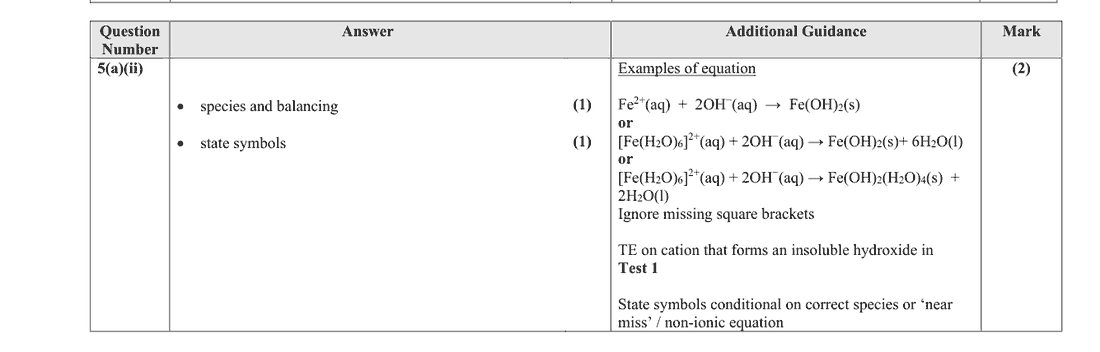
5(a)(ii) Transition metals: reactions, Formulae, equations and amounts of substance 2Equation writing
5(a)(iii) Transition metals: principles 1Short answer
5(a)(iv) Analysis of inorganic compounds 1Practical and data analysis
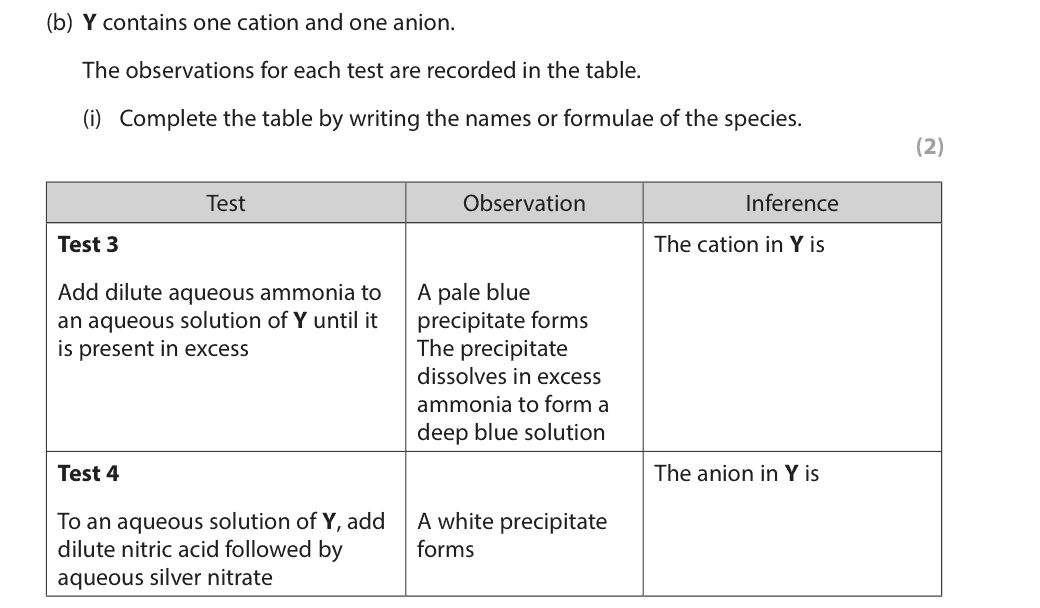
5(b)(i) Transition metals: reactions, The elements of Group 7 (halogens) 2Practical and data analysis
5(b)(ii) Transition metals: reactions 1Short answer
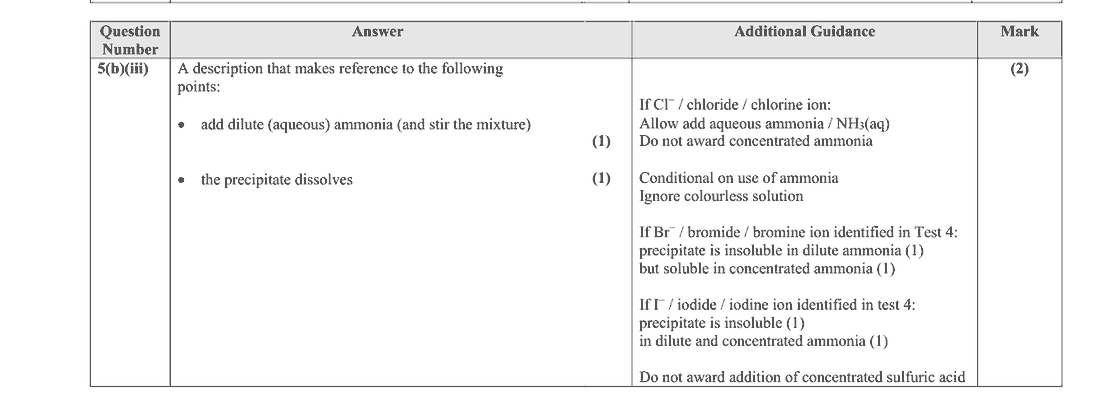
5(b)(iii) The elements of Group 7 (halogens) 2Practical and data analysis
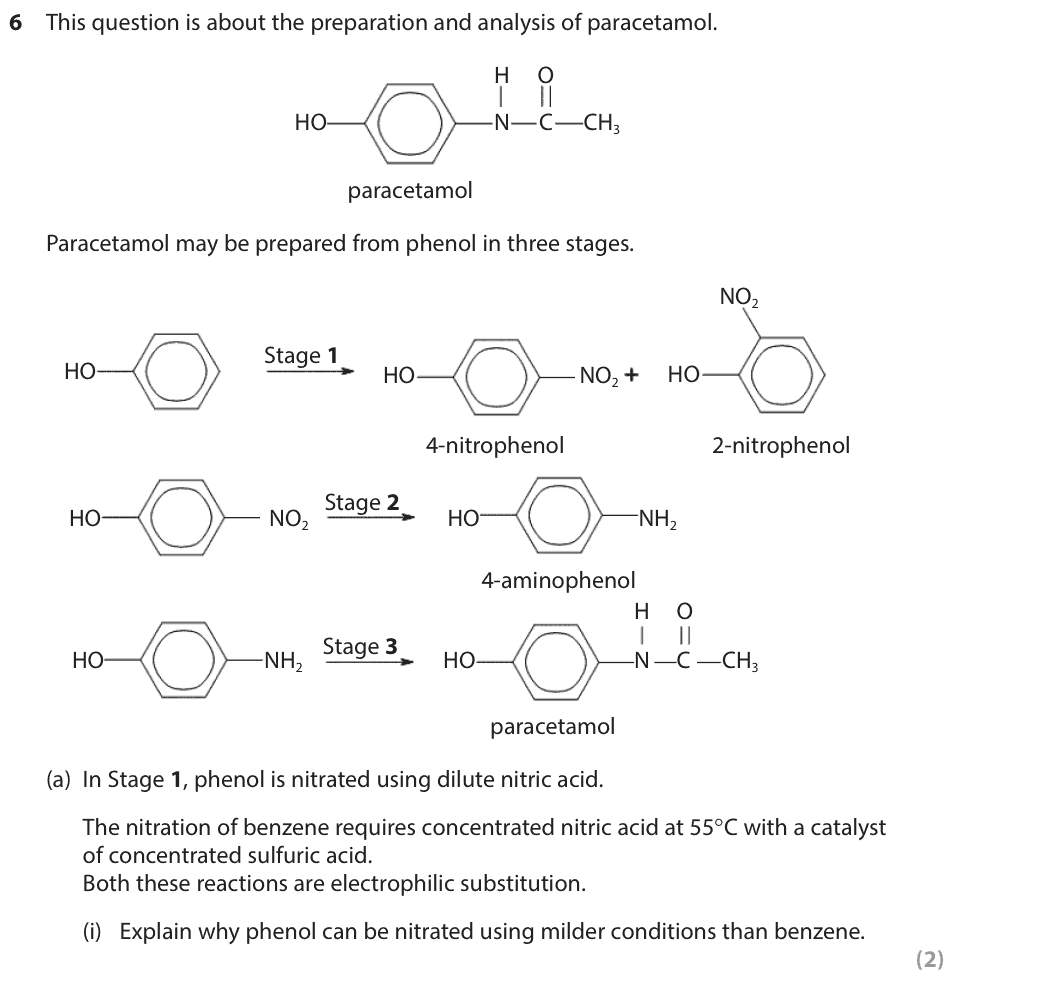
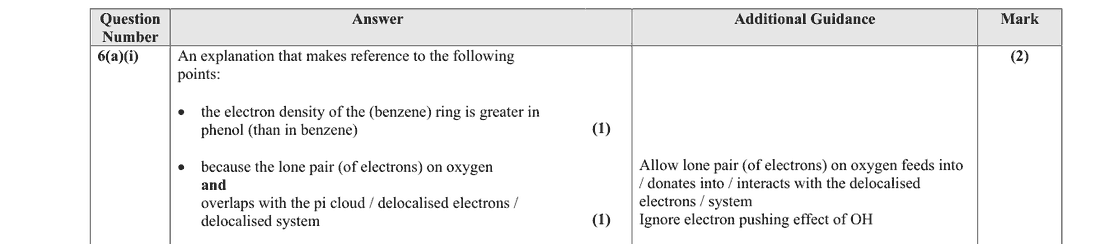
6(a)(i) Arenes: benzene 2Explanation
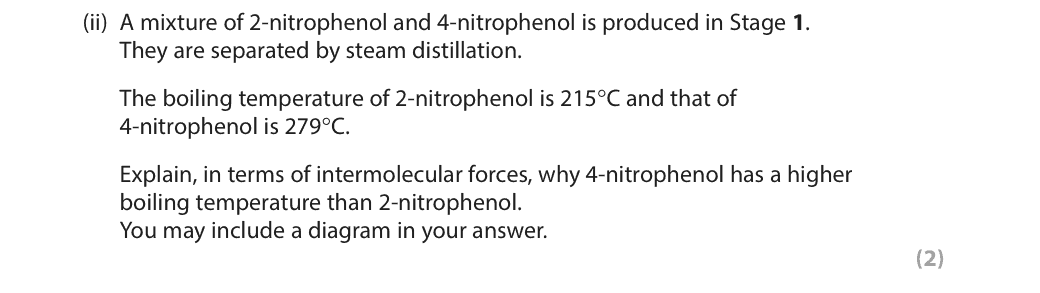
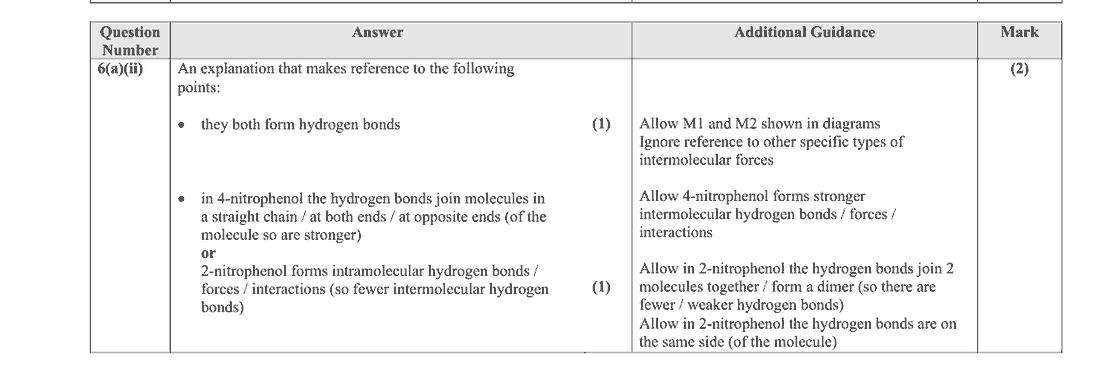
6(a)(ii) Bonding, Structure 2Explanation
6(b) Amines, amides, amino acids and proteins 1Short answer
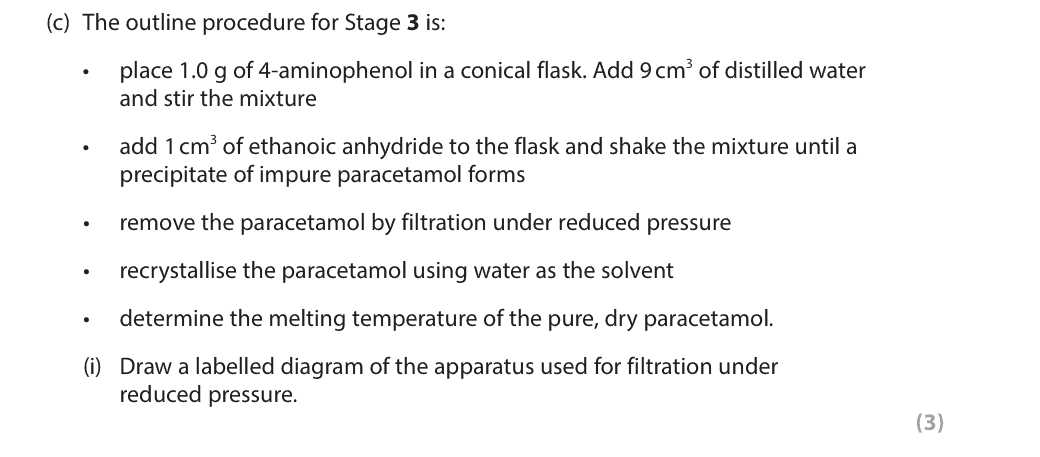
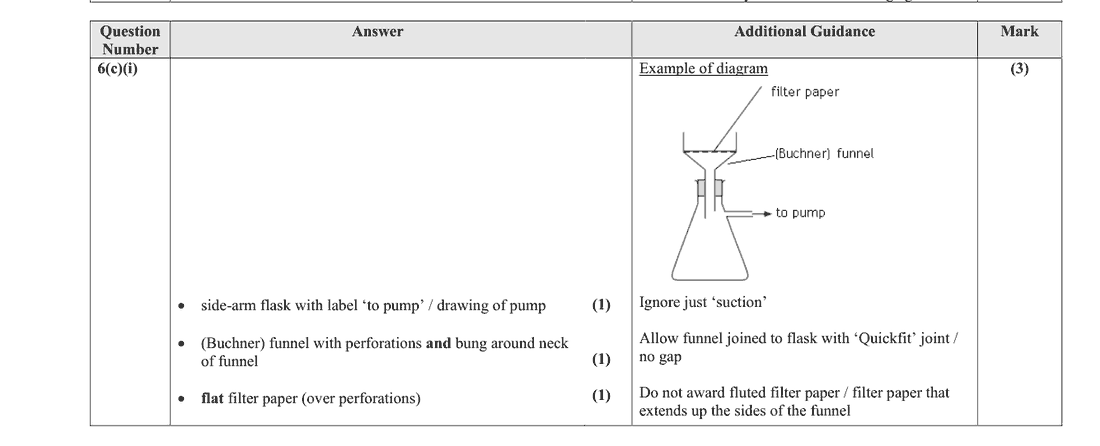
6(c)(i) Organic synthesis 3Diagram or structure
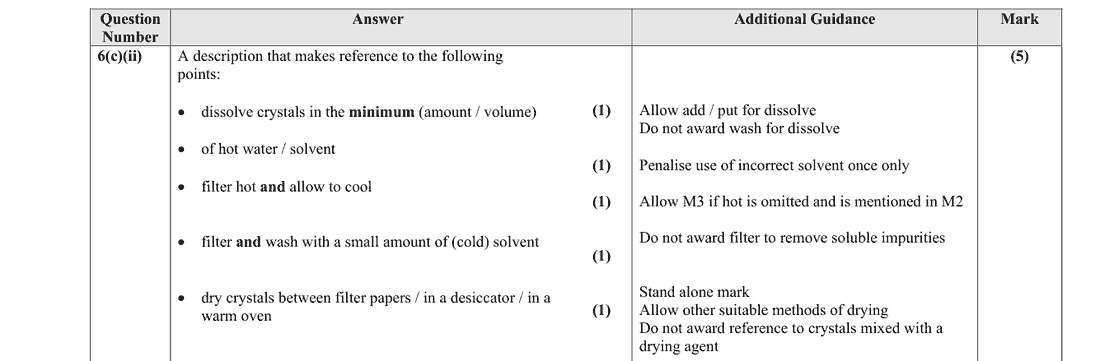
6(c)(ii) Organic synthesis 5Practical and data analysis
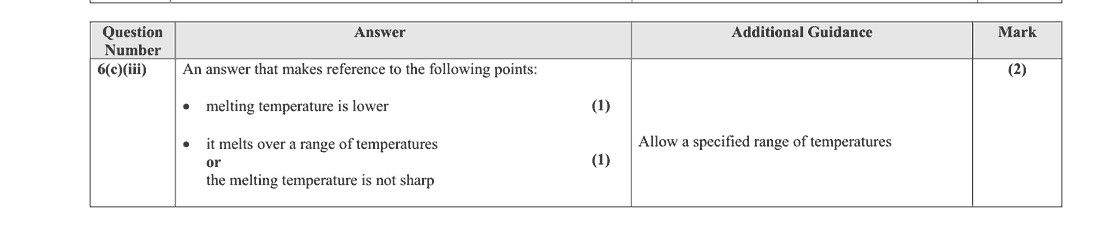
6(c)(iii) Organic synthesis 2Practical and data analysis
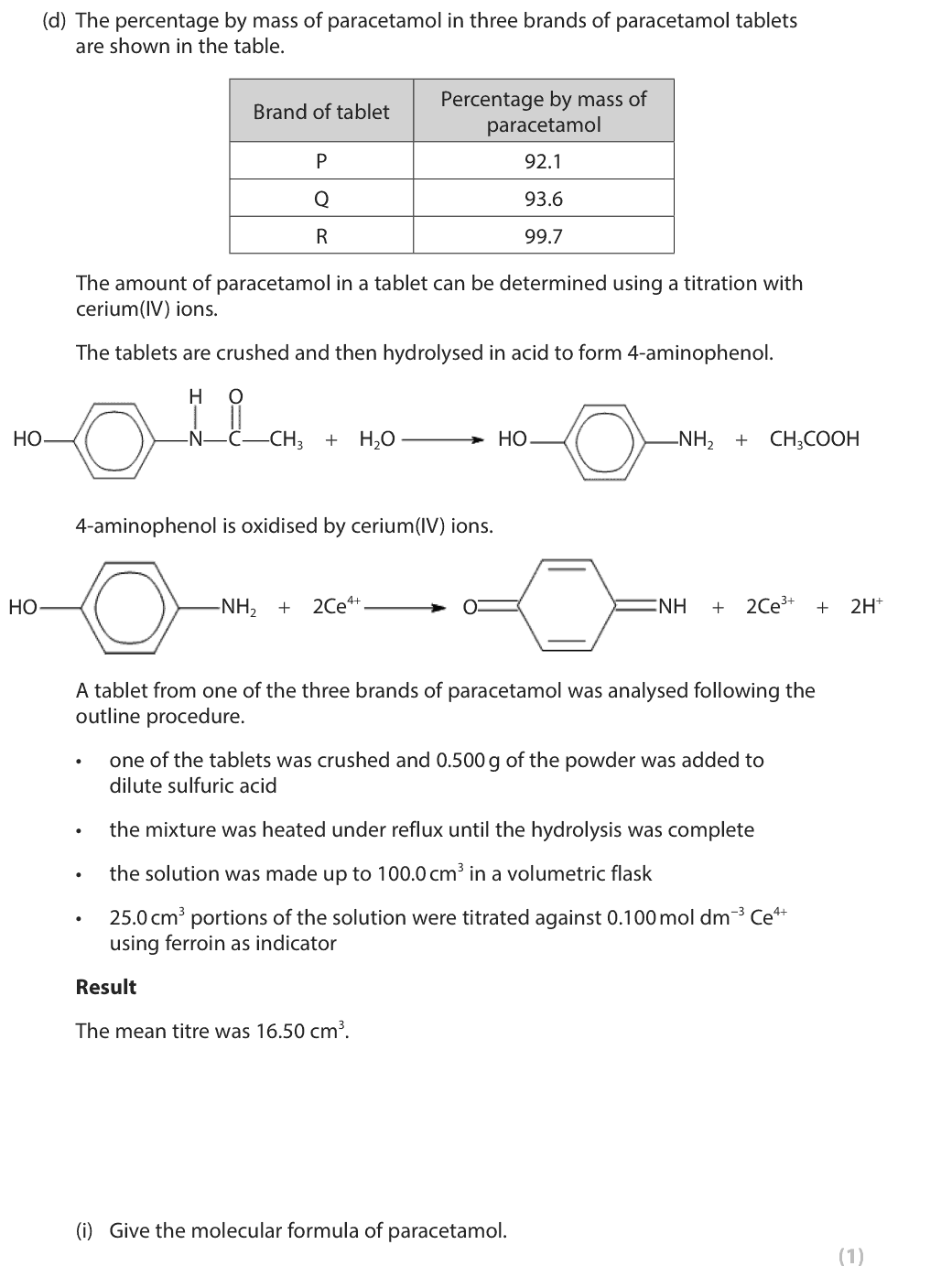
6(d)(i) Introduction to organic chemistry 1Short answer
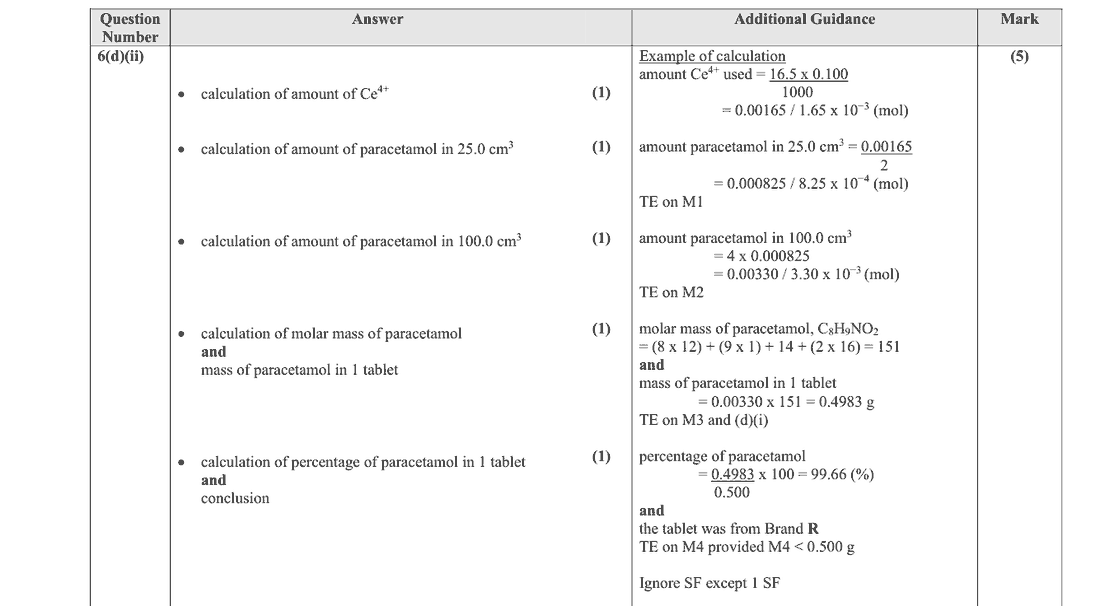
6(d)(ii) Redox II, Formulae, equations and amounts of substance 5Calculation
7(a)(i) Energetics I 1Short answer
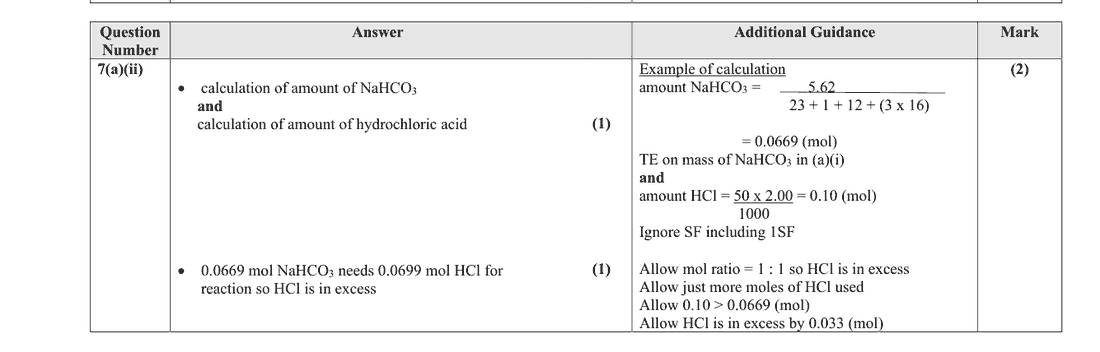
7(a)(ii) Formulae, equations and amounts of substance 2Calculation
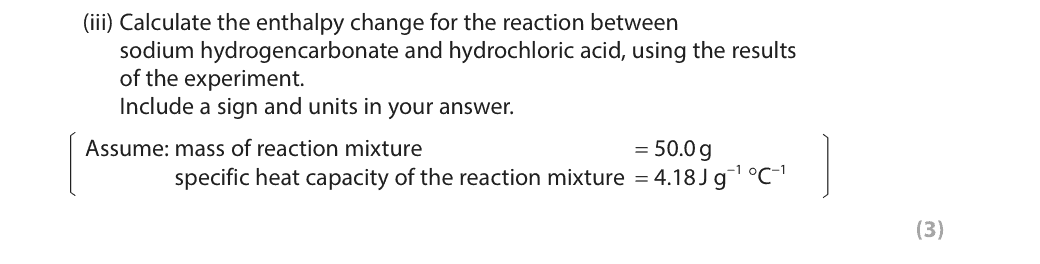
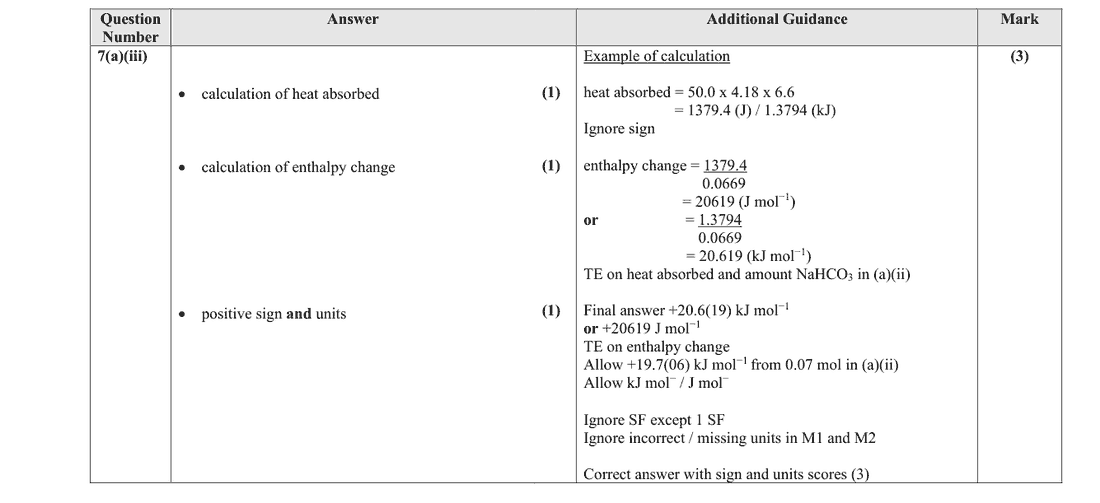
7(a)(iii) Energetics I 3Calculation
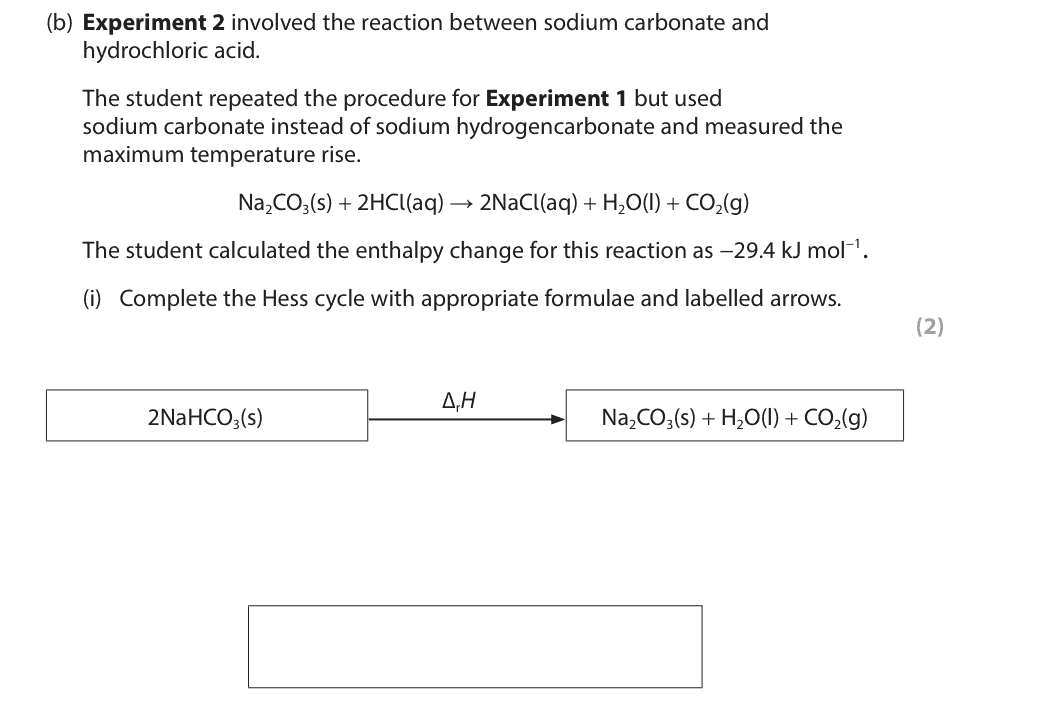
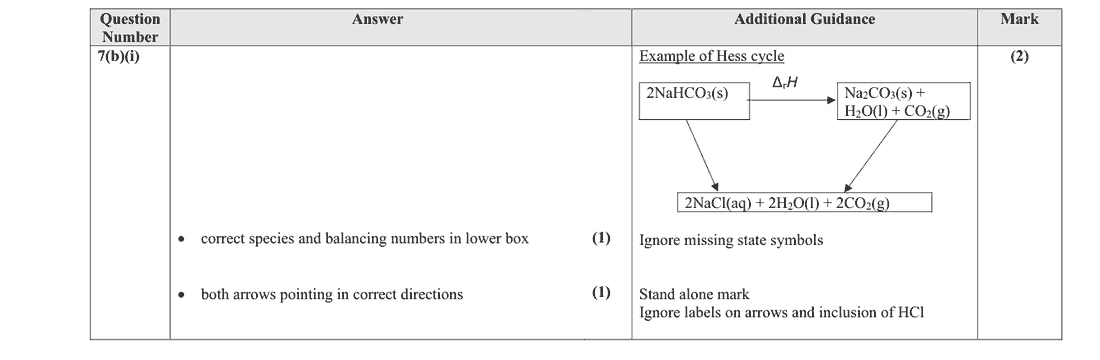
7(b)(i) Energetics I 2Diagram or structure
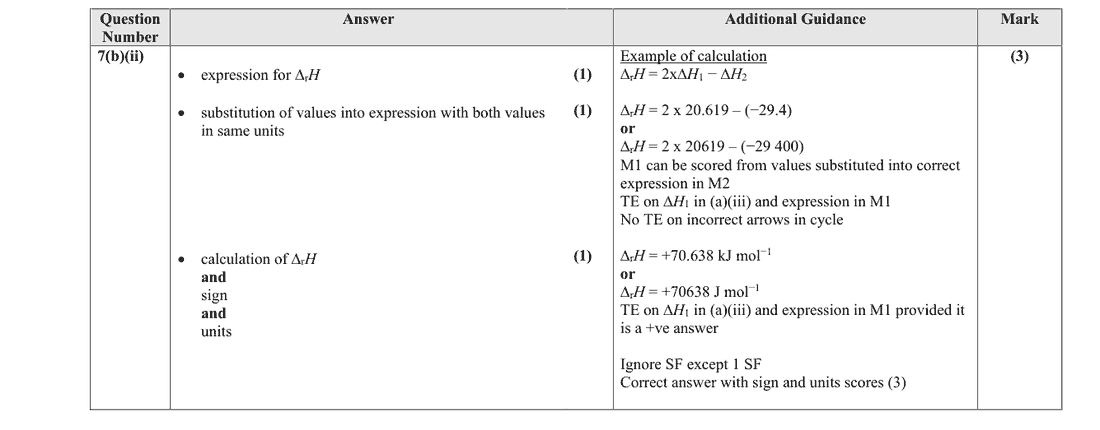
7(b)(ii) Energetics I 3Calculation
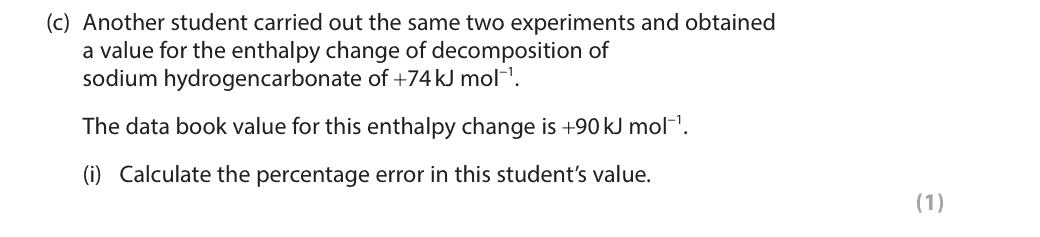
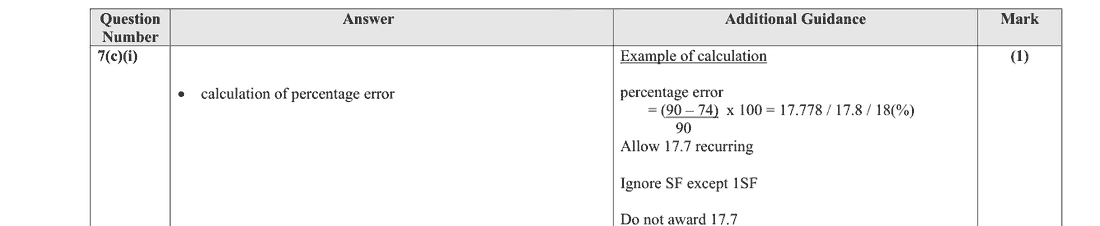
7(c)(i) Formulae, equations and amounts of substance 1Calculation
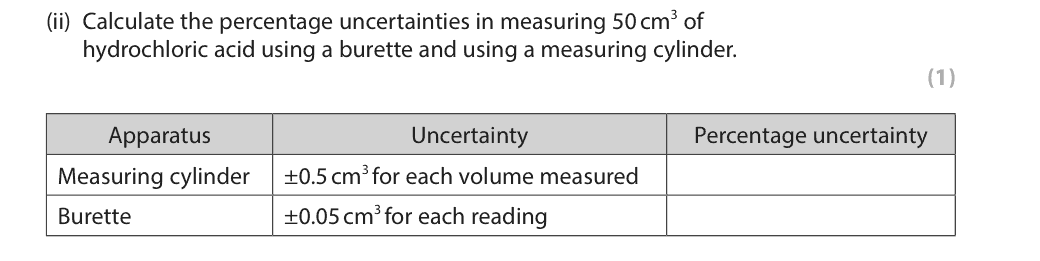
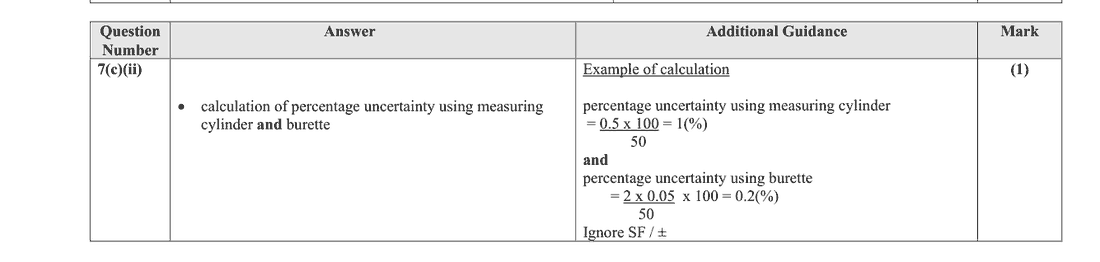
7(c)(ii) Formulae, equations and amounts of substance 1Calculation
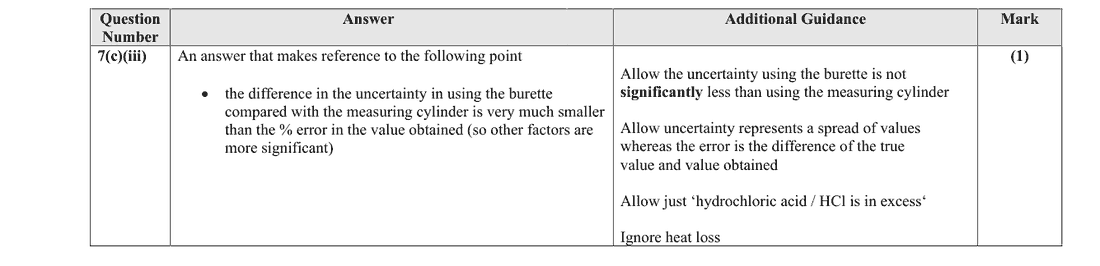
7(c)(iii) Formulae, equations and amounts of substance 1Practical and data analysis
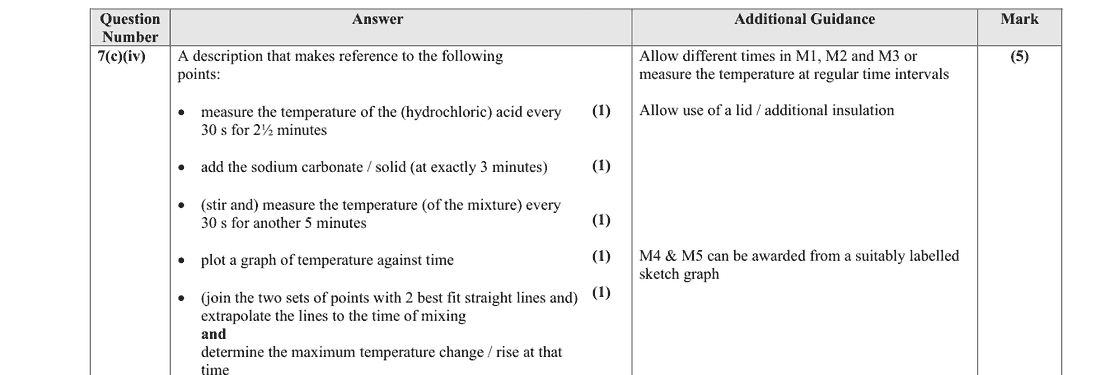
7(c)(iv) Energetics I, Formulae, equations and amounts of substance 5Practical and data analysis
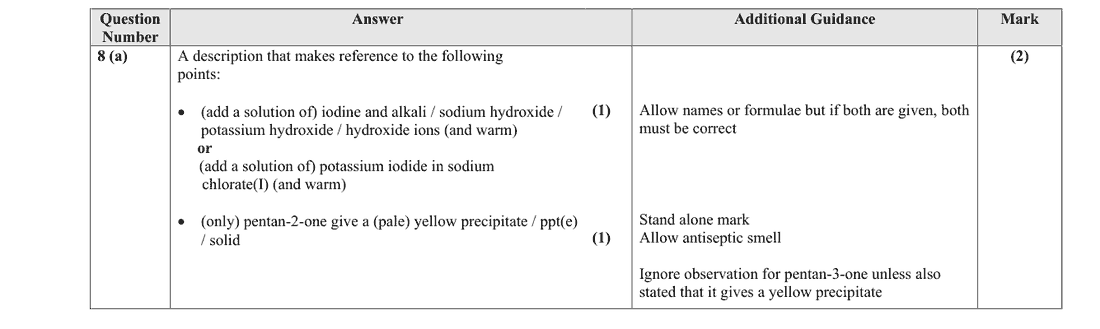
8(a) Carbonyl compounds 2Practical and data analysis
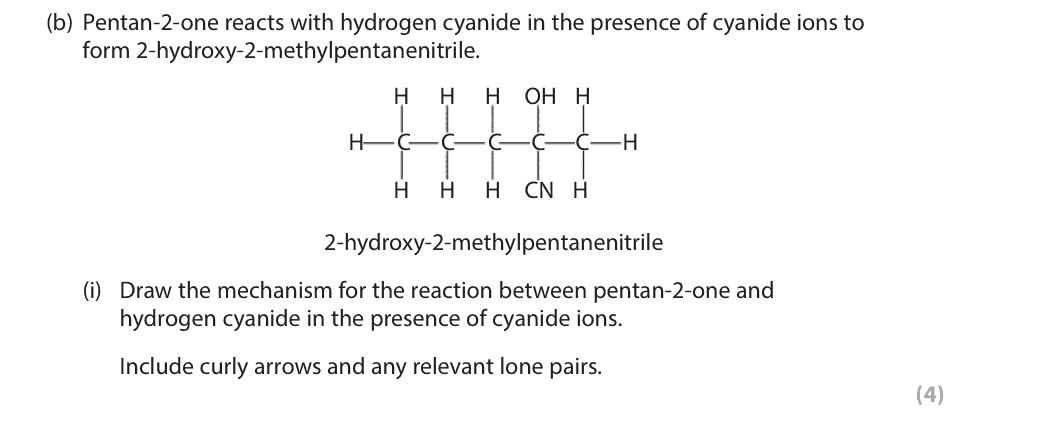
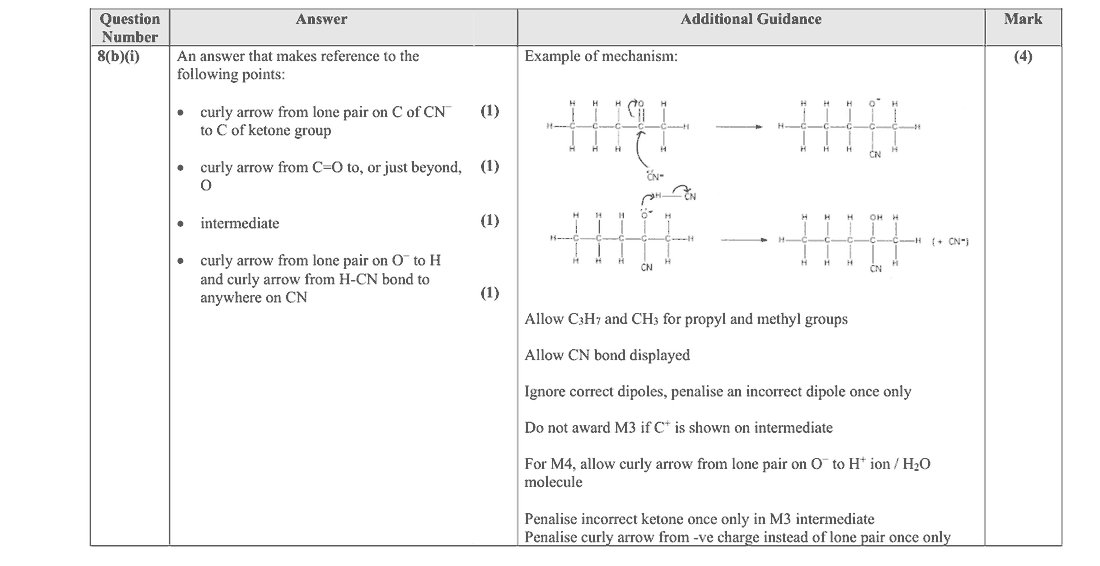
8(b)(i) Carbonyl compounds 4Mechanism
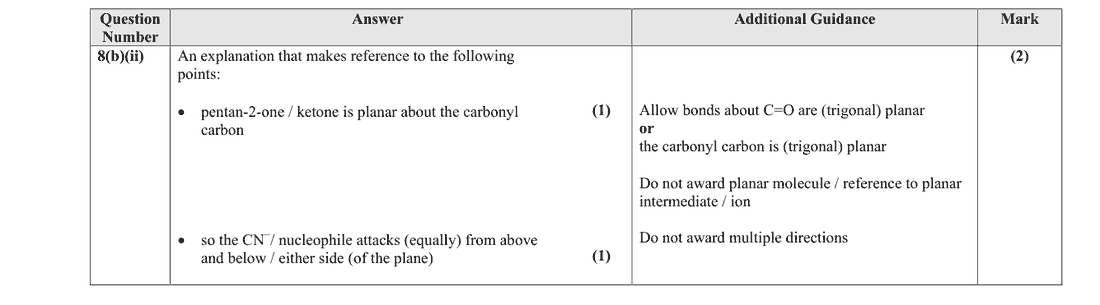
8(b)(ii) Chirality, Carbonyl compounds 2Explanation
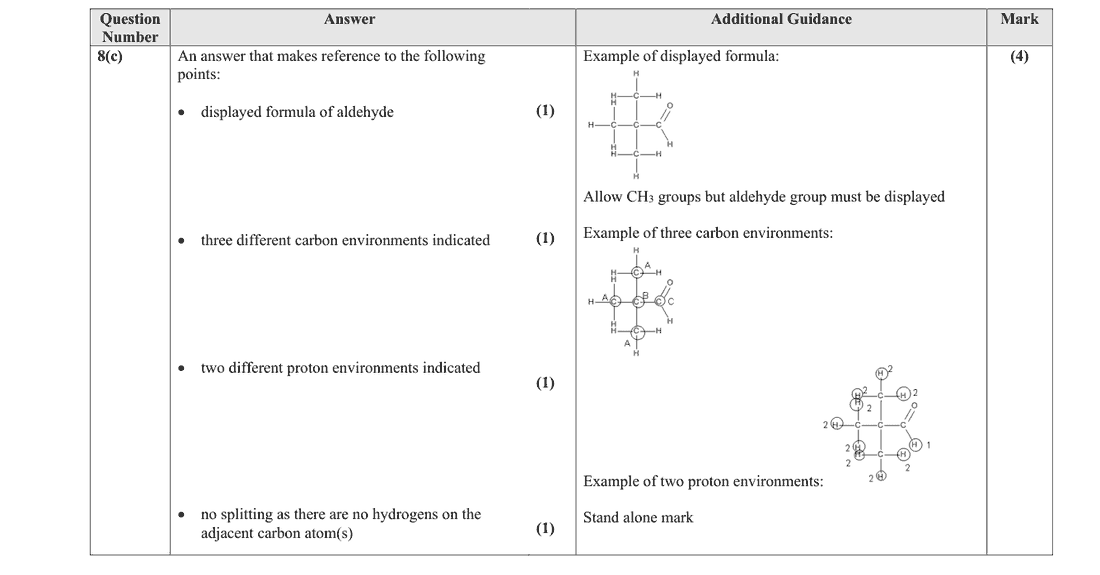
8(c) Modern analytical techniques II: NMR, mass spectrometry and chromatography, Organic synthesis 4Explanation
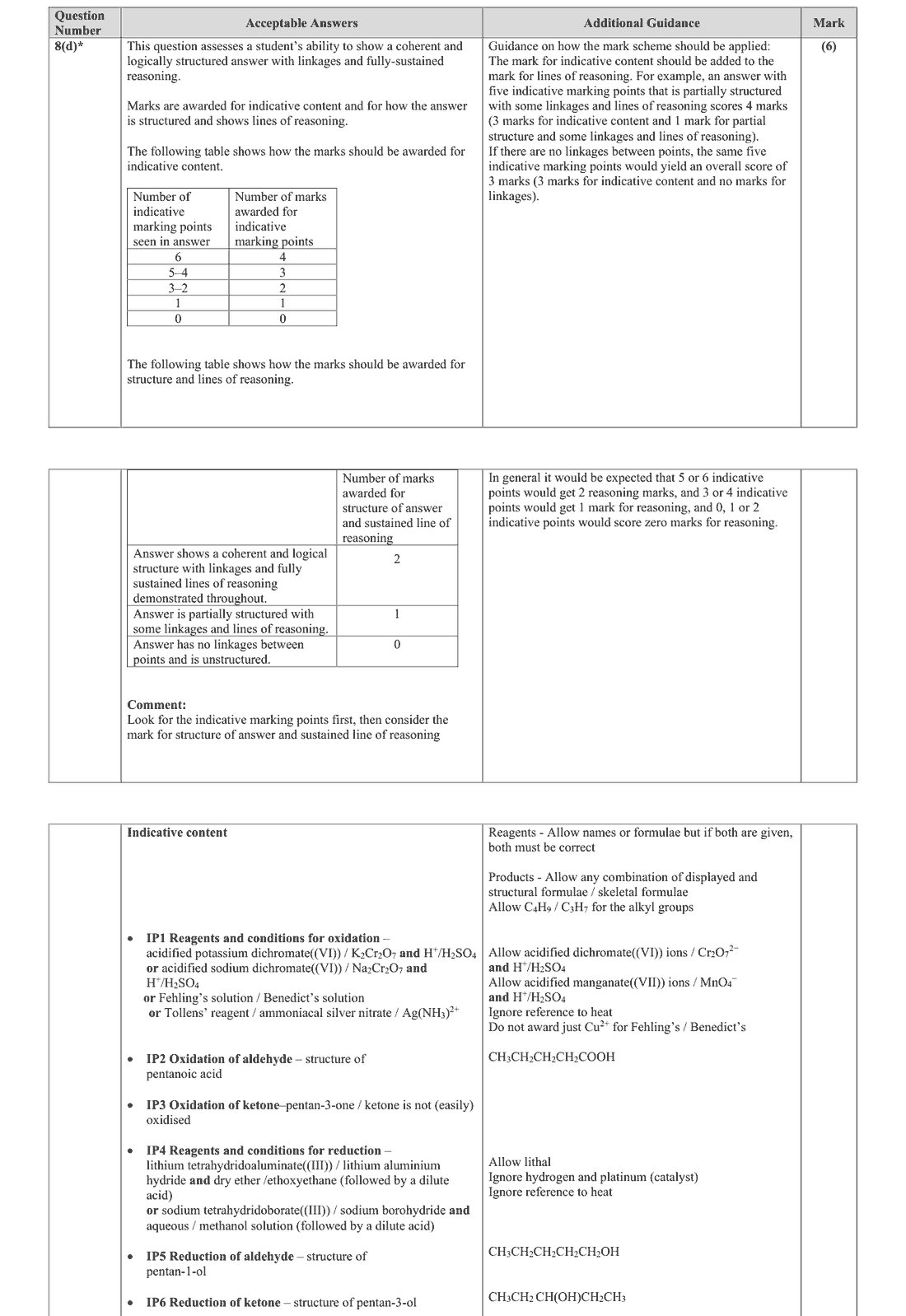
8(d) Carbonyl compounds 6Extended response
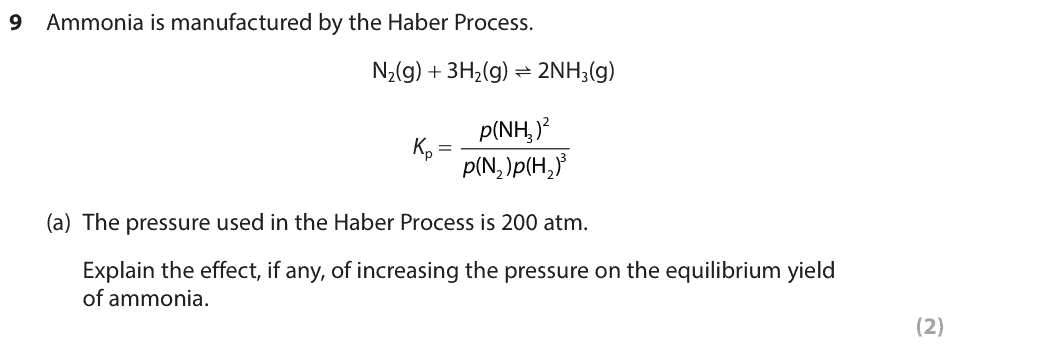
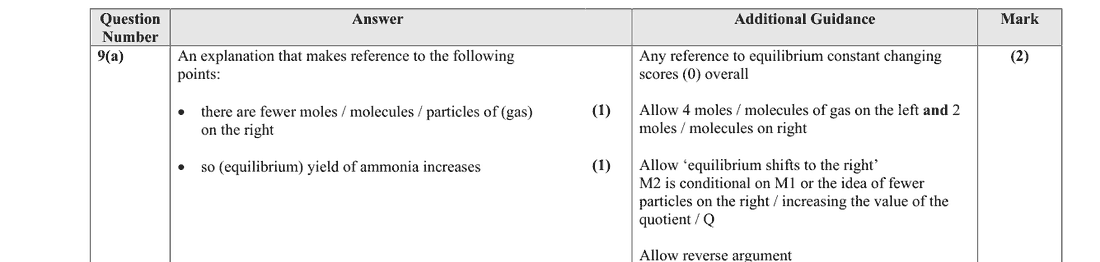
9(a) Equilibrium I 2Explanation
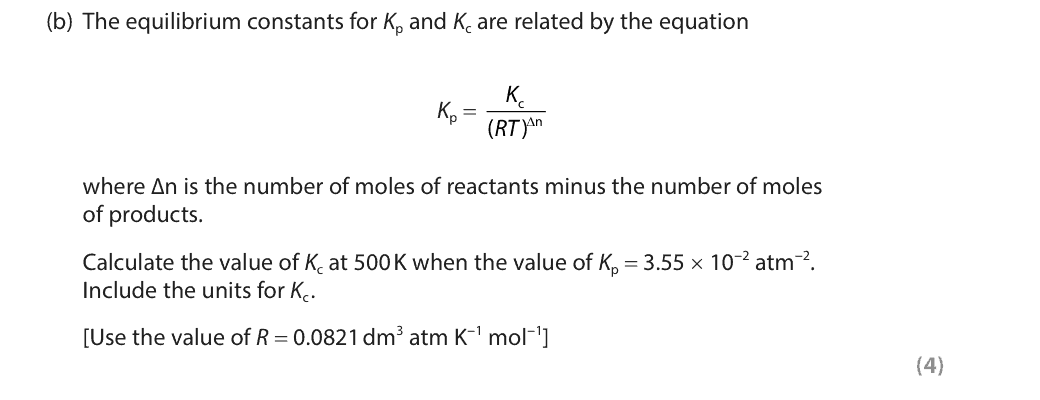
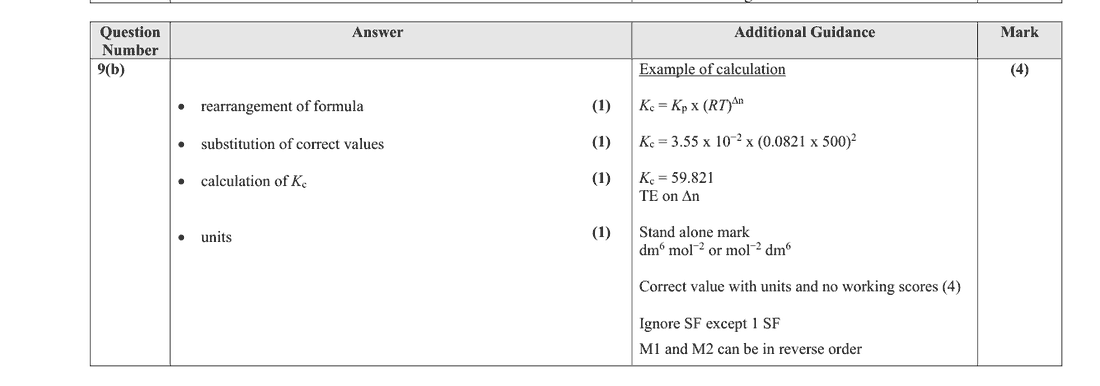
9(b) Equilibrium II 4Calculation
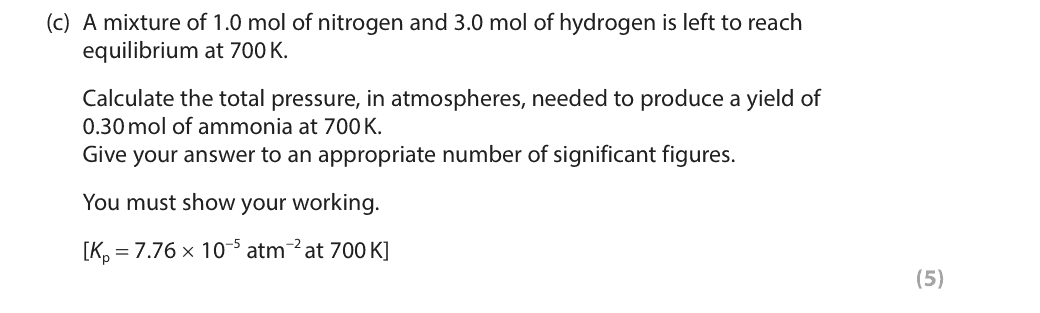
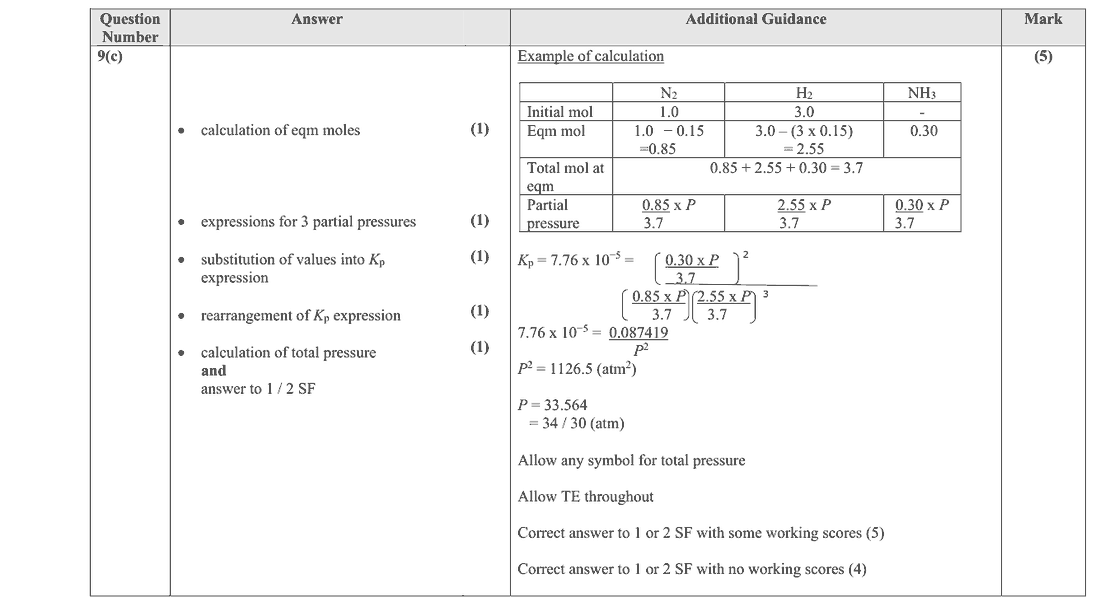
9(c) Equilibrium II 5Calculation
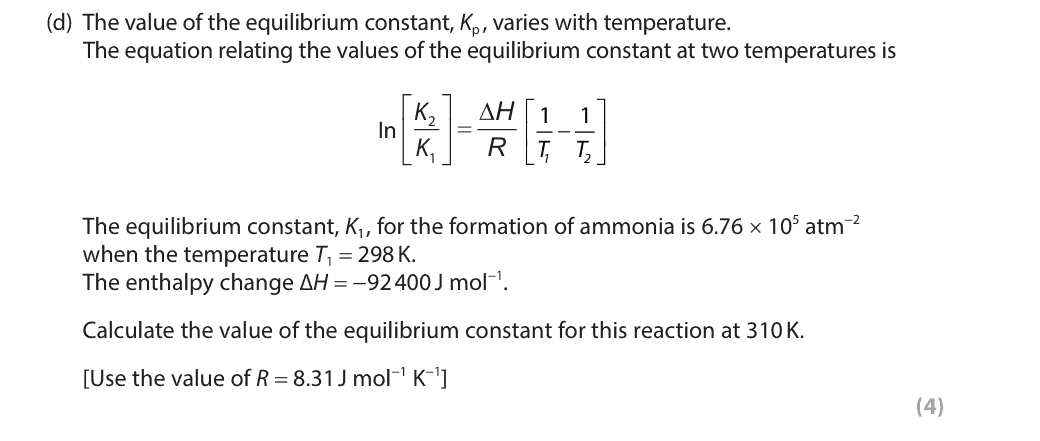
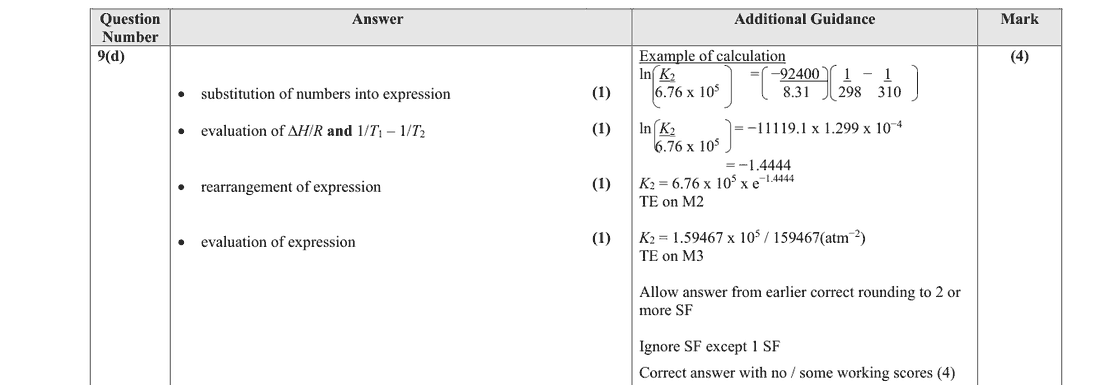
9(d) Equilibrium II 4Calculation

The questions

1(a)(i)1(a)(ii)1(b)1(c)1(d)(i)1(d)(ii)2(a)2(b)2(c)3(a)3(b)(i)3(b)(ii)3(b)(iii)3(c)(i)3(c)(ii)4(a)4(b)4(c)5(a)(i)5(a)(ii)5(a)(iii)5(a)(iv)5(b)(i)5(b)(ii)5(b)(iii)6(a)(i)6(a)(ii)6(b)6(c)(i)6(c)(ii)6(c)(iii)6(d)(i)6(d)(ii)7(a)(i)7(a)(ii)7(a)(iii)7(b)(i)7(b)(ii)7(c)(i)7(c)(ii)7(c)(iii)7(c)(iv)8(a)8(b)(i)8(b)(ii)8(c)8(d)9(a)9(b)9(c)9(d)
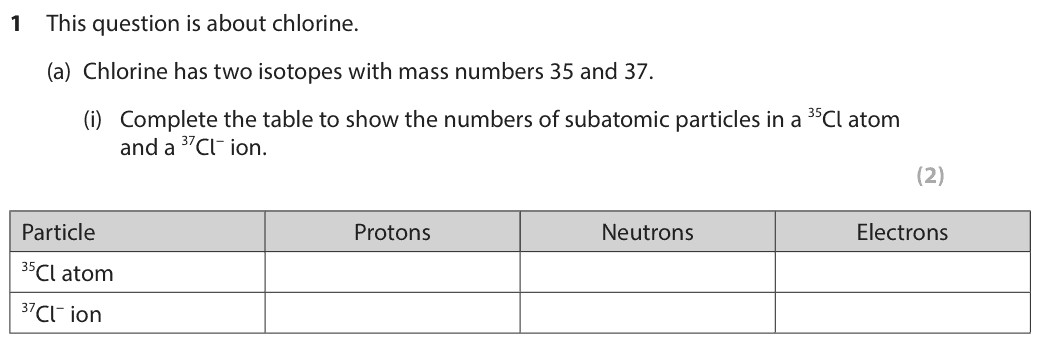
November 2021 · Paper 3 · Q1(a)(i) 2 marks Short answer atomic structure and the periodic table
This question is about chlorine.
Chlorine has two isotopes with mass numbers 35 and 37.
Complete the table to show the numbers of subatomic particles in a 35Cl atom
and a 37Cl− ion.
Particle
Protons
Neutrons
Electrons
35Cl atom
37Cl− ion
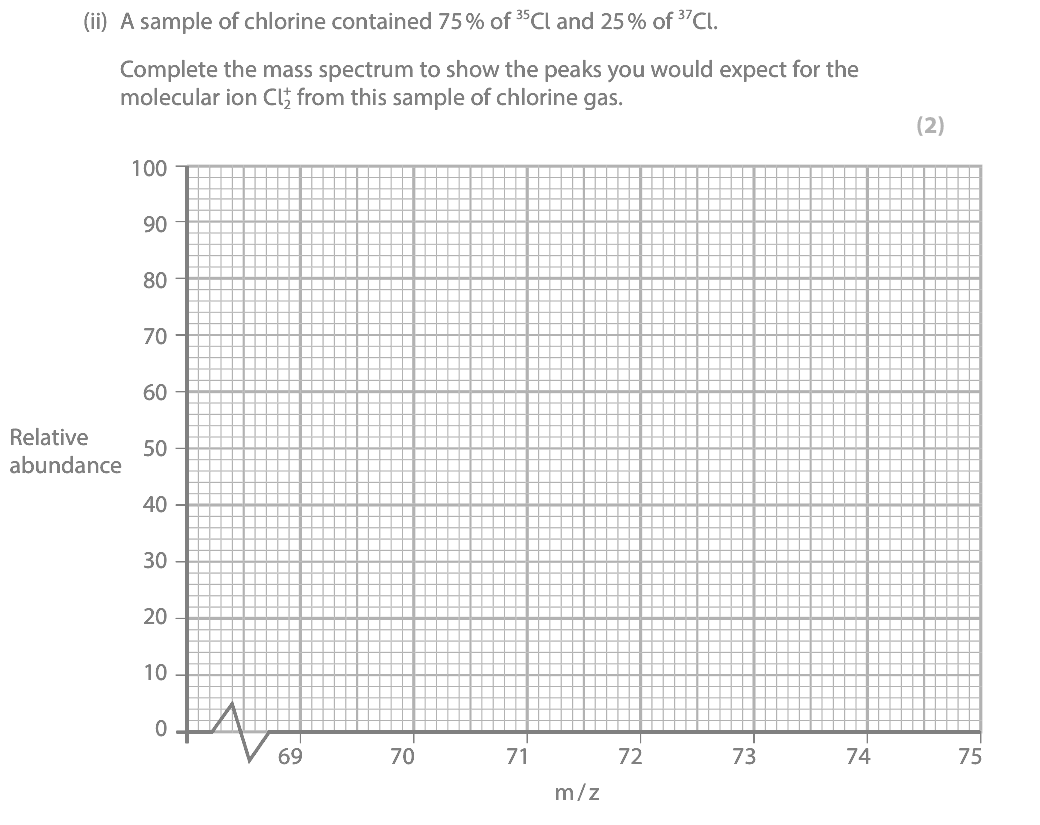
November 2021 · Paper 3 · Q1(a)(ii) 2 marks Diagram or structure atomic structure and the periodic table
Earlier part of question 1 that this part usesEarlier part of November 2021 Paper 3 question 1
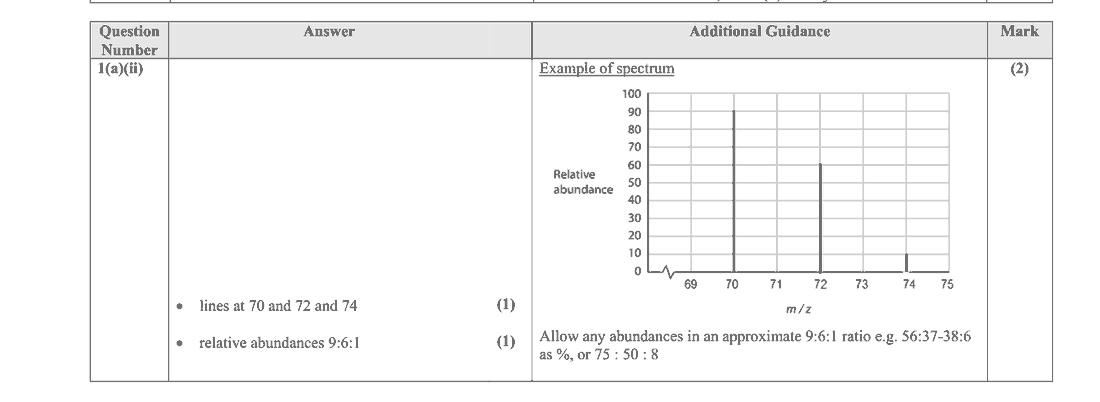
A sample of chlorine contained 75 % of 35Cl and 25 % of 37Cl.
Complete the mass spectrum to show the peaks you would expect for the
molecular ion Cl2
+ from this sample of chlorine gas.
100
90
80
70
60
Relative
50
abundance
40
30
20
10
0
69
70
71
72
73
74
75
m / z
November 2021 · Paper 3 · Q1(b) 1 mark Short answer redox i
Write the formula of potassium chlorate(V).
November 2021 · Paper 3 · Q1(c) 2 marks Equation writing lattice energy
Write the equation for the first electron affinity of chlorine. Include state symbols.
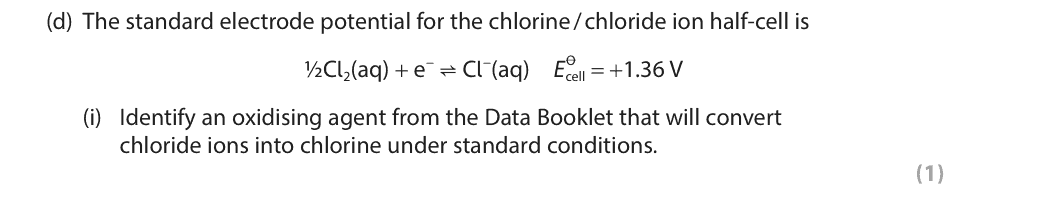
November 2021 · Paper 3 · Q1(d)(i) 1 mark Short answer redox ii
The standard electrode potential for the chlorine / chloride ion half-cell is
½Cl2(aq) + e− ⇌ Cl−(aq)  E
cell = +1.36 V
O
Identify an oxidising agent from the Data Booklet that will convert
chloride ions into chlorine under standard conditions.
November 2021 · Paper 3 · Q1(d)(ii) 1 mark Calculation redox ii
Earlier parts of question 1 that this part usesEarlier part of November 2021 Paper 3 question 1Earlier part of November 2021 Paper 3 question 1
Calculate the value of E
cell for the reaction in (d)(i).
O
November 2021 · Paper 3 · Q2(a) 2 marks Practical and data analysis Hard carboxylic acids
Analysis shows that a compound has the molecular formula C4H8O2.
A student suggests that the compound could be either A or B.
CH3CH2CH2COOH
or
HOCH2CH=CHCH2OH
A
B
Deduce a chemical test which would give a positive result for A but not for B.
Include the reagent and observation.
November 2021 · Paper 3 · Q2(b) 2 marks Practical and data analysis alkenes
Earlier part of question 2 that this part usesEarlier part of November 2021 Paper 3 question 2
Deduce a chemical test which would give a positive result for B but not for A.
Include the reagent and observation.
November 2021 · Paper 3 · Q2(c) 3 marks Short answer mass spectrometry and infrared spectroscopy
Earlier part of question 2 that this part usesEarlier part of November 2021 Paper 3 question 2
Another student suggests that the compound could contain an aldehyde and
an alcohol functional group, with structure C.
HOCH2CH2CH2CHO
C
Complete the table to show how the infrared spectra of A, B and C would be
expected to differ in the wavenumber range 1800-1600 cm−1.
Use information from the Data Booklet.
Absorbance
Wavenumber range / cm−1
Absorbance expected in infrared spectrum
of A but not in B or C
Absorbance expected in infrared spectrum
of B but not in A or C
Absorbance expected in infrared spectrum
of C but not in A or B
November 2021 · Paper 3 · Q3(a) 1 mark Short answer Easy atomic structure and the periodic table
This question is about aluminium chloride.
Complete the electronic configuration of an aluminium atom.
1s2 …………………………………………………………………………………………………………………………
November 2021 · Paper 3 · Q3(b)(i) 1 mark Diagram or structure bonding
At high temperatures, aluminium chloride exists as AlCl3 molecules.
Draw a dot-and-cross diagram of an aluminium chloride molecule, AlCl3.
Show the outer shell electrons only.
November 2021 · Paper 3 · Q3(b)(ii) 2 marks Short answer bonding
Earlier part of question 3 that this part usesEarlier part of November 2021 Paper 3 question 3
Predict the shape of an AlCl3 molecule and the Cl−Al−Cl bond angle.
Shape of AlCl3
Cl−Al−Cl bond angle
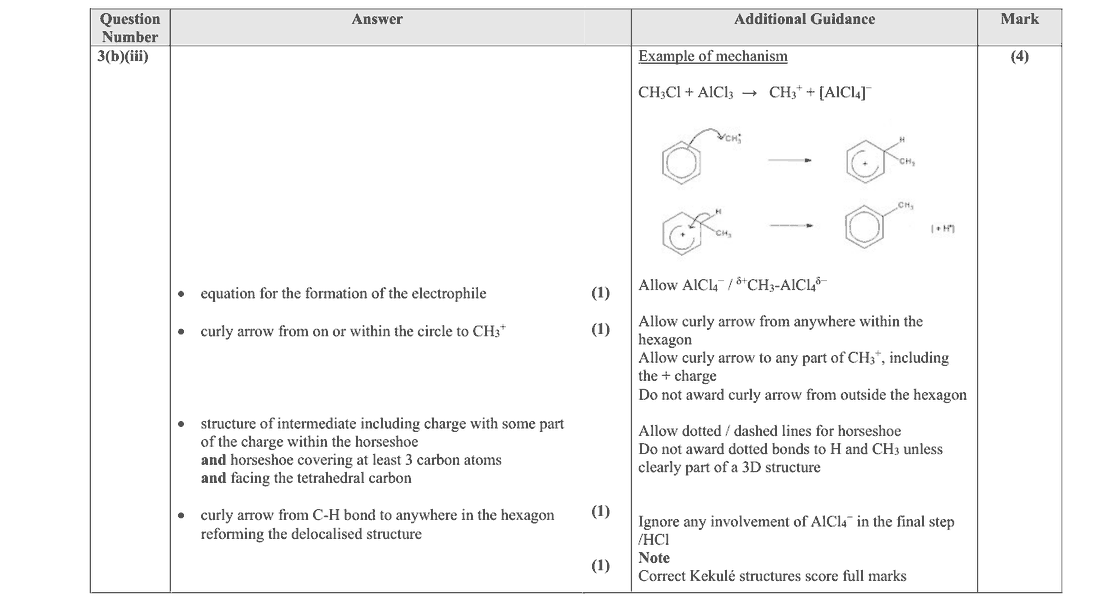
November 2021 · Paper 3 · Q3(b)(iii) 4 marks Mechanism arenes benzene
Earlier part of question 3 that this part usesEarlier part of November 2021 Paper 3 question 3
Aluminium chloride is used as a catalyst in the alkylation of benzene.
Draw the mechanism for the reaction between benzene and chloromethane
using aluminium chloride as the catalyst.
Include an equation for the formation of the electrophile, and any relevant
curly arrows.
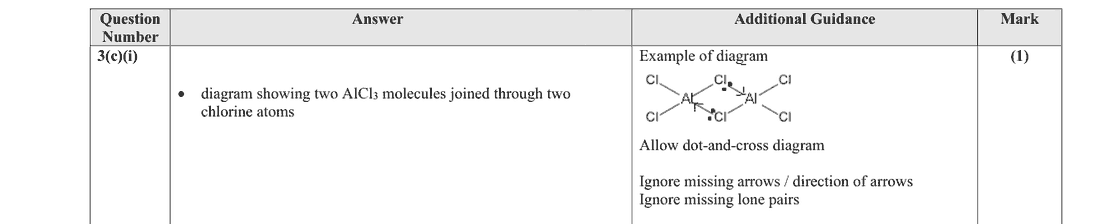
November 2021 · Paper 3 · Q3(c)(i) 1 mark Diagram or structure bonding
Aluminium chloride exists as a dimer, Al2Cl6 , just above its boiling temperature.
Draw a diagram to show how two AlCl3 molecules are joined together in
the dimer.
November 2021 · Paper 3 · Q3(c)(ii) 1 mark Short answer bonding
Earlier part of question 3 that this part usesEarlier part of November 2021 Paper 3 question 3
State the type of bond that joins the two AlCl3 molecules together.
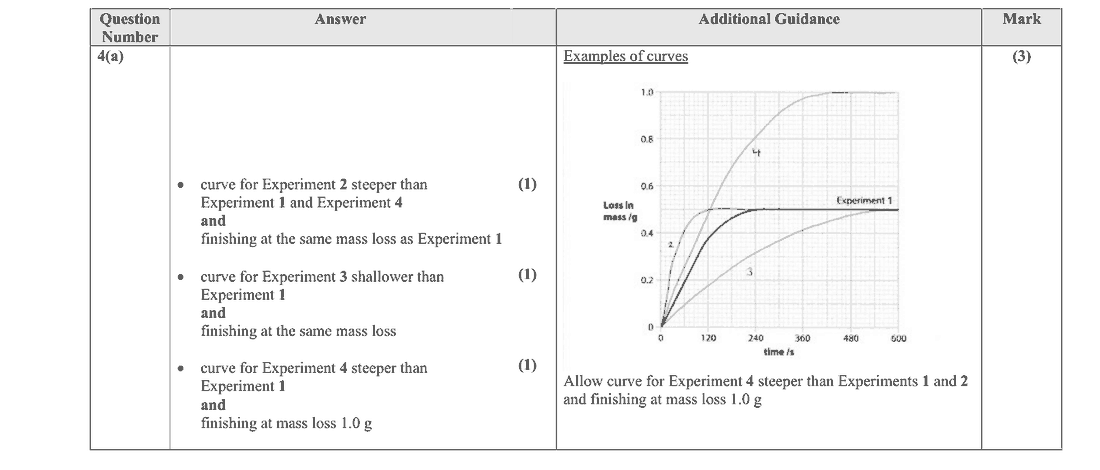
November 2021 · Paper 3 · Q4(a) 3 marks Diagram or structure kinetics i
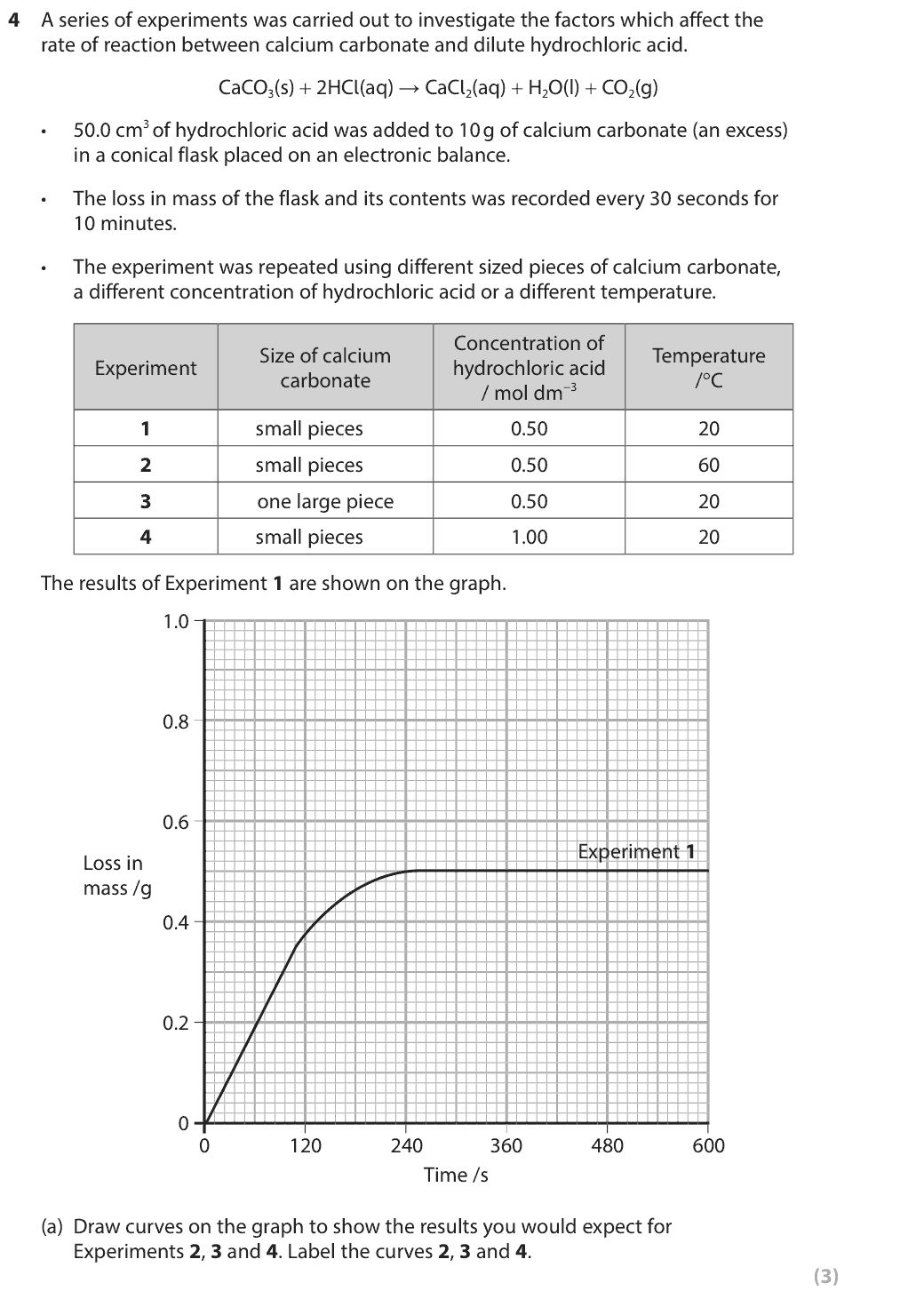
A series of experiments was carried out to investigate the factors which affect the
rate of reaction between calcium carbonate and dilute hydrochloric acid.
CaCO3(s) + 2HCl(aq) → CaCl2(aq) + H2O(l) + CO2(g)
•
50.0 cm3 of hydrochloric acid was added to 10 g of calcium carbonate (an excess)
in a conical flask placed on an electronic balance.
•
The loss in mass of the flask and its contents was recorded every 30 seconds for
10 minutes.
•
The experiment was repeated using different sized pieces of calcium carbonate,
a different concentration of hydrochloric acid or a different temperature.
Concentration of
Size of calcium
Temperature
Experiment
hydrochloric acid
/°C
carbonate
/ mol dm−3
1
small pieces
0.50
20
2
small pieces
0.50
60
3
one large piece
0.50
20
4
small pieces
1.00
20
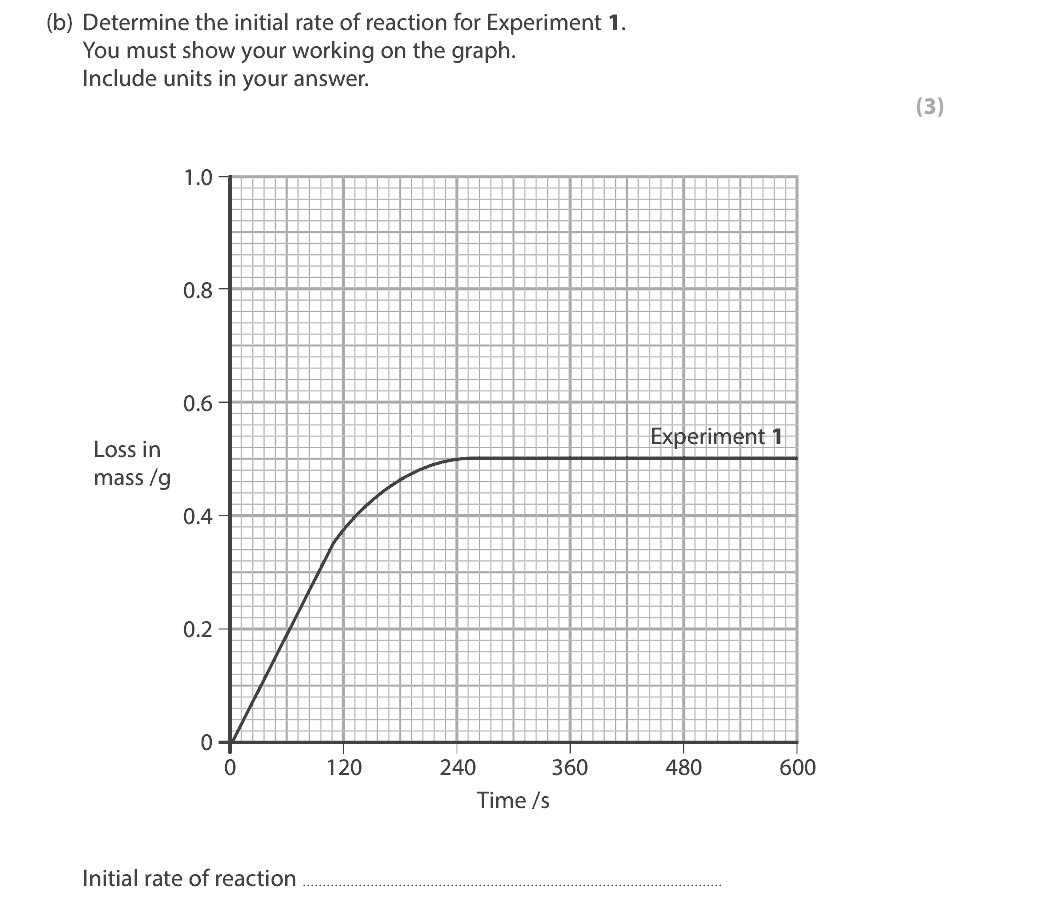
The results of Experiment 1 are shown on the graph.
1.0
0.8
0.6
Experiment 1
Loss in
mass /g
0.4
0.2
0
0
120
240
360
480
600
Time /s
Draw curves on the graph to show the results you would expect for
Experiments 2, 3 and 4. Label the curves 2, 3 and 4.
November 2021 · Paper 3 · Q4(b) 3 marks Calculation kinetics i
Earlier part of question 4 that this part usesEarlier part of November 2021 Paper 3 question 4
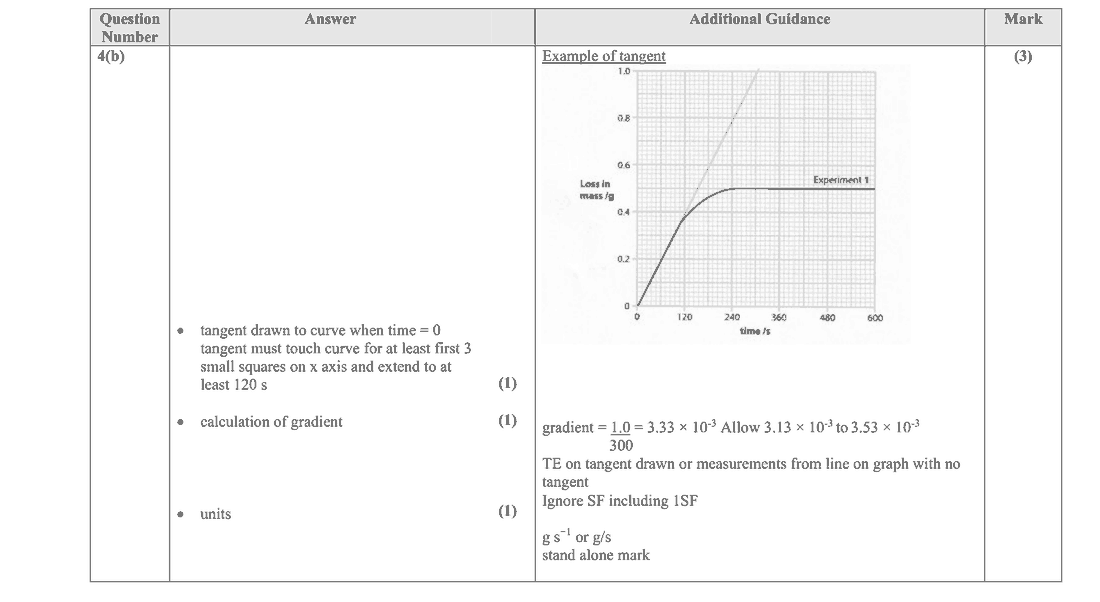
Determine the initial rate of reaction for Experiment 1.
You must show your working on the graph.
Include units in your answer.
1.0
0.8
0.6
Experiment 1
Loss in
mass /g
0.4
0.2
0
0
120
240
360
480
600
Time /s
Initial rate of reaction ……………………………………………………………………………………………
November 2021 · Paper 3 · Q4(c) 4 marks Practical and data analysis Hard kinetics ii
Earlier part of question 4 that this part usesEarlier part of November 2021 Paper 3 question 4
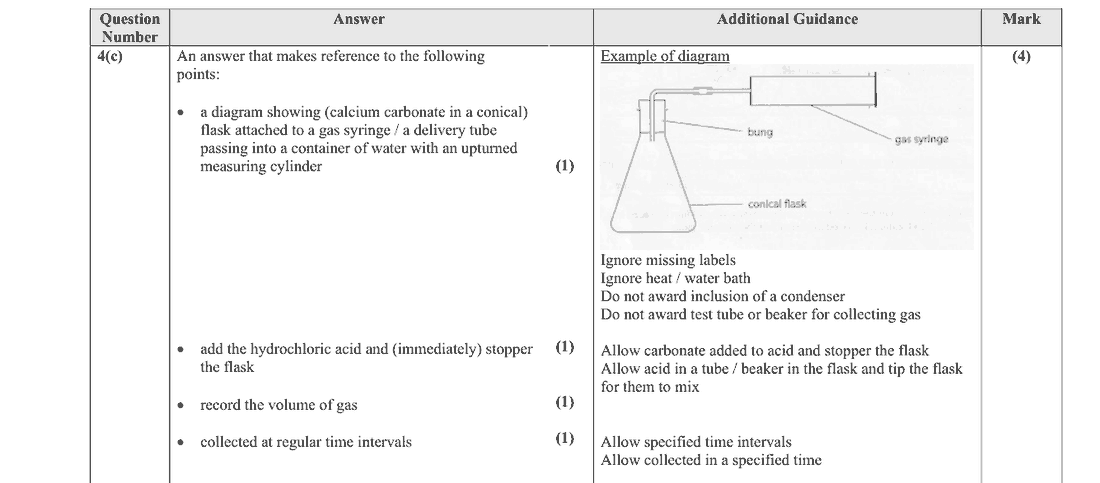
A student was required to devise an alternative method of carrying out this
experiment that involved collecting the gas produced.
Outline the procedure that the student could use, including a diagram and the
measurements needed.
November 2021 · Paper 3 · Q5(a)(i) 2 marks Practical and data analysis transition metals reactionsanalysis of inorganic compounds
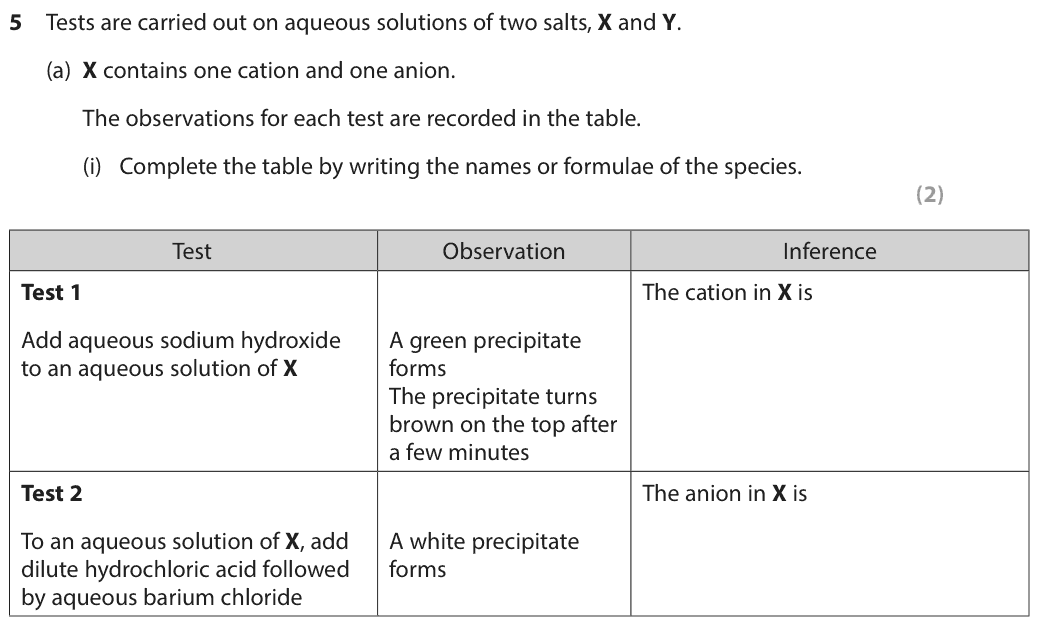
Tests are carried out on aqueous solutions of two salts, X and Y.
X contains one cation and one anion.
The observations for each test are recorded in the table.
Complete the table by writing the names or formulae of the species.
Test
Observation
Inference
Test 1
The cation in X is
Add aqueous sodium hydroxide
A green precipitate
to an aqueous solution of X
forms
The precipitate turns
brown on the top after
a few minutes
Test 2
The anion in X is
To an aqueous solution of X, add
A white precipitate
dilute hydrochloric acid followed
forms
by aqueous barium chloride
November 2021 · Paper 3 · Q5(a)(ii) 2 marks Equation writing Hard transition metals reactionsformulae equations and amounts of substance
Earlier part of question 5 that this part usesEarlier part of November 2021 Paper 3 question 5
Write the ionic equation for the reaction between the cation in X and aqueous
sodium hydroxide in Test 1. Include state symbols.
November 2021 · Paper 3 · Q5(a)(iii) 1 mark Short answer transition metals principles
Earlier part of question 5 that this part usesEarlier part of November 2021 Paper 3 question 5
Give a reason why the green precipitate turns brown on the top after a
few minutes.
November 2021 · Paper 3 · Q5(a)(iv) 1 mark Practical and data analysis analysis of inorganic compounds
Earlier part of question 5 that this part usesEarlier part of November 2021 Paper 3 question 5
Give a reason why dilute hydrochloric acid is needed in Test 2.
November 2021 · Paper 3 · Q5(b)(i) 2 marks Practical and data analysis transition metals reactionsgroup 7 the halogens
Earlier part of question 5 that this part usesEarlier part of November 2021 Paper 3 question 5
Y contains one cation and one anion.
The observations for each test are recorded in the table.
Complete the table by writing the names or formulae of the species.
Test
Observation
Inference
Test 3
The cation in Y is
Add dilute aqueous ammonia to
A pale blue
an aqueous solution of Y until it
precipitate forms
is present in excess
The precipitate
dissolves in excess
ammonia to form a
deep blue solution
Test 4
The anion in Y is
To an aqueous solution of Y, add
A white precipitate
dilute nitric acid followed by
forms
aqueous silver nitrate
November 2021 · Paper 3 · Q5(b)(ii) 1 mark Short answer Hard transition metals reactions
Earlier parts of question 5 that this part usesEarlier part of November 2021 Paper 3 question 5Earlier part of November 2021 Paper 3 question 5
Give the formula of the complex ion present in the deep blue solution at the
end of Test 3.
November 2021 · Paper 3 · Q5(b)(iii) 2 marks Practical and data analysis group 7 the halogens
Earlier parts of question 5 that this part usesEarlier part of November 2021 Paper 3 question 5Earlier part of November 2021 Paper 3 question 5
Give a reagent that could be added to the mixture at the end of Test 4
to confirm the identity of the anion in Y.
Include the observation when this reagent is added.
November 2021 · Paper 3 · Q6(a)(i) 2 marks Explanation arenes benzene
This question is about the preparation and analysis of paracetamol.
H
O
HO
N
C
CH3
paracetamol
Paracetamol may be prepared from phenol in three stages.
NO2
Stage 1
HO
HO
NO2
HO
4-nitrophenol
2-nitrophenol
Stage 2
HO
NO2
HO
NH2
4-aminophenol
H
O
Stage 3
HO
NH2
HO
N
C
CH3
paracetamol
In Stage 1, phenol is nitrated using dilute nitric acid.
The nitration of benzene requires concentrated nitric acid at 55°C with a catalyst
of concentrated sulfuric acid.
Both these reactions are electrophilic substitution.
Explain why phenol can be nitrated using milder conditions than benzene.
November 2021 · Paper 3 · Q6(a)(ii) 2 marks Explanation Hard bondingstructure
Earlier part of question 6 that this part usesEarlier part of November 2021 Paper 3 question 6
A mixture of 2-nitrophenol and 4-nitrophenol is produced in Stage 1.
They are separated by steam distillation.
The boiling temperature of 2-nitrophenol is 215°C and that of
4-nitrophenol is 279°C.
Explain, in terms of intermolecular forces, why 4-nitrophenol has a higher
boiling temperature than 2-nitrophenol.
You may include a diagram in your answer.
November 2021 · Paper 3 · Q6(b) 1 mark Short answer amines amides amino acids and proteins
Earlier part of question 6 that this part usesEarlier part of November 2021 Paper 3 question 6
State the type of reagent needed to convert 4-nitrophenol into 4-aminophenol in
Stage 2.
November 2021 · Paper 3 · Q6(c)(i) 3 marks Diagram or structure organic synthesis
Earlier part of question 6 that this part usesEarlier part of November 2021 Paper 3 question 6
The outline procedure for Stage 3 is:
•
place 1.0 g of 4-aminophenol in a conical flask. Add 9 cm3 of distilled water
and stir the mixture
•
add 1 cm3 of ethanoic anhydride to the flask and shake the mixture until a
precipitate of impure paracetamol forms
•
remove the paracetamol by filtration under reduced pressure
•
recrystallise the paracetamol using water as the solvent
•
determine the melting temperature of the pure, dry paracetamol.
Draw a labelled diagram of the apparatus used for filtration under
reduced pressure.
November 2021 · Paper 3 · Q6(c)(ii) 5 marks Practical and data analysis organic synthesis
Earlier parts of question 6 that this part usesEarlier part of November 2021 Paper 3 question 6Earlier part of November 2021 Paper 3 question 6
Describe the recrystallisation process to obtain a pure, dry sample
of paracetamol.
November 2021 · Paper 3 · Q6(c)(iii) 2 marks Practical and data analysis organic synthesis
Earlier parts of question 6 that this part usesEarlier part of November 2021 Paper 3 question 6Earlier part of November 2021 Paper 3 question 6
The melting temperature of pure paracetamol is 170°C.
Describe what happens to the melting temperature if the paracetamol is
not pure.
November 2021 · Paper 3 · Q6(d)(i) 1 mark Short answer introduction to organic chemistry
Earlier part of question 6 that this part usesEarlier part of November 2021 Paper 3 question 6
The percentage by mass of paracetamol in three brands of paracetamol tablets
are shown in the table.
Percentage by mass of
Brand of tablet
paracetamol
P
92.1
Q
93.6
R
99.7
The amount of paracetamol in a tablet can be determined using a titration with
cerium(IV) ions.
The tablets are crushed and then hydrolysed in acid to form 4-aminophenol.
H
O
HO
N
C
CH3  +  H2O
HO
NH2  +  CH3COOH
4-aminophenol is oxidised by cerium(IV) ions.
NH2  +  2Ce4+
NH   +  2Ce3+  +  2H+
HO
O
A tablet from one of the three brands of paracetamol was analysed following the
outline procedure.
•
one of the tablets was crushed and 0.500 g of the powder was added to
dilute sulfuric acid
•
the mixture was heated under reflux until the hydrolysis was complete
•
the solution was made up to 100.0 cm3 in a volumetric flask
•
25.0 cm3 portions of the solution were titrated against 0.100 mol dm−3 Ce4+
using ferroin as indicator
Result
The mean titre was 16.50 cm3.
Give the molecular formula of paracetamol.
November 2021 · Paper 3 · Q6(d)(ii) 5 marks Calculation redox iiformulae equations and amounts of substance
Earlier parts of question 6 that this part usesEarlier part of November 2021 Paper 3 question 6Earlier part of November 2021 Paper 3 question 6
Determine, by calculation, which brand of tablet was analysed.
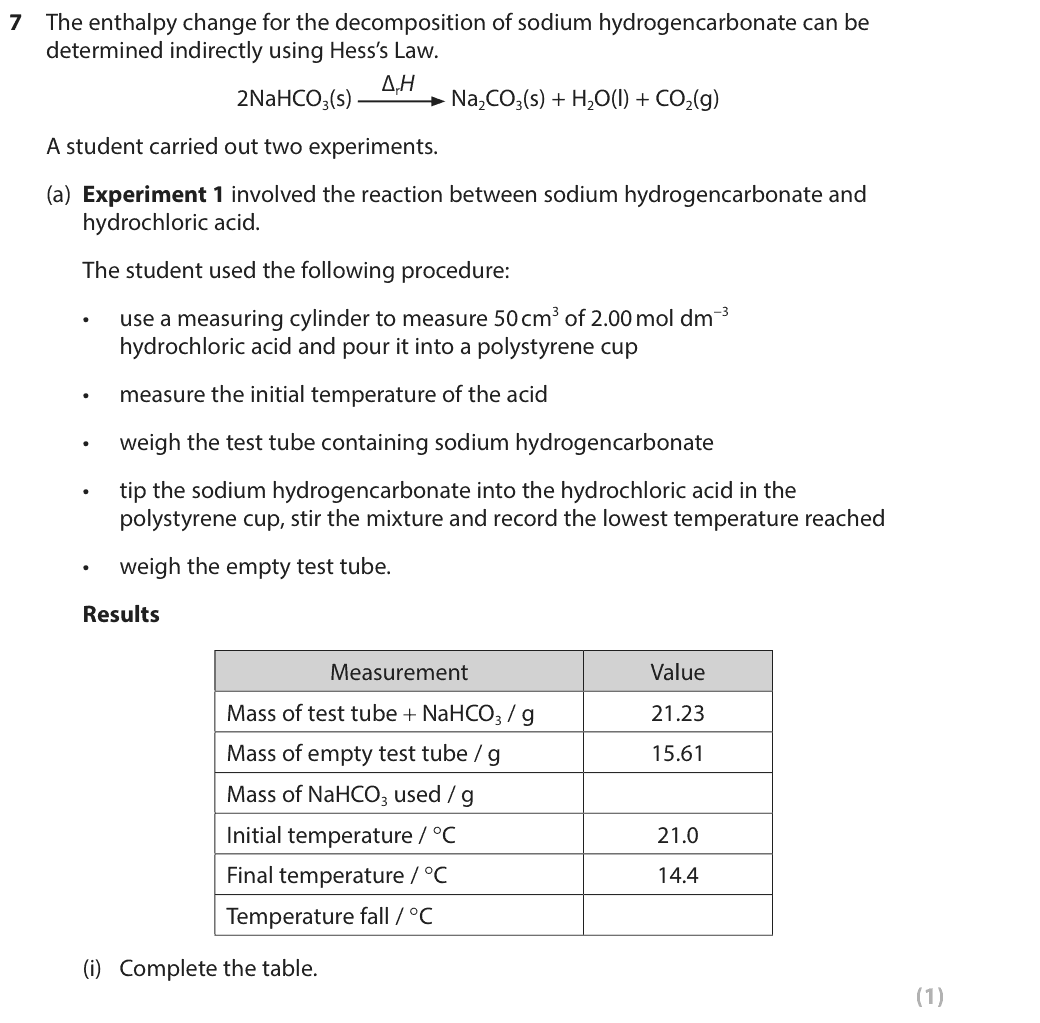
November 2021 · Paper 3 · Q7(a)(i) 1 mark Short answer energetics i
The enthalpy change for the decomposition of sodium hydrogencarbonate can be
determined indirectly using Hess’s Law.
∆rH
2NaHCO3(s)
Na2CO3(s) + H2O(l) + CO2(g)
A student carried out two experiments.
Experiment 1 involved the reaction between sodium hydrogencarbonate and
hydrochloric acid.
The student used the following procedure:
•
use a measuring cylinder to measure 50 cm3 of 2.00 mol dm−3
hydrochloric acid and pour it into a polystyrene cup
•
measure the initial temperature of the acid
•
weigh the test tube containing sodium hydrogencarbonate
•
tip the sodium hydrogencarbonate into the hydrochloric acid in the
polystyrene cup, stir the mixture and record the lowest temperature reached
•
weigh the empty test tube.
Results
Measurement
Value
Mass of test tube + NaHCO3 / g
21.23
Mass of empty test tube / g
15.61
Mass of NaHCO3 used / g
Initial temperature / °C
21.0
Final temperature / °C
14.4
Temperature fall / °C
Complete the table.
November 2021 · Paper 3 · Q7(a)(ii) 2 marks Calculation formulae equations and amounts of substance
Earlier part of question 7 that this part usesEarlier part of November 2021 Paper 3 question 7
Show, by calculation, that the hydrochloric acid is in excess.
You must show your working.
NaHCO3(s) + HCl(aq) → NaCl(aq) + H2O(l) + CO2(g)
November 2021 · Paper 3 · Q7(a)(iii) 3 marks Calculation energetics i
Earlier parts of question 7 that this part usesEarlier part of November 2021 Paper 3 question 7Earlier part of November 2021 Paper 3 question 7
Calculate the enthalpy change for the reaction between
sodium hydrogencarbonate and hydrochloric acid, using the results
of the experiment.
Include a sign and units in your answer.
f
Assume: mass of reaction mixture
= 50.0 g
p
specific heat capacity of the reaction mixture  = 4.18 J g−1 °C−1
November 2021 · Paper 3 · Q7(b)(i) 2 marks Diagram or structure Hard energetics i
Earlier part of question 7 that this part usesEarlier part of November 2021 Paper 3 question 7
Experiment 2 involved the reaction between sodium carbonate and
hydrochloric acid.
The student repeated the procedure for Experiment 1 but used
sodium carbonate instead of sodium hydrogencarbonate and measured the
maximum temperature rise.
Na2CO3(s) + 2HCl(aq) → 2NaCl(aq) + H2O(l) + CO2(g)
The student calculated the enthalpy change for this reaction as −29.4 kJ mol−1.
Complete the Hess cycle with appropriate formulae and labelled arrows.
∆rH
2NaHCO3(s)
Na2CO3(s) + H2O(l) + CO2(g)
November 2021 · Paper 3 · Q7(b)(ii) 3 marks Calculation energetics i
Earlier parts of question 7 that this part usesEarlier part of November 2021 Paper 3 question 7Earlier part of November 2021 Paper 3 question 7
Calculate the enthalpy change for the decomposition of
sodium hydrogencarbonate.
Include a sign and units in your answer.
∆rH
2NaHCO3(s)
Na2CO3(s) + H2O(l) + CO2(g)
November 2021 · Paper 3 · Q7(c)(i) 1 mark Calculation formulae equations and amounts of substance
Earlier part of question 7 that this part usesEarlier part of November 2021 Paper 3 question 7
Another student carried out the same two experiments and obtained
a value for the enthalpy change of decomposition of
sodium hydrogencarbonate of +74 kJ mol−1.
The data book value for this enthalpy change is +90 kJ mol−1.
Calculate the percentage error in this student’s value.
November 2021 · Paper 3 · Q7(c)(ii) 1 mark Calculation formulae equations and amounts of substance
Earlier parts of question 7 that this part usesEarlier part of November 2021 Paper 3 question 7Earlier part of November 2021 Paper 3 question 7
Calculate the percentage uncertainties in measuring 50 cm3 of
hydrochloric acid using a burette and using a measuring cylinder.
Apparatus
Uncertainty
Percentage uncertainty
Measuring cylinder
±0.5 cm3 for each volume measured
Burette
±0.05 cm3 for each reading
November 2021 · Paper 3 · Q7(c)(iii) 1 mark Practical and data analysis Hard formulae equations and amounts of substance
Earlier parts of question 7 that this part usesEarlier part of November 2021 Paper 3 question 7Earlier part of November 2021 Paper 3 question 7
Give a reason why using a burette rather than a measuring cylinder will not
improve the accuracy of the experiment.
November 2021 · Paper 3 · Q7(c)(iv) 5 marks Practical and data analysis Hard energetics iformulae equations and amounts of substance
Earlier parts of question 7 that this part usesEarlier part of November 2021 Paper 3 question 7Earlier part of November 2021 Paper 3 question 7Earlier part of November 2021 Paper 3 question 7Earlier part of November 2021 Paper 3 question 7
Describe changes to the method and how the data is used that would improve
the accuracy of the determination of the temperature change in Experiment 2.
Your description should involve the use of a clock and plotting a graph.
November 2021 · Paper 3 · Q8(a) 2 marks Practical and data analysis carbonyl compounds
This question is about some carbonyl compounds with the molecular formula C5H10O.
Describe a chemical test, and its result, to distinguish between
pentan-2-one, CH3CH2CH2COCH3, and pentan-3-one, CH3CH2COCH2CH3.
November 2021 · Paper 3 · Q8(b)(i) 4 marks Mechanism carbonyl compounds
Pentan-2-one reacts with hydrogen cyanide in the presence of cyanide ions to
form 2-hydroxy-2-methylpentanenitrile.
H    H    H  OH      H
H     C    C     C    C    C     H
H    H    H  CN      H
2-hydroxy-2-methylpentanenitrile
Draw the mechanism for the reaction between pentan-2-one and
hydrogen cyanide in the presence of cyanide ions.
Include curly arrows and any relevant lone pairs.
November 2021 · Paper 3 · Q8(b)(ii) 2 marks Explanation chiralitycarbonyl compounds
Earlier part of question 8 that this part usesEarlier part of November 2021 Paper 3 question 8
The product of this reaction, 2-hydroxy-2-methylpentanenitrile, has a
chiral centre.
Explain why a racemic mixture of 2-hydroxy-2-methylpentanenitrile is formed
in this reaction.
November 2021 · Paper 3 · Q8(c) 4 marks Explanation nmr mass spectrometry and chromatographyorganic synthesis
Earlier part of question 8 that this part usesEarlier part of November 2021 Paper 3 question 8
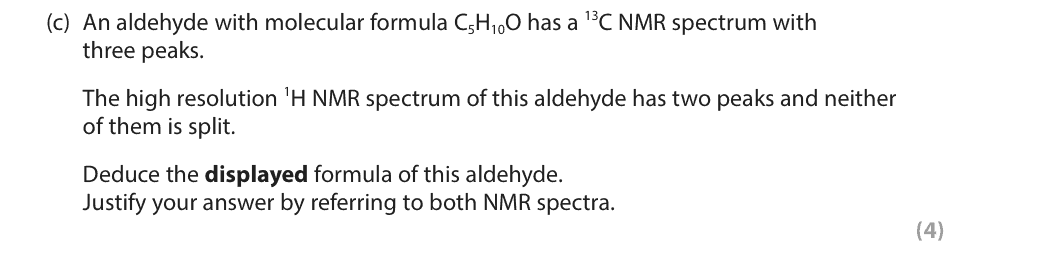
An aldehyde with molecular formula C5H10O has a 13C NMR spectrum with
three peaks.
The high resolution 1H NMR spectrum of this aldehyde has two peaks and neither
of them is split.
Deduce the displayed formula of this aldehyde.
Justify your answer by referring to both NMR spectra.
November 2021 · Paper 3 · Q8(d) 6 marks 6-mark extended response carbonyl compounds
Describe the oxidation and reduction reactions of pentanal and pentan-3-one.
Include the reagents and the structures of the organic products formed in any
reactions that take place.
November 2021 · Paper 3 · Q9(a) 2 marks Explanation equilibrium i
Ammonia is manufactured by the Haber Process.
N2(g) + 3H2(g) ⇌ 2NH3(g)
p
(
NH
)
2
Kp =
3
p
(
N
) (
p
H
)
3
2
2
The pressure used in the Haber Process is 200 atm.
Explain the effect, if any, of increasing the pressure on the equilibrium yield
of ammonia.
November 2021 · Paper 3 · Q9(b) 4 marks Calculation equilibrium ii
Earlier part of question 9 that this part usesEarlier part of November 2021 Paper 3 question 9
The equilibrium constants for Kp and Kc are related by the equation
K
Kp =
c
(
RT
)∆
n
where ∆n is the number of moles of reactants minus the number of moles
of products.
Calculate the value of Kc at 500 K when the value of Kp = 3.55 × 10⁻² atm−2.
Include the units for Kc .
[Use the value of R = 0.0821 dm3 atm K−1 mol−1]
November 2021 · Paper 3 · Q9(c) 5 marks Calculation Hard equilibrium ii
Earlier part of question 9 that this part usesEarlier part of November 2021 Paper 3 question 9
A mixture of 1.0 mol of nitrogen and 3.0 mol of hydrogen is left to reach
equilibrium at 700 K.
Calculate the total pressure, in atmospheres, needed to produce a yield of
0.30 mol of ammonia at 700 K.
Give your answer to an appropriate number of significant figures.
You must show your working.
[Kp = 7.76 × 10⁻⁵ atm−2 at 700 K]
November 2021 · Paper 3 · Q9(d) 4 marks Calculation equilibrium ii
Earlier part of question 9 that this part usesEarlier part of November 2021 Paper 3 question 9
The value of the equilibrium constant, Kp , varies with temperature.
The equation relating the values of the equilibrium constant at two temperatures is
H
In K

1
1
2
3

K
R
T
T
1
1
2
The equilibrium constant, K1 , for the formation of ammonia is 6.76 × 10⁵ atm−2
when the temperature T1 = 298 K.
The enthalpy change ∆H = −92 400 J mol−1.
Calculate the value of the equilibrium constant for this reaction at 310 K.
[Use the value of R = 8.31 J mol−1 K−1]

Work with an A-level chemistry tutor

Want a paper marked and gone through with you? Message us.

Prefer email? Send an enquiry

If you are under 18, please include a parent's contact details. Enquiries go to enquiries@chemistryaleveltutor.com and are deleted once handled. All tutoring is online.