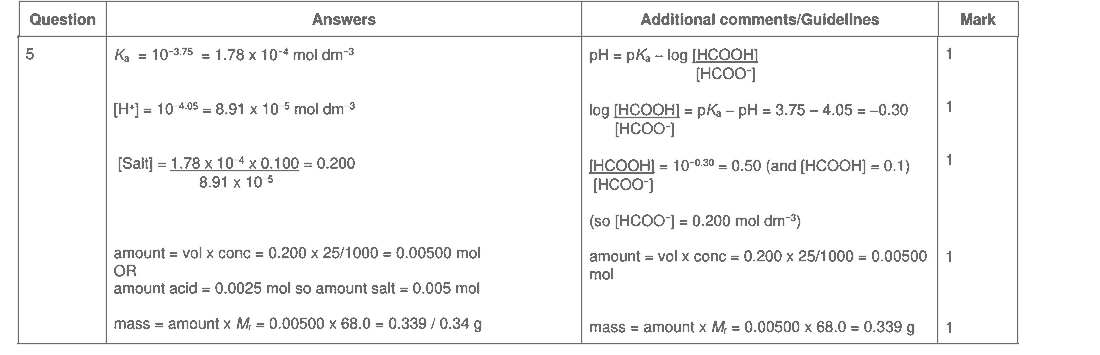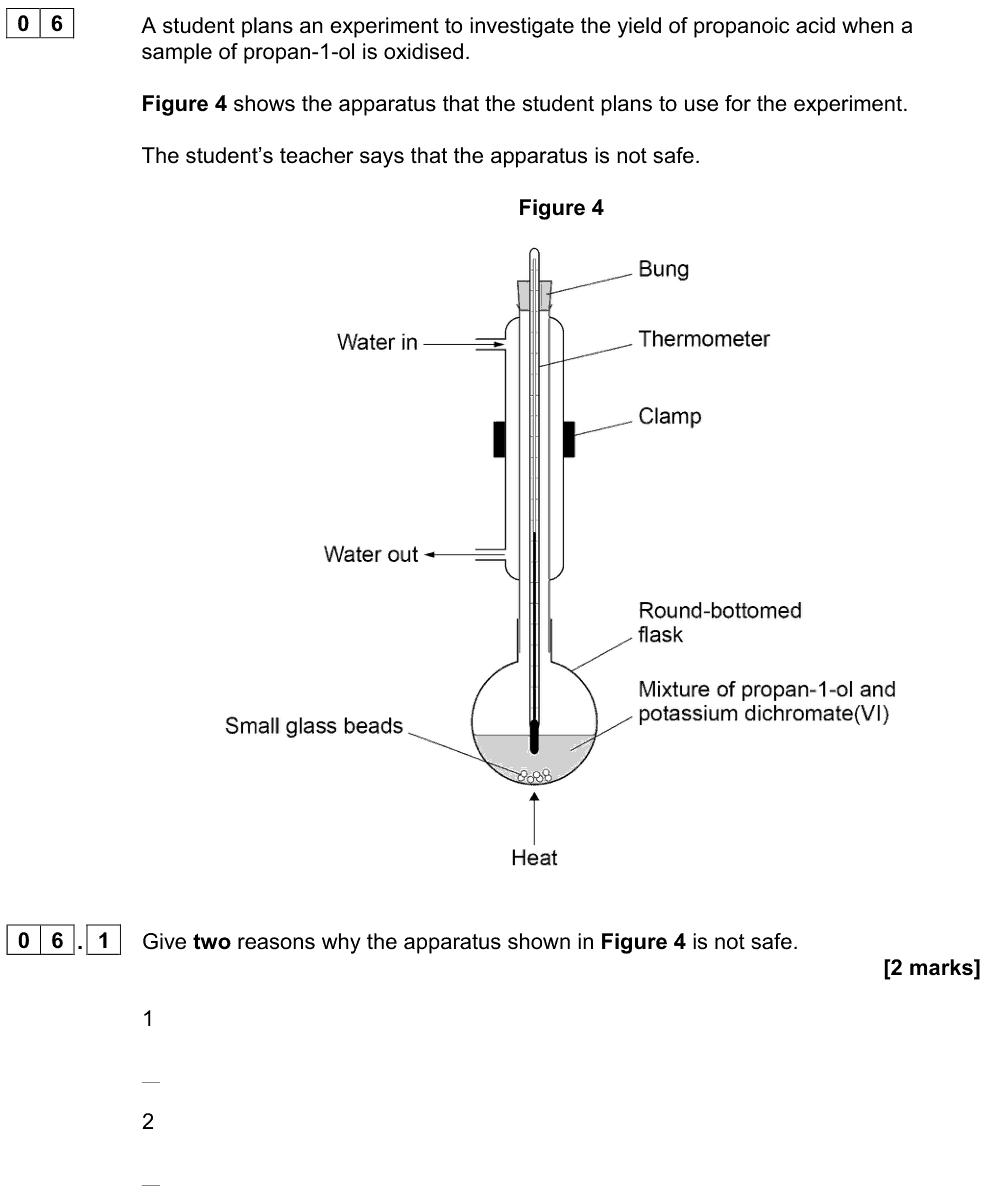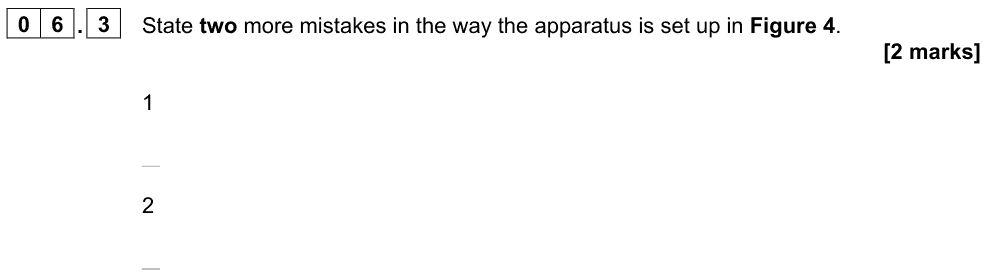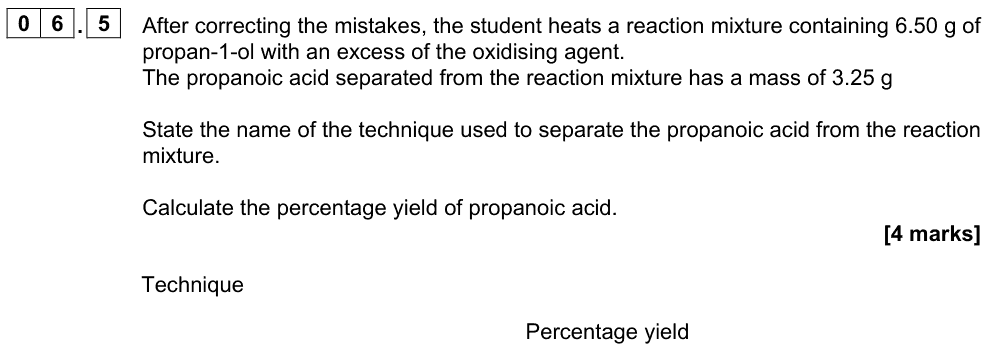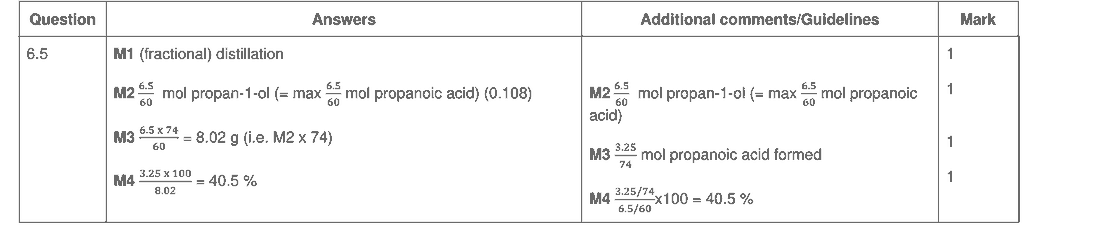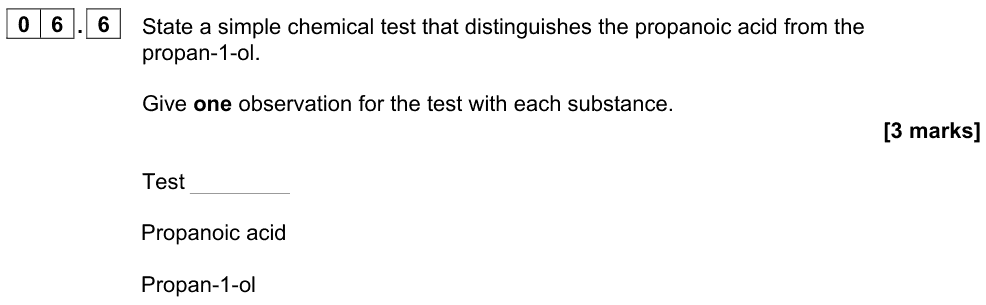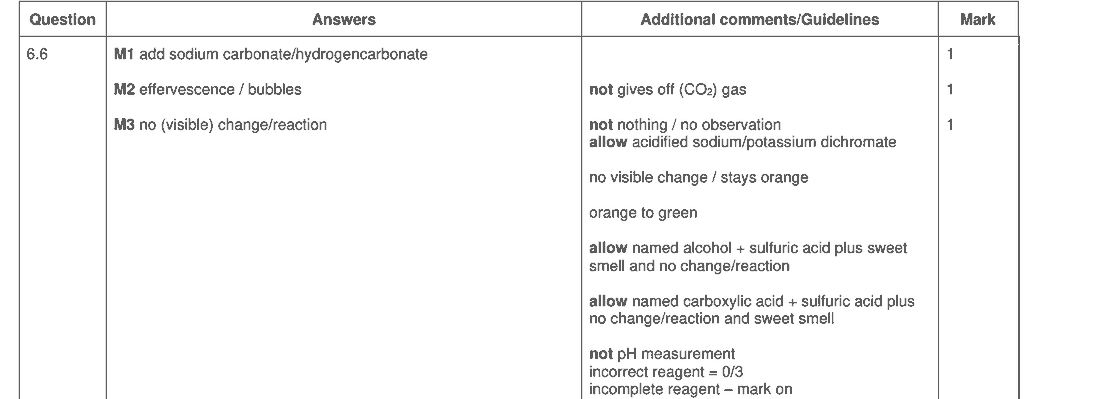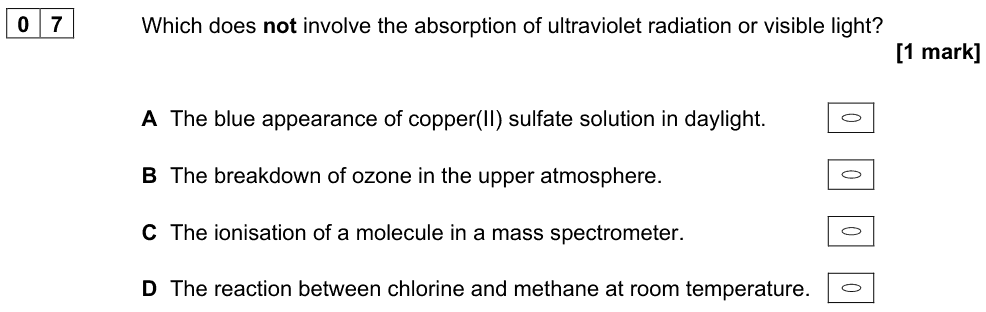
Mark scheme

Examiner's comment
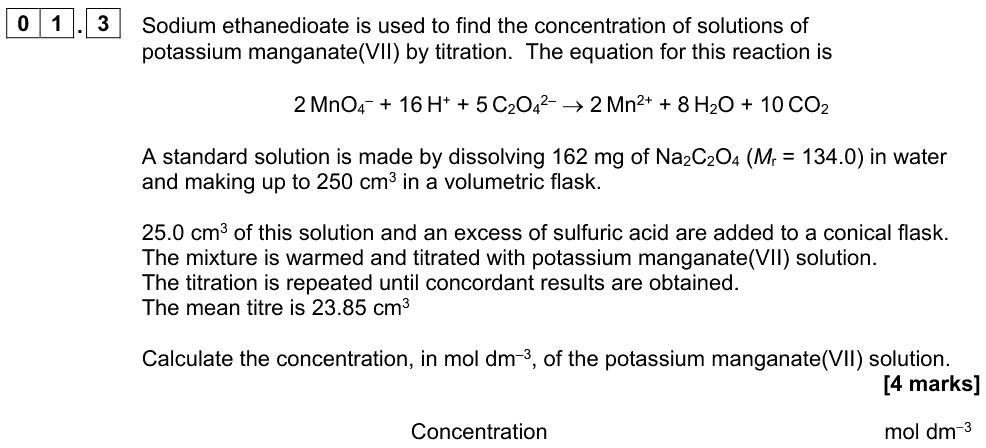
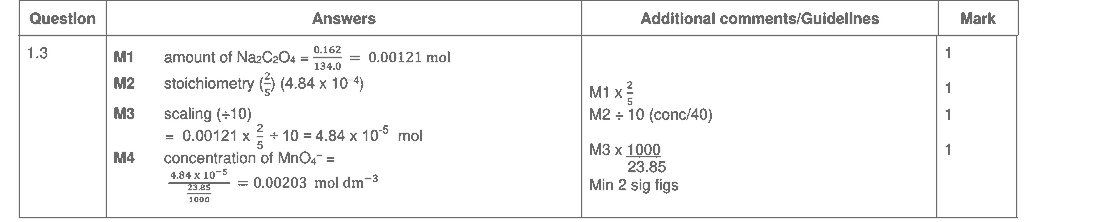
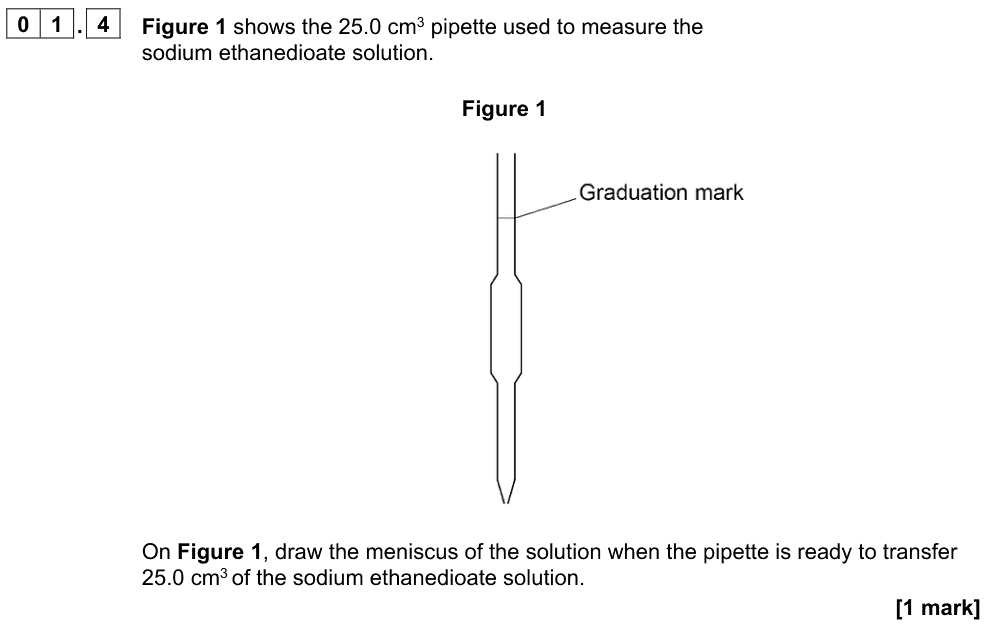
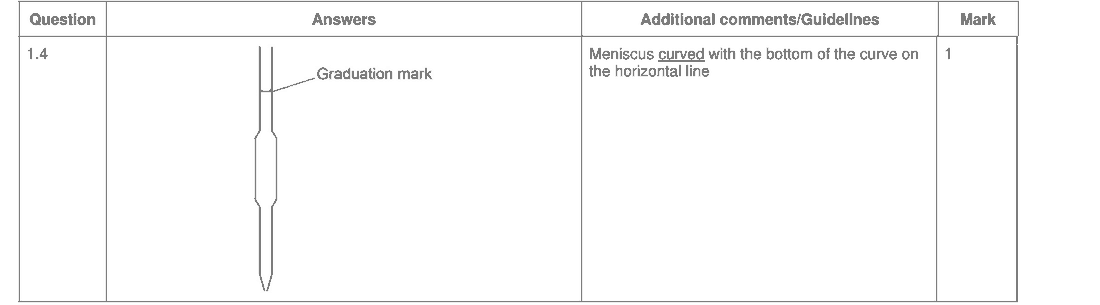
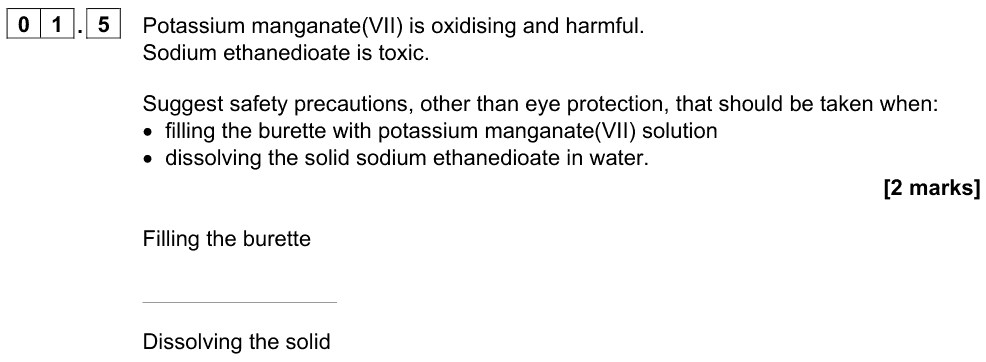
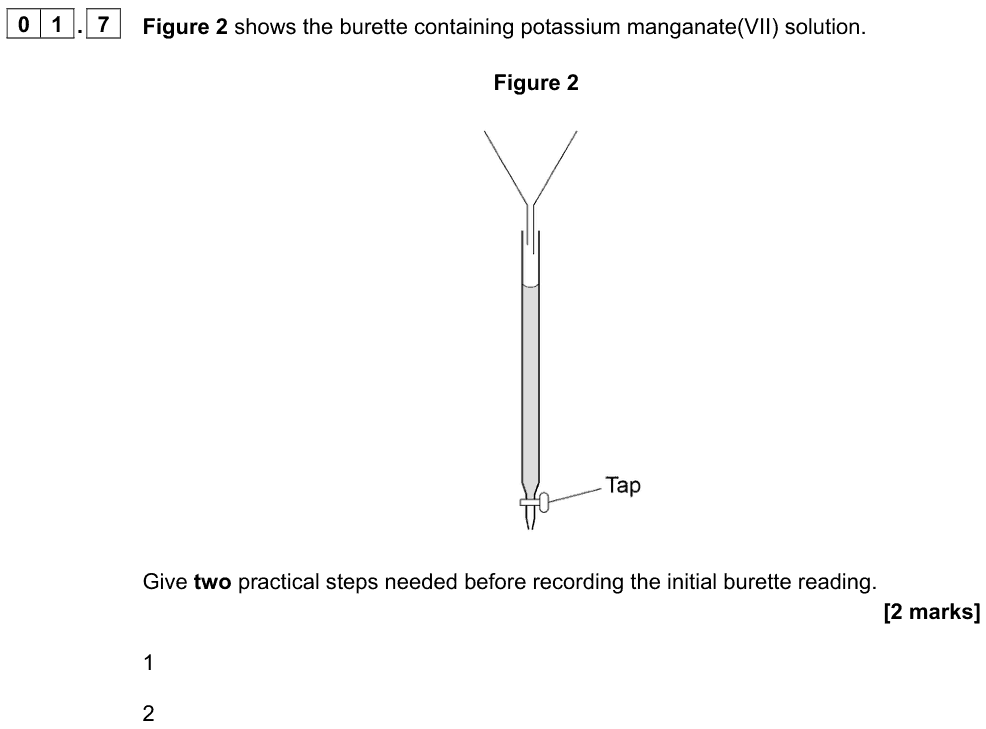
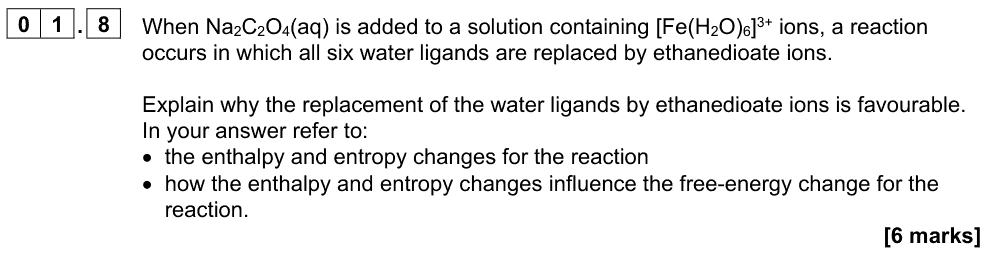
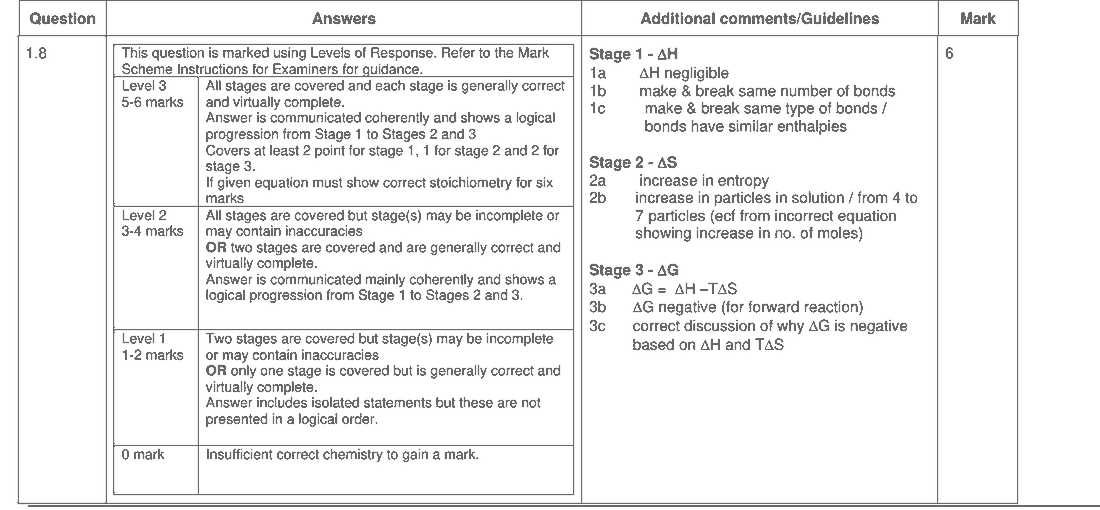
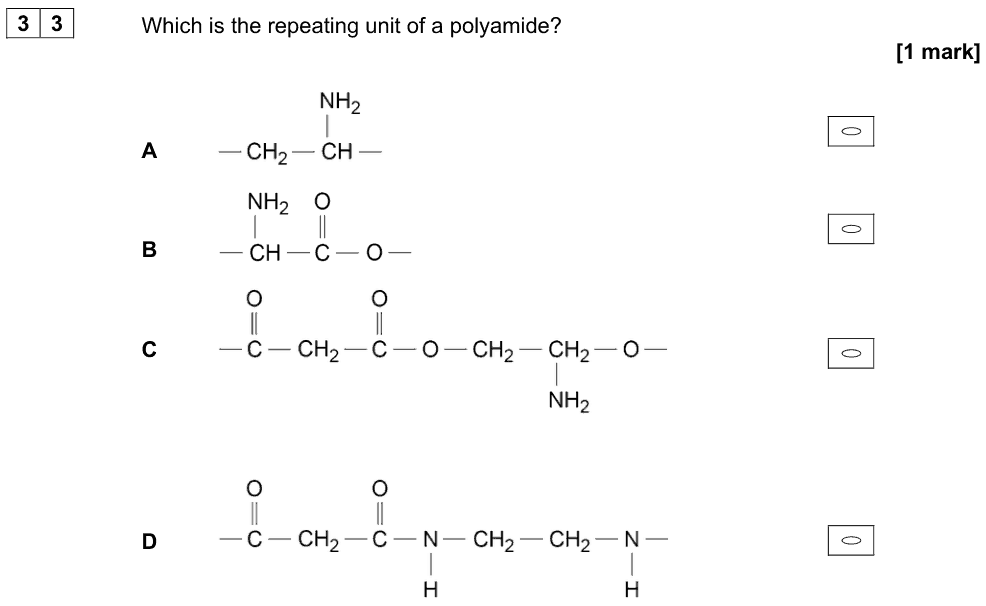
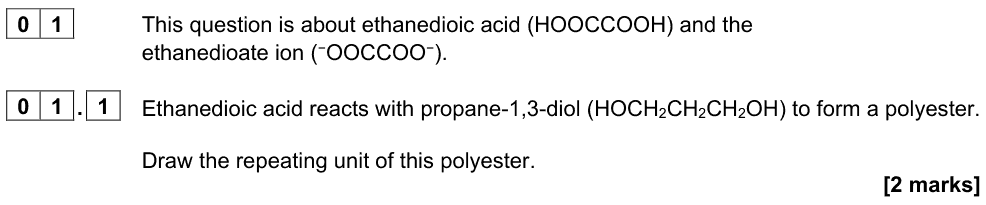
The start of this question was expected to give a relatively easy introduction to the paper but proved trickier than expected with considerable confusion about drawing the repeating unit of the polymer and a lack of specificity in answers to question 01.2; simply stating that polyesters are polar was not sufficient. An A-level standard answer requires more detail such as a specific reference to the polarity of the C=O bond. A significant number of students referred to C=C bonds in polyalkenes and overlooked the fact that it is the monomers that are unsaturated while the polymers are saturated. The calculation in question 01.3 was quite well done with a majority of students scoring over half marks here. Questions 01.4 to 01.7 revealed weaknesses in awareness of practical ideas although it was surprising that nearly a quarter of students were unable to draw the meniscus in the right place on the diagram of a pipette. Surprisingly, only a quarter of students were able to give the correct colour change in question 01.6. Students should remember that, when a colour change is asked for, the colours before and after the end point should be given rather than just a single colour. Most students were able to make a start on the Levels of Response question in 01.8 with about half of students able to access level 2 or above. Most students recognised that the entropy would increase and that a favourable reaction is indicated by a negative free energy change. Discussion of the fact that the enthalpy change would be close to zero because 6 Fe-O bonds are made and 6 Fe-O bonds are broken was often not expressed well.
Notes from the mark scheme and report
- –OC–CO–O–CH2CH2CH2–O– with trailing bonds: one mark for the ester link including C–O–C, one for the rest of a single repeating unit. More than one repeating unit loses M2. Proved trickier than expected