| 01.1 | Thermodynamics: Born–Haber cycles, entropy and Gibbs free energy | 1 | AO1=1 | Equation writing |
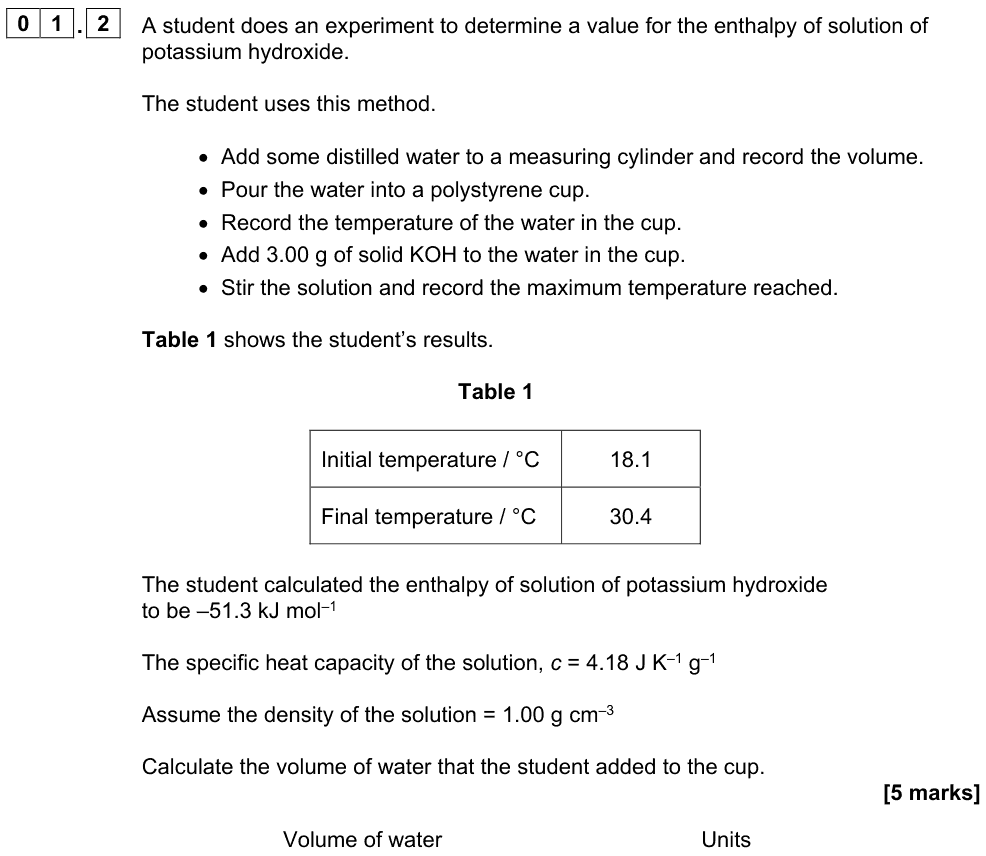
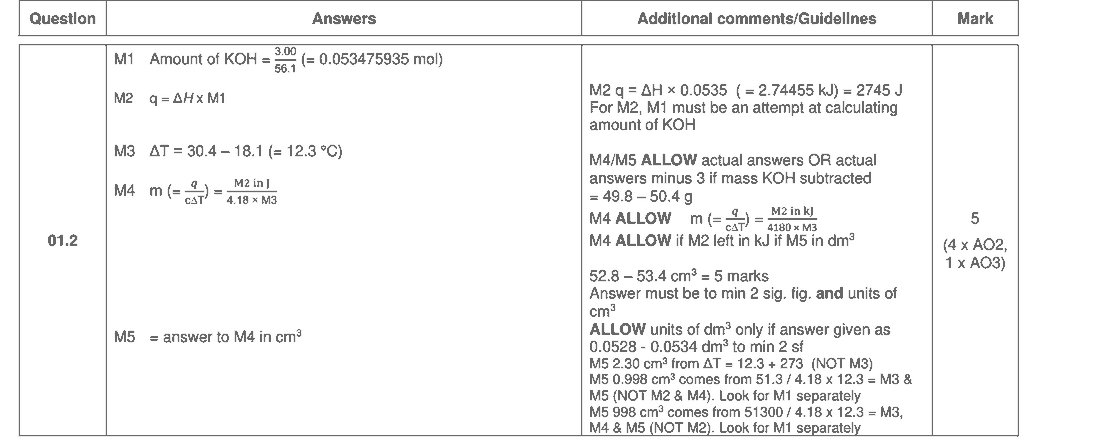
| 01.2 | Energetics, Amount of substance | 5 | AO2=4,AO3=1 | Calculation |
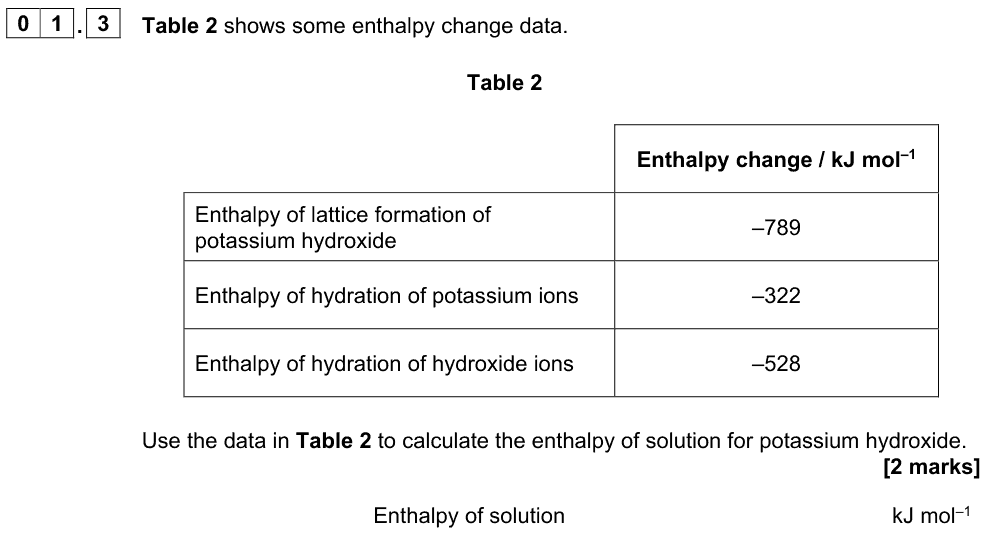
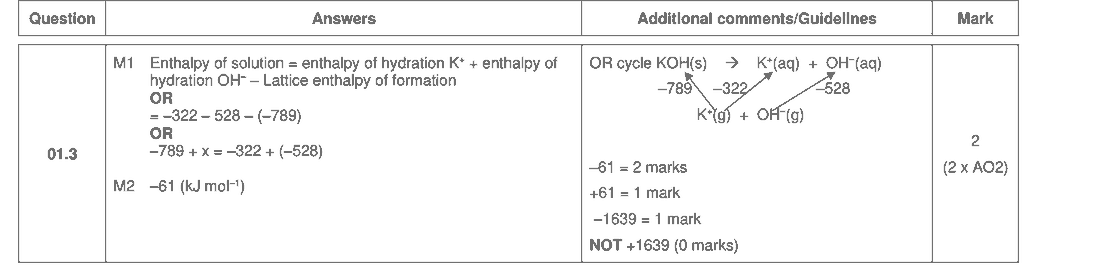
| 01.3 | Thermodynamics: Born–Haber cycles, entropy and Gibbs free energy | 2 | AO2=2 | Calculation |
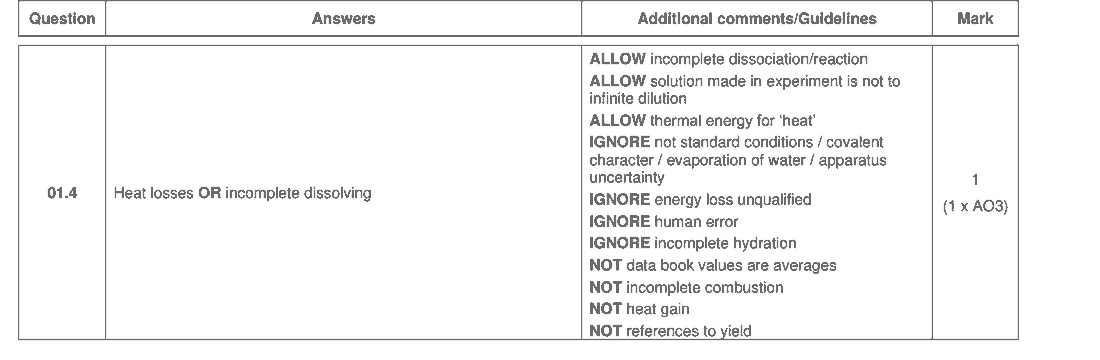
| 01.4 | Energetics | 1 | AO3=1 | Practical and data analysis |
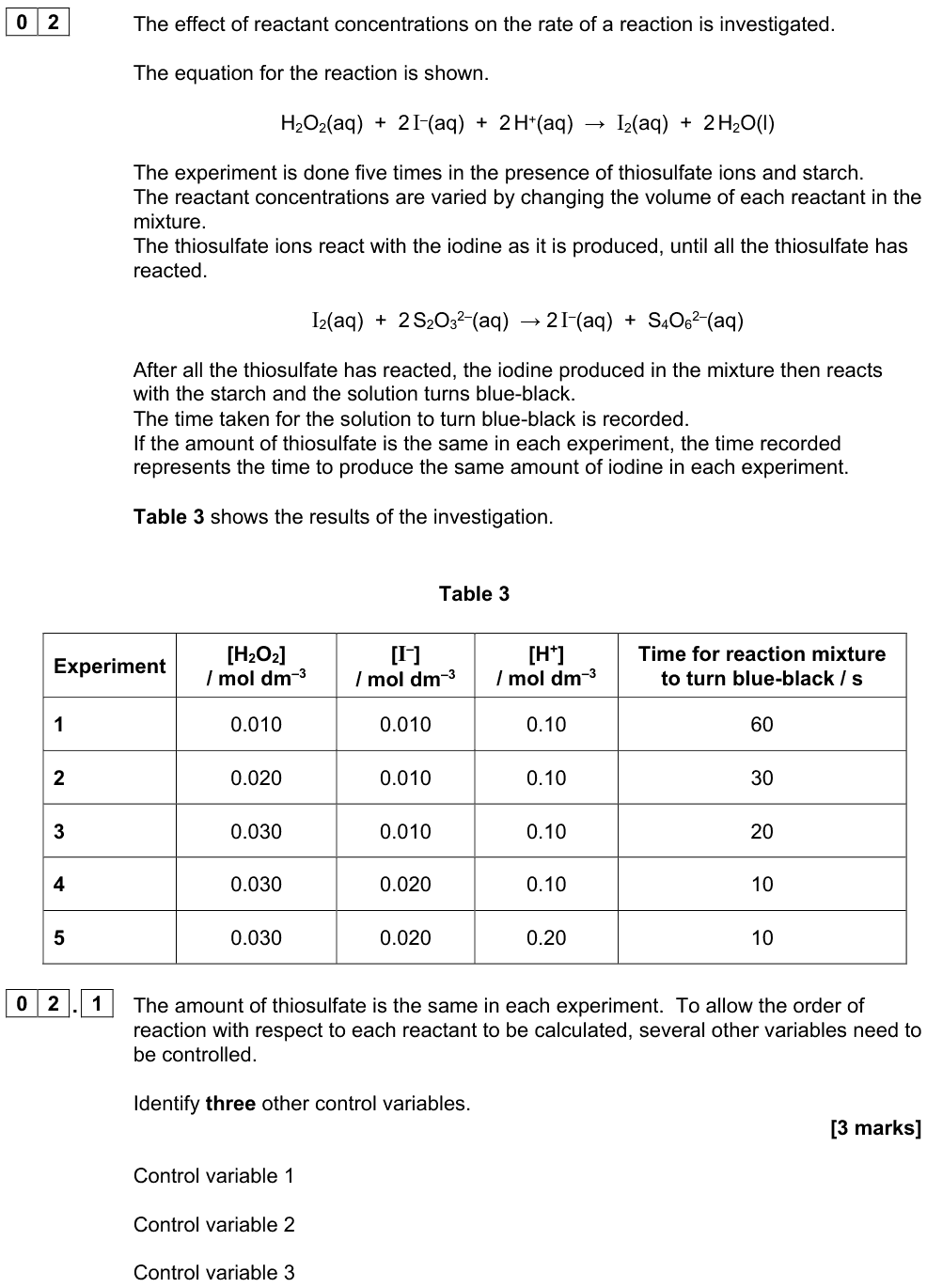
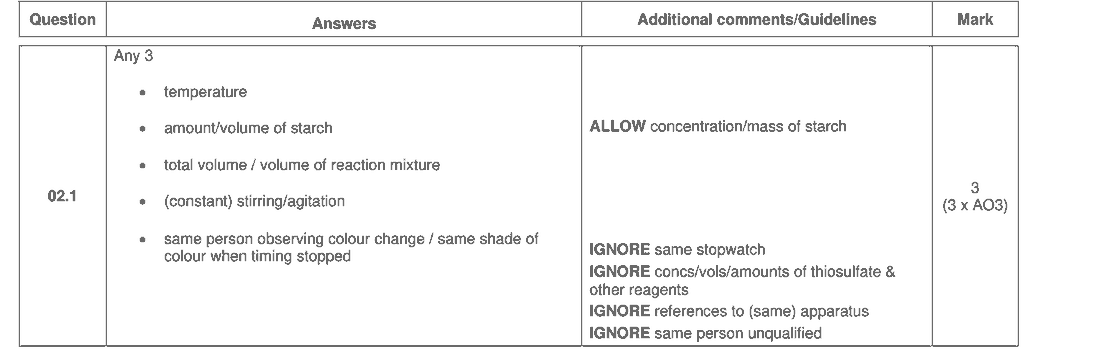
| 02.1 | Rate equations | 3 | AO3=3 | Practical and data analysis |
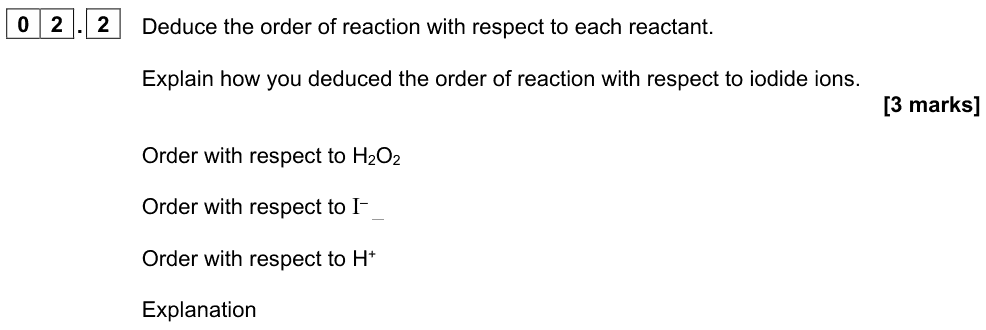
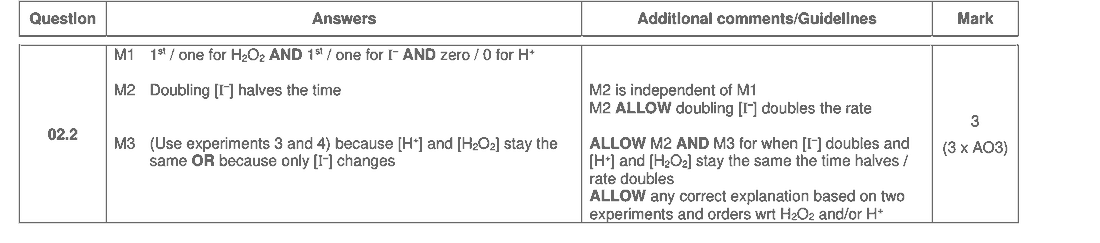
| 02.2 | Rate equations | 3 | AO3=3 | Explanation |
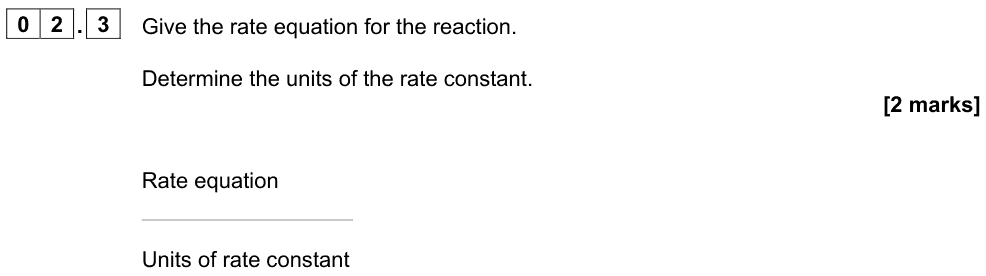
| 02.3 | Rate equations | 2 | AO2=2 | Short answer |
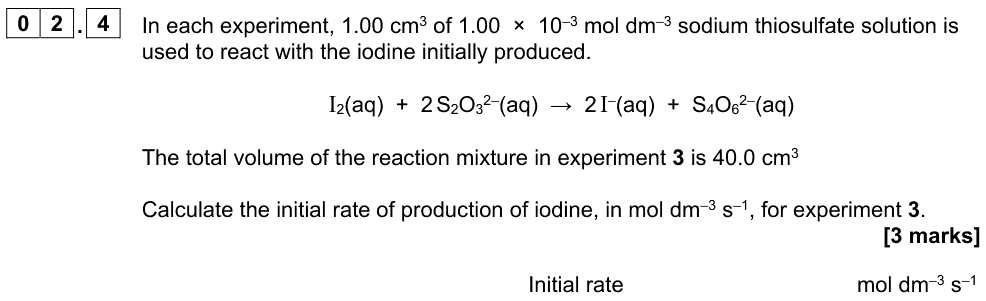
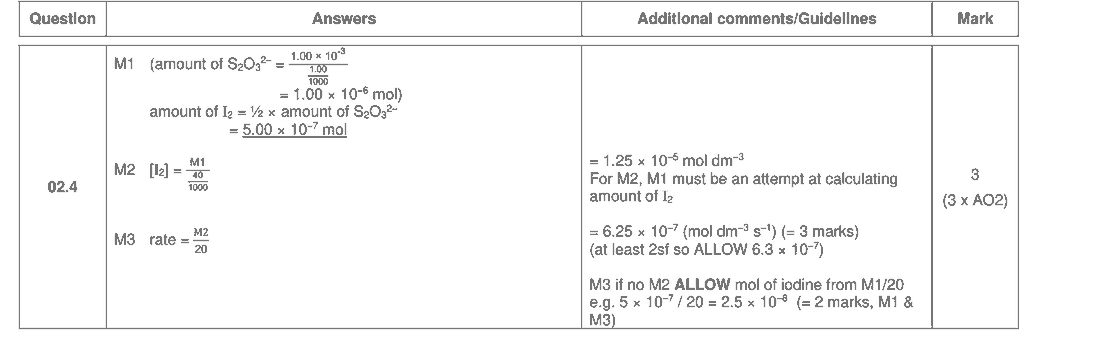
| 02.4 | Rate equations, Amount of substance | 3 | AO2=3 | Calculation |
| 02.5 | Rate equations | 1 | AO3=1 | Practical and data analysis |
| 02.6 | Rate equations | 1 | AO3=1 | Calculation |
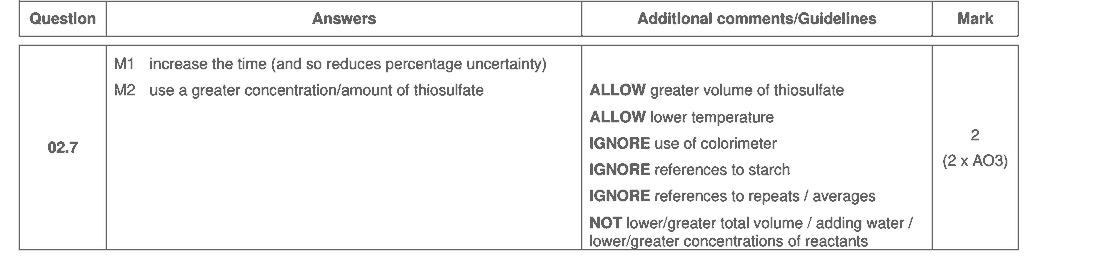
| 02.7 | Rate equations | 2 | AO3=2 | Practical and data analysis |
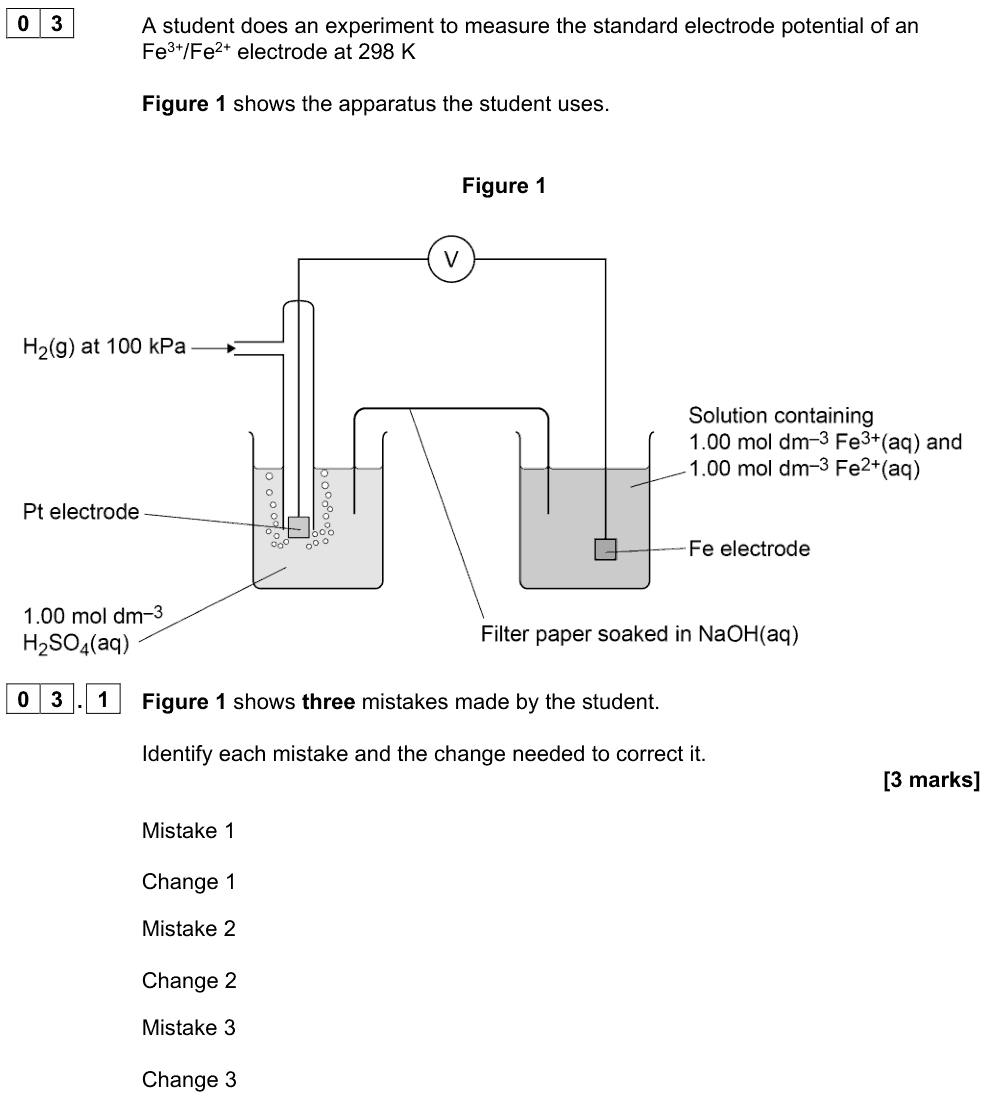
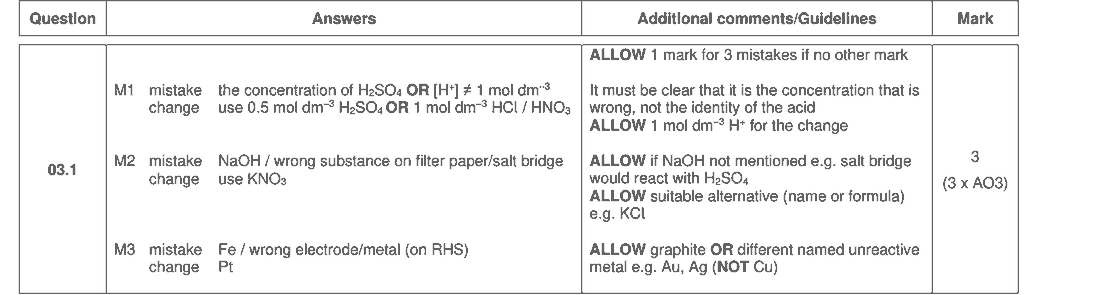
| 03.1 | Electrode potentials and electrochemical cells | 3 | AO3=3 | Practical and data analysis |
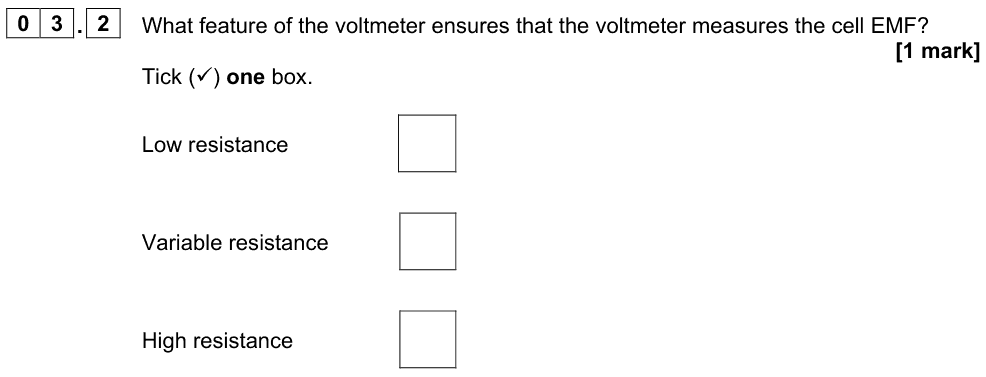
| 03.2 | Electrode potentials and electrochemical cells | 1 | AO1=1 | Short answer |
| 03.3 | Electrode potentials and electrochemical cells, Oxidation, reduction and redox equations | 1 | AO2=1 | Equation writing |
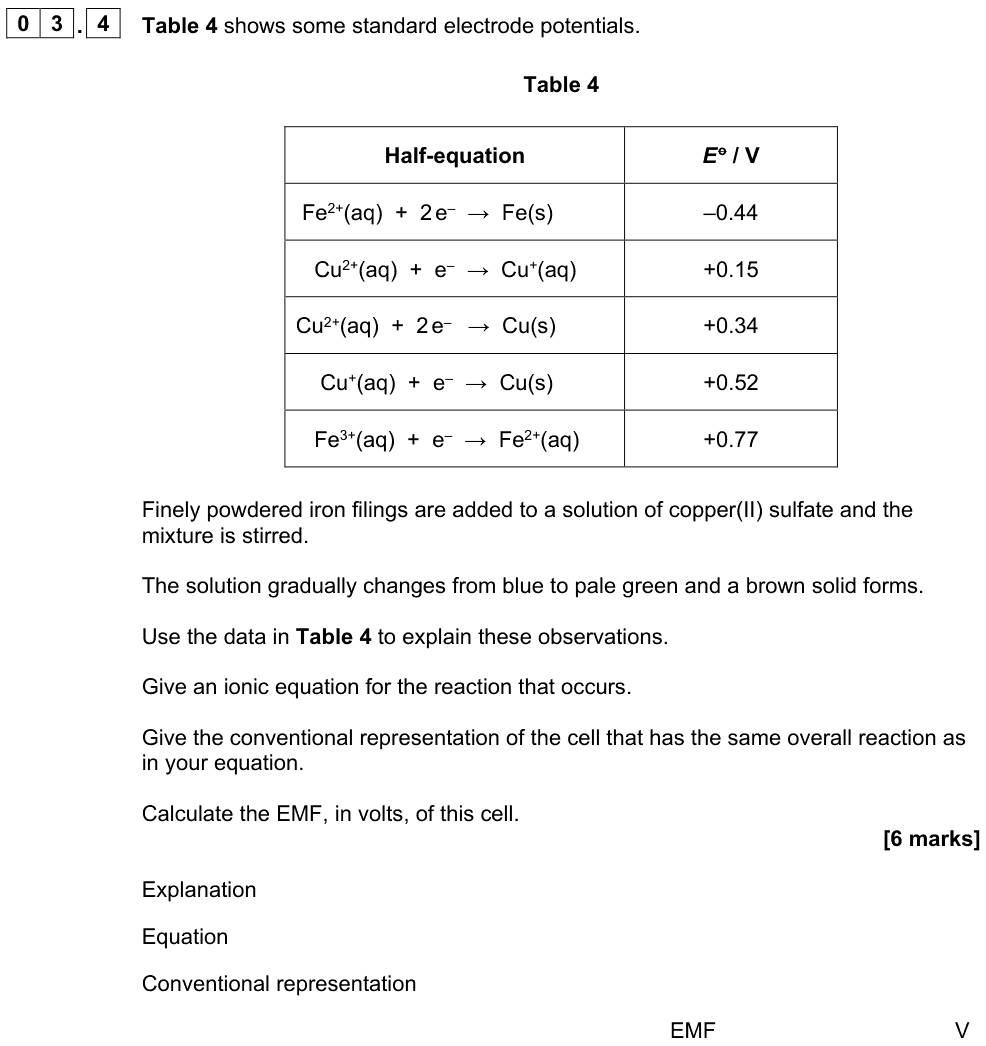
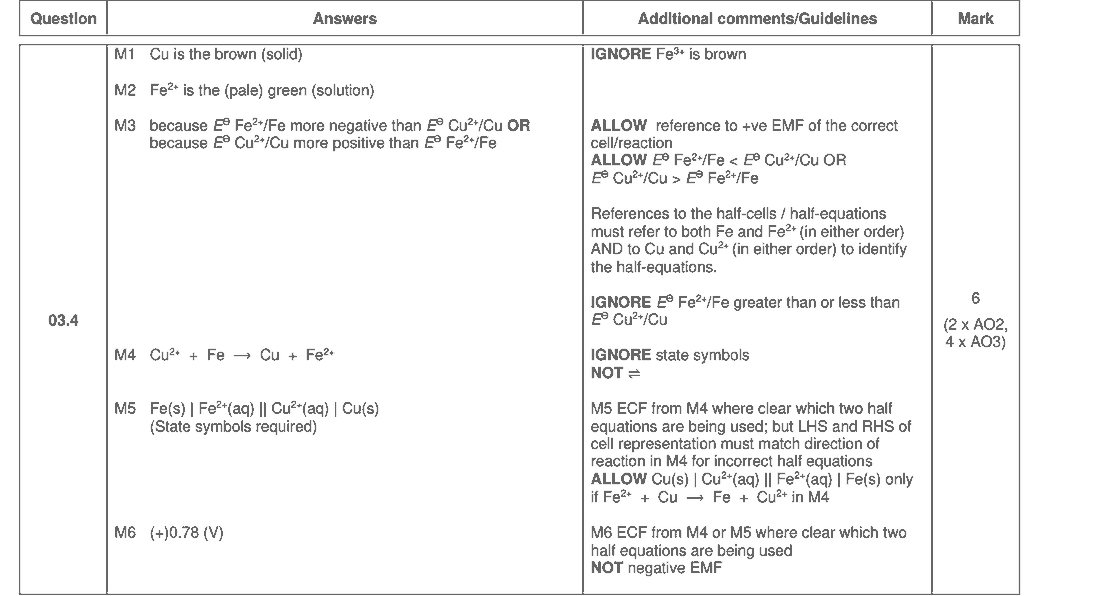
| 03.4 | Electrode potentials and electrochemical cells | 6 | AO2=2,AO3=4 | Explanation |
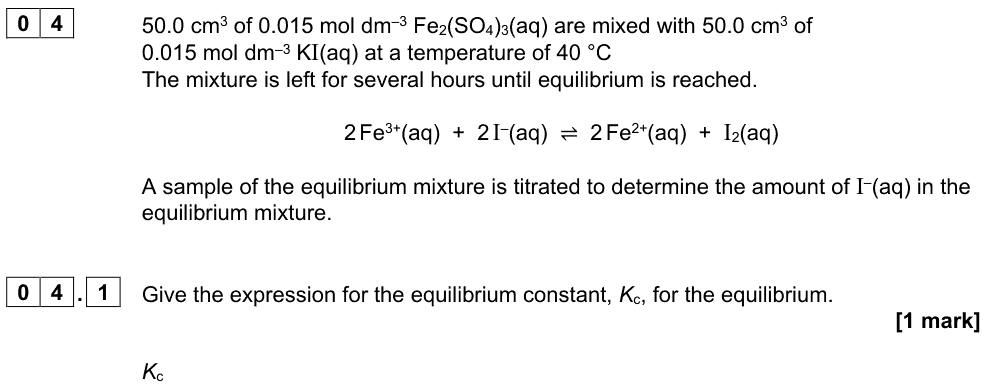
| 04.1 | Chemical equilibria, Le Chatelier's principle and Kc | 1 | AO2=1 | Short answer |
| 04.2 | Chemical equilibria, Le Chatelier's principle and Kc | 2 | AO3=2 | Practical and data analysis |
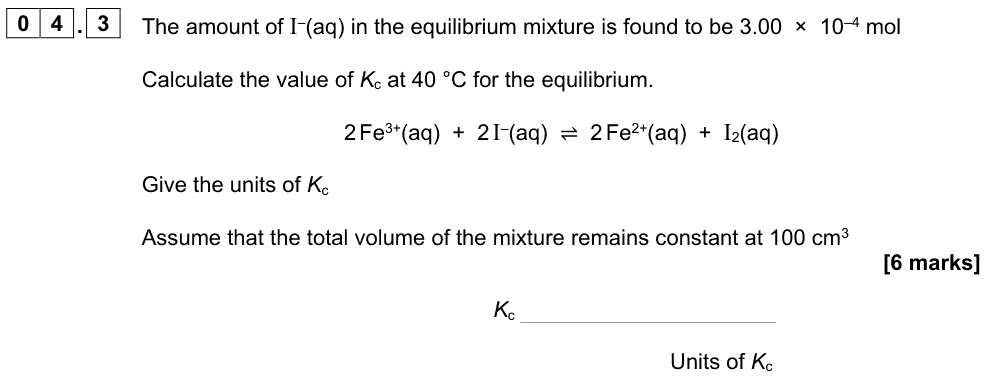
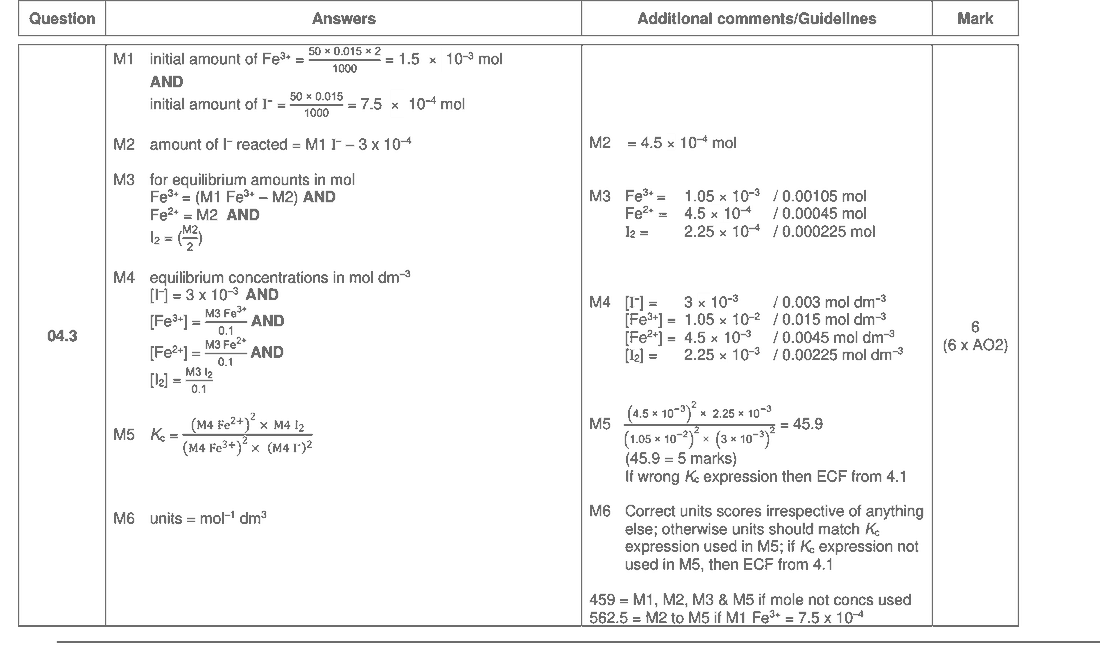
| 04.3 | Chemical equilibria, Le Chatelier's principle and Kc, Amount of substance | 6 | AO2=6 | Calculation |
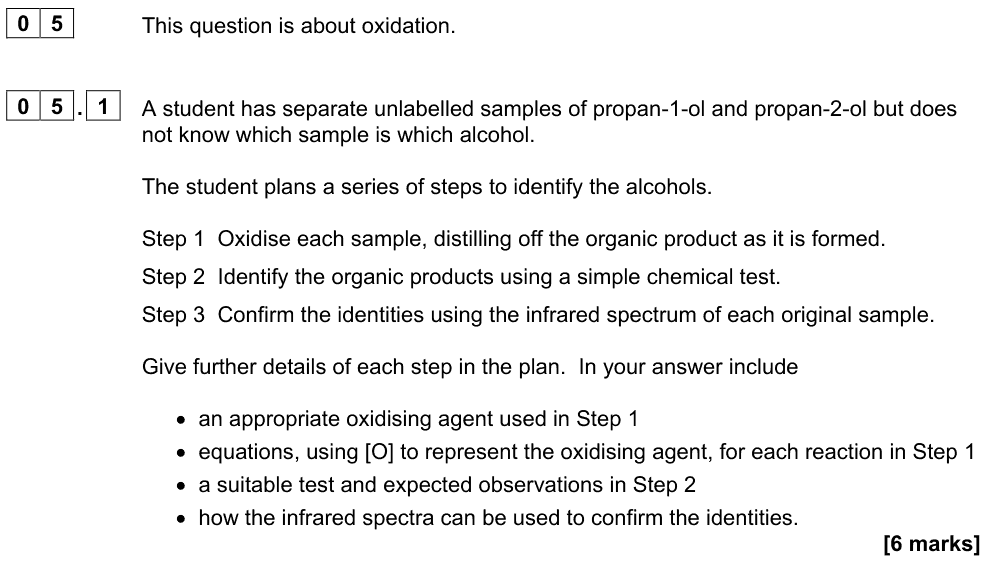
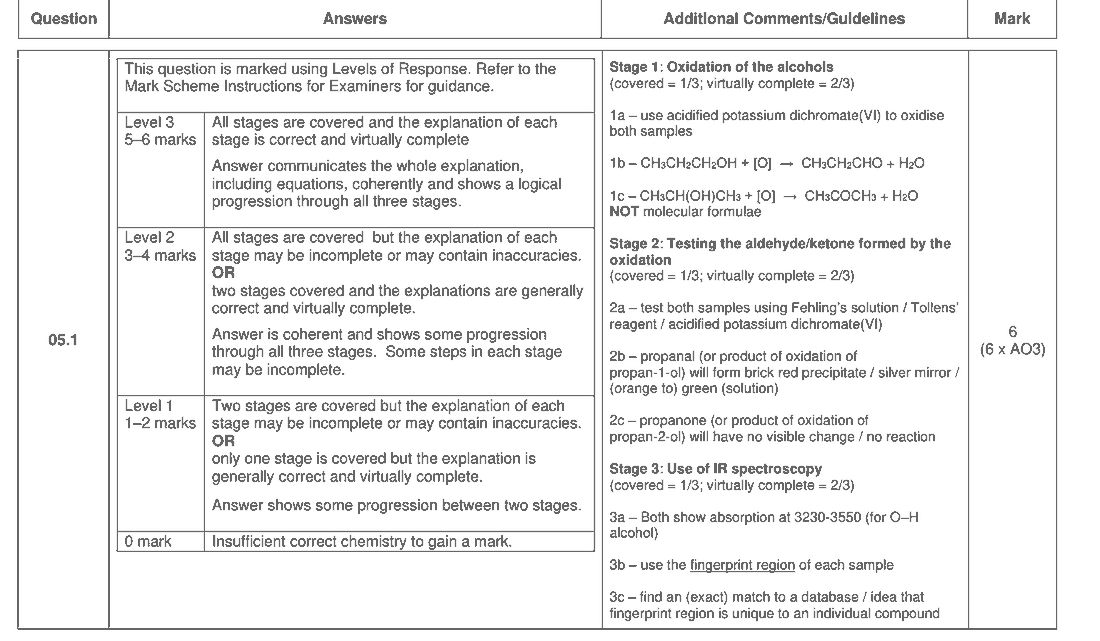
| 05.1 | Alcohols, Organic analysis: test-tube reactions, mass spectrometry and infrared | 6 | AO3=6 | Level of response |
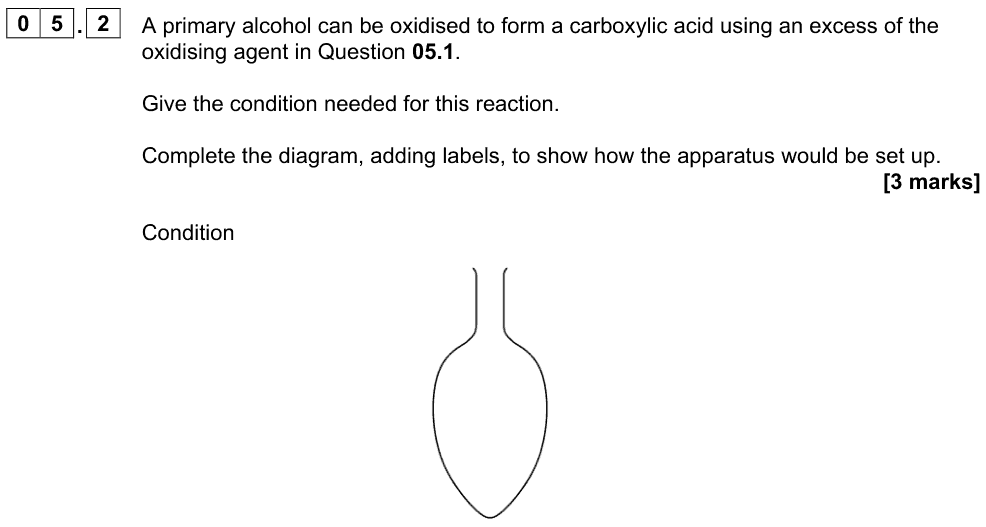
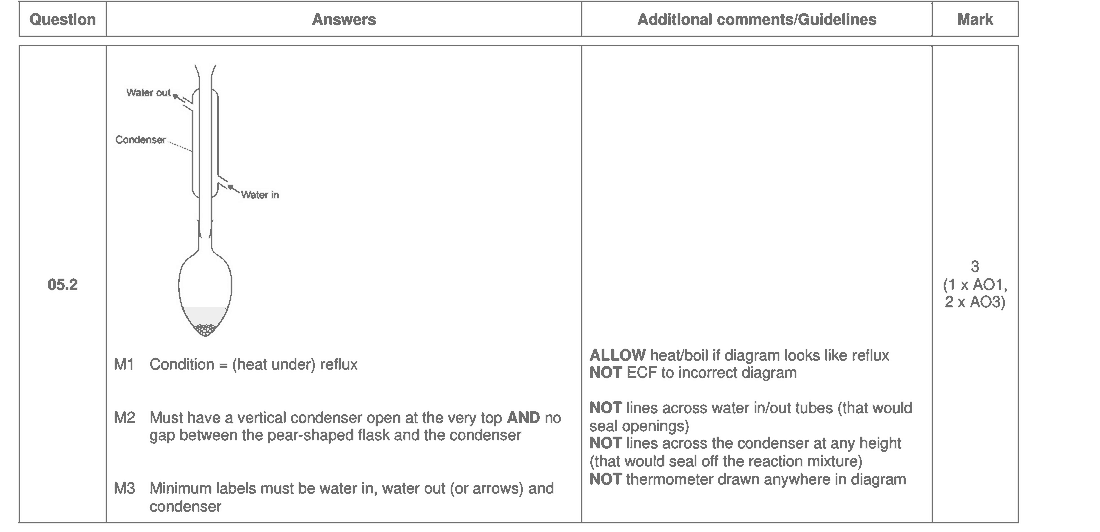
| 05.2 | Alcohols | 3 | AO1=1,AO3=2 | Diagram or structure |
| 05.3 | Alcohols | 1 | AO1=1 | Practical and data analysis |
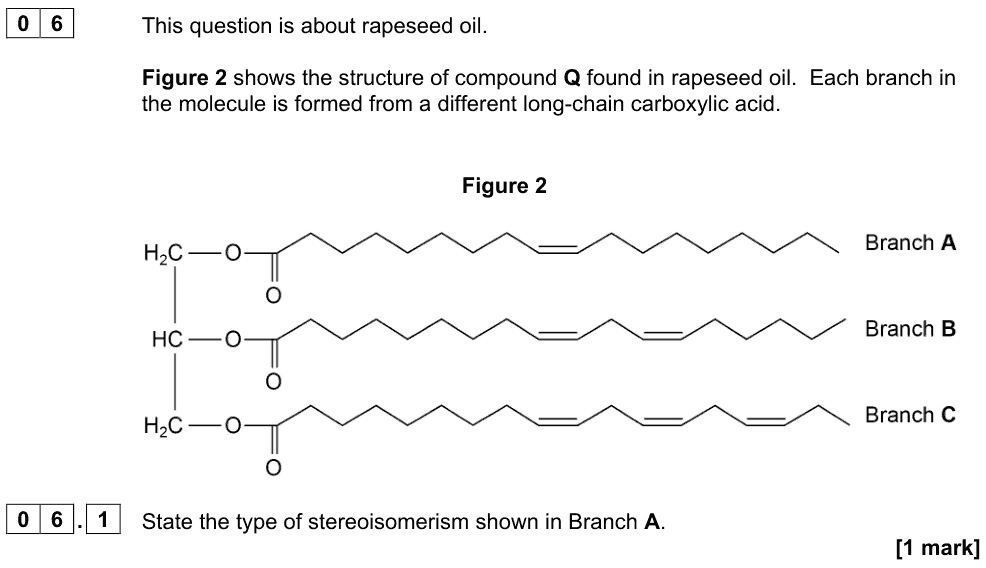
| 06.1 | Introduction to organic chemistry: nomenclature, mechanisms and isomerism | 1 | AO1=1 | Short answer |
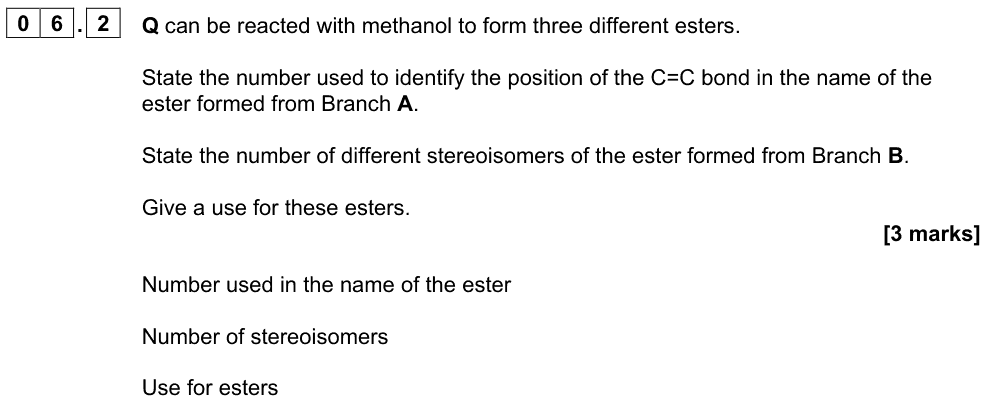
| 06.2 | Carboxylic acids and derivatives, Introduction to organic chemistry: nomenclature, mechanisms and isomerism | 3 | AO1=1,AO3=2 | Short answer |
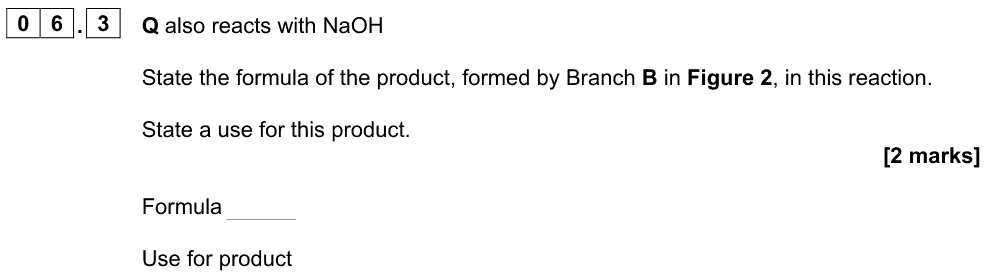
| 06.3 | Carboxylic acids and derivatives | 2 | AO1=1,AO2=1 | Short answer |
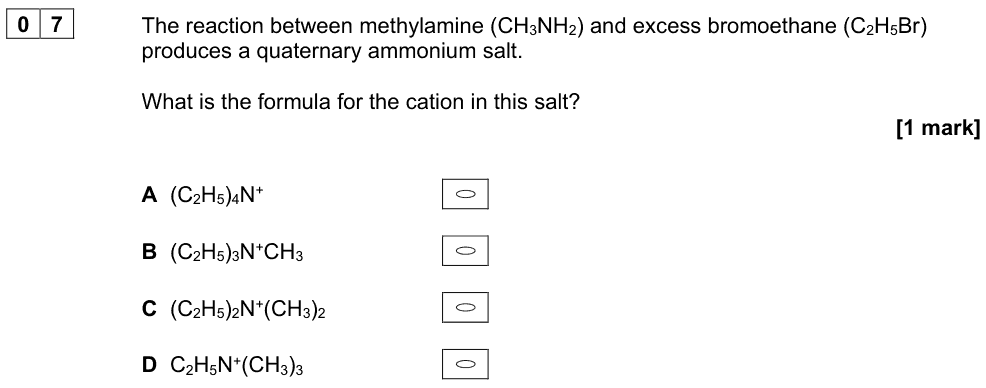
| 07 | Amines | 1 | AO2=1 | Multiple choice |
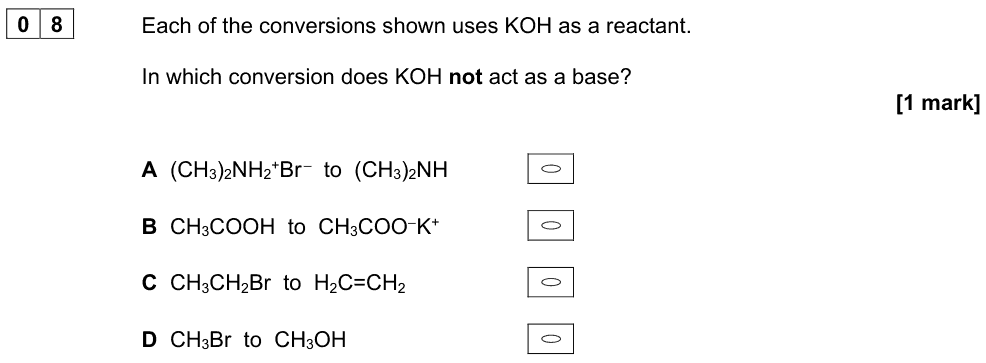
| 08 | Halogenoalkanes | 1 | AO3=1 | Multiple choice |
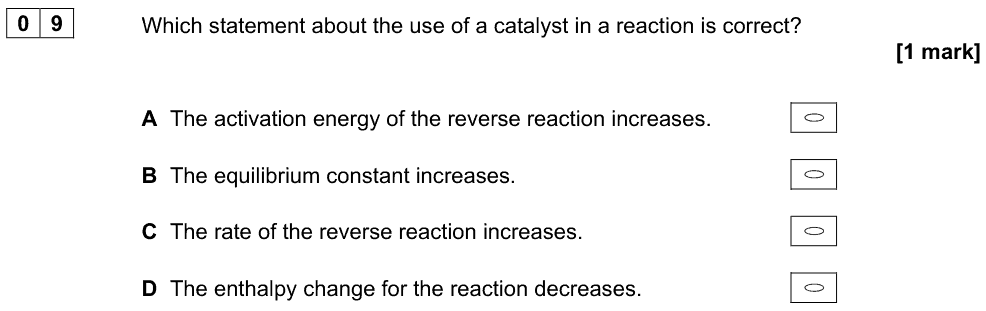
| 09 | Kinetics, Chemical equilibria, Le Chatelier's principle and Kc | 1 | AO1=1 | Multiple choice |
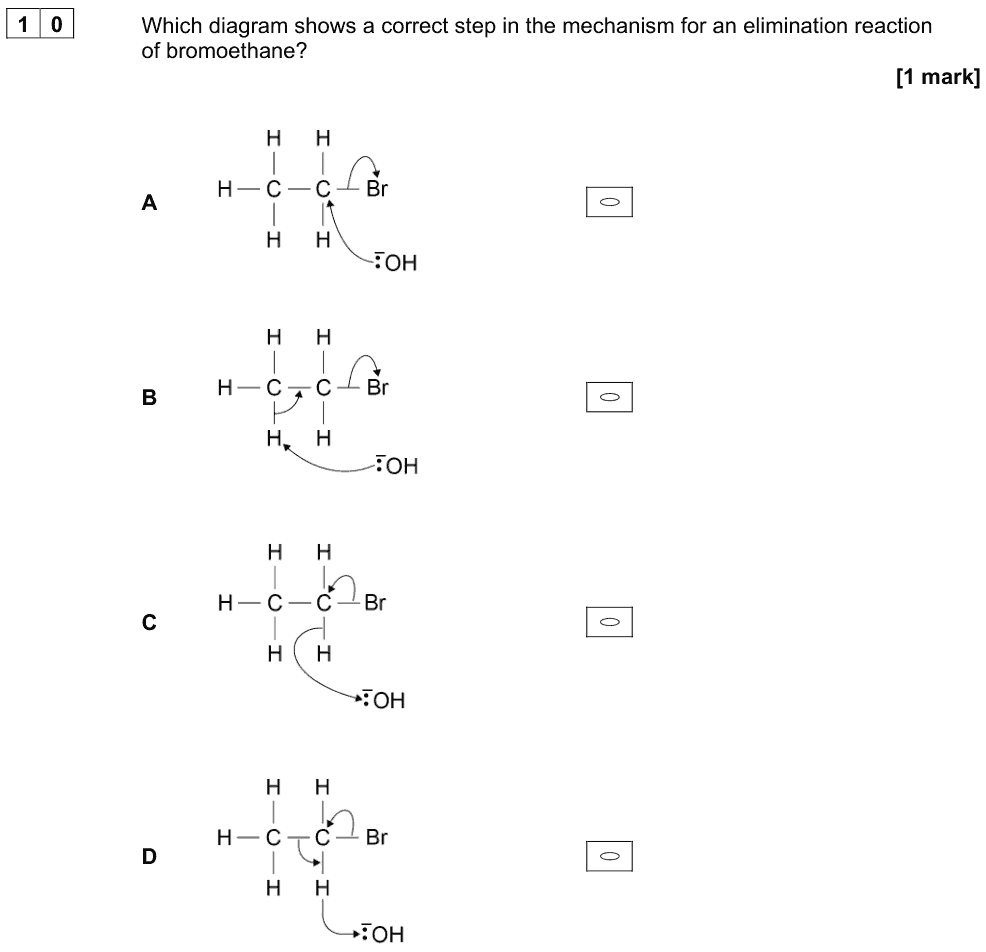
| 10 | Halogenoalkanes | 1 | AO1=1 | Multiple choice |
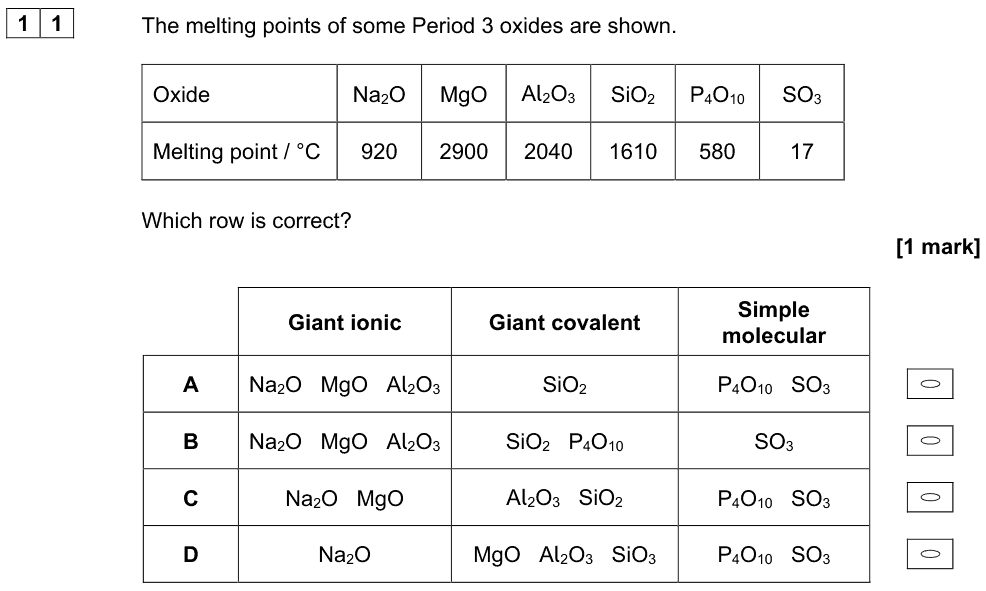
| 11 | Period 3 elements and their oxides | 1 | AO1=1 | Multiple choice |
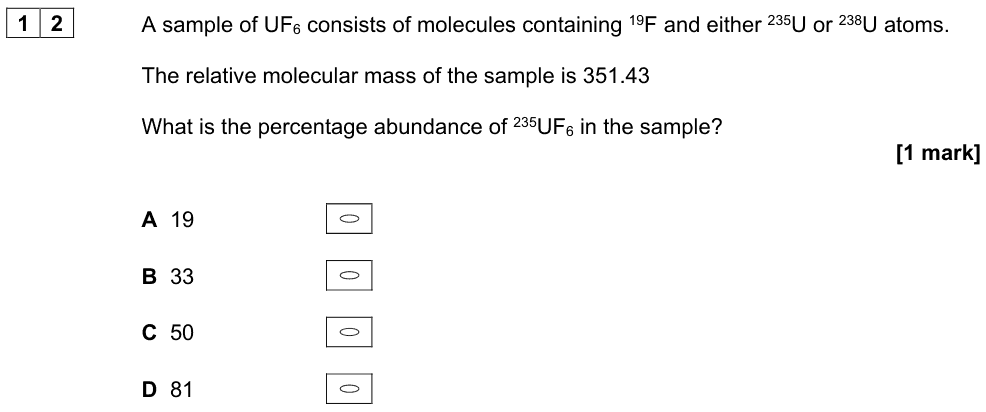
| 12 | Atomic structure | 1 | AO2=1 | Multiple choice |
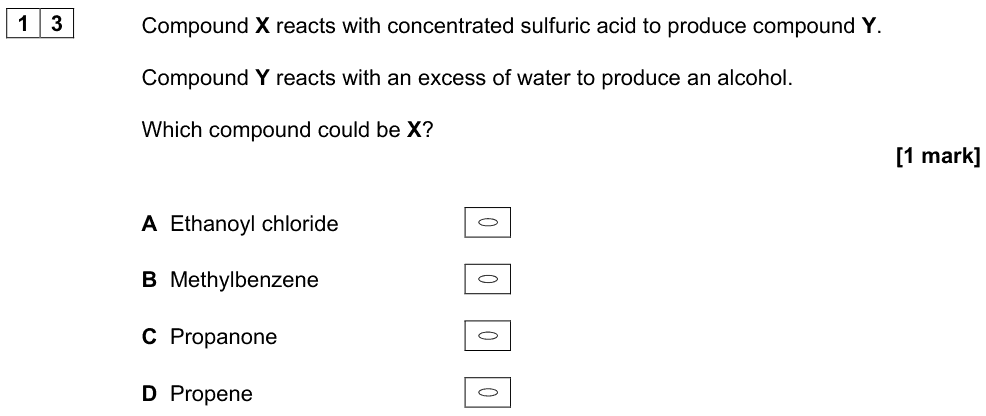
| 13 | Alkenes, Alcohols | 1 | AO2=1 | Multiple choice |
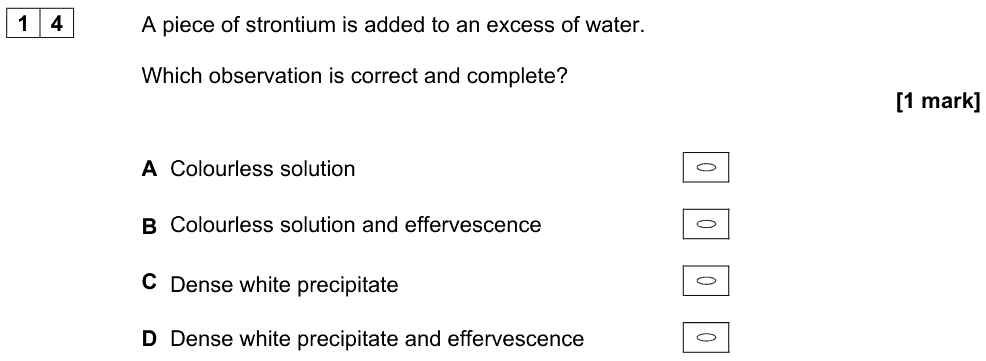
| 14 | Group 2, the alkaline earth metals | 1 | AO1=1 | Multiple choice |
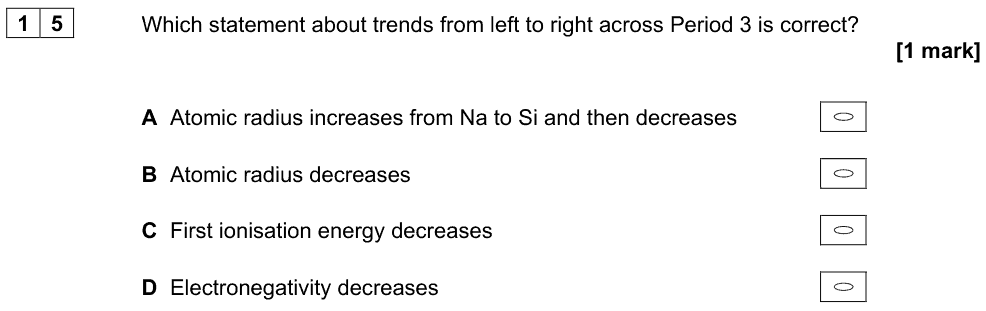
| 15 | Periodicity | 1 | AO1=1 | Multiple choice |
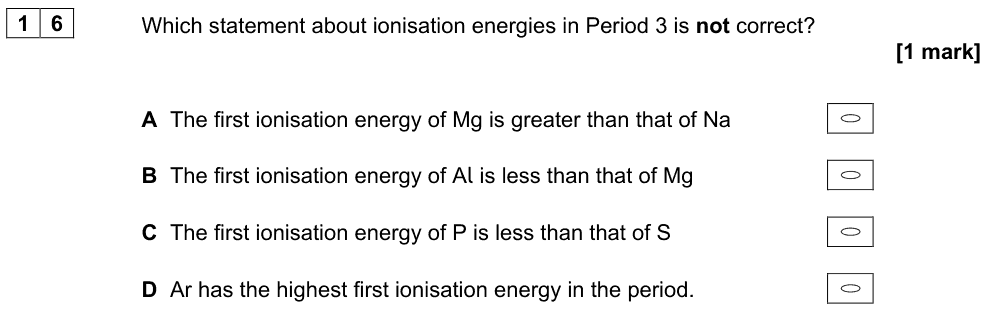
| 16 | Atomic structure, Periodicity | 1 | AO1=1 | Multiple choice |
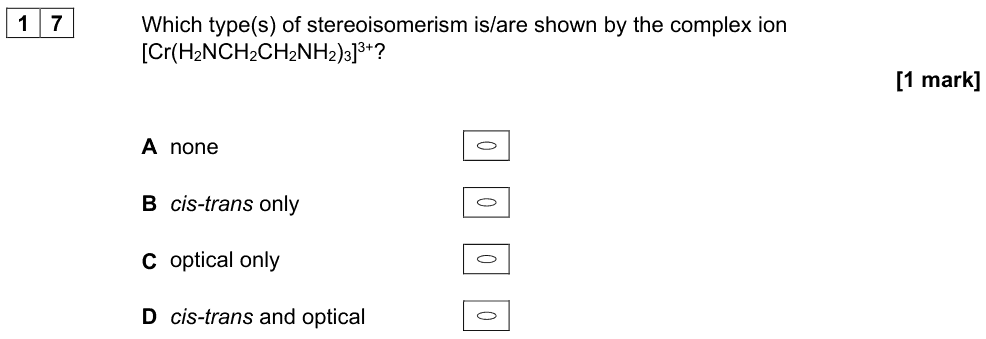
| 17 | Transition metals | 1 | AO3=1 | Multiple choice |
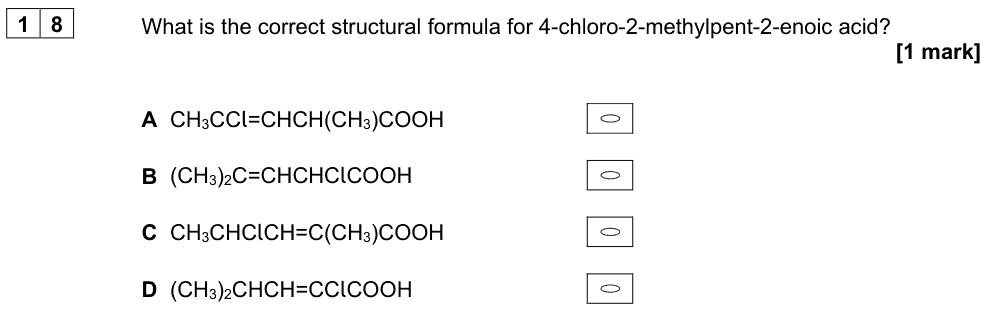
| 18 | Introduction to organic chemistry: nomenclature, mechanisms and isomerism | 1 | AO1=1 | Multiple choice |
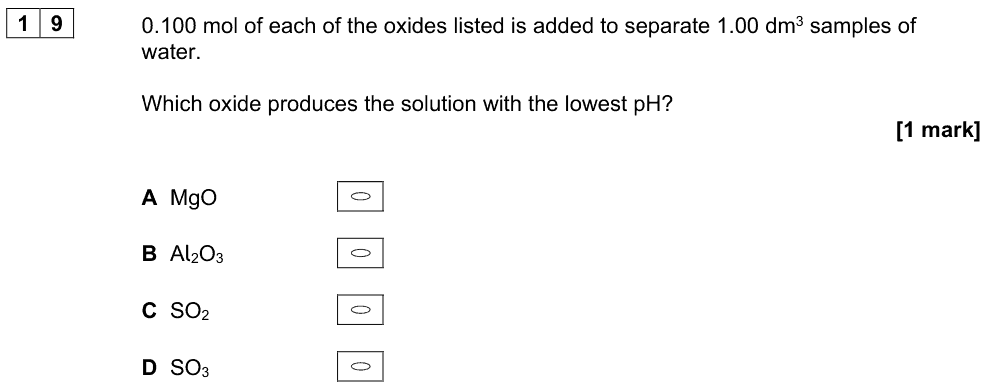
| 19 | Period 3 elements and their oxides | 1 | AO1=1 | Multiple choice |
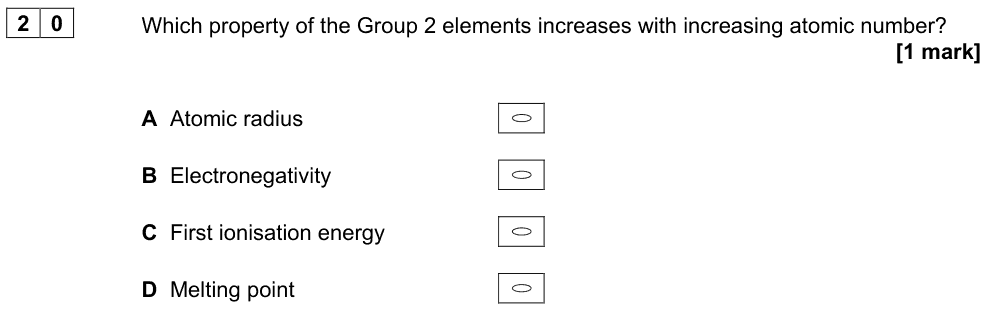
| 20 | Group 2, the alkaline earth metals | 1 | AO1=1 | Multiple choice |
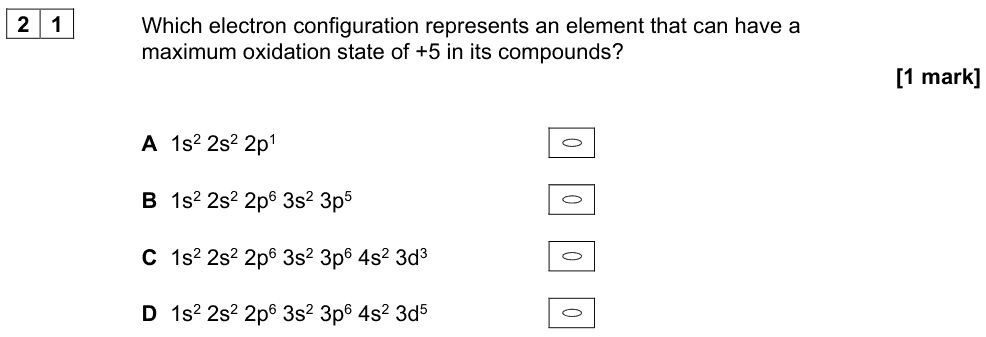
| 21 | Transition metals, Atomic structure | 1 | AO1=1 | Multiple choice |
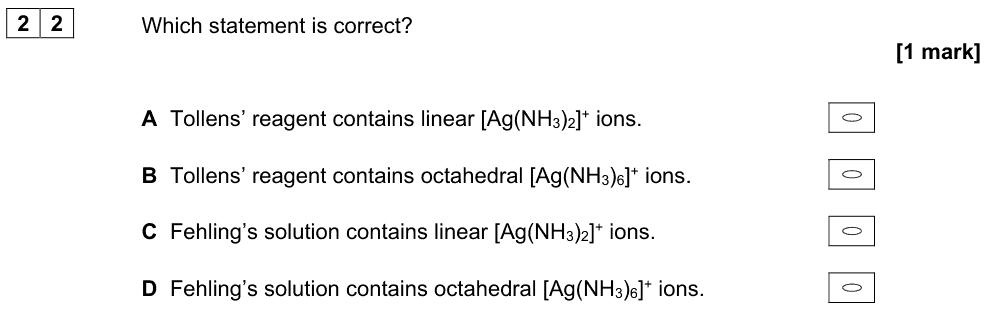
| 22 | Transition metals | 1 | AO1=1 | Multiple choice |
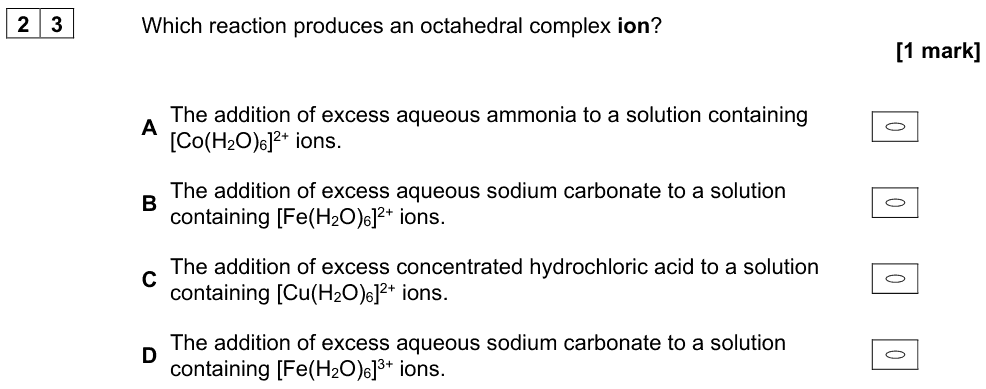
| 23 | Transition metals | 1 | AO1=1 | Multiple choice |
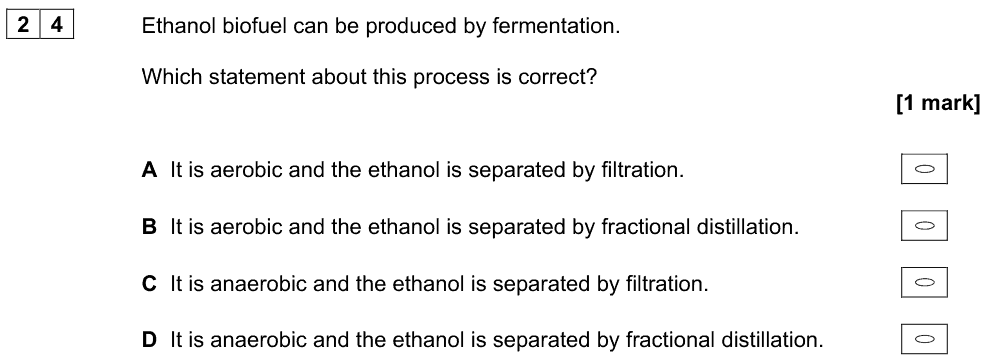
| 24 | Alcohols | 1 | AO1=1 | Multiple choice |
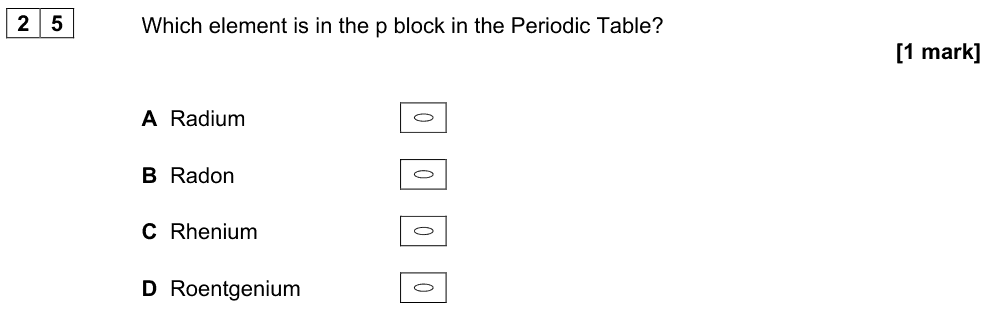
| 25 | Periodicity | 1 | AO1=1 | Multiple choice |
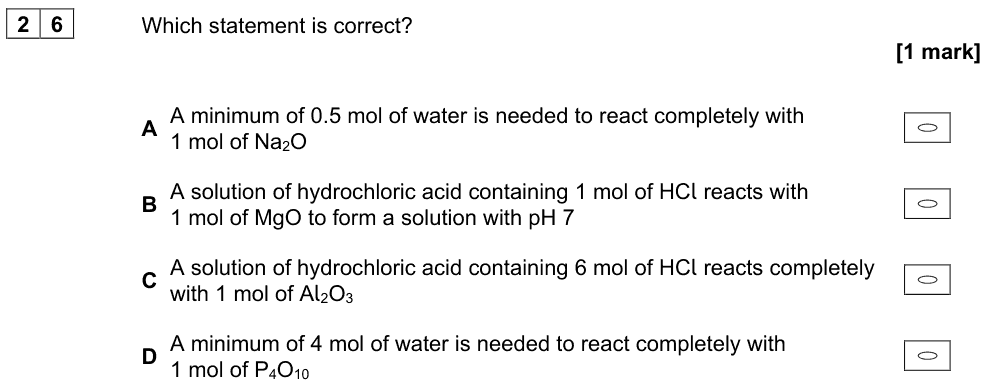
| 26 | Period 3 elements and their oxides | 1 | AO2=1 | Multiple choice |
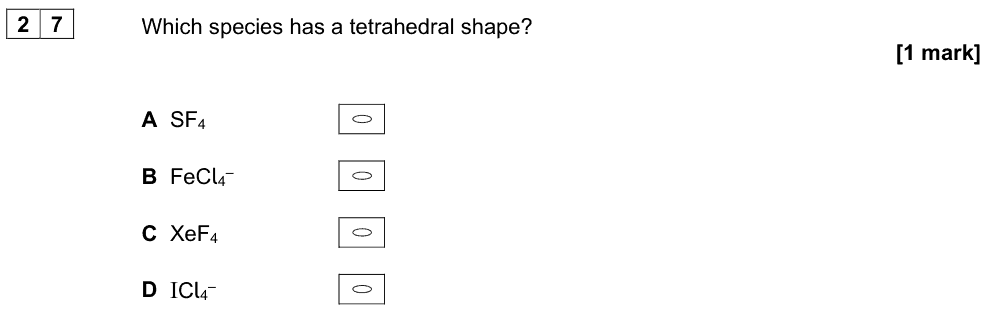
| 27 | Transition metals, Bonding | 1 | AO2=1 | Multiple choice |
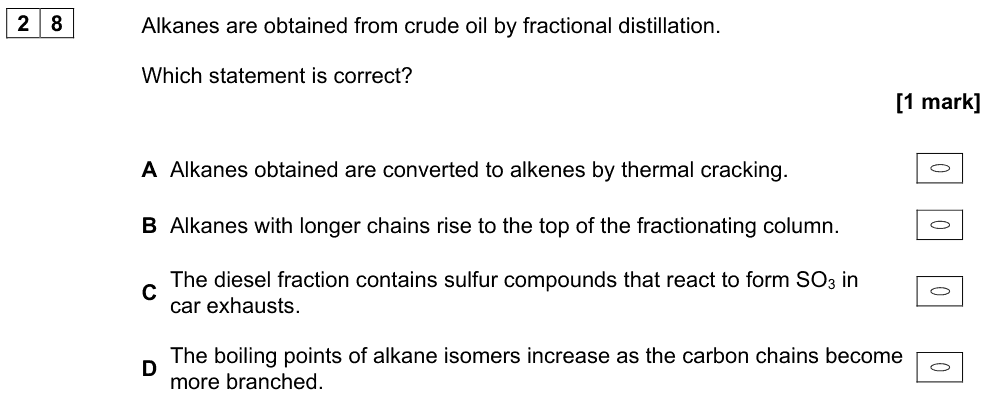
| 28 | Alkanes | 1 | AO1=1 | Multiple choice |
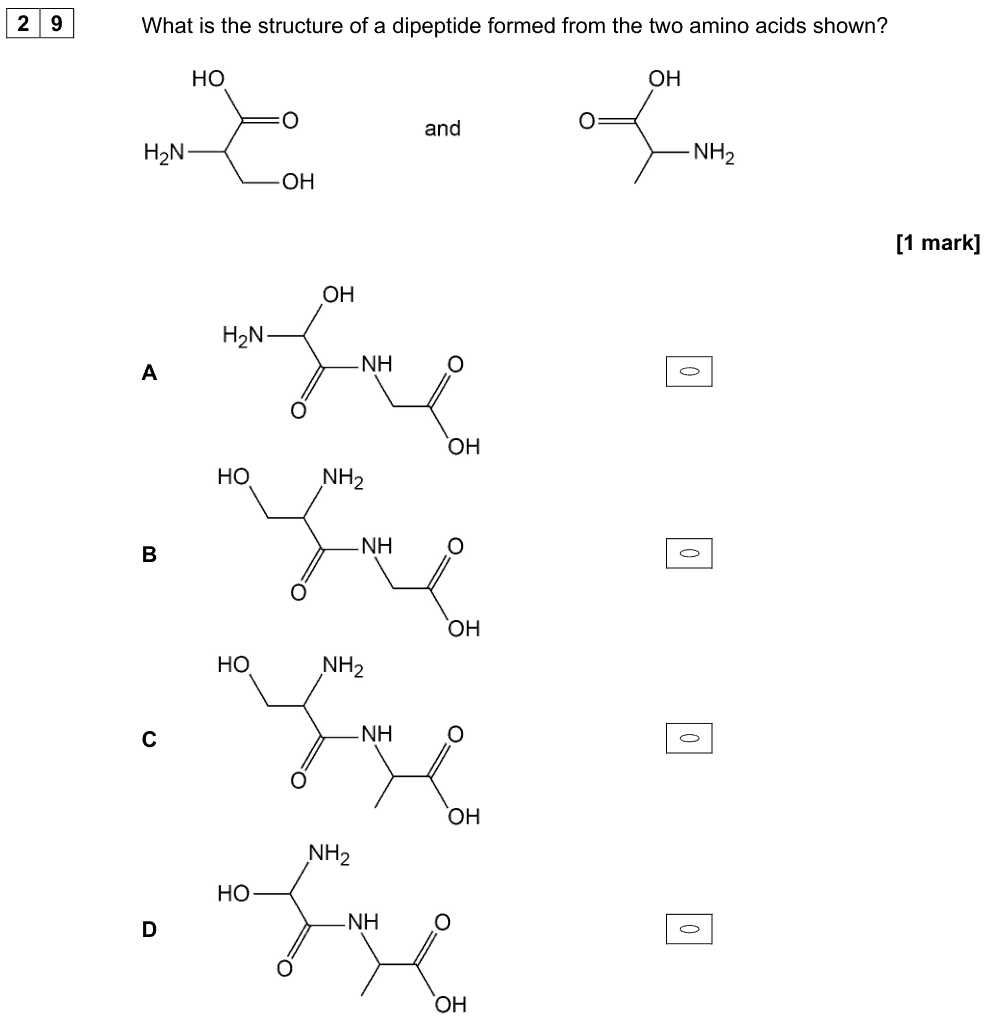
| 29 | Amino acids, proteins and DNA | 1 | AO2=1 | Multiple choice |
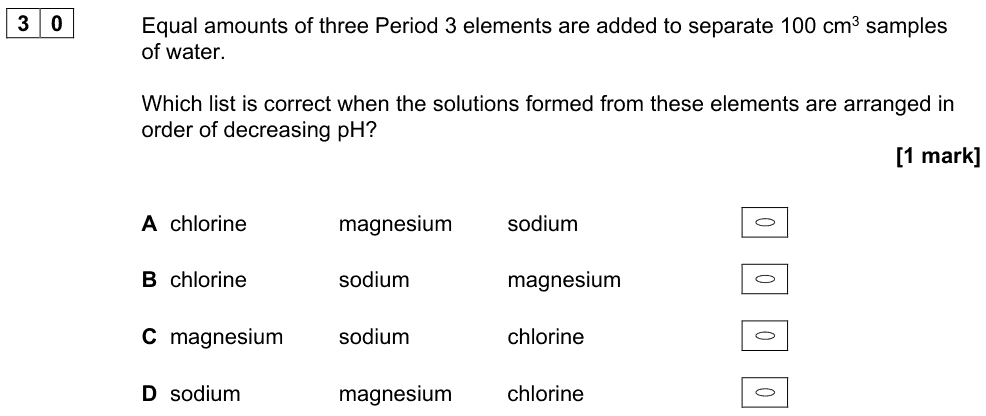
| 30 | Period 3 elements and their oxides, Group 7(17), the halogens | 1 | AO1=1 | Multiple choice |
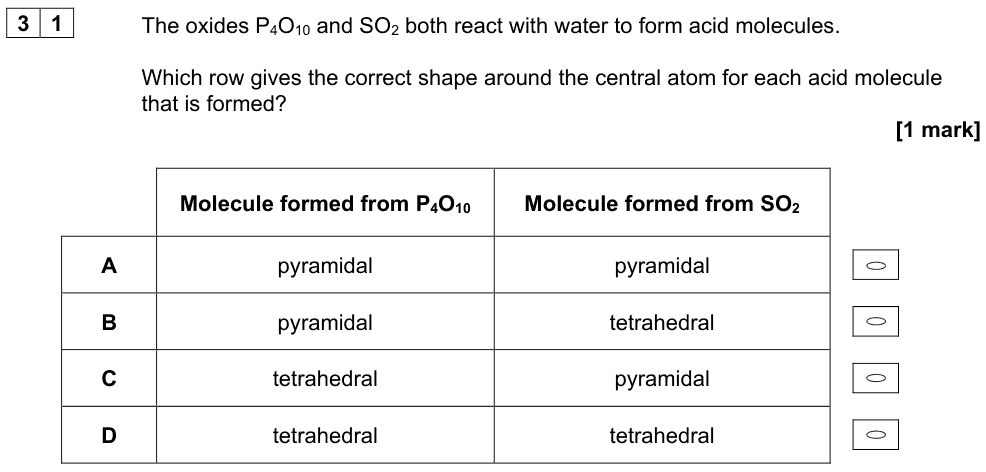
| 31 | Period 3 elements and their oxides, Bonding | 1 | AO1=1 | Multiple choice |
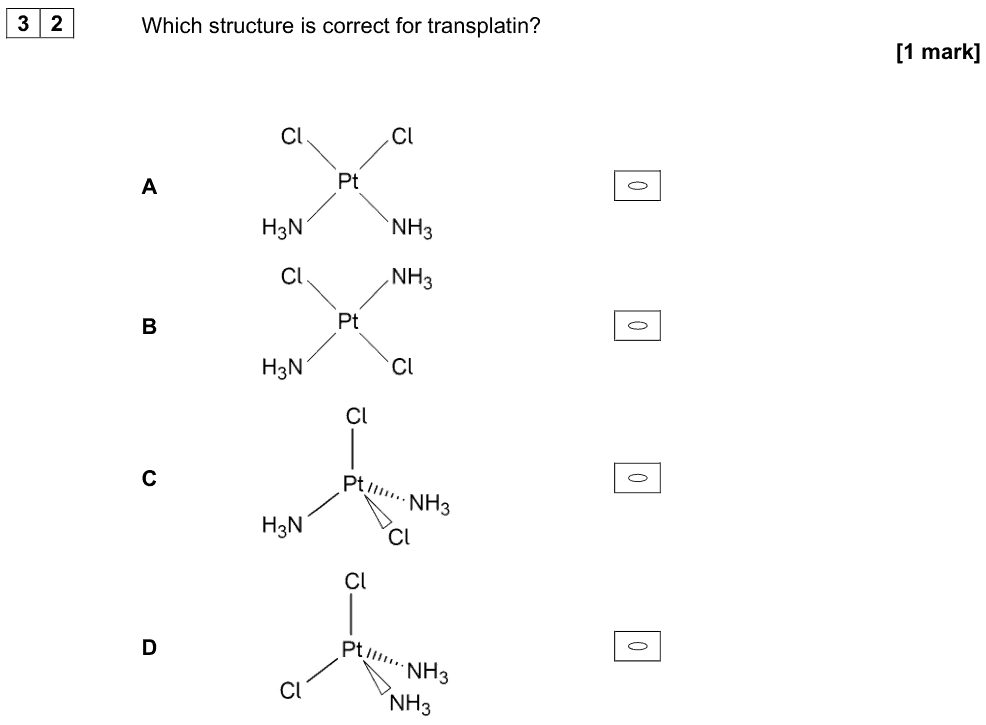
| 32 | Transition metals | 1 | AO1=1 | Multiple choice |
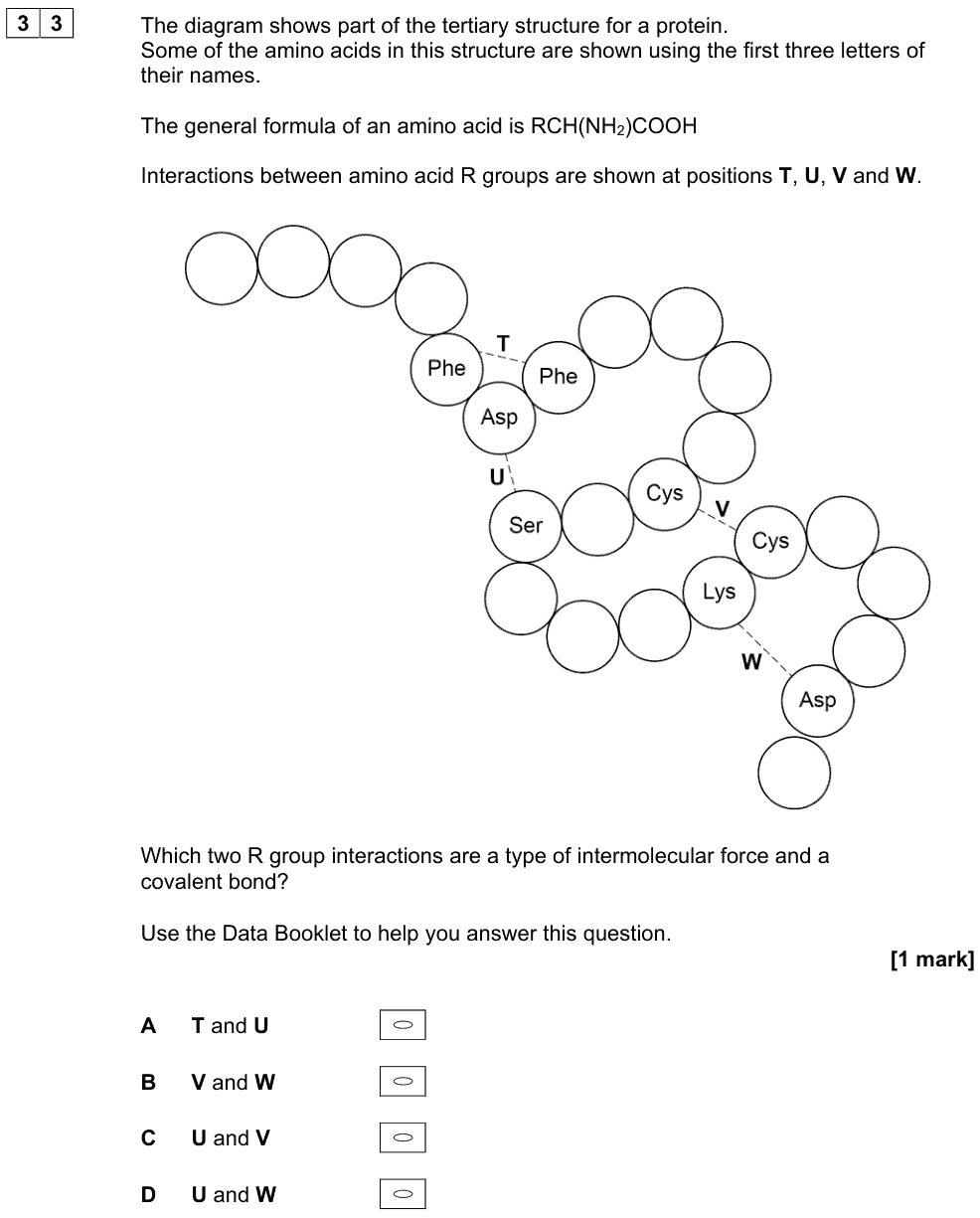
| 33 | Amino acids, proteins and DNA | 1 | AO2=1 | Multiple choice |
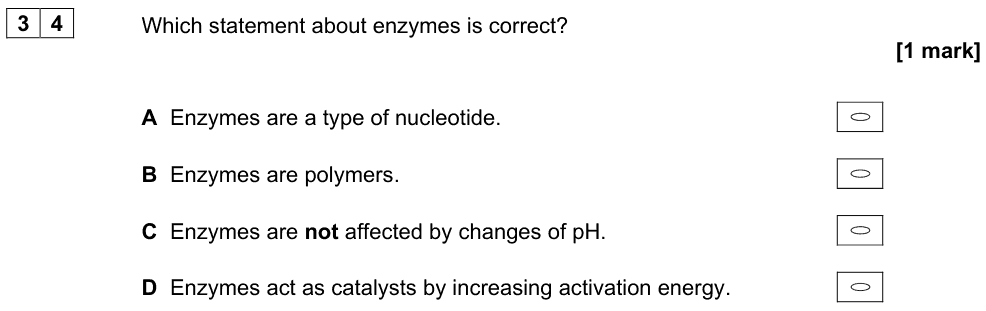
| 34 | Amino acids, proteins and DNA | 1 | AO1=1 | Multiple choice |
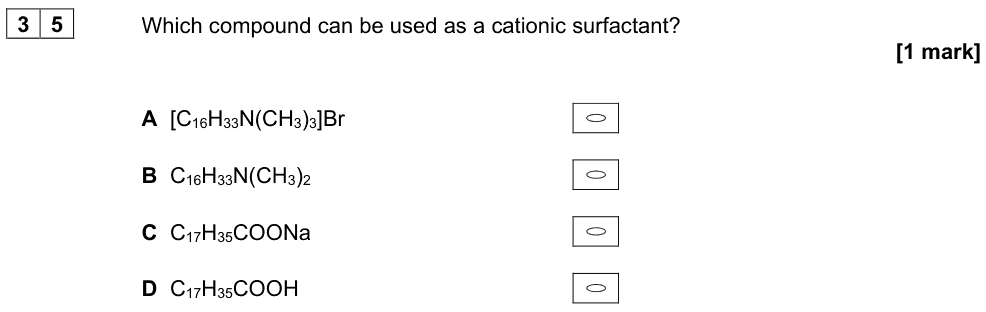
| 35 | Amines | 1 | AO1=1 | Multiple choice |
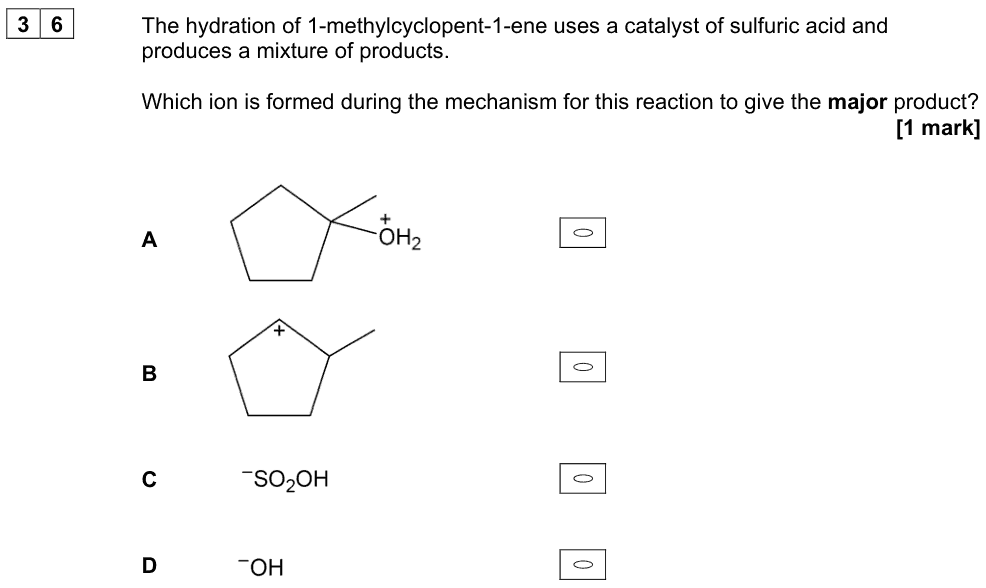
| 36 | Alcohols, Alkenes | 1 | AO2=1 | Multiple choice |