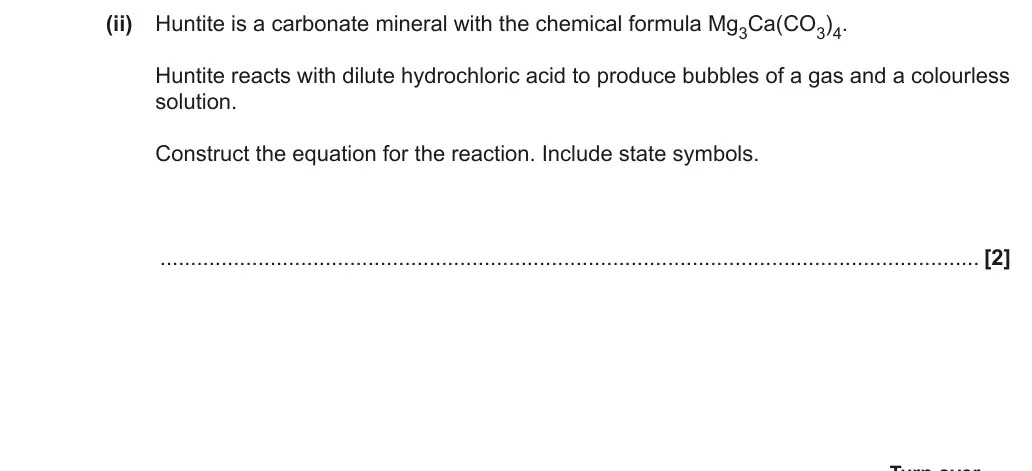
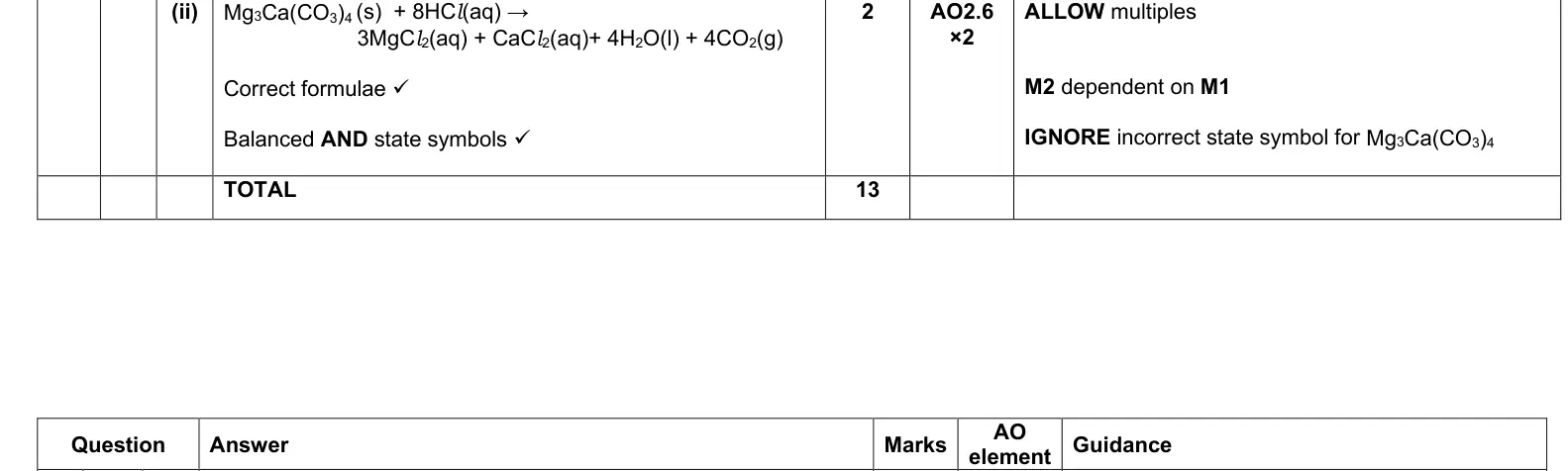
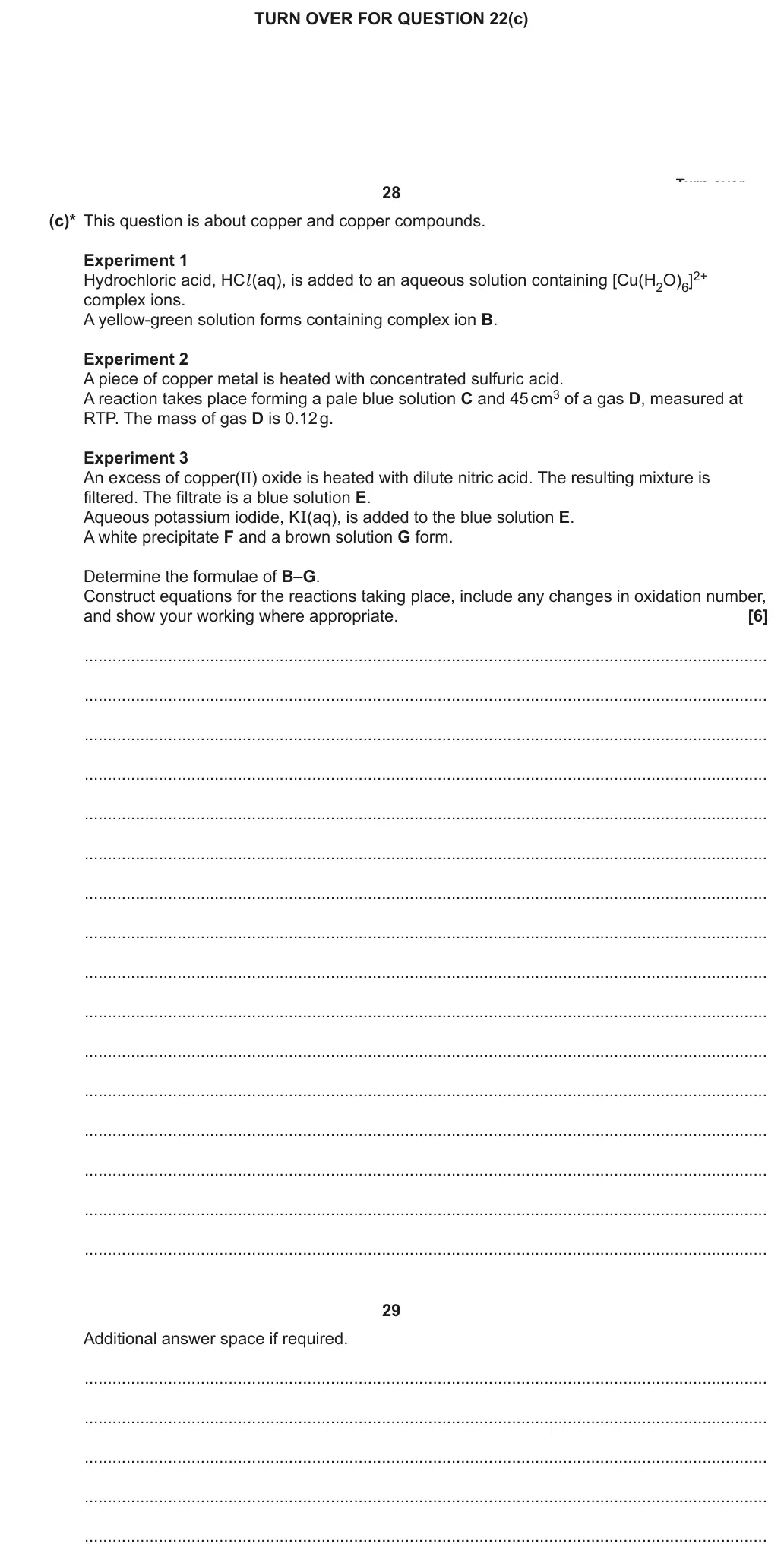
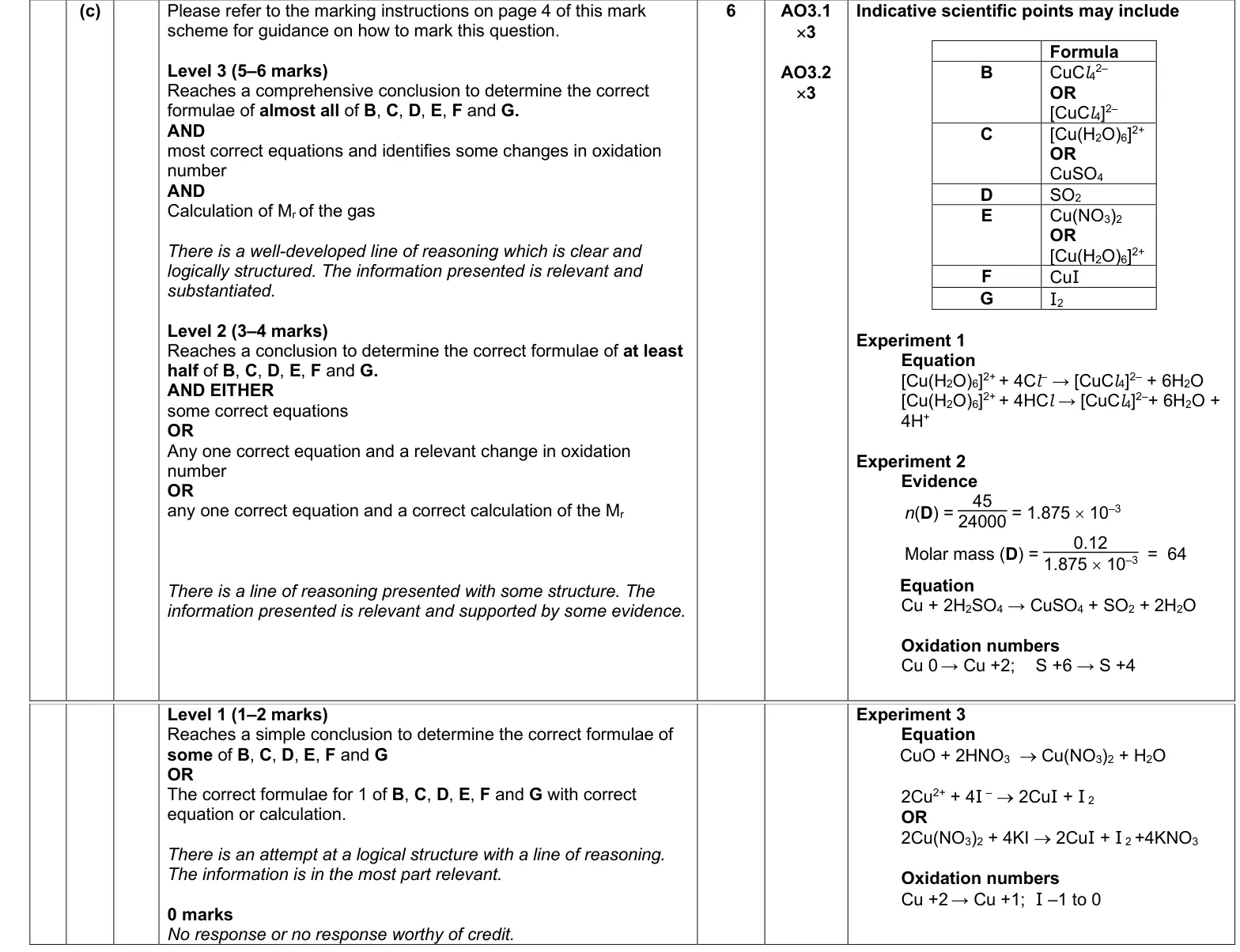
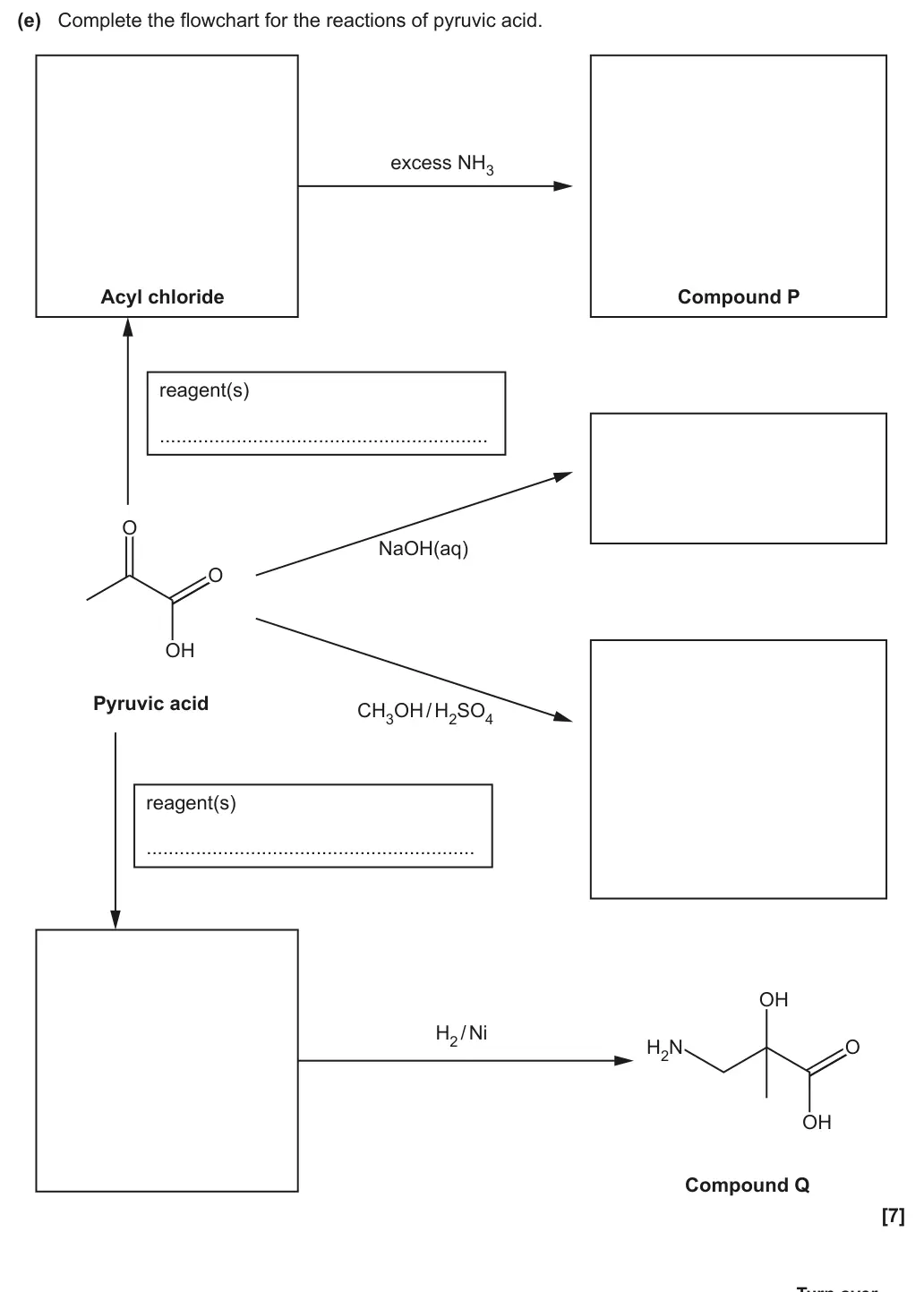
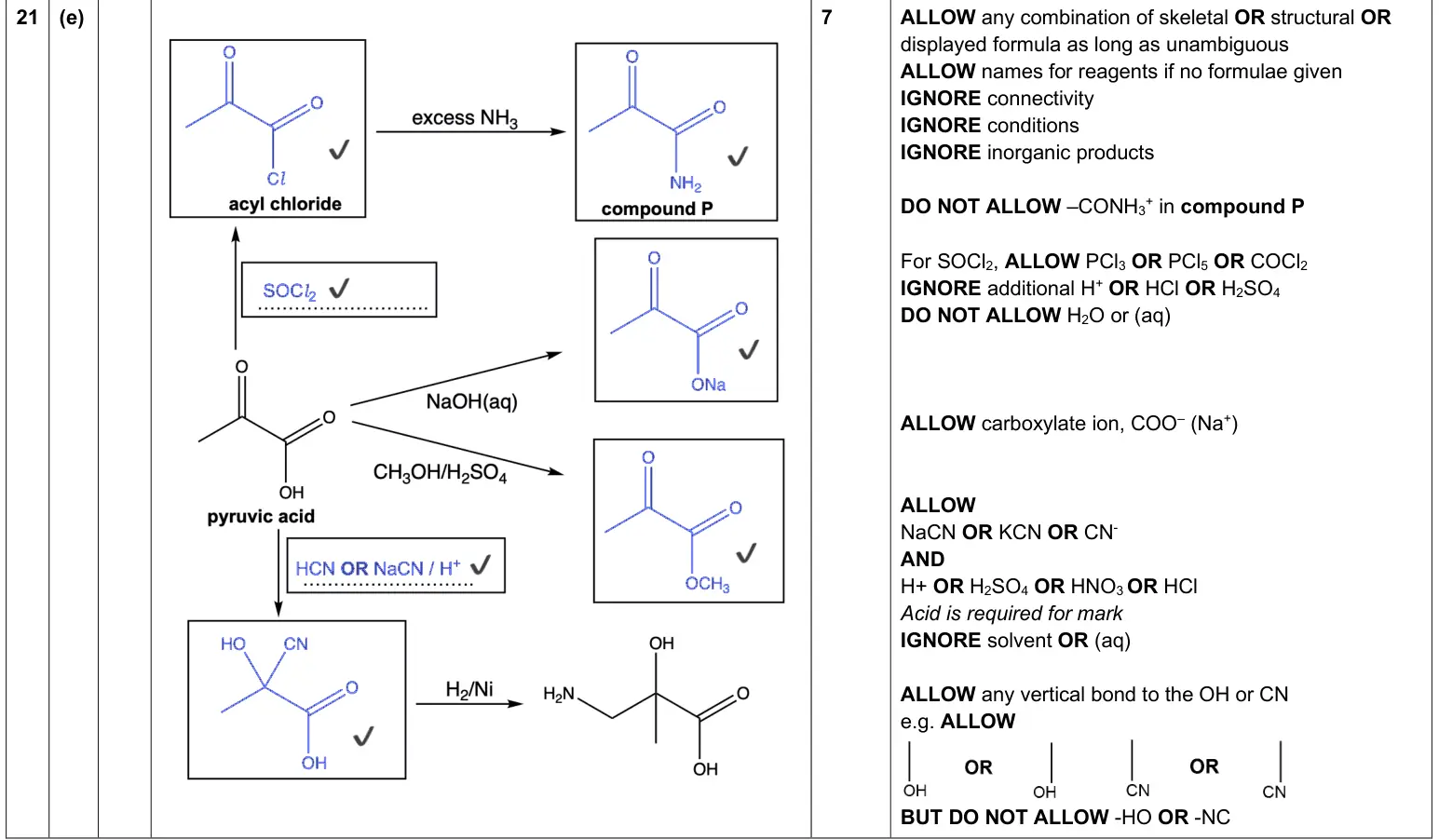
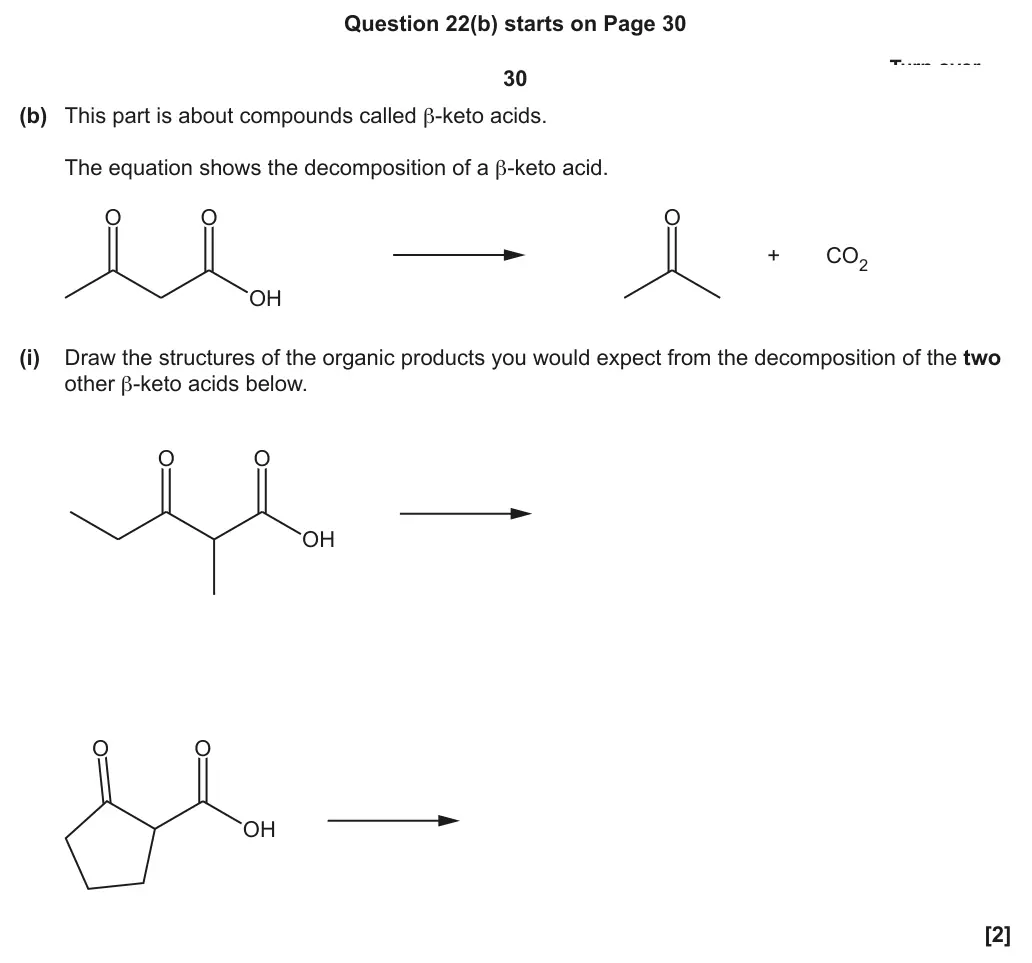
Examiner's comment
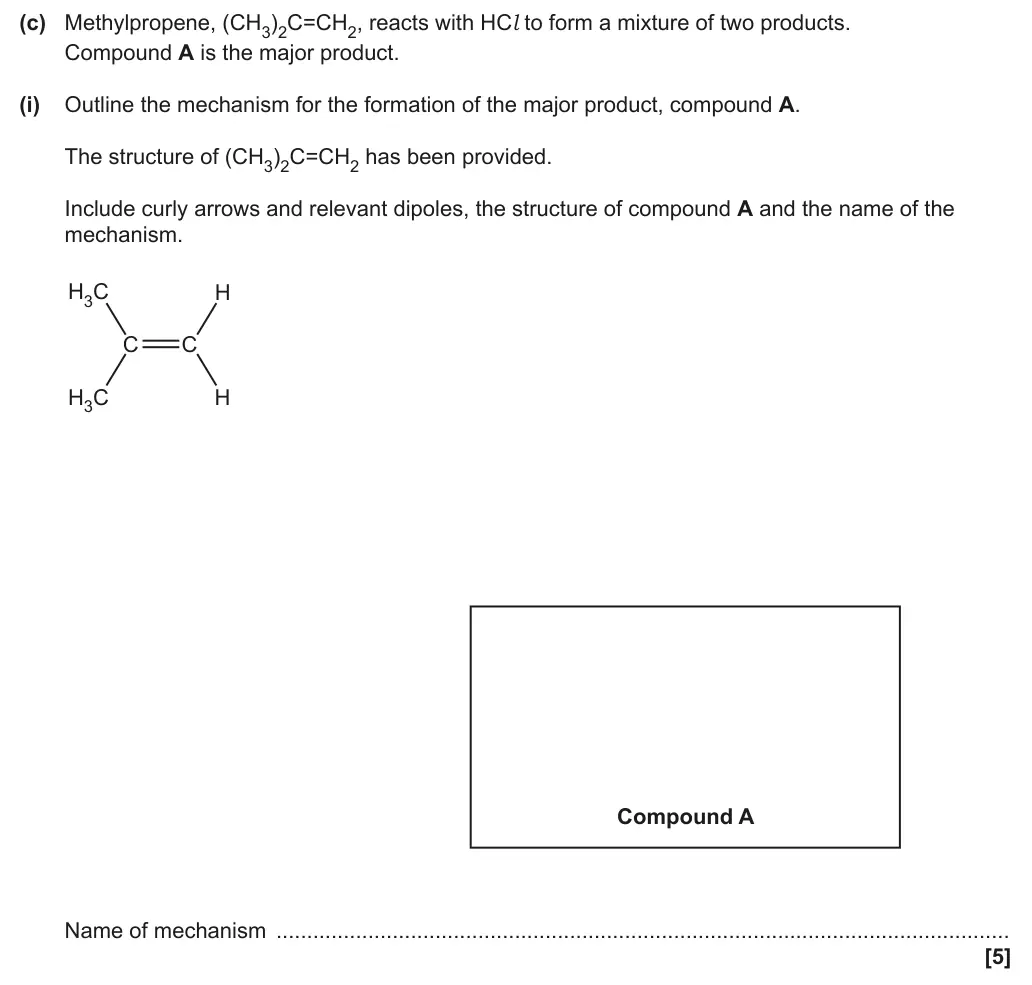
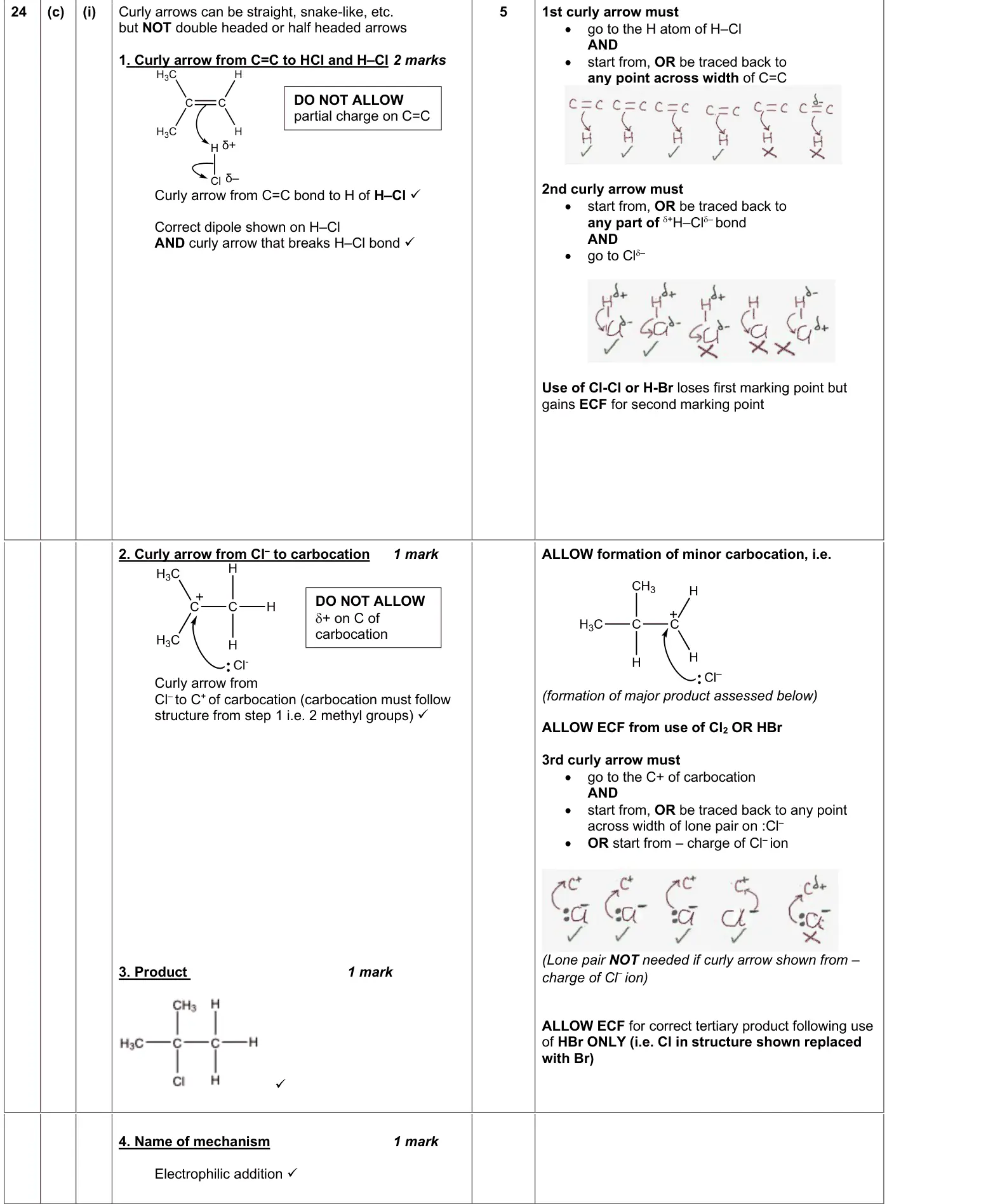
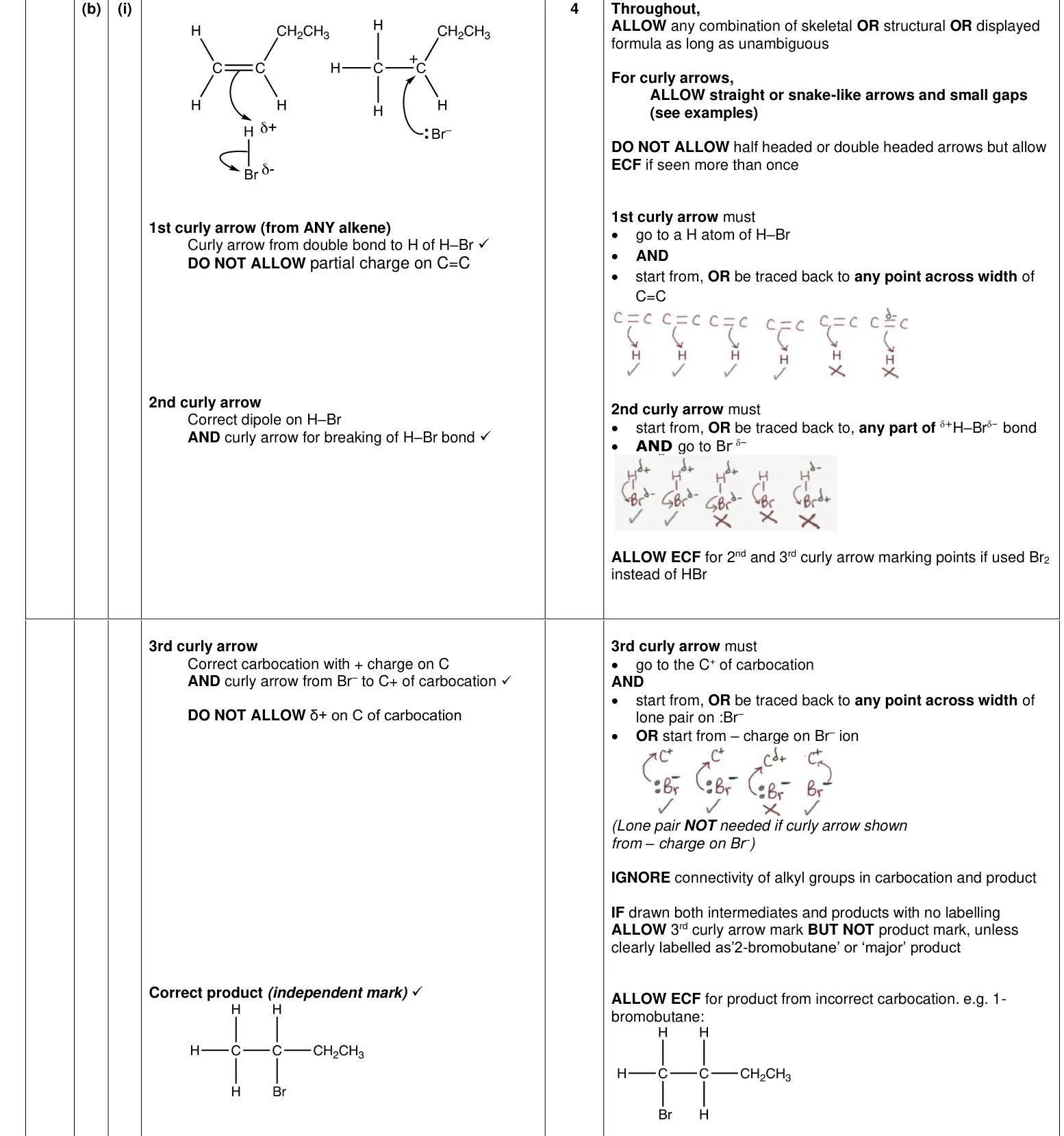
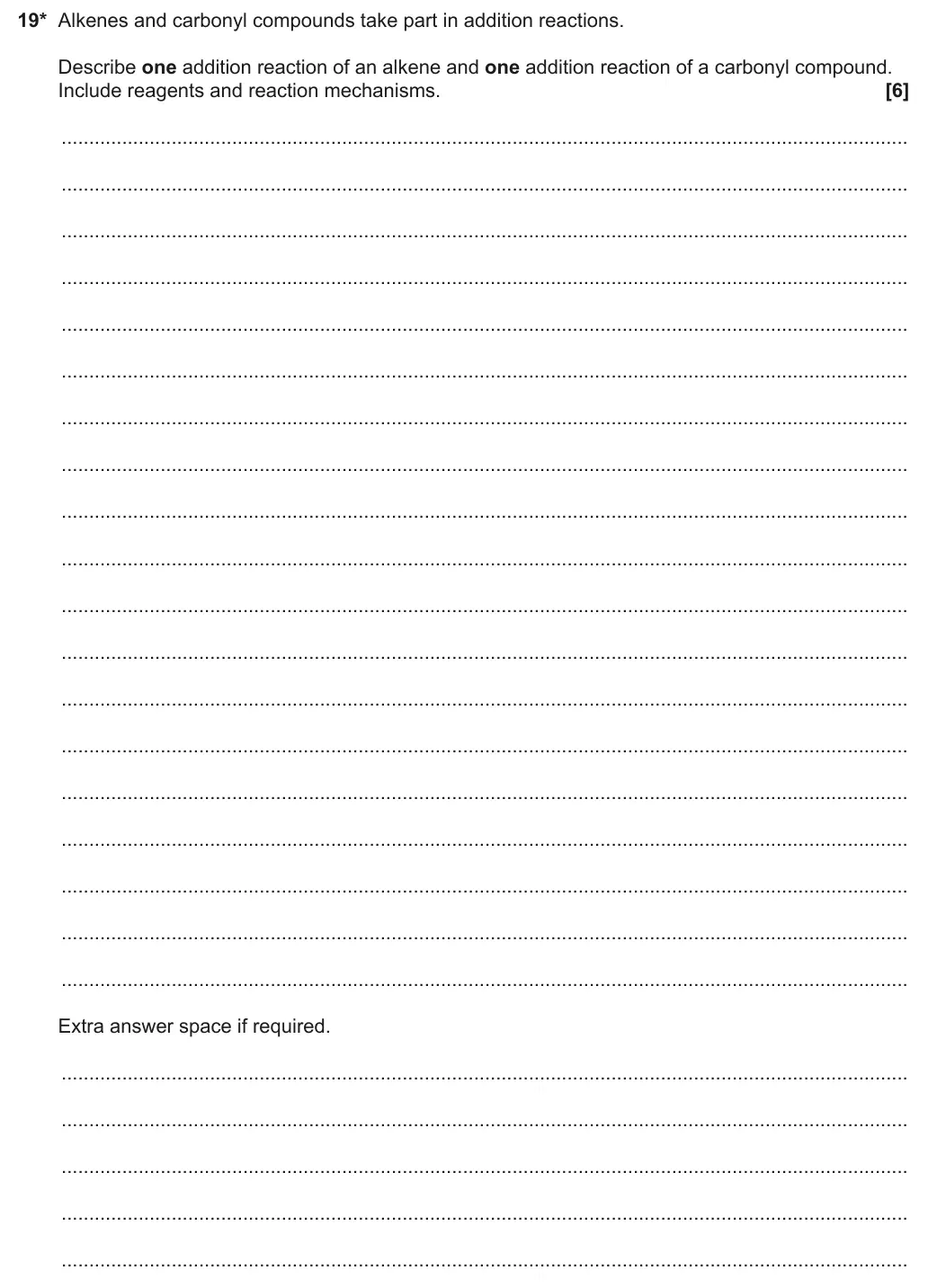
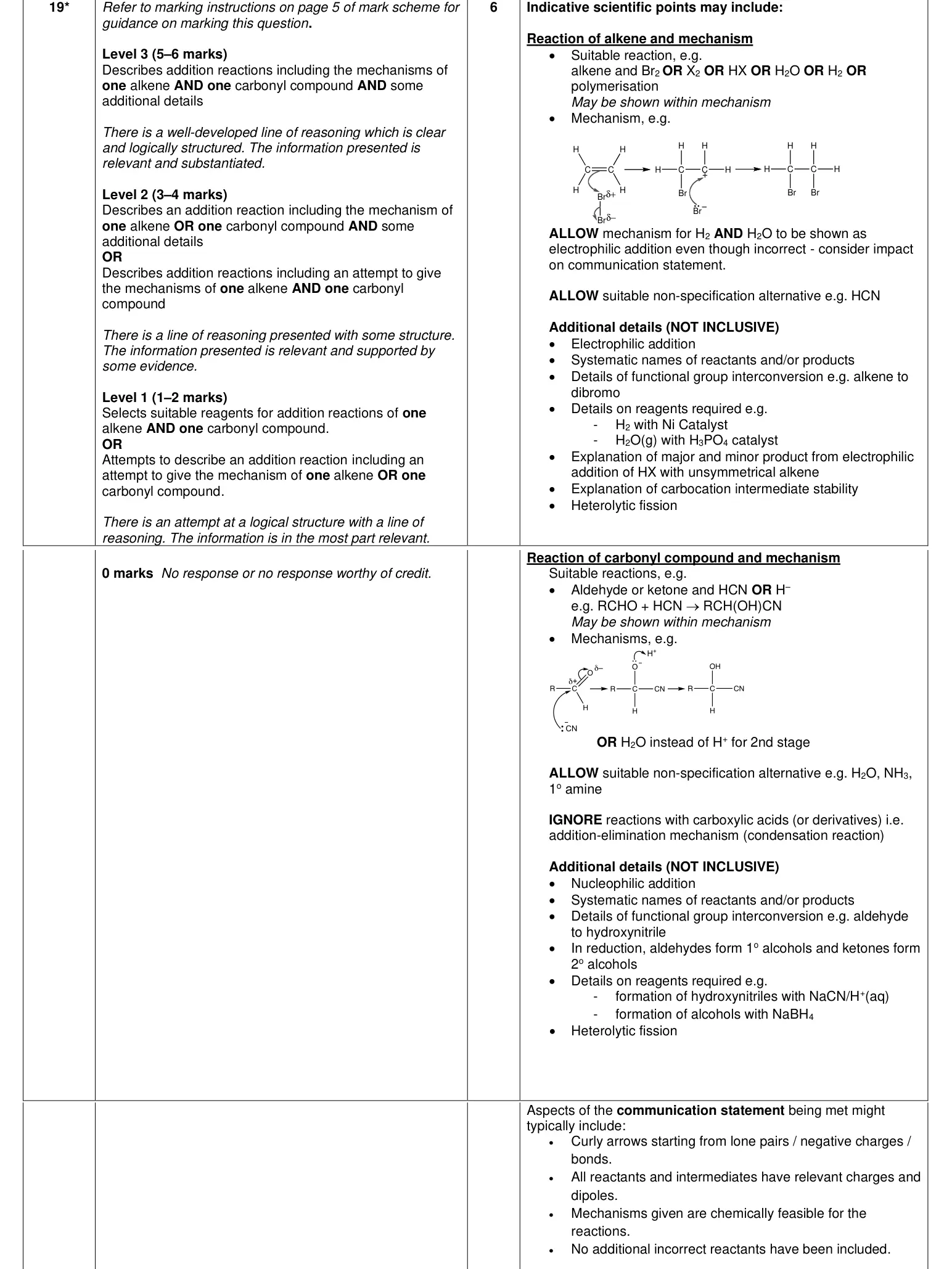
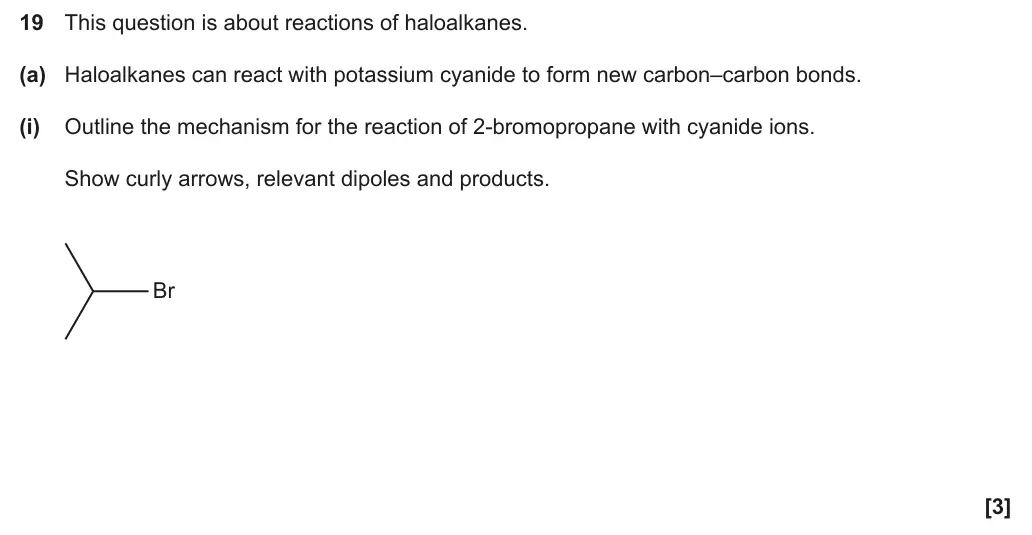
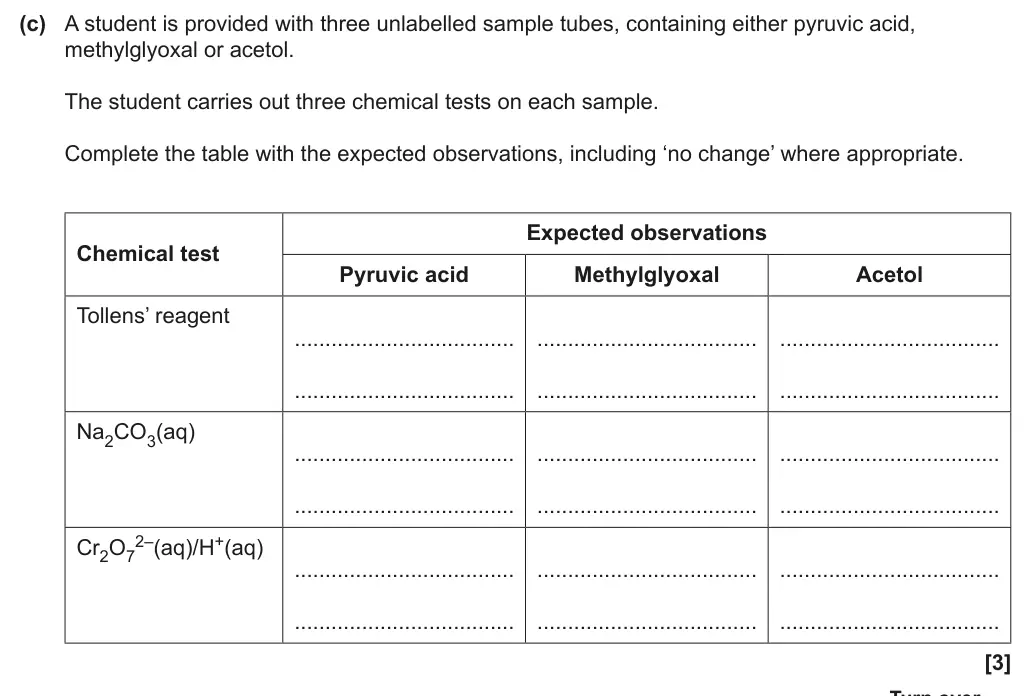
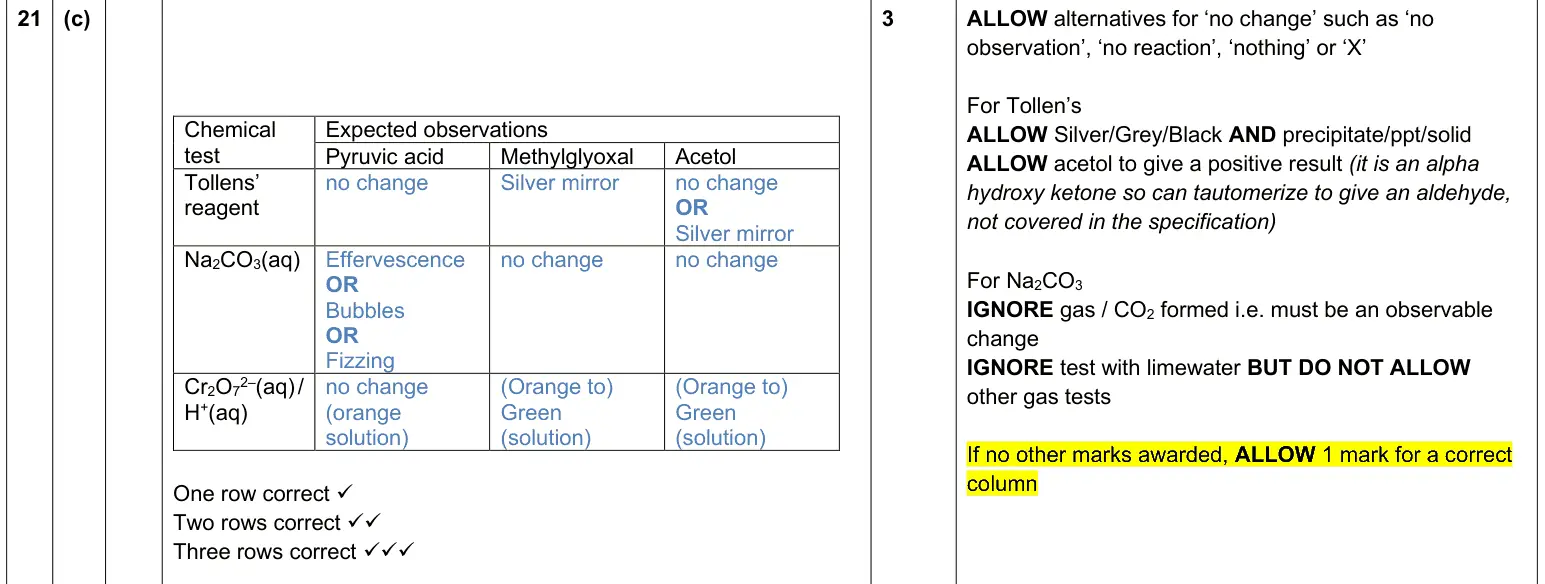
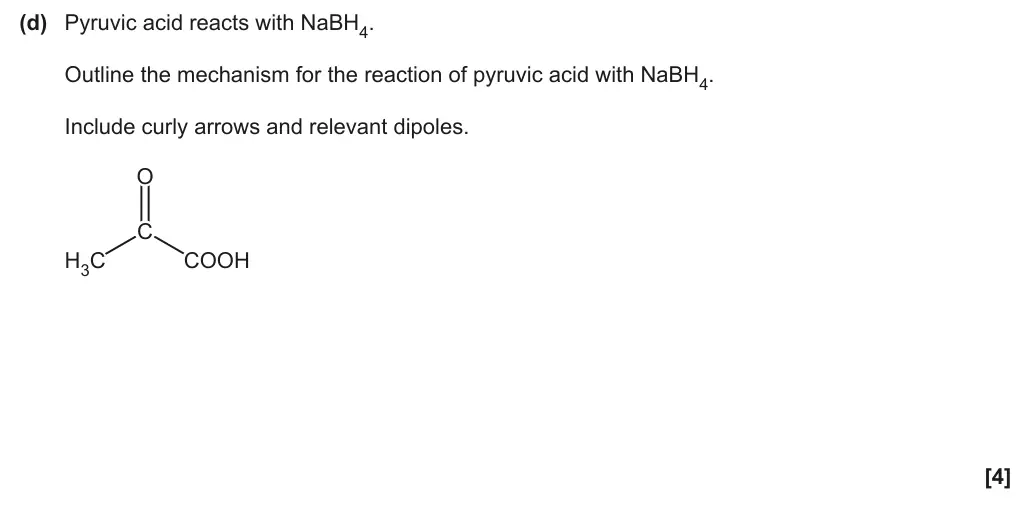
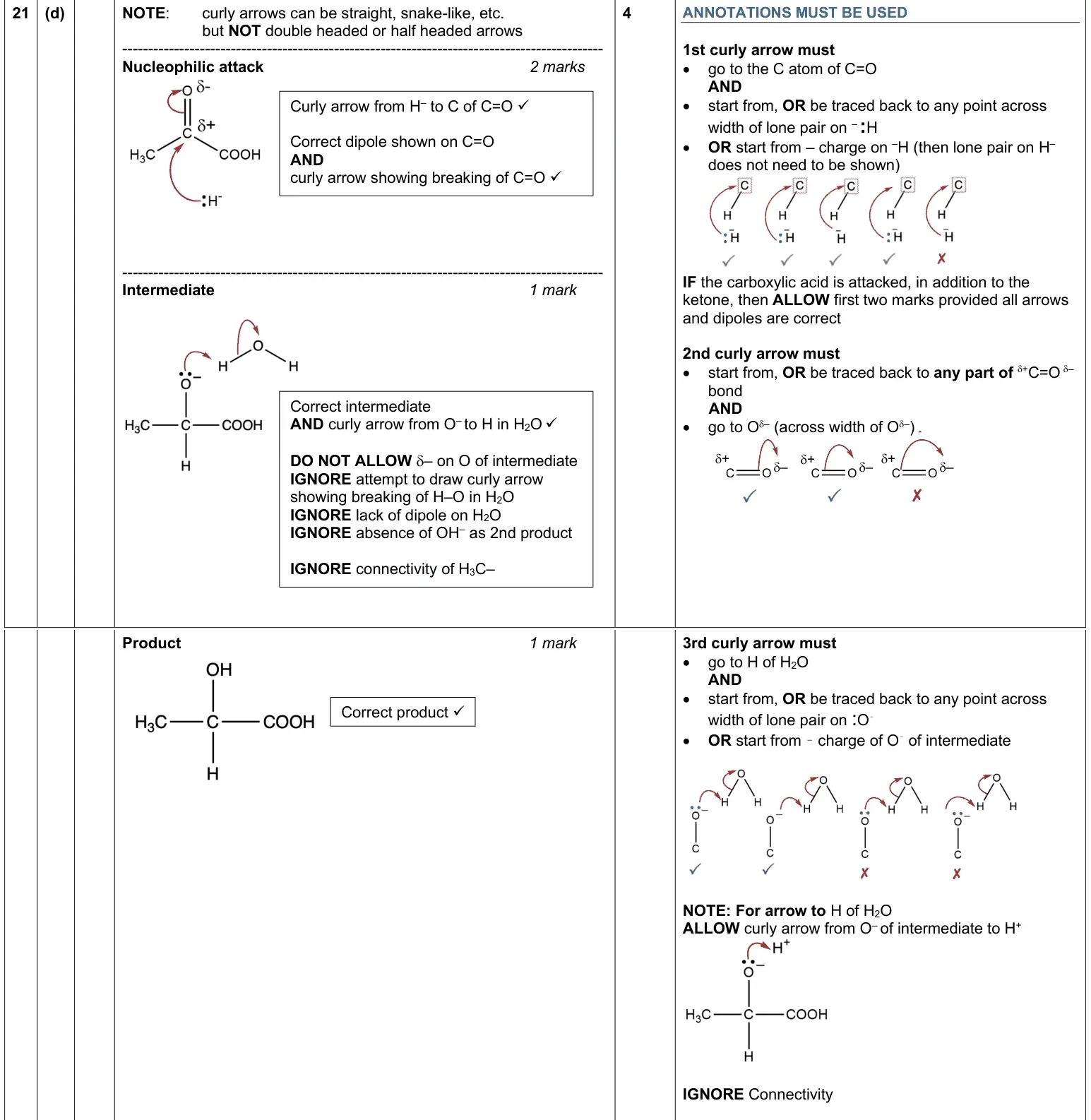
A very good proportion of candidates scored all 6 marks, giving well-drawn mechanisms with some additional details such as mechanism names, functional group interconversions or other additional reaction information. Some attempted to ‘describe’ the mechanism using only words rather than drawing it out with a conventional curly arrow mechanism. Candidates may need more clarity on what ‘describe’ means in an organic chemistry context. Equally, a few gave just the mechanisms with no additional details, limiting themselves to Level 2. Candidates were usually more confident with the addition to alkenes using an electrophilic addition mechanism. Some gave additional details about major and minor products, although not always relevant as for a symmetrical alkene. Some represented the addition of hydrogen or water to alkenes via an electrophilic addition mechanism. While not correct it showed an understanding of mechanisms and a correct addition reaction for alkenes, so credit was given. Some candidates included incorrect reagents for reactions, such as acid catalysts with addition of a hydrogen halide, or incorrect conditions, such as the requirement for ultraviolet light on addition of a halogen. The addition to carbonyl compounds was not always as well-described. Some candidates struggled to identify carbonyl compounds, selecting carboxylic acids or their derivatives, with attempts at addition- elimination mechanism i.e. condensation reactions. Some gave incorrect reagents for carbonyls, including H2 and HBr. However, some used off-specification reactions such as the addition of H2O to form a geminal diol which was given but as the mechanism differs from the nucleophilic addition mechanism taught in this specification, full credit was rarely achieved. Some also considered oxidation of aldehyde or ketone to be an addition reaction. Most who presented a correct mechanism for addition to a carbonyl used the reaction with cyanide rather than reduction with NaBH4. Common errors included arrows coming from the N of CN–, a lack of putting dipoles on carbonyl bonds, missing charges on O in intermediates or showing the wrong direction of arrows. Two correct addition mechanisms have been shown, one for an alkene and one for a carbonyl compound. Additional details include the names of the mechanisms, names of the functional groups in the products, and the fact that a C-C bond is formed in the second mechanism. All curly arrows, charges and dipoles are correctly positioned so this response was also given the communication mark.