November 2021: Paper 2, Organic and physical chemistry

105 marks · 40 question parts · Paper, mark scheme and report on AQA's site · An autumn series using the paper written for the cancelled summer exams · Have the Data Booklet beside you

Question by question

QTopicMarksAOType
01.1 Carboxylic acids and derivatives 3Short answer
01.2 Carboxylic acids and derivatives, Introduction to organic chemistry: nomenclature, mechanisms and isomerism 3Calculation
01.3 Amount of substance 6Calculation
01.4 Carboxylic acids and derivatives 3Practical and data analysis
02.1 Alkanes 1Short answer
02.2 Alkanes, Amount of substance 3Equation writing
02.3 Organic analysis: test-tube reactions, mass spectrometry and infrared 1Short answer
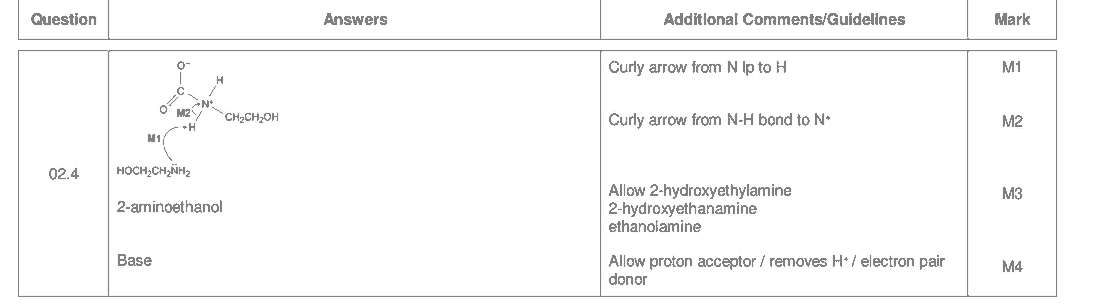
02.4 Introduction to organic chemistry: nomenclature, mechanisms and isomerism, Amines 4Mechanism
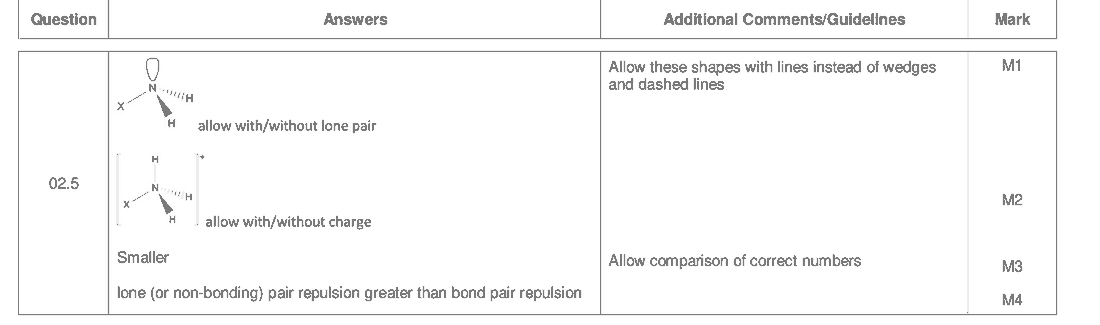
02.5 Bonding 4Diagram or structure
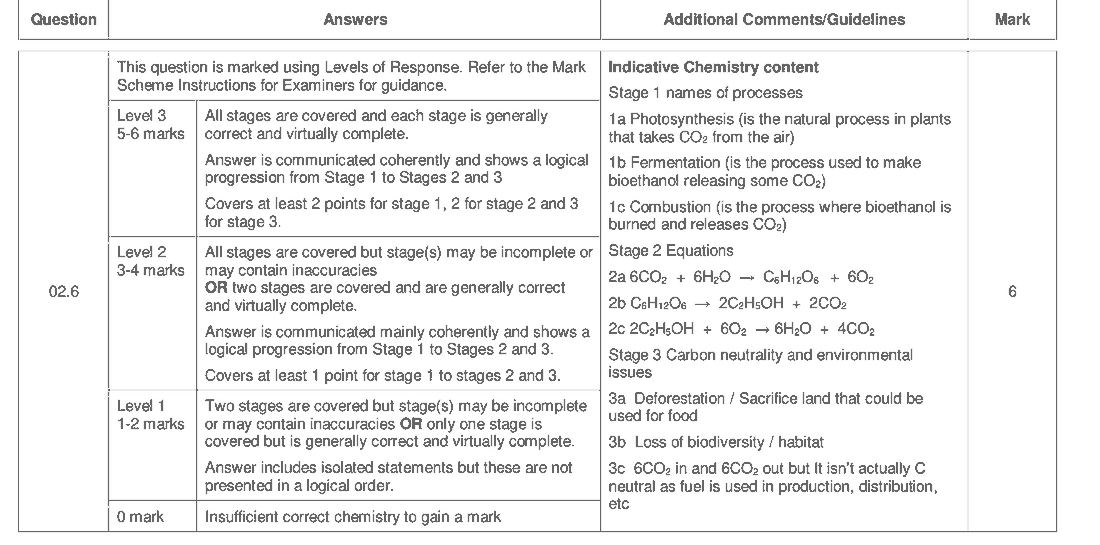
02.6 Alcohols 6Level of response
03.1 Energetics 2Practical and data analysis
03.2 Energetics 2Practical and data analysis
03.3 Energetics 2Practical and data analysis
03.4 Energetics 1Practical and data analysis
04.1 Energetics, Aromatic chemistry 3Calculation
04.2 Aromatic chemistry 1Short answer
04.3 Aromatic chemistry, Introduction to organic chemistry: nomenclature, mechanisms and isomerism 5Mechanism
05.1 Chemical equilibria, Le Chatelier's principle and Kc 3Short answer
05.2 Carboxylic acids and derivatives 1Diagram or structure
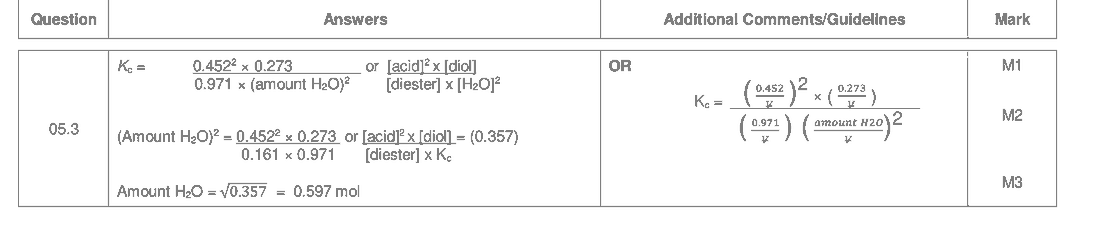
05.3 Chemical equilibria, Le Chatelier's principle and Kc 3Calculation
06.1 Optical isomerism, Introduction to organic chemistry: nomenclature, mechanisms and isomerism 1Diagram or structure
06.2 Optical isomerism 2Short answer
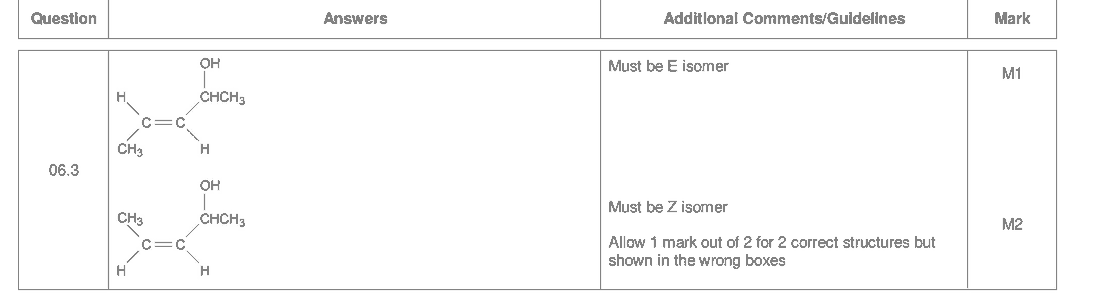
06.3 Introduction to organic chemistry: nomenclature, mechanisms and isomerism, Optical isomerism 2Diagram or structure
06.4 Nuclear magnetic resonance spectroscopy, Introduction to organic chemistry: nomenclature, mechanisms and isomerism 2Diagram or structure
07.1 Organic analysis: test-tube reactions, mass spectrometry and infrared 1Short answer
07.2 Organic analysis: test-tube reactions, mass spectrometry and infrared, Amines 3Short answer
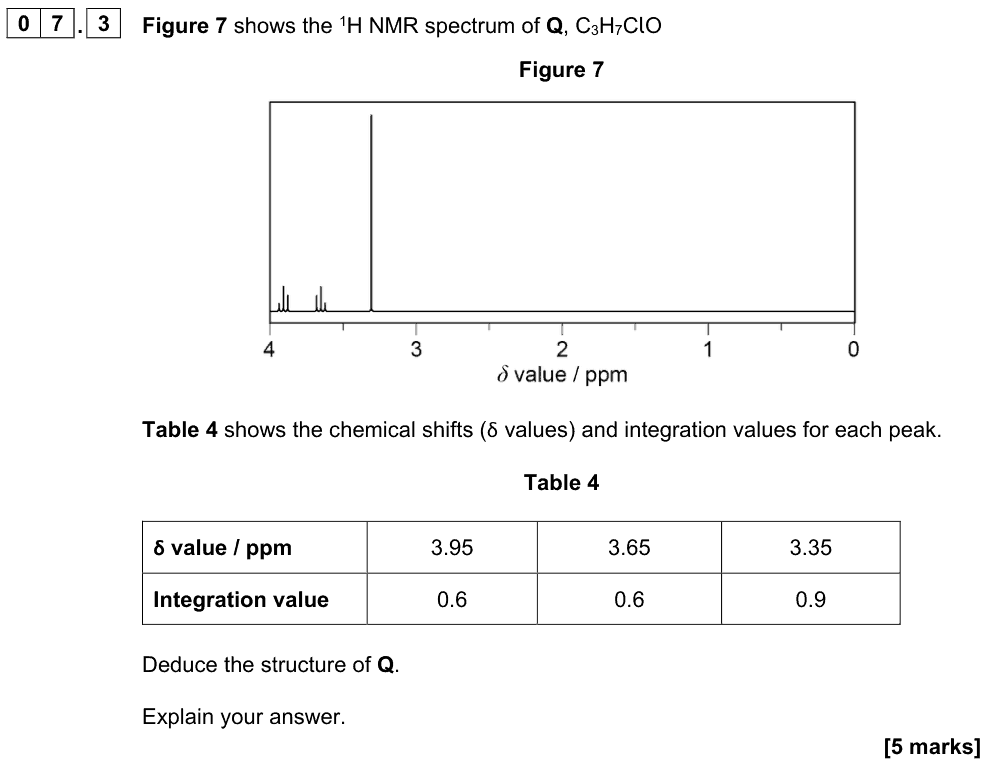
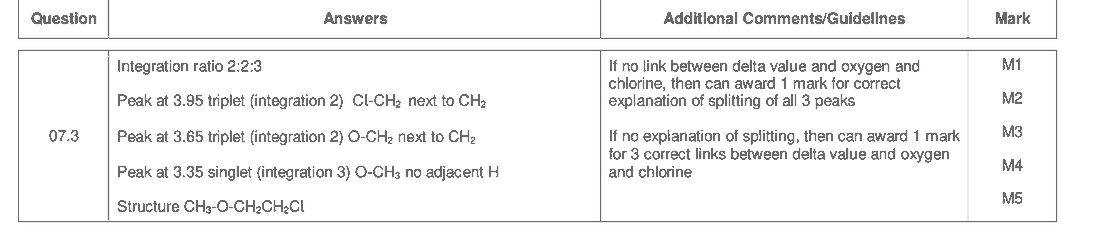
07.3 Nuclear magnetic resonance spectroscopy 5Explanation
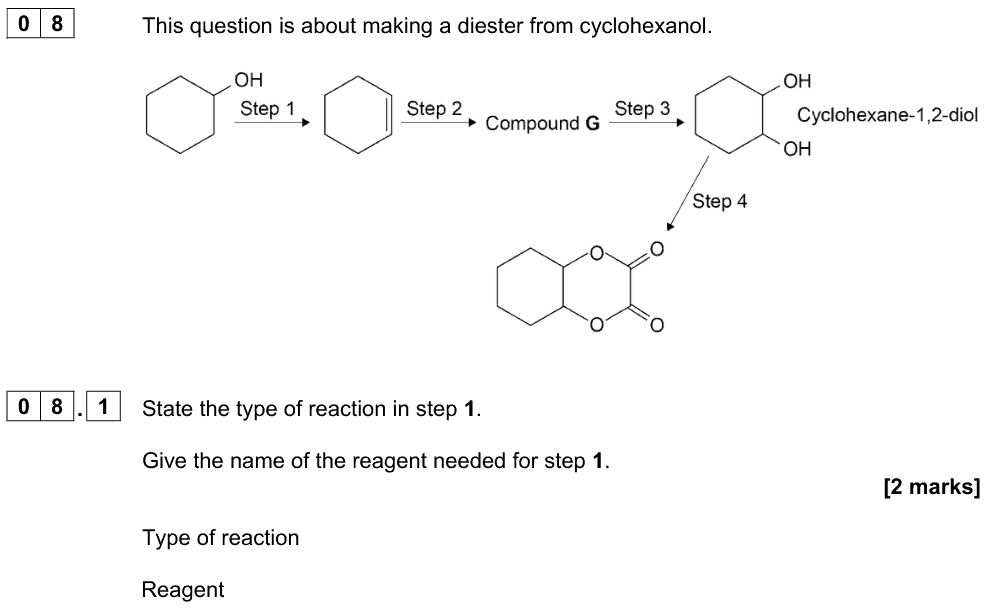
08.1 Alcohols 2Short answer
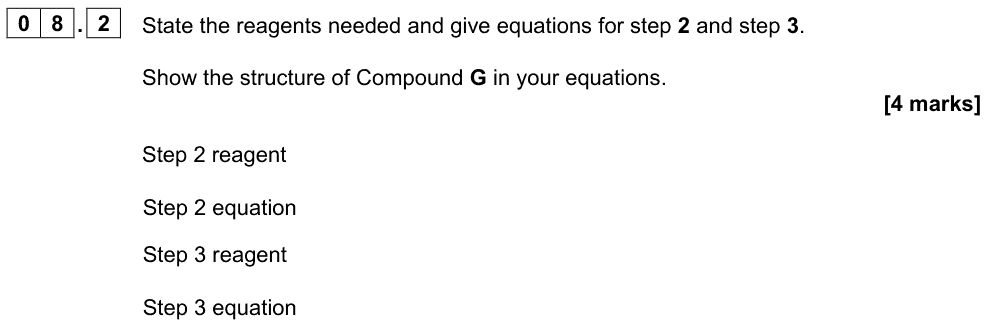
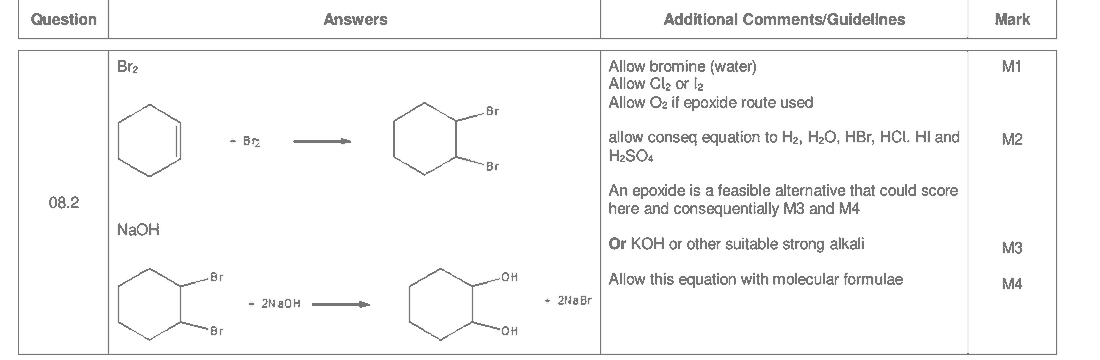
08.2 Organic synthesis, Alkenes, Halogenoalkanes 4Equation writing
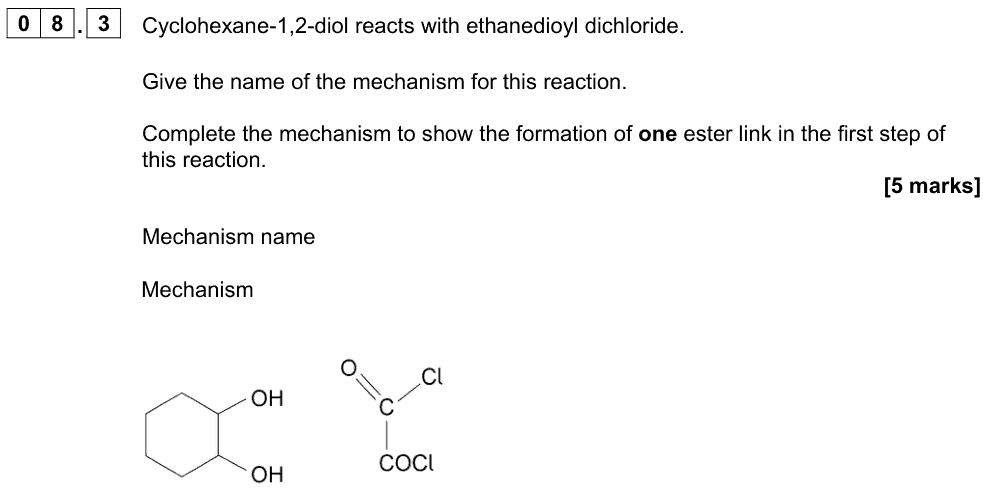
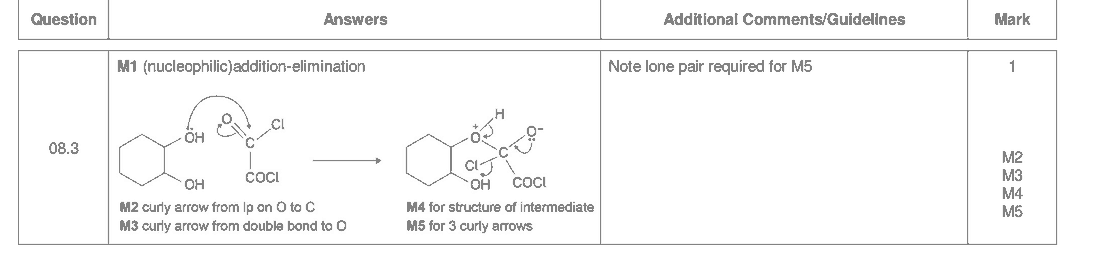
08.3 Carboxylic acids and derivatives 5Mechanism
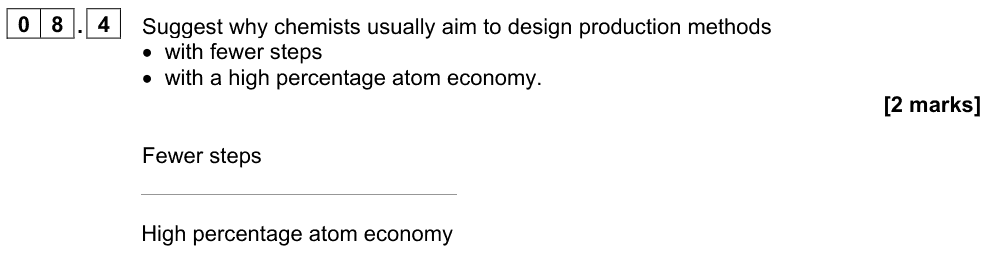
08.4 Organic synthesis, Amount of substance 2Short answer
09.1 Halogenoalkanes 1Short answer
09.2 Halogenoalkanes 1Short answer
09.3 Halogenoalkanes 2Equation writing
09.4 Introduction to organic chemistry: nomenclature, mechanisms and isomerism, Alkanes 3Equation writing
10.1 Rate equations 2Practical and data analysis
10.2 Rate equations 2Practical and data analysis
10.3 Rate equations 3Practical and data analysis
10.4 Rate equations 2Explanation
10.5 Rate equations 3Calculation

The questions

01.101.201.301.402.102.202.302.402.502.603.103.203.303.404.104.204.305.105.205.306.106.206.306.407.107.207.308.108.208.308.409.109.209.309.410.110.210.310.410.5
November 2021 · Paper 2 · Q01.1 3 marks Short answer carboxylic acids and derivatives
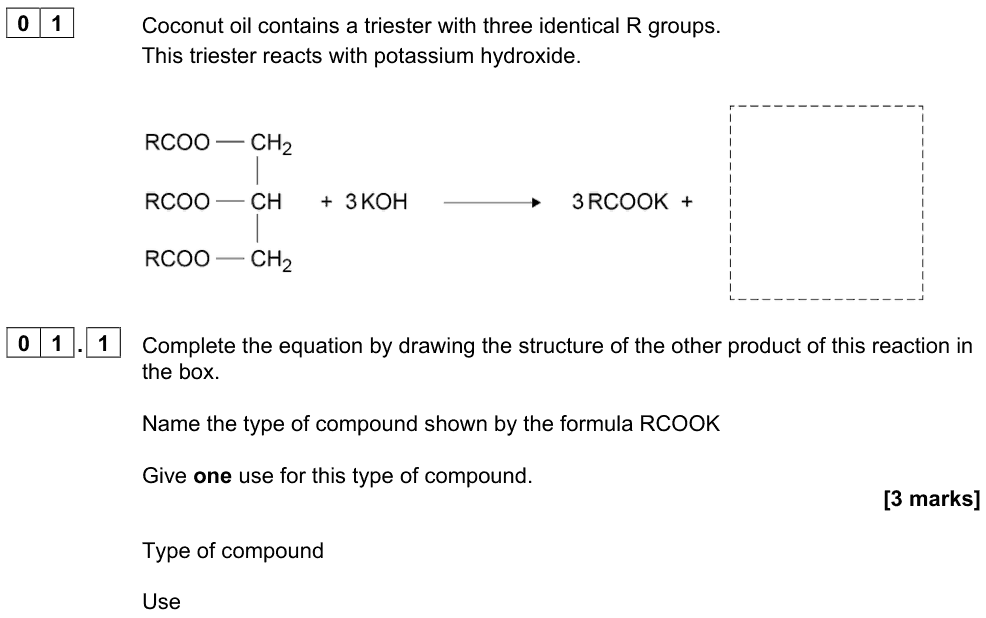
Coconut oil contains a triester with three identical R groups.
This triester reacts with potassium hydroxide.
Complete the equation by drawing the structure of the other product of this reaction in
the box.
Name the type of compound shown by the formula RCOOK
Give one use for this type of compound.
[3 marks]
Type of compound
Use
November 2021 · Paper 2 · Q01.2 3 marks Calculation carboxylic acids and derivativesintroduction to organic chemistry
Earlier part of question 01 that this part usesEarlier part of November 2021 Paper 2 question 01
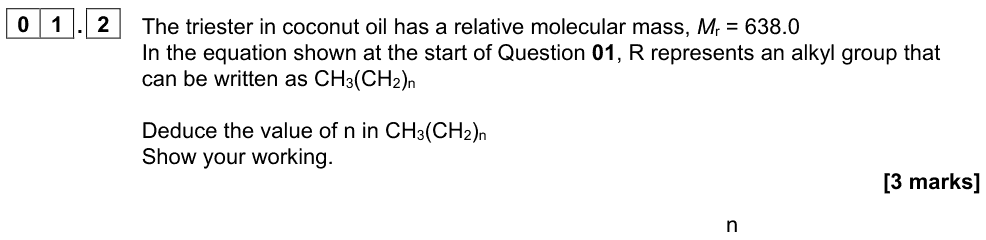
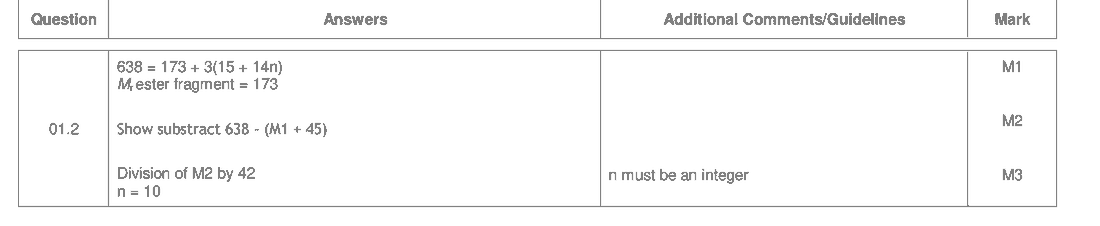
The triester in coconut oil has a relative molecular mass, Mr = 638.0
In the equation shown at the start of Question 01, R represents an alkyl group that
can be written as CH3(CH2)n
Deduce the value of n in CH3(CH2)n
Show your working.
[3 marks]
n
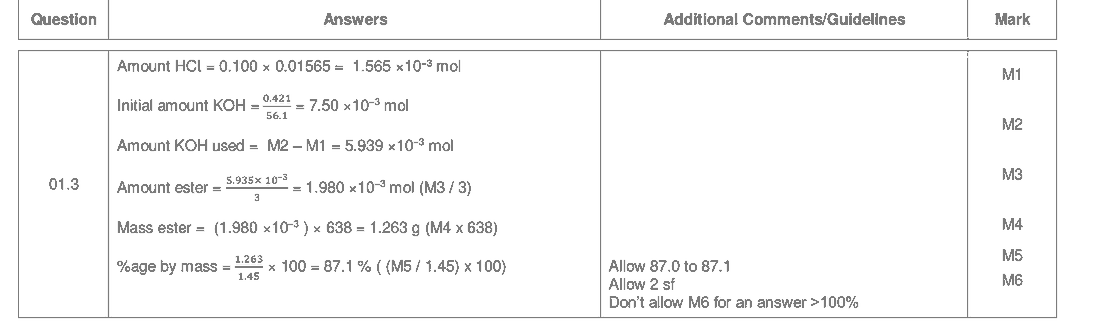
November 2021 · Paper 2 · Q01.3 6 marks Calculation Hard amount of substance
Earlier part of question 01 that this part usesEarlier part of November 2021 Paper 2 question 01
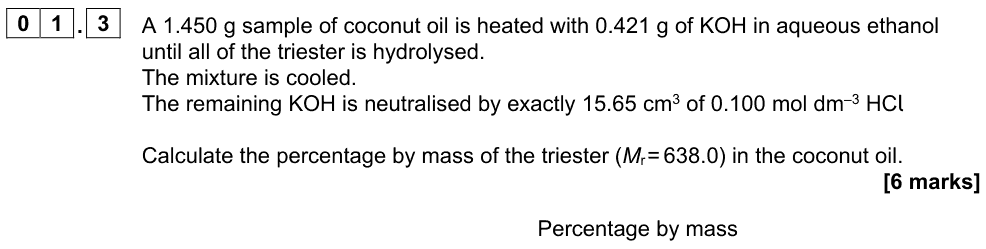
A 1.450 g sample of coconut oil is heated with 0.421 g of KOH in aqueous ethanol
until all of the triester is hydrolysed.
The mixture is cooled.
The remaining KOH is neutralised by exactly 15.65 cm3 of 0.100 mol dm–3 HCl
Calculate the percentage by mass of the triester (Mr = 638.0) in the coconut oil.
[6 marks]
Percentage by mass
November 2021 · Paper 2 · Q01.4 3 marks Practical and data analysis carboxylic acids and derivatives
Earlier part of question 01 that this part usesEarlier part of November 2021 Paper 2 question 01
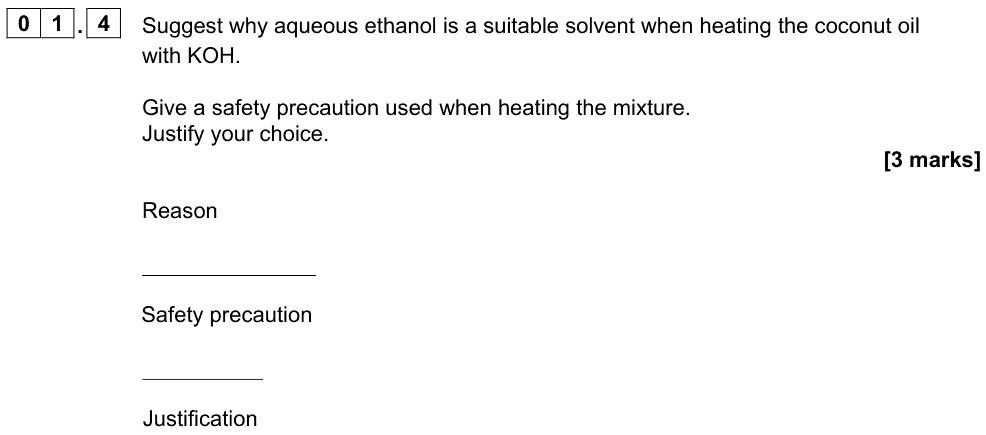
Suggest why aqueous ethanol is a suitable solvent when heating the coconut oil
with KOH.
Give a safety precaution used when heating the mixture.
Justify your choice.
[3 marks]
Reason
Safety precaution
Justification
November 2021 · Paper 2 · Q02.1 1 mark Short answer alkanes
This question is about fuels.
The petrol fraction obtained from crude oil can be used as fuel in cars.
State the meaning of fraction, as used in the term petrol fraction.
[1 mark]
November 2021 · Paper 2 · Q02.2 3 marks Equation writing alkanesamount of substance
Earlier part of question 02 that this part usesEarlier part of November 2021 Paper 2 question 02
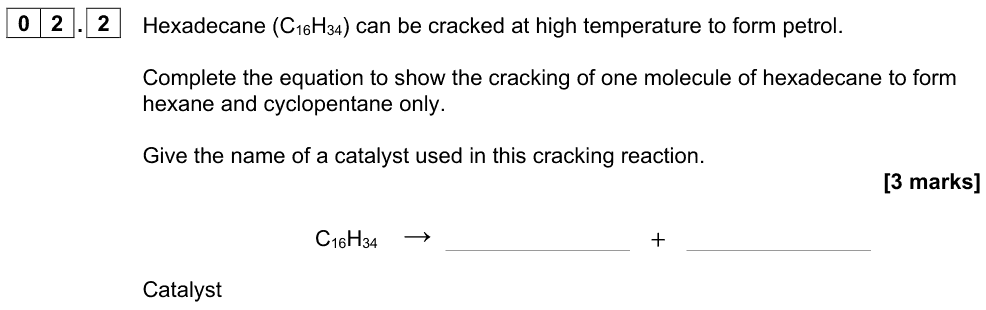
Hexadecane (C16H34) can be cracked at high temperature to form petrol.
Complete the equation to show the cracking of one molecule of hexadecane to form
hexane and cyclopentane only.
Give the name of a catalyst used in this cracking reaction.
[3 marks]
C16H34 →
+
Catalyst
November 2021 · Paper 2 · Q02.3 1 mark Short answer organic analysis
Earlier part of question 02 that this part usesEarlier part of November 2021 Paper 2 question 02
Carbon dioxide is formed when petrol is burned.
Carbon dioxide acts as a greenhouse gas when it absorbs infrared radiation.
Give a reason why carbon dioxide absorbs infrared radiation.
[1 mark]
November 2021 · Paper 2 · Q02.4 4 marks Mechanism introduction to organic chemistryamines
Earlier part of question 02 that this part usesEarlier part of November 2021 Paper 2 question 02
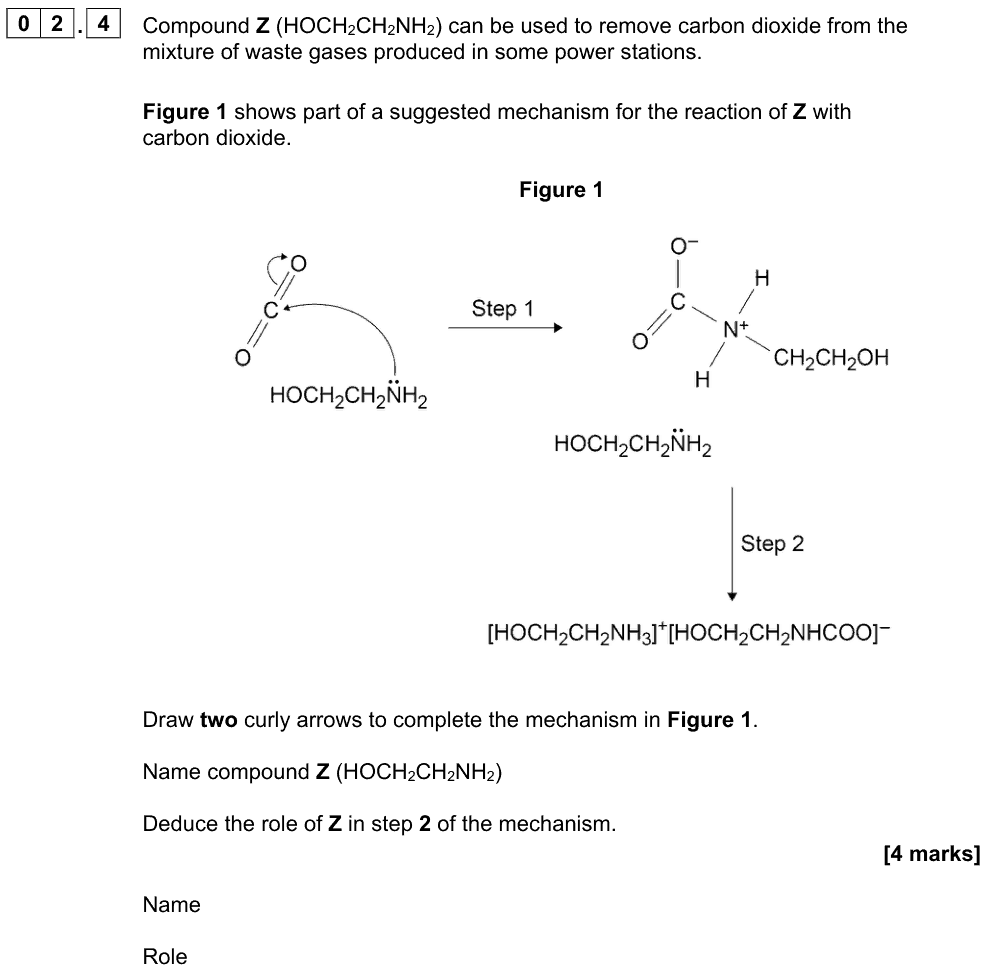
Compound Z (HOCH2CH2NH2) can be used to remove carbon dioxide from the
mixture of waste gases produced in some power stations.
Figure 1 shows part of a suggested mechanism for the reaction of Z with
carbon dioxide.
Figure 1
Draw two curly arrows to complete the mechanism in Figure 1.
Name compound Z (HOCH2CH2NH2)
Deduce the role of Z in step 2 of the mechanism.
[4 marks]
Name
Role
November 2021 · Paper 2 · Q02.5 4 marks Diagram or structure bonding
Earlier part of question 02 that this part usesEarlier part of November 2021 Paper 2 question 02
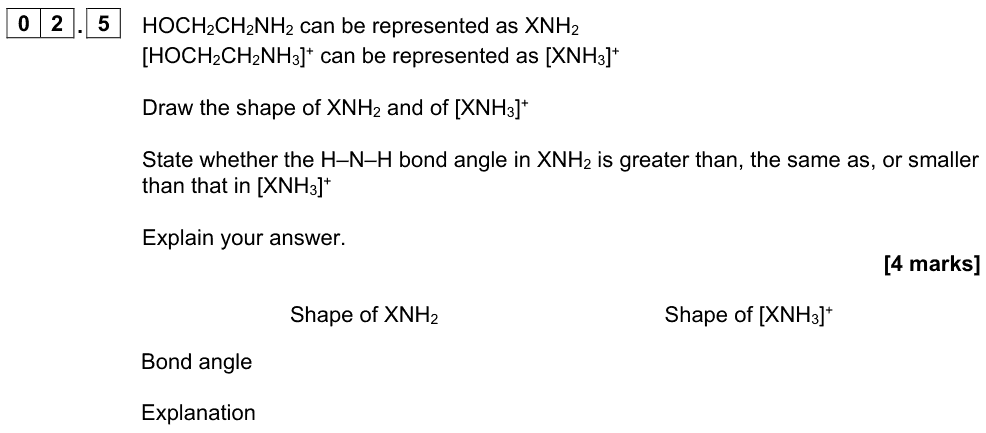
HOCH2CH2NH2 can be represented as XNH2
[HOCH2CH2NH3]+ can be represented as [XNH3]+
Draw the shape of XNH2 and of [XNH3]+
State whether the H–N–H bond angle in XNH2 is greater than, the same as, or smaller
than that in [XNH3]+
Explain your answer.
[4 marks]
Shape of XNH2                                     Shape of [XNH3]+
Bond angle
Explanation
November 2021 · Paper 2 · Q02.6 6 marks 6-mark level of response alcohols
Earlier part of question 02 that this part usesEarlier part of November 2021 Paper 2 question 02
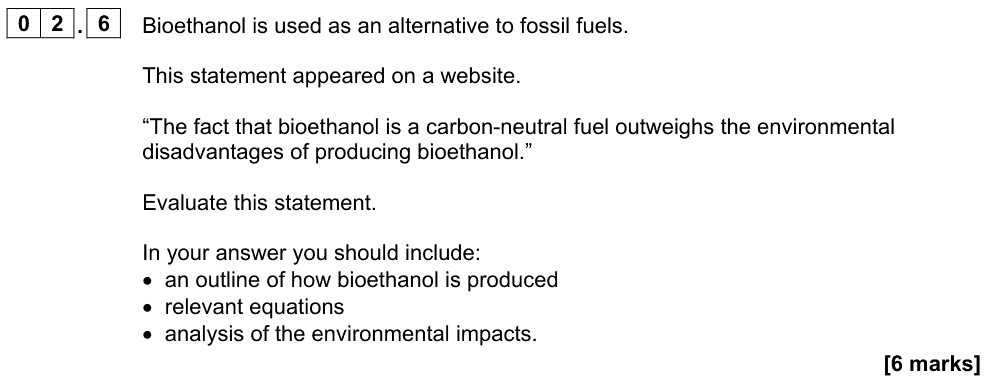
Bioethanol is used as an alternative to fossil fuels.
This statement appeared on a website.
“The fact that bioethanol is a carbon-neutral fuel outweighs the environmental
disadvantages of producing bioethanol.”
Evaluate this statement.
In your answer you should include:
• an outline of how bioethanol is produced
• relevant equations
• analysis of the environmental impacts.
[6 marks]
November 2021 · Paper 2 · Q03.1 2 marks Practical and data analysis energetics
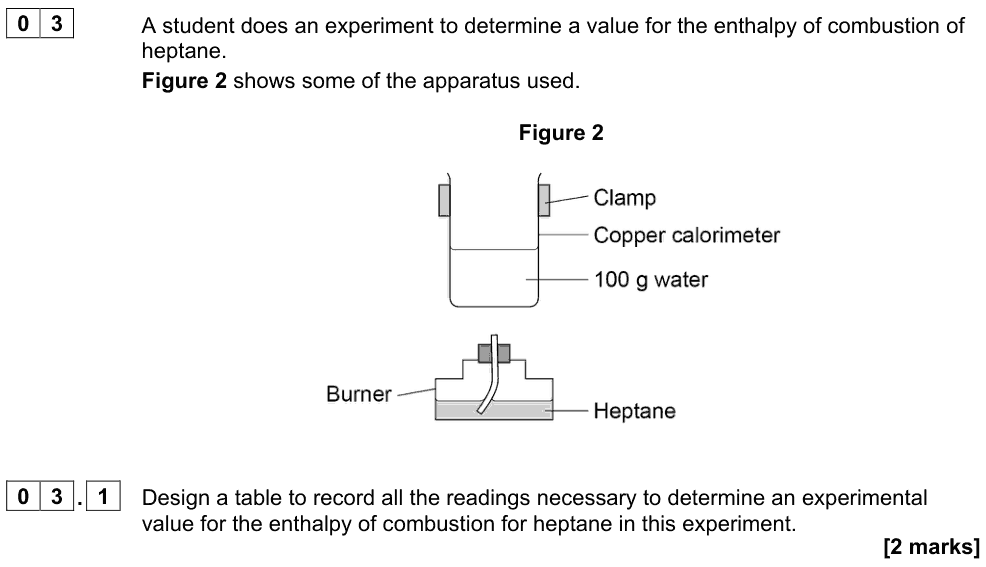
A student does an experiment to determine a value for the enthalpy of combustion of
heptane.
Figure 2 shows some of the apparatus used.
Figure 2
Design a table to record all the readings necessary to determine an experimental
value for the enthalpy of combustion for heptane in this experiment.
[2 marks]
November 2021 · Paper 2 · Q03.2 2 marks Practical and data analysis energetics
Earlier part of question 03 that this part usesEarlier part of November 2021 Paper 2 question 03
The student considered using a glass beaker on a tripod and gauze instead of the
clamped copper calorimeter.
Suggest two disadvantages of using a glass beaker on a tripod and gauze.
[2 marks]
Disadvantage 1
Disadvantage 2
November 2021 · Paper 2 · Q03.3 2 marks Practical and data analysis energetics
Earlier part of question 03 that this part usesEarlier part of November 2021 Paper 2 question 03
Suggest two reasons why the value of enthalpy of combustion from this experiment is
less exothermic than a data book value.
[2 marks]
Reason 1
Reason 2
November 2021 · Paper 2 · Q03.4 1 mark Practical and data analysis energetics
Earlier part of question 03 that this part usesEarlier part of November 2021 Paper 2 question 03
Suggest one addition to this apparatus that would improve the accuracy of the
enthalpy value obtained.
[1 mark]
November 2021 · Paper 2 · Q04.1 3 marks Calculation Hard energeticsaromatic chemistry
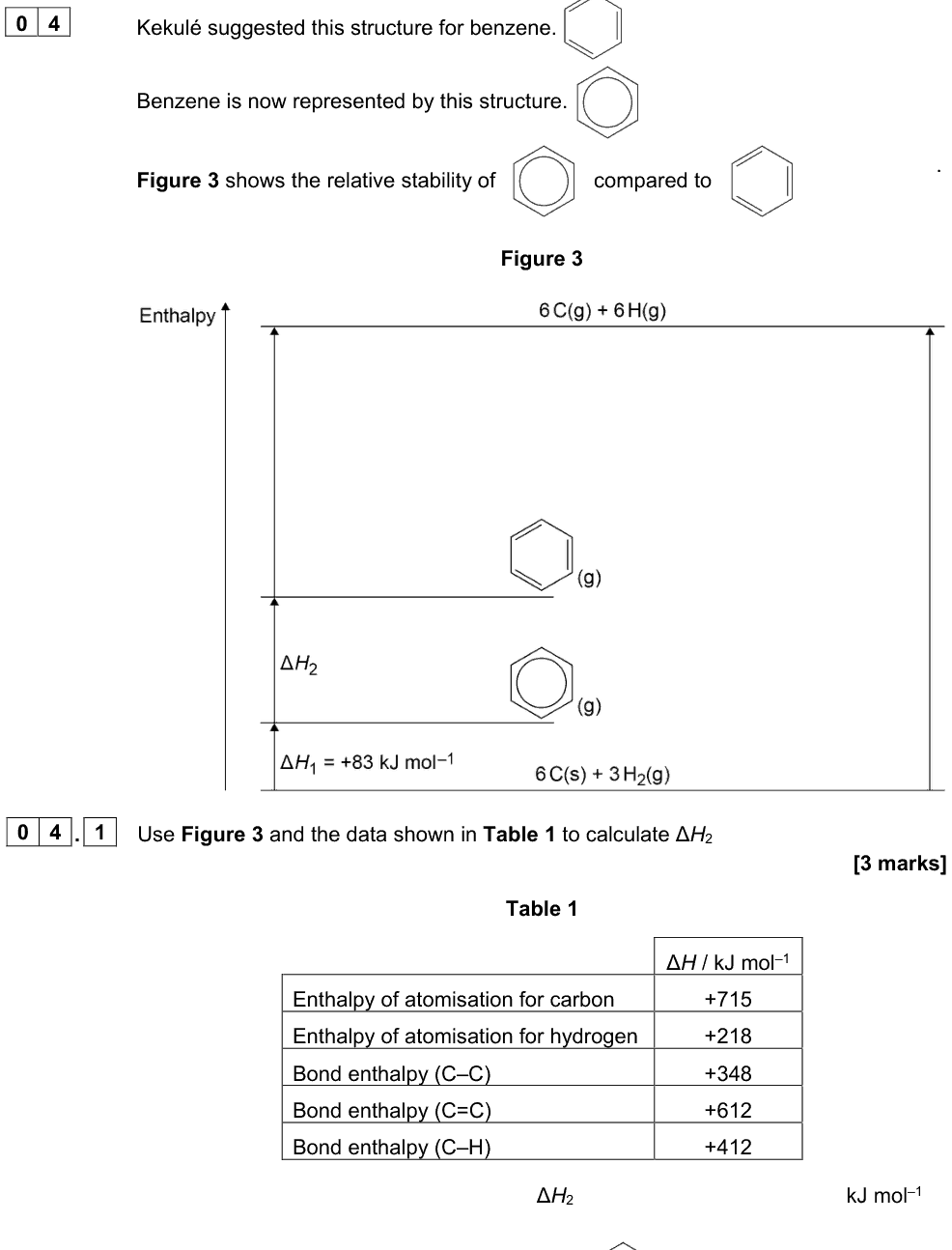
Kekulé suggested this structure for benzene.
Benzene is now represented by this structure.
Figure 3 shows the relative stability of
compared to
.
Figure 3
Use Figure 3 and the data shown in Table 1 to calculate ΔH2
[3 marks]
Table 1
ΔH / kJ mol–1
Enthalpy of atomisation for carbon
+715
Enthalpy of atomisation for hydrogen
+218
Bond enthalpy (C–C)
+348
Bond enthalpy (C=C)
+612
Bond enthalpy (C–H)
+412
ΔH2
kJ mol–1
November 2021 · Paper 2 · Q04.2 1 mark Short answer aromatic chemistry
Earlier part of question 04 that this part usesEarlier part of November 2021 Paper 2 question 04
Explain, in terms of structure and bonding, why
is more thermodynamically stable than
[1 mark]
November 2021 · Paper 2 · Q04.3 5 marks Mechanism aromatic chemistryintroduction to organic chemistry
Earlier part of question 04 that this part usesEarlier part of November 2021 Paper 2 question 04
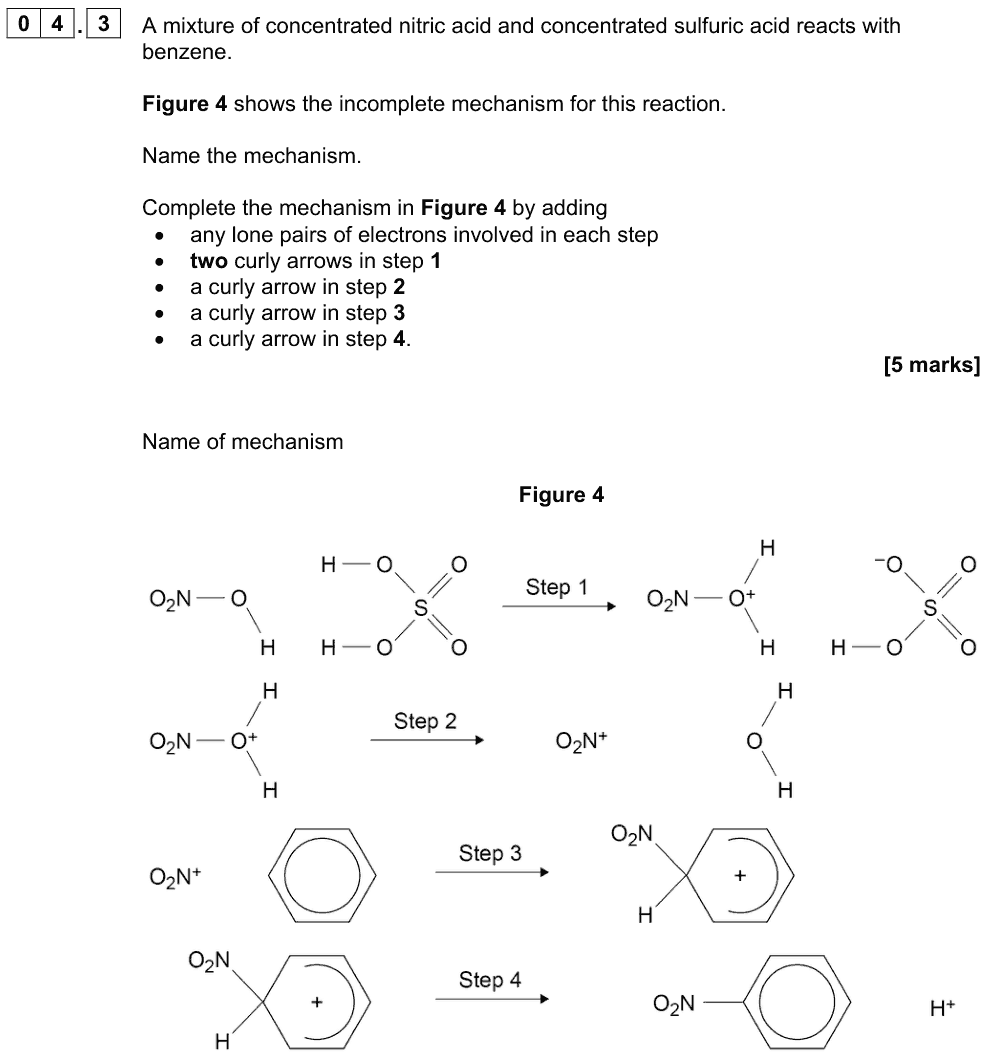
A mixture of concentrated nitric acid and concentrated sulfuric acid reacts with
benzene.
Figure 4 shows the incomplete mechanism for this reaction.
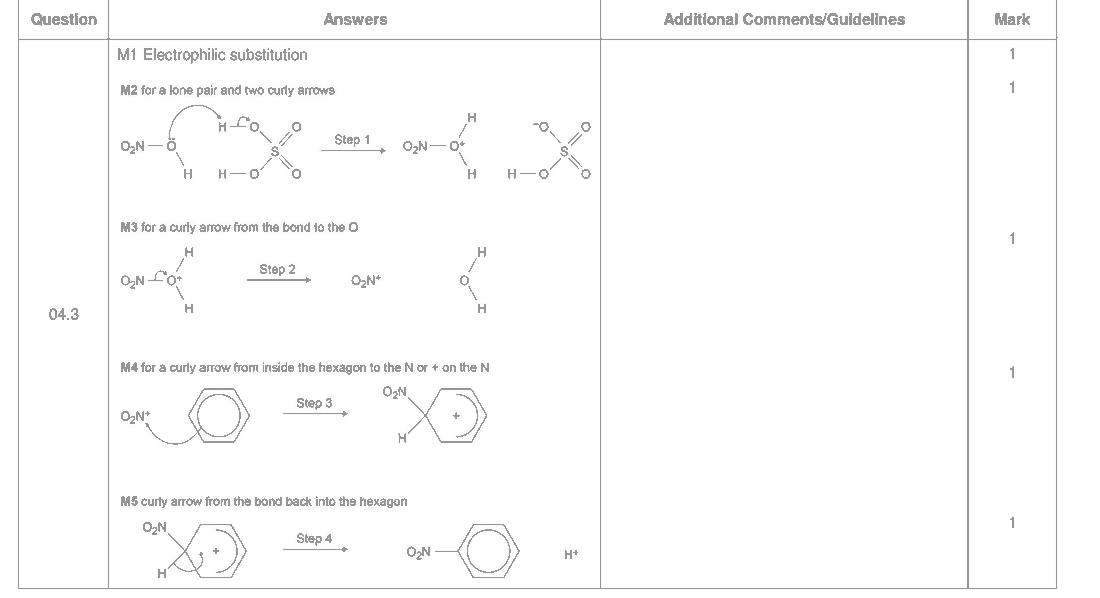
Name the mechanism.
Complete the mechanism in Figure 4 by adding
•
any lone pairs of electrons involved in each step
•
two curly arrows in step 1
•
a curly arrow in step 2
•
a curly arrow in step 3
•
a curly arrow in step 4.
[5 marks]
Name of mechanism
Figure 4
November 2021 · Paper 2 · Q05.1 3 marks Short answer chemical equilibria and kc
This question is about equilibrium.
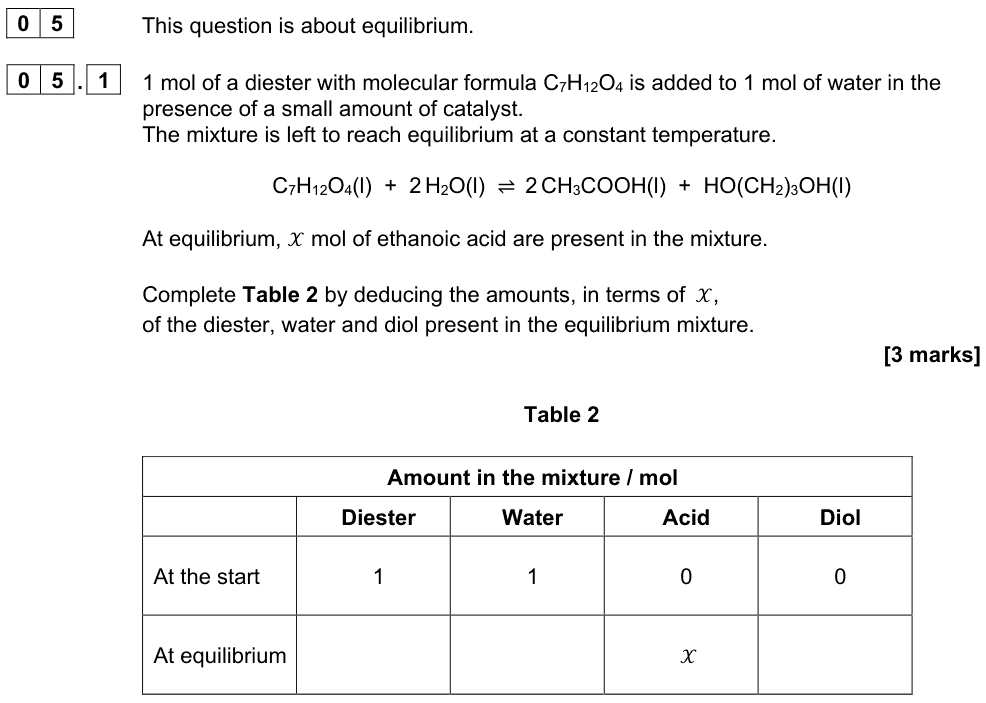
1 mol of a diester with molecular formula C7H12O4 is added to 1 mol of water in the
presence of a small amount of catalyst.
The mixture is left to reach equilibrium at a constant temperature.
C7H12O4(l)  +  2 H2O(l)  ⇌  2 CH3COOH(l)  +  HO(CH2)3OH(l)
At equilibrium, 𝒳𝒳 mol of ethanoic acid are present in the mixture.
Complete Table 2 by deducing the amounts, in terms of  𝒳𝒳,
of the diester, water and diol present in the equilibrium mixture.
[3 marks]
Table 2
Amount in the mixture / mol
Diester
Water
Acid
Diol
At the start
1
1
0
0
At equilibrium
𝒳𝒳
November 2021 · Paper 2 · Q05.2 1 mark Diagram or structure carboxylic acids and derivatives
Earlier part of question 05 that this part usesEarlier part of November 2021 Paper 2 question 05
Deduce the structure of the diester in Question 05.1
[1 mark]
November 2021 · Paper 2 · Q05.3 3 marks Calculation Easy chemical equilibria and kc
Earlier part of question 05 that this part usesEarlier part of November 2021 Paper 2 question 05
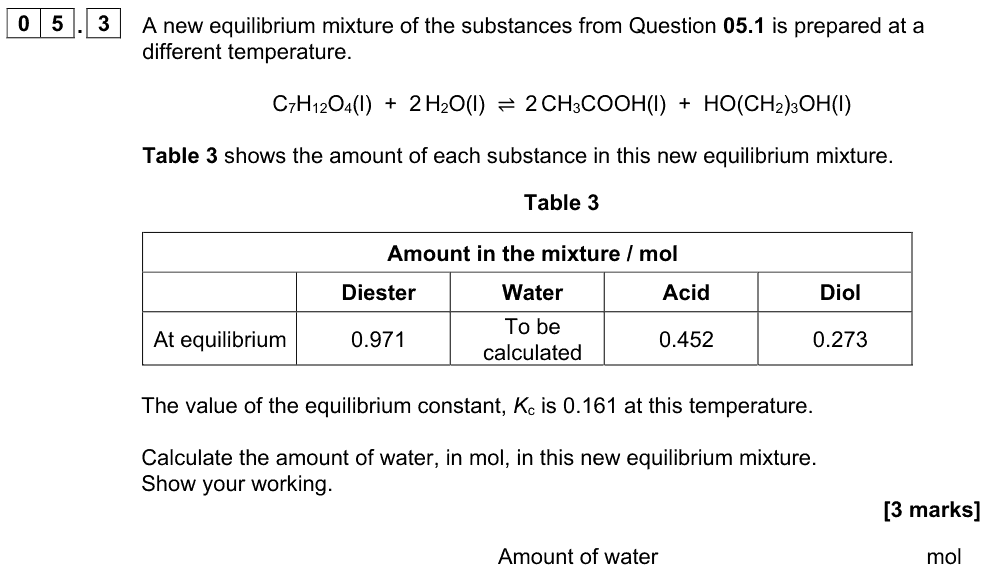
A new equilibrium mixture of the substances from Question 05.1 is prepared at a
different temperature.
C7H12O4(l)  +  2 H2O(l)  ⇌  2 CH3COOH(l)  +  HO(CH2)3OH(l)
Table 3 shows the amount of each substance in this new equilibrium mixture.
Table 3
Amount in the mixture / mol
Diester
Water
Acid
Diol
At equilibrium
0.971
To be
calculated
0.452
0.273
The value of the equilibrium constant, Kc is 0.161 at this temperature.
Calculate the amount of water, in mol, in this new equilibrium mixture.
Show your working.
[3 marks]
Amount of water
mol
November 2021 · Paper 2 · Q06.1 1 mark Diagram or structure optical isomerismintroduction to organic chemistry
This question is about isomers with the molecular formula C5H10O
Draw the skeletal formula of a branched chain aldehyde with molecular formula
C5H10O that is optically active.
[1 mark]
November 2021 · Paper 2 · Q06.2 2 marks Short answer optical isomerism
Earlier part of question 06 that this part usesEarlier part of November 2021 Paper 2 question 06
Describe how you distinguish between separate samples of the two enantiomers of
the branched chain aldehyde C5H10O
[2 marks]
November 2021 · Paper 2 · Q06.3 2 marks Diagram or structure Hard introduction to organic chemistryoptical isomerism
Earlier part of question 06 that this part usesEarlier part of November 2021 Paper 2 question 06
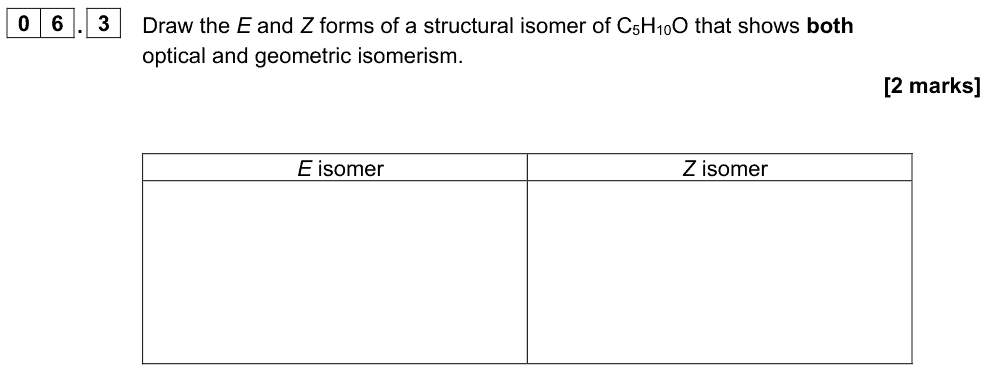
Draw the E and Z forms of a structural isomer of C5H10O that shows both
optical and geometric isomerism.
[2 marks]
E isomer
Z isomer
November 2021 · Paper 2 · Q06.4 2 marks Diagram or structure nmr spectroscopyintroduction to organic chemistry
Earlier part of question 06 that this part usesEarlier part of November 2021 Paper 2 question 06
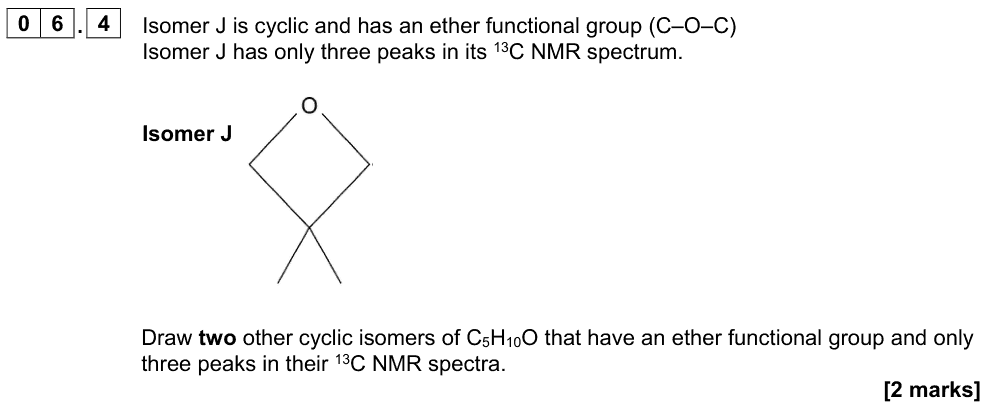
Isomer J is cyclic and has an ether functional group (C–O–C)
Isomer J has only three peaks in its 13C NMR spectrum.
Isomer J
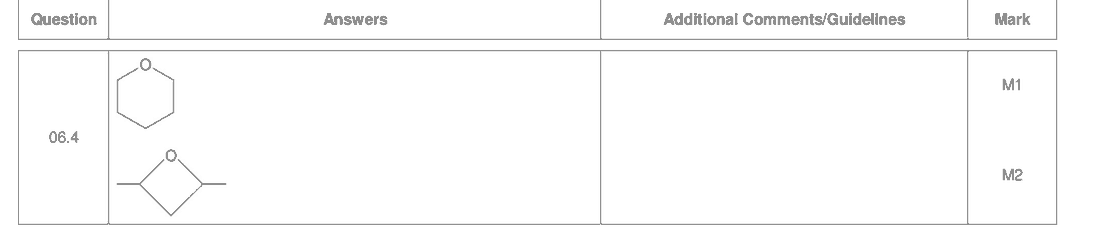
Draw two other cyclic isomers of C5H10O that have an ether functional group and only
three peaks in their 13C NMR spectra.
[2 marks]
November 2021 · Paper 2 · Q07.1 1 mark Short answer Easy organic analysis
This question is about spectroscopy.
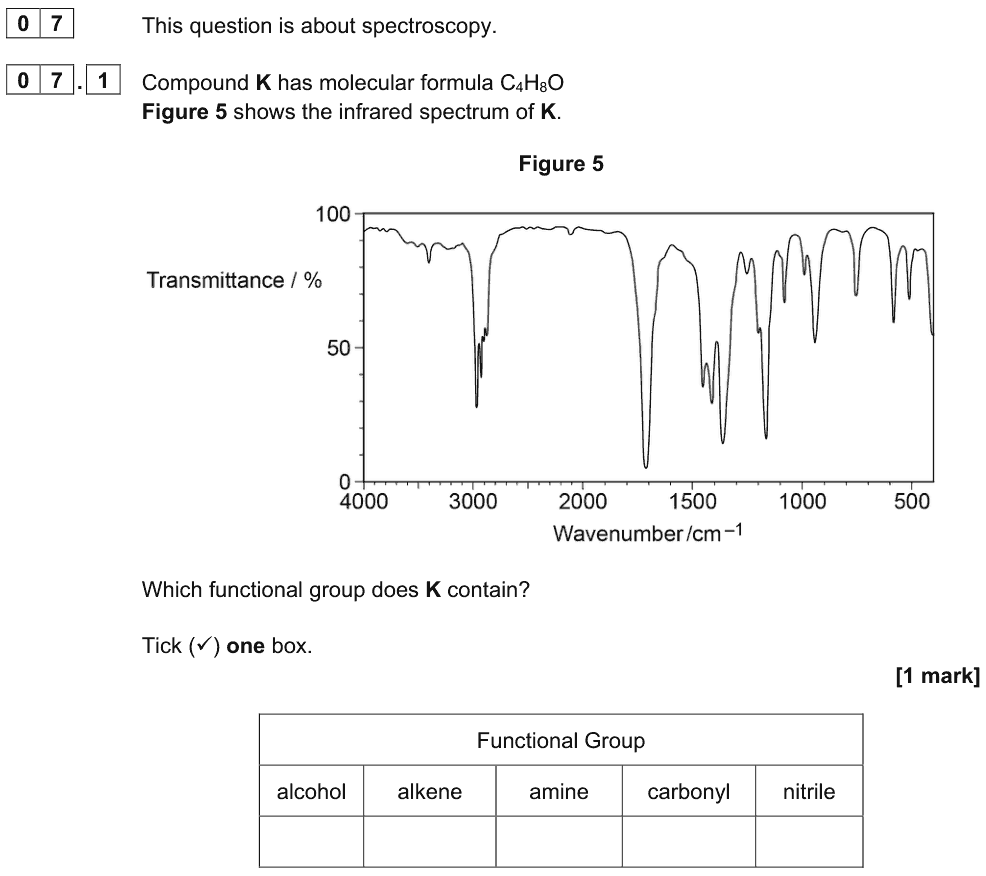
Compound K has molecular formula C4H8O
Figure 5 shows the infrared spectrum of K.
Figure 5
Which functional group does K contain?
Tick () one box.
[1 mark]
Functional Group
alcohol
alkene
amine
carbonyl
nitrile
November 2021 · Paper 2 · Q07.2 3 marks Short answer organic analysisamines
Earlier part of question 07 that this part usesEarlier part of November 2021 Paper 2 question 07
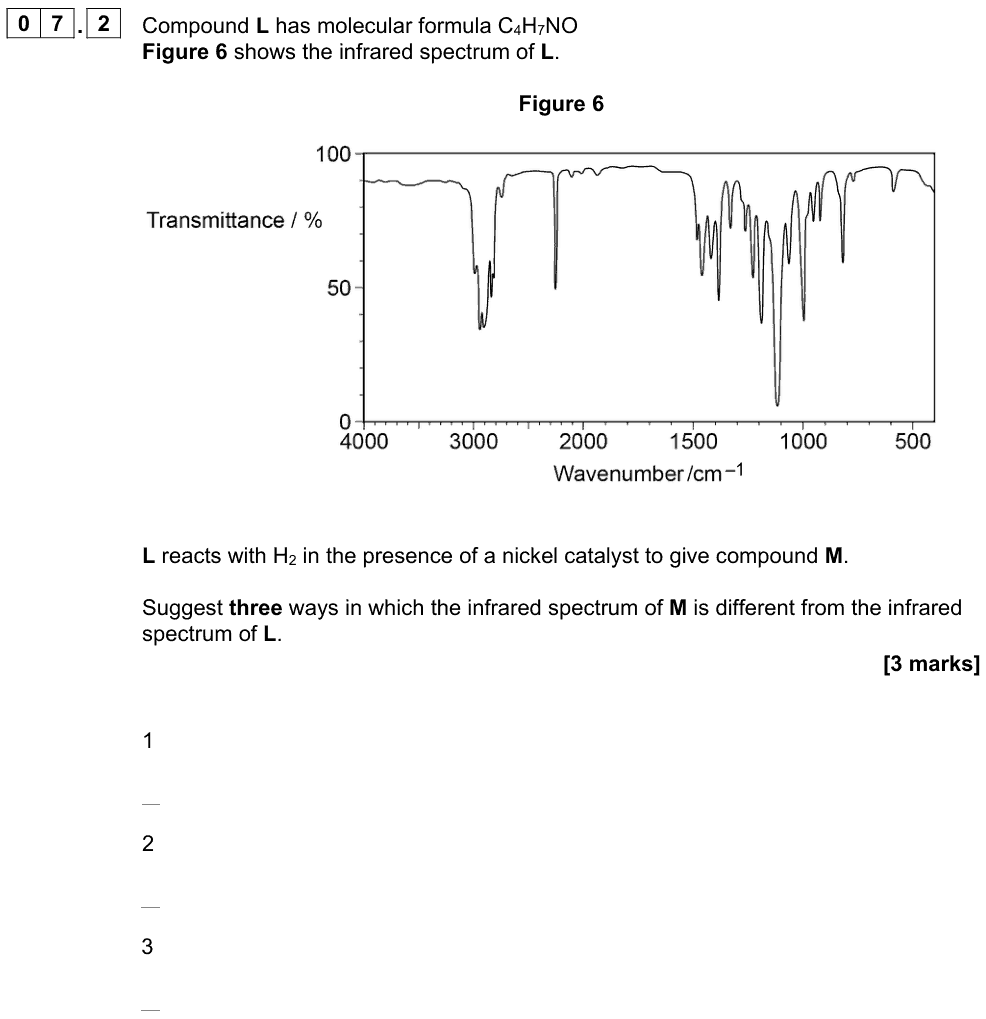
Compound L has molecular formula C4H7NO
Figure 6 shows the infrared spectrum of L.
Figure 6
L reacts with H2 in the presence of a nickel catalyst to give compound M.
Suggest three ways in which the infrared spectrum of M is different from the infrared
spectrum of L.
[3 marks]
1
2
3
November 2021 · Paper 2 · Q07.3 5 marks Explanation Hard nmr spectroscopy
Earlier part of question 07 that this part usesEarlier part of November 2021 Paper 2 question 07
Figure 7 shows the 1H NMR spectrum of Q, C3H7ClO
Figure 7
Table 4 shows the chemical shifts (δ values) and integration values for each peak.
Table 4
δ value / ppm
3.95
3.65
3.35
Integration value
0.6
0.6
0.9
Deduce the structure of Q.
Explain your answer.
[5 marks]
November 2021 · Paper 2 · Q08.1 2 marks Short answer alcohols
This question is about making a diester from cyclohexanol.
State the type of reaction in step 1.
Give the name of the reagent needed for step 1.
[2 marks]
Type of reaction
Reagent
November 2021 · Paper 2 · Q08.2 4 marks Equation writing organic synthesisalkeneshalogenoalkanes
Earlier part of question 08 that this part usesEarlier part of November 2021 Paper 2 question 08
State the reagents needed and give equations for step 2 and step 3.
Show the structure of Compound G in your equations.
[4 marks]
Step 2 reagent
Step 2 equation
Step 3 reagent
Step 3 equation
November 2021 · Paper 2 · Q08.3 5 marks Mechanism carboxylic acids and derivatives
Earlier part of question 08 that this part usesEarlier part of November 2021 Paper 2 question 08
Cyclohexane-1,2-diol reacts with ethanedioyl dichloride.
Give the name of the mechanism for this reaction.
Complete the mechanism to show the formation of one ester link in the first step of
this reaction.
[5 marks]
Mechanism name
Mechanism
November 2021 · Paper 2 · Q08.4 2 marks Short answer organic synthesisamount of substance
Earlier part of question 08 that this part usesEarlier part of November 2021 Paper 2 question 08
Suggest why chemists usually aim to design production methods
• with fewer steps
• with a high percentage atom economy.
[2 marks]
Fewer steps
High percentage atom economy
November 2021 · Paper 2 · Q09.1 1 mark Short answer halogenoalkanes
This question is about the ozone layer in the upper atmosphere.
State why the ozone layer is beneficial for living organisms.
[1 mark]
November 2021 · Paper 2 · Q09.2 1 mark Short answer halogenoalkanes
Earlier part of question 09 that this part usesEarlier part of November 2021 Paper 2 question 09
State how chlorofluorocarbons (CFCs) form chlorine atoms in the
upper atmosphere.
[1 mark]
November 2021 · Paper 2 · Q09.3 2 marks Equation writing halogenoalkanes
Earlier part of question 09 that this part usesEarlier part of November 2021 Paper 2 question 09
Give equations to show how chlorine atoms catalyse the decomposition of ozone.
[2 marks]
November 2021 · Paper 2 · Q09.4 3 marks Equation writing introduction to organic chemistryalkanes
Earlier part of question 09 that this part usesEarlier part of November 2021 Paper 2 question 09
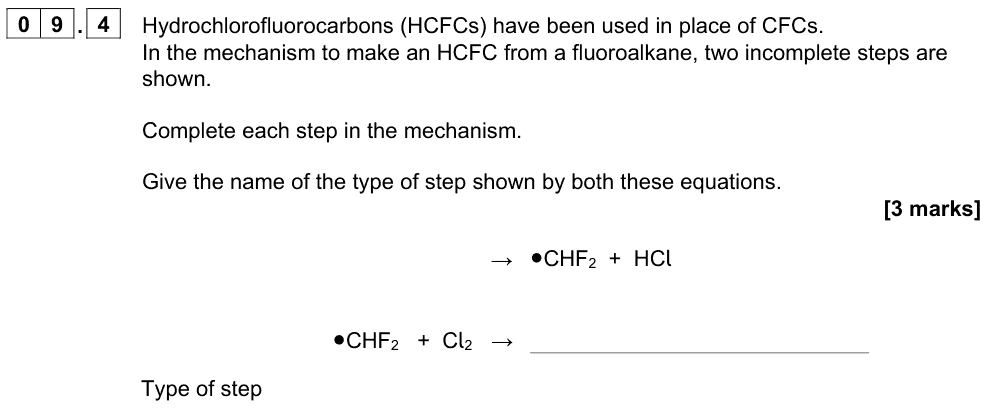
Hydrochlorofluorocarbons (HCFCs) have been used in place of CFCs.
In the mechanism to make an HCFC from a fluoroalkane, two incomplete steps are
shown.
Complete each step in the mechanism.
Give the name of the type of step shown by both these equations.
[3 marks]
→  ●CHF2  +  HCl
●CHF2   +  Cl2 →
Type of step
November 2021 · Paper 2 · Q10.1 2 marks Practical and data analysis rate equations
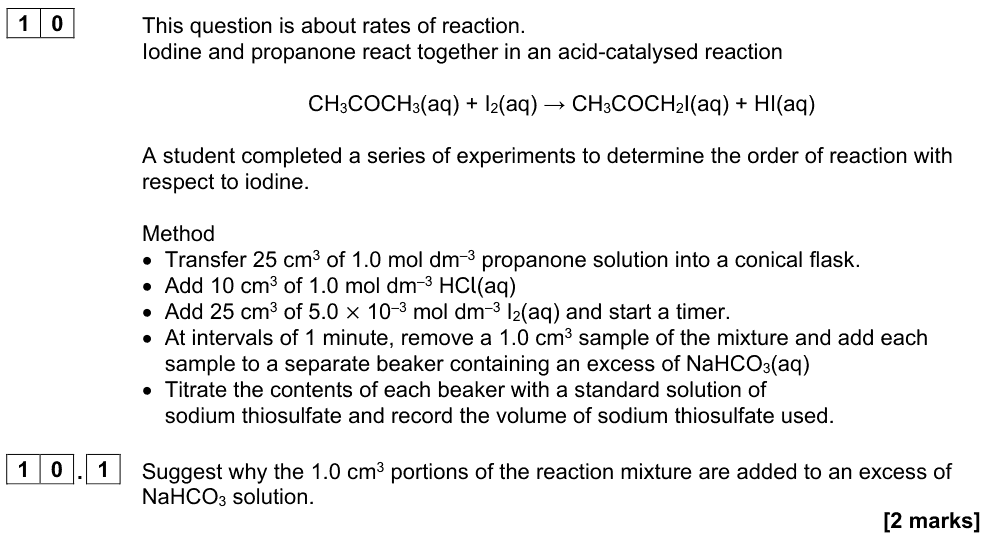
This question is about rates of reaction.
Iodine and propanone react together in an acid-catalysed reaction
CH3COCH3(aq) + I2(aq) → CH3COCH2I(aq) + HI(aq)
A student completed a series of experiments to determine the order of reaction with
respect to iodine.
Method
• Transfer 25 cm3 of 1.0 mol dm–3 propanone solution into a conical flask.
• Add 10 cm3 of 1.0 mol dm–3 HCl(aq)
• Add 25 cm3 of 5.0 × 10⁻³ mol dm–3 I2(aq) and start a timer.
• At intervals of 1 minute, remove a 1.0 cm3 sample of the mixture and add each
sample to a separate beaker containing an excess of NaHCO3(aq)
• Titrate the contents of each beaker with a standard solution of
sodium thiosulfate and record the volume of sodium thiosulfate used.
Suggest why the 1.0 cm3 portions of the reaction mixture are added to an excess of
NaHCO3 solution.
[2 marks]
November 2021 · Paper 2 · Q10.2 2 marks Practical and data analysis rate equations
Earlier part of question 10 that this part usesEarlier part of November 2021 Paper 2 question 10
Suggest why the order of this reaction with respect to propanone can be ignored in
this experiment.
[2 marks]
November 2021 · Paper 2 · Q10.3 3 marks Practical and data analysis rate equations
Earlier part of question 10 that this part usesEarlier part of November 2021 Paper 2 question 10
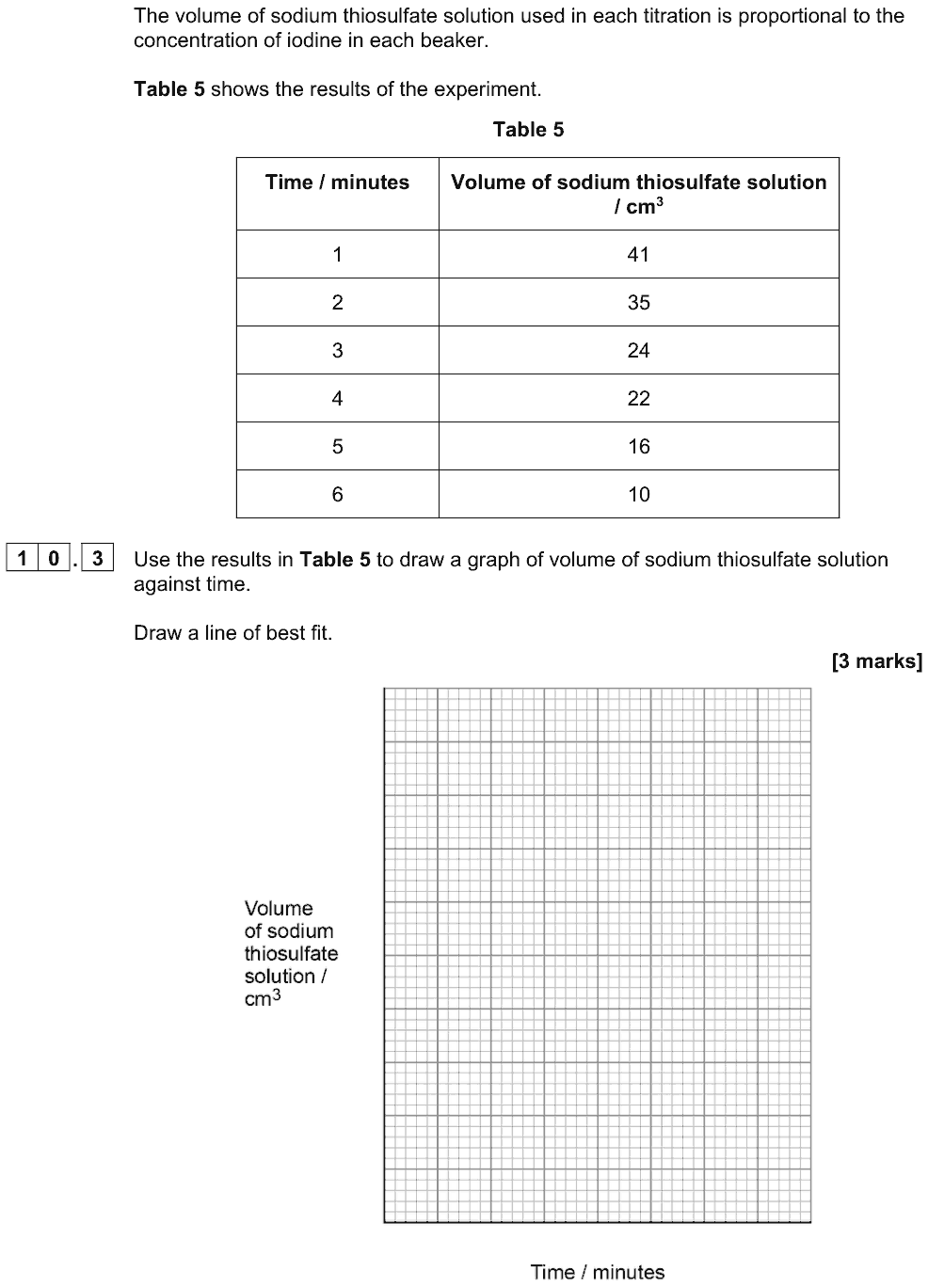
The volume of sodium thiosulfate solution used in each titration is proportional to the
concentration of iodine in each beaker.
Table 5 shows the results of the experiment.
Table 5
Time / minutes
Volume of sodium thiosulfate solution
/ cm3
1
41
2
35
3
24
4
22
5
16
6
10
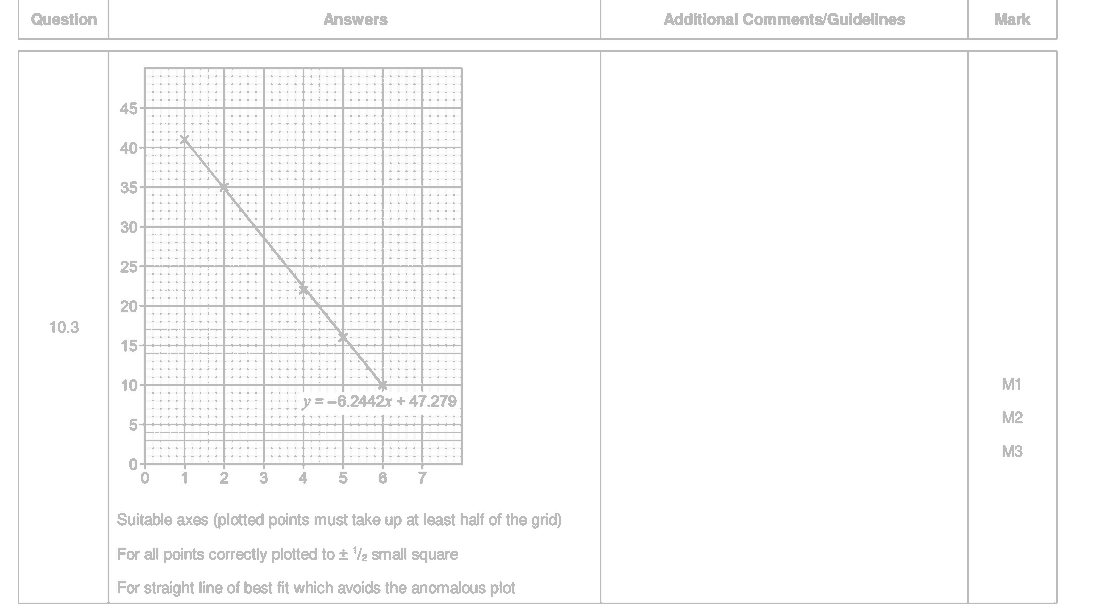
Use the results in Table 5 to draw a graph of volume of sodium thiosulfate solution
against time.
Draw a line of best fit.
[3 marks]
November 2021 · Paper 2 · Q10.4 2 marks Explanation rate equations
Earlier parts of question 10 that this part usesEarlier part of November 2021 Paper 2 question 10Earlier part of November 2021 Paper 2 question 10
Explain how the graph shows that the reaction is zero-order with respect to iodine in
the reaction between propanone and iodine.
[2 marks]
November 2021 · Paper 2 · Q10.5 3 marks Calculation rate equations
Earlier parts of question 10 that this part usesEarlier part of November 2021 Paper 2 question 10Earlier part of November 2021 Paper 2 question 10
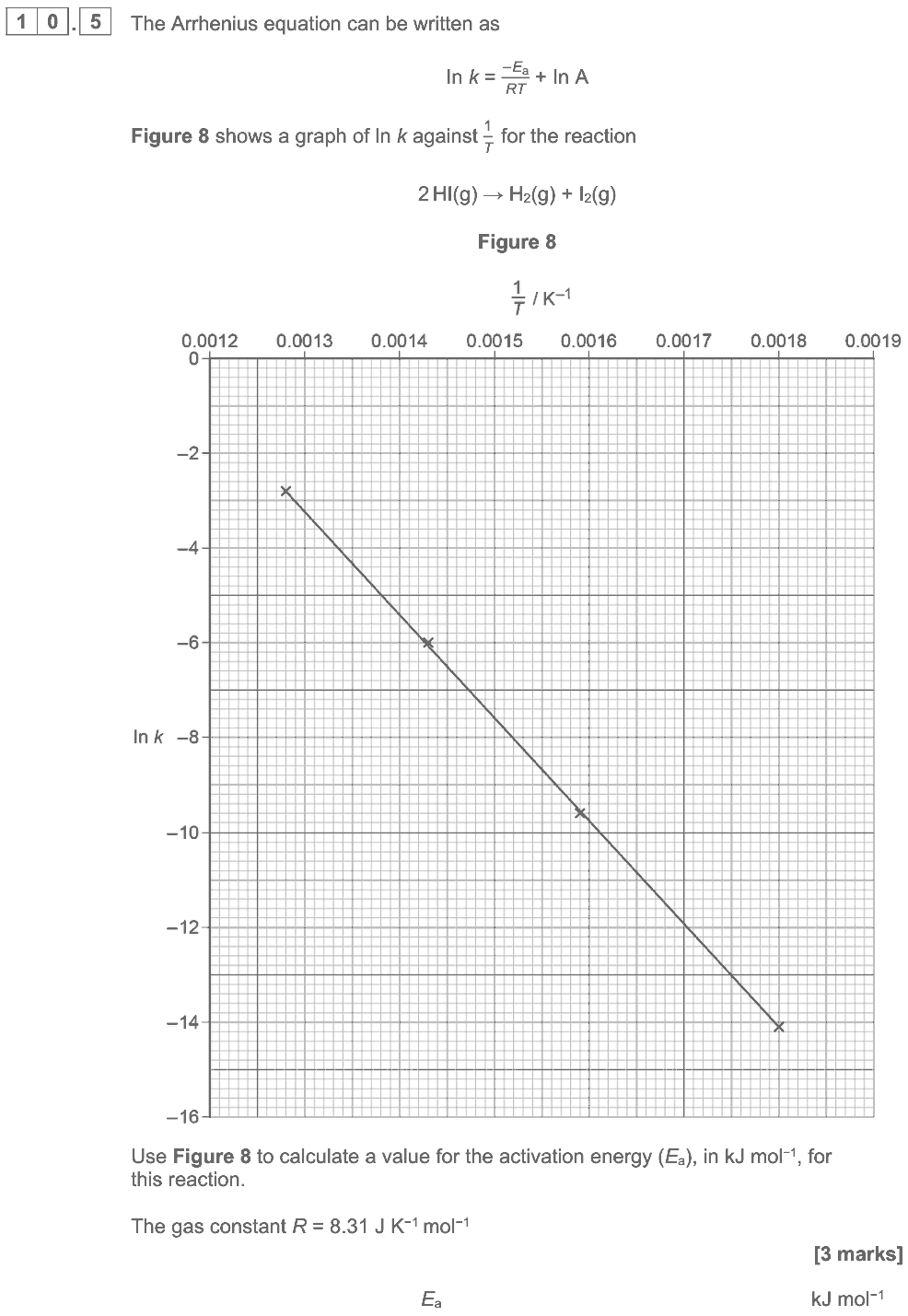
The Arrhenius equation can be written as
In k =
−Ea
RT + In A
Figure 8 shows a graph of ln k against
1
T  for the reaction
2 HI(g) → H2(g) + I2(g)
Figure 8
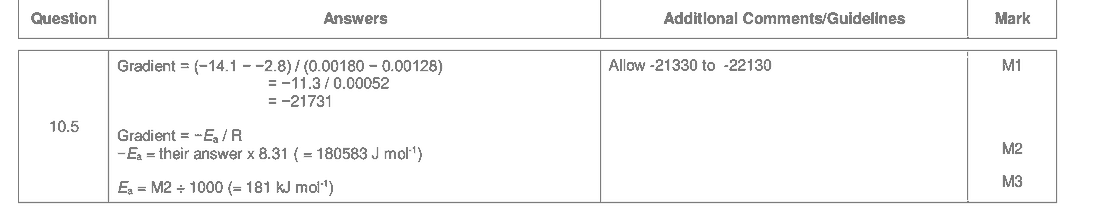
Use Figure 8 to calculate a value for the activation energy (Ea), in kJ mol−1, for
this reaction.
The gas constant R = 8.31 J K−1 mol−1
[3 marks]
Ea
kJ mol−1

Work with an A-level chemistry tutor

Want a paper marked and gone through with you? Message us.

Prefer email? Send an enquiry

If you are under 18, please include a parent's contact details. Enquiries go to enquiries@chemistryaleveltutor.com and are deleted once handled. All tutoring is online.