June 2024: Paper 2, Organic and physical chemistry

105 marks · 40 question parts · Paper, mark scheme and report on AQA's site · Have the Data Booklet beside you

Question by question

QTopicMarksAOType
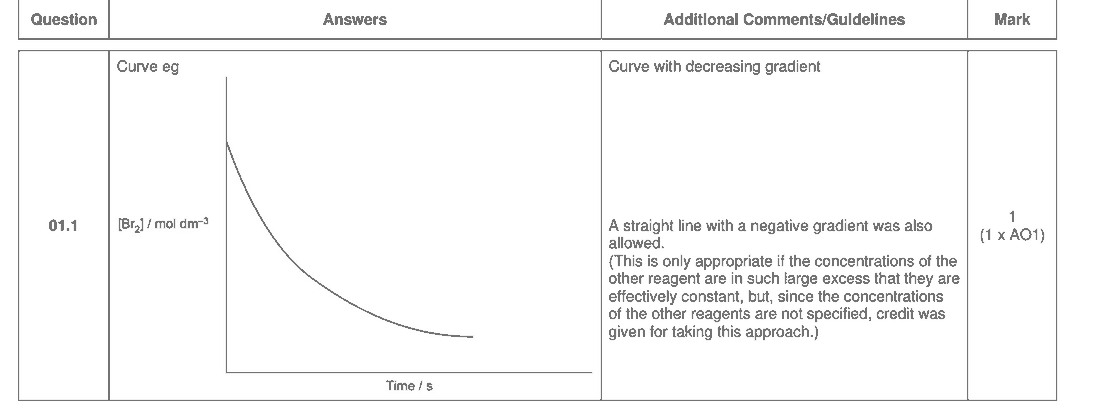
01.1 Rate equations 1AO1=1Diagram or structure
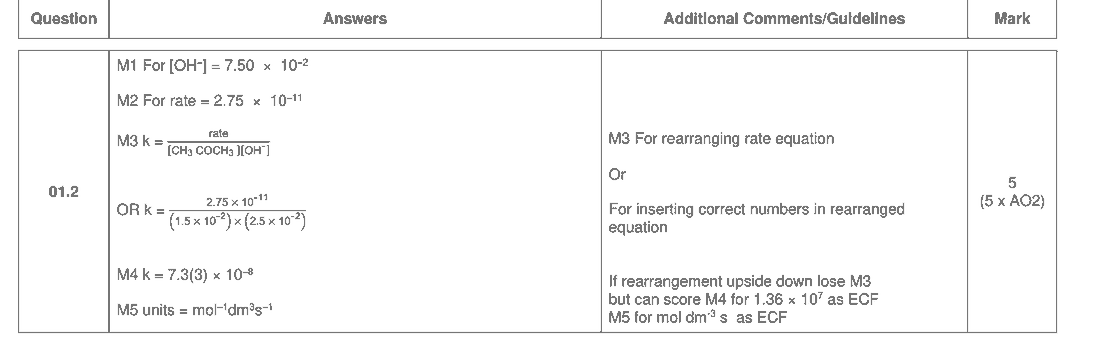
01.2 Rate equations 5AO2=5Calculation
01.3 Introduction to organic chemistry: nomenclature, mechanisms and isomerism 4AO2=4Mechanism
01.4 Rate equations 1AO2=1Short answer
02.1 Chemical equilibria, Le Chatelier's principle and Kc, Amount of substance 2AO2=2Calculation
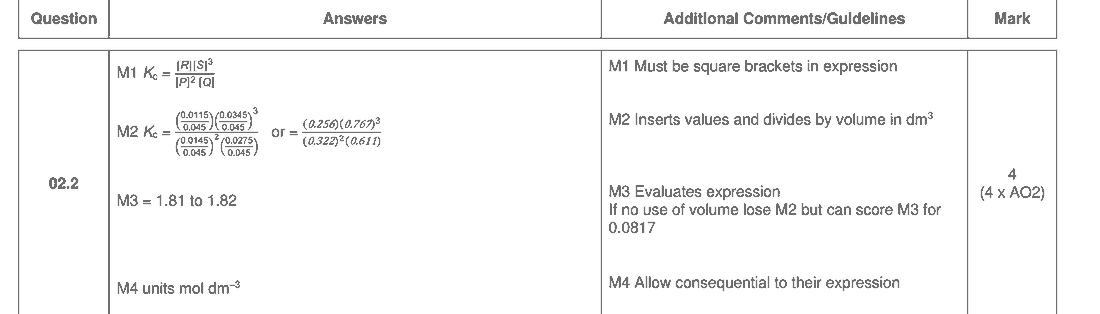
02.2 Chemical equilibria, Le Chatelier's principle and Kc 4AO2=4Calculation
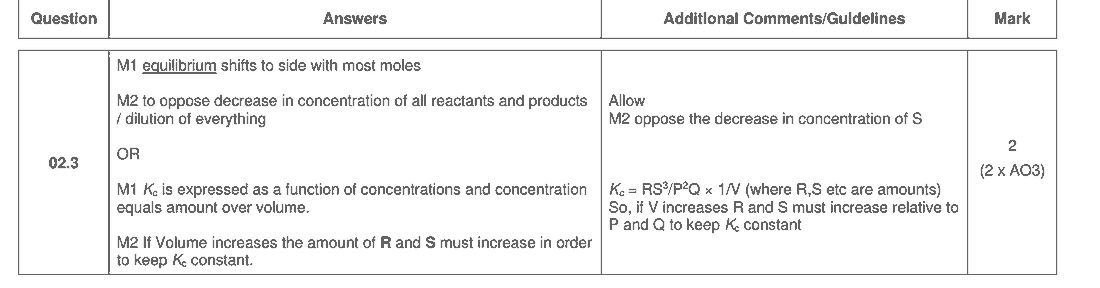
02.3 Chemical equilibria, Le Chatelier's principle and Kc 2AO3=2Explanation
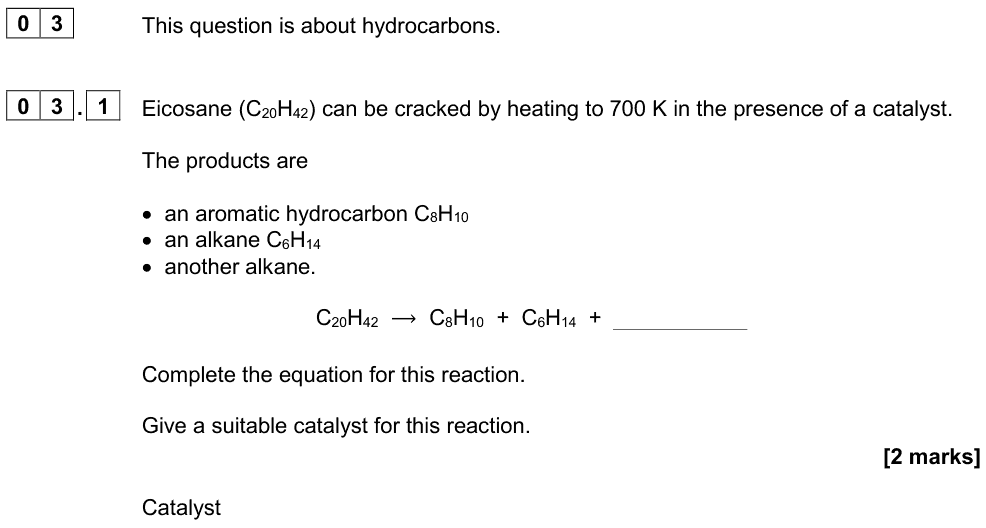
03.1 Alkanes, Amount of substance 2AO1=2Equation writing
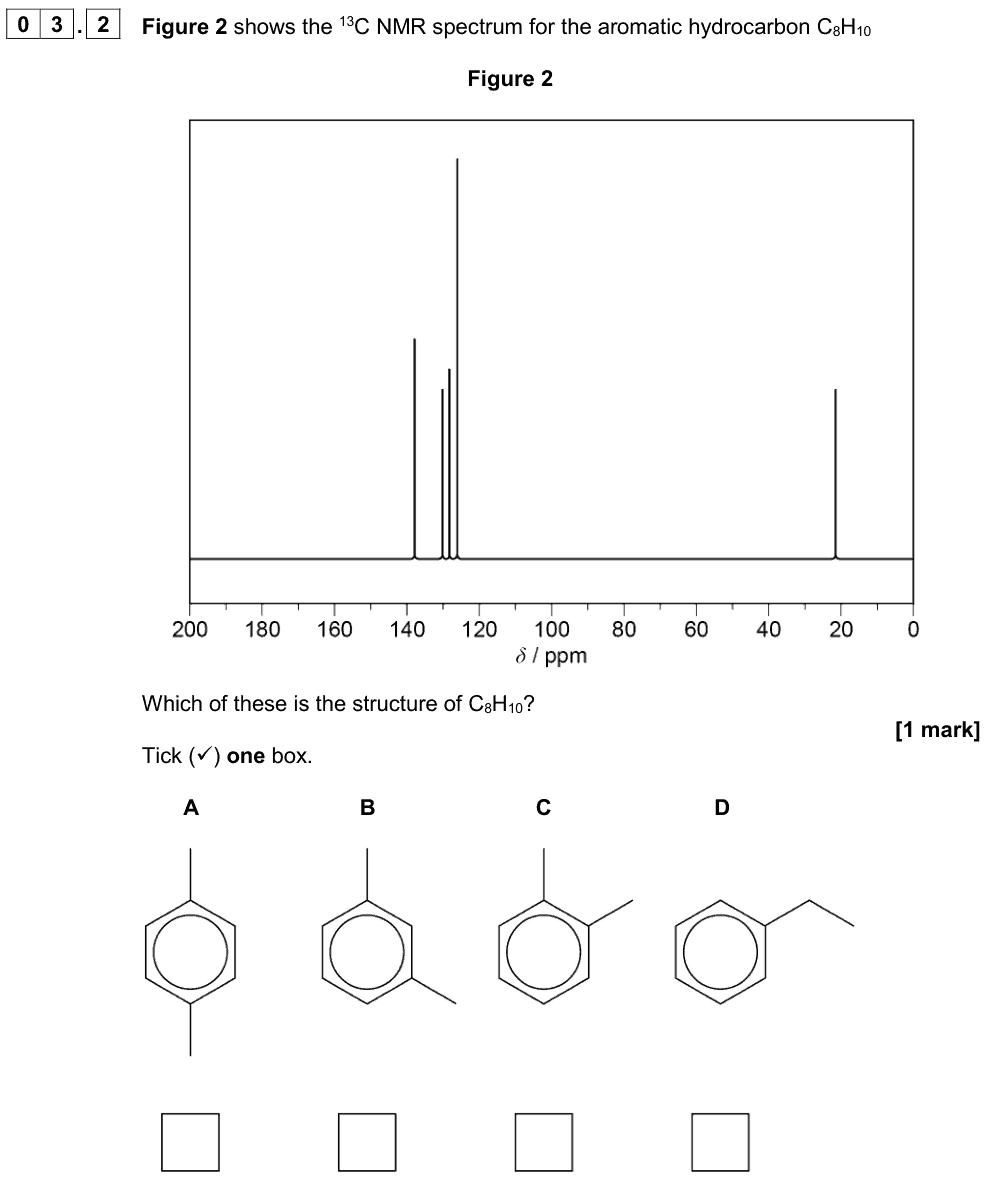
03.2 Nuclear magnetic resonance spectroscopy 1AO3=1Short answer
03.3 Alkanes 1AO1=1Short answer
03.4 Amount of substance 4AO2=4Calculation
03.5 Alkanes 2AO1=2Short answer
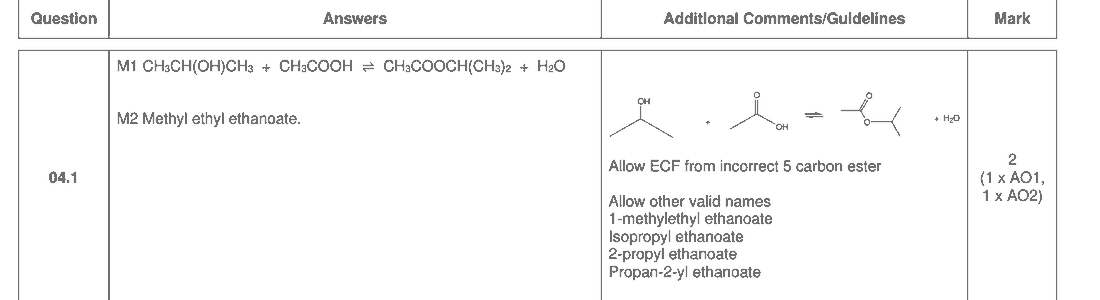
04.1 Carboxylic acids and derivatives, Introduction to organic chemistry: nomenclature, mechanisms and isomerism 2AO1=1,AO2=1Equation writing
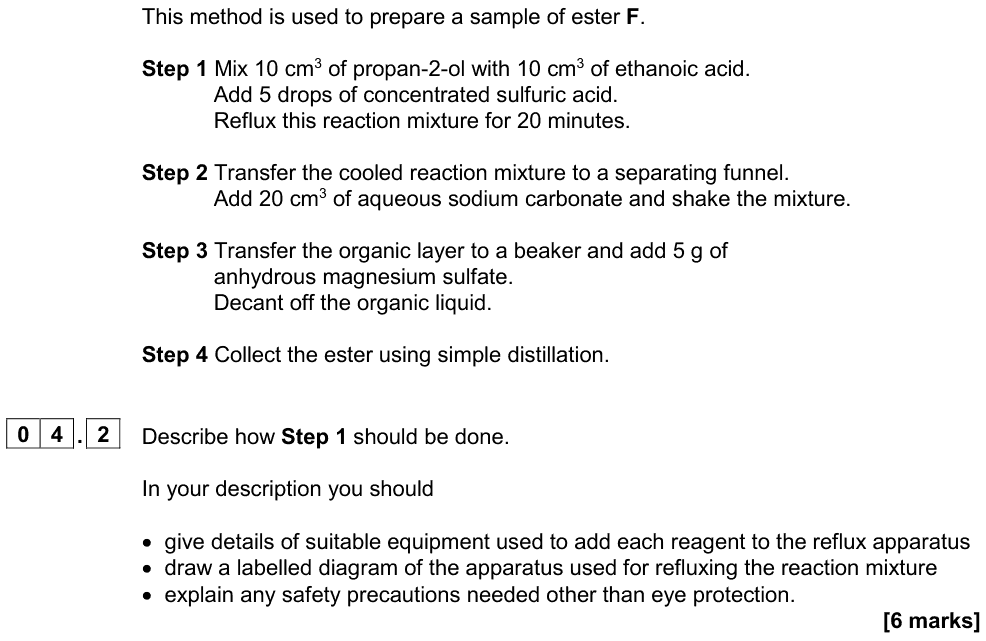
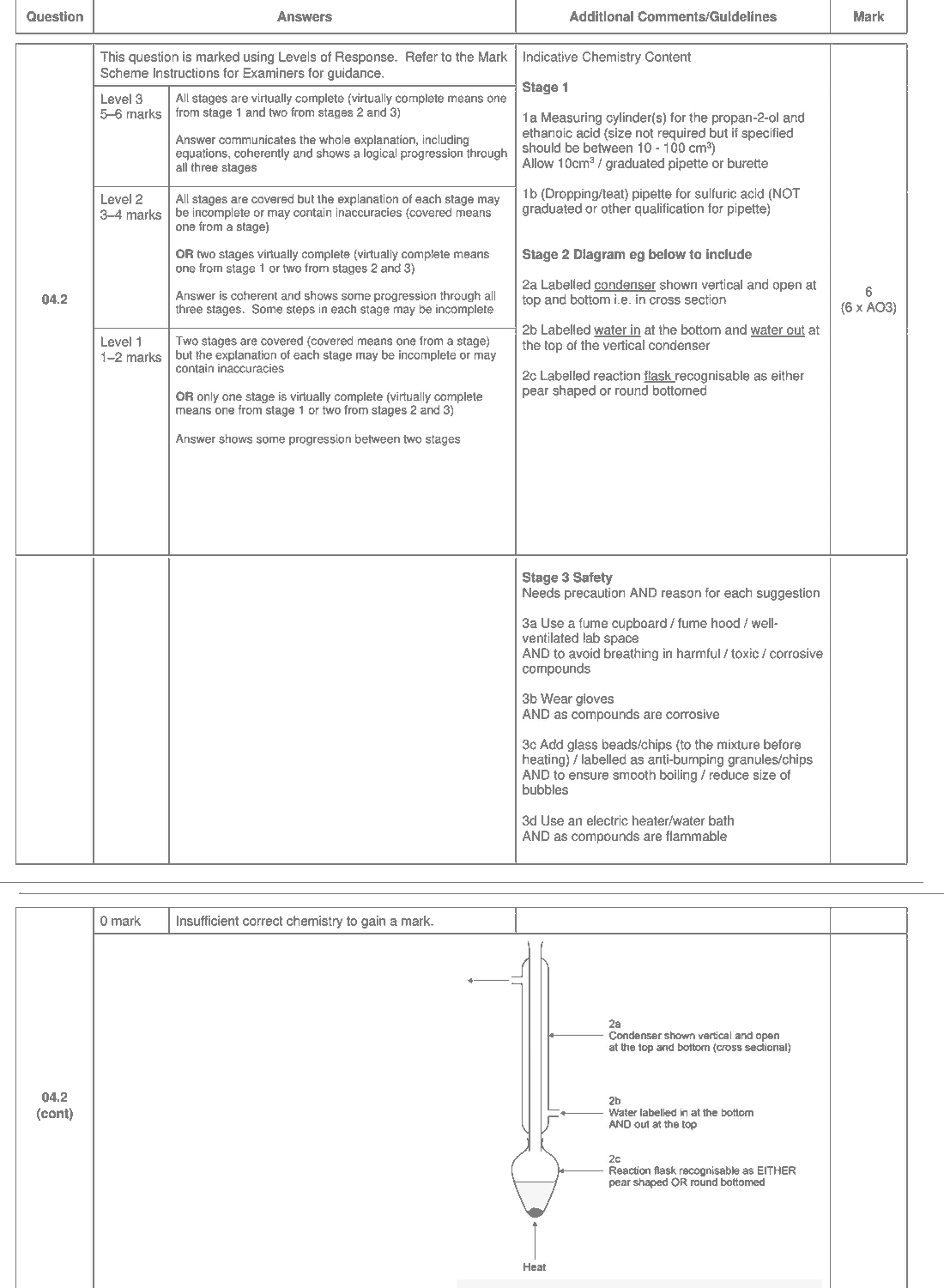
04.2 Carboxylic acids and derivatives 6AO3=6Level of response
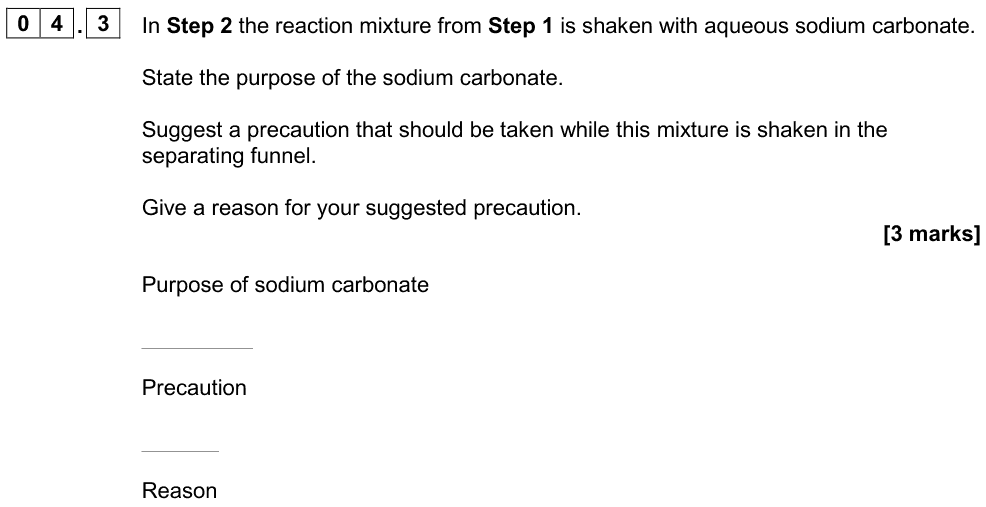
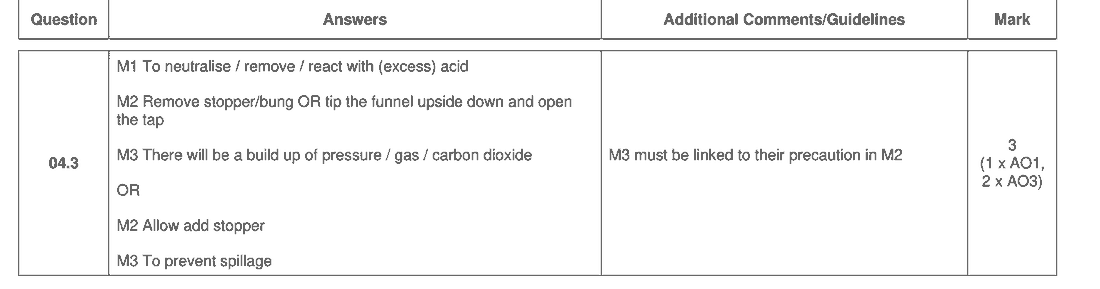
04.3 Carboxylic acids and derivatives 3AO1=1,AO3=2Practical and data analysis
04.4 Carboxylic acids and derivatives 1AO1=1Short answer
04.5 Carboxylic acids and derivatives 1AO1=1Short answer
05.1 Carboxylic acids and derivatives, Halogenoalkanes 2AO3=2Practical and data analysis
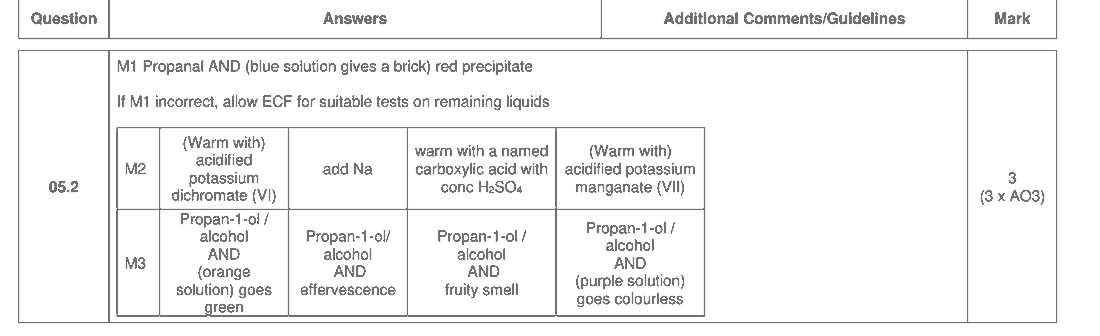
05.2 Aldehydes and ketones, Organic analysis: test-tube reactions, mass spectrometry and infrared, Alcohols 3AO3=3Practical and data analysis
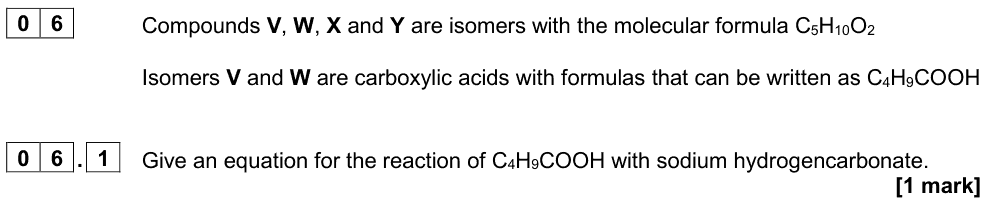
06.1 Carboxylic acids and derivatives 1AO1=1Equation writing
06.2 Optical isomerism, Introduction to organic chemistry: nomenclature, mechanisms and isomerism 1AO2=1Diagram or structure
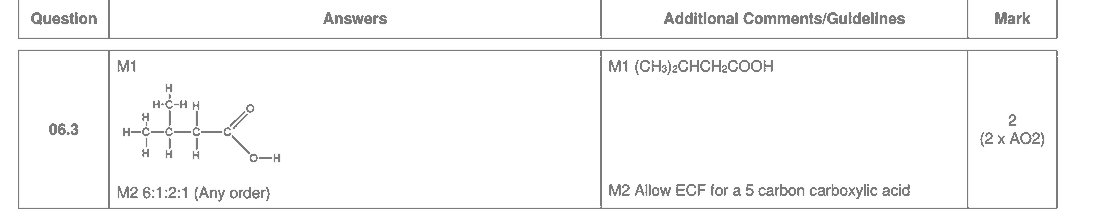
06.3 Nuclear magnetic resonance spectroscopy 2AO2=2Diagram or structure
06.4 Nuclear magnetic resonance spectroscopy 2AO2=2Diagram or structure
06.5 Nuclear magnetic resonance spectroscopy 6AO1=1,AO3=5Diagram or structure
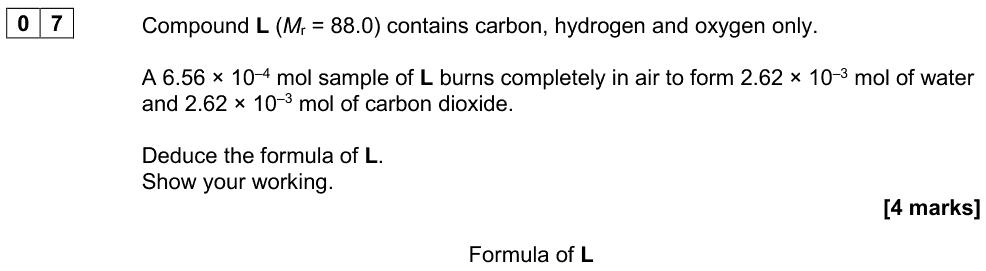
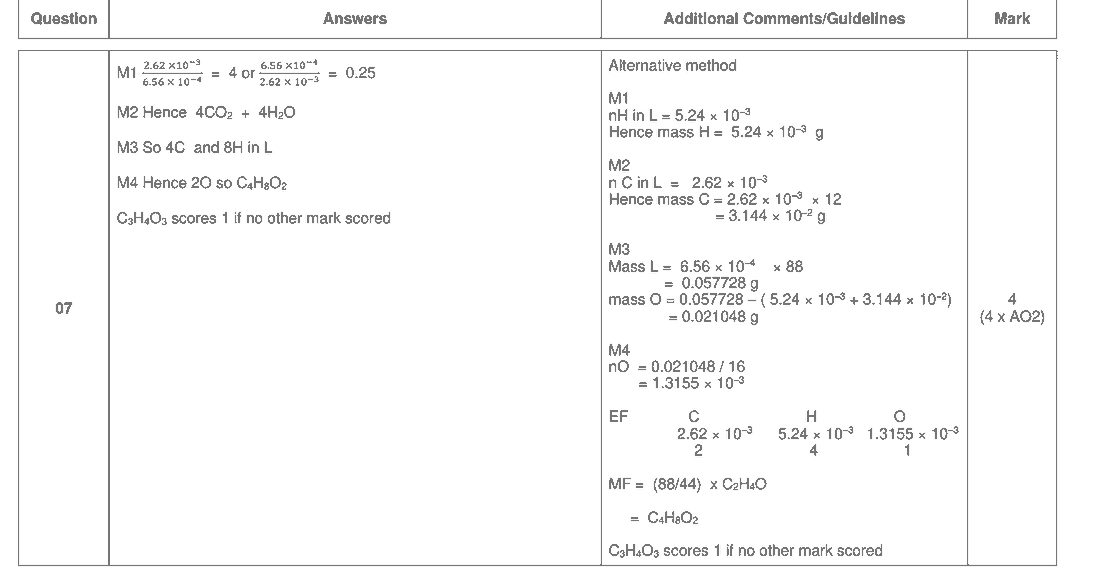
07 Amount of substance 4AO2=4Calculation
08.1 Alkenes 2AO1=2Short answer
08.2 Halogenoalkanes, Organic synthesis 2AO1=1,AO2=1Short answer
08.3 Aldehydes and ketones, Introduction to organic chemistry: nomenclature, mechanisms and isomerism 5AO1=1,AO2=4Mechanism
08.4 Aldehydes and ketones, Optical isomerism 3AO2=3Explanation
09.1 Amines, Introduction to organic chemistry: nomenclature, mechanisms and isomerism 2AO1=1,AO2=1Short answer
09.2 Amines, Introduction to organic chemistry: nomenclature, mechanisms and isomerism 2AO2=2Diagram or structure
09.3 Halogenoalkanes, Amines, Introduction to organic chemistry: nomenclature, mechanisms and isomerism 3AO2=3Mechanism
09.4 Amines 2AO1=2Explanation
10.1 Aromatic chemistry 5AO1=2,AO3=3Explanation
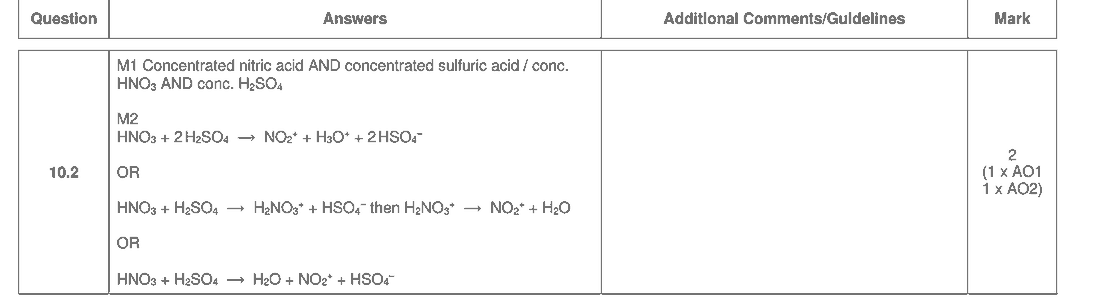
10.2 Aromatic chemistry 2AO1=1,AO2=1Equation writing
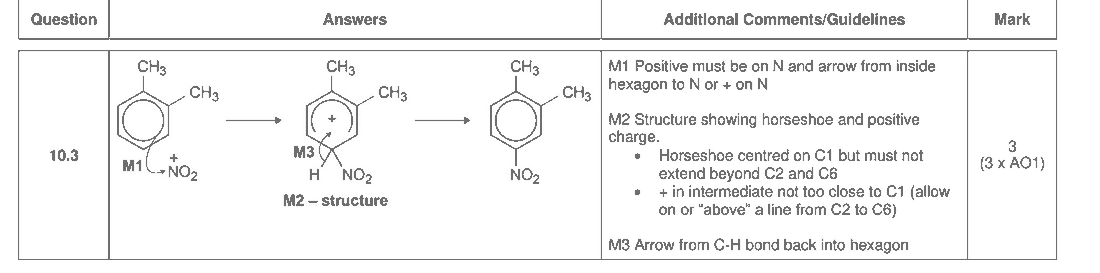
10.3 Aromatic chemistry, Introduction to organic chemistry: nomenclature, mechanisms and isomerism 3AO1=3Mechanism
10.4 Amines 1AO1=1Short answer
10.5 Amines 1AO1=1Short answer
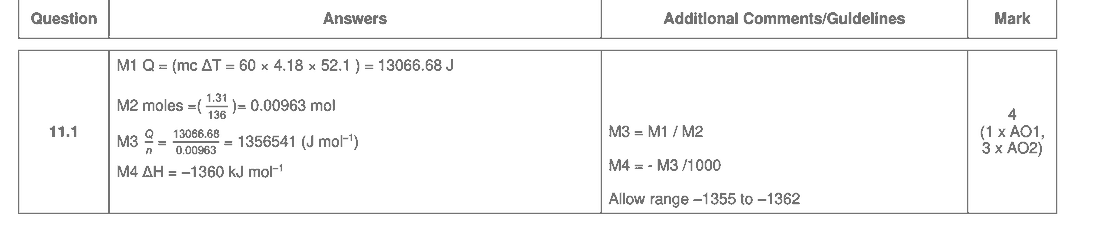
11.1 Energetics 4AO1=1,AO2=3Calculation
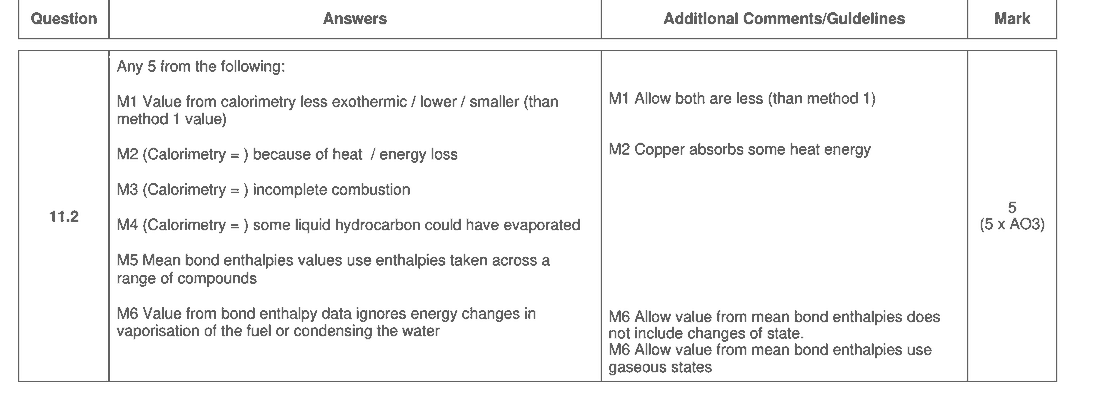
11.2 Energetics 5AO3=5Explanation

The questions

01.101.201.301.402.102.202.303.103.203.303.403.504.104.204.304.404.505.105.206.106.206.306.406.50708.108.208.308.409.109.209.309.410.110.210.310.410.511.111.2
June 2024 · Paper 2 · Q01.1 1 mark AO1=1 Diagram or structure rate equations
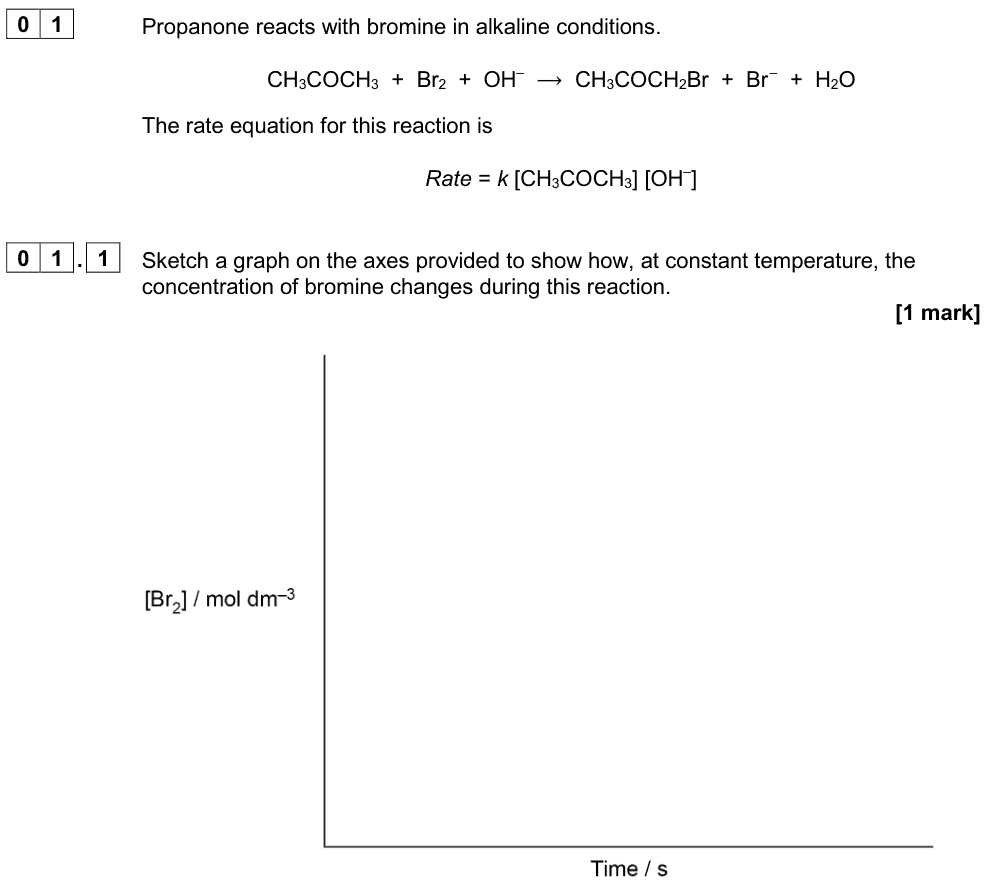
Propanone reacts with bromine in alkaline conditions.
CH3COCH3  +  Br2  +  OH–  ⟶  CH3COCH2Br  +  Br –  +  H2O
The rate equation for this reaction is
Rate = k [CH3COCH3] [OH–]
Sketch a graph on the axes provided to show how, at constant temperature, the
concentration of bromine changes during this reaction.
[1 mark]
June 2024 · Paper 2 · Q01.2 5 marks AO2=5 Calculation rate equations
Earlier part of question 01 that this part usesEarlier part of June 2024 Paper 2 question 01
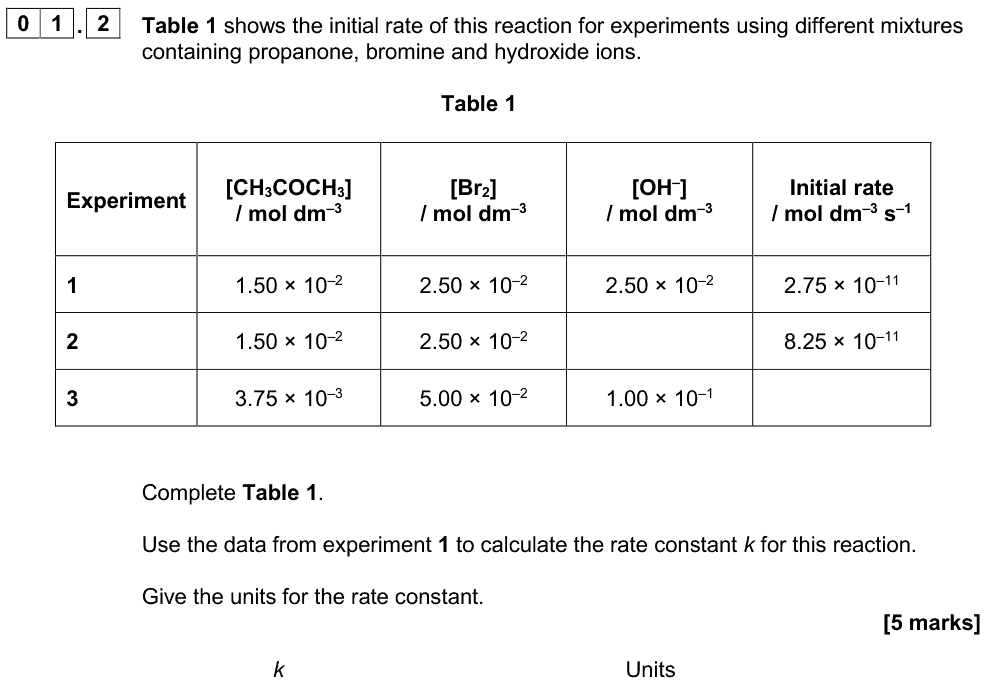
Table 1 shows the initial rate of this reaction for experiments using different mixtures
containing propanone, bromine and hydroxide ions.
Table 1
Experiment
[CH3COCH3]
/ mol dm–3
[Br2]
/ mol dm–3
[OH–]
/ mol dm–3
Initial rate
/ mol dm–3 s–1
1.50 × 10⁻²
2.50 × 10⁻²
2.50 × 10⁻²
2.75 × 10⁻¹¹
1.50 × 10⁻²
2.50 × 10⁻²
8.25 × 10⁻¹¹
3.75 × 10⁻³
5.00 × 10⁻²
1.00 × 10⁻¹
Complete Table 1.
Use the data from experiment 1 to calculate the rate constant k for this reaction.
Give the units for the rate constant.
[5 marks]
k
Units
June 2024 · Paper 2 · Q01.3 4 marks AO2=4 Mechanism introduction to organic chemistry
Earlier part of question 01 that this part usesEarlier part of June 2024 Paper 2 question 01
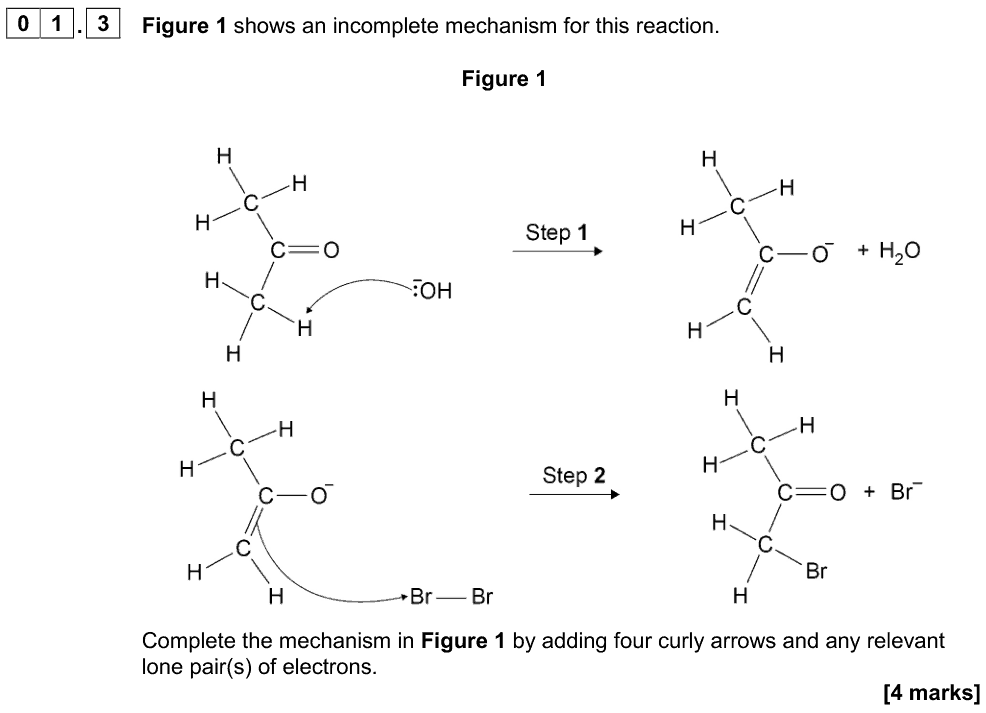
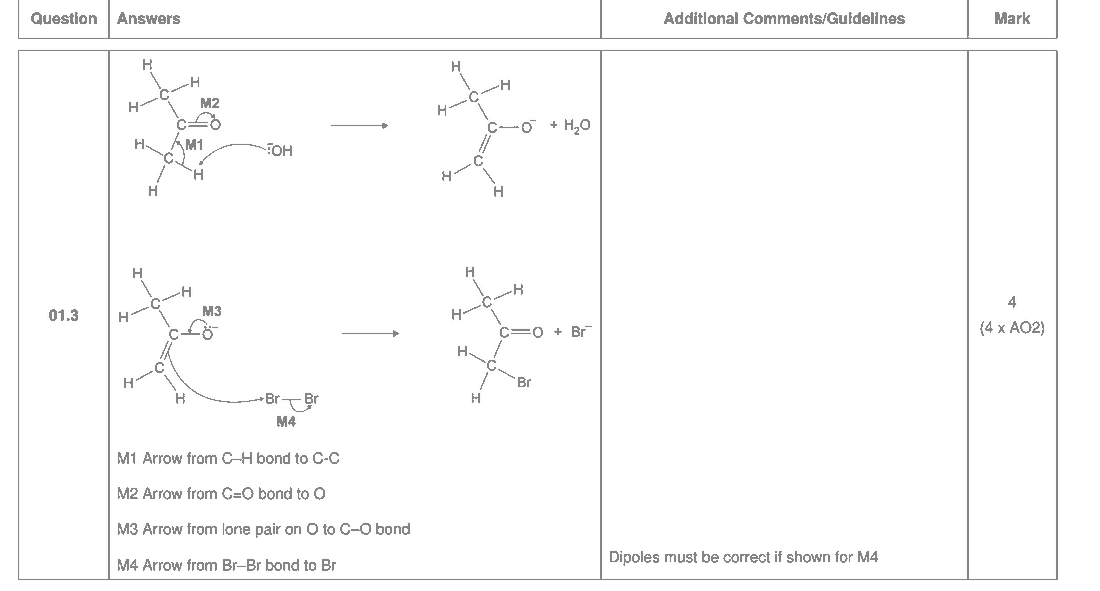
Figure 1 shows an incomplete mechanism for this reaction.
Figure 1
Complete the mechanism in Figure 1 by adding four curly arrows and any relevant
lone pair(s) of electrons.
[4 marks]
June 2024 · Paper 2 · Q01.4 1 mark AO2=1 Short answer rate equations
Earlier part of question 01 that this part usesEarlier part of June 2024 Paper 2 question 01
Use evidence from the rate equation to explain why Step 1 is the
rate determining step.
[1 mark]
June 2024 · Paper 2 · Q02.1 2 marks AO2=2 Calculation Easy chemical equilibria and kcamount of substance
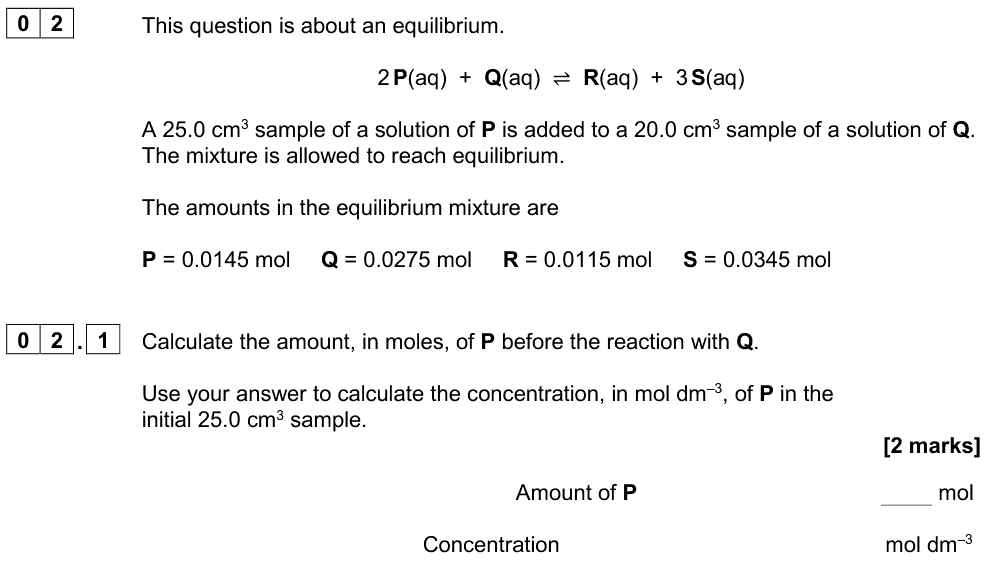
This question is about an equilibrium.
2 P(aq)  +  Q(aq)  ⇌  R(aq)  +  3 S(aq)
A 25.0 cm3 sample of a solution of P is added to a 20.0 cm3 sample of a solution of Q.
The mixture is allowed to reach equilibrium.
The amounts in the equilibrium mixture are
P = 0.0145 mol     Q = 0.0275 mol     R = 0.0115 mol     S = 0.0345 mol
Calculate the amount, in moles, of P before the reaction with Q.
Use your answer to calculate the concentration, in mol dm–3, of P in the
initial 25.0 cm3 sample.
[2 marks]
Amount of P
mol
Concentration
mol dm–3
June 2024 · Paper 2 · Q02.2 4 marks AO2=4 Calculation chemical equilibria and kc
Earlier part of question 02 that this part usesEarlier part of June 2024 Paper 2 question 02
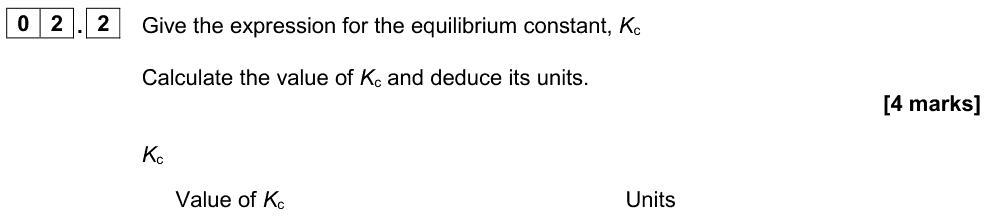
Give the expression for the equilibrium constant, Kc
Calculate the value of Kc and deduce its units.
[4 marks]
Kc
Value of Kc
Units
June 2024 · Paper 2 · Q02.3 2 marks AO3=2 Explanation chemical equilibria and kc
Earlier part of question 02 that this part usesEarlier part of June 2024 Paper 2 question 02
Explain why the amount of S increases when water is added to the
equilibrium mixture.
[2 marks]
June 2024 · Paper 2 · Q03.1 2 marks AO1=2 Equation writing alkanesamount of substance
This question is about hydrocarbons.
Eicosane (C20H42) can be cracked by heating to 700 K in the presence of a catalyst.
The products are
• an aromatic hydrocarbon C8H10
• an alkane C6H14
• another alkane.
C20H42  ⟶  C8H10  +  C6H14  +
Complete the equation for this reaction.
Give a suitable catalyst for this reaction.
[2 marks]
Catalyst
June 2024 · Paper 2 · Q03.2 1 mark AO3=1 Short answer nmr spectroscopy
Earlier part of question 03 that this part usesEarlier part of June 2024 Paper 2 question 03
Figure 2 shows the 13C NMR spectrum for the aromatic hydrocarbon C8H10
Figure 2
Which of these is the structure of C8H10?
[1 mark]
Tick () one box.
A
B
C
D
June 2024 · Paper 2 · Q03.3 1 mark AO1=1 Short answer Easy alkanes
Earlier part of question 03 that this part usesEarlier part of June 2024 Paper 2 question 03
Cracking can also be done without a catalyst, using a temperature of 1200 K and a
pressure of 7000 kPa
State the type of product that is formed in high percentage in this type of cracking.
[1 mark]
June 2024 · Paper 2 · Q03.4 4 marks AO2=4 Calculation amount of substance
Earlier part of question 03 that this part usesEarlier part of June 2024 Paper 2 question 03
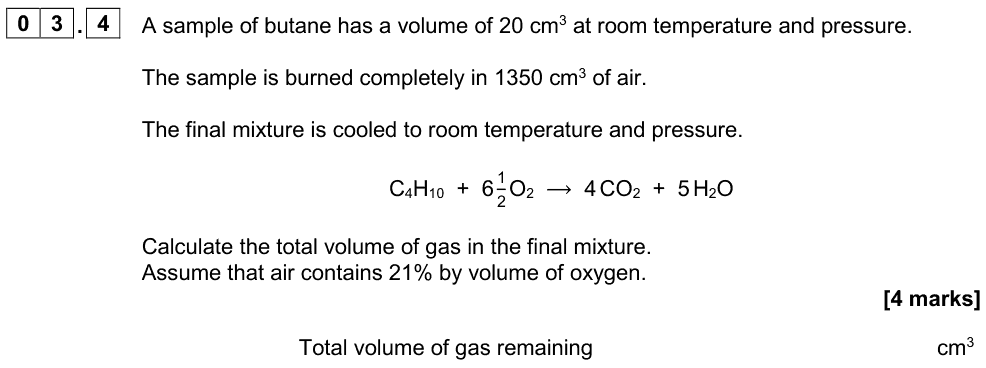
A sample of butane has a volume of 20 cm3 at room temperature and pressure.
The sample is burned completely in 1350 cm3 of air.
The final mixture is cooled to room temperature and pressure.
C4H10  +  6
1
2
O2  ⟶  4 CO2  +  5 H2O
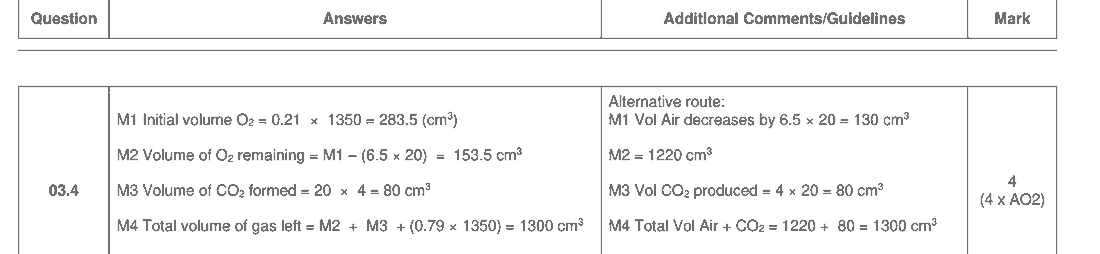
Calculate the total volume of gas in the final mixture.
Assume that air contains 21% by volume of oxygen.
[4 marks]
Total volume of gas remaining
cm3
June 2024 · Paper 2 · Q03.5 2 marks AO1=2 Short answer alkanes
Earlier part of question 03 that this part usesEarlier part of June 2024 Paper 2 question 03
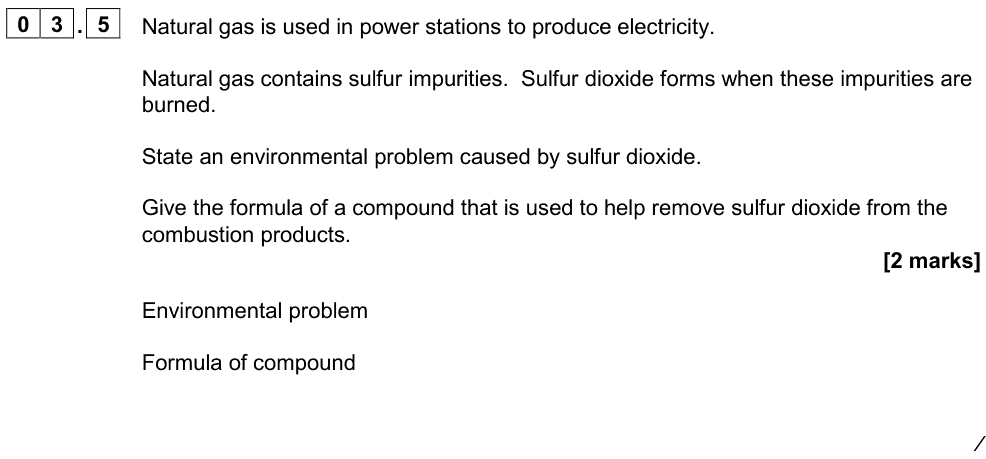
Natural gas is used in power stations to produce electricity.
Natural gas contains sulfur impurities.  Sulfur dioxide forms when these impurities are
burned.
State an environmental problem caused by sulfur dioxide.
Give the formula of a compound that is used to help remove sulfur dioxide from the
combustion products.
[2 marks]
Environmental problem
Formula of compound
June 2024 · Paper 2 · Q04.1 2 marks AO1=1, AO2=1 Equation writing carboxylic acids and derivativesintroduction to organic chemistry
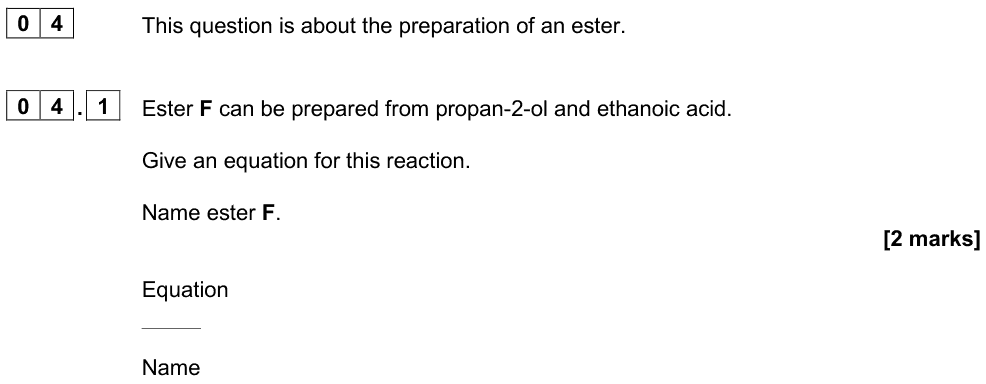
This question is about the preparation of an ester.
Ester F can be prepared from propan-2-ol and ethanoic acid.
Give an equation for this reaction.
Name ester F.
[2 marks]
Equation
Name
June 2024 · Paper 2 · Q04.2 6 marks AO3=6 6-mark level of response carboxylic acids and derivatives
Earlier part of question 04 that this part usesEarlier part of June 2024 Paper 2 question 04
This method is used to prepare a sample of ester F.
Step 1 Mix 10 cm3 of propan-2-ol with 10 cm3 of ethanoic acid.
Add 5 drops of concentrated sulfuric acid.
Reflux this reaction mixture for 20 minutes.
Step 2 Transfer the cooled reaction mixture to a separating funnel.
Add 20 cm3 of aqueous sodium carbonate and shake the mixture.
Step 3 Transfer the organic layer to a beaker and add 5 g of
anhydrous magnesium sulfate.
Decant off the organic liquid.
Step 4 Collect the ester using simple distillation.
Describe how Step 1 should be done.
In your description you should
• give details of suitable equipment used to add each reagent to the reflux apparatus
• draw a labelled diagram of the apparatus used for refluxing the reaction mixture
• explain any safety precautions needed other than eye protection.
[6 marks]
June 2024 · Paper 2 · Q04.3 3 marks AO1=1, AO3=2 Practical and data analysis carboxylic acids and derivatives
Earlier parts of question 04 that this part usesEarlier part of June 2024 Paper 2 question 04Earlier part of June 2024 Paper 2 question 04
In Step 2 the reaction mixture from Step 1 is shaken with aqueous sodium carbonate.
State the purpose of the sodium carbonate.
Suggest a precaution that should be taken while this mixture is shaken in the
separating funnel.
Give a reason for your suggested precaution.
[3 marks]
Purpose of sodium carbonate
Precaution
Reason
June 2024 · Paper 2 · Q04.4 1 mark AO1=1 Short answer carboxylic acids and derivatives
Earlier parts of question 04 that this part usesEarlier part of June 2024 Paper 2 question 04Earlier part of June 2024 Paper 2 question 04
Give the reason for the use of anhydrous magnesium sulfate in Step 3.
[1 mark]
June 2024 · Paper 2 · Q04.5 1 mark AO1=1 Short answer Hard carboxylic acids and derivatives
Earlier parts of question 04 that this part usesEarlier part of June 2024 Paper 2 question 04Earlier part of June 2024 Paper 2 question 04
Suggest how the purity of the ester can be confirmed during the distillation in Step 4.
[1 mark]
June 2024 · Paper 2 · Q05.1 2 marks AO3=2 Practical and data analysis carboxylic acids and derivativeshalogenoalkanes
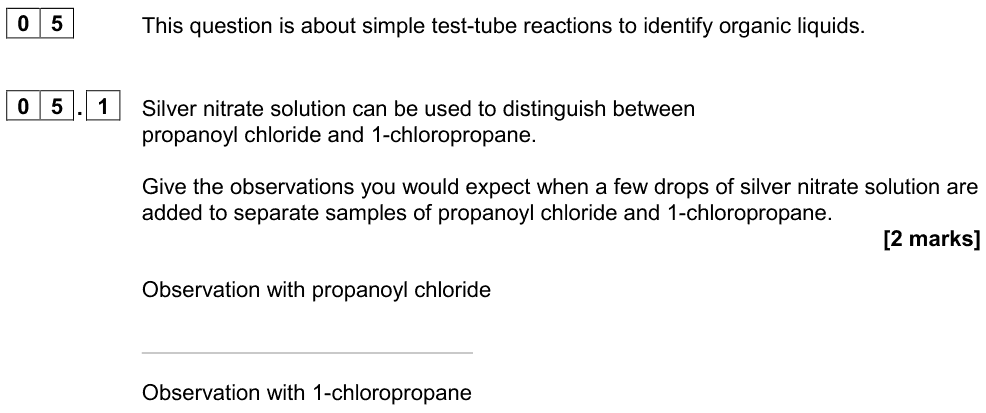
This question is about simple test-tube reactions to identify organic liquids.
Silver nitrate solution can be used to distinguish between
propanoyl chloride and 1-chloropropane.
Give the observations you would expect when a few drops of silver nitrate solution are
added to separate samples of propanoyl chloride and 1-chloropropane.
[2 marks]
Observation with propanoyl chloride
Observation with 1-chloropropane
June 2024 · Paper 2 · Q05.2 3 marks AO3=3 Practical and data analysis aldehydes and ketonesorganic analysisalcohols
Earlier part of question 05 that this part usesEarlier part of June 2024 Paper 2 question 05
Three unlabelled bottles are known to contain either propan-1-ol, propanal, or
propanone.
A sample of each liquid is warmed with a few drops of Fehling’s solution.

Identify the liquid that reacts with Fehling’s solution and give the expected

observation.
Suggest a further simple test-tube reaction that can be used to distinguish between
the remaining two liquids.
Give the expected observation with the liquid that reacts.
[3 marks]
Liquid that reacts with Fehling’s solution

Observation
Further test
Observation
June 2024 · Paper 2 · Q06.1 1 mark AO1=1 Equation writing carboxylic acids and derivatives
Compounds V, W, X and Y are isomers with the molecular formula C5H10O2
Isomers V and W are carboxylic acids with formulas that can be written as C4H9COOH
Give an equation for the reaction of C4H9COOH with sodium hydrogencarbonate.
[1 mark]
June 2024 · Paper 2 · Q06.2 1 mark AO2=1 Diagram or structure optical isomerismintroduction to organic chemistry
Earlier part of question 06 that this part usesEarlier part of June 2024 Paper 2 question 06
Isomer V has an asymmetric carbon atom.
Deduce the structure of V.
[1 mark]
June 2024 · Paper 2 · Q06.3 2 marks AO2=2 Diagram or structure nmr spectroscopy
Earlier part of question 06 that this part usesEarlier part of June 2024 Paper 2 question 06
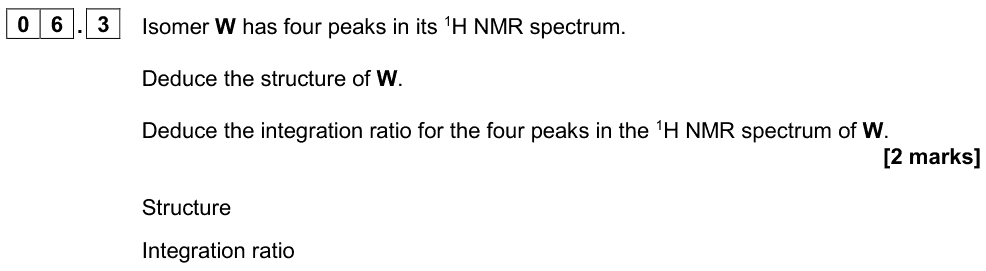
Isomer W has four peaks in its 1H NMR spectrum.
Deduce the structure of W.
Deduce the integration ratio for the four peaks in the 1H NMR spectrum of W.
[2 marks]
Structure
Integration ratio
June 2024 · Paper 2 · Q06.4 2 marks AO2=2 Diagram or structure nmr spectroscopy
Earlier part of question 06 that this part usesEarlier part of June 2024 Paper 2 question 06
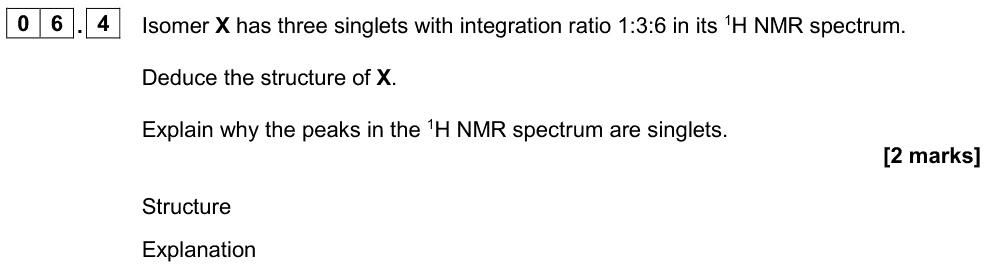
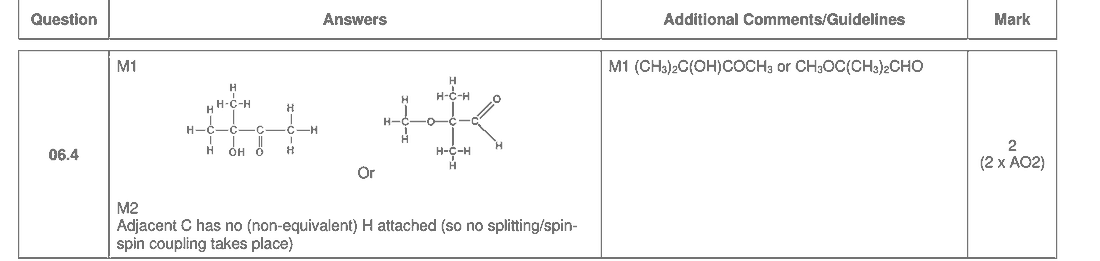
Isomer X has three singlets with integration ratio 1:3:6 in its 1H NMR spectrum.
Deduce the structure of X.
Explain why the peaks in the 1H NMR spectrum are singlets.
[2 marks]
Structure
Explanation
June 2024 · Paper 2 · Q06.5 6 marks AO1=1, AO3=5 Diagram or structure nmr spectroscopy
Earlier part of question 06 that this part usesEarlier part of June 2024 Paper 2 question 06
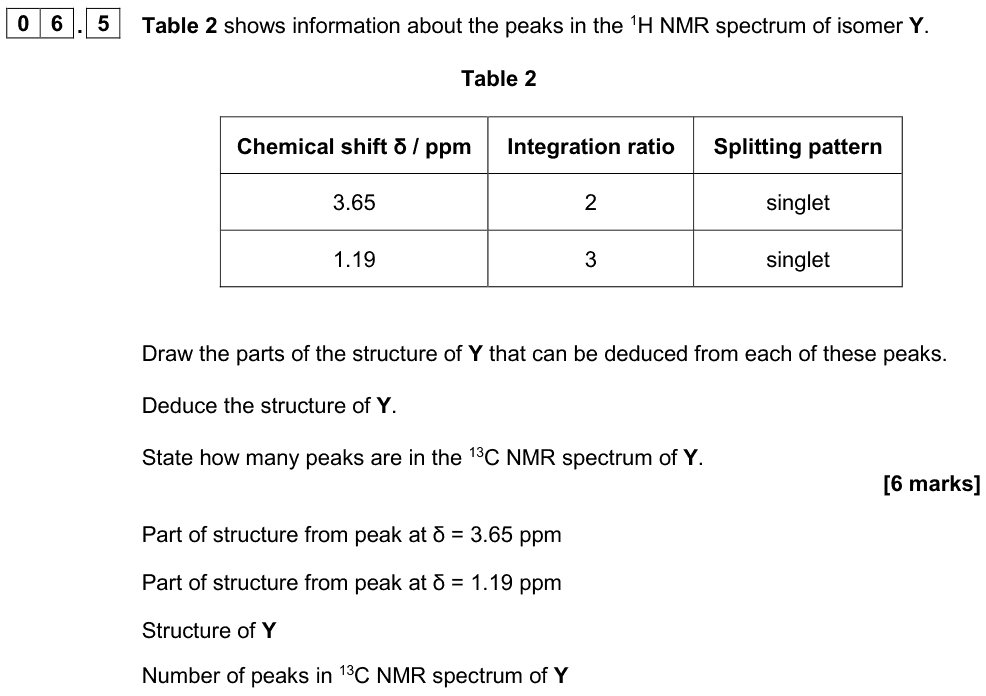
Table 2 shows information about the peaks in the 1H NMR spectrum of isomer Y.
Table 2
Chemical shift δ / ppm
Integration ratio
Splitting pattern
3.65
2
singlet
1.19
3
singlet
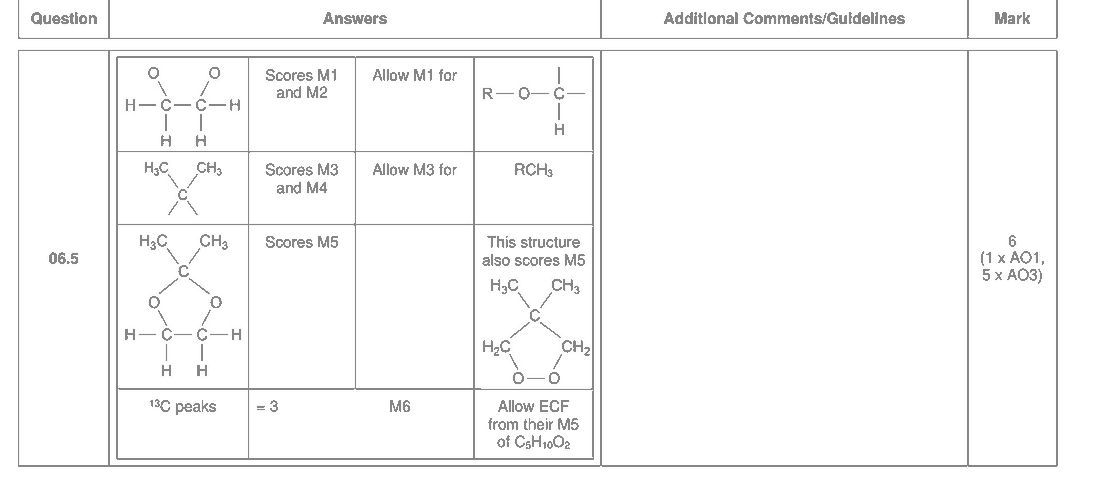
Draw the parts of the structure of Y that can be deduced from each of these peaks.
Deduce the structure of Y.
State how many peaks are in the 13C NMR spectrum of Y.
[6 marks]
Part of structure from peak at δ = 3.65 ppm
Part of structure from peak at δ = 1.19 ppm
Structure of Y
Number of peaks in 13C NMR spectrum of Y
June 2024 · Paper 2 · Q07 4 marks AO2=4 Calculation amount of substance
Compound L (Mr = 88.0) contains carbon, hydrogen and oxygen only.
A 6.56 × 10⁻⁴ mol sample of L burns completely in air to form 2.62 × 10⁻³ mol of water
and 2.62 × 10⁻³ mol of carbon dioxide.
Deduce the formula of L.
Show your working.
[4 marks]
Formula of L
June 2024 · Paper 2 · Q08.1 2 marks AO1=2 Short answer Easy alkenes
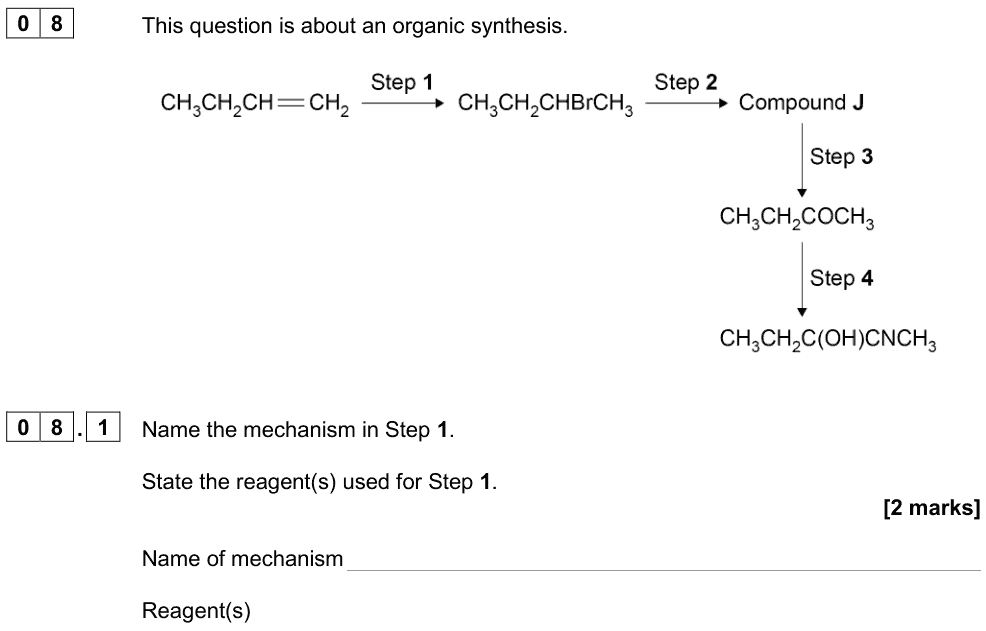
This question is about an organic synthesis.
Name the mechanism in Step 1.
State the reagent(s) used for Step 1.
[2 marks]
Name of mechanism
Reagent(s)
June 2024 · Paper 2 · Q08.2 2 marks AO1=1, AO2=1 Short answer halogenoalkanesorganic synthesis
Earlier part of question 08 that this part usesEarlier part of June 2024 Paper 2 question 08
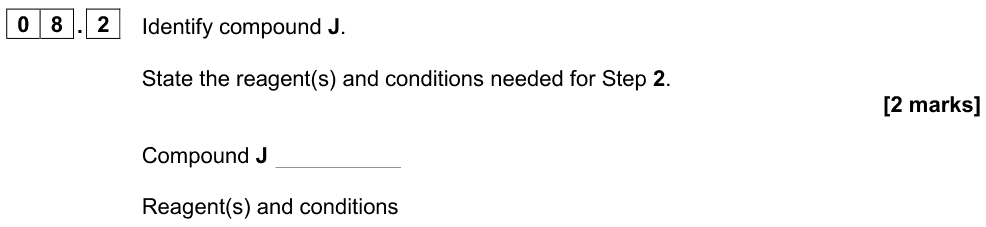
Identify compound J.
State the reagent(s) and conditions needed for Step 2.
[2 marks]
Compound J
Reagent(s) and conditions
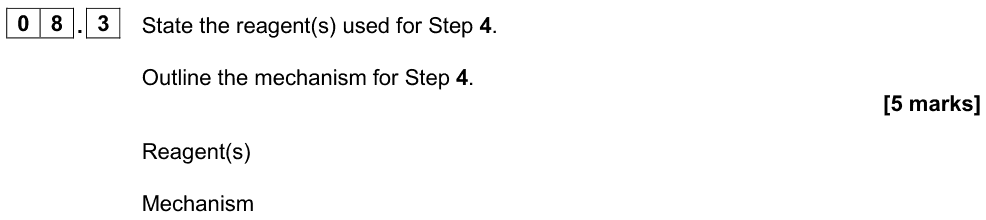
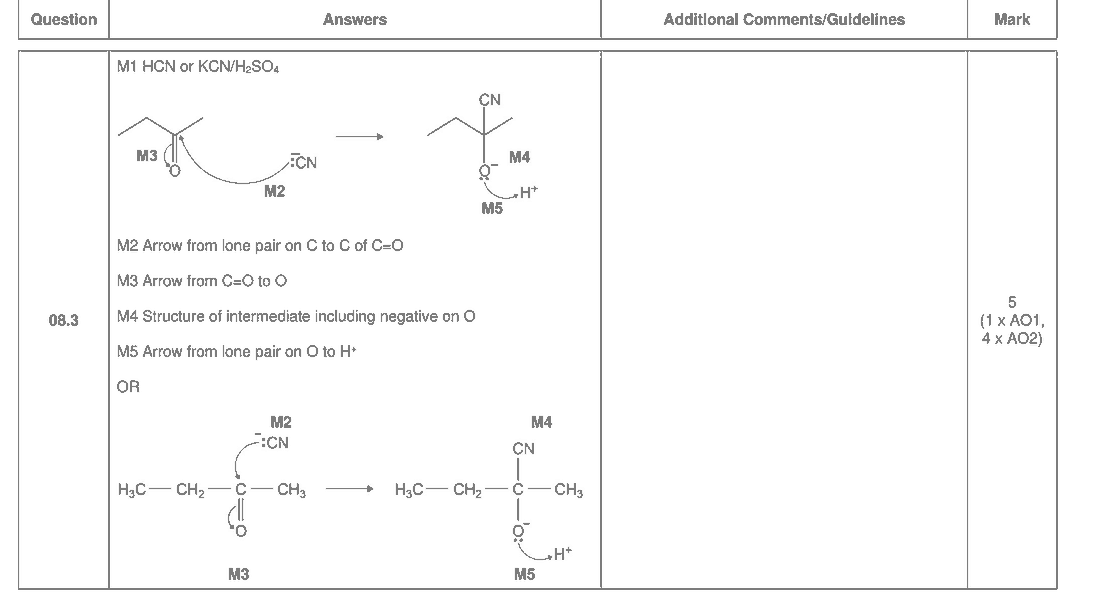
June 2024 · Paper 2 · Q08.3 5 marks AO1=1, AO2=4 Mechanism aldehydes and ketonesintroduction to organic chemistry
Earlier part of question 08 that this part usesEarlier part of June 2024 Paper 2 question 08
State the reagent(s) used for Step 4.
Outline the mechanism for Step 4.
[5 marks]
Reagent(s)
Mechanism
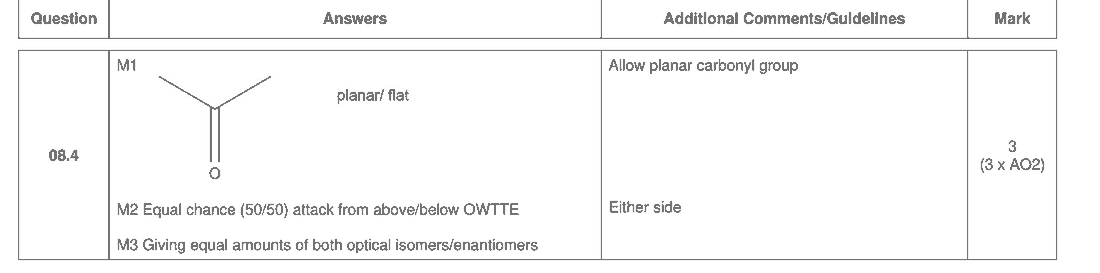
June 2024 · Paper 2 · Q08.4 3 marks AO2=3 Explanation Hard aldehydes and ketonesoptical isomerism
Earlier part of question 08 that this part usesEarlier part of June 2024 Paper 2 question 08
Explain why Step 4 produces a racemic mixture.
[3 marks]
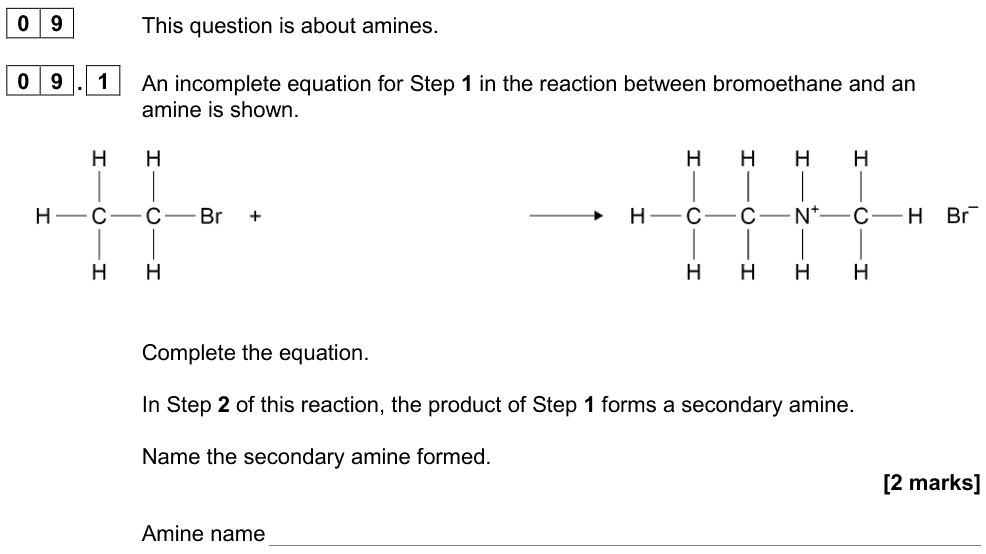
June 2024 · Paper 2 · Q09.1 2 marks AO1=1, AO2=1 Short answer aminesintroduction to organic chemistry
This question is about amines.
An incomplete equation for Step 1 in the reaction between bromoethane and an
amine is shown.
Complete the equation.
In Step 2 of this reaction, the product of Step 1 forms a secondary amine.
Name the secondary amine formed.
[2 marks]
Amine name
June 2024 · Paper 2 · Q09.2 2 marks AO2=2 Diagram or structure aminesintroduction to organic chemistry
Earlier part of question 09 that this part usesEarlier part of June 2024 Paper 2 question 09
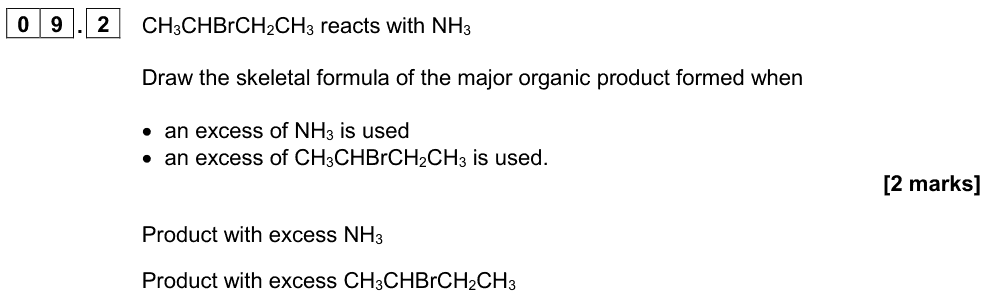
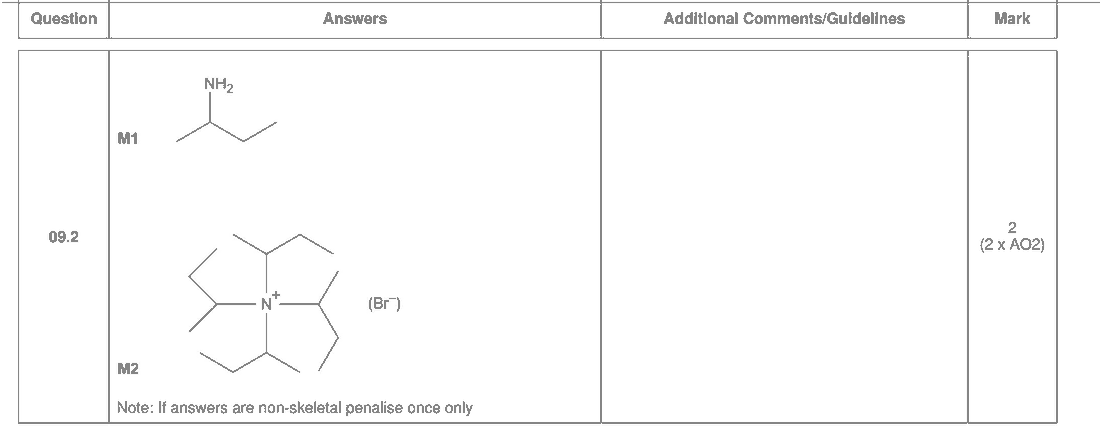
CH3CHBrCH2CH3 reacts with NH3
Draw the skeletal formula of the major organic product formed when
• an excess of NH3 is used
• an excess of CH3CHBrCH2CH3 is used.
[2 marks]
Product with excess NH3
Product with excess CH3CHBrCH2CH3
June 2024 · Paper 2 · Q09.3 3 marks AO2=3 Mechanism halogenoalkanesaminesintroduction to organic chemistry
Earlier part of question 09 that this part usesEarlier part of June 2024 Paper 2 question 09
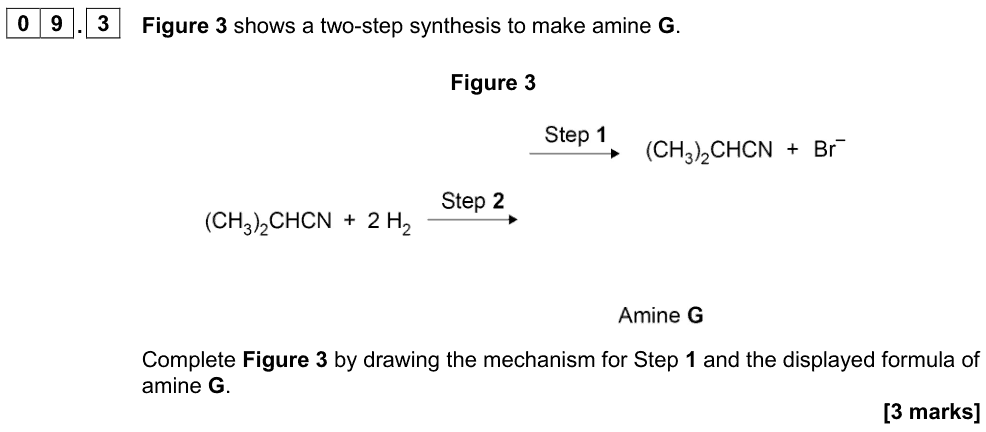
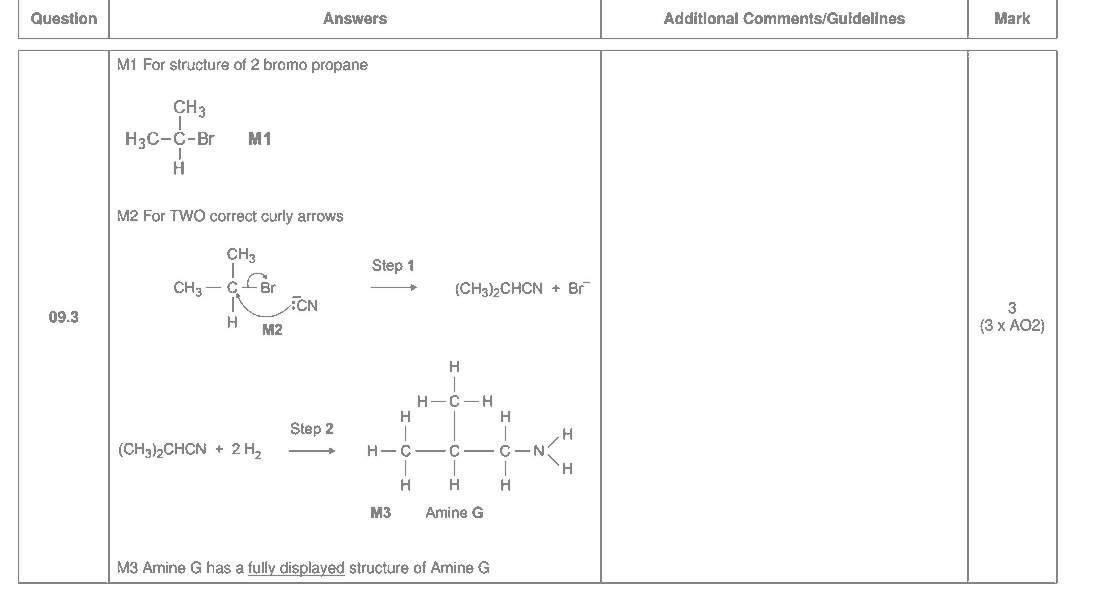
Figure 3 shows a two-step synthesis to make amine G.
Figure 3
Complete Figure 3 by drawing the mechanism for Step 1 and the displayed formula of
amine G.
[3 marks]
June 2024 · Paper 2 · Q09.4 2 marks AO1=2 Explanation amines
Earlier part of question 09 that this part usesEarlier part of June 2024 Paper 2 question 09
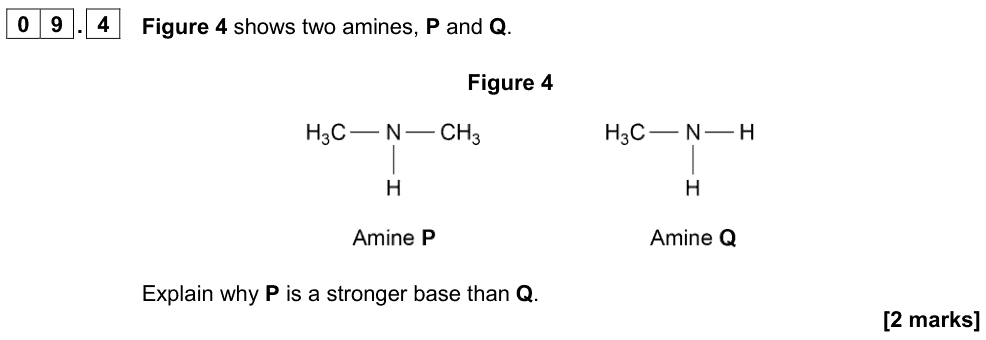
Figure 4 shows two amines, P and Q.
Figure 4
Explain why P is a stronger base than Q.
[2 marks]
June 2024 · Paper 2 · Q10.1 5 marks AO1=2, AO3=3 Explanation aromatic chemistry
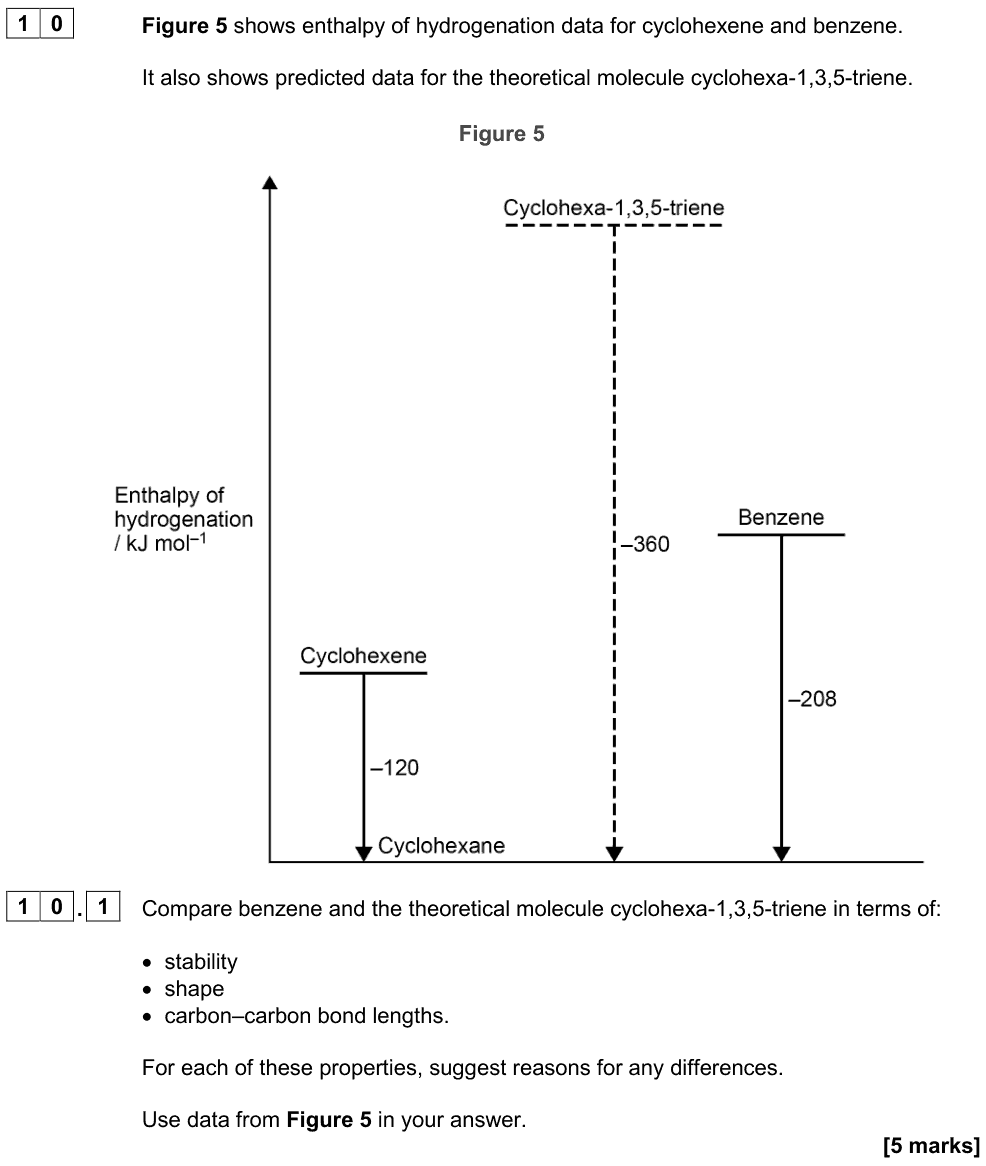
Figure 5 shows enthalpy of hydrogenation data for cyclohexene and benzene.
It also shows predicted data for the theoretical molecule cyclohexa-1,3,5-triene.
Figure 5
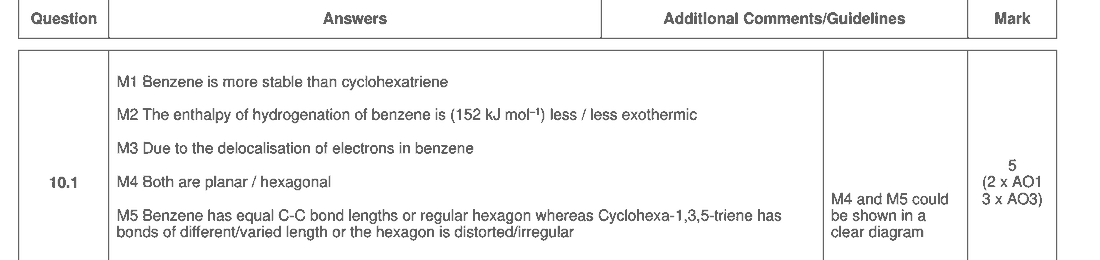
Compare benzene and the theoretical molecule cyclohexa-1,3,5-triene in terms of:
• stability
• shape
• carbon–carbon bond lengths.
For each of these properties, suggest reasons for any differences.
Use data from Figure 5 in your answer.
[5 marks]
June 2024 · Paper 2 · Q10.2 2 marks AO1=1, AO2=1 Equation writing aromatic chemistry
Earlier part of question 10 that this part usesEarlier part of June 2024 Paper 2 question 10
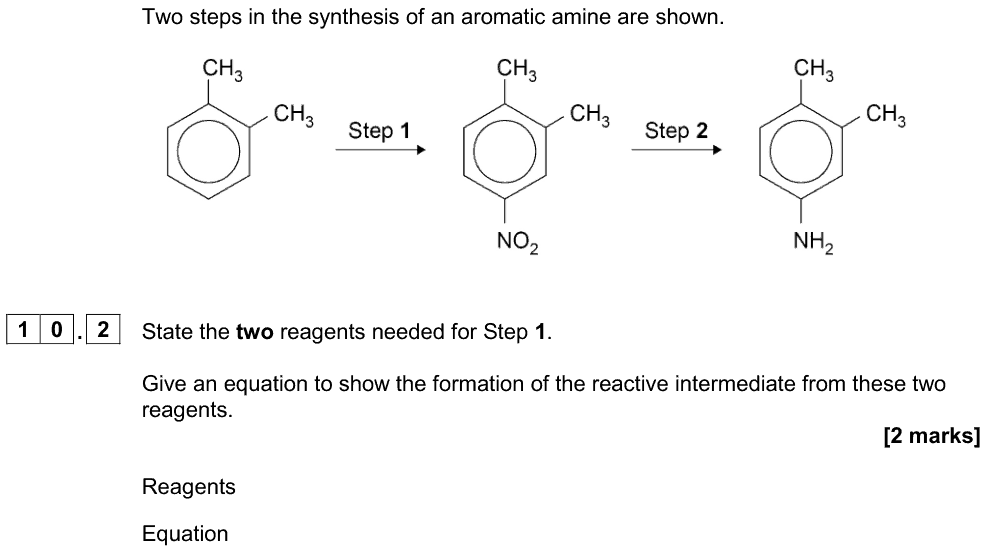
Two steps in the synthesis of an aromatic amine are shown.
State the two reagents needed for Step 1.
Give an equation to show the formation of the reactive intermediate from these two
reagents.
[2 marks]
Reagents
Equation
June 2024 · Paper 2 · Q10.3 3 marks AO1=3 Mechanism Hard aromatic chemistryintroduction to organic chemistry
Earlier parts of question 10 that this part usesEarlier part of June 2024 Paper 2 question 10Earlier part of June 2024 Paper 2 question 10
Outline a mechanism for Step 1.
[3 marks]
June 2024 · Paper 2 · Q10.4 1 mark AO1=1 Short answer amines
Earlier parts of question 10 that this part usesEarlier part of June 2024 Paper 2 question 10Earlier part of June 2024 Paper 2 question 10
State the reagent(s) needed for Step 2.
[1 mark]
June 2024 · Paper 2 · Q10.5 1 mark AO1=1 Short answer Hard amines
Earlier parts of question 10 that this part usesEarlier part of June 2024 Paper 2 question 10Earlier part of June 2024 Paper 2 question 10
State a possible use for the amine formed in Step 2.
[1 mark]
June 2024 · Paper 2 · Q11.1 4 marks AO1=1, AO2=3 Calculation energetics
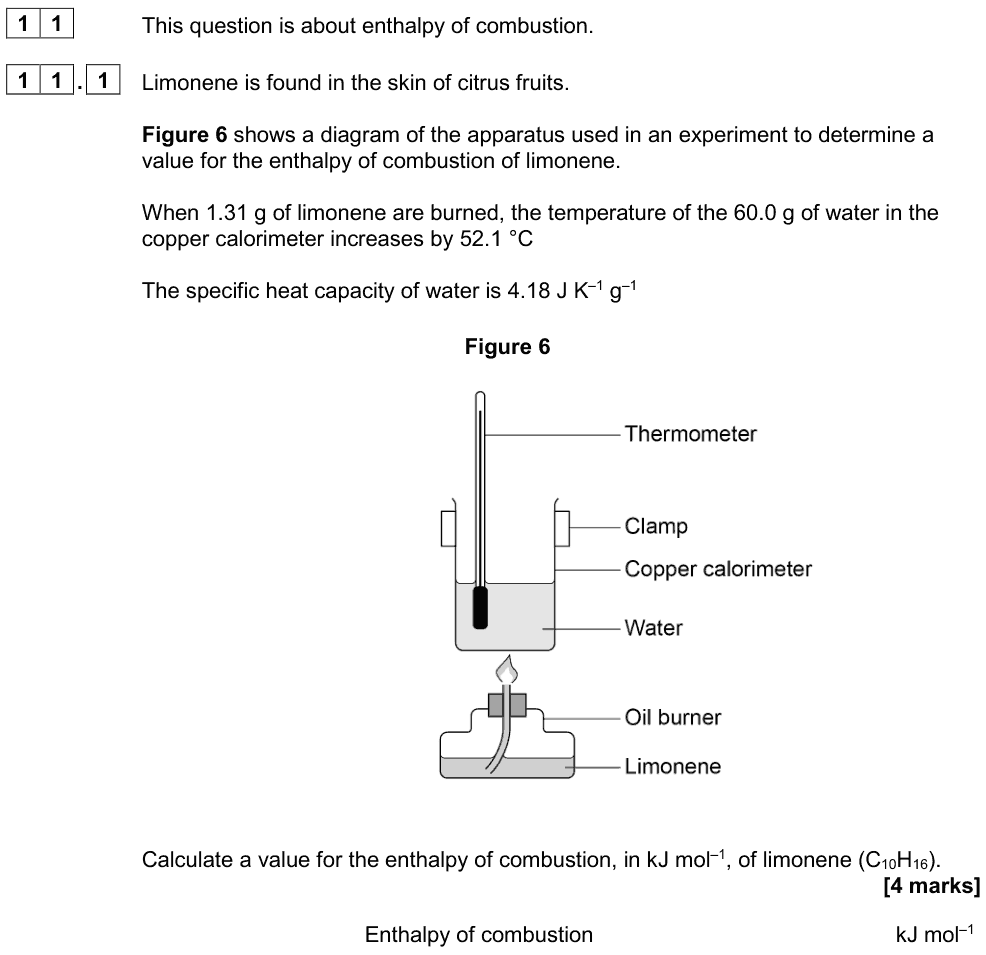
This question is about enthalpy of combustion.
Limonene is found in the skin of citrus fruits.
Figure 6 shows a diagram of the apparatus used in an experiment to determine a
value for the enthalpy of combustion of limonene.
When 1.31 g of limonene are burned, the temperature of the 60.0 g of water in the
copper calorimeter increases by 52.1 °C
The specific heat capacity of water is 4.18 J K–1 g–1
Figure 6
Calculate a value for the enthalpy of combustion, in kJ mol–1, of limonene (C10H16).
[4 marks]
Enthalpy of combustion
kJ mol–1
June 2024 · Paper 2 · Q11.2 5 marks AO3=5 Explanation energetics
Earlier part of question 11 that this part usesEarlier part of June 2024 Paper 2 question 11
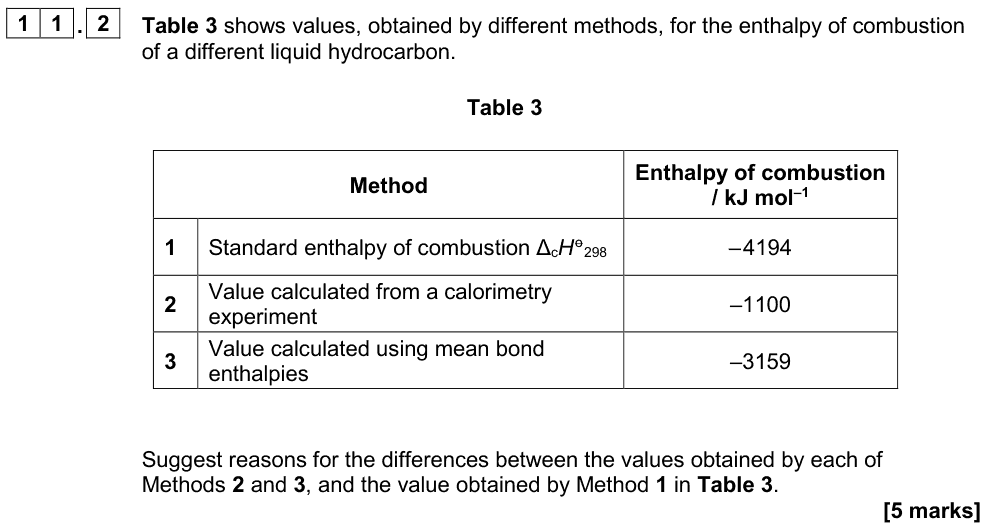
Table 3 shows values, obtained by different methods, for the enthalpy of combustion
of a different liquid hydrocarbon.
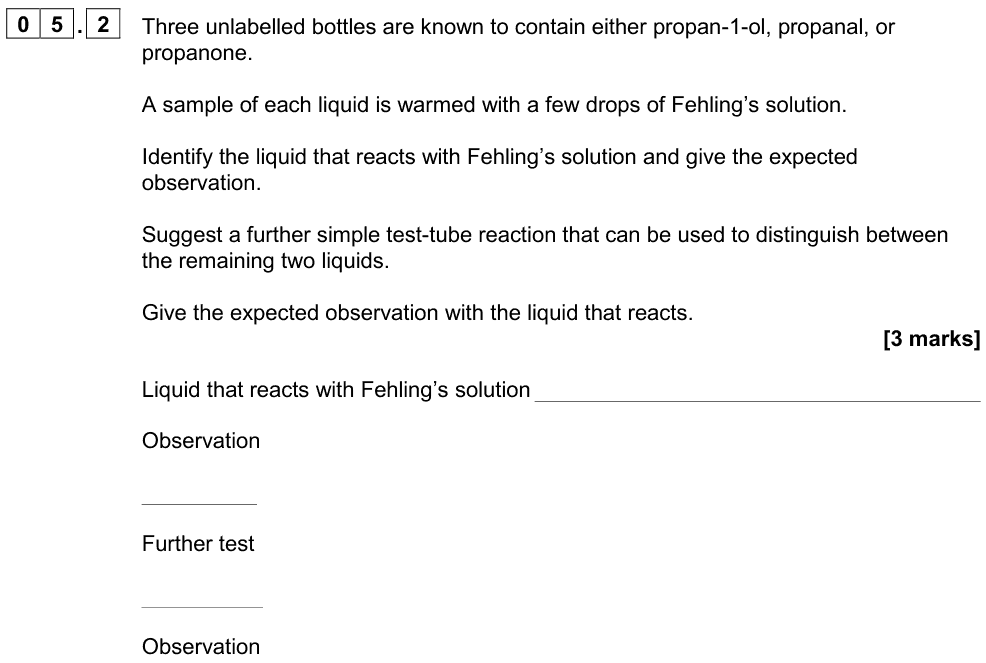
Table 3
Method
Enthalpy of combustion
/ kJ mol–1
1
Standard enthalpy of combustion ΔcH o
298
– 4194
2
Value calculated from a calorimetry
experiment
–1100
3
Value calculated using mean bond
enthalpies
–3159
Suggest reasons for the differences between the values obtained by each of
Methods 2 and 3, and the value obtained by Method 1 in Table 3.
[5 marks]

Work with an A-level chemistry tutor

Want a paper marked and gone through with you? Message us.

Prefer email? Send an enquiry

If you are under 18, please include a parent's contact details. Enquiries go to enquiries@chemistryaleveltutor.com and are deleted once handled. All tutoring is online.