October 2020: Paper 3, General and Practical Principles in Chemistry

120 marks · 53 question parts · Paper, mark scheme and report on Edexcel's site · An autumn series, sat in place of the cancelled summer exams · Have the Data Booklet beside you

Question by question

QTopicMarksAOType
1(a) Analysis of inorganic compounds 2Practical and data analysis
1(b) Analysis of inorganic compounds 2Practical and data analysis
2(a)(i) The elements of Groups 1 and 2 1Practical and data analysis
2(a)(ii) The elements of Groups 1 and 2 1Practical and data analysis
2(b)(i) The elements of Groups 1 and 2 2Practical and data analysis
2(b)(ii) The elements of Groups 1 and 2 1Practical and data analysis
2(b)(iii) The elements of Groups 1 and 2 1Practical and data analysis
2(b)(iv) The elements of Groups 1 and 2 1Practical and data analysis
2(c) The elements of Groups 1 and 2 3Explanation
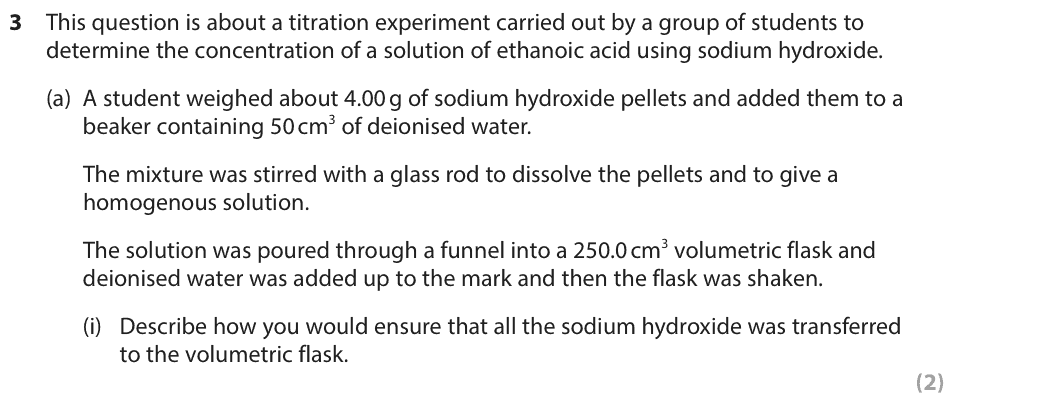
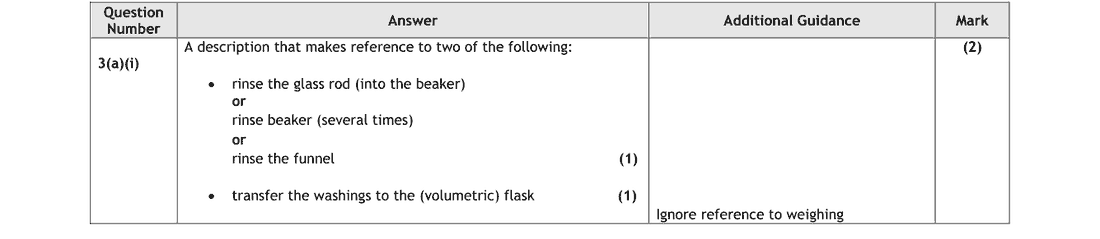
3(a)(i) Formulae, equations and amounts of substance 2Practical and data analysis
3(a)(ii) Formulae, equations and amounts of substance 1Practical and data analysis
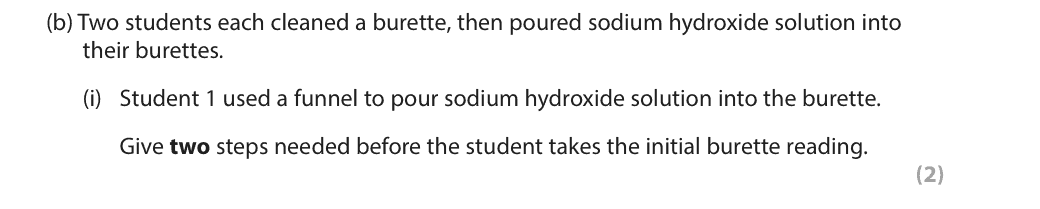
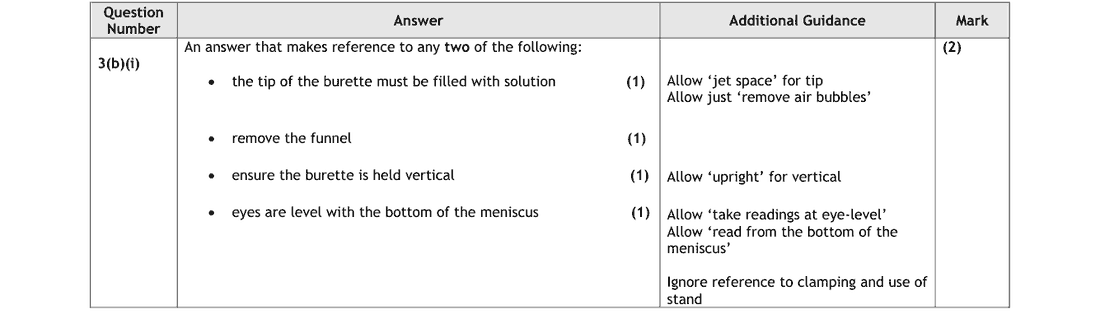
3(b)(i) Formulae, equations and amounts of substance 2Practical and data analysis
3(b)(ii) Formulae, equations and amounts of substance 1Practical and data analysis
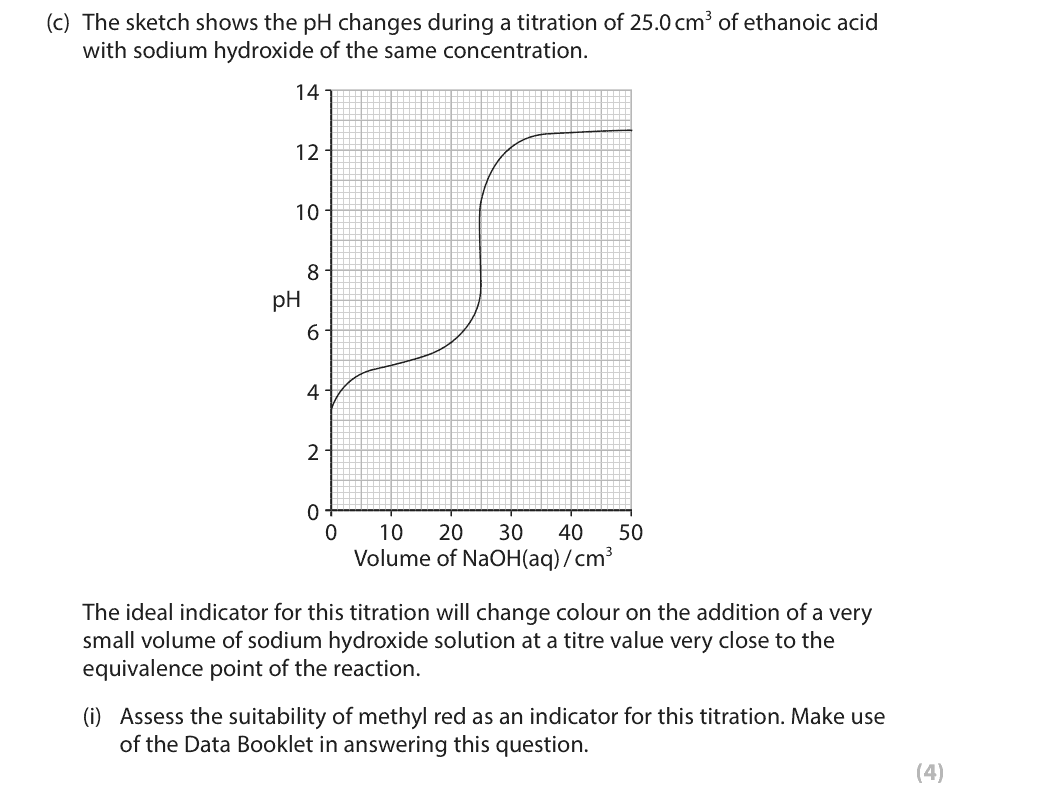
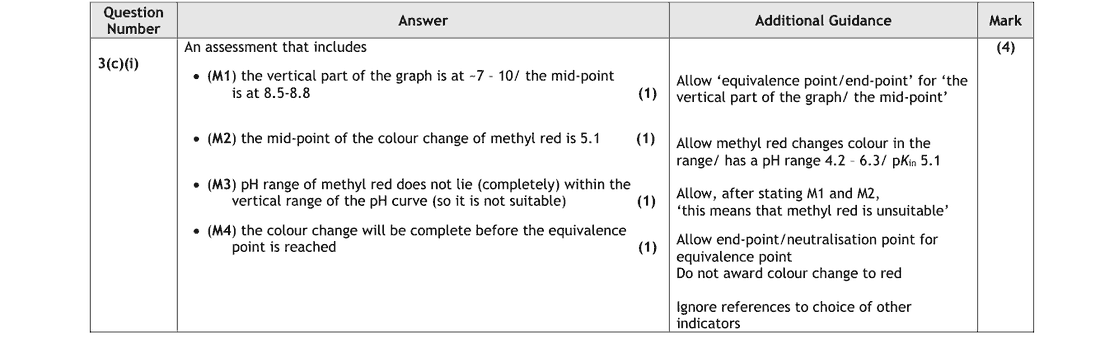
3(c)(i) Acid-base equilibria 4Explanation
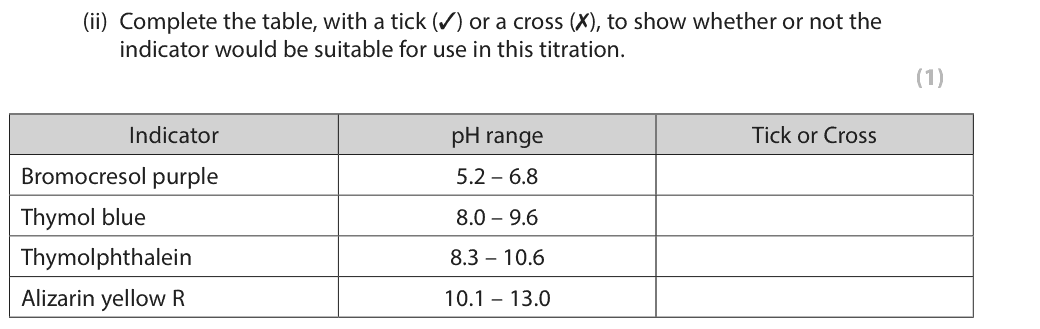
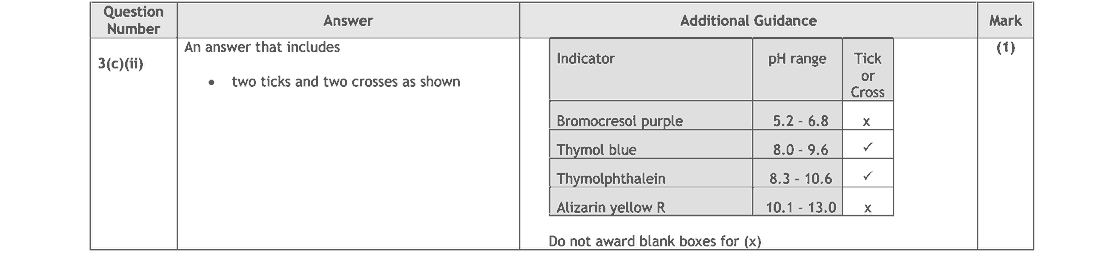
3(c)(ii) Acid-base equilibria 1Short answer
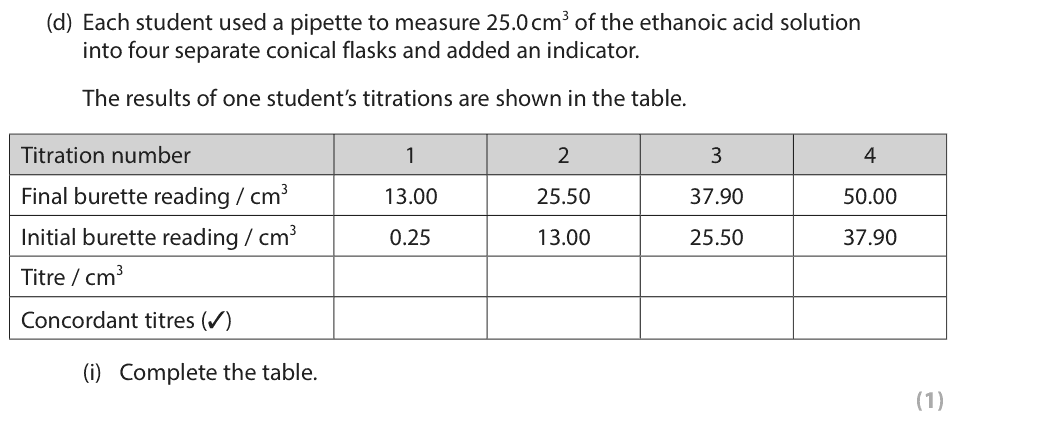
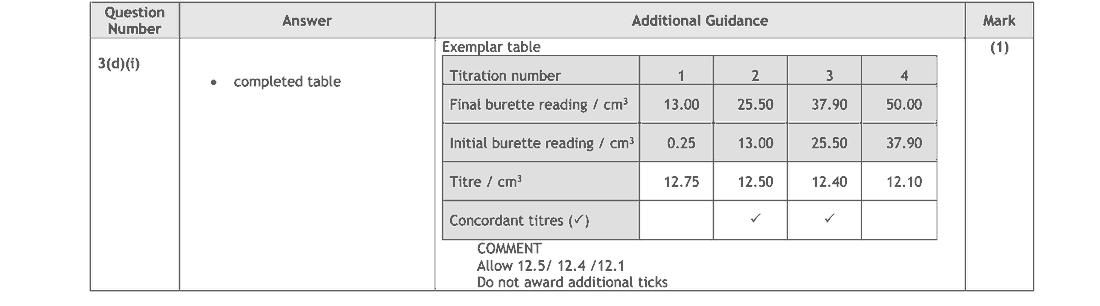
3(d)(i) Formulae, equations and amounts of substance 1Short answer
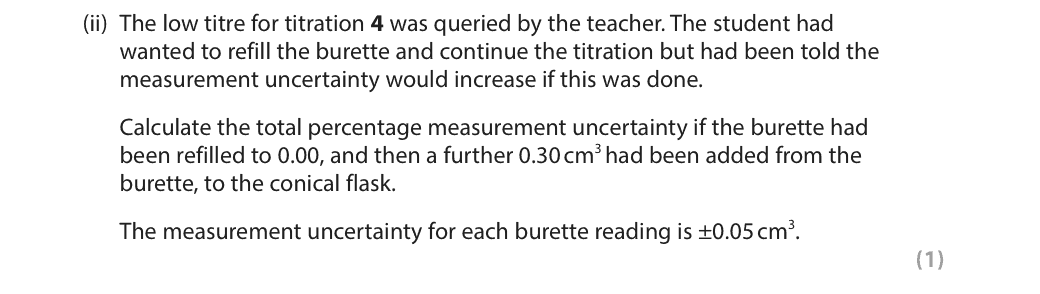
3(d)(ii) Formulae, equations and amounts of substance 1Calculation
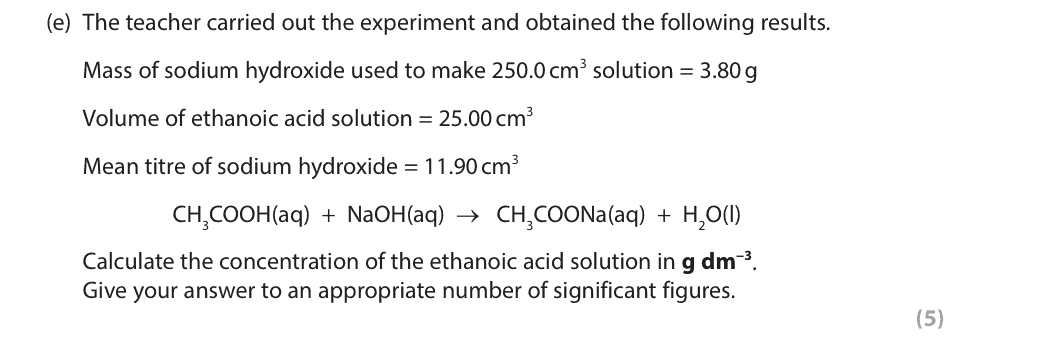
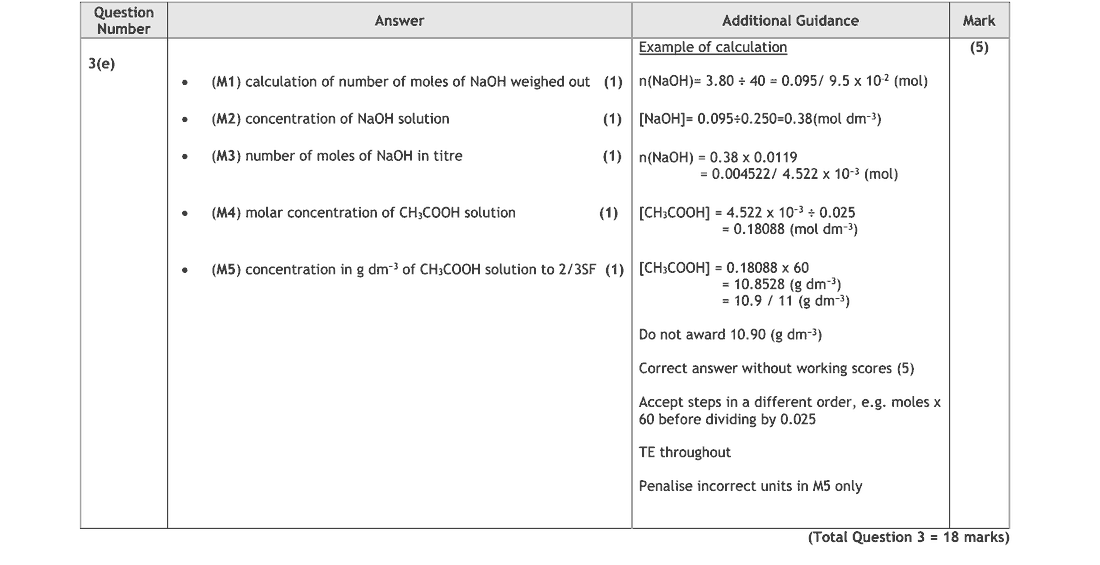
3(e) Formulae, equations and amounts of substance 5Calculation
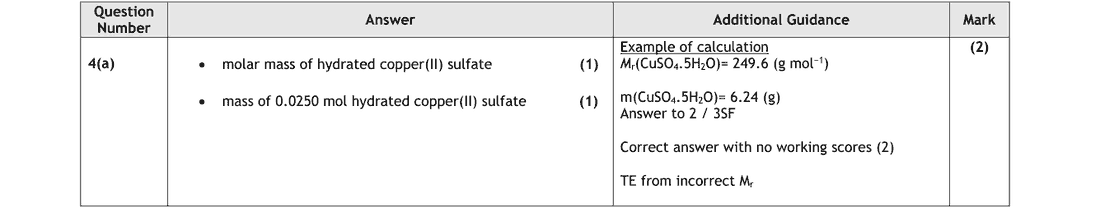
4(a) Formulae, equations and amounts of substance, Atomic structure and the Periodic Table 2Calculation
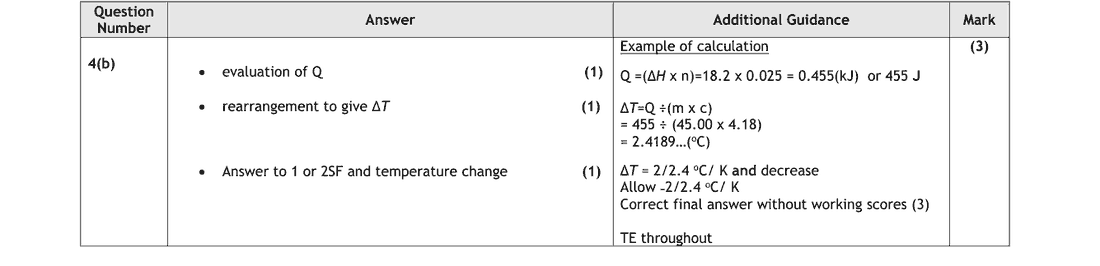
4(b) Energetics I 3Calculation
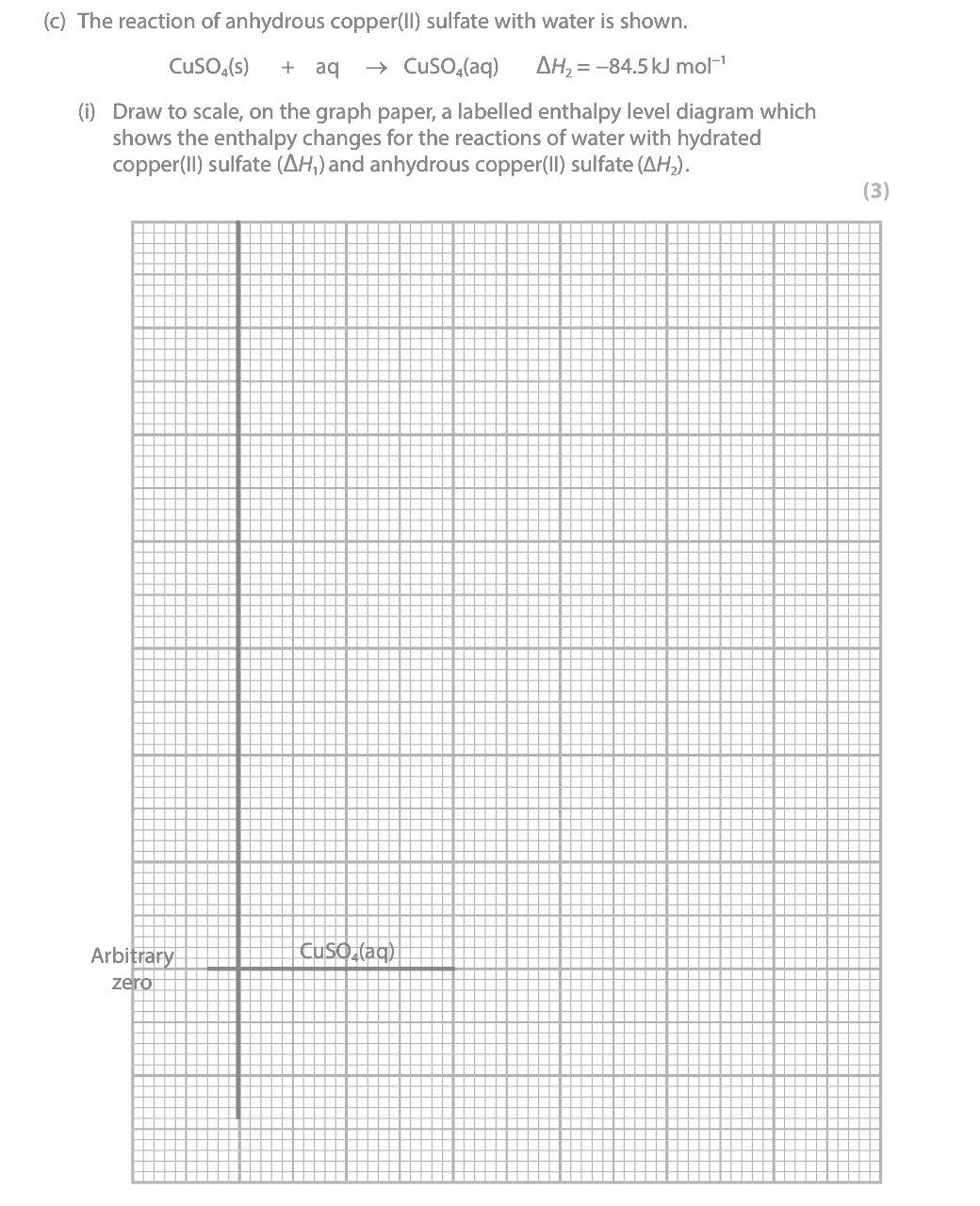
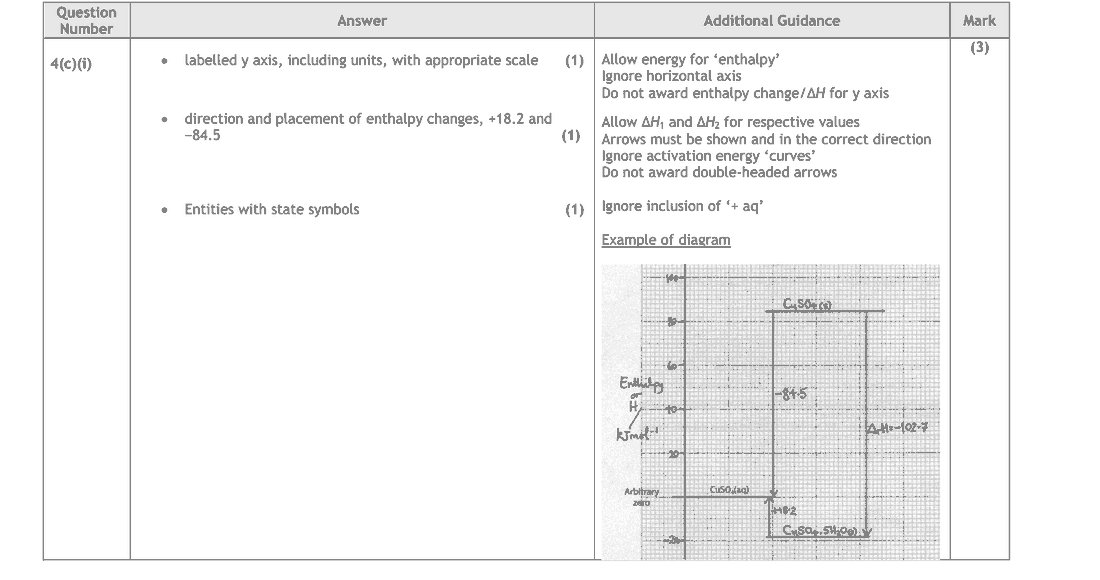
4(c)(i) Energetics I 3Diagram or structure
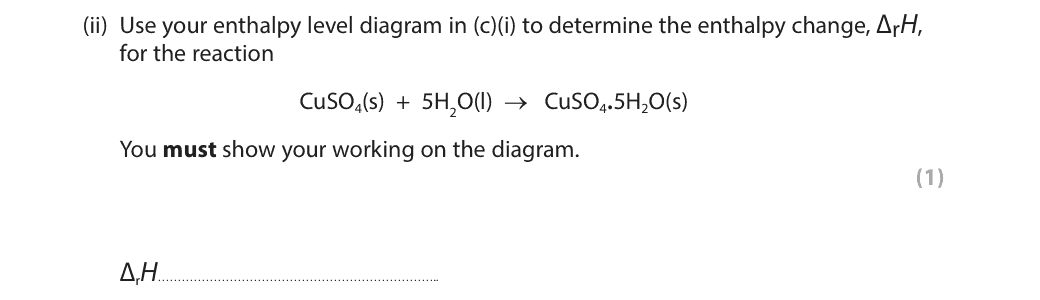
4(c)(ii) Energetics I 1Calculation
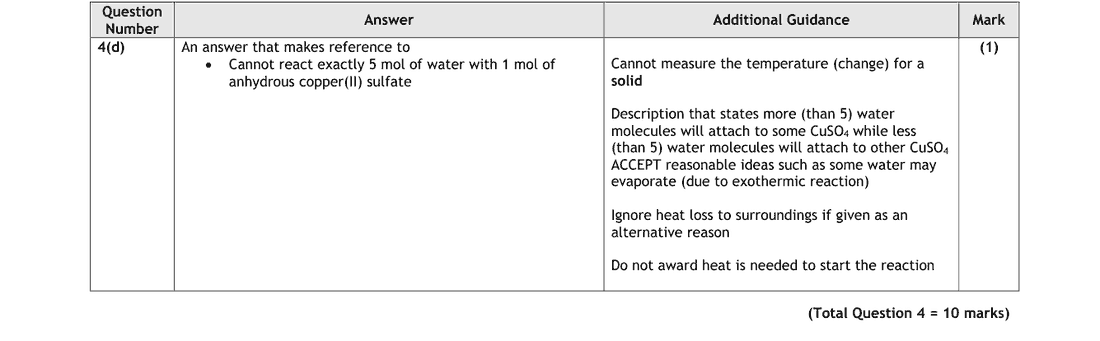
4(d) Energetics I 1Practical and data analysis
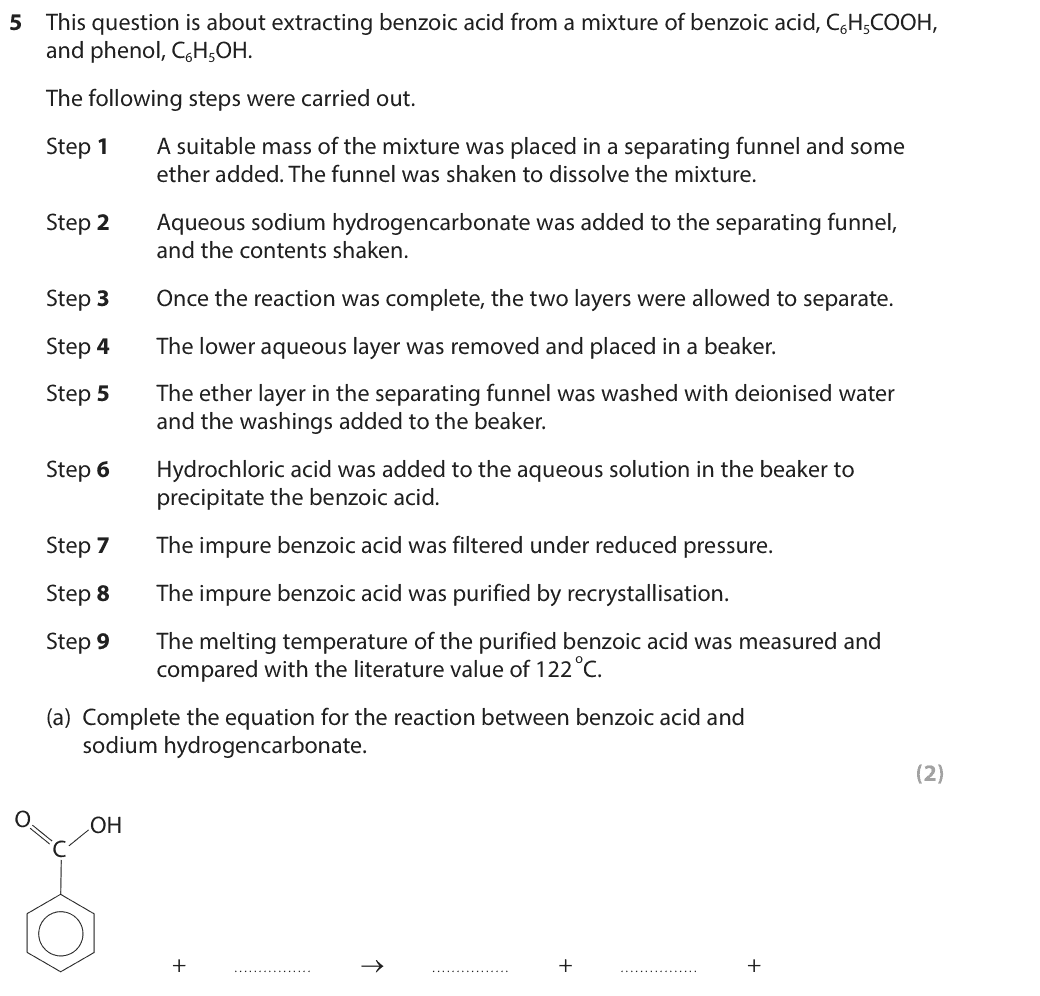
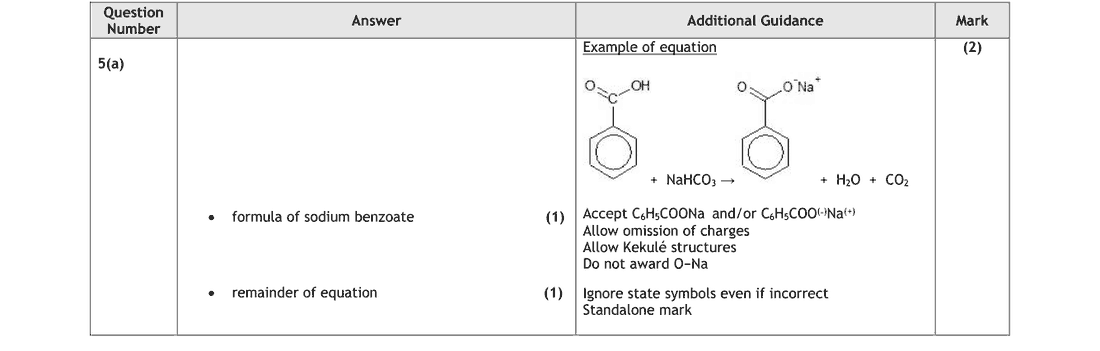
5(a) Carboxylic acids 2Equation writing
5(b) Organic synthesis 1Practical and data analysis
5(c) Organic synthesis 1Practical and data analysis
5(d) Organic synthesis 1Practical and data analysis
5(e) Carboxylic acids 2Explanation
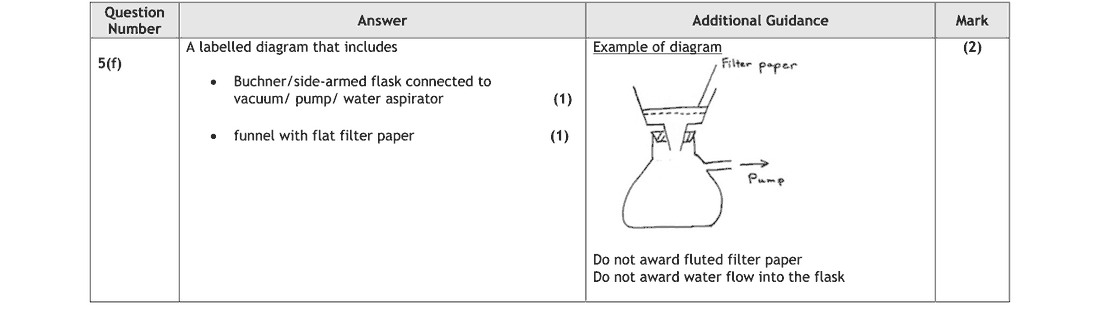
5(f) Organic synthesis 2Diagram or structure
5(g) Formulae, equations and amounts of substance 3Calculation
5(h) Organic synthesis 2Practical and data analysis
6(a) Formulae, equations and amounts of substance, Introduction to organic chemistry 2Equation writing
6(b)(i) Atomic structure and the Periodic Table 3Calculation
6(b)(ii) Arenes: benzene 1Short answer
6(b)(iii) Arenes: benzene 1Short answer
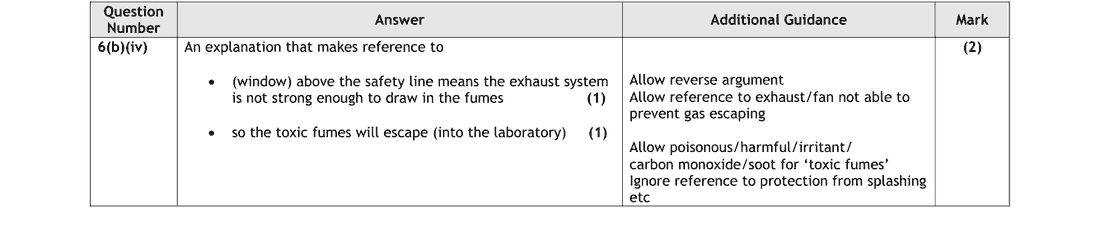
6(b)(iv) Formulae, equations and amounts of substance 2Practical and data analysis
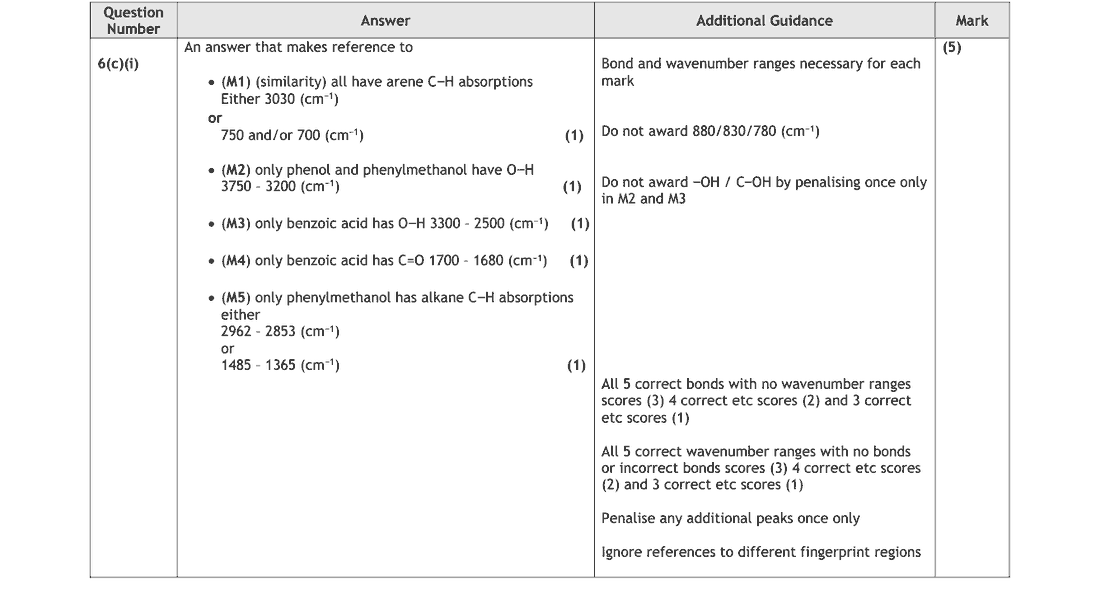
6(c)(i) Modern analytical techniques I: mass spectrometry and infrared 5Explanation
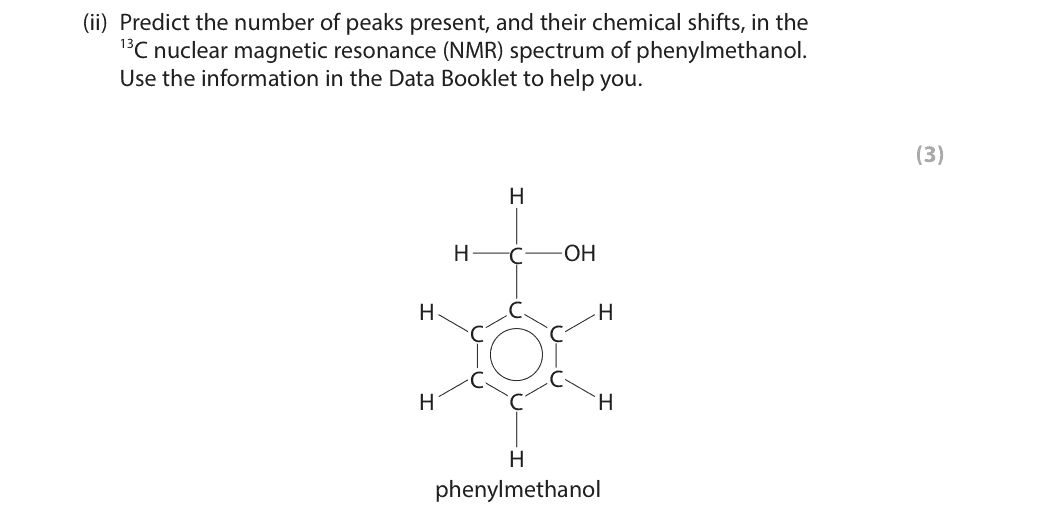
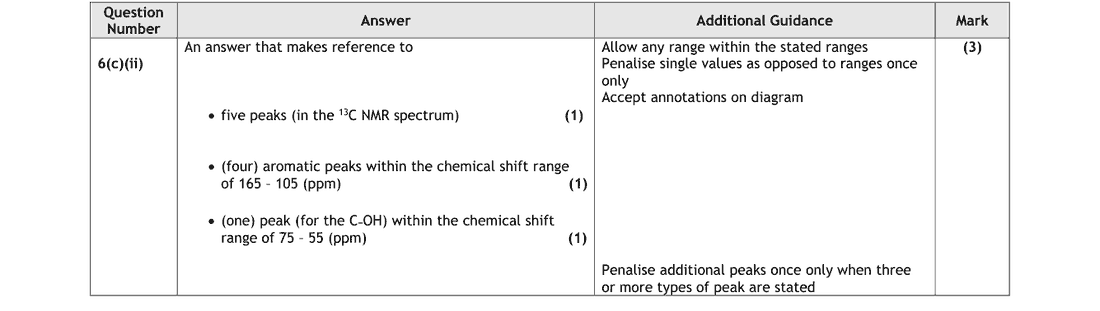
6(c)(ii) Modern analytical techniques II: NMR, mass spectrometry and chromatography 3Short answer
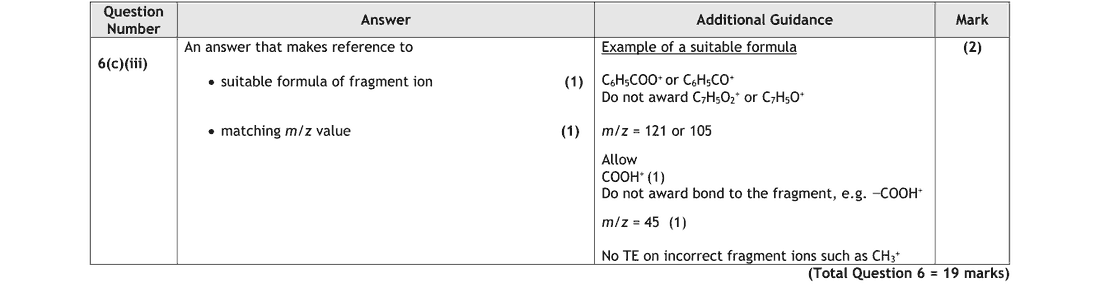
6(c)(iii) Modern analytical techniques I: mass spectrometry and infrared 2Short answer
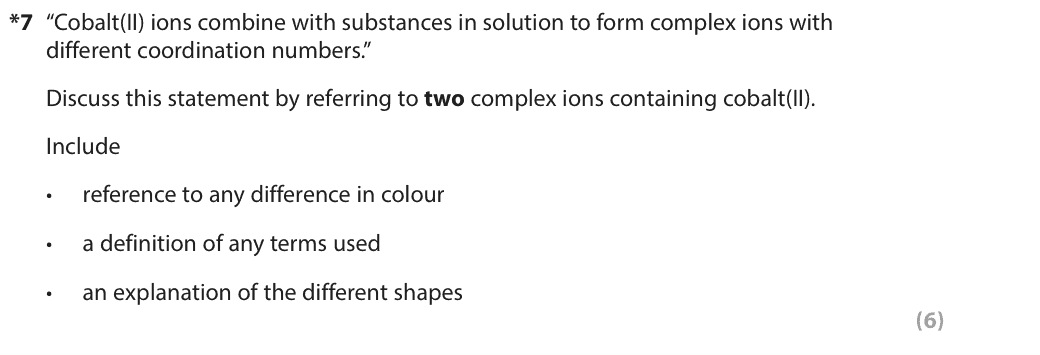
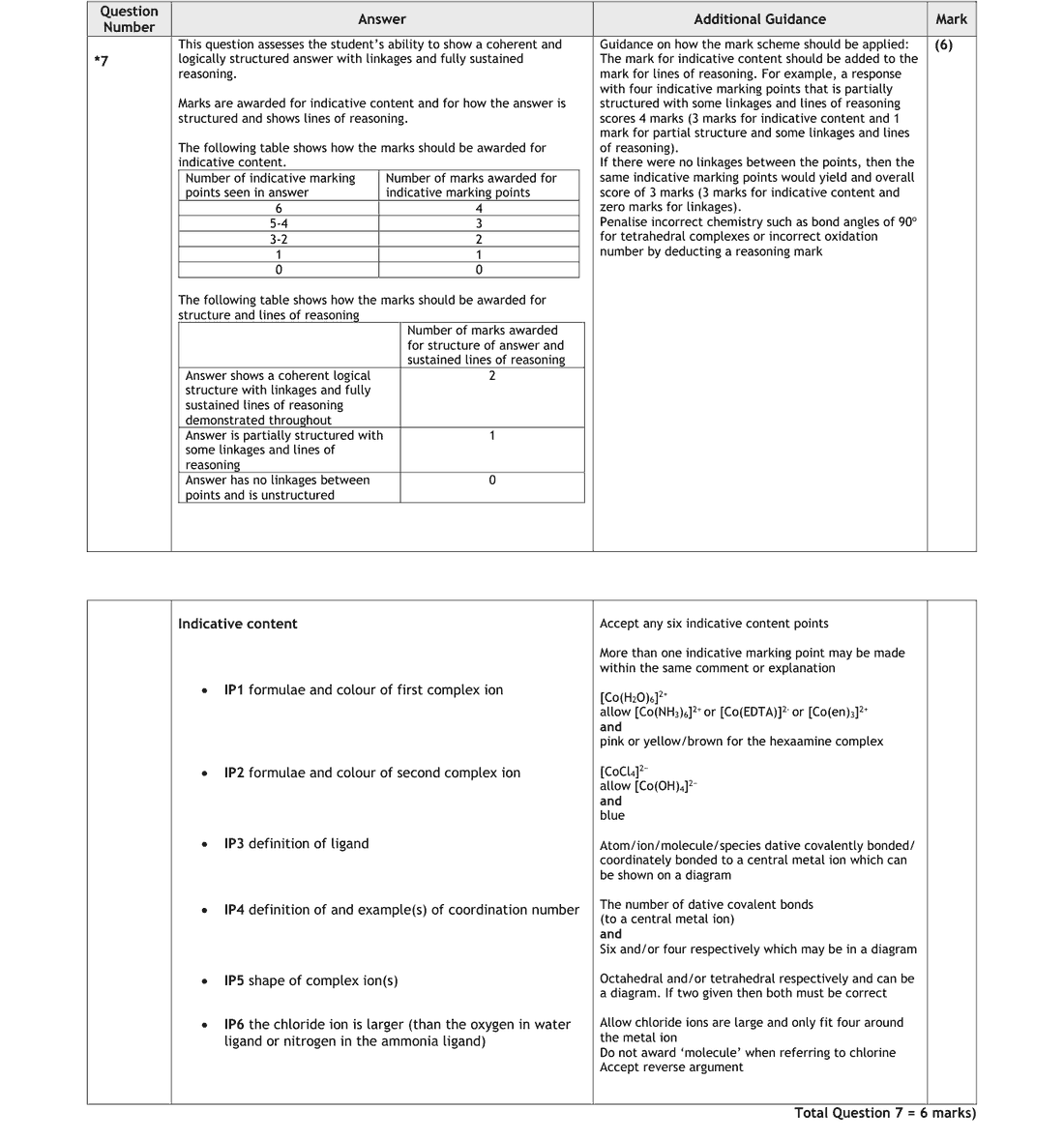
7 Transition metals: principles 6Extended response
8(a) Transition metals: reactions 2Practical and data analysis
8(b)(i) Transition metals: reactions, Redox I 2Equation writing
8(b)(ii) Transition metals: reactions 1Equation writing
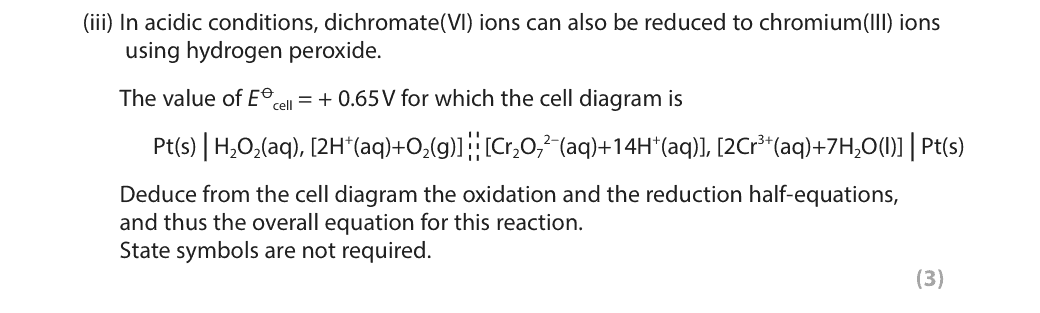
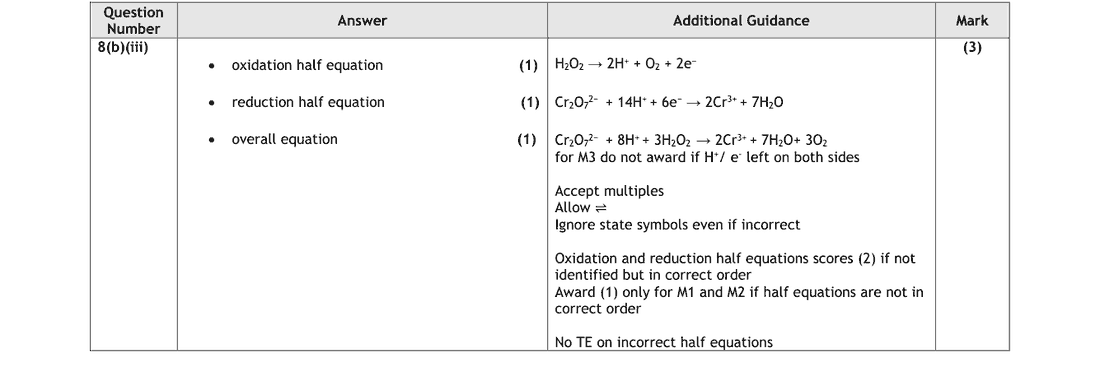
8(b)(iii) Redox II, Redox I 3Equation writing
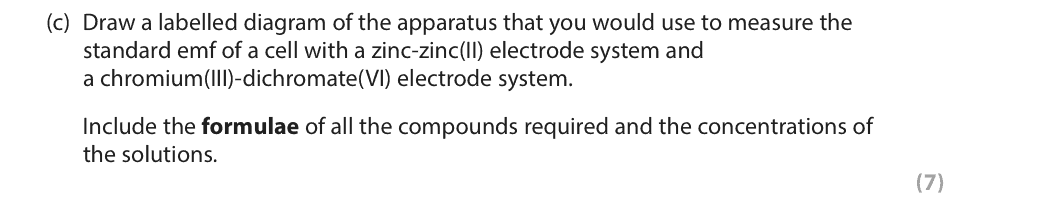
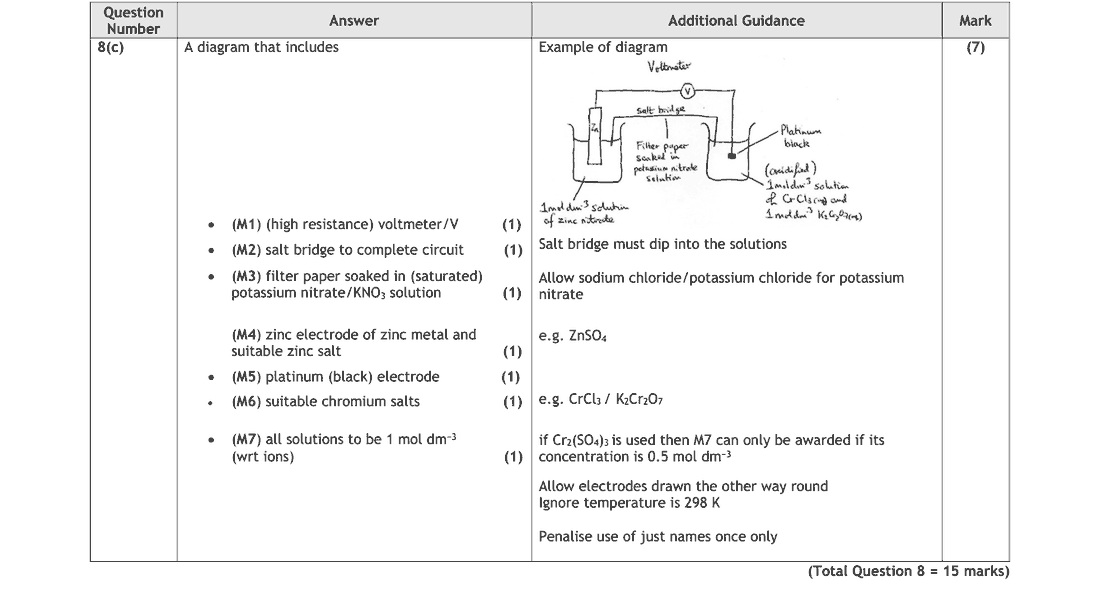
8(c) Redox II 7Diagram or structure
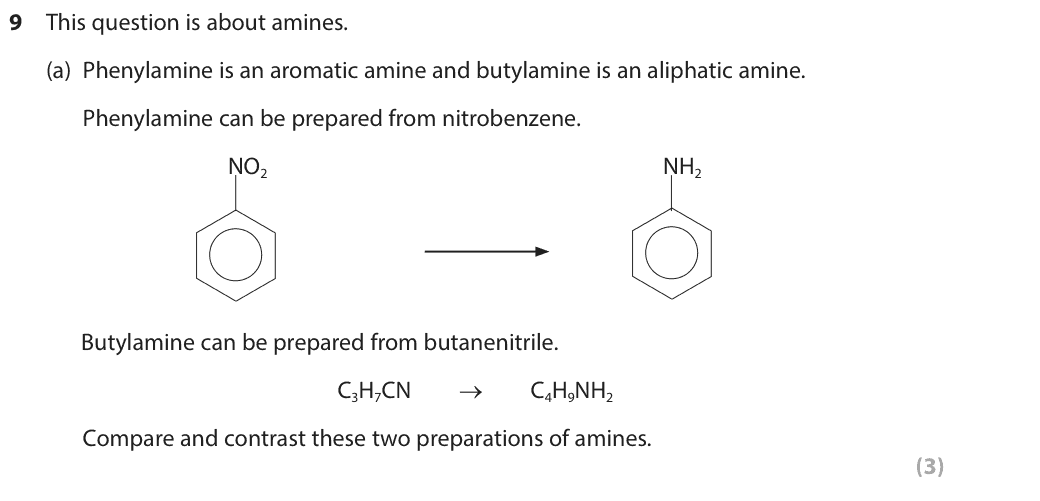
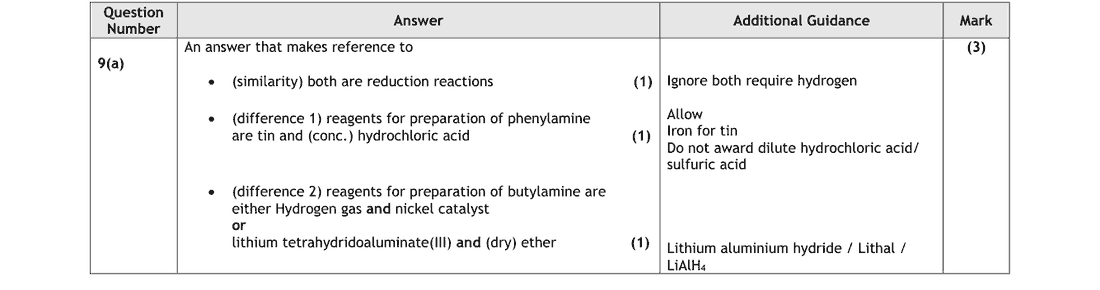
9(a) Amines, amides, amino acids and proteins 3Short answer
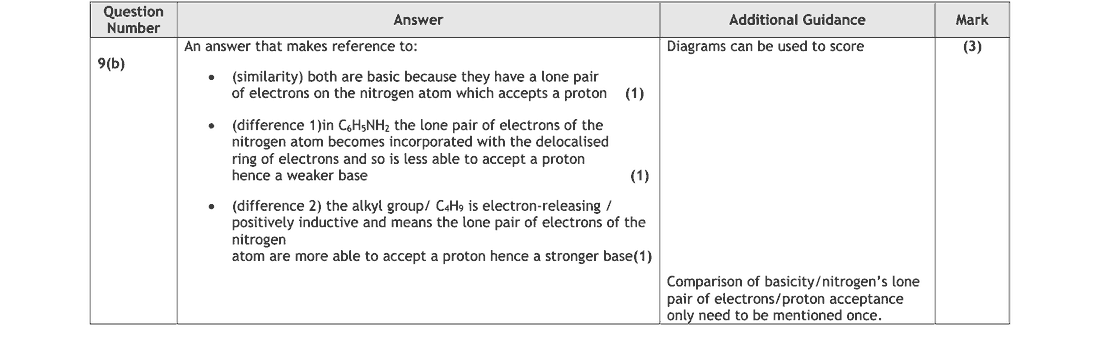
9(b) Amines, amides, amino acids and proteins 3Explanation
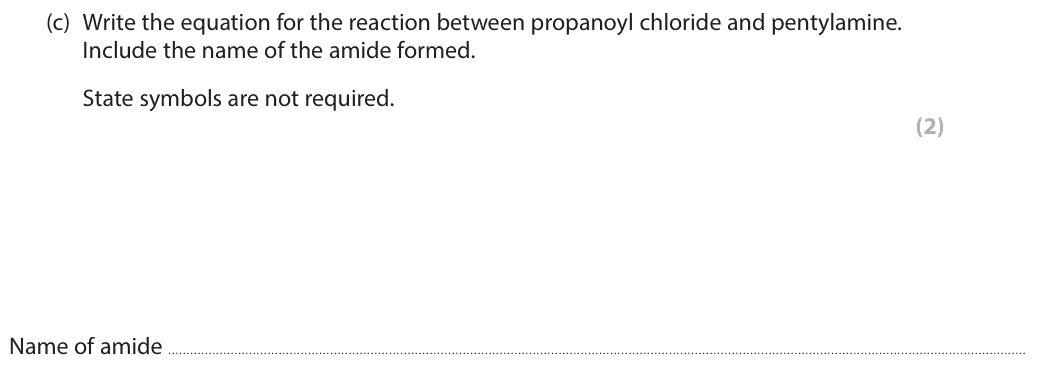
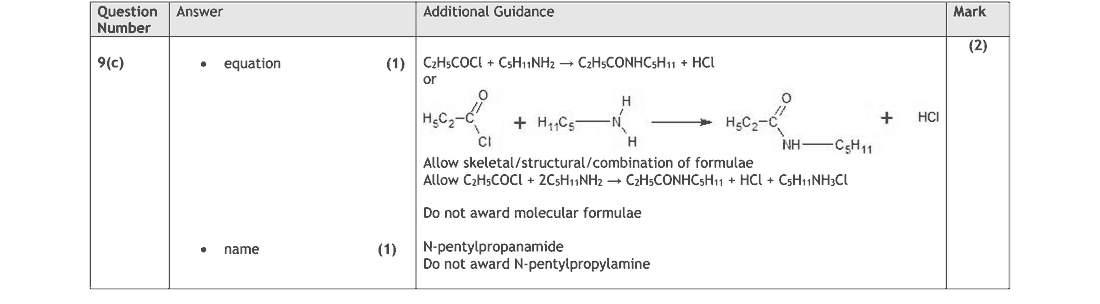
9(c) Carboxylic acids, Amines, amides, amino acids and proteins, Introduction to organic chemistry 2Equation writing
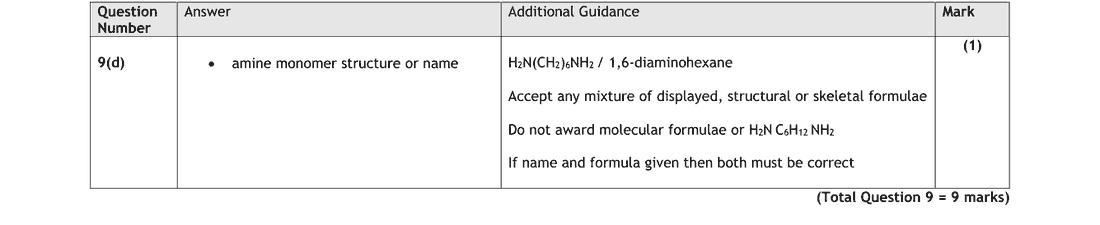
9(d) Amines, amides, amino acids and proteins 1Short answer
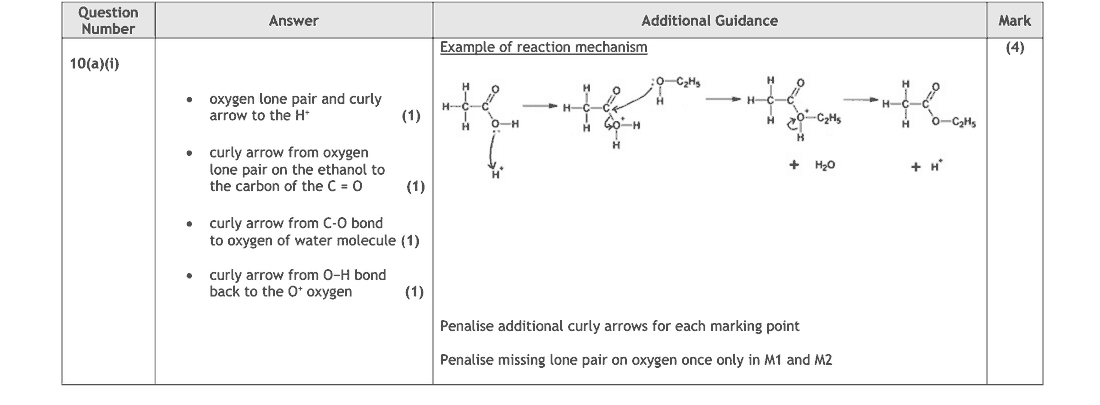
10(a)(i) Carboxylic acids 4Mechanism
10(a)(ii) Carboxylic acids 2Short answer
10(a)(iii) Energetics II: entropy 6Calculation
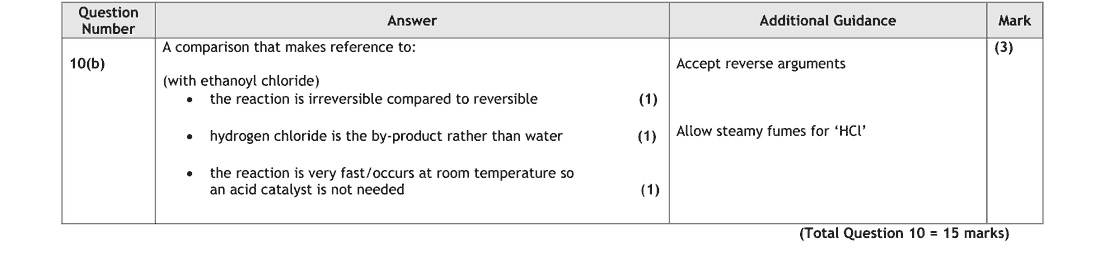
10(b) Carboxylic acids 3Short answer

The questions

1(a)1(b)2(a)(i)2(a)(ii)2(b)(i)2(b)(ii)2(b)(iii)2(b)(iv)2(c)3(a)(i)3(a)(ii)3(b)(i)3(b)(ii)3(c)(i)3(c)(ii)3(d)(i)3(d)(ii)3(e)4(a)4(b)4(c)(i)4(c)(ii)4(d)5(a)5(b)5(c)5(d)5(e)5(f)5(g)5(h)6(a)6(b)(i)6(b)(ii)6(b)(iii)6(b)(iv)6(c)(i)6(c)(ii)6(c)(iii)78(a)8(b)(i)8(b)(ii)8(b)(iii)8(c)9(a)9(b)9(c)9(d)10(a)(i)10(a)(ii)10(a)(iii)10(b)
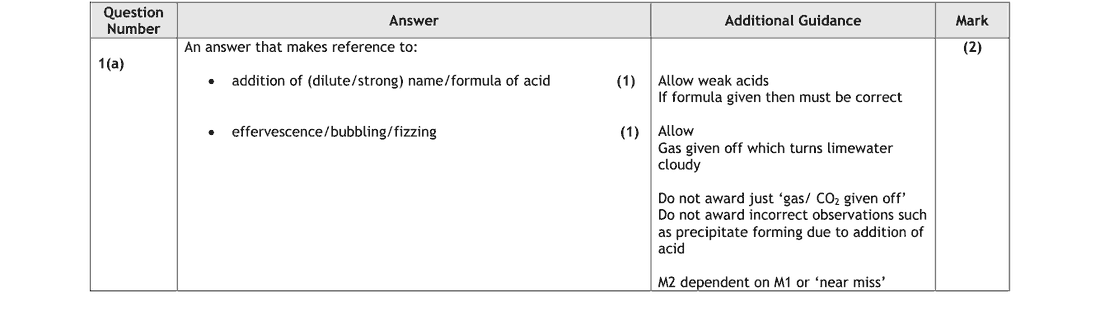
October 2020 · Paper 3 · Q1(a) 2 marks Practical and data analysis analysis of inorganic compounds
Aqueous sodium carbonate and aqueous sodium sulfate are both colourless solutions.
Give the reagent and the observation to show the presence of carbonate ions.
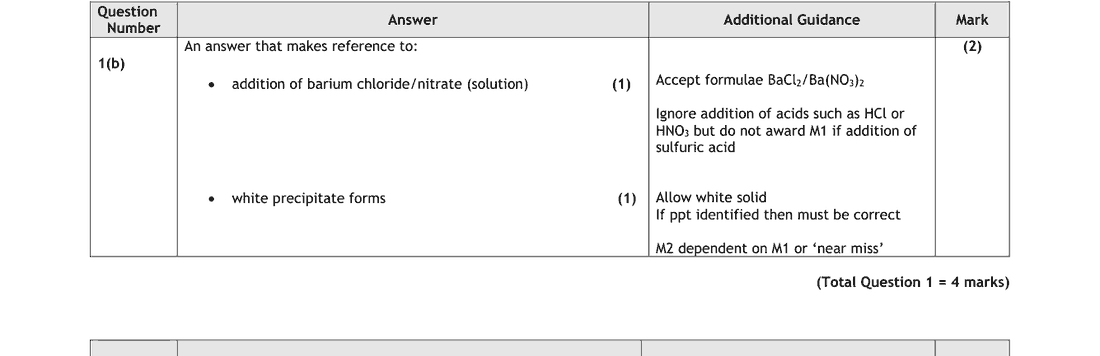
October 2020 · Paper 3 · Q1(b) 2 marks Practical and data analysis analysis of inorganic compounds
Give the reagent and the observation to show the presence of sulfate ions.
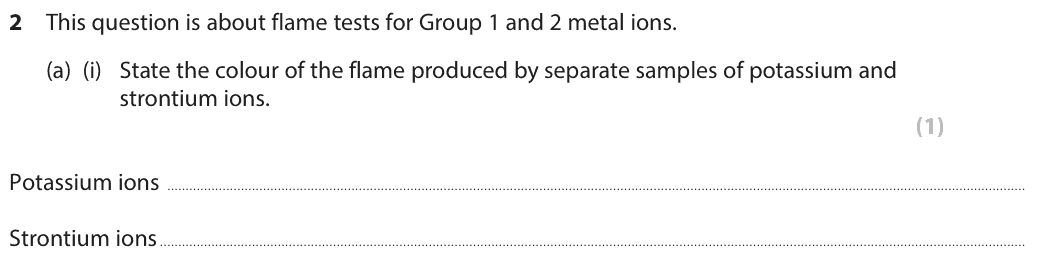
October 2020 · Paper 3 · Q2(a)(i) 1 mark Practical and data analysis groups 1 and 2
This question is about flame tests for Group 1 and 2 metal ions.
State the colour of the flame produced by separate samples of potassium and
strontium ions.
Potassium ions 
Strontium ions
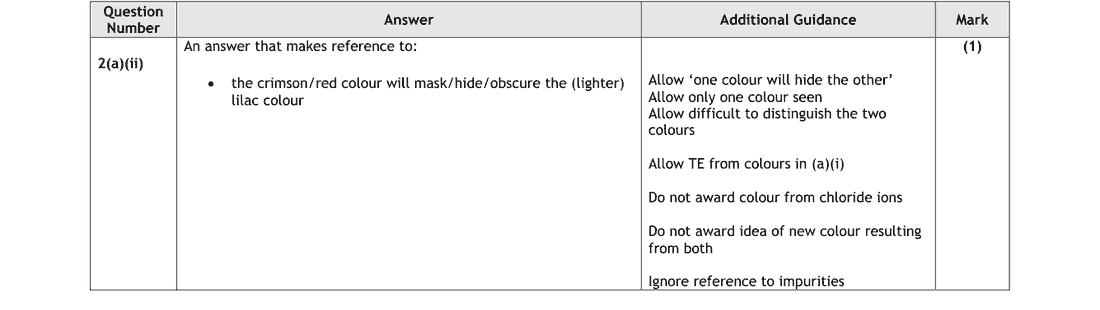
October 2020 · Paper 3 · Q2(a)(ii) 1 mark Practical and data analysis groups 1 and 2
Earlier part of question 2 that this part usesEarlier part of October 2020 Paper 3 question 2
Give a reason why carrying out a flame test on a mixture of potassium chloride
and strontium chloride does not clearly show that two different metal ions
are present.
October 2020 · Paper 3 · Q2(b)(i) 2 marks Practical and data analysis groups 1 and 2
Earlier part of question 2 that this part usesEarlier part of October 2020 Paper 3 question 2
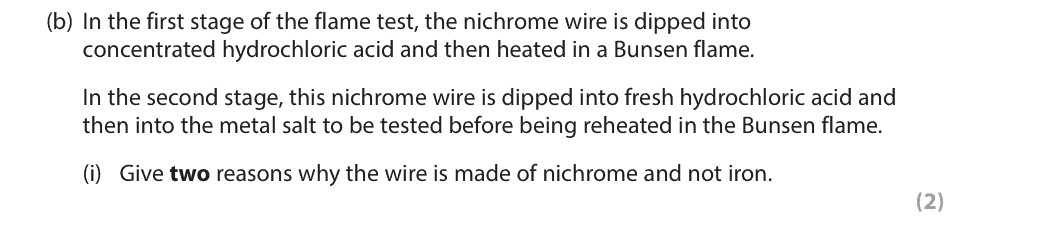
In the first stage of the flame test, the nichrome wire is dipped into
concentrated hydrochloric acid and then heated in a Bunsen flame.
In the second stage, this nichrome wire is dipped into fresh hydrochloric acid and
then into the metal salt to be tested before being reheated in the Bunsen flame.
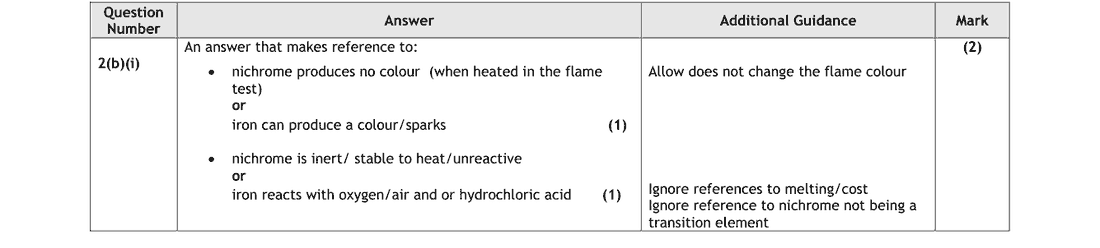
Give two reasons why the wire is made of nichrome and not iron.
October 2020 · Paper 3 · Q2(b)(ii) 1 mark Practical and data analysis groups 1 and 2
Earlier parts of question 2 that this part usesEarlier part of October 2020 Paper 3 question 2Earlier part of October 2020 Paper 3 question 2
Give a reason why the wire is dipped into acid and then heated in the first stage.
October 2020 · Paper 3 · Q2(b)(iii) 1 mark Practical and data analysis groups 1 and 2
Earlier parts of question 2 that this part usesEarlier part of October 2020 Paper 3 question 2Earlier part of October 2020 Paper 3 question 2
State why fresh concentrated hydrochloric acid is used in the second stage of
the flame test.
October 2020 · Paper 3 · Q2(b)(iv) 1 mark Practical and data analysis Hard groups 1 and 2
Earlier parts of question 2 that this part usesEarlier part of October 2020 Paper 3 question 2Earlier part of October 2020 Paper 3 question 2
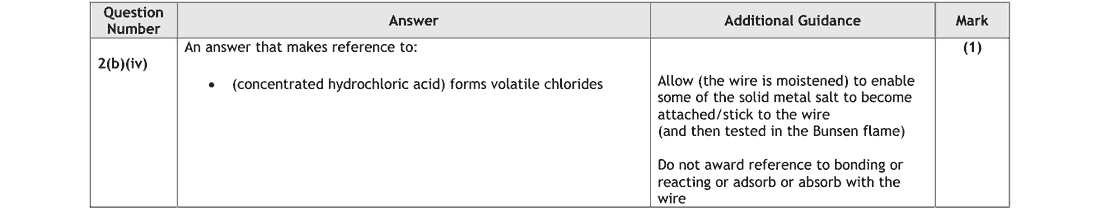
State why hydrochloric acid is used in the second stage of the flame test.
October 2020 · Paper 3 · Q2(c) 3 marks Explanation Easy groups 1 and 2
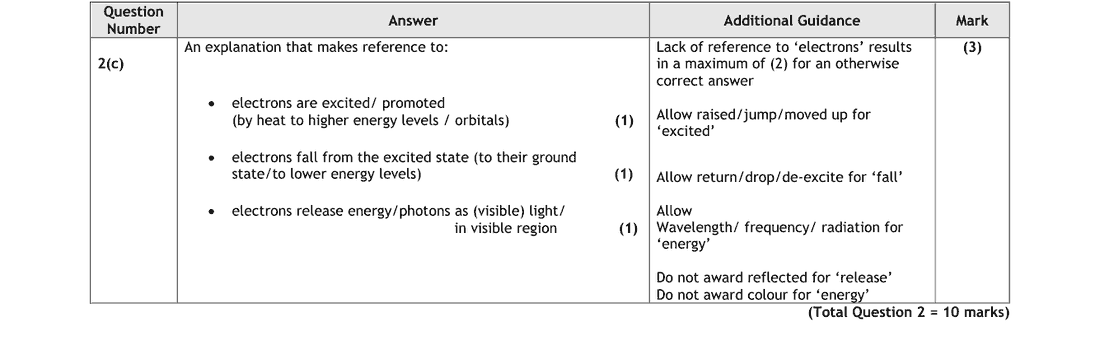
Explain, with reference to electron transitions, the formation of the colour in a
flame test.
October 2020 · Paper 3 · Q3(a)(i) 2 marks Practical and data analysis formulae equations and amounts of substance
This question is about a titration experiment carried out by a group of students to
determine the concentration of a solution of ethanoic acid using sodium hydroxide.
A student weighed about 4.00 g of sodium hydroxide pellets and added them to a
beaker containing 50 cm3 of deionised water.
The mixture was stirred with a glass rod to dissolve the pellets and to give a
homogenous solution.
The solution was poured through a funnel into a 250.0 cm3 volumetric flask and
deionised water was added up to the mark and then the flask was shaken.
Describe how you would ensure that all the sodium hydroxide was transferred
to the volumetric flask.
October 2020 · Paper 3 · Q3(a)(ii) 1 mark Practical and data analysis formulae equations and amounts of substance
Earlier part of question 3 that this part usesEarlier part of October 2020 Paper 3 question 3
A student adds deionised water above the mark and shakes the flask.
State why the procedure has to be restarted rather than using a teat pipette
to remove the excess water.
October 2020 · Paper 3 · Q3(b)(i) 2 marks Practical and data analysis formulae equations and amounts of substance
Earlier part of question 3 that this part usesEarlier part of October 2020 Paper 3 question 3
Two students each cleaned a burette, then poured sodium hydroxide solution into
their burettes.
Student 1 used a funnel to pour sodium hydroxide solution into the burette.
Give two steps needed before the student takes the initial burette reading.
October 2020 · Paper 3 · Q3(b)(ii) 1 mark Practical and data analysis formulae equations and amounts of substance
Earlier parts of question 3 that this part usesEarlier part of October 2020 Paper 3 question 3Earlier part of October 2020 Paper 3 question 3
Student 2 cleaned the burette by rinsing it with deionised water immediately
before filling it with the sodium hydroxide solution.
Give the effect, if any, on the value of the first titre. Justify your answer.
October 2020 · Paper 3 · Q3(c)(i) 4 marks Explanation acid base equilibria
Earlier part of question 3 that this part usesEarlier part of October 2020 Paper 3 question 3
The sketch shows the pH changes during a titration of 25.0 cm3 of ethanoic acid
with sodium hydroxide of the same concentration.
14
12
10
8
pH
6
4
2
0
0
10
20
30
40
50
Volume of NaOH(aq) / cm3
The ideal indicator for this titration will change colour on the addition of a very
small volume of sodium hydroxide solution at a titre value very close to the
equivalence point of the reaction.
Assess the suitability of methyl red as an indicator for this titration. Make use
of the Data Booklet in answering this question.
October 2020 · Paper 3 · Q3(c)(ii) 1 mark Short answer acid base equilibria
Earlier parts of question 3 that this part usesEarlier part of October 2020 Paper 3 question 3Earlier part of October 2020 Paper 3 question 3
Complete the table, with a tick (✓) or a cross (✗), to show whether or not the
indicator would be suitable for use in this titration.
Indicator
pH range
Tick or Cross
Bromocresol purple
5.2 – 6.8
Thymol blue
8.0 – 9.6
Thymolphthalein
8.3 – 10.6
Alizarin yellow R
10.1 – 13.0
October 2020 · Paper 3 · Q3(d)(i) 1 mark Short answer formulae equations and amounts of substance
Earlier part of question 3 that this part usesEarlier part of October 2020 Paper 3 question 3
Each student used a pipette to measure 25.0 cm3 of the ethanoic acid solution
into four separate conical flasks and added an indicator.
The results of one student’s titrations are shown in the table.
Titration number
1
2
3
4
Final burette reading / cm3
13.00
25.50
37.90
50.00
Initial burette reading / cm3
0.25
13.00
25.50
37.90
Titre / cm3
Concordant titres (✓)
Complete the table.
October 2020 · Paper 3 · Q3(d)(ii) 1 mark Calculation Hard formulae equations and amounts of substance
Earlier parts of question 3 that this part usesEarlier part of October 2020 Paper 3 question 3Earlier part of October 2020 Paper 3 question 3
The low titre for titration 4 was queried by the teacher. The student had
wanted to refill the burette and continue the titration but had been told the
measurement uncertainty would increase if this was done.
Calculate the total percentage measurement uncertainty if the burette had
been refilled to 0.00, and then a further 0.30 cm3 had been added from the
burette, to the conical flask.
The measurement uncertainty for each burette reading is ±0.05 cm3.
October 2020 · Paper 3 · Q3(e) 5 marks Calculation formulae equations and amounts of substance
Earlier part of question 3 that this part usesEarlier part of October 2020 Paper 3 question 3
The teacher carried out the experiment and obtained the following results.
Mass of sodium hydroxide used to make 250.0 cm3 solution = 3.80 g
Volume of ethanoic acid solution = 25.00 cm3
Mean titre of sodium hydroxide = 11.90 cm3
CH3COOH(aq)  +  NaOH(aq)  →   CH3COONa(aq)  +  H2O(l)
Calculate the concentration of the ethanoic acid solution in g dm−3.
Give your answer to an appropriate number of significant figures.
October 2020 · Paper 3 · Q4(a) 2 marks Calculation formulae equations and amounts of substanceatomic structure and the periodic table
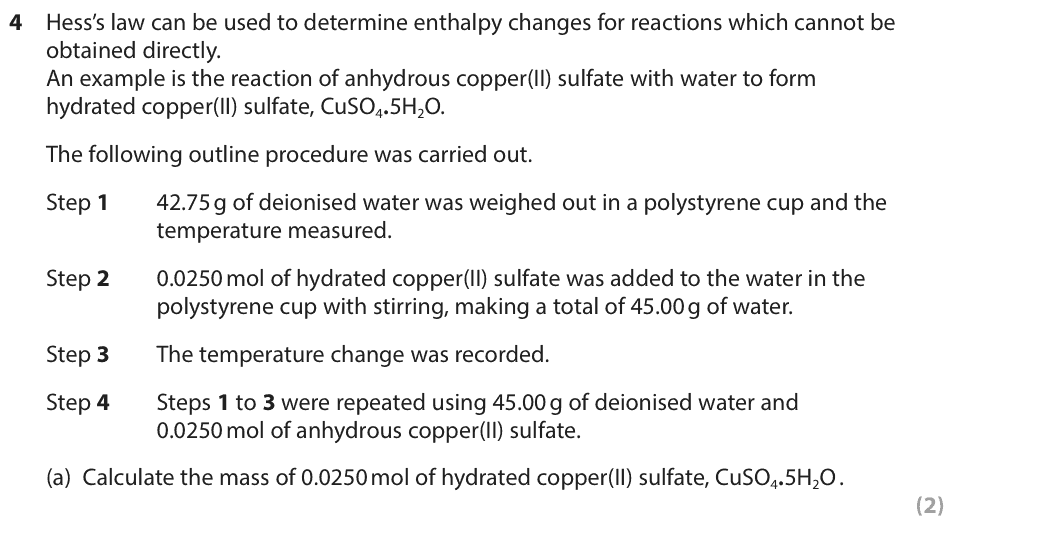
Hess’s law can be used to determine enthalpy changes for reactions which cannot be
obtained directly.
An example is the reaction of anhydrous copper(II) sulfate with water to form
hydrated copper(II) sulfate, CuSO4.5H2O.
The following outline procedure was carried out.
Step 1
42.75 g of deionised water was weighed out in a polystyrene cup and the
temperature measured.
Step 2
0.0250 mol of hydrated copper(II) sulfate was added to the water in the
polystyrene cup with stirring, making a total of 45.00 g of water.
Step 3
The temperature change was recorded.
Step 4
Steps 1 to 3 were repeated using 45.00 g of deionised water and
0.0250 mol of anhydrous copper(II) sulfate.
Calculate the mass of 0.0250 mol of hydrated copper(II) sulfate, CuSO4.5H2O .
October 2020 · Paper 3 · Q4(b) 3 marks Calculation energetics i
Earlier part of question 4 that this part usesEarlier part of October 2020 Paper 3 question 4
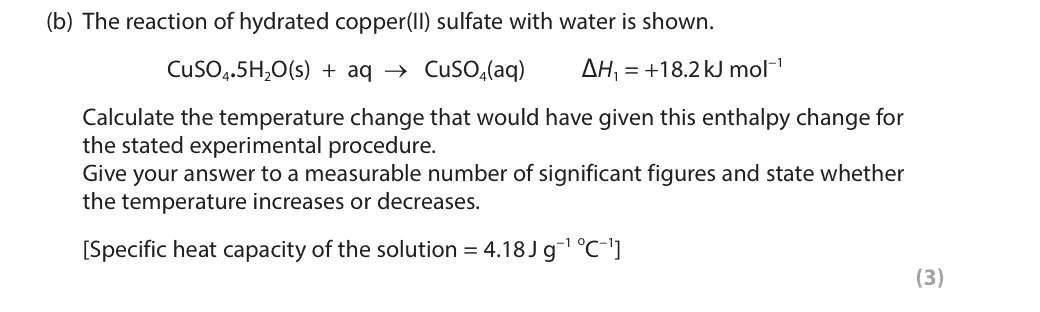
The reaction of hydrated copper(II) sulfate with water is shown.
CuSO4.5H2O(s)  +  aq  →   CuSO4(aq)          ∆H1 = +18.2 kJ mol−1
Calculate the temperature change that would have given this enthalpy change for
the stated experimental procedure.
Give your answer to a measurable number of significant figures and state whether
the temperature increases or decreases.
[Specific heat capacity of the solution = 4.18 J g−1
oC−1]
October 2020 · Paper 3 · Q4(c)(i) 3 marks Diagram or structure Hard energetics i
Earlier part of question 4 that this part usesEarlier part of October 2020 Paper 3 question 4
The reaction of anhydrous copper(II) sulfate with water is shown.
CuSO4(s)      +    aq     →   CuSO4(aq)       ∆H2 = −84.5 kJ mol−1
Draw to scale, on the graph paper, a labelled enthalpy level diagram which
shows the enthalpy changes for the reactions of water with hydrated
copper(II) sulfate (∆H1) and anhydrous copper(II) sulfate (∆H2) .
CuSO4(aq)
Arbitrary
zero
October 2020 · Paper 3 · Q4(c)(ii) 1 mark Calculation energetics i
Earlier parts of question 4 that this part usesEarlier part of October 2020 Paper 3 question 4Earlier part of October 2020 Paper 3 question 4
Use your enthalpy level diagram in (c)(i) to determine the enthalpy change, ∆rH,
for the reaction
CuSO4(s)  +  5H2O(l)  →   CuSO4.5H2O(s)
You must show your working on the diagram.
∆rH……………………………………………………………..
October 2020 · Paper 3 · Q4(d) 1 mark Practical and data analysis Hard energetics i
Earlier part of question 4 that this part usesEarlier part of October 2020 Paper 3 question 4
State why the enthalpy change for the reaction of one mole of
anhydrous copper(II) sulfate with five moles of water to form
hydrated copper(II) sulfate, CuSO4.5H2O, cannot be measured directly.
October 2020 · Paper 3 · Q5(a) 2 marks Equation writing carboxylic acids
This question is about extracting benzoic acid from a mixture of benzoic acid, C6H5COOH,
and phenol, C6H5OH.
The following steps were carried out.
Step 1
A suitable mass of the mixture was placed in a separating funnel and some
ether added. The funnel was shaken to dissolve the mixture.
Step 2
Aqueous sodium hydrogencarbonate was added to the separating funnel,
and the contents shaken.
Step 3
Once the reaction was complete, the two layers were allowed to separate.
Step 4
The lower aqueous layer was removed and placed in a beaker.
Step 5
The ether layer in the separating funnel was washed with deionised water
and the washings added to the beaker.
Step 6
Hydrochloric acid was added to the aqueous solution in the beaker to
precipitate the benzoic acid.
Step 7
The impure benzoic acid was filtered under reduced pressure.
Step 8
The impure benzoic acid was purified by recrystallisation.
Step 9
The melting temperature of the purified benzoic acid was measured and
oC.
compared with the literature value of 122
Complete the equation for the reaction between benzoic acid and
sodium hydrogencarbonate.
O
OH
C
+
. . . . . . . . . . . . . . . .    →
. . . . . . . . . . . . . . . .    +
. . . . . . . . . . . . . . . .    +
October 2020 · Paper 3 · Q5(b) 1 mark Practical and data analysis organic synthesis
Earlier part of question 5 that this part usesEarlier part of October 2020 Paper 3 question 5
In Step 2 there is a pressure build-up in the separating funnel.
Describe how you would lower the pressure.
October 2020 · Paper 3 · Q5(c) 1 mark Practical and data analysis organic synthesis
Earlier part of question 5 that this part usesEarlier part of October 2020 Paper 3 question 5
State why, in Step 4, the aqueous layer was the lower of the two layers.
October 2020 · Paper 3 · Q5(d) 1 mark Practical and data analysis organic synthesis
Earlier part of question 5 that this part usesEarlier part of October 2020 Paper 3 question 5
Give a reason why, in Step 5, the ether layer was washed with deionised water.
October 2020 · Paper 3 · Q5(e) 2 marks Explanation carboxylic acids
Earlier part of question 5 that this part usesEarlier part of October 2020 Paper 3 question 5
Explain why the addition of hydrochloric acid in Step 6 results in the precipitation
of benzoic acid.
October 2020 · Paper 3 · Q5(f) 2 marks Diagram or structure organic synthesis
Earlier part of question 5 that this part usesEarlier part of October 2020 Paper 3 question 5
Draw a diagram of the apparatus used in Step 7 to filter under reduced pressure.
October 2020 · Paper 3 · Q5(g) 3 marks Calculation formulae equations and amounts of substance
Earlier part of question 5 that this part usesEarlier part of October 2020 Paper 3 question 5
Benzoic acid can be purified in Step 8 because of its high solubility in hot water
and low solubility in cold water.
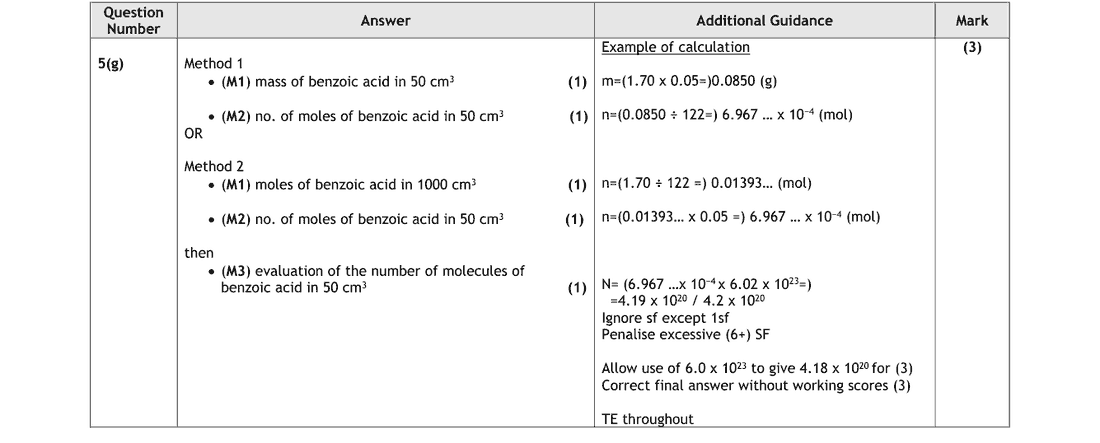
Calculate the maximum number of benzoic acid molecules that can dissolve in
50.0 cm3 of cold water if the solubility is 1.70 g per 1000 cm3.
October 2020 · Paper 3 · Q5(h) 2 marks Practical and data analysis organic synthesis
Earlier part of question 5 that this part usesEarlier part of October 2020 Paper 3 question 5
The melting temperature range of the purified benzoic acid in Step 9 was
oC.
116–121
Compare this result with the literature value, giving a reason for any differences.
October 2020 · Paper 3 · Q6(a) 2 marks Equation writing formulae equations and amounts of substanceintroduction to organic chemistry
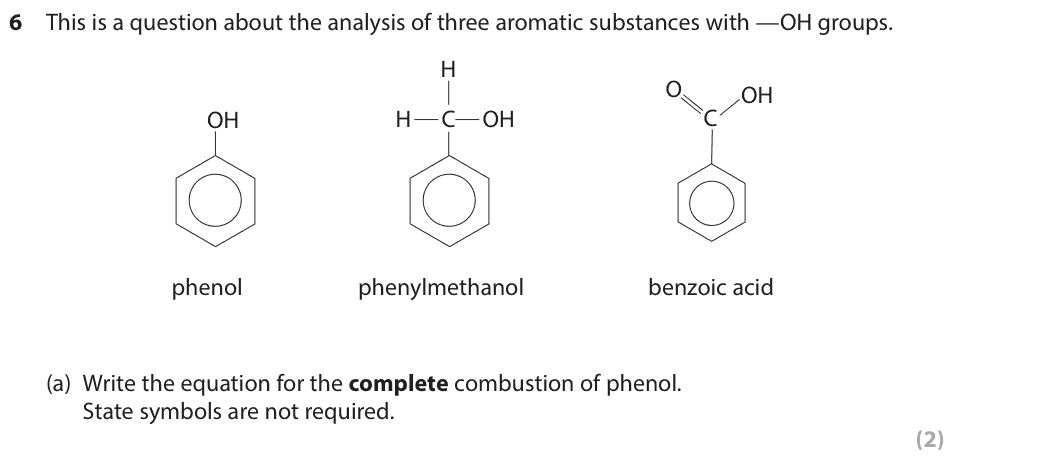
This is a question about the analysis of three aromatic substances with —OH groups.
H
O
OH
OH
H
C
OH
C
phenol
phenylmethanol
benzoic acid
Write the equation for the complete combustion of phenol.
State symbols are not required.
October 2020 · Paper 3 · Q6(b)(i) 3 marks Calculation atomic structure and the periodic table
Earlier part of question 6 that this part usesEarlier part of October 2020 Paper 3 question 6
When burned in air, these aromatic compounds undergo incomplete combustion.
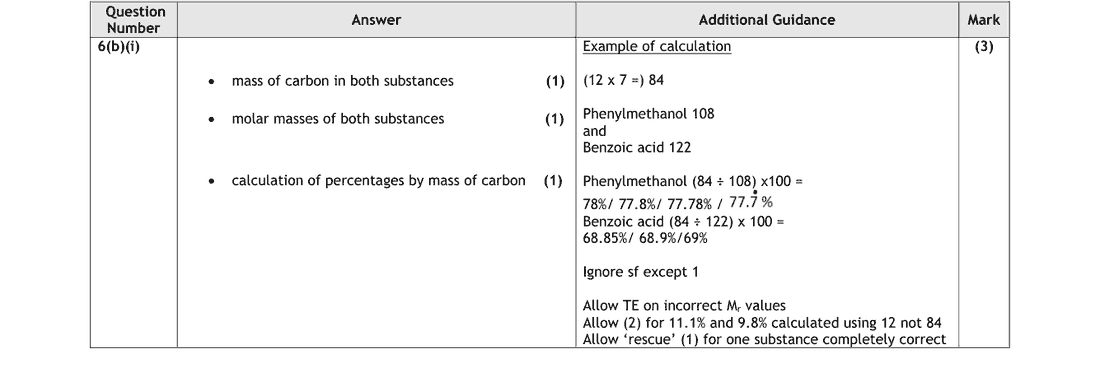
Calculate the percentage composition by mass of carbon in both
phenylmethanol and benzoic acid.
October 2020 · Paper 3 · Q6(b)(ii) 1 mark Short answer arenes benzene
Earlier parts of question 6 that this part usesEarlier part of October 2020 Paper 3 question 6Earlier part of October 2020 Paper 3 question 6
Give the expected observation when these aromatic compounds undergo
incomplete combustion.
October 2020 · Paper 3 · Q6(b)(iii) 1 mark Short answer arenes benzene
Earlier parts of question 6 that this part usesEarlier part of October 2020 Paper 3 question 6Earlier part of October 2020 Paper 3 question 6Earlier part of October 2020 Paper 3 question 6
Identify another type of organic compound which will also produce the same
observation as in (b)(ii).
October 2020 · Paper 3 · Q6(b)(iv) 2 marks Practical and data analysis formulae equations and amounts of substance
Earlier parts of question 6 that this part usesEarlier part of October 2020 Paper 3 question 6Earlier part of October 2020 Paper 3 question 6
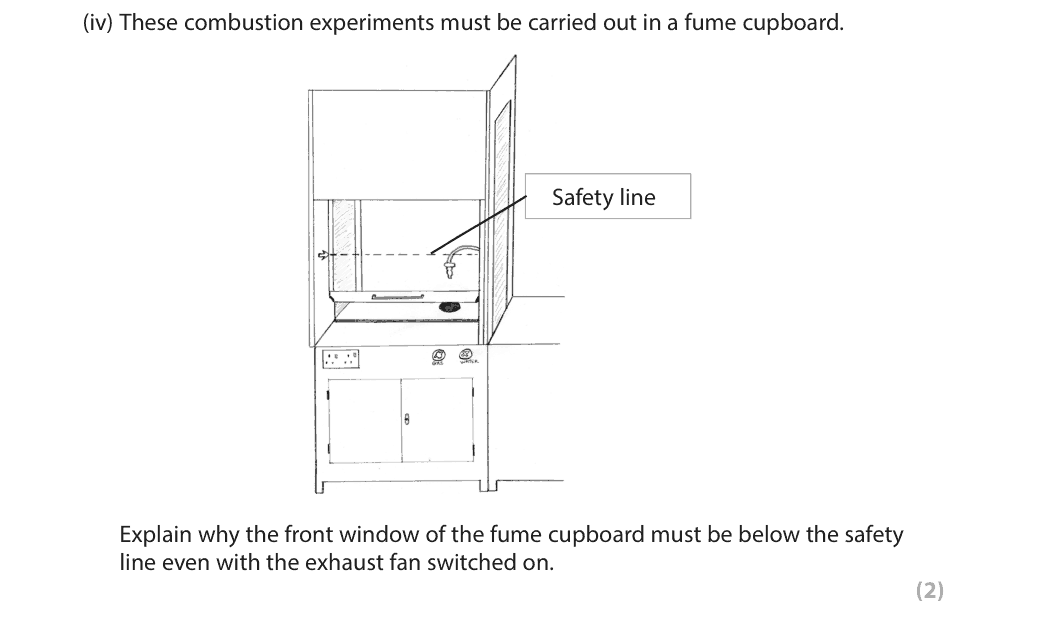
These combustion experiments must be carried out in a fume cupboard.
Safety line
Explain why the front window of the fume cupboard must be below the safety
line even with the exhaust fan switched on.
October 2020 · Paper 3 · Q6(c)(i) 5 marks Explanation mass spectrometry and infrared spectroscopy
Earlier part of question 6 that this part usesEarlier part of October 2020 Paper 3 question 6
Spectroscopy is an effective means of distinguishing between molecules.
Compare and contrast the infrared spectra of phenol, phenylmethanol and
benzoic acid.
Include relevant bonds and their wavenumber ranges using the Data Booklet.
October 2020 · Paper 3 · Q6(c)(ii) 3 marks Short answer nmr mass spectrometry and chromatography
Earlier parts of question 6 that this part usesEarlier part of October 2020 Paper 3 question 6Earlier part of October 2020 Paper 3 question 6
Predict the number of peaks present, and their chemical shifts, in the
13C nuclear magnetic resonance (NMR) spectrum of phenylmethanol.
Use the information in the Data Booklet to help you.
H
H
C
OH
H
C
H
C
C
C
C
H
C
H
H
phenylmethanol
October 2020 · Paper 3 · Q6(c)(iii) 2 marks Short answer mass spectrometry and infrared spectroscopy
Earlier parts of question 6 that this part usesEarlier part of October 2020 Paper 3 question 6Earlier part of October 2020 Paper 3 question 6
Give the formula of a fragment ion, with its m/z value, that you would expect
to be present in the mass spectrum of benzoic acid but not in the mass
spectrum of phenol or the mass spectrum of phenylmethanol.
October 2020 · Paper 3 · Q7 6 marks 6-mark extended response transition metals principles
“Cobalt(II) ions combine with substances in solution to form complex ions with
different coordination numbers.”
Discuss this statement by referring to two complex ions containing cobalt(II).
Include
•
reference to any difference in colour
•
a definition of any terms used
•
an explanation of the different shapes
October 2020 · Paper 3 · Q8(a) 2 marks Practical and data analysis transition metals reactions
This is a question about chromium(III) and chromium(VI) compounds.
Describe the observations when aqueous sodium hydroxide is added drop by
drop until in excess to a solution of chromium(III) ions.
October 2020 · Paper 3 · Q8(b)(i) 2 marks Equation writing transition metals reactionsredox i
Earlier part of question 8 that this part usesEarlier part of October 2020 Paper 3 question 8
The chromium(III) complex, [Cr(OH)6]3−, can be oxidised to
chromate(VI) ions, CrO4
2−, by hydrogen peroxide solution.
Deduce the oxidation half-equation for this reaction, which takes place in
alkaline conditions. State symbols are not required.
October 2020 · Paper 3 · Q8(b)(ii) 1 mark Equation writing transition metals reactions
Earlier part of question 8 that this part usesEarlier part of October 2020 Paper 3 question 8
If the solution of chromate(VI) ions is then acidified, the colour of the solution
changes to orange as dichromate(VI) ions form.
Write the equation for this change. State symbols are not required.
October 2020 · Paper 3 · Q8(b)(iii) 3 marks Equation writing redox iiredox i
Earlier parts of question 8 that this part usesEarlier part of October 2020 Paper 3 question 8Earlier part of October 2020 Paper 3 question 8Earlier part of October 2020 Paper 3 question 8
In acidic conditions, dichromate(VI) ions can also be reduced to chromium(III) ions
using hydrogen peroxide.
The value of E O
—
cell = + 0.65 V for which the cell diagram is
Pt(s)│H2O2(aq), [2H+(aq)+O2(g)]   [Cr2O7
2−(aq)+14H+(aq)], [2Cr3+(aq)+7H2O(l)]│Pt(s)
Deduce from the cell diagram the oxidation and the reduction half-equations,
and thus the overall equation for this reaction.
State symbols are not required.
October 2020 · Paper 3 · Q8(c) 7 marks Diagram or structure redox ii
Draw a labelled diagram of the apparatus that you would use to measure the
standard emf of a cell with a zinc-zinc(II) electrode system and
a chromium(III)-dichromate(VI) electrode system.
Include the formulae of all the compounds required and the concentrations of
the solutions.
October 2020 · Paper 3 · Q9(a) 3 marks Short answer Hard amines amides amino acids and proteins
This question is about amines.
Phenylamine is an aromatic amine and butylamine is an aliphatic amine.
Phenylamine can be prepared from nitrobenzene.
NO2
NH2
Butylamine can be prepared from butanenitrile.
C3H7CN    →    C4H9NH2
Compare and contrast these two preparations of amines.
October 2020 · Paper 3 · Q9(b) 3 marks Explanation amines amides amino acids and proteins
Compare and contrast the basicity of phenylamine and butylamine.
October 2020 · Paper 3 · Q9(c) 2 marks Equation writing carboxylic acidsamines amides amino acids and proteinsintroduction to organic chemistry
Write the equation for the reaction between propanoyl chloride and pentylamine.
Include the name of the amide formed.
State symbols are not required.
Name of amide
October 2020 · Paper 3 · Q9(d) 1 mark Short answer amines amides amino acids and proteins
Earlier part of question 9 that this part usesEarlier part of October 2020 Paper 3 question 9
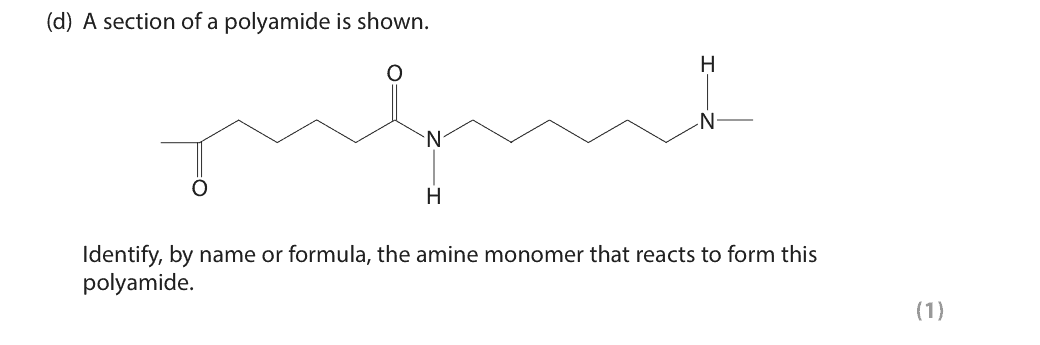
A section of a polyamide is shown.
H
O
N
N
O
H
Identify, by name or formula, the amine monomer that reacts to form this
polyamide.
October 2020 · Paper 3 · Q10(a)(i) 4 marks Mechanism carboxylic acids
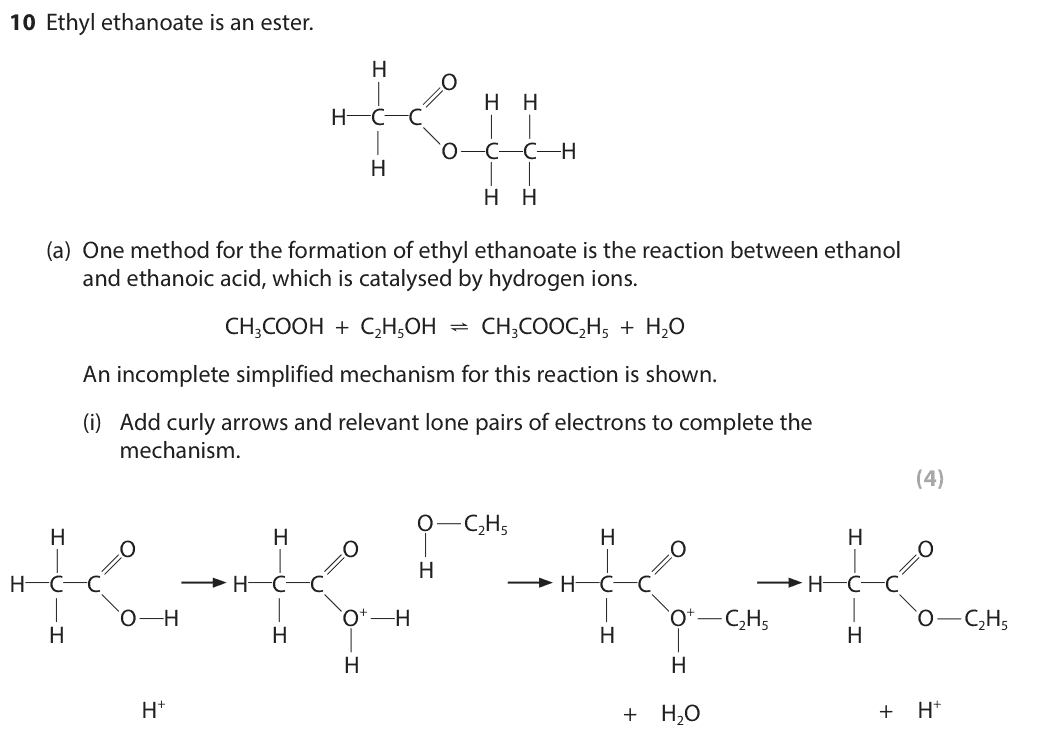
Ethyl ethanoate is an ester.
H
O
H
H
H
C
C
O
C
C
H
H
H
H
One method for the formation of ethyl ethanoate is the reaction between ethanol
and ethanoic acid, which is catalysed by hydrogen ions.
CH3COOH  +  C2H5OH  ⇌  CH3COOC2H5  +  H2O
An incomplete simplified mechanism for this reaction is shown.
Add curly arrows and relevant lone pairs of electrons to complete the
mechanism.
O
C2H5
H
H
H
H
O
O
O
O
H
H
C
C
H
C
C
H
C
C
H
C
C
O
H
O+
H
O+
C2H5
O
C2H5
H
H
H
H
H
H
H+
+  H2O
+  H+
October 2020 · Paper 3 · Q10(a)(ii) 2 marks Short answer carboxylic acids
Earlier part of question 10 that this part usesEarlier part of October 2020 Paper 3 question 10
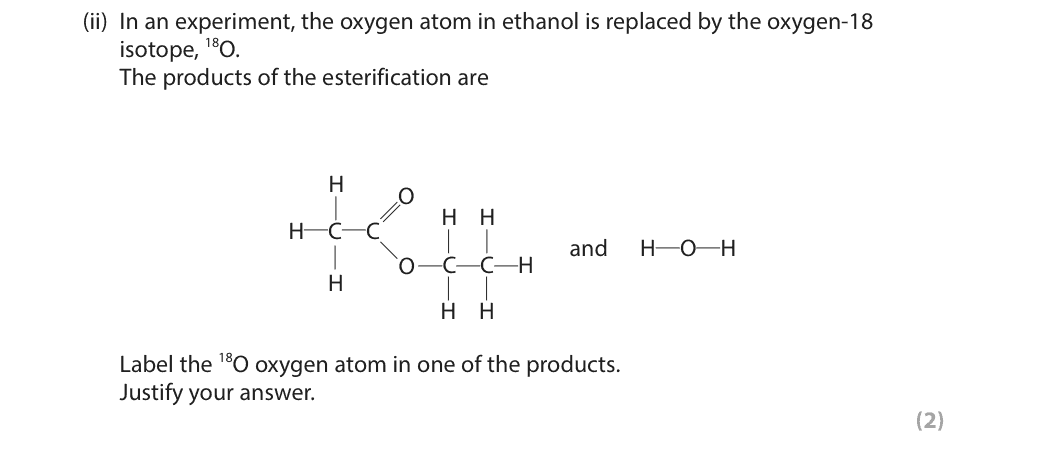
In an experiment, the oxygen atom in ethanol is replaced by the oxygen-18
isotope, 18O.
The products of the esterification are
H
O
H
H
H
C
C
and
H
O
H
O
C
C
H
H
H
H
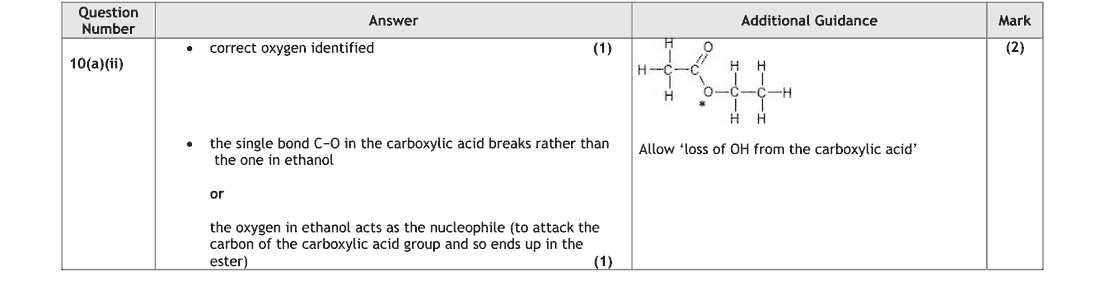
Label the 18O oxygen atom in one of the products.
Justify your answer.
October 2020 · Paper 3 · Q10(a)(iii) 6 marks Calculation entropy
Earlier parts of question 10 that this part usesEarlier part of October 2020 Paper 3 question 10Earlier part of October 2020 Paper 3 question 10
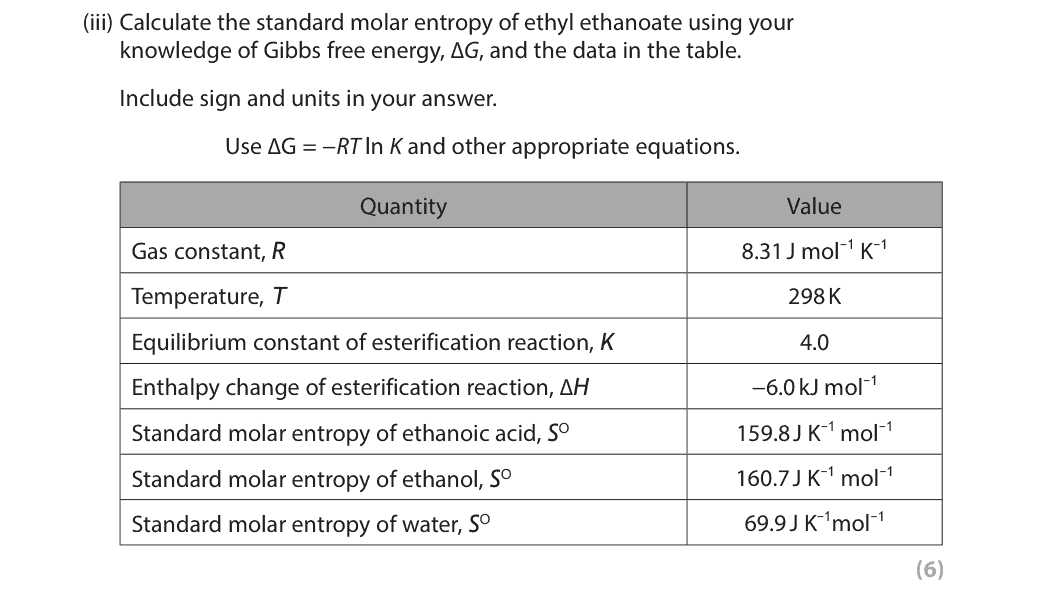
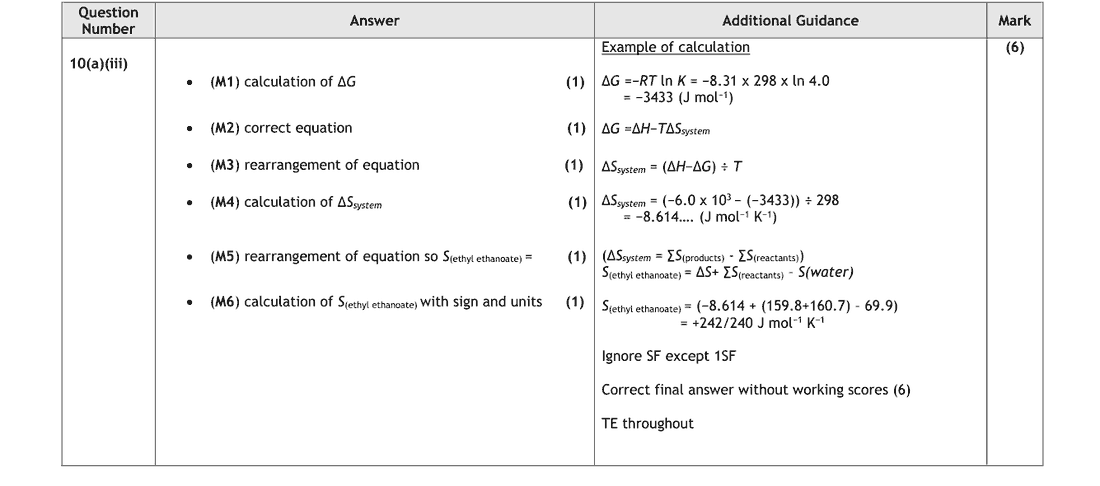
Calculate the standard molar entropy of ethyl ethanoate using your
knowledge of Gibbs free energy, ∆G, and the data in the table.
Include sign and units in your answer.
Use ∆G = −RT ln K and other appropriate equations.
Quantity
Value
Gas constant, R
8.31 J mol−1 K−1
Temperature, T
298 K
Equilibrium constant of esterification reaction, K
4.0
Enthalpy change of esterification reaction, ∆H
−6.0 kJ mol−1
159.8 J K−1 mol−1
Standard molar entropy of ethanoic acid, SO
Standard molar entropy of ethanol, SO
160.7 J K−1 mol−1
69.9 J K−1mol−1
Standard molar entropy of water, SO
October 2020 · Paper 3 · Q10(b) 3 marks Short answer carboxylic acids
Earlier part of question 10 that this part usesEarlier part of October 2020 Paper 3 question 10
Ethyl ethanoate can also be formed by reacting ethanol with ethanoyl chloride, CH3COCl.
Identify three differences in the esterification reaction when ethanoyl chloride is
used instead of ethanoic acid.

Work with an A-level chemistry tutor

Want a paper marked and gone through with you? Message us.

Prefer email? Send an enquiry

If you are under 18, please include a parent's contact details. Enquiries go to enquiries@chemistryaleveltutor.com and are deleted once handled. All tutoring is online.