![This question is about some reactions of alcohols.
Which alcohol cannot be oxidised by acidified potassium dichromate(VI)?
L] A hexan-2-ol
L] B= 2-methylpentan-2-ol
L] C€_ hexan-3-ol
L] D 2-methylpentan-3-ol](/img/JUN19_9CH02/JUN19_9CH02_1-a-i_qp.webp)
Answer
B
Mark scheme

Notes from the mark scheme and report
- Answer: B. 2-methylpentan-2-ol is a tertiary alcohol, so acidified dichromate(VI) does not oxidise it. A, C and D are all secondary alcohols
90 marks · 38 question parts · Paper, mark scheme and report on Edexcel's site · Have the Data Booklet beside you
B
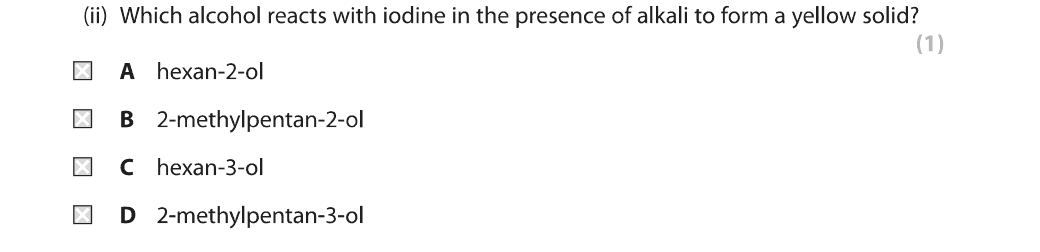
A
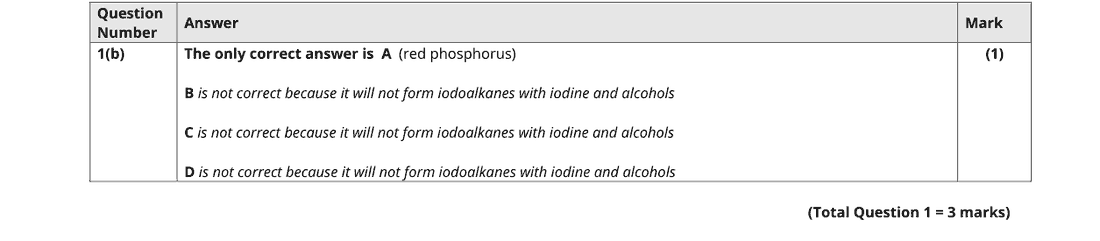
![Which reagent is used with iodine to prepare iodoalkanes from alcohols?
[1 A’ red phosphorus
L] B_~ concentrated phosphoric acid
[1] Cs sulfur
L] D concentrated sulfuric acid](/img/JUN19_9CH02/JUN19_9CH02_1-b_qp.webp)
A
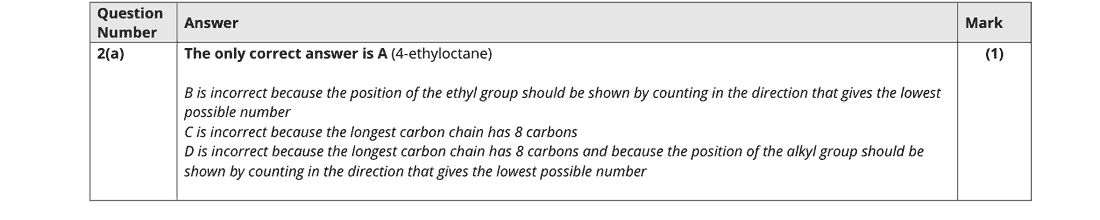
![This question is about alkanes and their reactions.
What is the IUPAC name for this alkane?
25
[] A 4-ethyloctane
[] B_ 5-ethyloctane
[1 C 3-propylheptane
[1 D 5-propylheptane](/img/JUN19_9CH02/JUN19_9CH02_2-a_qp.webp)
A
![What is the name of the process that could be used to produce propane, C3H,,
from decane, C,H?
[1 A. substitution
1 Bs reforming
[1 C_ fractional distillation
[1] D cracking](/img/JUN19_9CH02/JUN19_9CH02_2-b_qp.webp)
D
![A student researched the reaction of propane with bromine and found that the
reaction could be used to make 1-bromopropane.
C3H3(g) + Br2(l) > C3H,Br(l) + HBr(g)
The first step of the reaction involves
L] A_heterolytic bond fission to form free radicals
[] B_heterolytic bond fission to form ions
L] ©€ homolytic bond fission to form free radicals
L] D homolytic bond fission to form ions](/img/JUN19_9CH02/JUN19_9CH02_2-c-i_qp.webp)
C

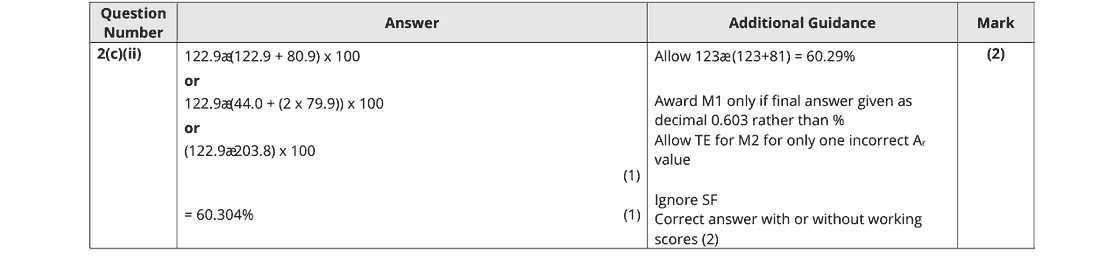
This proved to be a straightforward opening to the free-response questions and pleasingly many candidates scored both marks using a concept from early in the course. Very few examples were seen where candidates had little idea how to proceed, and the most common way to lose credit was to express the final answer as 0.603. An odd, but surprisingly common error was to see the molar mass of HBr shown as 1 + 79.9 = 89.9. Perhaps more predictably some candidates used the atomic mass of chlorine instead of bromine throughout.
Skills: MS0.2 Use ratios, fractions and percentages
![A source from the internet gave the percentage yield for this reaction as 31.0%.
The best explanation for the low percentage yield of 1-bromopropane in this
reaction is
L] A_ bromine is very unreactive
[] B_ agaseous reactant always gives a low yield
L] C_ the reaction is very slow
L] D the reaction produces a mixture of organic products](/img/JUN19_9CH02/JUN19_9CH02_2-c-iii_qp.webp)
D
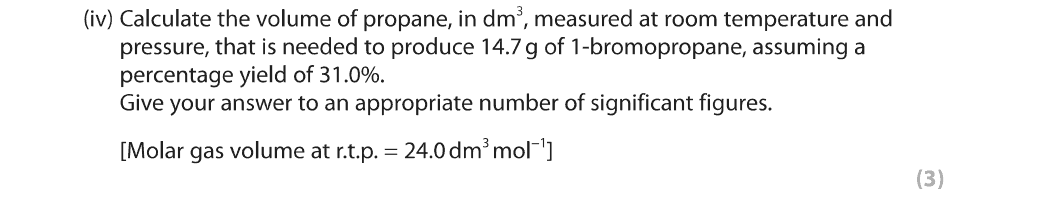
Skills: MS0.2 Use ratios, fractions and percentages; MS1.1 Use an appropriate number of significant figures
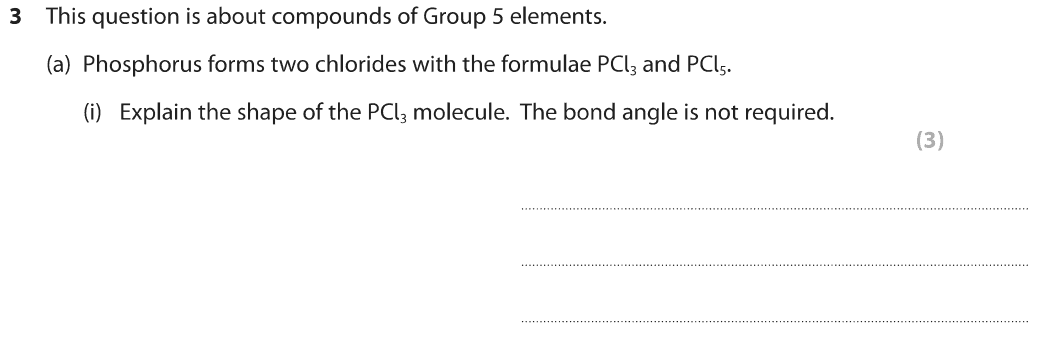
Skills: MS4.1 Appreciate angles and shapes in regular 2D and 3D structures.

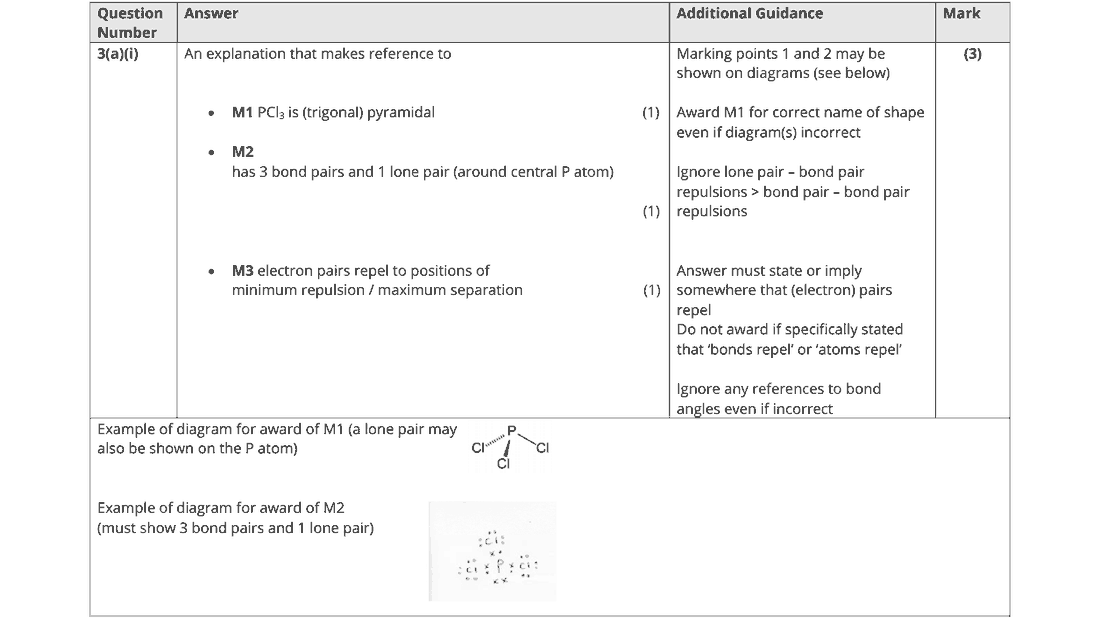
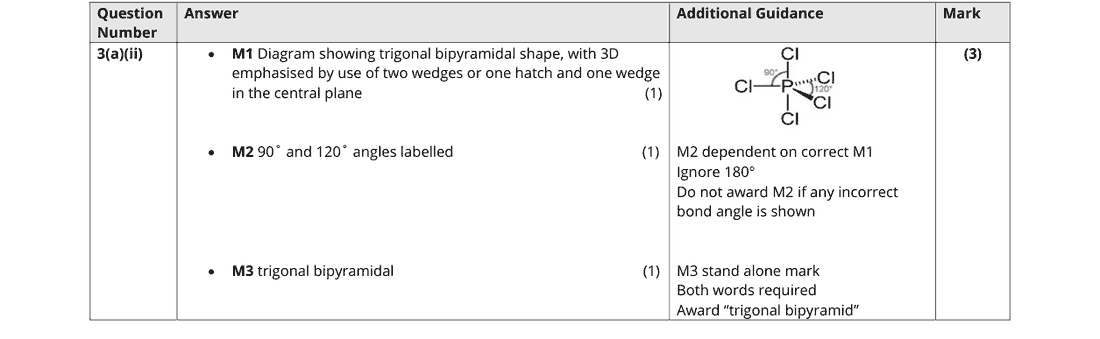
Drawing the 3-dimensional shape of a molecule is a skill many candidates should practice. Although the majority could name the shapes, the diagrams varied in quality, with many examples failing to resemble any of the shapes identified on the specification. The best answers showed three chlorine atoms in the central plane, with the use of one hatch and one wedge to stress the idea of three dimensions. Not all candidates who managed this could label the angles appropriately. The most common error was to label the angle between the central plane and the one of the vertical chlorine atoms as 120°.
Skills: MS4.1 Appreciate angles and shapes in regular 2D and 3D structures.; MS4.2 Visualise and represent 2D and 3D forms including two- dimensional representations of 3D objects

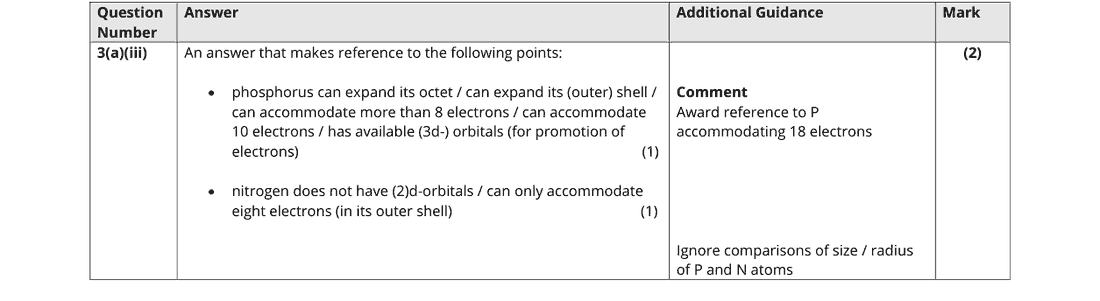
This proved to be the most challenging question on the paper with most candidates attempting to justify the difference in terms of the relative size of the central atoms, rather than by considering the electrons available. Others thought that phosphorus would be able to form a greater number of bonds due to its greater nuclear charge. The best answers simply considered the idea that phosphorus can accommodate 18 electrons in its outer shell, but nitrogen’s outer shell can only hold 8 electrons.
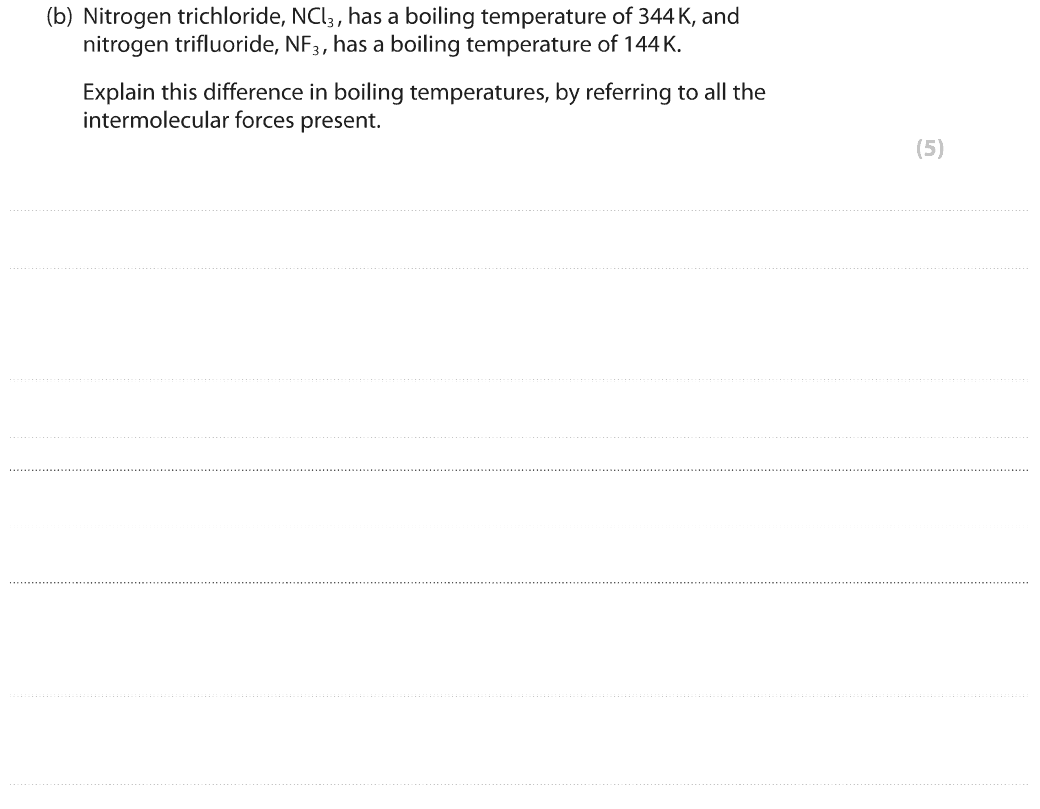
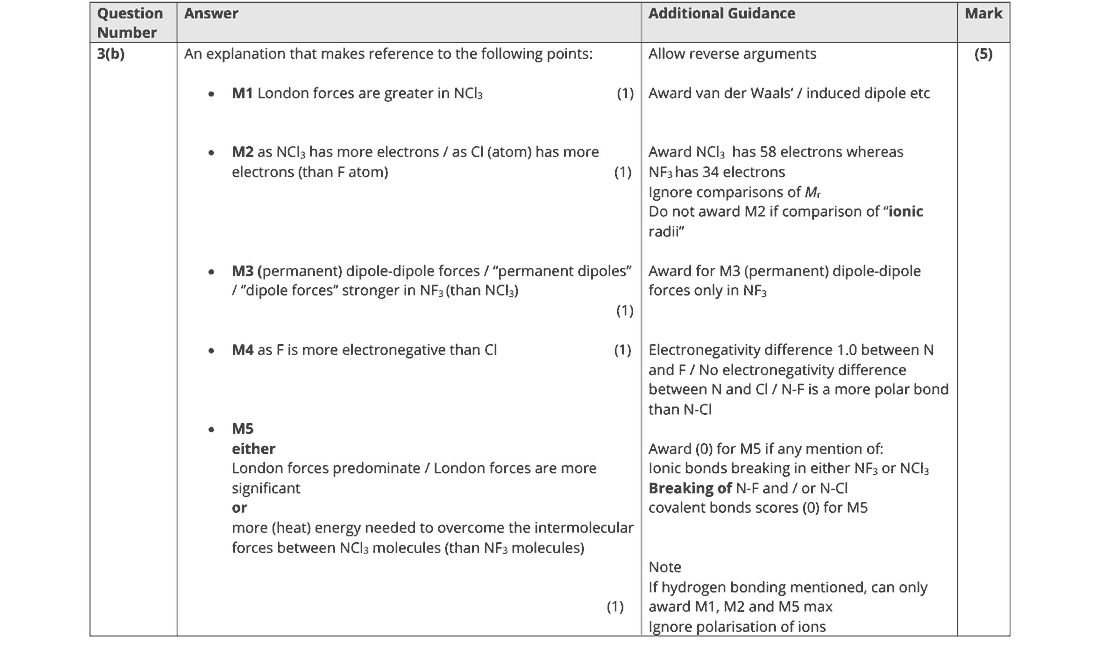
This question produced a wide range of marks, with a degree of discrimination between candidates. There were a lot of good answers linking London forces to the number of electrons and subsequent energy needed to break these forces. Only a few that clearly stated that covalent or ionic bonds were broken. A number of candidates believe that London forces are the weakest regardless of the context and do not realise that it is possible for them to be greater than other intermolecular forces in molecules. This led to several candidates trying to explain why dipole-dipole forces were weaker in nitrogen trifluoride and losing the associated marks. Some candidates missed out on marks through their use of imprecise chemical terminology, most commonly with chloride ions being referred to as having more electrons.
![Which of these compounds produces hydrogen chloride when it reacts with PCl,?
LJ] A propanal
L] B_ propan-1-ol
[1 C_ propanone
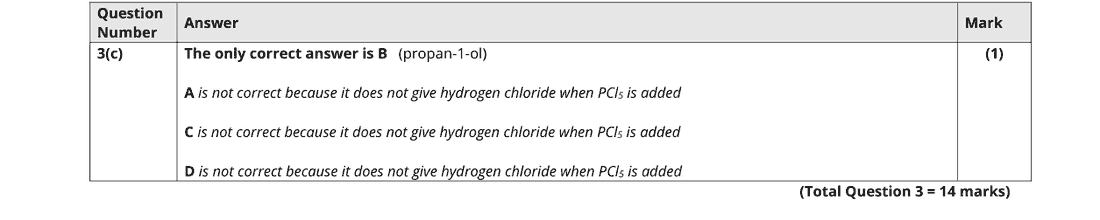
LJ] D_ propyl propanoate](/img/JUN19_9CH02/JUN19_9CH02_3-c_qp.webp)
B
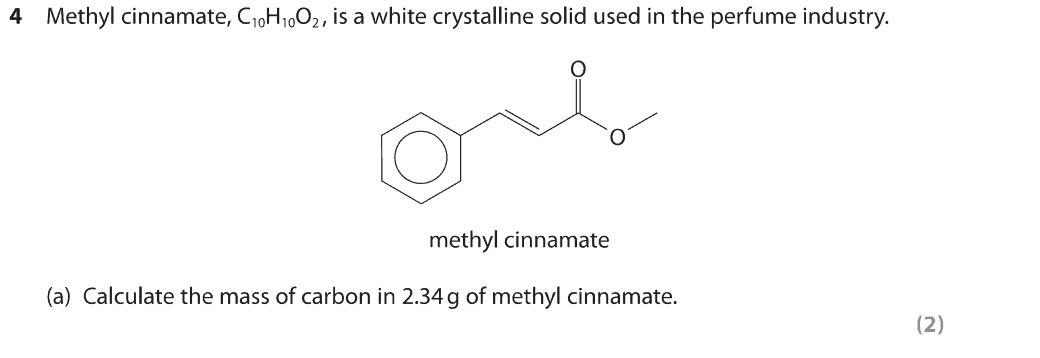
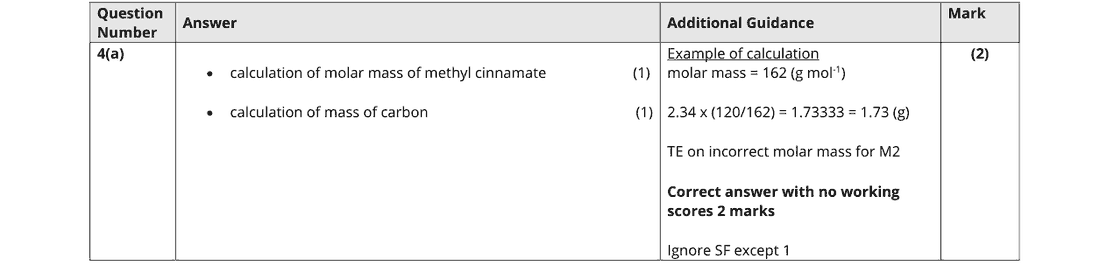
This calculation was accessible to the majority of candidates, and most were able to score 2 marks. Those who didn’t were still able to score 1 for deducing the molar mass of methyl cinnamate. A few candidates persist in the idea that answers in multi-step calculations should be rounded to 2 or 3 significant figures at each step. However, in some cases this can make a significant difference to the final answer, so candidates should remember that this rounding should be left until the final answer.
Skills: MS0.2 Use ratios, fractions and percentages
![A sample of methyl cinnamate was analysed by high resolution proton NMR spectroscopy.
A simplified spectrum is shown.
relative peak area
relative peak areas [1]
1]
10
8
6
4
2
8
pp m
(ppm)
Name the compound responsible for the peak at a chemical shift of 0 ppm,
stating its purpose.](/img/JUN19_9CH02/JUN19_9CH02_4-b-i_qp.webp)
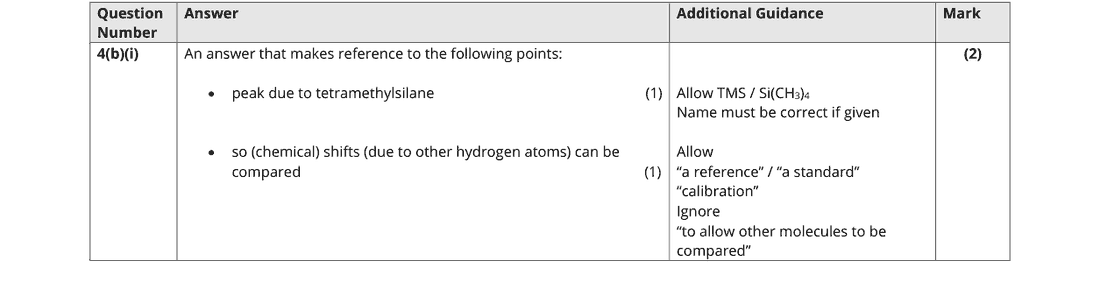
Whilst many candidates knew the role of TMS as a reference compound, a surprising number could not name it accurately. ‘Silicate’, ‘saline’, ‘silicone’ were amongst a variety of misspellings seen by examiners. References to the 12 equivalent hydrogen environments were often included, but students should remember to use the command words to help guide their answer. Here the stem required the purpose of TMS to be stated, not to explain why it was suitable.
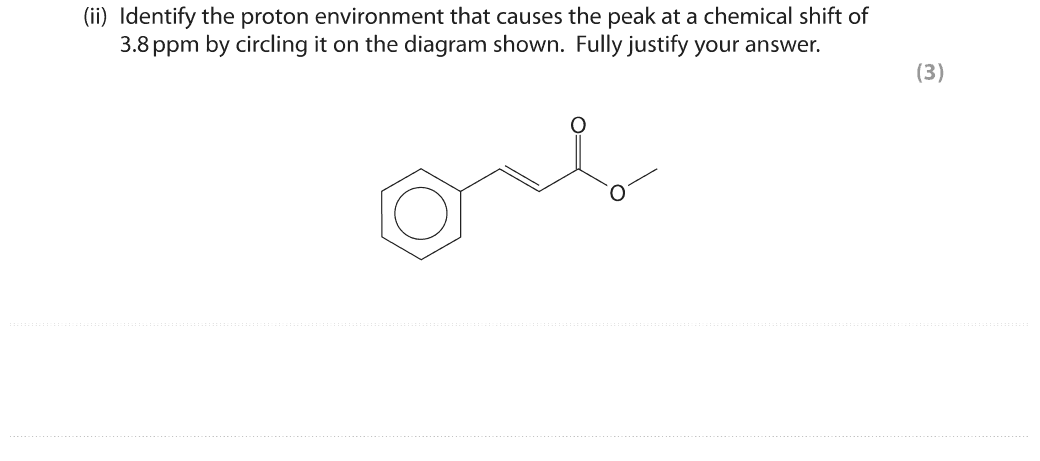
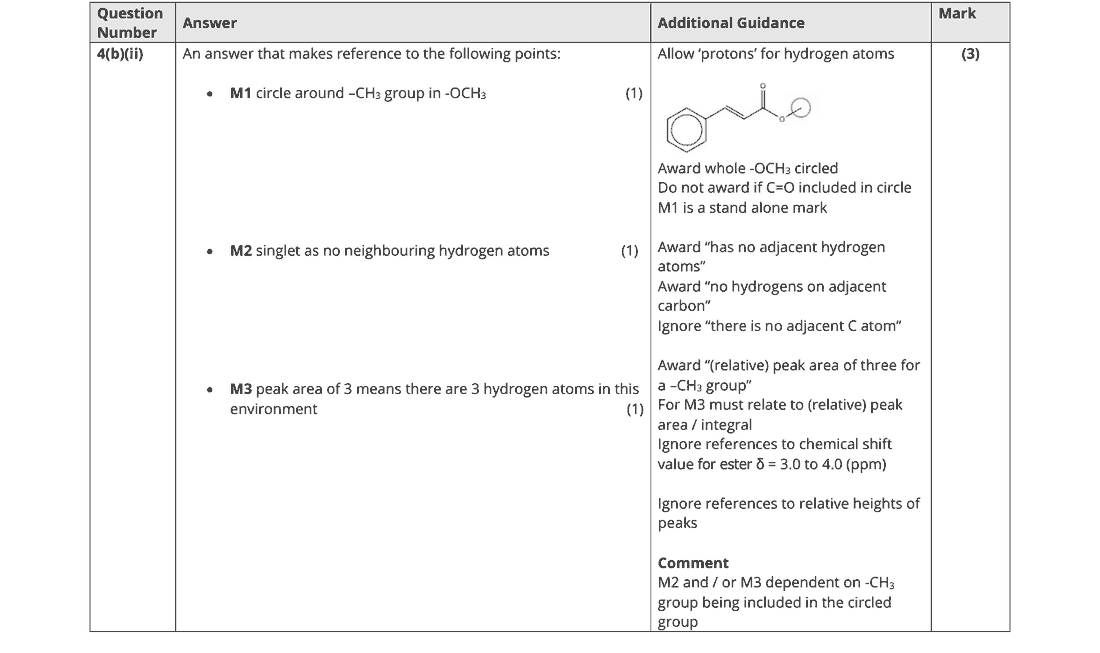
Many candidates were able to identify the methyl group on the far right of the structure, interpreting the skeletal format successfully. The justification allowed a degree of discrimination and some candidates missed out on full credit because of a lack of clarity. For instance, some responses, despite the stem using the terminology ‘relative peak area’, talked solely about peak height. Others were imprecise when discussing the splitting, suggesting it was caused by the fact that ‘there are no hydrogens attached’ or ‘because of the n+1 rule’. In each case, a little more detail could have scored the mark.

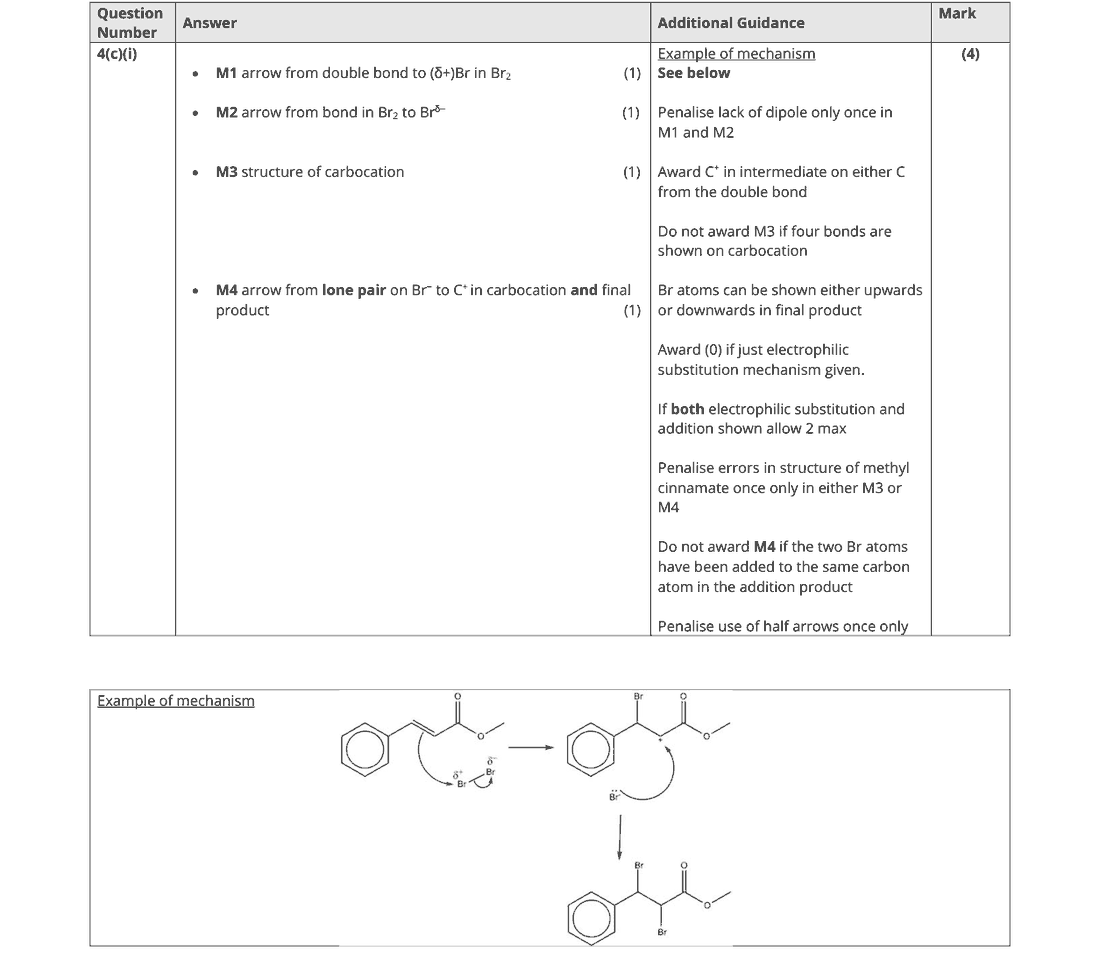
The electrophilic mechanism seemed to pose few problems for many candidates, even with the unusual context and skeletal format. Clearly this is well understood from year one of the course. The imprecise use of arrows and omission of diploes or lone pairs were inevitably seen, but the examination team felt such slips were less frequent than in previous series. A small number of candidates, generally those that found the paper as a whole challenging, attempted to show a substitution reaction of the ring. A minority understood the reaction resulted in the loss of the C=C bond, but mistakenly added both bromine atoms to the same carbon.
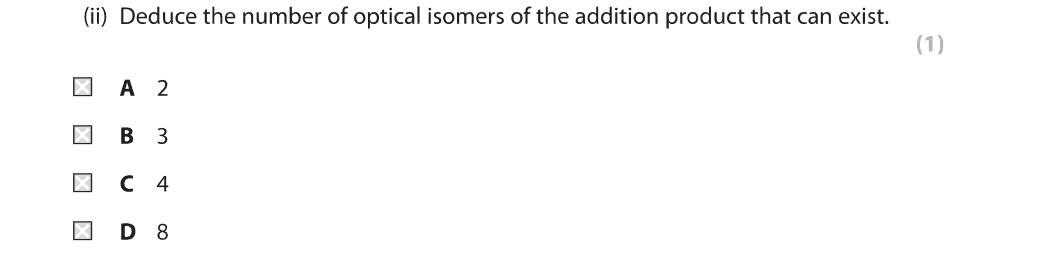
C
Skills: MS4.3 Understand the symmetry of 2D and 3D shapes
![When plane-polarised light is passed through an optical isomer, the plane of
polarisation is
L] A diffracted
1] B reflected
[1 C refracted
[1 D rotated](/img/JUN19_9CH02/JUN19_9CH02_4-c-iii_qp.webp)
D
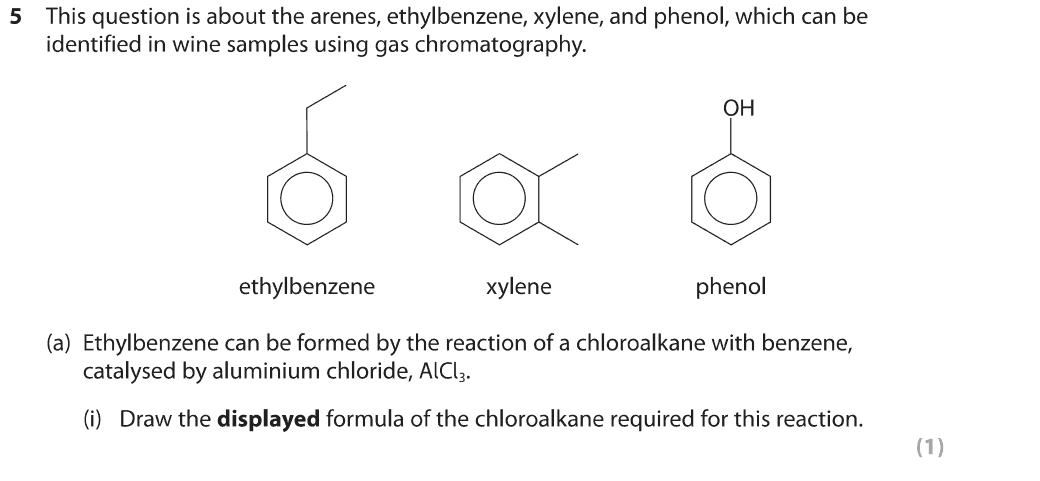
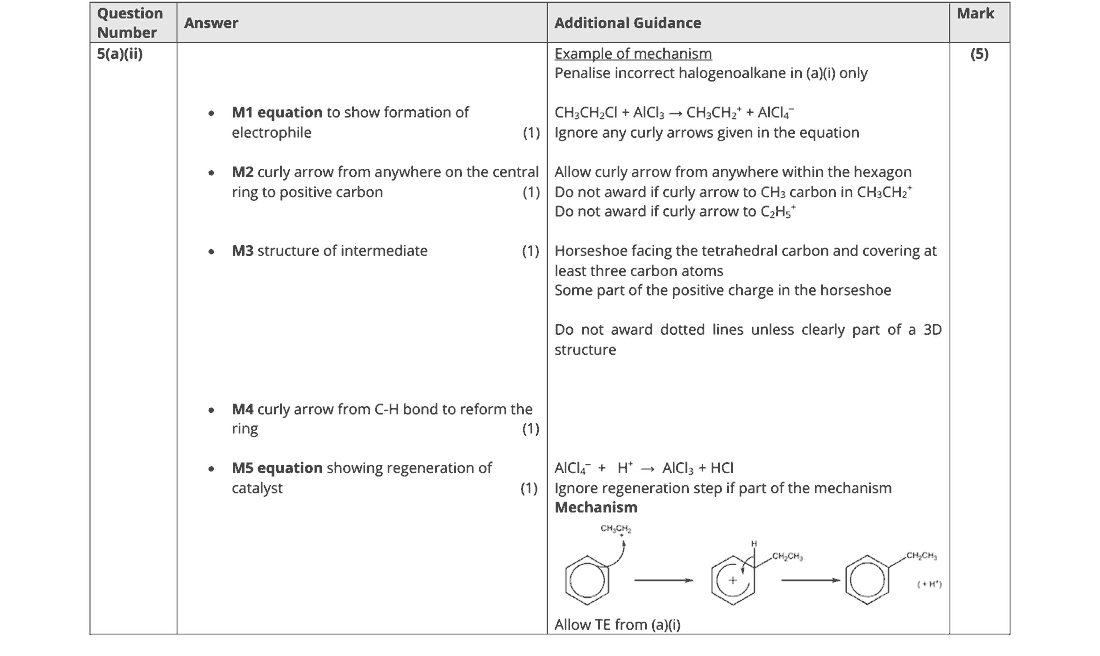
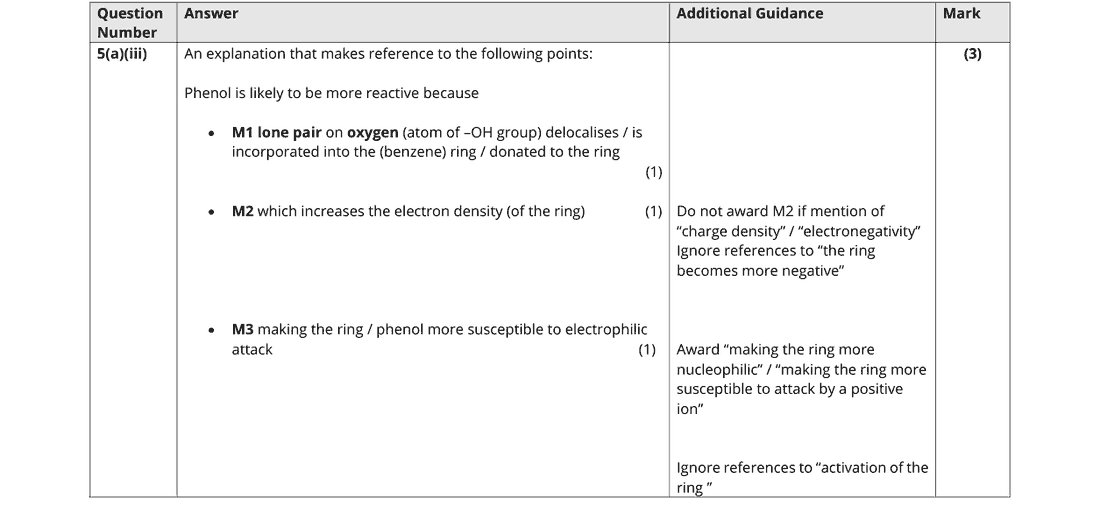
As with Q4(c)(i), examiners in the main were pleased to note that the basics of the electrophilic substitution mechanism is well taught and understood. The displayed formula in Q5(a)(i) was almost universally correct. Most candidates understood the basics of the mechanism, so picked up credit. The most frequent errors were: + in the reaction with the benzene, leading to a lack of clarity as to which carbon was involved in the step. Use of C2H5 Showing the CH3 group, rather than the CH2 group attached directly to the ring. The central positive charge shown outside of the ‘horseshoe’. The open part of the ‘horseshoe’ not face the carbon in the ring to which the ethyl group was attached. Omission of an equation to show the reformation of the catalyst.

As with Q4(c)(i), examiners in the main were pleased to note that the basics of the electrophilic substitution mechanism is well taught and understood. The displayed formula in Q5(a)(i) was almost universally correct. Most candidates understood the basics of the mechanism, so picked up credit. The most frequent errors were: + in the reaction with the benzene, leading to a lack of clarity as to which carbon was involved in the step. Use of C2H5 Showing the CH3 group, rather than the CH2 group attached directly to the ring. The central positive charge shown outside of the ‘horseshoe’. The open part of the ‘horseshoe’ not face the carbon in the ring to which the ethyl group was attached. Omission of an equation to show the reformation of the catalyst.
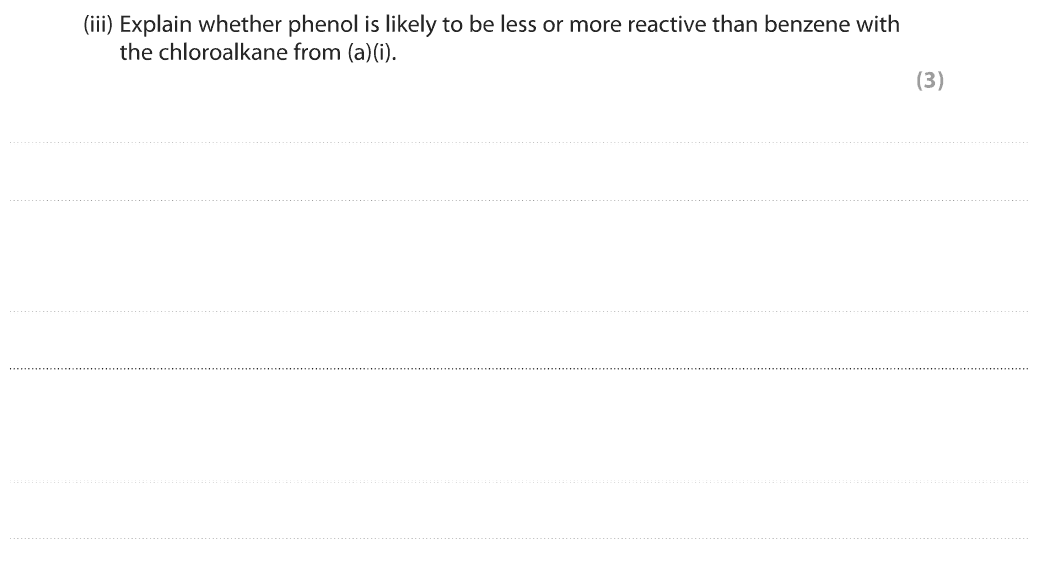
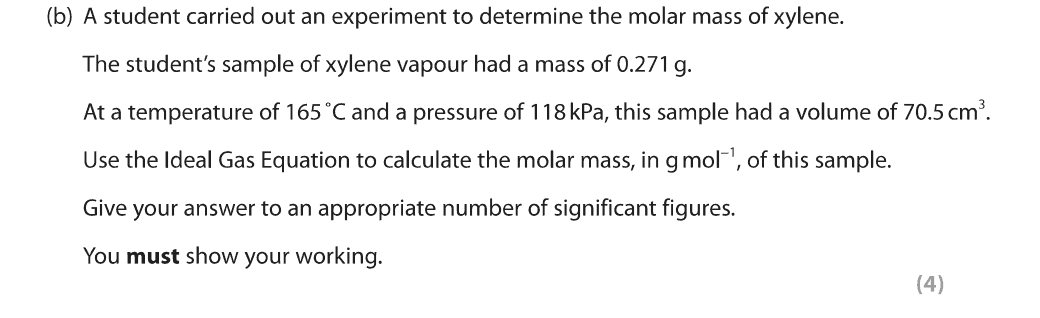
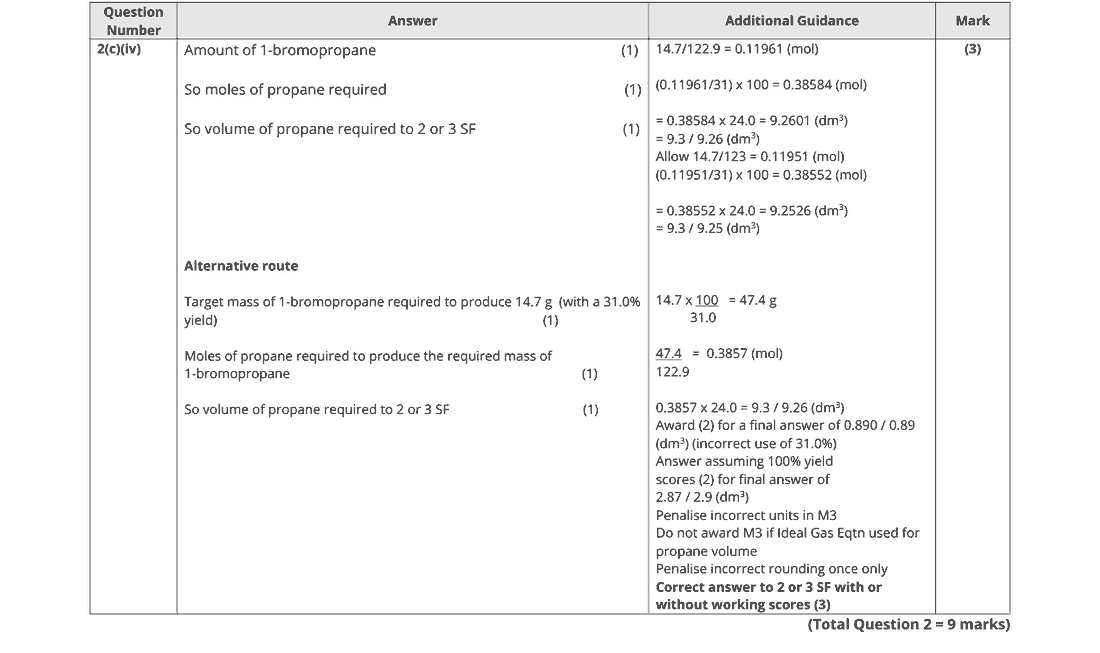
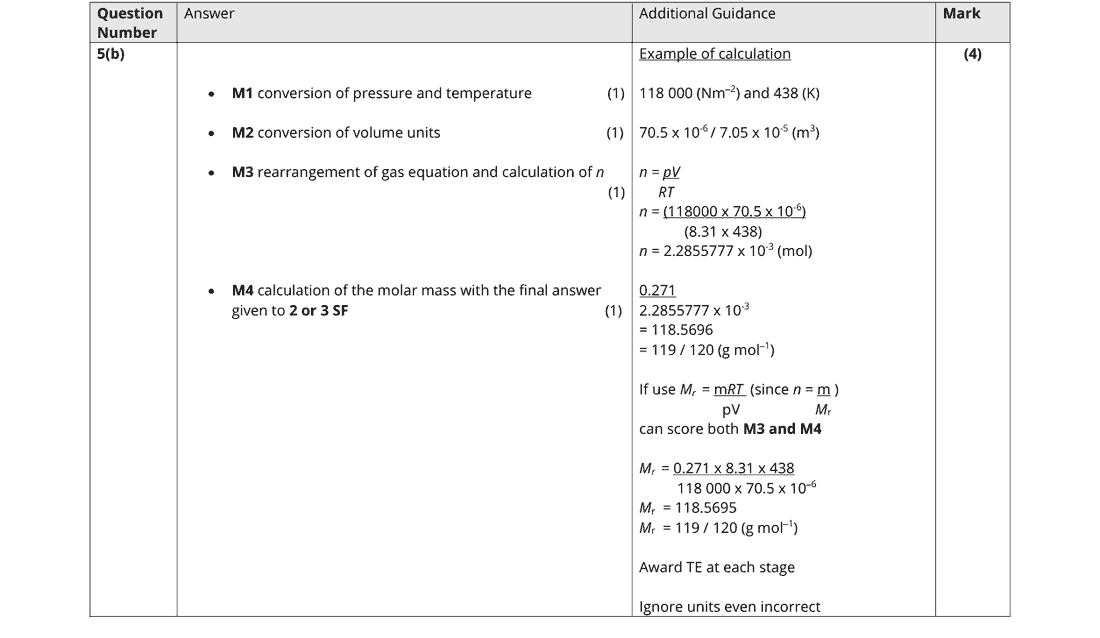
Only a very small number of candidates could not recall the Ideal Gas Equation and many candidates went on to gain significant credit. The most common errors were the incorrect conversion of volume to m3 and forgetting to convert temperature to K. Transferred error marks were available so each of these errors in isolation only lost 1 mark. It was surprising to see few candidates who made the volume error, and hence often get a numerical answer of 0.119. It would have been beneficial for candidates to have gone back and looked for a mistake as their value was clearly incorrect. Inappropriate significant figures were most evident on this question. Even though all the data used was quoted to 3 significant figures, a number gave a final answer of 118.6 or 118.57.
Skills: MS0.0 Recognise and make use of appropriate units in calculation; MS1.1 Use an appropriate number of significant figures; MS2.2 Change the subject of an equation; MS2.3 Substitute numerical values into algebraic equations using appropriate units for physical quantities
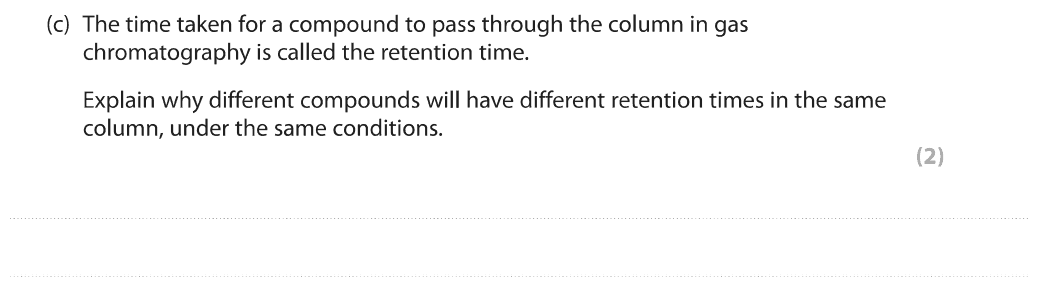
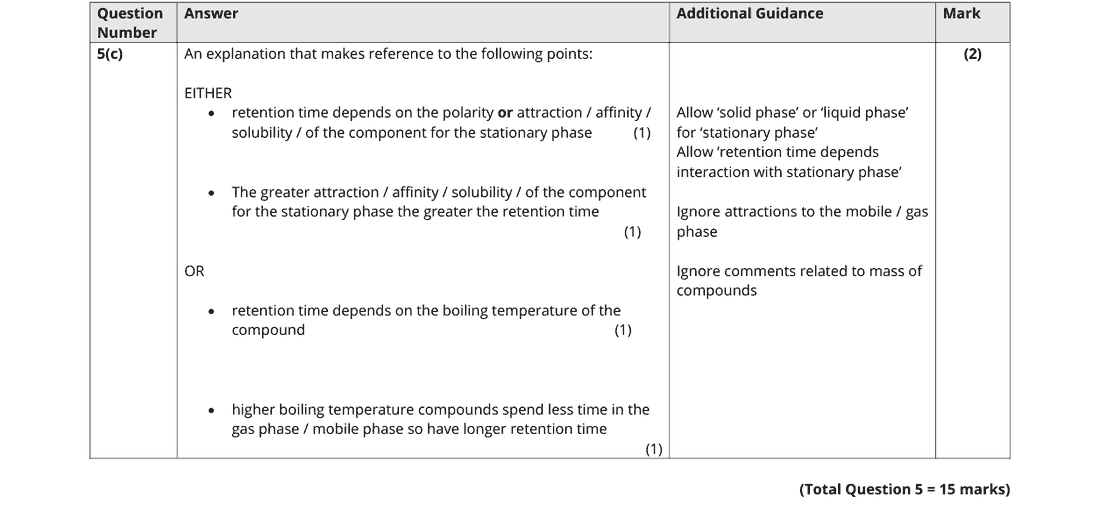
Perhaps because candidates are unlikely to have direct experience of gas chromatography answers often lacked detail. The best answers made clear reference to the affinity with the stationary phase, though a surprising number didn’t make the link between the strength of affinity and the resultant impact on retention, just stating that ‘different affinities lead to different retention times’. Weaker answers concentrated solely on the mobile phase or on the very simplistic model that heavier molecules take longer to move. Such answers did not gain credit.
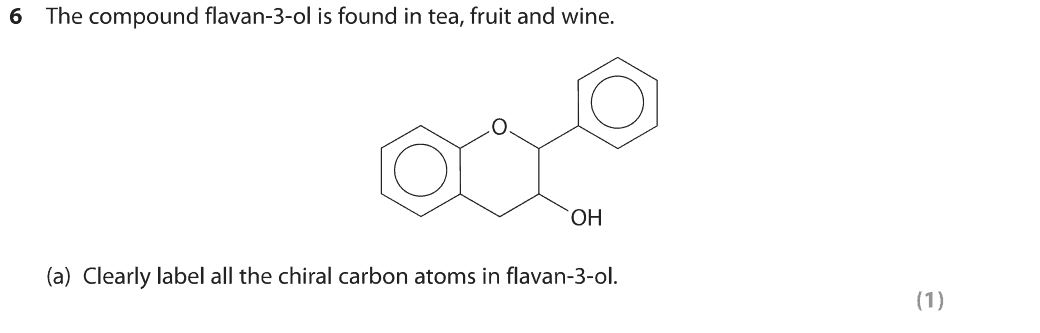

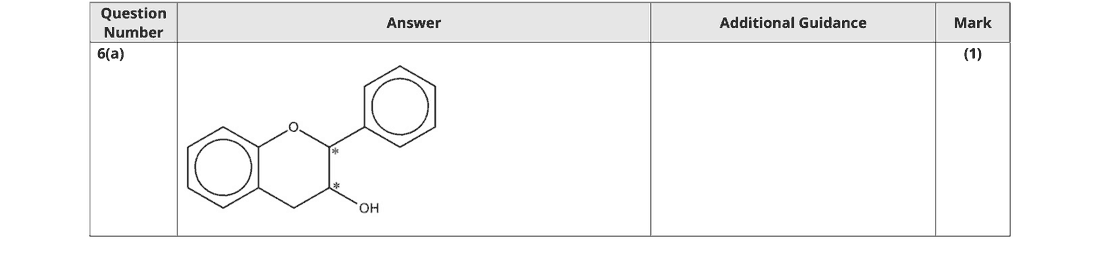
This task seemed low demand in the sense that candidates had to just identify the number and type of each atom and hence, write the molecular formula. However, as with Q6 (a), it provided clear discrimination at the A grade boundary. Each element was subject to miscounting, though not surprisingly mistakes in the number of hydrogen atoms were most common. Candidates can easily practice this skill in conjunction with translating skeletal formulae into displayed formulae.
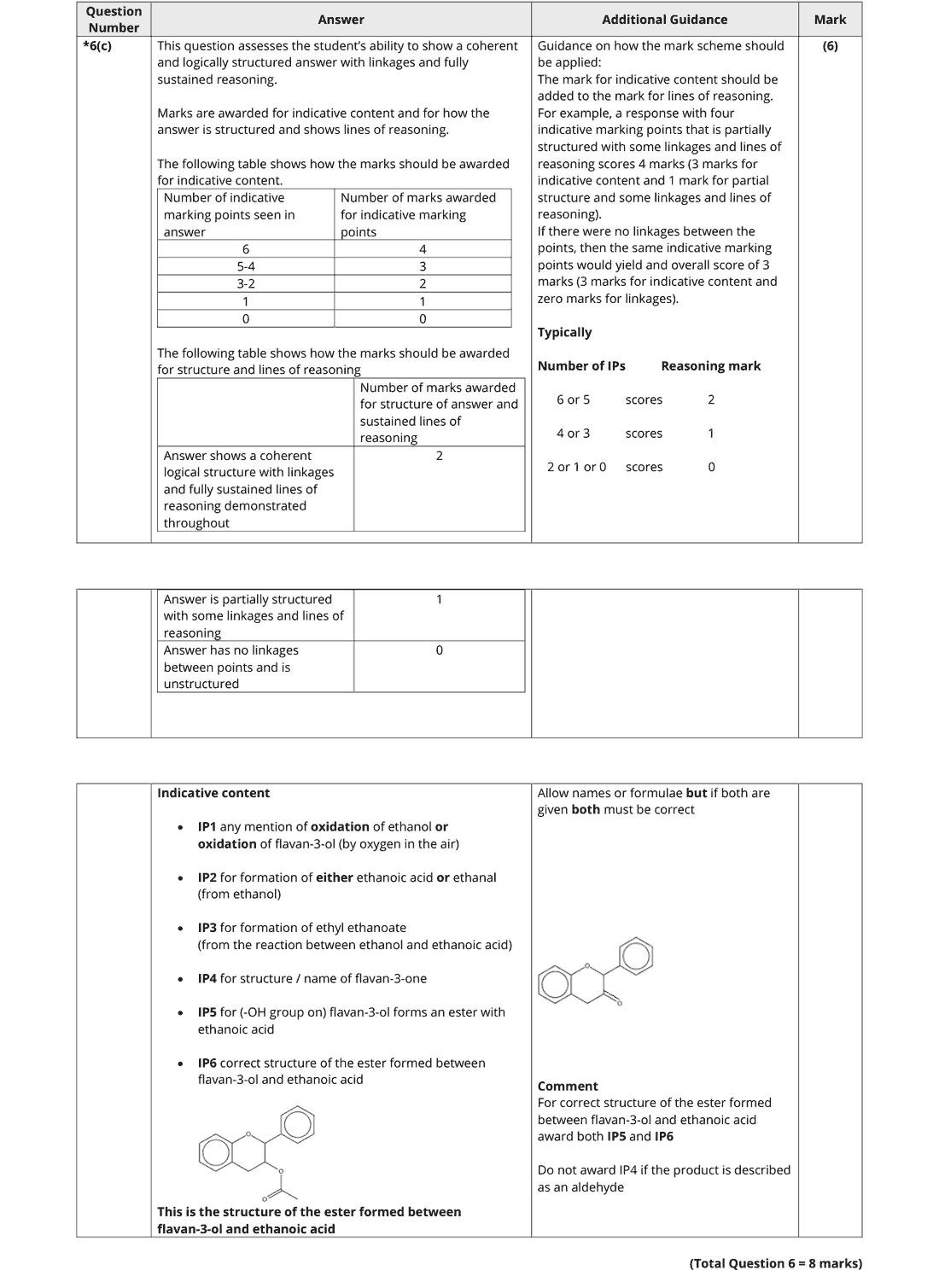
Examiners felt that this was the most discriminatory question on the paper with the full range of marks seen regularly. Weaker candidates tended to either discuss reactions of alcohols in entirely generic terms or scored 1 or 2 marks for discussion of oxidation of the ethanol to either ethanal or ethanoic acid. In the mid-range, oxidation of the flavan-3-ol was more evident, though sometimes the product was described as an aldehyde. Others didn’t realise the -OH group in flavan-3-ol was secondary and insisted it could be oxidised to a carboxylic acid. The use of the term ‘fruity smell’ keyed many candidates into the notion that esters would form, though ethyl ethanoate was seen less frequently than the ester formed from ethanoic acid and flavan-3-ol. Fortunately, most candidates resisted the urge to include significant amounts of additional, potentially incorrect, chemistry. Hence, mistakes tended to prevent the award of marks linked to indicative points rather than lines of reasoning.
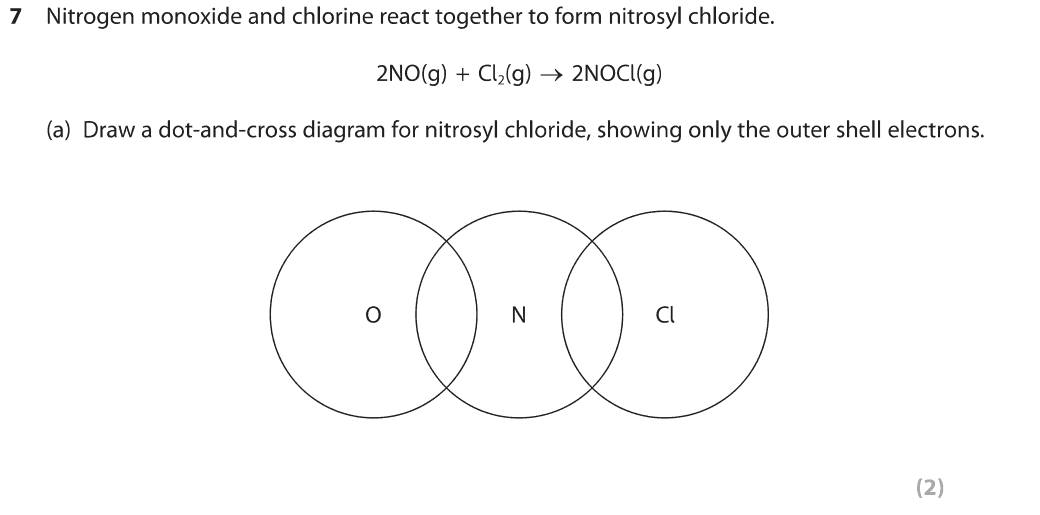
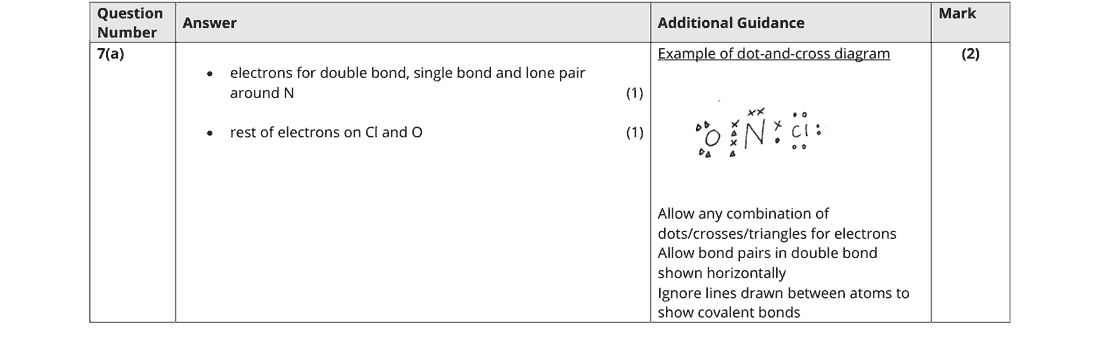
Most candidates could draw the correct dot-and-cross diagram. When full credit was not scored it was generally because: The lone pair on the central nitrogen was omitted. Only electrons around the central nitrogen were shown. Oxygen was shown with 10 electrons in its outer shell. A single bond was shown between the nitrogen and oxygen atoms. A minority of candidates show electrons singly rather than in pairs. Whilst this still would be credited if the numbers were correct, it must make it more difficult for them to check their work, opening up the potential for a slip, and hence a lost mark.
![The rate equation for the formation of nitrosyl chloride is
Rate = k[NOJ’[Cl,]
Complete the table by adding the missing values.](/img/JUN19_9CH02/JUN19_9CH02_7-b-i_qp.webp)
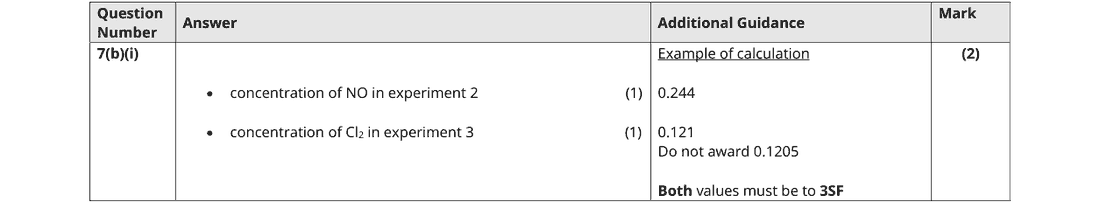
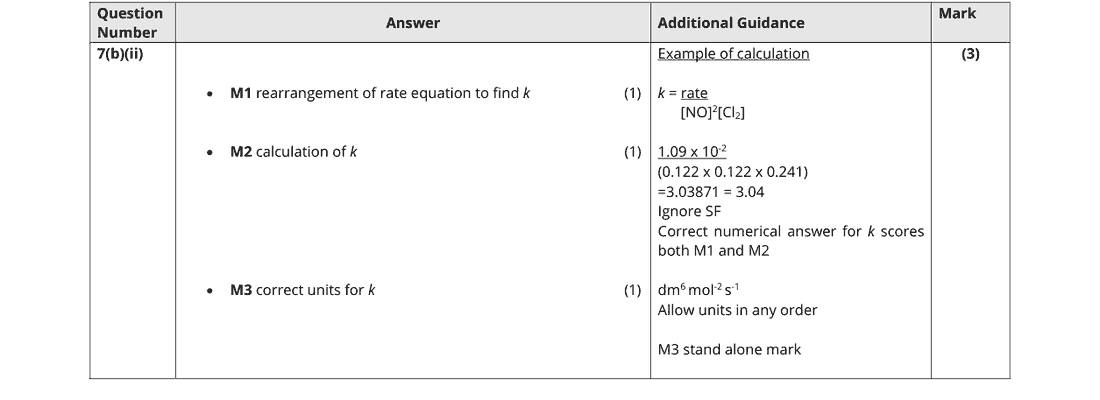
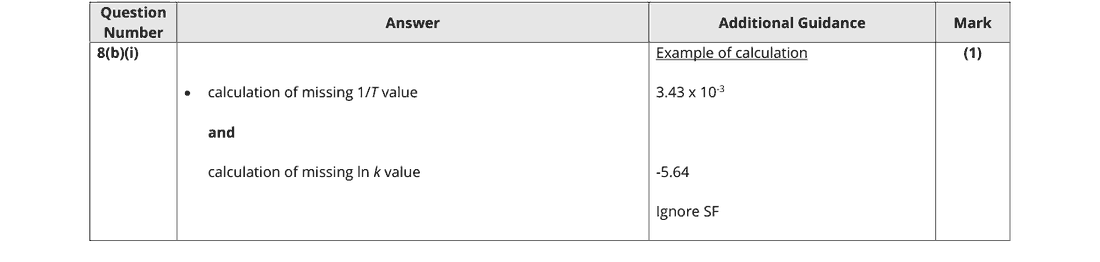
Looking at the evidence seen in scripts most candidates attempted to answer Q7(b)(i) by comparing the experimental data. Most were able to deduce the concentration of NO in experiment 1. The concentration of Cl2 in experiment 3 proved more challenging and sometimes those who successfully processed the experimental data quoted their value to 4 significant figures, which was not allowed. A small number of candidates thought carefully about their approach, and checked their answers using their calculated value for k.As a result, they tended to score both marks. Calculations in Q7 (b)(ii) were of a high standard, though some candidates found it difficult to deduce the correct units even though examiners could see they had attempted to work out their answer, rather than rely on memory.
Skills: MS0.2 Use ratios, fractions and percentages; MS1.1 Use an appropriate number of significant figures

Looking at the evidence seen in scripts most candidates attempted to answer Q7(b)(i) by comparing the experimental data. Most were able to deduce the concentration of NO in experiment 1. The concentration of Cl2 in experiment 3 proved more challenging and sometimes those who successfully processed the experimental data quoted their value to 4 significant figures, which was not allowed. A small number of candidates thought carefully about their approach, and checked their answers using their calculated value for k.As a result, they tended to score both marks. Calculations in Q7 (b)(ii) were of a high standard, though some candidates found it difficult to deduce the correct units even though examiners could see they had attempted to work out their answer, rather than rely on memory.
Skills: MS0.0 Recognise and make use of appropriate units in calculation; MS2.2 Change the subject of an equation; MS2.3 Substitute numerical values into algebraic equations using appropriate units for physical quantities
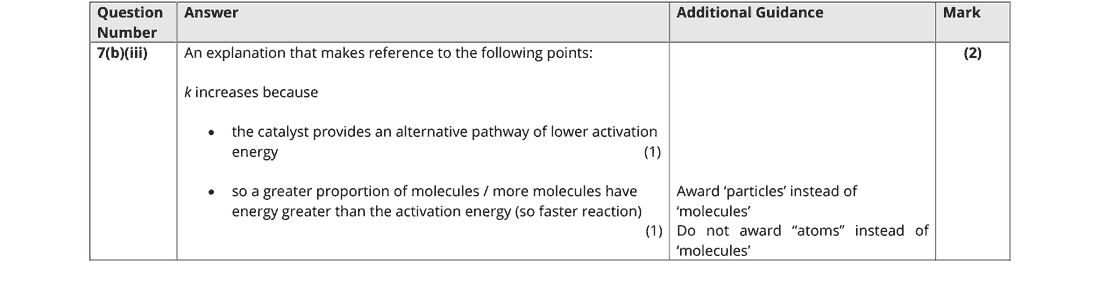
Candidates tended to focus on the rate constant in this question and as a result spent time trying to justify their answer in terms of the rate equation rather than the role of the catalyst. Those who did discuss the catalyst often gave incomplete answers that tended to ignore either the idea of an alternative pathway or the lower activation energy.
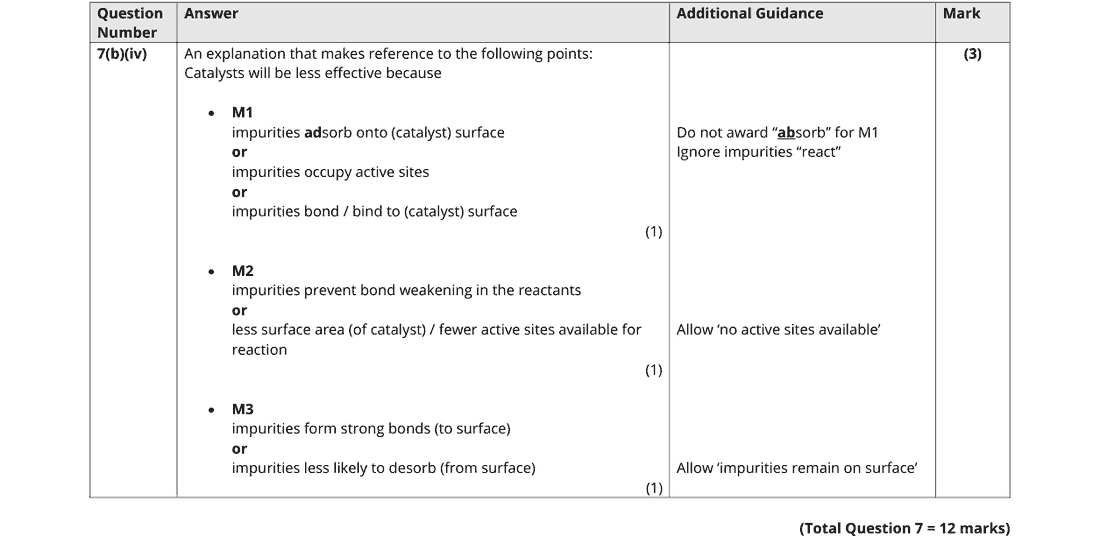
The overall outcomes in this question pleased many examiners, though it was common to see candidates spend time discussing how heterogeneous catalysts work, before embarking on answering the question set. Lots of responses accessed the first two marks, often in terms of the impurity adsorbing onto the catalyst surface, followed by the subsequent reduction in surface area for the reactants. The ideas that the impurities form strong bonds to the surface or do not desorb from the surface were less widely noted. The use of the term ‘absorption’ which in this past has been seen often and is not allowed was rare.
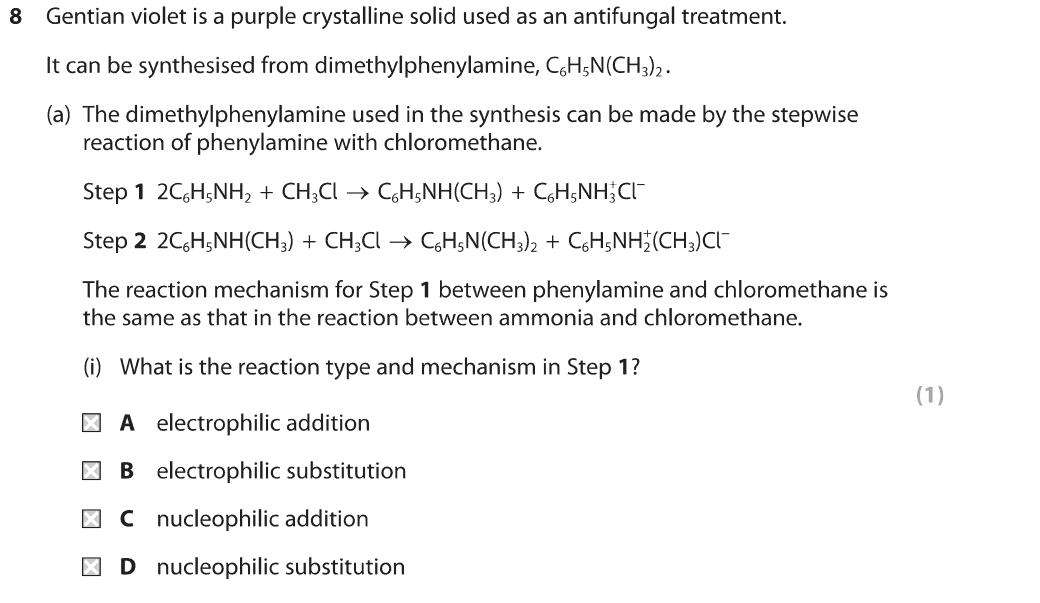
D

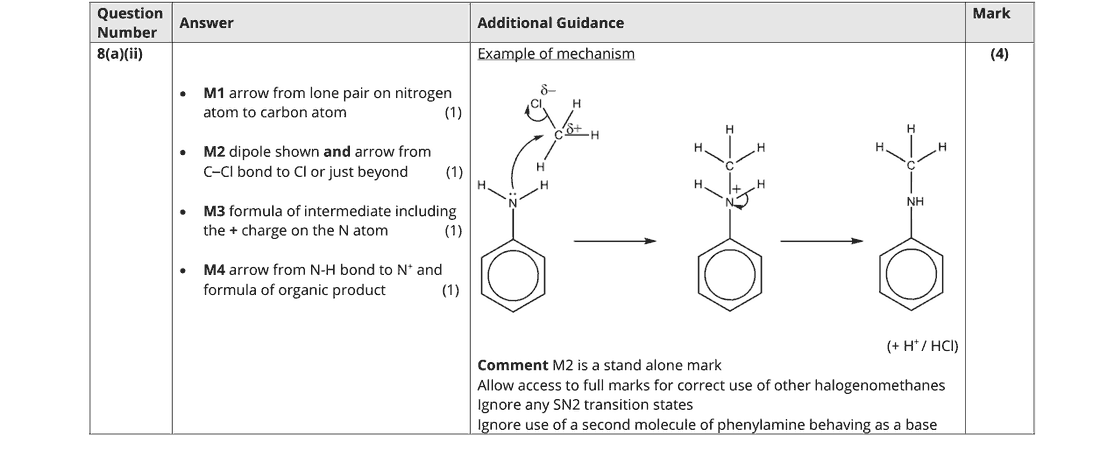
Of the three mechanisms on the paper, this was the most effective discriminator. Some candidates had clearly not remembered the reaction of ammonia with halogenoalkanes, so found it difficult to know where to start. Others either did not look at the structural formulae or could not interpret them so showed the halogenoalkane attacking the ring. Many of the more able candidates could link their knowledge from year 1 of the course to this mechanism, so scores of 3 or 4 marks were commonplace in this region. The previous comments on precision of arrow placement, as well as the importance of including relevant lone pairs apply here as well as Q5 (a)(ii) and Q4 (c)(i).
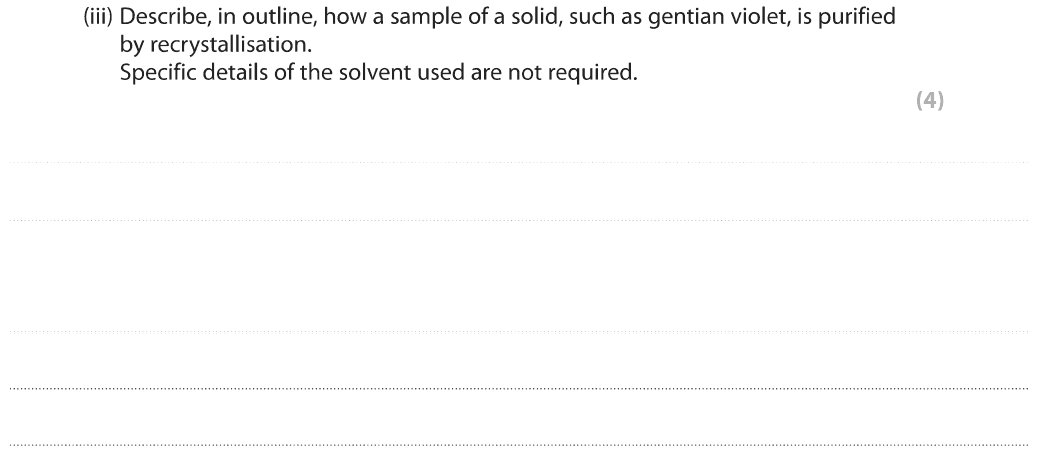
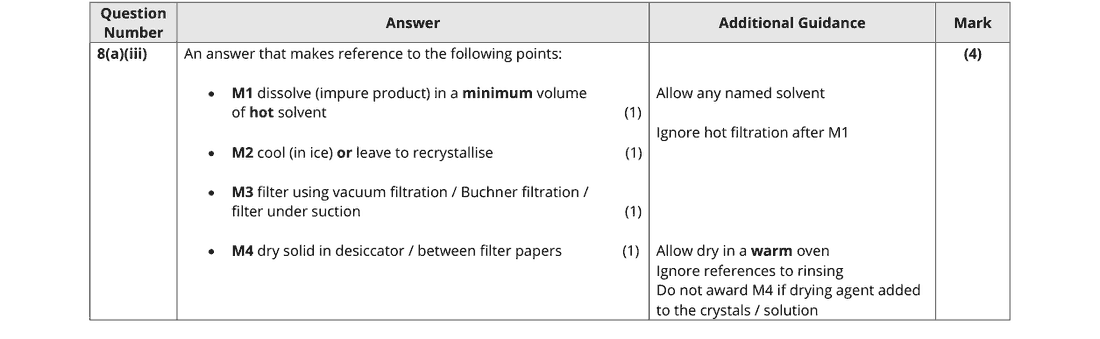
Skills: PT4 use laboratory apparatus for a variety of experimental techniques, including: titration, using burette and pipette; distillation and heating under reflux, including setting up glassware using retort stand and clamps; qualitative tests for ions and organic functional groups; filtration, including use of fluted filter paper, or filtration under reduced pressure; PT7 purify: a solid product by recrystallization; a liquid product, including use of separating funnel
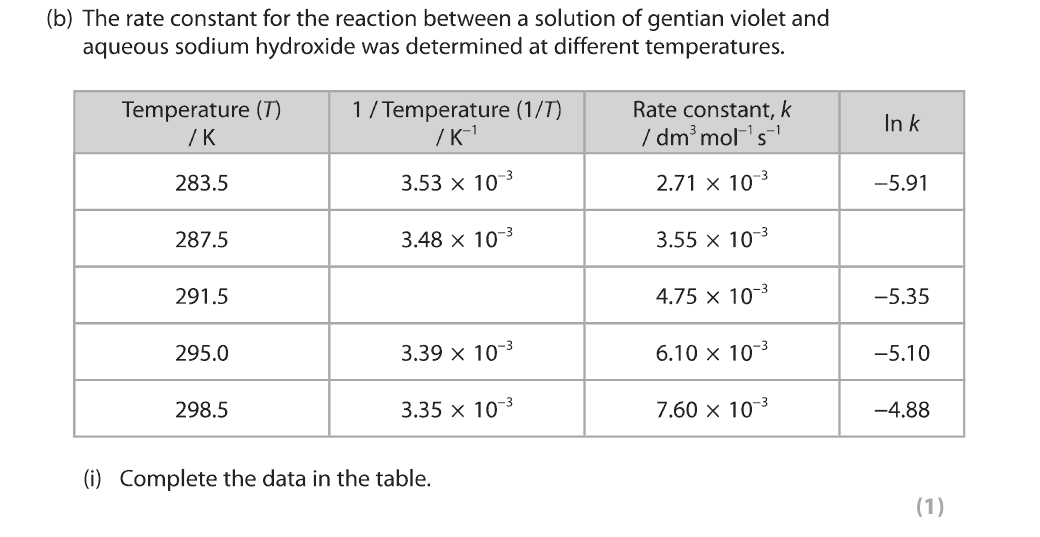
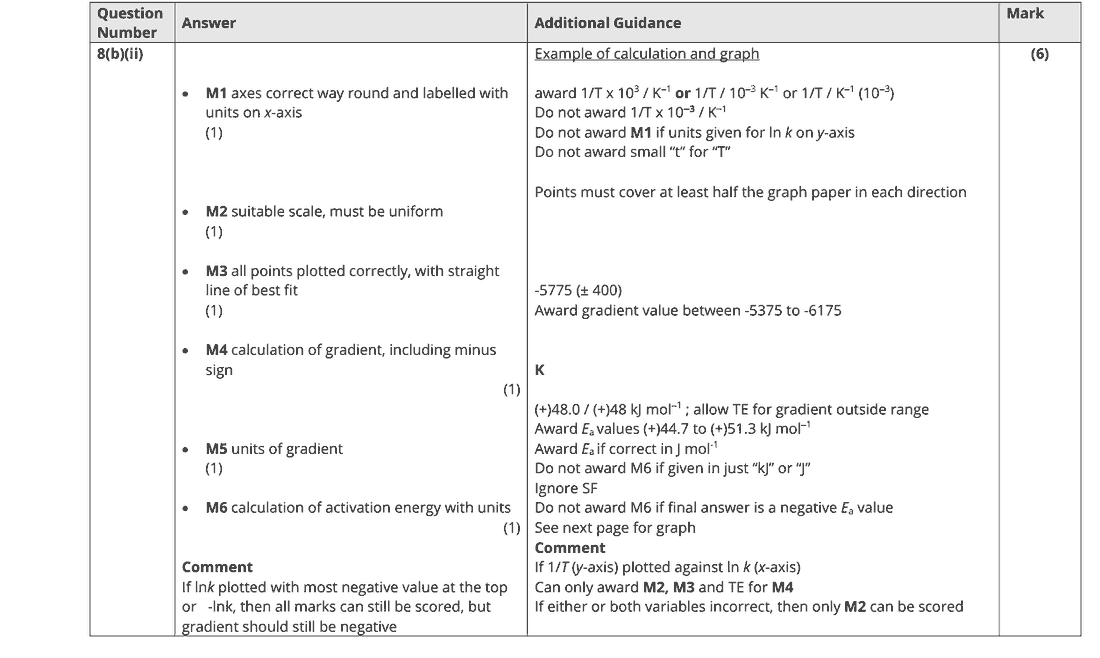
This question was very similar in structure to examples on previous papers, and some examiners felt there was a resultant improvement in the quality of response seen, in particular with regard to low demand skills such as labelling axes. However, a significant minority did not know what data to plot, so scoring was limited in Q8 (b)(ii). The size of the graph paper given was designed to provide a level of challenge regarding the scale and a number of candidates were not aware of, or ignored the requirement to ensure that points plotted cover at least half the available space. The units for the gradient were often absent, despite being asked for in the 2017 paper. Gradients in the correct range were often seen and nearly always shown with a negative sign. Most candidates who calculated a correct gradient went on to determine the numerical value for the activation but sometimes missed the mark due to confusion between J mol – 1 and kJ mol – 1 .
Skills: MS0.4 Use calculators to find and use power, exponential and logarithmic functions; MS2.5 Use logarithms in relation to quantities that range over several orders of magnitude; CP14 Core practical 14: Finding the activation energy of a reaction
![Plot a graph and use it to determine the activation energy for the reaction in kJ mol".
You should include the value and units of the gradient of the line.
The Arrhenius equation can be shown as
Ink |
= -—* x — + constant
R T
ee pes=Hit Gre iste
Bd
a
He=ttitt: HCE
BEE ue BEE
Het eae
ELH CEH
TF
HE FEEFEEEtreFEE
ELEY EHH ECE eH
EEEA
CHEHt0 EEEita7. HE
isetteis
HH HH
sat teattCEEAH rE
HCEFEE
cr
FE-
CHEFE FE
He erieECEHHHCE
FECEEcit
mopoeCEEHEECEEEttHE IE neeHHCEEtteHC teEteseitire
Et
iat
ae
tsLE
tHEtetECE
CEEHEEEt CEEFE
oo
tieFEECEEBitmo ——
HH
sieHH EE
a
aete
EteHtpsEt CHE
oS
EEE HEae FEE ESECEEet
ECE
ae
HCE FE
aes
ECE HH
Ht ae
ECECHEHHHE HE Ete
ECEHeHEE
a HiieitaHECEEtt HEEEEEtttHt
ae co
sit HEHE HCEFt
ae
LEH
iste
ae
EH
ce
oe
Hue
at
teHEtttise HE ite
rE
oo ae
iteFEECEEtreiancrite
ECE
Le --
ae
a:
EE
are
ee
7 HCE
fieoe HEEEte Htae CEEFEE
te
ee He 3 bie H
sss
ae
ae
ae
a
ae
HH
To Ete
ai iia
eea
ee
LEa ae
HE HCE
ae
ae= ee HCE
eea EteceHCE ane te HH a ELE EEE
ECEiiECE
He= Le
HEE isisHHHtEte —=
te te
ans
ECEcE EH
“FHa
Bee
HH
He 3
ae as
ELE a"ae HEE
HEE HCE—Ete Hh a
aosHtceaa
HeceCEEFEE ee Hate
ae
rae
ee
HE
iris
ie
He i:
IE
po
He
rTae ane
oS ae ae Htee
HaHE
ee ate
He
Bat
ae
ae
ate rte
as
HEE H
aeae
He
TEE—
fet rae
osne Hoea To
e/- Ee ita os =
He Be co
te eine
aE eine a
EH EH
cH cH
G r ° di i m
- ve ” con oe ses “ os se ” ~ ~ “ ~
bee . . ve ~ . ~ a ae
cti u va ton n e er
g y
: vo - os ~ i ” ” ~ a ~
i . i so ve . _ “ ”
os
—
otal f
S =]
P
‘AP
90 M ARKSs](/img/JUN19_9CH02/JUN19_9CH02_8-b-ii_qp.webp)
This question was very similar in structure to examples on previous papers, and some examiners felt there was a resultant improvement in the quality of response seen, in particular with regard to low demand skills such as labelling axes. However, a significant minority did not know what data to plot, so scoring was limited in Q8 (b)(ii). The size of the graph paper given was designed to provide a level of challenge regarding the scale and a number of candidates were not aware of, or ignored the requirement to ensure that points plotted cover at least half the available space. The units for the gradient were often absent, despite being asked for in the 2017 paper. Gradients in the correct range were often seen and nearly always shown with a negative sign. Most candidates who calculated a correct gradient went on to determine the numerical value for the activation but sometimes missed the mark due to confusion between J mol – 1 and kJ mol – 1 .
Skills: MS0.0 Recognise and make use of appropriate units in calculation; MS3.2 Plot two variables from experimental or other data; MS3.3 Determine the slope and intercept of a linear graph; CP14 Core practical 14: Finding the activation energy of a reaction
Want a paper marked and gone through with you? Message us.