November 2020: Paper 1, Inorganic and physical chemistry

105 marks · 43 question parts · Paper, mark scheme and report on AQA's site · An autumn series using the paper written for the cancelled summer exams · Have the Data Booklet beside you

Question by question

QTopicMarksAOType
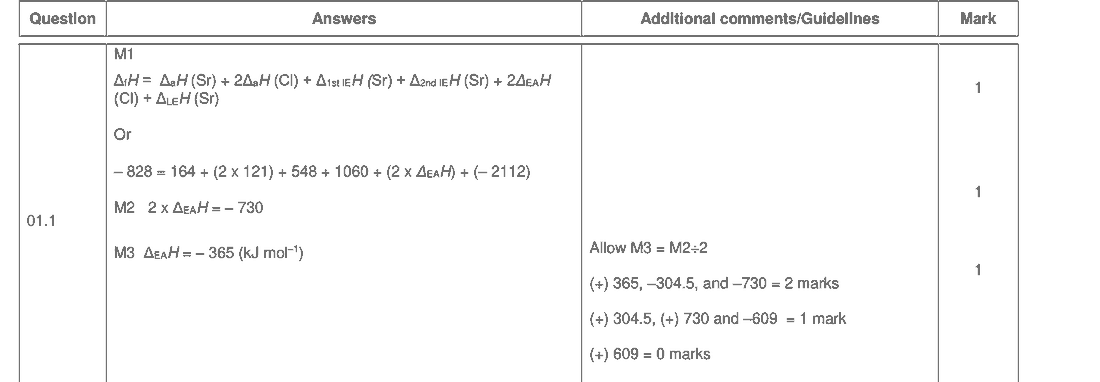
01.1 Thermodynamics: Born–Haber cycles, entropy and Gibbs free energy 3Calculation
01.2 Thermodynamics: Born–Haber cycles, entropy and Gibbs free energy, Bonding 1Short answer
01.3 Thermodynamics: Born–Haber cycles, entropy and Gibbs free energy 1Short answer
01.4 Thermodynamics: Born–Haber cycles, entropy and Gibbs free energy 2Explanation
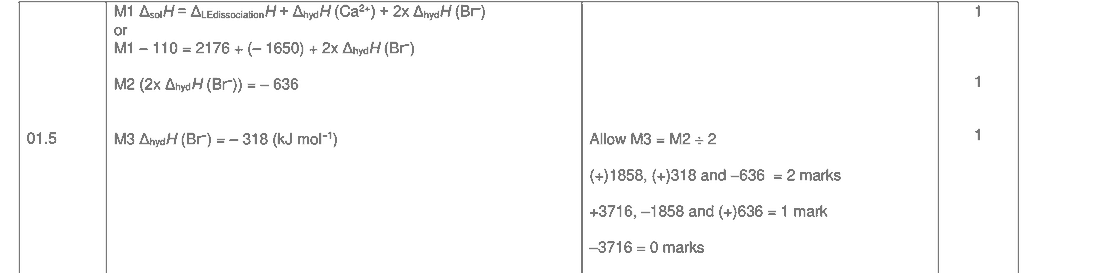
01.5 Thermodynamics: Born–Haber cycles, entropy and Gibbs free energy 3Calculation
02.1 Amount of substance 2Short answer
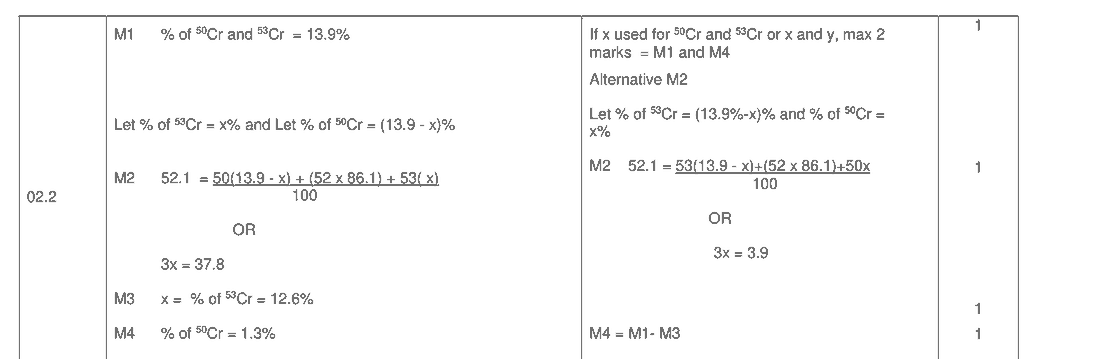
02.2 Atomic structure 4Calculation
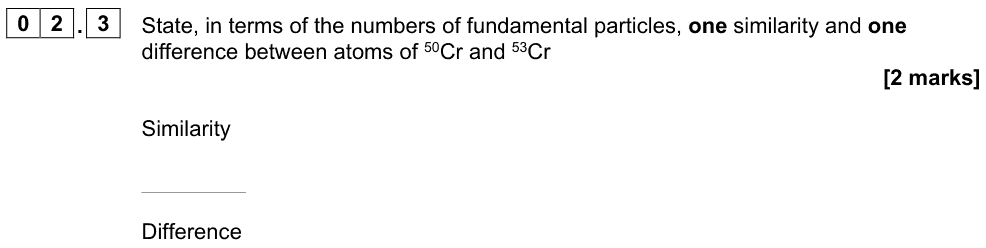
02.3 Atomic structure 2Short answer
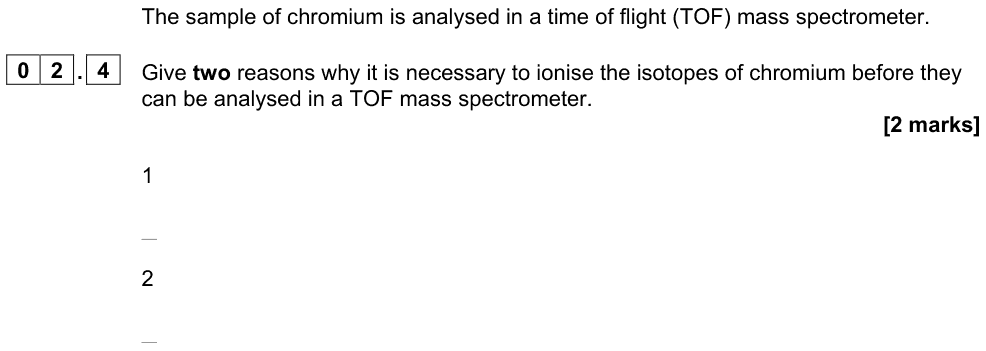
02.4 Atomic structure 2Short answer
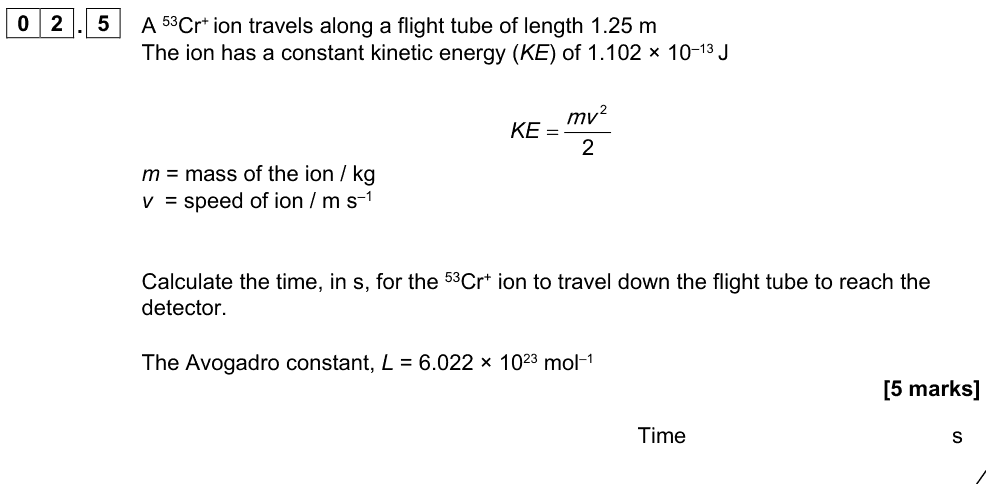
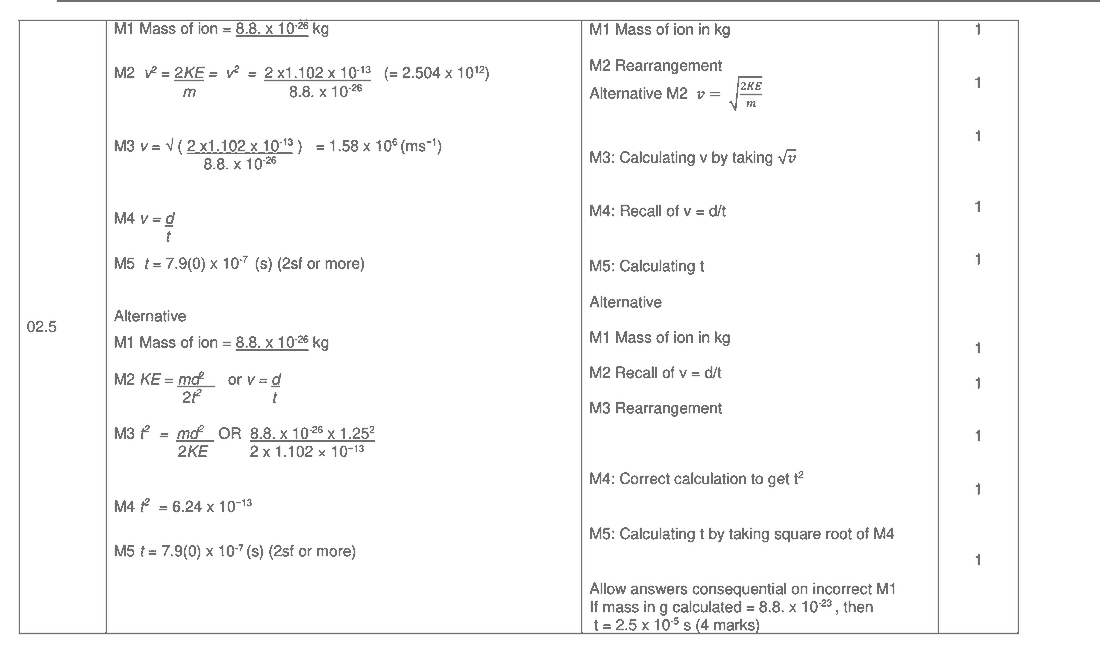
02.5 Atomic structure, Amount of substance 5Calculation
03.1 Atomic structure, Periodicity 1Diagram or structure
03.2 Atomic structure 2Equation writing
03.3 Periodicity 2Explanation
03.4 Bonding 1Short answer
03.5 Period 3 elements and their oxides 1Equation writing
04.1 Acids and bases: pH, Ka, titration curves and buffers 1Short answer
04.2 Acids and bases: pH, Ka, titration curves and buffers 1Short answer
04.3 Acids and bases: pH, Ka, titration curves and buffers 4Calculation
04.4 Acids and bases: pH, Ka, titration curves and buffers, Amount of substance 6Calculation
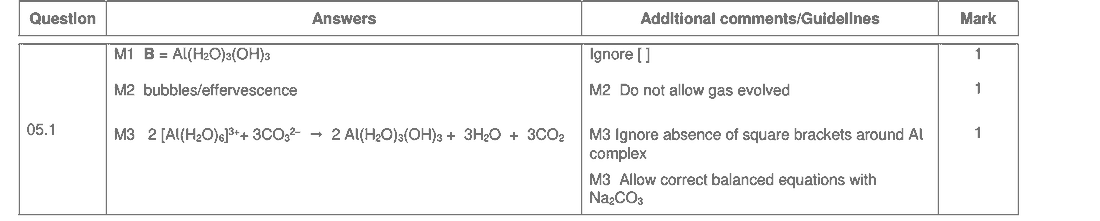
05.1 Reactions of ions in aqueous solution 3Equation writing
05.2 Reactions of ions in aqueous solution 3Equation writing
05.3 Transition metals 1Short answer
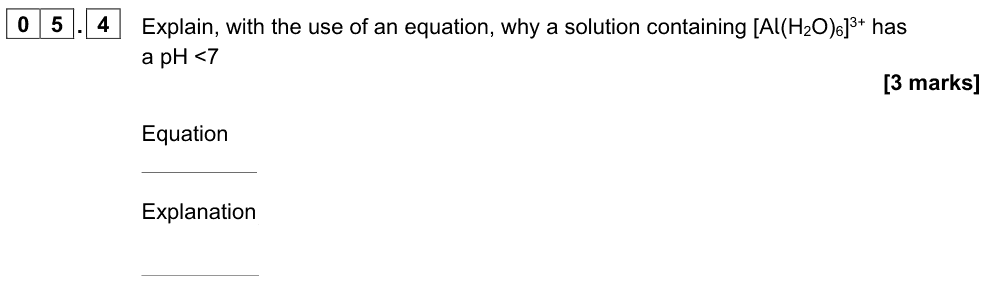
05.4 Reactions of ions in aqueous solution 3Explanation
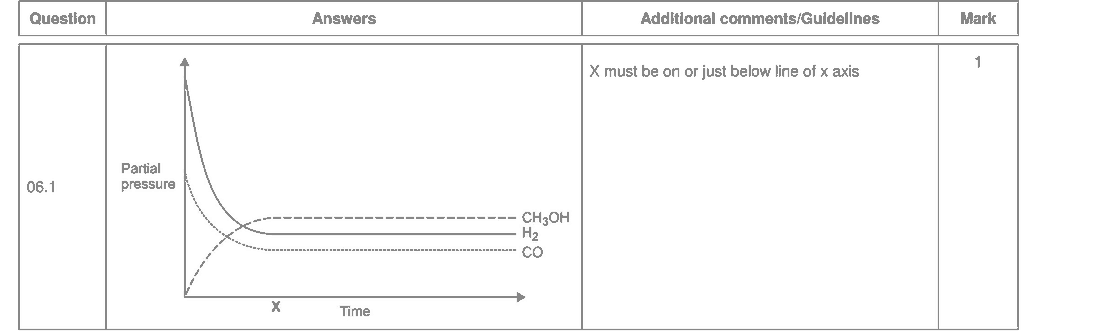
06.1 Chemical equilibria, Le Chatelier's principle and Kc 1Diagram or structure
06.2 Equilibrium constant Kp 4Calculation
06.3 Equilibrium constant Kp 2Short answer
06.4 Equilibrium constant Kp, Chemical equilibria, Le Chatelier's principle and Kc 2Short answer
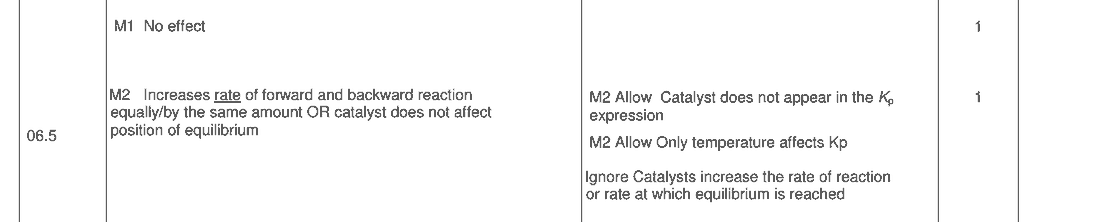
06.5 Equilibrium constant Kp, Chemical equilibria, Le Chatelier's principle and Kc 2Explanation
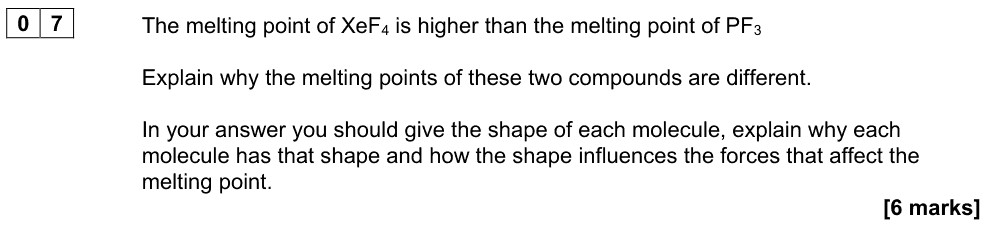
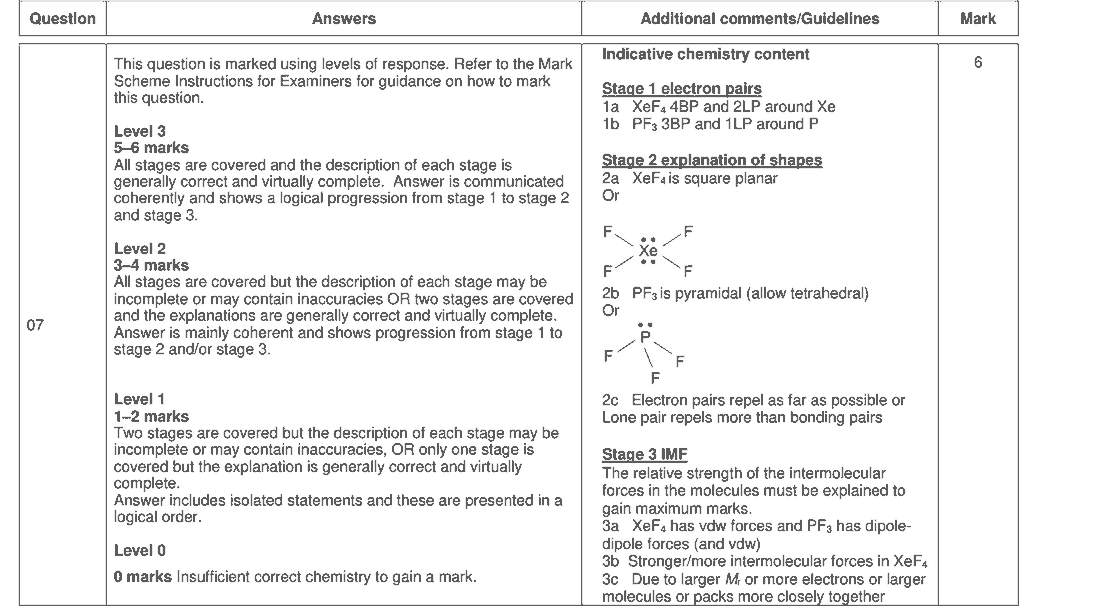
07 Bonding 6Level of response
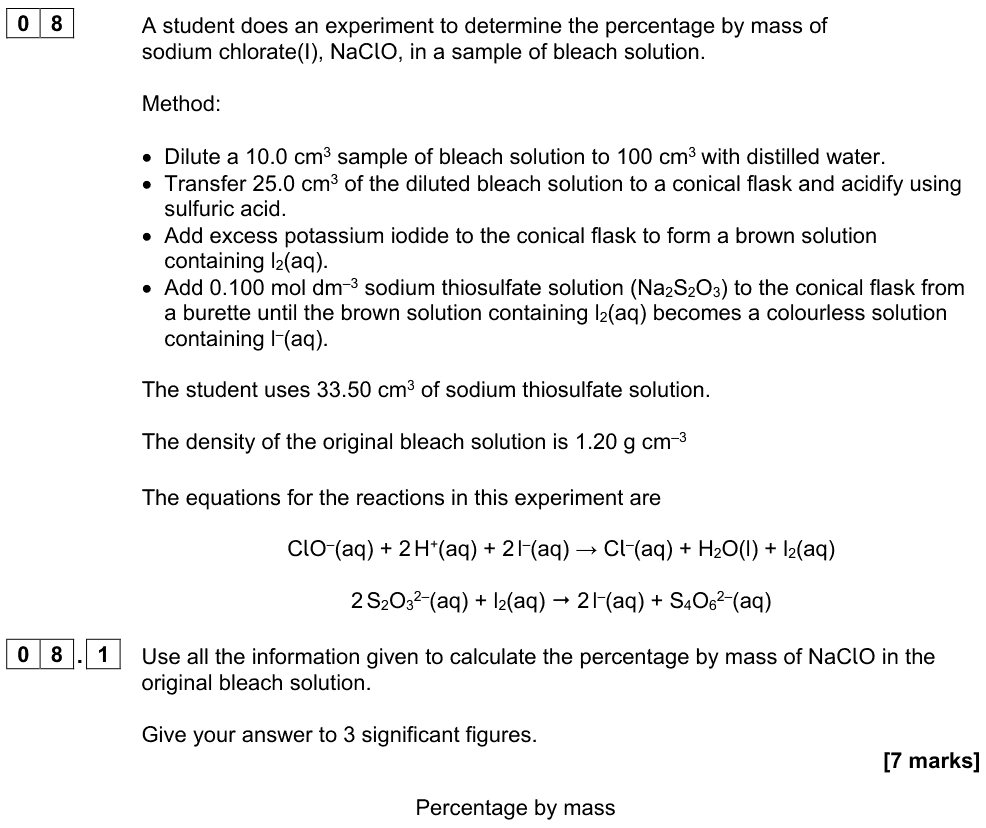
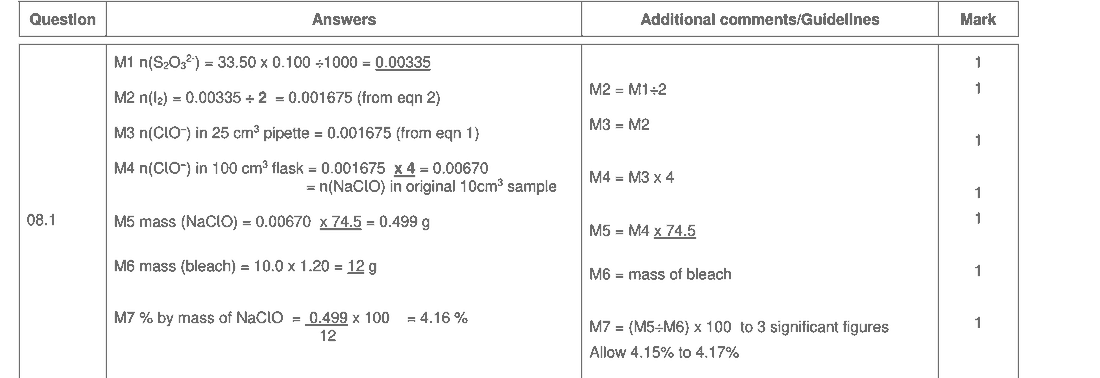
08.1 Amount of substance 7Calculation
08.2 Amount of substance 1Practical and data analysis
09.1 Group 7(17), the halogens 1Short answer
09.2 Group 7(17), the halogens, Acids and bases: pH, Ka, titration curves and buffers 3Equation writing
09.3 Group 7(17), the halogens, Oxidation, reduction and redox equations 3Equation writing

09.4 Group 7(17), the halogens 2Equation writing
10.1 Thermodynamics: Born–Haber cycles, entropy and Gibbs free energy, Energetics 6Calculation
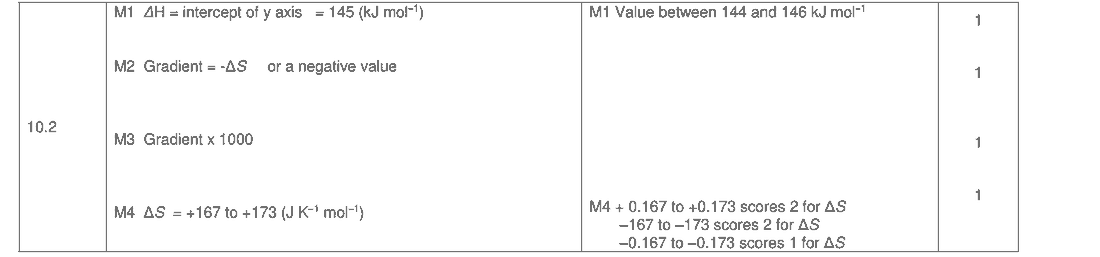
10.2 Thermodynamics: Born–Haber cycles, entropy and Gibbs free energy 4Calculation
10.3 Thermodynamics: Born–Haber cycles, entropy and Gibbs free energy 1Short answer
11.1 Electrode potentials and electrochemical cells, Oxidation, reduction and redox equations 1Equation writing

11.2 Electrode potentials and electrochemical cells, Oxidation, reduction and redox equations 1Equation writing

11.3 Electrode potentials and electrochemical cells, Oxidation, reduction and redox equations 1Equation writing
11.4 Electrode potentials and electrochemical cells 2Short answer
11.5 Electrode potentials and electrochemical cells 1Short answer

The questions

01.101.201.301.401.502.102.202.302.402.503.103.203.303.403.504.104.204.304.405.105.205.305.406.106.206.306.406.50708.108.209.109.209.309.410.110.210.311.111.211.311.411.5
November 2020 · Paper 1 · Q01.1 3 marks Calculation thermodynamics
This question is about enthalpy changes.
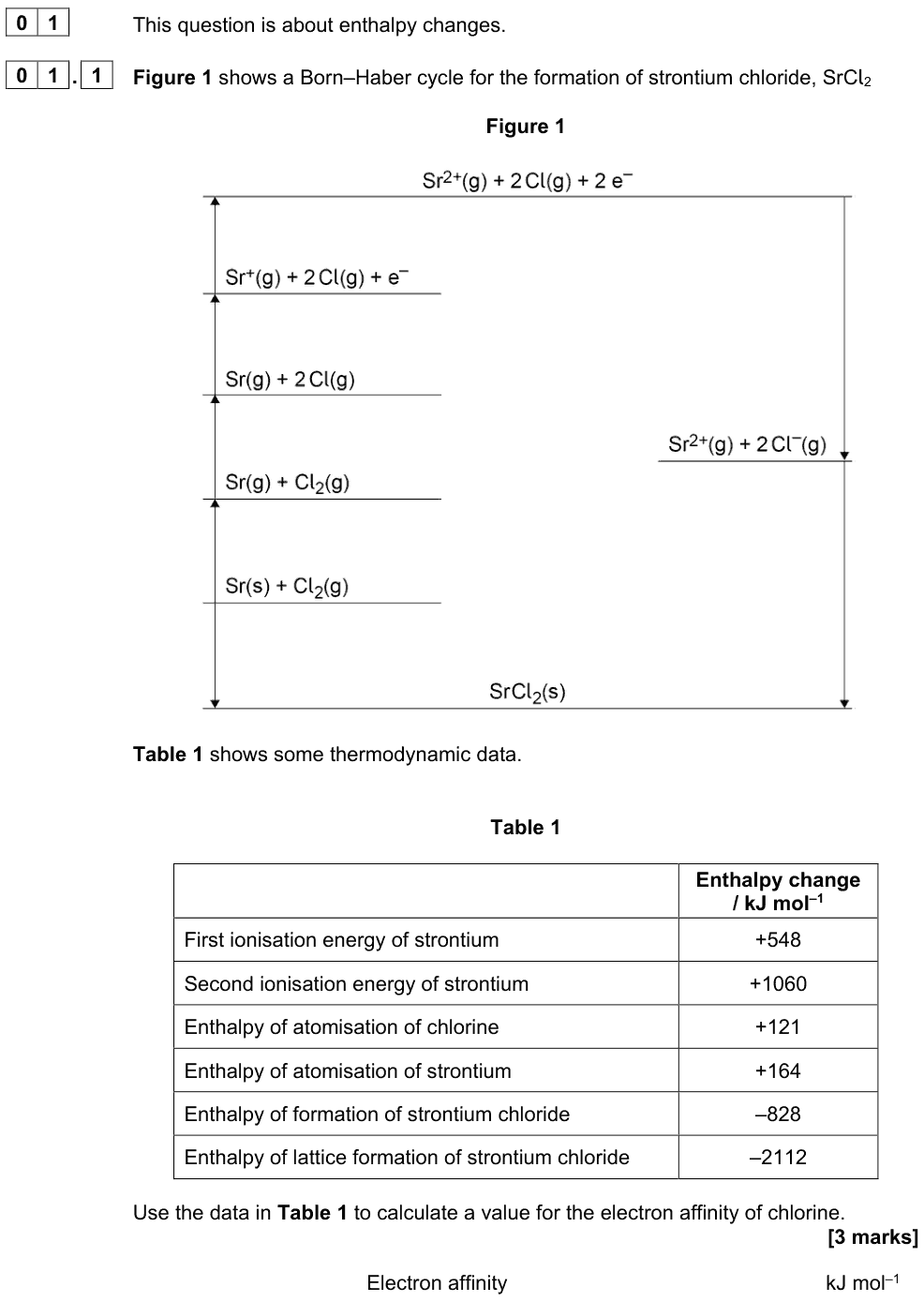
Figure 1 shows a Born–Haber cycle for the formation of strontium chloride, SrCl2
Figure 1
Table 1 shows some thermodynamic data.
Table 1
Enthalpy change
/ kJ mol–1
First ionisation energy of strontium
+548
Second ionisation energy of strontium
+1060
Enthalpy of atomisation of chlorine
+121
Enthalpy of atomisation of strontium
+164
Enthalpy of formation of strontium chloride
–828
Enthalpy of lattice formation of strontium chloride
–2112
Use the data in Table 1 to calculate a value for the electron affinity of chlorine.
[3 marks]
Electron affinity
kJ mol–1
November 2020 · Paper 1 · Q01.2 1 mark Short answer thermodynamicsbonding
Earlier part of question 01 that this part usesEarlier part of November 2020 Paper 1 question 01
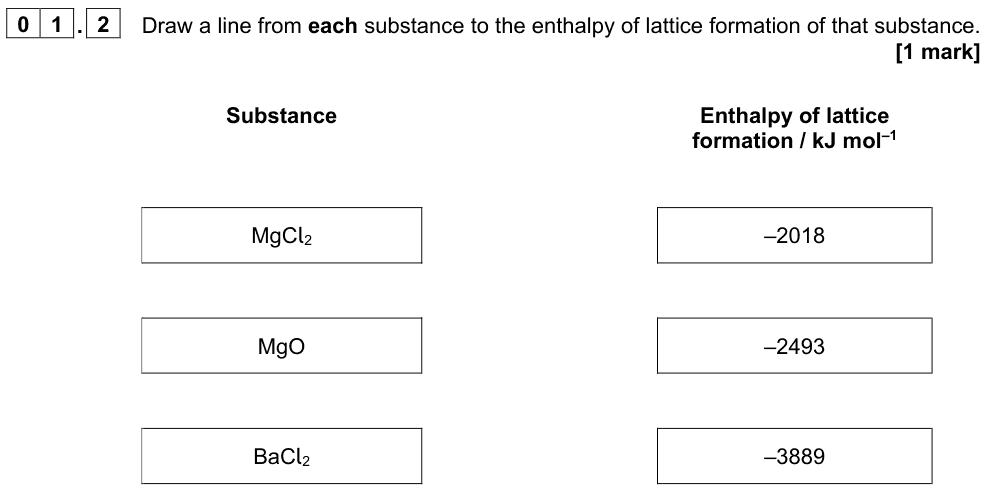
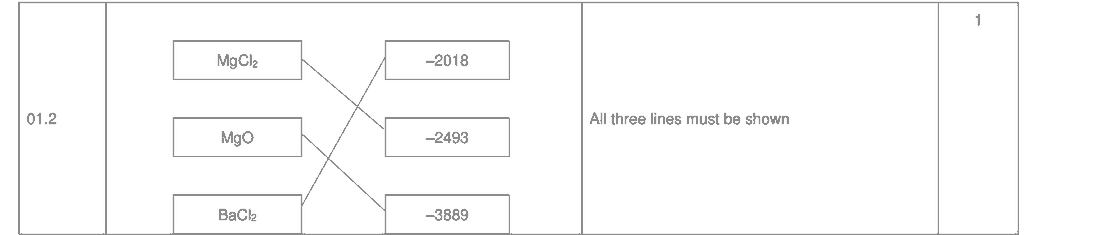
Draw a line from each substance to the enthalpy of lattice formation of that substance.
[1 mark]
Substance
Enthalpy of lattice
formation / kJ mol–1
MgCl2
–2018
MgO
–2493
BaCl2
–3889
November 2020 · Paper 1 · Q01.3 1 mark Short answer thermodynamics
Earlier part of question 01 that this part usesEarlier part of November 2020 Paper 1 question 01
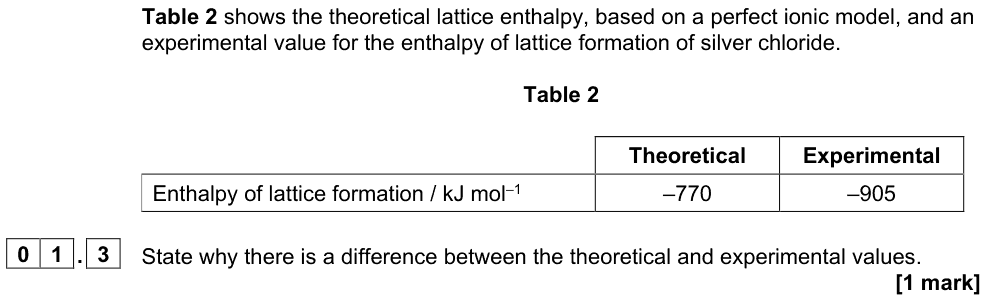
Table 2 shows the theoretical lattice enthalpy, based on a perfect ionic model, and an
experimental value for the enthalpy of lattice formation of silver chloride.
Table 2
Theoretical
Experimental
Enthalpy of lattice formation / kJ mol–1
–770
–905
State why there is a difference between the theoretical and experimental values.
[1 mark]
November 2020 · Paper 1 · Q01.4 2 marks Explanation thermodynamics
Earlier parts of question 01 that this part usesEarlier part of November 2020 Paper 1 question 01Earlier part of November 2020 Paper 1 question 01
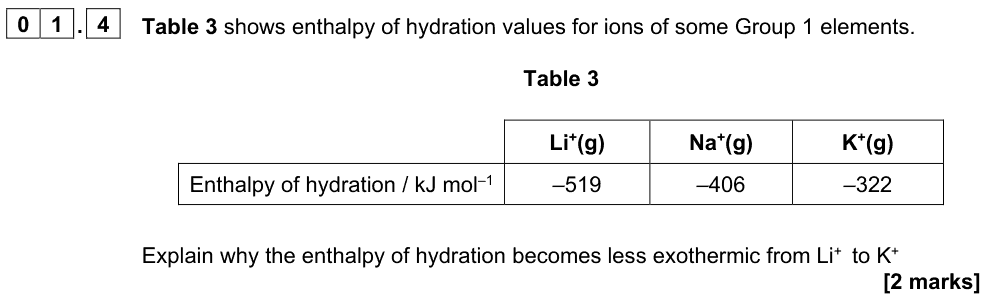
Table 3 shows enthalpy of hydration values for ions of some Group 1 elements.
Table 3
Li+(g)
Na+(g)
K+(g)
Enthalpy of hydration / kJ mol–1
–519
–406
–322
Explain why the enthalpy of hydration becomes less exothermic from Li+  to K+
[2 marks]
November 2020 · Paper 1 · Q01.5 3 marks Calculation thermodynamics
Earlier parts of question 01 that this part usesEarlier part of November 2020 Paper 1 question 01Earlier part of November 2020 Paper 1 question 01
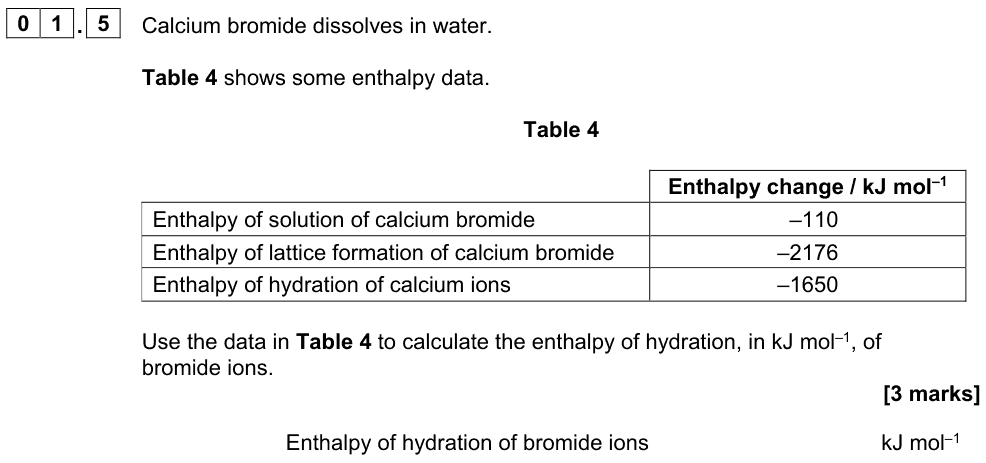
Calcium bromide dissolves in water.
Table 4 shows some enthalpy data.
Table 4
Enthalpy change / kJ mol–1
Enthalpy of solution of calcium bromide
–110
Enthalpy of lattice formation of calcium bromide
–2176
Enthalpy of hydration of calcium ions
–1650
Use the data in Table 4 to calculate the enthalpy of hydration, in kJ mol–1, of
bromide ions.
[3 marks]
Enthalpy of hydration of bromide ions
kJ mol–1
November 2020 · Paper 1 · Q02.1 2 marks Short answer amount of substance
This question is about the isotopes of chromium.
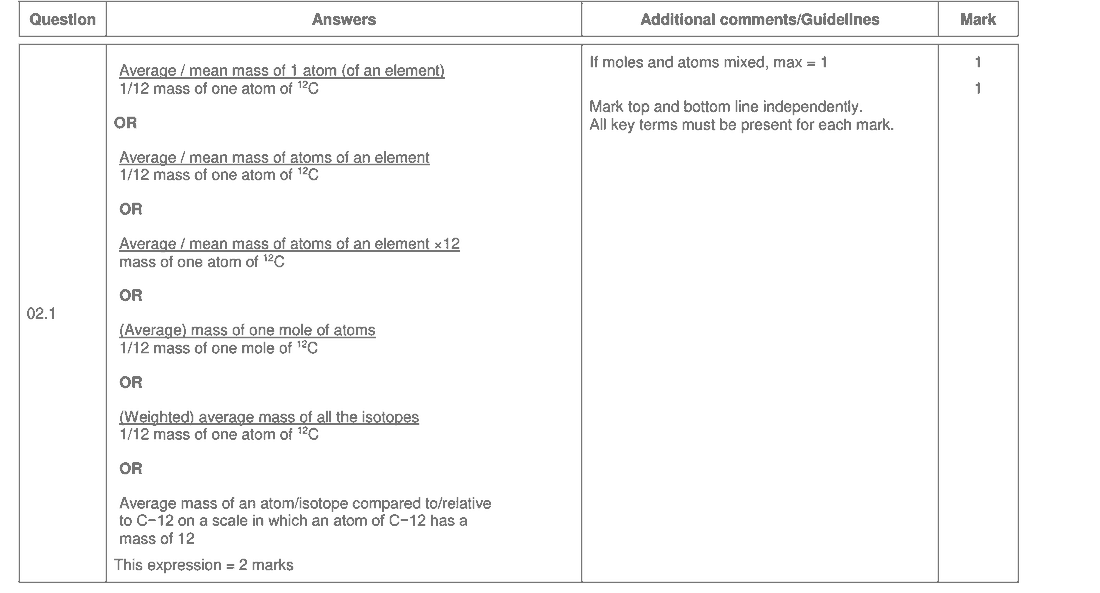
Give the meaning of the term relative atomic mass.
[2 marks]
November 2020 · Paper 1 · Q02.2 4 marks Calculation atomic structure
Earlier part of question 02 that this part usesEarlier part of November 2020 Paper 1 question 02
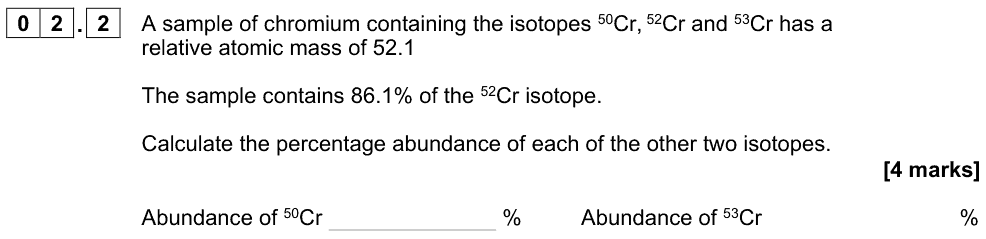
A sample of chromium containing the isotopes 50Cr, 52Cr and 53Cr has a
relative atomic mass of 52.1
The sample contains 86.1% of the 52Cr isotope.
Calculate the percentage abundance of each of the other two isotopes.
[4 marks]
Abundance of 50Cr
%
Abundance of 53Cr
%
November 2020 · Paper 1 · Q02.3 2 marks Short answer atomic structure
Earlier part of question 02 that this part usesEarlier part of November 2020 Paper 1 question 02
State, in terms of the numbers of fundamental particles, one similarity and one
difference between atoms of 50Cr and 53Cr
[2 marks]
Similarity
Difference
November 2020 · Paper 1 · Q02.4 2 marks Short answer atomic structure
Earlier part of question 02 that this part usesEarlier part of November 2020 Paper 1 question 02
The sample of chromium is analysed in a time of flight (TOF) mass spectrometer.
Give two reasons why it is necessary to ionise the isotopes of chromium before they
can be analysed in a TOF mass spectrometer.
[2 marks]
1
2
November 2020 · Paper 1 · Q02.5 5 marks Calculation atomic structureamount of substance
Earlier part of question 02 that this part usesEarlier part of November 2020 Paper 1 question 02
A 53Cr+ ion travels along a flight tube of length 1.25 m
The ion has a constant kinetic energy (KE) of 1.102 × 10⁻¹³ J
2
=
KE
2
m = mass of the ion / kg
v  = speed of ion / m s–1
Calculate the time, in s, for the 53Cr+ ion to travel down the flight tube to reach the
detector.
The Avogadro constant, L = 6.022 × 10²³ mol–1
[5 marks]
Time
s
November 2020 · Paper 1 · Q03.1 1 mark Diagram or structure atomic structureperiodicity
This question is about Period 3 elements.
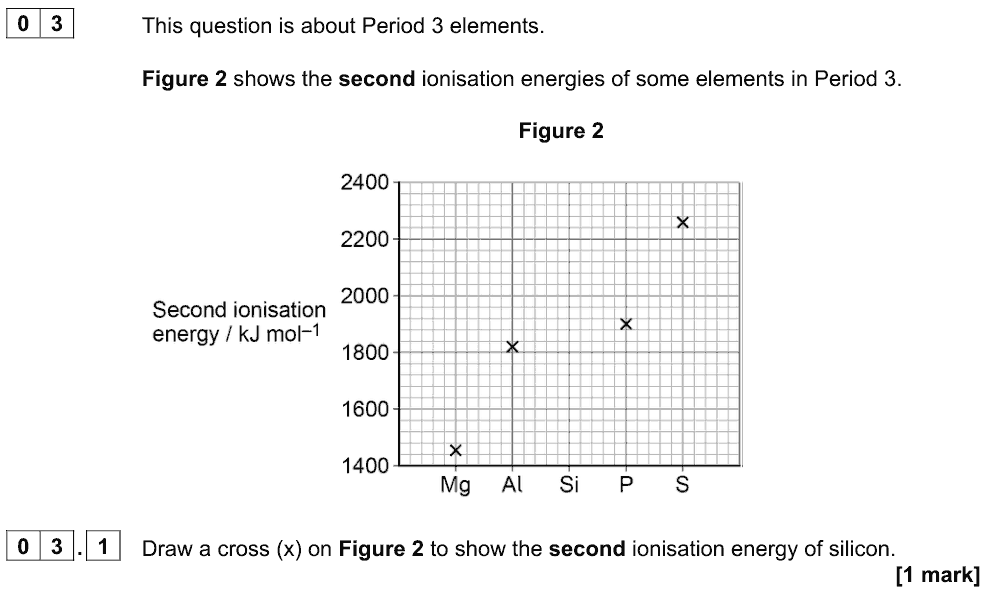
Figure 2 shows the second ionisation energies of some elements in Period 3.
Figure 2
Draw a cross (x) on Figure 2 to show the second ionisation energy of silicon.
[1 mark]
November 2020 · Paper 1 · Q03.2 2 marks Equation writing atomic structure
Earlier part of question 03 that this part usesEarlier part of November 2020 Paper 1 question 03
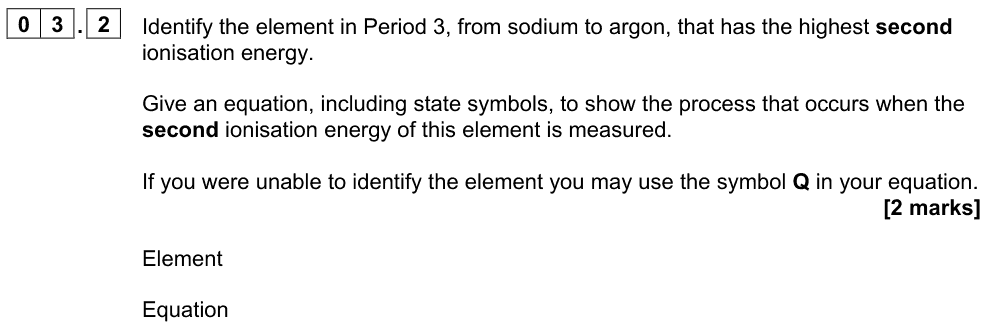
Identify the element in Period 3, from sodium to argon, that has the highest second
ionisation energy.
Give an equation, including state symbols, to show the process that occurs when the
second ionisation energy of this element is measured.
If you were unable to identify the element you may use the symbol Q in your equation.
[2 marks]
Element
Equation
November 2020 · Paper 1 · Q03.3 2 marks Explanation periodicity
Earlier part of question 03 that this part usesEarlier part of November 2020 Paper 1 question 03
Explain why the atomic radius decreases across Period 3, from sodium to chlorine.
[2 marks]
November 2020 · Paper 1 · Q03.4 1 mark Short answer bonding
Earlier part of question 03 that this part usesEarlier part of November 2020 Paper 1 question 03
Identify the element in Period 3, from sodium to chlorine, that has the highest
electronegativity.
[1 mark]
November 2020 · Paper 1 · Q03.5 1 mark Equation writing period 3 elements and oxides
Earlier part of question 03 that this part usesEarlier part of November 2020 Paper 1 question 03
Phosphorus burns in air to form phosphorus(V) oxide.
Give an equation for this reaction.
[1 mark]
November 2020 · Paper 1 · Q04.1 1 mark Short answer acids and bases
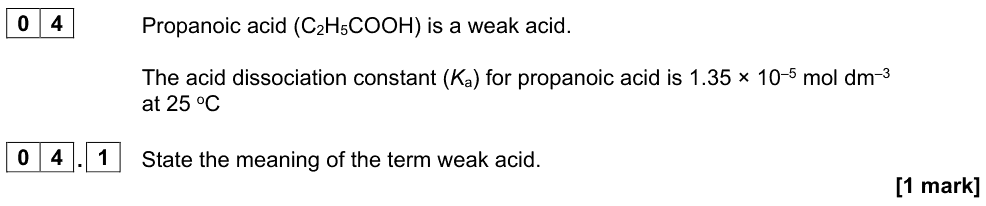
Propanoic acid (C2H5COOH) is a weak acid.
The acid dissociation constant (Ka) for propanoic acid is 1.35 × 10⁻⁵ mol dm–3
at 25 oC
State the meaning of the term weak acid.
[1 mark]
November 2020 · Paper 1 · Q04.2 1 mark Short answer acids and bases
Earlier part of question 04 that this part usesEarlier part of November 2020 Paper 1 question 04
Give an expression for the acid dissociation constant for propanoic acid.
[1 mark]
Ka
November 2020 · Paper 1 · Q04.3 4 marks Calculation acids and bases
Earlier part of question 04 that this part usesEarlier part of November 2020 Paper 1 question 04
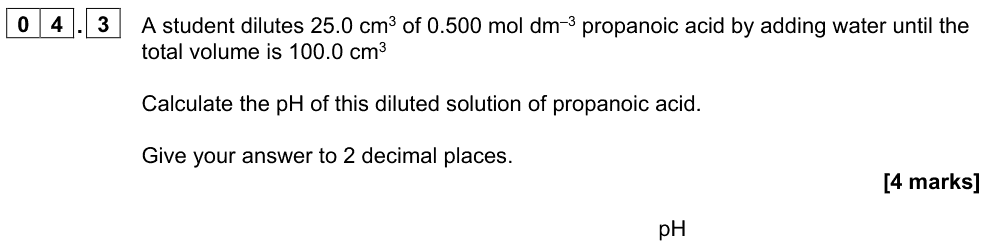
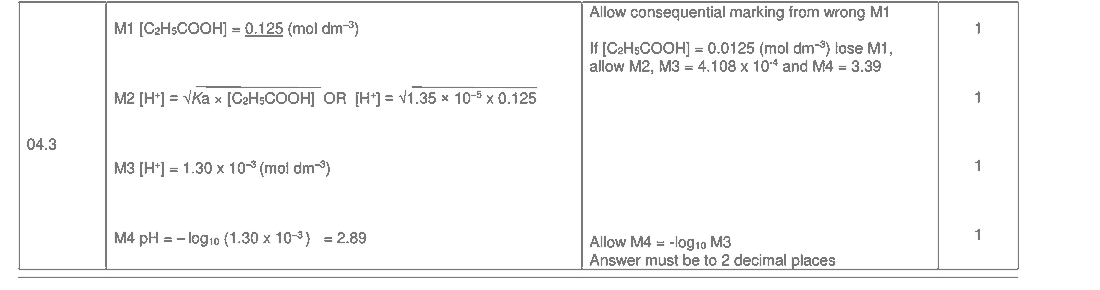
A student dilutes 25.0 cm3 of 0.500 mol dm–3 propanoic acid by adding water until the
total volume is 100.0 cm3
Calculate the pH of this diluted solution of propanoic acid.
Give your answer to 2 decimal places.
[4 marks]
pH
November 2020 · Paper 1 · Q04.4 6 marks Calculation acids and basesamount of substance
Earlier part of question 04 that this part usesEarlier part of November 2020 Paper 1 question 04
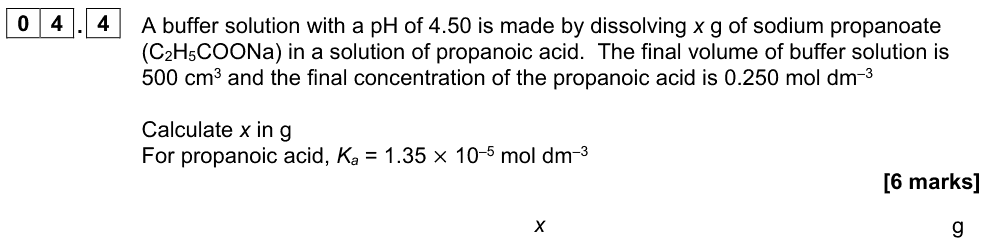
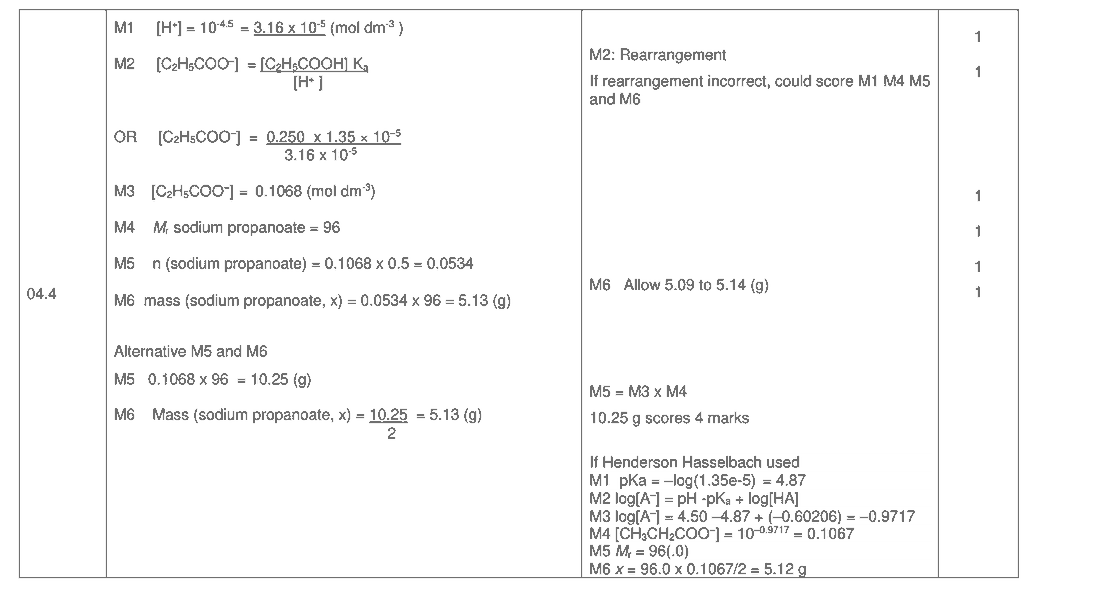
A buffer solution with a pH of 4.50 is made by dissolving x g of sodium propanoate
(C2H5COONa) in a solution of propanoic acid.  The final volume of buffer solution is
500 cm3 and the final concentration of the propanoic acid is 0.250 mol dm–3
Calculate x in g
For propanoic acid, Ka = 1.35 × 10⁻⁵ mol dm–3
[6 marks]
x
g
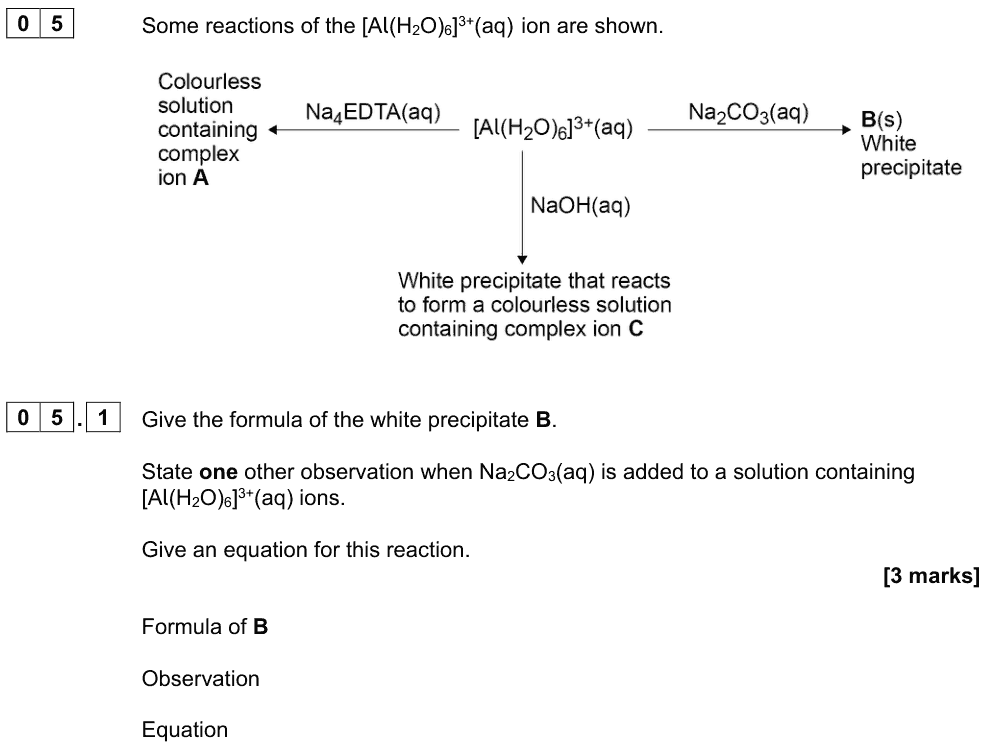
November 2020 · Paper 1 · Q05.1 3 marks Equation writing reactions of ions in aqueous solution
Some reactions of the [Al(H2O)6]3+(aq)  ion are shown.
Give the formula of the white precipitate B.
State one other observation when Na2CO3(aq) is added to a solution containing
[Al(H2O)6]3+(aq) ions.
Give an equation for this reaction.
[3 marks]
Formula of B
Observation
Equation
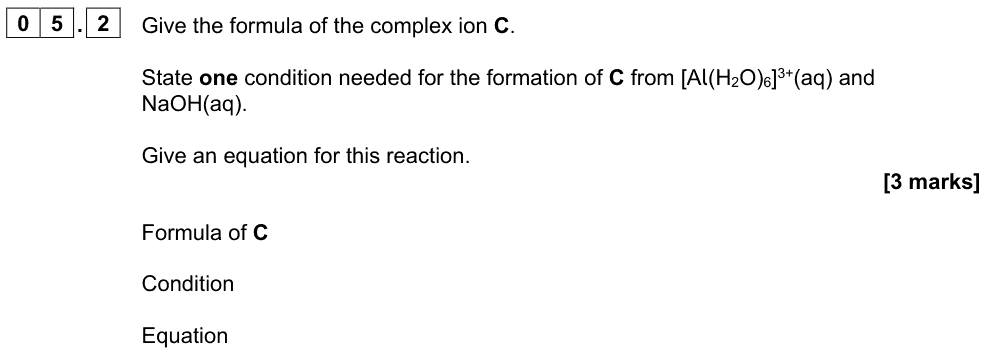
November 2020 · Paper 1 · Q05.2 3 marks Equation writing reactions of ions in aqueous solution
Earlier part of question 05 that this part usesEarlier part of November 2020 Paper 1 question 05
Give the formula of the complex ion C.
State one condition needed for the formation of C from [Al(H2O)6]3+(aq) and
NaOH(aq).
Give an equation for this reaction.
[3 marks]
Formula of C
Condition
Equation
November 2020 · Paper 1 · Q05.3 1 mark Short answer transition metals
Earlier part of question 05 that this part usesEarlier part of November 2020 Paper 1 question 05
Deduce the formula of the complex ion A.
[1 mark]
November 2020 · Paper 1 · Q05.4 3 marks Explanation reactions of ions in aqueous solution
Earlier part of question 05 that this part usesEarlier part of November 2020 Paper 1 question 05
Explain, with the use of an equation, why a solution containing [Al(H2O)6]3+ has
a pH ˂7
[3 marks]
Equation
Explanation
November 2020 · Paper 1 · Q06.1 1 mark Diagram or structure chemical equilibria and kc
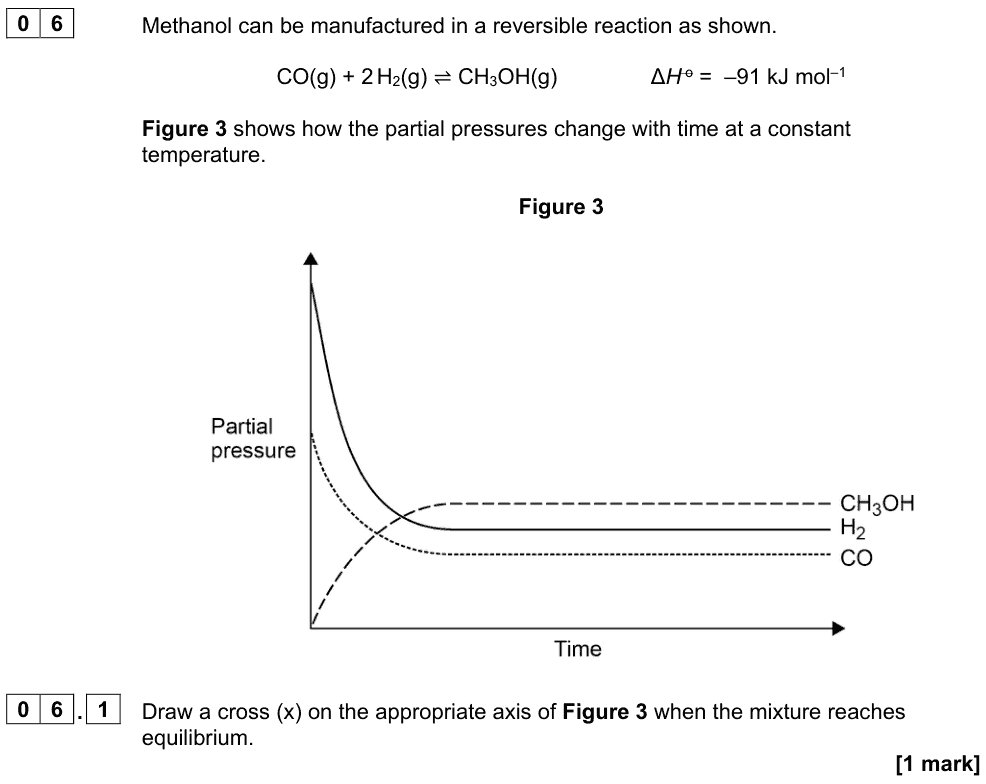
Methanol can be manufactured in a reversible reaction as shown.
CO(g) + 2 H2(g) ⇌ CH3OH(g)              ΔH o =  –91 kJ mol–1
Figure 3 shows how the partial pressures change with time at a constant
temperature.
Figure 3
Draw a cross (x) on the appropriate axis of Figure 3 when the mixture reaches
equilibrium.
[1 mark]
November 2020 · Paper 1 · Q06.2 4 marks Calculation equilibrium constant kp
Earlier part of question 06 that this part usesEarlier part of November 2020 Paper 1 question 06
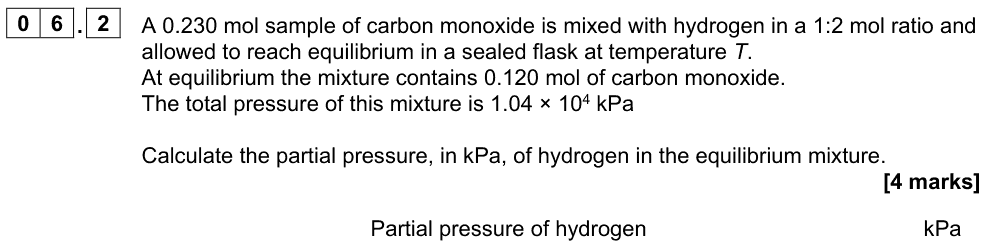
A 0.230 mol sample of carbon monoxide is mixed with hydrogen in a 1:2 mol ratio and
allowed to reach equilibrium in a sealed flask at temperature T.
At equilibrium the mixture contains 0.120 mol of carbon monoxide.
The total pressure of this mixture is 1.04 × 10⁴ kPa
Calculate the partial pressure, in kPa, of hydrogen in the equilibrium mixture.
[4 marks]
Partial pressure of hydrogen
kPa
November 2020 · Paper 1 · Q06.3 2 marks Short answer equilibrium constant kp
Earlier part of question 06 that this part usesEarlier part of November 2020 Paper 1 question 06
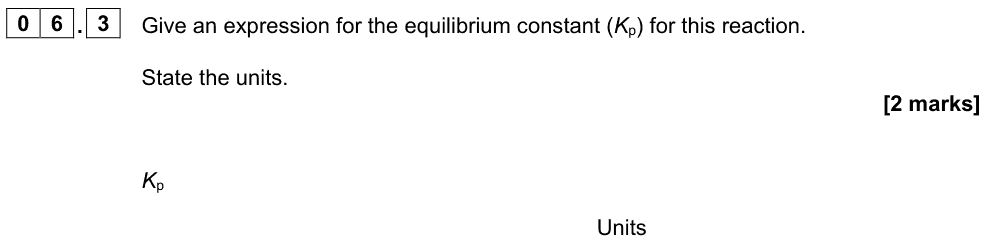
Give an expression for the equilibrium constant (Kp) for this reaction.
State the units.
[2 marks]
Kp
Units
November 2020 · Paper 1 · Q06.4 2 marks Short answer equilibrium constant kpchemical equilibria and kc
Earlier part of question 06 that this part usesEarlier part of November 2020 Paper 1 question 06
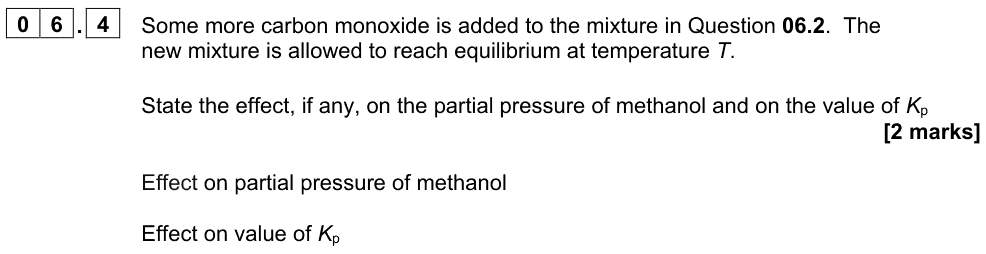
Some more carbon monoxide is added to the mixture in Question 06.2.  The
new mixture is allowed to reach equilibrium at temperature T.
State the effect, if any, on the partial pressure of methanol and on the value of Kp
[2 marks]
Effect on partial pressure of methanol
Effect on value of Kp
November 2020 · Paper 1 · Q06.5 2 marks Explanation equilibrium constant kpchemical equilibria and kc
Earlier part of question 06 that this part usesEarlier part of November 2020 Paper 1 question 06
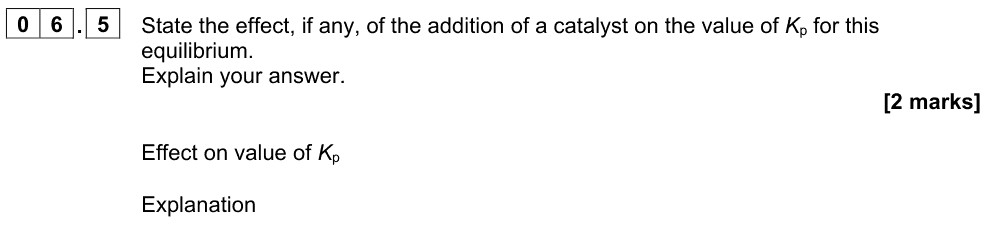
State the effect, if any, of the addition of a catalyst on the value of Kp for this
equilibrium.
Explain your answer.
[2 marks]
Effect on value of Kp
Explanation
November 2020 · Paper 1 · Q07 6 marks 6-mark level of response bonding
The melting point of XeF4 is higher than the melting point of PF3
Explain why the melting points of these two compounds are different.
In your answer you should give the shape of each molecule, explain why each
molecule has that shape and how the shape influences the forces that affect the
melting point.
[6 marks]
November 2020 · Paper 1 · Q08.1 7 marks Calculation amount of substance
A student does an experiment to determine the percentage by mass of
sodium chlorate(I), NaClO, in a sample of bleach solution.
Method:
• Dilute a 10.0 cm3 sample of bleach solution to 100 cm3 with distilled water.
• Transfer 25.0 cm3 of the diluted bleach solution to a conical flask and acidify using
sulfuric acid.
• Add excess potassium iodide to the conical flask to form a brown solution
containing l2(aq).
• Add 0.100 mol dm–3 sodium thiosulfate solution (Na2S2O3) to the conical flask from
a burette until the brown solution containing l2(aq) becomes a colourless solution
containing l–(aq).
The student uses 33.50 cm3 of sodium thiosulfate solution.
The density of the original bleach solution is 1.20 g cm–3
The equations for the reactions in this experiment are
ClO–(aq) + 2 H+(aq) + 2 l–(aq) → Cl–(aq) + H2O(l) + l2(aq)
2 S2O32–(aq) + l2(aq)  2 l–(aq) + S4O62–(aq)
Use all the information given to calculate the percentage by mass of NaClO in the
original bleach solution.
Give your answer to 3 significant figures.
[7 marks]
Percentage by mass
November 2020 · Paper 1 · Q08.2 1 mark Practical and data analysis amount of substance
Earlier part of question 08 that this part usesEarlier part of November 2020 Paper 1 question 08
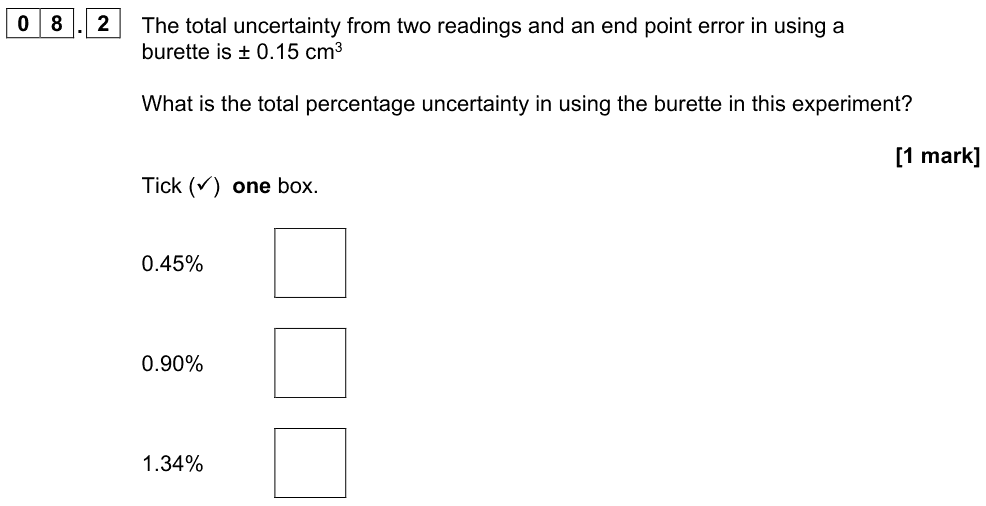
The total uncertainty from two readings and an end point error in using a
burette is ± 0.15 cm3
What is the total percentage uncertainty in using the burette in this experiment?
[1 mark]
Tick ()  one box.
0.45%
0.90%
1.34%
November 2020 · Paper 1 · Q09.1 1 mark Short answer group 7 the halogens
This question is about sodium halides.
State what is observed when silver nitrate solution is added to sodium fluoride
solution.
[1 mark]
November 2020 · Paper 1 · Q09.2 3 marks Equation writing group 7 the halogensacids and bases
Earlier part of question 09 that this part usesEarlier part of November 2020 Paper 1 question 09
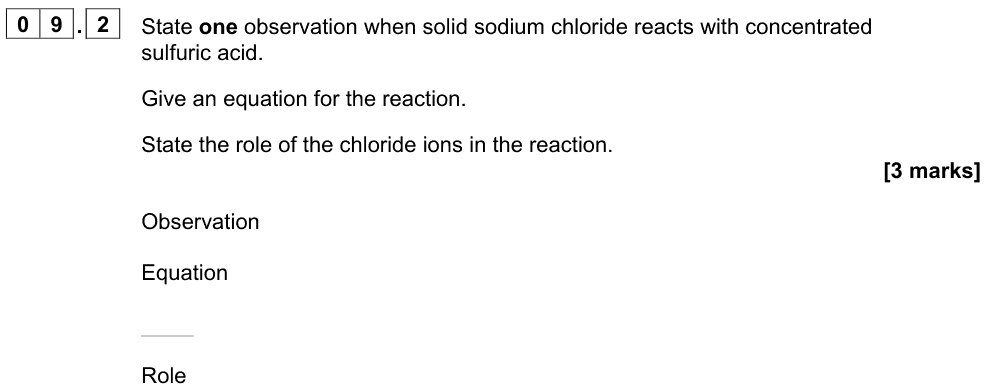
State one observation when solid sodium chloride reacts with concentrated
sulfuric acid.
Give an equation for the reaction.
State the role of the chloride ions in the reaction.
[3 marks]
Observation
Equation
Role
November 2020 · Paper 1 · Q09.3 3 marks Equation writing group 7 the halogensredox
Earlier part of question 09 that this part usesEarlier part of November 2020 Paper 1 question 09
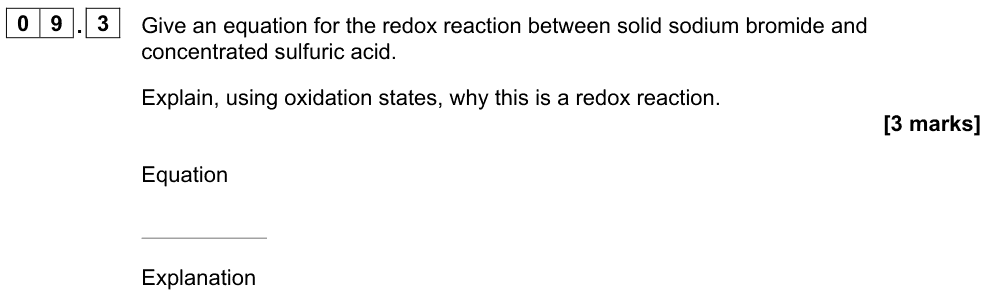
Give an equation for the redox reaction between solid sodium bromide and
concentrated sulfuric acid.
Explain, using oxidation states, why this is a redox reaction.
[3 marks]
Equation
Explanation
November 2020 · Paper 1 · Q09.4 2 marks Equation writing group 7 the halogens
Earlier part of question 09 that this part usesEarlier part of November 2020 Paper 1 question 09
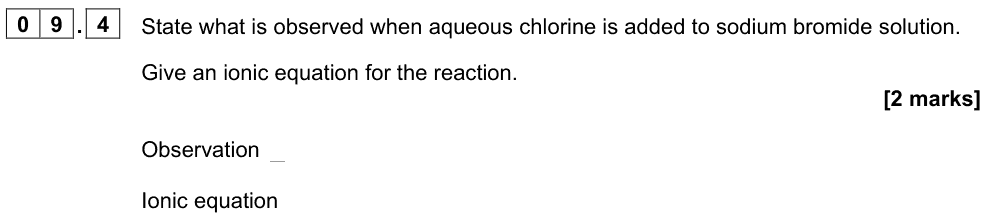
State what is observed when aqueous chlorine is added to sodium bromide solution.
Give an ionic equation for the reaction.
[2 marks]
Observation
Ionic equation
November 2020 · Paper 1 · Q10.1 6 marks Calculation thermodynamicsenergetics
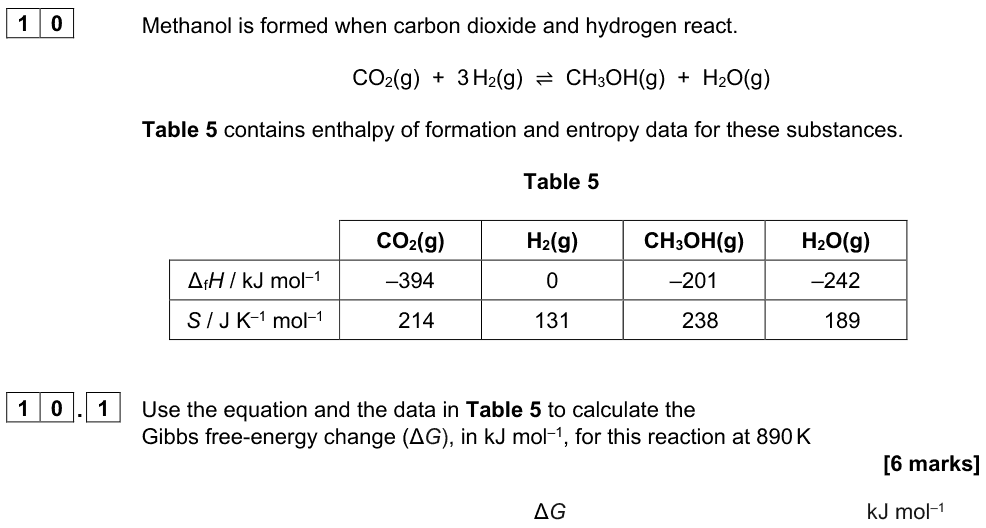
Methanol is formed when carbon dioxide and hydrogen react.
CO2(g)  +  3 H2(g)  ⇌  CH3OH(g)  +  H2O(g)
Table 5 contains enthalpy of formation and entropy data for these substances.
Table 5
CO2(g)
H2(g)
CH3OH(g)
H2O(g)
Δ fH / kJ mol–1
–394
0
–201
–242
S / J K–1 mol–1
214
131
238
189
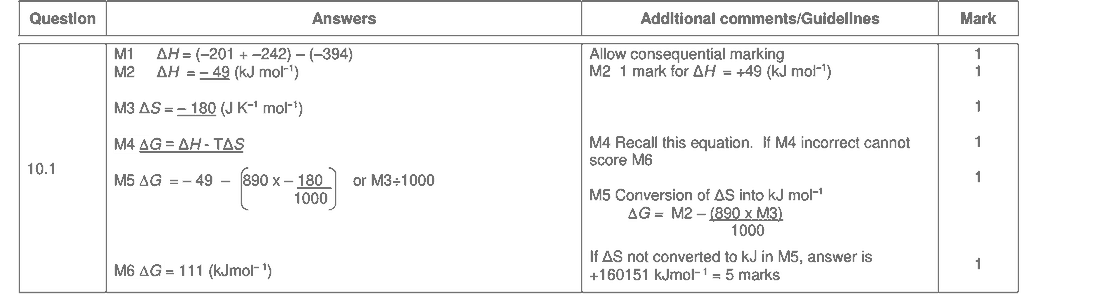
Use the equation and the data in Table 5 to calculate the
Gibbs free-energy change (ΔG), in kJ mol–1, for this reaction at 890 K
[6 marks]
ΔG
kJ mol–1
November 2020 · Paper 1 · Q10.2 4 marks Calculation thermodynamics
Earlier part of question 10 that this part usesEarlier part of November 2020 Paper 1 question 10
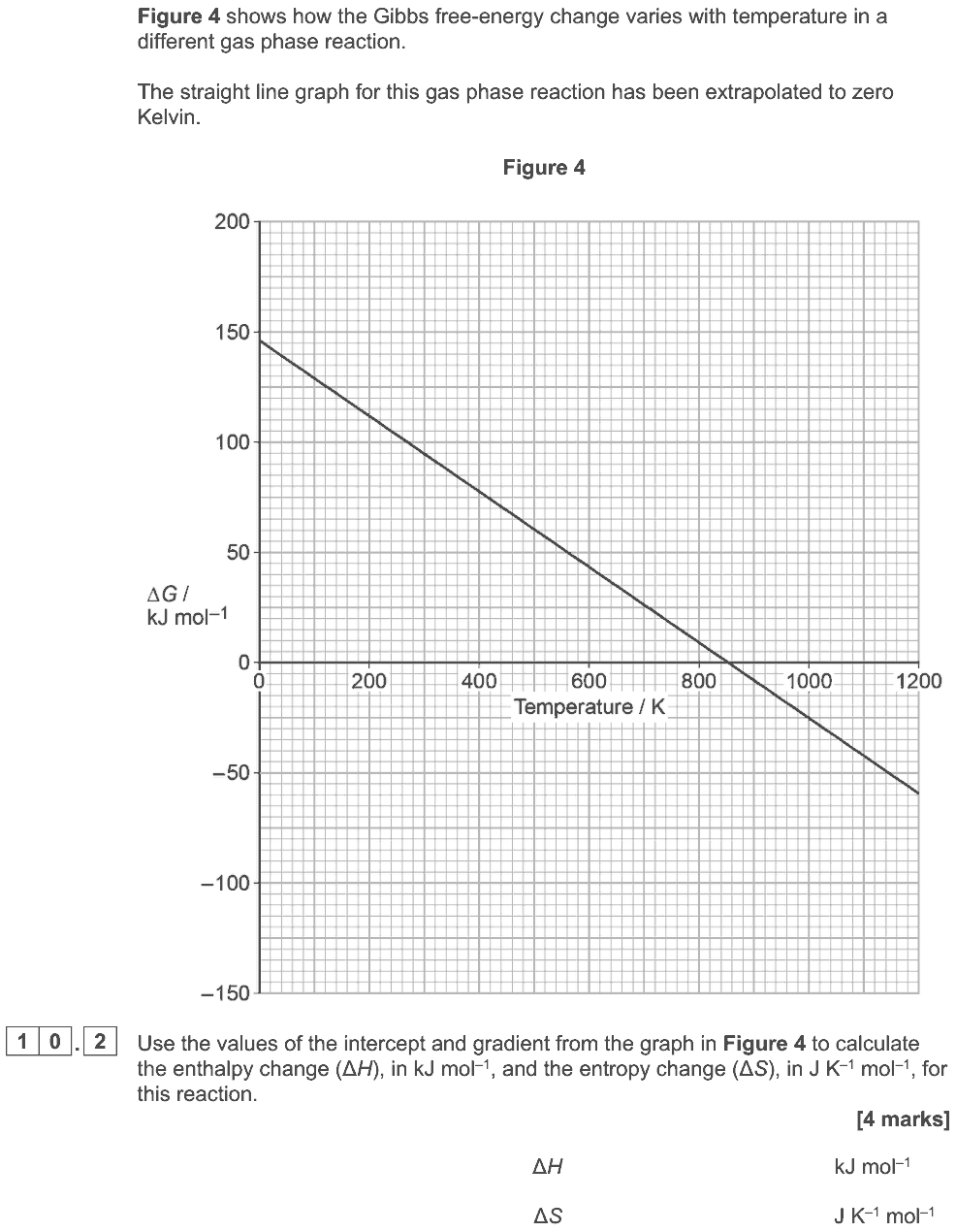
Figure 4 shows how the Gibbs free-energy change varies with temperature in a
different gas phase reaction.
The straight line graph for this gas phase reaction has been extrapolated to zero
Kelvin.
Figure 4
Use the values of the intercept and gradient from the graph in Figure 4 to calculate
the enthalpy change (ΔH), in kJ mol–1, and the entropy change (ΔS), in J K–1 mol–1, for
this reaction.
[4 marks]
ΔH
kJ mol–1
ΔS
J K–1 mol–1
November 2020 · Paper 1 · Q10.3 1 mark Short answer thermodynamics
Earlier parts of question 10 that this part usesEarlier part of November 2020 Paper 1 question 10Earlier part of November 2020 Paper 1 question 10
State what Figure 4 shows about the feasibility of the reaction.
[1 mark]
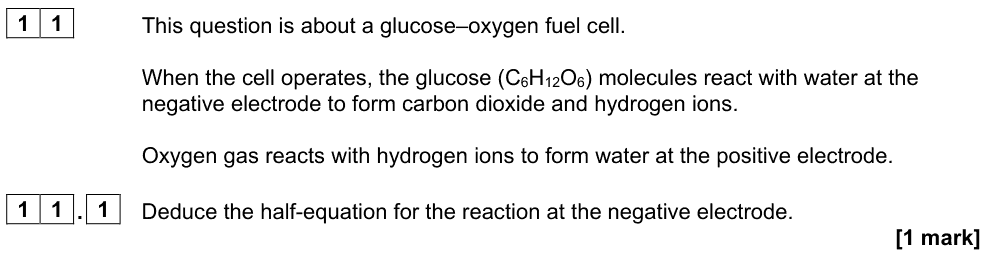
November 2020 · Paper 1 · Q11.1 1 mark Equation writing electrode potentials and cellsredox
This question is about a glucose–oxygen fuel cell.
When the cell operates, the glucose (C6H12O6) molecules react with water at the
negative electrode to form carbon dioxide and hydrogen ions.
Oxygen gas reacts with hydrogen ions to form water at the positive electrode.
Deduce the half-equation for the reaction at the negative electrode.
[1 mark]
November 2020 · Paper 1 · Q11.2 1 mark Equation writing electrode potentials and cellsredox
Earlier part of question 11 that this part usesEarlier part of November 2020 Paper 1 question 11
Deduce the half-equation for the reaction at the positive electrode.
[1 mark]
November 2020 · Paper 1 · Q11.3 1 mark Equation writing electrode potentials and cellsredox
Earlier part of question 11 that this part usesEarlier part of November 2020 Paper 1 question 11
Give the equation for the overall reaction that occurs in the
Glucose–oxygen fuel cell.
[1 mark]
November 2020 · Paper 1 · Q11.4 2 marks Short answer electrode potentials and cells
Earlier part of question 11 that this part usesEarlier part of November 2020 Paper 1 question 11
The negative electrode is made of carbon and the positive electrode is made of
platinum.
Give the conventional representation for the glucose–oxygen fuel cell.
[2 marks]
November 2020 · Paper 1 · Q11.5 1 mark Short answer electrode potentials and cells
Earlier part of question 11 that this part usesEarlier part of November 2020 Paper 1 question 11
State what must be done to maintain the EMF of this fuel cell when in use.
[1 mark]

Work with an A-level chemistry tutor

Want a paper marked and gone through with you? Message us.

Prefer email? Send an enquiry

If you are under 18, please include a parent's contact details. Enquiries go to enquiries@chemistryaleveltutor.com and are deleted once handled. All tutoring is online.