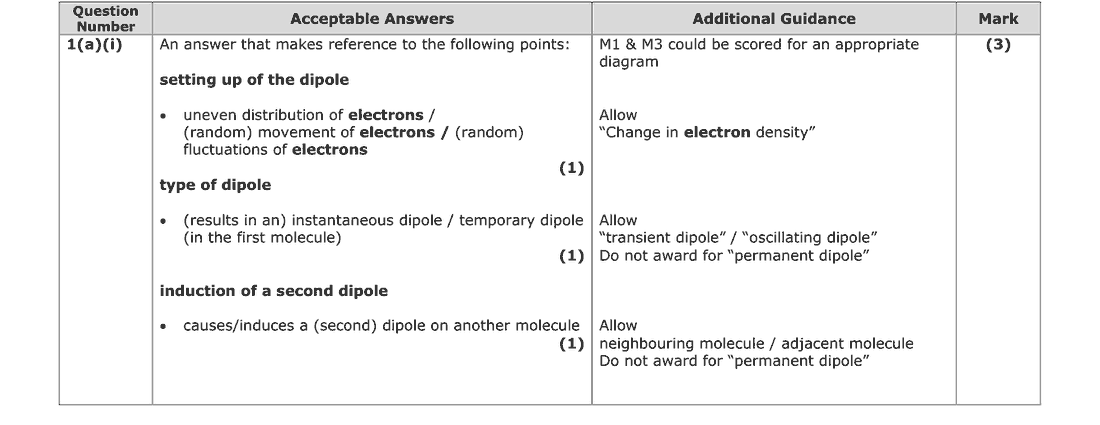
| 1(a)(i) | Bonding | 3 | | Short answer |
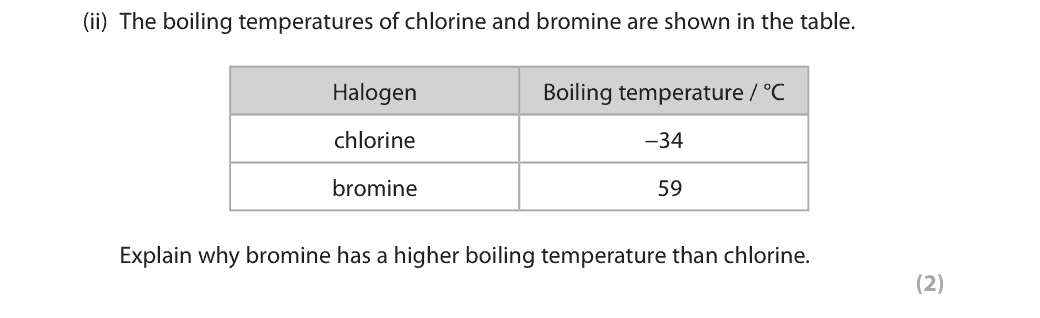
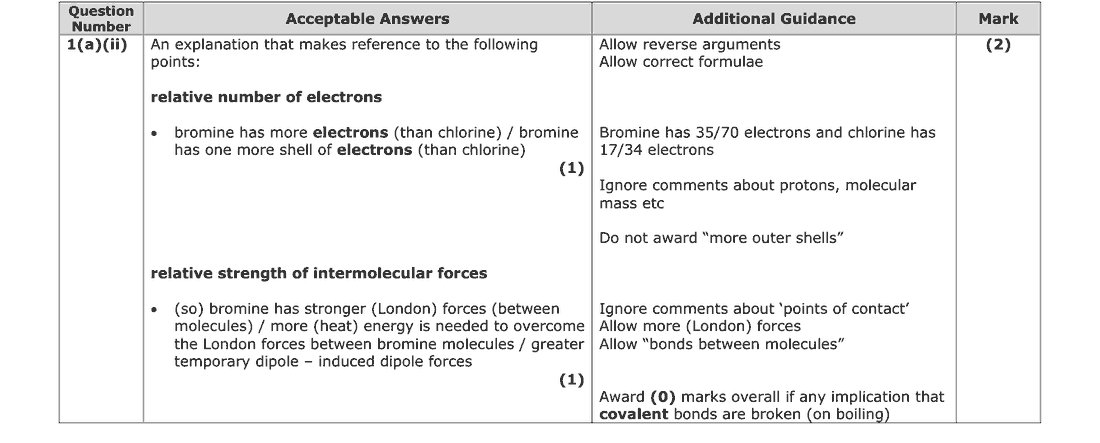
| 1(a)(ii) | The elements of Group 7 (halogens), Bonding | 2 | | Explanation |
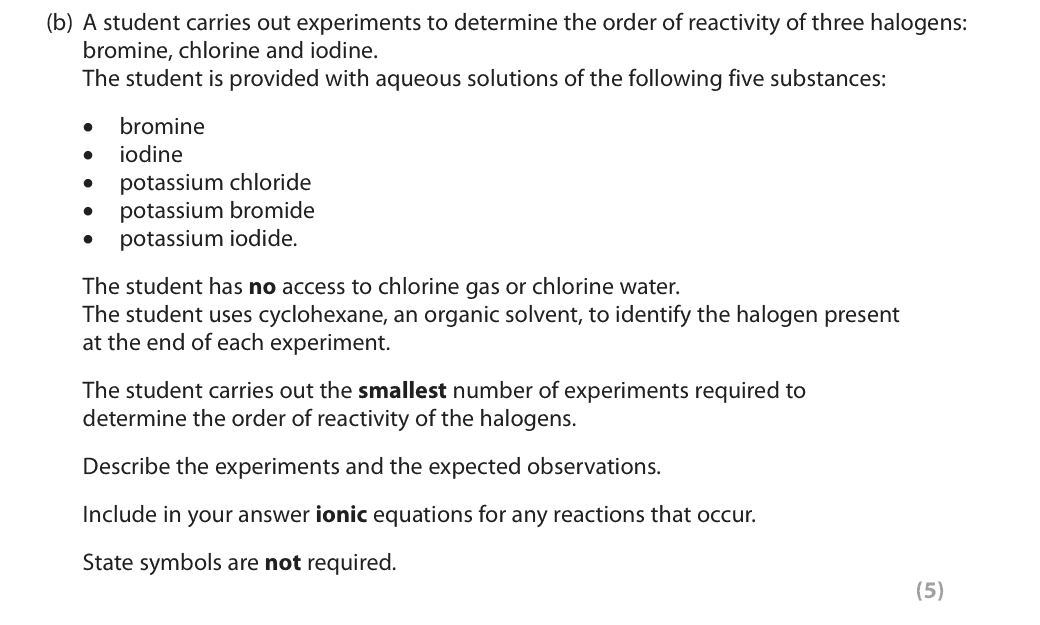
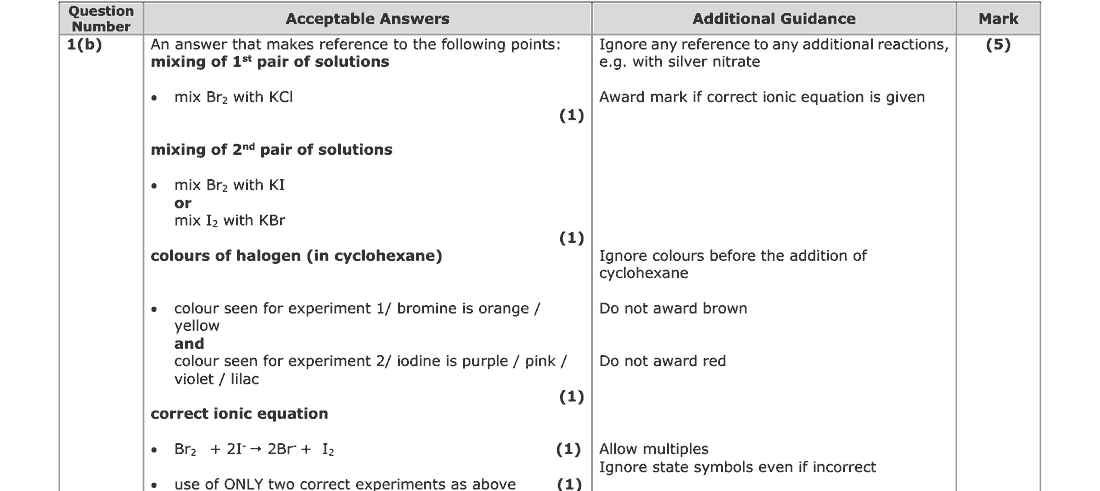
| 1(b) | The elements of Group 7 (halogens), Redox I | 5 | | Practical and data analysis |
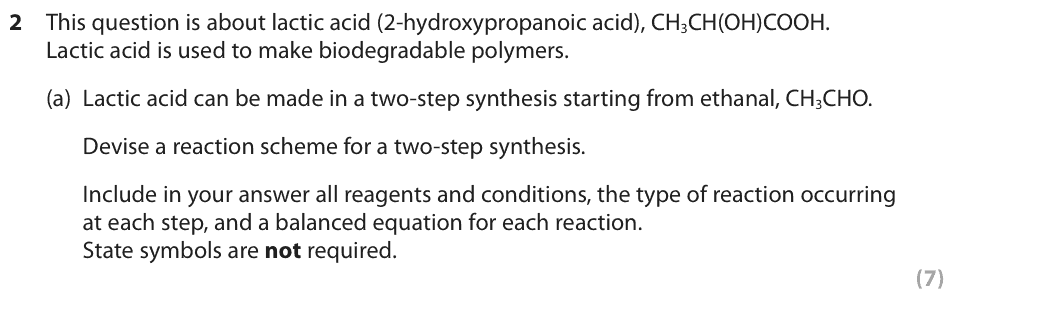
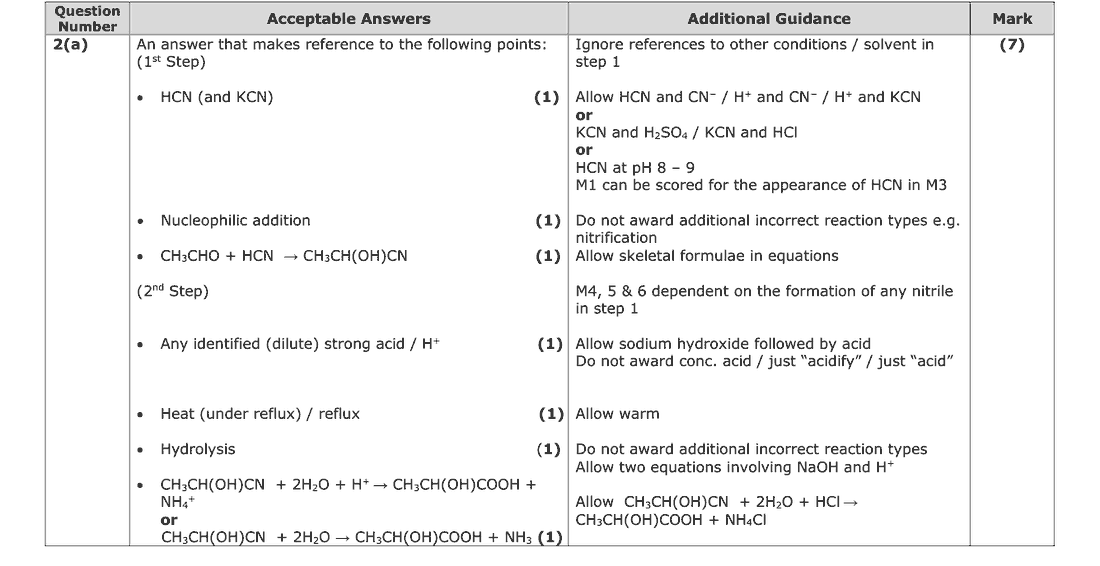
| 2(a) | Organic synthesis, Carbonyl compounds, Carboxylic acids | 7 | | Short answer |
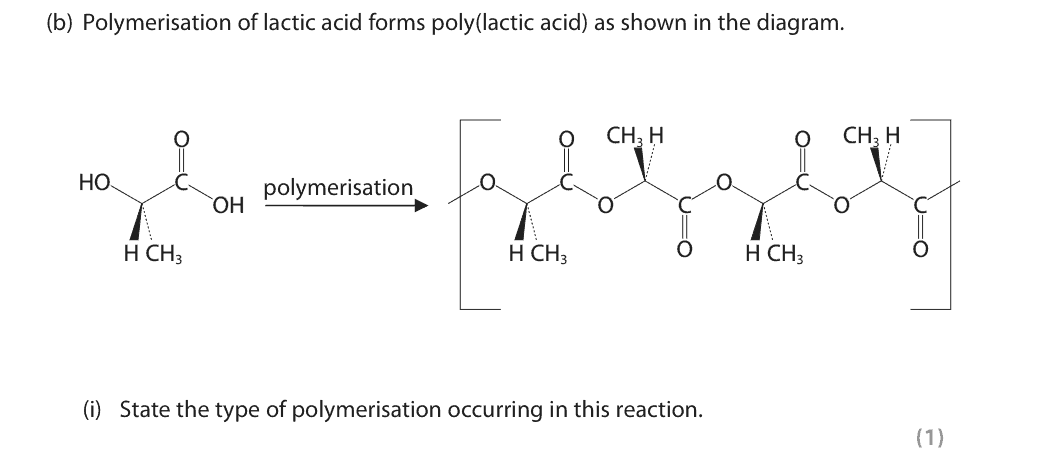
| 2(b)(i) | Carboxylic acids | 1 | | Short answer |
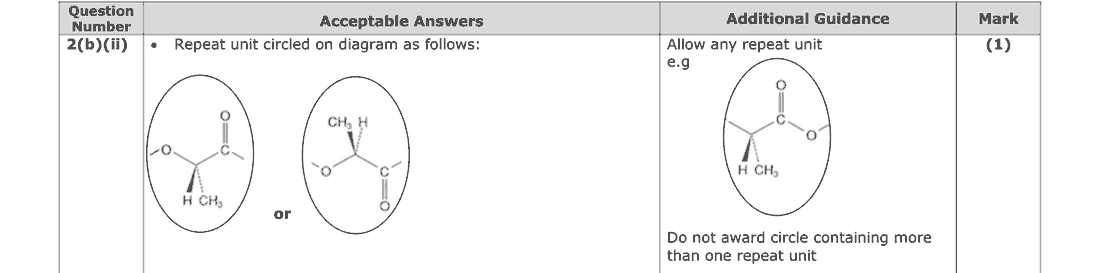
| 2(b)(ii) | Amines, amides, amino acids and proteins, Carboxylic acids | 1 | | Diagram or structure |
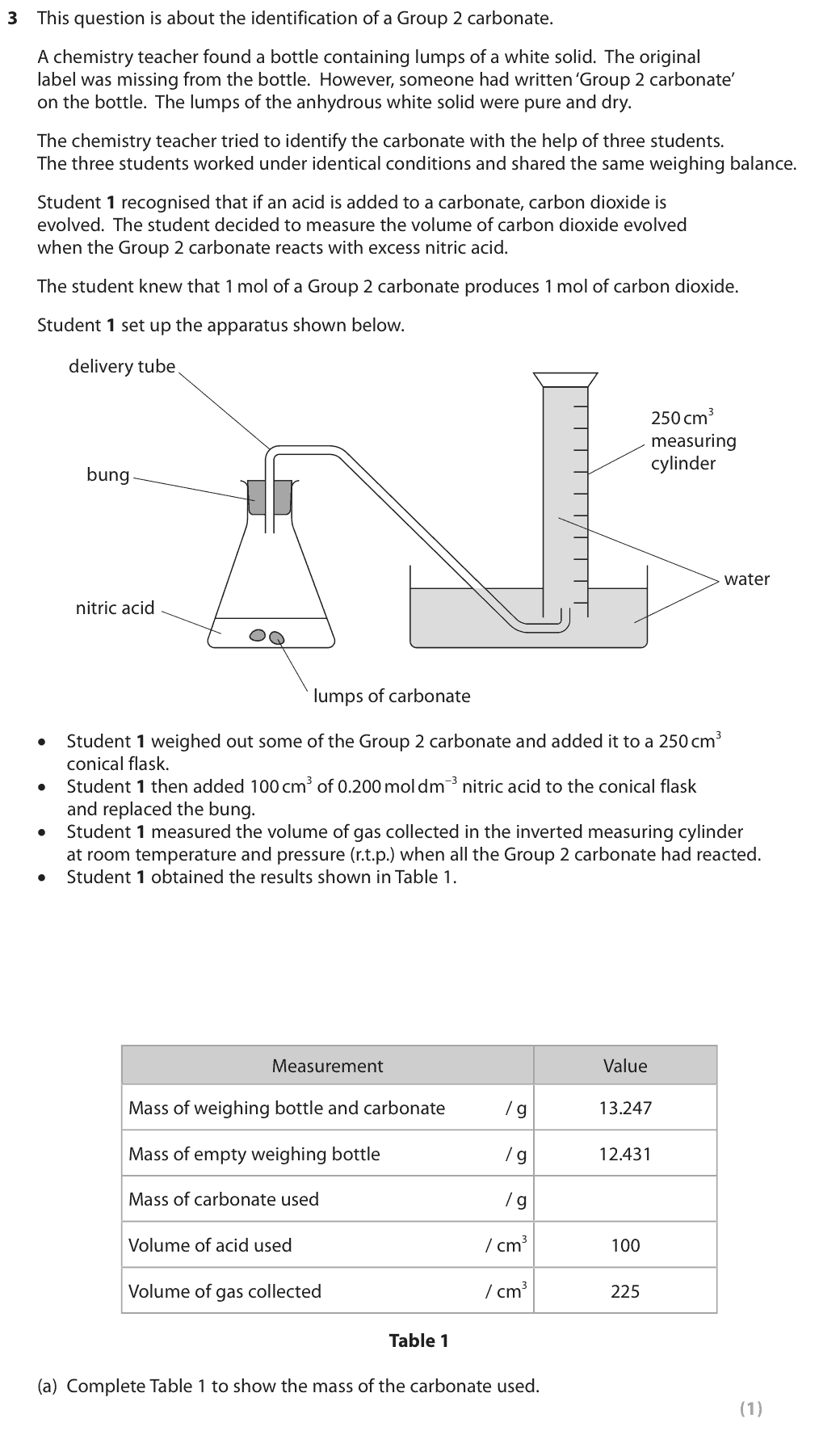
| 3(a) | Formulae, equations and amounts of substance | 1 | | Calculation |
| 3(b) | Formulae, equations and amounts of substance | 1 | | Calculation |
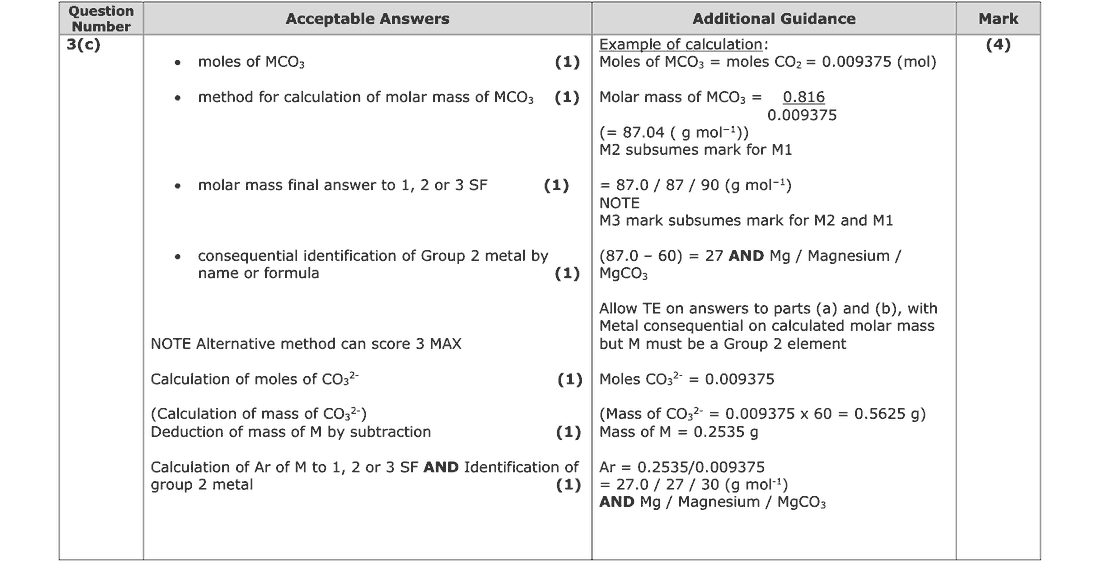
| 3(c) | Formulae, equations and amounts of substance | 4 | | Calculation |
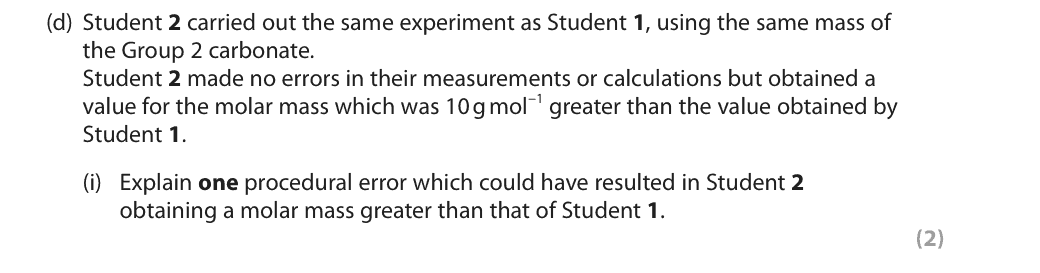
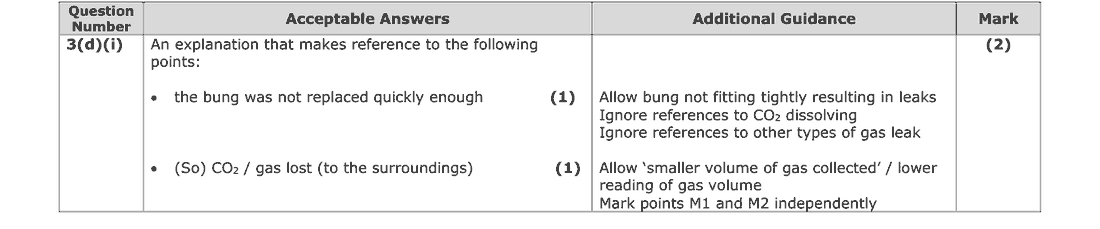
| 3(d)(i) | Formulae, equations and amounts of substance | 2 | | Practical and data analysis |
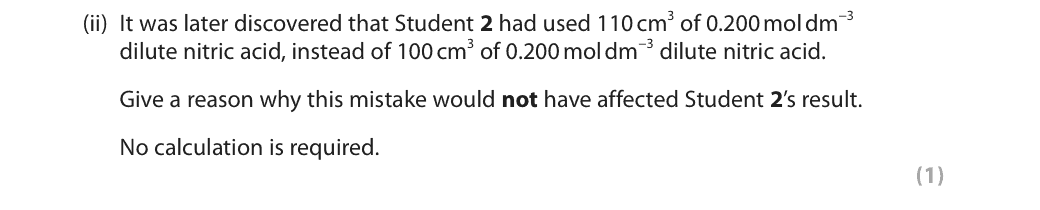
| 3(d)(ii) | Formulae, equations and amounts of substance | 1 | | Practical and data analysis |
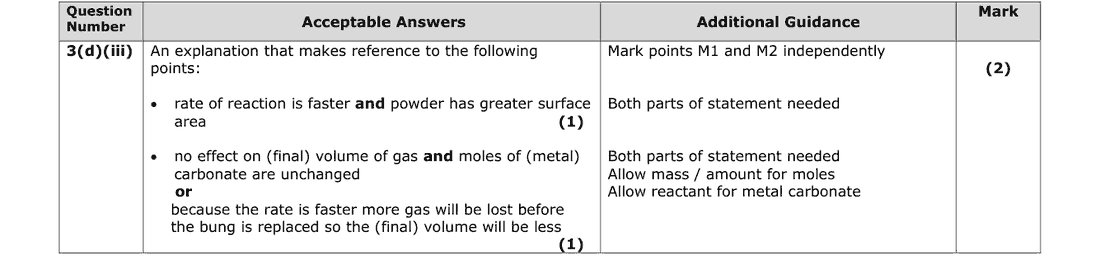
| 3(d)(iii) | Kinetics I, Formulae, equations and amounts of substance | 2 | | Explanation |
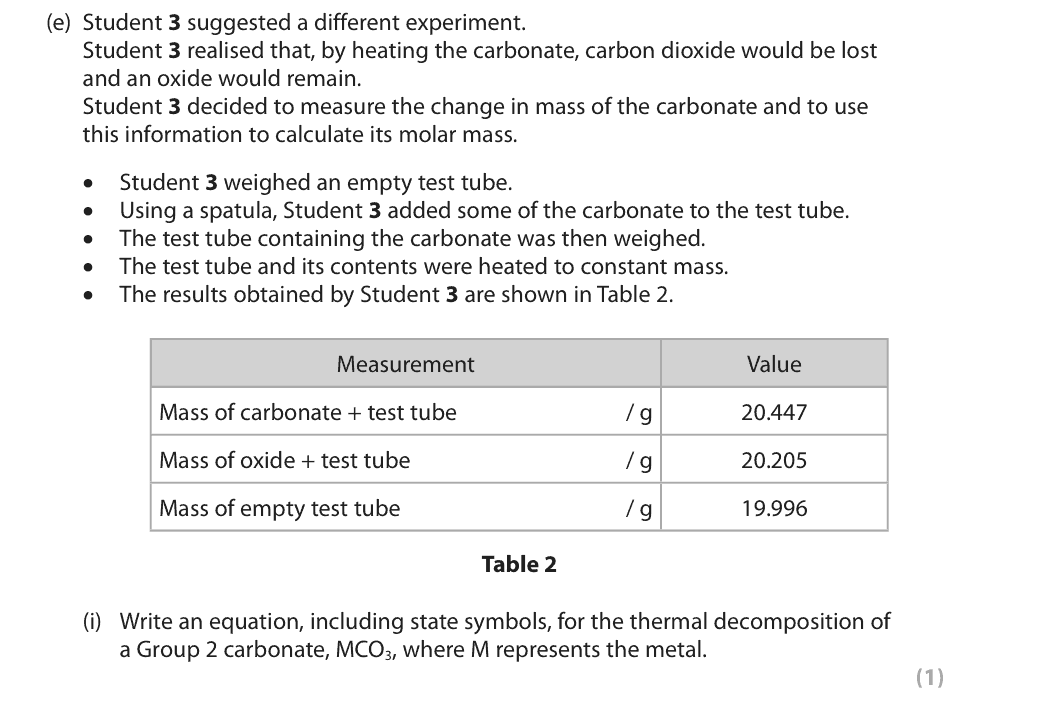
| 3(e)(i) | Formulae, equations and amounts of substance | 1 | | Equation writing |
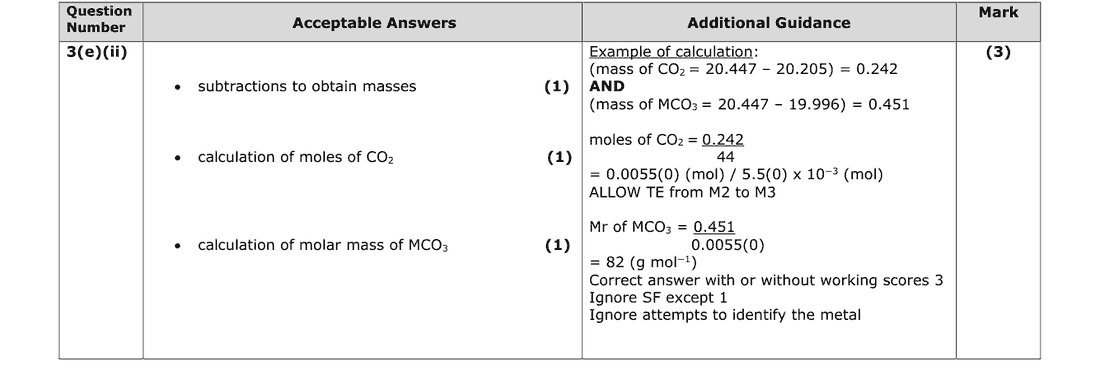
| 3(e)(ii) | Formulae, equations and amounts of substance | 3 | | Calculation |
| 3(f) | Formulae, equations and amounts of substance | 1 | | Practical and data analysis |
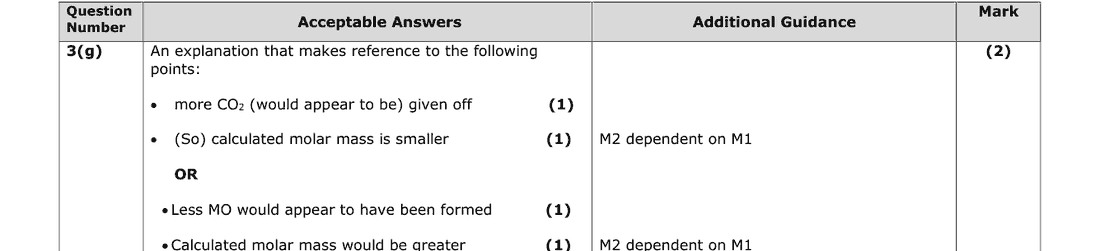
| 3(g) | Formulae, equations and amounts of substance | 2 | | Practical and data analysis |
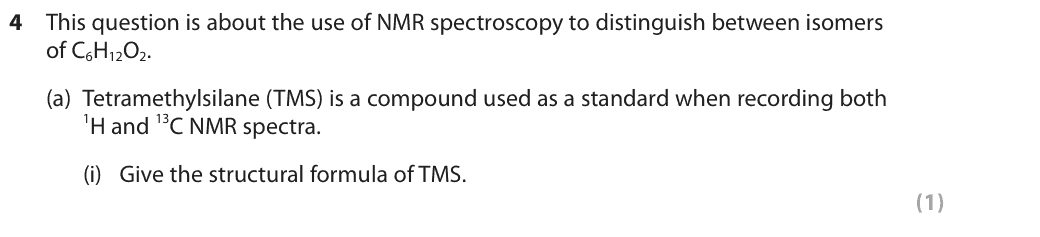
| 4(a)(i) | Modern analytical techniques II: NMR, mass spectrometry and chromatography | 1 | | Short answer |
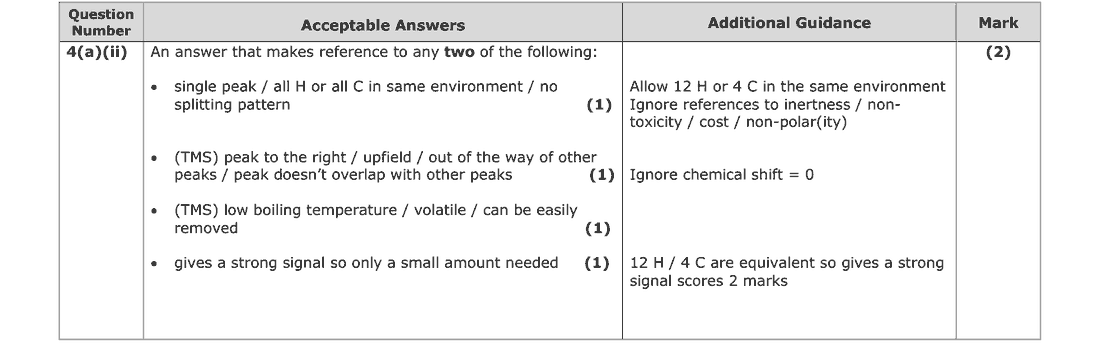
| 4(a)(ii) | Modern analytical techniques II: NMR, mass spectrometry and chromatography | 2 | | Short answer |
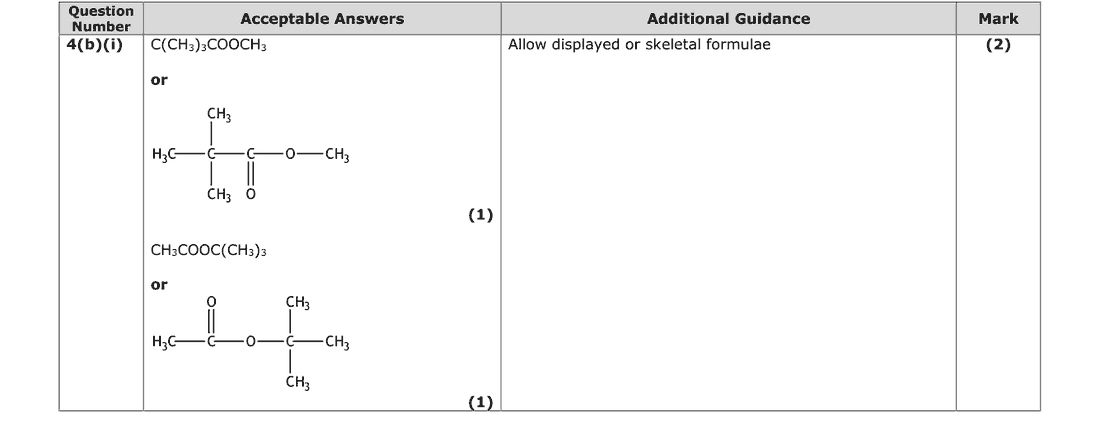
| 4(b)(i) | Modern analytical techniques II: NMR, mass spectrometry and chromatography, Introduction to organic chemistry | 2 | | Diagram or structure |
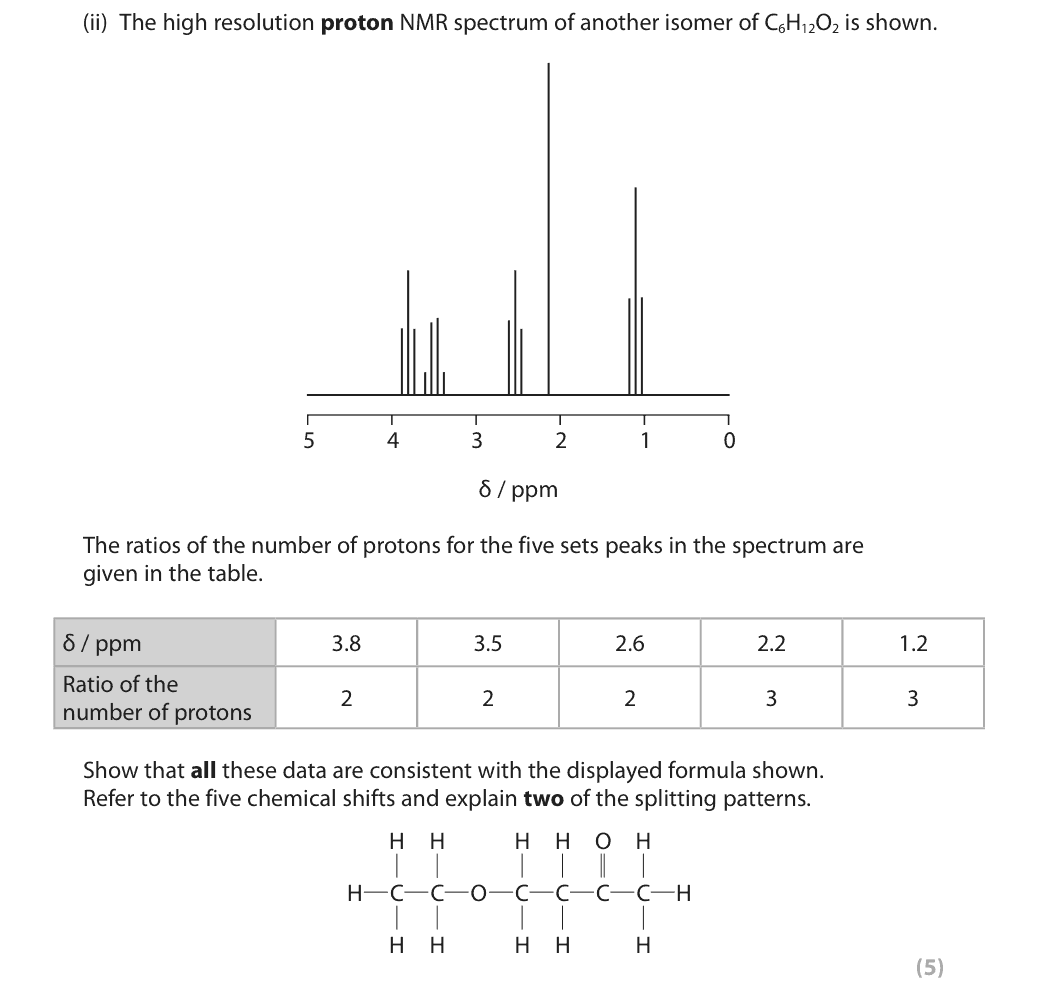
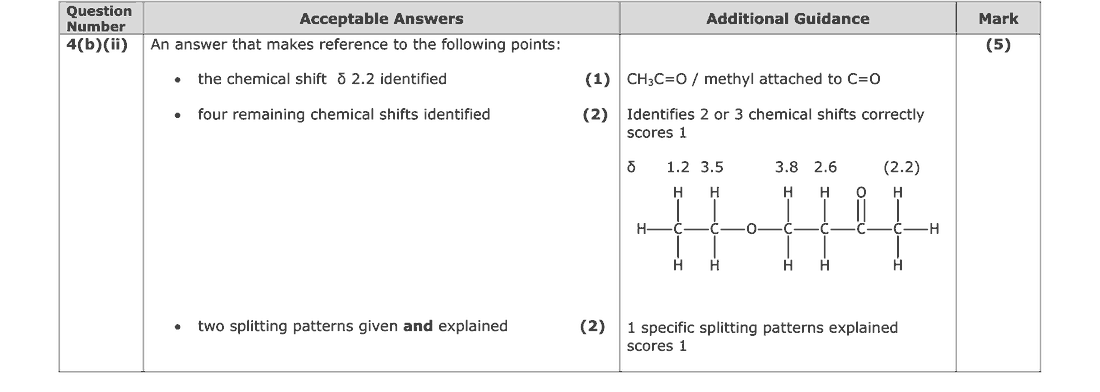
| 4(b)(ii) | Modern analytical techniques II: NMR, mass spectrometry and chromatography | 5 | | Explanation |
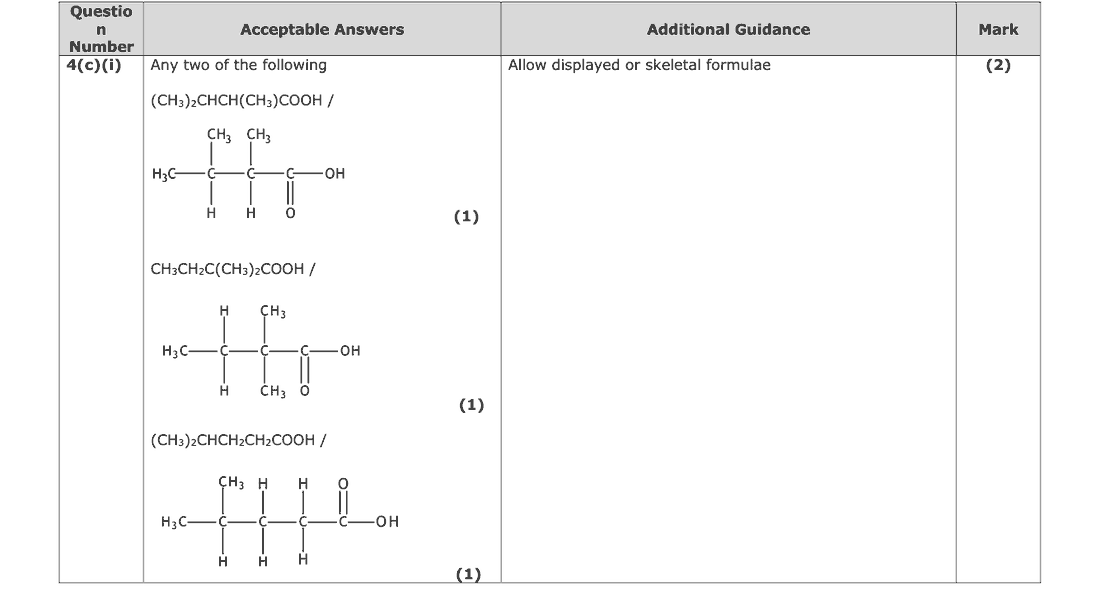
| 4(c)(i) | Modern analytical techniques II: NMR, mass spectrometry and chromatography, Introduction to organic chemistry | 2 | | Diagram or structure |
| 4(c)(ii) | Modern analytical techniques II: NMR, mass spectrometry and chromatography, Introduction to organic chemistry | 1 | | Diagram or structure |
| 5(a) | Redox I | 1 | | Short answer |
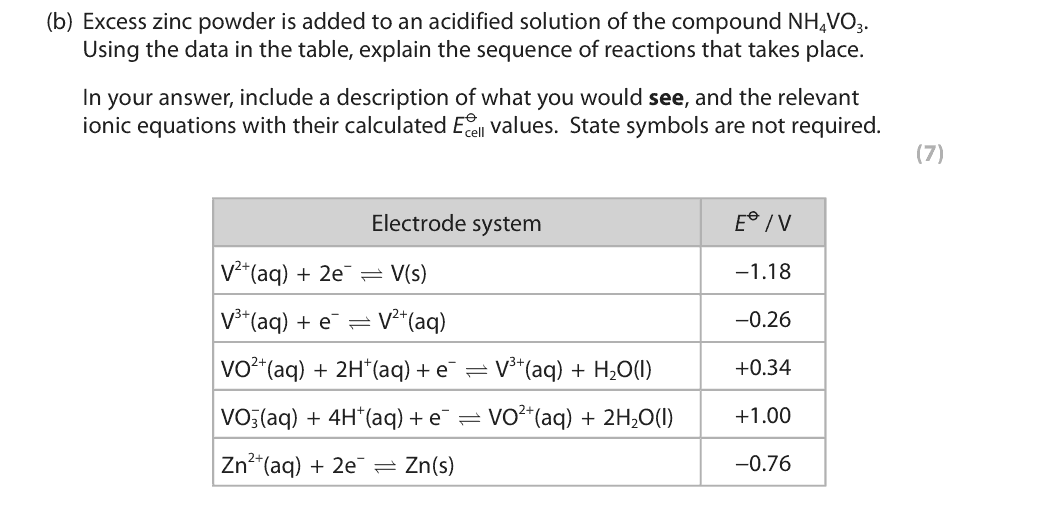
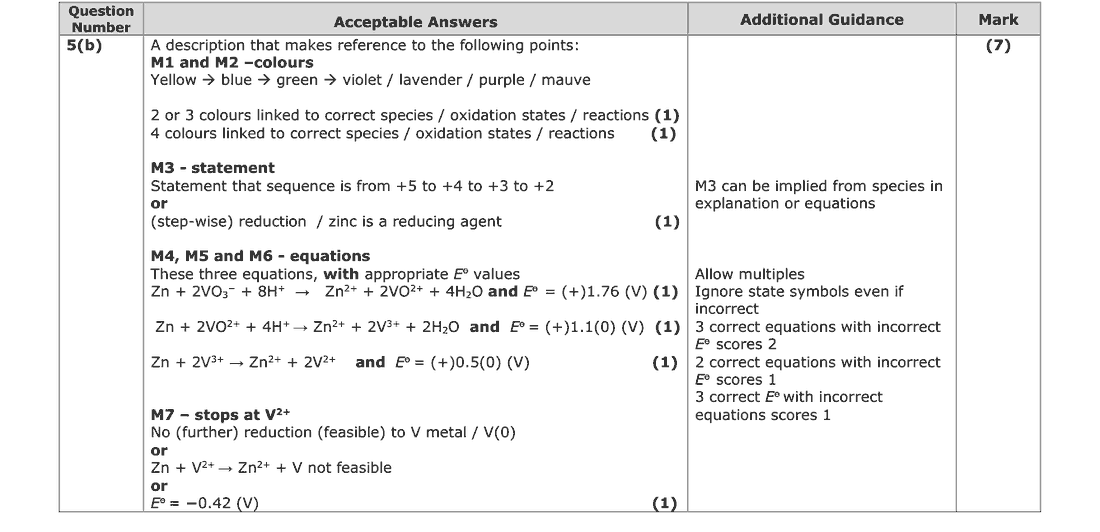
| 5(b) | Transition metals: reactions, Redox II | 7 | | Explanation |
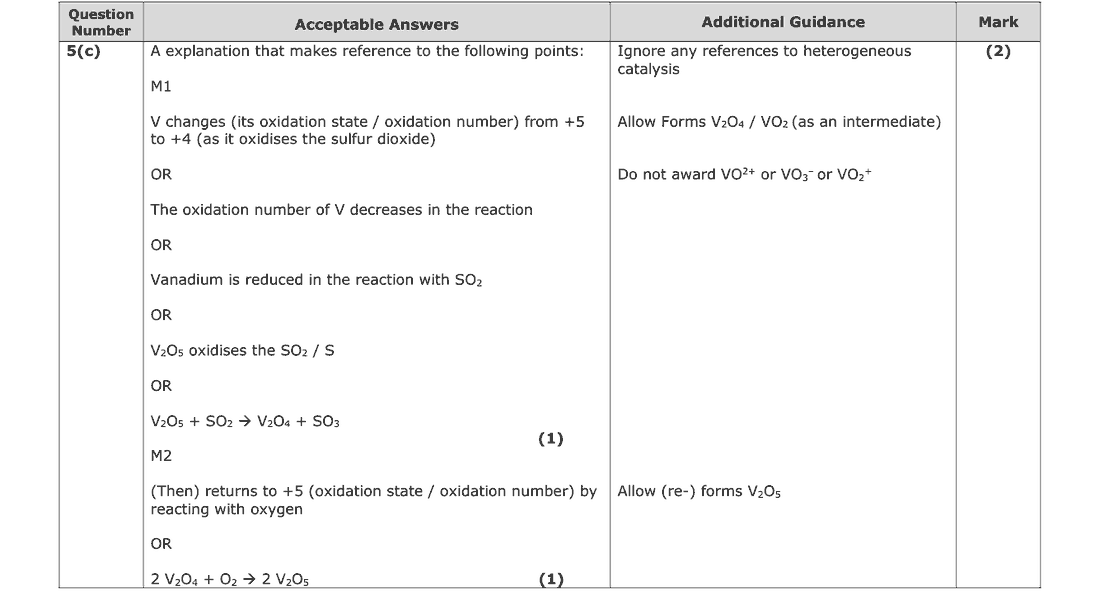
| 5(c) | Transition metals: reactions | 2 | | Explanation |
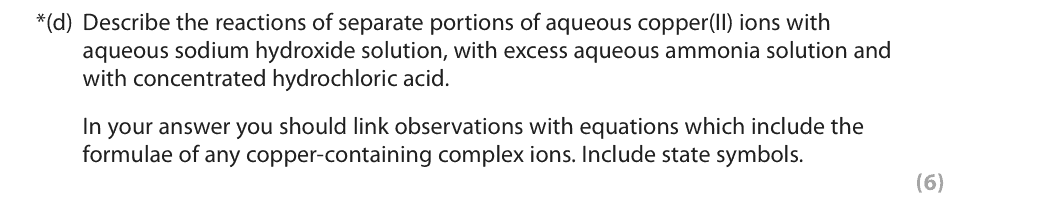
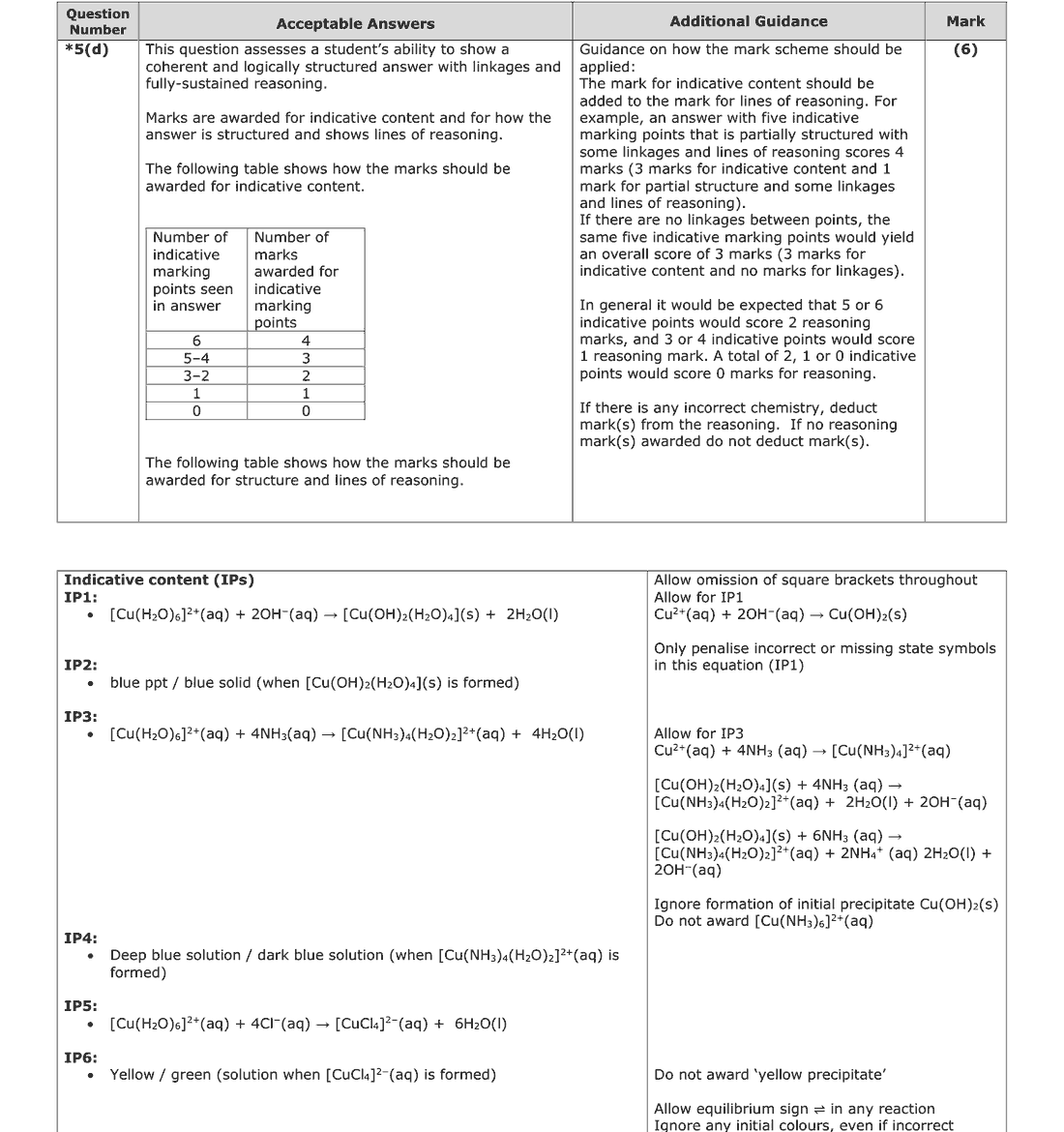
| 5(d) | Transition metals: reactions | 6 | | Extended response |
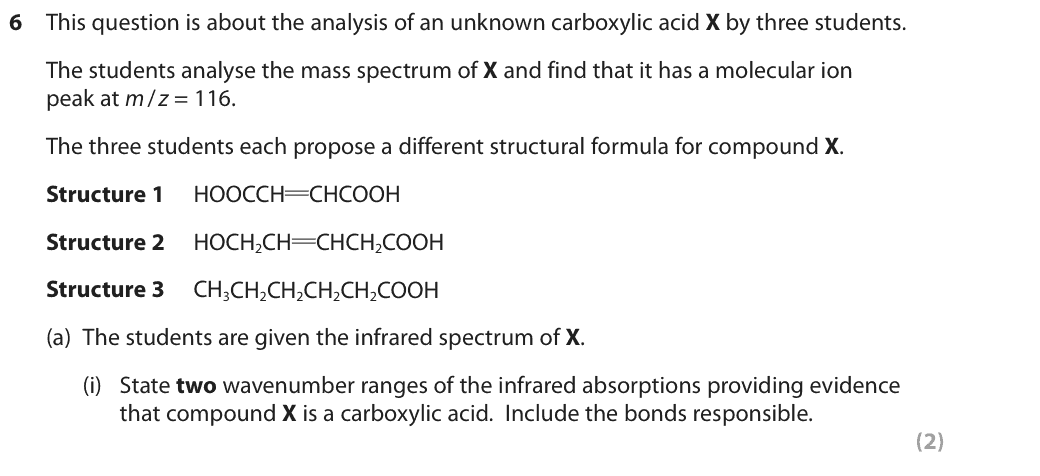
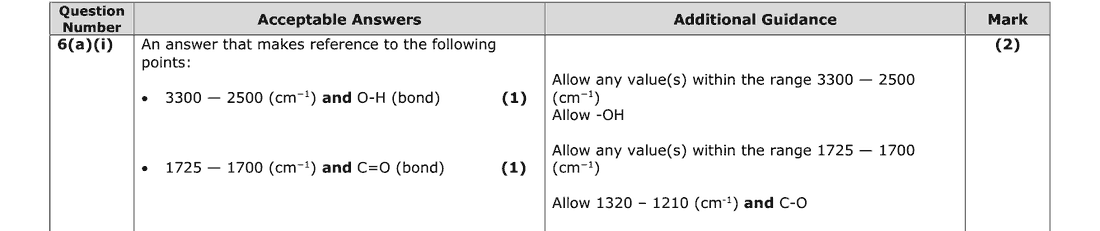
| 6(a)(i) | Modern analytical techniques I: mass spectrometry and infrared | 2 | | Short answer |
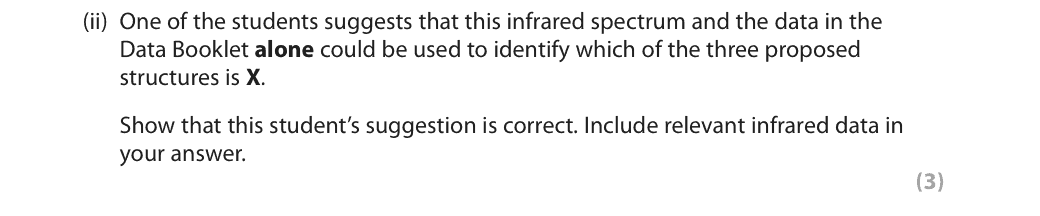
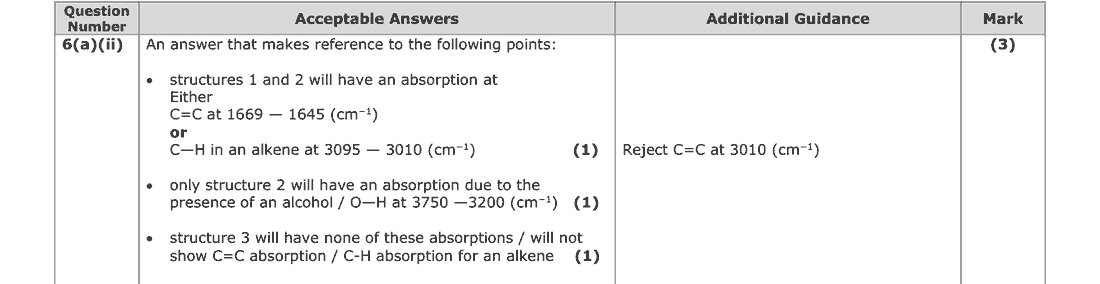
| 6(a)(ii) | Modern analytical techniques I: mass spectrometry and infrared | 3 | | Explanation |
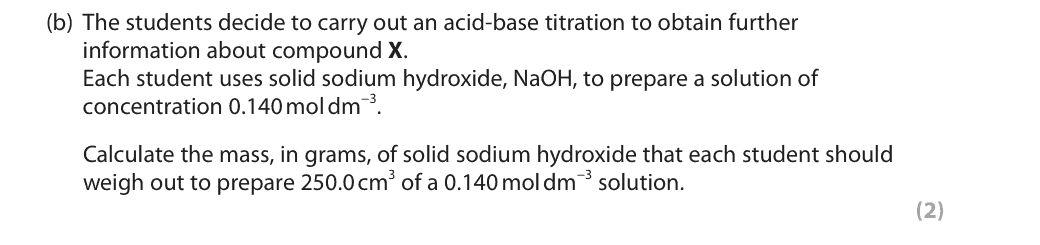
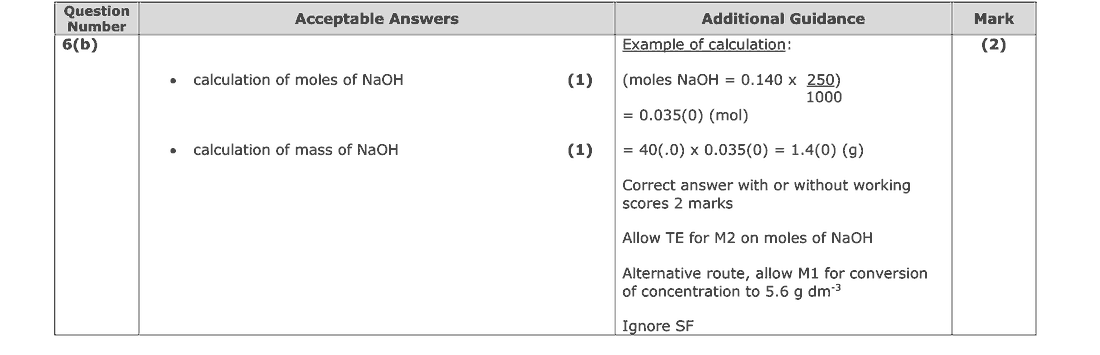
| 6(b) | Formulae, equations and amounts of substance | 2 | | Calculation |
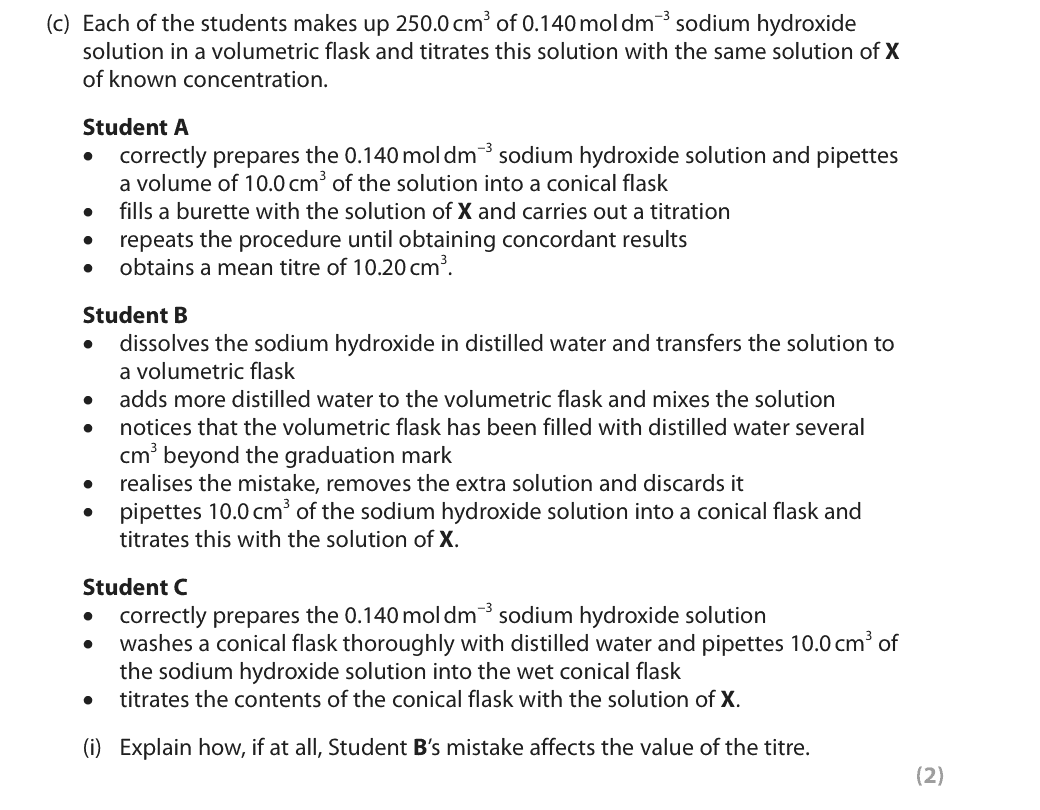
| 6(c)(i) | Formulae, equations and amounts of substance | 2 | | Practical and data analysis |
| 6(c)(ii) | Formulae, equations and amounts of substance | 2 | | Practical and data analysis |
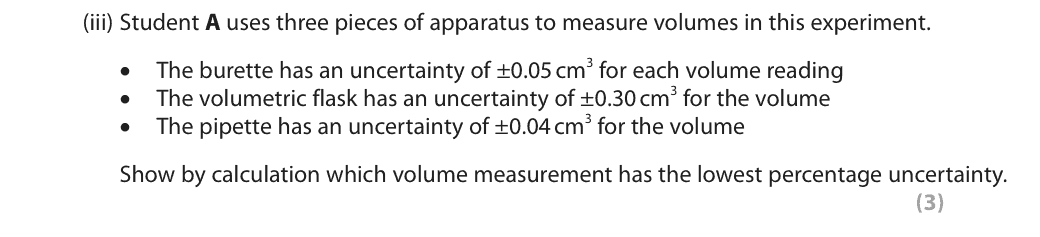
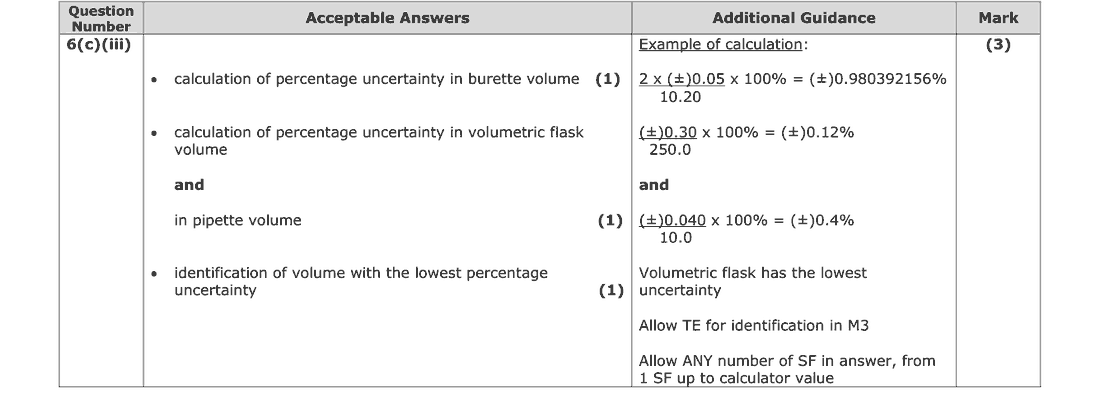
| 6(c)(iii) | Formulae, equations and amounts of substance | 3 | | Calculation |
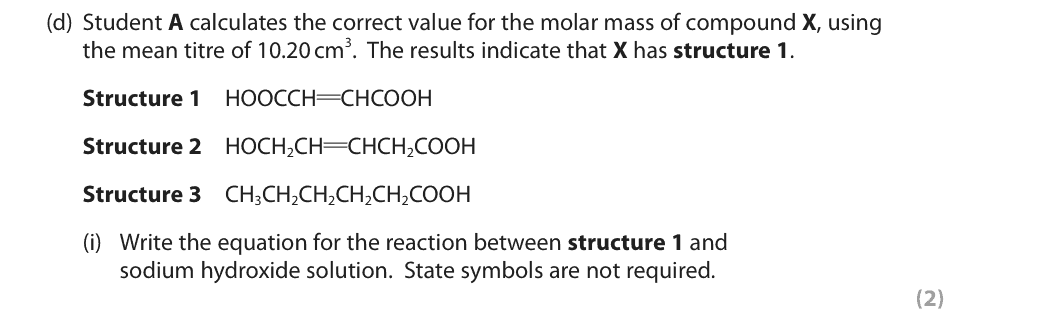
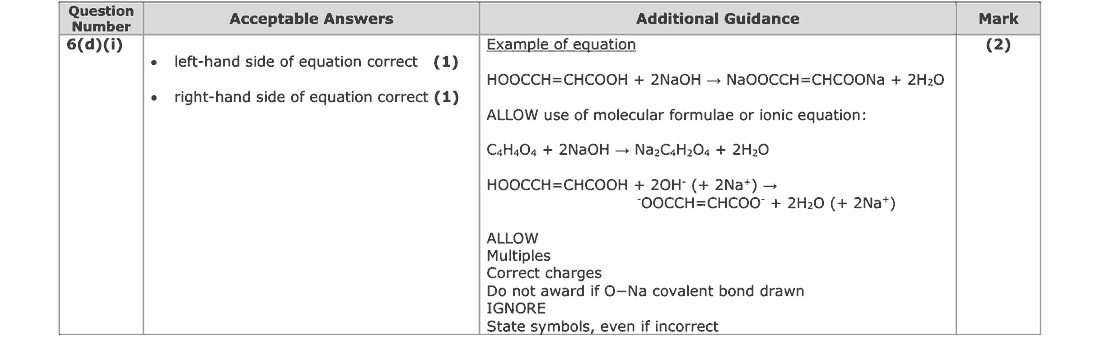
| 6(d)(i) | Carboxylic acids, Formulae, equations and amounts of substance | 2 | | Equation writing |
| 6(d)(ii) | Formulae, equations and amounts of substance, Carboxylic acids | 2 | | Short answer |
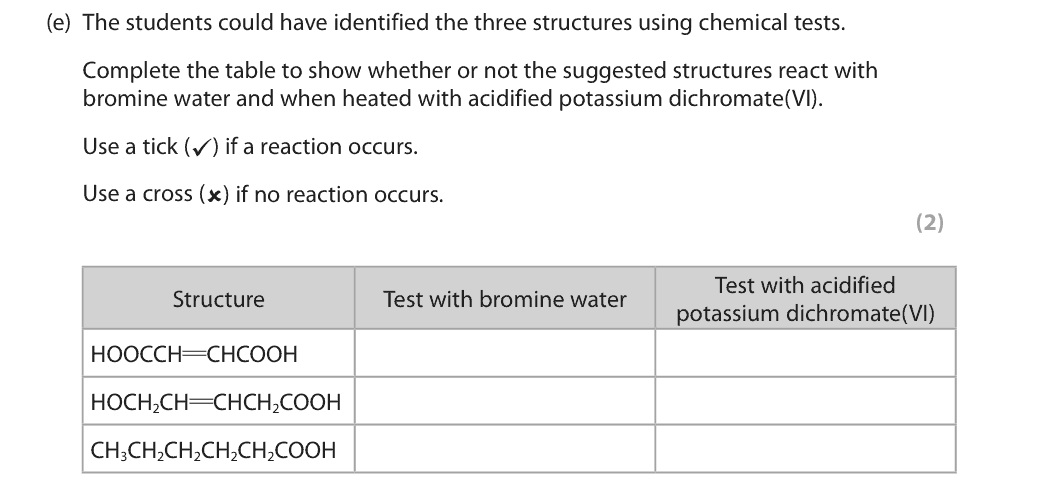
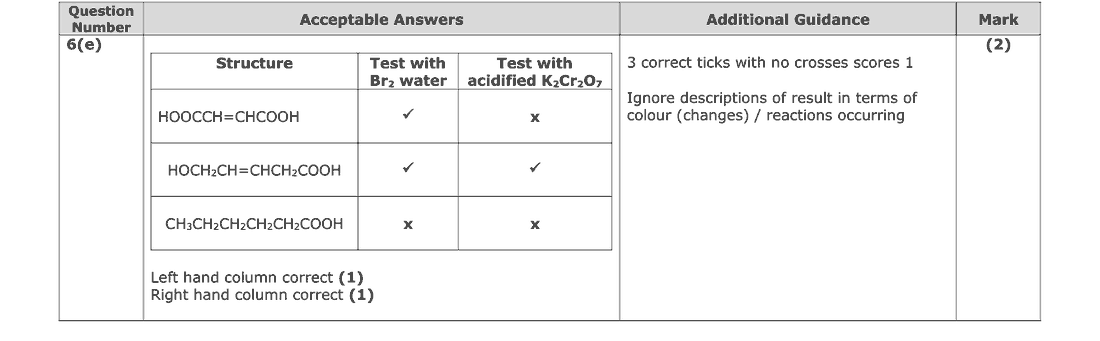
| 6(e) | Alkenes, Alcohols | 2 | | Practical and data analysis |
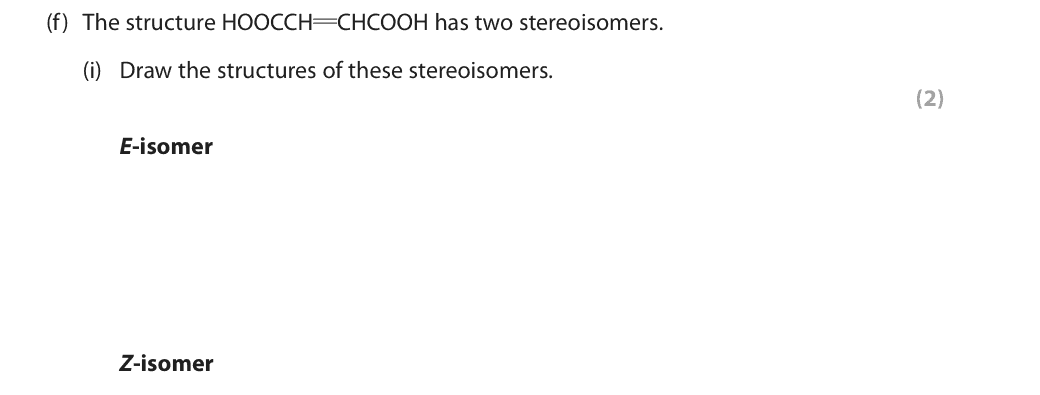
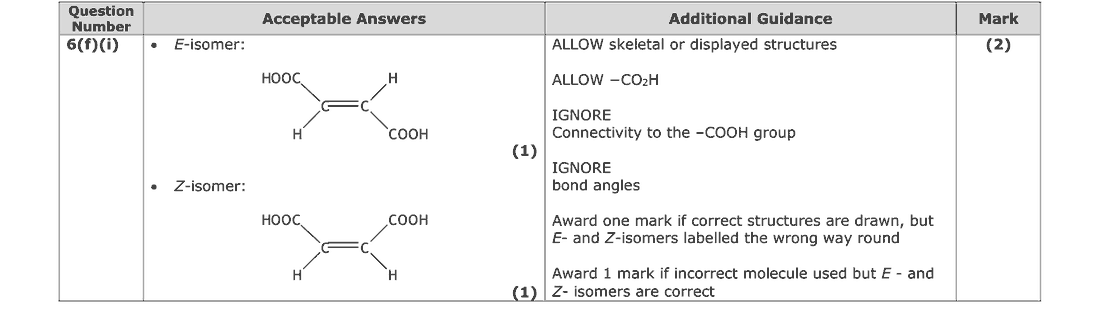
| 6(f)(i) | Introduction to organic chemistry | 2 | | Diagram or structure |
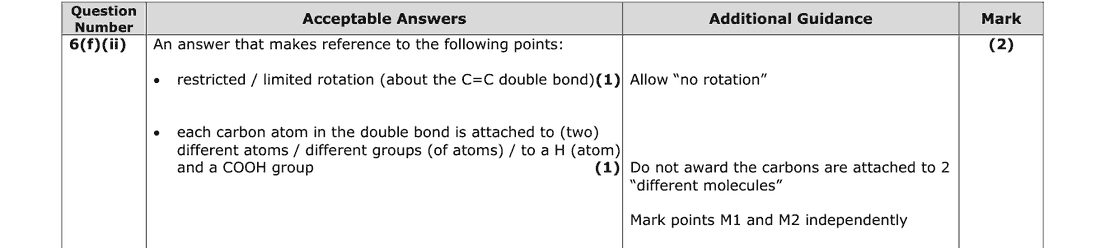
| 6(f)(ii) | Introduction to organic chemistry | 2 | | Short answer |
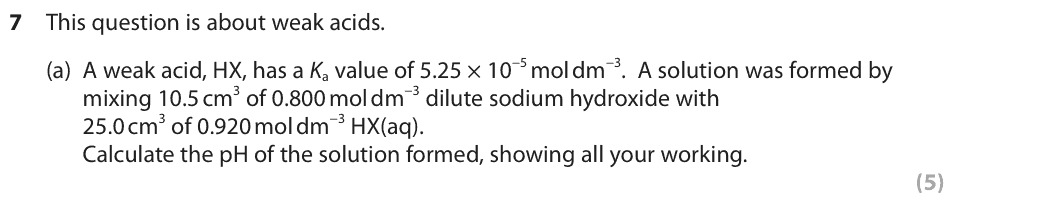
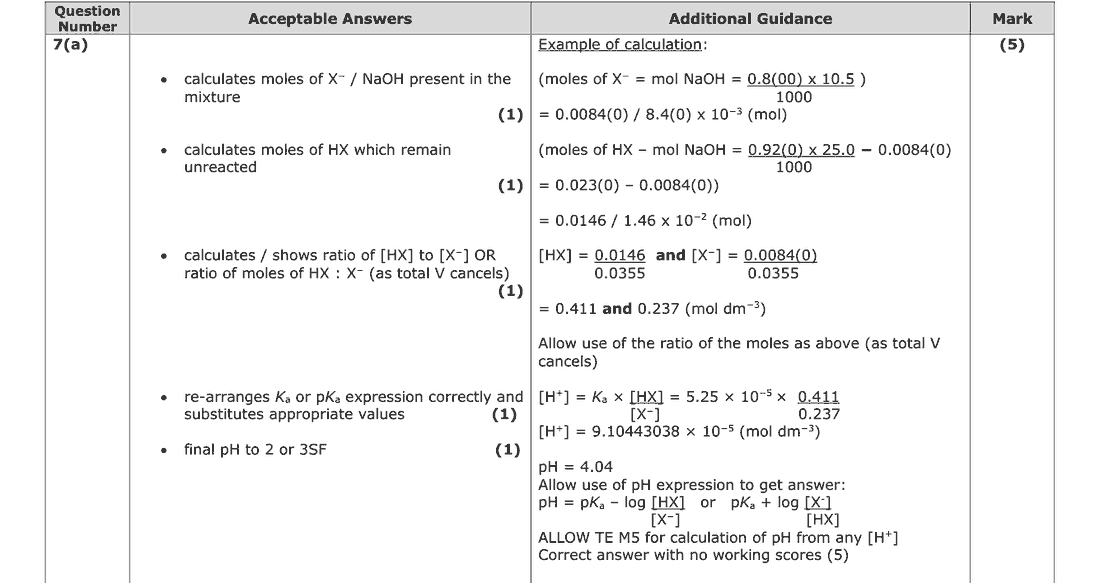
| 7(a) | Acid-base equilibria | 5 | | Calculation |
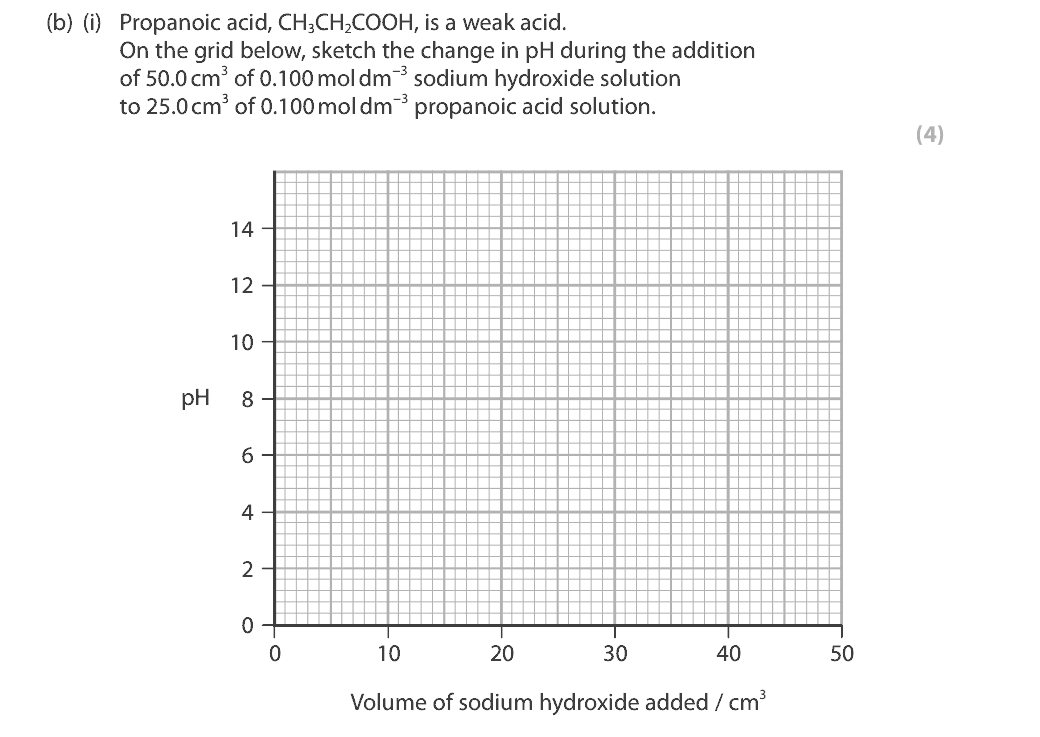
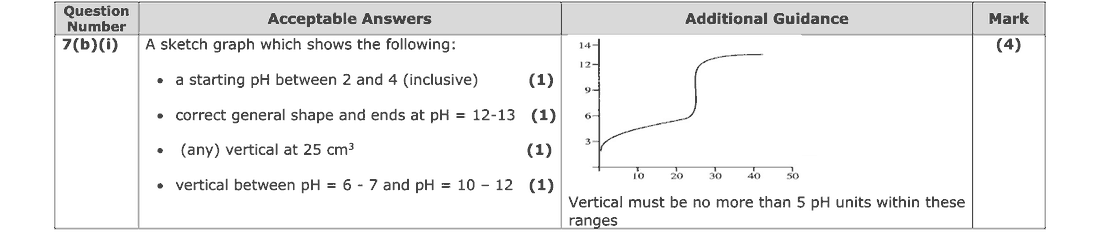
| 7(b)(i) | Acid-base equilibria | 4 | | Diagram or structure |
| 7(b)(ii) | Acid-base equilibria | 2 | | Explanation |
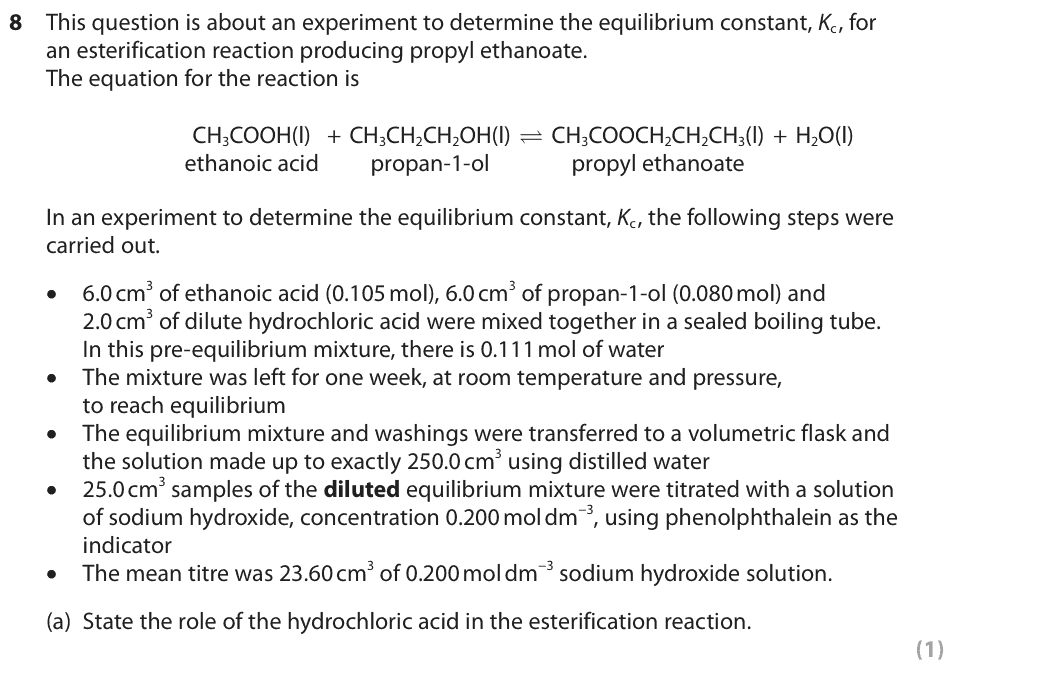
| 8(a) | Carboxylic acids | 1 | | Short answer |
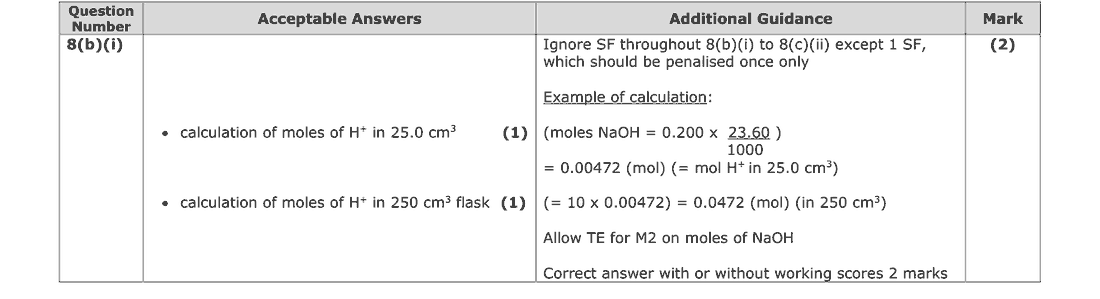
| 8(b)(i) | Formulae, equations and amounts of substance | 2 | | Calculation |
| 8(b)(ii) | Formulae, equations and amounts of substance | 1 | | Calculation |
| 8(c)(i) | Equilibrium II | 1 | | Calculation |
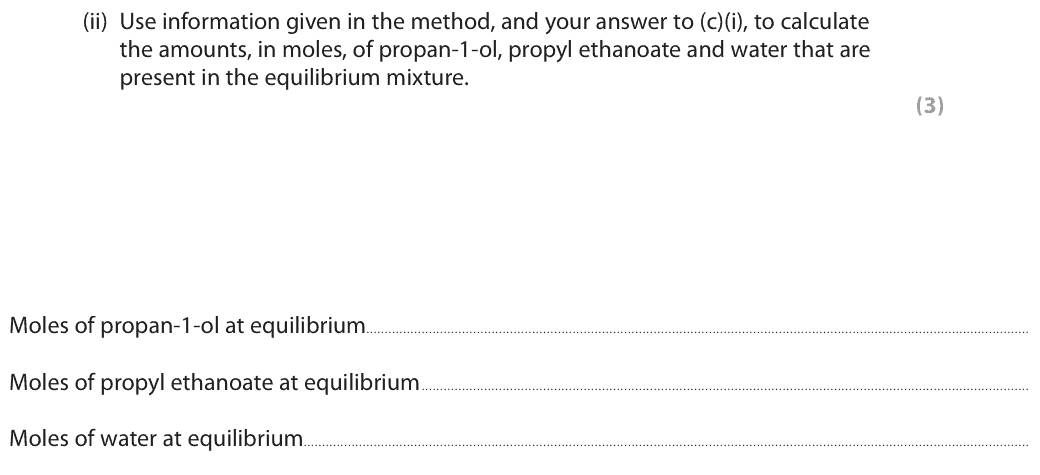
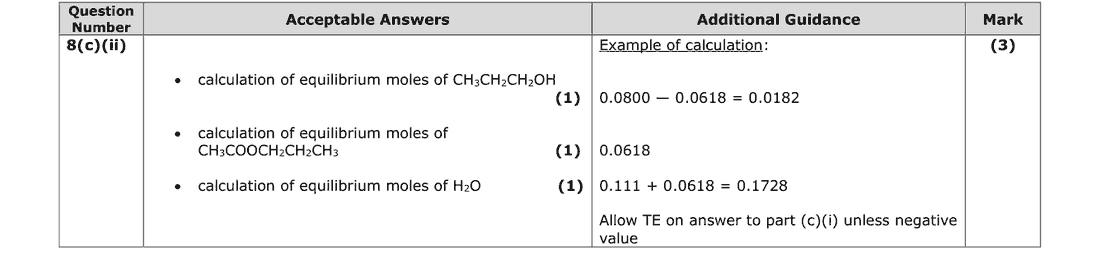
| 8(c)(ii) | Equilibrium II | 3 | | Calculation |
| 8(d)(i) | Equilibrium I | 1 | | Short answer |
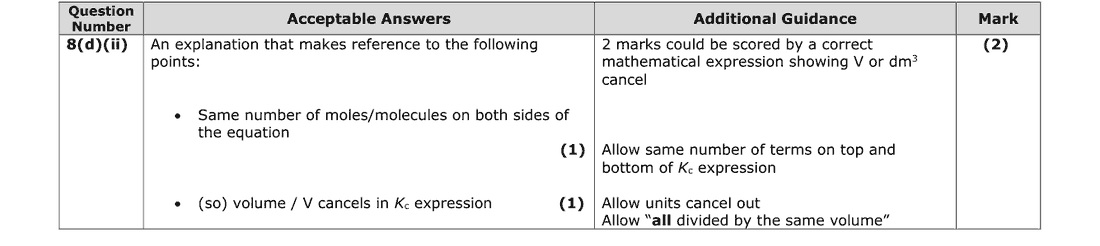
| 8(d)(ii) | Equilibrium II, Equilibrium I | 2 | | Explanation |
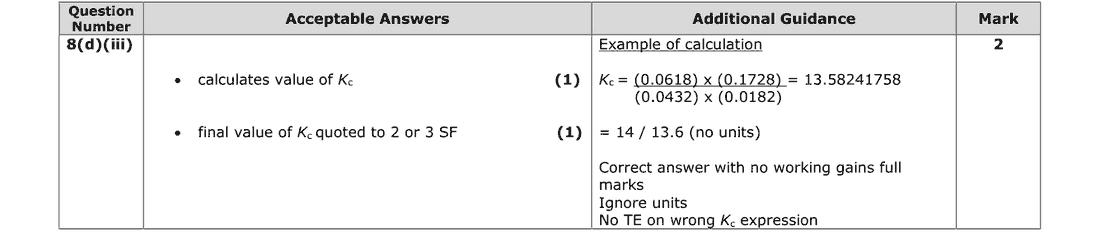
| 8(d)(iii) | Equilibrium II | 2 | | Calculation |
| 8(e) | Equilibrium I | 2 | | Explanation |
| 8(f) | Equilibrium I | 2 | | Practical and data analysis |
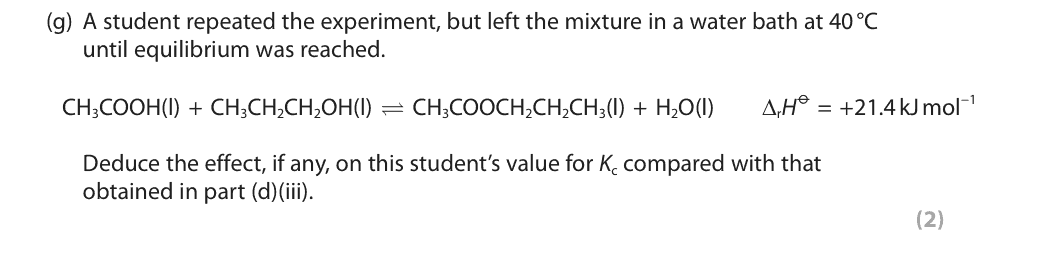
| 8(g) | Equilibrium II | 2 | | Short answer |