June 2018: Paper 1, Advanced Inorganic and Physical Chemistry

90 marks · 45 question parts · Paper, mark scheme and report on Edexcel's site · Have the Data Booklet beside you

Question by question

QTopicMarksAOType
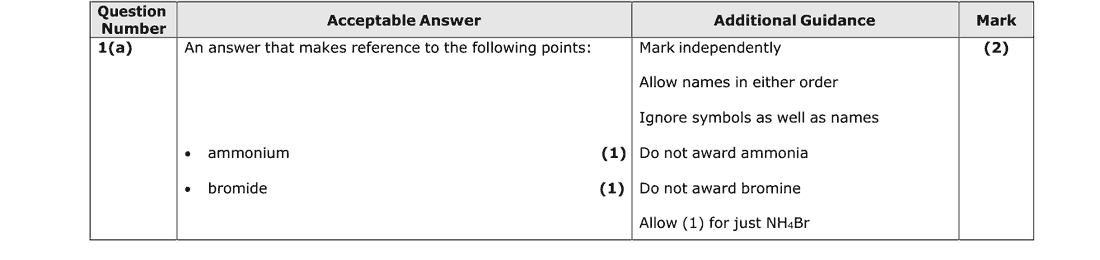
1(a) Analysis of inorganic compounds, The elements of Group 7 (halogens) 2Short answer
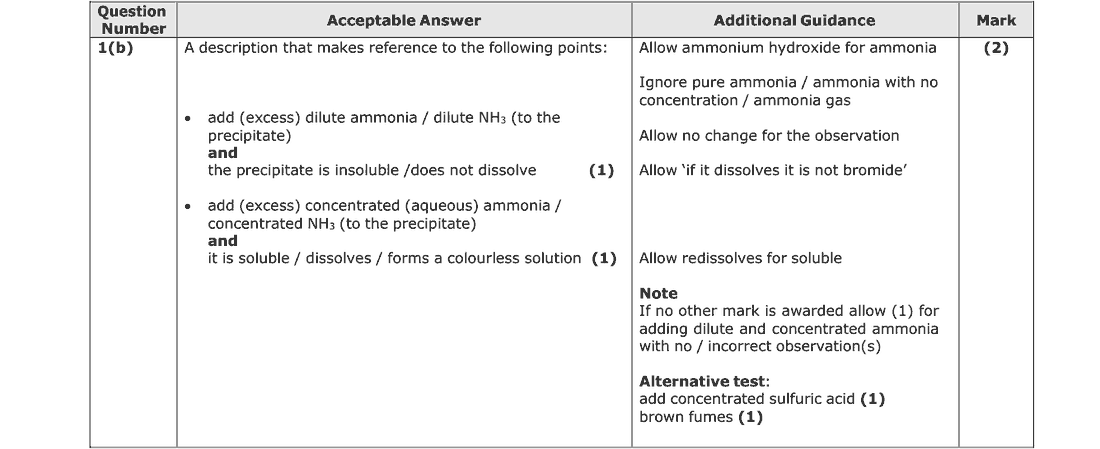
1(b) The elements of Group 7 (halogens) 2Practical and data analysis
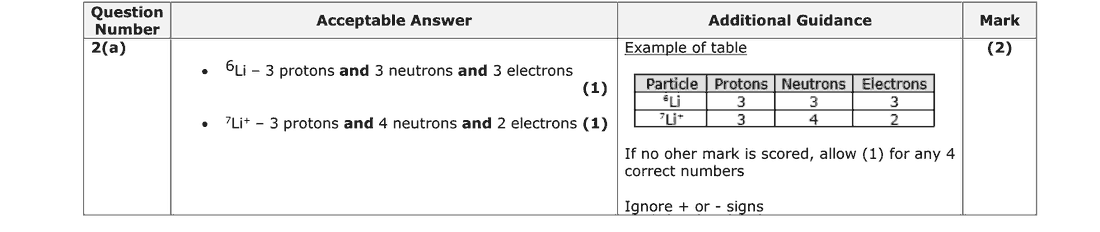
2(a) Atomic structure and the Periodic Table 2Short answer
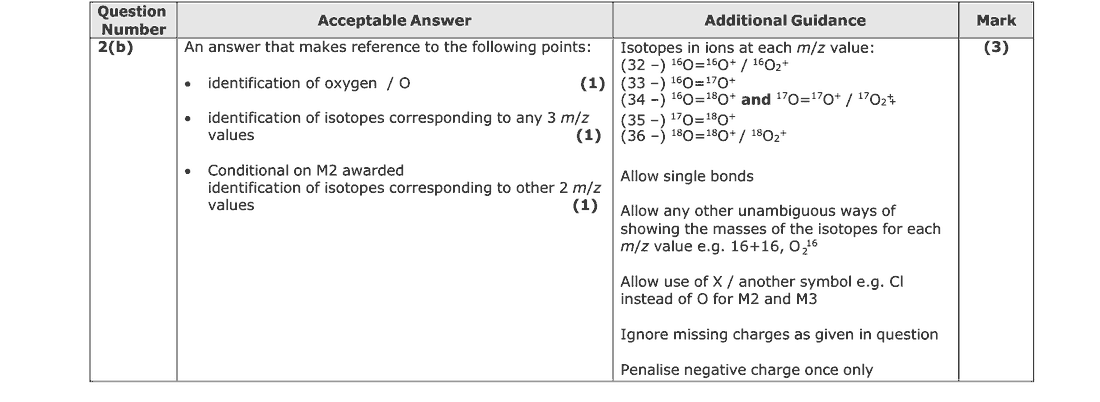
2(b) Atomic structure and the Periodic Table 3Short answer
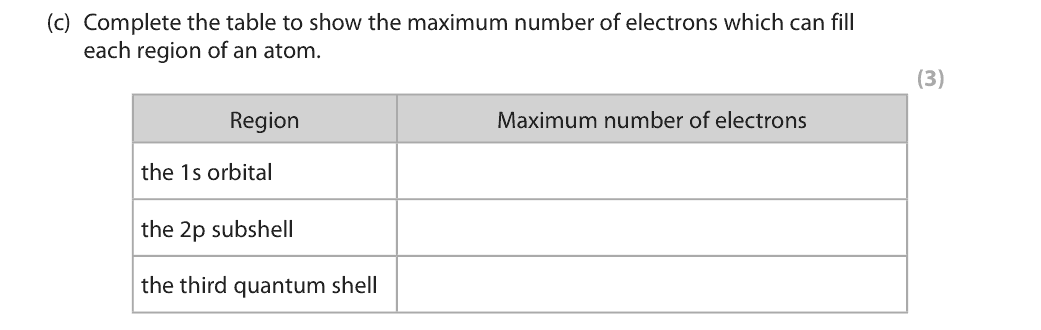
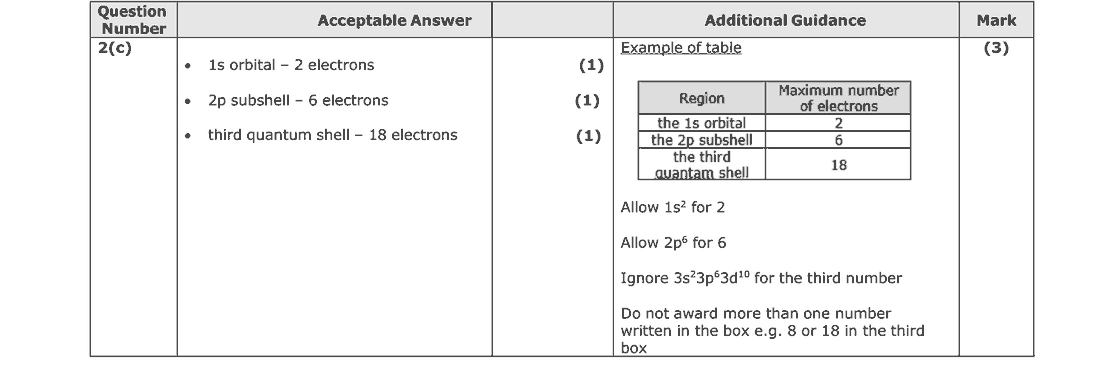
2(c) Atomic structure and the Periodic Table 3Short answer
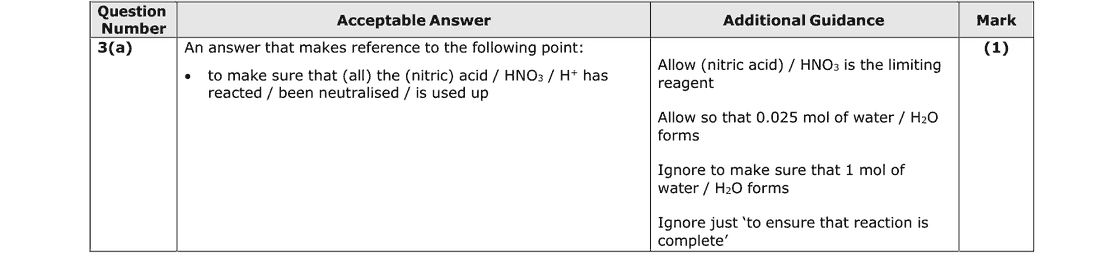
3(a) Energetics I 1Practical and data analysis
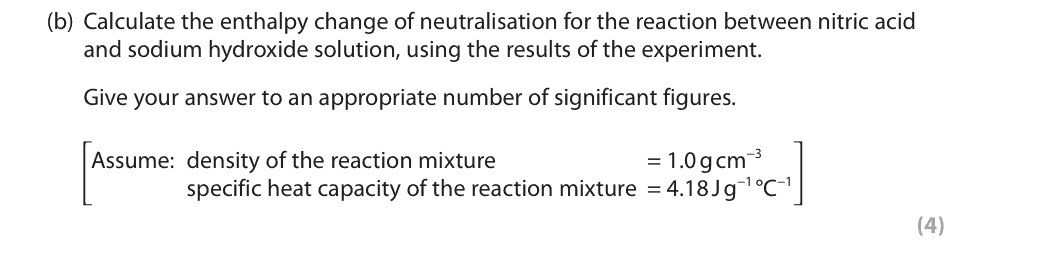
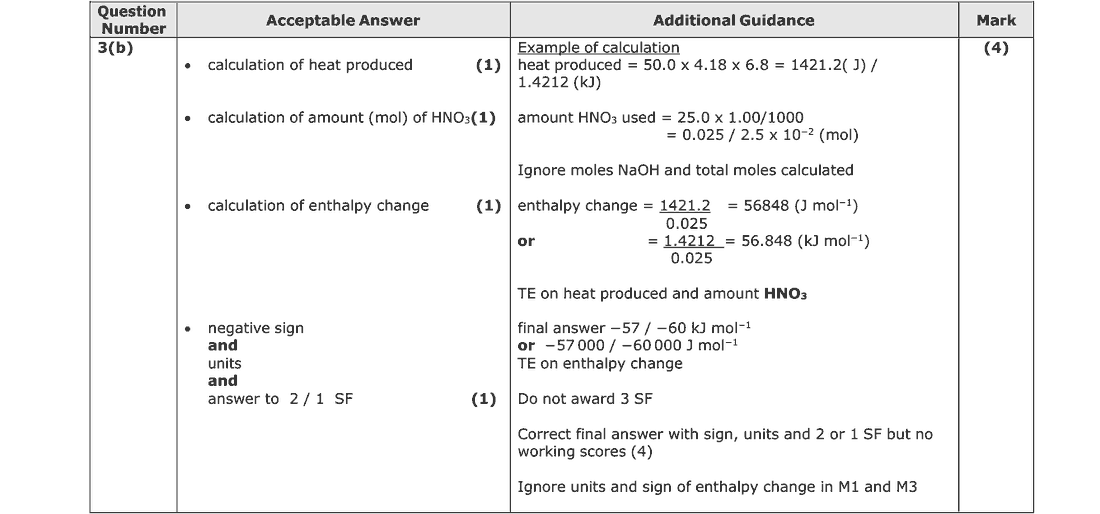
3(b) Energetics I 4Calculation
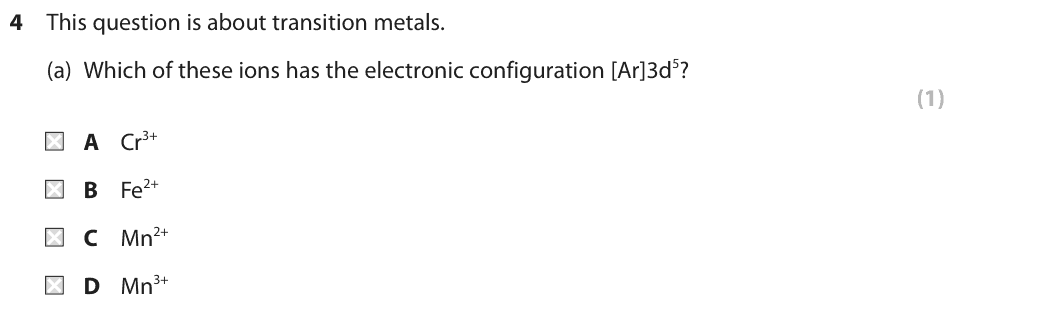
4(a) Transition metals: principles 1Multiple choice
4(b) Redox I 1Multiple choice
4(c) Transition metals: principles 1Multiple choice
4(d) Transition metals: principles 1Multiple choice
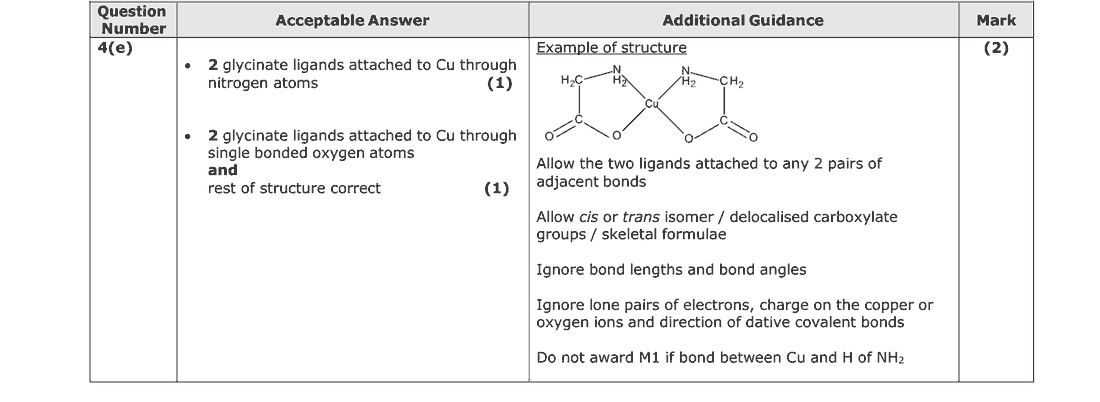
4(e) Transition metals: principles 2Diagram or structure
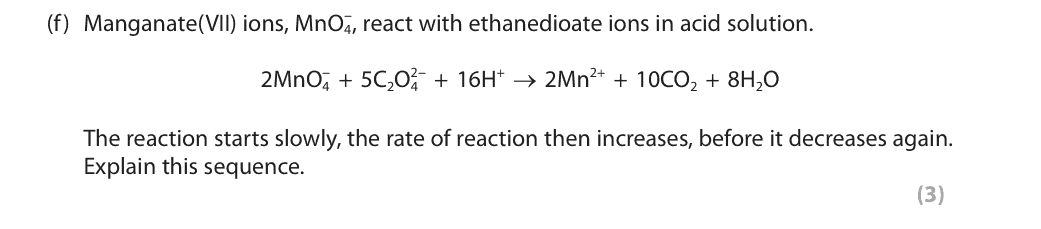
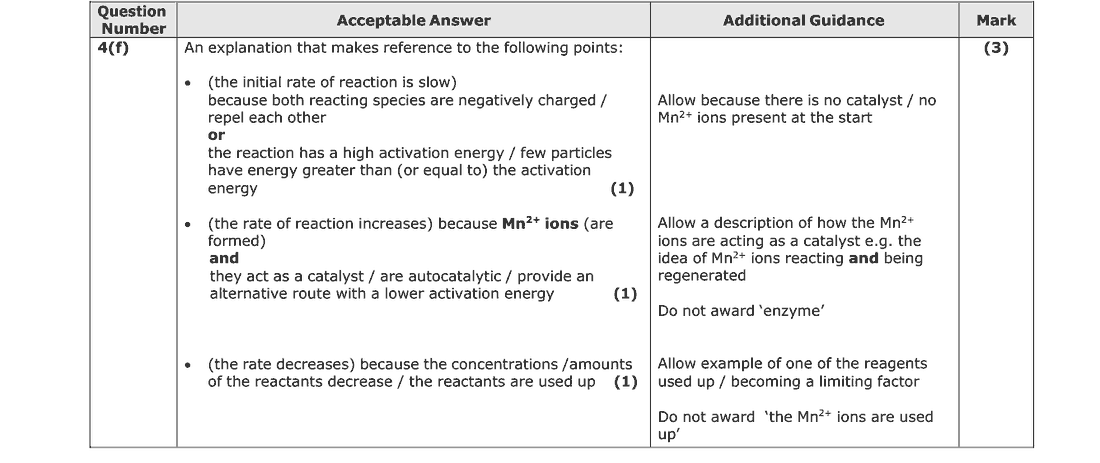
4(f) Transition metals: reactions, Kinetics I 3Explanation
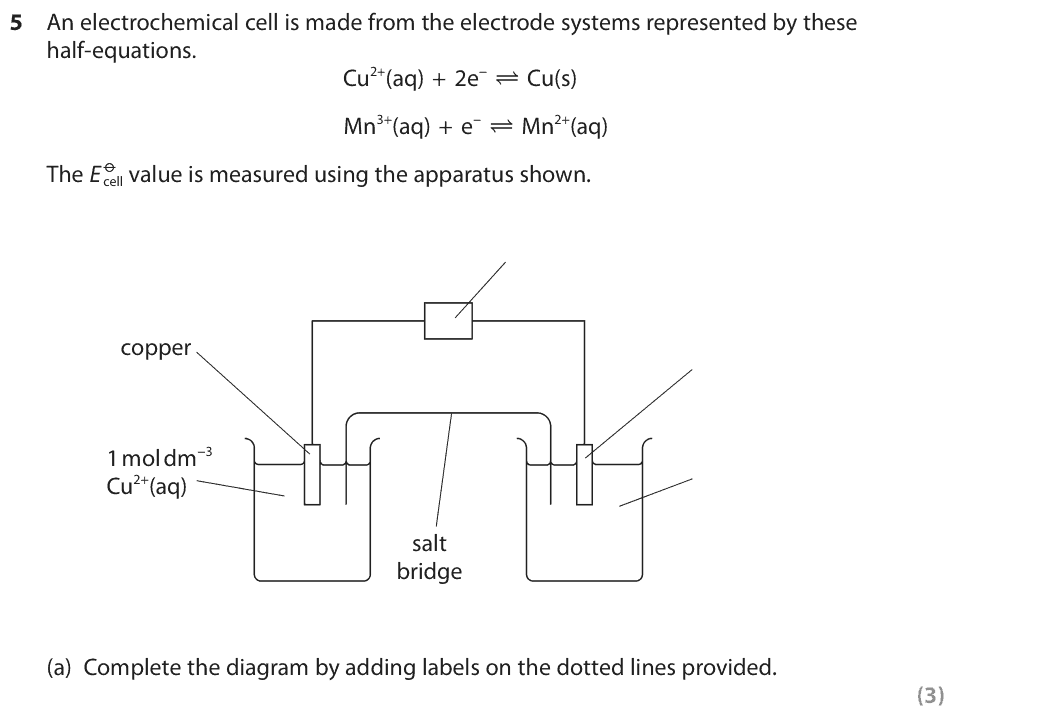
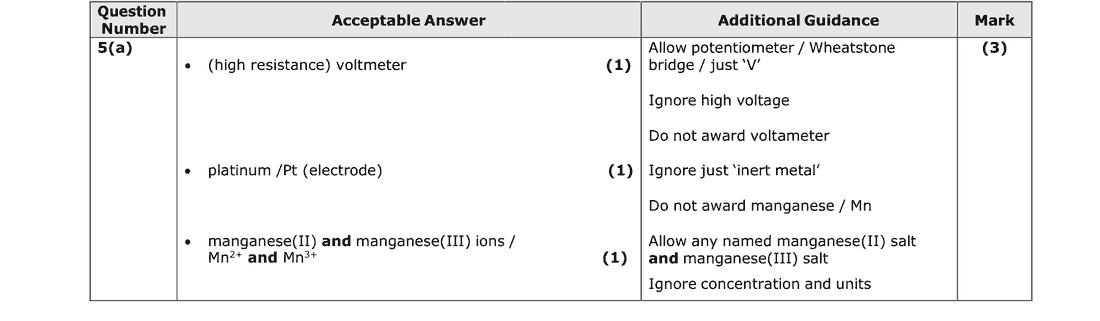
5(a) Redox II 3Diagram or structure
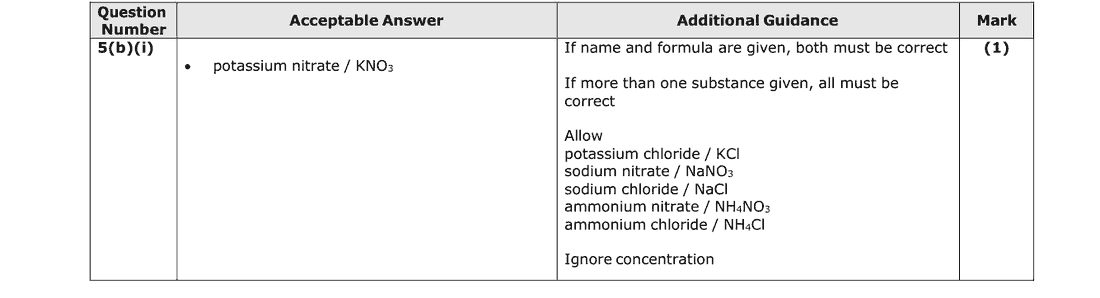
5(b)(i) Redox II 1Practical and data analysis
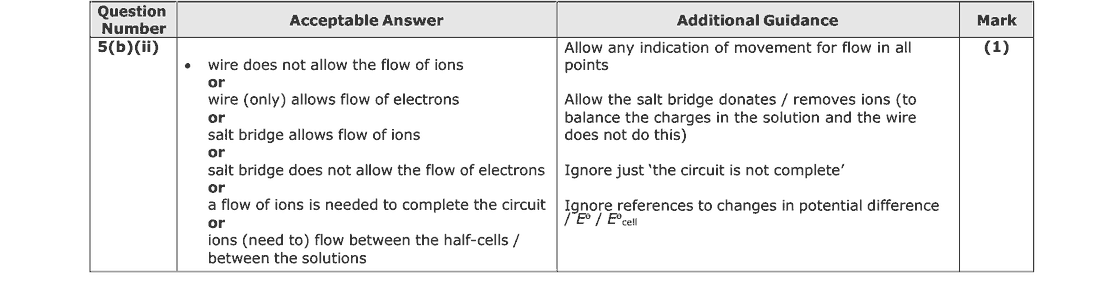
5(b)(ii) Redox II 1Short answer
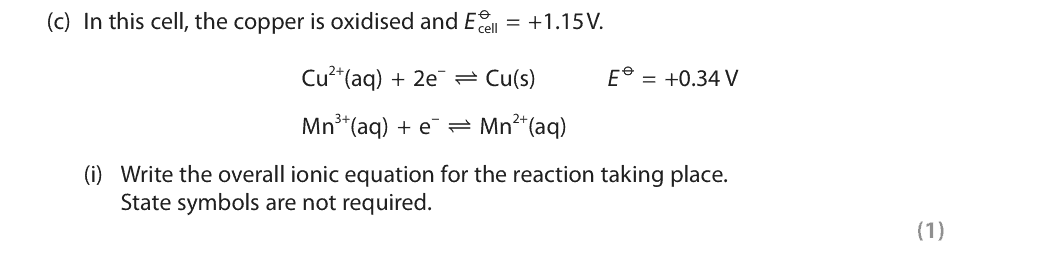
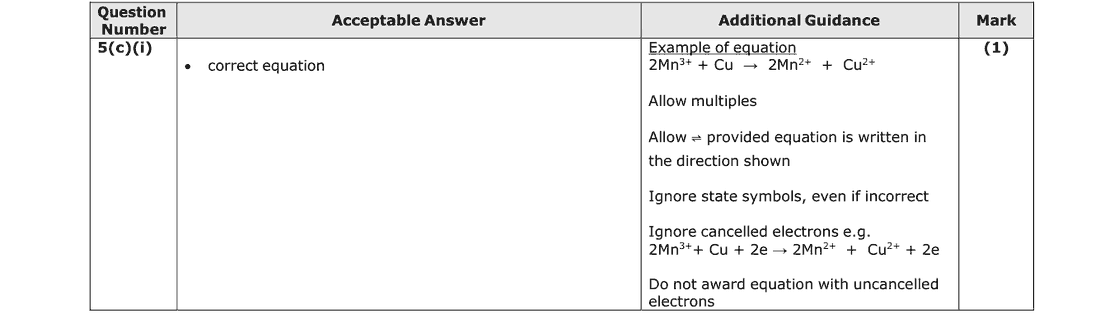
5(c)(i) Redox I 1Equation writing
5(c)(ii) Redox II 1Calculation
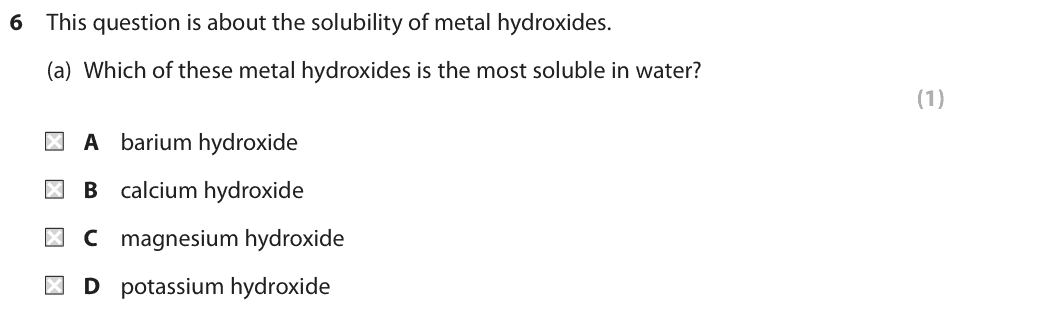
6(a) The elements of Groups 1 and 2 1Multiple choice
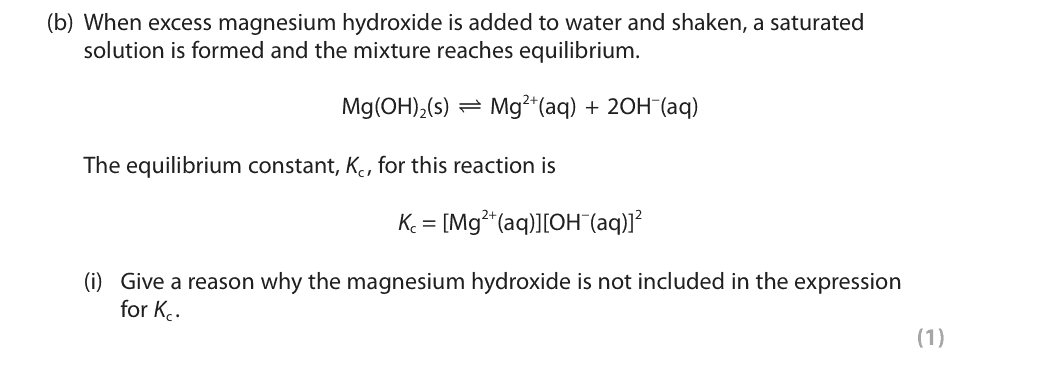
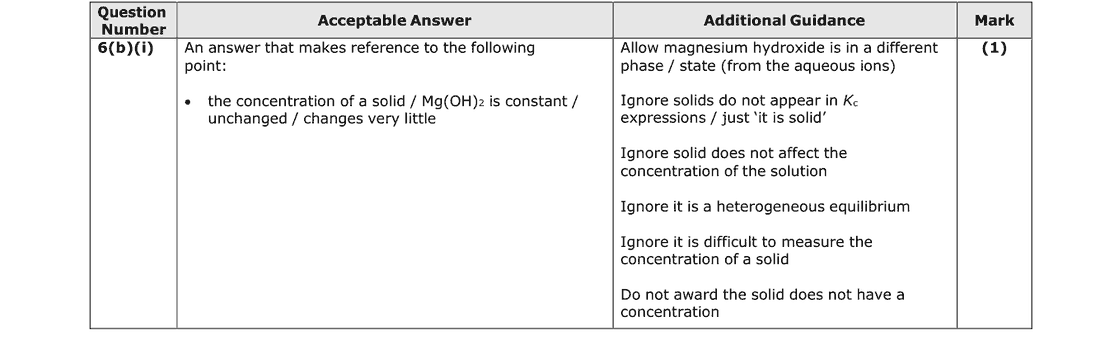
6(b)(i) Equilibrium I 1Short answer
6(b)(ii) Equilibrium II 1Short answer
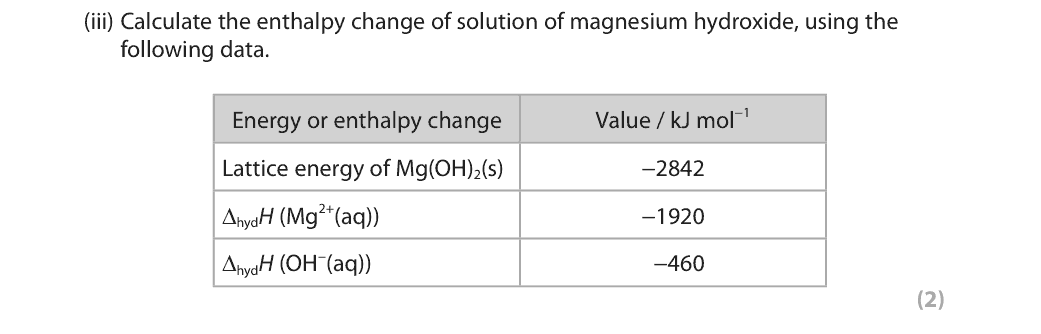
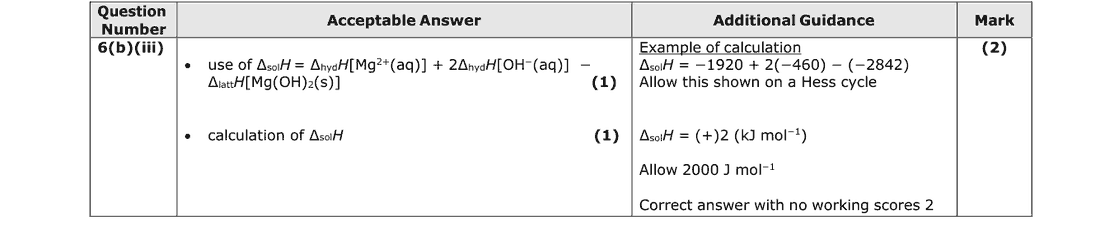
6(b)(iii) Energetics II: lattice energy 2Calculation
6(b)(iv) Equilibrium I 1Multiple choice
6(b)(v) Equilibrium I 4Explanation
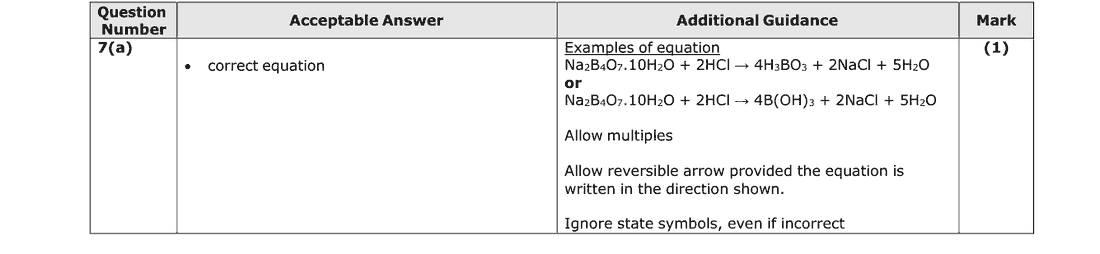
7(a) Formulae, equations and amounts of substance 1Equation writing

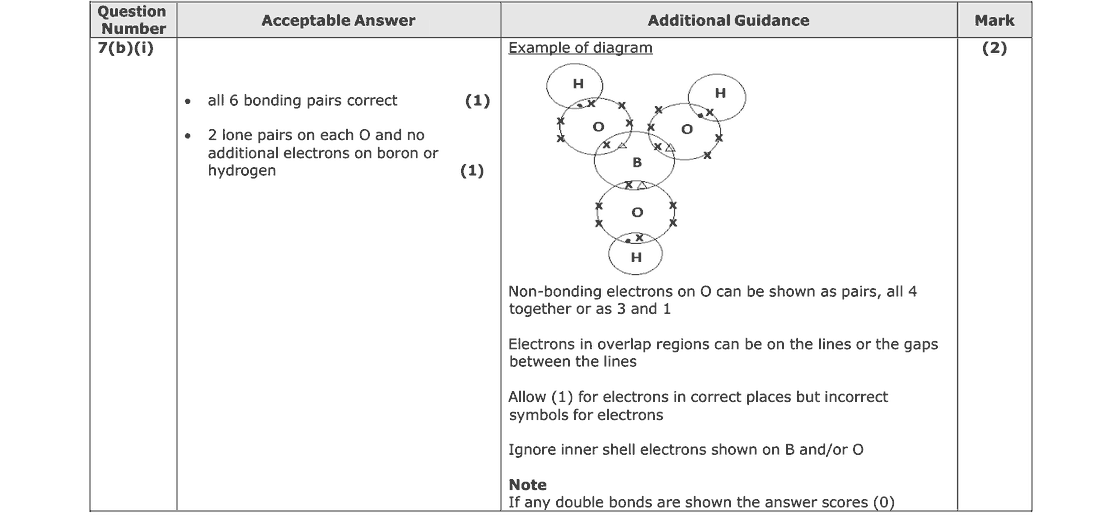
7(b)(i) Bonding 2Diagram or structure
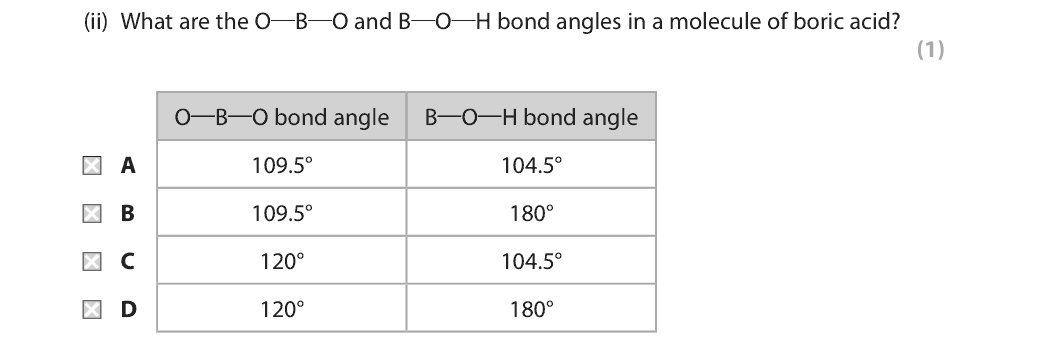
7(b)(ii) Bonding 1Multiple choice
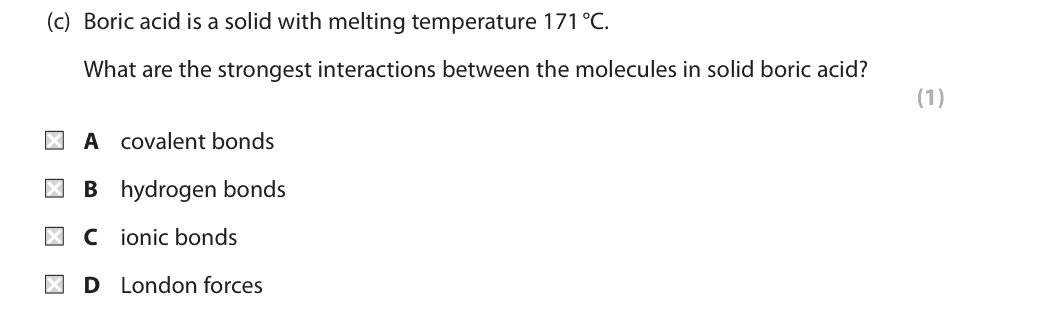
7(c) Bonding 1Multiple choice
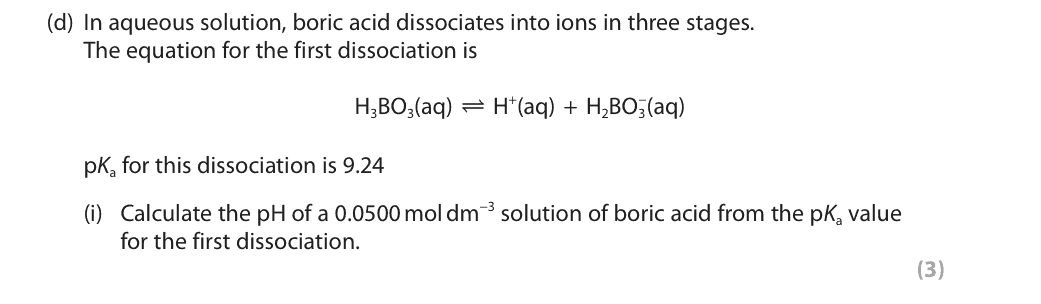
7(d)(i) Acid-base equilibria 3Calculation
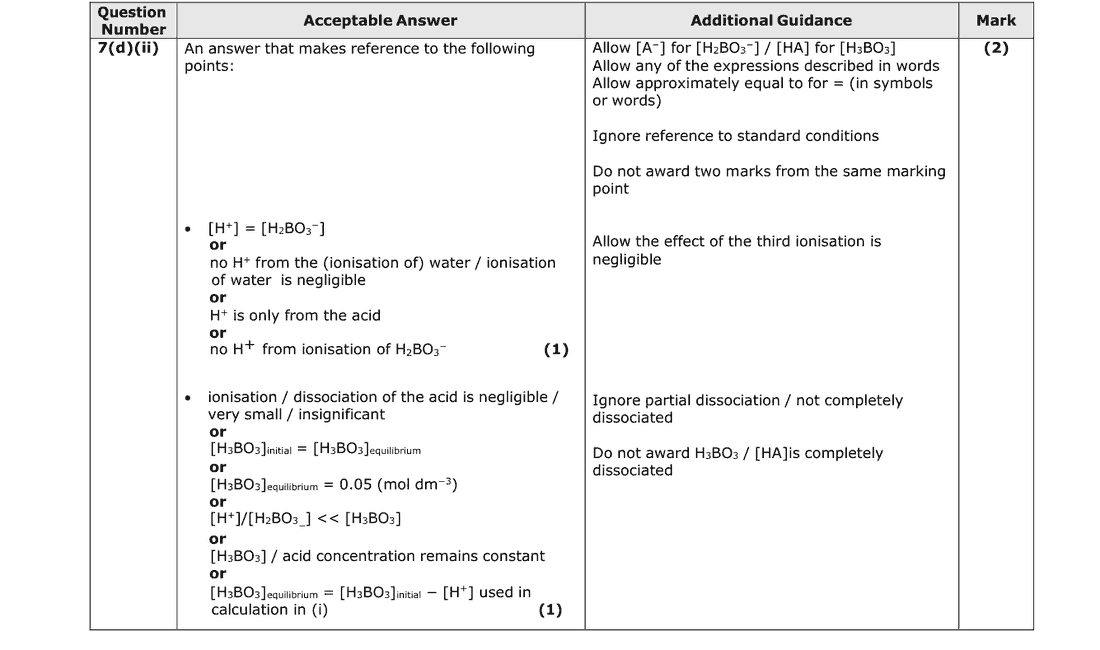
7(d)(ii) Acid-base equilibria 2Short answer
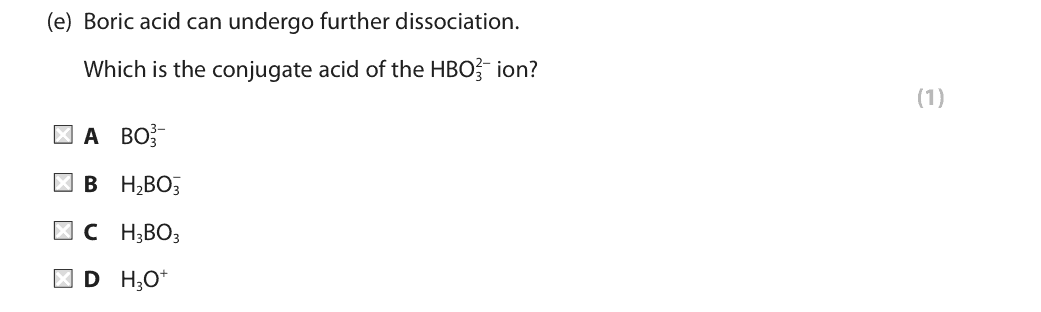
7(e) Acid-base equilibria 1Multiple choice
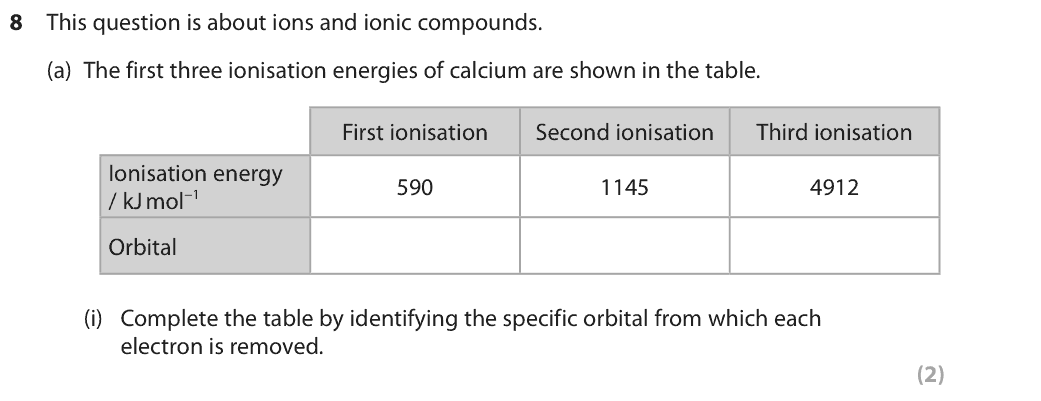
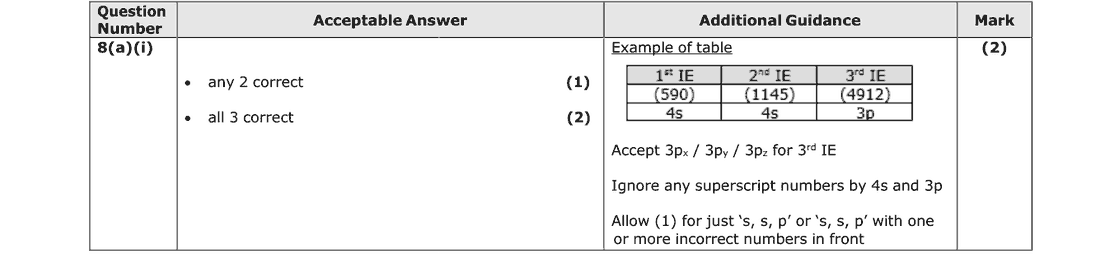
8(a)(i) Atomic structure and the Periodic Table 2Short answer
8(a)(ii) Atomic structure and the Periodic Table 1Equation writing
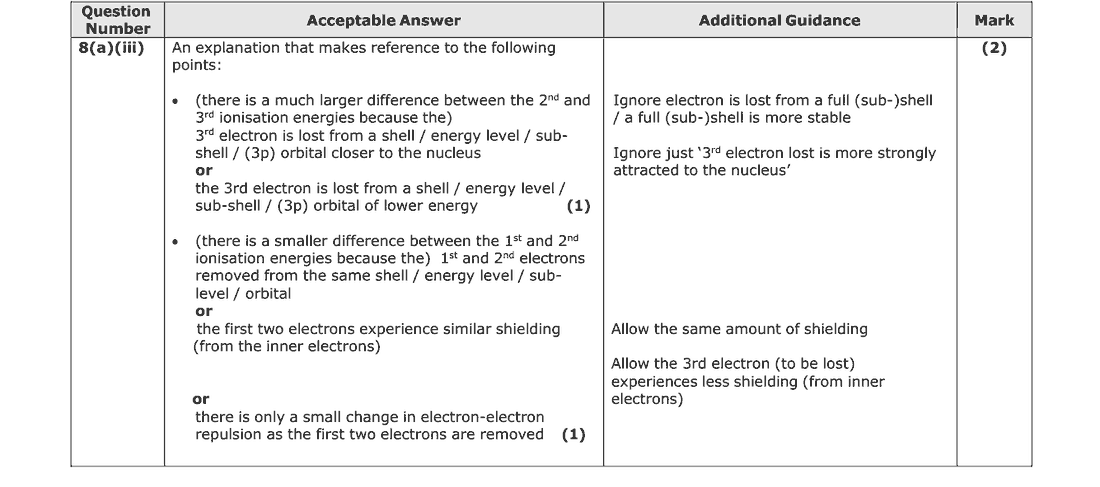
8(a)(iii) Atomic structure and the Periodic Table 2Explanation
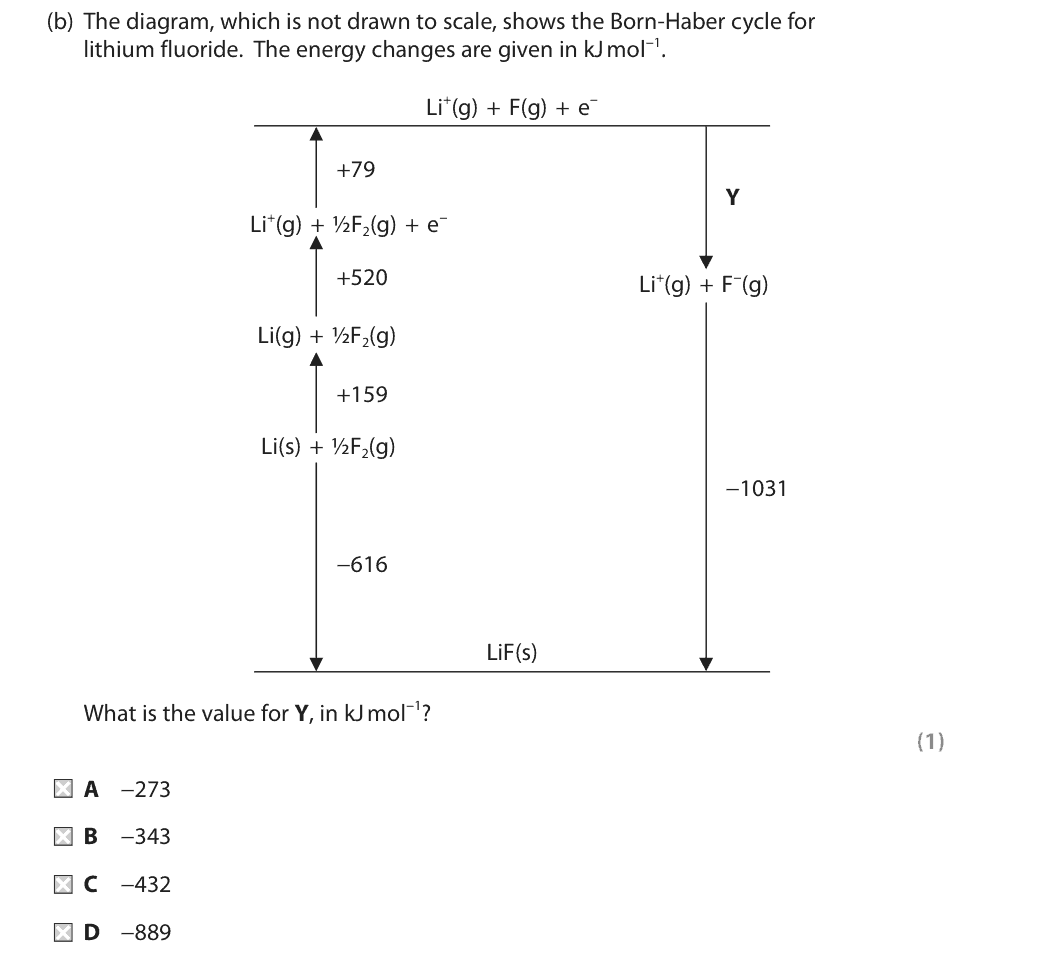
8(b) Energetics II: lattice energy 1Multiple choice
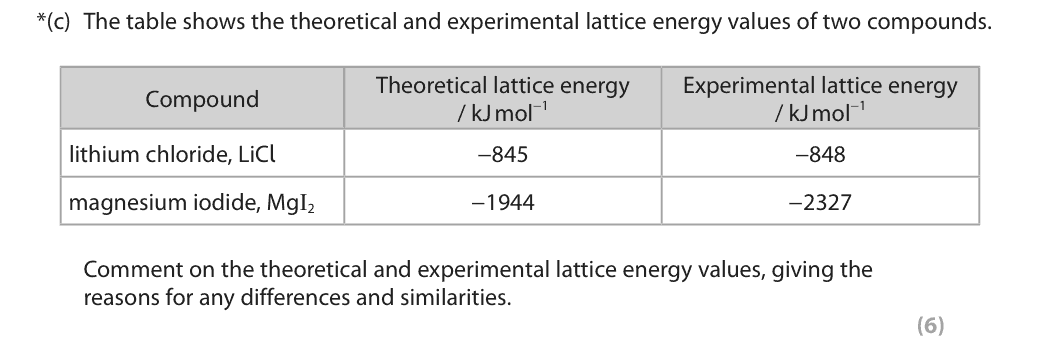
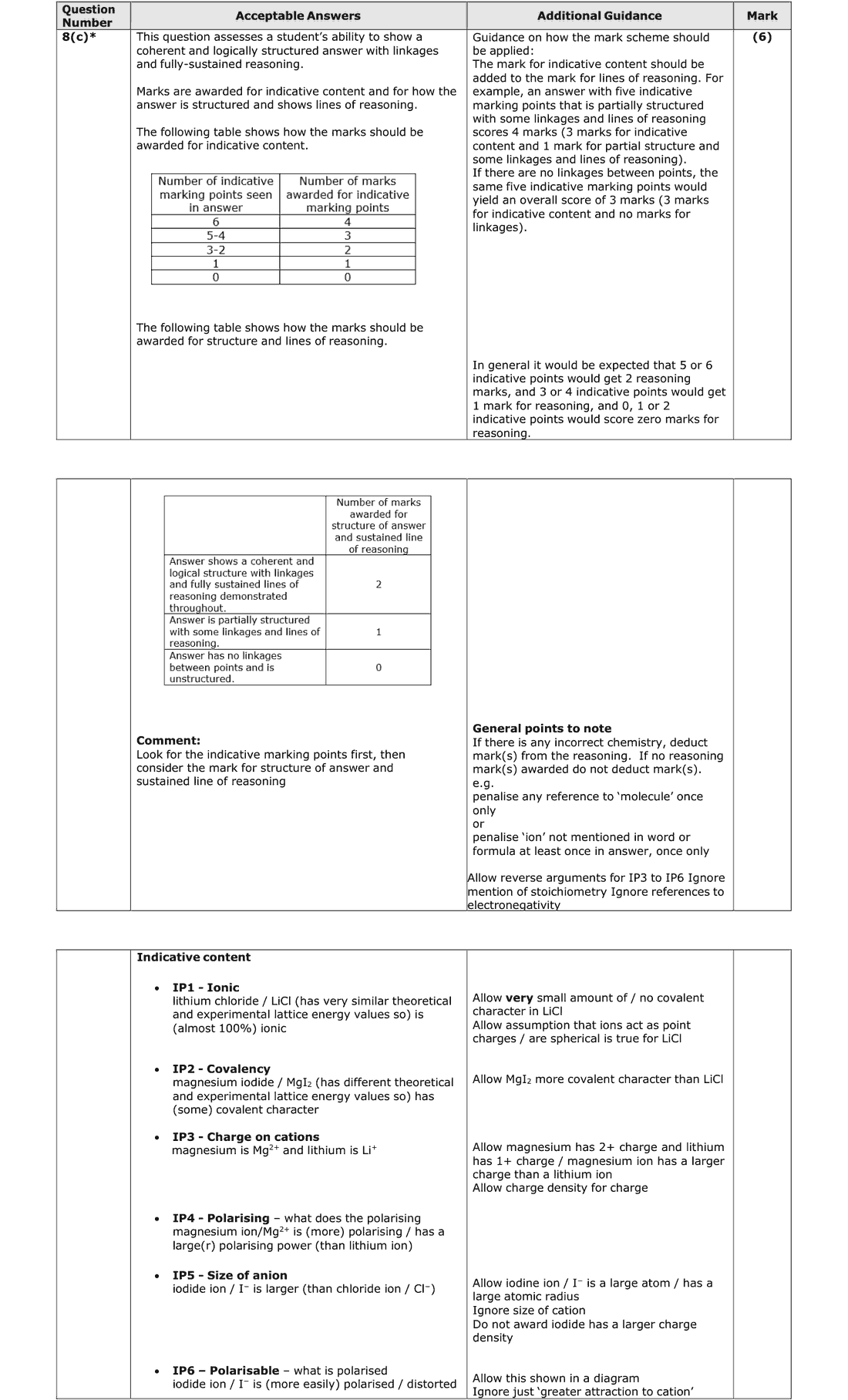
8(c) Energetics II: lattice energy 6Extended response
9(a) Energetics II: entropy 2Short answer
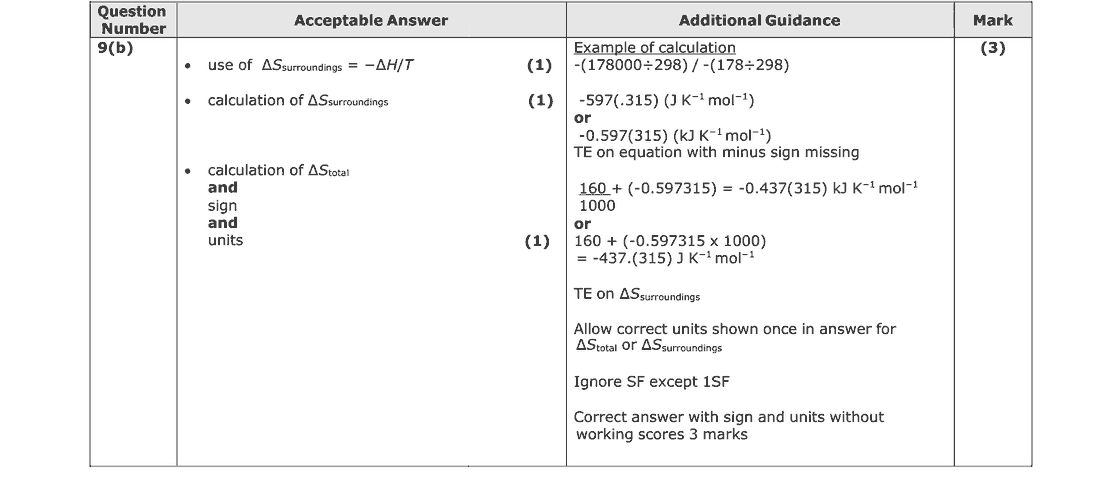
9(b) Energetics II: entropy 3Calculation
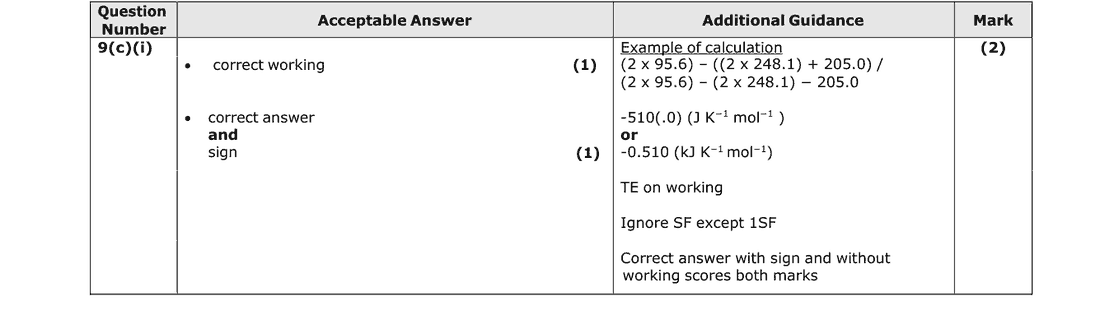
9(c)(i) Energetics II: entropy 2Calculation
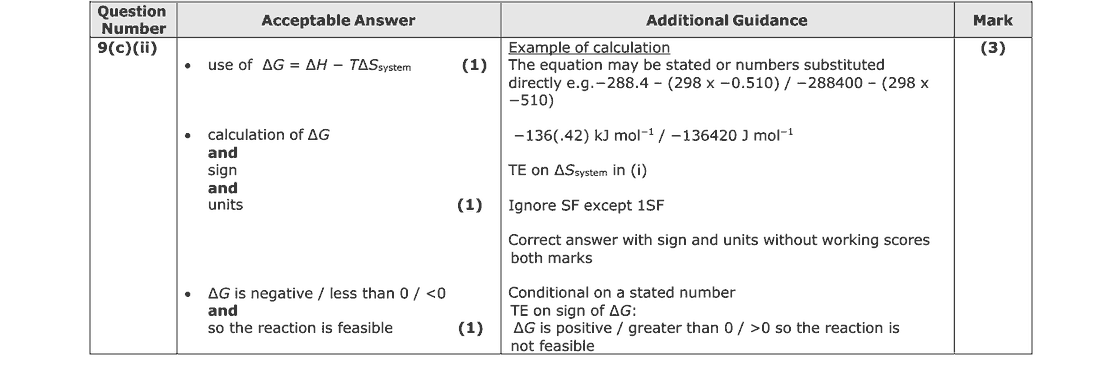
9(c)(ii) Energetics II: entropy 3Calculation
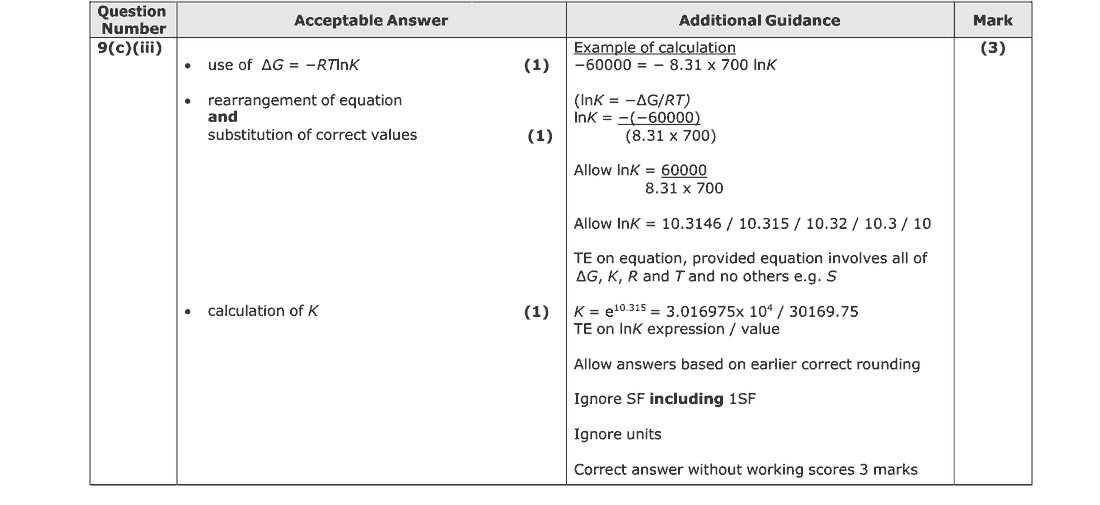
9(c)(iii) Energetics II: entropy 3Calculation
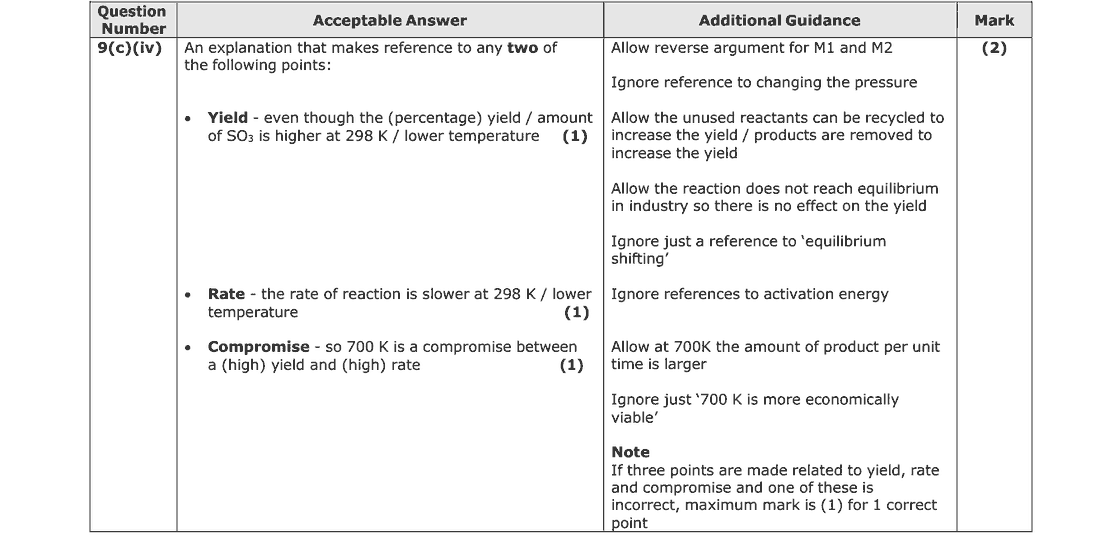
9(c)(iv) Equilibrium I 2Explanation
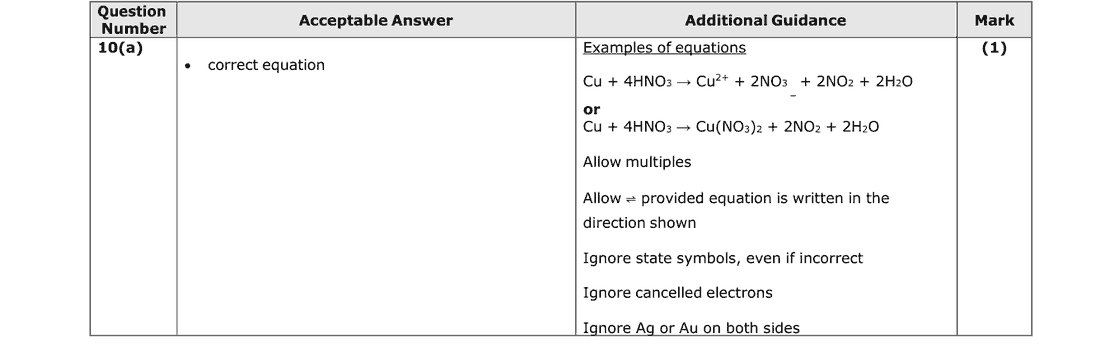
10(a) Redox I 1Equation writing
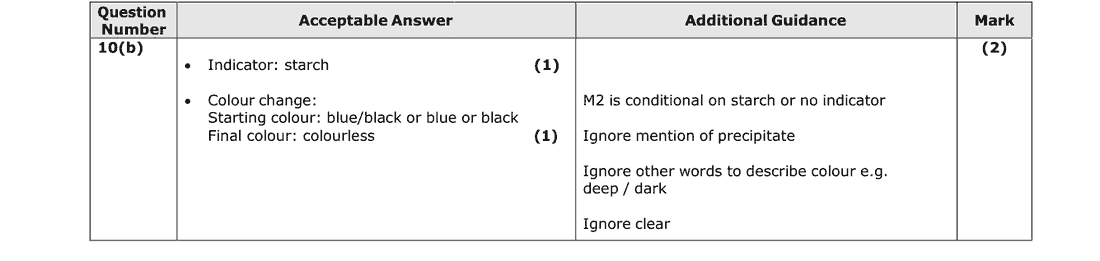
10(b) Redox II 2Practical and data analysis
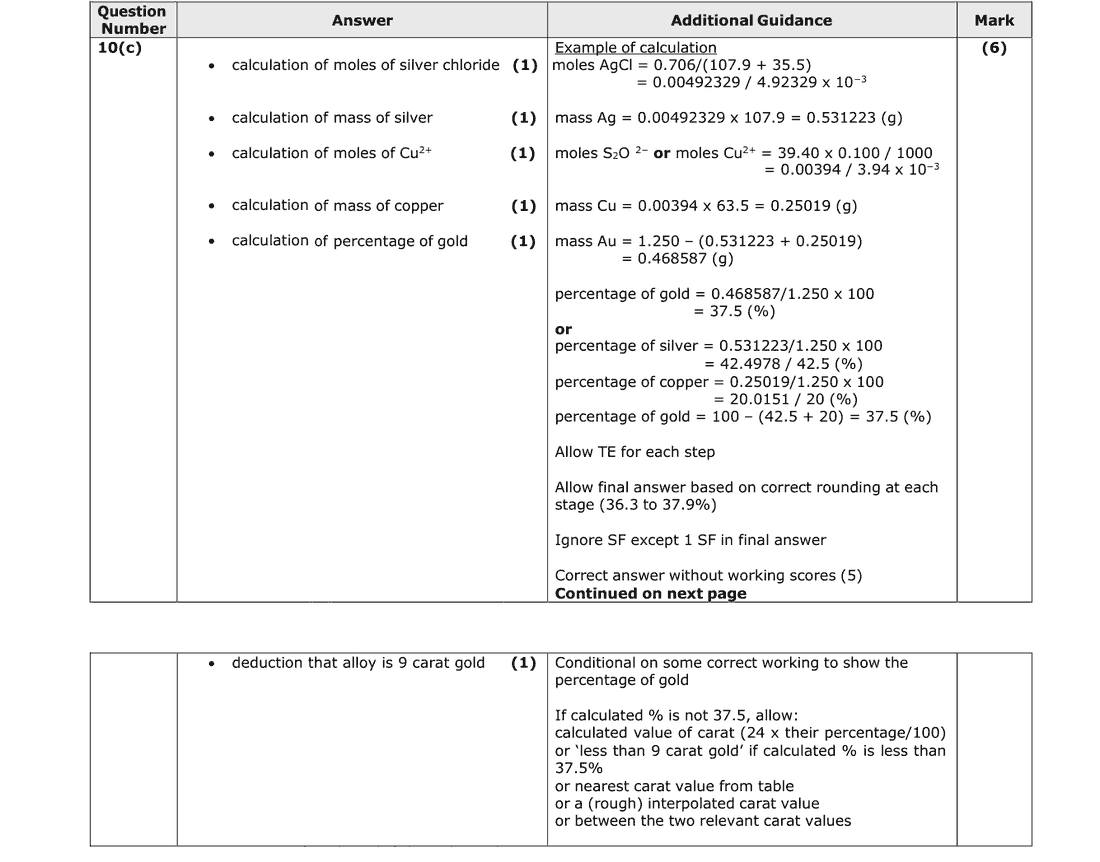
10(c) Redox II, Formulae, equations and amounts of substance 6Calculation

The questions

1(a)1(b)2(a)2(b)2(c)3(a)3(b)4(a)4(b)4(c)4(d)4(e)4(f)5(a)5(b)(i)5(b)(ii)5(c)(i)5(c)(ii)6(a)6(b)(i)6(b)(ii)6(b)(iii)6(b)(iv)6(b)(v)7(a)7(b)(i)7(b)(ii)7(c)7(d)(i)7(d)(ii)7(e)8(a)(i)8(a)(ii)8(a)(iii)8(b)8(c)9(a)9(b)9(c)(i)9(c)(ii)9(c)(iii)9(c)(iv)10(a)10(b)10(c)
June 2018 · Paper 1 · Q1(a) 2 marks Short answer analysis of inorganic compoundsgroup 7 the halogens
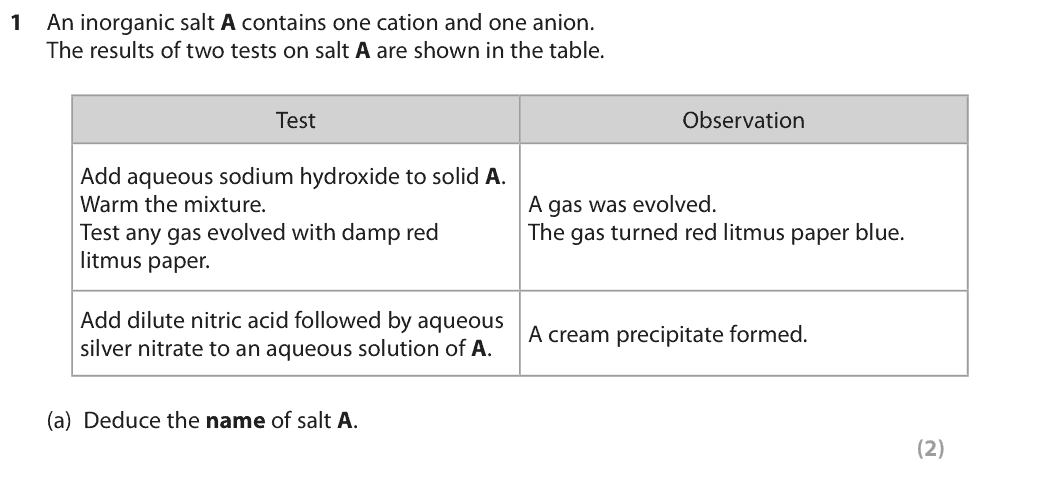
An inorganic salt A contains one cation and one anion.
The results of two tests on salt A are shown in the table.
Test
Observation
Add aqueous sodium hydroxide to solid A.
Warm the mixture.
A gas was evolved.
Test any gas evolved with damp red
The gas turned red litmus paper blue.
litmus paper.
Add dilute nitric acid followed by aqueous
A cream precipitate formed.
silver nitrate to an aqueous solution of A.
Deduce the name of salt A.
June 2018 · Paper 1 · Q1(b) 2 marks Practical and data analysis group 7 the halogens
Earlier part of question 1 that this part usesEarlier part of June 2018 Paper 1 question 1
Describe additional tests, with the results, that will confirm the identity of the
anion in the cream precipitate.
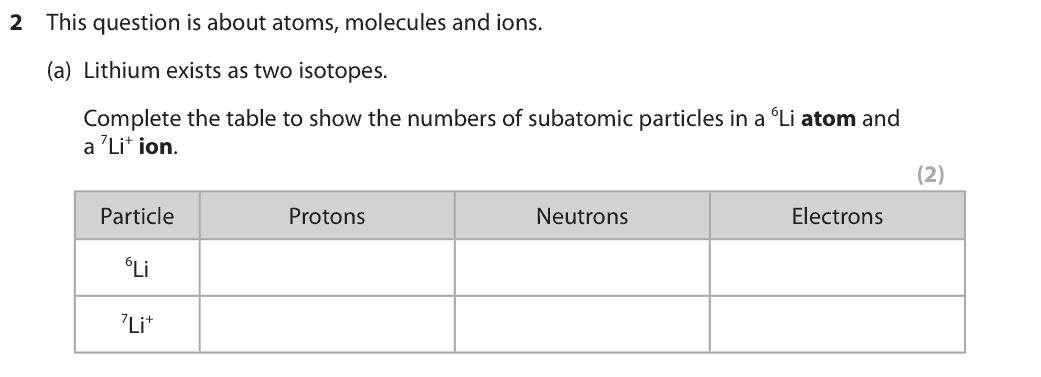
June 2018 · Paper 1 · Q2(a) 2 marks Short answer Easy atomic structure and the periodic table
This question is about atoms, molecules and ions.
Lithium exists as two isotopes.
Complete the table to show the numbers of subatomic particles in a 6Li atom and
a 7Li+ ion.
Particle
Protons
Neutrons
Electrons
6Li
7Li+
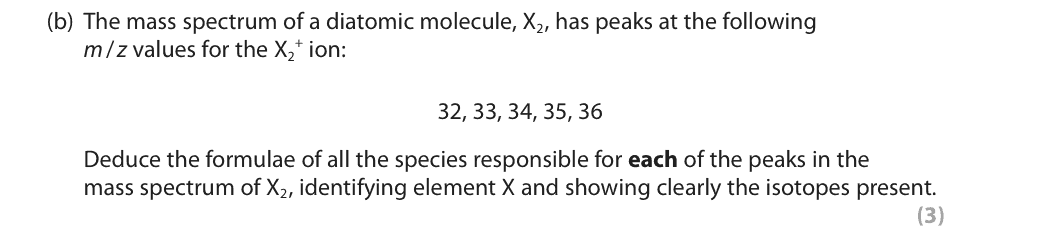
June 2018 · Paper 1 · Q2(b) 3 marks Short answer atomic structure and the periodic table
Earlier part of question 2 that this part usesEarlier part of June 2018 Paper 1 question 2
The mass spectrum of a diatomic molecule, X2, has peaks at the following
m / z values for the X2
+ ion:
32, 33, 34, 35, 36
Deduce the formulae of all the species responsible for each of the peaks in the
mass spectrum of X2, identifying element X and showing clearly the isotopes present.
June 2018 · Paper 1 · Q2(c) 3 marks Short answer atomic structure and the periodic table
Complete the table to show the maximum number of electrons which can fill
each region of an atom.
Region
Maximum number of electrons
the 1s orbital
the 2p subshell
the third quantum shell
June 2018 · Paper 1 · Q3(a) 1 mark Practical and data analysis Easy energetics i
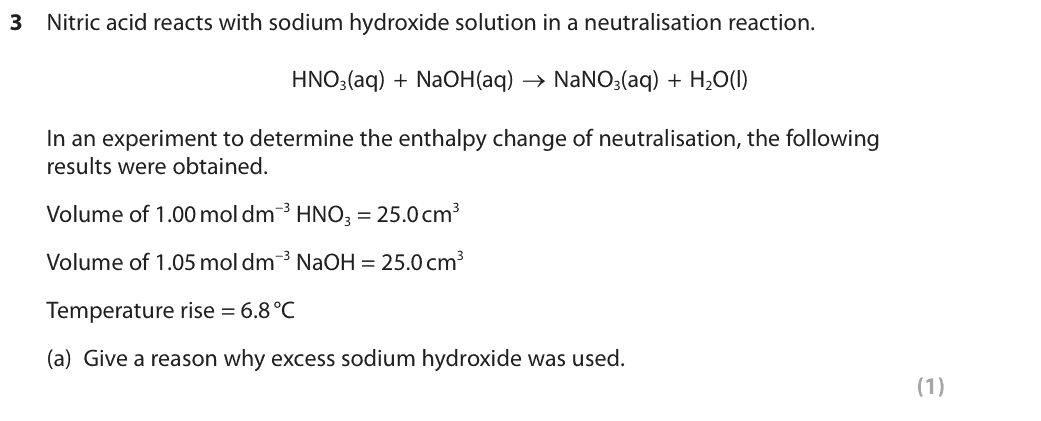
Nitric acid reacts with sodium hydroxide solution in a neutralisation reaction.
HNO3(aq) + NaOH(aq) → NaNO3(aq) + H2O(l)
In an experiment to determine the enthalpy change of neutralisation, the following
results were obtained.
Volume of 1.00 mol dm−3 HNO3 = 25.0 cm3
Volume of 1.05 mol dm−3 NaOH = 25.0 cm3
Temperature rise = 6.8 °C
Give a reason why excess sodium hydroxide was used.
June 2018 · Paper 1 · Q3(b) 4 marks Calculation energetics i
Earlier part of question 3 that this part usesEarlier part of June 2018 Paper 1 question 3
Calculate the enthalpy change of neutralisation for the reaction between nitric acid
and sodium hydroxide solution, using the results of the experiment.
Give your answer to an appropriate number of significant figures.
Assume:  density of the reaction mixture
= 1.0 g cm−3
specific heat capacity of the reaction mixture  = 4.18 J g−1 °C−1
June 2018 · Paper 1 · Q4(a) 1 mark Multiple choice transition metals principles
This question is about transition metals.
Which of these ions has the electronic configuration [Ar]3d5?
A  Cr3+
B  Fe2+
C  Mn2+
D  Mn3+
June 2018 · Paper 1 · Q4(b) 1 mark Multiple choice redox i
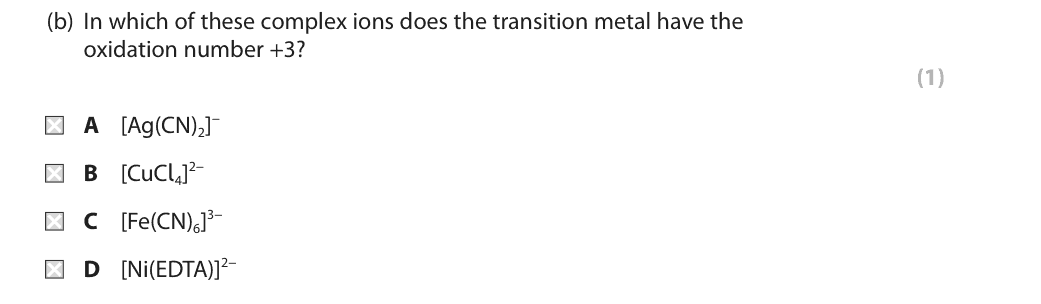
In which of these complex ions does the transition metal have the
oxidation number +3?
A  [Ag(CN)2]−
B  [CuCl4]2−
C  [Fe(CN)6]3−
D  [Ni(EDTA)]2−
June 2018 · Paper 1 · Q4(c) 1 mark Multiple choice transition metals principles
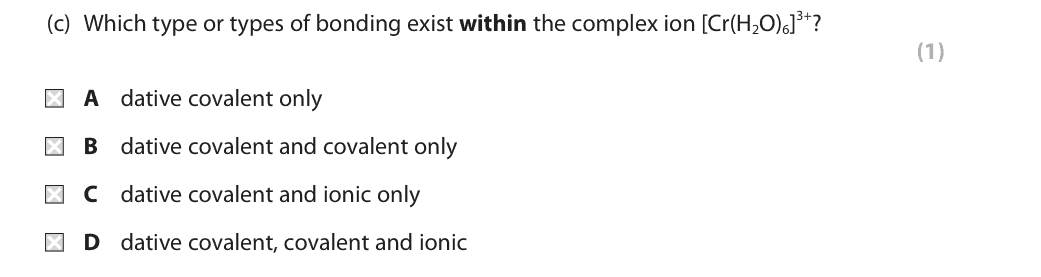
Which type or types of bonding exist within the complex ion [Cr(H2O)6]3+?
A  dative covalent only
B  dative covalent and covalent only
C  dative covalent and ionic only
D  dative covalent, covalent and ionic
June 2018 · Paper 1 · Q4(d) 1 mark Multiple choice transition metals principles
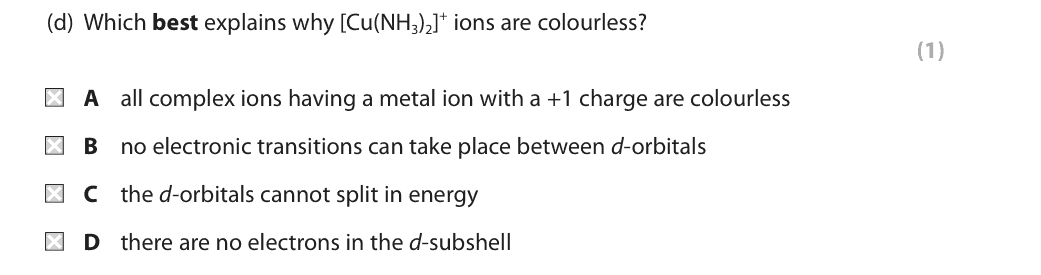
Which best explains why [Cu(NH3)2]+ ions are colourless?
A  all complex ions having a metal ion with a +1 charge are colourless
B  no electronic transitions can take place between d-orbitals
C  the d-orbitals cannot split in energy
D  there are no electrons in the d-subshell
June 2018 · Paper 1 · Q4(e) 2 marks Diagram or structure transition metals principles
Earlier part of question 4 that this part usesEarlier part of June 2018 Paper 1 question 4
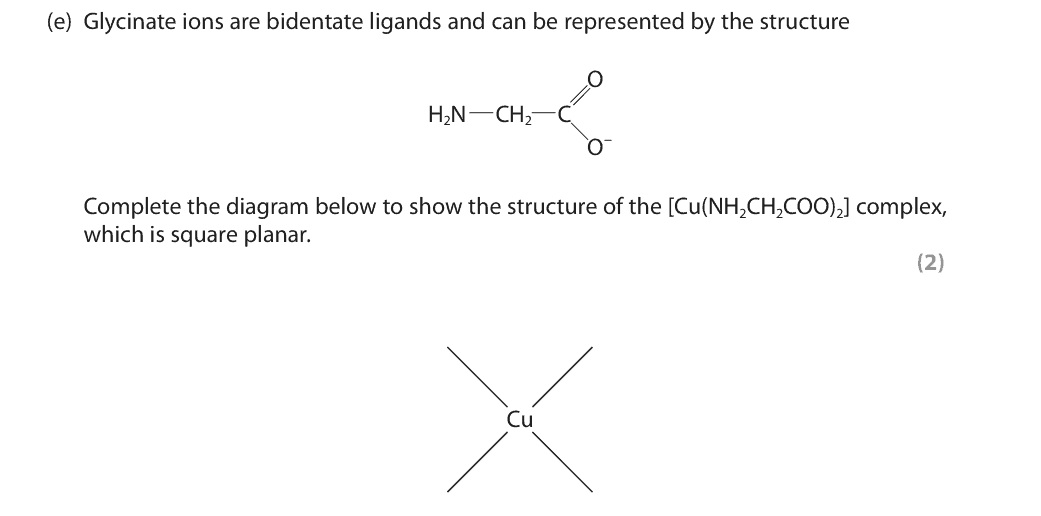
Glycinate ions are bidentate ligands and can be represented by the structure
O
H2N
CH2
C
O−
Complete the diagram below to show the structure of the [Cu(NH2CH2COO)2] complex,
which is square planar.
Cu
June 2018 · Paper 1 · Q4(f) 3 marks Explanation transition metals reactionskinetics i
Earlier part of question 4 that this part usesEarlier part of June 2018 Paper 1 question 4
Manganate(VII) ions, MnO4
−, react with ethanedioate ions in acid solution.
− + 5C2O4
2− + 16H+ → 2Mn2+ + 10CO2 + 8H2O
2MnO4
The reaction starts slowly, the rate of reaction then increases, before it decreases again.
Explain this sequence.
June 2018 · Paper 1 · Q5(a) 3 marks Diagram or structure redox ii
An electrochemical cell is made from the electrode systems represented by these
half-equations.
Cu2+(aq) + 2e− 
 Cu(s)
Mn3+(aq) + e− 
 Mn2+(aq)
The E cell value is measured using the apparatus shown.
copper
1 mol dm−3
Cu2+(aq)
salt
bridge
Complete the diagram by adding labels on the dotted lines provided.
June 2018 · Paper 1 · Q5(b)(i) 1 mark Practical and data analysis Easy redox ii
Earlier part of question 5 that this part usesEarlier part of June 2018 Paper 1 question 5
A salt bridge is used to connect the two half-cells.
State what chemical is contained in the salt bridge.
June 2018 · Paper 1 · Q5(b)(ii) 1 mark Short answer redox ii
Earlier parts of question 5 that this part usesEarlier part of June 2018 Paper 1 question 5Earlier part of June 2018 Paper 1 question 5
Give a possible reason why the salt bridge cannot be replaced by an
unreactive metal wire.
June 2018 · Paper 1 · Q5(c)(i) 1 mark Equation writing redox i
Earlier part of question 5 that this part usesEarlier part of June 2018 Paper 1 question 5
In this cell, the copper is oxidised and E cell = +1.15 V.
Cu2+(aq) + 2e− 
 Cu(s)            E   = +0.34 V
Mn3+(aq) + e− 
 Mn2+(aq)
Write the overall ionic equation for the reaction taking place.
State symbols are not required.
June 2018 · Paper 1 · Q5(c)(ii) 1 mark Calculation redox ii
Earlier parts of question 5 that this part usesEarlier part of June 2018 Paper 1 question 5Earlier part of June 2018 Paper 1 question 5
Calculate the value of the standard electrode potential for the
Mn3+(aq) Ι Mn2+(aq) half-cell.
June 2018 · Paper 1 · Q6(a) 1 mark Multiple choice groups 1 and 2
This question is about the solubility of metal hydroxides.
Which of these metal hydroxides is the most soluble in water?
A  barium hydroxide
B  calcium hydroxide
C  magnesium hydroxide
D  potassium hydroxide
June 2018 · Paper 1 · Q6(b)(i) 1 mark Short answer Hard equilibrium i
Earlier part of question 6 that this part usesEarlier part of June 2018 Paper 1 question 6
When excess magnesium hydroxide is added to water and shaken, a saturated
solution is formed and the mixture reaches equilibrium.
Mg(OH)2(s) 
 Mg2+(aq) + 2OH−(aq)
The equilibrium constant, Kc , for this reaction is
Kc = [Mg2+(aq)][OH−(aq)]2
Give a reason why the magnesium hydroxide is not included in the expression
for Kc .
June 2018 · Paper 1 · Q6(b)(ii) 1 mark Short answer equilibrium ii
Earlier parts of question 6 that this part usesEarlier part of June 2018 Paper 1 question 6Earlier part of June 2018 Paper 1 question 6
Give the units for Kc .
June 2018 · Paper 1 · Q6(b)(iii) 2 marks Calculation lattice energy
Earlier parts of question 6 that this part usesEarlier part of June 2018 Paper 1 question 6Earlier part of June 2018 Paper 1 question 6
Calculate the enthalpy change of solution of magnesium hydroxide, using the
following data.
Energy or enthalpy change
Value / kJ mol−1
Lattice energy of Mg(OH)2(s)
−2842
∆hydH (Mg2+(aq))
−1920
∆hydH (OH−(aq))
−460
June 2018 · Paper 1 · Q6(b)(iv) 1 mark Multiple choice equilibrium i
Earlier parts of question 6 that this part usesEarlier part of June 2018 Paper 1 question 6Earlier part of June 2018 Paper 1 question 6
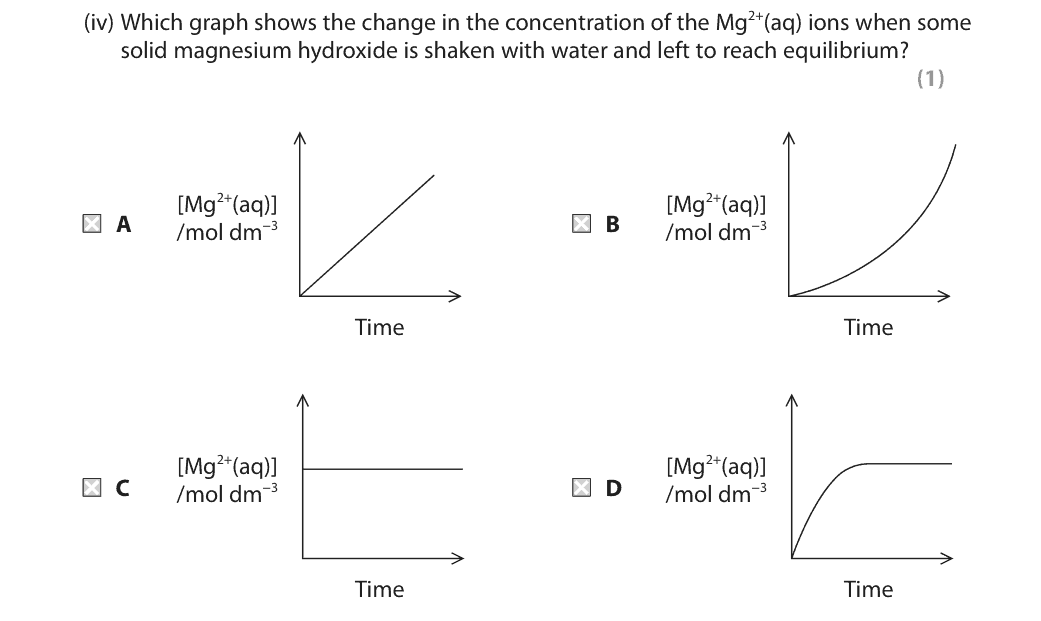
Which graph shows the change in the concentration of the Mg2+(aq) ions when some
solid magnesium hydroxide is shaken with water and left to reach equilibrium?
[Mg2+(aq)]
[Mg2+(aq)]
A
B
/mol dm−3
/mol dm−3
Time
Time
[Mg2+(aq)]
[Mg2+(aq)]
C
D
/mol dm−3
/mol dm−3
Time
Time
June 2018 · Paper 1 · Q6(b)(v) 4 marks Explanation equilibrium i
Earlier parts of question 6 that this part usesEarlier part of June 2018 Paper 1 question 6Earlier part of June 2018 Paper 1 question 6
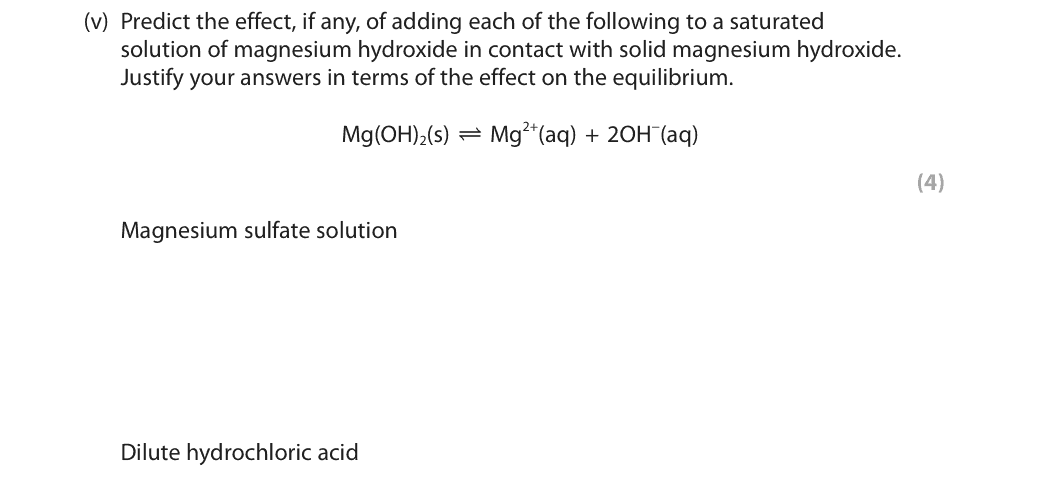
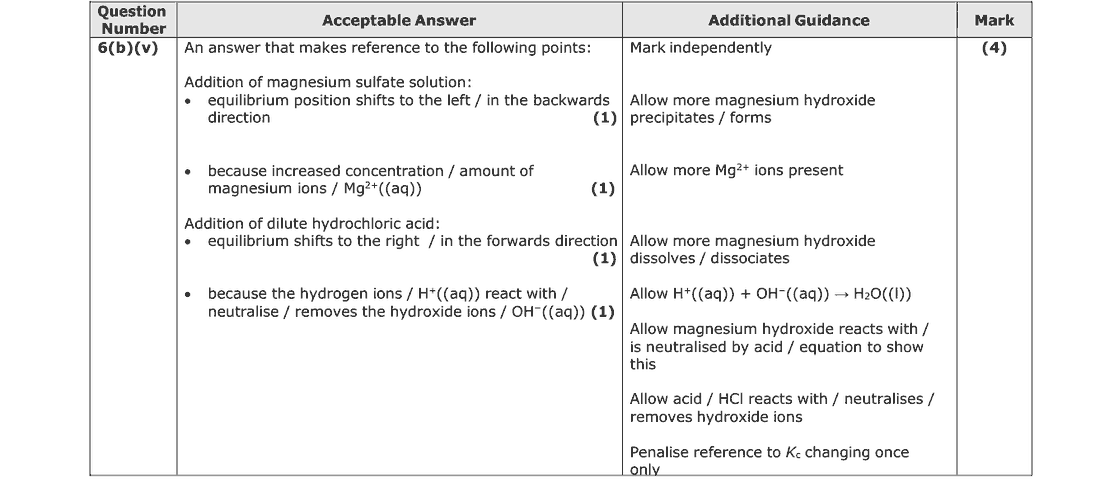
Predict the effect, if any, of adding each of the following to a saturated
solution of magnesium hydroxide in contact with solid magnesium hydroxide.
Justify your answers in terms of the effect on the equilibrium.
 Mg2+(aq) + 2OH−(aq)
Mg(OH)2(s) 
Magnesium sulfate solution
Dilute hydrochloric acid
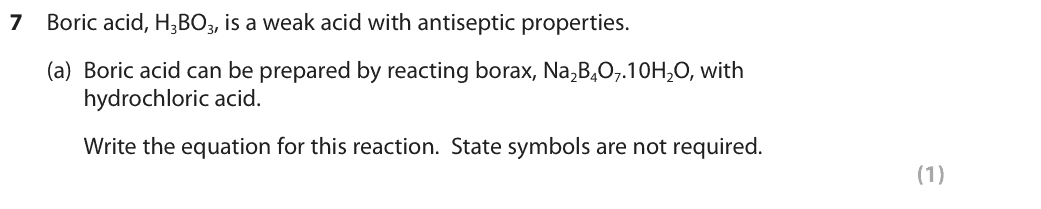
June 2018 · Paper 1 · Q7(a) 1 mark Equation writing formulae equations and amounts of substance
Boric acid, H3BO3, is a weak acid with antiseptic properties.
Boric acid can be prepared by reacting borax, Na2B4O7.10H2O, with
hydrochloric acid.
Write the equation for this reaction.  State symbols are not required.
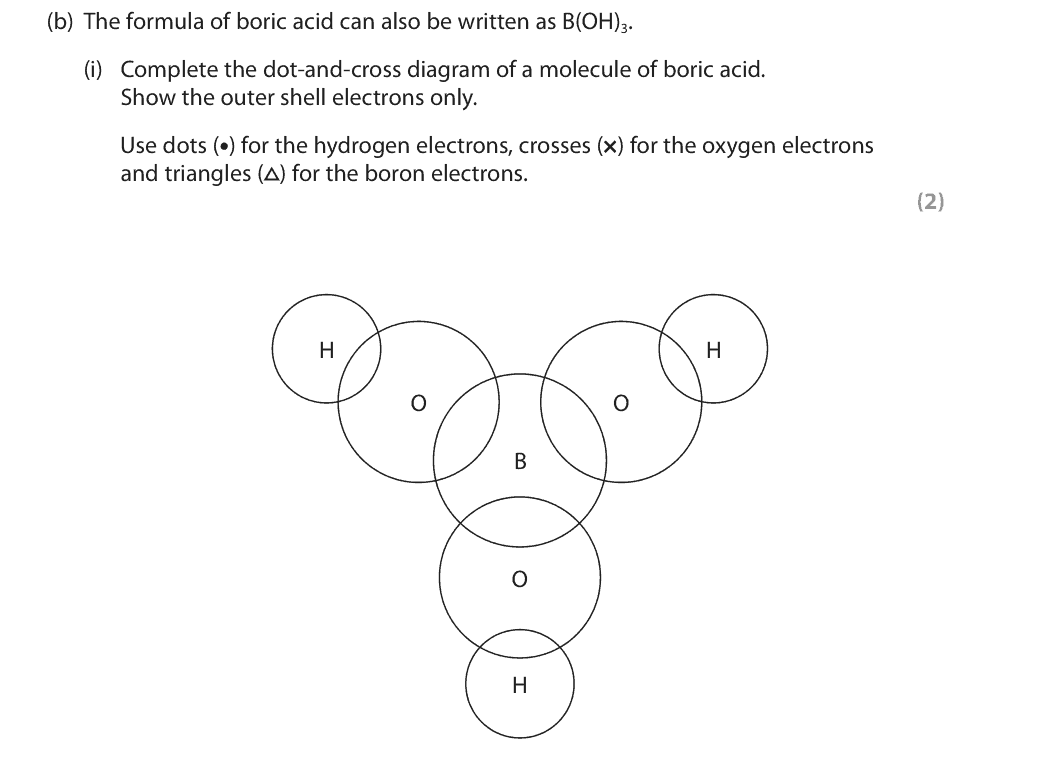
June 2018 · Paper 1 · Q7(b)(i) 2 marks Diagram or structure bonding
Earlier part of question 7 that this part usesEarlier part of June 2018 Paper 1 question 7
The formula of boric acid can also be written as B(OH)3.
Complete the dot-and-cross diagram of a molecule of boric acid.
Show the outer shell electrons only.
Use dots (•) for the hydrogen electrons, crosses (×) for the oxygen electrons
and triangles (  ) for the boron electrons.
H
H
O
O
B
O
H
June 2018 · Paper 1 · Q7(b)(ii) 1 mark Multiple choice bonding
Earlier parts of question 7 that this part usesEarlier part of June 2018 Paper 1 question 7Earlier part of June 2018 Paper 1 question 7
What are the O
B
O and B
O
H bond angles in a molecule of boric acid?
O
B
O bond angle
B
O
H bond angle
A
109.5°
104.5°
B
109.5°
180°
C
120°
104.5°
D
120°
180°
June 2018 · Paper 1 · Q7(c) 1 mark Multiple choice bonding
Earlier part of question 7 that this part usesEarlier part of June 2018 Paper 1 question 7
Boric acid is a solid with melting temperature 171 °C.
What are the strongest interactions between the molecules in solid boric acid?
A  covalent bonds
B  hydrogen bonds
C  ionic bonds
D  London forces
June 2018 · Paper 1 · Q7(d)(i) 3 marks Calculation acid base equilibria
Earlier part of question 7 that this part usesEarlier part of June 2018 Paper 1 question 7
In aqueous solution, boric acid dissociates into ions in three stages.
The equation for the first dissociation is
 H+(aq) + H2BO3
H3BO3(aq) 
−(aq)
pKa for this dissociation is 9.24
Calculate the pH of a 0.0500 mol dm−3 solution of boric acid from the pKa value
for the first dissociation.
June 2018 · Paper 1 · Q7(d)(ii) 2 marks Short answer acid base equilibria
Earlier part of question 7 that this part usesEarlier part of June 2018 Paper 1 question 7
State any assumptions you made in your calculation in (d)(i).
June 2018 · Paper 1 · Q7(e) 1 mark Multiple choice acid base equilibria
Boric acid can undergo further dissociation.
Which is the conjugate acid of the HBO3
2− ion?
A  BO3
3−
B  H2BO3
−
C  H3BO3
D  H3O+
June 2018 · Paper 1 · Q8(a)(i) 2 marks Short answer atomic structure and the periodic table
This question is about ions and ionic compounds.
The first three ionisation energies of calcium are shown in the table.
First ionisation
Second ionisation
Third ionisation
Ionisation energy
590
1145
4912
/ kJ mol−1
Orbital
Complete the table by identifying the specific orbital from which each
electron is removed.
June 2018 · Paper 1 · Q8(a)(ii) 1 mark Equation writing Easy atomic structure and the periodic table
Earlier part of question 8 that this part usesEarlier part of June 2018 Paper 1 question 8
Write the equation for the third ionisation energy of calcium.
Include state symbols.
June 2018 · Paper 1 · Q8(a)(iii) 2 marks Explanation atomic structure and the periodic table
Earlier part of question 8 that this part usesEarlier part of June 2018 Paper 1 question 8
Explain why the difference between the second and third ionisation energies
of calcium is much larger than the difference between the first and second
ionisation energies.
June 2018 · Paper 1 · Q8(b) 1 mark Multiple choice lattice energy
Earlier part of question 8 that this part usesEarlier part of June 2018 Paper 1 question 8
The diagram, which is not drawn to scale, shows the Born-Haber cycle for
lithium fluoride.  The energy changes are given in kJ mol−1.
Li+(g) + F(g) + e−
+79
Y
Li+(g) + ½F2(g) + e−
+520
Li+(g) + F−(g)
Li(g) + ½F2(g)
+159
Li(s) + ½F2(g)
−1031
−616
LiF(s)
What is the value for Y, in kJ mol−1?
A  −273
B  −343
C  −432
D  −889
June 2018 · Paper 1 · Q8(c) 6 marks 6-mark extended response lattice energy
Earlier part of question 8 that this part usesEarlier part of June 2018 Paper 1 question 8
The table shows the theoretical and experimental lattice energy values of two compounds.
Theoretical lattice energy
Experimental lattice energy
Compound
/ kJ mol−1
/ kJ mol−1
lithium chloride, LiCl
−845
−848
magnesium iodide, MgI2
−1944
−2327
Comment on the theoretical and experimental lattice energy values, giving the
reasons for any differences and similarities.
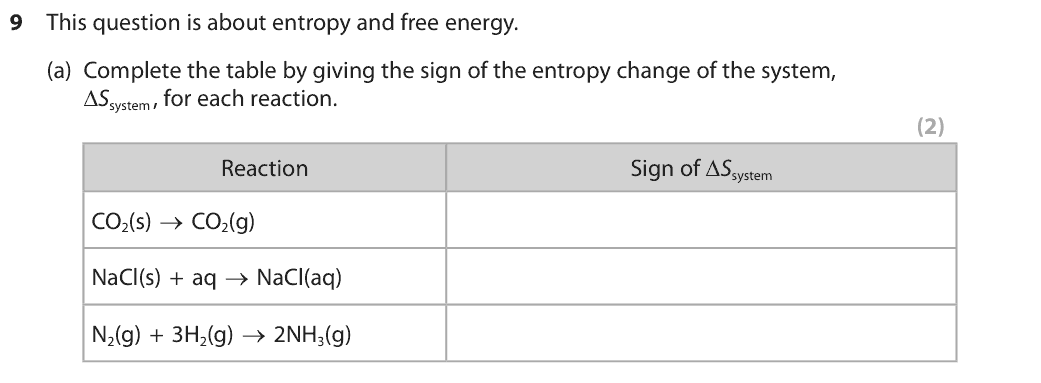
June 2018 · Paper 1 · Q9(a) 2 marks Short answer entropy
This question is about entropy and free energy.
Complete the table by giving the sign of the entropy change of the system,
∆Ssystem , for each reaction.
Reaction
Sign of ∆Ssystem
CO2(s) → CO2(g)
NaCl(s) + aq → NaCl(aq)
N2(g) + 3H2(g) → 2NH3(g)
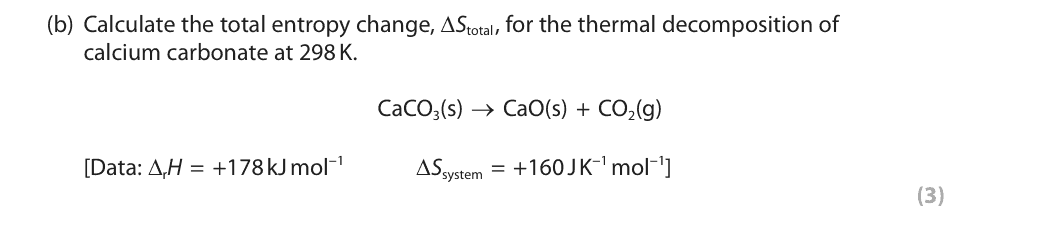
June 2018 · Paper 1 · Q9(b) 3 marks Calculation Easy entropy
Earlier part of question 9 that this part usesEarlier part of June 2018 Paper 1 question 9
Calculate the total entropy change, ∆Stotal, for the thermal decomposition of
calcium carbonate at 298 K.
CaCO3(s) → CaO(s) + CO2(g)
[Data: ∆rH = +178 kJ mol−1            ∆Ssystem = +160 J K−1 mol−1]
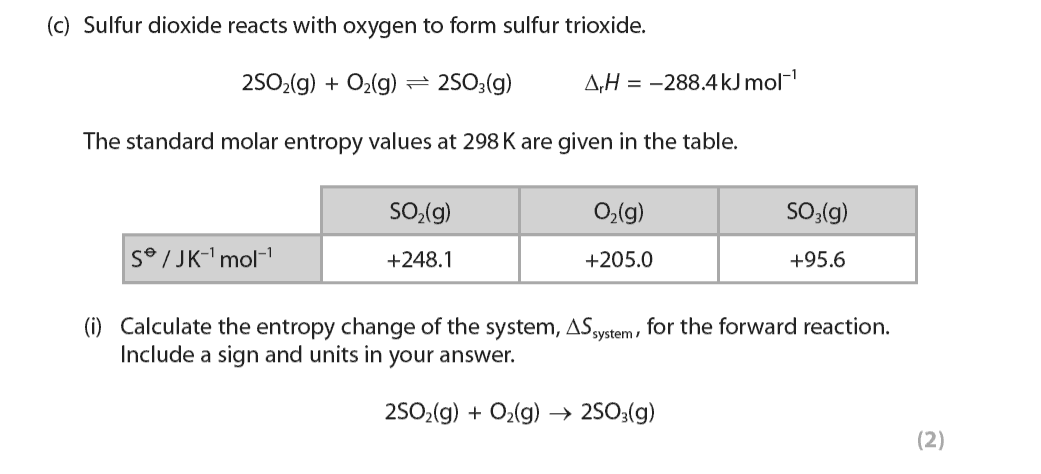
June 2018 · Paper 1 · Q9(c)(i) 2 marks Calculation entropy
Earlier part of question 9 that this part usesEarlier part of June 2018 Paper 1 question 9
Sulfur dioxide reacts with oxygen to form sulfur trioxide.
2S0,(g) + O.(g) = 2S0;(g)
A,H = —288.4kJ mol"'
The standard molar entropy values at 298 K are given in the table.
S*/ JK" mol"
+248.1
+205.0
Calculate the entropy change of the system, AS.\stem, for the forward reaction.
Include a sign and units in your answer.
2S0,(g) + O2(g) > 2S0,(g)
June 2018 · Paper 1 · Q9(c)(ii) 3 marks Calculation entropy
Earlier parts of question 9 that this part usesEarlier part of June 2018 Paper 1 question 9Earlier part of June 2018 Paper 1 question 9
Calculate the free energy change, AG, at 298 K and hence deduce whether the
reaction is feasible.
June 2018 · Paper 1 · Q9(c)(iii) 3 marks Calculation entropy
Earlier parts of question 9 that this part usesEarlier part of June 2018 Paper 1 question 9Earlier part of June 2018 Paper 1 question 9
In industry, the reaction is carried out at about 700 K using a
vanadium(V) oxide catalyst.
Calculate the value of the equilibrium constant, K, at 700 K.
∆G at 700 K is –60 kJ mol−1
June 2018 · Paper 1 · Q9(c)(iv) 2 marks Explanation equilibrium i
Earlier part of question 9 that this part usesEarlier part of June 2018 Paper 1 question 9
The equilibrium constant has a larger value at 298 K than at 700 K.
Explain why the reaction is carried out at 700 K and not at 298 K.
June 2018 · Paper 1 · Q10(a) 1 mark Equation writing redox i
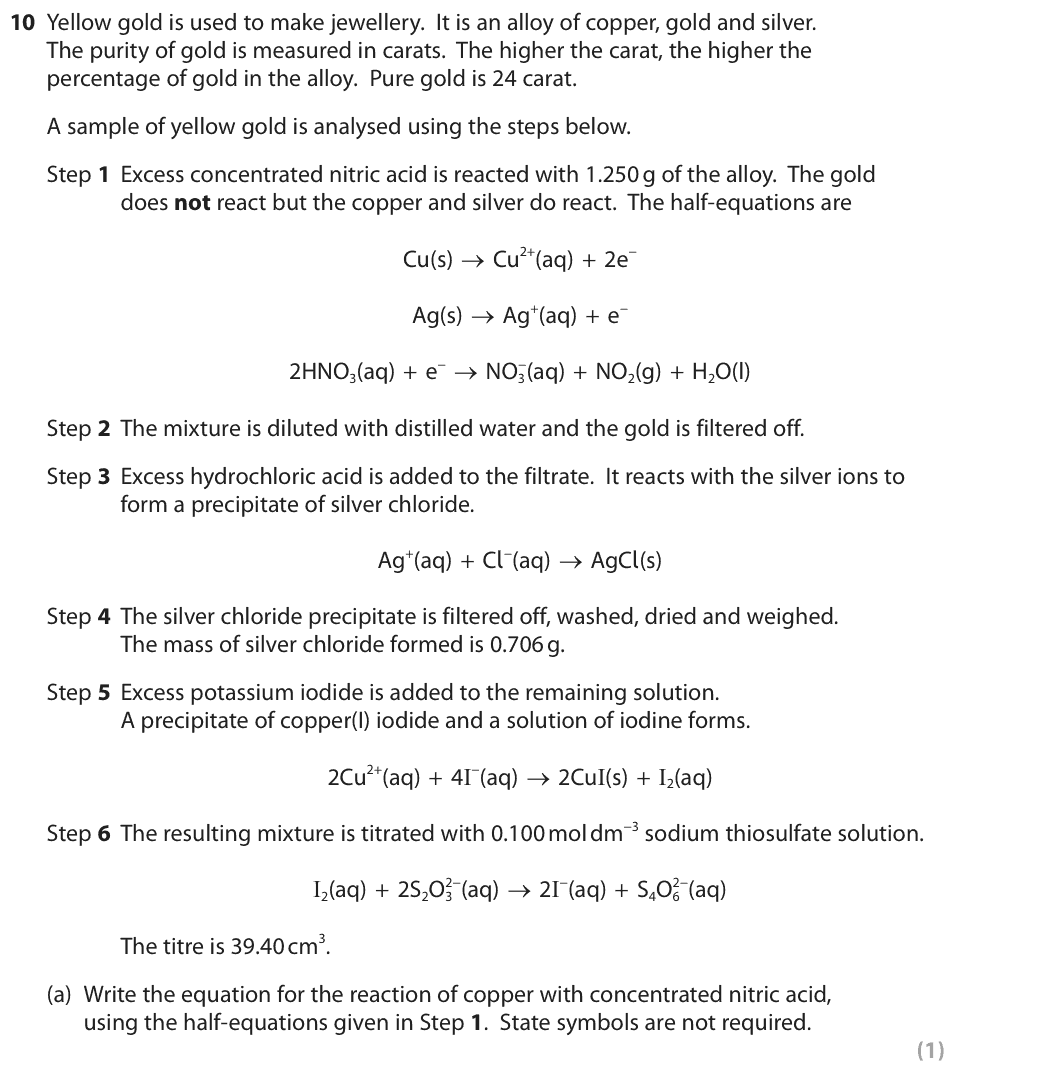
Yellow gold is used to make jewellery.  It is an alloy of copper, gold and silver.
The purity of gold is measured in carats.  The higher the carat, the higher the
percentage of gold in the alloy.  Pure gold is 24 carat.
A sample of yellow gold is analysed using the steps below.
Step 1  Excess concentrated nitric acid is reacted with 1.250 g of the alloy.  The gold
does not react but the copper and silver do react.  The half-equations are
Cu(s) → Cu2+(aq) + 2e−
Ag(s) → Ag+(aq) + e−
2HNO3(aq) + e− → NO3
−(aq) + NO2(g) + H2O(l)
Step 2  The mixture is diluted with distilled water and the gold is filtered off.
Step 3  Excess hydrochloric acid is added to the filtrate.  It reacts with the silver ions to
form a precipitate of silver chloride.
Ag+(aq) + Cl−(aq) → AgCl(s)
Step 4  The silver chloride precipitate is filtered off, washed, dried and weighed.
The mass of silver chloride formed is 0.706 g.
Step 5  Excess potassium iodide is added to the remaining solution.
A precipitate of copper(I) iodide and a solution of iodine forms.
2Cu2+(aq) + 4I−(aq) → 2CuI(s) + I2(aq)
Step 6  The resulting mixture is titrated with 0.100 mol dm−3 sodium thiosulfate solution.
I2(aq) + 2S2O3
2−(aq) → 2I−(aq) + S4O6
2−(aq)
The titre is 39.40 cm3.
Write the equation for the reaction of copper with concentrated nitric acid,
using the half-equations given in Step 1.  State symbols are not required.
June 2018 · Paper 1 · Q10(b) 2 marks Practical and data analysis redox ii
Earlier part of question 10 that this part usesEarlier part of June 2018 Paper 1 question 10
State the indicator used and its colour change at the end-point in the titration
in Step 6.
June 2018 · Paper 1 · Q10(c) 6 marks Calculation redox iiformulae equations and amounts of substance
Earlier part of question 10 that this part usesEarlier part of June 2018 Paper 1 question 10
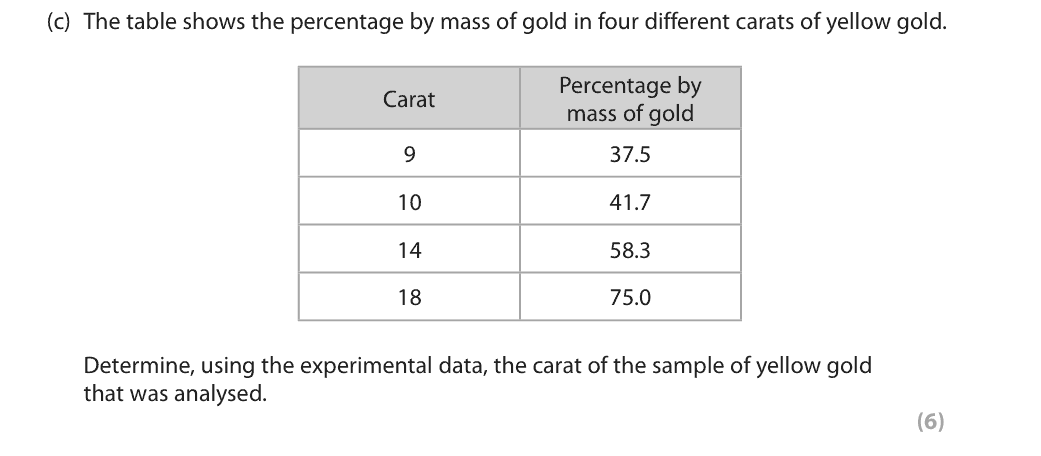
The table shows the percentage by mass of gold in four different carats of yellow gold.
Percentage by
Carat
mass of gold
9
37.5
10
41.7
14
58.3
18
75.0
Determine, using the experimental data, the carat of the sample of yellow gold
that was analysed.

Work with an A-level chemistry tutor

Want a paper marked and gone through with you? Message us.

Prefer email? Send an enquiry

If you are under 18, please include a parent's contact details. Enquiries go to enquiries@chemistryaleveltutor.com and are deleted once handled. All tutoring is online.