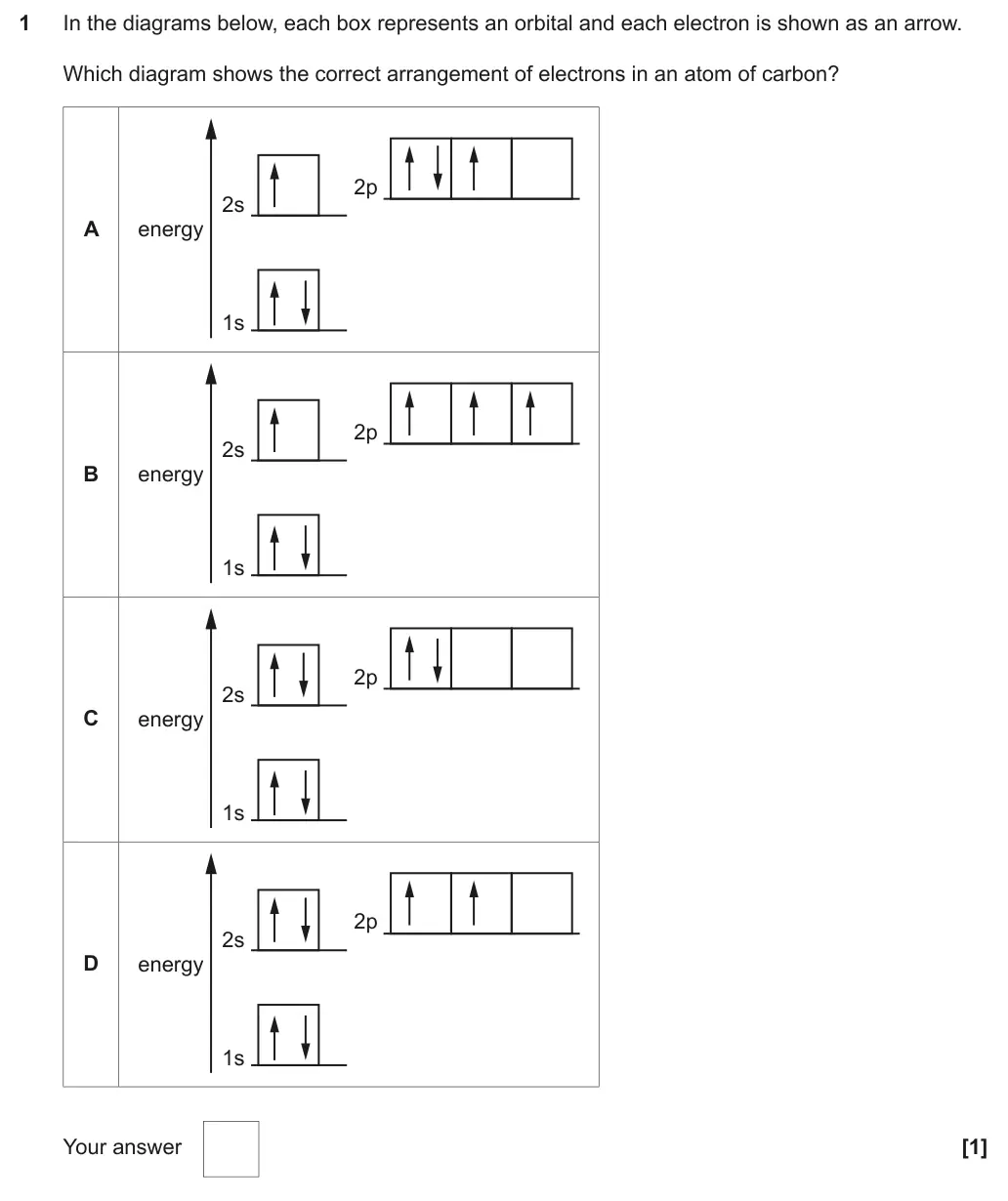
Answer
D
Mark scheme

100 marks · 53 question parts · Paper, mark scheme and report on OCR's site · Have OCR's Data Sheet beside you
D
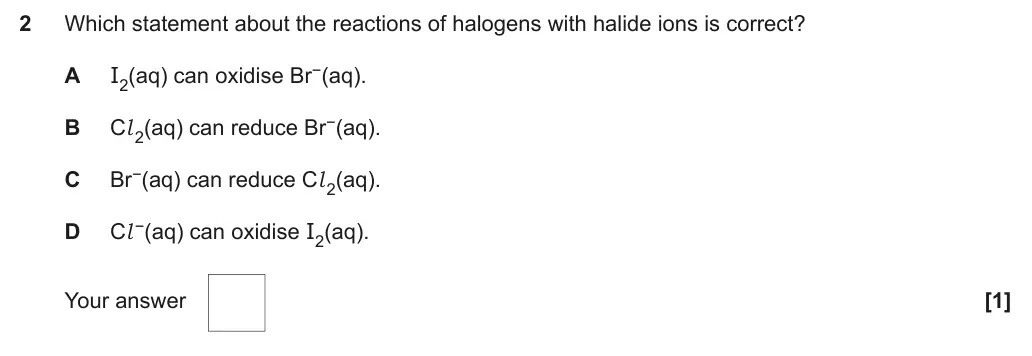
C
This question proved to be difficult, with only the most able candidates selecting the correct answer of C. Many candidates confused the trends in oxidising power of the halogens with trends in the reducing power of the halide ions. Down the group, the oxidising power of the halogens decreases but the reducing power of the halide ions increases. Option A is incorrect because iodine is a weaker oxidising agent than bromine, option B (the most common incorrect answer) is incorrect because chlorine is not a reducing agent (it’s an oxidising agent) and option D is incorrect because the chloride ion is not an oxidising agent (it’s a reducing agent).
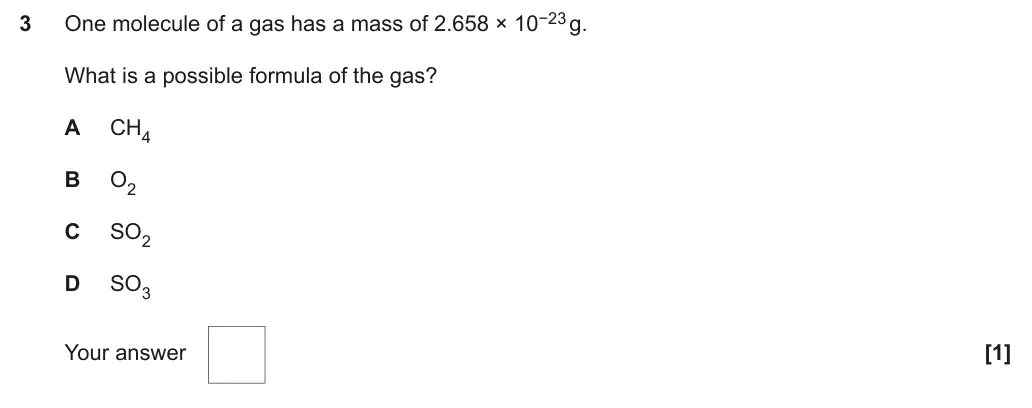
A
This question was quite well answered with many candidates calculating the Mr by multiplying the mass by Avogadro’s number. This gave the answer as 16, which matches the Mr of CH4, giving A as the correct answer. Option B provided a distractor as oxygen atoms have a relative mass of 16 whereas option B relates to O2 molecules with a relative mass of 32. Some candidates got part way through the calculation and then appeared to choose an answer at random.
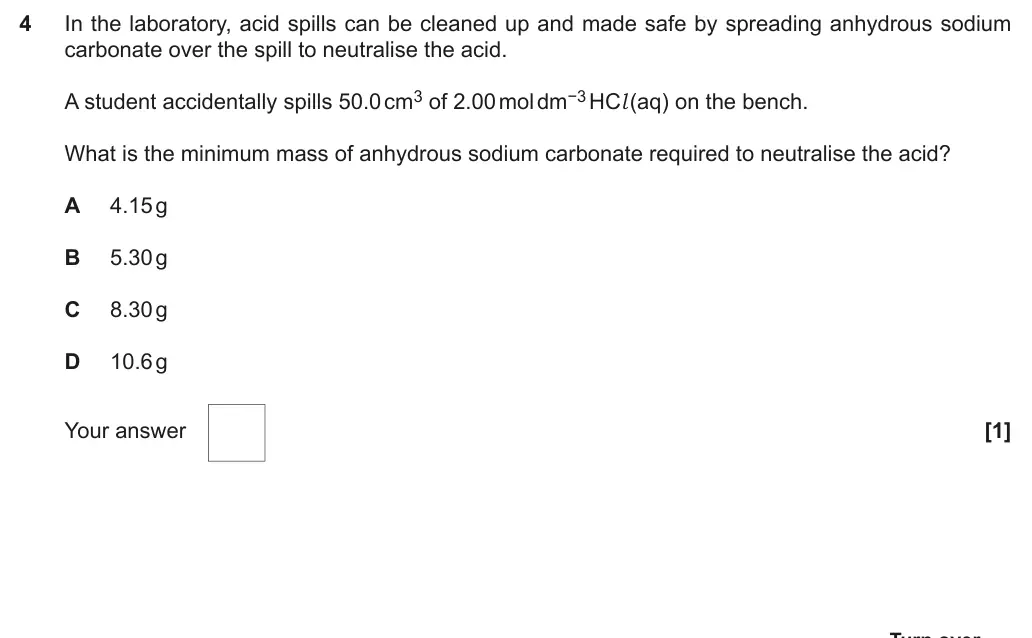
B
This was a challenging question, the correct answer being B. Candidates had to know the correct formula for sodium carbonate in order to deduce the 2:1 molar ratio of HCl to Na2CO3 and to calculate its Mr (106). Option D was arrived at by assuming the molar ratio was 1:1, option A by incorrectly thinking the formula was NaCO3 , and option C by making both of these mistakes.
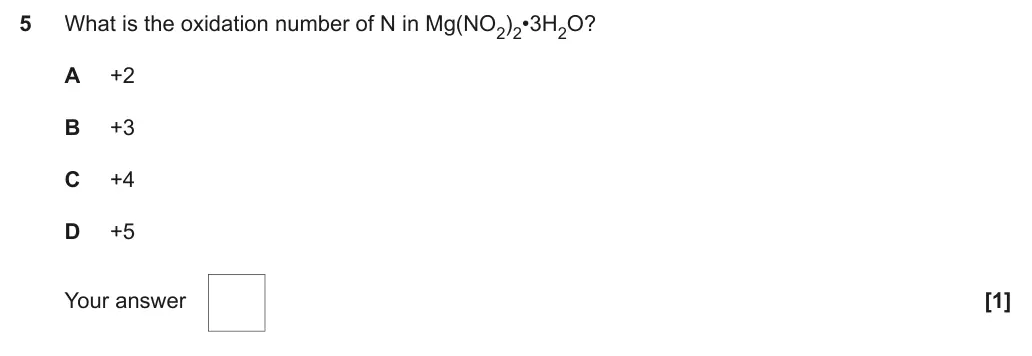
B
The correct answer B required candidates to assign correct oxidation numbers to Mg and O. The most common error was option A (+2), obtained by candidates thinking that O has an oxidation number of -1
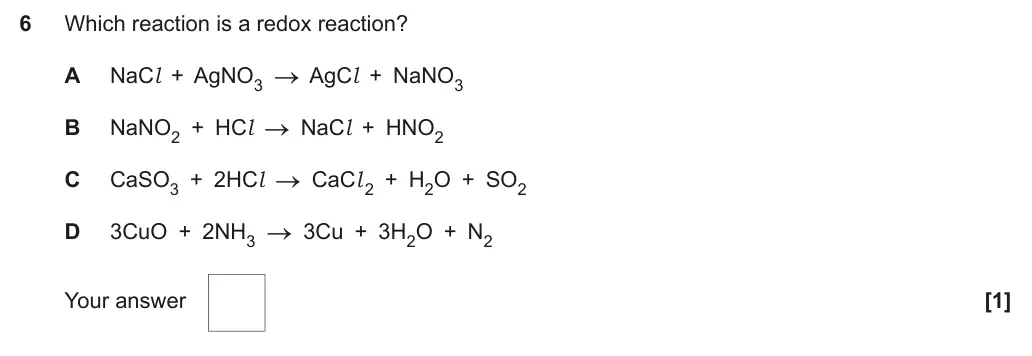
D
This was generally well answered. The key to candidates quickly arriving at the correct answer (D) was to focus on the first compound in each equation. Good candidates could see clearly that the CuO in option D had been reduced to Cu. Some candidates lost time here by working out oxidation numbers for all the elements in all the equations.
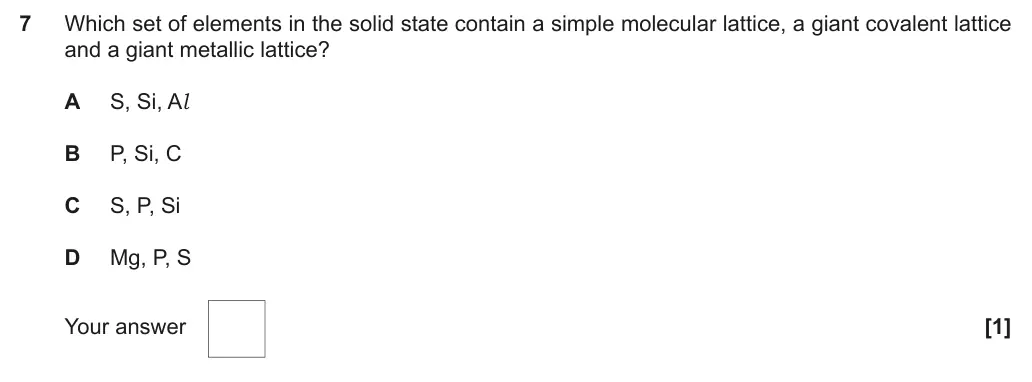
A
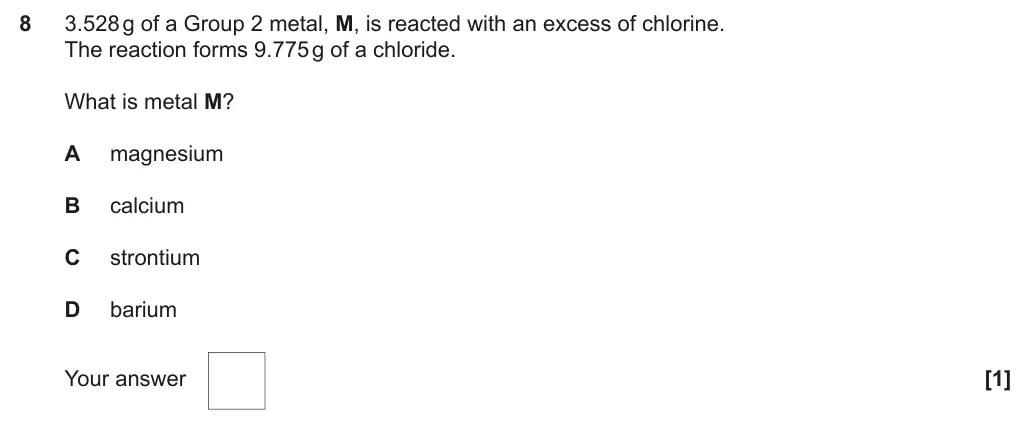
B
This question was quite well answered with many candidates realising that the formula of the metal chloride was MCl2. The most reliable way of tackling the calculation was to calculate the mass of chlorine which reacted (the difference between the two given masses), working out the number of moles of chlorine and then calculating the Ar of the metal. This led them to identify the metal as calcium (option B). Some candidates took the long route by taking each option in turn, working out the number of moles and seeing which value matched the moles of chlorine. Candidates who chose incorrect answers could not complete all the calculation steps and appeared to choose one at random.
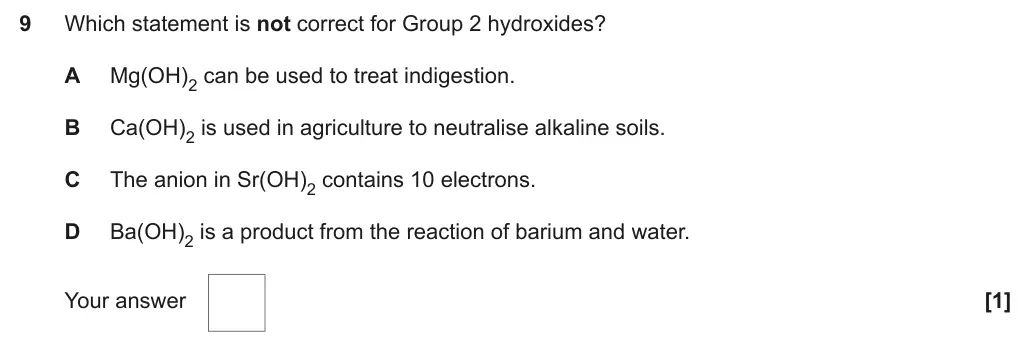
B
This question was not well answered, with many candidates giving option C rather than the correct answer of B. Many candidates mis-read option B as acidic soil rather than alkaline soil, so thought that option B was correct, whereas in fact it was the only incorrect statement. Many candidates opted for option C, not realising the anion is OH– which does have 10 electrons.
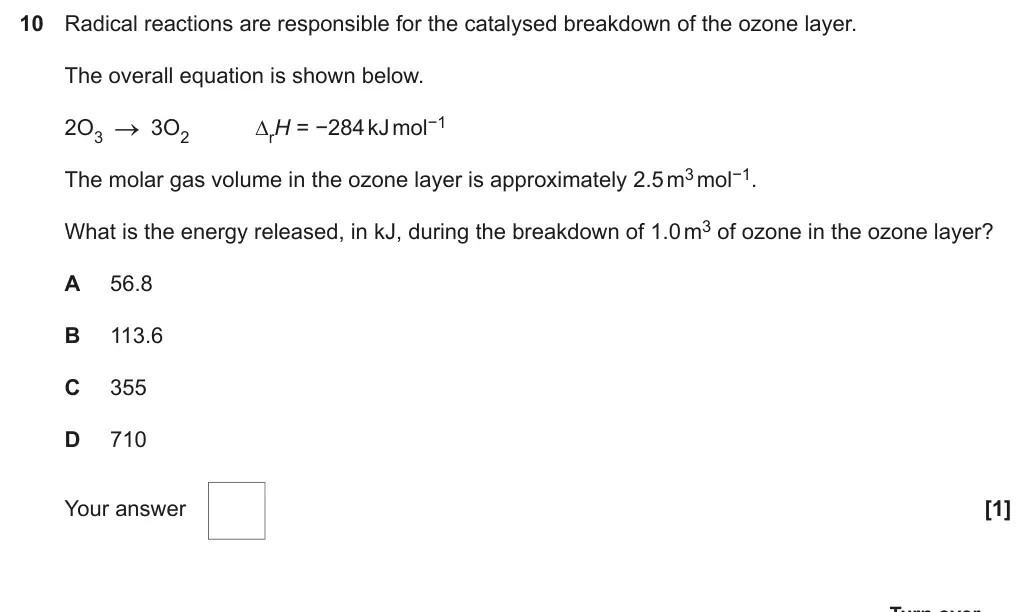
A
This was another challenging question, with only the most able candidates choosing the correct answer of A. Candidates had to calculate the number of moles of O3 (by dividing 1.0 by 2.5) and then had to use the information in the equation (that 2 moles of O3 releases 284 kJ). The most common error was option B, presumably because candidates thought that 1 mole of O3 releases 284 kJ (rather than 2 moles). Candidates should be aware that a given enthalpy change relates to the molar quantities as shown in the equation.
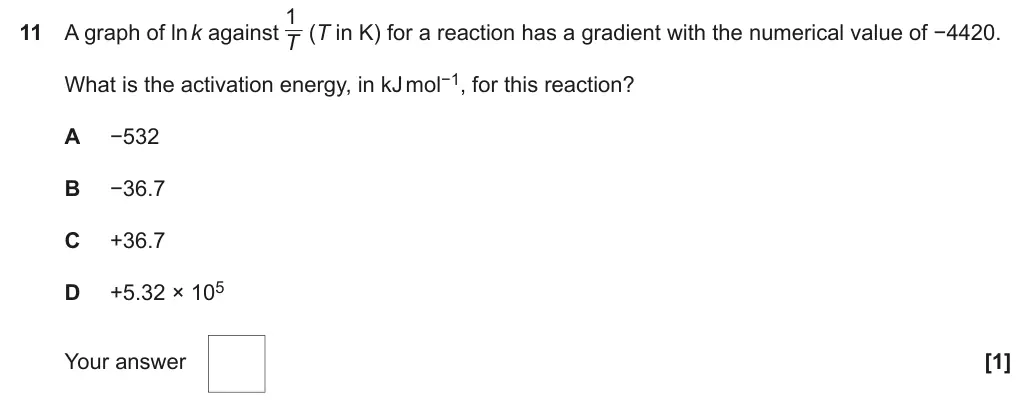
C
This was well answered, with many candidates understanding that the activation energy in kJmol–1 is equal to (- gradient x R ) divided by 1000, leading to C as the correct answer. Common errors included dividing the gradient by R, giving option A. or forgetting the minus sign and opting for B.
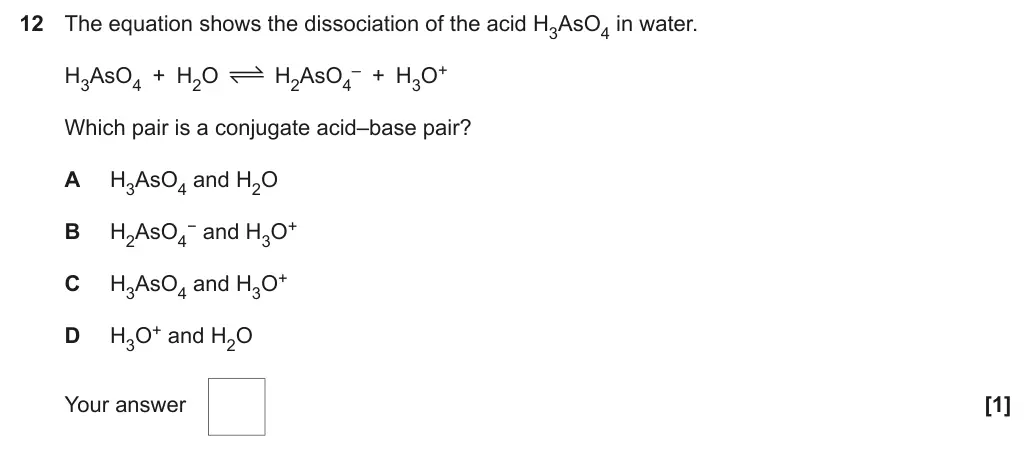
D
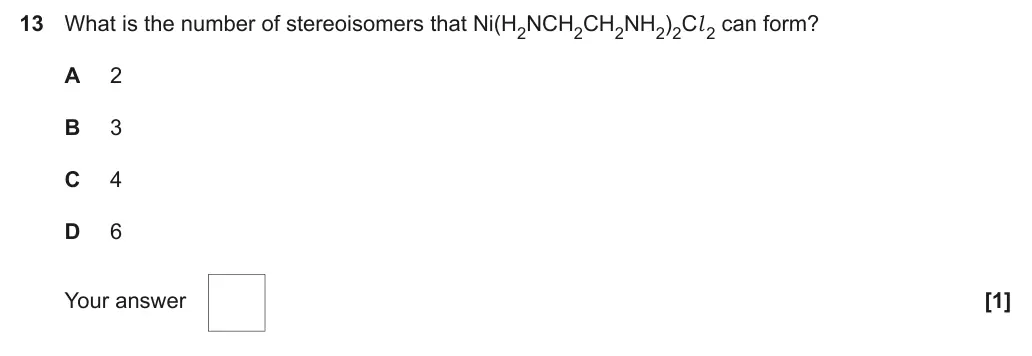
B
This was a challenging question, with only the most able candidates giving the correct response of B (one trans isomer and two optical cis isomers). Many candidates drew out the shapes of the isomers but some missed the two optical cis isomers (giving option A) while others thought there were two cis and two trans optical isomers, giving option C.
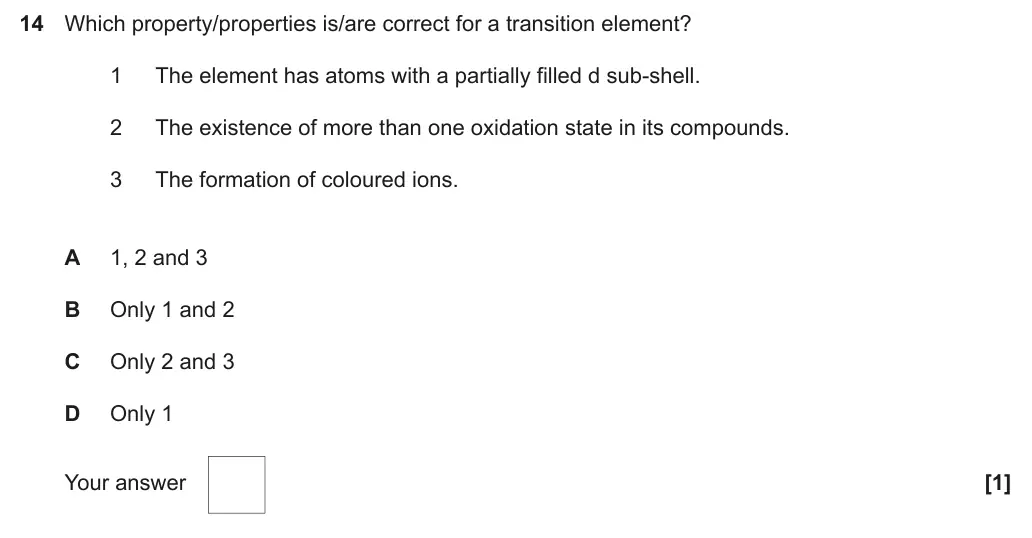
C
Only the highest attaining candidates chose the correct answer of C. Many candidates thought all 3 statements were correct (giving option A as their answer), not realising that statement 1 referred to atoms not ions
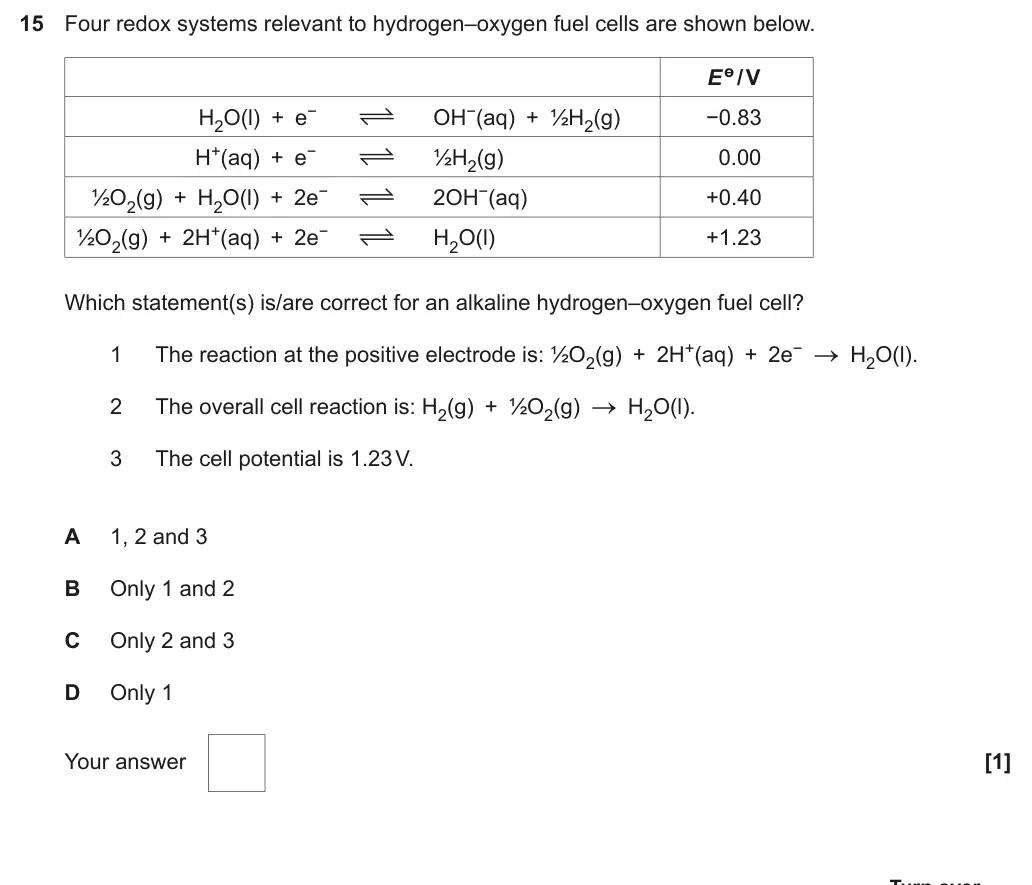
C
Only the higher attaining candidates opted for the correct answer of C. Many candidates thought statement 1 was correct, (giving option A as the answer), not realising that this equation refers to acidic conditions not alkaline conditions (as mentioned in the question). Others did not recognise that the cell potential was 1.23V (obtained by calculating the difference between +0.40 and –0.83), and so opted for option B. Section B overview
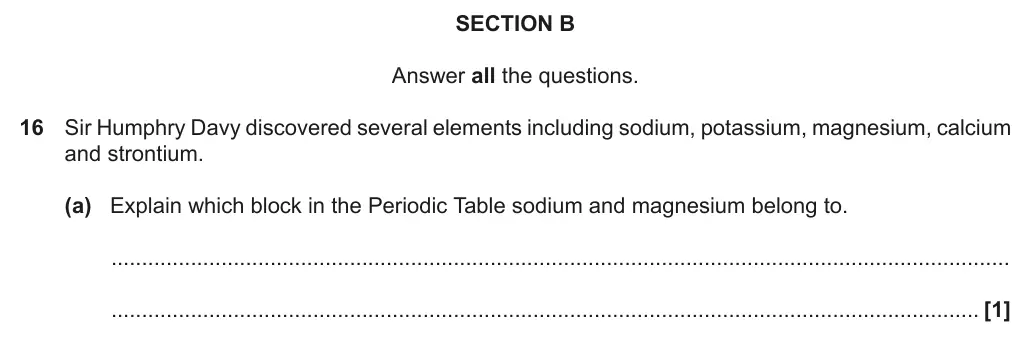
Many candidates knew the block magnesium belonged but only very few could explain this was because magnesium’s highest energy electron was in a s sub-shell or s orbital.
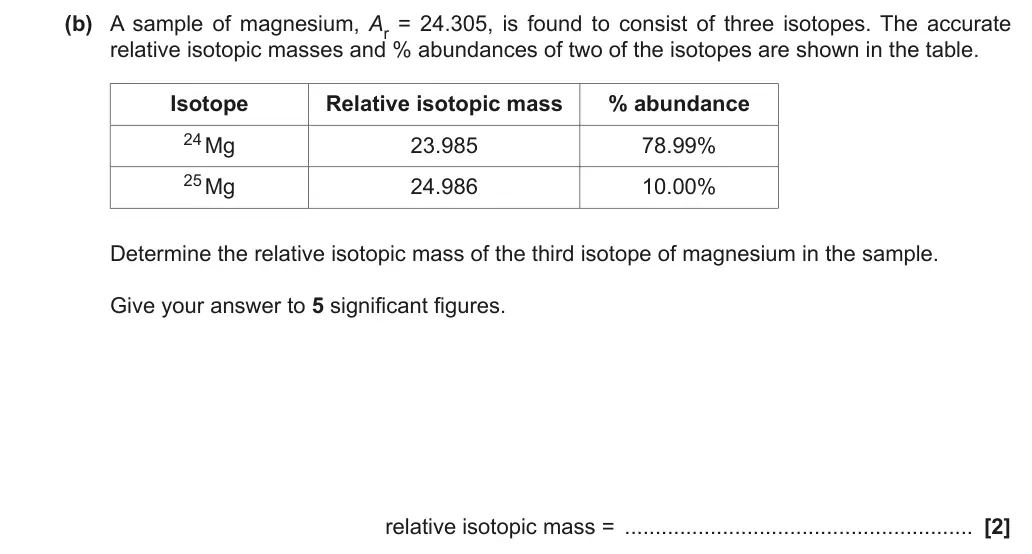
This was mathematically challenging, but candidates who did not arrive at the correct answer were able to get partial credit for showing working.
Skills: M0.2 Use ratios, fractions and percentages; M1.1 Use an appropriate number of significant figures; M2.2 Change the subject of an equation; M2.4 Solve algebraic equations
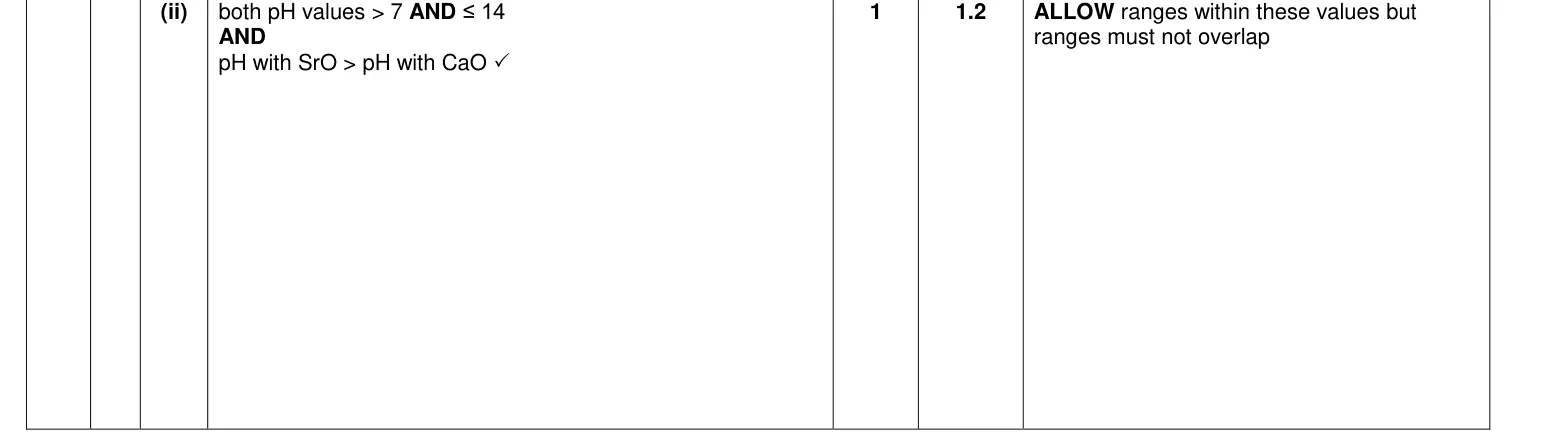
A LEVEL CHEMISTRY A Examiners’ report H432/01 Summer 2019 series Version 1 H432 For first teaching in 2015 www.ocr.org.uk/science Contents Introduction .............................................................................................................................................. 4 Paper 1 series overview ........................................................................................................................... 5 Section A overview ................................................................................................................................... 6 Question 2 ............................................................................................................................................ 6 Question 3 ............................................................................................................................................ 6 Question 4 ............................................................................................................................................ 7 Question 5 ............................................................................................................................................ 7 Question 6 ............................................................................................................................................ 8 Question 8 ............................................................................................................................................ 8 Question 9 ............................................................................................................................................ 9 Question 10 .......................................................................................................................................... 9 Question 11 ........................................................................................................................................ 10 Question 13 ........................................................................................................................................ 10 Question 14 ........................................................................................................................................ 11 Question 15 ........................................................................................................................................ 11 Section B overview ................................................................................................................................. 12 Question 16 (a) ................................................................................................................................... 12 Question 16 (b) ................................................................................................................................... 12 Question 16 (c) (i) ............................................................................................................................... 12 Question 16 (c) (ii) .............................................................................................................................. 13 Question 16 (d) (i) ............................................................................................................................... 14 Question 16 (d) (ii) .............................................................................................................................. 15 Question 16 (e) (i) ............................................................................................................................... 16 Question 16 (e) (ii) .............................................................................................................................. 16 Question 17 (a) ................................................................................................................................... 17 Question 17 (b) ................................................................................................................................... 19 Question 18 (a) (i) ............................................................................................................................... 20 Question 18 (a) (ii) .............................................................................................................................. 20 Question 18 (a) (iii) ............................................................................................................................. 21 Question 18 (a) (iv) ............................................................................................................................. 22 Question 18 (a) (v) .............................................................................................................................. 22 Question 18 (b) (i) ............................................................................................................................... 22 Question 18 (b) (ii) .............................................................................................................................. 23 Question 18 (c) (i) ............................................................................................................................... 24 Question 18 (c) (ii) .............................................................................................................................. 24 Question 19 (a) (i) ............................................................................................................................... 25 Question 19 (a) (ii) .............................................................................................................................. 25 Question 19 (a) (iii) ............................................................................................................................. 26 Question 19 (b) (i) ............................................................................................................................... 26 Question 19 (b) (ii) .............................................................................................................................. 27 Question 19 (b) (iii) ............................................................................................................................. 27 Question 19 (b) (iv) ............................................................................................................................. 28 Question 19 (c) (i) ............................................................................................................................... 28 Question 19 (c) (ii) .............................................................................................................................. 29 Question 20 (a) ................................................................................................................................... 29 Question 20 (b) (i) ............................................................................................................................... 30 Question 20 (b) (ii) .............................................................................................................................. 30 Question 20 (b) (iii) ............................................................................................................................. 31 Question 20 (b) (iv) ............................................................................................................................. 32 Question 20 (b) (v) .............................................................................................................................. 32 Question 20 (c) ................................................................................................................................... 33 Question 21 ........................................................................................................................................ 34 Introduction Our examiners’ reports are produced to offer constructive feedback on candidates’ performance in the examinations. Question 16 (c) (i) Question 16 (c) (ii) These two sub-questions were well answered.
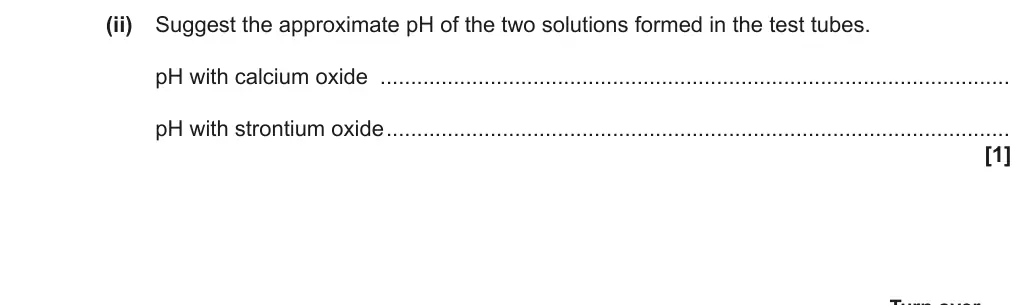
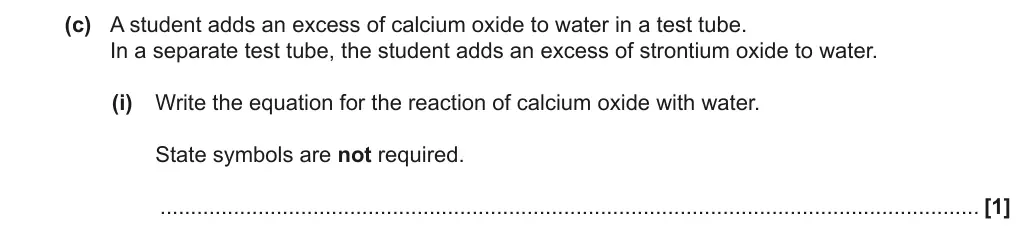
These two sub-questions were well answered.
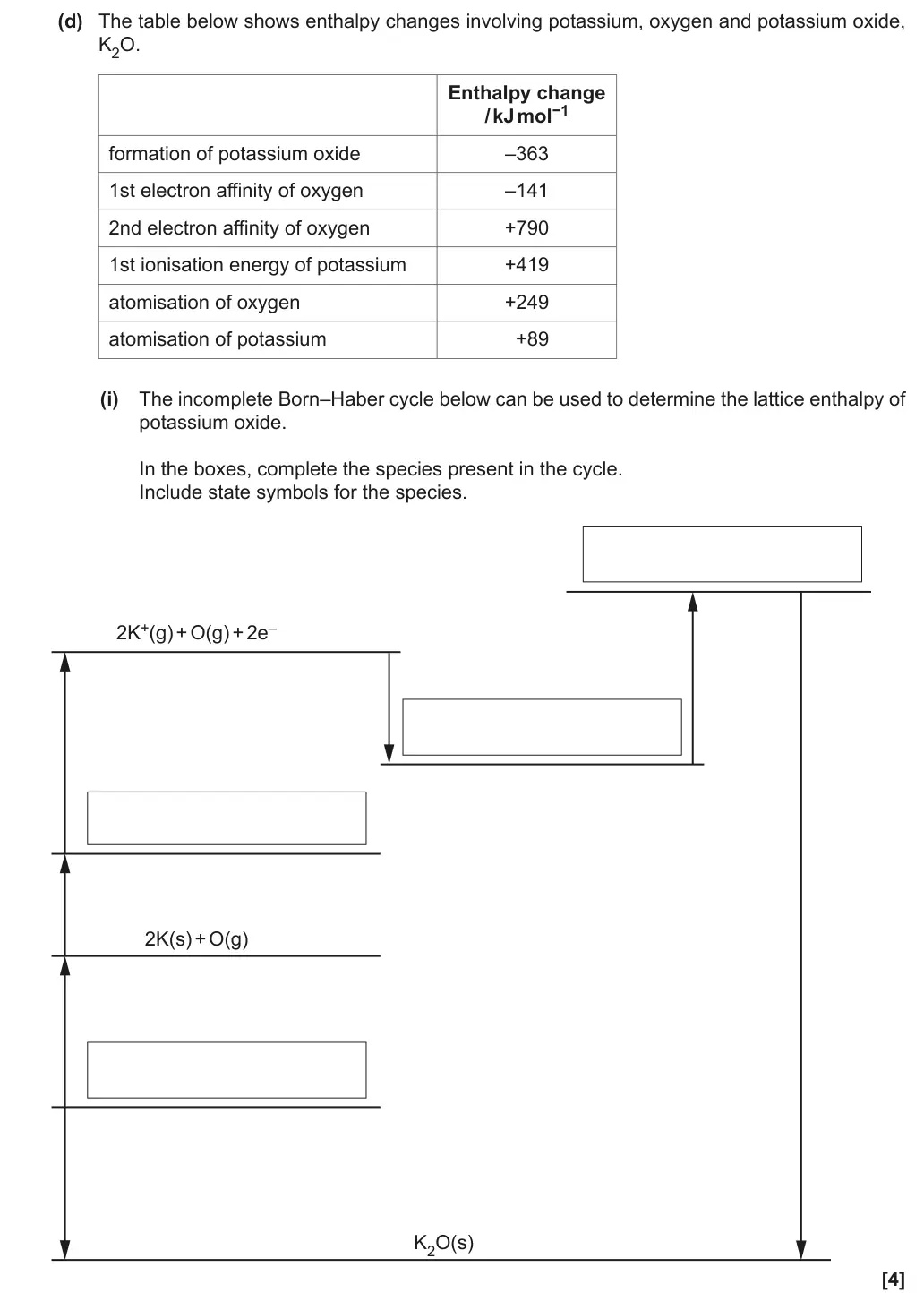
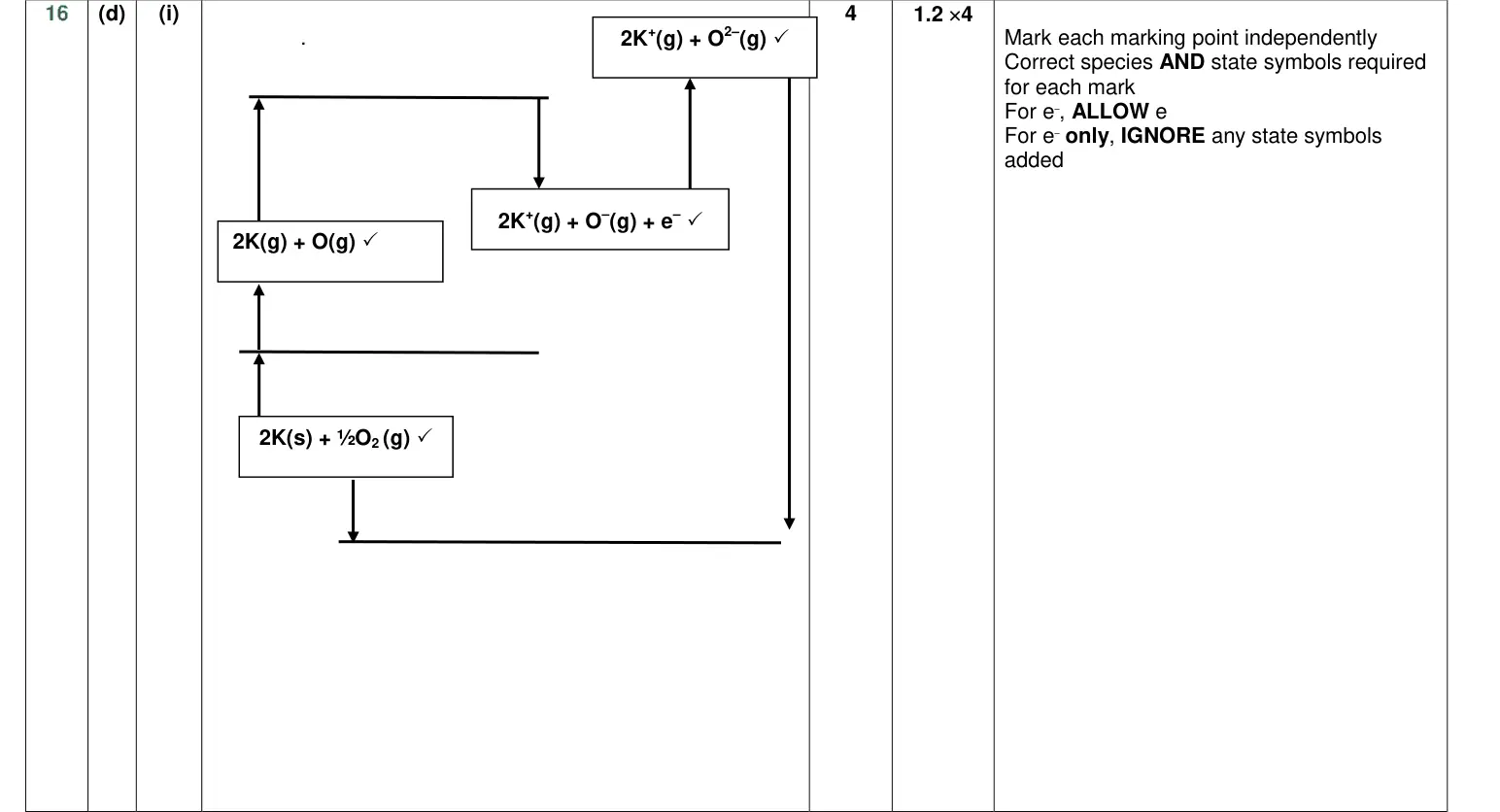
Some candidates wrote illegible state symbols where (g) and (s) were impossible to tell apart. Also, many candidates choose to write state symbols as a very small sub-script e.g. 2K(s) + ½O2(g). The convention is to use lower case letters of normal size e.g. 2K(s) + ½O2(g) In this exemplar it was impossible to tell if K had (s) or (g) as a state symbol. Consequently, no marks could be given.
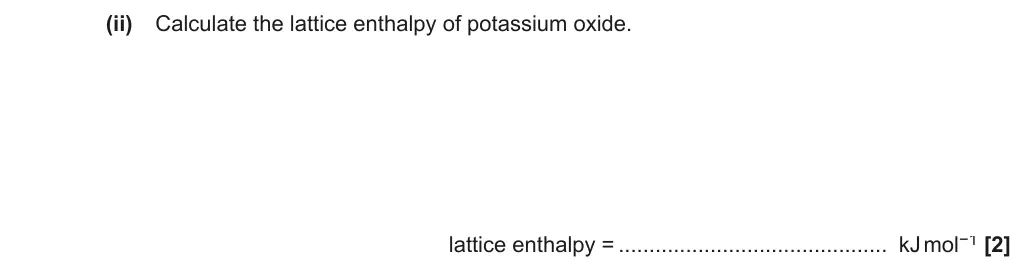
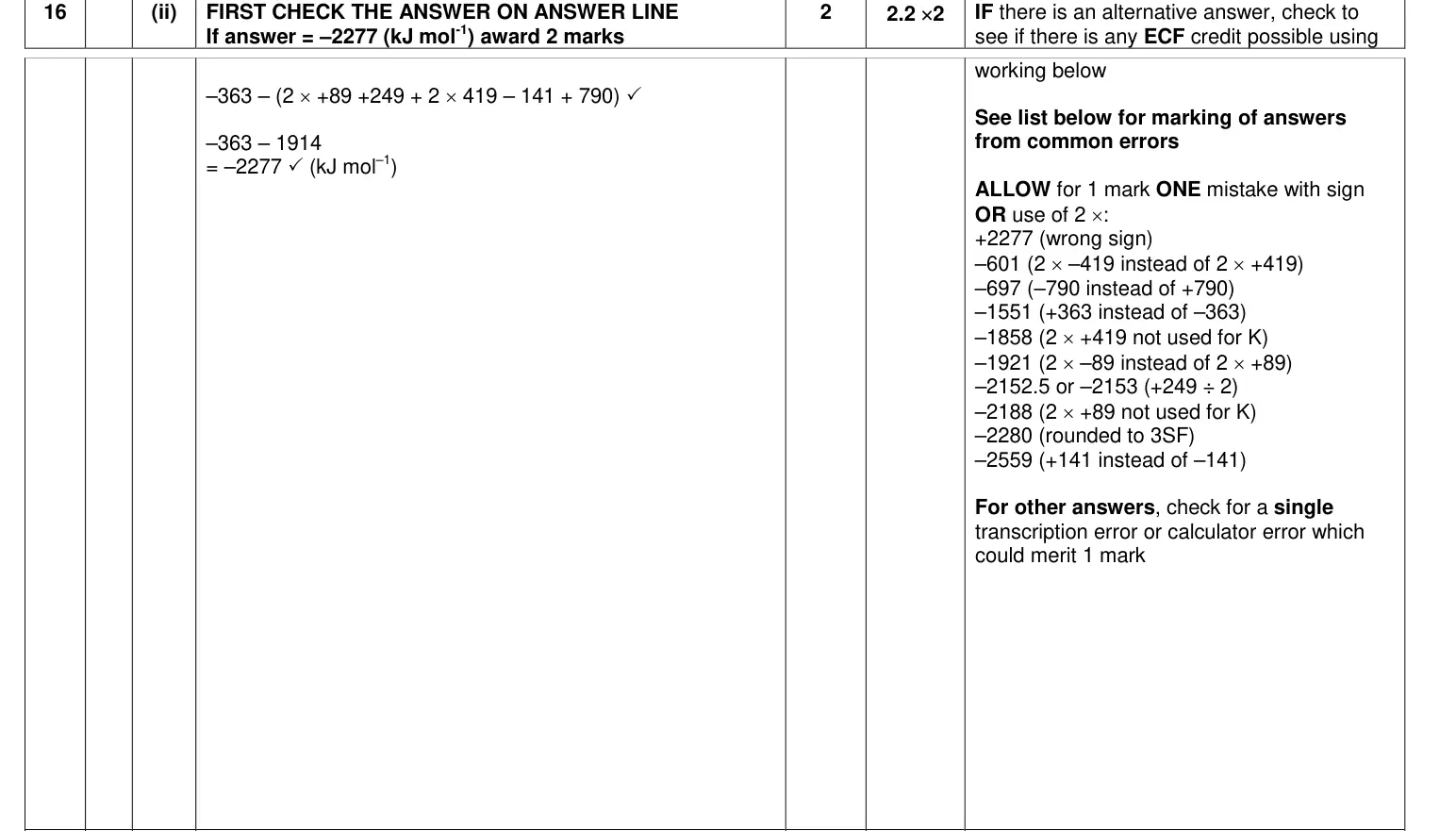
Most candidates scored both marks. Candidates tended to forget the mole ratio of K meant its values should be multiplied by 2 in two places during this calculation.
Skills: M2.2 Change the subject of an equation; M2.3 Substitute numerical values into algebraic equations using appropriate units for physical quantities; M2.4 Solve algebraic equations
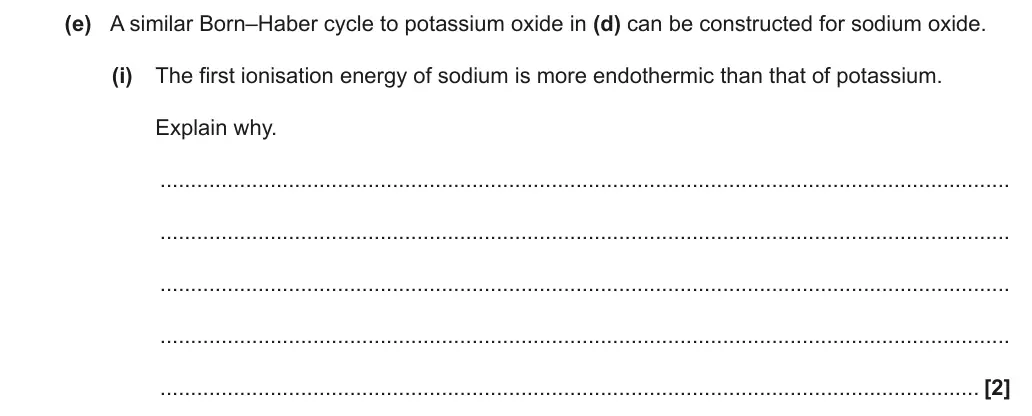
Candidates coped well with this question which was based on the AS part of the specification. Some candidates gave vague and unnecessarily long responses to this question.
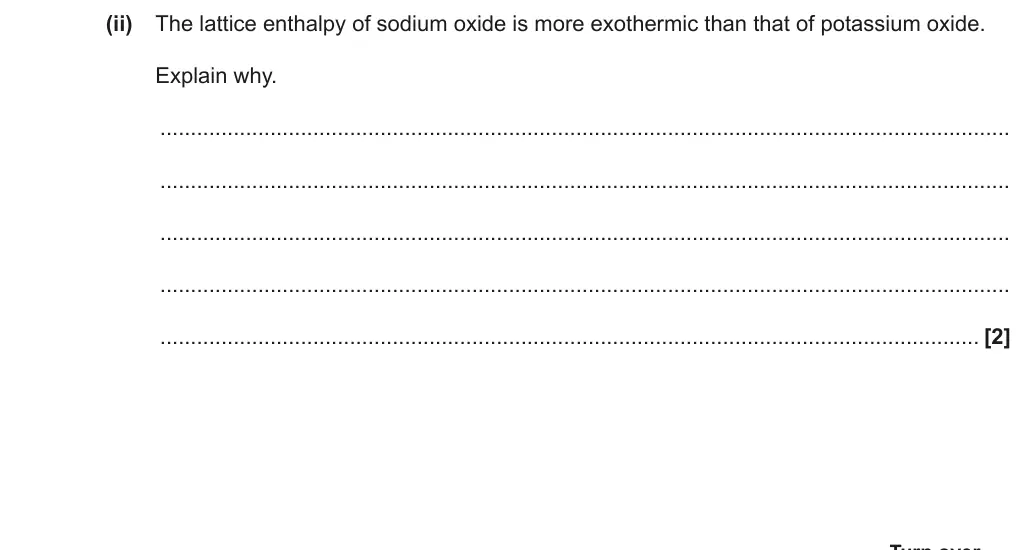
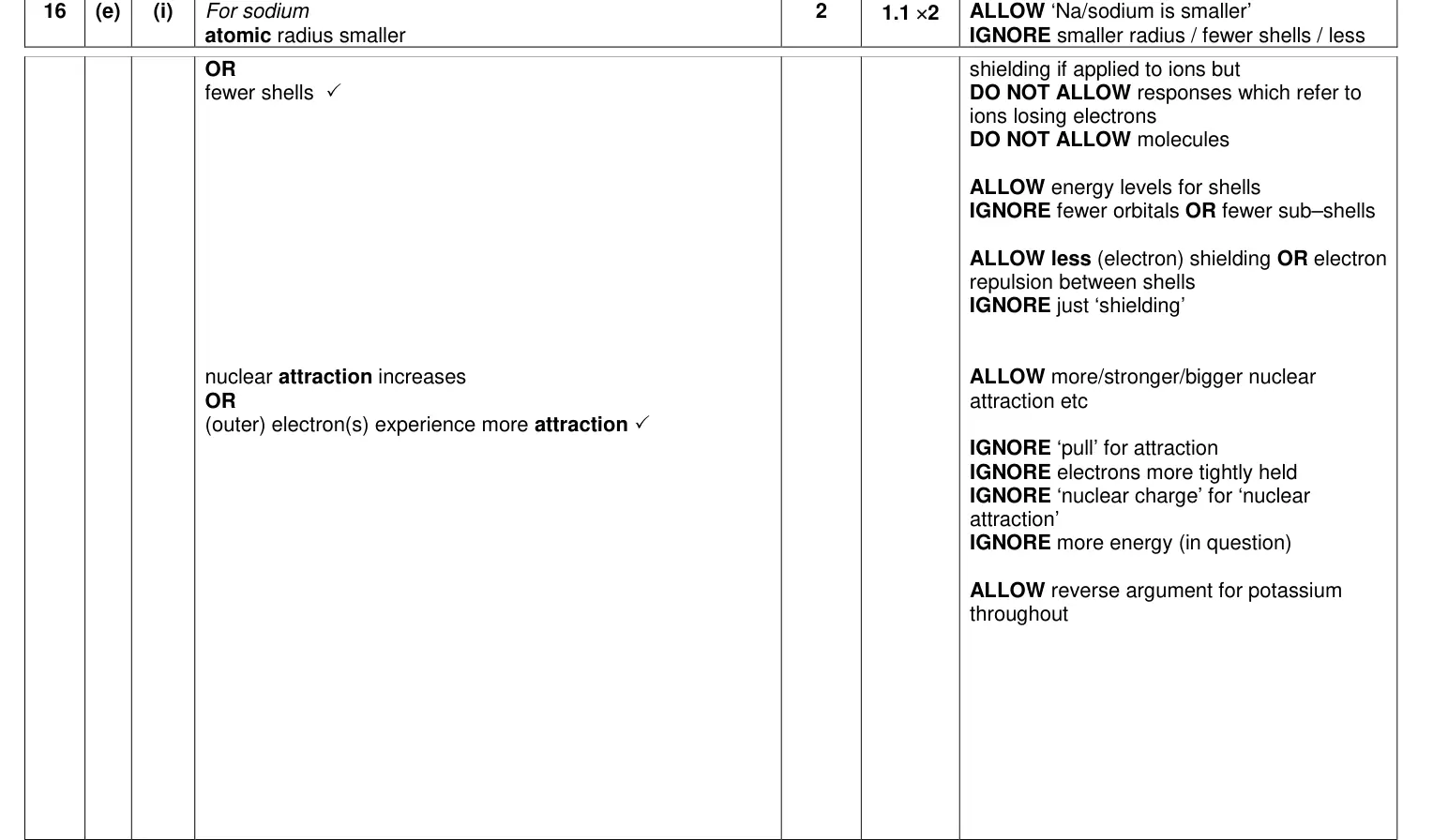
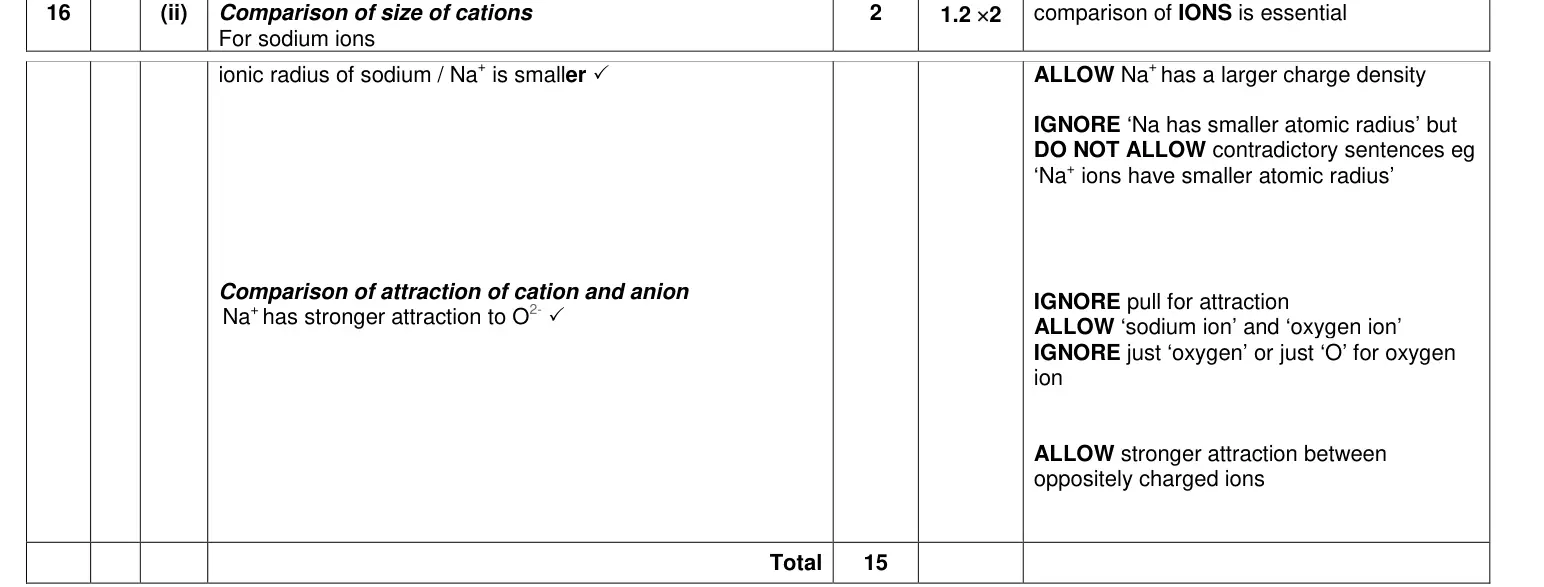
Many candidates did not achieve full marks, often through ambiguous statements. A typical example is shown in the exemplar below. The exemplar here uses the vague term ‘due its smaller ionic size’. It is unclear which of the ions the candidate is referring to (or if they’re assuming that the metal oxide entity is an ion) and so they could not be given marks.. Also, it is oxygen ions that ‘bond’ – the reference to oxygen bonding in the response is not specific enough.
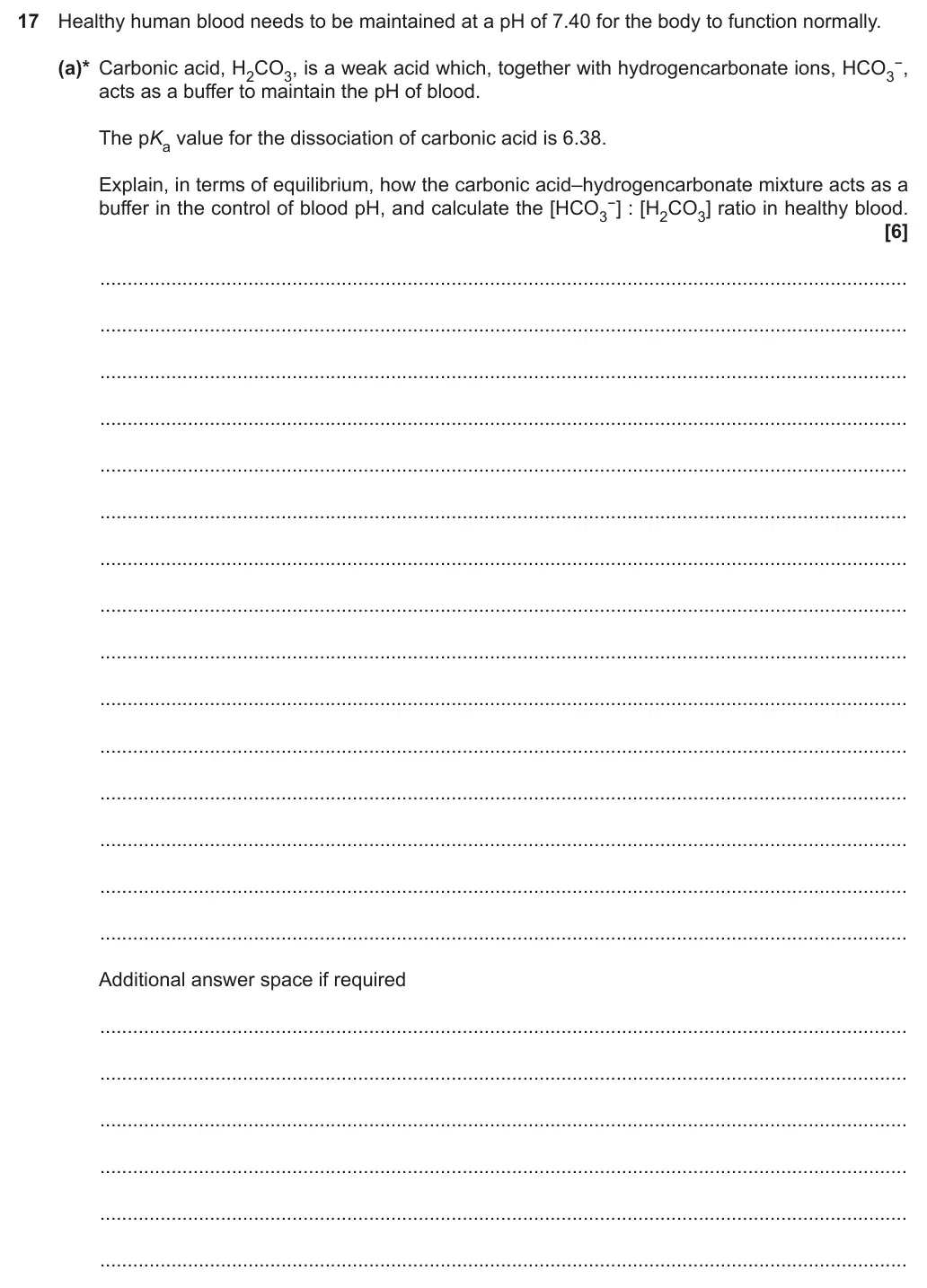
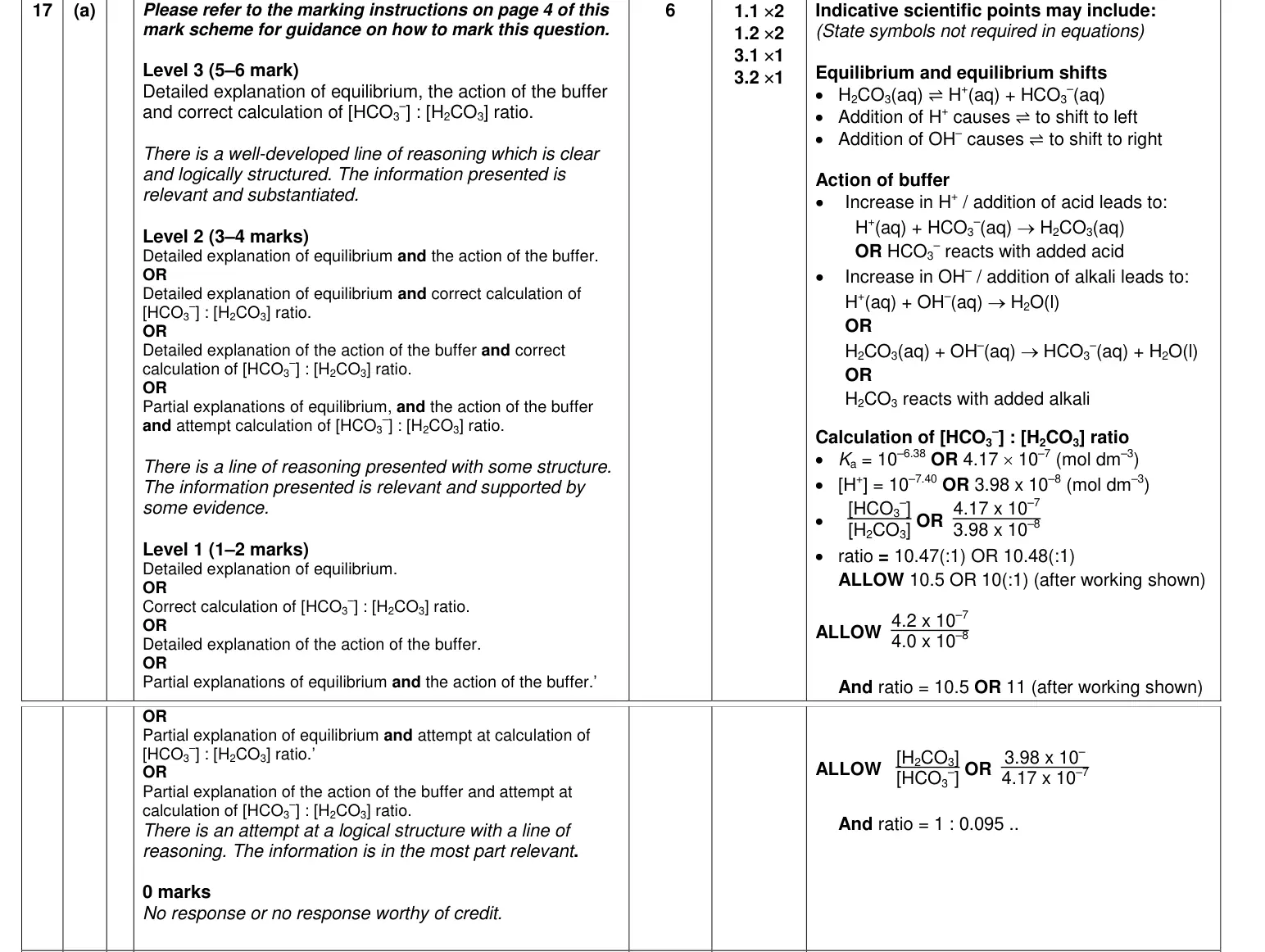
This Level of Response question was generally well answered with many candidates achieving maximum marks by simply considering what was required in the question. The calculation of the [HCO3 –] : [H2CO3] ratio was well described although sometimes the final expression of the ratio left ambiguity as it was hard to tell whether the ratio given referred to the [HCO3 –] : [H2CO3] ratio or the [H2CO3] : [HCO3 –] ratio The buffer reactions on separate addition of acid (H+ ions) and alkali (OH– ions) were explained and, better still, shown in equation form. The direction of shift on the H2CO3 ⇌ H+ + HCO3 – equilibrium was invariably correct, but many candidates did not achieve credit for responses such as ‘Addition of H+ ions shifts the equilibrium to the left’ because they did not give the equilibrium which was undergoing shift. An example of a complete answer gaining L3 (6 marks) is given. The candidate clearly writes the equilibrium at the top. The first bullet point gives a chemical equation for the reaction occurring when H+ ions are added as well as the shift in equilibrium. The second bullet point gives a chemical equation for the reaction occurring when OH– ions are added as well as the shift in equilibrium. The steps in the calculation are clearly shown and the ratio is clear.
Skills: M0.4 Use calculators to find and use power, exponential and logarithmic functions; M2.3 Substitute numerical values into algebraic equations using appropriate units for physical quantities; M2.5 Use logarithms in relation to quantities that range over several orders of magnitude
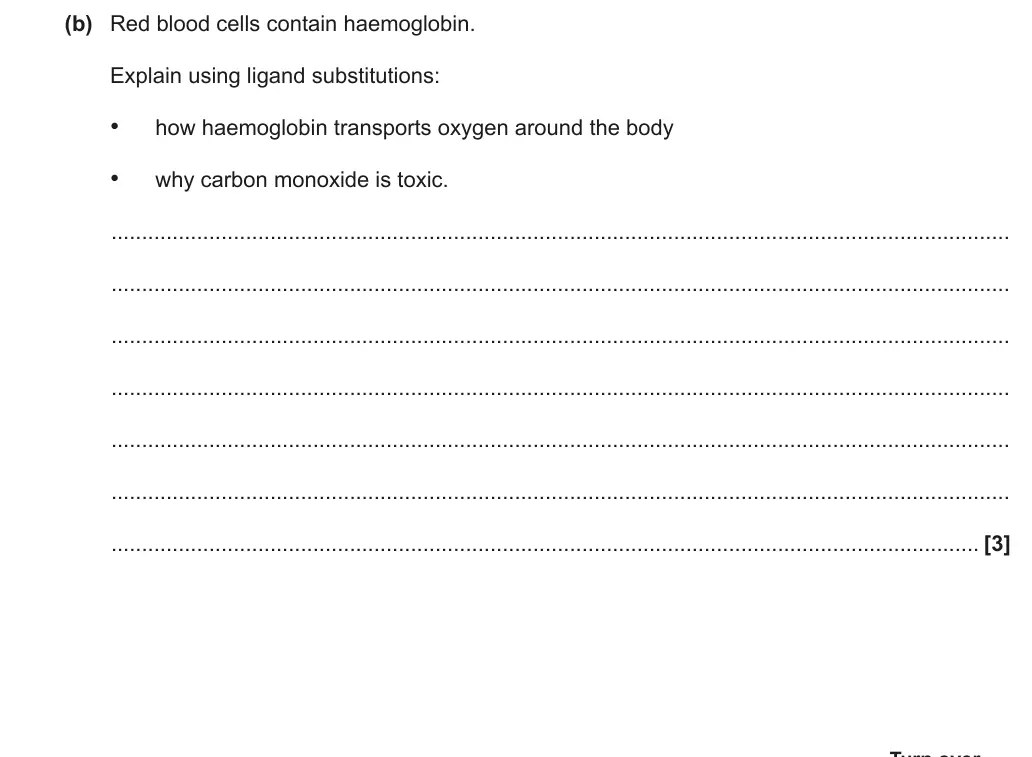
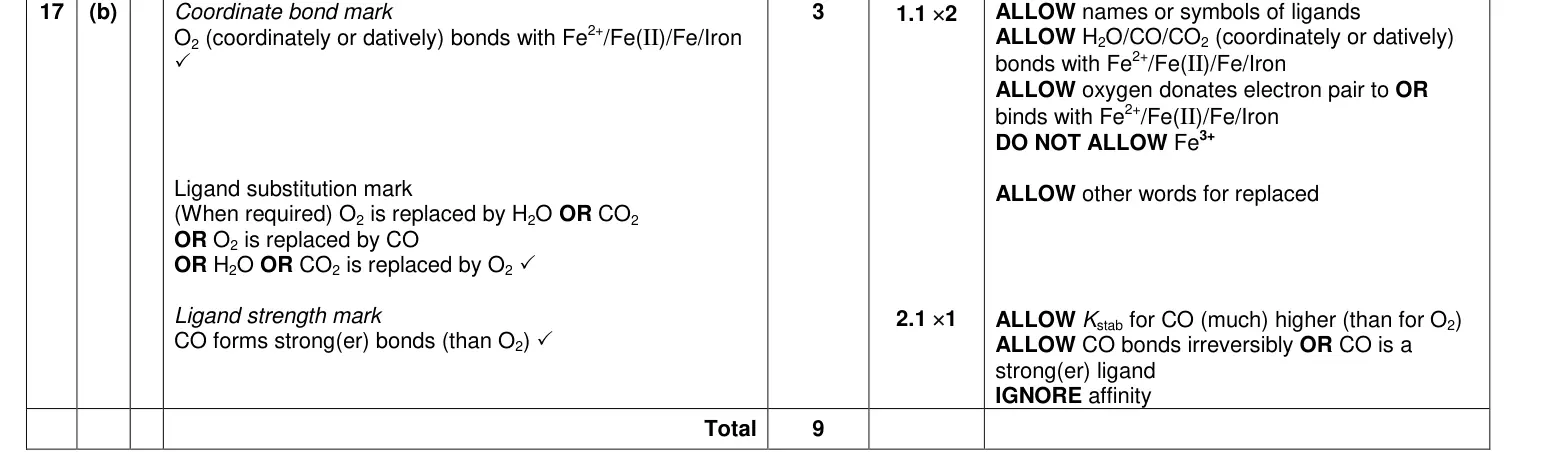
The key chemistry that candidates needed to discuss in their response was as follows: • O2 molecules forming coordinate bonds with and Fe2+ ions in haemoglobin. • O2 molecules being replaced by another ligand (e.g. H2O or CO) • CO ligands forming very strong coordinate bonds The mark scheme allowed ‘oxygen binding’ but candidates did need to specify what the oxygen was binding to. Loose terminology, such as CO having a ‘greater affinity’ should be avoided.
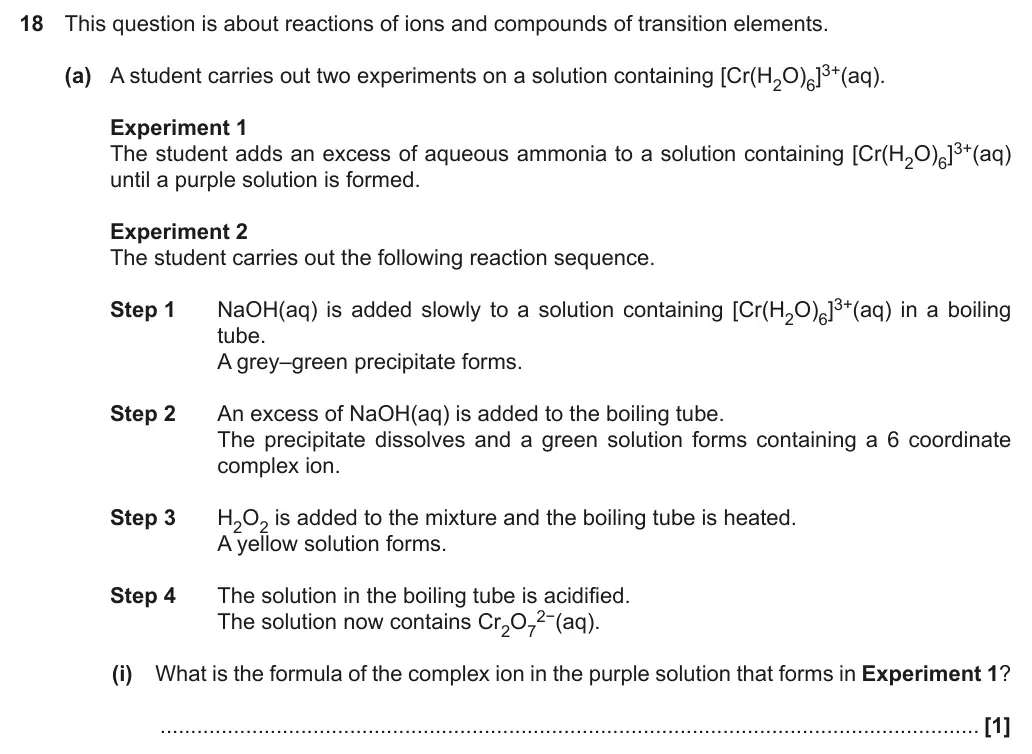
Most candidates knew the correct formula. There was some confusion with ammoniacal copper ions and [Cr(NH3)4(H2O)2]2+ was a frequently seen incorrect answer.

The most common error for this question was to omit the state symbols, sometimes on only one species. Both a correct equation and the correct state symbols were required for the mark.
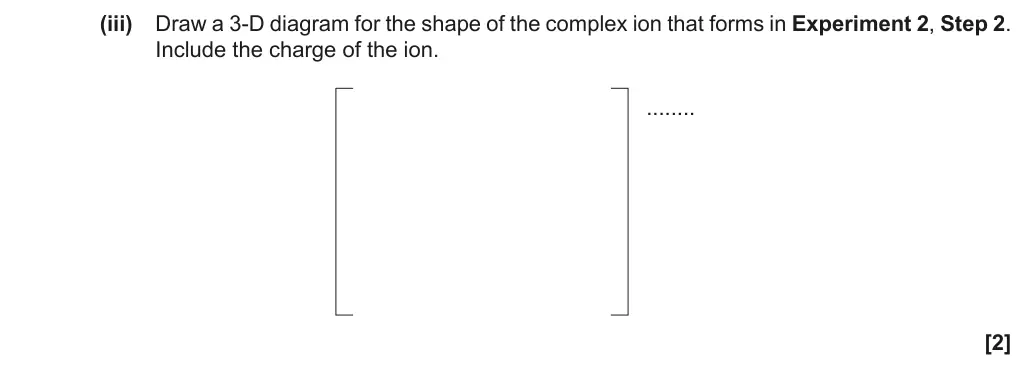
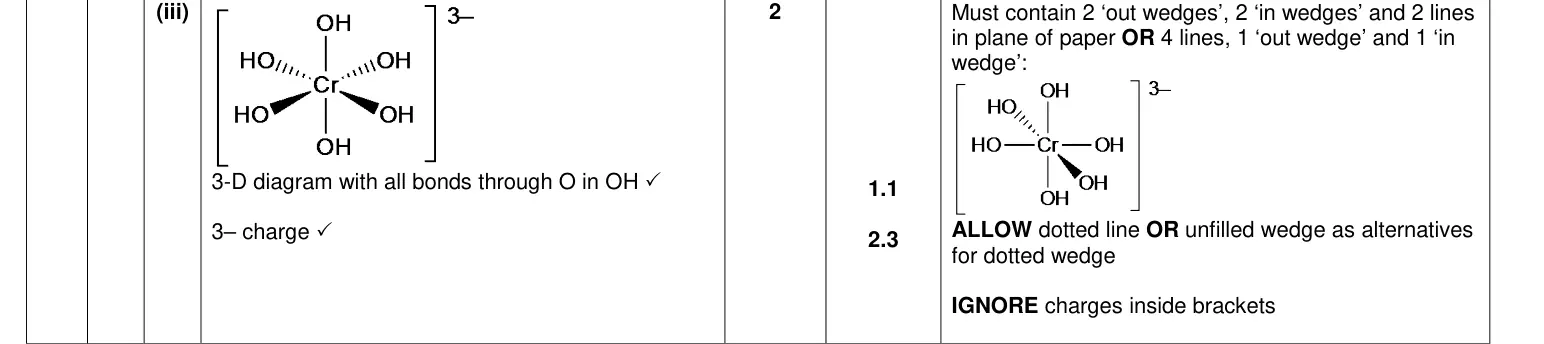
The drawing of simple 3-D diagrams of relevant shapes is a skill that is assessed in A Level chemistry. Common errors are listed in the exemplars. Some candidates drew in pencil then over-wrote in ink. Candidates need to remember that the scanned image does not differentiate between pencil and ink, so it is not necessary for them to do this. Candidates should avoid incorrect connectivity between the ligand and the central metal ion. Candidates should be taught which atom within the ligand supplies the lone pair to form the coordinate bond. In this case oxygen has lone pairs, not hydrogen as suggested by the candidate in the bonding involving the bottom left hand ligand.
Skills: M4.1 Use angles and shapes in regular 2-D and 3-D structures; M4.2 Visualise and represent 2-D and 3-D forms including 2-D representations of 3-D objects

Very few candidates correctly identified the CrO4 2– ion here. Candidates should be aware that oxidation of Cr(OH)3 produces CrO4 2– (which can then be acidified to produce Cr2O7 2-).

Invariably, the answer given by candidates here was either orange or green, indicating some knowledge of the colours of chromium ions. Those who stated orange received credit
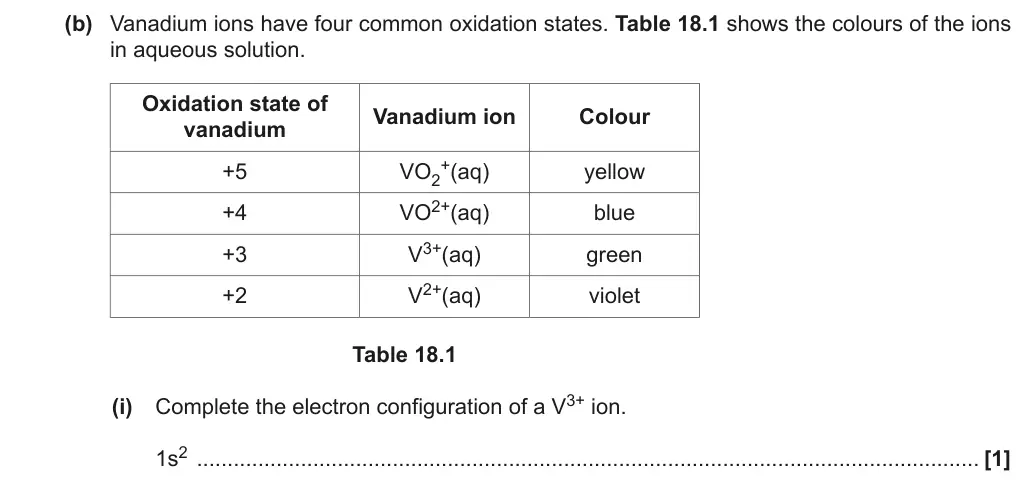
Many candidates did not realise that when transition metal ions are formed, the first electrons removed from atoms are the 4s electrons and so wrote 2s2 2p6 3s2 3p6 3d1 4s2.
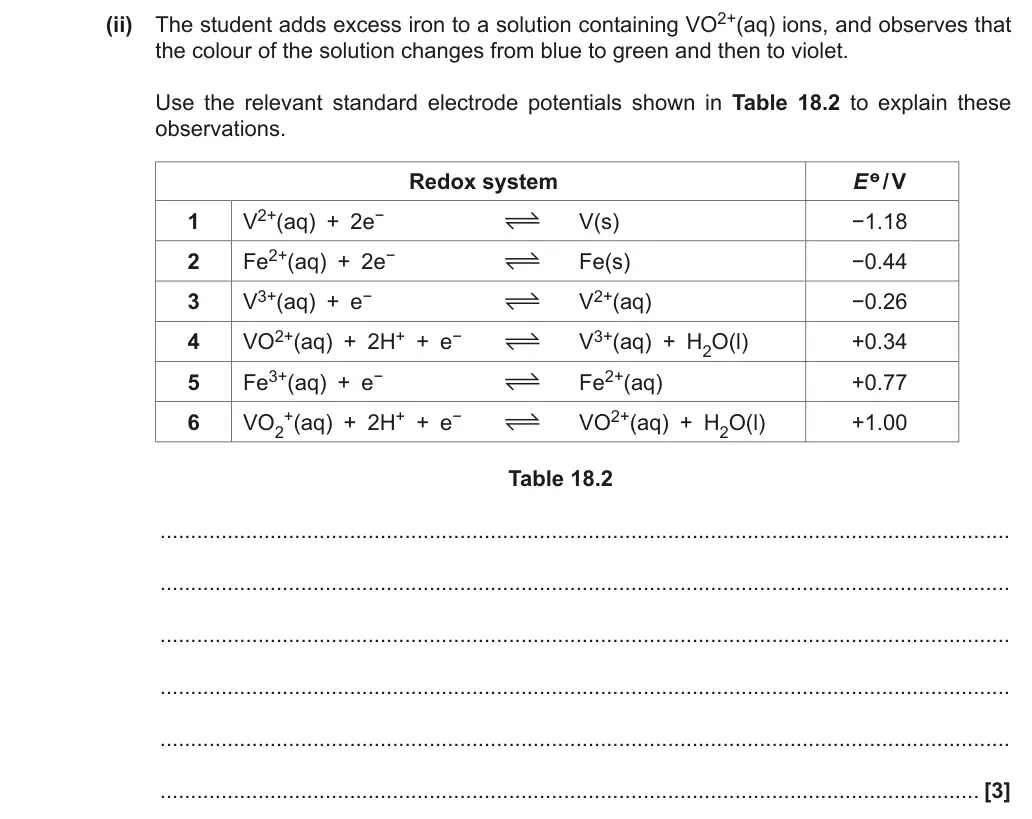
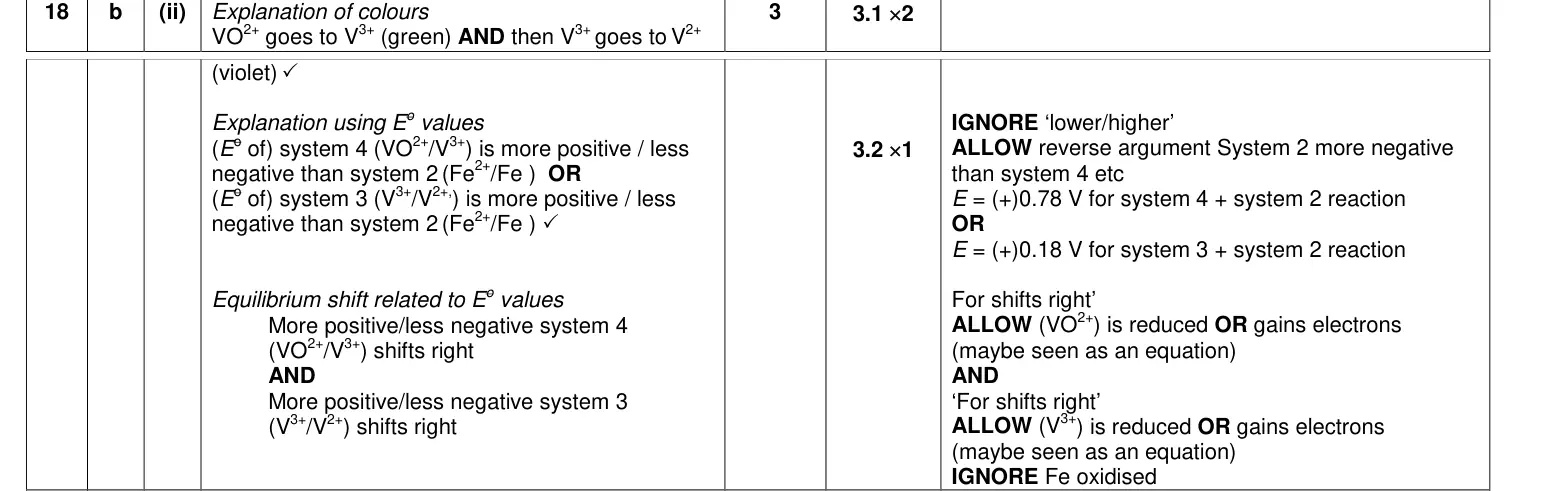
Most candidates did not state that the direction of reaction of redox equilibria is dependent on the relative negativity/positivity of the standard electrode potentials. Higher ability candidates described two reductions of the relevant vanadium ions to end up with V2+ ions.

A LEVEL CHEMISTRY A Examiners’ report H432/01 Summer 2019 series Version 1 H432 For first teaching in 2015 www.ocr.org.uk/science Contents Introduction .............................................................................................................................................. 4 Paper 1 series overview ........................................................................................................................... 5 Section A overview ................................................................................................................................... 6 Question 2 ............................................................................................................................................ 6 Question 3 ............................................................................................................................................ 6 Question 4 ............................................................................................................................................ 7 Question 5 ............................................................................................................................................ 7 Question 6 ............................................................................................................................................ 8 Question 8 ............................................................................................................................................ 8 Question 9 ............................................................................................................................................ 9 Question 10 .......................................................................................................................................... 9 Question 11 ........................................................................................................................................ 10 Question 13 ........................................................................................................................................ 10 Question 14 ........................................................................................................................................ 11 Question 15 ........................................................................................................................................ 11 Section B overview ................................................................................................................................. 12 Question 16 (a) ................................................................................................................................... 12 Question 16 (b) ................................................................................................................................... 12 Question 16 (c) (i) ............................................................................................................................... 12 Question 16 (c) (ii) .............................................................................................................................. 13 Question 16 (d) (i) ............................................................................................................................... 14 Question 16 (d) (ii) .............................................................................................................................. 15 Question 16 (e) (i) ............................................................................................................................... 16 Question 16 (e) (ii) .............................................................................................................................. 16 Question 17 (a) ................................................................................................................................... 17 Question 17 (b) ................................................................................................................................... 19 Question 18 (a) (i) ............................................................................................................................... 20 Question 18 (a) (ii) .............................................................................................................................. 20 Question 18 (a) (iii) ............................................................................................................................. 21 Question 18 (a) (iv) ............................................................................................................................. 22 Question 18 (a) (v) .............................................................................................................................. 22 Question 18 (b) (i) ............................................................................................................................... 22 Question 18 (b) (ii) .............................................................................................................................. 23 Question 18 (c) (i) ............................................................................................................................... 24 Question 18 (c) (ii) .............................................................................................................................. 24 Question 19 (a) (i) ............................................................................................................................... 25 Question 19 (a) (ii) .............................................................................................................................. 25 Question 19 (a) (iii) ............................................................................................................................. 26 Question 19 (b) (i) ............................................................................................................................... 26 Question 19 (b) (ii) .............................................................................................................................. 27 Question 19 (b) (iii) ............................................................................................................................. 27 Question 19 (b) (iv) ............................................................................................................................. 28 Question 19 (c) (i) ............................................................................................................................... 28 Question 19 (c) (ii) .............................................................................................................................. 29 Question 20 (a) ................................................................................................................................... 29 Question 20 (b) (i) ............................................................................................................................... 30 Question 20 (b) (ii) .............................................................................................................................. 30 Question 20 (b) (iii) ............................................................................................................................. 31 Question 20 (b) (iv) ............................................................................................................................. 32 Question 20 (b) (v) .............................................................................................................................. 32 Question 20 (c) ................................................................................................................................... 33 Question 21 ........................................................................................................................................ 34 Introduction Our examiners’ reports are produced to offer constructive feedback on candidates’ performance in the examinations. Those who stated orange received credit Question 18 (b) (i) Many candidates did not realise that when transition metal ions are formed, the first electrons removed from atoms are the 4s electrons and so wrote 2s2 2p6 3s2 3p6 3d1 4s2. Question 18 (b) (ii) Most candidates did not state that the direction of reaction of redox equilibria is dependent on the relative negativity/positivity of the standard electrode potentials.
Skills: M0.2 Use ratios, fractions and percentages
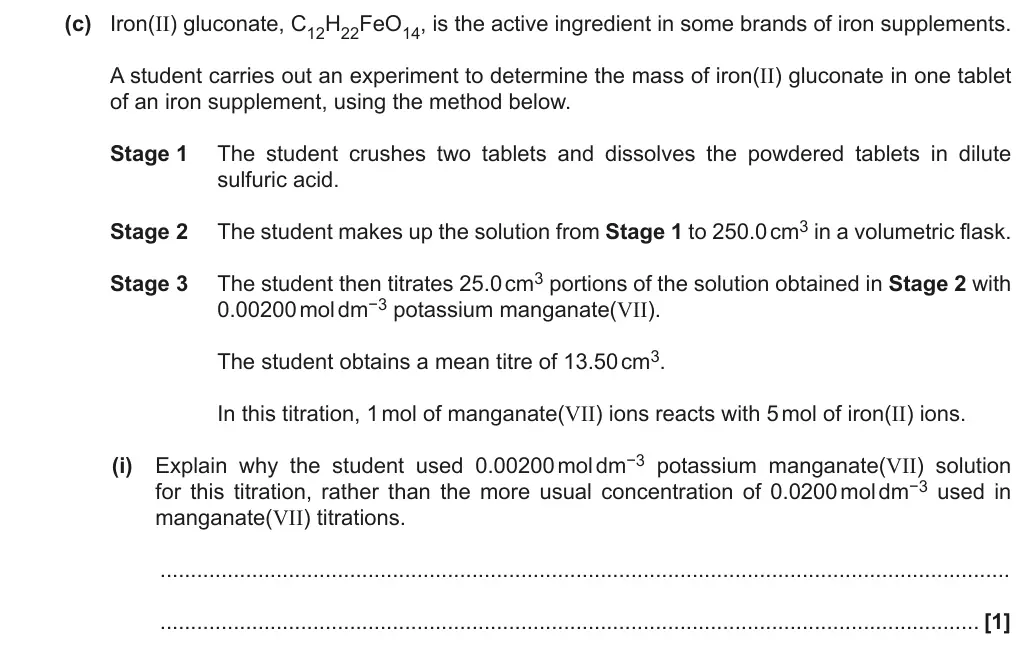
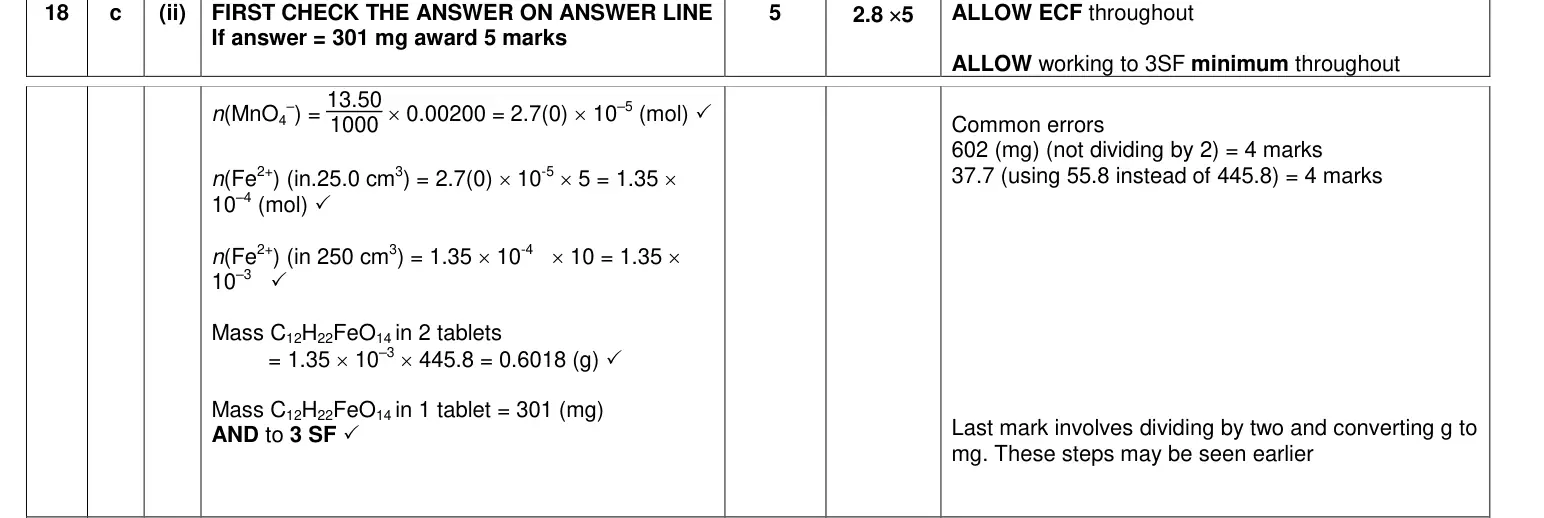
Only a very small minority of candidates appreciated that a larger titre reduces percentage error in titre values. Most erroneously described a reading of 1.35 cm3 as being less accurate than a reading of 13.5(0) cm3. The accuracy of these is equal in the same scaled apparatus.
Skills: M1.3 Identify uncertainties in measurements and use simple techniques to determine uncertainty when data are combined; PAG2 Acid–base titration
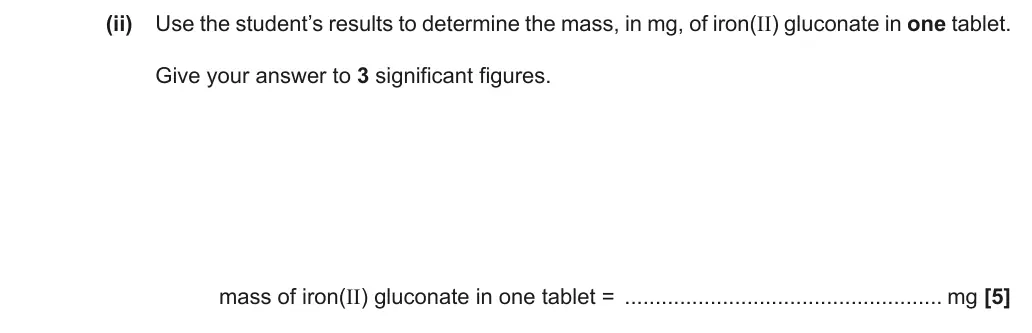
Many candidates coped well with this multi-step calculation. The common errors were: • determining the mass of C12H22FeO14 in two tablets instead of just one tablet as required in the question • determining the mass of Fe in a tablet instead of the mass of C12H22FeO14 • failing to convert from grams to milligrams
Skills: M0.0 Recognise and make use of appropriate units in calculations; M0.2 Use ratios, fractions and percentages; M1.1 Use an appropriate number of significant figures; M2.3 Substitute numerical values into algebraic equations using appropriate units for physical quantities; PAG2 Acid–base titration
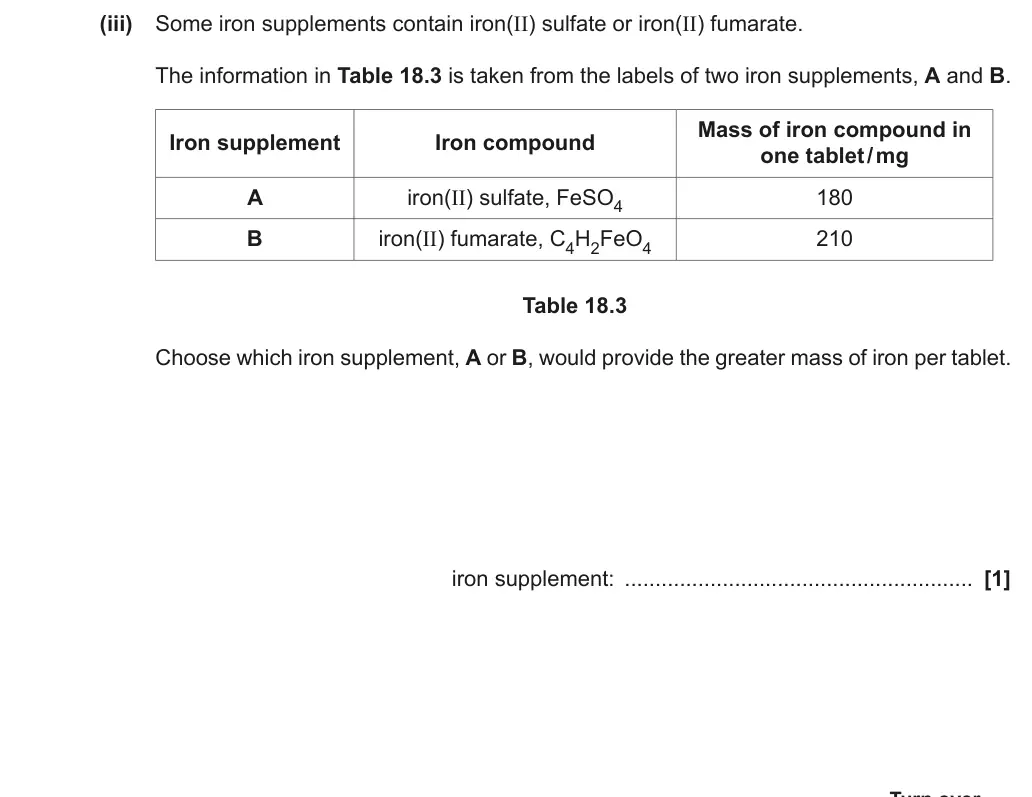
A LEVEL CHEMISTRY A Examiners’ report H432/01 Summer 2019 series Version 1 H432 For first teaching in 2015 www.ocr.org.uk/science Contents Introduction .............................................................................................................................................. 4 Paper 1 series overview ........................................................................................................................... 5 Section A overview ................................................................................................................................... 6 Question 2 ............................................................................................................................................ 6 Question 3 ............................................................................................................................................ 6 Question 4 ............................................................................................................................................ 7 Question 5 ............................................................................................................................................ 7 Question 6 ............................................................................................................................................ 8 Question 8 ............................................................................................................................................ 8 Question 9 ............................................................................................................................................ 9 Question 10 .......................................................................................................................................... 9 Question 11 ........................................................................................................................................ 10 Question 13 ........................................................................................................................................ 10 Question 14 ........................................................................................................................................ 11 Question 15 ........................................................................................................................................ 11 Section B overview ................................................................................................................................. 12 Question 16 (a) ................................................................................................................................... 12 Question 16 (b) ................................................................................................................................... 12 Question 16 (c) (i) ............................................................................................................................... 12 Question 16 (c) (ii) .............................................................................................................................. 13 Question 16 (d) (i) ............................................................................................................................... 14 Question 16 (d) (ii) .............................................................................................................................. 15 Question 16 (e) (i) ............................................................................................................................... 16 Question 16 (e) (ii) .............................................................................................................................. 16 Question 17 (a) ................................................................................................................................... 17 Question 17 (b) ................................................................................................................................... 19 Question 18 (a) (i) ............................................................................................................................... 20 Question 18 (a) (ii) .............................................................................................................................. 20 Question 18 (a) (iii) ............................................................................................................................. 21 Question 18 (a) (iv) ............................................................................................................................. 22 Question 18 (a) (v) .............................................................................................................................. 22 Question 18 (b) (i) ............................................................................................................................... 22 Question 18 (b) (ii) .............................................................................................................................. 23 Question 18 (c) (i) ............................................................................................................................... 24 Question 18 (c) (ii) .............................................................................................................................. 24 Question 19 (a) (i) ............................................................................................................................... 25 Question 19 (a) (ii) .............................................................................................................................. 25 Question 19 (a) (iii) ............................................................................................................................. 26 Question 19 (b) (i) ............................................................................................................................... 26 Question 19 (b) (ii) .............................................................................................................................. 27 Question 19 (b) (iii) ............................................................................................................................. 27 Question 19 (b) (iv) ............................................................................................................................. 28 Question 19 (c) (i) ............................................................................................................................... 28 Question 19 (c) (ii) .............................................................................................................................. 29 Question 20 (a) ................................................................................................................................... 29 Question 20 (b) (i) ............................................................................................................................... 30 Question 20 (b) (ii) .............................................................................................................................. 30 Question 20 (b) (iii) ............................................................................................................................. 31 Question 20 (b) (iv) ............................................................................................................................. 32 Question 20 (b) (v) .............................................................................................................................. 32 Question 20 (c) ................................................................................................................................... 33 Question 21 ........................................................................................................................................ 34 Introduction Our examiners’ reports are produced to offer constructive feedback on candidates’ performance in the examinations. Question 18 (c) (i) Only a very small minority of candidates appreciated that a larger titre reduces percentage error in titre values. Question 18 (c) (ii) Many candidates coped well with this multi-step calculation.
Skills: M0.2 Use ratios, fractions and percentages
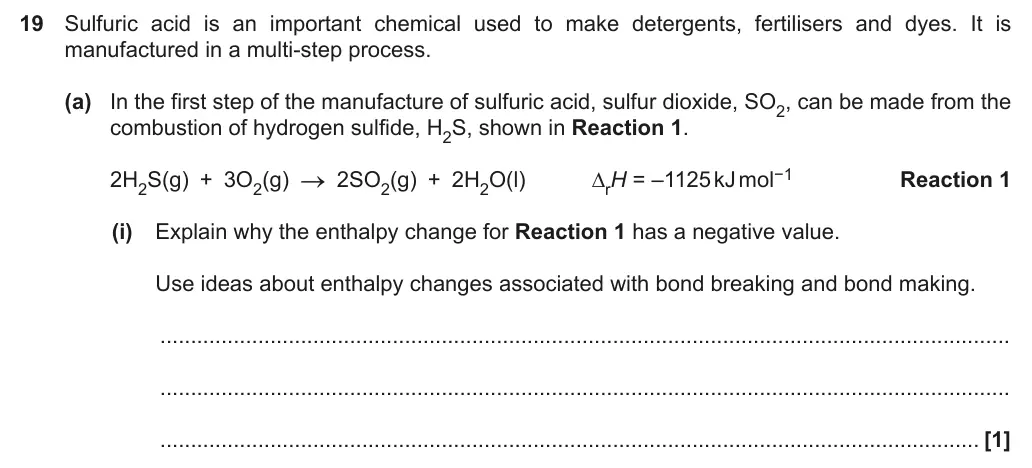
This question caused problems for candidates. The main error was careless phrasing. Many candidates correctly referred to the energy being required for bond breaking, but then also discussed bond making in terms of the energy used, suggesting that bond making was endothermic. Responses simply stating more bonds were made than broken were ignored.
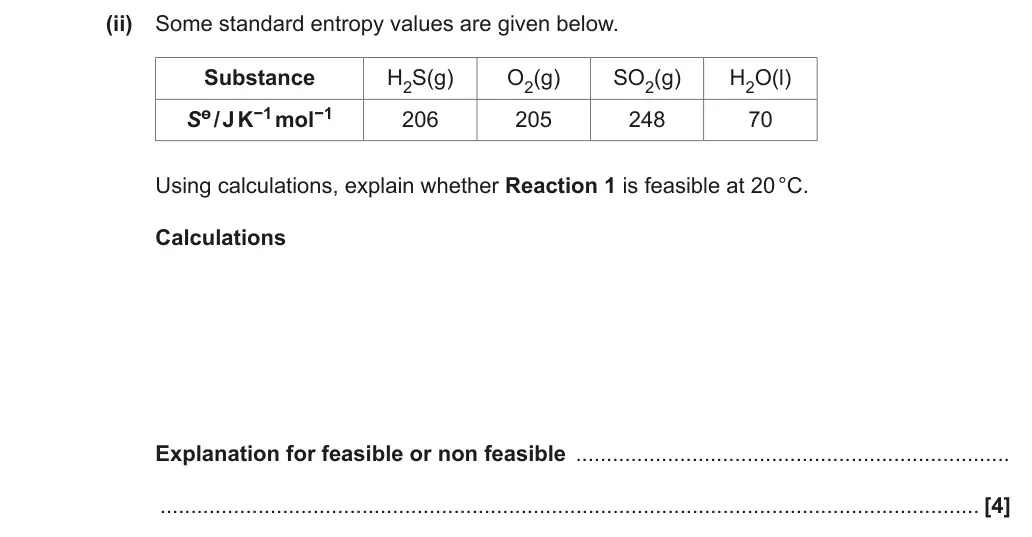
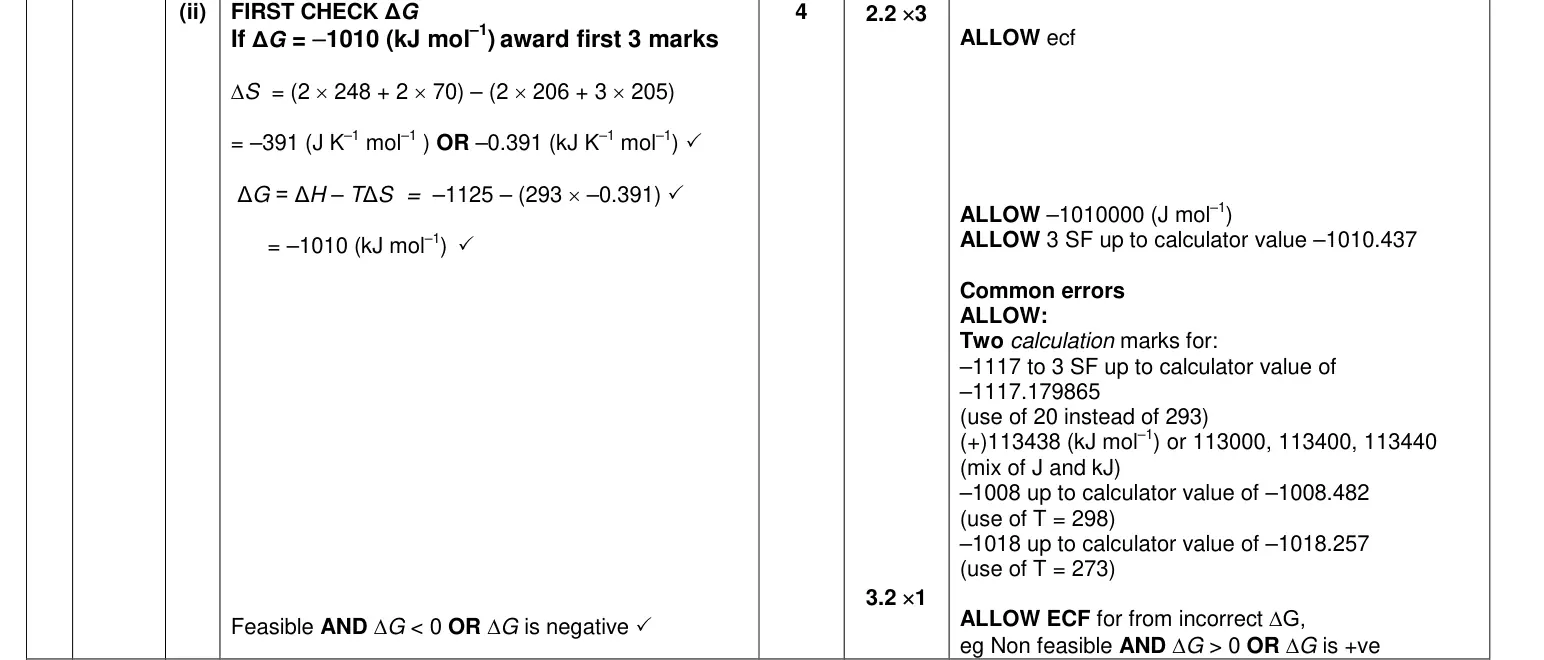
The calculation was done well. Some candidates found it difficult to convert ΔS values from J to kJ or temperature values from °C to K, and this was frequently seen in responses. The final mark was often lost through vague phrasing. ‘Yes’ was an insufficient answer, as it does not identify the reaction as feasible or non-feasible. ‘Gibbs free energy is negative’ was also insufficient, as it should be identified that ΔG is negative.
Skills: M0.0 Recognise and make use of appropriate units in calculations; M2.3 Substitute numerical values into algebraic equations using appropriate units for physical quantities
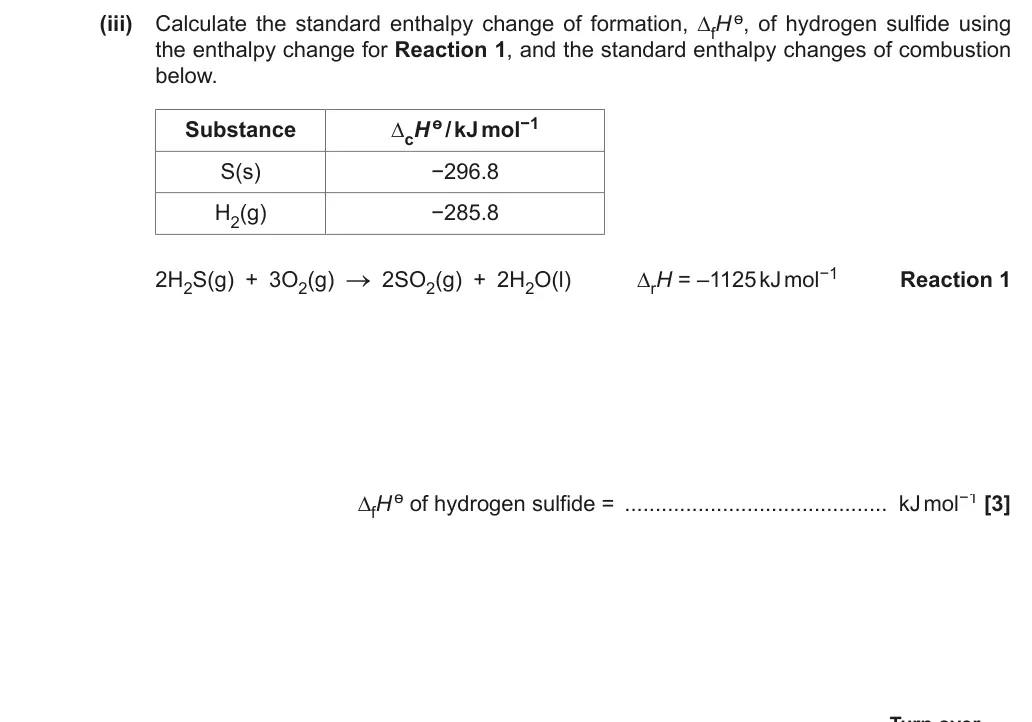
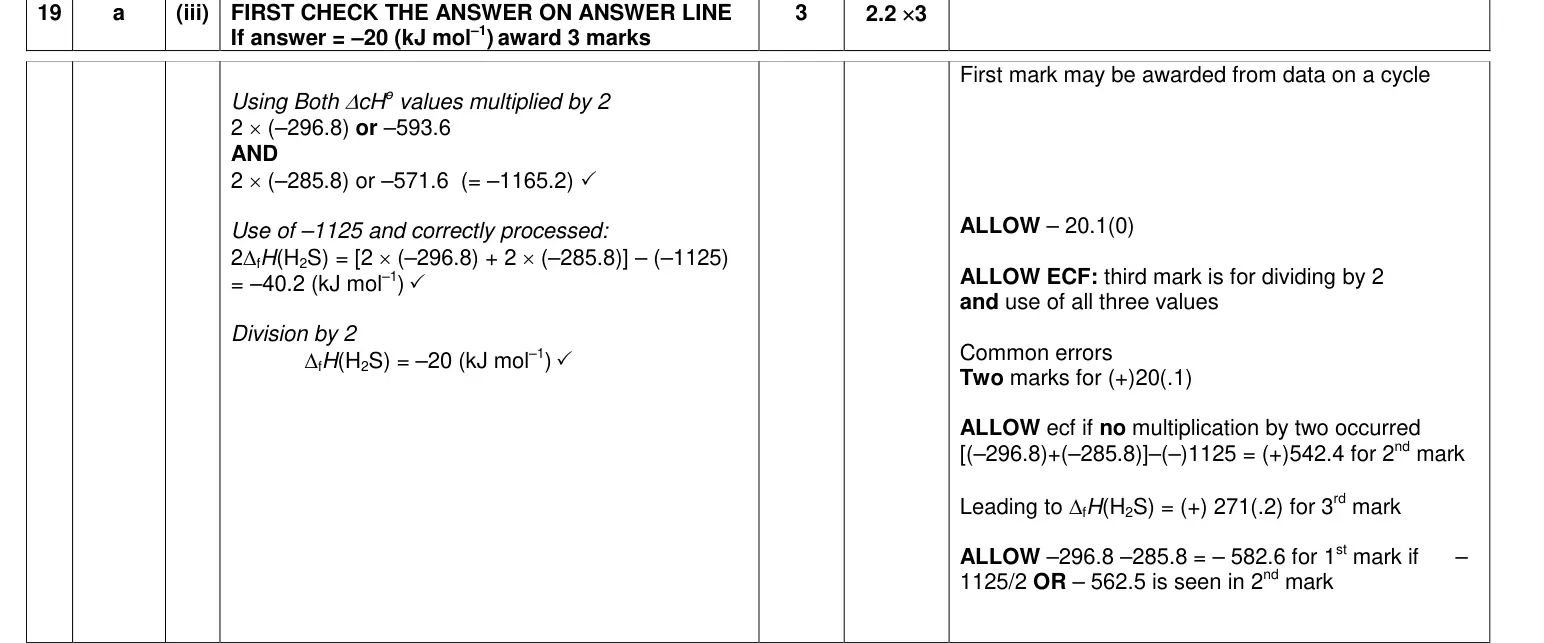
This calculation proved very difficult. Many candidates did not deduce the correct cycle. Of those who did, a significant majority did not appreciate the stoichiometry of the equation and did not double the ΔcH values or half the initially calculated value of ΔfH(H2S).
Skills: M2.2 Change the subject of an equation; M2.3 Substitute numerical values into algebraic equations using appropriate units for physical quantities; M2.4 Solve algebraic equations
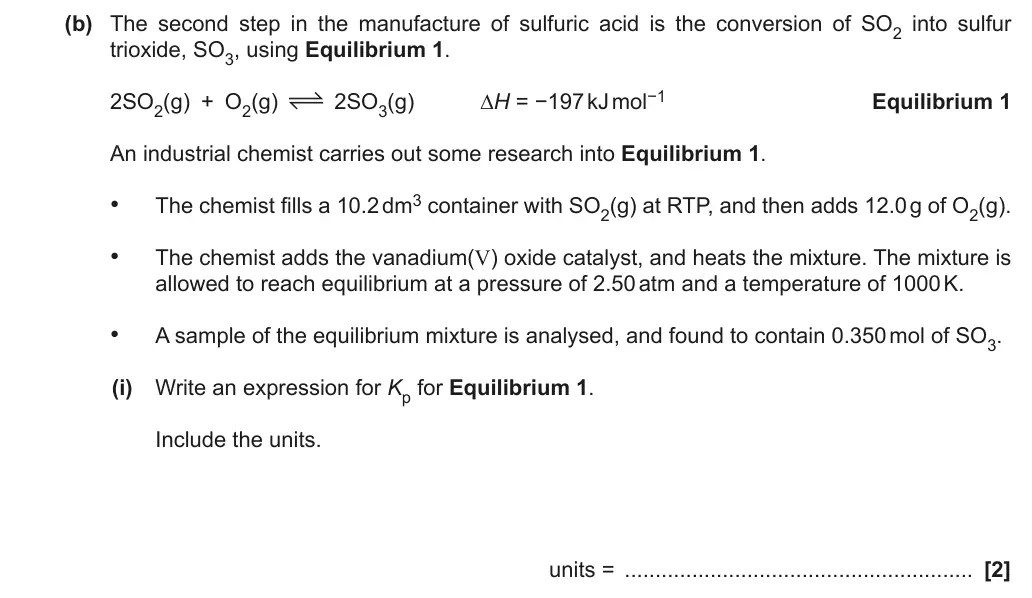
The equilibrium expression was correct in most responses. Occasionally incorrect square brackets were used instead of round brackets. Candidates should be reminded that square brackets indicate a concentration and are not appropriate for use in Kp expressions.
Skills: M0.0 Recognise and make use of appropriate units in calculations
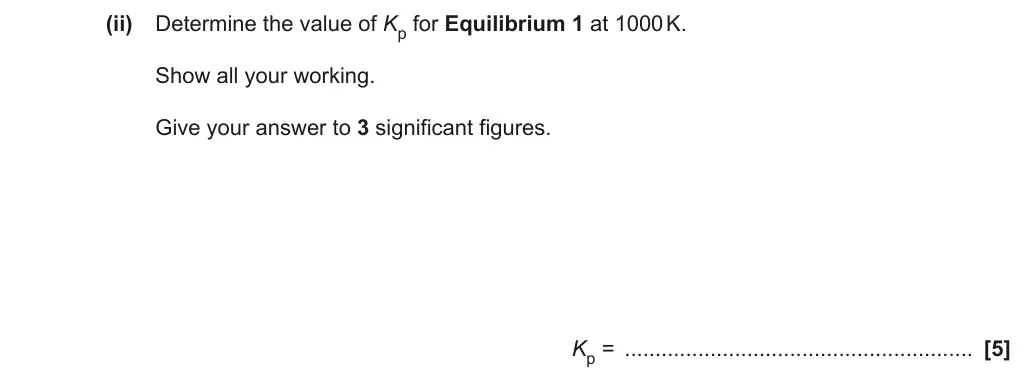
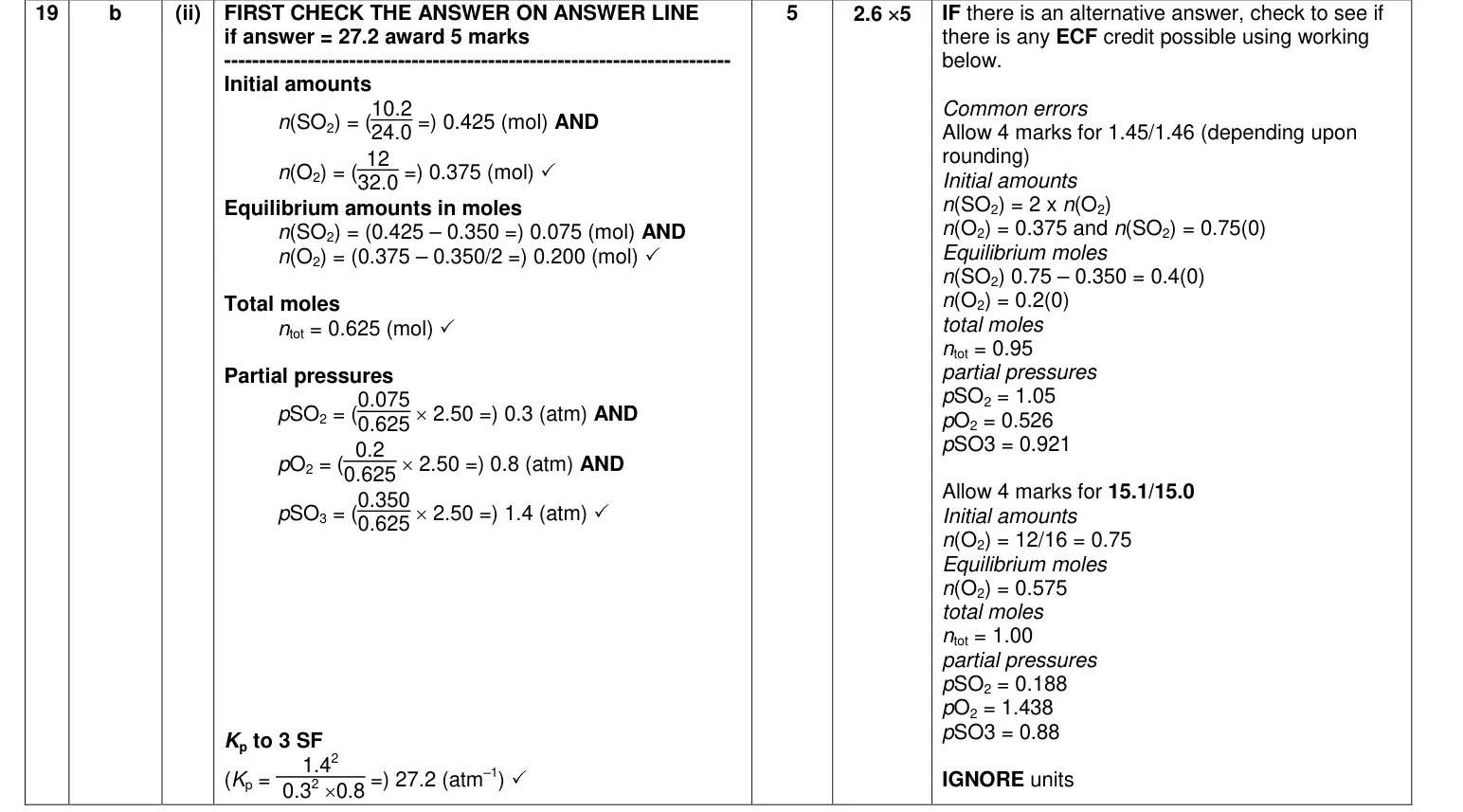
Candidates tend to find Kp calculations difficult and so may need guidance in developing a strategy to work their way through them. A typical approach is: • Calculation of initial moles present • Calculation of the change in moles present • Deduction of the number of moles present at equilibrium • Determination of total moles present at equilibrium • Calculation of mole fractions at equilibrium • Calculation of partial pressures at equilibrium • Inserting partial pressure vales into the Kp expression • Writing an answer to the required number of significant figures.
Skills: M0.2 Use ratios, fractions and percentages; M1.1 Use an appropriate number of significant figures; M2.3 Substitute numerical values into algebraic equations using appropriate units for physical quantities
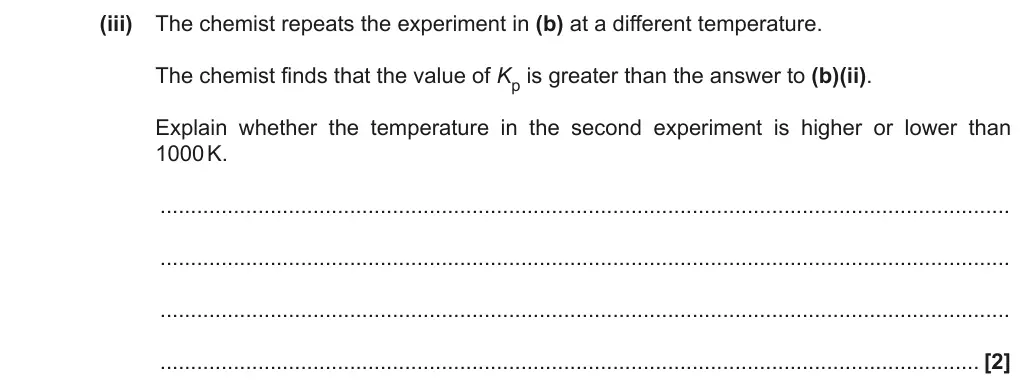
Some very wordy responses to this straightforward question were seen. Candidates are reminded that keeping responses concise and to the point can make their answer clearer, and there is no need to fill the whole question space provided if an answer can be provided more succinctly.
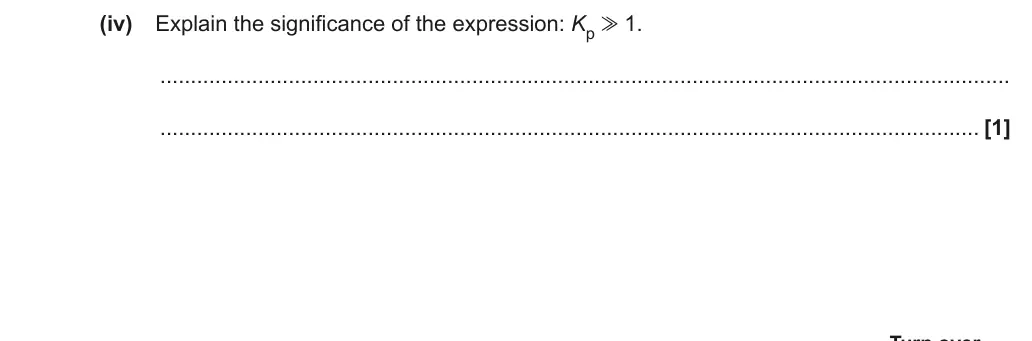
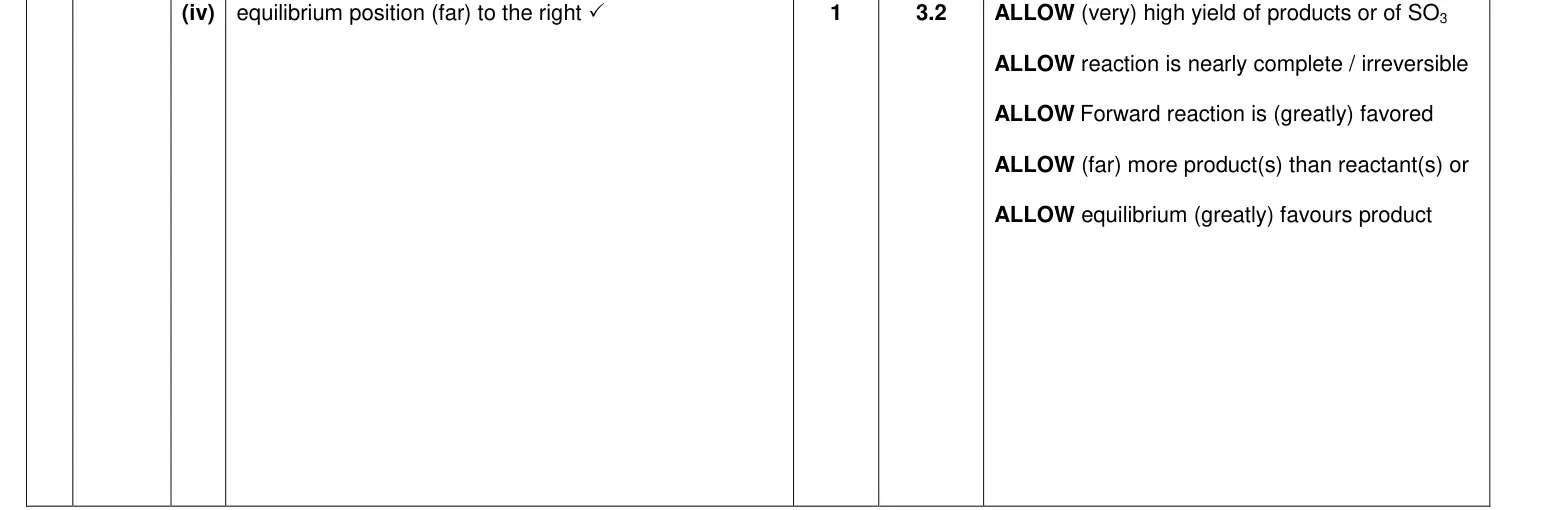
Most candidates realised that the symbol indicated the equilibrium was (far) to the right hand side. The common error was to tell the examiner that Kp was bigger than 1.
Skills: M0.3 Estimate results; M2.1 Understand and use the symbols =, <, <<, >>, >, ∝, ~, ⇌
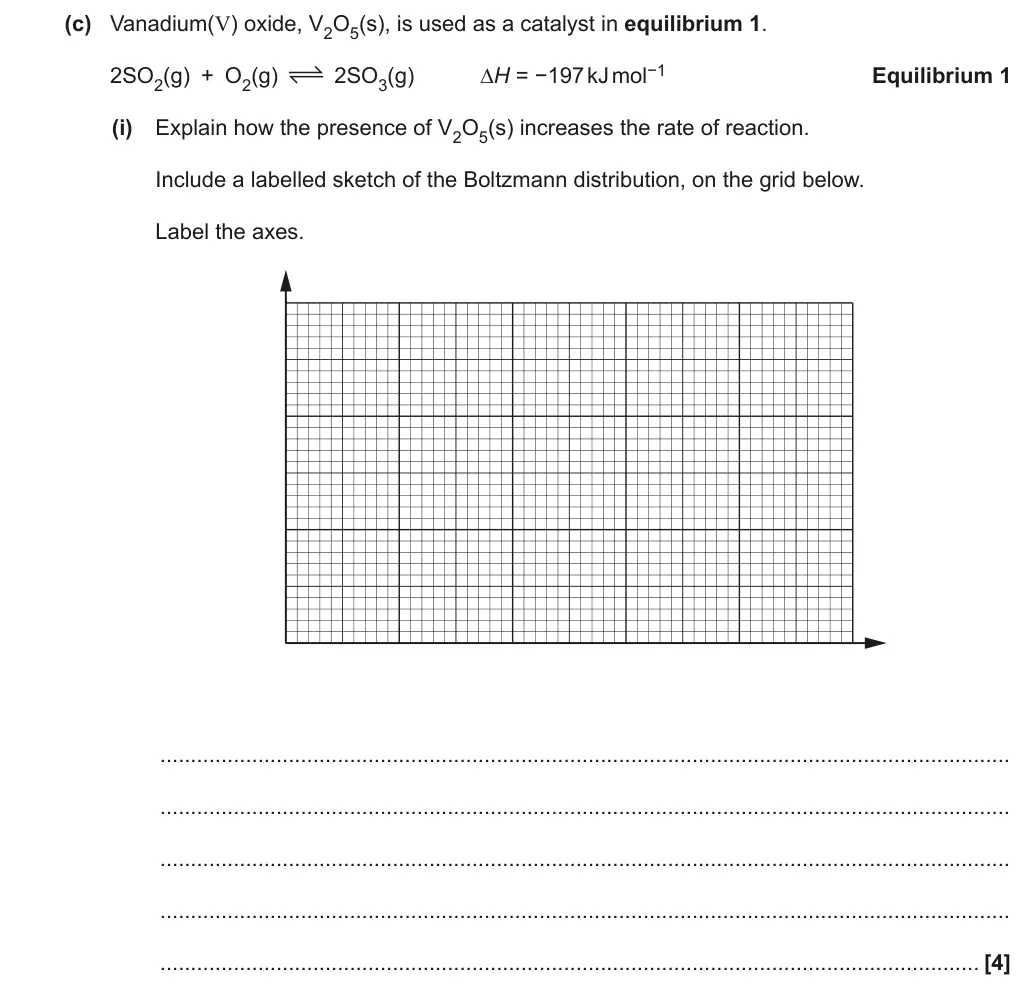
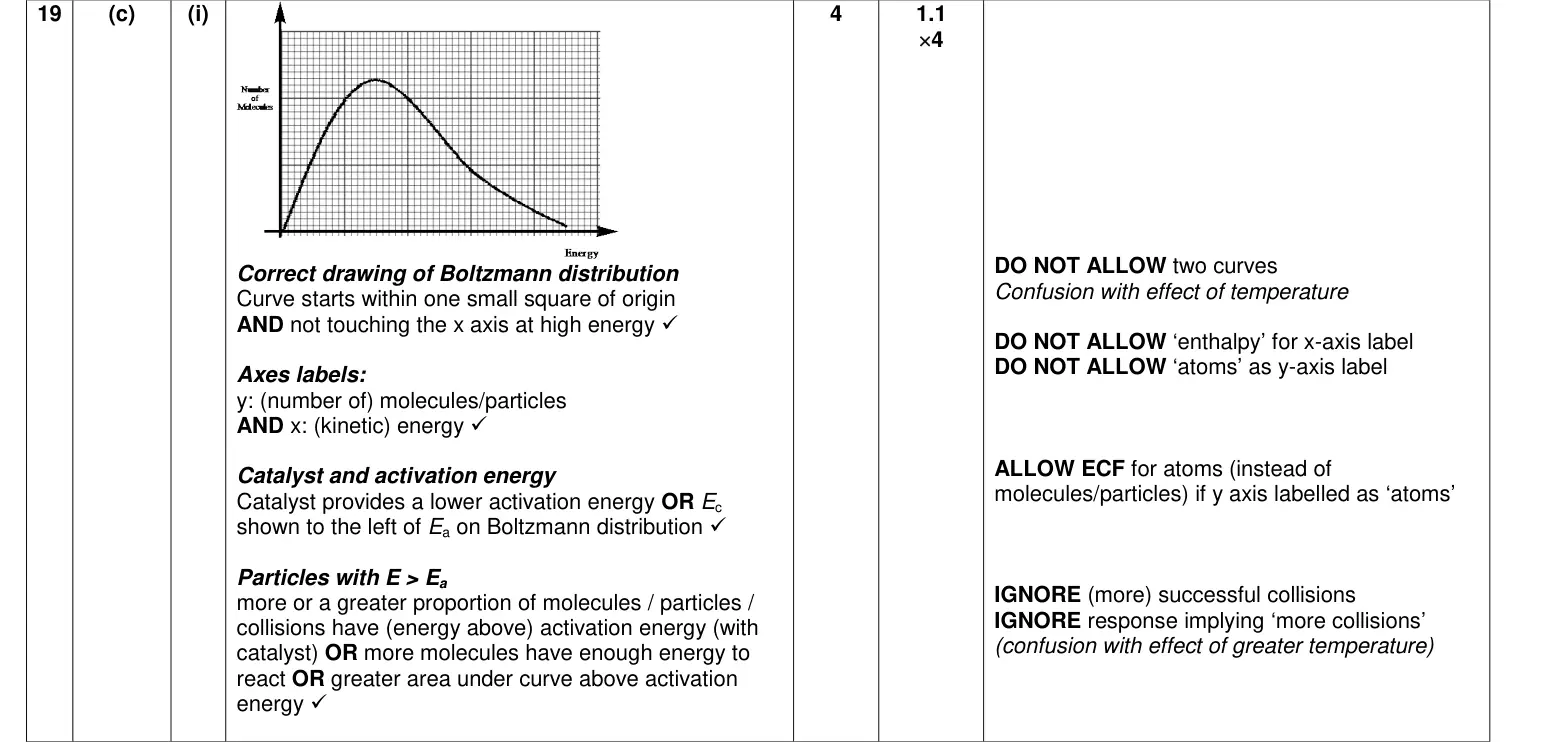
Most candidates were able to achieve all four marks. Occasionally candidates didn’t start their graph from zero or mislabelled the x-axis as ‘progress of reaction’.
Skills: M3.1 Translate information between graphical, numerical and algebraic forms

The number of candidates who considered V2O5 to be a homogeneous catalyst was small.
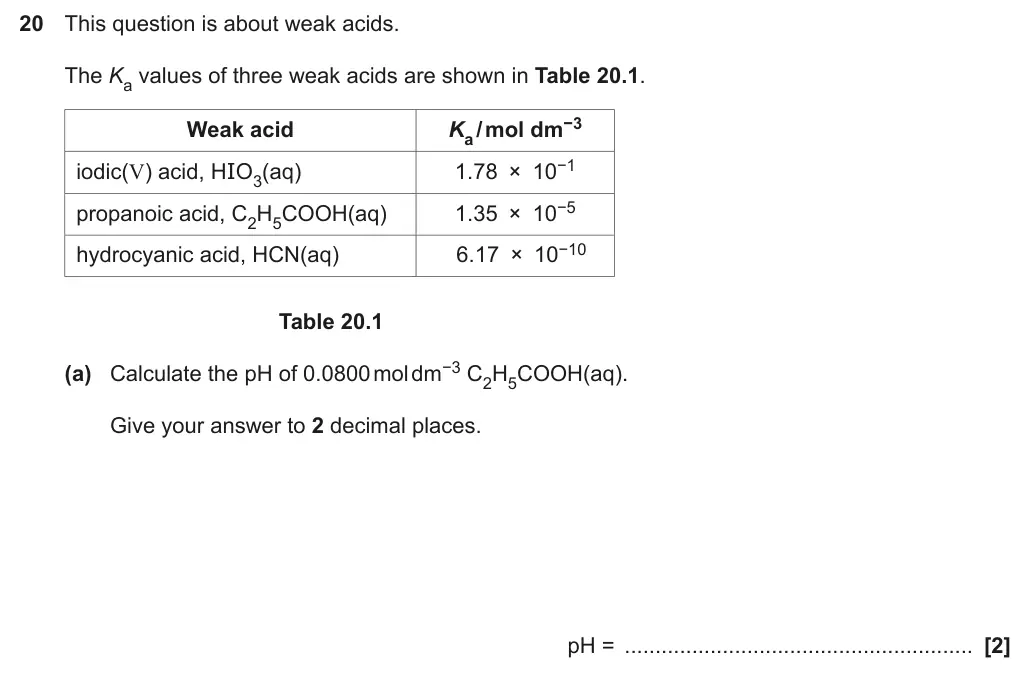
Most candidates could calculate the pH of a weak acid although a significant number gave the answer as 3.0, presumably confusing the demand for two decimal points with two significant figures.
Skills: M0.4 Use calculators to find and use power, exponential and logarithmic functions; M2.3 Substitute numerical values into algebraic equations using appropriate units for physical quantities; M2.5 Use logarithms in relation to quantities that range over several orders of magnitude
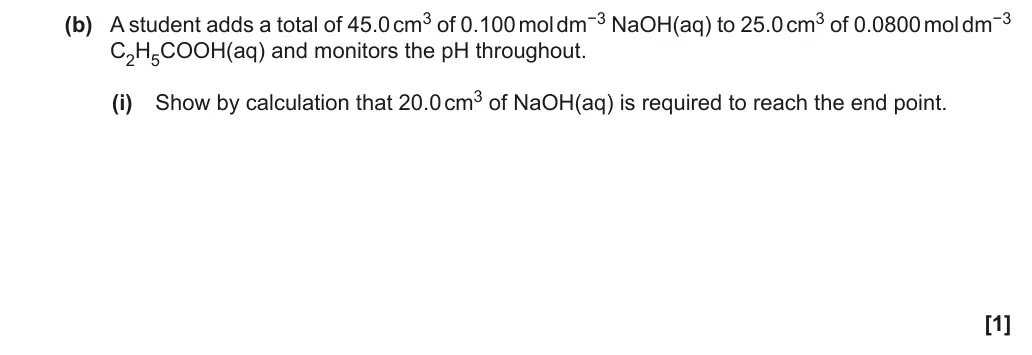
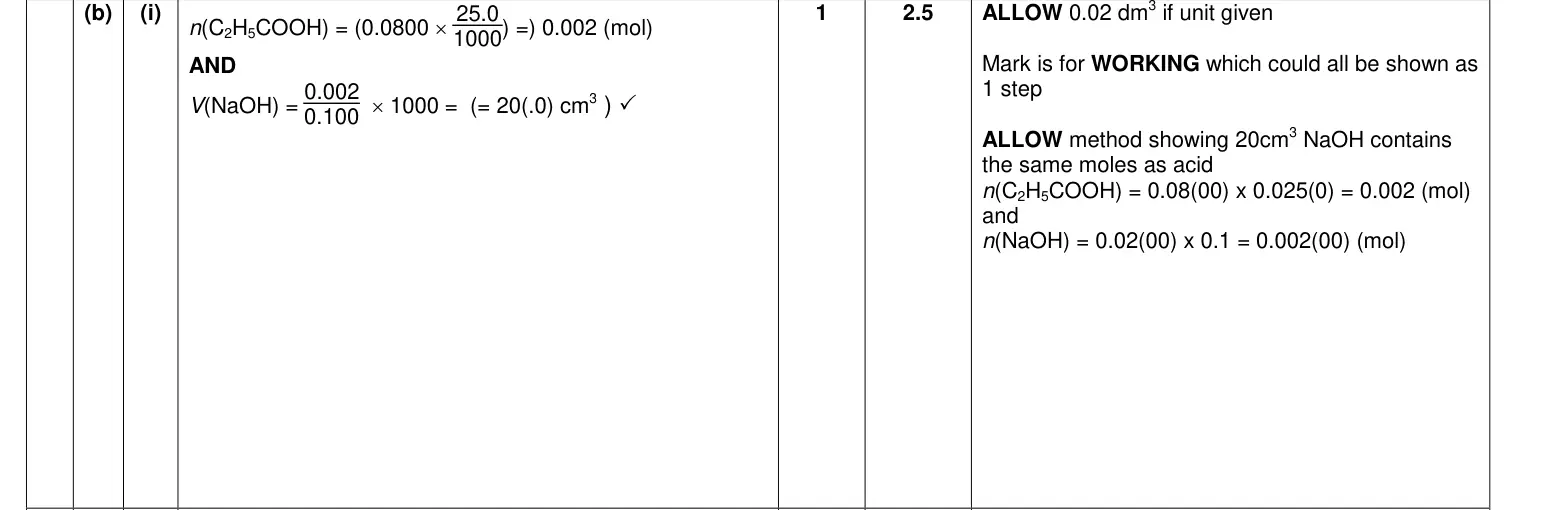
Showing by calculation something already known is a skill that some candidates find challenging. Many responses included rows of figures with ‘20 cm3’ appearing at the end. Clarity of working is essential and in questions such as this, candidates are advised to include word descriptions of what they are calculating, even if it is abbreviations such as ‘n’ for number of moles.
Skills: M0.2 Use ratios, fractions and percentages; M2.3 Substitute numerical values into algebraic equations using appropriate units for physical quantities
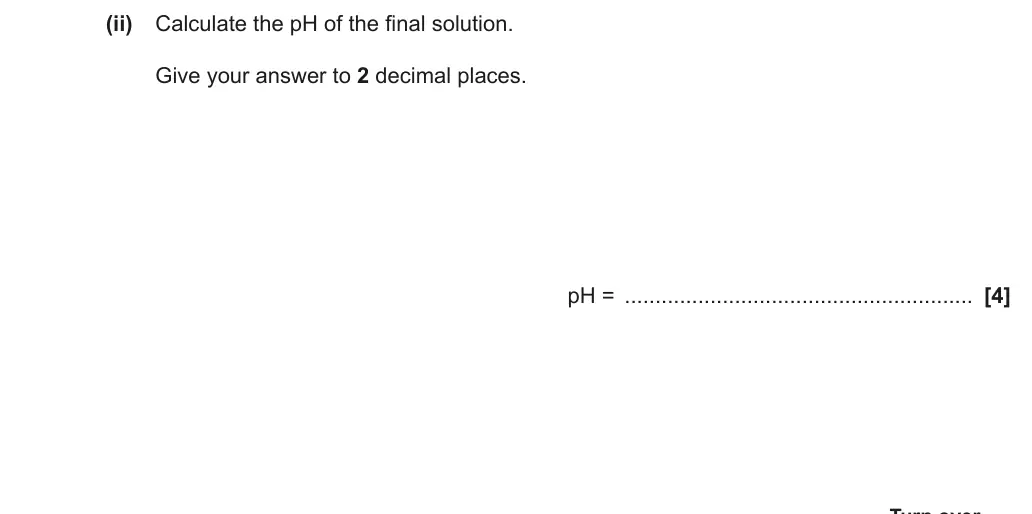
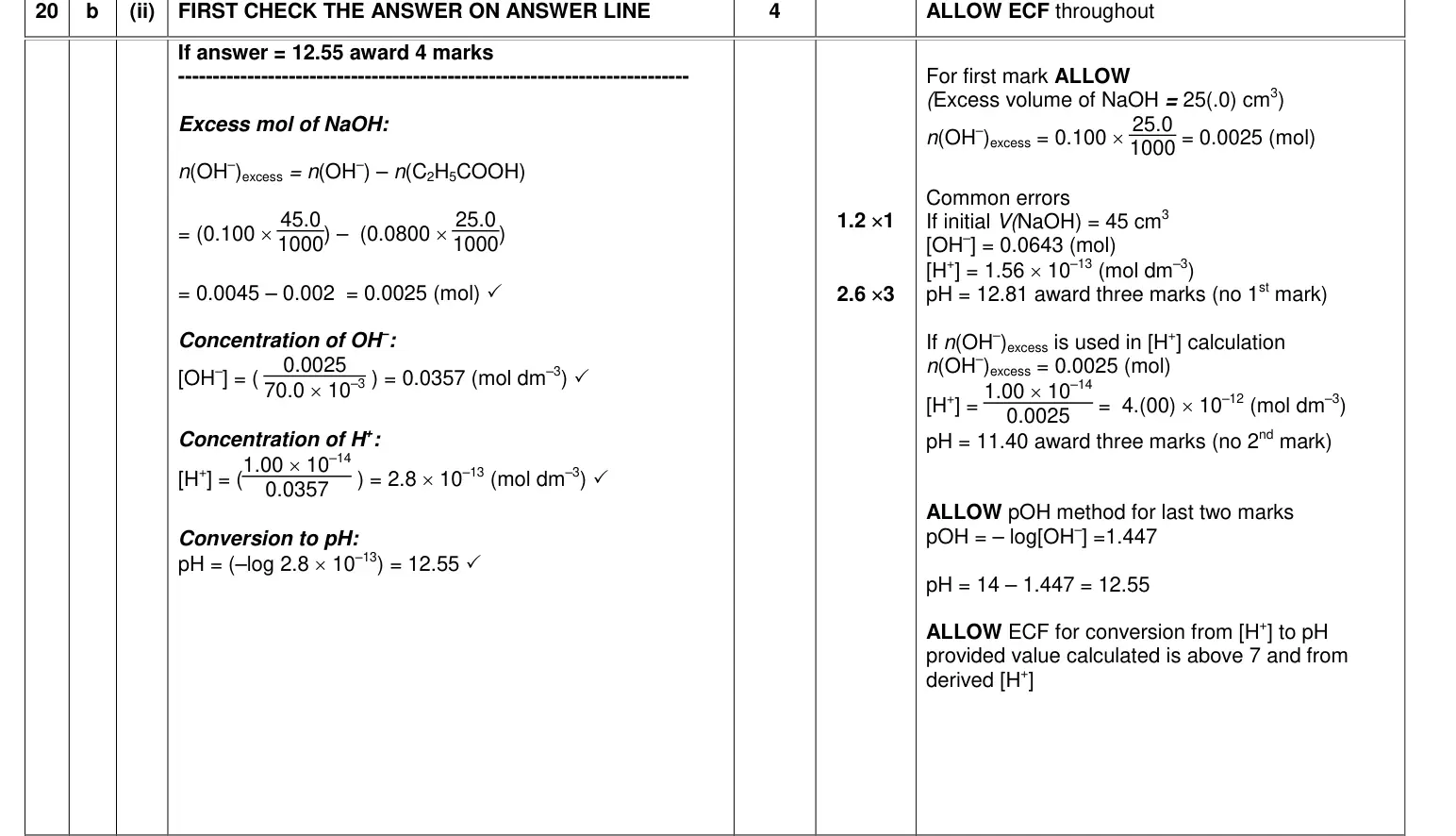
This calculation proved difficult with once again, many figures and sums appearing with little indication as to their relevance. Responses to 20bi/ii often featured rows of figures and random sums without a single word about what the figures were or sums were set to calculate. Candidates should remember to provide written indications of what it is they’re working out – presenting the calculations without any annotations can make it harder for error carried forward marks to be given if there is an error in their calculation.
Skills: M0.4 Use calculators to find and use power, exponential and logarithmic functions; M2.3 Substitute numerical values into algebraic equations using appropriate units for physical quantities; M2.5 Use logarithms in relation to quantities that range over several orders of magnitude
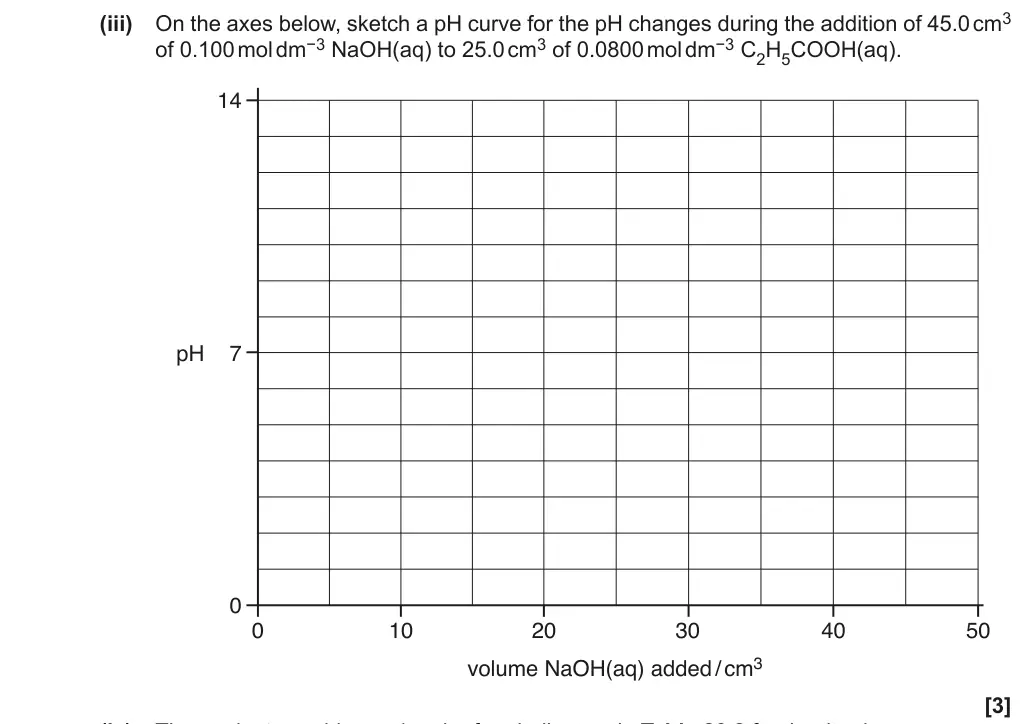
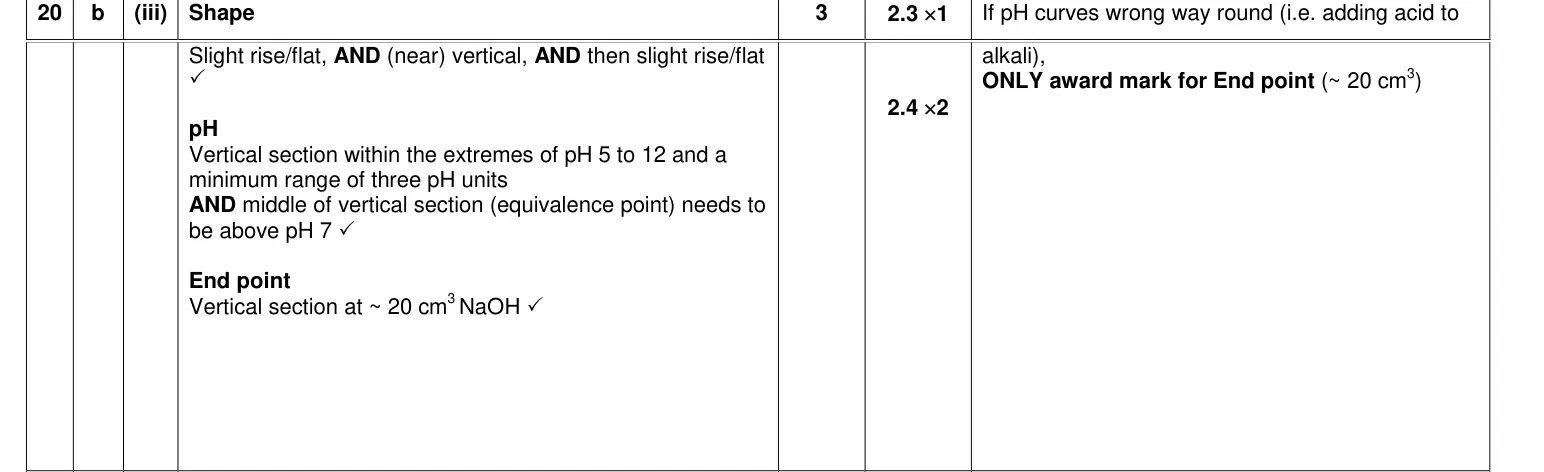
This weak acid / strong alkali titration curve required candidates to apply their knowledge. Some candidates found it difficult to draw an adequate titration curve. The key points to titration curves are: • A ‘vertical’ section at the end point • The vertical section with pH range correct to relative to the strength of acid/alkali • A correct equivalence point relative to pH 7 with respect to the strength of acid/alkali • A ‘shallow curve’ leading from 0 cm3 to vertical section • A ‘shallow curve’ leading from the vertical section to the total volume added For this reaction: • The vertical section was at 20 cm3 (given in 20bi) • As it was a weak acid and strong alkali reacting, the vertical section should start above pH 5 and finish around pH 11 • The equivalence point (half-way up the vertical section) for a weak acid / strong alkali titration should be above pH 7 • The starting pH should be that of the weak acid, C2H5COOH (answer to 20(a)) • The final pH should be that of the final solution (answer to 20(b)(ii))
Skills: M3.1 Translate information between graphical, numerical and algebraic forms
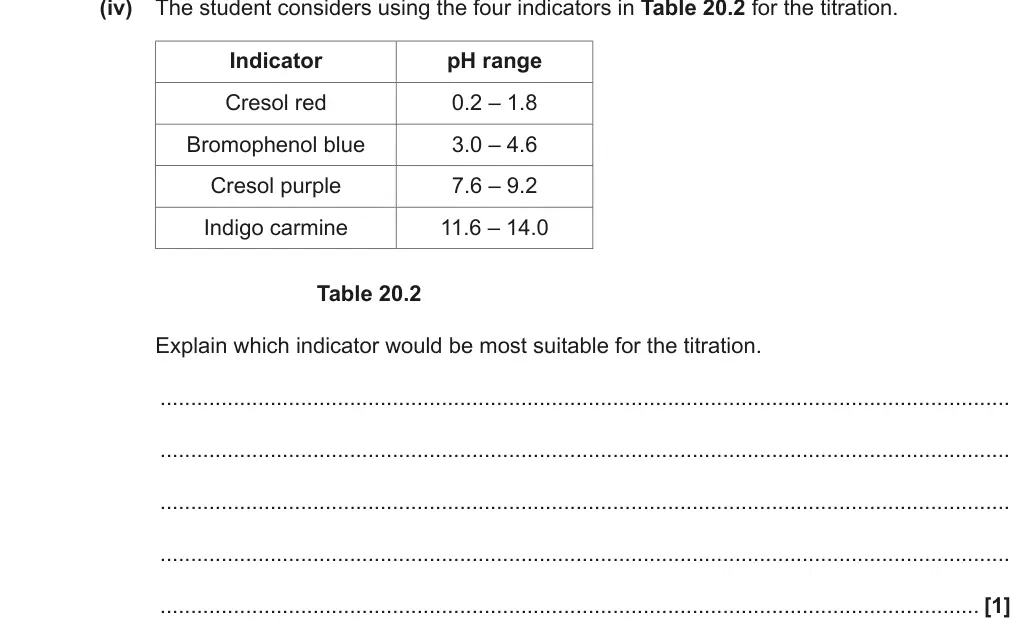
Some candidates realised that the most suitable indicator for a weak acid / strong alkali titration would be cresol purple. For incorrect responses, other indicators appeared to be selected at random, suggesting that candidates were unclear on the criteria for selected a suitable indicator.
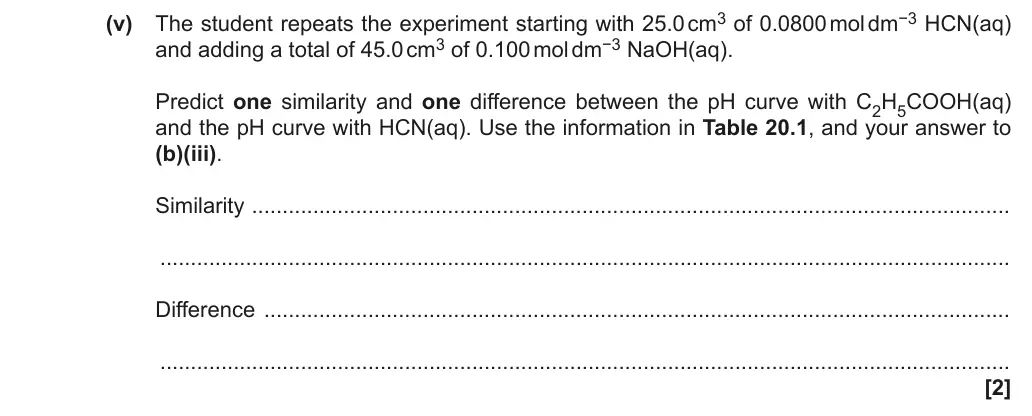
When identifying a similarity, many candidates confused the term ‘equivalence point’ with the term ‘end point’. For differences, many candidates realised that HCN had a different Ka to C2H5COOH but often did not appreciate that this would lead to a starting point with a higher pH.
Skills: M3.1 Translate information between graphical, numerical and algebraic forms
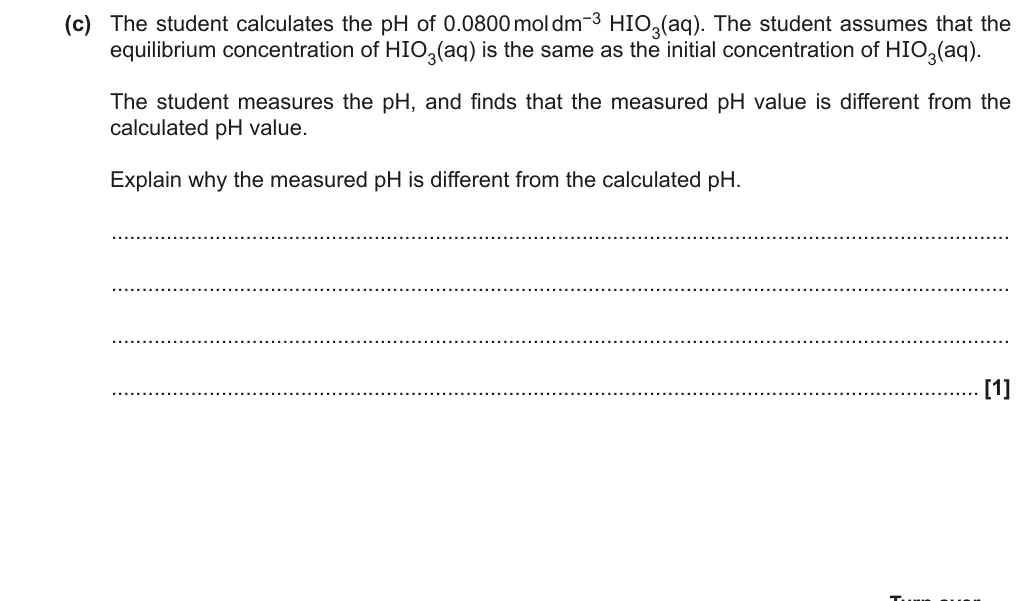
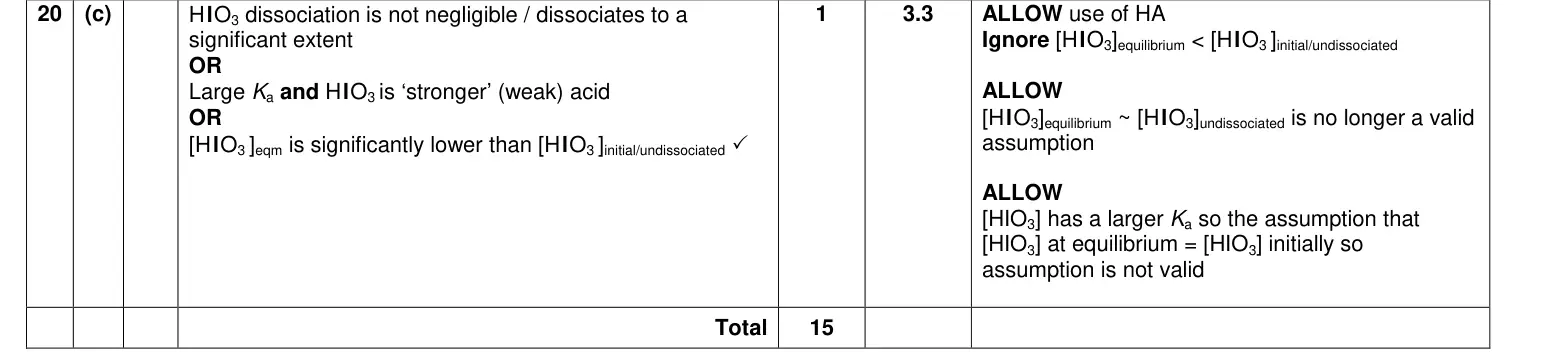
Very few candidates scored the mark for this question. The most common error was to write ‘HIO3 dissociates’. While correct, this is true of all weak acids. The subtlety in this question was to realise that because Ka was relatively high, the resultant acid strength would mean that the degree of dissociating was significant enough so initial [HIO3] was significantly less than [HIO3] at equilibrium. In other words, the assumption [HIO3]initial = [HIO3]equilibrium is not valid in this case.
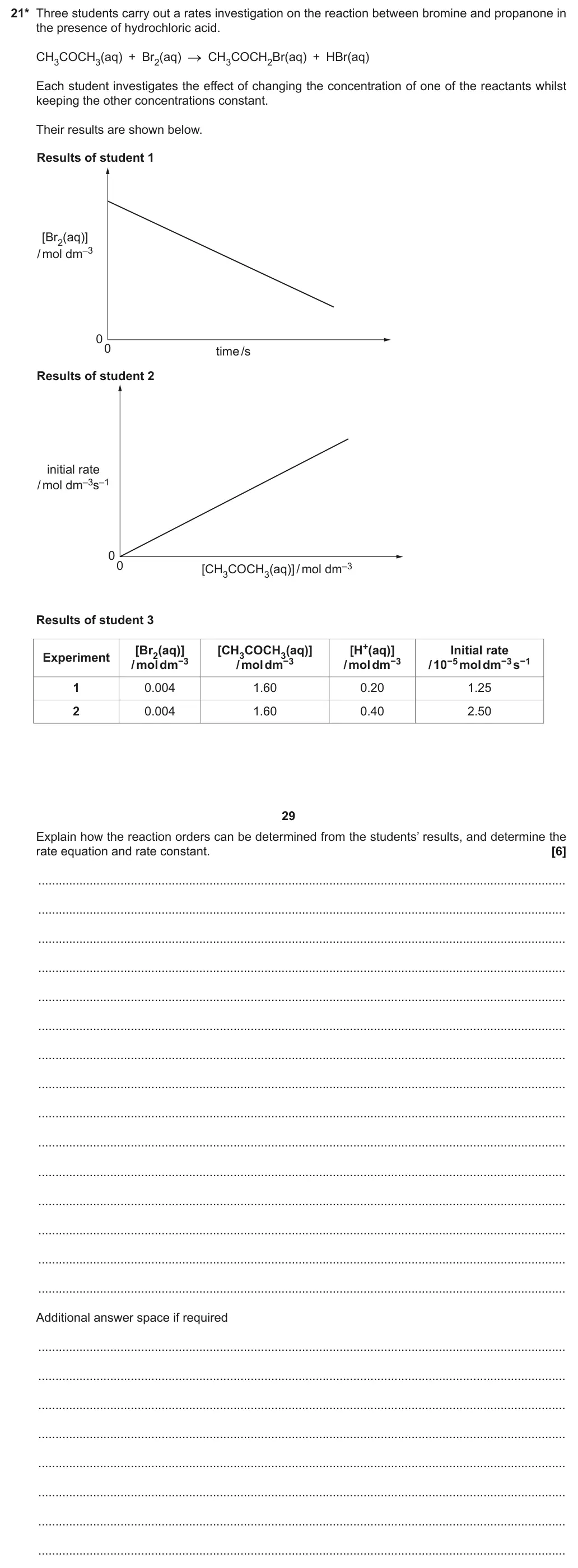
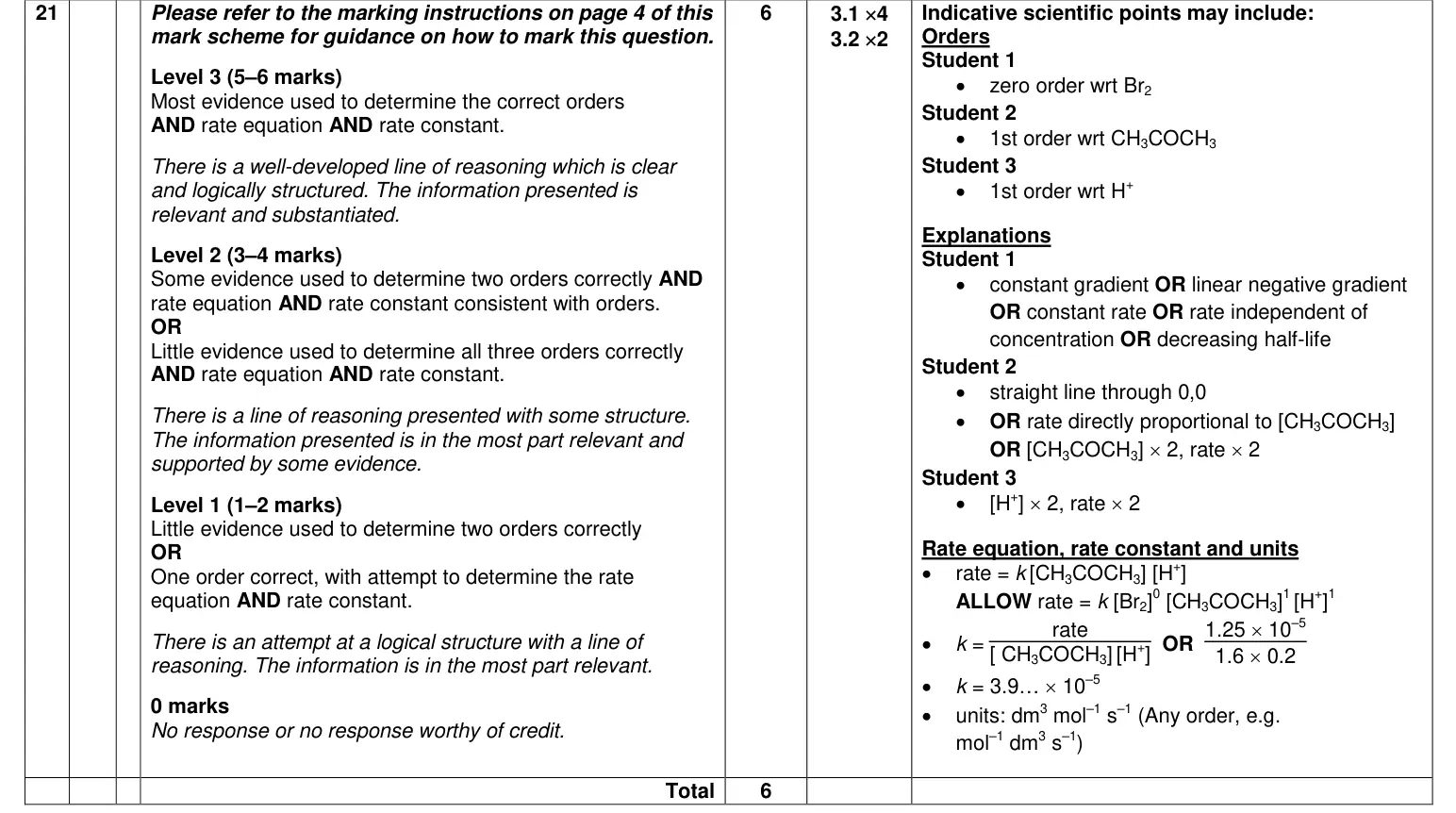
The second Level of Response question in the paper was also answered very well. Almost all candidates determined the order with respect to H+ to be first order and gave suitable explanations. A very high proportion of candidates determined the order with respect to CH3COCH3 to be first order and related this to the direct proportionality shown on the graph. The zero order with respect to Br2 proved a little more problematic with many candidates just giving an order with no attempted explanation. Having determined orders, nearly all candidates were able to give a corresponding rate equation and could calculate a value for the rate constant, albeit with frequent omission of units and forgetting that the initial rates given were in terms of 10–5. An example of a complete answer achieving L3 (6 marks) is given. This candidate gave each order clearly followed by a concise explanation of each choice. The rate equation (based on the orders given) is clearly stated, the calculation clearly shows working and correct units are given.
Skills: M0.0 Recognise and make use of appropriate units in calculations; M0.2 Use ratios, fractions and percentages; M2.3 Substitute numerical values into algebraic equations using appropriate units for physical quantities; M3.1 Translate information between graphical, numerical and algebraic forms; PAG10 Rates of reaction – initial rates; PAG9 Rates of reaction – continuous monitoring
Want a paper marked and gone through with you? Message us.