November 2021: AS Paper 2, Core Organic and Physical Chemistry

80 marks · 39 question parts · Paper, mark scheme and report on Edexcel's site · An autumn series, sat in place of the cancelled summer exams · Have the Data Booklet beside you

Question by question

QTopicMarksAOType
1 Introduction to organic chemistry 1Multiple choice
2(a)(i) Energetics I 3Diagram or structure
2(a)(ii) Energetics I 2Calculation
2(b) Equilibrium I 2Explanation
3 Kinetics I 1Multiple choice
4(a) Formulae, equations and amounts of substance 1Equation writing
4(b) Energetics I 1Multiple choice
4(c)(i) Formulae, equations and amounts of substance 2Calculation
4(c)(ii) Energetics I 4Calculation
4(c)(iii) Formulae, equations and amounts of substance 2Calculation
5(a) Alkanes, Formulae, equations and amounts of substance 2Equation writing
5(b)(i) Alkanes 2Explanation
5(b)(ii) Alkanes 2Explanation
5(c) Bonding 1Diagram or structure
6(a) Kinetics I 3Calculation
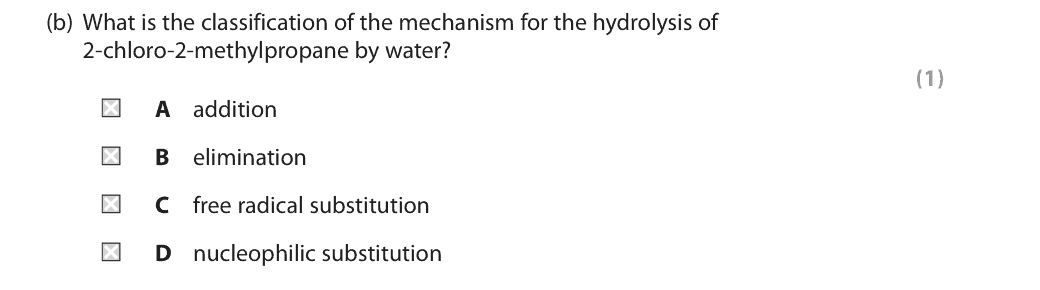
6(b) Halogenoalkanes, Introduction to organic chemistry 1Multiple choice
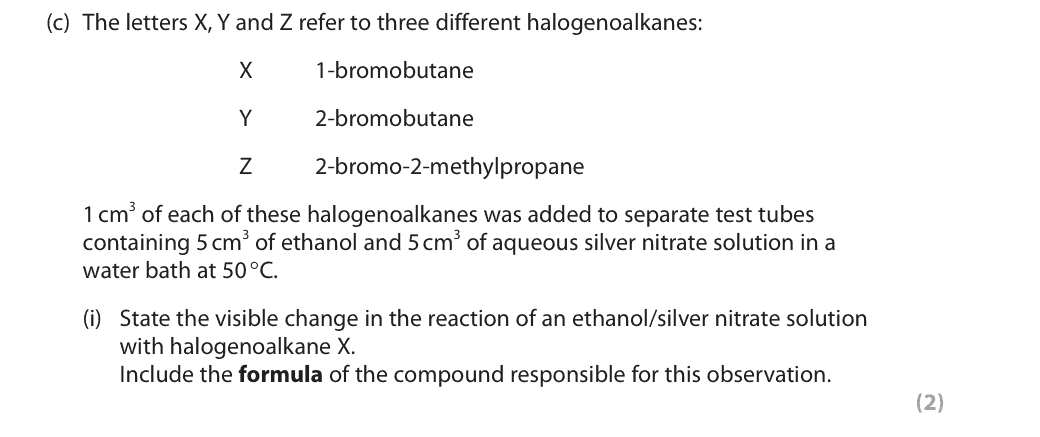
6(c)(i) Halogenoalkanes 2Practical and data analysis
6(c)(ii) Halogenoalkanes 1Multiple choice
6(d)(i) Halogenoalkanes 2Short answer
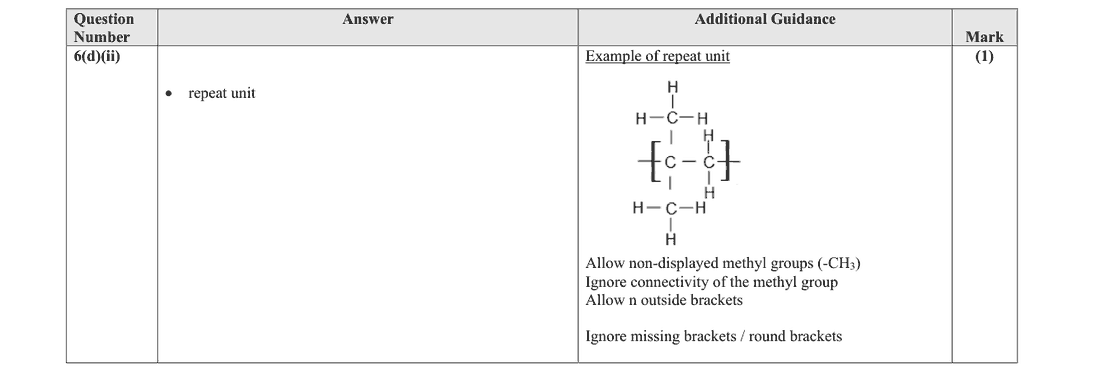
6(d)(ii) Alkenes 1Diagram or structure
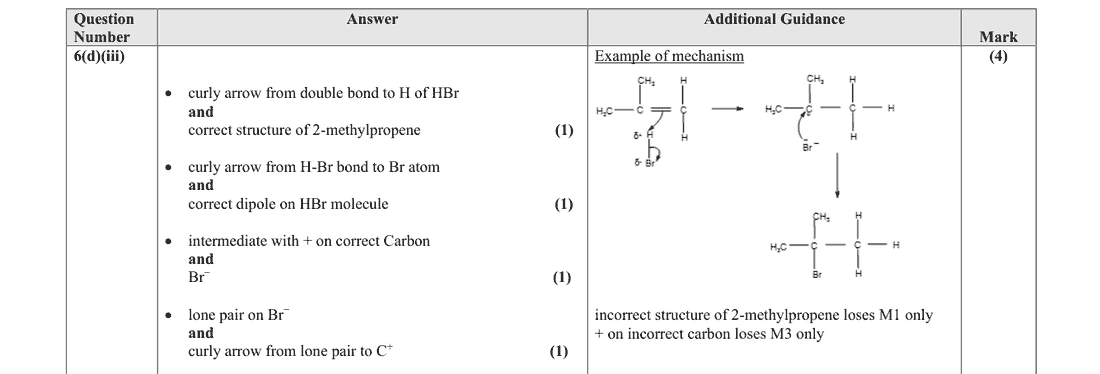
6(d)(iii) Alkenes 4Mechanism
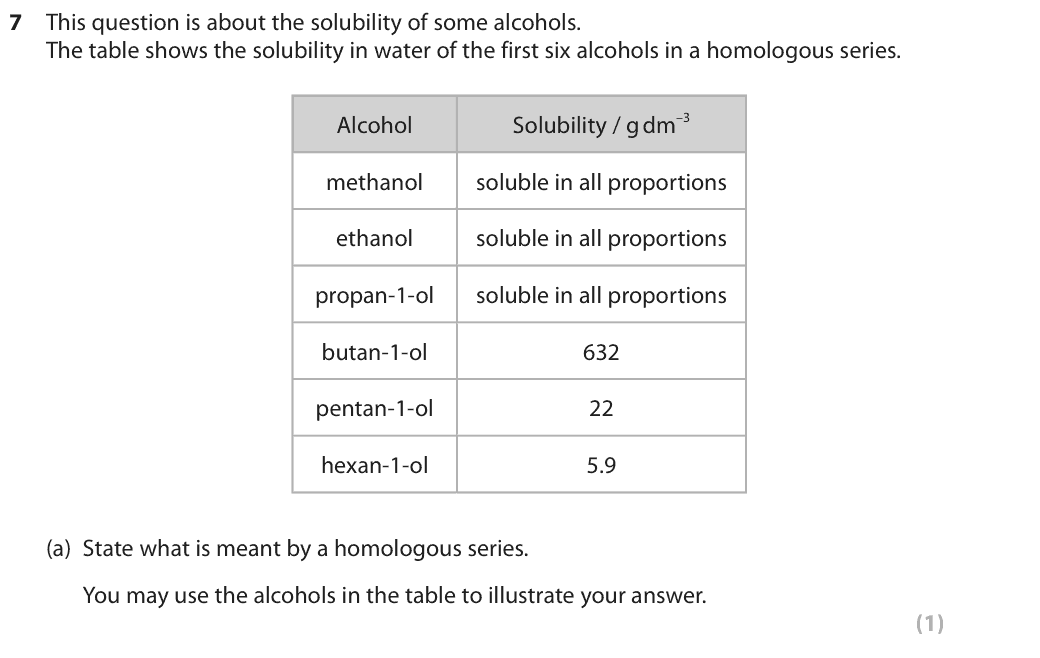
7(a) Introduction to organic chemistry 1Short answer
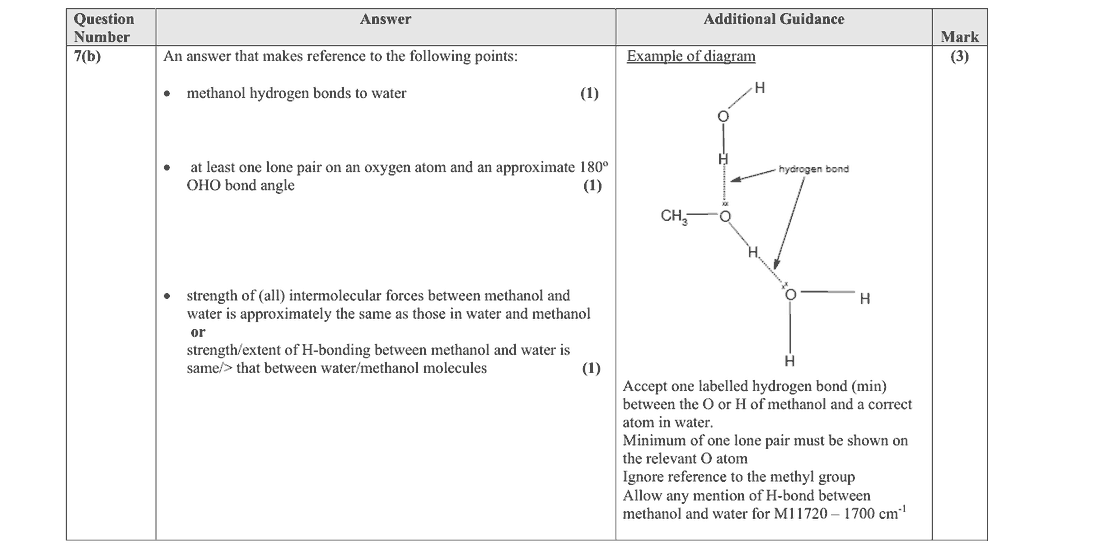
7(b) Bonding 3Explanation
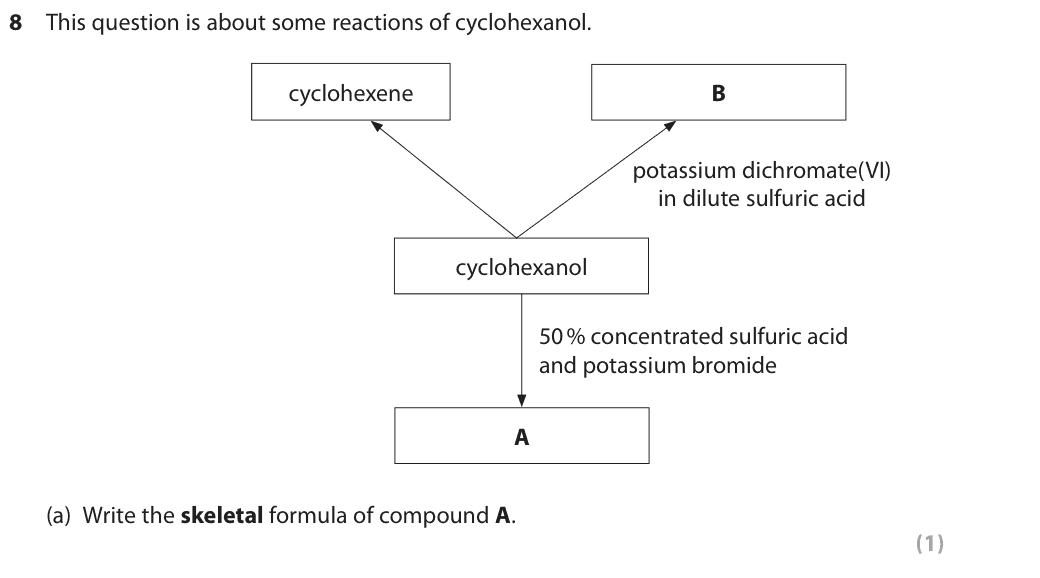
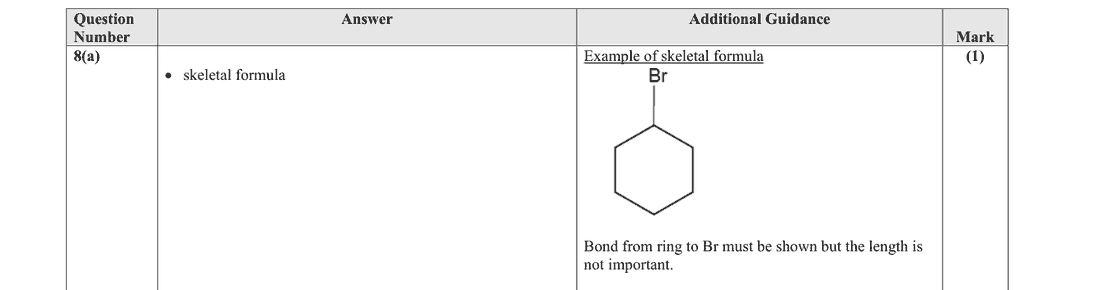
8(a) Alcohols 1Diagram or structure
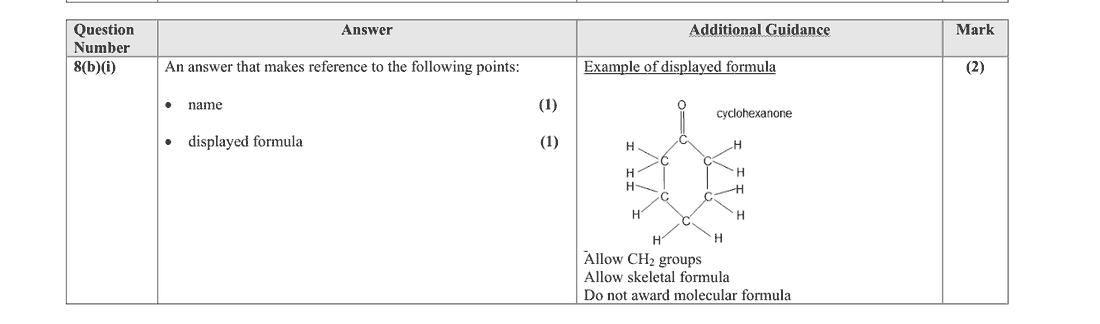
8(b)(i) Alcohols, Introduction to organic chemistry 2Short answer
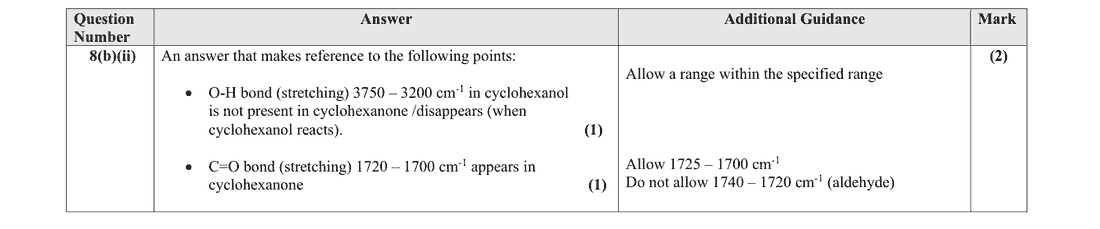
8(b)(ii) Modern analytical techniques I: mass spectrometry and infrared 2Short answer
8(b)(iii) Modern analytical techniques I: mass spectrometry and infrared 1Short answer
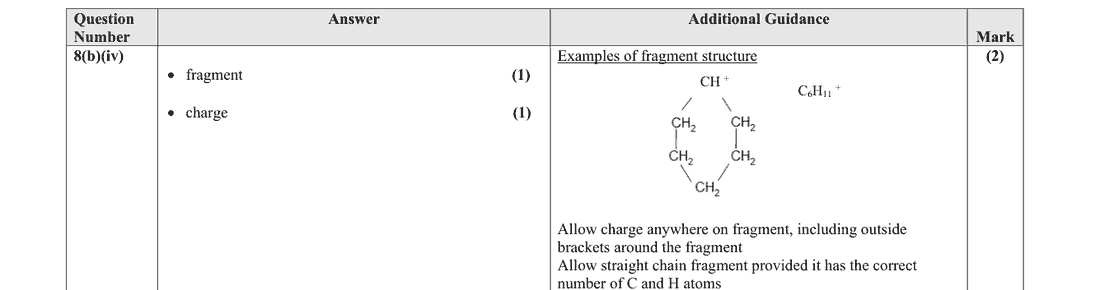
8(b)(iv) Modern analytical techniques I: mass spectrometry and infrared 2Short answer
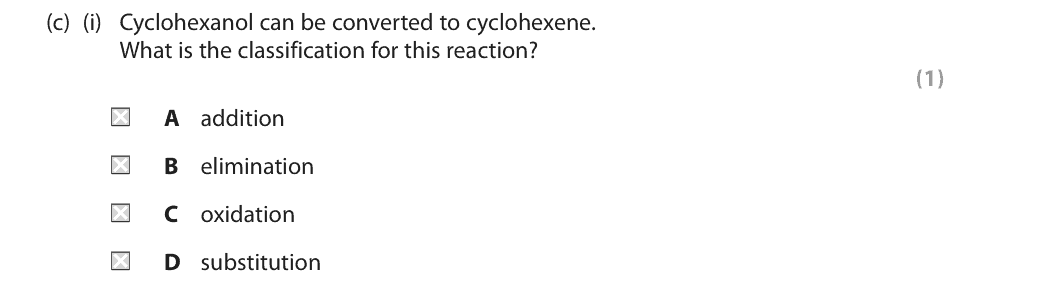
8(c)(i) Introduction to organic chemistry 1Multiple choice
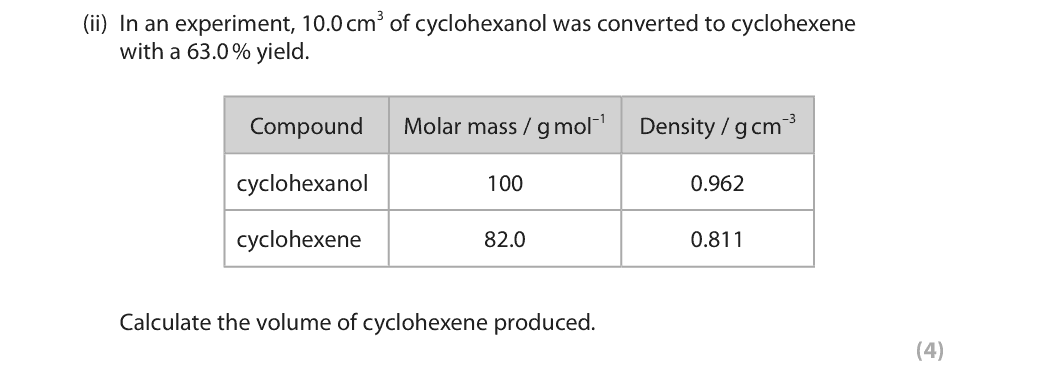
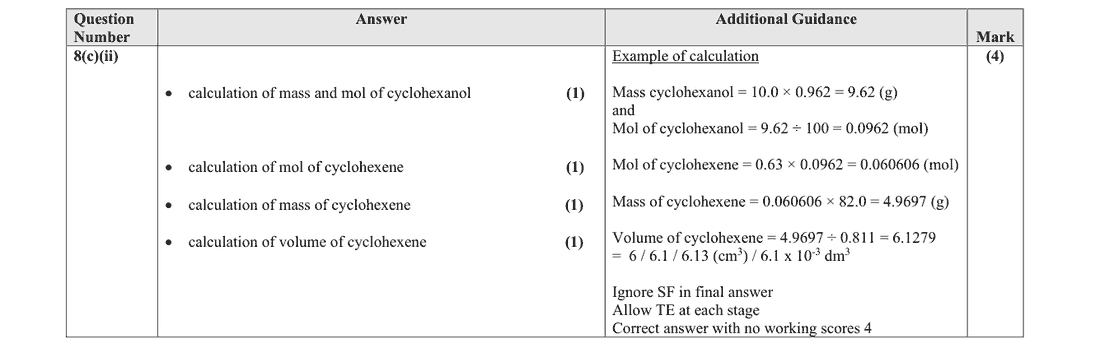
8(c)(ii) Formulae, equations and amounts of substance 4Calculation
8(c)(iii) Alcohols 6Extended response
9(a)(i) Energetics I 3Calculation
9(a)(ii) Energetics I 2Short answer
9(a)(iii) Formulae, equations and amounts of substance 1Multiple choice
9(a)(iv) Equilibrium I 1Multiple choice
9(b) Equilibrium I 3Short answer
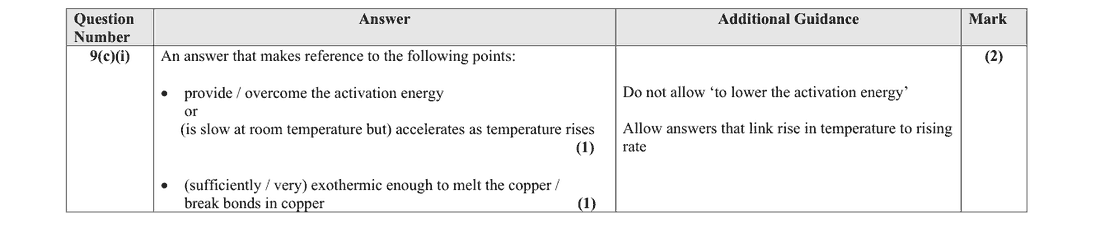
9(c)(i) Kinetics I 2Short answer
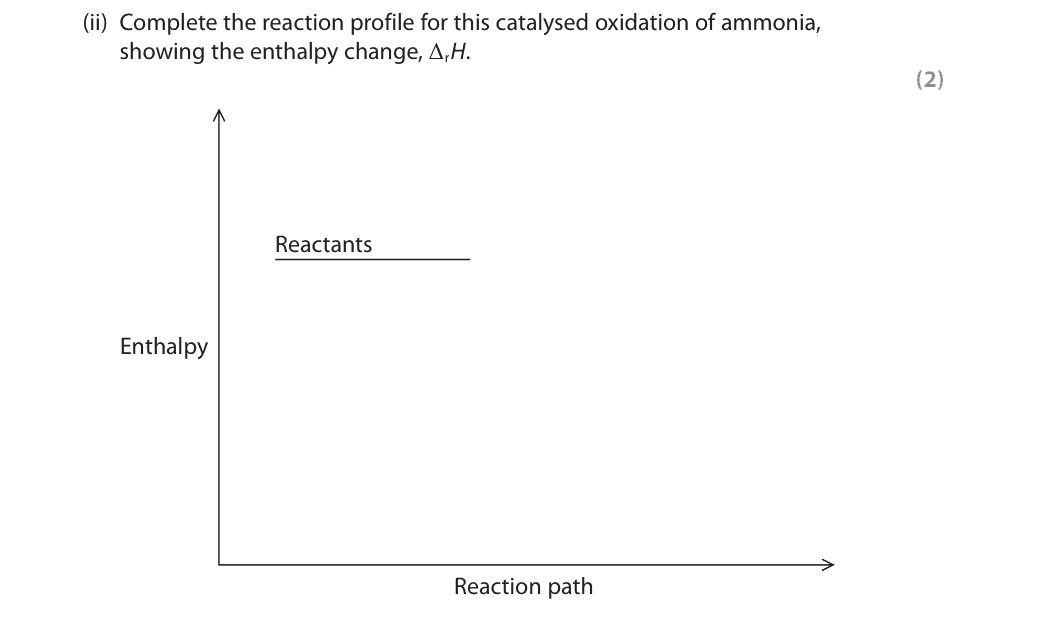
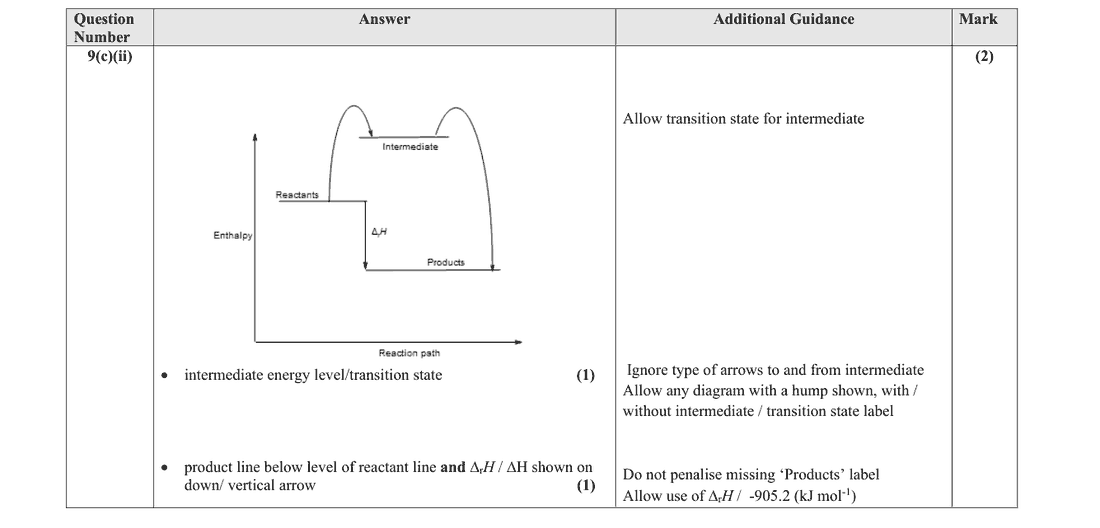
9(c)(ii) Kinetics I 2Diagram or structure
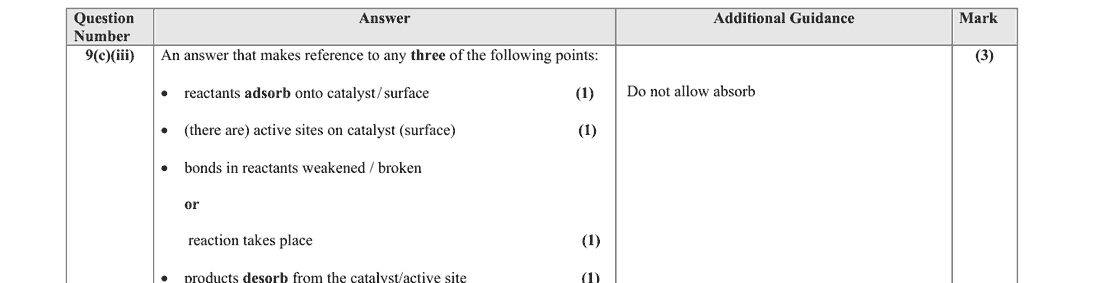
9(c)(iii) Kinetics I 3Short answer

The questions

12(a)(i)2(a)(ii)2(b)34(a)4(b)4(c)(i)4(c)(ii)4(c)(iii)5(a)5(b)(i)5(b)(ii)5(c)6(a)6(b)6(c)(i)6(c)(ii)6(d)(i)6(d)(ii)6(d)(iii)7(a)7(b)8(a)8(b)(i)8(b)(ii)8(b)(iii)8(b)(iv)8(c)(i)8(c)(ii)8(c)(iii)9(a)(i)9(a)(ii)9(a)(iii)9(a)(iv)9(b)9(c)(i)9(c)(ii)9(c)(iii)
November 2021 · AS Paper 2 · Q1 1 mark Multiple choice introduction to organic chemistry
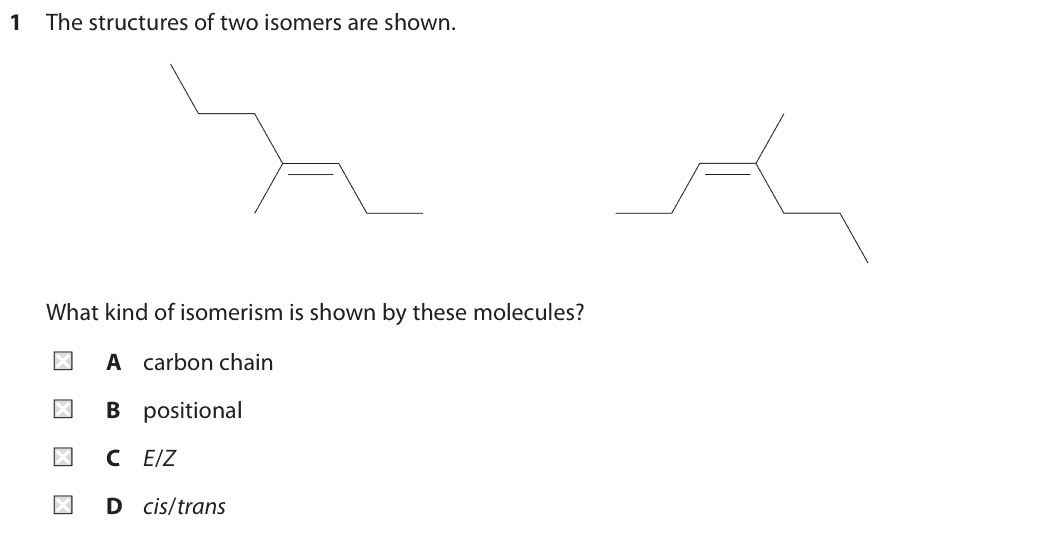
The structures of two isomers are shown.
What kind of isomerism is shown by these molecules?
A  carbon chain
B  positional
C  E/Z
D  cis/trans
November 2021 · AS Paper 2 · Q2(a)(i) 3 marks Diagram or structure energetics i
Phosphorus(V) chloride, PCl5 , can be thermally decomposed to
phosphorus(III) chloride, PCl3 , and chlorine, Cl2 . The equation for this reaction is
PCl5(g)  →  PCl3(g)  +  Cl2(g)
The enthalpy change for this reaction cannot be measured directly.
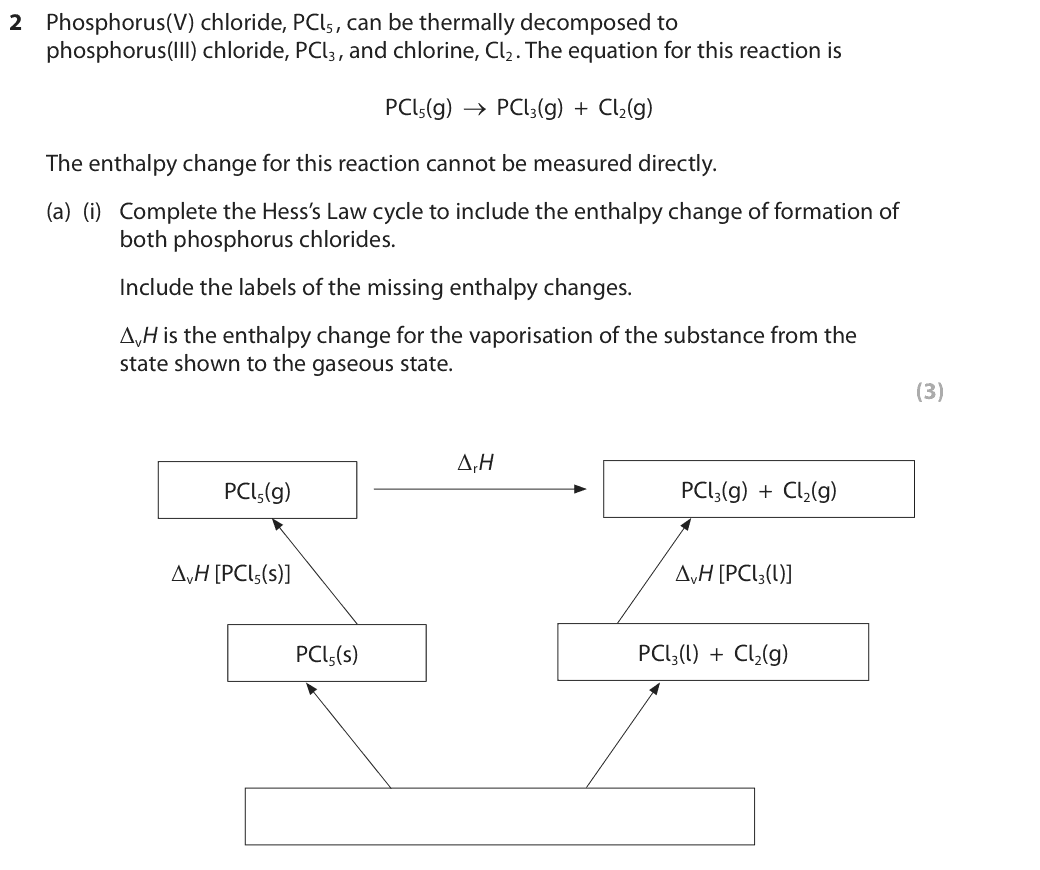
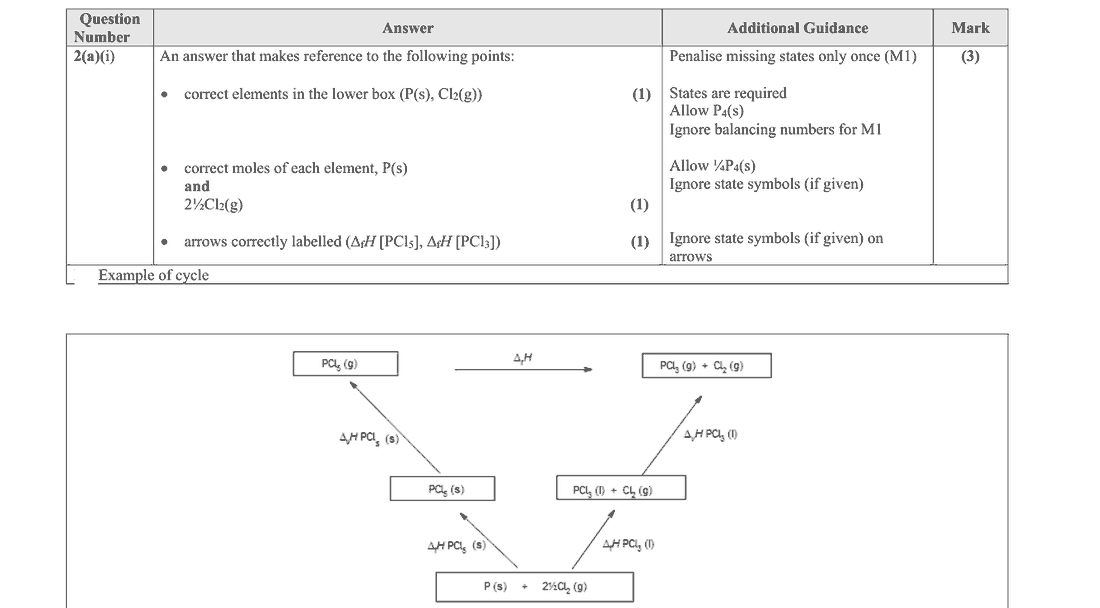
Complete the Hess’s Law cycle to include the enthalpy change of formation of
both phosphorus chlorides.
Include the labels of the missing enthalpy changes.
ΔvH is the enthalpy change for the vaporisation of the substance from the
state shown to the gaseous state.
ΔrH
PCl5(g)
PCl3(g)  +  Cl2(g)
ΔvH [PCl5(s)]
ΔvH [PCl3(l)]
PCl5(s)
PCl3(l)  +  Cl2(g)
November 2021 · AS Paper 2 · Q2(a)(ii) 2 marks Calculation energetics i
Earlier part of question 2 that this part usesEarlier part of November 2021 Paper 2 question 2
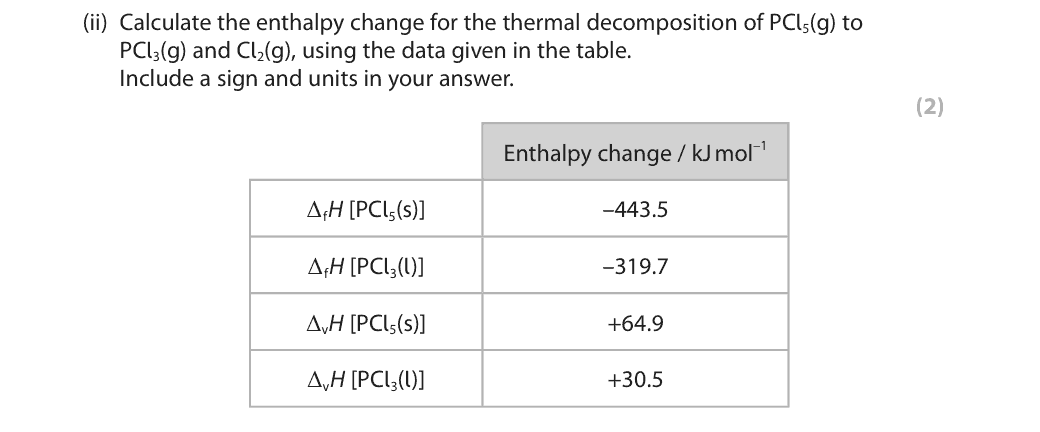
Calculate the enthalpy change for the thermal decomposition of PCl5(g) to
PCl3(g) and Cl2(g), using the data given in the table.
Include a sign and units in your answer.
Enthalpy change / kJ mol–1
ΔfH [PCl5(s)]
–443.5
ΔfH [PCl3(l)]
–319.7
ΔvH [PCl5(s)]
+64.9
ΔvH [PCl3(l)]
+30.5
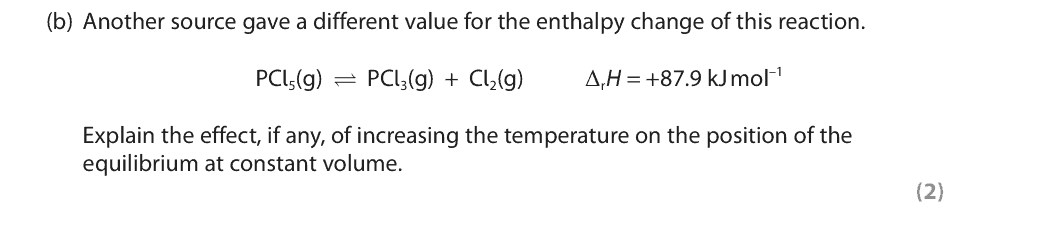
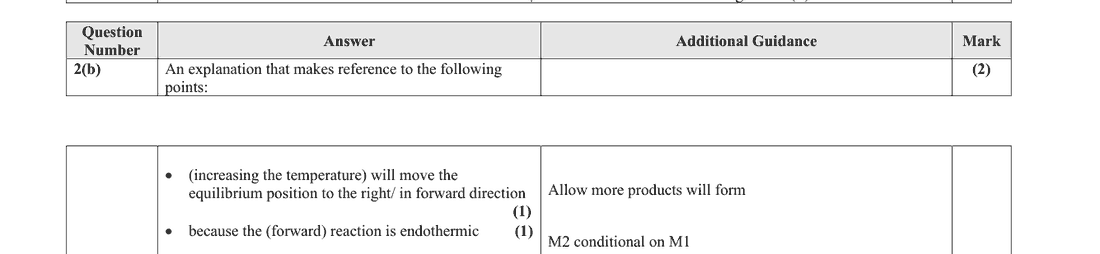
November 2021 · AS Paper 2 · Q2(b) 2 marks Explanation equilibrium i
Earlier part of question 2 that this part usesEarlier part of November 2021 Paper 2 question 2
Another source gave a different value for the enthalpy change of this reaction.
PCl5(g)    PCl3(g)  +  Cl2(g)            ΔrH = +87.9 kJ mol–1
Explain the effect, if any, of increasing the temperature on the position of the
equilibrium at constant volume.
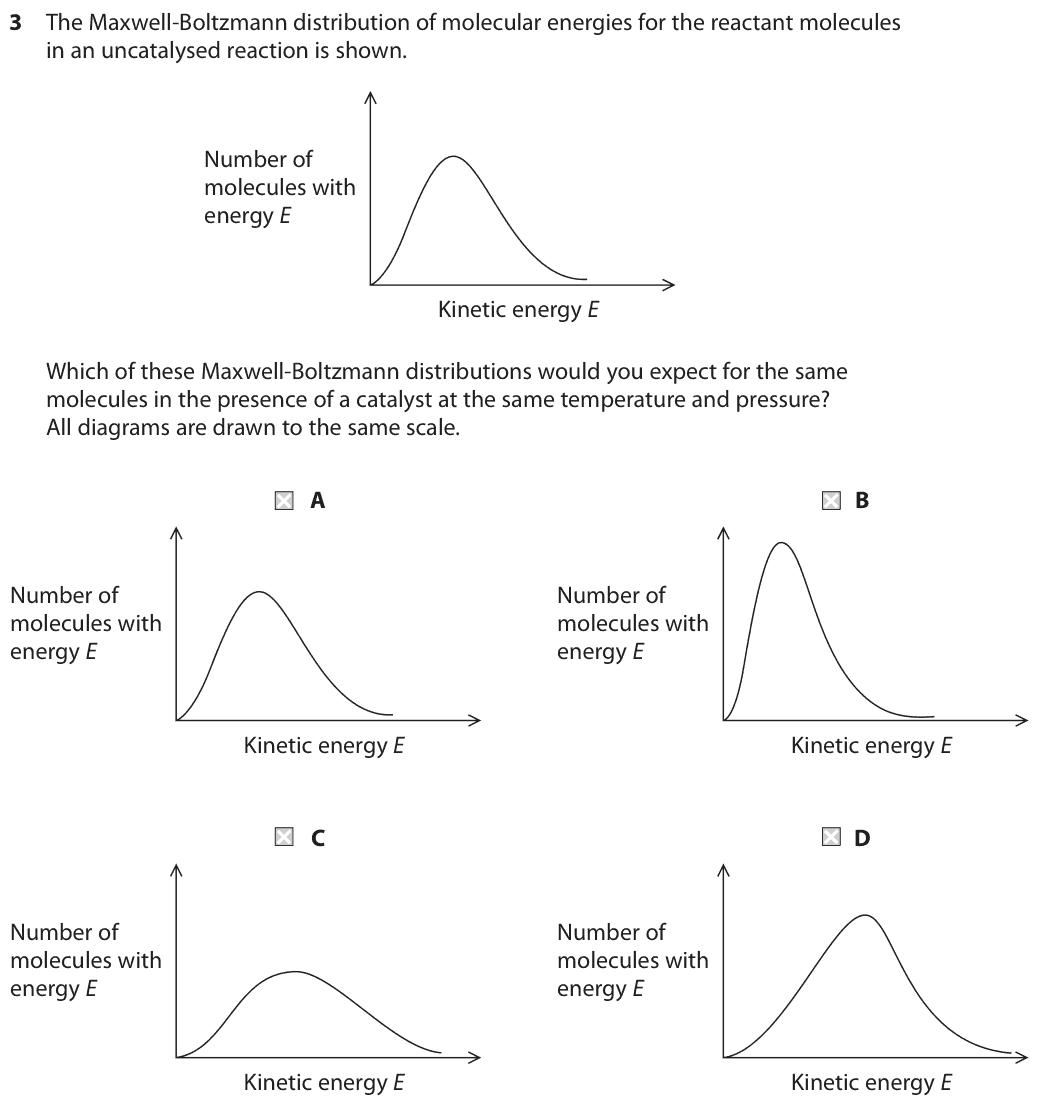
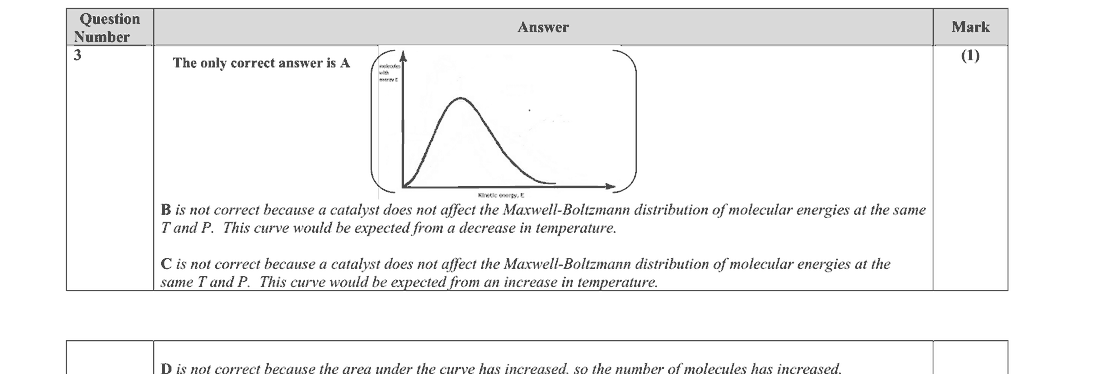
November 2021 · AS Paper 2 · Q3 1 mark Multiple choice kinetics i
The Maxwell‑Boltzmann distribution of molecular energies for the reactant molecules
in an uncatalysed reaction is shown.
Number of
molecules with
energy E
Kinetic energy E
Which of these Maxwell‑Boltzmann distributions would you expect for the same
molecules in the presence of a catalyst at the same temperature and pressure?
All diagrams are drawn to the same scale.
A
B
Number of
Number of
molecules with
molecules with
energy E
energy E
Kinetic energy E
Kinetic energy E
C
D
Number of
Number of
molecules with
molecules with
energy E
energy E
Kinetic energy E
Kinetic energy E
November 2021 · AS Paper 2 · Q4(a) 1 mark Equation writing formulae equations and amounts of substance
When solid calcium sulfate dihydrate, CaSO4·2H2O, is heated in a crucible, it forms
solid calcium sulfate hemihydrate, CaSO4·½H2O.
Write an equation, including state symbols, for this reaction.

November 2021 · AS Paper 2 · Q4(b) 1 mark Multiple choice energetics i
Earlier part of question 4 that this part usesEarlier part of November 2021 Paper 2 question 4
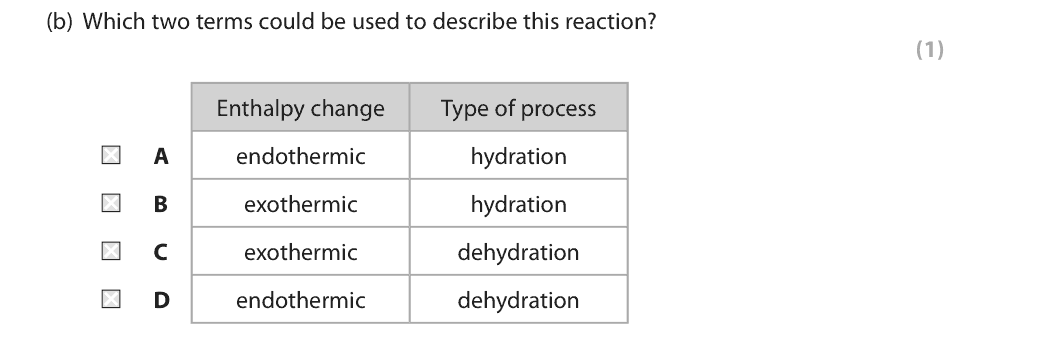
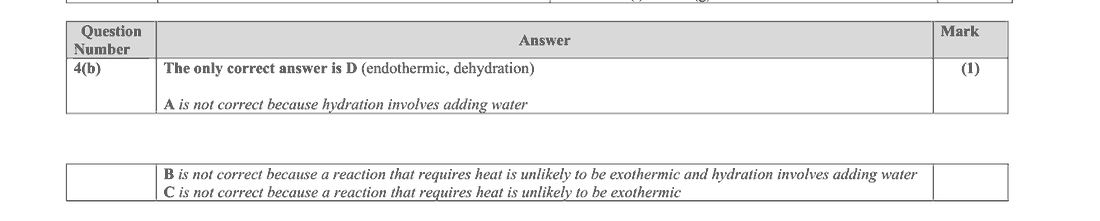
Which two terms could be used to describe this reaction?
Enthalpy change
Type of process
A
endothermic
hydration
B
exothermic
hydration
C
exothermic
dehydration
D
endothermic
dehydration
November 2021 · AS Paper 2 · Q4(c)(i) 2 marks Calculation Hard formulae equations and amounts of substance
Earlier part of question 4 that this part usesEarlier part of November 2021 Paper 2 question 4
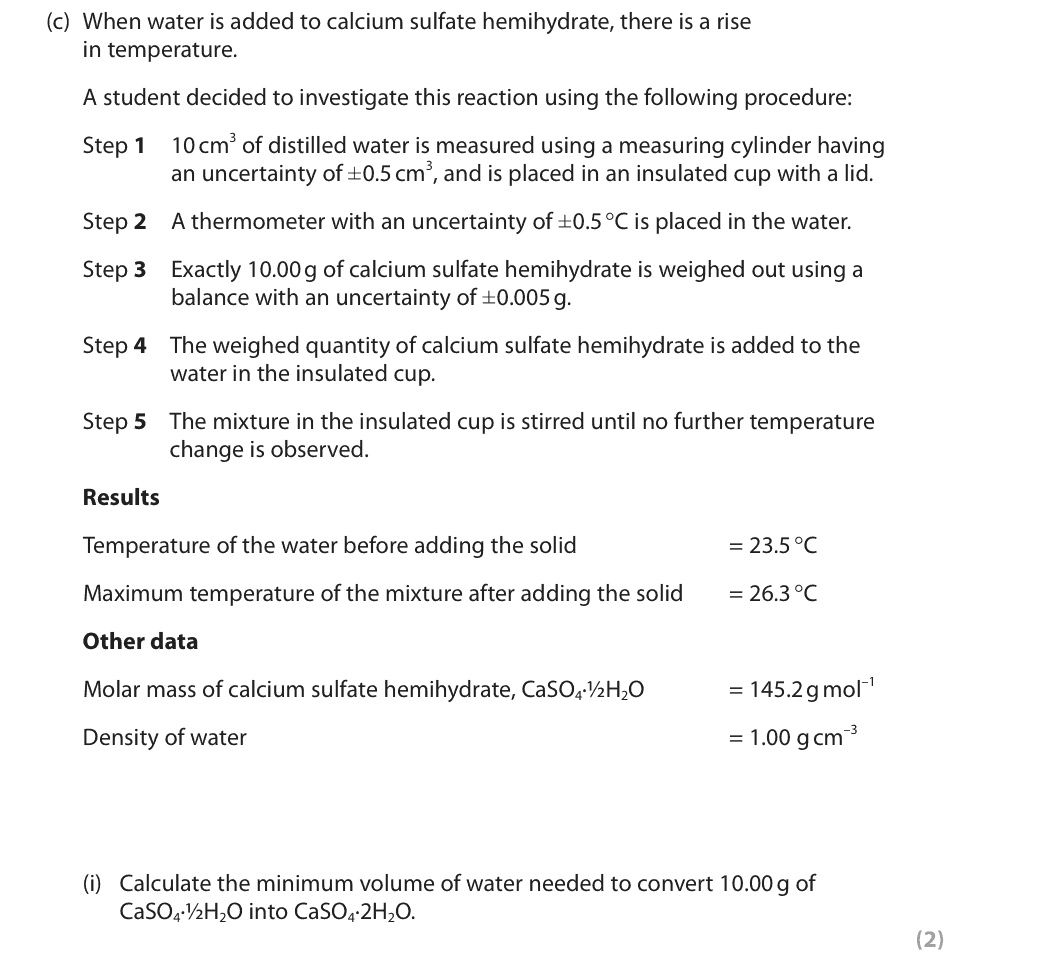
When water is added to calcium sulfate hemihydrate, there is a rise
in temperature.
A student decided to investigate this reaction using the following procedure:
Step 1    10 cm3 of distilled water is measured using a measuring cylinder having
an uncertainty of ±0.5 cm3, and is placed in an insulated cup with a lid.
Step 2    A thermometer with an uncertainty of ±0.5 °C is placed in the water.
Step 3    Exactly 10.00 g of calcium sulfate hemihydrate is weighed out using a
balance with an uncertainty of ±0.005 g.
Step 4    The weighed quantity of calcium sulfate hemihydrate is added to the
water in the insulated cup.
Step 5    The mixture in the insulated cup is stirred until no further temperature
change is observed.
Results
Temperature of the water before adding the solid
= 23.5 °C
Maximum temperature of the mixture after adding the solid
= 26.3 °C
Other data
Molar mass of calcium sulfate hemihydrate, CaSO4·½H2O
= 145.2 g mol–1
Density of water
= 1.00 g cm–3
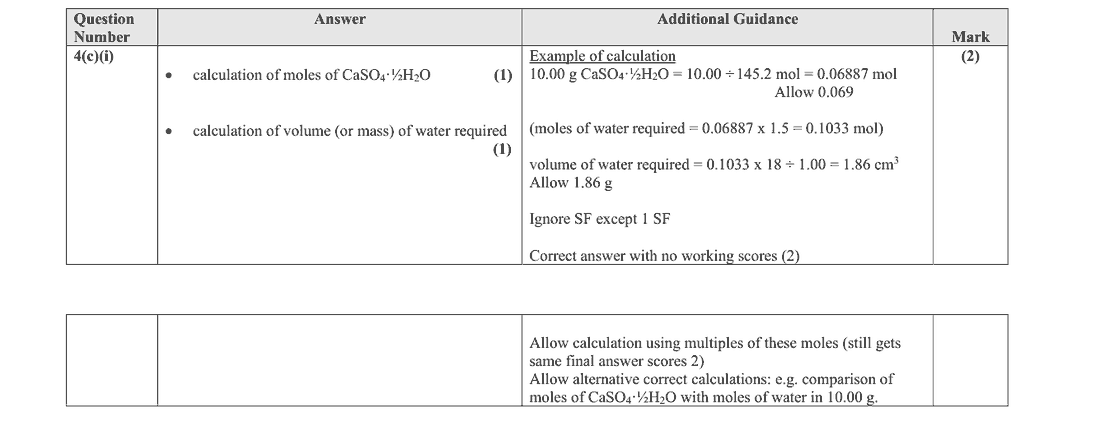
Calculate the minimum volume of water needed to convert 10.00 g of
CaSO4·½H2O into CaSO4·2H2O.
November 2021 · AS Paper 2 · Q4(c)(ii) 4 marks Calculation energetics i
Earlier parts of question 4 that this part usesEarlier part of November 2021 Paper 2 question 4Earlier part of November 2021 Paper 2 question 4
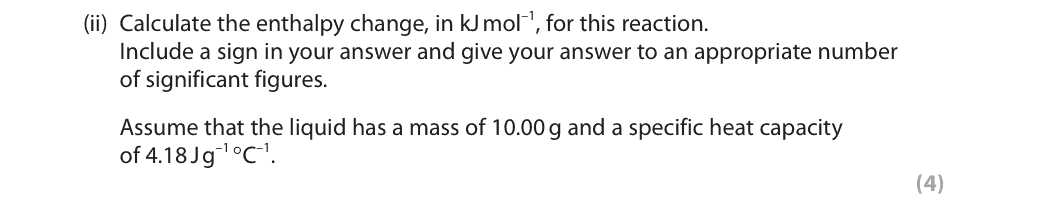
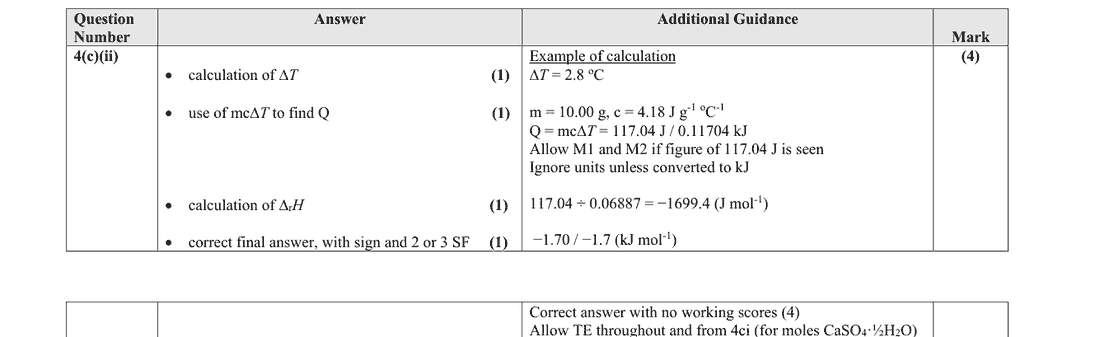
Calculate the enthalpy change, in kJ mol–1, for this reaction.

Include a sign in your answer and give your answer to an appropriate number
of significant figures.
Assume that the liquid has a mass of 10.00 g and a specific heat capacity
of 4.18 J g–1 °C–1.
November 2021 · AS Paper 2 · Q4(c)(iii) 2 marks Calculation formulae equations and amounts of substance
Earlier parts of question 4 that this part usesEarlier part of November 2021 Paper 2 question 4Earlier part of November 2021 Paper 2 question 4Earlier part of November 2021 Paper 2 question 4
Deduce which measurement has the greatest uncertainty in this experiment.
Justify your answer by calculating the percentage uncertainty of this piece
of apparatus.
November 2021 · AS Paper 2 · Q5(a) 2 marks Equation writing alkanesformulae equations and amounts of substance
This question concerns the combustion of fossil fuels in power stations.
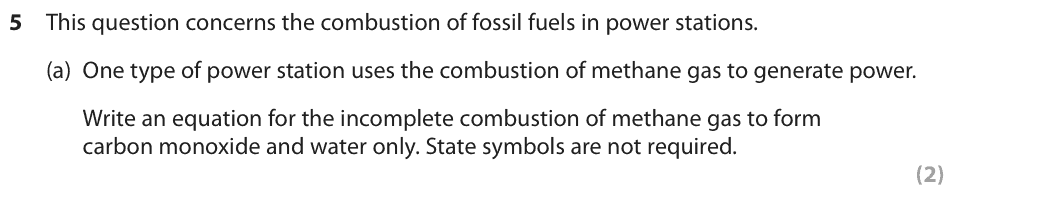
One type of power station uses the combustion of methane gas to generate power.
Write an equation for the incomplete combustion of methane gas to form
carbon monoxide and water only. State symbols are not required.
November 2021 · AS Paper 2 · Q5(b)(i) 2 marks Explanation alkanes
One of the problems associated with the combustion of some fossil fuels is the
production of acidic gases, including the oxides of nitrogen and sulfur.
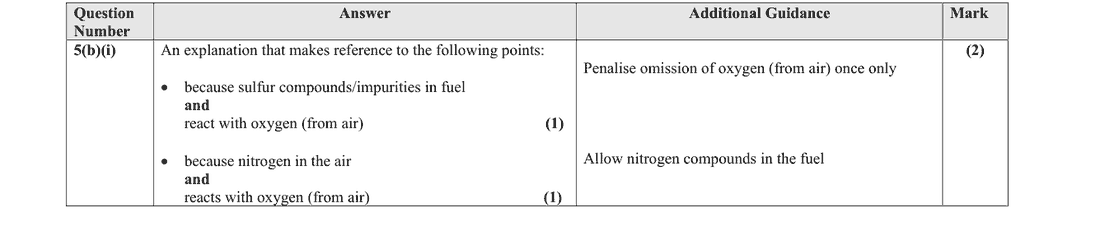
Explain how oxides of sulfur and nitrogen can be formed from the combustion
of fossil fuels.
November 2021 · AS Paper 2 · Q5(b)(ii) 2 marks Explanation alkanes
Earlier parts of question 5 that this part usesEarlier part of November 2021 Paper 2 question 5Earlier part of November 2021 Paper 2 question 5
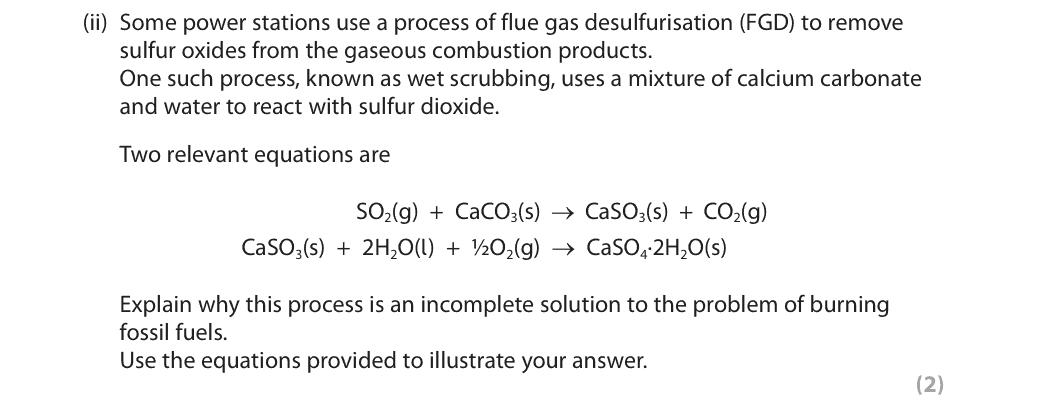
Some power stations use a process of flue gas desulfurisation (FGD) to remove
sulfur oxides from the gaseous combustion products.
One such process, known as wet scrubbing, uses a mixture of calcium carbonate
and water to react with sulfur dioxide.
Two relevant equations are
SO2(g)  +  CaCO3(s)  →  CaSO3(s)  +  CO2(g)
CaSO3(s)  +  2H2O(l)  +  ½O2(g)  →  CaSO4·2H2O(s)
Explain why this process is an incomplete solution to the problem of burning
fossil fuels.
Use the equations provided to illustrate your answer.
November 2021 · AS Paper 2 · Q5(c) 1 mark Diagram or structure bonding
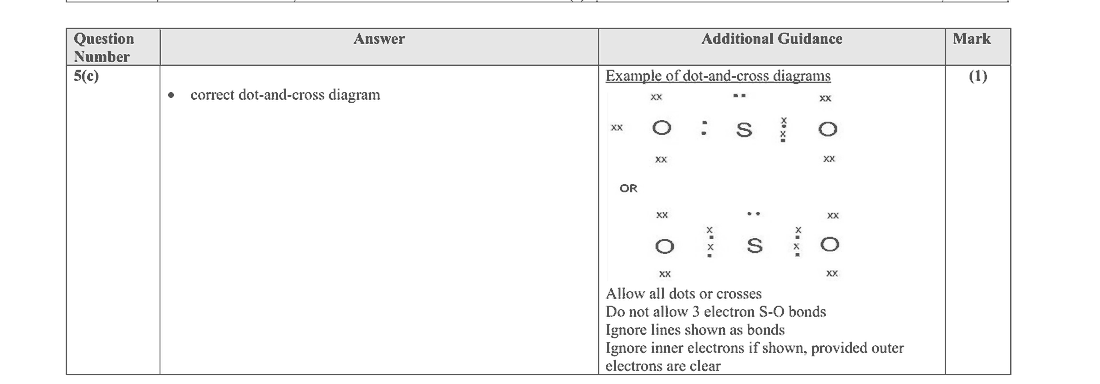
Draw a dot‑and‑cross diagram for sulfur dioxide, showing outer electrons only.
November 2021 · AS Paper 2 · Q6(a) 3 marks Calculation kinetics i
This question is about halogenoalkanes.
2‑chloro‑2‑methylpropane can be hydrolysed by water.
The equation for this reaction is
(CH3)3CCl  +  H2O  →  (CH3)3COH  +  H+  +  Cl−
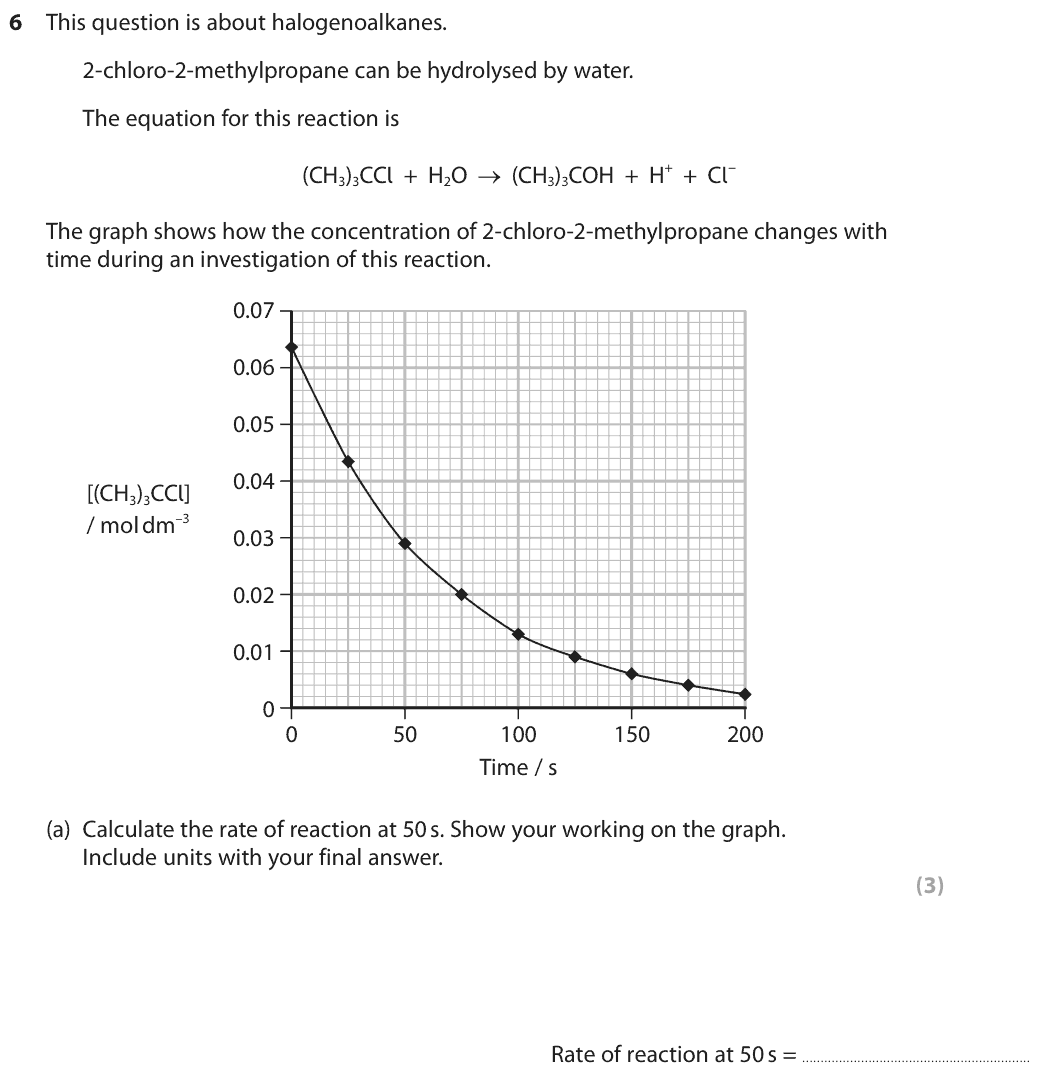
The graph shows how the concentration of 2‑chloro‑2‑methylpropane changes with
time during an investigation of this reaction.

0.07
0.06
0.05
0.04
[(CH3)3CCl]
/ mol dm–3
0.03
0.02
0.01
0
0
50
100
150
200
Time / s
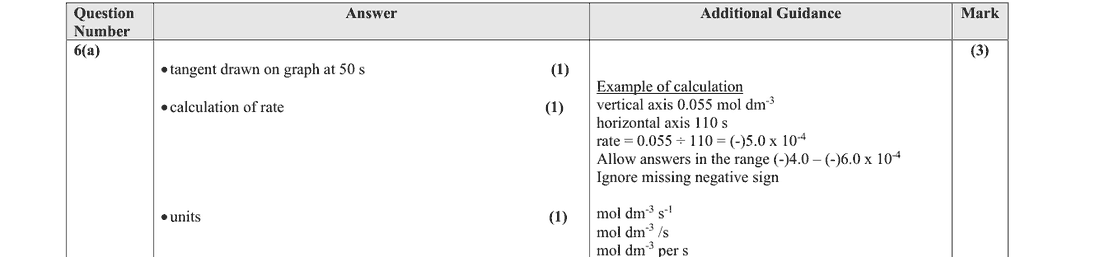
Calculate the rate of reaction at 50 s. Show your working on the graph.

Include units with your final answer.
Rate of reaction at 50 s =
November 2021 · AS Paper 2 · Q6(b) 1 mark Multiple choice halogenoalkanesintroduction to organic chemistry
Earlier part of question 6 that this part usesEarlier part of November 2021 Paper 2 question 6
What is the classification of the mechanism for the hydrolysis of
2‑chloro‑2‑methylpropane by water?
A  addition
B  elimination
C  free radical substitution
D  nucleophilic substitution
November 2021 · AS Paper 2 · Q6(c)(i) 2 marks Practical and data analysis halogenoalkanes
Earlier part of question 6 that this part usesEarlier part of November 2021 Paper 2 question 6
The letters X, Y and Z refer to three different halogenoalkanes:
X
1‑bromobutane
Y
2‑bromobutane
Z
2‑bromo‑2‑methylpropane
1 cm3 of each of these halogenoalkanes was added to separate test tubes
containing 5 cm3 of ethanol and 5 cm3 of aqueous silver nitrate solution in a
water bath at 50 °C.
State the visible change in the reaction of an ethanol/silver nitrate solution
with halogenoalkane X.
Include the formula of the compound responsible for this observation.
November 2021 · AS Paper 2 · Q6(c)(ii) 1 mark Multiple choice halogenoalkanes
Earlier parts of question 6 that this part usesEarlier part of November 2021 Paper 2 question 6Earlier part of November 2021 Paper 2 question 6
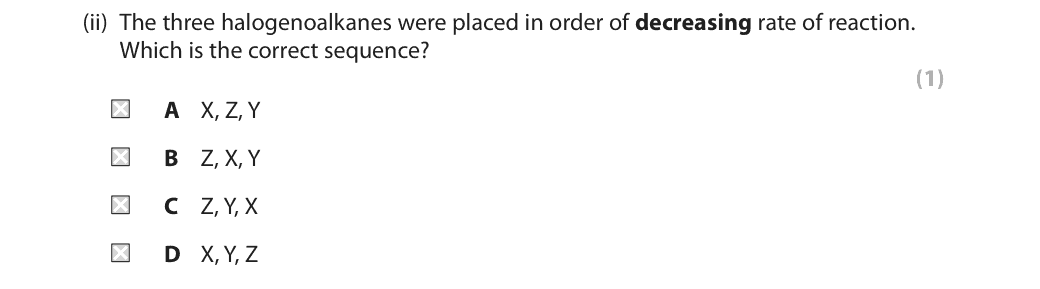
The three halogenoalkanes were placed in order of decreasing rate of reaction.
Which is the correct sequence?
A  X, Z, Y
B  Z, X, Y
C  Z, Y, X
D  X, Y, Z
November 2021 · AS Paper 2 · Q6(d)(i) 2 marks Short answer Hard halogenoalkanes
Earlier part of question 6 that this part usesEarlier part of November 2021 Paper 2 question 6
Under different conditions, 2‑chloro‑2‑methylpropane can react to produce
2‑methylpropene, (CH3)2C
CH2 .
State the reagent and conditions needed for this reaction.
November 2021 · AS Paper 2 · Q6(d)(ii) 1 mark Diagram or structure alkenes
Earlier parts of question 6 that this part usesEarlier part of November 2021 Paper 2 question 6Earlier part of November 2021 Paper 2 question 6
Draw the displayed formula for the repeat unit of a polymer that is made by
the polymerisation of 2‑methylpropene, (CH3)2C
CH2 .
November 2021 · AS Paper 2 · Q6(d)(iii) 4 marks Mechanism alkenes
Earlier parts of question 6 that this part usesEarlier part of November 2021 Paper 2 question 6Earlier part of November 2021 Paper 2 question 6
Draw a mechanism for the addition of hydrogen bromide, HBr, to 2‑methylpropene
to form 2‑bromo‑2‑methylpropane.
Include curly arrows, and any relevant dipoles and lone pairs.
November 2021 · AS Paper 2 · Q7(a) 1 mark Short answer introduction to organic chemistry
This question is about the solubility of some alcohols.
The table shows the solubility in water of the first six alcohols in a homologous series.
Alcohol
Solubility / g dm–3
methanol
soluble in all proportions
ethanol
soluble in all proportions
propan-1‑ol
soluble in all proportions
butan-1‑ol
632
pentan-1‑ol
22
hexan-1‑ol
5.9
State what is meant by a homologous series.
You may use the alcohols in the table to illustrate your answer.
November 2021 · AS Paper 2 · Q7(b) 3 marks Explanation bonding
Earlier part of question 7 that this part usesEarlier part of November 2021 Paper 2 question 7
Explain why methanol and water are ‘soluble in all proportions’.
You must include a diagram in your answer.
November 2021 · AS Paper 2 · Q8(a) 1 mark Diagram or structure alcohols
This question is about some reactions of cyclohexanol.
cyclohexene
B
potassium dichromate(VI)
in dilute sulfuric acid
cyclohexanol
50 % concentrated sulfuric acid
and potassium bromide
A
Write the skeletal formula of compound A.
November 2021 · AS Paper 2 · Q8(b)(i) 2 marks Short answer alcoholsintroduction to organic chemistry
Earlier part of question 8 that this part usesEarlier part of November 2021 Paper 2 question 8
Give the name and displayed formula of compound B.
November 2021 · AS Paper 2 · Q8(b)(ii) 2 marks Short answer mass spectrometry and infrared spectroscopy
Earlier parts of question 8 that this part usesEarlier part of November 2021 Paper 2 question 8Earlier part of November 2021 Paper 2 question 8
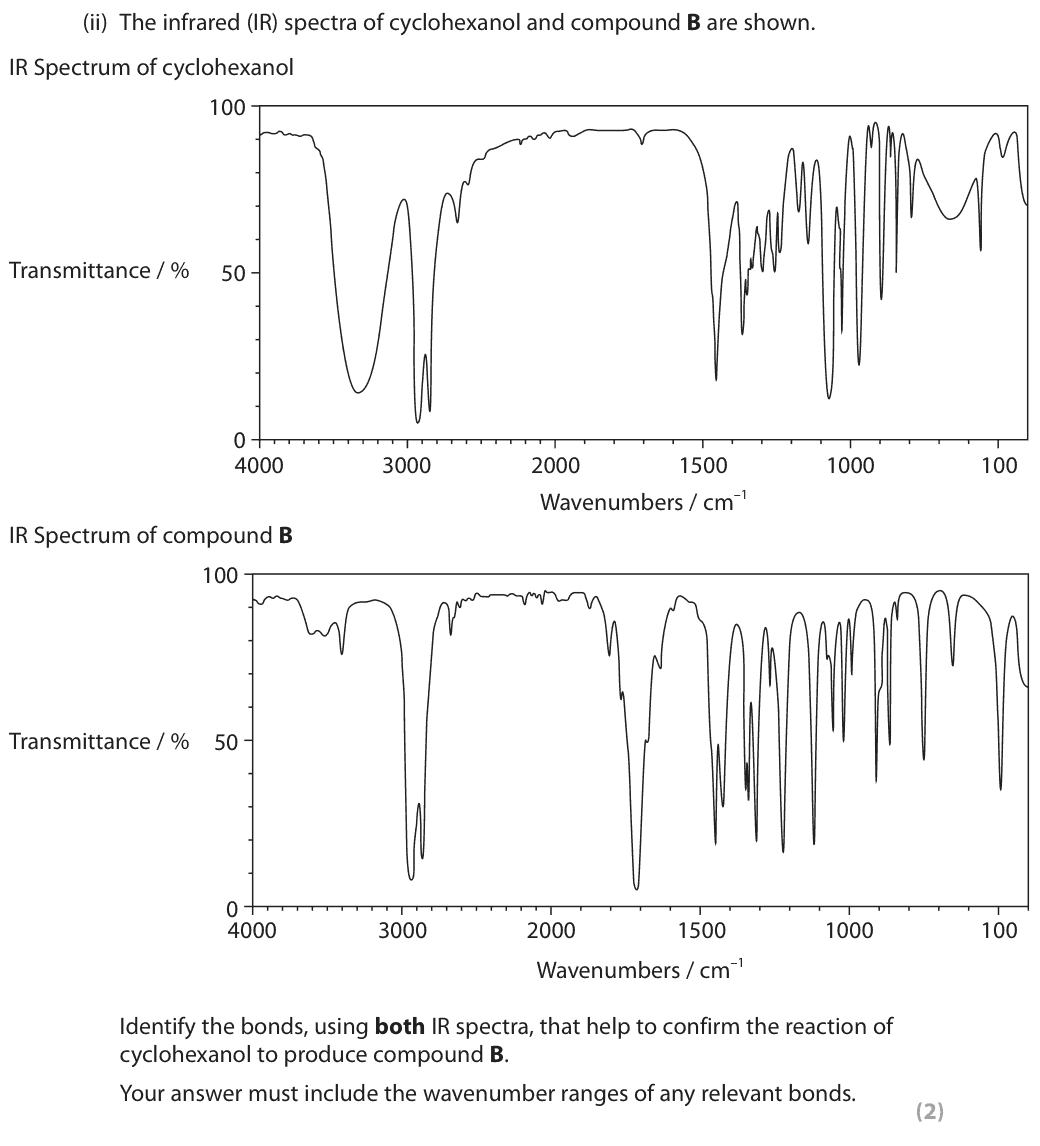
The infrared (IR) spectra of cyclohexanol and compound B are shown.
IR Spectrum of cyclohexanol
100
Transmittance / %
50
0
4000
3000
2000
1500
1000
100
Wavenumbers / cm–1
IR Spectrum of compound B
100
Transmittance / %
50
0
4000
3000
2000
1500
1000
100
Wavenumbers / cm–1
Identify the bonds, using both IR spectra, that help to confirm the reaction of
cyclohexanol to produce compound B.
Your answer must include the wavenumber ranges of any relevant bonds.
November 2021 · AS Paper 2 · Q8(b)(iii) 1 mark Short answer mass spectrometry and infrared spectroscopy
Earlier parts of question 8 that this part usesEarlier part of November 2021 Paper 2 question 8Earlier part of November 2021 Paper 2 question 8Earlier part of November 2021 Paper 2 question 8
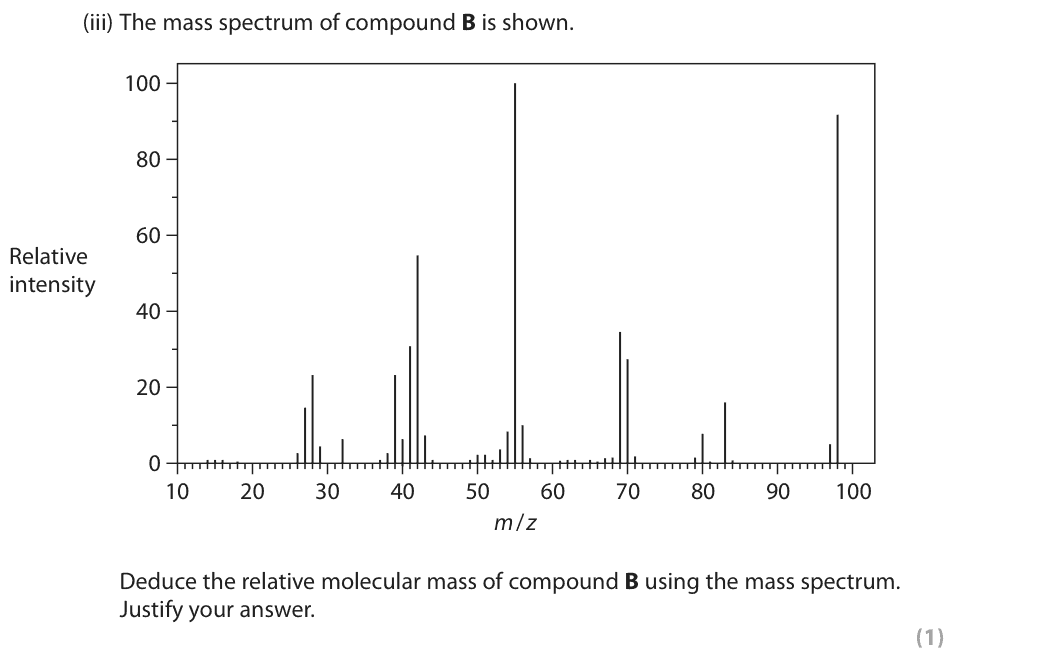
The mass spectrum of compound B is shown.
100
80
60
Relative
intensity
40
20
0
10
20
30
40
50
60
70
80
90
100
m/z
Deduce the relative molecular mass of compound B using the mass spectrum.
Justify your answer.
November 2021 · AS Paper 2 · Q8(b)(iv) 2 marks Short answer mass spectrometry and infrared spectroscopy
Earlier parts of question 8 that this part usesEarlier part of November 2021 Paper 2 question 8Earlier part of November 2021 Paper 2 question 8
In the mass spectrum of cyclohexanol, there is a peak at m/z = 83.
Give the formula of a fragment that could be responsible for this peak.
November 2021 · AS Paper 2 · Q8(c)(i) 1 mark Multiple choice introduction to organic chemistry
Earlier part of question 8 that this part usesEarlier part of November 2021 Paper 2 question 8
Cyclohexanol can be converted to cyclohexene.
What is the classification for this reaction?
A  addition
B  elimination
C  oxidation
D  substitution
November 2021 · AS Paper 2 · Q8(c)(ii) 4 marks Calculation Hard formulae equations and amounts of substance
Earlier parts of question 8 that this part usesEarlier part of November 2021 Paper 2 question 8Earlier part of November 2021 Paper 2 question 8
In an experiment, 10.0 cm3 of cyclohexanol was converted to cyclohexene
with a 63.0 % yield.
Compound
Molar mass / g mol–1
Density / g cm–3
cyclohexanol
100
0.962
cyclohexene
82.0
0.811
Calculate the volume of cyclohexene produced.
November 2021 · AS Paper 2 · Q8(c)(iii) 6 marks 6-mark extended response Hard alcohols
Earlier parts of question 8 that this part usesEarlier part of November 2021 Paper 2 question 8Earlier part of November 2021 Paper 2 question 8
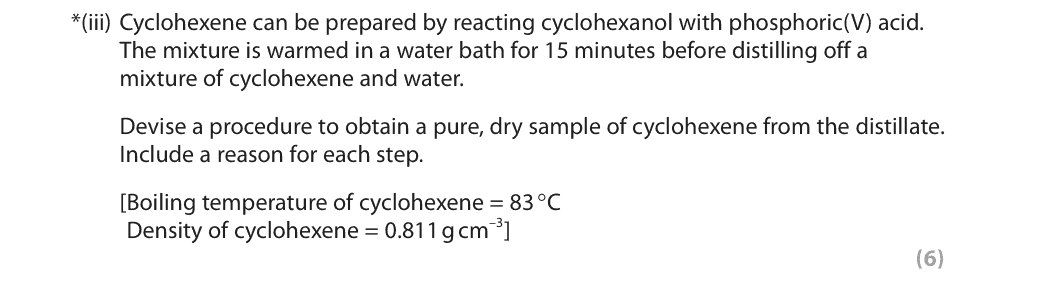
Cyclohexene can be prepared by reacting cyclohexanol with phosphoric(V) acid.
The mixture is warmed in a water bath for 15 minutes before distilling off a
mixture of cyclohexene and water.
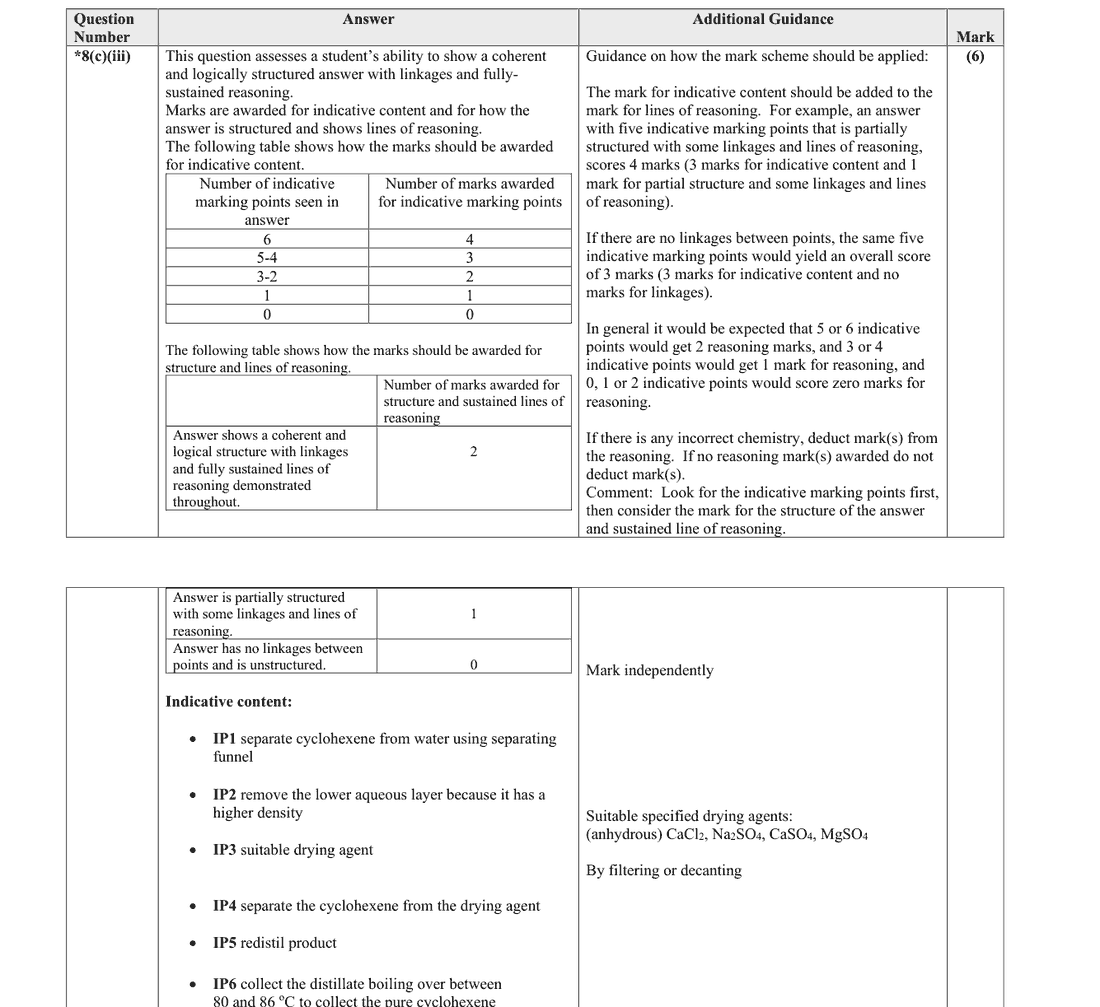
Devise a procedure to obtain a pure, dry sample of cyclohexene from the distillate.
Include a reason for each step.
[Boiling temperature of cyclohexene = 83 °C
Density of cyclohexene = 0.811 g cm–3]
November 2021 · AS Paper 2 · Q9(a)(i) 3 marks Calculation energetics i
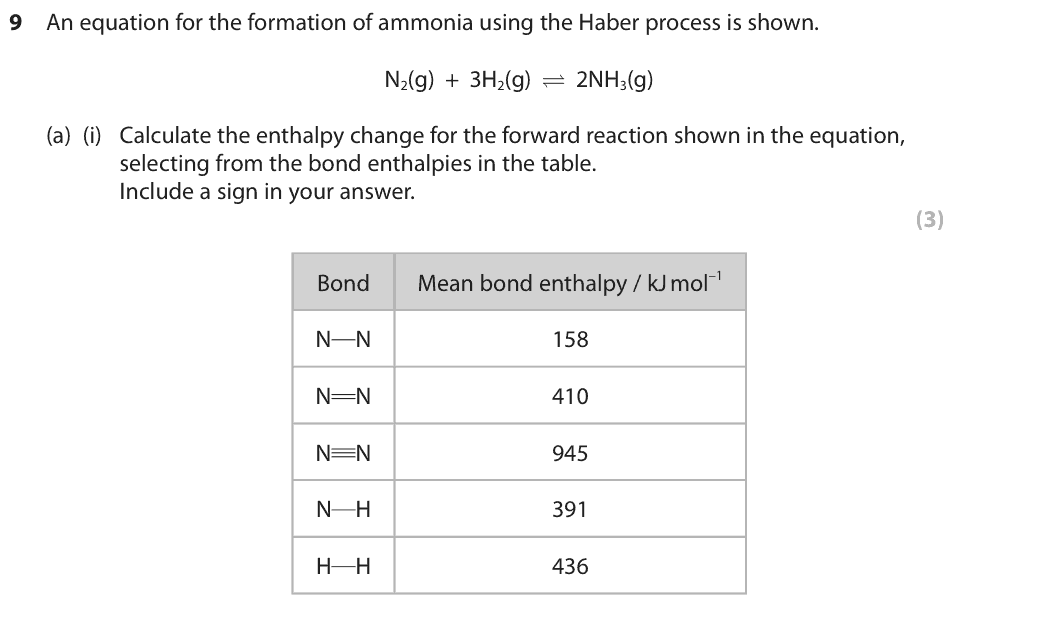
An equation for the formation of ammonia using the Haber process is shown.
N2(g)  +  3H2(g)    2NH3(g)
Calculate the enthalpy change for the forward reaction shown in the equation,
selecting from the bond enthalpies in the table.
Include a sign in your answer.
Bond
Mean bond enthalpy / kJ mol–1
N
N
158
N
N
410
N
N
945
N
H
391
H
H
436
November 2021 · AS Paper 2 · Q9(a)(ii) 2 marks Short answer energetics i
Earlier part of question 9 that this part usesEarlier part of November 2021 Paper 2 question 9
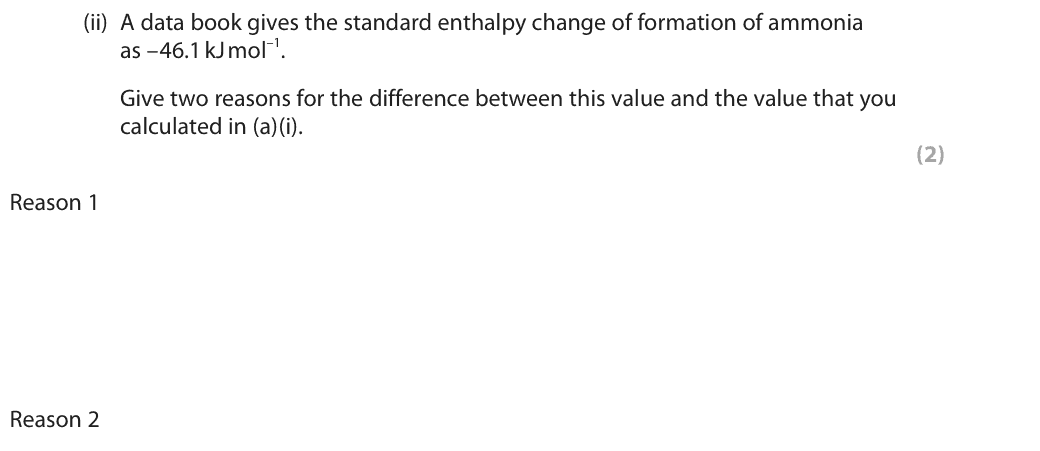
A data book gives the standard enthalpy change of formation of ammonia
as –46.1 kJ mol–1.
Give two reasons for the difference between this value and the value that you
calculated in (a)(i).
Reason 1
Reason 2
November 2021 · AS Paper 2 · Q9(a)(iii) 1 mark Multiple choice formulae equations and amounts of substance
Earlier part of question 9 that this part usesEarlier part of November 2021 Paper 2 question 9
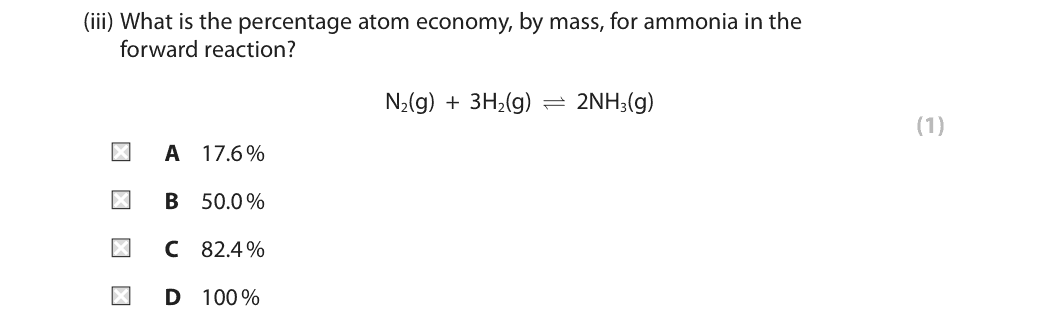
What is the percentage atom economy, by mass, for ammonia in the
forward reaction?
N2(g)  +  3H2(g)    2NH3(g)
A  17.6 %
B  50.0 %
C  82.4 %
D  100 %
November 2021 · AS Paper 2 · Q9(a)(iv) 1 mark Multiple choice equilibrium i
Earlier part of question 9 that this part usesEarlier part of November 2021 Paper 2 question 9
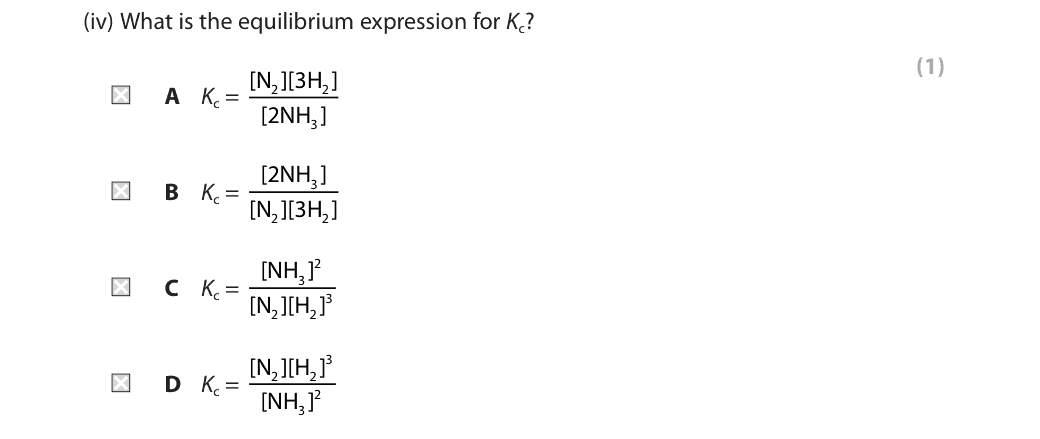
What is the equilibrium expression for Kc?
A  Kc = [N ][3H ]
2
2
[2NH ]
3
B  Kc = [2NH ]
3
[N ][3H ]
2
2
C  Kc = [NH ]
2
3
[N ][H ]
3
2
2
D  Kc = [N ][H ]
3
2
2
[NH ]
2
3
November 2021 · AS Paper 2 · Q9(b) 3 marks Short answer equilibrium i
Earlier part of question 9 that this part usesEarlier part of November 2021 Paper 2 question 9
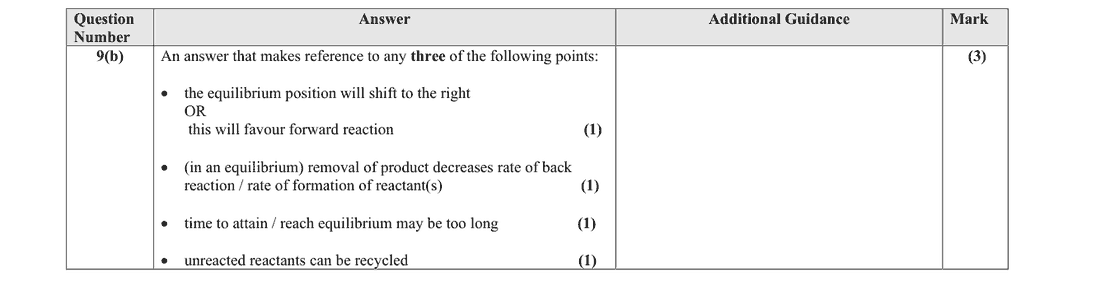
In the chemical industry, many processes involve reversible reactions. The product
is often removed before equilibrium is attained.
Give three reasons why the product may be removed before its maximum
concentration is achieved.
November 2021 · AS Paper 2 · Q9(c)(i) 2 marks Short answer kinetics i
Earlier part of question 9 that this part usesEarlier part of November 2021 Paper 2 question 9
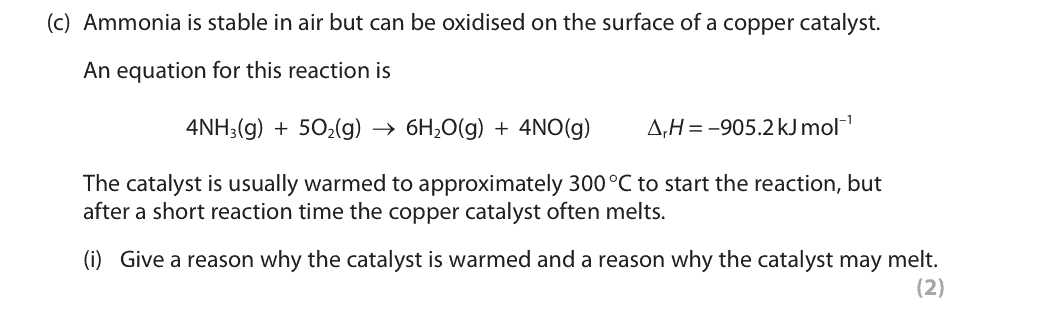
Ammonia is stable in air but can be oxidised on the surface of a copper catalyst.
An equation for this reaction is
4NH3(g)  +  5O2(g)  →  6H2O(g)  +  4NO(g)           ΔrH = –905.2 kJ mol–1
The catalyst is usually warmed to approximately 300 °C to start the reaction, but
after a short reaction time the copper catalyst often melts.
Give a reason why the catalyst is warmed and a reason why the catalyst may melt.
November 2021 · AS Paper 2 · Q9(c)(ii) 2 marks Diagram or structure Easy kinetics i
Earlier parts of question 9 that this part usesEarlier part of November 2021 Paper 2 question 9Earlier part of November 2021 Paper 2 question 9
Complete the reaction profile for this catalysed oxidation of ammonia,
showing the enthalpy change, ΔrH.
Reactants
Enthalpy
Reaction path
November 2021 · AS Paper 2 · Q9(c)(iii) 3 marks Short answer kinetics i
Earlier parts of question 9 that this part usesEarlier part of November 2021 Paper 2 question 9Earlier part of November 2021 Paper 2 question 9
Describe the processes that occur on the surface of a heterogeneous catalyst
during the oxidation of ammonia in air.

Work with an A-level chemistry tutor

Want a paper marked and gone through with you? Message us.

Prefer email? Send an enquiry

If you are under 18, please include a parent's contact details. Enquiries go to enquiries@chemistryaleveltutor.com and are deleted once handled. All tutoring is online.