Answer
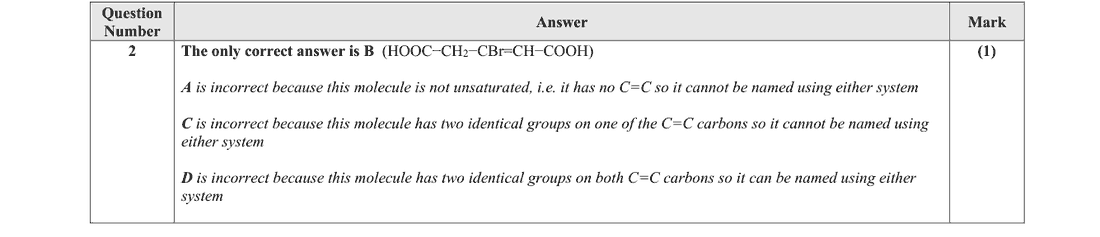
D
Mark scheme
Notes from the mark scheme and report
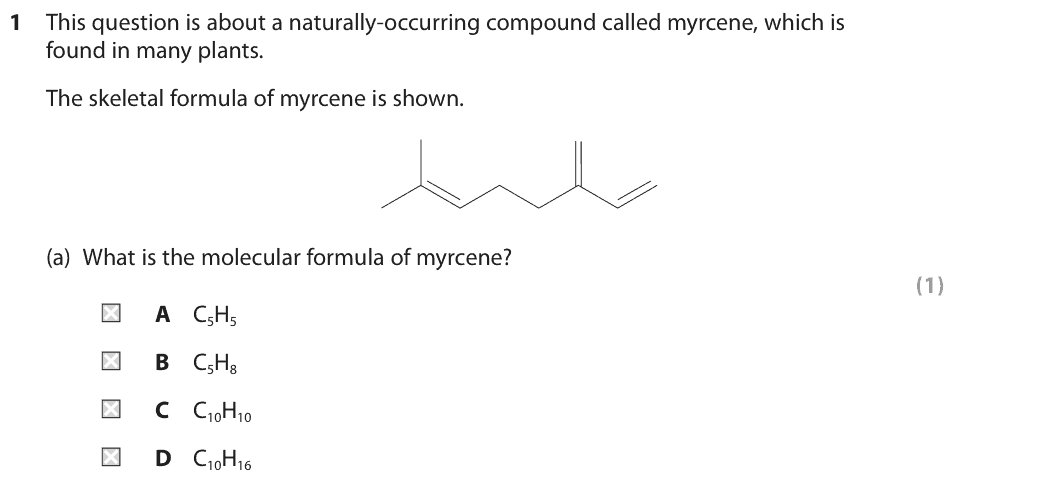
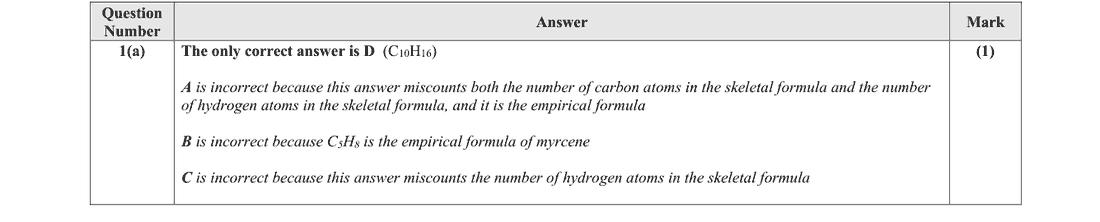
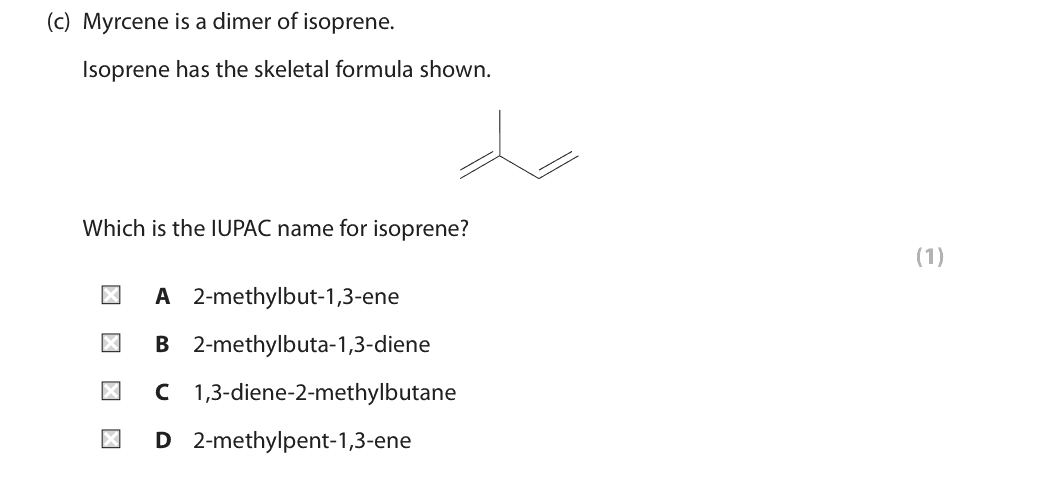
- Answer: D (C10H16). Ten carbons in the skeletal formula, three C=C bonds. B (C5H8) is the empirical formula
- C miscounts the hydrogens
80 marks · 38 question parts · Paper, mark scheme and report on Edexcel's site · Have the Data Booklet beside you
D
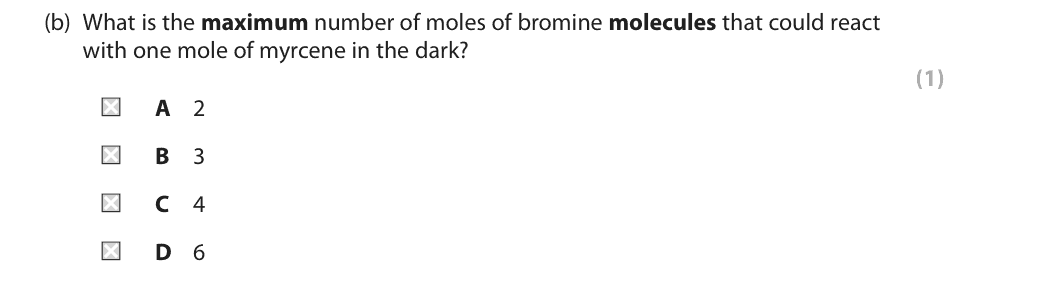
B
Skills: MS0.2 Use ratios, fractions and percentages
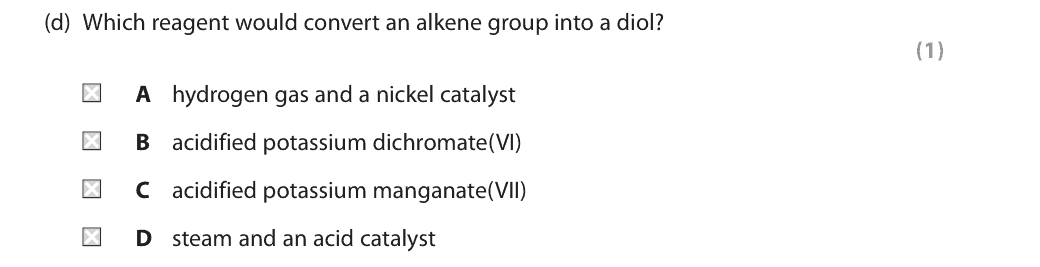
B
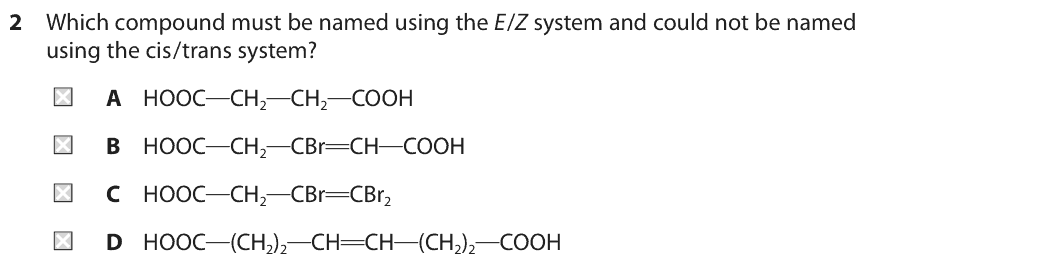
C
B
Skills: MS4.2 Visualise and represent 2D and 3D forms including two- dimensional representations of 3D objects
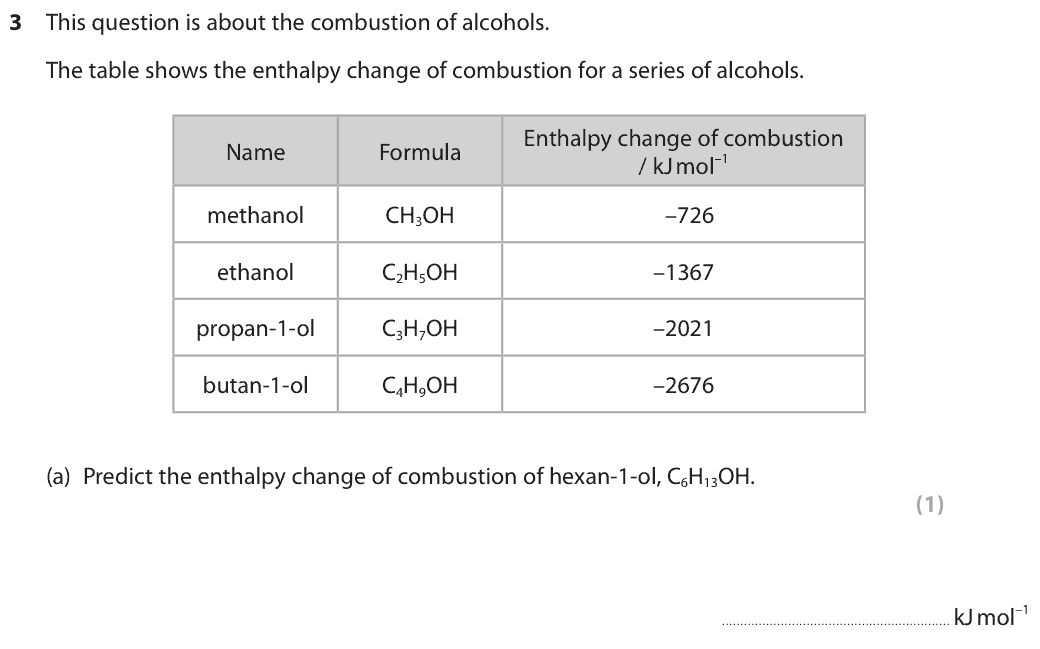
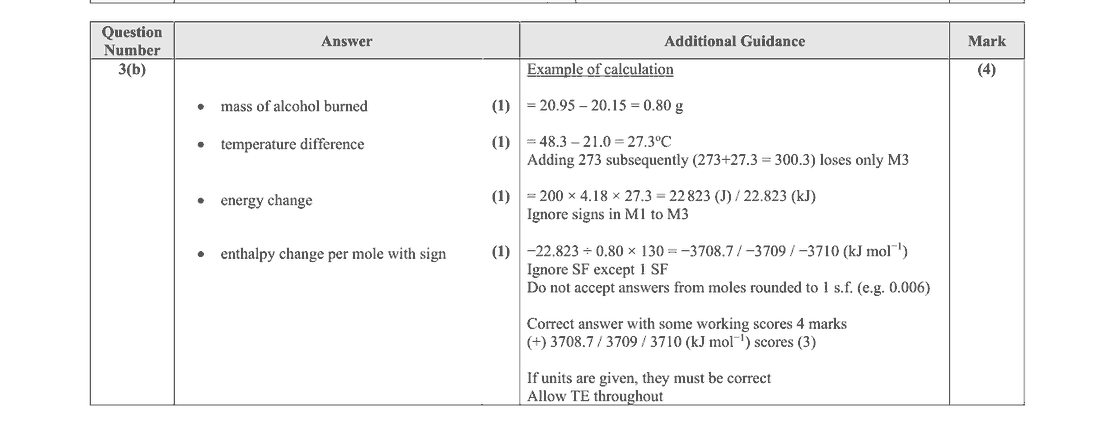
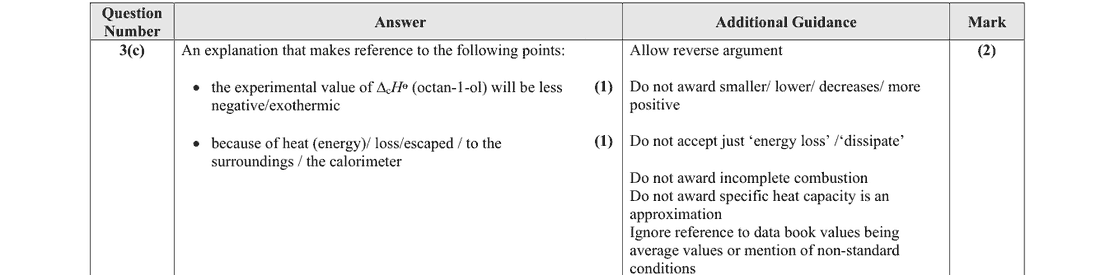
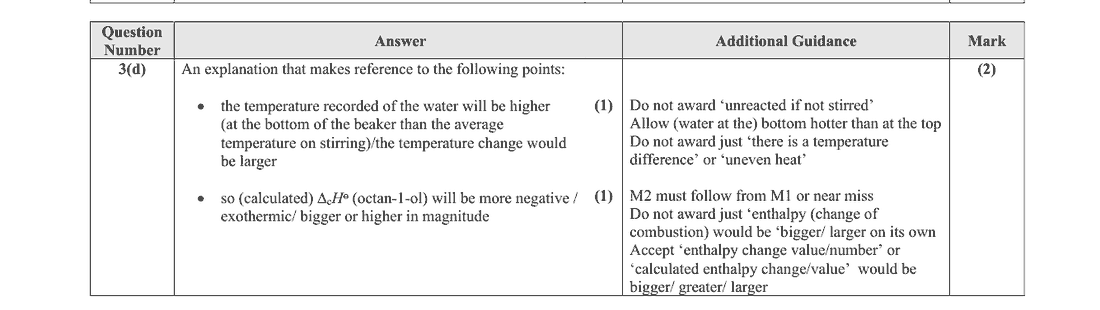
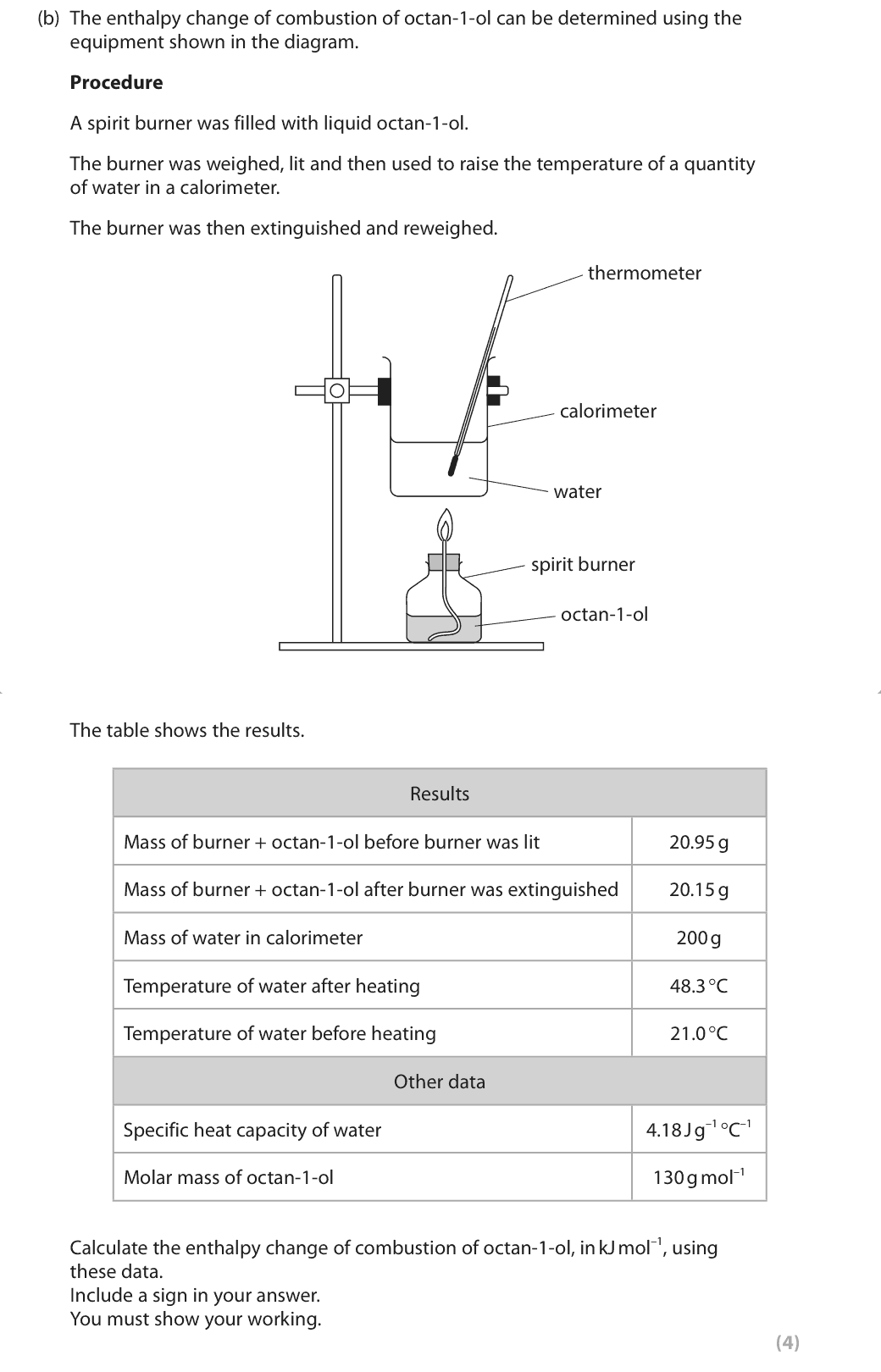
This question was about the combustion of alcohols. (a) Many candidates gave correct answers. A common error was quoting values around – 3330 , corresponding to pentan-1-ol. Most gave negative values, but some included no sign, which was allowed on this occasion. (b) The enthalpy change calculation was generally well done. Common errors were using the mass of alcohol rather than water when calculating the energy change, and omitting the negative sign in the final answer. 95% scored between 2 and 4 marks and approximately half of the candidates scored full marks. (c) Many gave ambiguous responses like “lower ΔH” instead of “less exothermic” or “less negative.” Vague references to “energy loss” rather than “heat loss” also cost marks. Over half scored the middle mark. (d) This question proved to be challenging and very few candidates scored full marks. Many focused on the lack of stirring or uneven heat distribution but failed to explain that the recorded temperature would be higher at the bottom. There were many stock answers that were not relevant to the question, such as not all reactants reacting. Explanations on the effect on ΔH were often either vague or missing.
Skills: MS0.3 Make estimates of the results of calculations (without using a calculator).
This question was about the combustion of alcohols. (a) Many candidates gave correct answers. A common error was quoting values around – 3330 , corresponding to pentan-1-ol. Most gave negative values, but some included no sign, which was allowed on this occasion. (b) The enthalpy change calculation was generally well done. Common errors were using the mass of alcohol rather than water when calculating the energy change, and omitting the negative sign in the final answer. 95% scored between 2 and 4 marks and approximately half of the candidates scored full marks. (c) Many gave ambiguous responses like “lower ΔH” instead of “less exothermic” or “less negative.” Vague references to “energy loss” rather than “heat loss” also cost marks. Over half scored the middle mark. (d) This question proved to be challenging and very few candidates scored full marks. Many focused on the lack of stirring or uneven heat distribution but failed to explain that the recorded temperature would be higher at the bottom. There were many stock answers that were not relevant to the question, such as not all reactants reacting. Explanations on the effect on ΔH were often either vague or missing.
Skills: MS0.0 Recognise and make use of appropriate units in calculation; MS2.3 Substitute numerical values into algebraic equations using appropriate units for physical quantities

This question was about the combustion of alcohols. (a) Many candidates gave correct answers. A common error was quoting values around – 3330 , corresponding to pentan-1-ol. Most gave negative values, but some included no sign, which was allowed on this occasion. (b) The enthalpy change calculation was generally well done. Common errors were using the mass of alcohol rather than water when calculating the energy change, and omitting the negative sign in the final answer. 95% scored between 2 and 4 marks and approximately half of the candidates scored full marks. (c) Many gave ambiguous responses like “lower ΔH” instead of “less exothermic” or “less negative.” Vague references to “energy loss” rather than “heat loss” also cost marks. Over half scored the middle mark. (d) This question proved to be challenging and very few candidates scored full marks. Many focused on the lack of stirring or uneven heat distribution but failed to explain that the recorded temperature would be higher at the bottom. There were many stock answers that were not relevant to the question, such as not all reactants reacting. Explanations on the effect on ΔH were often either vague or missing.

This question was about the combustion of alcohols. (a) Many candidates gave correct answers. A common error was quoting values around – 3330 , corresponding to pentan-1-ol. Most gave negative values, but some included no sign, which was allowed on this occasion. (b) The enthalpy change calculation was generally well done. Common errors were using the mass of alcohol rather than water when calculating the energy change, and omitting the negative sign in the final answer. 95% scored between 2 and 4 marks and approximately half of the candidates scored full marks. (c) Many gave ambiguous responses like “lower ΔH” instead of “less exothermic” or “less negative.” Vague references to “energy loss” rather than “heat loss” also cost marks. Over half scored the middle mark. (d) This question proved to be challenging and very few candidates scored full marks. Many focused on the lack of stirring or uneven heat distribution but failed to explain that the recorded temperature would be higher at the bottom. There were many stock answers that were not relevant to the question, such as not all reactants reacting. Explanations on the effect on ΔH were often either vague or missing.
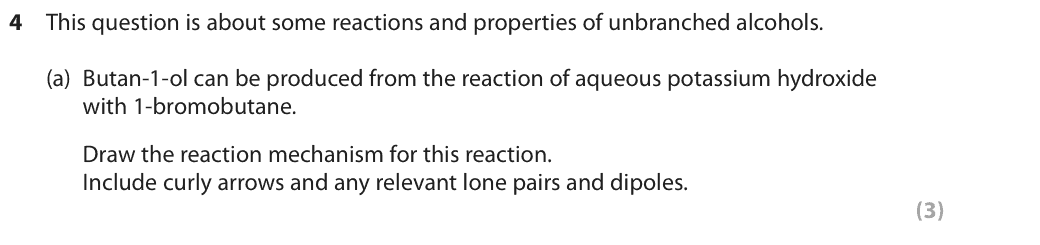
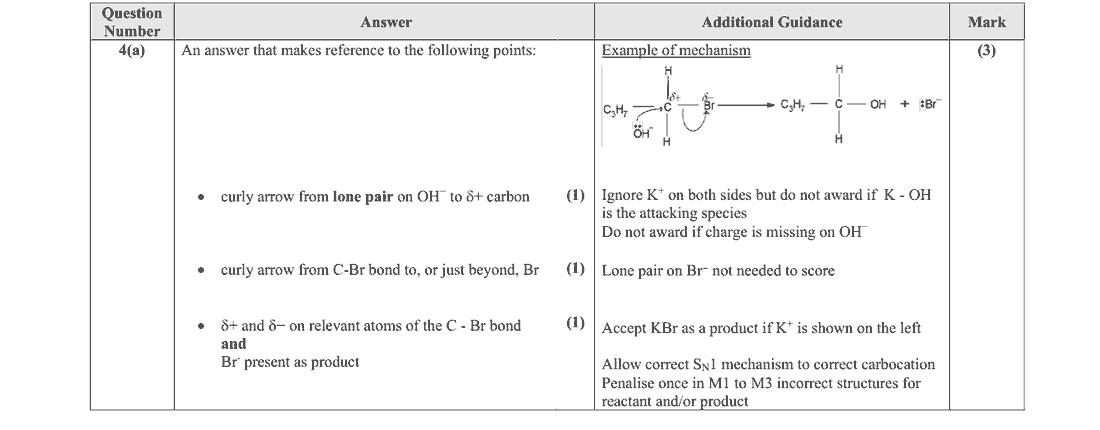
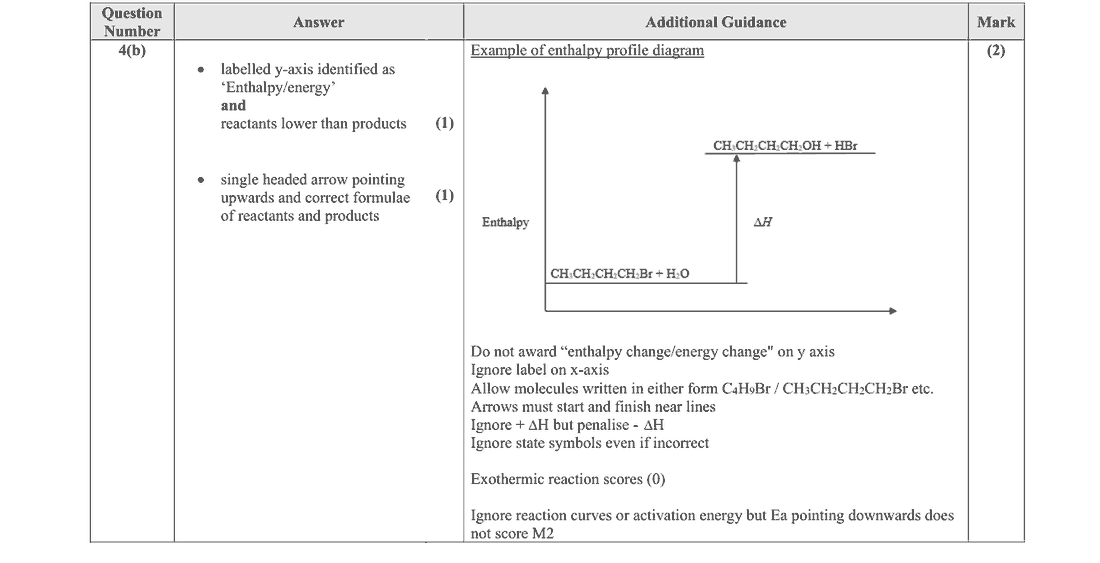
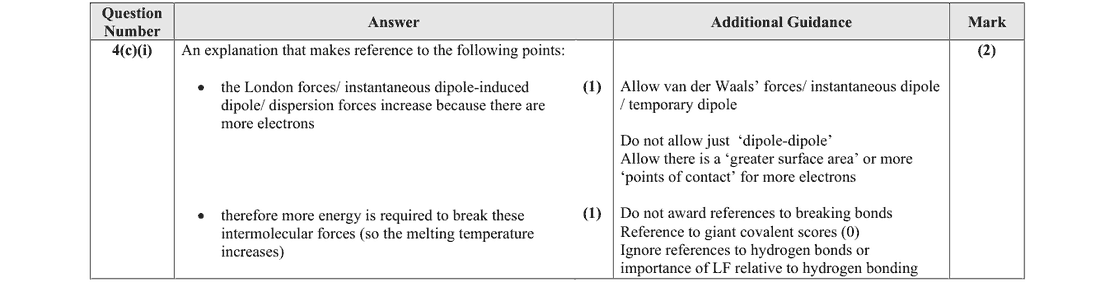
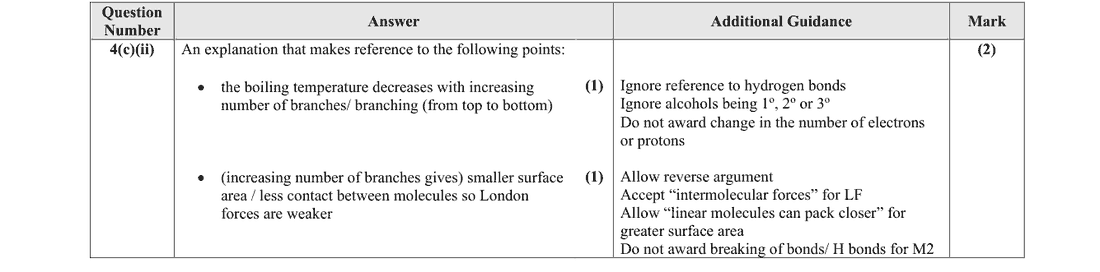
This question was concerned with the reactions and properties of alcohols. (a) Many knew the mechanism for the reaction of 1-bromobutane with aqueous potassium hydroxide and, on the whole, placed arrows and lone pairs carefully. However, some treated KOH as covalent and attempted to include K in the mechanism, which led to many incorrect answers. Leaving an unbalanced product by missing Br- or adding a previously unseen K+ lost many a mark. Scores were widely distributed, and 3 was the most common. (b) This question proved to be surprisingly challenging, and half of the candidates scored no marks. Most labelled the y-axis correctly, although a significant number wrote “Energy change” Common mistakes were failure to balance the equation correctly (omitting water and HBr or writing the wrong product) and not labelling ΔH or including double headed arrows. Some exothermic reactions were seen, and some labelled Ea as ΔH. (ci) London forces were generally well understood but many failed to explain why these increase with chain length. Some marks were lost by referring to intermolecular forces as “bonds”. (cii) There were many references to 1⁰, 2⁰,3⁰ (which did not necessarily lose the marks) - the correlation with branching was well known and often, but not always, adequately explained. Stability of primary, secondary and tertiary alcohols featured regularly.
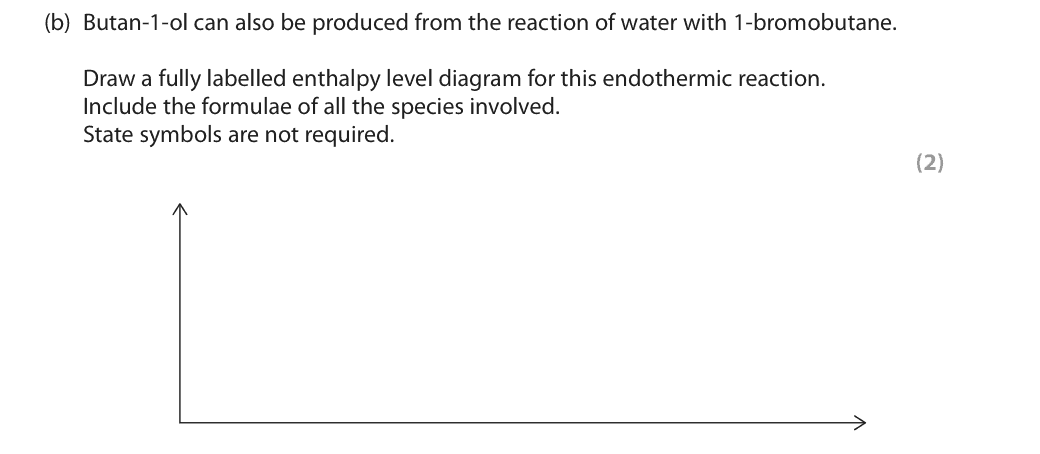
This question was concerned with the reactions and properties of alcohols. (a) Many knew the mechanism for the reaction of 1-bromobutane with aqueous potassium hydroxide and, on the whole, placed arrows and lone pairs carefully. However, some treated KOH as covalent and attempted to include K in the mechanism, which led to many incorrect answers. Leaving an unbalanced product by missing Br- or adding a previously unseen K+ lost many a mark. Scores were widely distributed, and 3 was the most common. (b) This question proved to be surprisingly challenging, and half of the candidates scored no marks. Most labelled the y-axis correctly, although a significant number wrote “Energy change” Common mistakes were failure to balance the equation correctly (omitting water and HBr or writing the wrong product) and not labelling ΔH or including double headed arrows. Some exothermic reactions were seen, and some labelled Ea as ΔH. (ci) London forces were generally well understood but many failed to explain why these increase with chain length. Some marks were lost by referring to intermolecular forces as “bonds”. (cii) There were many references to 1⁰, 2⁰,3⁰ (which did not necessarily lose the marks) - the correlation with branching was well known and often, but not always, adequately explained. Stability of primary, secondary and tertiary alcohols featured regularly.
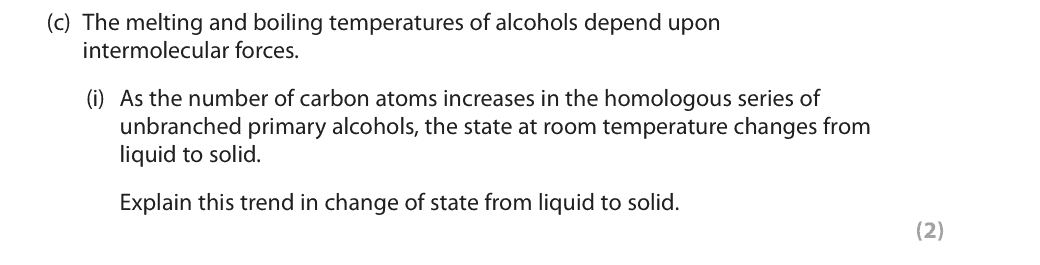
This question was concerned with the reactions and properties of alcohols. (a) Many knew the mechanism for the reaction of 1-bromobutane with aqueous potassium hydroxide and, on the whole, placed arrows and lone pairs carefully. However, some treated KOH as covalent and attempted to include K in the mechanism, which led to many incorrect answers. Leaving an unbalanced product by missing Br- or adding a previously unseen K+ lost many a mark. Scores were widely distributed, and 3 was the most common. (b) This question proved to be surprisingly challenging, and half of the candidates scored no marks. Most labelled the y-axis correctly, although a significant number wrote “Energy change” Common mistakes were failure to balance the equation correctly (omitting water and HBr or writing the wrong product) and not labelling ΔH or including double headed arrows. Some exothermic reactions were seen, and some labelled Ea as ΔH. (ci) London forces were generally well understood but many failed to explain why these increase with chain length. Some marks were lost by referring to intermolecular forces as “bonds”. (cii) There were many references to 1⁰, 2⁰,3⁰ (which did not necessarily lose the marks) - the correlation with branching was well known and often, but not always, adequately explained. Stability of primary, secondary and tertiary alcohols featured regularly.
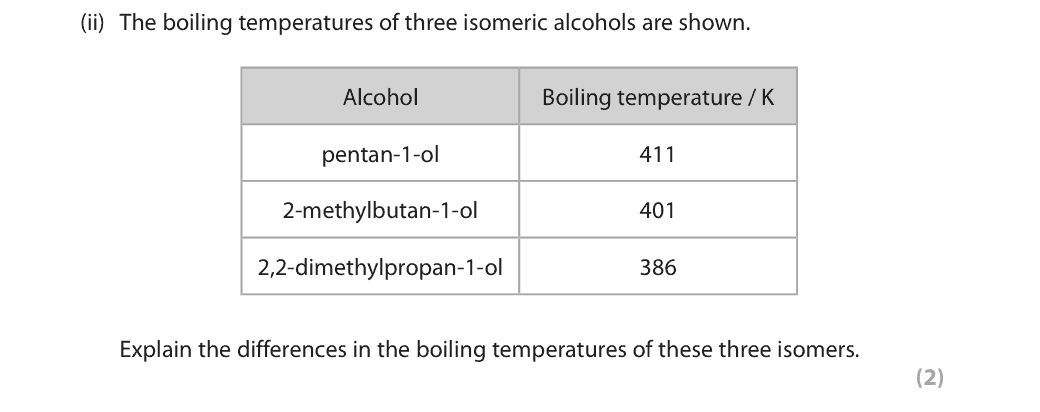
This question was concerned with the reactions and properties of alcohols. (a) Many knew the mechanism for the reaction of 1-bromobutane with aqueous potassium hydroxide and, on the whole, placed arrows and lone pairs carefully. However, some treated KOH as covalent and attempted to include K in the mechanism, which led to many incorrect answers. Leaving an unbalanced product by missing Br- or adding a previously unseen K+ lost many a mark. Scores were widely distributed, and 3 was the most common. (b) This question proved to be surprisingly challenging, and half of the candidates scored no marks. Most labelled the y-axis correctly, although a significant number wrote “Energy change” Common mistakes were failure to balance the equation correctly (omitting water and HBr or writing the wrong product) and not labelling ΔH or including double headed arrows. Some exothermic reactions were seen, and some labelled Ea as ΔH. (ci) London forces were generally well understood but many failed to explain why these increase with chain length. Some marks were lost by referring to intermolecular forces as “bonds”. (cii) There were many references to 1⁰, 2⁰,3⁰ (which did not necessarily lose the marks) - the correlation with branching was well known and often, but not always, adequately explained. Stability of primary, secondary and tertiary alcohols featured regularly.
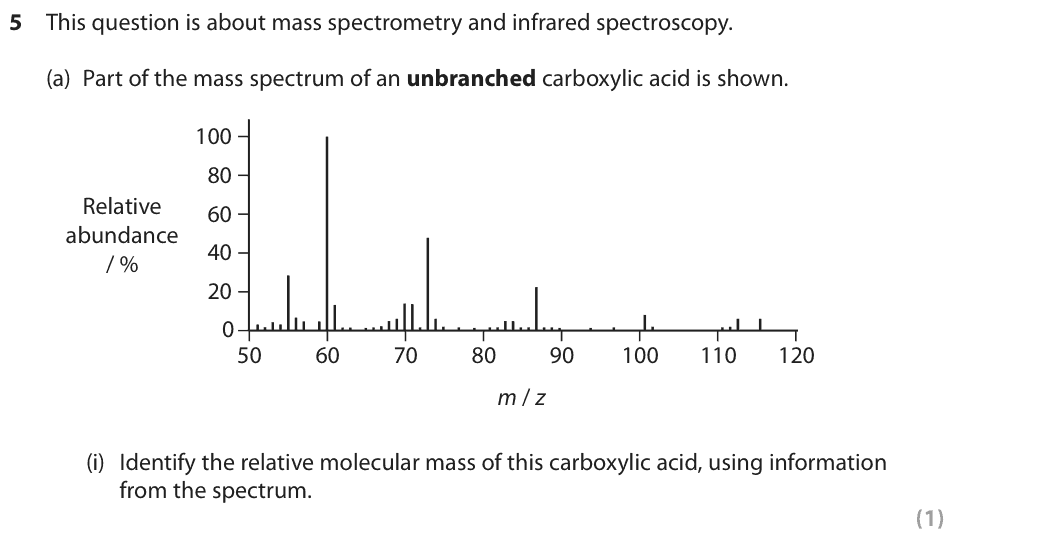
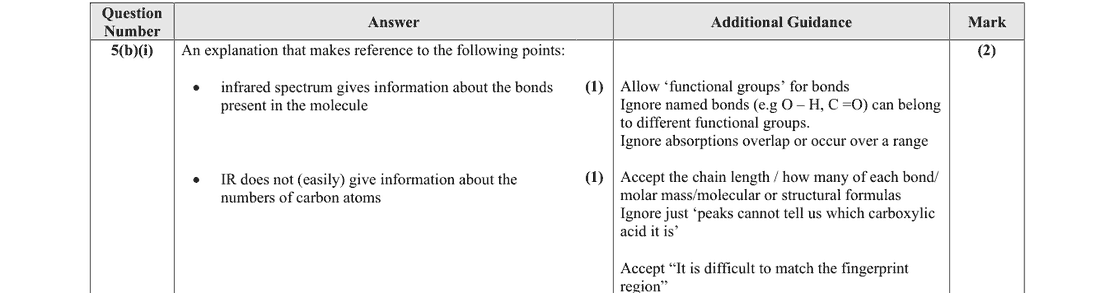
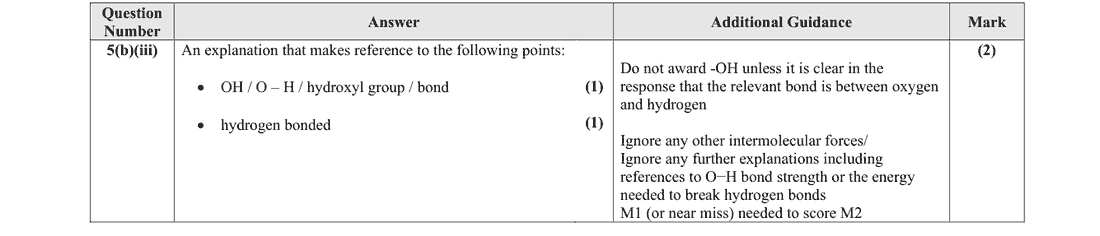
This question is about the use of mass spectrometry and infrared spectroscopy as methods to identify organic compounds. (ai) Many candidates answered correctly. A common error was giving 115 as the relative molecular mass. (aii) Over half scored full marks. Many missed the requirement for a positive ion, and a minority gave negative ions or inappropriate fragments such as OH- or H+ (aiii) Many scored the mark, though some lost it by giving both name and formula, with one being incorrect. A common incorrect answer was pentanoic acid. (bi) Many candidates did not read the question carefully or misunderstood what was being asked. They had to explain why a specific carboxylic acid would be difficult to identify based solely on the spectrum. Whilst some responses correctly noted that peaks were broad or could overlap, this did not address the question so did not score. However, there were also some excellent responses that demonstrated clear understanding and precise reasoning. (bii) Most candidates identified the bond correctly as C=O but many just said ‘carboxylic acid alkyl’ so did not score. (biii) Most identified O-H as the relevant bond and many recognised the role of hydrogen bonding here. However, many answers did not refer to the peak in the question and just described the intermolecular forces present in carboxylic acids. About a third scored full marks.
Skills: MS3.1 Translate information between graphical, numerical and algebraic forms

This question is about the use of mass spectrometry and infrared spectroscopy as methods to identify organic compounds. (ai) Many candidates answered correctly. A common error was giving 115 as the relative molecular mass. (aii) Over half scored full marks. Many missed the requirement for a positive ion, and a minority gave negative ions or inappropriate fragments such as OH- or H+ (aiii) Many scored the mark, though some lost it by giving both name and formula, with one being incorrect. A common incorrect answer was pentanoic acid. (bi) Many candidates did not read the question carefully or misunderstood what was being asked. They had to explain why a specific carboxylic acid would be difficult to identify based solely on the spectrum. Whilst some responses correctly noted that peaks were broad or could overlap, this did not address the question so did not score. However, there were also some excellent responses that demonstrated clear understanding and precise reasoning. (bii) Most candidates identified the bond correctly as C=O but many just said ‘carboxylic acid alkyl’ so did not score. (biii) Most identified O-H as the relevant bond and many recognised the role of hydrogen bonding here. However, many answers did not refer to the peak in the question and just described the intermolecular forces present in carboxylic acids. About a third scored full marks.

This question is about the use of mass spectrometry and infrared spectroscopy as methods to identify organic compounds. (ai) Many candidates answered correctly. A common error was giving 115 as the relative molecular mass. (aii) Over half scored full marks. Many missed the requirement for a positive ion, and a minority gave negative ions or inappropriate fragments such as OH- or H+ (aiii) Many scored the mark, though some lost it by giving both name and formula, with one being incorrect. A common incorrect answer was pentanoic acid. (bi) Many candidates did not read the question carefully or misunderstood what was being asked. They had to explain why a specific carboxylic acid would be difficult to identify based solely on the spectrum. Whilst some responses correctly noted that peaks were broad or could overlap, this did not address the question so did not score. However, there were also some excellent responses that demonstrated clear understanding and precise reasoning. (bii) Most candidates identified the bond correctly as C=O but many just said ‘carboxylic acid alkyl’ so did not score. (biii) Most identified O-H as the relevant bond and many recognised the role of hydrogen bonding here. However, many answers did not refer to the peak in the question and just described the intermolecular forces present in carboxylic acids. About a third scored full marks.
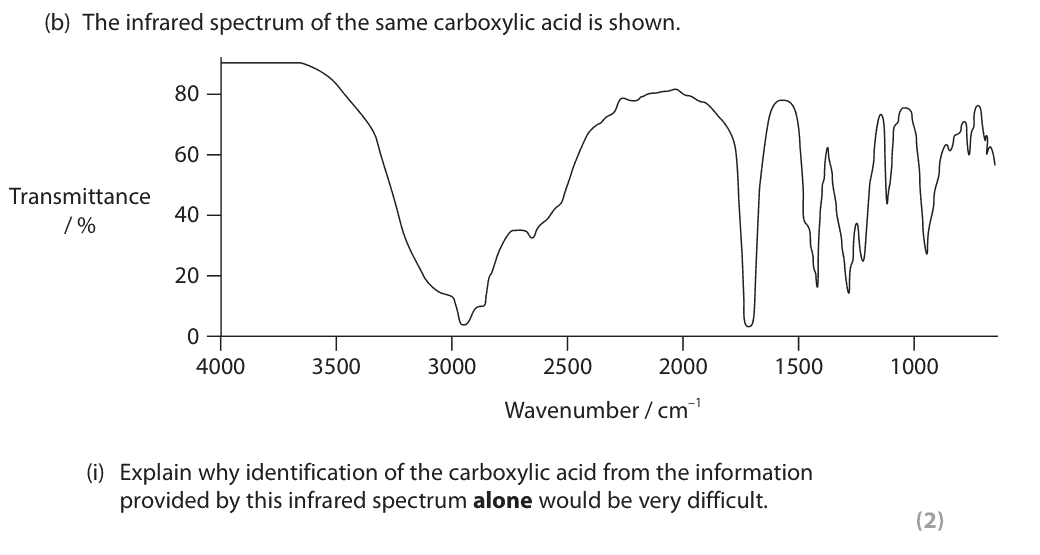
This question is about the use of mass spectrometry and infrared spectroscopy as methods to identify organic compounds. (ai) Many candidates answered correctly. A common error was giving 115 as the relative molecular mass. (aii) Over half scored full marks. Many missed the requirement for a positive ion, and a minority gave negative ions or inappropriate fragments such as OH- or H+ (aiii) Many scored the mark, though some lost it by giving both name and formula, with one being incorrect. A common incorrect answer was pentanoic acid. (bi) Many candidates did not read the question carefully or misunderstood what was being asked. They had to explain why a specific carboxylic acid would be difficult to identify based solely on the spectrum. Whilst some responses correctly noted that peaks were broad or could overlap, this did not address the question so did not score. However, there were also some excellent responses that demonstrated clear understanding and precise reasoning. (bii) Most candidates identified the bond correctly as C=O but many just said ‘carboxylic acid alkyl’ so did not score. (biii) Most identified O-H as the relevant bond and many recognised the role of hydrogen bonding here. However, many answers did not refer to the peak in the question and just described the intermolecular forces present in carboxylic acids. About a third scored full marks.

This question is about the use of mass spectrometry and infrared spectroscopy as methods to identify organic compounds. (ai) Many candidates answered correctly. A common error was giving 115 as the relative molecular mass. (aii) Over half scored full marks. Many missed the requirement for a positive ion, and a minority gave negative ions or inappropriate fragments such as OH- or H+ (aiii) Many scored the mark, though some lost it by giving both name and formula, with one being incorrect. A common incorrect answer was pentanoic acid. (bi) Many candidates did not read the question carefully or misunderstood what was being asked. They had to explain why a specific carboxylic acid would be difficult to identify based solely on the spectrum. Whilst some responses correctly noted that peaks were broad or could overlap, this did not address the question so did not score. However, there were also some excellent responses that demonstrated clear understanding and precise reasoning. (bii) Most candidates identified the bond correctly as C=O but many just said ‘carboxylic acid alkyl’ so did not score. (biii) Most identified O-H as the relevant bond and many recognised the role of hydrogen bonding here. However, many answers did not refer to the peak in the question and just described the intermolecular forces present in carboxylic acids. About a third scored full marks.

This question is about the use of mass spectrometry and infrared spectroscopy as methods to identify organic compounds. (ai) Many candidates answered correctly. A common error was giving 115 as the relative molecular mass. (aii) Over half scored full marks. Many missed the requirement for a positive ion, and a minority gave negative ions or inappropriate fragments such as OH- or H+ (aiii) Many scored the mark, though some lost it by giving both name and formula, with one being incorrect. A common incorrect answer was pentanoic acid. (bi) Many candidates did not read the question carefully or misunderstood what was being asked. They had to explain why a specific carboxylic acid would be difficult to identify based solely on the spectrum. Whilst some responses correctly noted that peaks were broad or could overlap, this did not address the question so did not score. However, there were also some excellent responses that demonstrated clear understanding and precise reasoning. (bii) Most candidates identified the bond correctly as C=O but many just said ‘carboxylic acid alkyl’ so did not score. (biii) Most identified O-H as the relevant bond and many recognised the role of hydrogen bonding here. However, many answers did not refer to the peak in the question and just described the intermolecular forces present in carboxylic acids. About a third scored full marks.
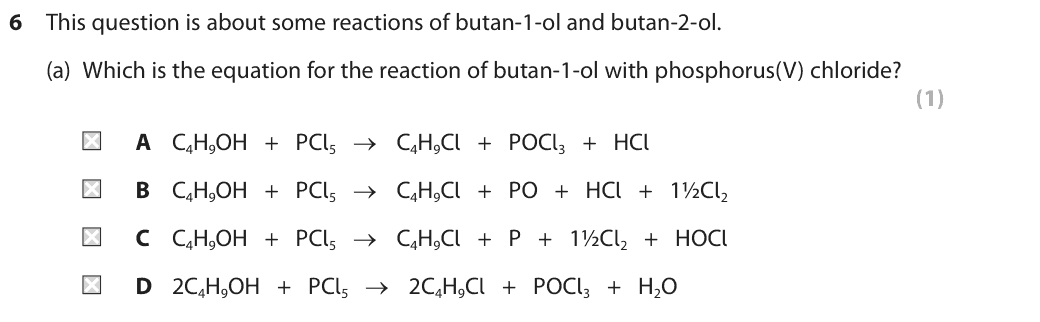
A
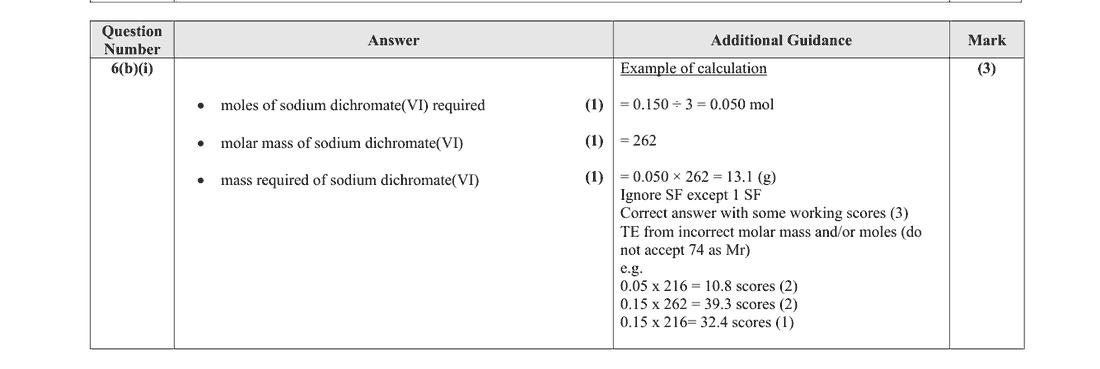
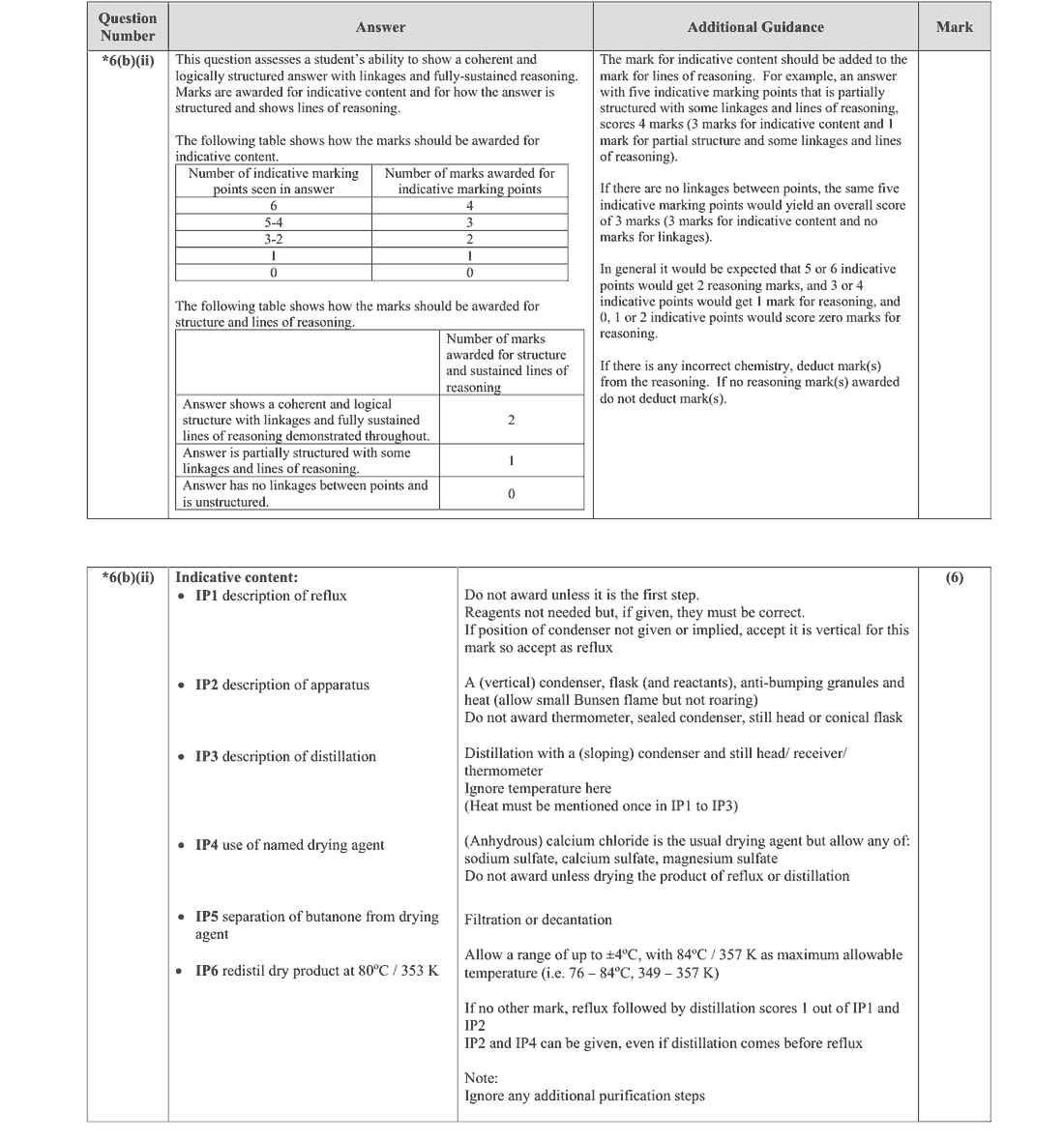
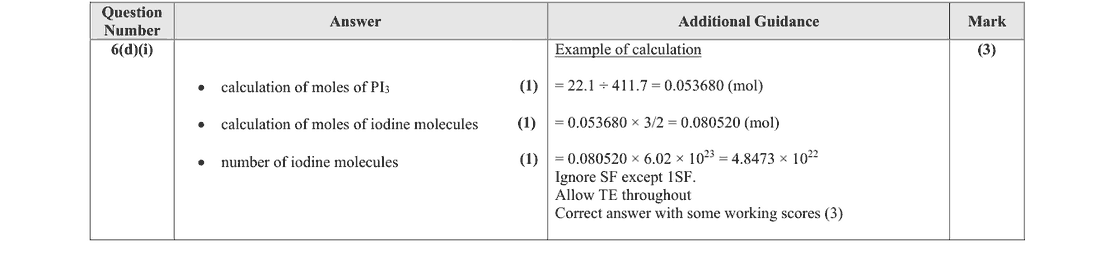
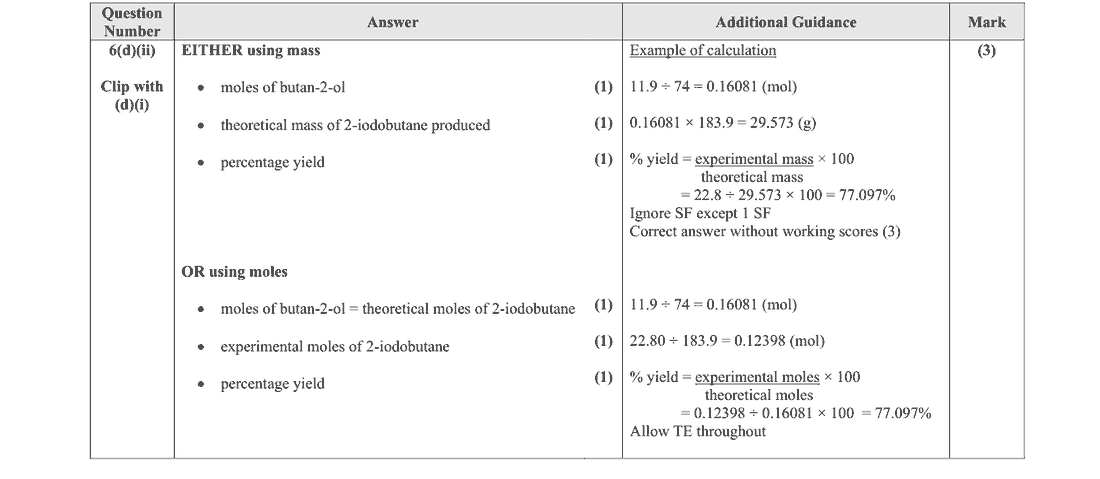
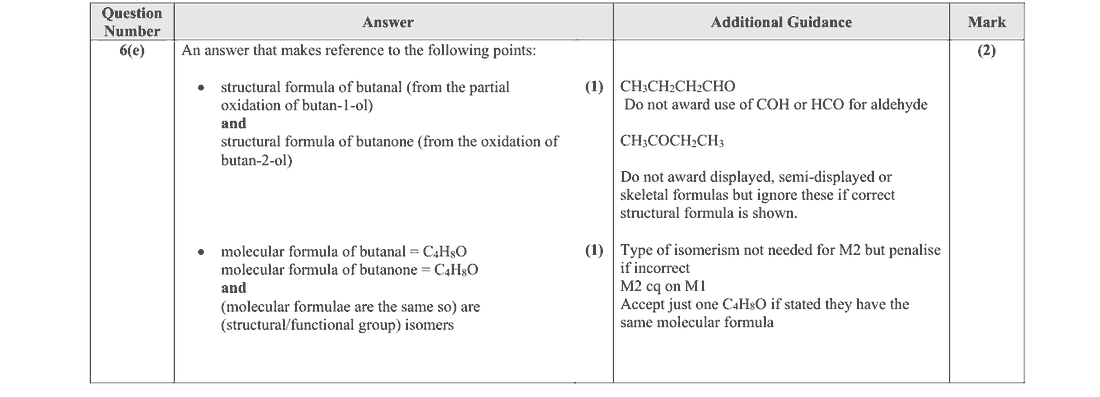
This question was about the reactions of two alcohols and included calculations as well as the description of an organic preparation. (a) This multiple-choice question was very well answered. (bi) Most candidates scored at least two marks. Common errors included incorrect Mr values and stoichiometric ratios (bii) This extended response on a standard practical was very challenging. Many mentioned reflux but described distillation instead. Some suggested inappropriate apparatus such as beakers, conical flasks, volumetric flasks and burettes. Descriptions were often incomplete or incorrect. Many included a thermometer and a bung in the reflux, which would have sealed the system. Distillation following from reflux was rarely seen. While many correctly mentioned the use of a thermometer for distillation, few referred to the still head, and the condenser was often incorrectly positioned horizontally rather than sloping. Candidates frequently included details about water flow in the condenser and the function of anti-bumping granules—both correct but not required in this context. Candidates must remember to move away from giving stock answers and instead address what is being asked. A number of candidates confused this practical with the halogenation of an alcohol, leading to inappropriate suggestions such as using a separating funnel followed by the addition of sodium hydrogencarbonate solution to remove acid impurities. On a more positive note, many could name a suitable drying agent, though fewer described how to remove the dried butanone afterwards. A surprising number of candidates thought that leaving the product on a windowsill or patting with tissue papers was the way to get dry butanone. Very few candidates included the final distillation , which was essential for full credit. (c) Many candidates identified the correct product but lost the mark for using the structural formula instead of the required skeletal formula. (di) Most scored the first and third marks here, but many struggled with the stoichiometric ratio - some missed it, and others inverted it. (dii) Many fully correct answers were seen, although a sizeable number correctly calculated the experimental and theoretical amounts of product but then got very mixed up, so they divided the experimental yield by the sum of the theoretical and experimental yields. (6e) This apparently straightforward question was answered incorrectly by a large number of candidates – the basic structural formula representing an aldehyde was rarely known and there were many incorrect molecular formulas for the isomers.
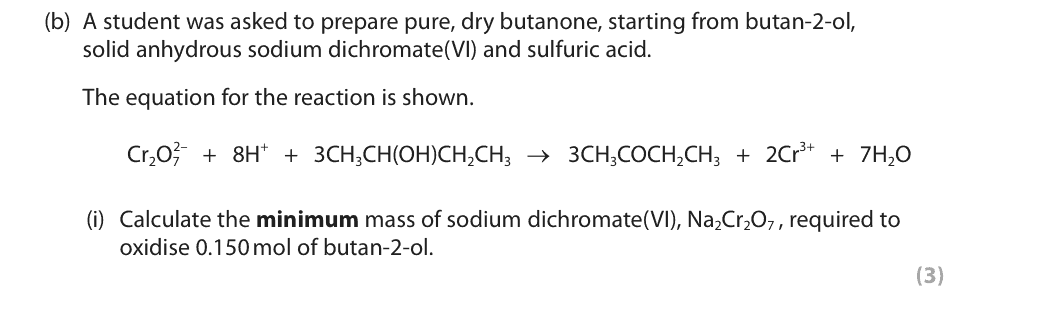
This question was about the reactions of two alcohols and included calculations as well as the description of an organic preparation. (a) This multiple-choice question was very well answered. (bi) Most candidates scored at least two marks. Common errors included incorrect Mr values and stoichiometric ratios (bii) This extended response on a standard practical was very challenging. Many mentioned reflux but described distillation instead. Some suggested inappropriate apparatus such as beakers, conical flasks, volumetric flasks and burettes. Descriptions were often incomplete or incorrect. Many included a thermometer and a bung in the reflux, which would have sealed the system. Distillation following from reflux was rarely seen. While many correctly mentioned the use of a thermometer for distillation, few referred to the still head, and the condenser was often incorrectly positioned horizontally rather than sloping. Candidates frequently included details about water flow in the condenser and the function of anti-bumping granules—both correct but not required in this context. Candidates must remember to move away from giving stock answers and instead address what is being asked. A number of candidates confused this practical with the halogenation of an alcohol, leading to inappropriate suggestions such as using a separating funnel followed by the addition of sodium hydrogencarbonate solution to remove acid impurities. On a more positive note, many could name a suitable drying agent, though fewer described how to remove the dried butanone afterwards. A surprising number of candidates thought that leaving the product on a windowsill or patting with tissue papers was the way to get dry butanone. Very few candidates included the final distillation , which was essential for full credit. (c) Many candidates identified the correct product but lost the mark for using the structural formula instead of the required skeletal formula. (di) Most scored the first and third marks here, but many struggled with the stoichiometric ratio - some missed it, and others inverted it. (dii) Many fully correct answers were seen, although a sizeable number correctly calculated the experimental and theoretical amounts of product but then got very mixed up, so they divided the experimental yield by the sum of the theoretical and experimental yields. (6e) This apparently straightforward question was answered incorrectly by a large number of candidates – the basic structural formula representing an aldehyde was rarely known and there were many incorrect molecular formulas for the isomers.
Skills: MS0.2 Use ratios, fractions and percentages; MS2.3 Substitute numerical values into algebraic equations using appropriate units for physical quantities
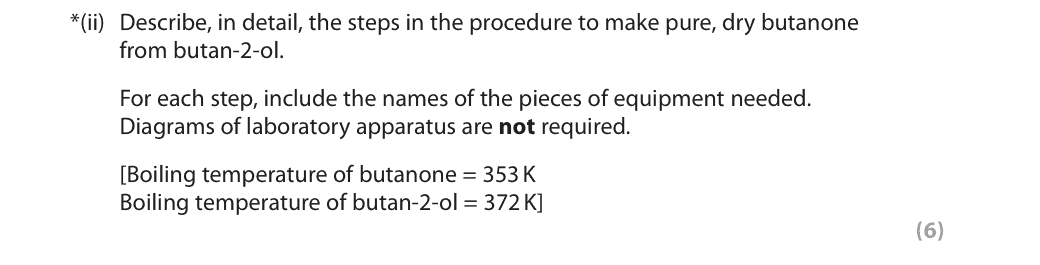
This question was about the reactions of two alcohols and included calculations as well as the description of an organic preparation. (a) This multiple-choice question was very well answered. (bi) Most candidates scored at least two marks. Common errors included incorrect Mr values and stoichiometric ratios (bii) This extended response on a standard practical was very challenging. Many mentioned reflux but described distillation instead. Some suggested inappropriate apparatus such as beakers, conical flasks, volumetric flasks and burettes. Descriptions were often incomplete or incorrect. Many included a thermometer and a bung in the reflux, which would have sealed the system. Distillation following from reflux was rarely seen. While many correctly mentioned the use of a thermometer for distillation, few referred to the still head, and the condenser was often incorrectly positioned horizontally rather than sloping. Candidates frequently included details about water flow in the condenser and the function of anti-bumping granules—both correct but not required in this context. Candidates must remember to move away from giving stock answers and instead address what is being asked. A number of candidates confused this practical with the halogenation of an alcohol, leading to inappropriate suggestions such as using a separating funnel followed by the addition of sodium hydrogencarbonate solution to remove acid impurities. On a more positive note, many could name a suitable drying agent, though fewer described how to remove the dried butanone afterwards. A surprising number of candidates thought that leaving the product on a windowsill or patting with tissue papers was the way to get dry butanone. Very few candidates included the final distillation , which was essential for full credit. (c) Many candidates identified the correct product but lost the mark for using the structural formula instead of the required skeletal formula. (di) Most scored the first and third marks here, but many struggled with the stoichiometric ratio - some missed it, and others inverted it. (dii) Many fully correct answers were seen, although a sizeable number correctly calculated the experimental and theoretical amounts of product but then got very mixed up, so they divided the experimental yield by the sum of the theoretical and experimental yields. (6e) This apparently straightforward question was answered incorrectly by a large number of candidates – the basic structural formula representing an aldehyde was rarely known and there were many incorrect molecular formulas for the isomers.
Skills: PT2 use water bath or electric heater or sand bath for heating; PT4 use laboratory apparatus for a variety of experimental techniques, including: titration, using burette and pipette; distillation and heating under reflux, including setting up glassware using retort stand and clamps; qualitative tests for ions and organic functional groups; filtration, including use of fluted filter paper, or filtration under reduced pressure; PT7 purify: a solid product by recrystallization; a liquid product, including use of separating funnel; CP5 Core practical 5: The oxidation of ethanol

This question was about the reactions of two alcohols and included calculations as well as the description of an organic preparation. (a) This multiple-choice question was very well answered. (bi) Most candidates scored at least two marks. Common errors included incorrect Mr values and stoichiometric ratios (bii) This extended response on a standard practical was very challenging. Many mentioned reflux but described distillation instead. Some suggested inappropriate apparatus such as beakers, conical flasks, volumetric flasks and burettes. Descriptions were often incomplete or incorrect. Many included a thermometer and a bung in the reflux, which would have sealed the system. Distillation following from reflux was rarely seen. While many correctly mentioned the use of a thermometer for distillation, few referred to the still head, and the condenser was often incorrectly positioned horizontally rather than sloping. Candidates frequently included details about water flow in the condenser and the function of anti-bumping granules—both correct but not required in this context. Candidates must remember to move away from giving stock answers and instead address what is being asked. A number of candidates confused this practical with the halogenation of an alcohol, leading to inappropriate suggestions such as using a separating funnel followed by the addition of sodium hydrogencarbonate solution to remove acid impurities. On a more positive note, many could name a suitable drying agent, though fewer described how to remove the dried butanone afterwards. A surprising number of candidates thought that leaving the product on a windowsill or patting with tissue papers was the way to get dry butanone. Very few candidates included the final distillation , which was essential for full credit. (c) Many candidates identified the correct product but lost the mark for using the structural formula instead of the required skeletal formula. (di) Most scored the first and third marks here, but many struggled with the stoichiometric ratio - some missed it, and others inverted it. (dii) Many fully correct answers were seen, although a sizeable number correctly calculated the experimental and theoretical amounts of product but then got very mixed up, so they divided the experimental yield by the sum of the theoretical and experimental yields. (6e) This apparently straightforward question was answered incorrectly by a large number of candidates – the basic structural formula representing an aldehyde was rarely known and there were many incorrect molecular formulas for the isomers.
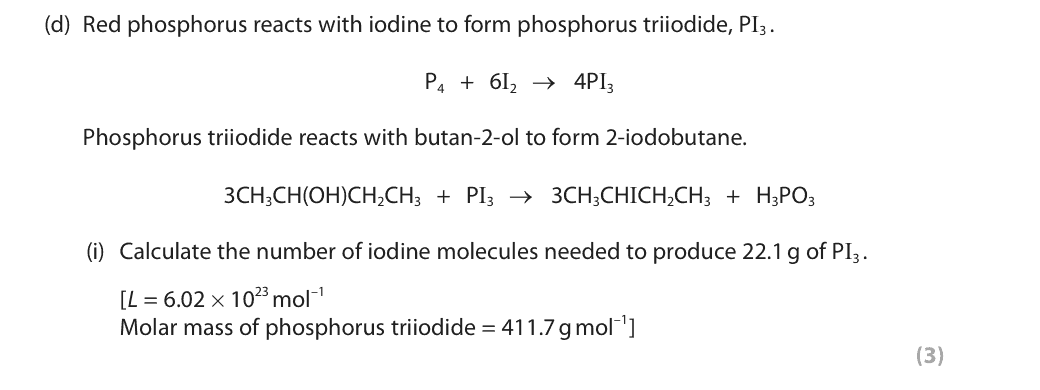
This question was about the reactions of two alcohols and included calculations as well as the description of an organic preparation. (a) This multiple-choice question was very well answered. (bi) Most candidates scored at least two marks. Common errors included incorrect Mr values and stoichiometric ratios (bii) This extended response on a standard practical was very challenging. Many mentioned reflux but described distillation instead. Some suggested inappropriate apparatus such as beakers, conical flasks, volumetric flasks and burettes. Descriptions were often incomplete or incorrect. Many included a thermometer and a bung in the reflux, which would have sealed the system. Distillation following from reflux was rarely seen. While many correctly mentioned the use of a thermometer for distillation, few referred to the still head, and the condenser was often incorrectly positioned horizontally rather than sloping. Candidates frequently included details about water flow in the condenser and the function of anti-bumping granules—both correct but not required in this context. Candidates must remember to move away from giving stock answers and instead address what is being asked. A number of candidates confused this practical with the halogenation of an alcohol, leading to inappropriate suggestions such as using a separating funnel followed by the addition of sodium hydrogencarbonate solution to remove acid impurities. On a more positive note, many could name a suitable drying agent, though fewer described how to remove the dried butanone afterwards. A surprising number of candidates thought that leaving the product on a windowsill or patting with tissue papers was the way to get dry butanone. Very few candidates included the final distillation , which was essential for full credit. (c) Many candidates identified the correct product but lost the mark for using the structural formula instead of the required skeletal formula. (di) Most scored the first and third marks here, but many struggled with the stoichiometric ratio - some missed it, and others inverted it. (dii) Many fully correct answers were seen, although a sizeable number correctly calculated the experimental and theoretical amounts of product but then got very mixed up, so they divided the experimental yield by the sum of the theoretical and experimental yields. (6e) This apparently straightforward question was answered incorrectly by a large number of candidates – the basic structural formula representing an aldehyde was rarely known and there were many incorrect molecular formulas for the isomers.
Skills: MS0.1 Recognise and use expressions in decimal and ordinary form; MS0.2 Use ratios, fractions and percentages
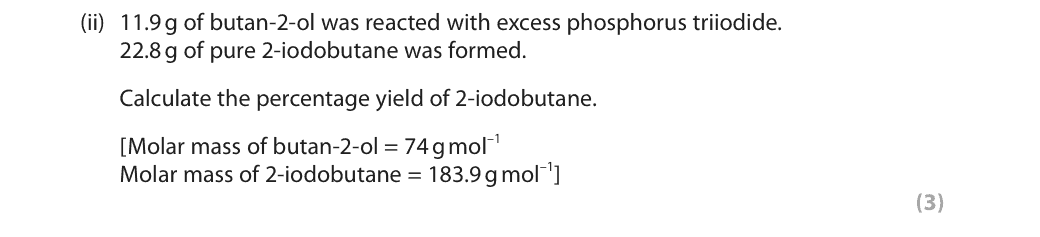
This question was about the reactions of two alcohols and included calculations as well as the description of an organic preparation. (a) This multiple-choice question was very well answered. (bi) Most candidates scored at least two marks. Common errors included incorrect Mr values and stoichiometric ratios (bii) This extended response on a standard practical was very challenging. Many mentioned reflux but described distillation instead. Some suggested inappropriate apparatus such as beakers, conical flasks, volumetric flasks and burettes. Descriptions were often incomplete or incorrect. Many included a thermometer and a bung in the reflux, which would have sealed the system. Distillation following from reflux was rarely seen. While many correctly mentioned the use of a thermometer for distillation, few referred to the still head, and the condenser was often incorrectly positioned horizontally rather than sloping. Candidates frequently included details about water flow in the condenser and the function of anti-bumping granules—both correct but not required in this context. Candidates must remember to move away from giving stock answers and instead address what is being asked. A number of candidates confused this practical with the halogenation of an alcohol, leading to inappropriate suggestions such as using a separating funnel followed by the addition of sodium hydrogencarbonate solution to remove acid impurities. On a more positive note, many could name a suitable drying agent, though fewer described how to remove the dried butanone afterwards. A surprising number of candidates thought that leaving the product on a windowsill or patting with tissue papers was the way to get dry butanone. Very few candidates included the final distillation , which was essential for full credit. (c) Many candidates identified the correct product but lost the mark for using the structural formula instead of the required skeletal formula. (di) Most scored the first and third marks here, but many struggled with the stoichiometric ratio - some missed it, and others inverted it. (dii) Many fully correct answers were seen, although a sizeable number correctly calculated the experimental and theoretical amounts of product but then got very mixed up, so they divided the experimental yield by the sum of the theoretical and experimental yields. (6e) This apparently straightforward question was answered incorrectly by a large number of candidates – the basic structural formula representing an aldehyde was rarely known and there were many incorrect molecular formulas for the isomers.
Skills: MS0.2 Use ratios, fractions and percentages

This question was about the reactions of two alcohols and included calculations as well as the description of an organic preparation. (a) This multiple-choice question was very well answered. (bi) Most candidates scored at least two marks. Common errors included incorrect Mr values and stoichiometric ratios (bii) This extended response on a standard practical was very challenging. Many mentioned reflux but described distillation instead. Some suggested inappropriate apparatus such as beakers, conical flasks, volumetric flasks and burettes. Descriptions were often incomplete or incorrect. Many included a thermometer and a bung in the reflux, which would have sealed the system. Distillation following from reflux was rarely seen. While many correctly mentioned the use of a thermometer for distillation, few referred to the still head, and the condenser was often incorrectly positioned horizontally rather than sloping. Candidates frequently included details about water flow in the condenser and the function of anti-bumping granules—both correct but not required in this context. Candidates must remember to move away from giving stock answers and instead address what is being asked. A number of candidates confused this practical with the halogenation of an alcohol, leading to inappropriate suggestions such as using a separating funnel followed by the addition of sodium hydrogencarbonate solution to remove acid impurities. On a more positive note, many could name a suitable drying agent, though fewer described how to remove the dried butanone afterwards. A surprising number of candidates thought that leaving the product on a windowsill or patting with tissue papers was the way to get dry butanone. Very few candidates included the final distillation , which was essential for full credit. (c) Many candidates identified the correct product but lost the mark for using the structural formula instead of the required skeletal formula. (di) Most scored the first and third marks here, but many struggled with the stoichiometric ratio - some missed it, and others inverted it. (dii) Many fully correct answers were seen, although a sizeable number correctly calculated the experimental and theoretical amounts of product but then got very mixed up, so they divided the experimental yield by the sum of the theoretical and experimental yields. (6e) This apparently straightforward question was answered incorrectly by a large number of candidates – the basic structural formula representing an aldehyde was rarely known and there were many incorrect molecular formulas for the isomers.
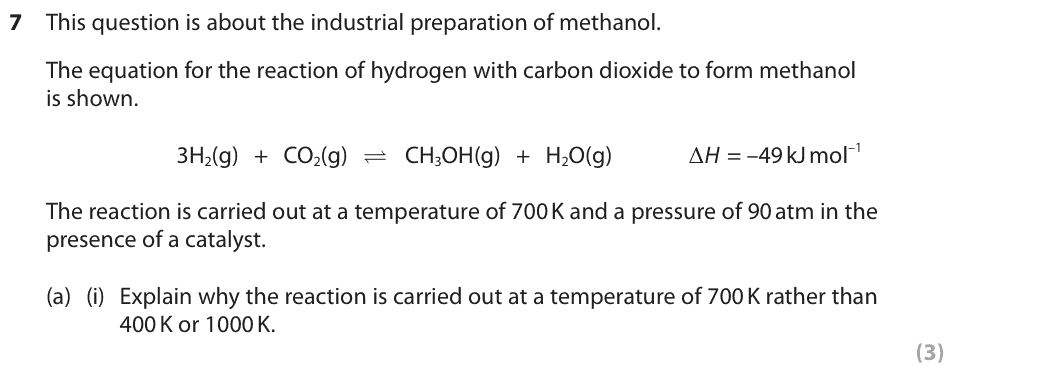
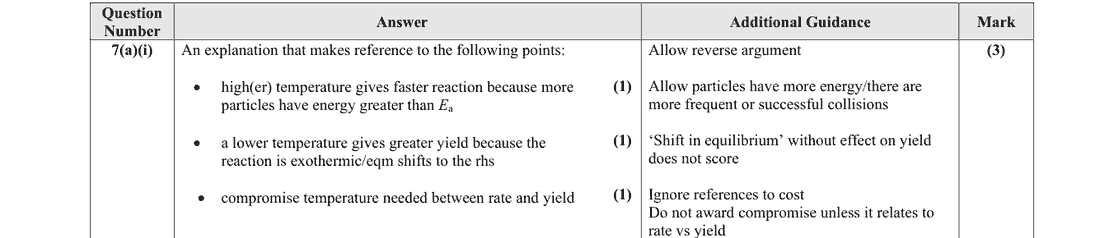
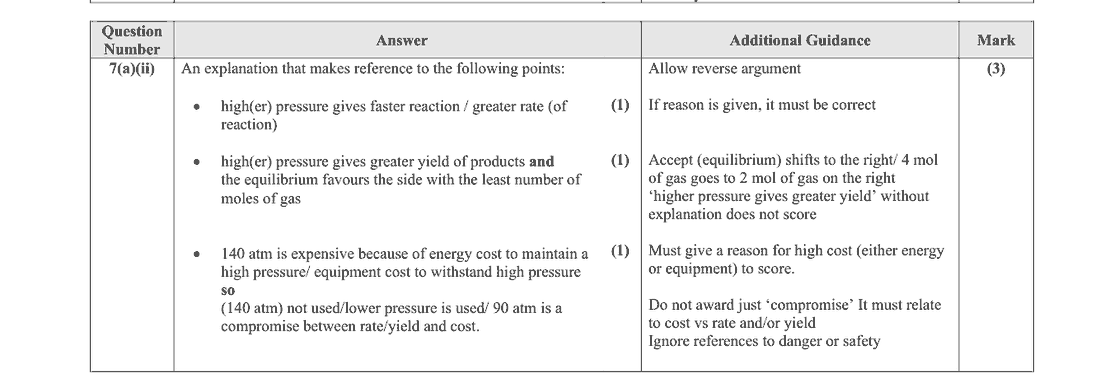
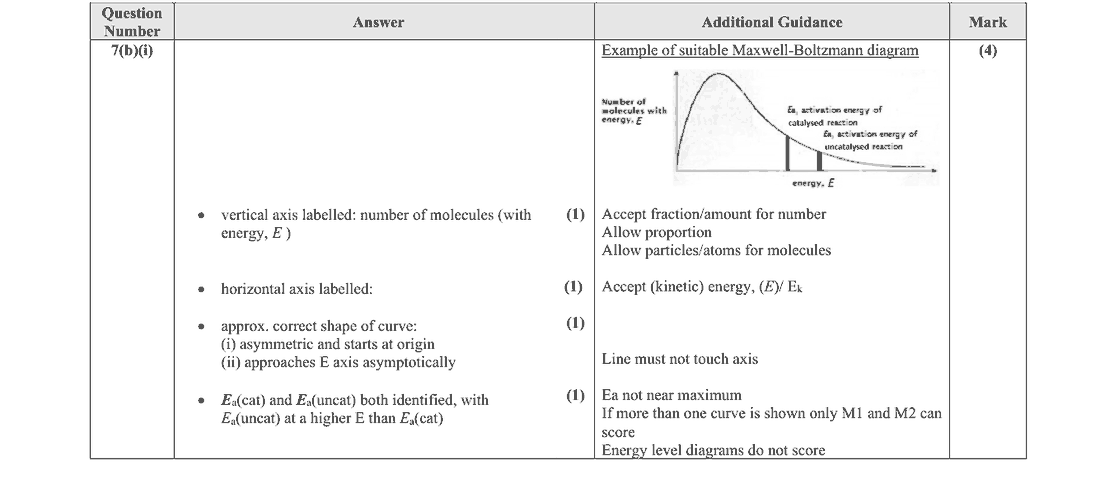
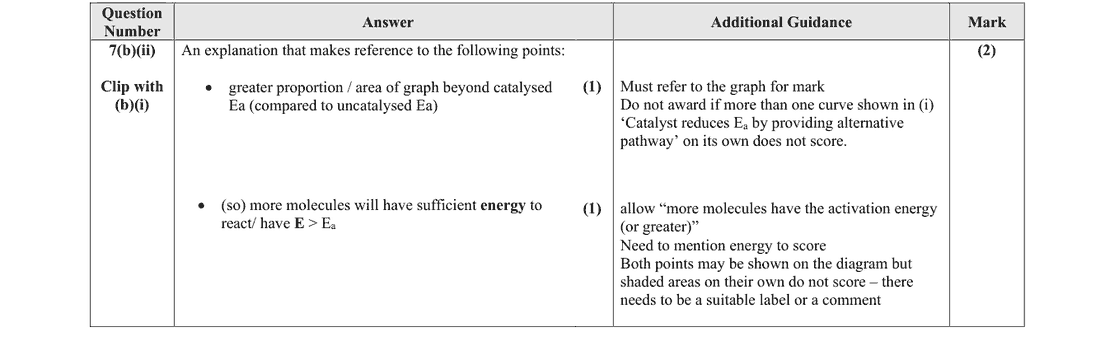
This is a standard question that is often encountered at A level and parts of it also at GCSE. (ai) Most understood the effect of temperature on rate and yield. However, many lost marks due to inadequate explanations. Some responses simply stated the effects without justification, while others mentioned increased collision frequency or the exothermic nature of the reaction but failed to link these to changes in rate or yield. (aii) The effects of pressure changes were generally well known. However, vague references to high cost—without specifying the reason (e.g. equipment or energy requirements)—meant many candidates missed the third mark. (b) This question proved to be an excellent determinator, with a very even spread of marks. (i) Many fully correct, well drawn graphs were seen although some of the shapes were far from what is expected. However, very few crashed into the x axis and most started at the origin, which was encouraging. Weaker responses drew two curves and some fully confused the Maxwell- Boltzmann graph with a reaction profile. (ii) The idea that more molecules have sufficient energy to react in the presence of a catalyst was widely understood. However, few candidates referred explicitly to the graph, as required, and even fewer correctly described the increased area under the curve to the right of the activation energy.

This is a standard question that is often encountered at A level and parts of it also at GCSE. (ai) Most understood the effect of temperature on rate and yield. However, many lost marks due to inadequate explanations. Some responses simply stated the effects without justification, while others mentioned increased collision frequency or the exothermic nature of the reaction but failed to link these to changes in rate or yield. (aii) The effects of pressure changes were generally well known. However, vague references to high cost—without specifying the reason (e.g. equipment or energy requirements)—meant many candidates missed the third mark. (b) This question proved to be an excellent determinator, with a very even spread of marks. (i) Many fully correct, well drawn graphs were seen although some of the shapes were far from what is expected. However, very few crashed into the x axis and most started at the origin, which was encouraging. Weaker responses drew two curves and some fully confused the Maxwell- Boltzmann graph with a reaction profile. (ii) The idea that more molecules have sufficient energy to react in the presence of a catalyst was widely understood. However, few candidates referred explicitly to the graph, as required, and even fewer correctly described the increased area under the curve to the right of the activation energy.
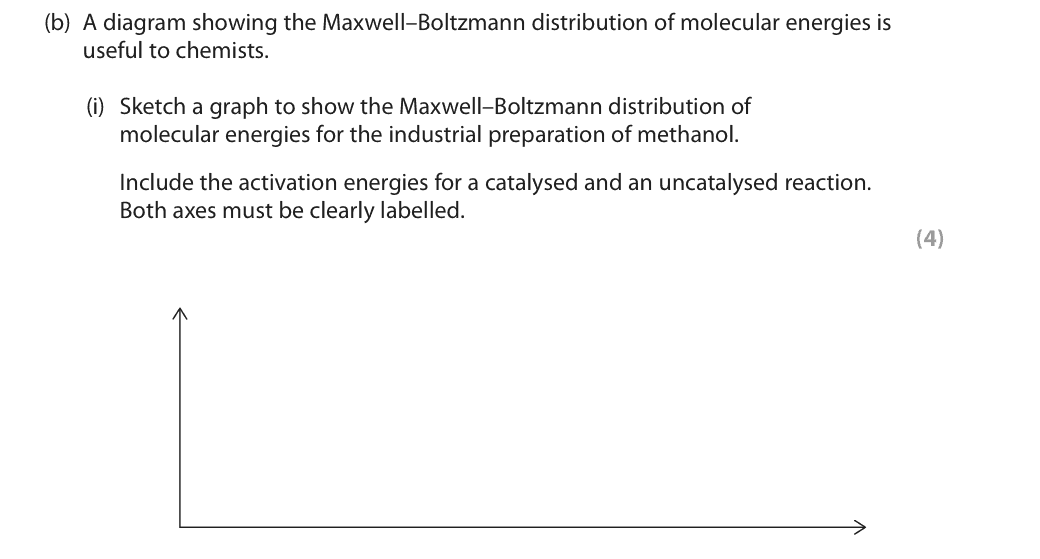
This is a standard question that is often encountered at A level and parts of it also at GCSE. (ai) Most understood the effect of temperature on rate and yield. However, many lost marks due to inadequate explanations. Some responses simply stated the effects without justification, while others mentioned increased collision frequency or the exothermic nature of the reaction but failed to link these to changes in rate or yield. (aii) The effects of pressure changes were generally well known. However, vague references to high cost—without specifying the reason (e.g. equipment or energy requirements)—meant many candidates missed the third mark. (b) This question proved to be an excellent determinator, with a very even spread of marks. (i) Many fully correct, well drawn graphs were seen although some of the shapes were far from what is expected. However, very few crashed into the x axis and most started at the origin, which was encouraging. Weaker responses drew two curves and some fully confused the Maxwell- Boltzmann graph with a reaction profile. (ii) The idea that more molecules have sufficient energy to react in the presence of a catalyst was widely understood. However, few candidates referred explicitly to the graph, as required, and even fewer correctly described the increased area under the curve to the right of the activation energy.
Skills: MS3.1 Translate information between graphical, numerical and algebraic forms

This is a standard question that is often encountered at A level and parts of it also at GCSE. (ai) Most understood the effect of temperature on rate and yield. However, many lost marks due to inadequate explanations. Some responses simply stated the effects without justification, while others mentioned increased collision frequency or the exothermic nature of the reaction but failed to link these to changes in rate or yield. (aii) The effects of pressure changes were generally well known. However, vague references to high cost—without specifying the reason (e.g. equipment or energy requirements)—meant many candidates missed the third mark. (b) This question proved to be an excellent determinator, with a very even spread of marks. (i) Many fully correct, well drawn graphs were seen although some of the shapes were far from what is expected. However, very few crashed into the x axis and most started at the origin, which was encouraging. Weaker responses drew two curves and some fully confused the Maxwell- Boltzmann graph with a reaction profile. (ii) The idea that more molecules have sufficient energy to react in the presence of a catalyst was widely understood. However, few candidates referred explicitly to the graph, as required, and even fewer correctly described the increased area under the curve to the right of the activation energy.
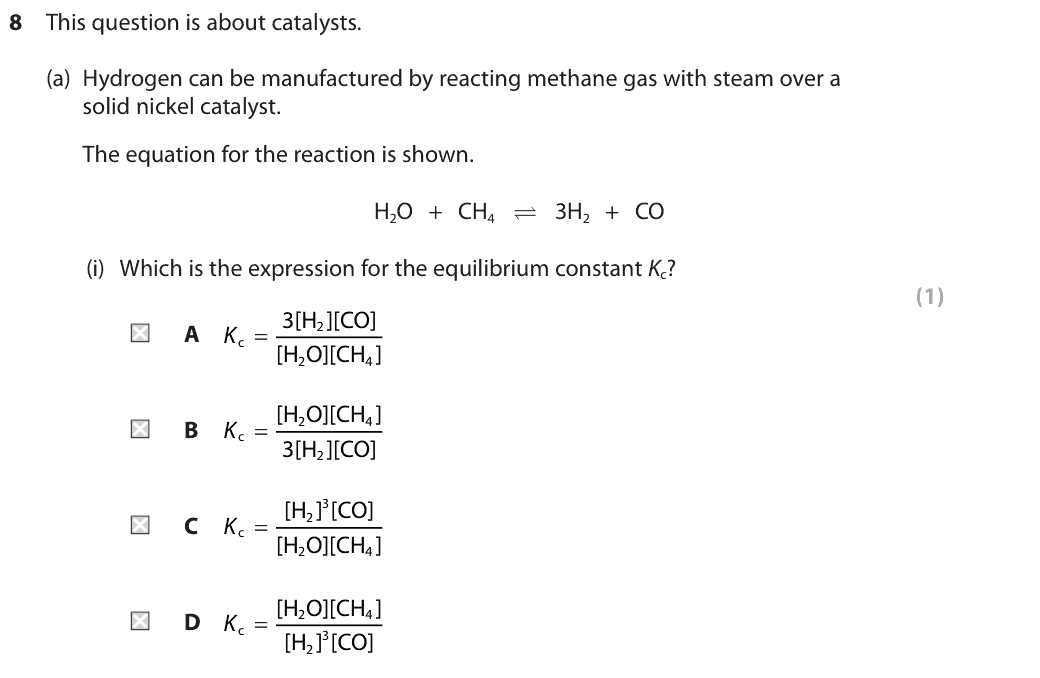
C
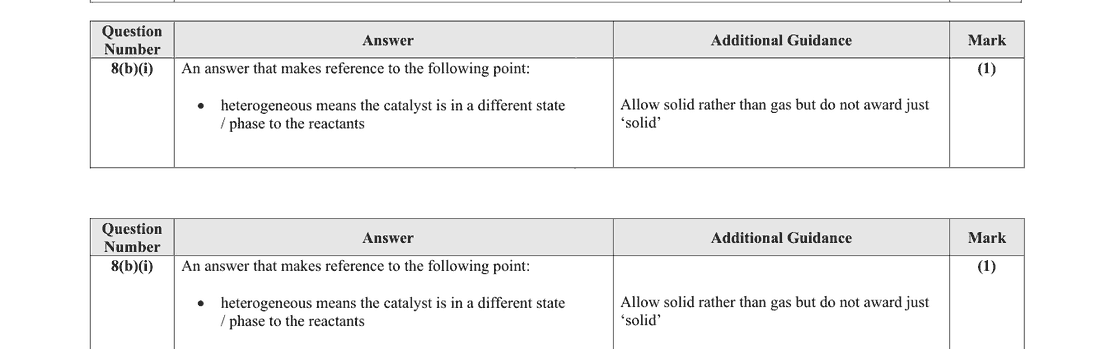
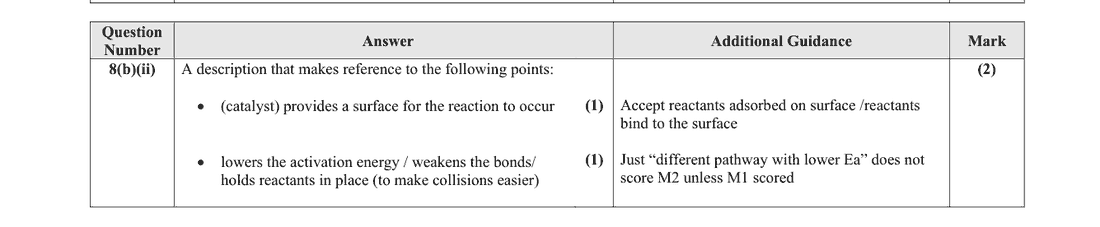
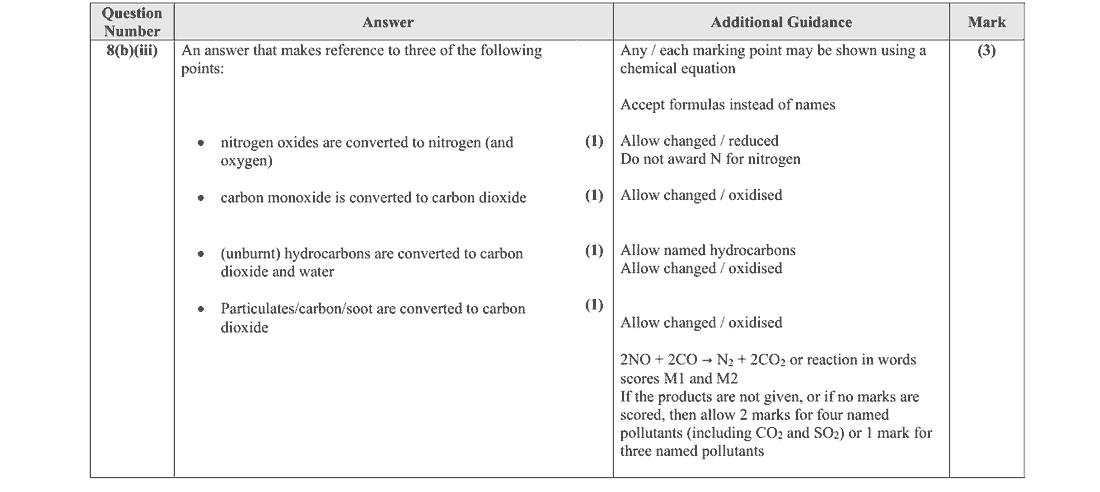
This question is about the use of catalysts in vehicle exhaust systems. (a) The expression for the equilibrium constant was well understood and 90% of the candidates answered correctly. The subsequent calculation was more challenging but still well scored. (bi) The concept of heterogeneous catalysis was widely known. However, some candidates confused it with heterogeneous equilibria, referring to reactants and products being in different phases without mentioning the phase of the catalyst. Others mentioned that the catalyst was in a “different phase” but failed to specify that this was in comparison to the reactants, which is essential for a complete explanation. (bii) Adsorption onto the catalyst surface was generally well understood with most then going on to explain the consequent lowering of Ea. Weaker candidates often just gave a generalised statement without linking it to heterogeneous catalysis, or just described adsorption or desorption but did not explain why this increases the rate of reaction. (biii) The vast majority scored at least two marks – typically referring to CO and NOx. Many also suggested SO2. However, some misunderstood the question and listed pollutants produced by the engine rather than the products formed after catalytic conversion. A surprising number incorrectly stated that CO produces carbon and oxygen, or that SO2 decomposes into sulfur and oxygen. The “rescue” mark for 3 named pollutants was widely awarded.
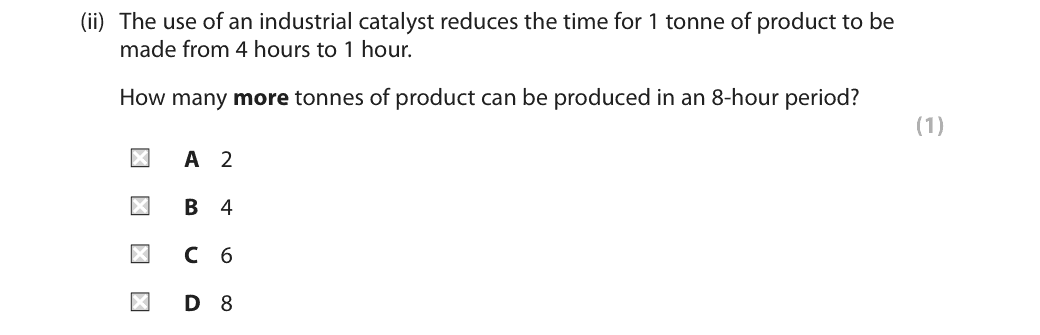
C
This question is about the use of catalysts in vehicle exhaust systems. (a) The expression for the equilibrium constant was well understood and 90% of the candidates answered correctly. The subsequent calculation was more challenging but still well scored. (bi) The concept of heterogeneous catalysis was widely known. However, some candidates confused it with heterogeneous equilibria, referring to reactants and products being in different phases without mentioning the phase of the catalyst. Others mentioned that the catalyst was in a “different phase” but failed to specify that this was in comparison to the reactants, which is essential for a complete explanation. (bii) Adsorption onto the catalyst surface was generally well understood with most then going on to explain the consequent lowering of Ea. Weaker candidates often just gave a generalised statement without linking it to heterogeneous catalysis, or just described adsorption or desorption but did not explain why this increases the rate of reaction. (biii) The vast majority scored at least two marks – typically referring to CO and NOx. Many also suggested SO2. However, some misunderstood the question and listed pollutants produced by the engine rather than the products formed after catalytic conversion. A surprising number incorrectly stated that CO produces carbon and oxygen, or that SO2 decomposes into sulfur and oxygen. The “rescue” mark for 3 named pollutants was widely awarded.
Skills: MS0.2 Use ratios, fractions and percentages

This question is about the use of catalysts in vehicle exhaust systems. (a) The expression for the equilibrium constant was well understood and 90% of the candidates answered correctly. The subsequent calculation was more challenging but still well scored. (bi) The concept of heterogeneous catalysis was widely known. However, some candidates confused it with heterogeneous equilibria, referring to reactants and products being in different phases without mentioning the phase of the catalyst. Others mentioned that the catalyst was in a “different phase” but failed to specify that this was in comparison to the reactants, which is essential for a complete explanation. (bii) Adsorption onto the catalyst surface was generally well understood with most then going on to explain the consequent lowering of Ea. Weaker candidates often just gave a generalised statement without linking it to heterogeneous catalysis, or just described adsorption or desorption but did not explain why this increases the rate of reaction. (biii) The vast majority scored at least two marks – typically referring to CO and NOx. Many also suggested SO2. However, some misunderstood the question and listed pollutants produced by the engine rather than the products formed after catalytic conversion. A surprising number incorrectly stated that CO produces carbon and oxygen, or that SO2 decomposes into sulfur and oxygen. The “rescue” mark for 3 named pollutants was widely awarded.

This question is about the use of catalysts in vehicle exhaust systems. (a) The expression for the equilibrium constant was well understood and 90% of the candidates answered correctly. The subsequent calculation was more challenging but still well scored. (bi) The concept of heterogeneous catalysis was widely known. However, some candidates confused it with heterogeneous equilibria, referring to reactants and products being in different phases without mentioning the phase of the catalyst. Others mentioned that the catalyst was in a “different phase” but failed to specify that this was in comparison to the reactants, which is essential for a complete explanation. (bii) Adsorption onto the catalyst surface was generally well understood with most then going on to explain the consequent lowering of Ea. Weaker candidates often just gave a generalised statement without linking it to heterogeneous catalysis, or just described adsorption or desorption but did not explain why this increases the rate of reaction. (biii) The vast majority scored at least two marks – typically referring to CO and NOx. Many also suggested SO2. However, some misunderstood the question and listed pollutants produced by the engine rather than the products formed after catalytic conversion. A surprising number incorrectly stated that CO produces carbon and oxygen, or that SO2 decomposes into sulfur and oxygen. The “rescue” mark for 3 named pollutants was widely awarded.

This question is about the use of catalysts in vehicle exhaust systems. (a) The expression for the equilibrium constant was well understood and 90% of the candidates answered correctly. The subsequent calculation was more challenging but still well scored. (bi) The concept of heterogeneous catalysis was widely known. However, some candidates confused it with heterogeneous equilibria, referring to reactants and products being in different phases without mentioning the phase of the catalyst. Others mentioned that the catalyst was in a “different phase” but failed to specify that this was in comparison to the reactants, which is essential for a complete explanation. (bii) Adsorption onto the catalyst surface was generally well understood with most then going on to explain the consequent lowering of Ea. Weaker candidates often just gave a generalised statement without linking it to heterogeneous catalysis, or just described adsorption or desorption but did not explain why this increases the rate of reaction. (biii) The vast majority scored at least two marks – typically referring to CO and NOx. Many also suggested SO2. However, some misunderstood the question and listed pollutants produced by the engine rather than the products formed after catalytic conversion. A surprising number incorrectly stated that CO produces carbon and oxygen, or that SO2 decomposes into sulfur and oxygen. The “rescue” mark for 3 named pollutants was widely awarded.
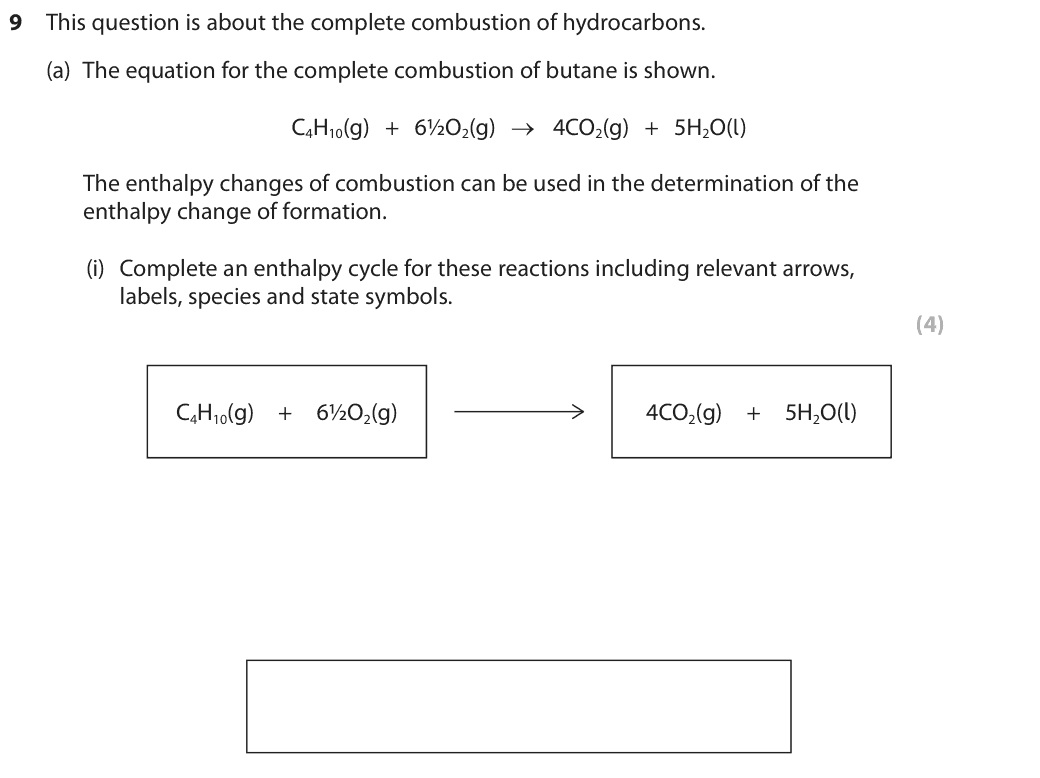
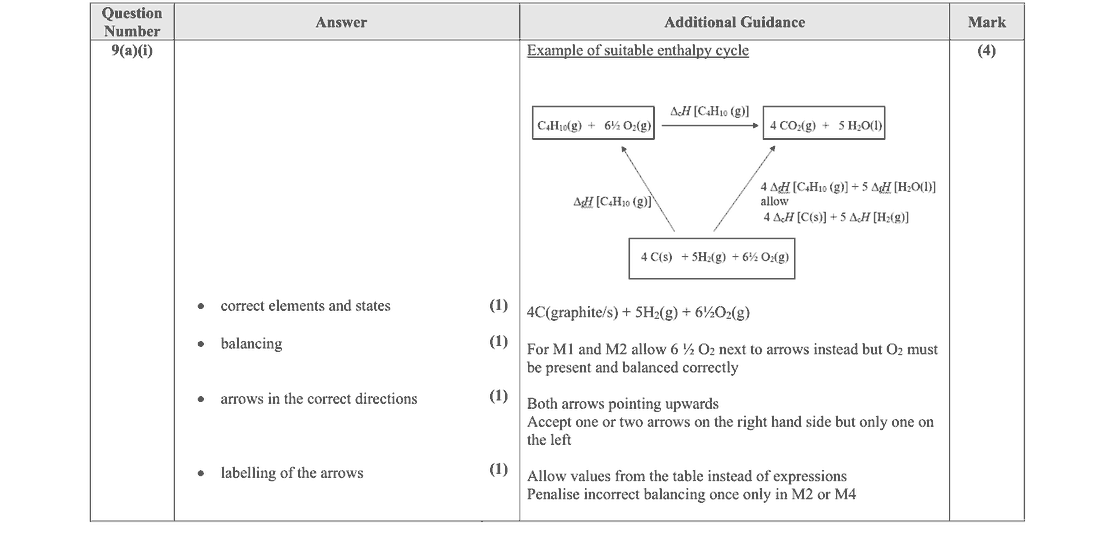
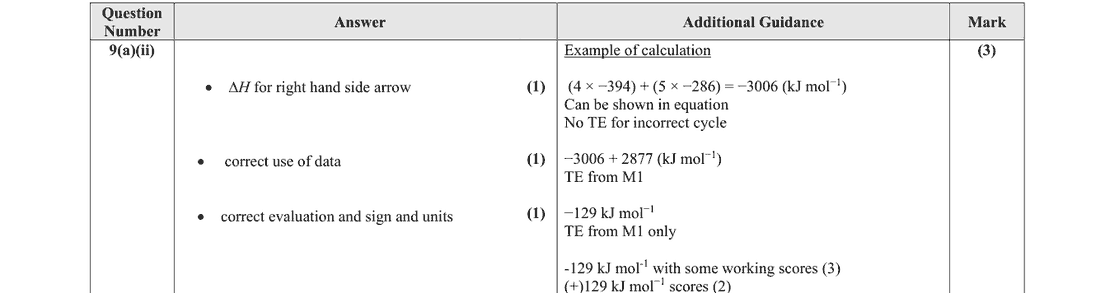
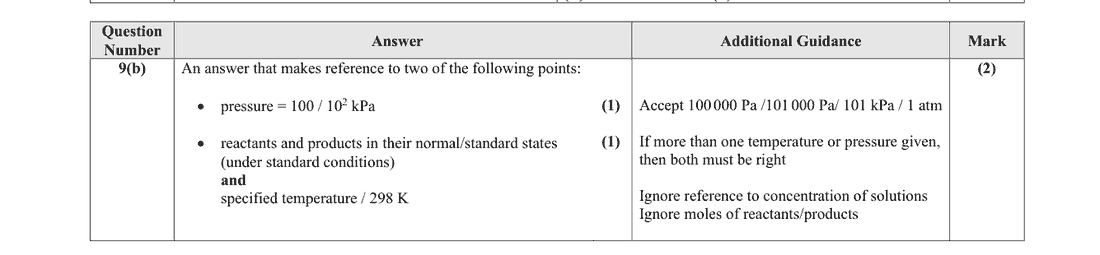
This question involved the construction of a Hess cycle, and an enthalpy change calculation. (ai) The species, state symbols and balancing were generally correct. However, candidates struggled to place the appropriate arrows correctly and only a minority managed to label these correctly. Even the best answered questions often failed to label the top arrow, or thought that this enthalpy change represented the enthalpy change of formation of butane. (aii) Despite errors in part (i), many candidates successfully completed the enthalpy calculation, although many got the sign wrong. Some candidates bypassed the cycle in part (i) entirely and used the formula for calculating enthalpy of formation from combustion data, or redrew the cycle correctly in this part. While this approach is valid, it can waste valuable exam time. (b) Many correct answers but standard states rarely scored. The most common score was one mark. There was a lot of confusion and many contradictions. Frequent incorrect answers were 100 Pa, 100 atm, 1000 kPa.
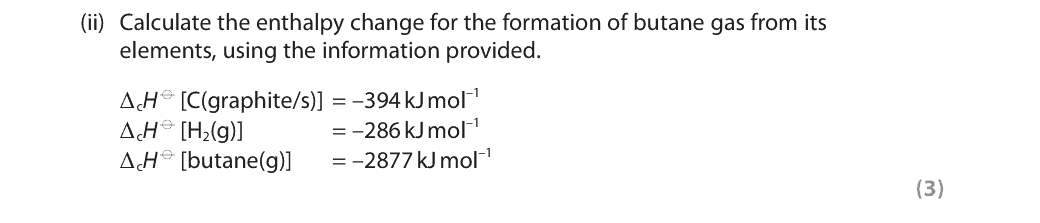
This question involved the construction of a Hess cycle, and an enthalpy change calculation. (ai) The species, state symbols and balancing were generally correct. However, candidates struggled to place the appropriate arrows correctly and only a minority managed to label these correctly. Even the best answered questions often failed to label the top arrow, or thought that this enthalpy change represented the enthalpy change of formation of butane. (aii) Despite errors in part (i), many candidates successfully completed the enthalpy calculation, although many got the sign wrong. Some candidates bypassed the cycle in part (i) entirely and used the formula for calculating enthalpy of formation from combustion data, or redrew the cycle correctly in this part. While this approach is valid, it can waste valuable exam time. (b) Many correct answers but standard states rarely scored. The most common score was one mark. There was a lot of confusion and many contradictions. Frequent incorrect answers were 100 Pa, 100 atm, 1000 kPa.
Skills: MS2.4 Solve algebraic equations

This question involved the construction of a Hess cycle, and an enthalpy change calculation. (ai) The species, state symbols and balancing were generally correct. However, candidates struggled to place the appropriate arrows correctly and only a minority managed to label these correctly. Even the best answered questions often failed to label the top arrow, or thought that this enthalpy change represented the enthalpy change of formation of butane. (aii) Despite errors in part (i), many candidates successfully completed the enthalpy calculation, although many got the sign wrong. Some candidates bypassed the cycle in part (i) entirely and used the formula for calculating enthalpy of formation from combustion data, or redrew the cycle correctly in this part. While this approach is valid, it can waste valuable exam time. (b) Many correct answers but standard states rarely scored. The most common score was one mark. There was a lot of confusion and many contradictions. Frequent incorrect answers were 100 Pa, 100 atm, 1000 kPa.
Want a paper marked and gone through with you? Message us.