Examiner's comment
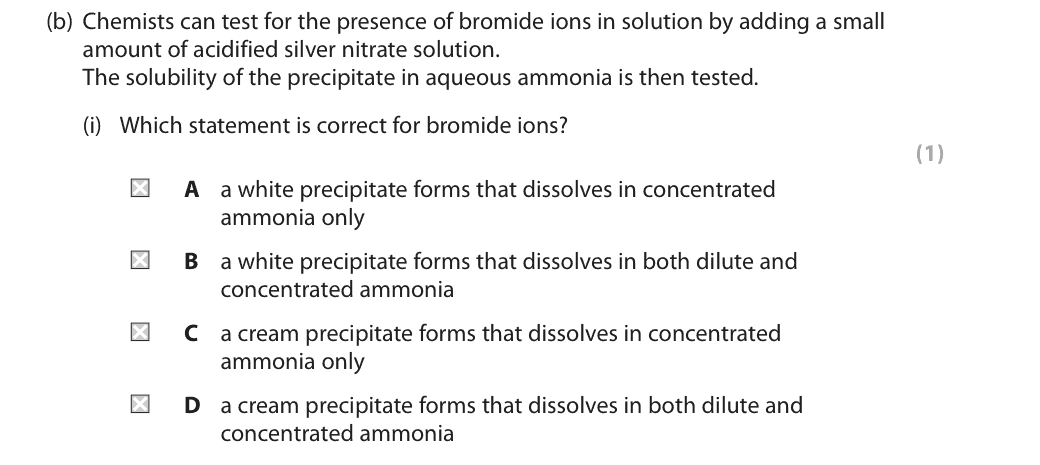
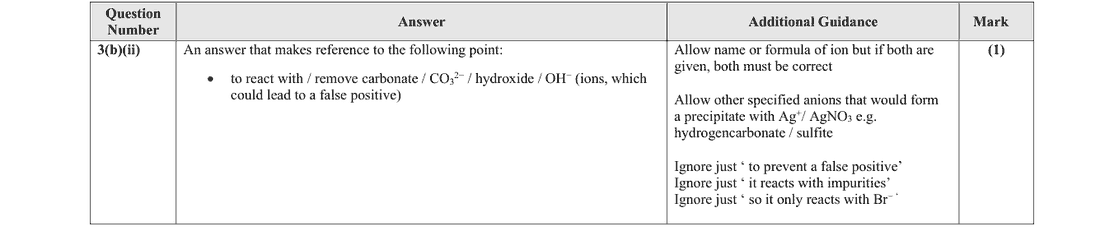
Many candidates gave vague answers to (ii), such as to provide H+ ions or to remove impurities. Good answers identified the impurities as carbonate ions or hydroxide ions.
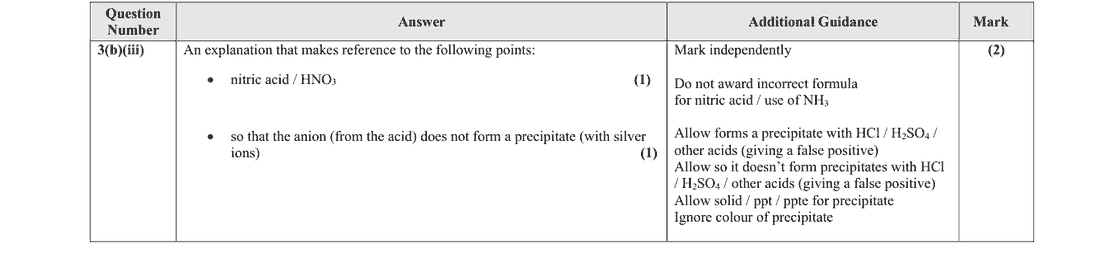
In part (iii), the majority of candidates knew that the only acceptable acid is nitric acid. However, many of them could not explain that other acids contain anions that react with silver ions to form a precipitate. Some candidates referred to the formation of silver chloride when hydrochloric acid is used but did not state the significance of this is that it is also a precipitate. Quite a few candidates referred to 'false positives' in their answers but did not state that other precipitates would form.
Notes from the mark scheme and report
- To react with / remove carbonate or hydroxide ions (or other named anions such as hydrogencarbonate or sulfite), which would also give a precipitate with silver ions. If a name and a formula are given both must be right. Just 'to prevent a false positive', 'to remove impurities' or 'so it only reacts with Br–' is not enough. Many answers were vague in exactly these ways
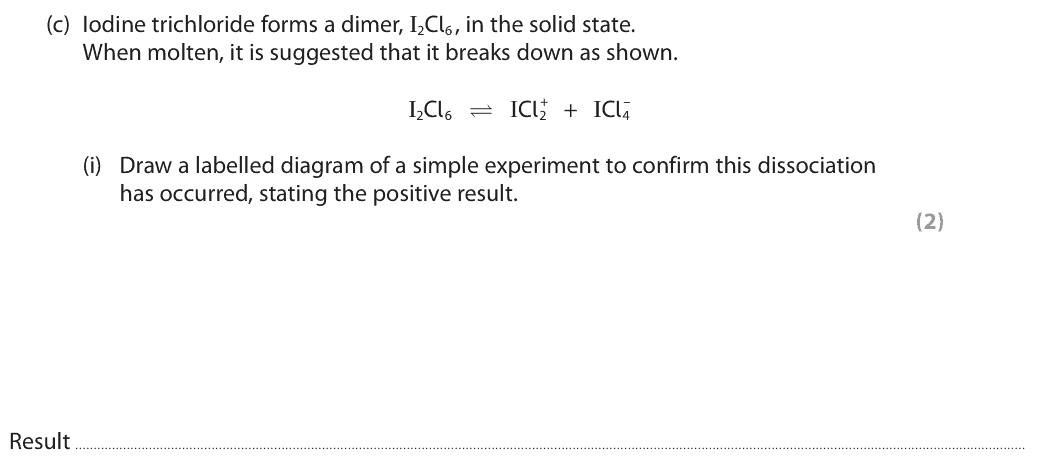
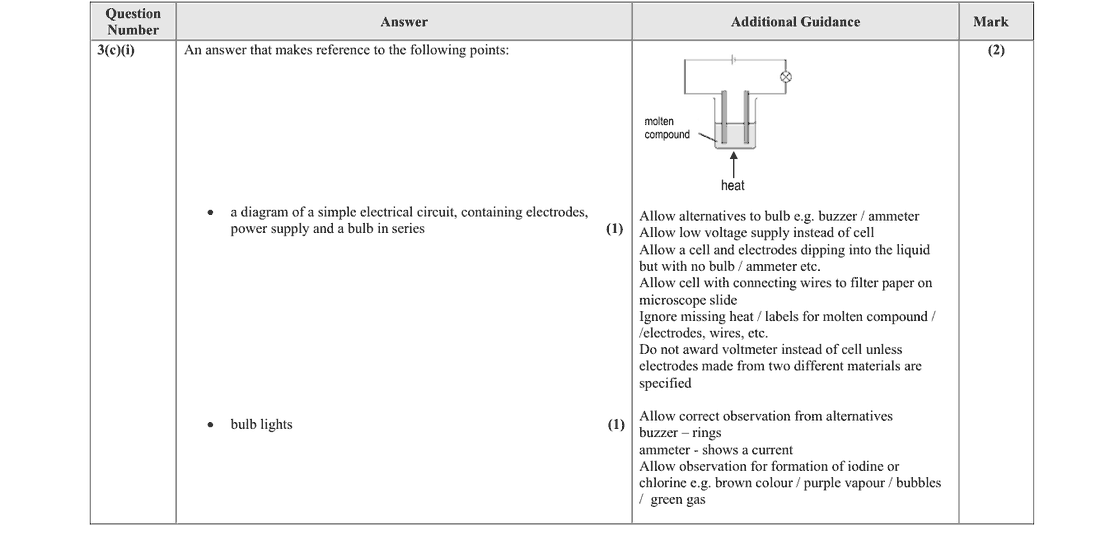
Skills: PT4 use laboratory apparatus for a variety of experimental techniques, including: titration, using burette and pipette; distillation and heating under reflux, including setting up glassware using retort stand and clamps; qualitative tests for ions and organic functional groups; filtration, including use of fluted filter paper, or filtration under reduced pressure; CP7 Core practical 7: Analysis of some inorganic and organic unknowns