November 2020: AS Paper 1, Inorganic and physical chemistry

80 marks · 41 question parts · Paper, mark scheme and report on AQA's site · An autumn series using the paper written for the cancelled summer exams · Have the Data Booklet beside you

Question by question

QTopicMarksAOType
01.1 Periodicity, Atomic structure 3Explanation
01.2 Atomic structure 1Equation writing
01.3 Atomic structure 3Explanation
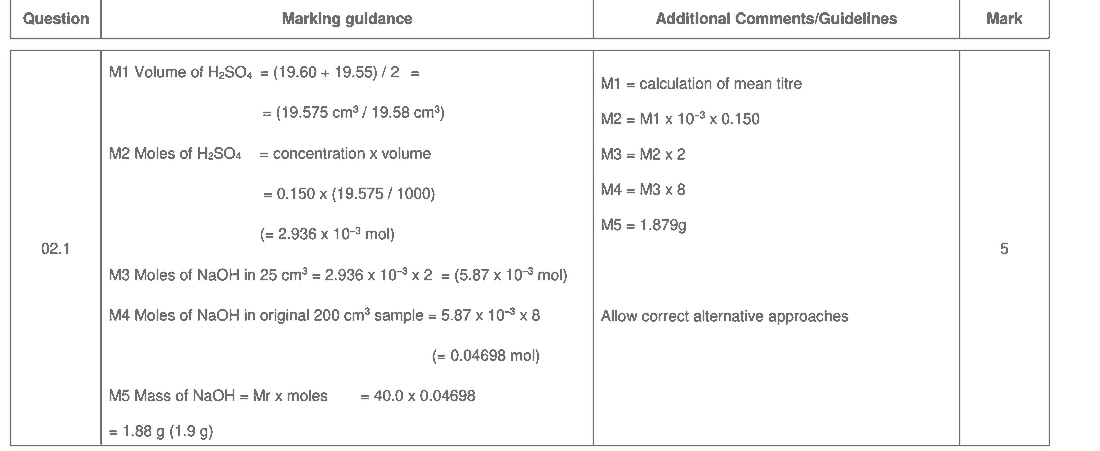
02.1 Amount of substance 5Calculation
02.2 Amount of substance 1Practical and data analysis
02.3 Amount of substance 1Practical and data analysis
03.1 Amount of substance 2Short answer
03.2 Atomic structure 2Calculation
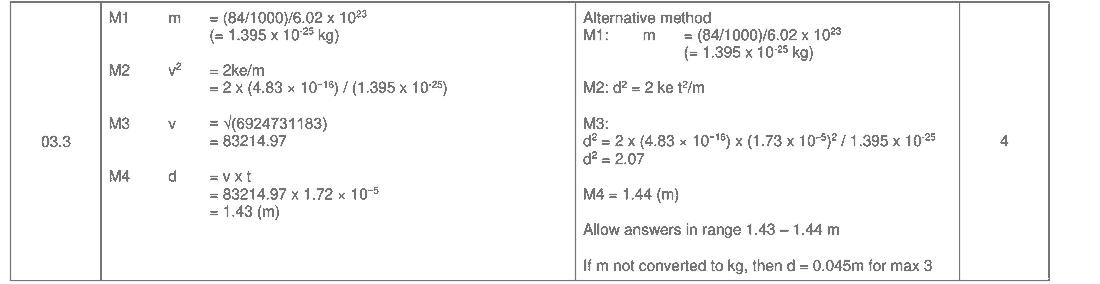
03.3 Atomic structure, Amount of substance 4Calculation
04.1 Energetics 1Short answer
04.2 Energetics 6Level of response
04.3 Energetics 5Calculation
04.4 Energetics 1Practical and data analysis
05.1 Periodicity, Bonding 2Explanation
05.2 Group 2, the alkaline earth metals, Oxidation, reduction and redox equations 2Equation writing
05.3 Group 2, the alkaline earth metals 2Short answer
06 Bonding 5Diagram or structure
07.1 Group 7(17), the halogens 3Short answer
07.2 Oxidation, reduction and redox equations, Group 7(17), the halogens 4Equation writing
07.3 Group 7(17), the halogens 1Practical and data analysis
07.4 Amount of substance 1Calculation
07.5 Amount of substance 1Calculation
07.6 Amount of substance 2Calculation
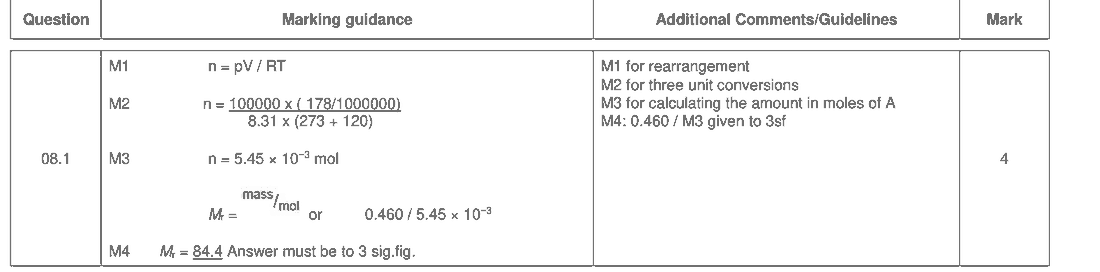
08.1 Amount of substance 4Calculation
08.2 Amount of substance 2Practical and data analysis
08.3 Amount of substance 1Practical and data analysis
09 Atomic structure 1Multiple choice
10 Bonding 1Multiple choice
11 Bonding 1Multiple choice
12 Energetics 1Multiple choice
13 Oxidation, reduction and redox equations 1Multiple choice
14 Atomic structure 1Multiple choice
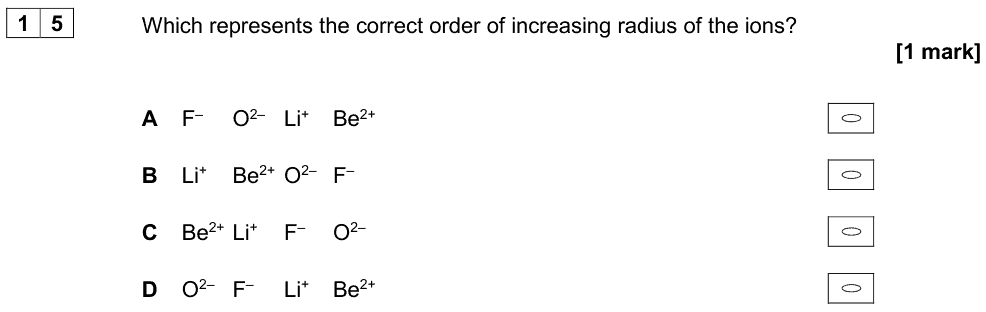
15 Atomic structure 1Multiple choice
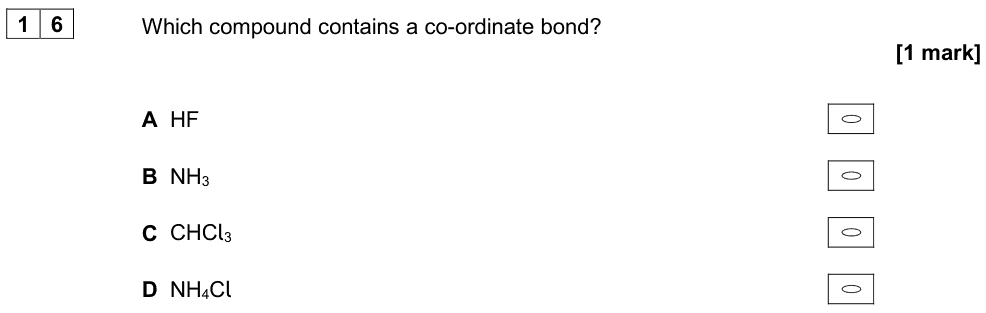
16 Bonding 1Multiple choice
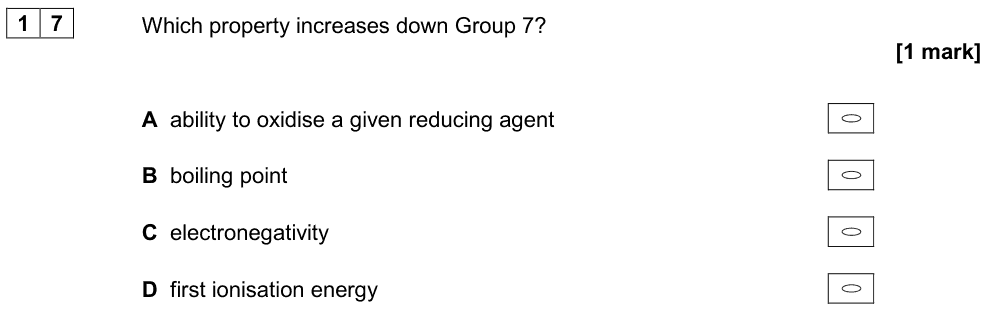
17 Group 7(17), the halogens 1Multiple choice
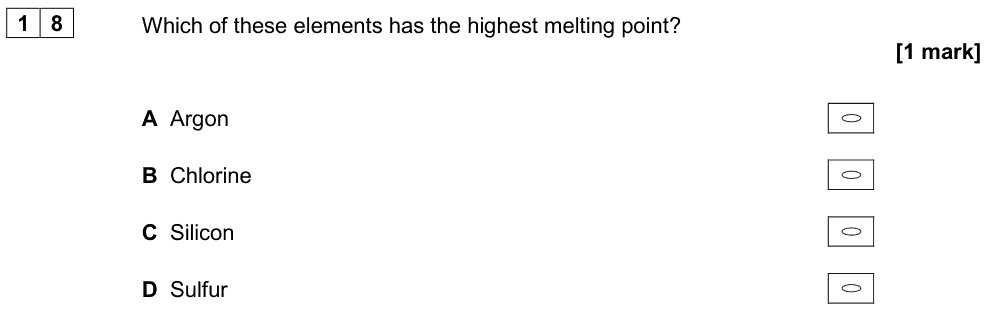
18 Periodicity 1Multiple choice
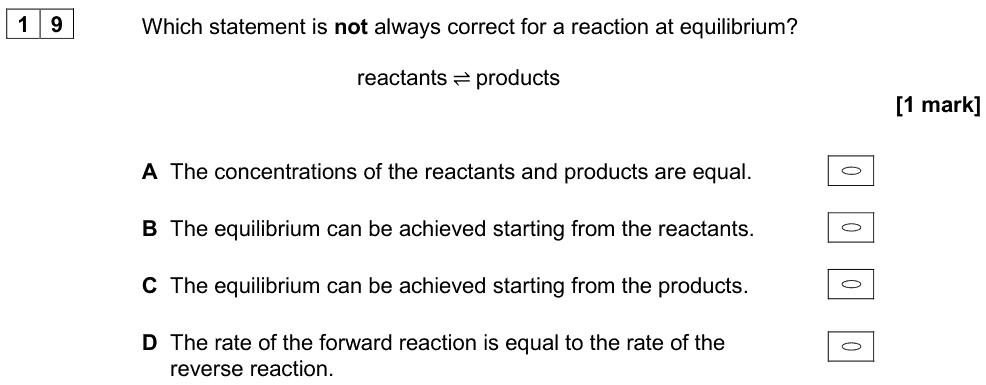
19 Chemical equilibria, Le Chatelier's principle and Kc 1Multiple choice
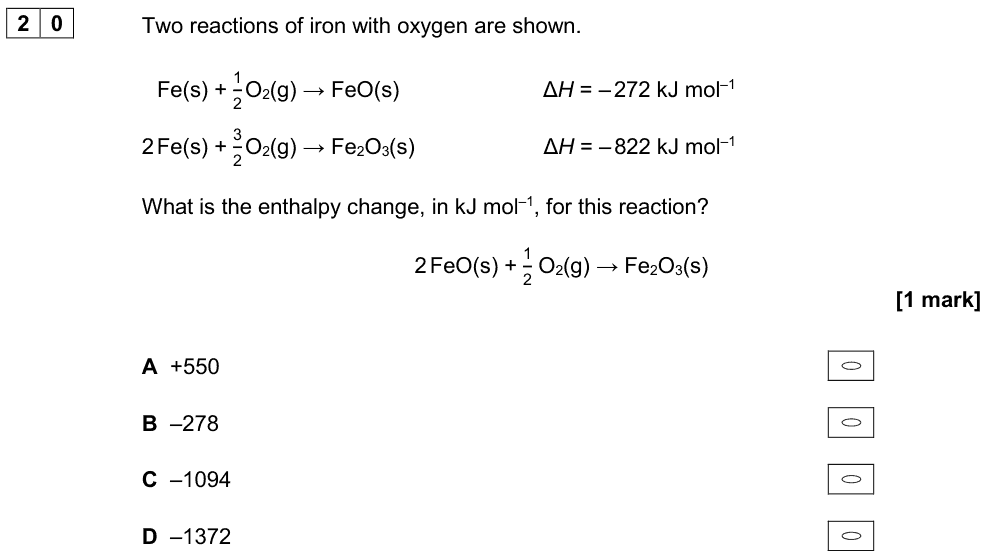
20 Energetics 1Multiple choice
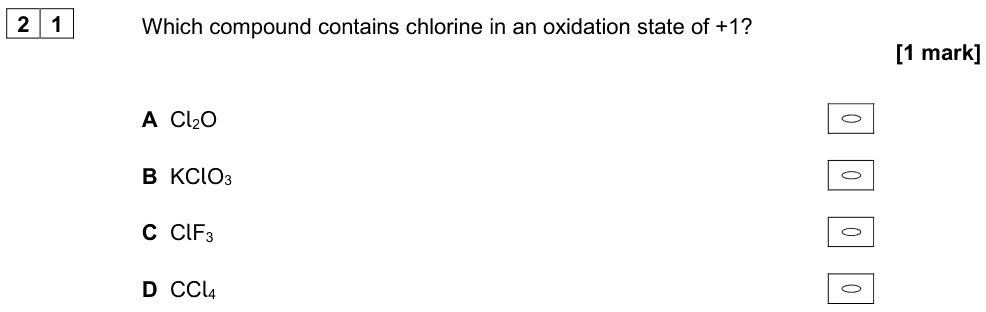
21 Oxidation, reduction and redox equations 1Multiple choice
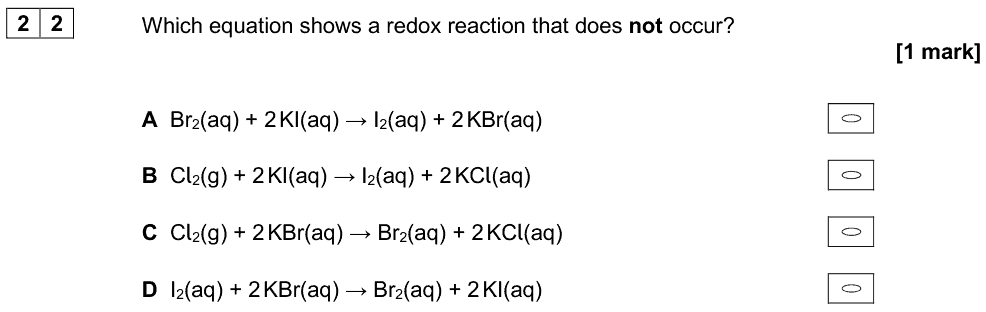
22 Group 7(17), the halogens 1Multiple choice
23 Bonding 1Multiple choice

The questions

01.101.201.302.102.202.303.103.203.304.104.204.304.405.105.205.30607.107.207.307.407.507.608.108.208.3091011121314151617181920212223
November 2020 · AS Paper 1 · Q01.1 3 marks Explanation periodicityatomic structure
This question is about atomic structure.
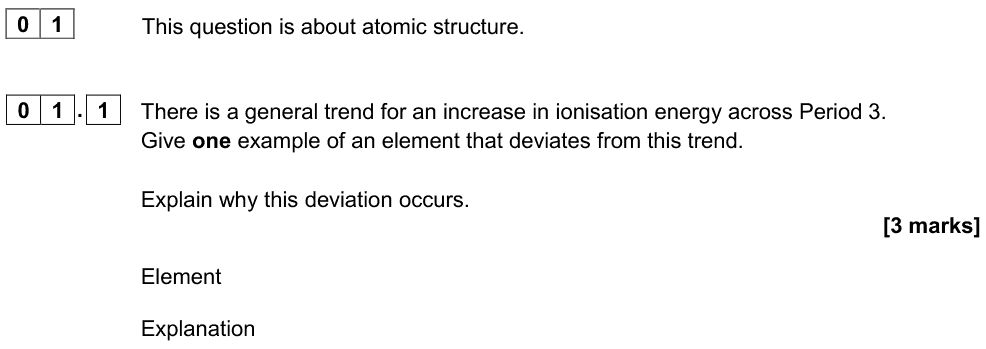
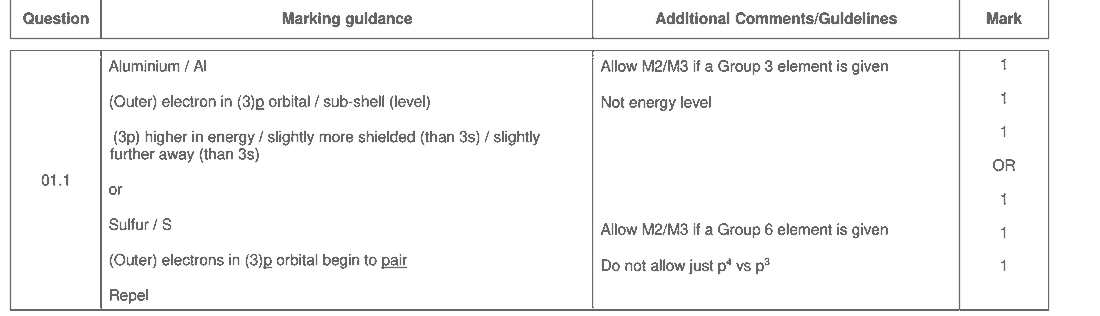
There is a general trend for an increase in ionisation energy across Period 3.
Give one example of an element that deviates from this trend.
Explain why this deviation occurs.
[3 marks]
Element
Explanation
November 2020 · AS Paper 1 · Q01.2 1 mark Equation writing atomic structure
Earlier part of question 01 that this part usesEarlier part of November 2020 Paper 1 question 01
Give an equation, including state symbols, to represent the process that occurs when
the third ionisation energy of sodium is measured.
[1 mark]
November 2020 · AS Paper 1 · Q01.3 3 marks Explanation atomic structure
Earlier part of question 01 that this part usesEarlier part of November 2020 Paper 1 question 01
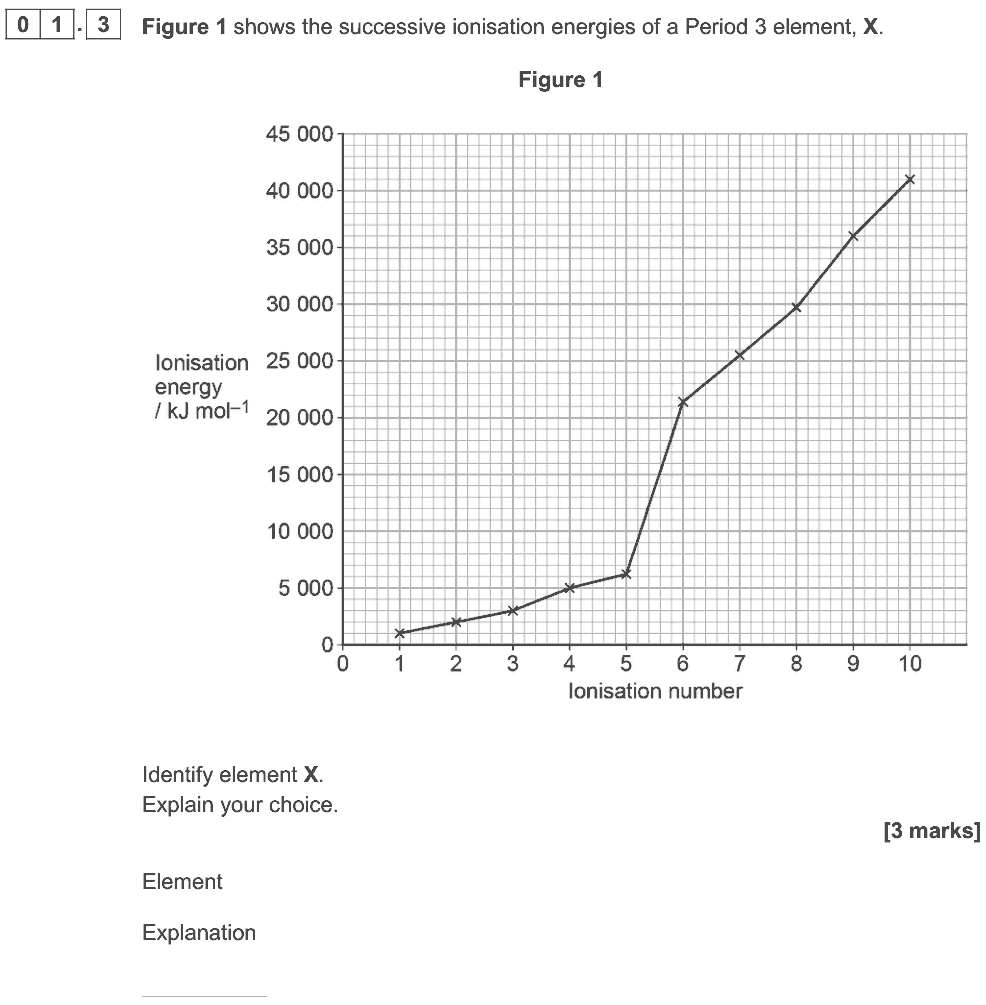
Figure 1 shows the successive ionisation energies of a Period 3 element, X.
Figure 1
Identify element X.
Explain your choice.
[3 marks]
Element
Explanation
November 2020 · AS Paper 1 · Q02.1 5 marks Calculation amount of substance
This question is about a titration.
A student dissolves an unknown mass of sodium hydroxide in water to make
200 cm3 of an aqueous solution.
A 25.0 cm3 sample of this sodium hydroxide solution is placed in a conical flask and is
titrated with 0.150 mol dm–3 sulfuric acid.
The equation for this reaction is shown.
2 NaOH(aq) + H2SO4(aq) → Na2SO4(aq) + 2 H2O(l)
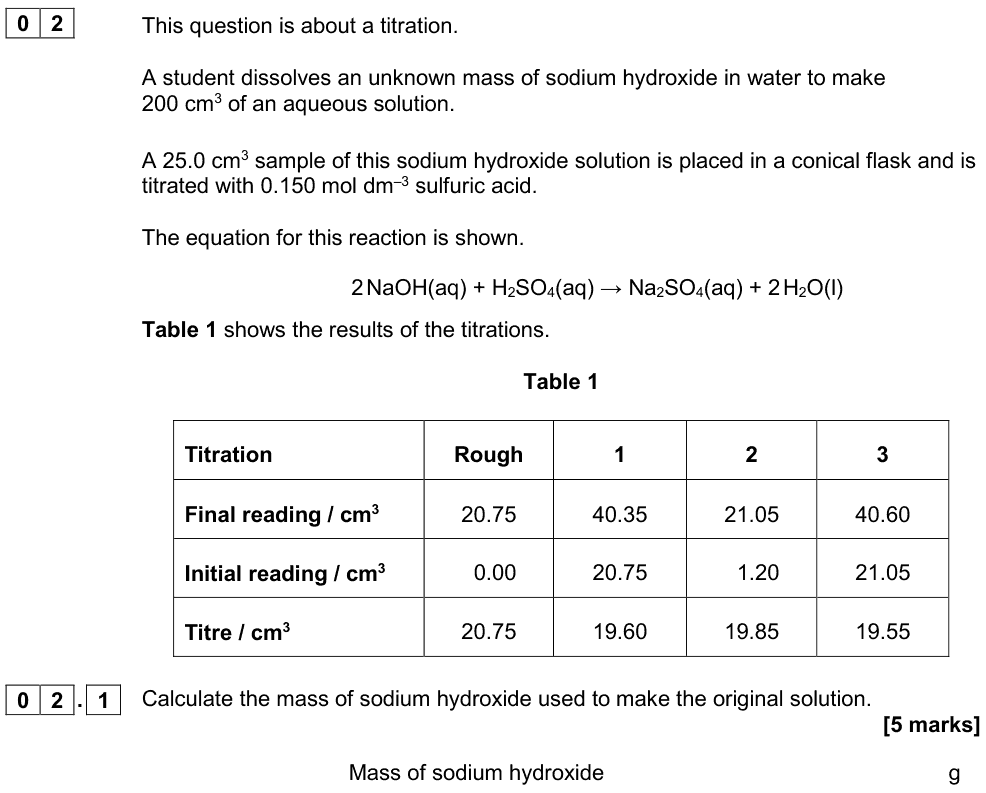
Table 1 shows the results of the titrations.
Table 1
Titration
Rough
1
2
3
Final reading / cm3
20.75
40.35
21.05
40.60
Initial reading / cm3
0.00
20.75
1.20
21.05
Titre / cm3
20.75
19.60
19.85
19.55
Calculate the mass of sodium hydroxide used to make the original solution.
[5 marks]
Mass of sodium hydroxide
g
November 2020 · AS Paper 1 · Q02.2 1 mark Practical and data analysis amount of substance
Earlier part of question 02 that this part usesEarlier part of November 2020 Paper 1 question 02
The student uses a funnel to fill the burette with sulfuric acid before starting the
titration.  After filling, the student forgets to remove the funnel from the top of the
burette.
Suggest why this might affect the titre volume recorded.
[1 mark]
November 2020 · AS Paper 1 · Q02.3 1 mark Practical and data analysis amount of substance
Earlier part of question 02 that this part usesEarlier part of November 2020 Paper 1 question 02
State one advantage of using a conical flask rather than a beaker for the titration.
[1 mark]
November 2020 · AS Paper 1 · Q03.1 2 marks Short answer amount of substance
This question is about time of flight (TOF) mass spectrometry.
Define the term relative atomic mass.
[2 marks]
November 2020 · AS Paper 1 · Q03.2 2 marks Calculation atomic structure
Earlier part of question 03 that this part usesEarlier part of November 2020 Paper 1 question 03
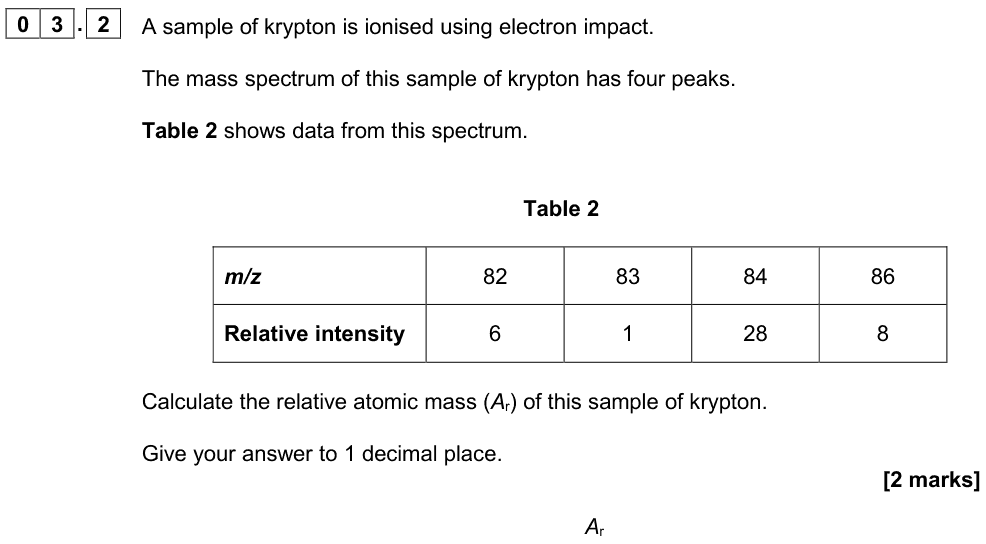
A sample of krypton is ionised using electron impact.
The mass spectrum of this sample of krypton has four peaks.
Table 2 shows data from this spectrum.
Table 2
m/z
82
83
84
86
Relative intensity
6
1
28
8
Calculate the relative atomic mass (Ar) of this sample of krypton.
Give your answer to 1 decimal place.
[2 marks]
Ar
November 2020 · AS Paper 1 · Q03.3 4 marks Calculation atomic structureamount of substance
Earlier part of question 03 that this part usesEarlier part of November 2020 Paper 1 question 03
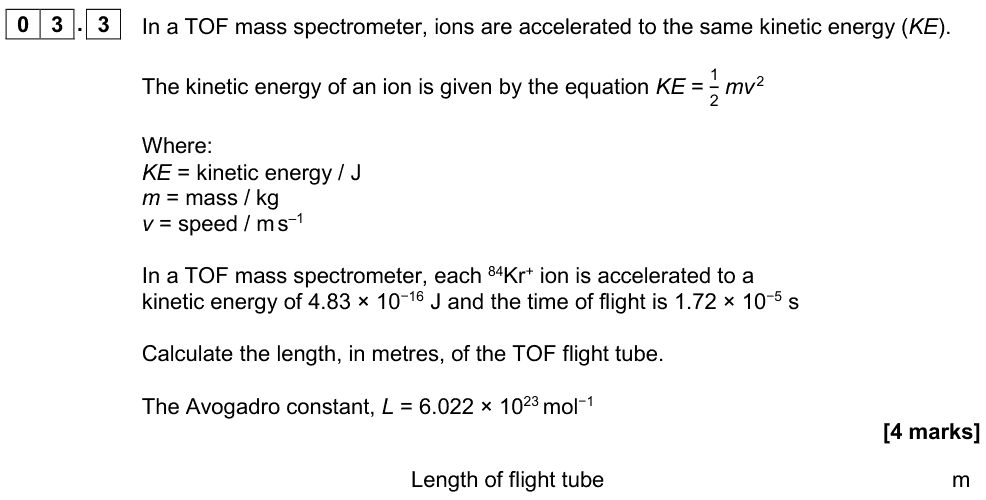
In a TOF mass spectrometer, ions are accelerated to the same kinetic energy (KE).
The kinetic energy of an ion is given by the equation KE =
1
2 mv  2
Where:
KE = kinetic energy / J
m = mass / kg
v = speed / m s–1
In a TOF mass spectrometer, each 84Kr+ ion is accelerated to a
kinetic energy of 4.83 × 10⁻¹⁶ J and the time of flight is 1.72 × 10⁻⁵ s
Calculate the length, in metres, of the TOF flight tube.
The Avogadro constant, L = 6.022 × 10²³ mol−1
[4 marks]
Length of flight tube
m
November 2020 · AS Paper 1 · Q04.1 1 mark Short answer energetics
This question is about enthalpy changes.
State the meaning of the term enthalpy change as applied to a chemical reaction.
[1 mark]
November 2020 · AS Paper 1 · Q04.2 6 marks 6-mark level of response energetics
Earlier part of question 04 that this part usesEarlier part of November 2020 Paper 1 question 04
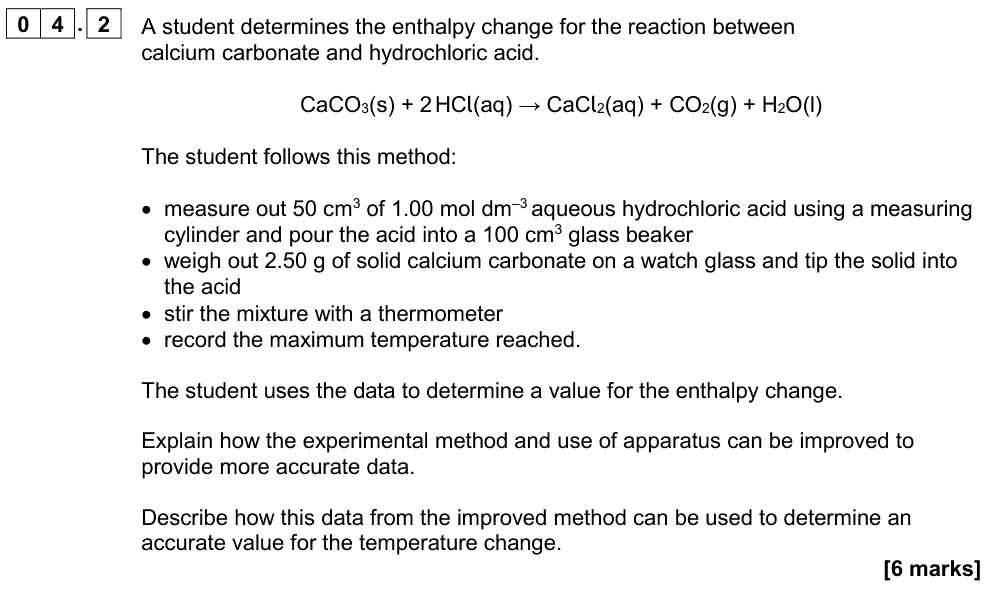
A student determines the enthalpy change for the reaction between
calcium carbonate and hydrochloric acid.
CaCO3(s) + 2 HCl(aq) → CaCl2(aq) + CO2(g) + H2O(l)
The student follows this method:
• measure out 50 cm3 of 1.00 mol dm–3 aqueous hydrochloric acid using a measuring
cylinder and pour the acid into a 100 cm3 glass beaker
• weigh out 2.50 g of solid calcium carbonate on a watch glass and tip the solid into
the acid
• stir the mixture with a thermometer
• record the maximum temperature reached.
The student uses the data to determine a value for the enthalpy change.
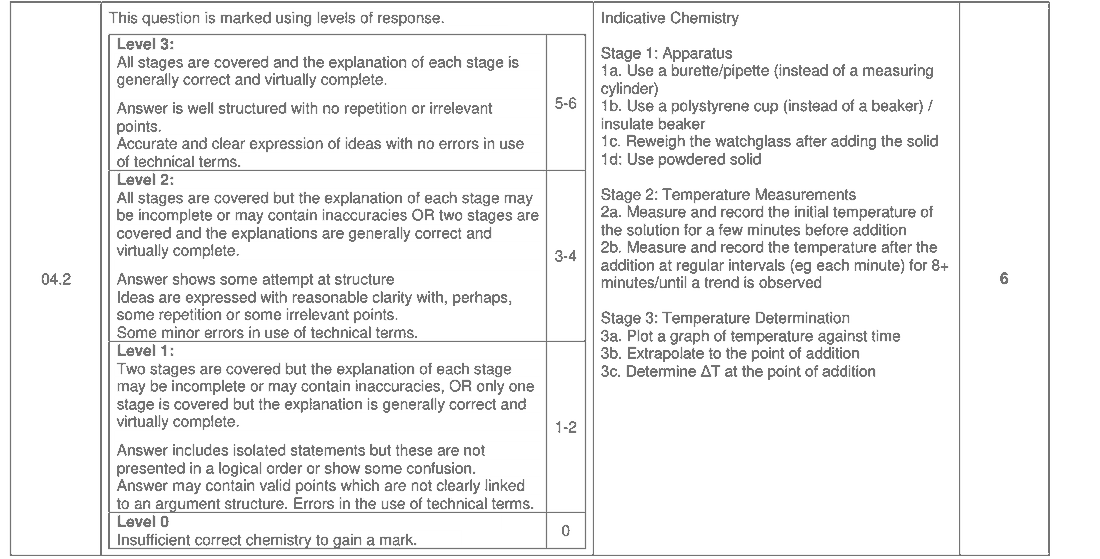
Explain how the experimental method and use of apparatus can be improved to
provide more accurate data.
Describe how this data from the improved method can be used to determine an
accurate value for the temperature change.
[6 marks]
November 2020 · AS Paper 1 · Q04.3 5 marks Calculation energetics
Earlier part of question 04 that this part usesEarlier part of November 2020 Paper 1 question 04
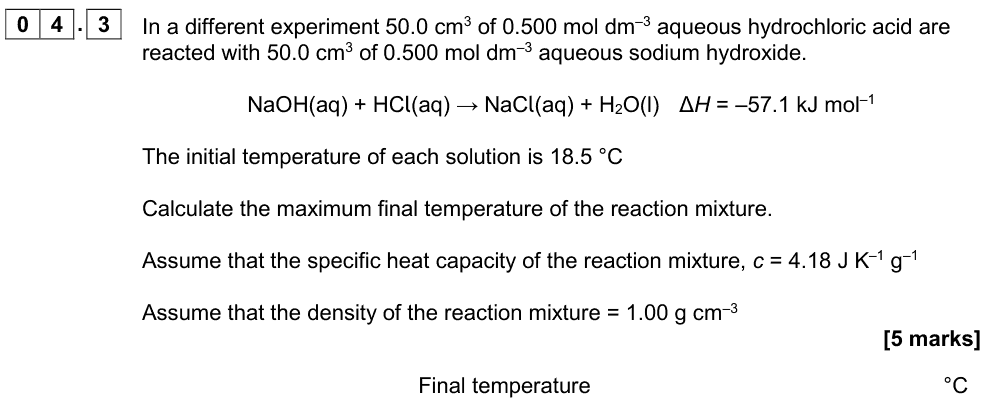
In a different experiment 50.0 cm3 of 0.500 mol dm–3 aqueous hydrochloric acid are
reacted with 50.0 cm3 of 0.500 mol dm–3 aqueous sodium hydroxide.
NaOH(aq) + HCl(aq) → NaCl(aq) + H2O(l)   ΔH = –57.1 kJ mol–1
The initial temperature of each solution is 18.5 °C
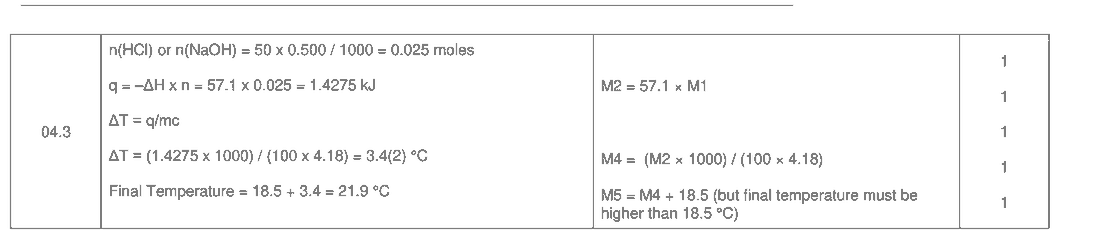
Calculate the maximum final temperature of the reaction mixture.
Assume that the specific heat capacity of the reaction mixture, c = 4.18 J K–1 g–1
Assume that the density of the reaction mixture = 1.00 g cm–3
[5 marks]
Final temperature
°C
November 2020 · AS Paper 1 · Q04.4 1 mark Practical and data analysis energetics
Earlier part of question 04 that this part usesEarlier part of November 2020 Paper 1 question 04
Suggest how, without changing the apparatus, the experiment in Question 04.3 could
be improved to reduce the percentage uncertainty in the temperature change.
[1 mark]
November 2020 · AS Paper 1 · Q05.1 2 marks Explanation periodicitybonding
This question is about Group 2 elements and their compounds.
Explain why the melting point of magnesium is higher than the melting point of
sodium.
[2 marks]
November 2020 · AS Paper 1 · Q05.2 2 marks Equation writing group 2redox
Earlier part of question 05 that this part usesEarlier part of November 2020 Paper 1 question 05
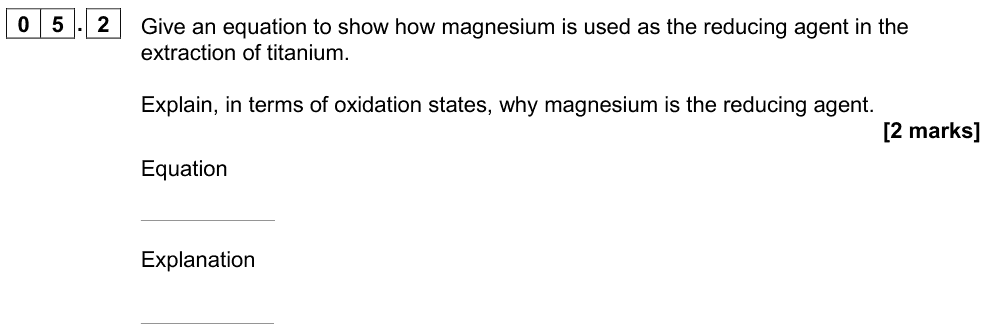
Give an equation to show how magnesium is used as the reducing agent in the
extraction of titanium.
Explain, in terms of oxidation states, why magnesium is the reducing agent.
[2 marks]
Equation
Explanation
November 2020 · AS Paper 1 · Q05.3 2 marks Short answer group 2
Earlier part of question 05 that this part usesEarlier part of November 2020 Paper 1 question 05
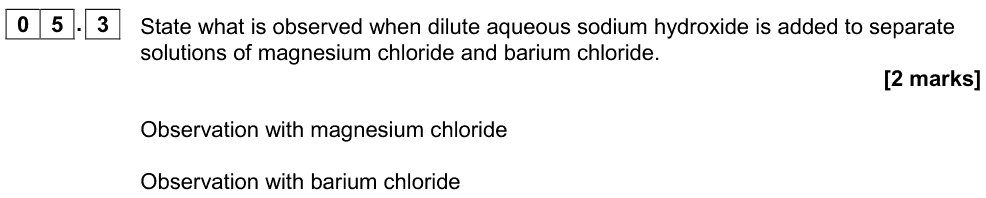
State what is observed when dilute aqueous sodium hydroxide is added to separate
solutions of magnesium chloride and barium chloride.
[2 marks]
Observation with magnesium chloride
Observation with barium chloride
November 2020 · AS Paper 1 · Q06 5 marks Diagram or structure bonding
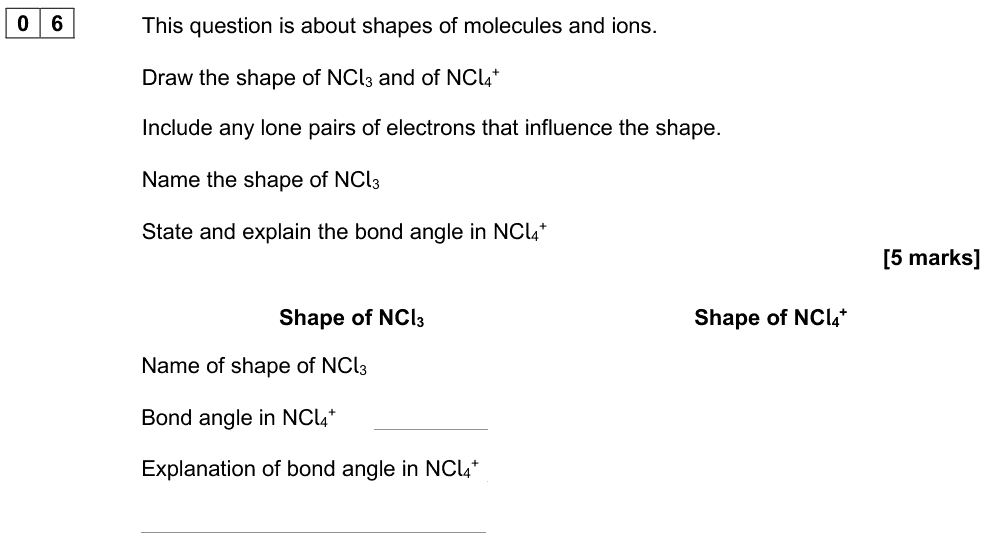
This question is about shapes of molecules and ions.
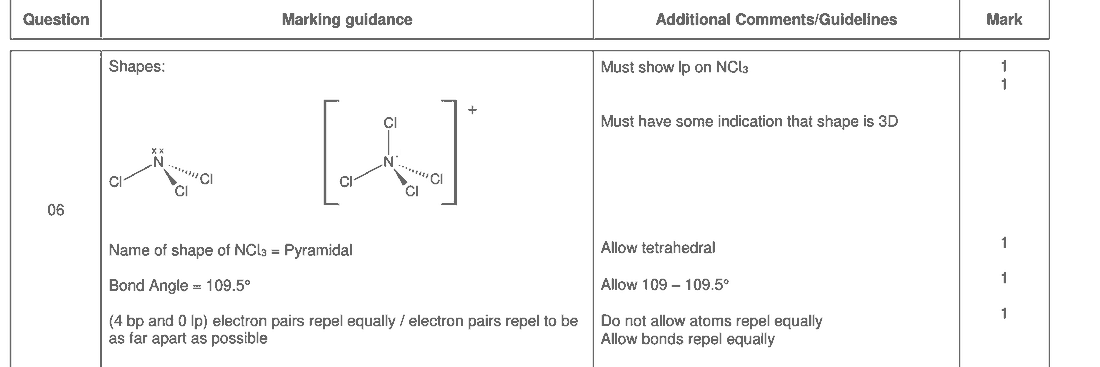
Draw the shape of NCl3 and of NCl4+
Include any lone pairs of electrons that influence the shape.
Name the shape of NCl3
State and explain the bond angle in NCl4+
[5 marks]
Shape of NCl3
Shape of NCl4+
Name of shape of NCl3
Bond angle in NCl4+
Explanation of bond angle in NCl4+
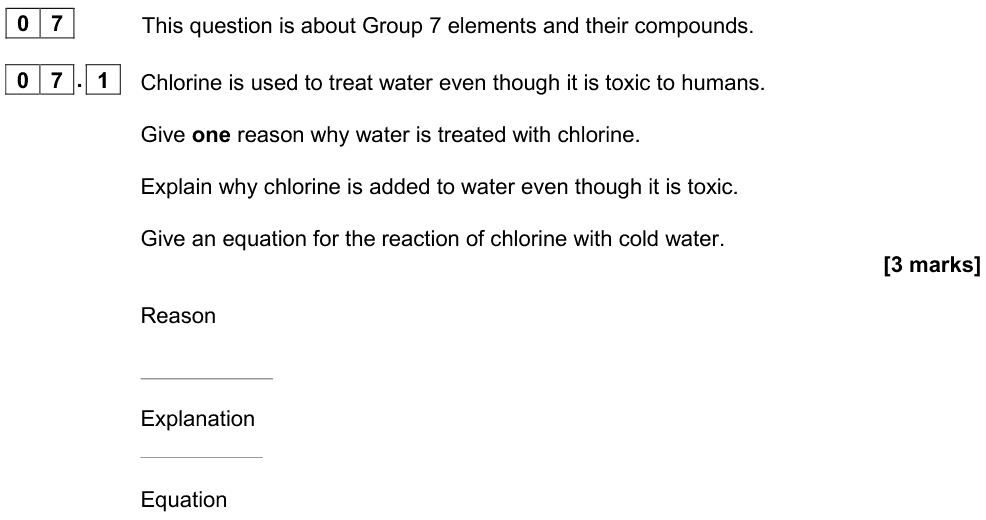
November 2020 · AS Paper 1 · Q07.1 3 marks Short answer group 7 the halogens
This question is about Group 7 elements and their compounds.
Chlorine is used to treat water even though it is toxic to humans.
Give one reason why water is treated with chlorine.
Explain why chlorine is added to water even though it is toxic.
Give an equation for the reaction of chlorine with cold water.
[3 marks]
Reason
Explanation
Equation
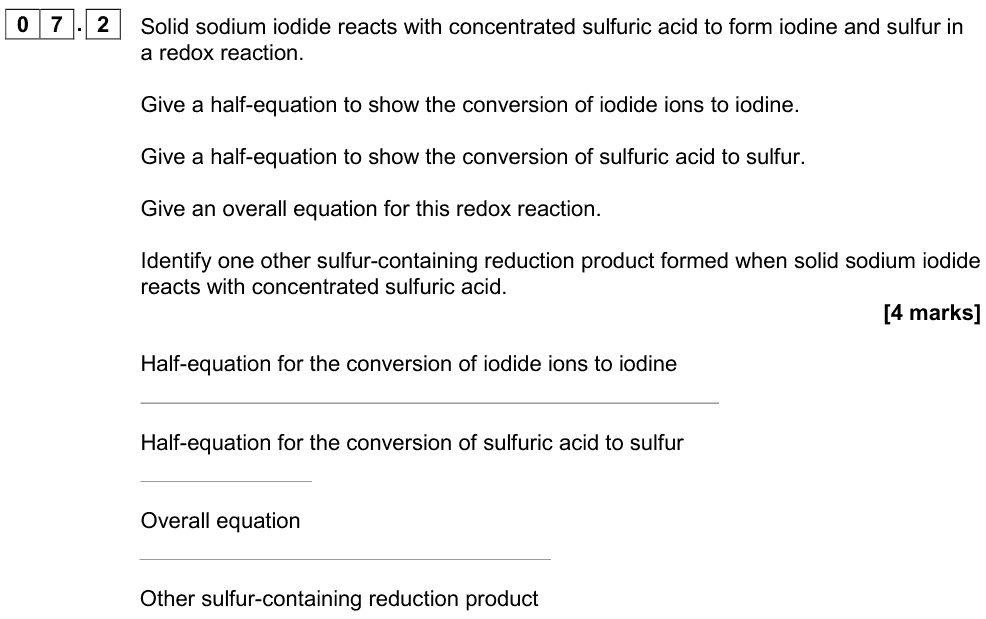
November 2020 · AS Paper 1 · Q07.2 4 marks Equation writing redoxgroup 7 the halogens
Earlier part of question 07 that this part usesEarlier part of November 2020 Paper 1 question 07
Solid sodium iodide reacts with concentrated sulfuric acid to form iodine and sulfur in
a redox reaction.
Give a half-equation to show the conversion of iodide ions to iodine.
Give a half-equation to show the conversion of sulfuric acid to sulfur.
Give an overall equation for this redox reaction.
Identify one other sulfur-containing reduction product formed when solid sodium iodide
reacts with concentrated sulfuric acid.
[4 marks]
Half-equation for the conversion of iodide ions to iodine
Half-equation for the conversion of sulfuric acid to sulfur
Overall equation
Other sulfur-containing reduction product
November 2020 · AS Paper 1 · Q07.3 1 mark Practical and data analysis group 7 the halogens
Earlier part of question 07 that this part usesEarlier part of November 2020 Paper 1 question 07
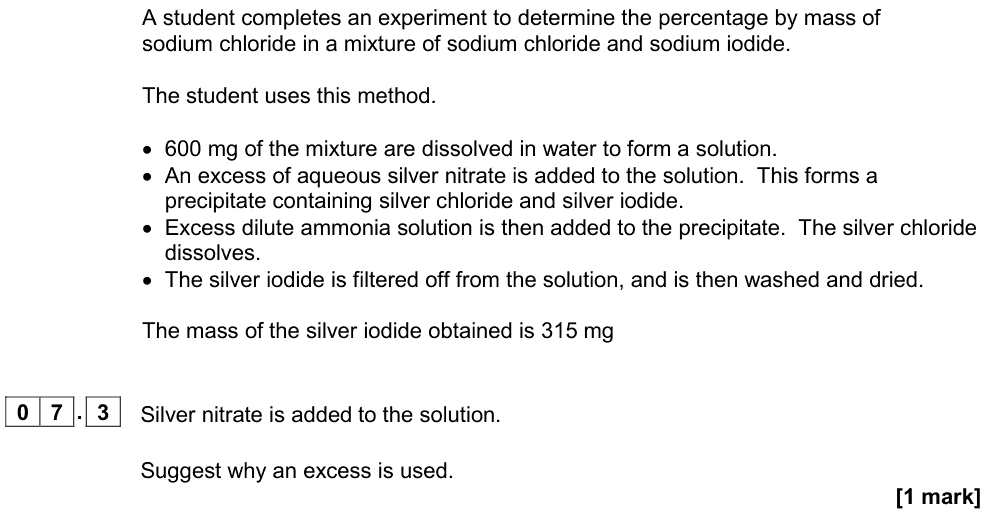
A student completes an experiment to determine the percentage by mass of
sodium chloride in a mixture of sodium chloride and sodium iodide.
The student uses this method.
• 600 mg of the mixture are dissolved in water to form a solution.
• An excess of aqueous silver nitrate is added to the solution.  This forms a
precipitate containing silver chloride and silver iodide.
• Excess dilute ammonia solution is then added to the precipitate.  The silver chloride
dissolves.
• The silver iodide is filtered off from the solution, and is then washed and dried.
The mass of the silver iodide obtained is 315 mg
Silver nitrate is added to the solution.
Suggest why an excess is used.
[1 mark]
November 2020 · AS Paper 1 · Q07.4 1 mark Calculation amount of substance
Earlier parts of question 07 that this part usesEarlier part of November 2020 Paper 1 question 07Earlier part of November 2020 Paper 1 question 07
Calculate the amount, in moles, of silver iodide obtained.
Mr (AgI) = 234.8
[1 mark]
Amount of silver iodide
mol
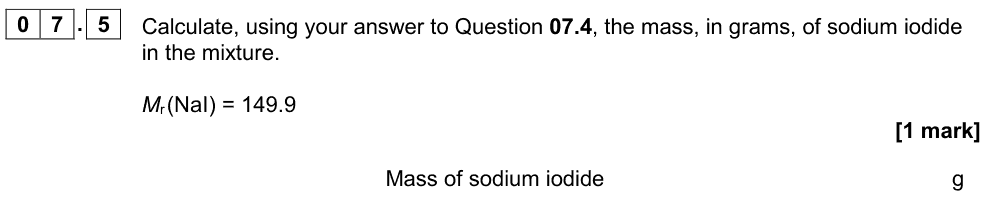
November 2020 · AS Paper 1 · Q07.5 1 mark Calculation amount of substance
Earlier parts of question 07 that this part usesEarlier part of November 2020 Paper 1 question 07Earlier part of November 2020 Paper 1 question 07
Calculate, using your answer to Question 07.4, the mass, in grams, of sodium iodide
in the mixture.
Mr (NaI) = 149.9
[1 mark]
Mass of sodium iodide
g
November 2020 · AS Paper 1 · Q07.6 2 marks Calculation amount of substance
Earlier parts of question 07 that this part usesEarlier part of November 2020 Paper 1 question 07Earlier part of November 2020 Paper 1 question 07
Calculate, using your answer to Question 07.5, the percentage by mass of
sodium chloride in the mixture.
[2 marks]
Percentage of sodium chloride
November 2020 · AS Paper 1 · Q08.1 4 marks Calculation amount of substance
This question is about a volatile liquid, A.
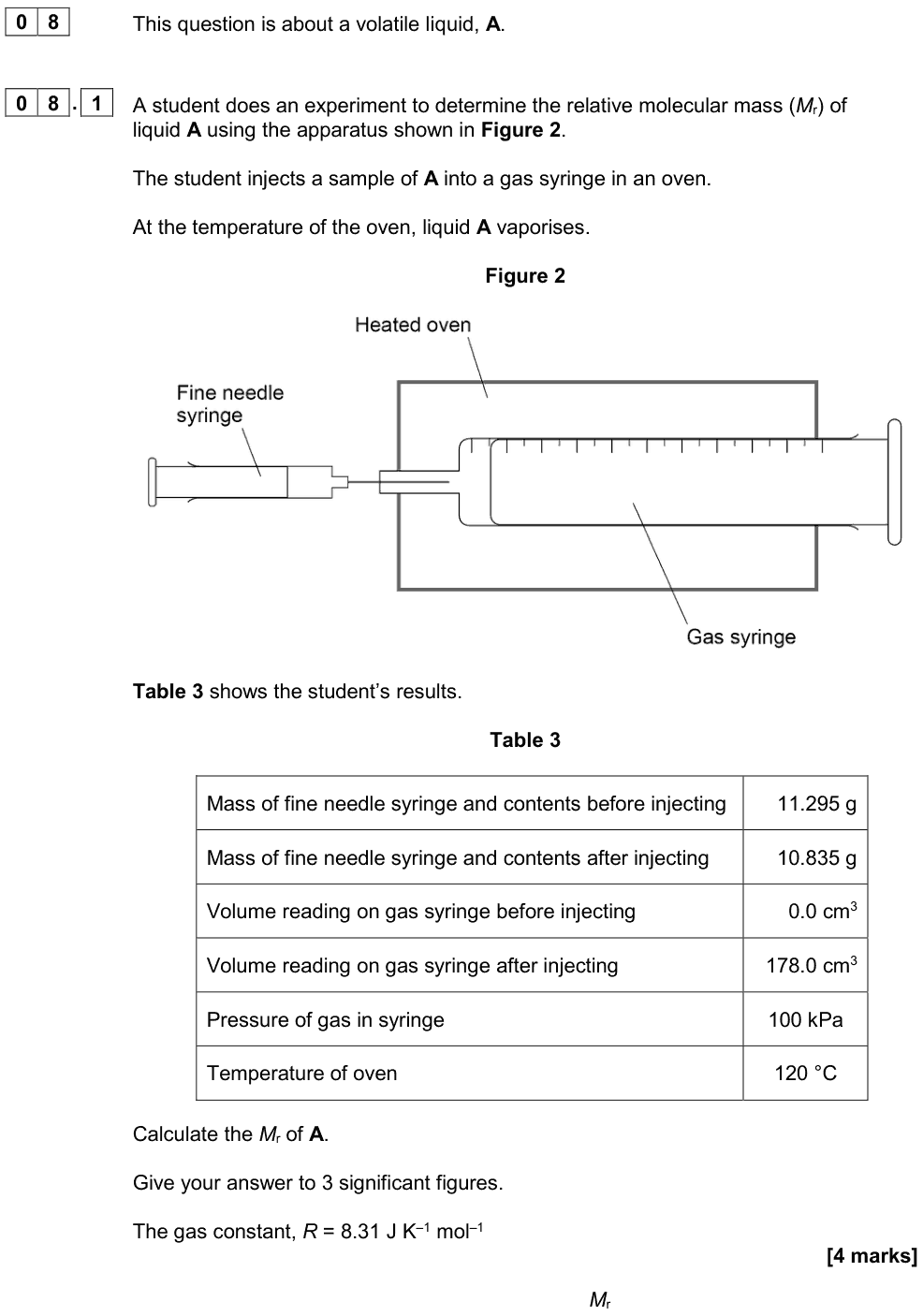
A student does an experiment to determine the relative molecular mass (Mr) of
liquid A using the apparatus shown in Figure 2.
The student injects a sample of A into a gas syringe in an oven.
At the temperature of the oven, liquid A vaporises.
Figure 2
Table 3 shows the student’s results.
Table 3
Mass of fine needle syringe and contents before injecting
11.295 g
Mass of fine needle syringe and contents after injecting
10.835 g
Volume reading on gas syringe before injecting
0.0 cm3
Volume reading on gas syringe after injecting
178.0 cm3
Pressure of gas in syringe
100 kPa
Temperature of oven
120 °C
Calculate the Mr of A.
Give your answer to 3 significant figures.
The gas constant, R = 8.31 J K–1 mol–1
[4 marks]
Mr
November 2020 · AS Paper 1 · Q08.2 2 marks Practical and data analysis amount of substance
Earlier part of question 08 that this part usesEarlier part of November 2020 Paper 1 question 08
The student noticed that some of the liquid injected into the gas syringe
did not vaporise.
Explain the effect that this has on the Mr calculated by the student.
[2 marks]
November 2020 · AS Paper 1 · Q08.3 1 mark Practical and data analysis amount of substance
Earlier part of question 08 that this part usesEarlier part of November 2020 Paper 1 question 08
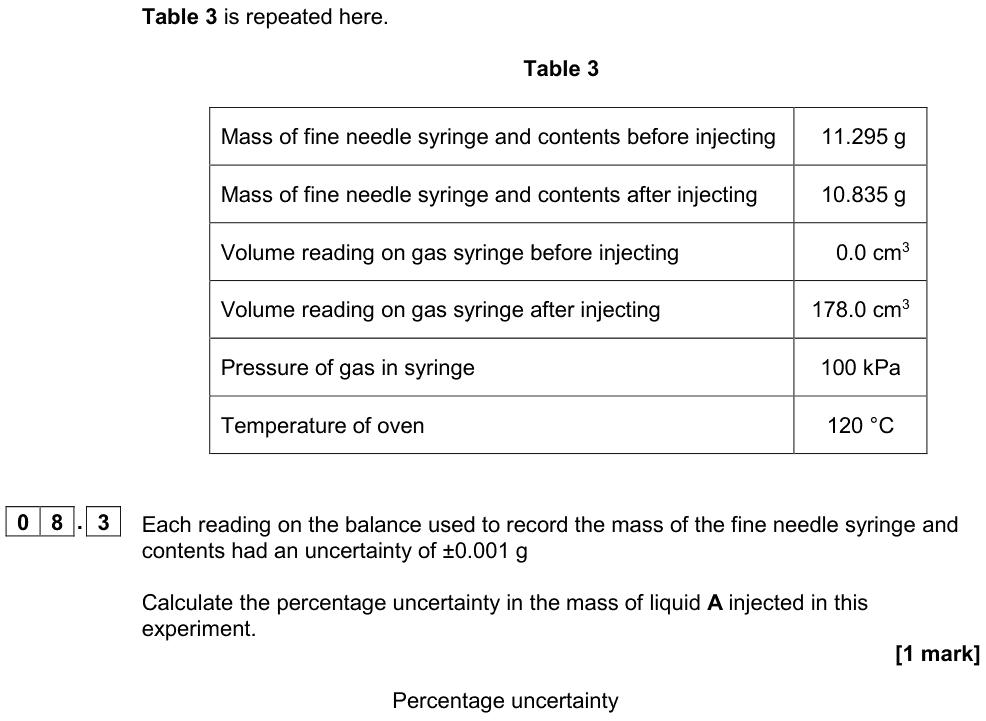
Table 3 is repeated here.
Table 3
Mass of fine needle syringe and contents before injecting
11.295 g
Mass of fine needle syringe and contents after injecting
10.835 g
Volume reading on gas syringe before injecting
0.0 cm3
Volume reading on gas syringe after injecting
178.0 cm3
Pressure of gas in syringe
100 kPa
Temperature of oven
120 °C
Each reading on the balance used to record the mass of the fine needle syringe and
contents had an uncertainty of ±0.001 g
Calculate the percentage uncertainty in the mass of liquid A injected in this
experiment.
[1 mark]
Percentage uncertainty
November 2020 · AS Paper 1 · Q09 1 mark Multiple choice atomic structure
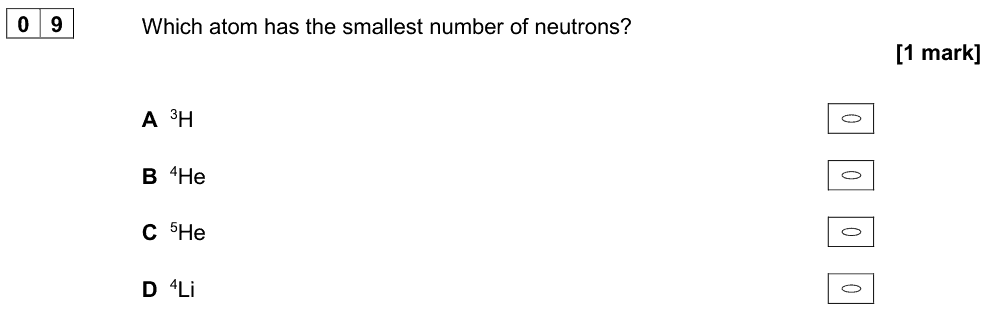
Which atom has the smallest number of neutrons?
[1 mark]
A 3H
B 4He
C 5He
D 4Li
November 2020 · AS Paper 1 · Q10 1 mark Multiple choice bonding
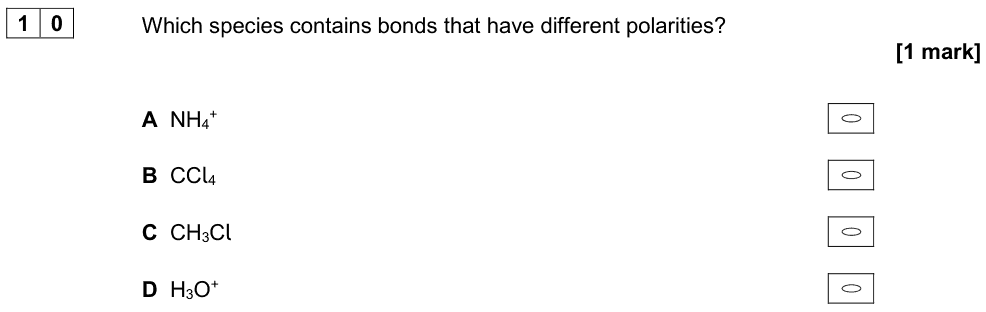
Which species contains bonds that have different polarities?
[1 mark]
A NH4+
B CCl4
C CH3Cl
D H3O+
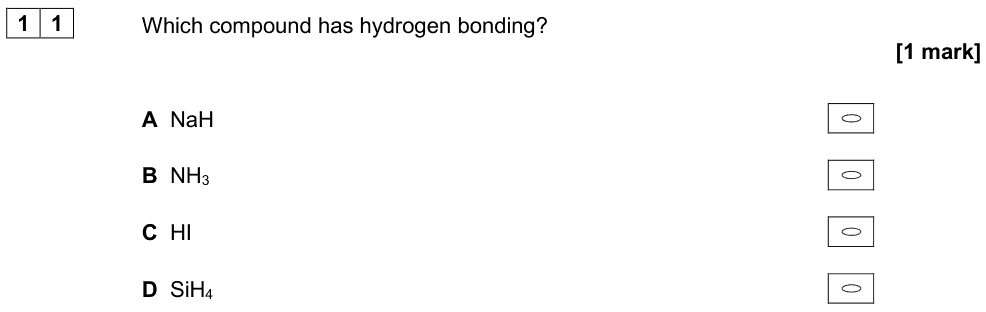
November 2020 · AS Paper 1 · Q11 1 mark Multiple choice bonding
Which compound has hydrogen bonding?
[1 mark]
A NaH
B NH3
C HI
D SiH4
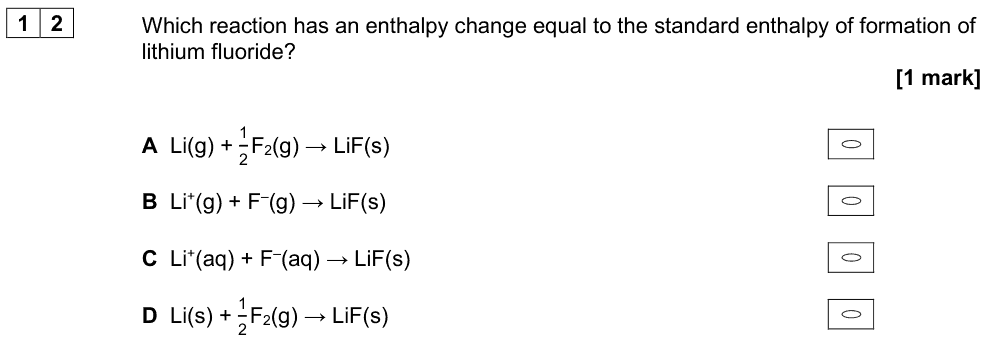
November 2020 · AS Paper 1 · Q12 1 mark Multiple choice energetics
Which reaction has an enthalpy change equal to the standard enthalpy of formation of
lithium fluoride?
[1 mark]
A Li(g) +
1
2
F2(g) → LiF(s)
B Li+(g) + F–(g) → LiF(s)
C Li+(aq) + F–(aq) → LiF(s)
D Li(s) +
1
2
F2(g) → LiF(s)
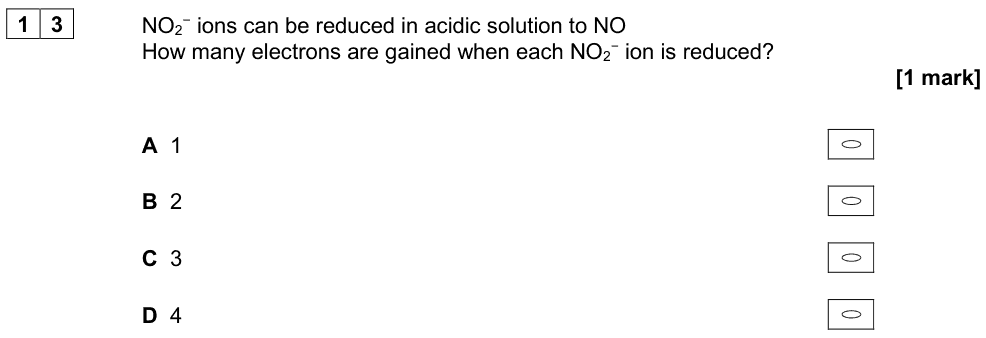
November 2020 · AS Paper 1 · Q13 1 mark Multiple choice redox
NO2− ions can be reduced in acidic solution to NO
How many electrons are gained when each NO2− ion is reduced?
[1 mark]
A 1
B 2
C 3
D 4
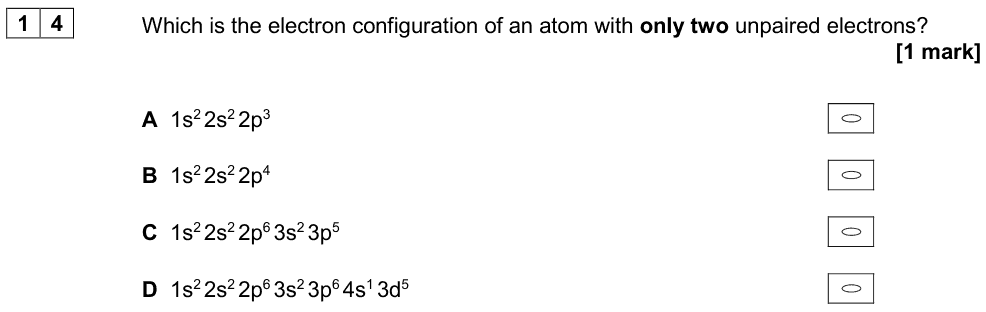
November 2020 · AS Paper 1 · Q14 1 mark Multiple choice atomic structure
Which is the electron configuration of an atom with only two unpaired electrons?
[1 mark]
A 1s2 2s2 2p3
B 1s2 2s2 2p4
C 1s2 2s2 2p6 3s2 3p5
D 1s2 2s2 2p6 3s2 3p6 4s1 3d5
November 2020 · AS Paper 1 · Q15 1 mark Multiple choice atomic structure
Which represents the correct order of increasing radius of the ions?
[1 mark]
A  F–
O2– Li+ Be2+

B  Li+
Be2+ O2– F–
C  Be2+ Li+
F–
O2–
D  O2– F–
Li+ Be2+
November 2020 · AS Paper 1 · Q16 1 mark Multiple choice bonding
Which compound contains a co-ordinate bond?
[1 mark]
A HF
B NH3
C CHCl3
D NH4Cl
November 2020 · AS Paper 1 · Q17 1 mark Multiple choice group 7 the halogens
Which property increases down Group 7?
[1 mark]
A ability to oxidise a given reducing agent
B boiling point
C electronegativity
D first ionisation energy
November 2020 · AS Paper 1 · Q18 1 mark Multiple choice periodicity
Which of these elements has the highest melting point?
[1 mark]
A Argon
B Chlorine
C Silicon
D Sulfur
November 2020 · AS Paper 1 · Q19 1 mark Multiple choice chemical equilibria and kc
Which statement is not always correct for a reaction at equilibrium?
reactants ⇌ products
[1 mark]
A The concentrations of the reactants and products are equal.
B The equilibrium can be achieved starting from the reactants.
C The equilibrium can be achieved starting from the products.
D The rate of the forward reaction is equal to the rate of the
reverse reaction.
November 2020 · AS Paper 1 · Q20 1 mark Multiple choice energetics
Two reactions of iron with oxygen are shown.
Fe(s) +
1
2
O2(g) → FeO(s)                        ΔH = – 272 kJ mol–1
2 Fe(s) +
3
2
O2(g) → Fe2O3(s)                     ΔH = – 822 kJ mol–1
What is the enthalpy change, in kJ mol–1, for this reaction?
2 FeO(s) +
1
2 O2(g) → Fe2O3(s)
[1 mark]
A +550
B –278
C –1094
D –1372
November 2020 · AS Paper 1 · Q21 1 mark Multiple choice redox
Which compound contains chlorine in an oxidation state of +1?
[1 mark]
A Cl2O
B KClO3
C ClF3
D CCl4
November 2020 · AS Paper 1 · Q22 1 mark Multiple choice group 7 the halogens
Which equation shows a redox reaction that does not occur?
[1 mark]
A Br2(aq) + 2 KI(aq) → I2(aq) + 2 KBr(aq)
B Cl2(g) + 2 KI(aq) → I2(aq) + 2 KCl(aq)
C Cl2(g) + 2 KBr(aq) → Br2(aq) + 2 KCl(aq)
D I2(aq) + 2 KBr(aq) → Br2(aq) + 2 KI(aq)
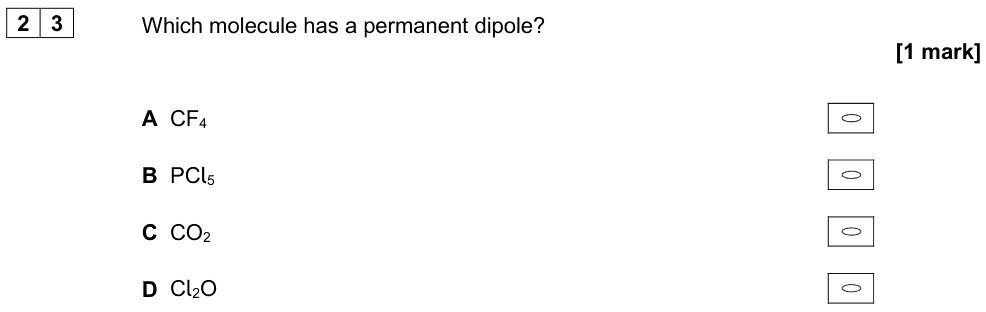
November 2020 · AS Paper 1 · Q23 1 mark Multiple choice bonding
Which molecule has a permanent dipole?
[1 mark]
A CF4
B PCl5
C CO2
D Cl2O

Work with an A-level chemistry tutor

Want a paper marked and gone through with you? Message us.

Prefer email? Send an enquiry

If you are under 18, please include a parent's contact details. Enquiries go to enquiries@chemistryaleveltutor.com and are deleted once handled. All tutoring is online.