
November 2021: AS Paper 2, Depth in chemistry

70 marks · 34 question parts · Paper, mark scheme and report on OCR's site · An autumn series, sat in place of the cancelled summer exams · Have OCR's Data Sheet beside you
Question by question

QTopicMarksAOType
1(a)(i) Bonding, structure and shapes of molecules 1AO1Short answer
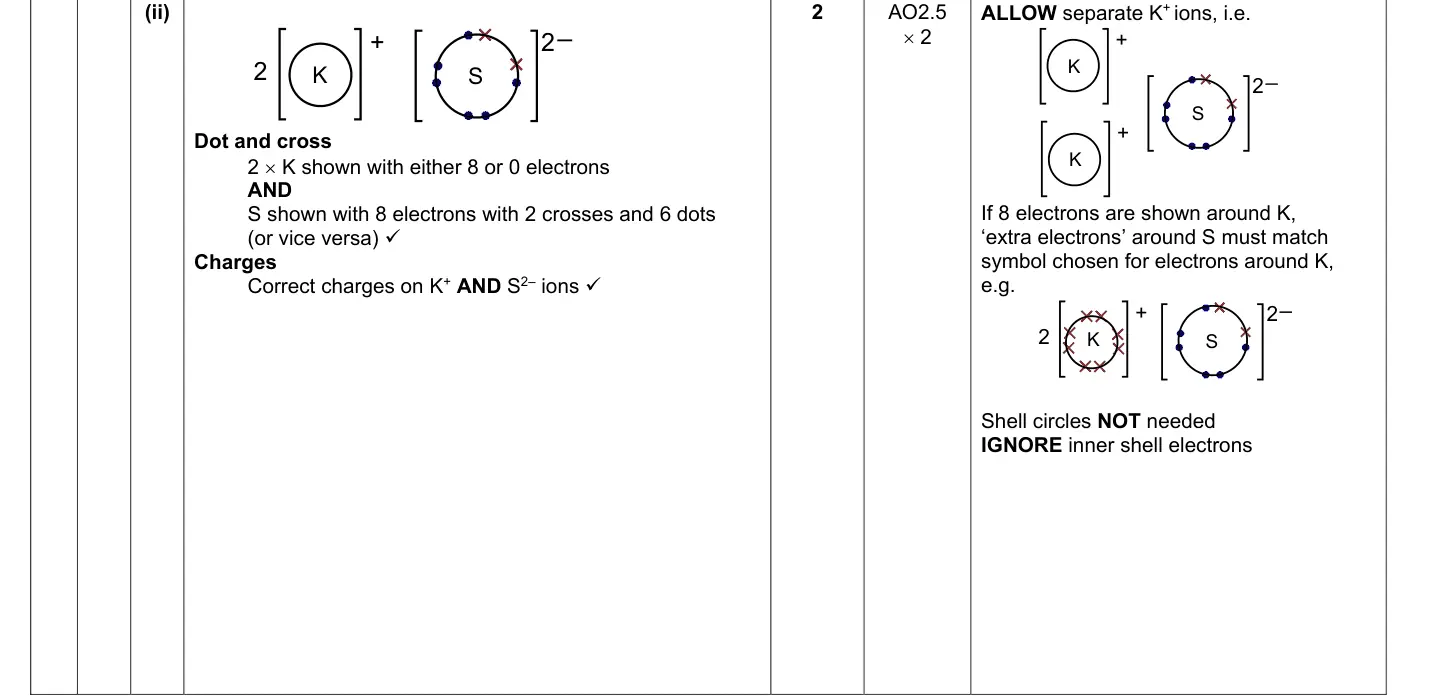
1(a)(ii) Bonding, structure and shapes of molecules 2AO2Drawing / labelling
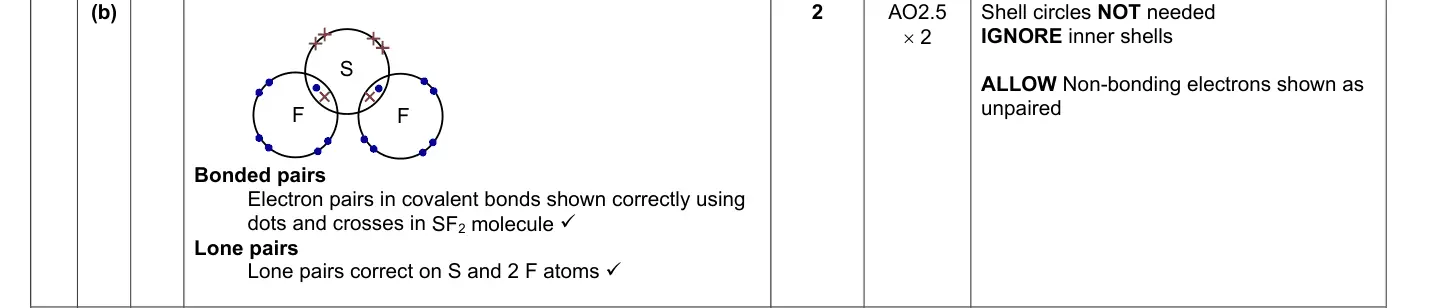
1(b) Bonding, structure and shapes of molecules 2AO2Drawing / labelling
1(c) Bonding, structure and shapes of molecules 3AO1Data interpretation
1(d)(i) Bonding, structure and shapes of molecules 2AO1Short answer
1(d)(ii) Bonding, structure and shapes of molecules 1AO2Short answer
2(a) Organic basics: naming, formulae and isomerism 1AO1Short answer
2(b) Organic basics: naming, formulae and isomerism 1AO1Short answer
2(c) Alkanes 2AO2Structure / isomer
2(d) Alkanes, Formulae and equations 2AO2Equation writing
3(a) Acids, bases and titrations, Practical techniques and apparatus (PAGs) 1AO2Short answer
3(b)(i) Acids, bases and titrations, Practical skills: planning, analysis and evaluation, Practical techniques and apparatus (PAGs) 1AO2Complete table/diagram
3(b)(ii) Acids, bases and titrations 1AO2Short answer
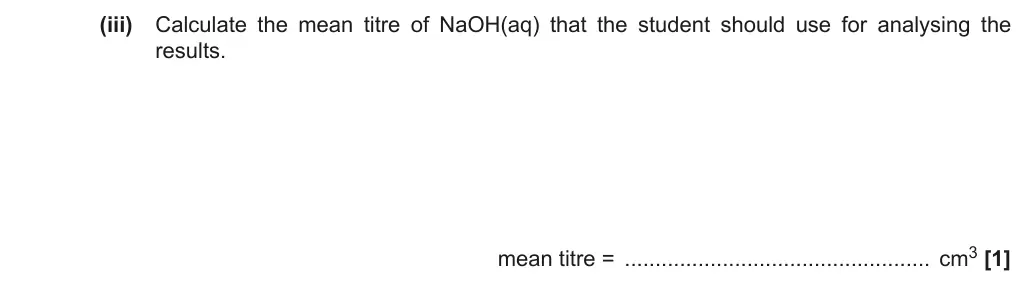
3(b)(iii) Acids, bases and titrations, Practical skills: planning, analysis and evaluation 1AO2Calculation
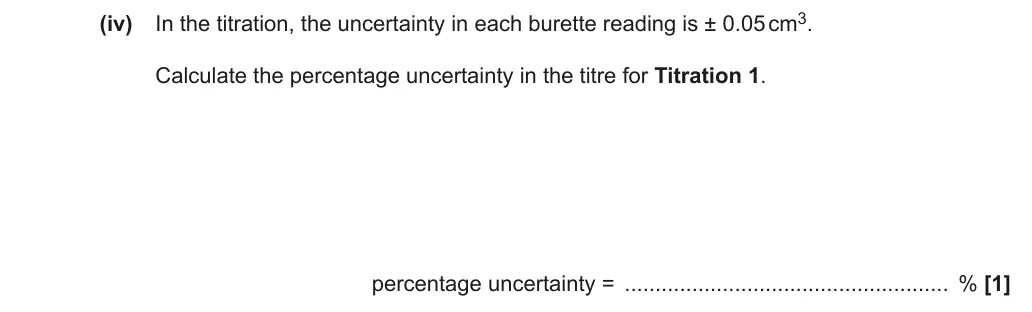
3(b)(iv) Practical skills: planning, analysis and evaluation 1AO2Calculation
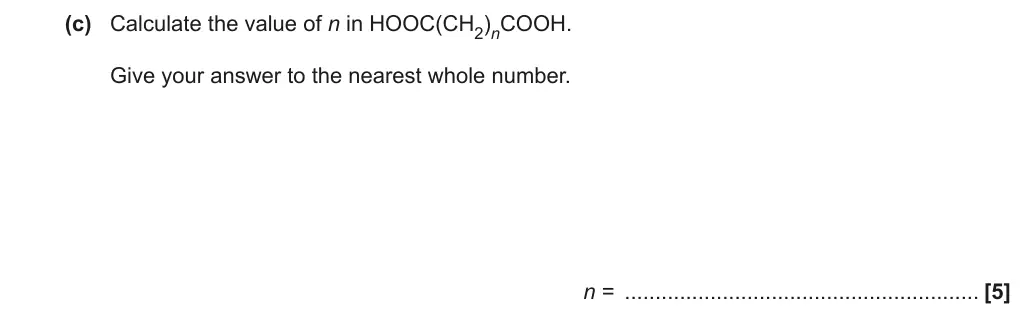
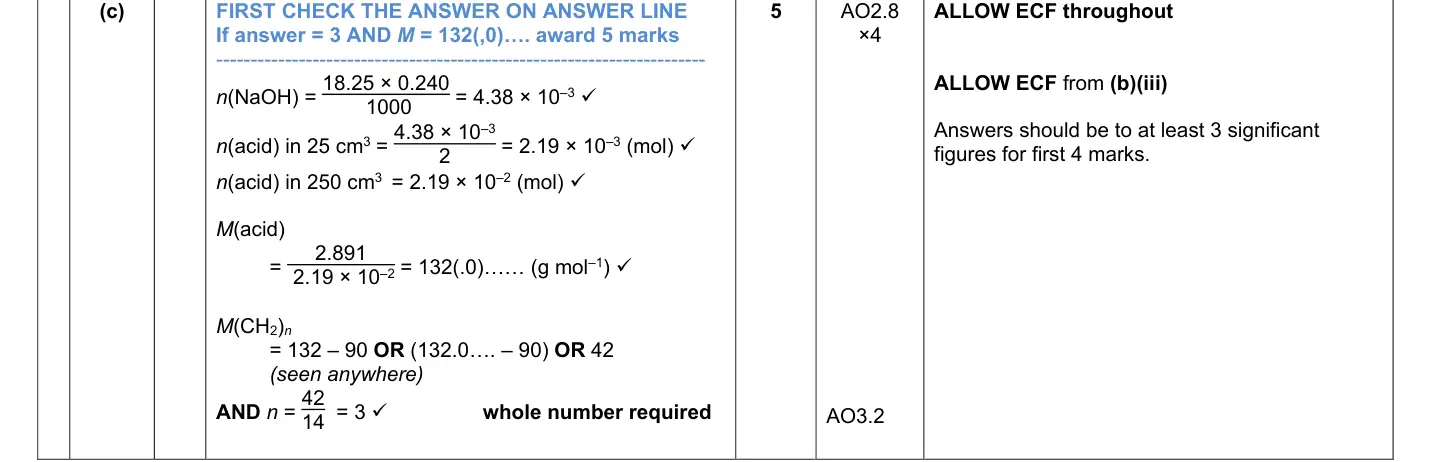
3(c) Acids, bases and titrations, Atomic structure and isotopes, Amount of substance (moles) 5AO2, 3Calculation
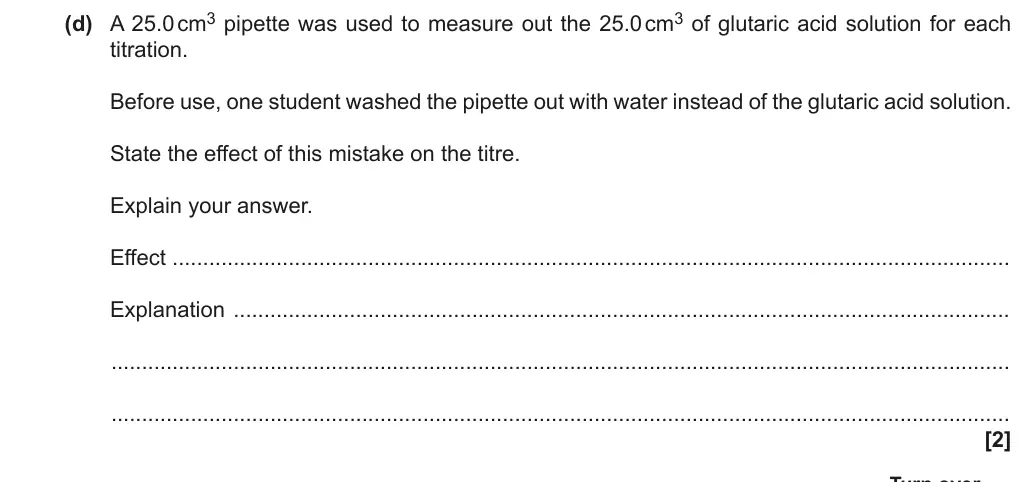
3(d) Acids, bases and titrations, Practical skills: planning, analysis and evaluation 2AO3Short answer
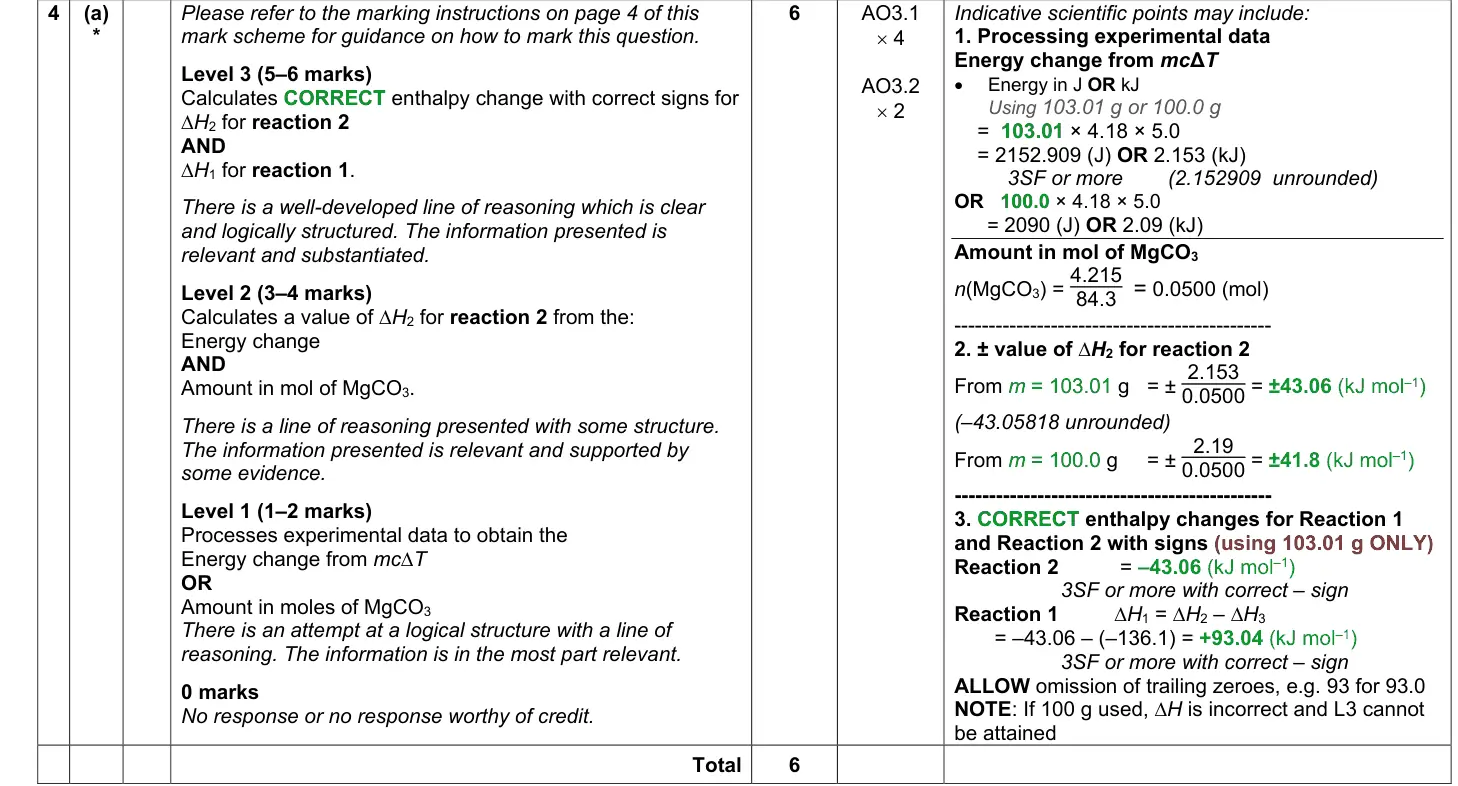
4(a) Enthalpy changes and Hess’ law, Amount of substance (moles) 6AO3Level of response
5(a) Chemical equilibrium and Kc 1AO1Short answer
5(b)(i) Chemical equilibrium and Kc 2AO2Calculation
5(b)(ii) Chemical equilibrium and Kc 1AO1Short answer
5(c) Reaction rates and the Boltzmann distribution 2AO3Short answer
5(d)(i) Periodicity and ionisation energy 1AO1Short answer
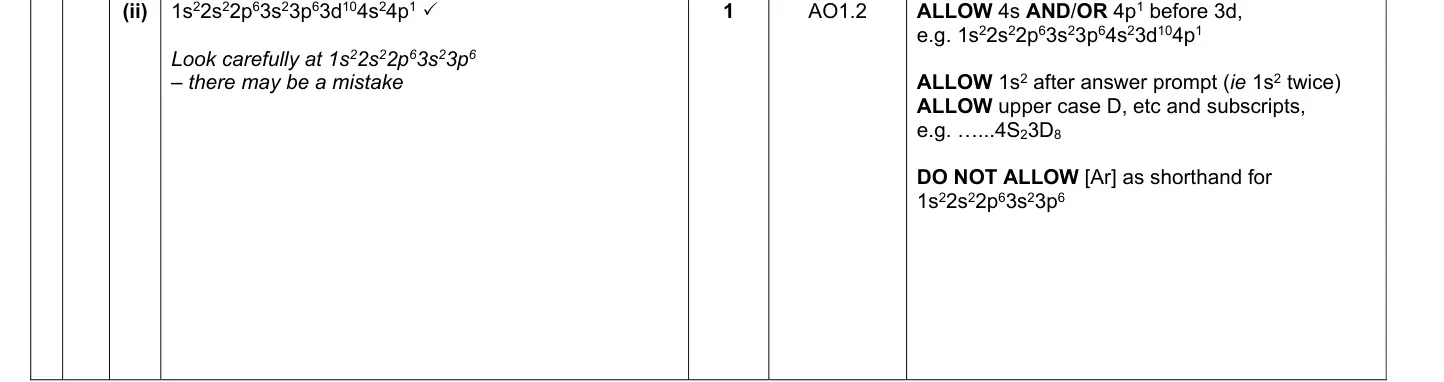
5(d)(ii) Electron structure and orbitals 1AO1Short answer
5(e) Periodicity and ionisation energy 2AO3Calculation
6(a) Reaction rates and the Boltzmann distribution, Practical skills: planning, analysis and evaluation 3AO1, 2Calculation
6(b) Reaction rates and the Boltzmann distribution, Practical skills: planning, analysis and evaluation 2AO3Short answer
6(c)(i) Amount of substance (moles) 2AO3Calculation
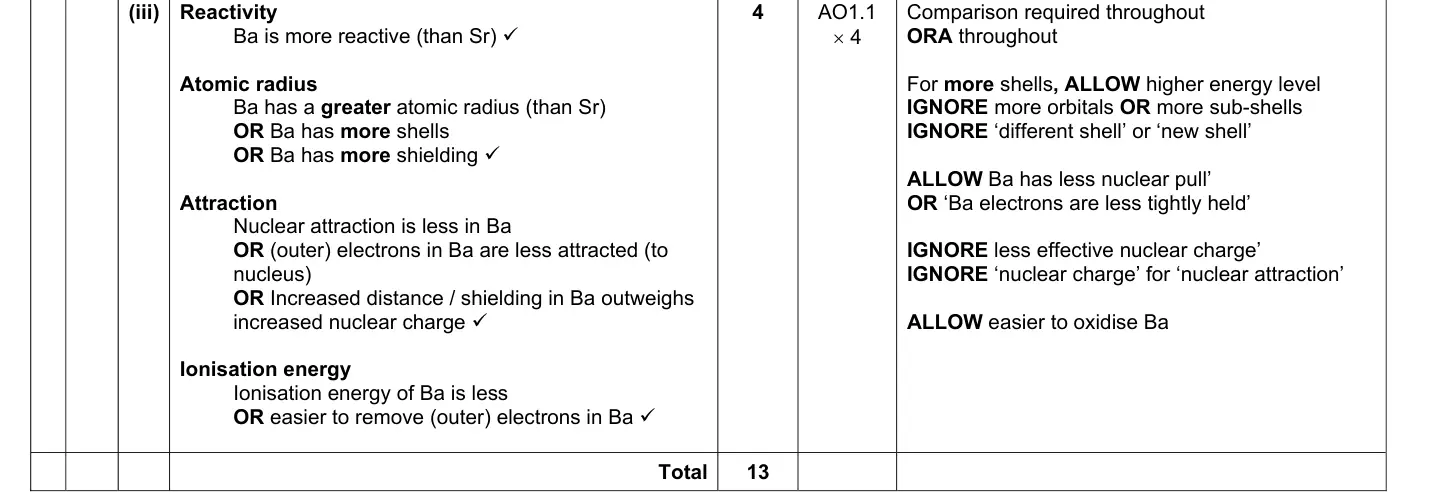
6(c)(ii) Group 2, Reaction rates and the Boltzmann distribution 2AO3Data interpretation
6(c)(iii) Group 2 4AO1Short answer
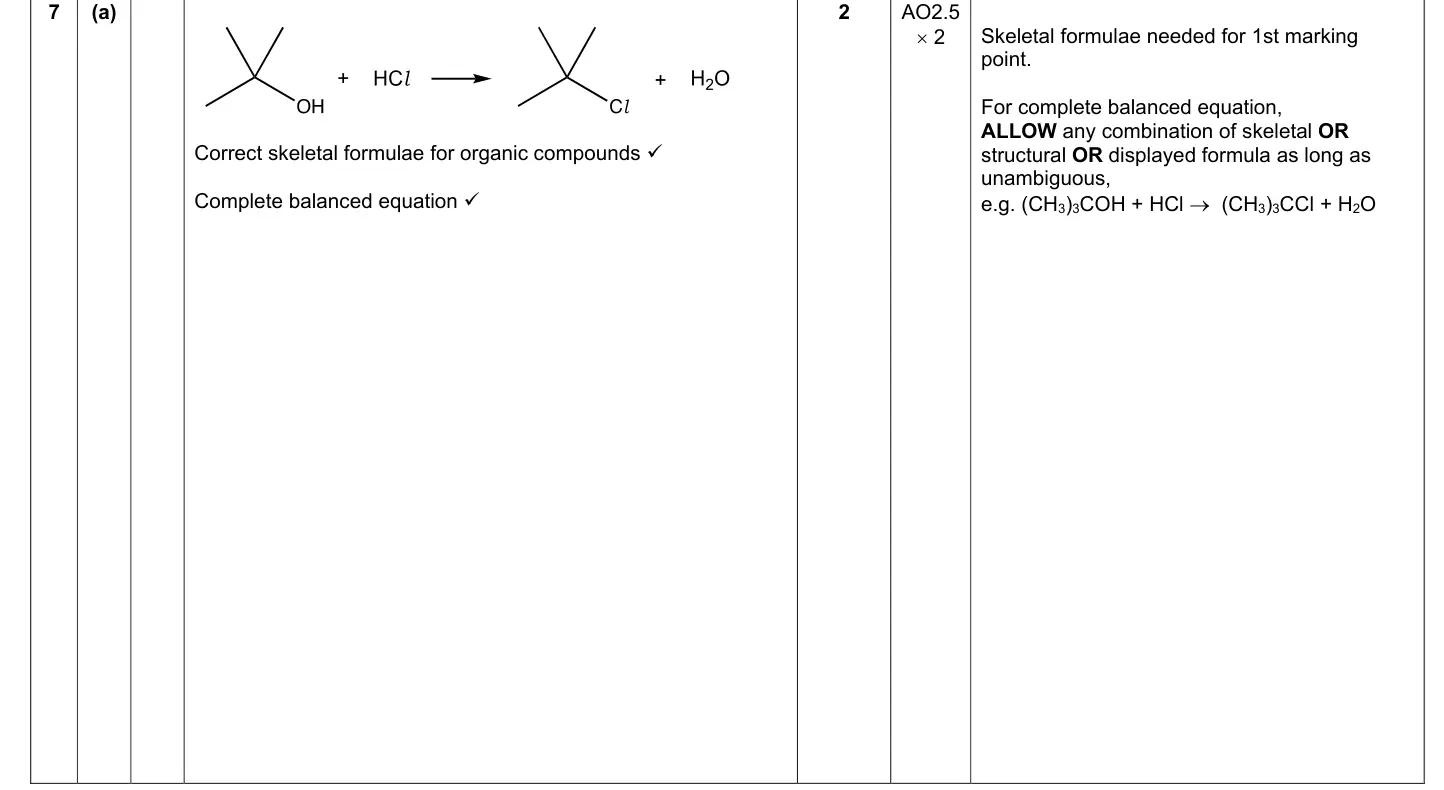
7(a) Alcohols, Formulae and equations, Organic basics: naming, formulae and isomerism 2AO2Equation writing
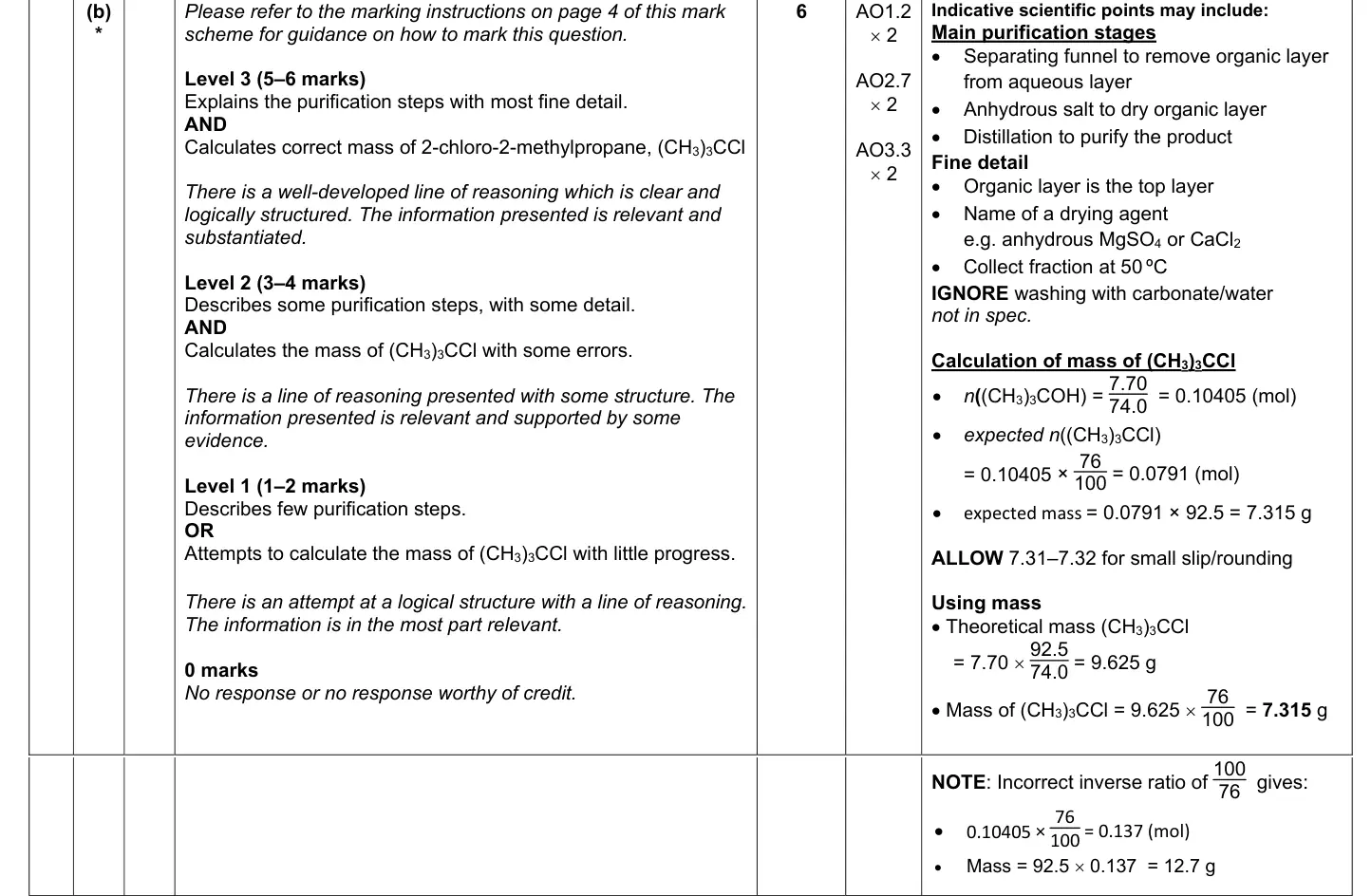
7(b) Organic synthesis and practical techniques (Module 4), Practical techniques and apparatus (PAGs), Amount of substance (moles) 6AO1, 2, 3Level of response
7(c)(i) Organic basics: naming, formulae and isomerism, Alcohols 1AO1Short answer
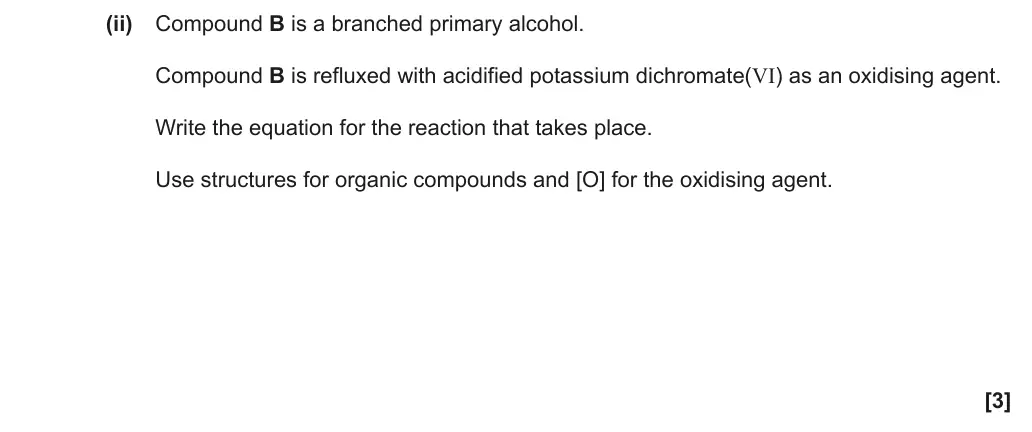
7(c)(ii) Alcohols, Organic basics: naming, formulae and isomerism 3AO2Equation writing

The questions

1(a)(i)1(a)(ii)1(b)1(c)1(d)(i)1(d)(ii)2(a)2(b)2(c)2(d)3(a)3(b)(i)3(b)(ii)3(b)(iii)3(b)(iv)3(c)3(d)4(a)5(a)5(b)(i)5(b)(ii)5(c)5(d)(i)5(d)(ii)5(e)6(a)6(b)6(c)(i)6(c)(ii)6(c)(iii)7(a)7(b)7(c)(i)7(c)(ii)
November 2021 · AS Paper 2 · Q1(a)(i) 1 mark AO1 Short answer bonding and structure
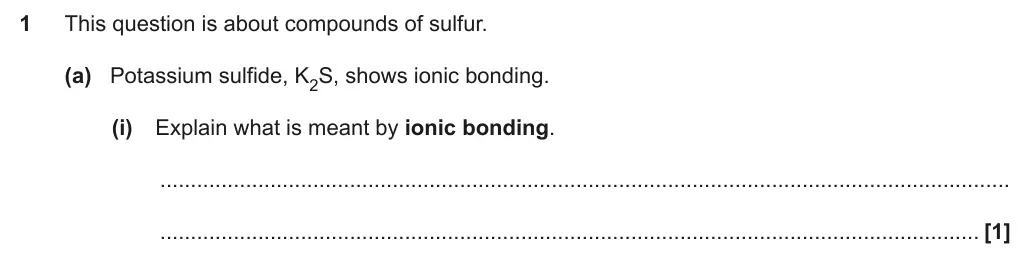
1 This question is about compounds of sulfur.
(a) Potassium sulfide, K2S, shows ionic bonding.
(i) Explain what is meant by ionic bonding.
...........................................................................................................................................
...................................................................................................................................... [1]
November 2021 · AS Paper 2 · Q1(a)(ii) 2 marks AO2 Drawing / labelling bonding and structure
Earlier part of question 1 that this part usesEarlier part of November 2021 Paper 2 question 1
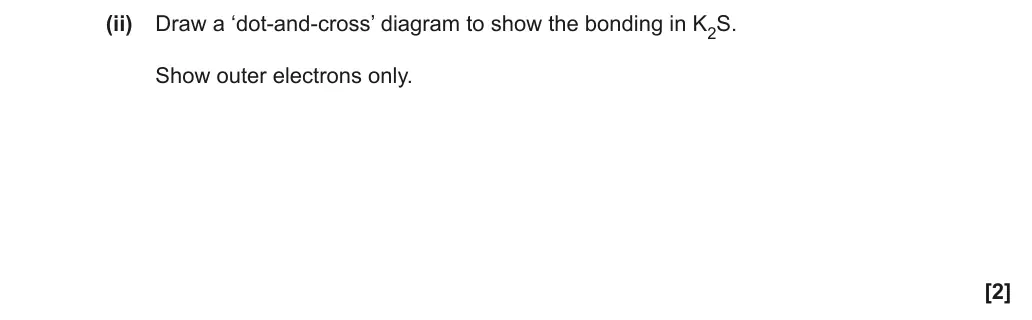
(ii) Draw a ‘dot-and-cross’ diagram to show the bonding in K2S.
Show outer electrons only.
[2]
November 2021 · AS Paper 2 · Q1(b) 2 marks AO2 Drawing / labelling bonding and structure
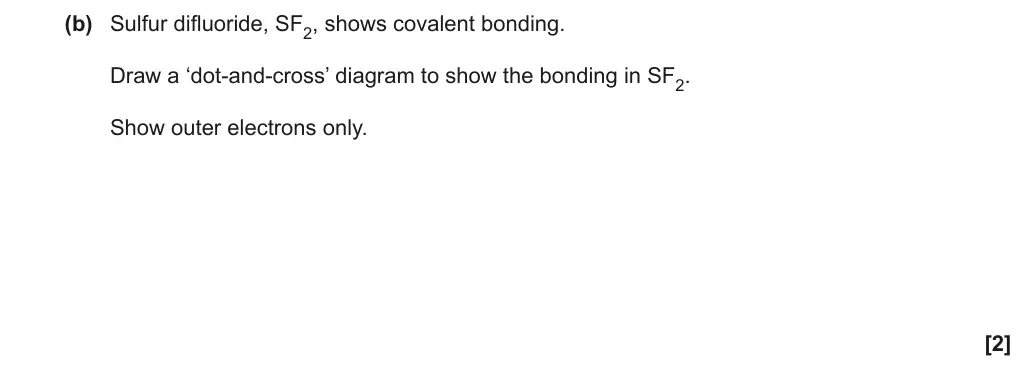
(b) Sulfur difluoride, SF2, shows covalent bonding.
Draw a ‘dot-and-cross’ diagram to show the bonding in SF2.
Show outer electrons only.
[2]
November 2021 · AS Paper 2 · Q1(c) 3 marks AO1 Data interpretation bonding and structure
Earlier parts of question 1 that this part usesEarlier part of November 2021 Paper 2 question 1Earlier part of November 2021 Paper 2 question 1
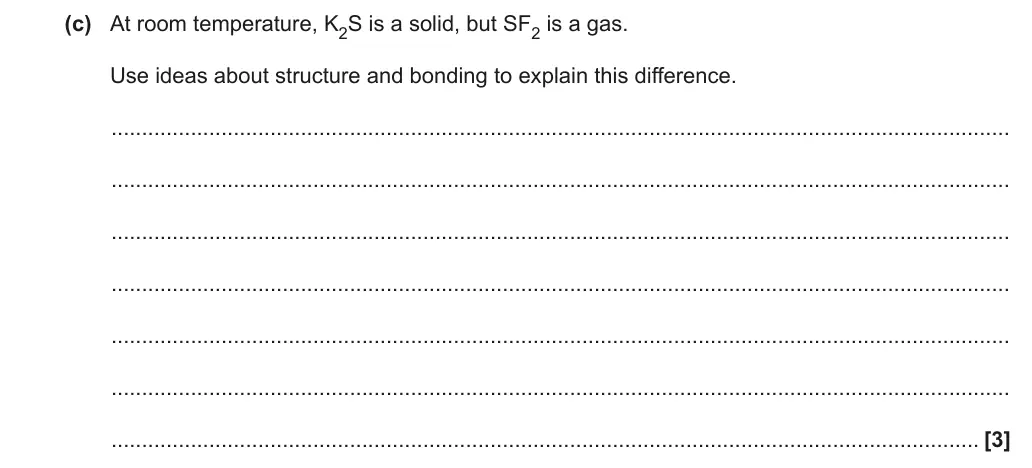
(c) At room temperature, K2S is a solid, but SF2 is a gas.
Use ideas about structure and bonding to explain this difference.
...................................................................................................................................................
...................................................................................................................................................
...................................................................................................................................................
...................................................................................................................................................
...................................................................................................................................................
...................................................................................................................................................
.............................................................................................................................................. [3]
November 2021 · AS Paper 2 · Q1(d)(i) 2 marks AO1 Short answer bonding and structure
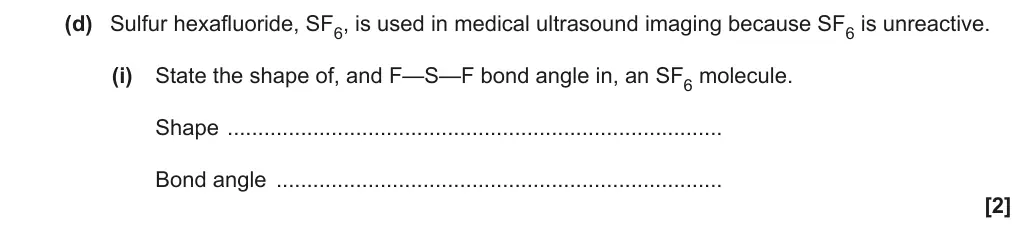
(d) Sulfur hexafluoride, SF6, is used in medical ultrasound imaging because SF6 is unreactive.
(i) State the shape of, and F—S—F bond angle in, an SF6 molecule.
Shape  .................................................................................
Bond angle  .........................................................................
[2]
November 2021 · AS Paper 2 · Q1(d)(ii) 1 mark AO2 Short answer bonding and structure
Earlier part of question 1 that this part usesEarlier part of November 2021 Paper 2 question 1
(ii) Suggest why SF6 is unreactive.
...........................................................................................................................................
...................................................................................................................................... [1]
November 2021 · AS Paper 2 · Q2(a) 1 mark AO1 Short answer organic basics
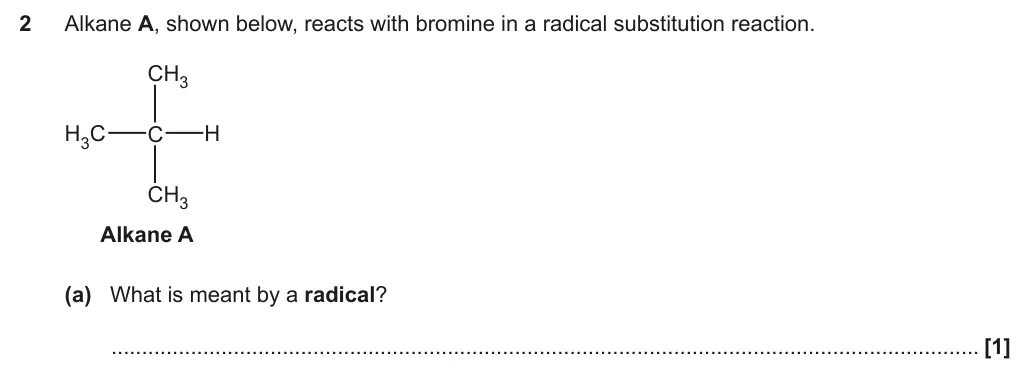
2 Alkane A, shown below, reacts with bromine in a radical substitution reaction.
CH3
H3C C H
CH3
Alkane A
(a)  What is meant by a radical?
.............................................................................................................................................. [1]
November 2021 · AS Paper 2 · Q2(b) 1 mark AO1 Short answer organic basics
Earlier part of question 2 that this part usesEarlier part of November 2021 Paper 2 question 2
(b) Name the type of bond breaking that occurs in a radical substitution reaction.
.............................................................................................................................................. [1]
November 2021 · AS Paper 2 · Q2(c) 2 marks AO2 Structure / isomer alkanes
Earlier part of question 2 that this part usesEarlier part of November 2021 Paper 2 question 2
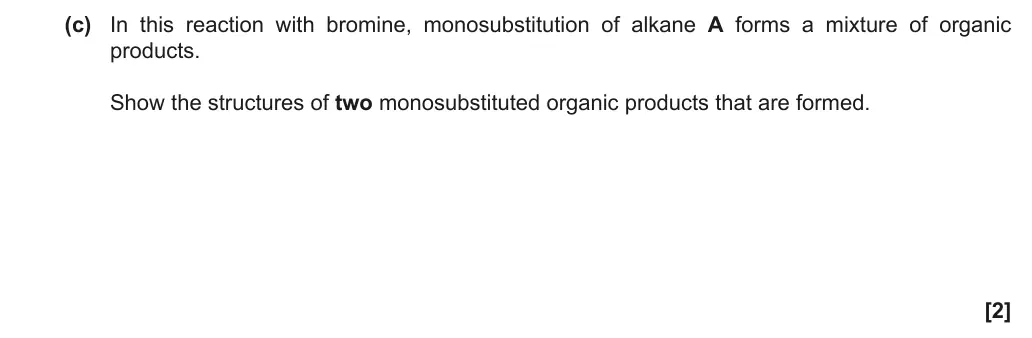
(c) In this reaction with bromine, monosubstitution of alkane A forms a mixture of organic
products.
Show the structures of two monosubstituted organic products that are formed.
[2]
November 2021 · AS Paper 2 · Q2(d) 2 marks AO2 Equation writing alkanesformulae and equations
Earlier part of question 2 that this part usesEarlier part of November 2021 Paper 2 question 2
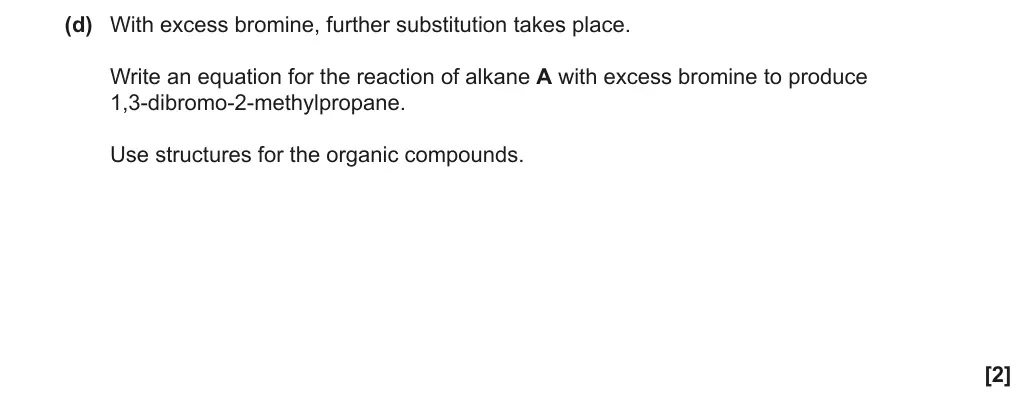
(d) With excess bromine, further substitution takes place.
Write an equation for the reaction of alkane A with excess bromine to produce
1,3-dibromo-2-methylpropane.
Use structures for the organic compounds.
[2]
November 2021 · AS Paper 2 · Q3(a) 1 mark AO2 Short answer acids and titrationspractical techniques
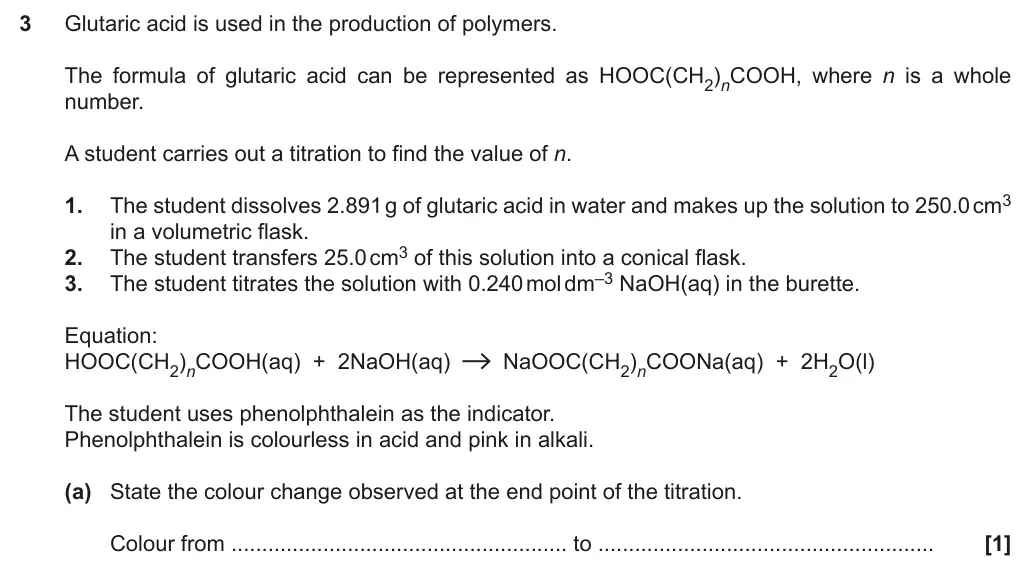
3 Glutaric acid is used in the production of polymers.
The formula of glutaric acid can be represented as HOOC(CH2)nCOOH, where n is a whole
number.
A student carries out a titration to find the value of n.
1. The student dissolves 2.891 g of glutaric acid in water and makes up the solution to 250.0 cm3
in a volumetric flask.
2. The student transfers 25.0 cm3 of this solution into a conical flask.
3. The student titrates the solution with 0.240 mol dm–3 NaOH(aq) in the burette.
Equation:
HOOC(CH2)nCOOH(aq)  +  2NaOH(aq) NaOOC(CH2)nCOONa(aq)  +  2H2O(l)
The student uses phenolphthalein as the indicator.
Phenolphthalein is colourless in acid and pink in alkali.
(a) State the colour change observed at the end point of the titration.
Colour from ....................................................... to ....................................................... [1]
November 2021 · AS Paper 2 · Q3(b)(i) 1 mark AO2 Complete table/diagram acids and titrationspractical skillspractical techniques
Earlier part of question 3 that this part usesEarlier part of November 2021 Paper 2 question 3
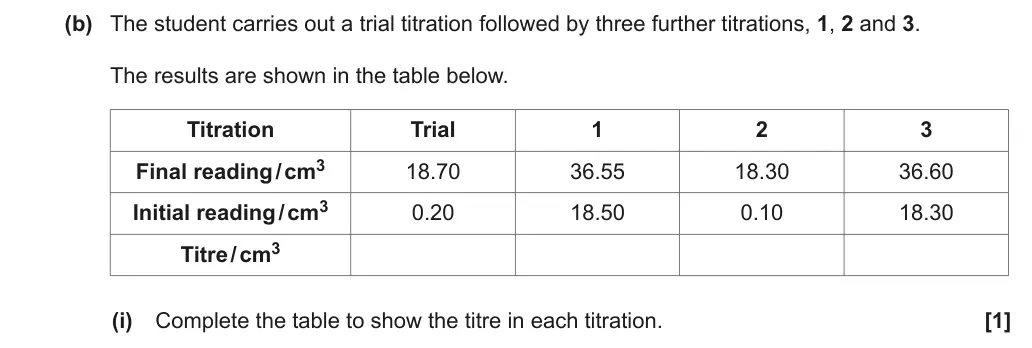
(b) The student carries out a trial titration followed by three further titrations, 1, 2 and 3.
The results are shown in the table below.
Titration Trial 1 2 3
Final reading / cm3 18.70 36.55 18.30 36.60
Initial reading / cm3 0.20 18.50 0.10 18.30
Titre / cm3
(i) Complete the table to show the titre in each titration. [1]
November 2021 · AS Paper 2 · Q3(b)(ii) 1 mark AO2 Short answer acids and titrations
Earlier part of question 3 that this part usesEarlier part of November 2021 Paper 2 question 3
(ii) Why does the student carry out a trial titration?
...........................................................................................................................................
...................................................................................................................................... [1]
November 2021 · AS Paper 2 · Q3(b)(iii) 1 mark AO2 Calculation acids and titrationspractical skills
Earlier part of question 3 that this part usesEarlier part of November 2021 Paper 2 question 3
(iii) Calculate the mean titre of NaOH(aq) that the student should use for analysing the
results.
mean titre =  .................................................. cm3 [1]
November 2021 · AS Paper 2 · Q3(b)(iv) 1 mark AO2 Calculation practical skills
Earlier part of question 3 that this part usesEarlier part of November 2021 Paper 2 question 3
(iv) In the titration, the uncertainty in each burette reading is ± 0.05 cm3.
Calculate the percentage uncertainty in the titre for Titration 1.
percentage uncertainty =  ..................................................... % [1]
November 2021 · AS Paper 2 · Q3(c) 5 marks AO2, 3 Calculation acids and titrationsatomic structure and isotopesamount of substance
Earlier parts of question 3 that this part usesEarlier part of November 2021 Paper 2 question 3Earlier part of November 2021 Paper 2 question 3
(c) Calculate the value of n in HOOC(CH2)nCOOH.
Give your answer to the nearest whole number.
n =  .......................................................... [5]
November 2021 · AS Paper 2 · Q3(d) 2 marks AO3 Short answer acids and titrationspractical skills
Earlier part of question 3 that this part usesEarlier part of November 2021 Paper 2 question 3
(d) A 25.0 cm3 pipette was used to measure out the 25.0 cm3 of glutaric acid solution for each
titration.
Before use, one student washed the pipette out with water instead of the glutaric acid solution.
State the effect of this mistake on the titre.
Explain your answer.
Effect  .........................................................................................................................................
Explanation  ...............................................................................................................................
...................................................................................................................................................
...................................................................................................................................................
[2]
November 2021 · AS Paper 2 · Q4(a) 6 marks AO3 6-mark level of response enthalpy changesamount of substance
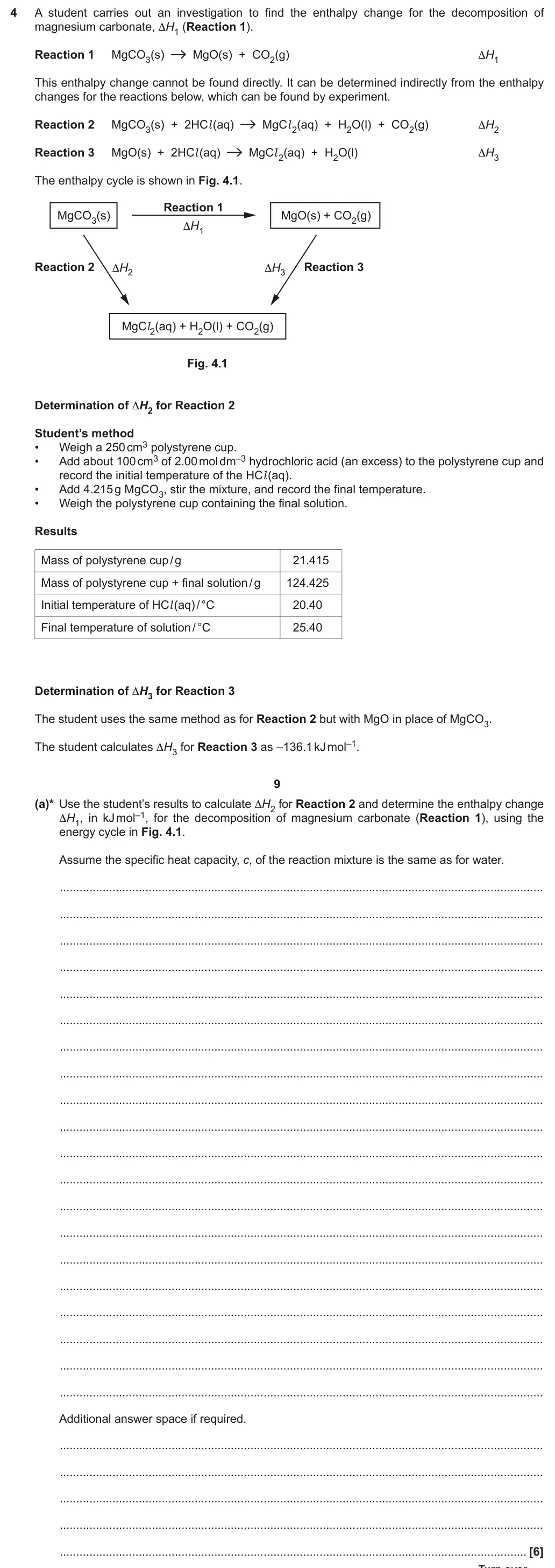
4 A student carries out an investigation to find the enthalpy change for the decomposition of
magnesium carbonate, ∆H1 (Reaction 1).
Reaction 1 MgCO3(s) MgO(s)  +  CO2(g) ∆H1
This enthalpy change cannot be found directly. It can be determined indirectly from the enthalpy
changes for the reactions below, which can be found by experiment.
Reaction 2 MgCO3(s)  +  2HCl (aq) MgCl 2(aq)  +  H2O(l)  +  CO2(g) ∆H2
Reaction 3 MgO(s)  +  2HCl (aq) MgCl 2(aq)  +  H2O(l) ∆H3
The enthalpy cycle is shown in Fig. 4.1.
Reaction 1
MgCO3(s) MgO(s) + CO2(g)
ΔH1
Reaction 2 ΔH2 ΔH3 Reaction 3
MgCl2(aq) + H2O(l) + CO2(g)
Fig. 4.1
Determination of ∆H2 for Reaction 2
Student’s method
• Weigh a 250 cm3 polystyrene cup.
• Add about 100 cm3 of 2.00 mol dm–3 hydrochloric acid (an excess) to the polystyrene cup and
record the initial temperature of the HCl (aq).
• Add 4.215 g MgCO3, stir the mixture, and record the final temperature.
• Weigh the polystyrene cup containing the final solution.
Results
Mass of polystyrene cup / g 21.415
Mass of polystyrene cup + final solution / g 124.425
Initial temperature of HCl (aq) / °C 20.40
Final temperature of solution / °C 25.40
Determination of ∆H3 for Reaction 3
The student uses the same method as for Reaction 2 but with MgO in place of MgCO3.
The student calculates ∆H3 for Reaction 3 as –136.1 kJ mol–1.
(a)* Use the student’s results to calculate ∆H2 for Reaction 2 and determine the enthalpy change
∆H1, in kJ mol–1, for the decomposition of magnesium carbonate (Reaction 1), using the
energy cycle in Fig. 4.1.
Assume the specific heat capacity, c, of the reaction mixture is the same as for water.
...................................................................................................................................................
...................................................................................................................................................
...................................................................................................................................................
...................................................................................................................................................
...................................................................................................................................................
...................................................................................................................................................
...................................................................................................................................................
...................................................................................................................................................
...................................................................................................................................................
...................................................................................................................................................
...................................................................................................................................................
...................................................................................................................................................
...................................................................................................................................................
...................................................................................................................................................
...................................................................................................................................................
...................................................................................................................................................
...................................................................................................................................................
...................................................................................................................................................
...................................................................................................................................................
...................................................................................................................................................
Additional answer space if required.
...................................................................................................................................................
...................................................................................................................................................
...................................................................................................................................................
...................................................................................................................................................
.............................................................................................................................................. [6]
November 2021 · AS Paper 2 · Q5(a) 1 mark AO1 Short answer chemical equilibrium
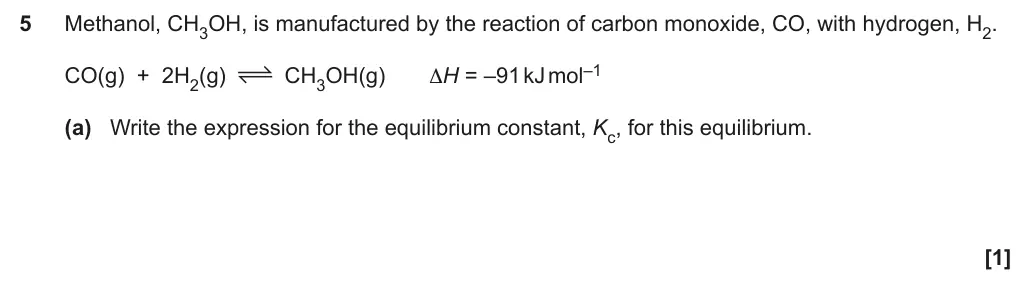
5 Methanol, CH3OH, is manufactured by the reaction of carbon monoxide, CO, with hydrogen, H2.
CO(g)  +  2H2(g) CH3OH(g)  ∆H = –91 kJ mol–1
(a) Write the expression for the equilibrium constant, Kc, for this equilibrium.
[1]
November 2021 · AS Paper 2 · Q5(b)(i) 2 marks AO2 Calculation chemical equilibrium
Earlier part of question 5 that this part usesEarlier part of November 2021 Paper 2 question 5
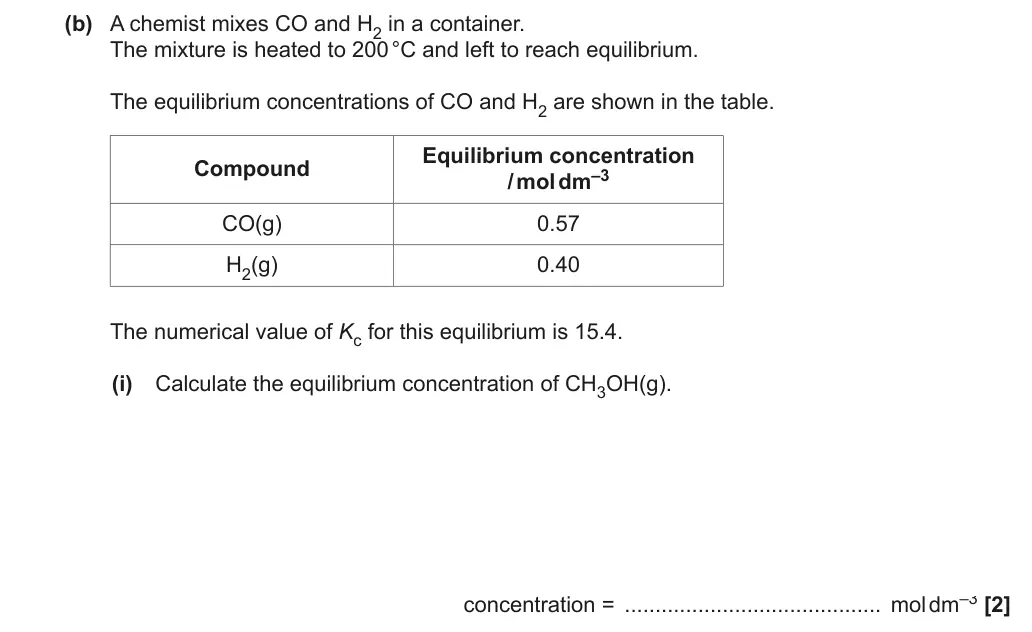
(b) A chemist mixes CO and H2 in a container.
The mixture is heated to 200 °C and left to reach equilibrium.
The equilibrium concentrations of CO and H2 are shown in the table.
Equilibrium concentration
Compound
/ mol dm–3
CO(g) 0.57
H2(g) 0.40
The numerical value of Kc for this equilibrium is 15.4.
(i) Calculate the equilibrium concentration of CH3OH(g).
concentration =  .......................................... mol dm–3 [2]
November 2021 · AS Paper 2 · Q5(b)(ii) 1 mark AO1 Short answer chemical equilibrium
Earlier parts of question 5 that this part usesEarlier part of November 2021 Paper 2 question 5Earlier part of November 2021 Paper 2 question 5
(ii) What does the numerical value of Kc tell you about the position of equilibrium?
...........................................................................................................................................
...................................................................................................................................... [1]
November 2021 · AS Paper 2 · Q5(c) 2 marks AO3 Short answer reaction rates
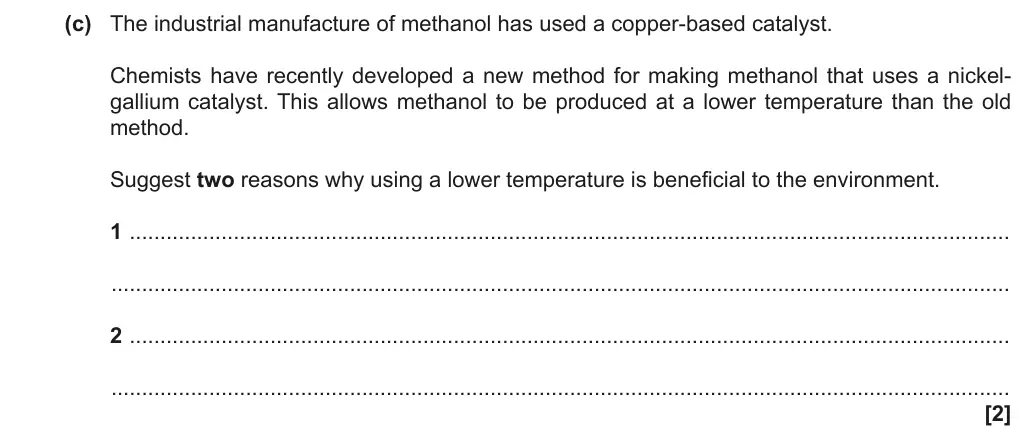
(c) The industrial manufacture of methanol has used a copper-based catalyst.
Chemists have recently developed a new method for making methanol that uses a nickel-
gallium catalyst. This allows methanol to be produced at a lower temperature than the old
method.
Suggest two reasons why using a lower temperature is beneficial to the environment.
1  ................................................................................................................................................
...................................................................................................................................................
2  ................................................................................................................................................
...................................................................................................................................................
[2]
November 2021 · AS Paper 2 · Q5(d)(i) 1 mark AO1 Short answer periodicity
(d) Nickel and gallium are in period 4 of the periodic table.
(i) Which block in the periodic table does nickel belong to?
...................................................................................................................................... [1]
November 2021 · AS Paper 2 · Q5(d)(ii) 1 mark AO1 Short answer electron structure
(ii) Complete the electron configuration of gallium.
1s2  ................................................................................................................................ [1]
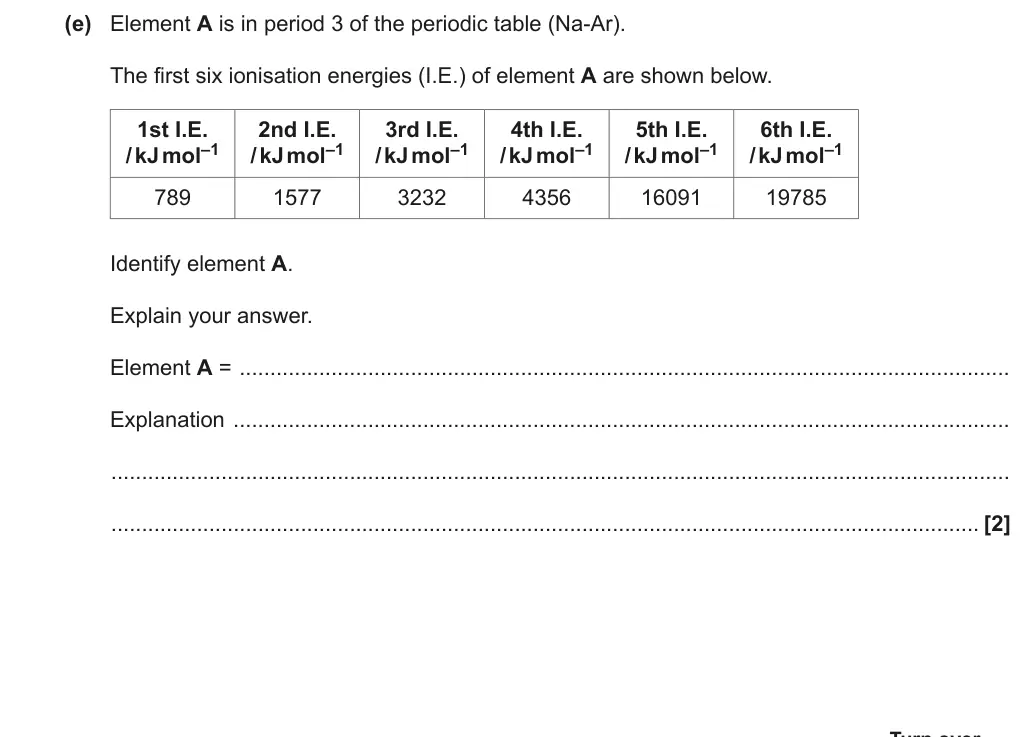
November 2021 · AS Paper 2 · Q5(e) 2 marks AO3 Calculation periodicity
(e) Element A is in period 3 of the periodic table (Na-Ar).
The first six ionisation energies (I.E.) of element A are shown below.
1st I.E. 2nd I.E. 3rd I.E. 4th I.E. 5th I.E. 6th I.E.
/ kJ mol–1 / kJ mol–1 / kJ mol–1 / kJ mol–1 / kJ mol–1 / kJ mol–1
789 1577 3232 4356 16091 19785
Identify element A.
Explain your answer.
Element A =  ..............................................................................................................................
Explanation  ...............................................................................................................................
...................................................................................................................................................
.............................................................................................................................................. [2]
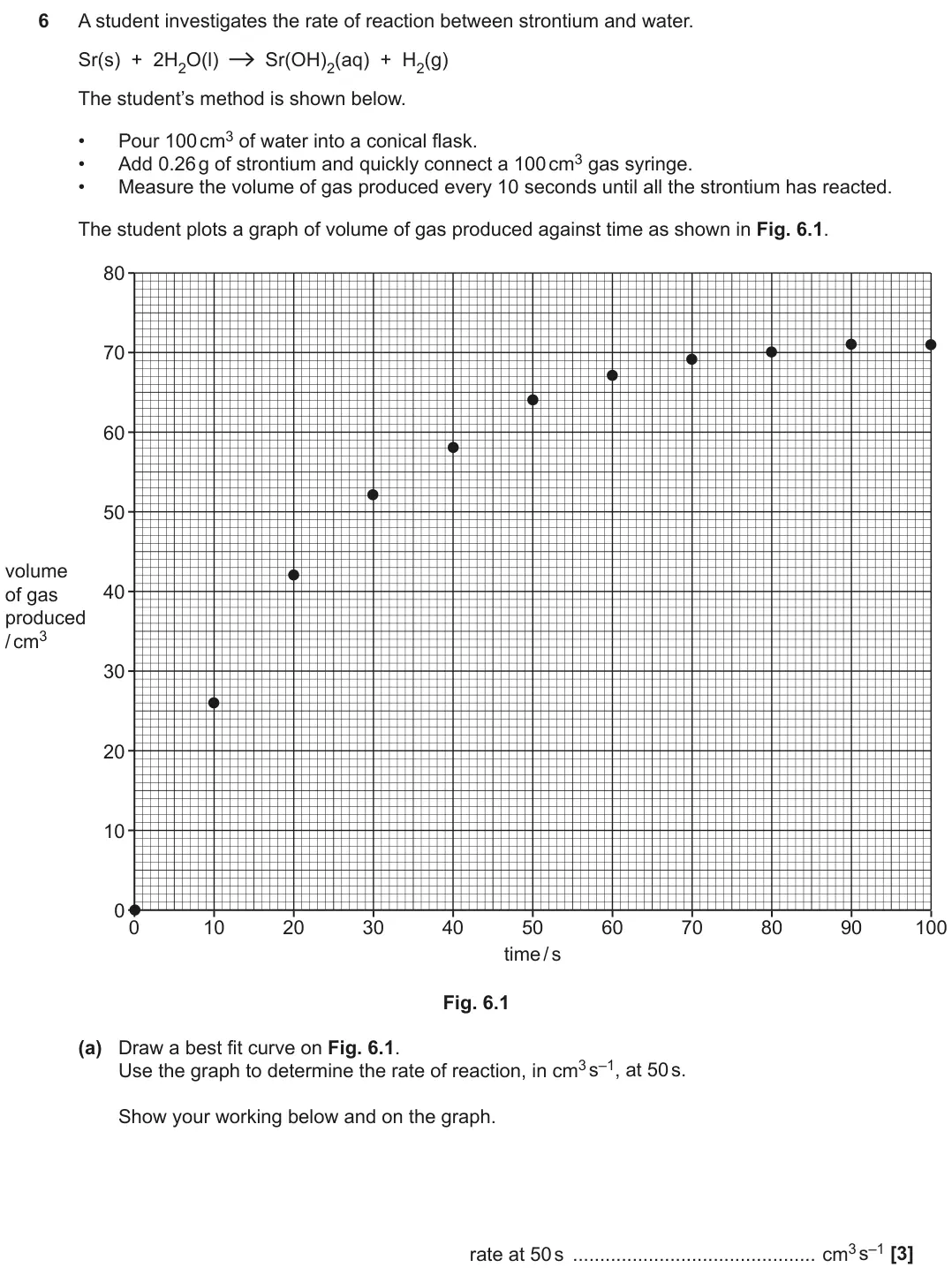
November 2021 · AS Paper 2 · Q6(a) 3 marks AO1, 2 Calculation reaction ratespractical skills
6 A student investigates the rate of reaction between strontium and water.
Sr(s)  +  2H2O(l) Sr(OH)2(aq)  +  H2(g)
The student’s method is shown below.
• Pour 100 cm3 of water into a conical flask.
• Add 0.26 g of strontium and quickly connect a 100 cm3 gas syringe.
• Measure the volume of gas produced every 10 seconds until all the strontium has reacted.
The student plots a graph of volume of gas produced against time as shown in Fig. 6.1.
80
70
60
50
volume
of gas 40
produced
/ cm3
30
20
10
0
0 10 20 30 40 50 60 70 80 90 100
time / s
Fig. 6.1
(a) Draw a best fit curve on Fig. 6.1.
Use the graph to determine the rate of reaction, in cm3 s–1, at 50 s.
Show your working below and on the graph.
rate at 50 s  ............................................. cm3 s–1 [3]
November 2021 · AS Paper 2 · Q6(b) 2 marks AO3 Short answer reaction ratespractical skills
Earlier part of question 6 that this part usesEarlier part of November 2021 Paper 2 question 6
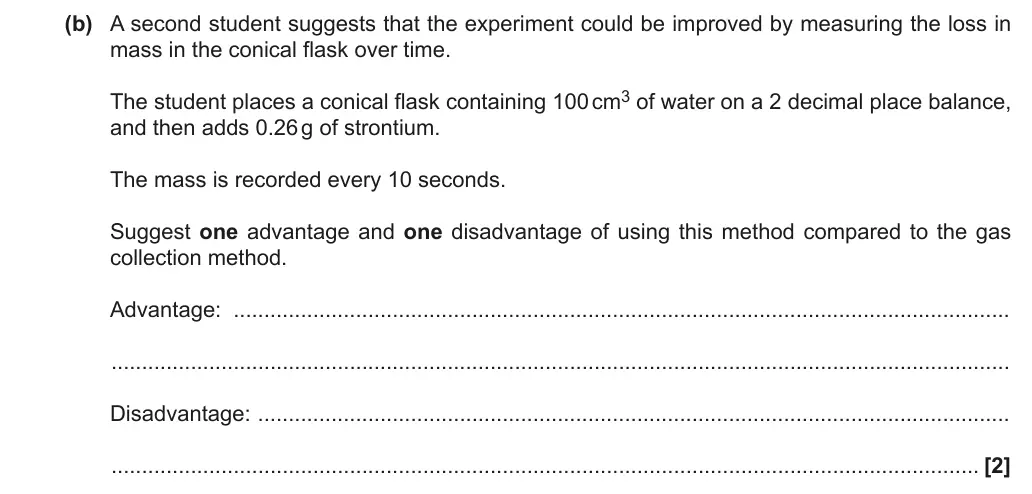
(b) A second student suggests that the experiment could be improved by measuring the loss in
mass in the conical flask over time.
The student places a conical flask containing 100 cm3 of water on a 2 decimal place balance,
and then adds 0.26 g of strontium.
The mass is recorded every 10 seconds.
Suggest one advantage and one disadvantage of using this method compared to the gas
collection method.
Advantage:  ...............................................................................................................................
...................................................................................................................................................
Disadvantage:  ...........................................................................................................................
.............................................................................................................................................. [2]
November 2021 · AS Paper 2 · Q6(c)(i) 2 marks AO3 Calculation amount of substance
Earlier part of question 6 that this part usesEarlier part of November 2021 Paper 2 question 6
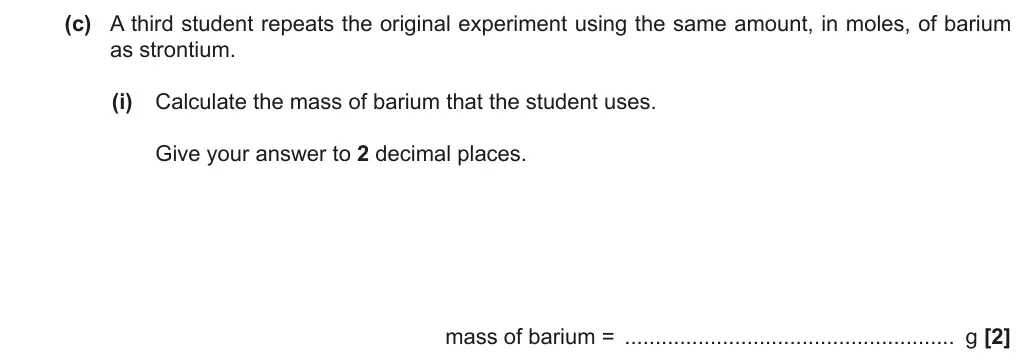
(c) A third student repeats the original experiment using the same amount, in moles, of barium
as strontium.
(i) Calculate the mass of barium that the student uses.
Give your answer to 2 decimal places.
mass of barium =  ...................................................... g [2]
November 2021 · AS Paper 2 · Q6(c)(ii) 2 marks AO3 Data interpretation group 2reaction rates
Earlier parts of question 6 that this part usesEarlier part of November 2021 Paper 2 question 6Earlier part of November 2021 Paper 2 question 6
(ii) The student observes that the rate of reaction for barium is different from the rate of
reaction with strontium.
On Fig. 6.1 sketch the graph the student would obtain using barium instead of strontium.
[2]
November 2021 · AS Paper 2 · Q6(c)(iii) 4 marks AO1 Short answer group 2
Earlier part of question 6 that this part usesEarlier part of November 2021 Paper 2 question 6
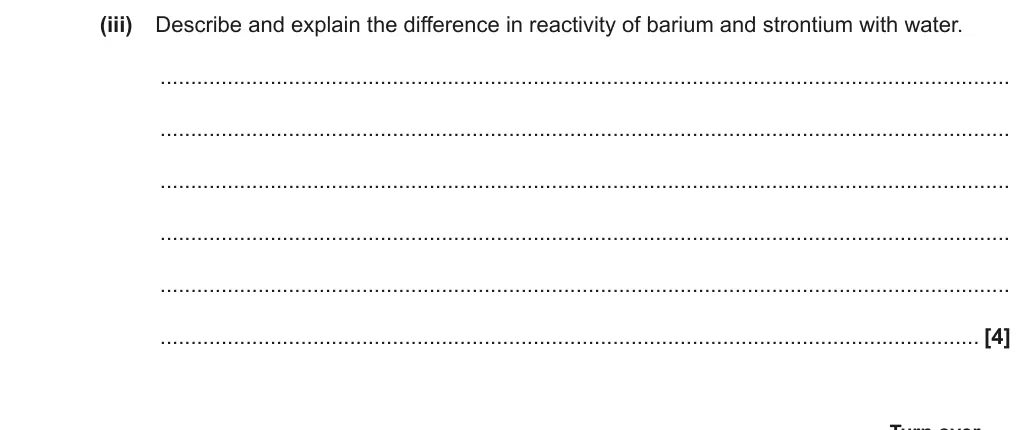
(iii) Describe and explain the difference in reactivity of barium and strontium with water.
...........................................................................................................................................
...........................................................................................................................................
...........................................................................................................................................
...........................................................................................................................................
...........................................................................................................................................
...................................................................................................................................... [4]
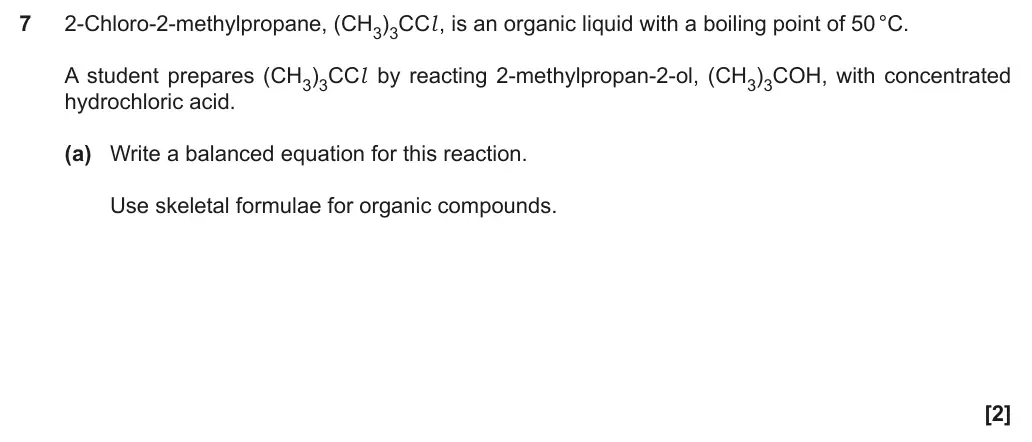
November 2021 · AS Paper 2 · Q7(a) 2 marks AO2 Equation writing alcoholsformulae and equationsorganic basics
7 2-Chloro-2-methylpropane, (CH3)3CCl , is an organic liquid with a boiling point of 50 °C.
A student prepares (CH3)3CCl  by reacting 2-methylpropan-2-ol, (CH3)3COH, with concentrated
hydrochloric acid.
(a) Write a balanced equation for this reaction.
Use skeletal formulae for organic compounds.
[2]
November 2021 · AS Paper 2 · Q7(b) 6 marks AO1, 2, 3 6-mark level of response organic synthesis aspractical techniquesamount of substance
Earlier part of question 7 that this part usesEarlier part of November 2021 Paper 2 question 7
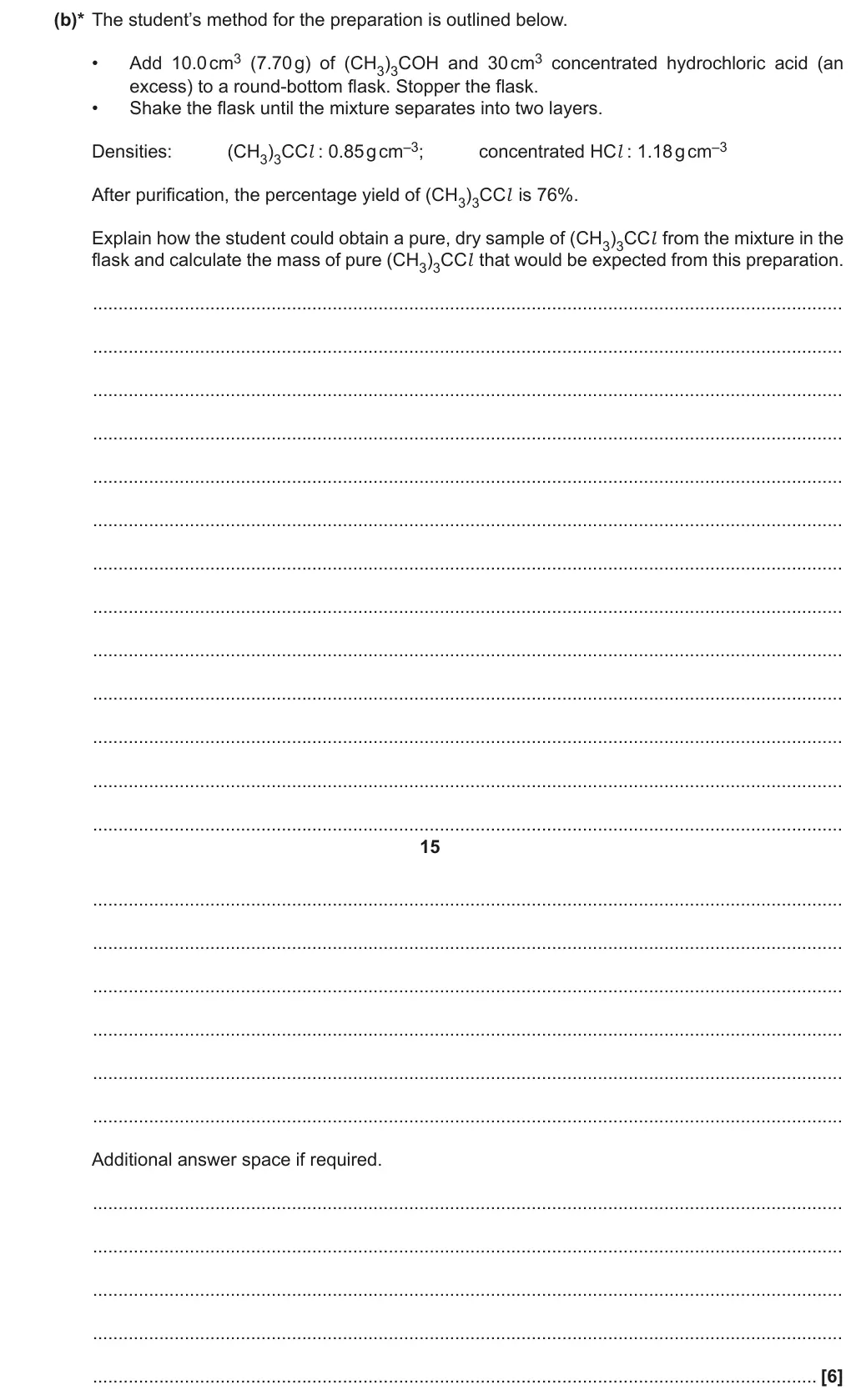
(b)* The student’s method for the preparation is outlined below.
• Add 10.0 cm3 (7.70 g) of (CH3)3COH and 30 cm3 concentrated hydrochloric acid (an
excess) to a round-bottom flask. Stopper the flask.
• Shake the flask until the mixture separates into two layers.
Densities:   (CH3)3CCl : 0.85 g cm–3;   concentrated HCl : 1.18 g cm–3
After purification, the percentage yield of (CH3)3CCl  is 76%.
Explain how the student could obtain a pure, dry sample of (CH3)3CCl  from the mixture in the
flask and calculate the mass of pure (CH3)3CCl  that would be expected from this preparation.
...................................................................................................................................................
...................................................................................................................................................
...................................................................................................................................................
...................................................................................................................................................
...................................................................................................................................................
...................................................................................................................................................
...................................................................................................................................................
...................................................................................................................................................
...................................................................................................................................................
...................................................................................................................................................
...................................................................................................................................................
...................................................................................................................................................
...................................................................................................................................................
...................................................................................................................................................
...................................................................................................................................................
...................................................................................................................................................
...................................................................................................................................................
...................................................................................................................................................
...................................................................................................................................................
Additional answer space if required.
...................................................................................................................................................
...................................................................................................................................................
...................................................................................................................................................
...................................................................................................................................................
.............................................................................................................................................. [6]
November 2021 · AS Paper 2 · Q7(c)(i) 1 mark AO1 Short answer organic basicsalcohols
Earlier part of question 7 that this part usesEarlier part of November 2021 Paper 2 question 7
(c) Compounds A and B are structural isomers of (CH3)3COH.
(i) Compound A is a secondary alcohol.
What is the systematic name of compound A?
...................................................................................................................................... [1]
November 2021 · AS Paper 2 · Q7(c)(ii) 3 marks AO2 Equation writing alcoholsorganic basics
Earlier part of question 7 that this part usesEarlier part of November 2021 Paper 2 question 7
(ii) Compound B is a branched primary alcohol.
Compound B is refluxed with acidified potassium dichromate(VI) as an oxidising agent.
Write the equation for the reaction that takes place.
Use structures for organic compounds and [O] for the oxidising agent.
[3]

Work with an OCR chemistry tutor

Want a paper marked and gone through with you? Message us.
Prefer email? Send an enquiry

If you are under 18, please include a parent's contact details. Enquiries go to enquiries@chemistryaleveltutor.com and are deleted once handled. All tutoring is online.