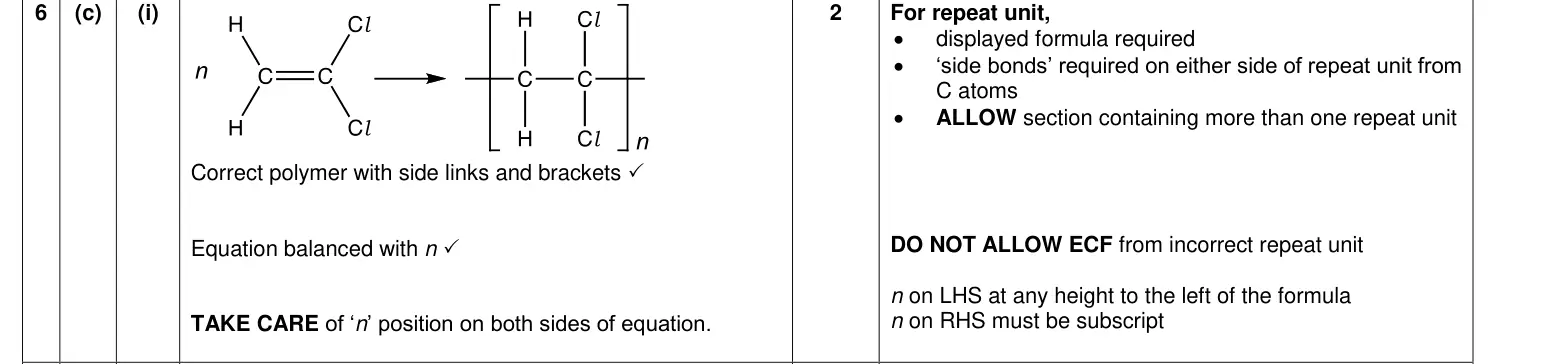
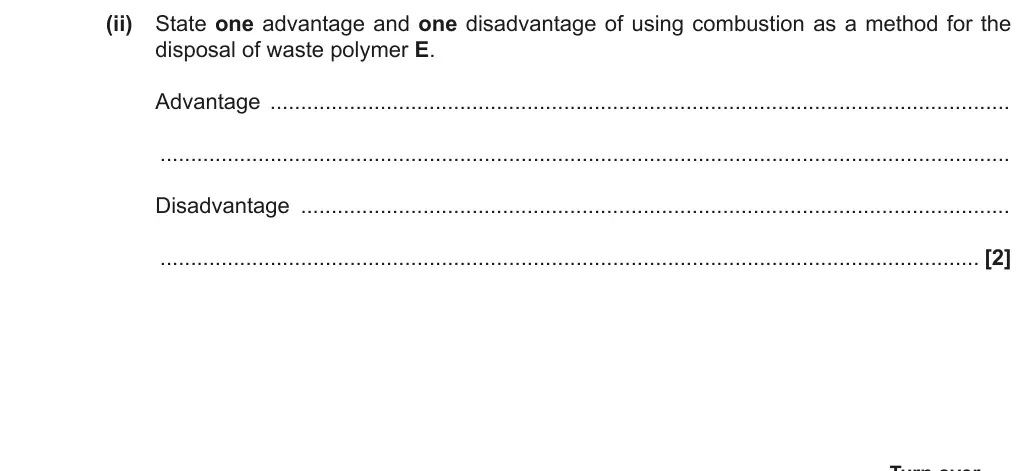
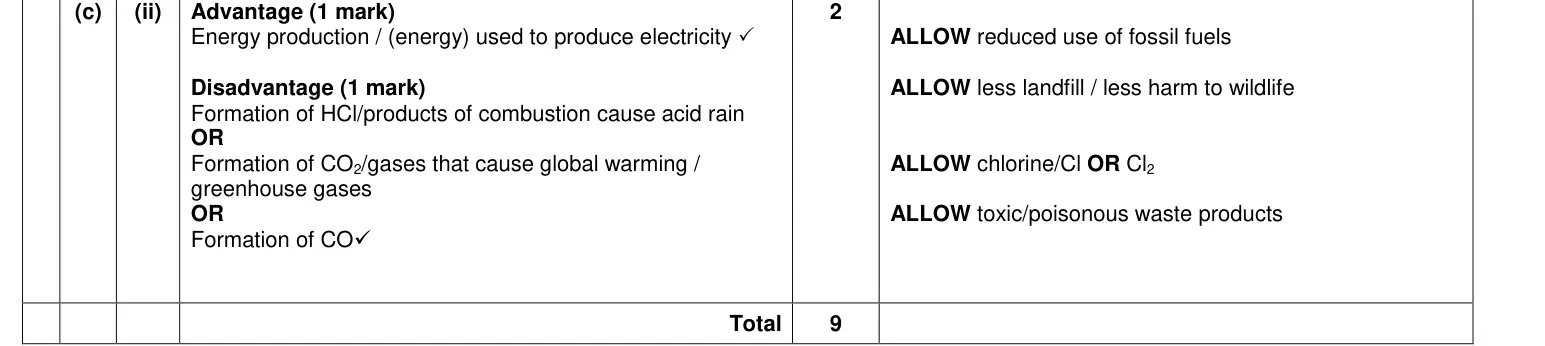
Examiner's comment
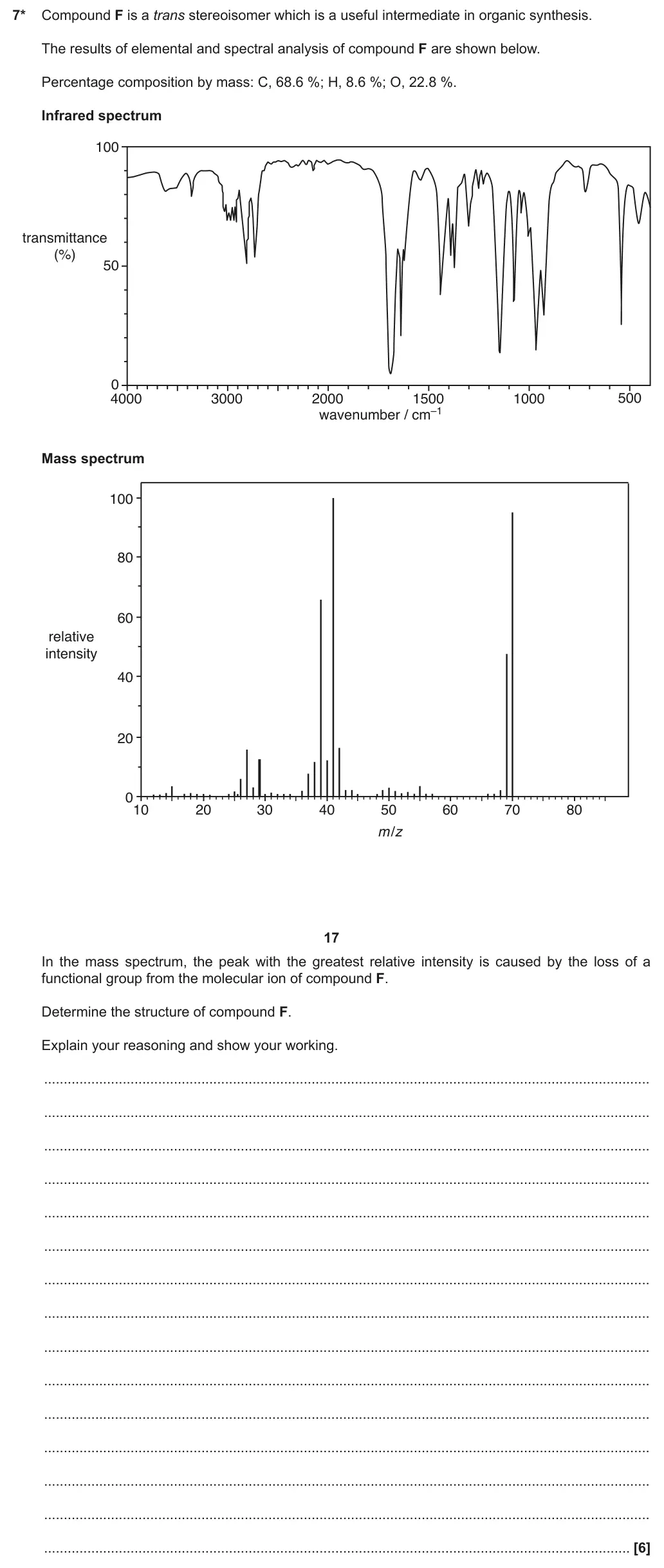
This question was a good discriminator. Most candidates were able to deduce the empirical formula and the C=O peak on the IR spectrum. However, many mistook the C-H peaks around 3000 cm-1 for an alcohol O-H peak or assumed from the empirical formula that it was an alcohol so made the spectra ‘fit’ their hypothesis. At AS, the exposure of candidates to IR and MS spectra is not as comprehensive as in the second year of A Level and this was evident. There was very little annotation of the spectra and candidates should be encouraged to do this as it is helpful to them in their deductions (and to the examiners for crediting marks). Analysis of the IR spectrum was much more detailed than the mass spectrum. Most candidates just referred to the molecular ion peak and made no attempt, or an incorrect attempt, at discerning the peak at 41. Those that did quickly realised what the structure was and gained 5 or 6 marks. Some candidates, despite ascertaining that a trans stereoisomer should be drawn, drew the cis version instead. This candidate has very logically worked through all the information provided and has come up with the correct structure from the deductions. Like most candidates, the crucial information about F being a trans isomer was not picked up so they drew the double bond in the wrong place. Copyright acknowledgements Q7, graph 1 © SDBSWeb : https://sdbs.db.aist.go.jp/sdbs/cgi-bin/cre_index.cgi (National Institute of Advanced Industrial Science and Technology, accessed 31 January 2017). Q7, graph 2 © SDBSWeb : https://sdbs.db.aist.go.jp/sdbs/cgi-bin/cre_index.cgi (National Institute of Advanced Industrial Science and Technology, accessed 31 January 2017).
Notes from the mark scheme and report
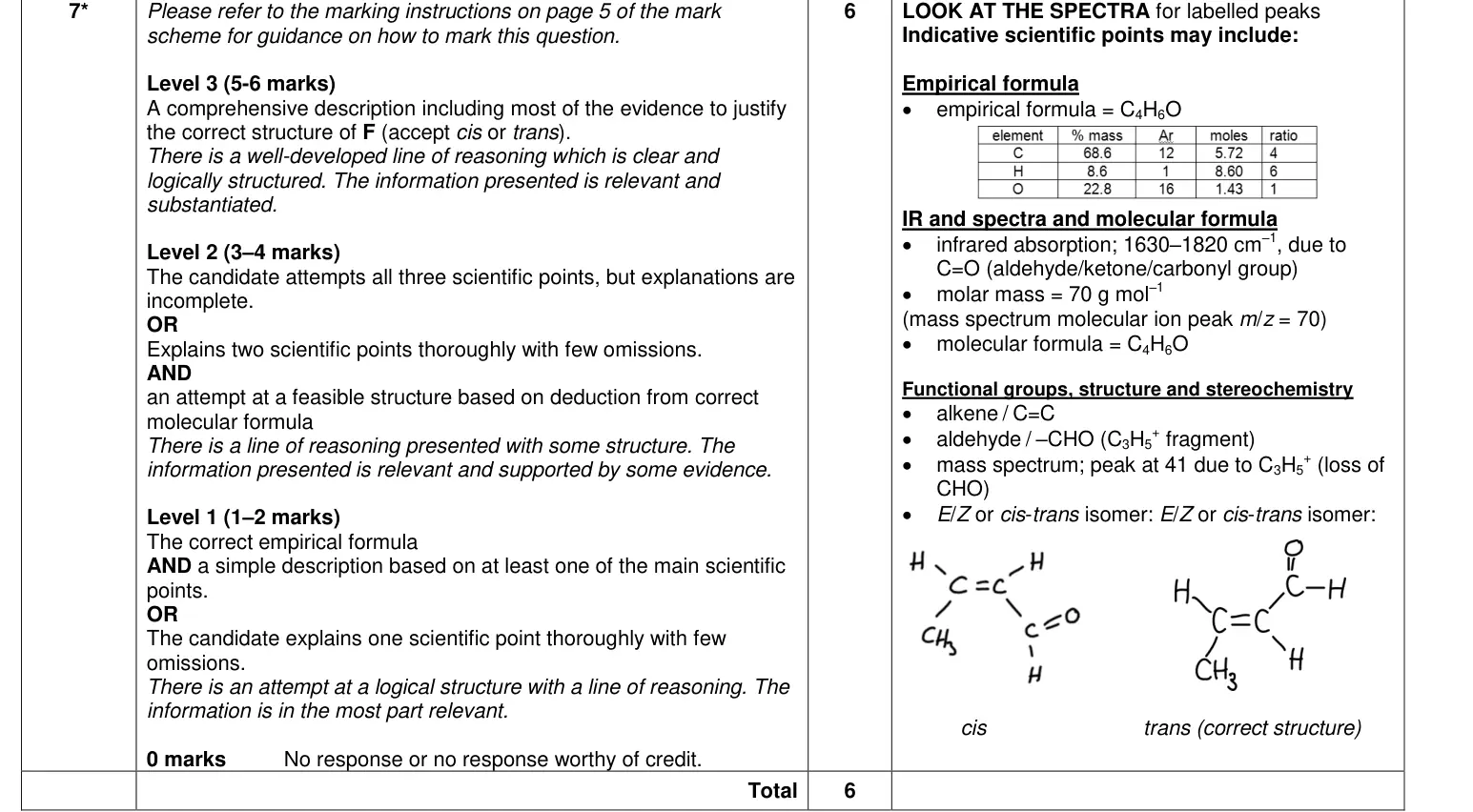
- empirical formula C4H6O
- M+ at m/z 70 so molecular formula C4H6O
- IR C=O 1630–1820 cm–1
- m/z 41 = C3H5+ (loss of CHO)
- trans-but-2-enal (cis accepted for Level 3)
Skills: M0.2 Use ratios, fractions and percentages; M3.1 Translate information between graphical, numerical and algebraic forms