
June 2017: AS Paper 2, Depth in chemistry

70 marks · 31 question parts · Paper, mark scheme and report on OCR's site · Have OCR's Data Sheet beside you
Question by question

QTopicMarksAOType
1(a)(i) Bonding, structure and shapes of molecules 1Short answer
1(a)(ii) Bonding, structure and shapes of molecules 2Drawing / labelling
1(a)(iii) Amount of substance (moles) 2Calculation
1(b)(i) Bonding, structure and shapes of molecules 2Short answer
1(b)(ii) Qualitative analysis: tests for ions 2Short answer
1(b)(iii) Amount of substance (moles) 2Calculation
1(c)(i) Electron structure and orbitals 1Short answer
1(c)(ii) Formulae and equations, Acids, bases and titrations 4Equation writing
2 Practical skills: planning, analysis and evaluation, Amount of substance (moles), Reaction rates and the Boltzmann distribution 6Level of response
3(a)(i) Enthalpy changes and Hess’ law, Amount of substance (moles) 4Calculation
3(a)(ii) Practical skills: planning, analysis and evaluation, Enthalpy changes and Hess’ law 2Short answer
3(b)(i) Practical skills: planning, analysis and evaluation 1Graph plotting
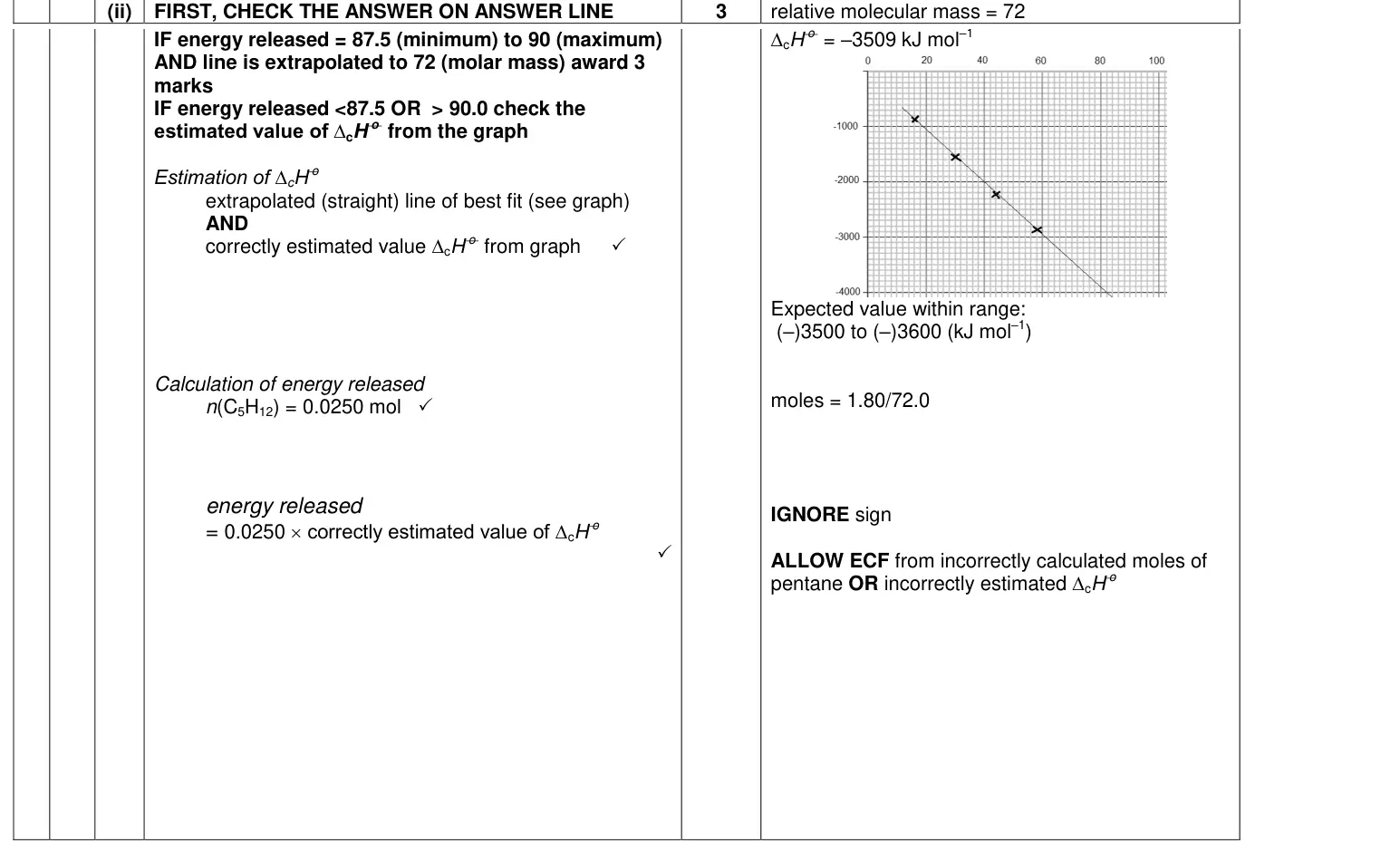
3(b)(ii) Practical skills: planning, analysis and evaluation, Amount of substance (moles), Enthalpy changes and Hess’ law 3Calculation
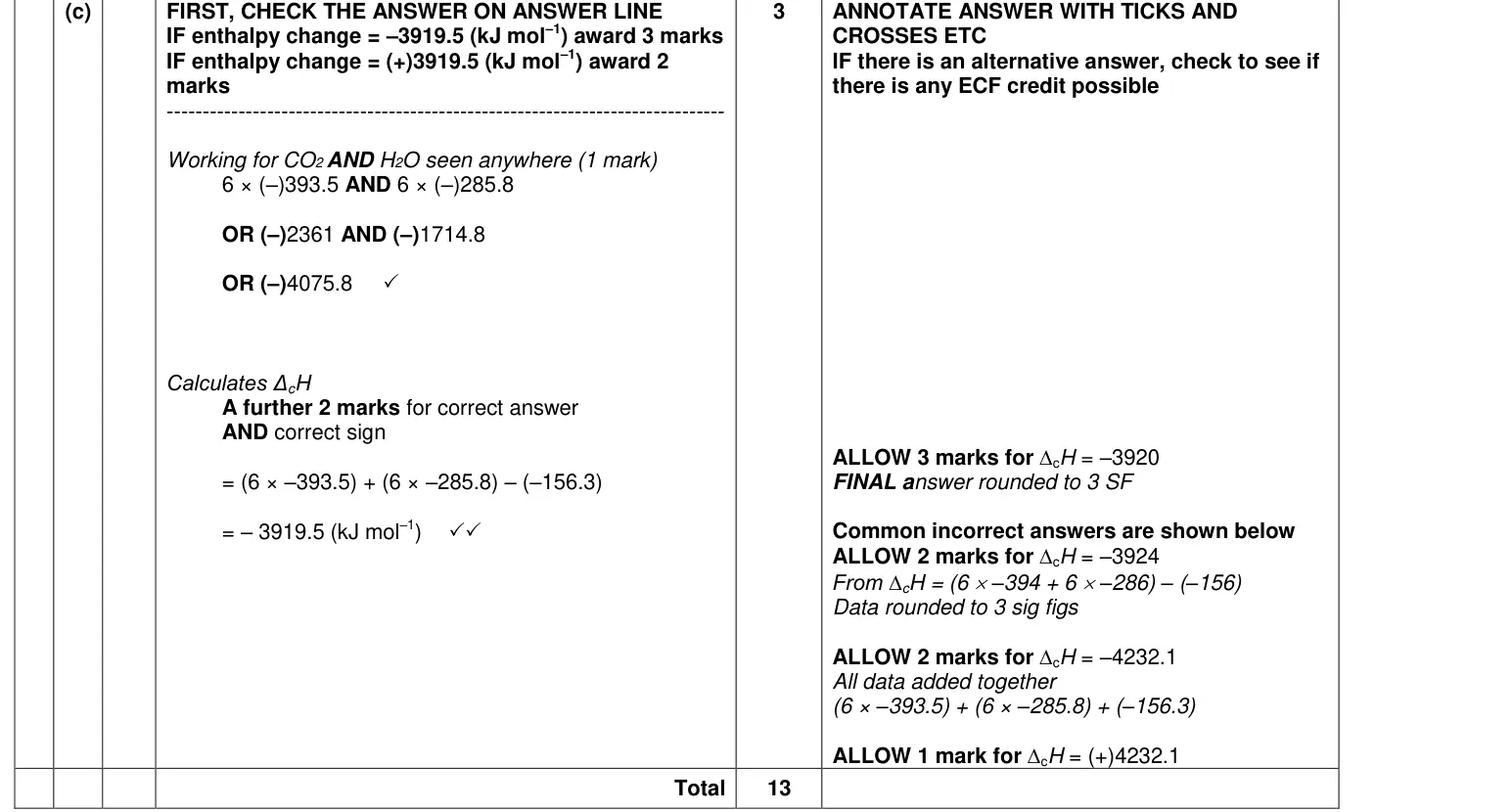
3(c) Enthalpy changes and Hess’ law 3Calculation
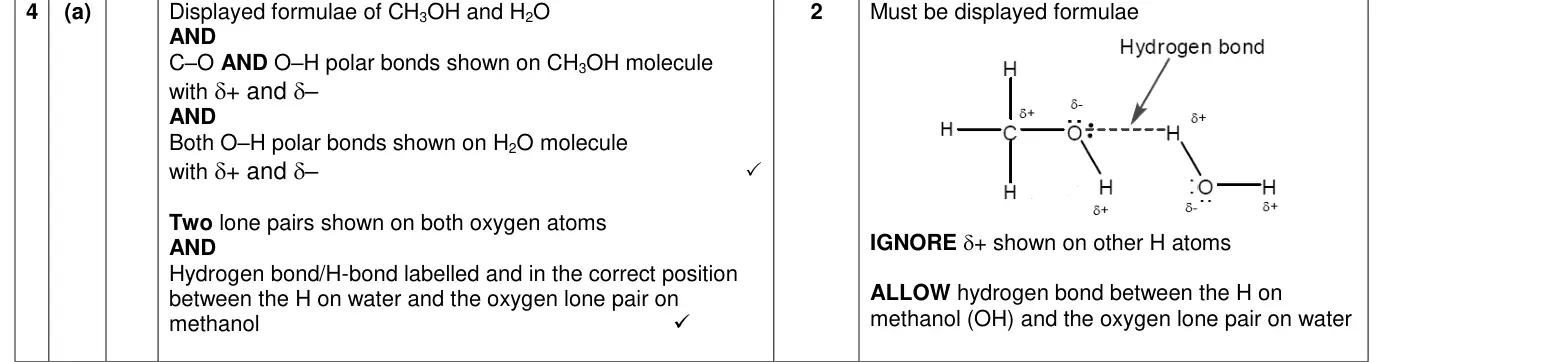
4(a) Alcohols, Bonding, structure and shapes of molecules 2Drawing / labelling
4(b)(i) Organic basics: naming, formulae and isomerism 1Short answer
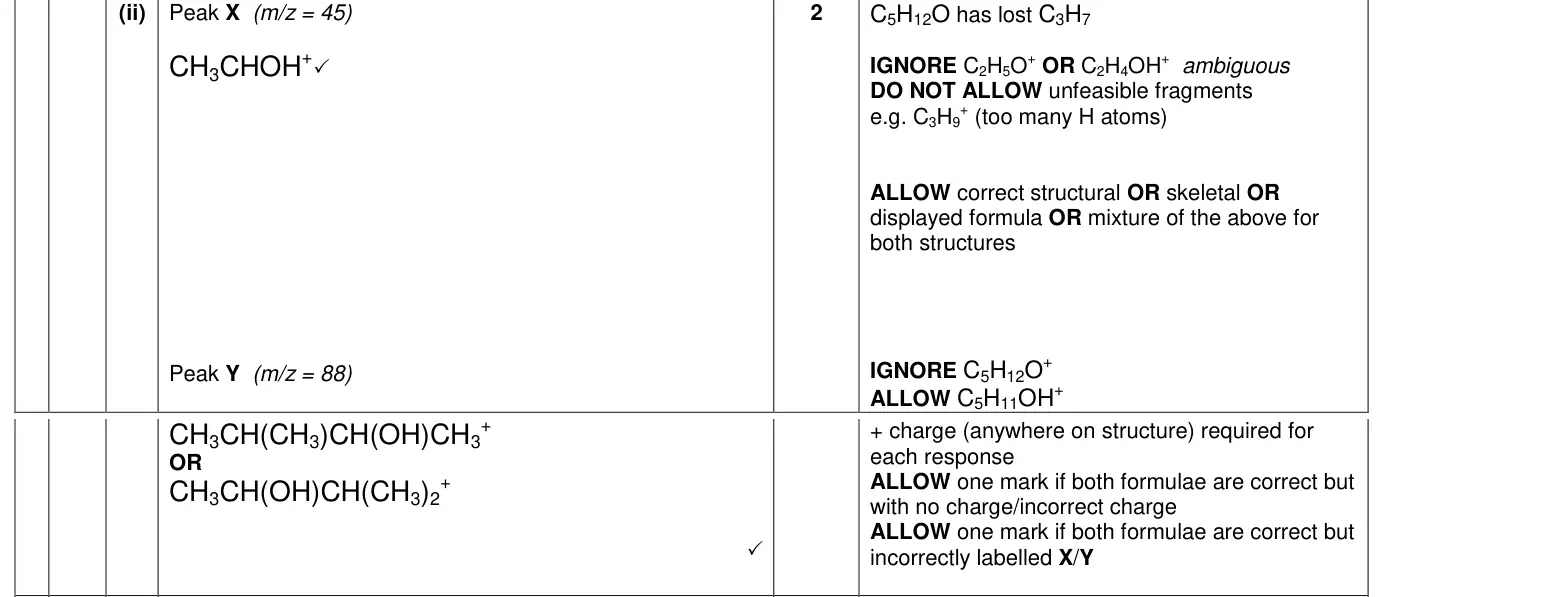
4(b)(ii) Infrared spectroscopy and mass spectrometry 2Short answer
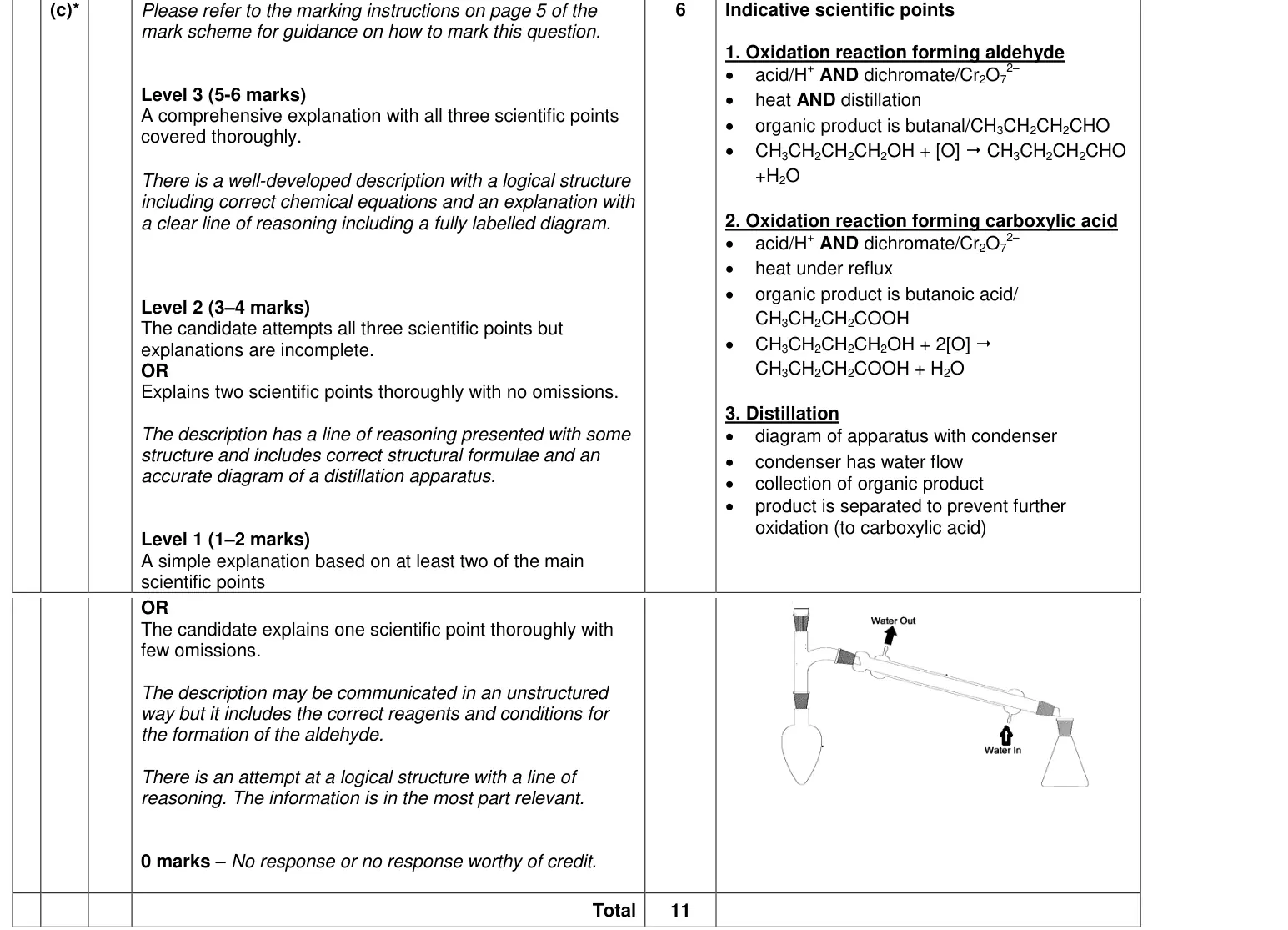
4(c) Alcohols, Organic synthesis and practical techniques (Module 4) 6Level of response
5(a) Organic basics: naming, formulae and isomerism 1Short answer
5(b)(i) Alkanes, Bonding, structure and shapes of molecules 2Short answer
5(b)(ii) Bonding, structure and shapes of molecules 1Short answer
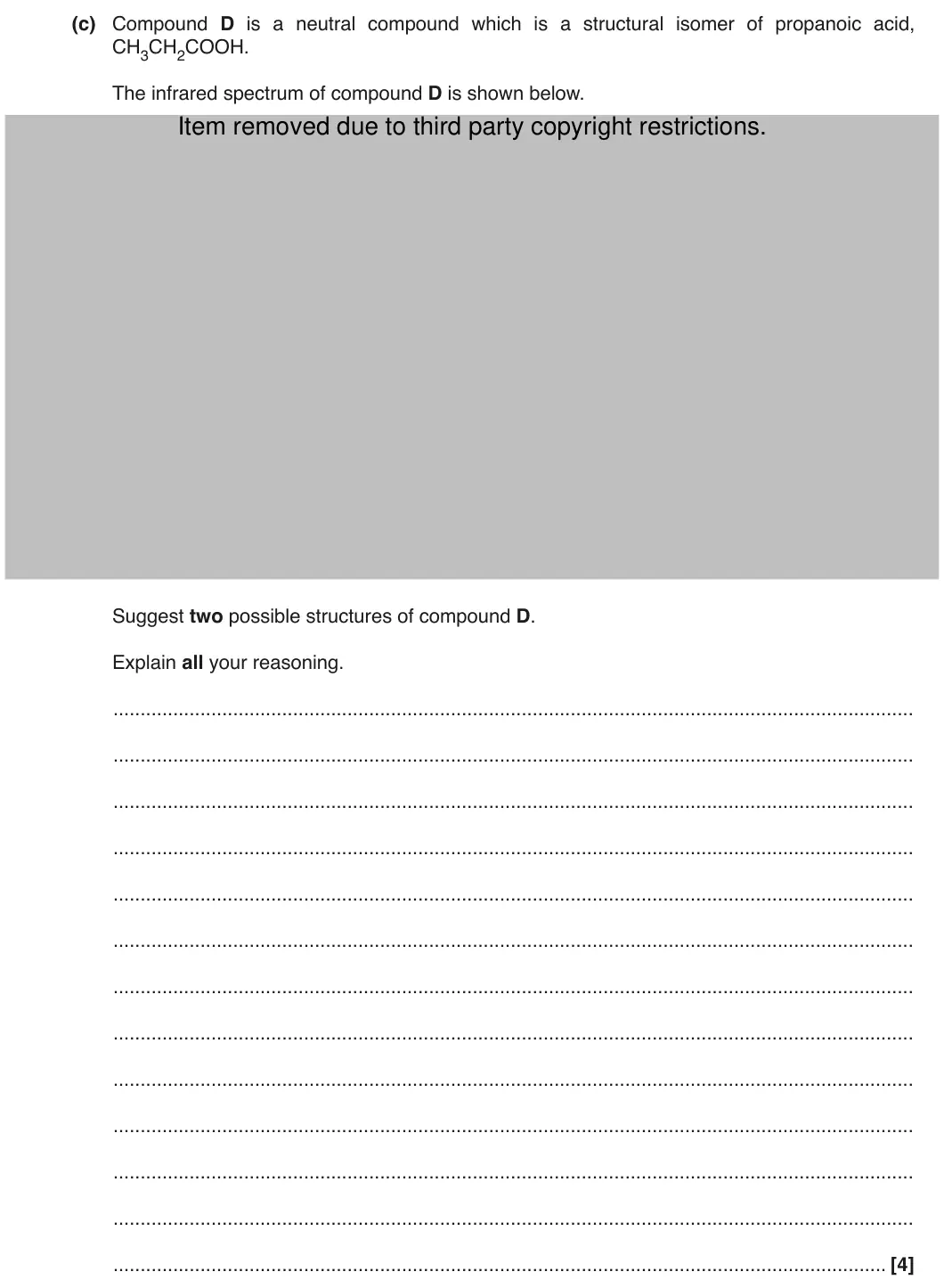
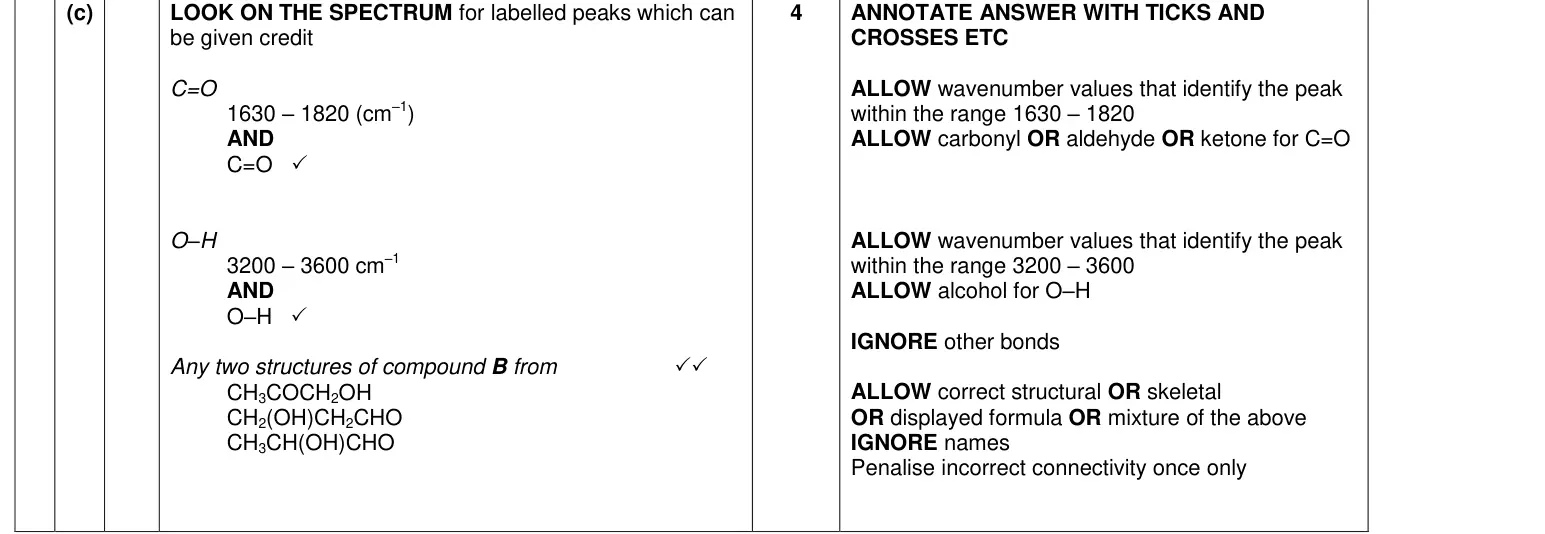
5(c) Infrared spectroscopy and mass spectrometry, Organic basics: naming, formulae and isomerism 4Structure / isomer
5(d)(i) Alkanes 1Short answer
5(d)(ii) Alkanes 1Equation writing
5(d)(iii) Organic basics: naming, formulae and isomerism 1Short answer
5(d)(iv) Alkanes, Organic basics: naming, formulae and isomerism 2Equation writing
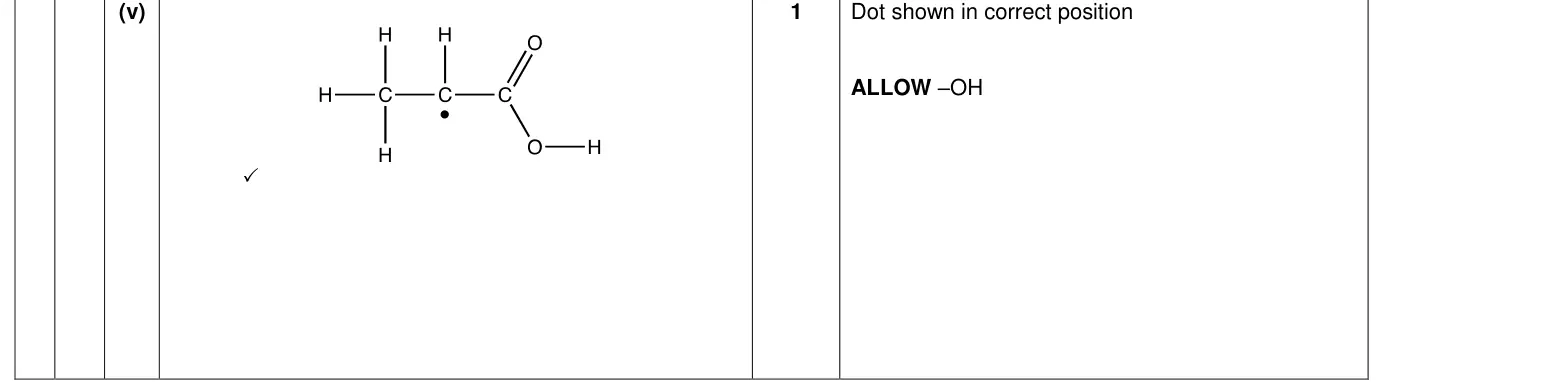
5(d)(v) Organic basics: naming, formulae and isomerism 1Structure / isomer
5(d)(vi) Alkanes 1Structure / isomer
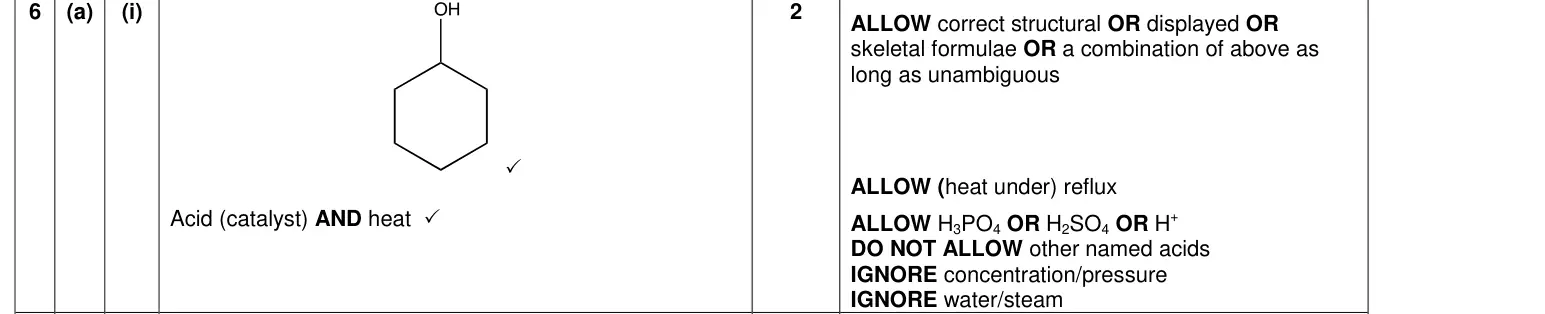
6(a)(i) Organic synthesis and practical techniques (Module 4), Alcohols, Haloalkanes 2Structure / isomer
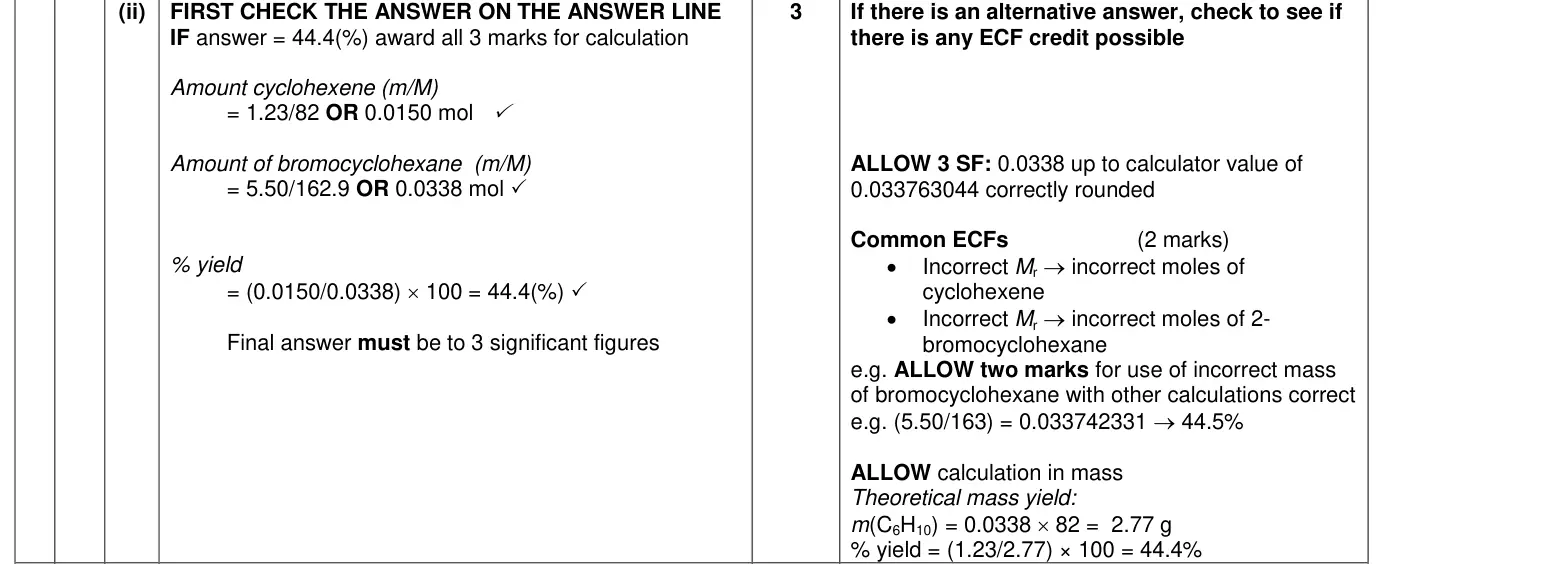
6(a)(ii) Amount of substance (moles) 3Calculation
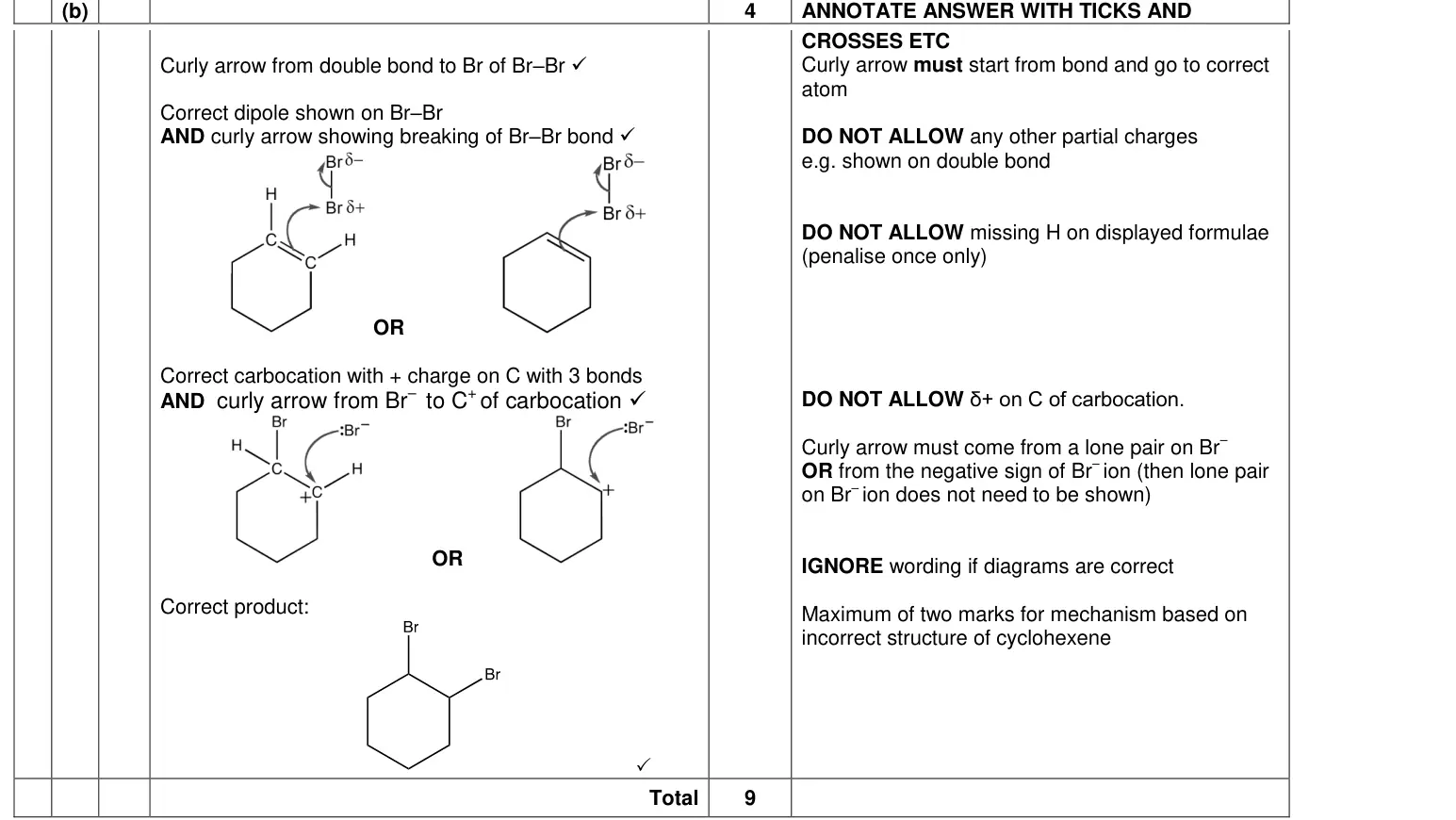
6(b) Alkenes 4Mechanism

The questions

1(a)(i)1(a)(ii)1(a)(iii)1(b)(i)1(b)(ii)1(b)(iii)1(c)(i)1(c)(ii)23(a)(i)3(a)(ii)3(b)(i)3(b)(ii)3(c)4(a)4(b)(i)4(b)(ii)4(c)5(a)5(b)(i)5(b)(ii)5(c)5(d)(i)5(d)(ii)5(d)(iii)5(d)(iv)5(d)(v)5(d)(vi)6(a)(i)6(a)(ii)6(b)
June 2017 · AS Paper 2 · Q1(a)(i) 1 mark Short answer bonding and structure
1 Barium combines with oxygen, chlorine and nitrogen to form ionic compounds.
(a) Barium oxide, BaO, has a giant ionic lattice structure.
(i) State what is meant by the term ionic bond.
...........................................................................................................................................
...................................................................................................................................... [1]
June 2017 · AS Paper 2 · Q1(a)(ii) 2 marks Drawing / labelling bonding and structure
Earlier part of question 1 that this part usesEarlier part of June 2017 Paper 2 question 1
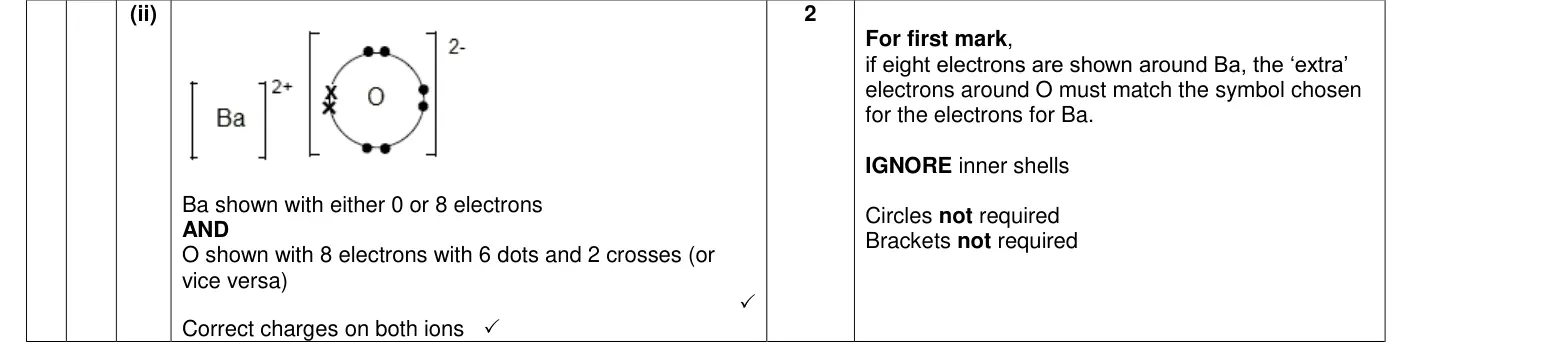
(ii) Draw a ‘dot-and-cross’ diagram to show the bonding in barium oxide.
Show outer electrons only.
[2]
June 2017 · AS Paper 2 · Q1(a)(iii) 2 marks Calculation amount of substance
Earlier part of question 1 that this part usesEarlier part of June 2017 Paper 2 question 1
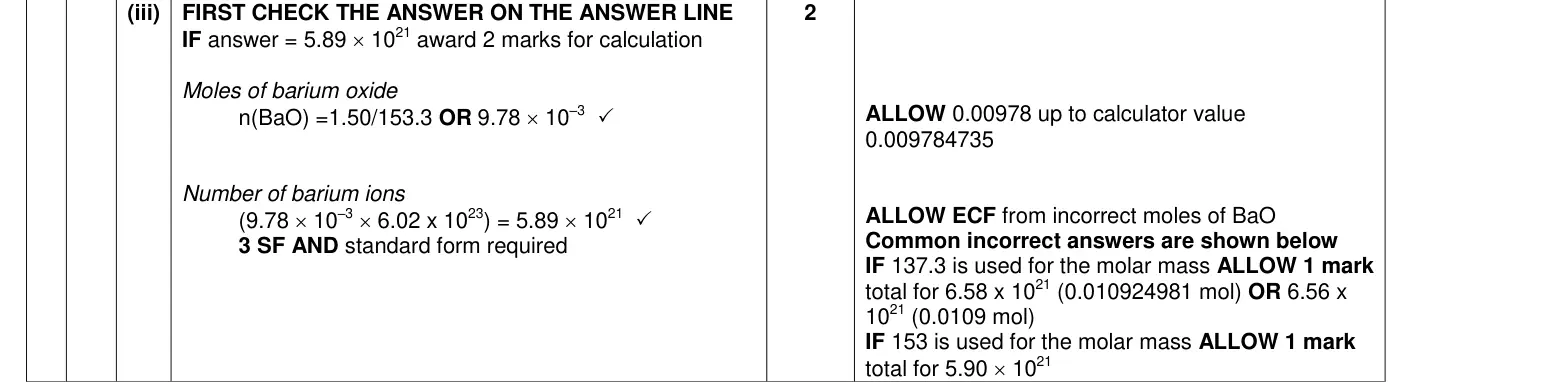
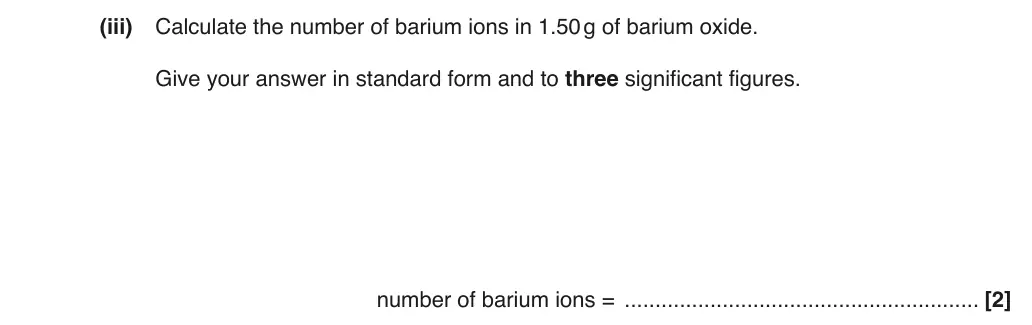
(iii) Calculate the number of barium ions in 1.50 g of barium oxide.
Give your answer in standard form and to three significant figures.
number of barium ions =  .......................................................... [2]
June 2017 · AS Paper 2 · Q1(b)(i) 2 marks Short answer bonding and structure
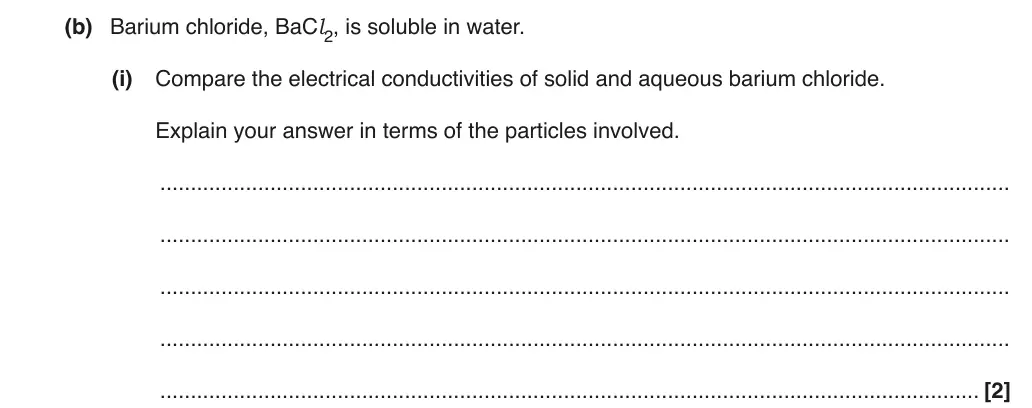
(b) Barium chloride, BaCl2, is soluble in water.
(i) Compare the electrical conductivities of solid and aqueous barium chloride.
Explain your answer in terms of the particles involved.
...........................................................................................................................................
...........................................................................................................................................
...........................................................................................................................................
...........................................................................................................................................
...................................................................................................................................... [2]
June 2017 · AS Paper 2 · Q1(b)(ii) 2 marks Short answer qualitative analysis
Earlier part of question 1 that this part usesEarlier part of June 2017 Paper 2 question 1
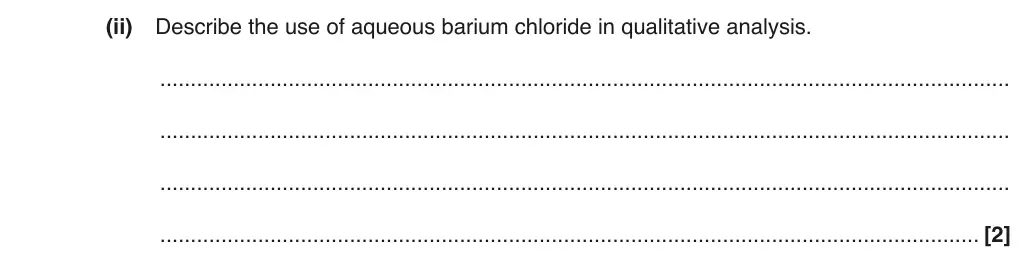
(ii) Describe the use of aqueous barium chloride in qualitative analysis.
...........................................................................................................................................
...........................................................................................................................................
...........................................................................................................................................
...................................................................................................................................... [2]
June 2017 · AS Paper 2 · Q1(b)(iii) 2 marks Calculation amount of substance
Earlier part of question 1 that this part usesEarlier part of June 2017 Paper 2 question 1
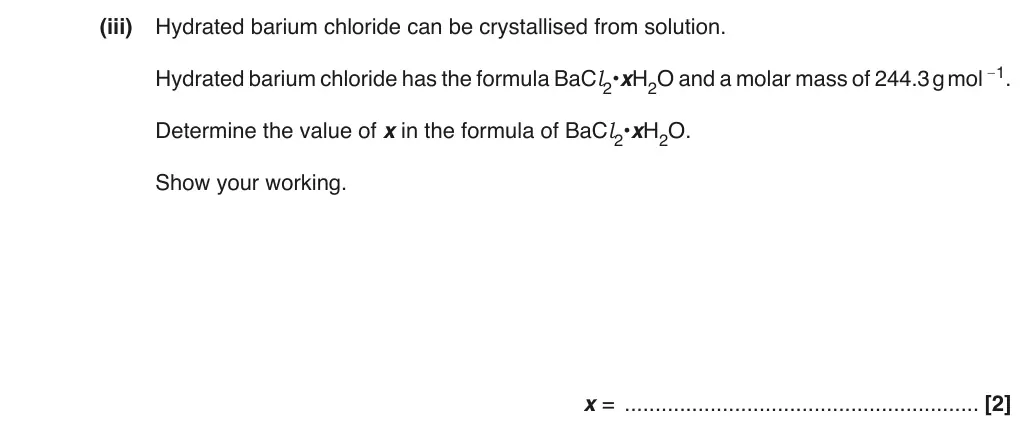
(iii) Hydrated barium chloride can be crystallised from solution.
Hydrated barium chloride has the formula BaCl2•xH2O and a molar mass of 244.3 g mol −1.
Determine the value of x in the formula of BaCl2•xH2O.
Show your working.
x =  .......................................................... [2]
June 2017 · AS Paper 2 · Q1(c)(i) 1 mark Short answer electron structure
(c) Barium nitride is formed when barium is heated with nitrogen.
(i) Complete the electron configuration of a nitride ion.
1s2 ................................................................................................................................. [1]
June 2017 · AS Paper 2 · Q1(c)(ii) 4 marks Equation writing formulae and equationsacids and titrations
Earlier part of question 1 that this part usesEarlier part of June 2017 Paper 2 question 1
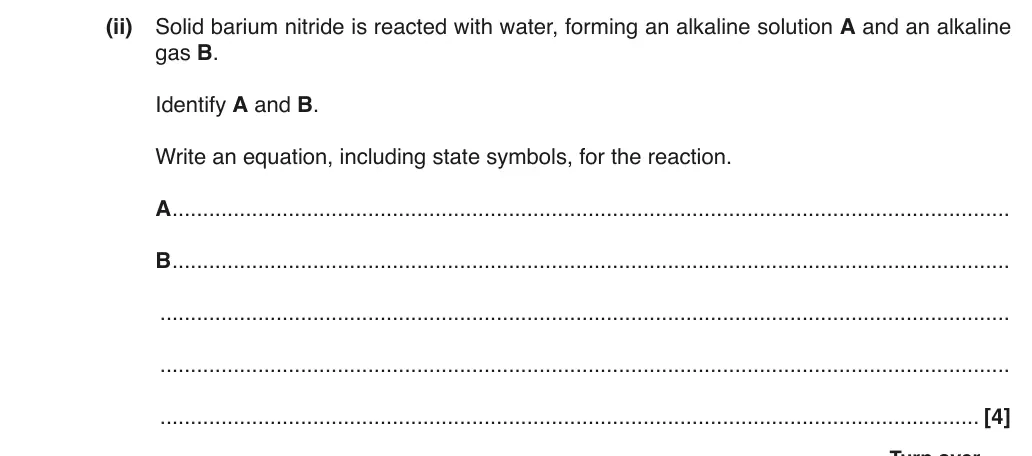
(ii) Solid barium nitride is reacted with water, forming an alkaline solution A and an alkaline
gas B.
Identify A and B.
Write an equation, including state symbols, for the reaction.
A .........................................................................................................................................
B .........................................................................................................................................
...........................................................................................................................................
...........................................................................................................................................
...................................................................................................................................... [4]
June 2017 · AS Paper 2 · Q2 6 marks 6-mark level of response practical skillsamount of substancereaction rates
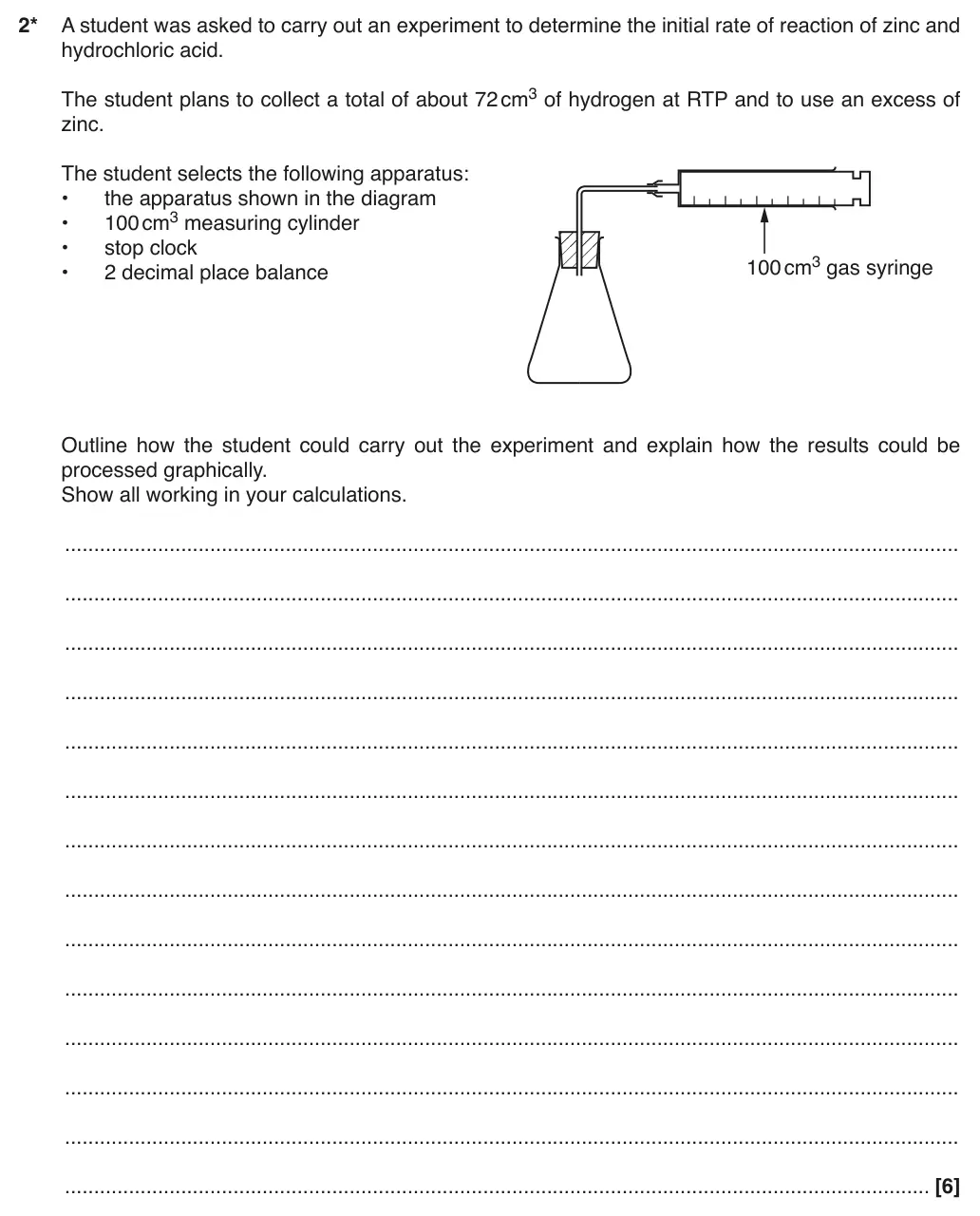
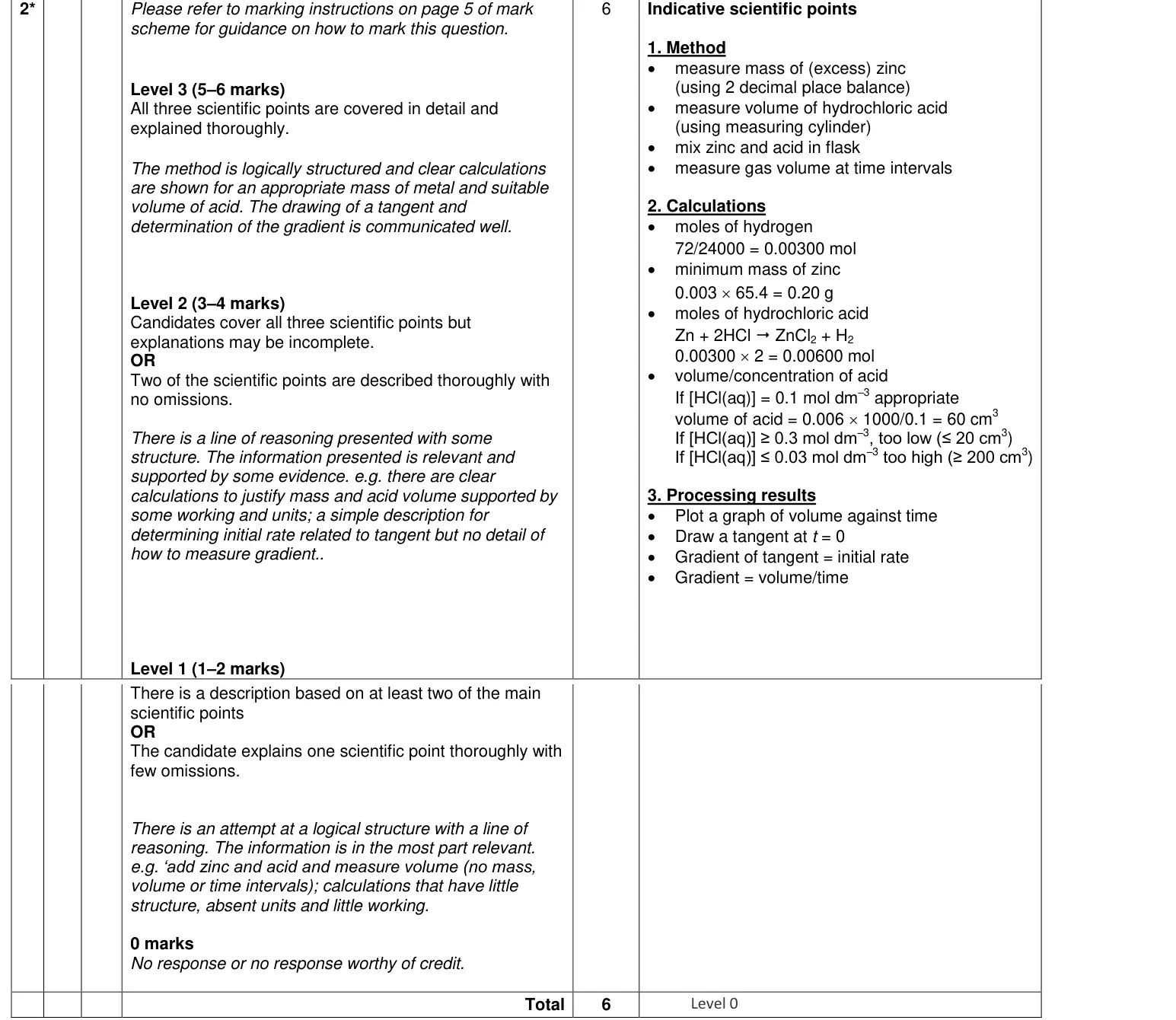
2* A student was asked to carry out an experiment to determine the initial rate of reaction of zinc and
hydrochloric acid.
The student plans to collect a total of about 72 cm3 of hydrogen at RTP and to use an excess of
zinc.
The student selects the following apparatus:
• the apparatus shown in the diagram
• 100 cm3 measuring cylinder
• stop clock
• 2 decimal place balance 100 cm3 gas syringe
Outline how the student could carry out the experiment and explain how the results could be
processed graphically.
Show all working in your calculations.
..........................................................................................................................................................
..........................................................................................................................................................
..........................................................................................................................................................
..........................................................................................................................................................
..........................................................................................................................................................
..........................................................................................................................................................
..........................................................................................................................................................
..........................................................................................................................................................
..........................................................................................................................................................
..........................................................................................................................................................
..........................................................................................................................................................
..........................................................................................................................................................
..........................................................................................................................................................
..................................................................................................................................................... [6]
June 2017 · AS Paper 2 · Q3(a)(i) 4 marks Calculation enthalpy changesamount of substance
3 Alkanes are saturated hydrocarbons with the general formula CnH2n+2.
(a) A student carries out an experiment to measure the enthalpy change of combustion, ∆cH, of
hexane.
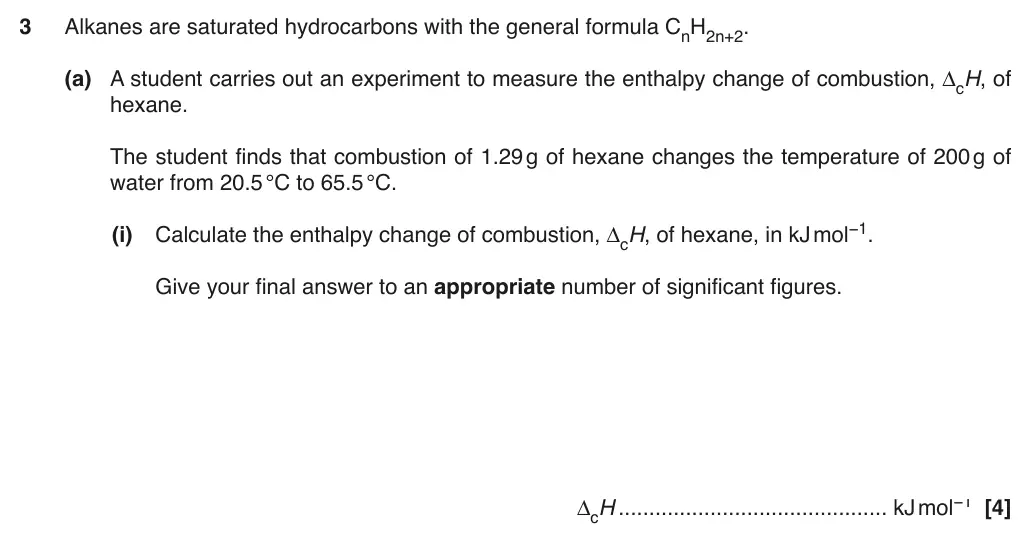
The student finds that combustion of 1.29 g of hexane changes the temperature of 200 g of
water from 20.5 °C to 65.5 °C.
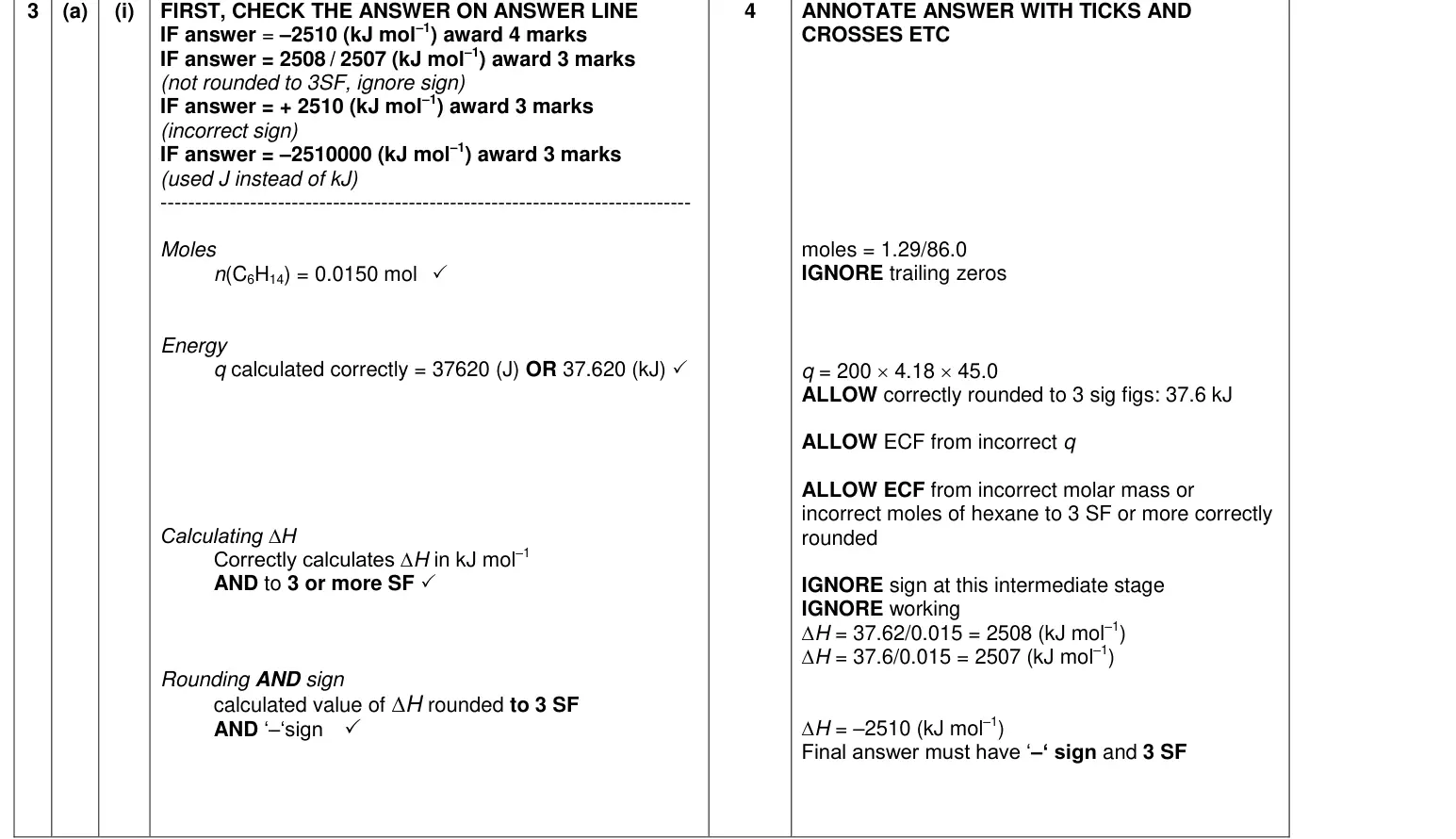
(i) Calculate the enthalpy change of combustion, ∆cH, of hexane, in kJ mol−1.
Give your final answer to an appropriate number of significant figures.
∆cH ............................................ kJ mol−1  [4]
June 2017 · AS Paper 2 · Q3(a)(ii) 2 marks Short answer practical skillsenthalpy changes
Earlier part of question 3 that this part usesEarlier part of June 2017 Paper 2 question 3
(ii) The calculated value of ∆cH for hexane from this experiment is different from the data
book value.
Suggest two reasons for this difference.
1  ........................................................................................................................................
...........................................................................................................................................
2  ........................................................................................................................................
...........................................................................................................................................
[2]
June 2017 · AS Paper 2 · Q3(b)(i) 1 mark Graph plotting practical skills
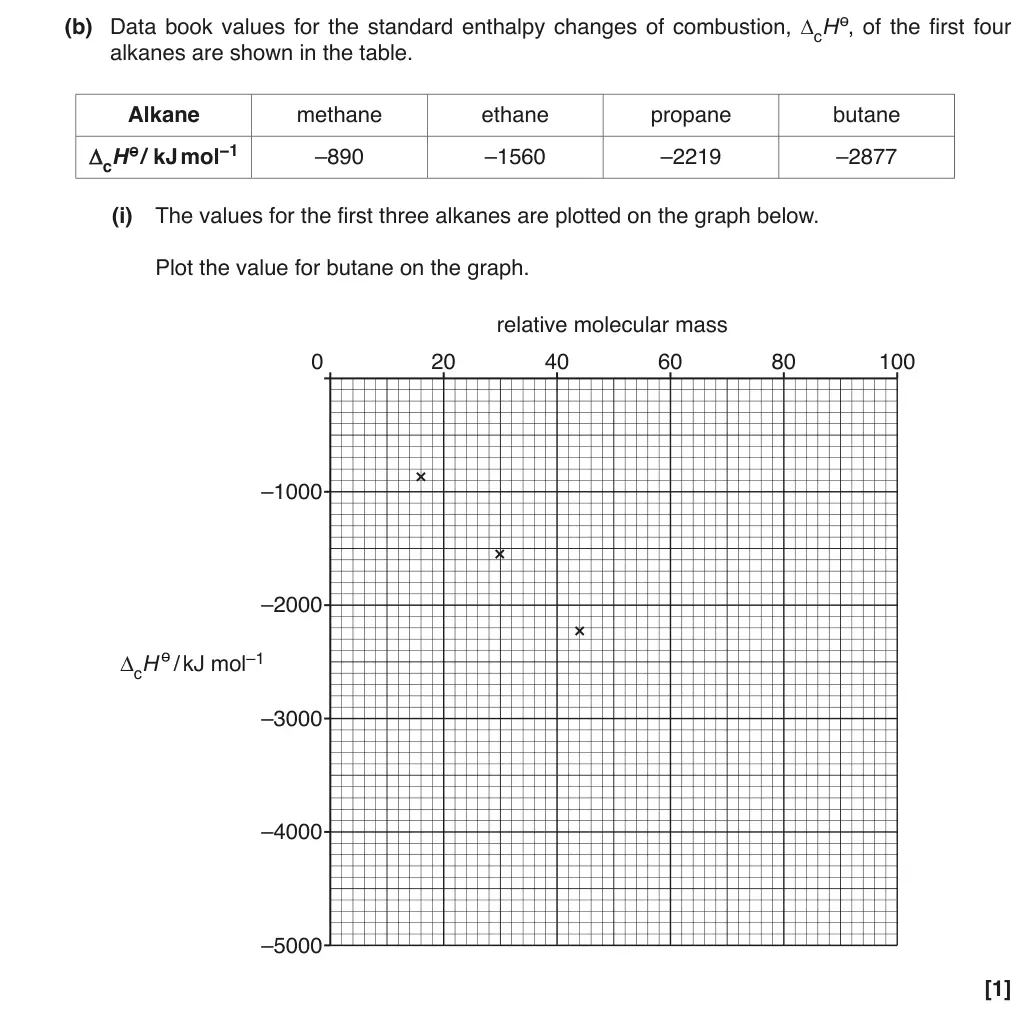
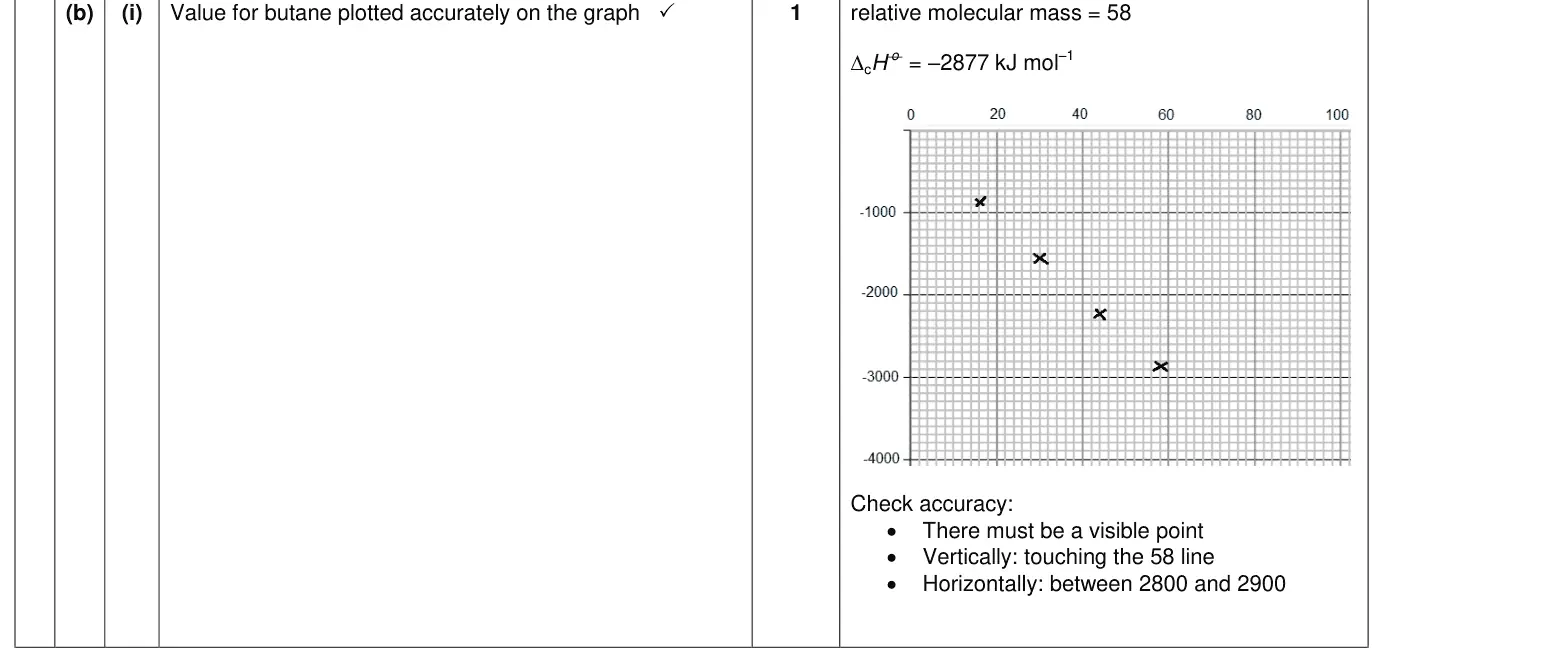
(b) Data book values for the standard enthalpy changes of combustion, ∆cH , of the first four
alkanes are shown in the table.
Alkane methane ethane propane butane
∆cH / kJ mol−1 –890 –1560 –2219 –2877
(i) The values for the first three alkanes are plotted on the graph below.
Plot the value for butane on the graph.
relative molecular mass
0 20 40 60 80 100
–1000
–2000
ΔcH / kJ mol–1
–3000
–4000
–5000
[1]
June 2017 · AS Paper 2 · Q3(b)(ii) 3 marks Calculation practical skillsamount of substanceenthalpy changes
Earlier part of question 3 that this part usesEarlier part of June 2017 Paper 2 question 3
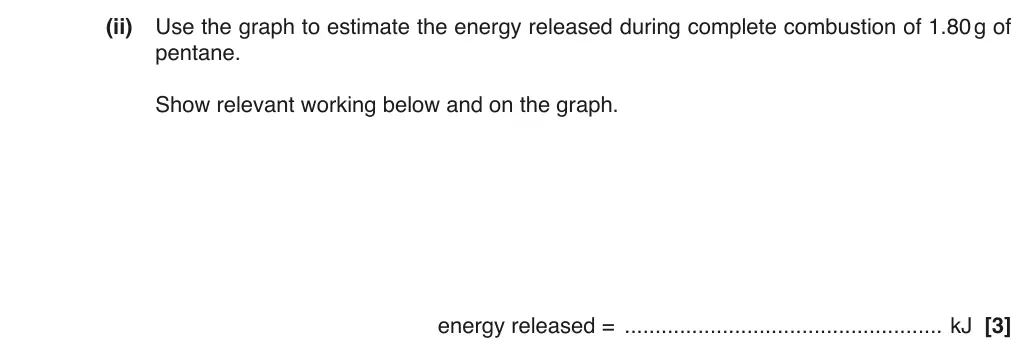
(ii) Use the graph to estimate the energy released during complete combustion of 1.80 g of
pentane.
Show relevant working below and on the graph.
energy released =  .................................................... kJ  [3]
June 2017 · AS Paper 2 · Q3(c) 3 marks Calculation enthalpy changes
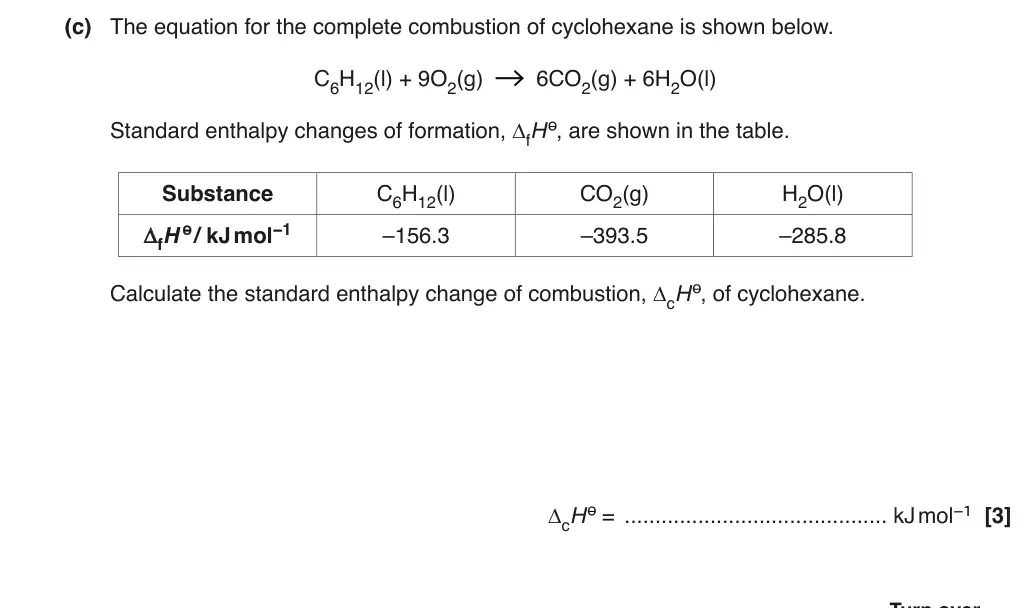
(c) The equation for the complete combustion of cyclohexane is shown below.
C6H12(l) + 9O2(g) 6CO2(g) + 6H2O(l)
Standard enthalpy changes of formation, ∆fH , are shown in the table.
Substance C6H12(l) CO2(g) H2O(l)
∆fH  / kJ mol−1 –156.3 –393.5 –285.8
Calculate the standard enthalpy change of combustion, ∆cH , of cyclohexane.
∆cH  =  ........................................... kJ mol−1  [3]
June 2017 · AS Paper 2 · Q4(a) 2 marks Drawing / labelling alcoholsbonding and structure
4 The hydroxyl group, –OH, is responsible for many properties of alcohols.
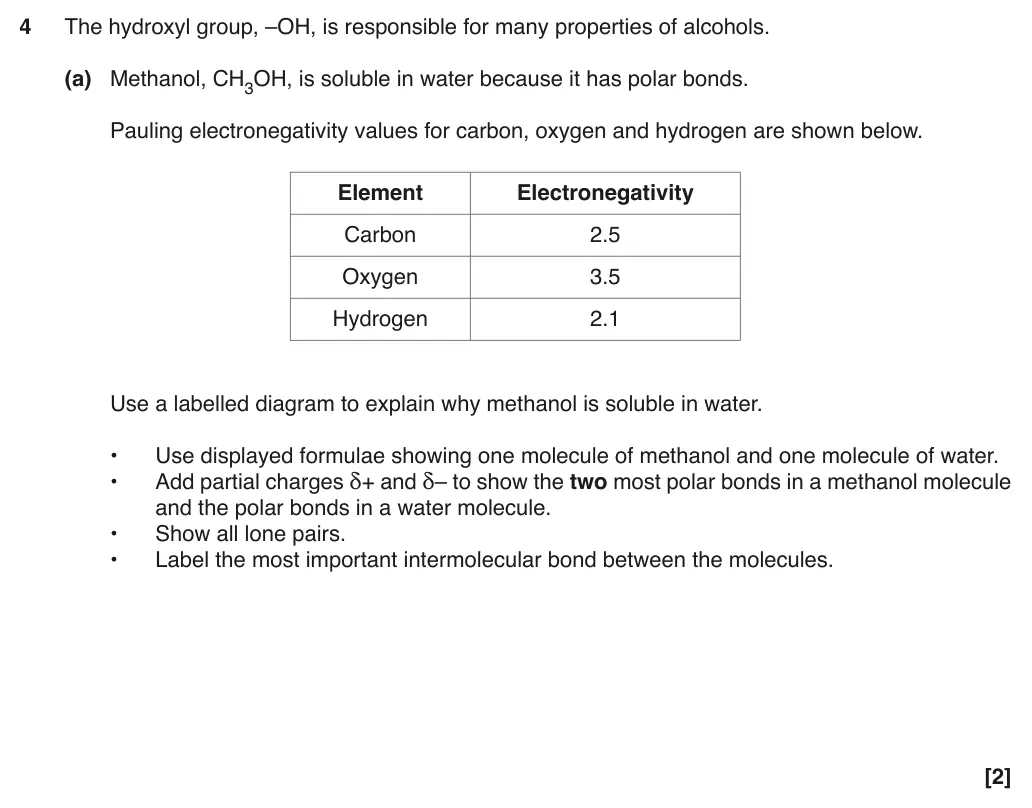
(a) Methanol, CH3OH, is soluble in water because it has polar bonds.
Pauling electronegativity values for carbon, oxygen and hydrogen are shown below.
Element Electronegativity
Carbon 2.5
Oxygen 3.5
Hydrogen 2.1
Use a labelled diagram to explain why methanol is soluble in water.
• Use displayed formulae showing one molecule of methanol and one molecule of water.
• Add partial charges d+ and d– to show the two most polar bonds in a methanol molecule
and the polar bonds in a water molecule.
• Show all lone pairs.
• Label the most important intermolecular bond between the molecules.
[2]
June 2017 · AS Paper 2 · Q4(b)(i) 1 mark Short answer organic basics
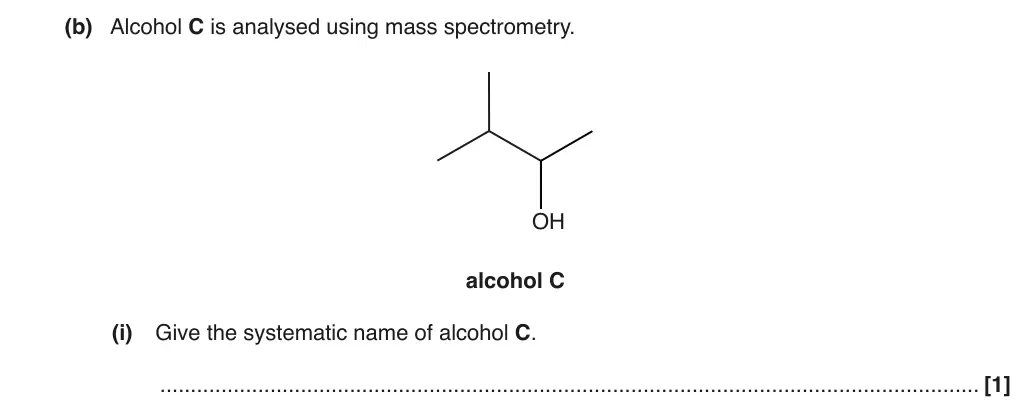
(b) Alcohol C is analysed using mass spectrometry.
OH
alcohol C
(i) Give the systematic name of alcohol C.
...................................................................................................................................... [1]
June 2017 · AS Paper 2 · Q4(b)(ii) 2 marks Short answer infrared and mass spectrometry
Earlier part of question 4 that this part usesEarlier part of June 2017 Paper 2 question 4
(ii) The mass spectrum of alcohol C is shown below.
Item removed due to third party copyright restrictions.
Write structural formulae for the ions responsible for peak X and peak Y.
X =
Y =
[2]
June 2017 · AS Paper 2 · Q4(c) 6 marks 6-mark level of response alcoholsorganic synthesis as
(c)* Describe the oxidation reactions of butan-1-ol forming an aldehyde and a carboxylic acid.
Explain, using a diagram, how the aldehyde can be produced in the laboratory by controlling
the reaction conditions.
...................................................................................................................................................
...................................................................................................................................................
...................................................................................................................................................
...................................................................................................................................................
...................................................................................................................................................
...................................................................................................................................................
...................................................................................................................................................
...................................................................................................................................................
...................................................................................................................................................
...................................................................................................................................................
...................................................................................................................................................
...................................................................................................................................................
...................................................................................................................................................
.............................................................................................................................................. [6]
June 2017 · AS Paper 2 · Q5(a) 1 mark Short answer organic basics
5 Propanoic acid, CH3CH2COOH, is a member of the homologous series of carboxylic acids.
(a) Suggest the general formula for a carboxylic acid.
.............................................................................................................................................. [1]
June 2017 · AS Paper 2 · Q5(b)(i) 2 marks Short answer alkanesbonding and structure
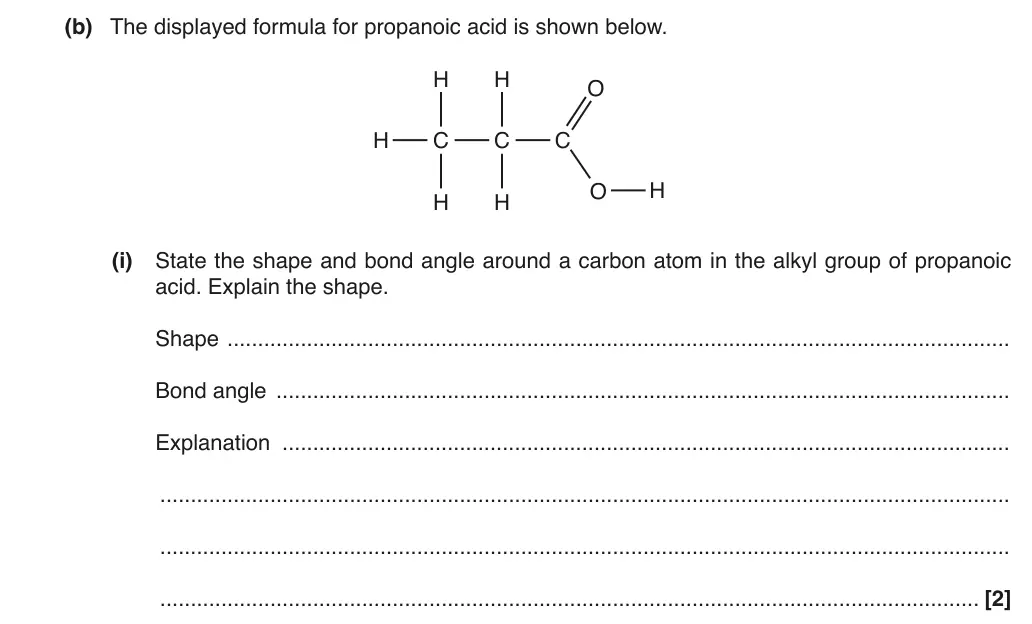
(b) The displayed formula for propanoic acid is shown below.
H H
O
H C C C
O H
H H
(i) State the shape and bond angle around a carbon atom in the alkyl group of propanoic
acid. Explain the shape.
Shape  ................................................................................................................................
Bond angle  ........................................................................................................................
Explanation  .......................................................................................................................
...........................................................................................................................................
...........................................................................................................................................
...................................................................................................................................... [2]
June 2017 · AS Paper 2 · Q5(b)(ii) 1 mark Short answer bonding and structure
Earlier part of question 5 that this part usesEarlier part of June 2017 Paper 2 question 5
(ii) Suggest a value for the C–O–H bond angle in propanoic acid.
...................................................................................................................................... [1]
June 2017 · AS Paper 2 · Q5(c) 4 marks Structure / isomer infrared and mass spectrometryorganic basics
(c) Compound D is a neutral compound which is a structural isomer of propanoic acid,
CH3CH2COOH.
The infrared spectrum of compound D is shown below.
Item removed due to third party copyright restrictions.
Suggest two possible structures of compound D.
Explain all your reasoning.
...................................................................................................................................................
...................................................................................................................................................
...................................................................................................................................................
...................................................................................................................................................
...................................................................................................................................................
...................................................................................................................................................
...................................................................................................................................................
...................................................................................................................................................
...................................................................................................................................................
...................................................................................................................................................
...................................................................................................................................................
...................................................................................................................................................
.............................................................................................................................................. [4]
June 2017 · AS Paper 2 · Q5(d)(i) 1 mark Short answer alkanes
(d) 2-Chloropropanoic acid, CH3CHClCOOH, can be made by reacting propanoic acid with
chlorine in a radical substitution reaction.
(i) State the conditions for the reaction.
...................................................................................................................................... [1]
June 2017 · AS Paper 2 · Q5(d)(ii) 1 mark Equation writing alkanes
Earlier part of question 5 that this part usesEarlier part of June 2017 Paper 2 question 5
(ii) Write the overall equation for the reaction.
...................................................................................................................................... [1]
June 2017 · AS Paper 2 · Q5(d)(iii) 1 mark Short answer organic basics
Earlier part of question 5 that this part usesEarlier part of June 2017 Paper 2 question 5
(iii) The first step in the reaction mechanism involves homolytic fission of a chlorine molecule
to form two chlorine radicals.
Why is this step an example of homolytic fission?
...........................................................................................................................................
...........................................................................................................................................
...................................................................................................................................... [1]
June 2017 · AS Paper 2 · Q5(d)(iv) 2 marks Equation writing alkanesorganic basics
Earlier part of question 5 that this part usesEarlier part of June 2017 Paper 2 question 5
(iv) Write two equations to show the propagation steps in the mechanism for this reaction.
Use dots,•, to show the unpaired electrons on radicals.
...........................................................................................................................................
...................................................................................................................................... [2]
June 2017 · AS Paper 2 · Q5(d)(v) 1 mark Structure / isomer organic basics
Earlier parts of question 5 that this part usesEarlier part of June 2017 Paper 2 question 5Earlier part of June 2017 Paper 2 question 5
(v) Draw the displayed formula of the radical formed in the first propagation step.
Use a dot,•, to show the position of the unpaired electron.
[1]
June 2017 · AS Paper 2 · Q5(d)(vi) 1 mark Structure / isomer alkanes
Earlier part of question 5 that this part usesEarlier part of June 2017 Paper 2 question 5
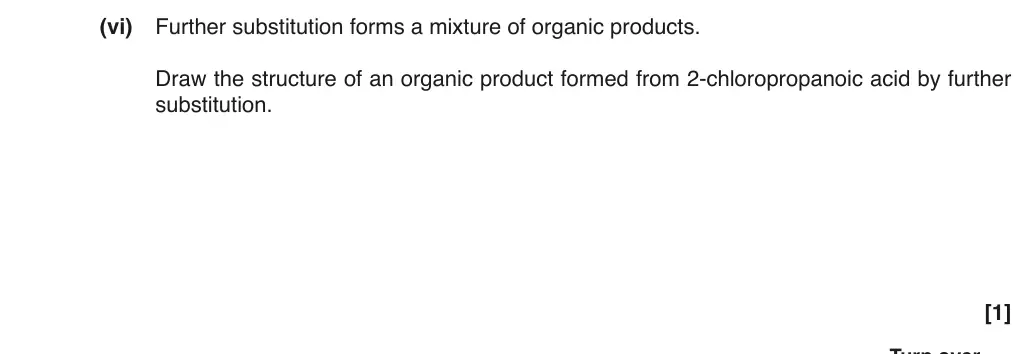
(vi) Further substitution forms a mixture of organic products.
Draw the structure of an organic product formed from 2-chloropropanoic acid by further
substitution.
[1]
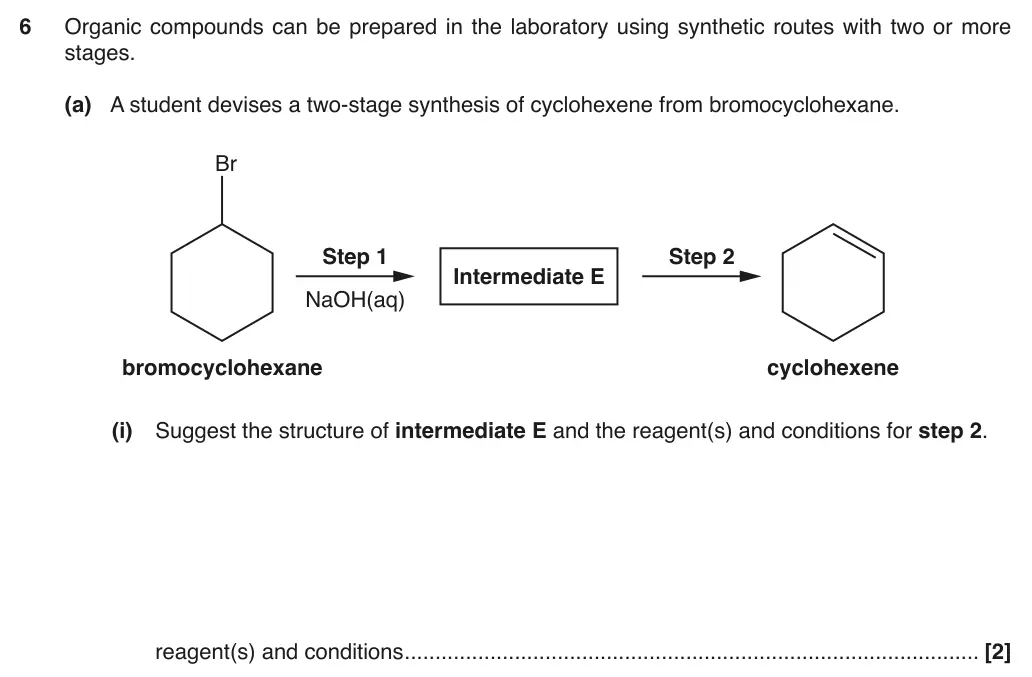
June 2017 · AS Paper 2 · Q6(a)(i) 2 marks Structure / isomer organic synthesis asalcoholshaloalkanes
6 Organic compounds can be prepared in the laboratory using synthetic routes with two or more
stages.
(a) A student devises a two-stage synthesis of cyclohexene from bromocyclohexane.
Br
Step 1 Step 2
Intermediate E
NaOH(aq)
bromocyclohexane cyclohexene
(i) Suggest the structure of intermediate E and the reagent(s) and conditions for step 2.
reagent(s) and conditions .............................................................................................. [2]
June 2017 · AS Paper 2 · Q6(a)(ii) 3 marks Calculation amount of substance
Earlier part of question 6 that this part usesEarlier part of June 2017 Paper 2 question 6
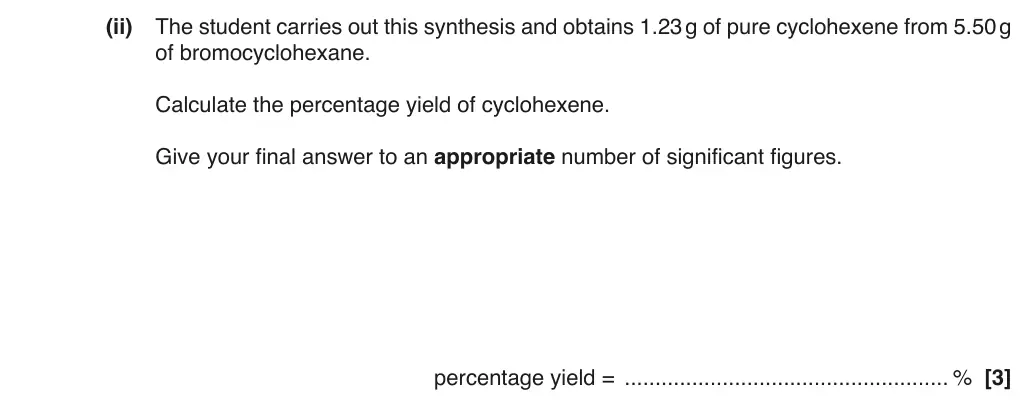
(ii) The student carries out this synthesis and obtains 1.23 g of pure cyclohexene from 5.50 g
of bromocyclohexane.
Calculate the percentage yield of cyclohexene.
Give your final answer to an appropriate number of significant figures.
percentage yield =  ..................................................... %  [3]
June 2017 · AS Paper 2 · Q6(b) 4 marks Mechanism alkenes
Earlier part of question 6 that this part usesEarlier part of June 2017 Paper 2 question 6
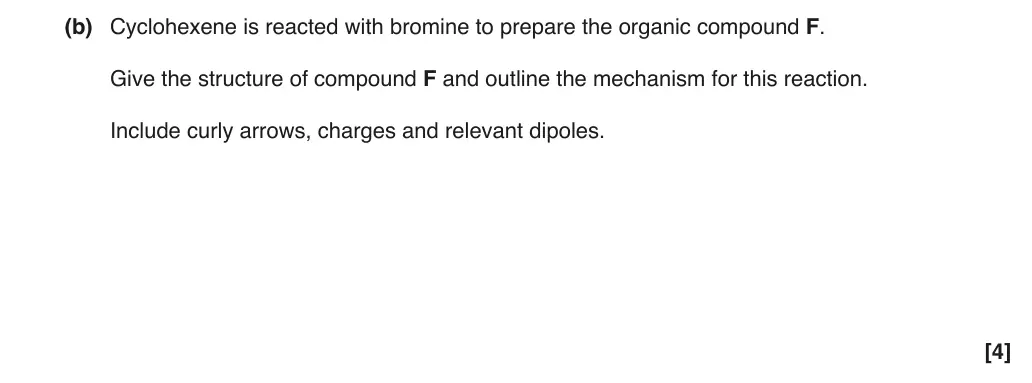
(b) Cyclohexene is reacted with bromine to prepare the organic compound F.
Give the structure of compound F and outline the mechanism for this reaction.
Include curly arrows, charges and relevant dipoles.
[4]

Work with an OCR chemistry tutor

Want a paper marked and gone through with you? Message us.
Prefer email? Send an enquiry

If you are under 18, please include a parent's contact details. Enquiries go to enquiries@chemistryaleveltutor.com and are deleted once handled. All tutoring is online.