June 2022: AS Paper 2, Core Organic and Physical Chemistry

80 marks · 44 question parts · Paper, mark scheme and report on Edexcel's site · Have the Data Booklet beside you

Question by question

QTopicMarksAOType
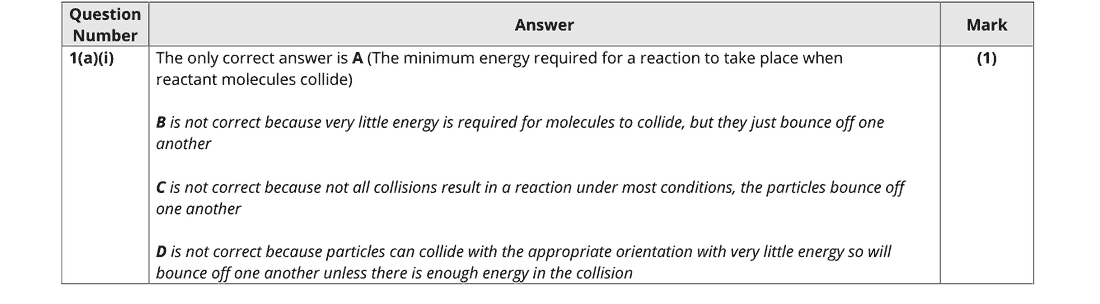
1(a)(i) Kinetics I 1Multiple choice
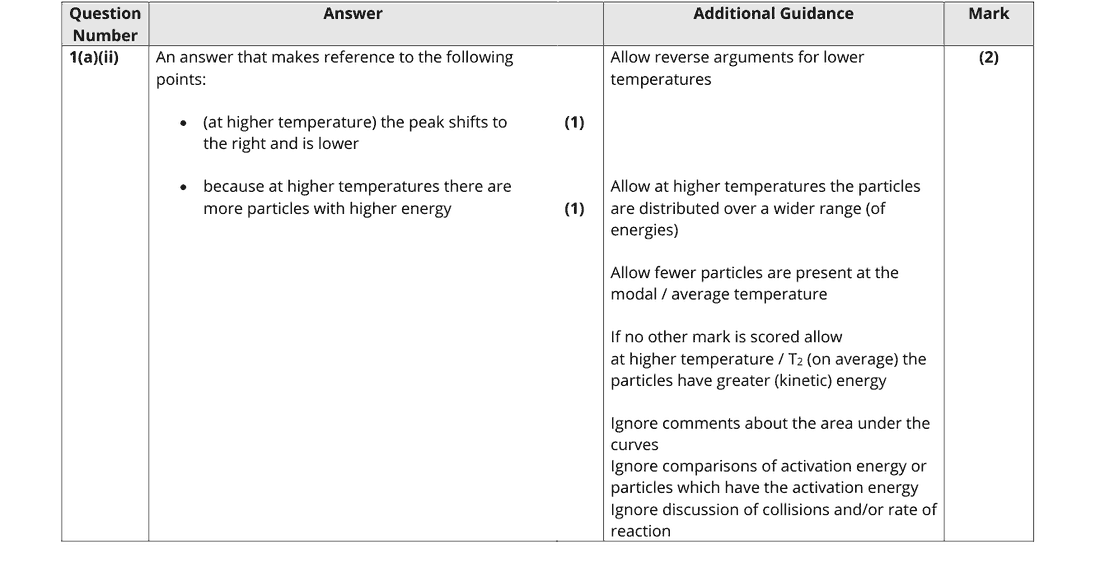
1(a)(ii) Kinetics I 2Explanation
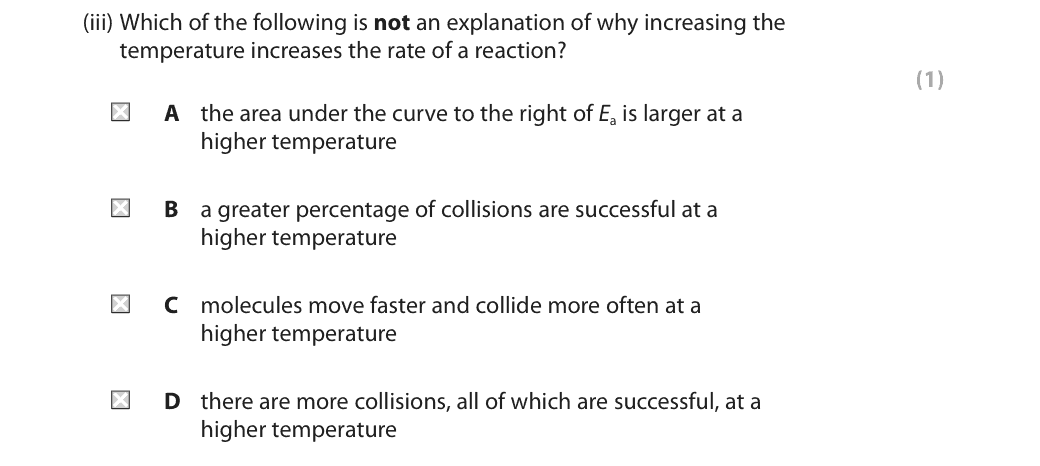
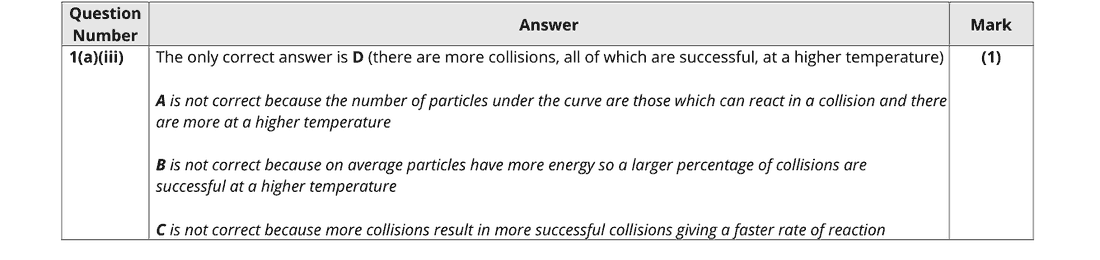
1(a)(iii) Kinetics I 1Multiple choice
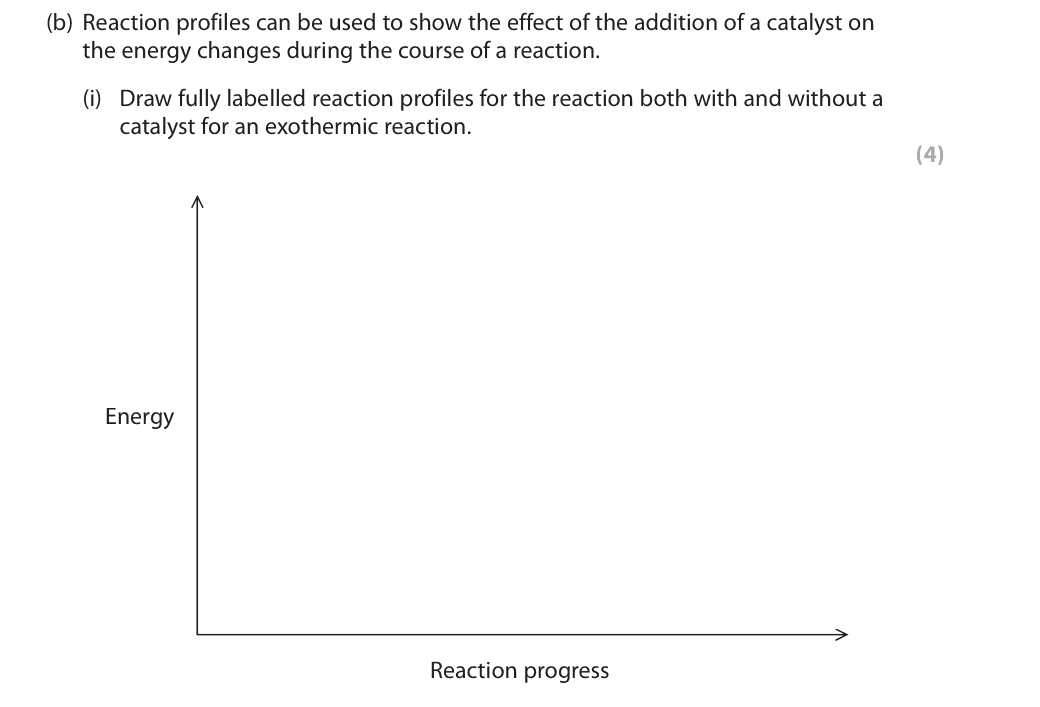
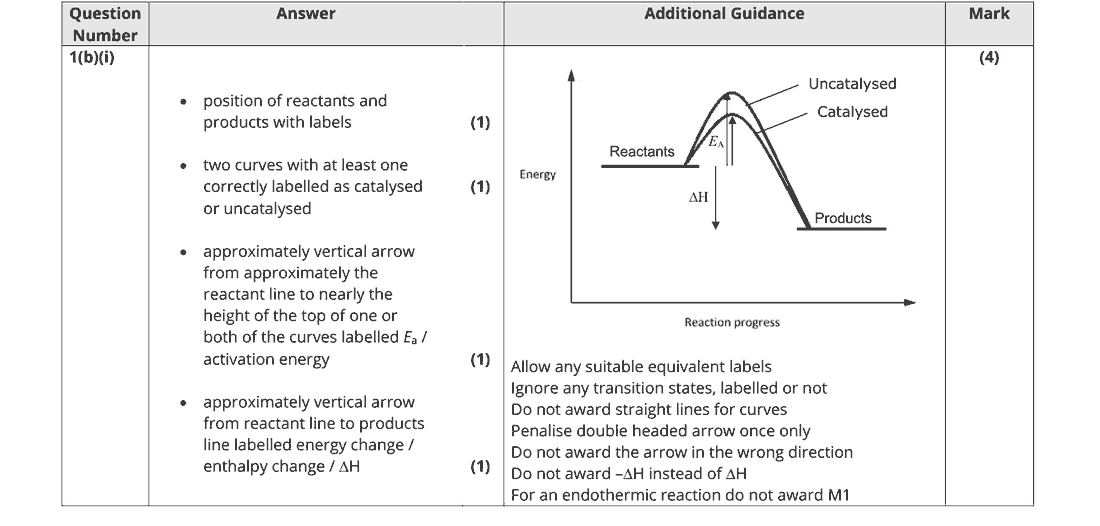
1(b)(i) Kinetics I 4Diagram or structure
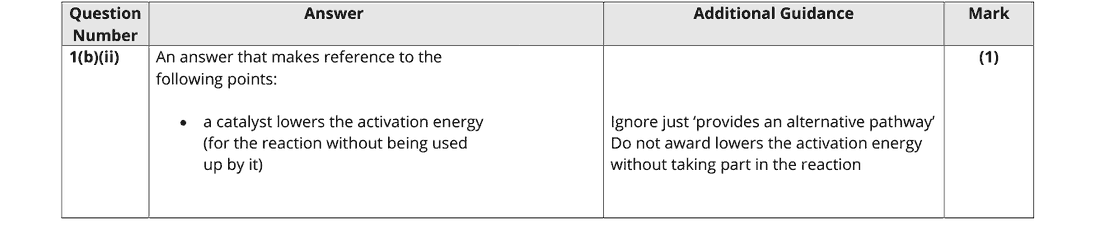
1(b)(ii) Kinetics I 1Short answer
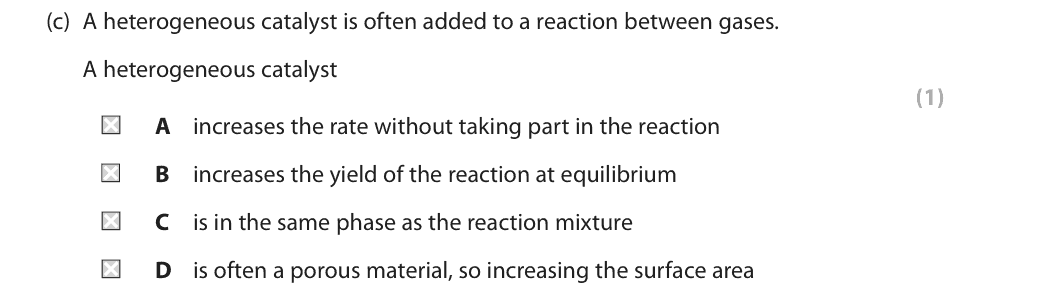
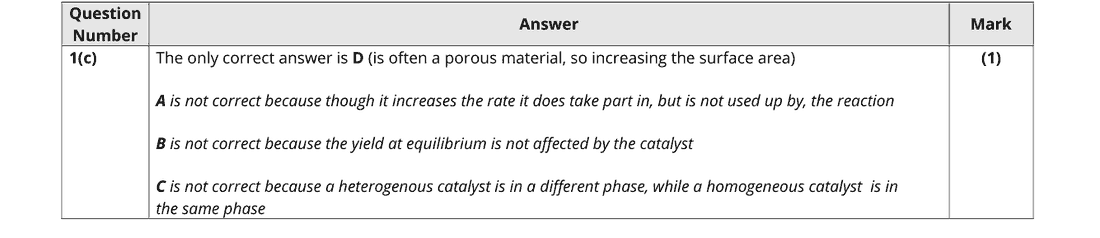
1(c) Kinetics I 1Multiple choice
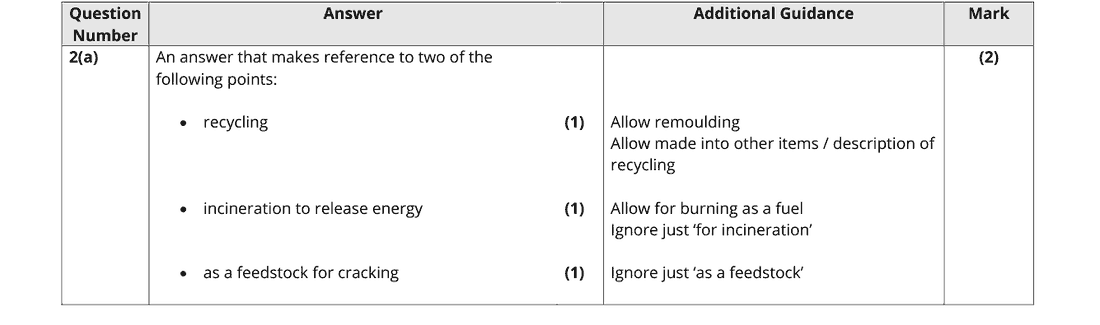
2(a) Alkenes 2Short answer
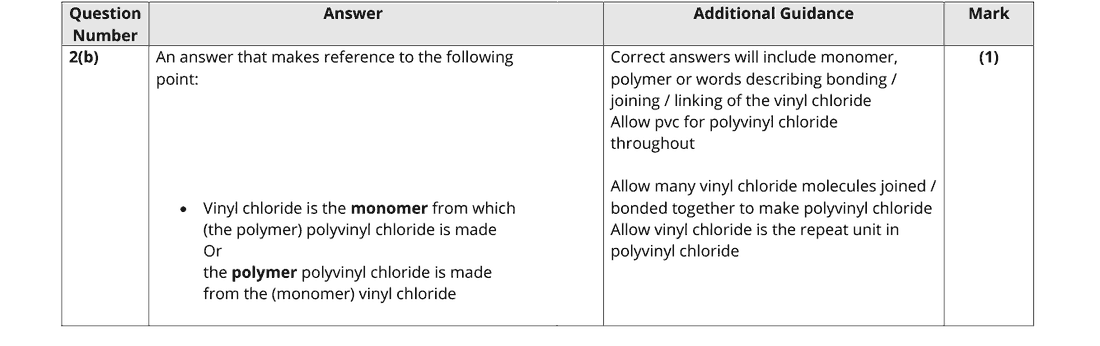
2(b) Alkenes 1Short answer
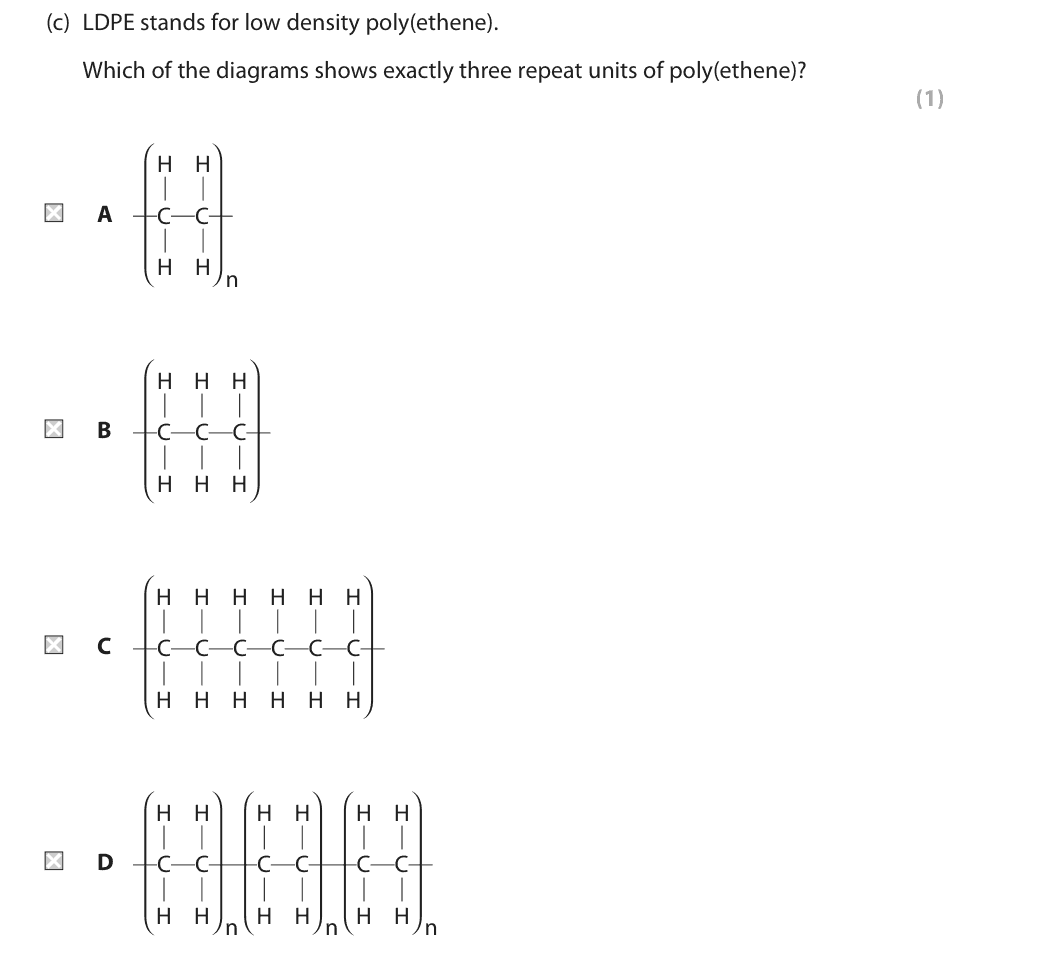
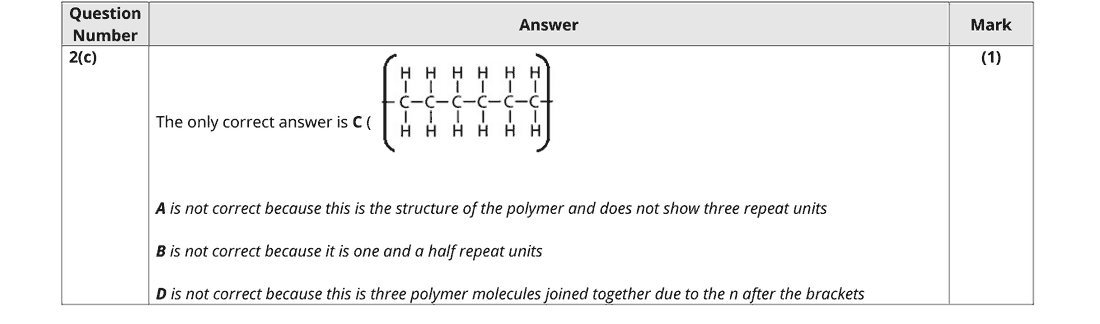
2(c) Alkenes 1Multiple choice
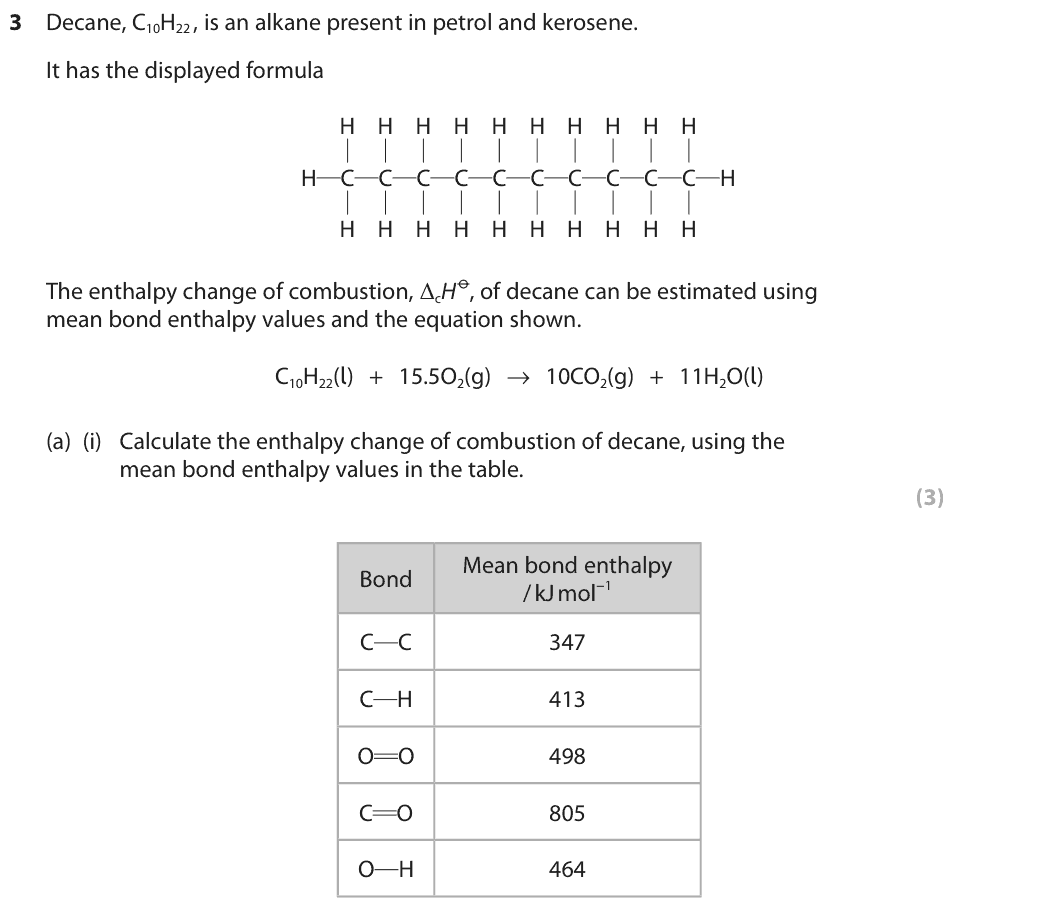
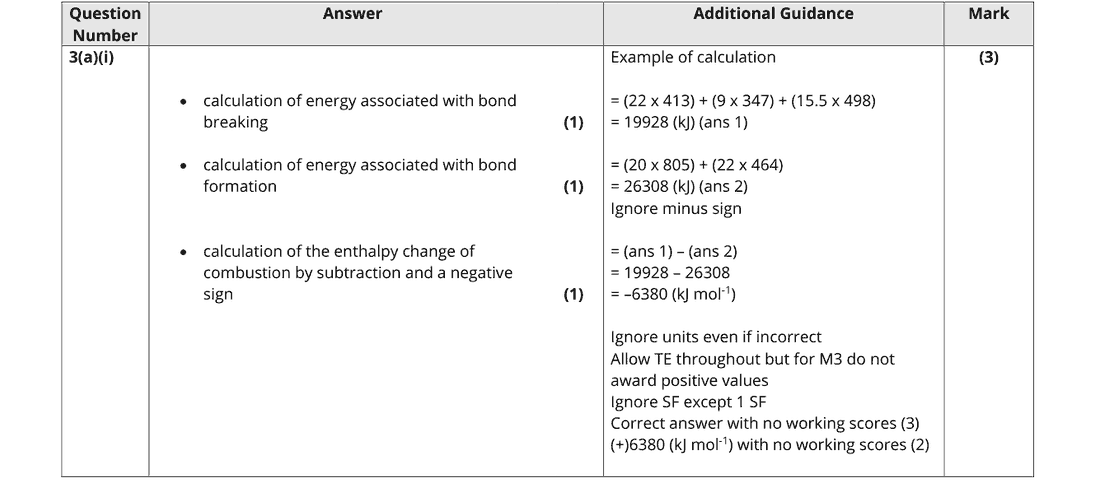
3(a)(i) Energetics I 3Calculation
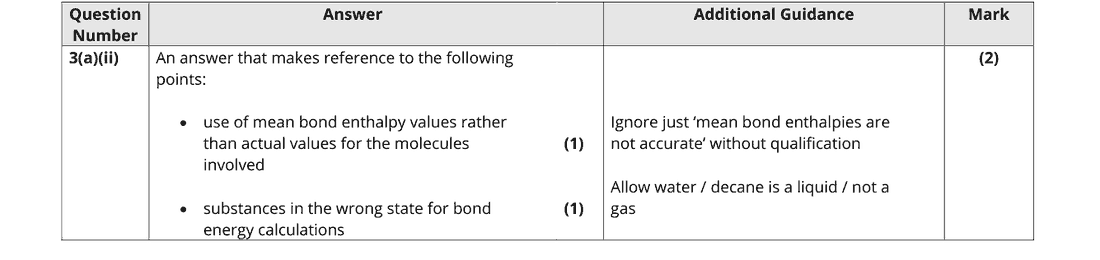
3(a)(ii) Energetics I 2Short answer
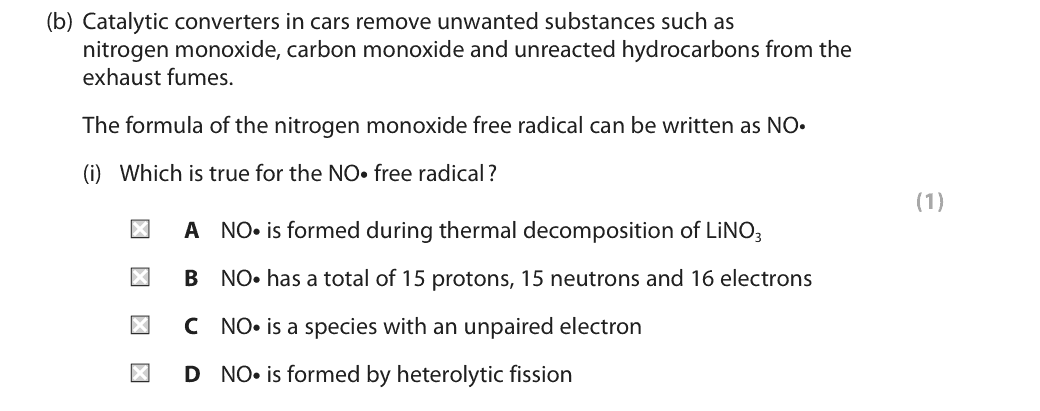
3(b)(i) Alkanes 1Multiple choice
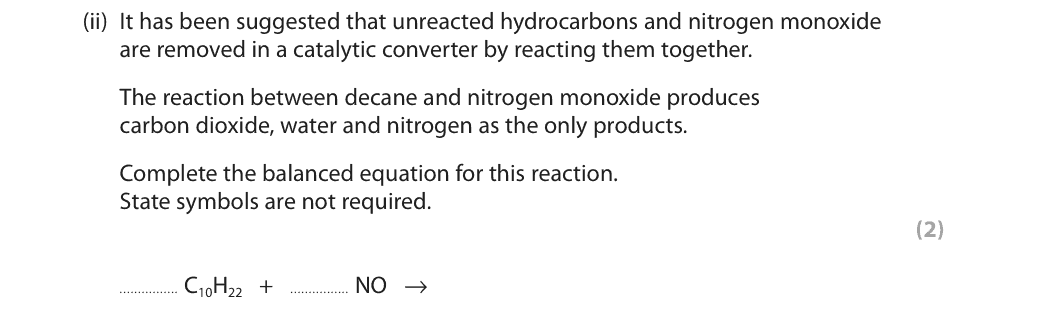
3(b)(ii) Formulae, equations and amounts of substance 2Equation writing
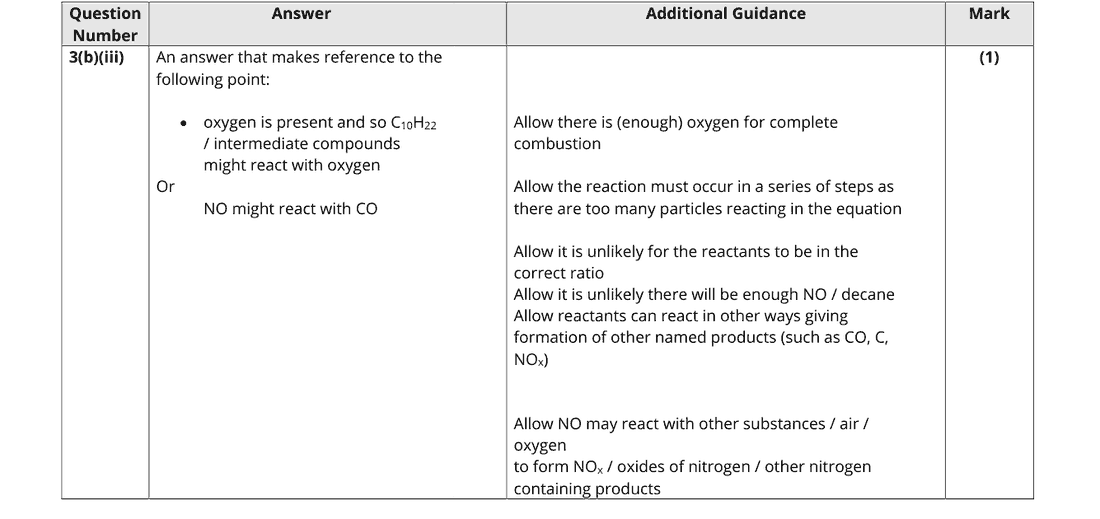
3(b)(iii) Alkanes 1Short answer
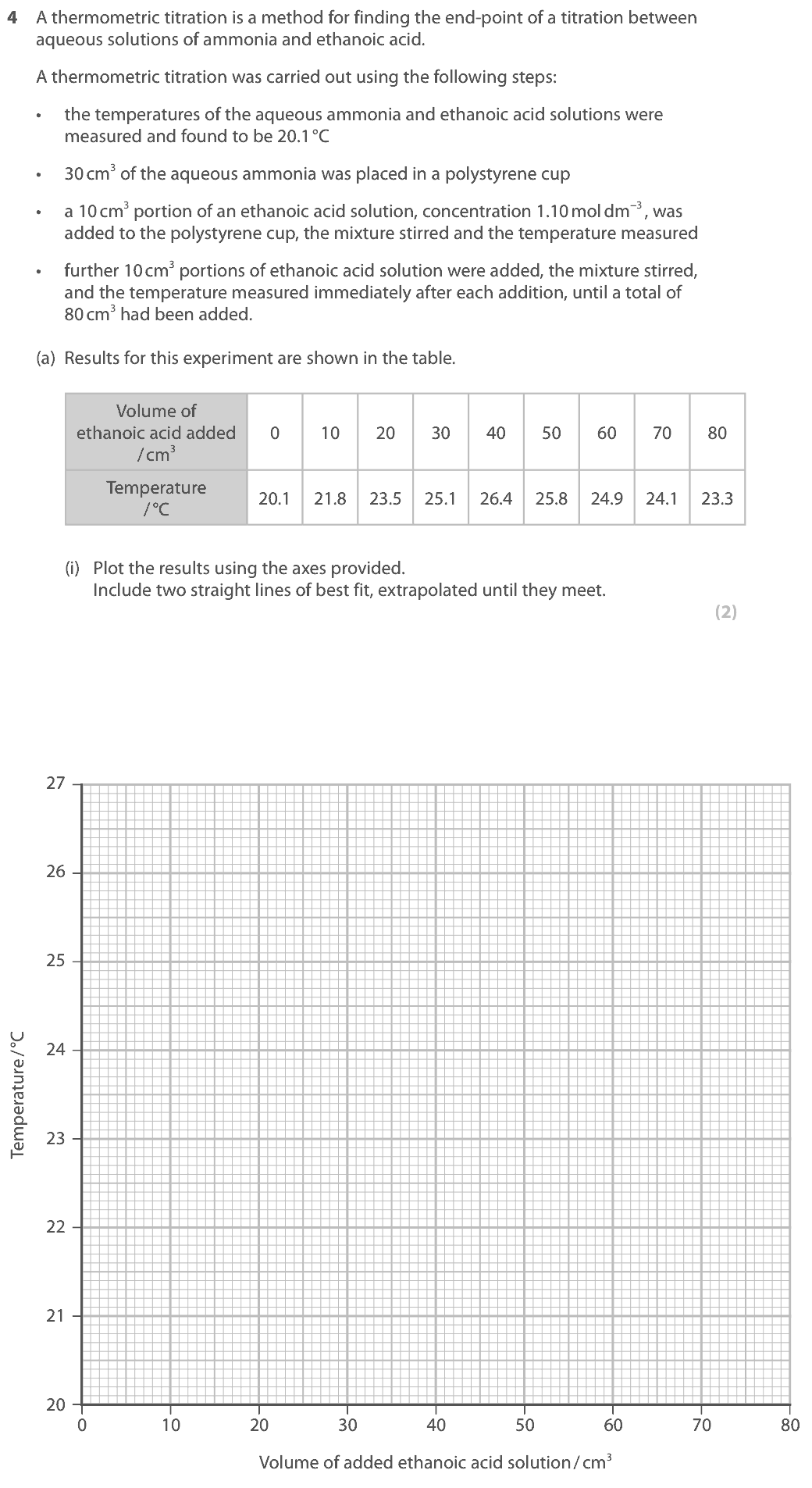
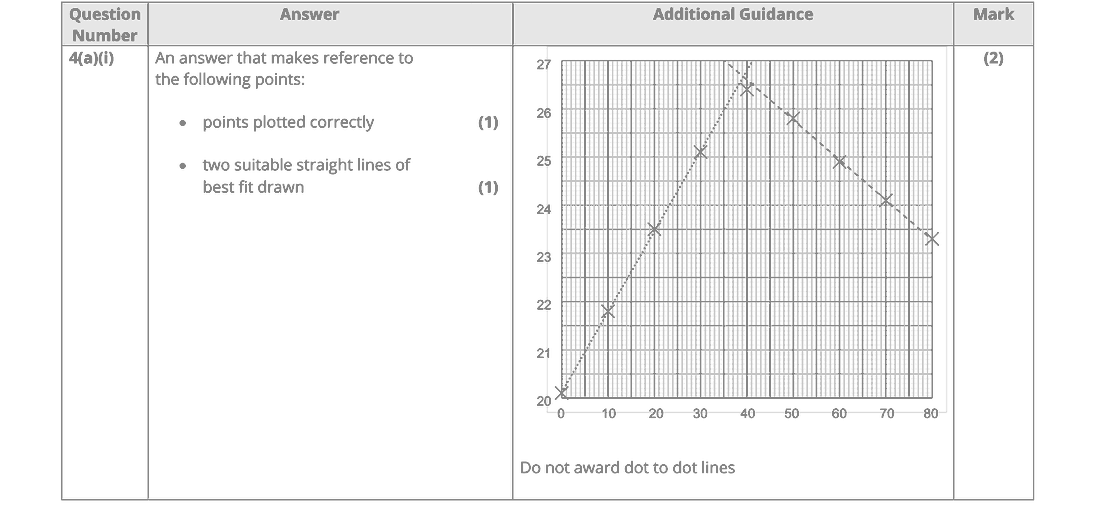
4(a)(i) Energetics I 2Diagram or structure
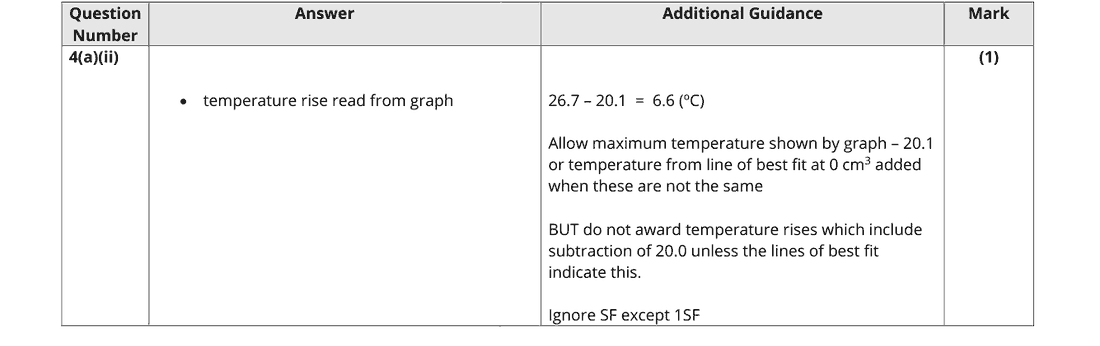
4(a)(ii) Energetics I 1Calculation
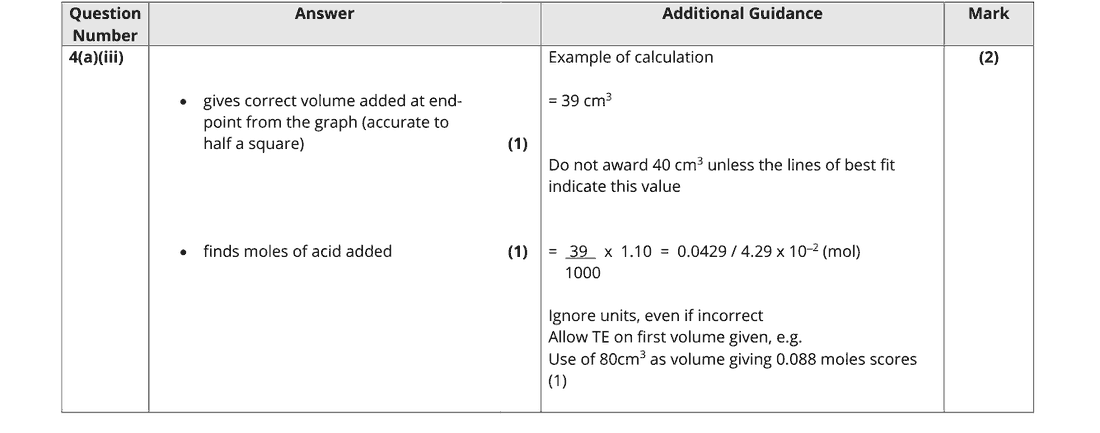
4(a)(iii) Formulae, equations and amounts of substance 2Calculation
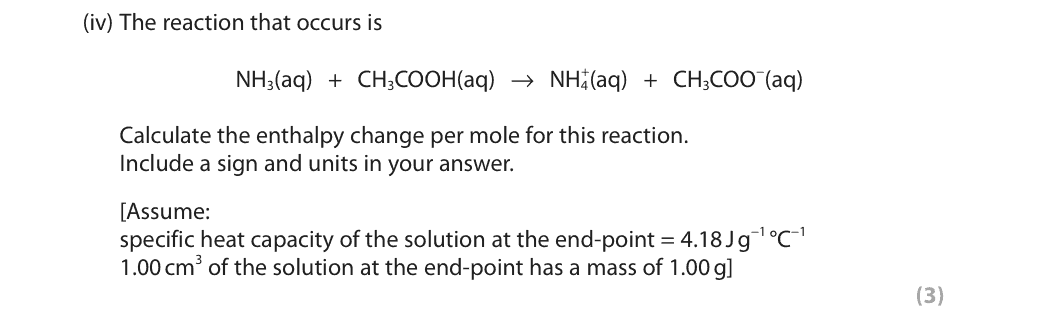
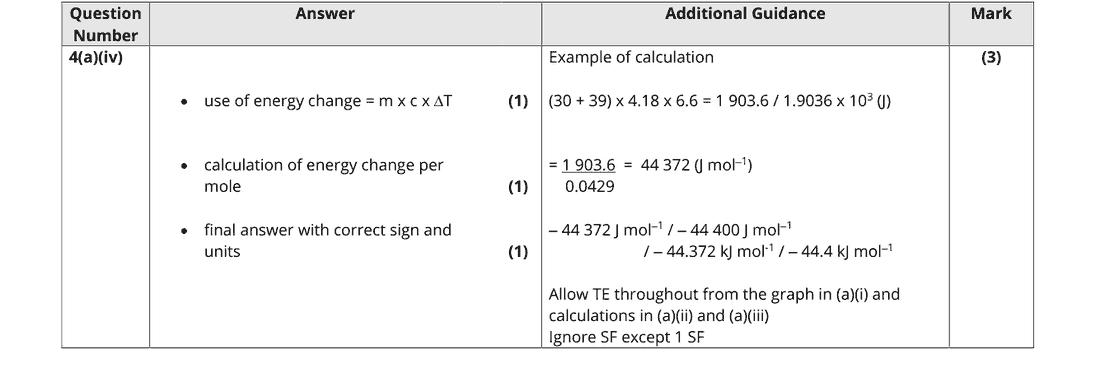
4(a)(iv) Energetics I 3Calculation
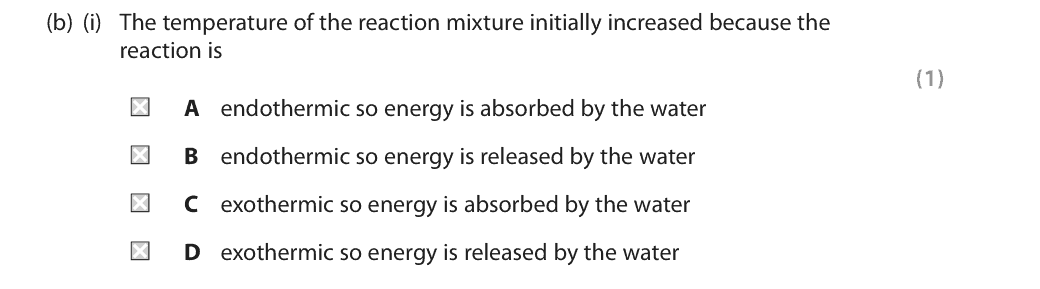
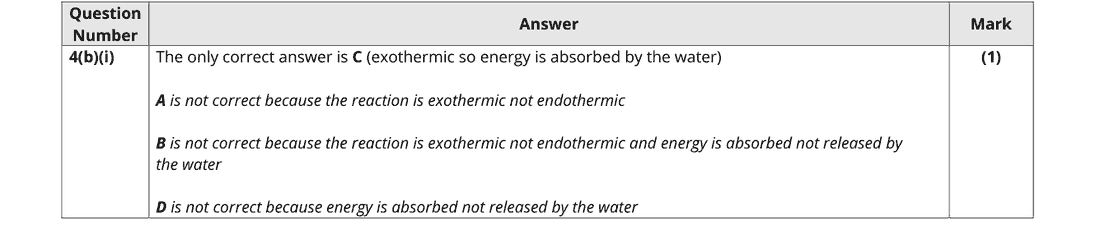
4(b)(i) Energetics I 1Multiple choice
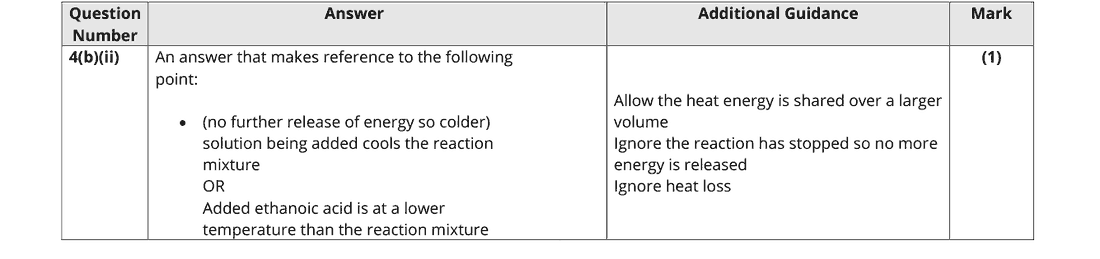
4(b)(ii) Energetics I 1Short answer
5(a)(i) Alkenes 1Short answer
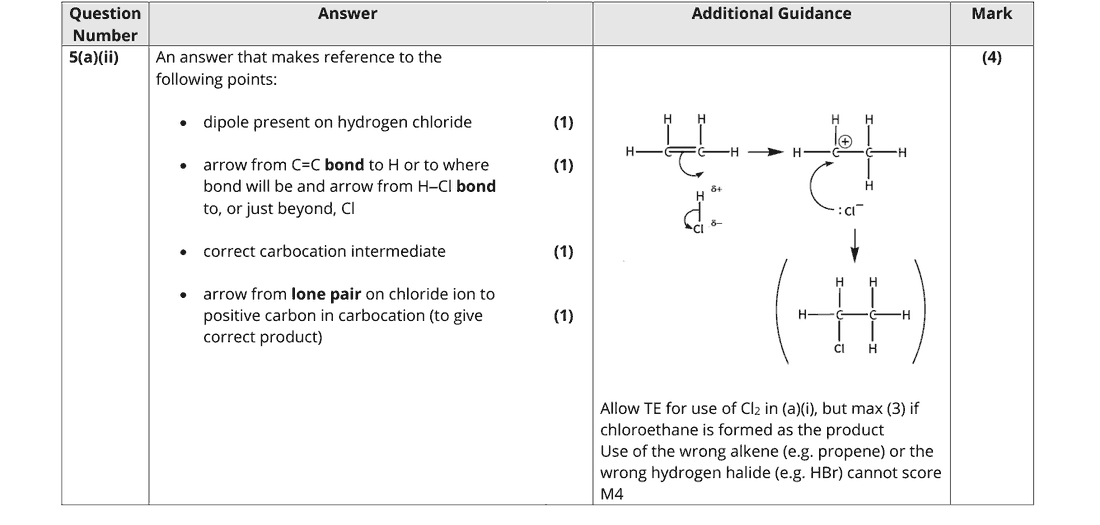
5(a)(ii) Alkenes 4Mechanism
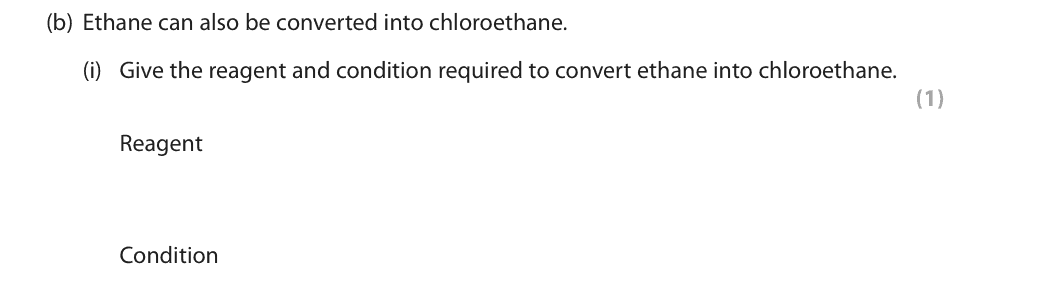
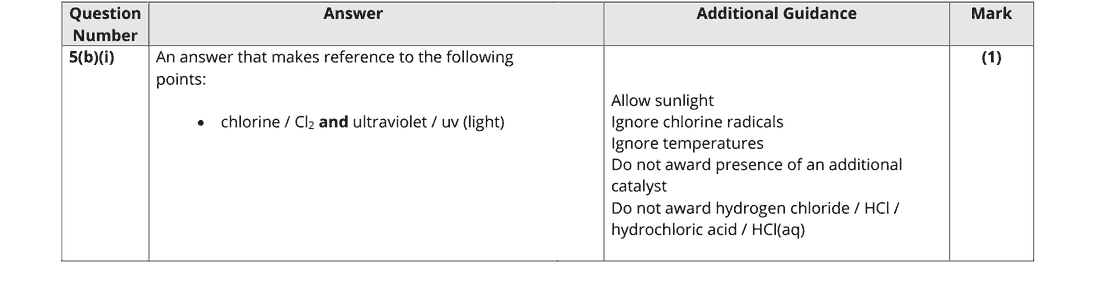
5(b)(i) Alkanes 1Short answer
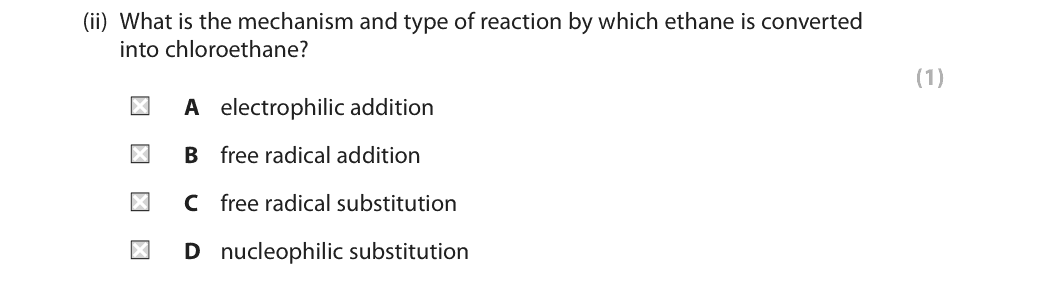
5(b)(ii) Alkanes 1Multiple choice
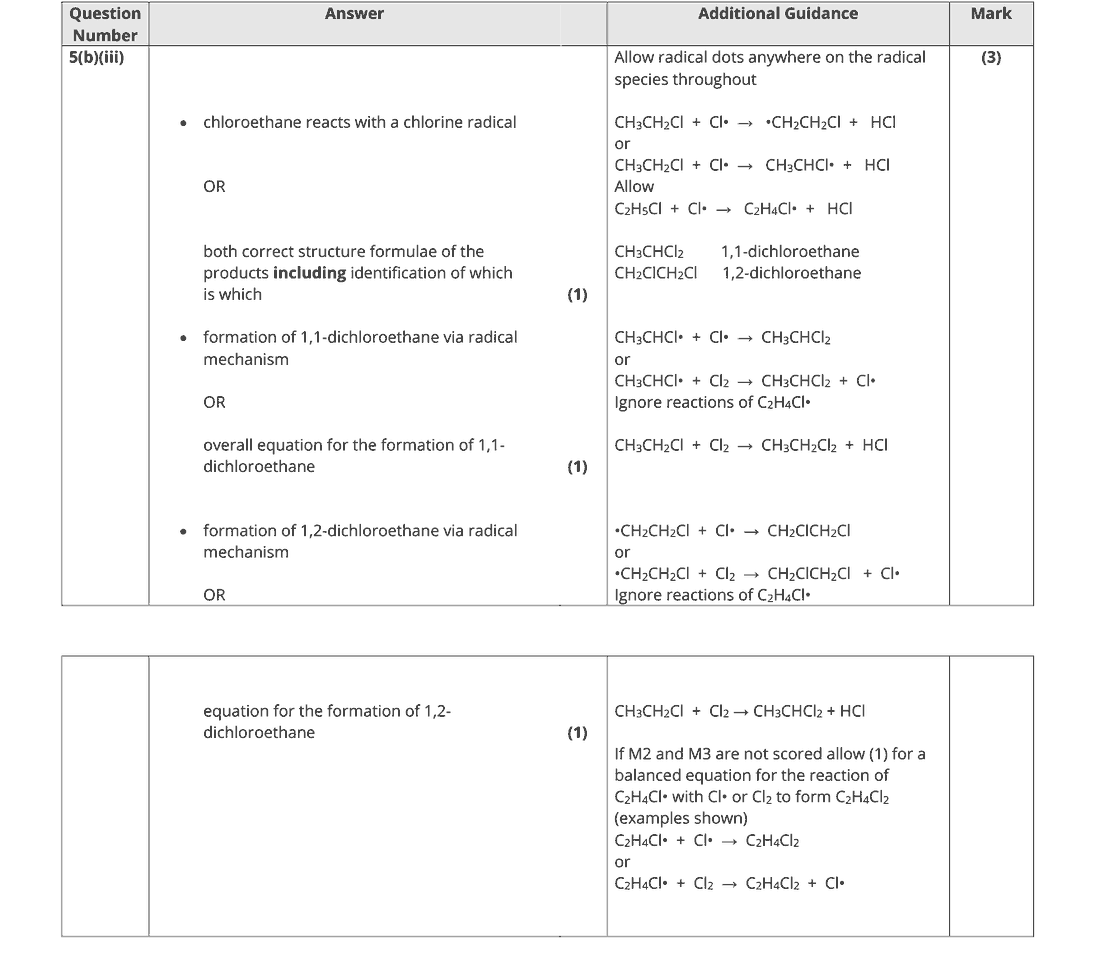
5(b)(iii) Alkanes 3Equation writing
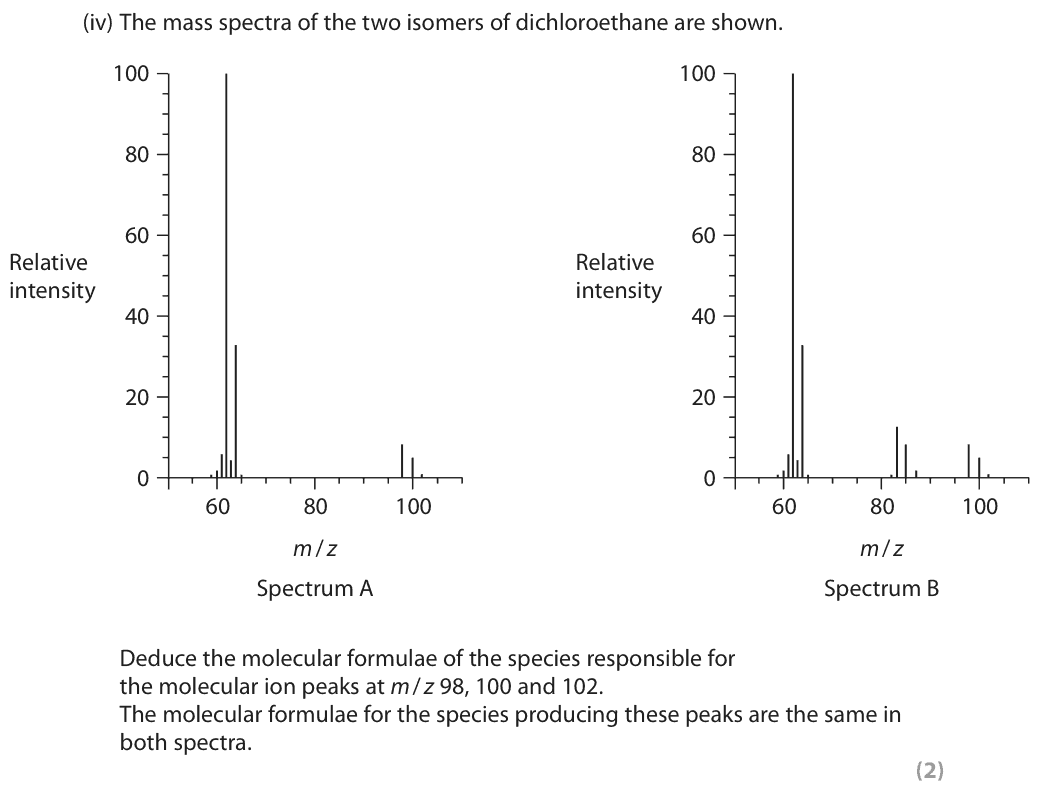
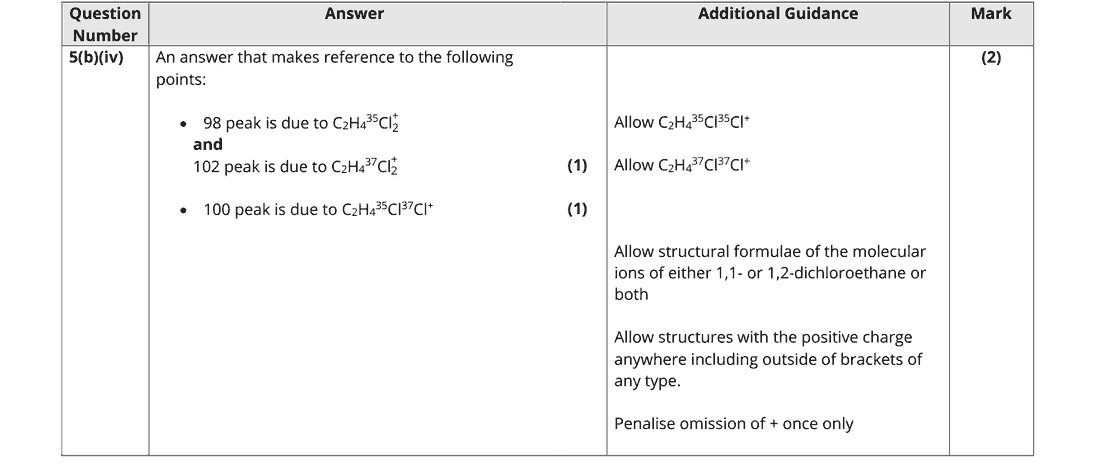
5(b)(iv) Modern analytical techniques I: mass spectrometry and infrared 2Short answer
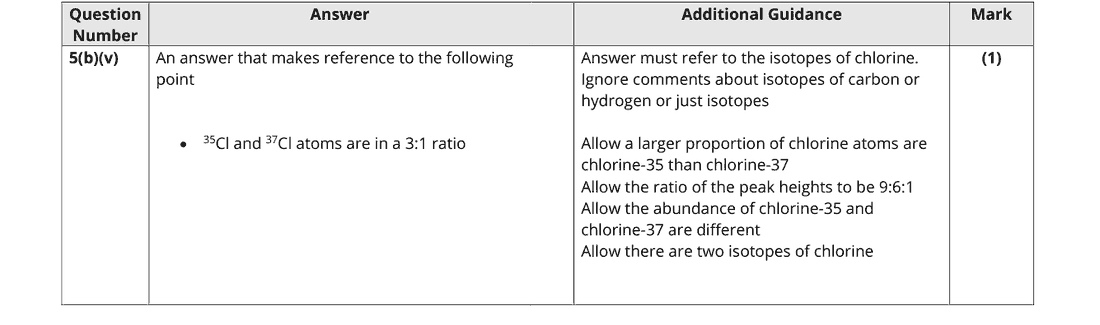
5(b)(v) Modern analytical techniques I: mass spectrometry and infrared, Atomic structure and the Periodic Table 1Short answer
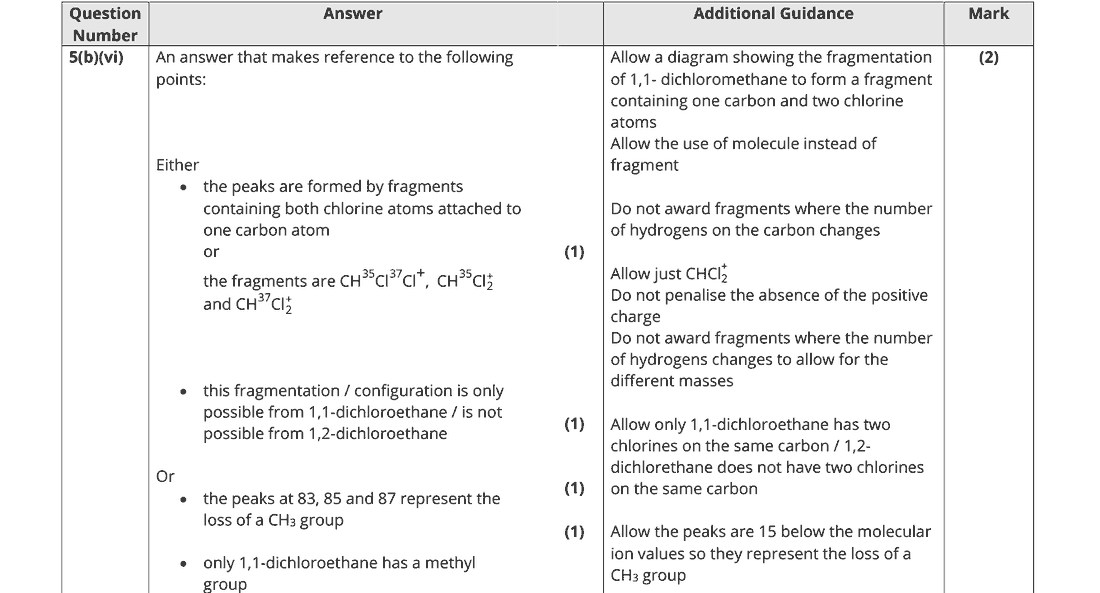
5(b)(vi) Modern analytical techniques I: mass spectrometry and infrared 2Explanation
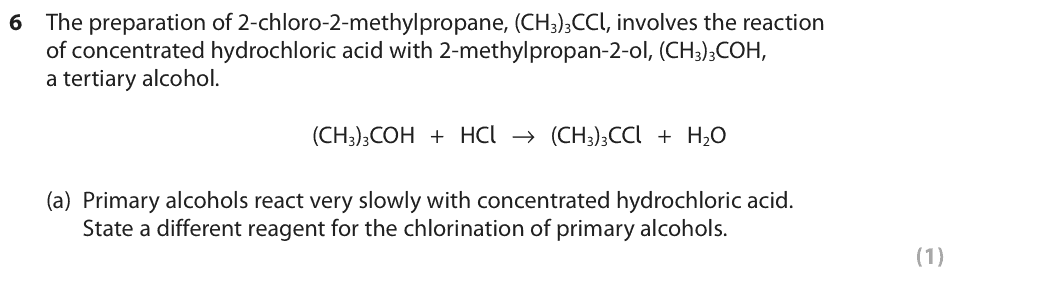
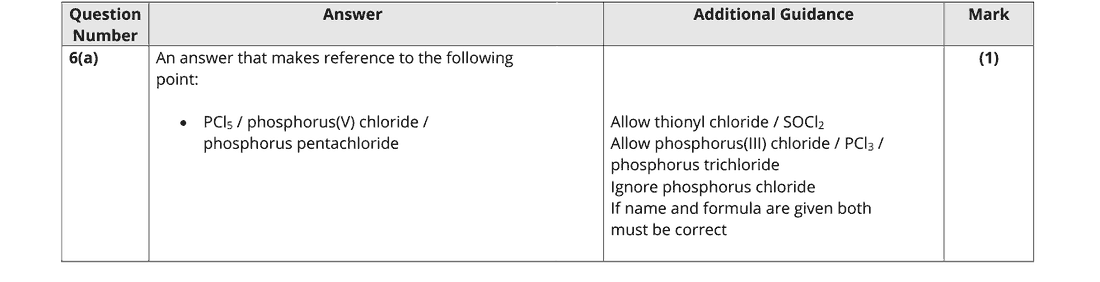
6(a) Alcohols 1Short answer
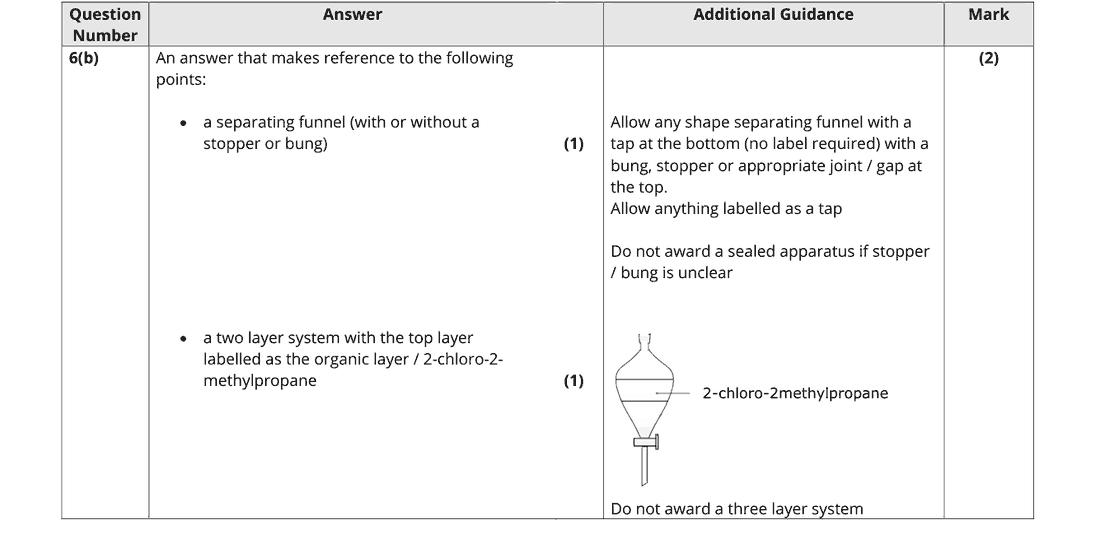
6(b) Alcohols 2Diagram or structure
6(c)(i) Formulae, equations and amounts of substance 1Short answer
6(c)(ii) Formulae, equations and amounts of substance 1Short answer
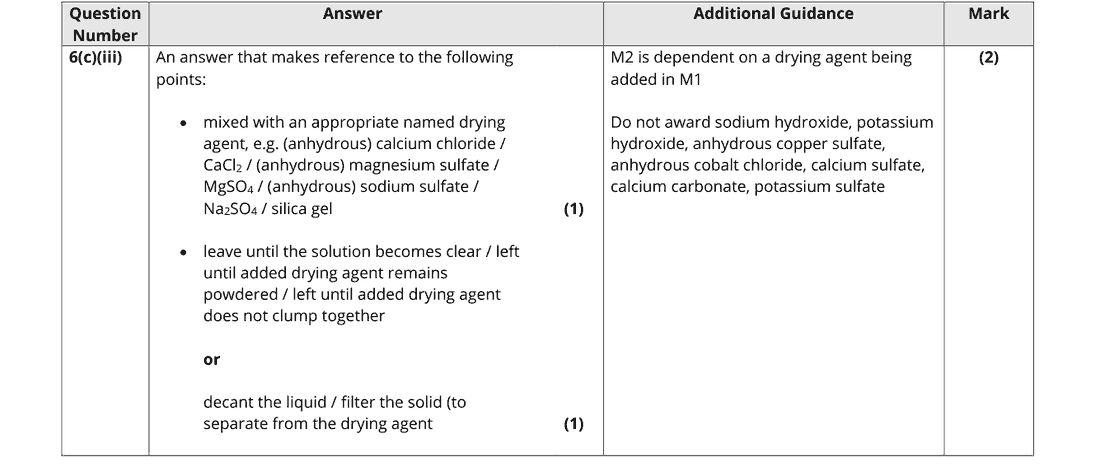
6(c)(iii) Alcohols 2Practical and data analysis
6(d)(i) Alcohols 1Practical and data analysis
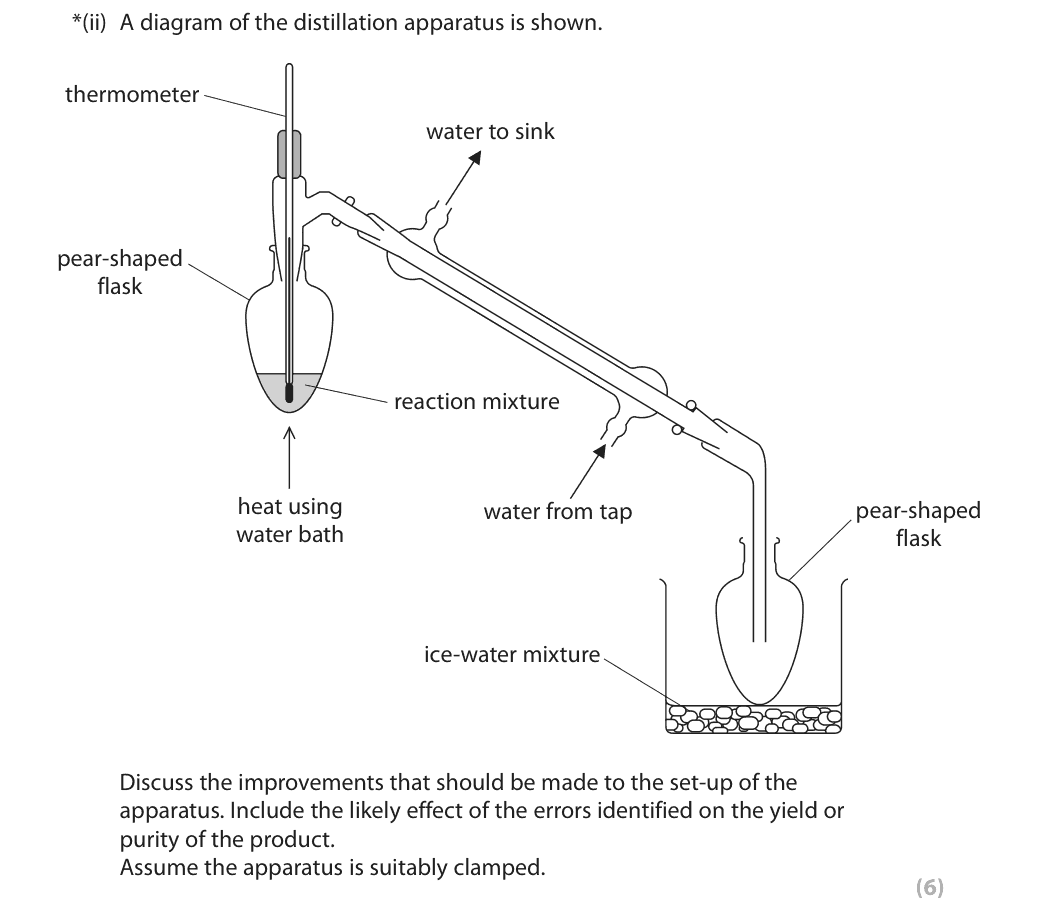
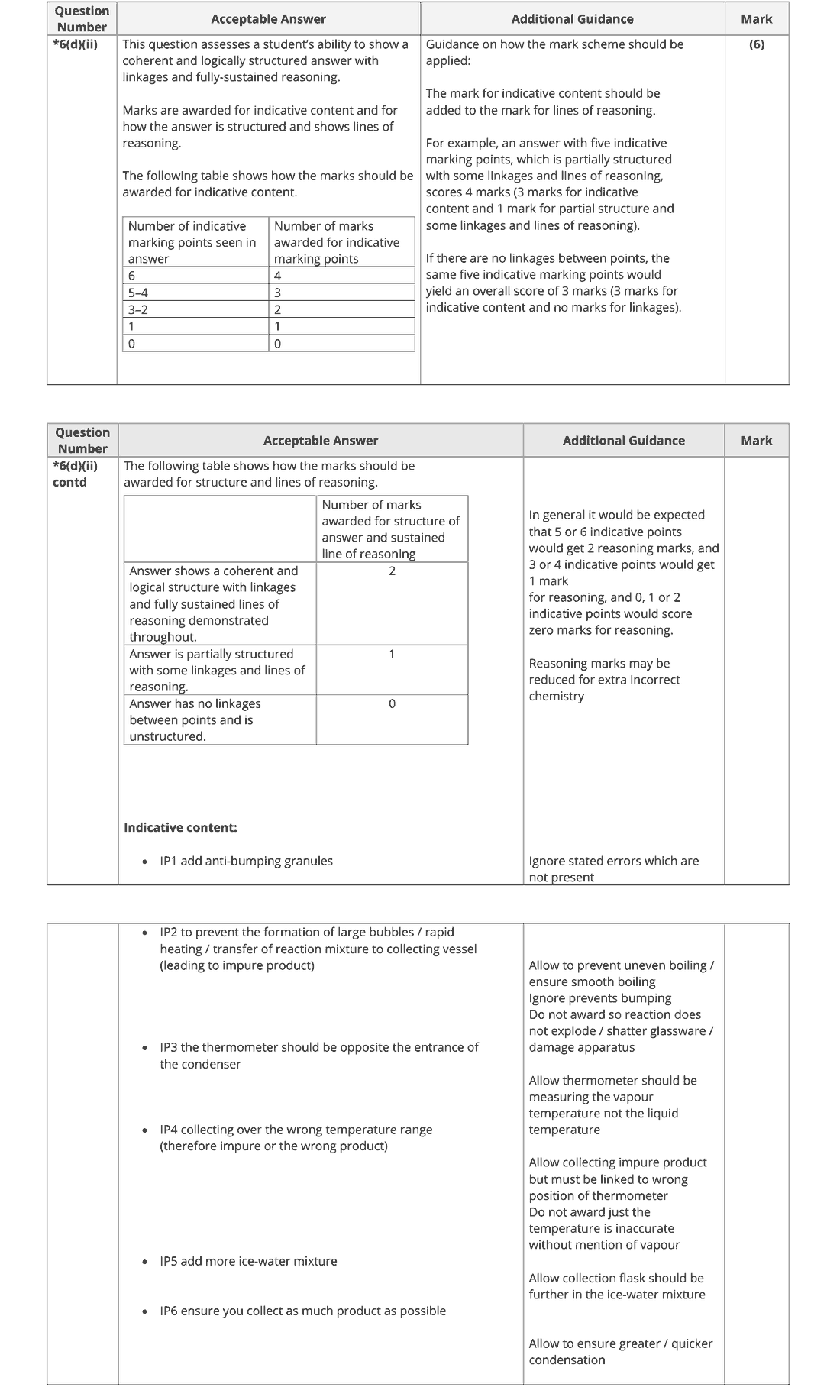
6(d)(ii) Alcohols 6Extended response
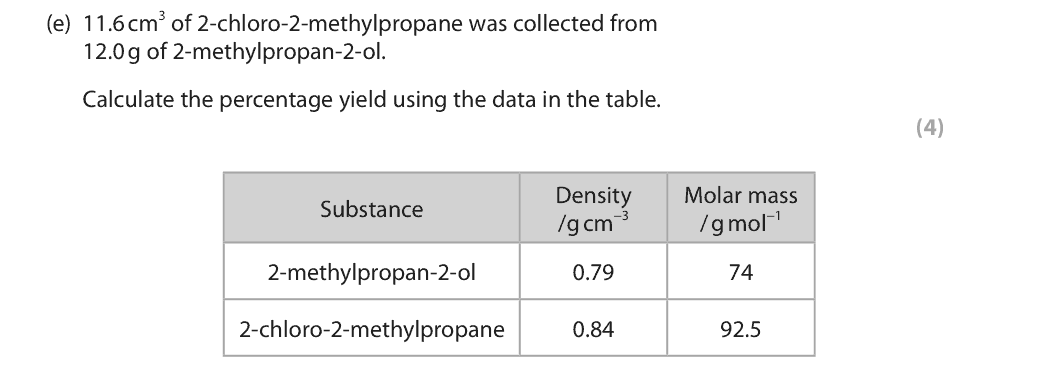
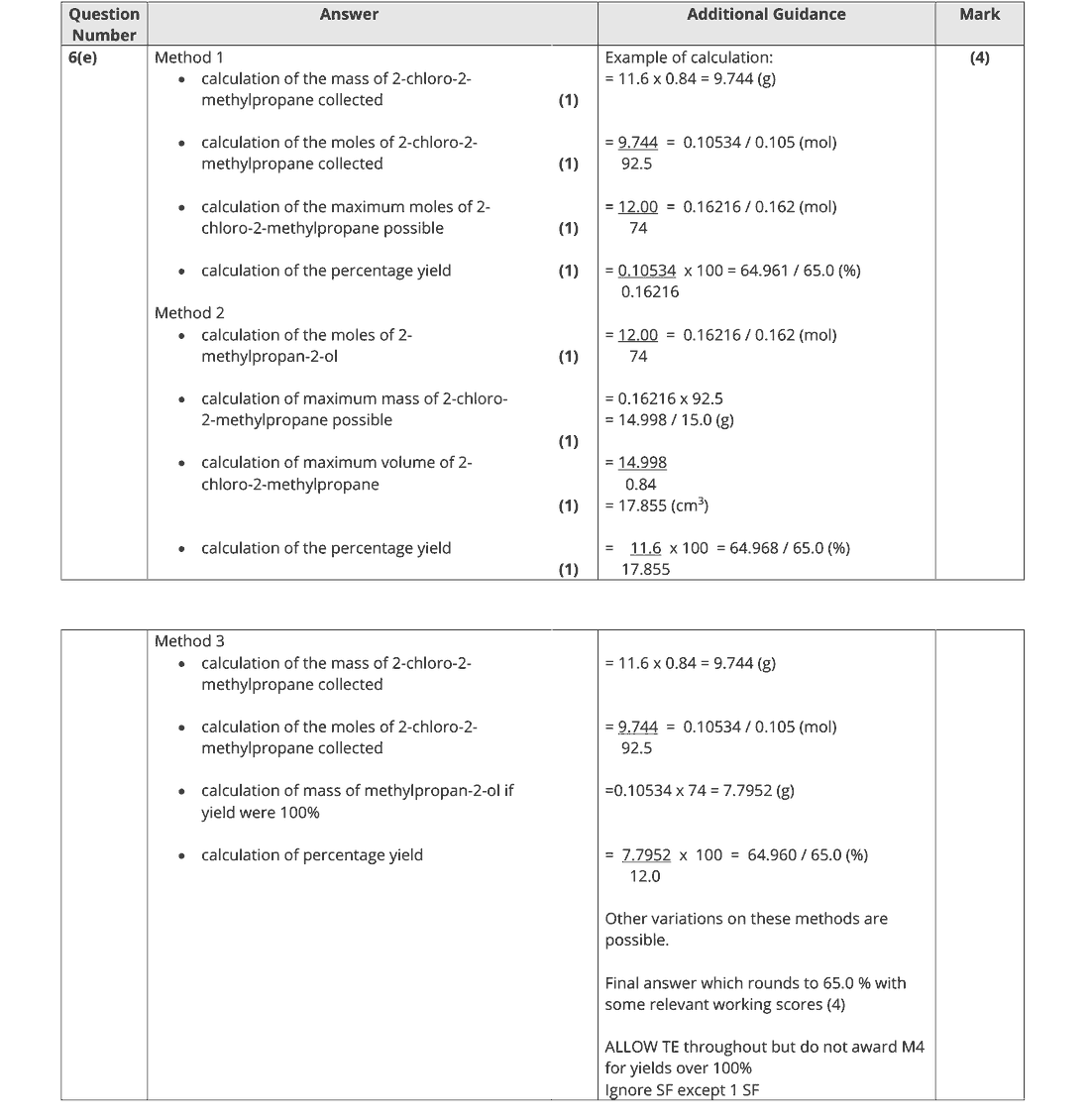
6(e) Formulae, equations and amounts of substance 4Calculation
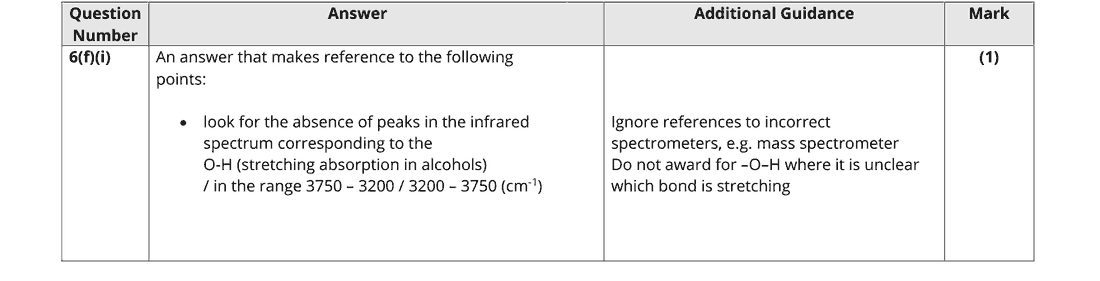
6(f)(i) Modern analytical techniques I: mass spectrometry and infrared 1Short answer
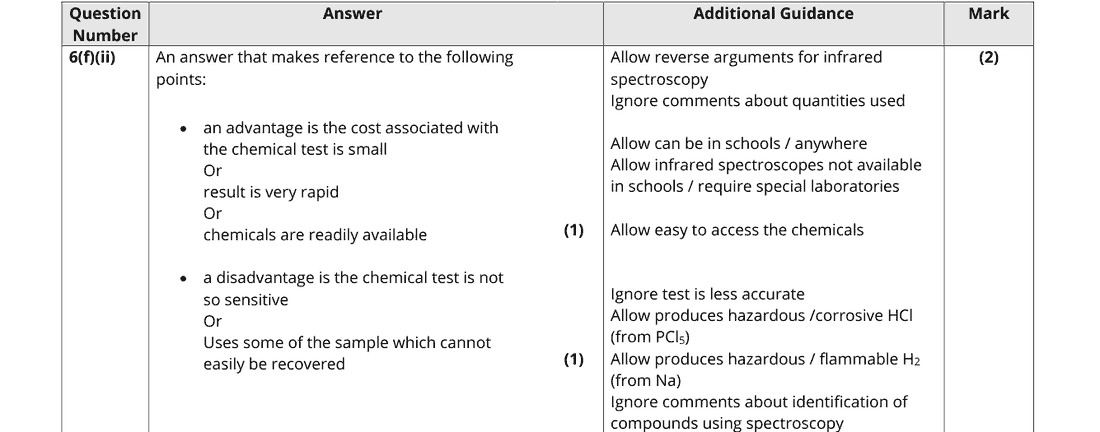
6(f)(ii) Modern analytical techniques I: mass spectrometry and infrared 2Short answer
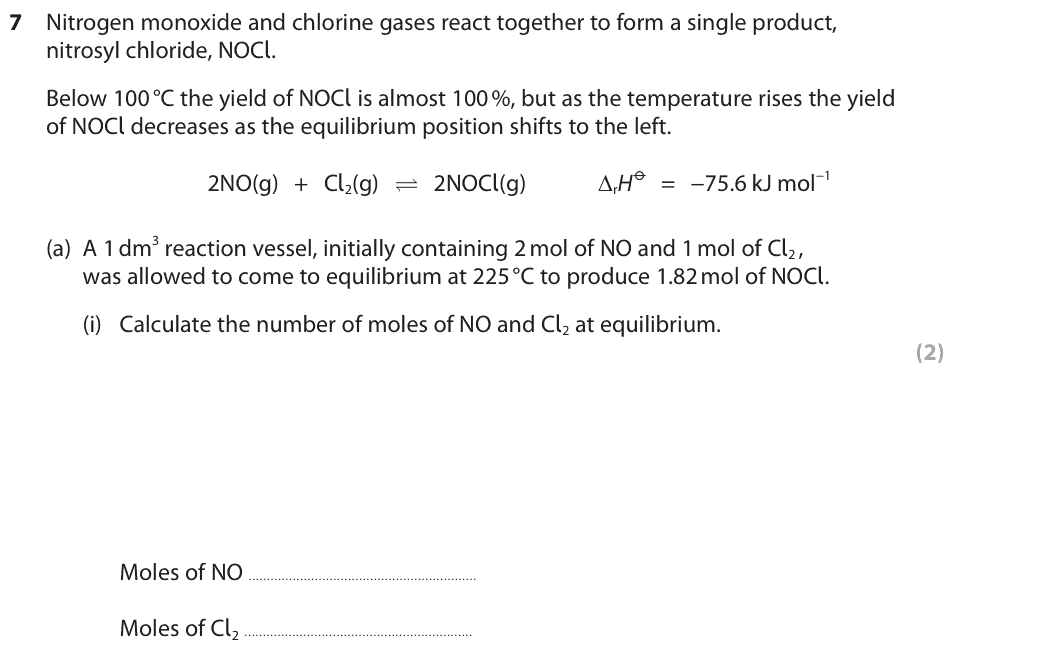
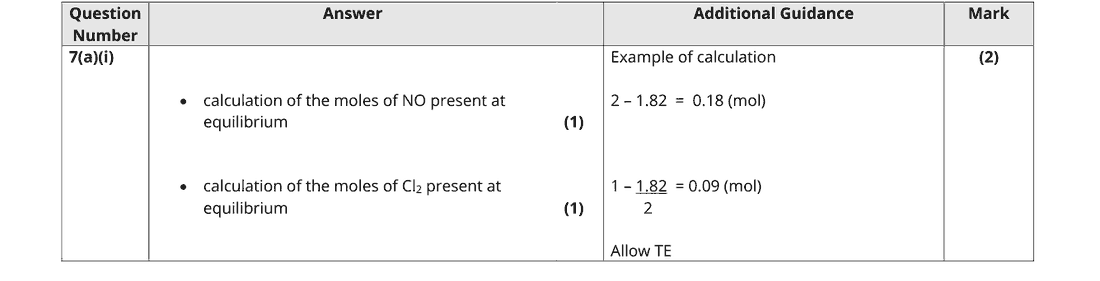
7(a)(i) Formulae, equations and amounts of substance 2Calculation
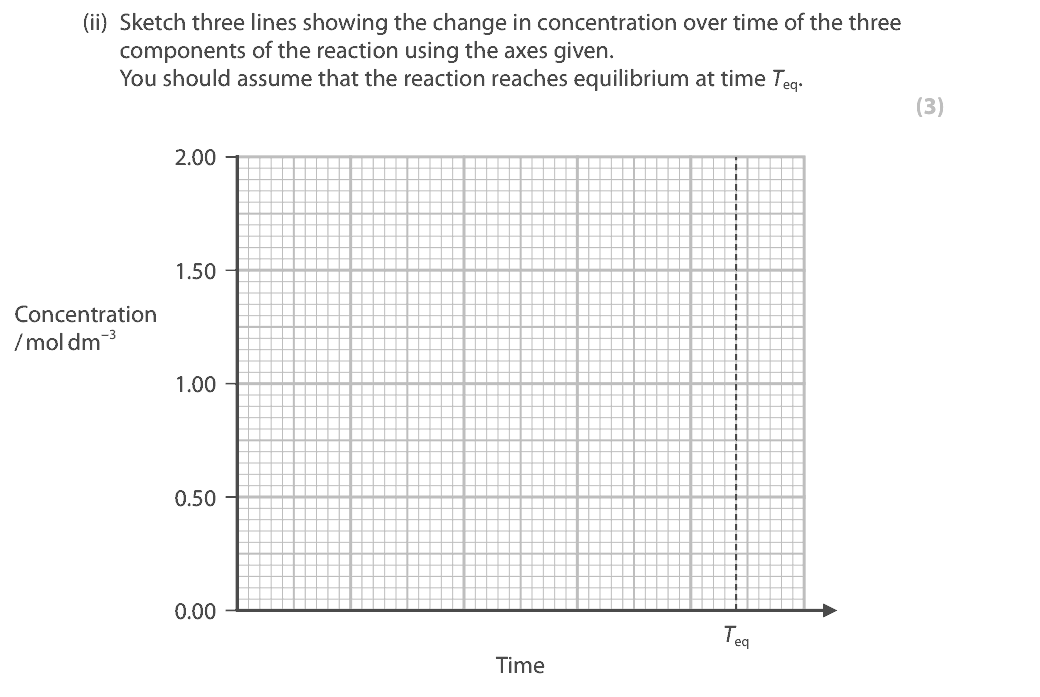
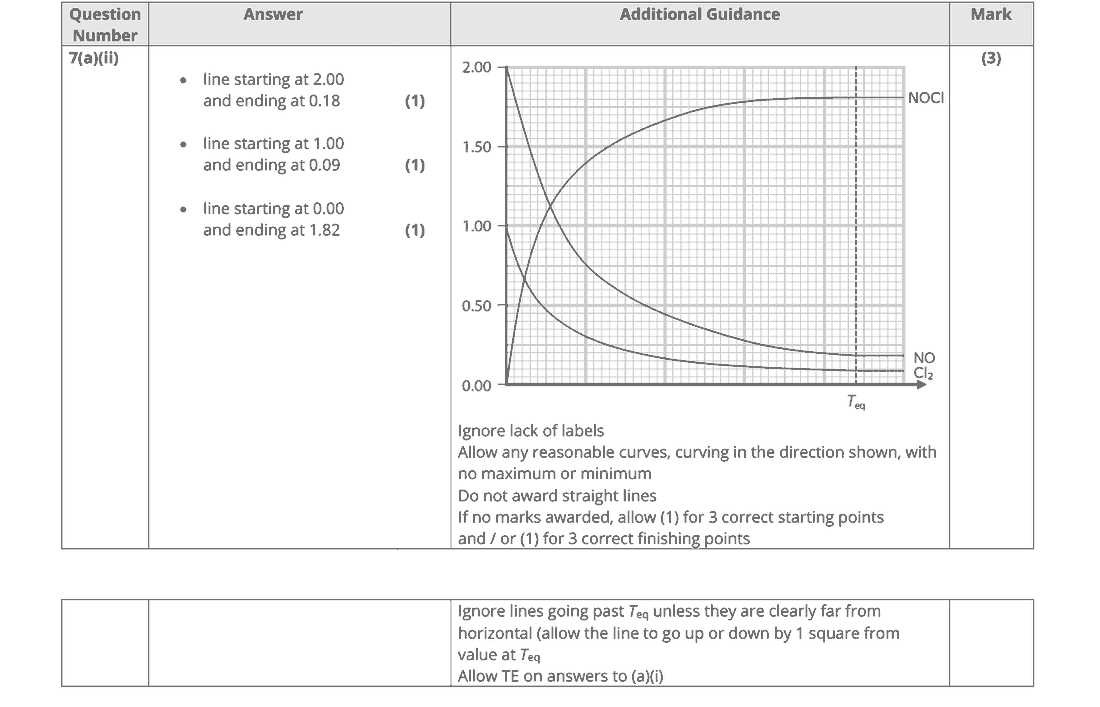
7(a)(ii) Equilibrium I 3Diagram or structure
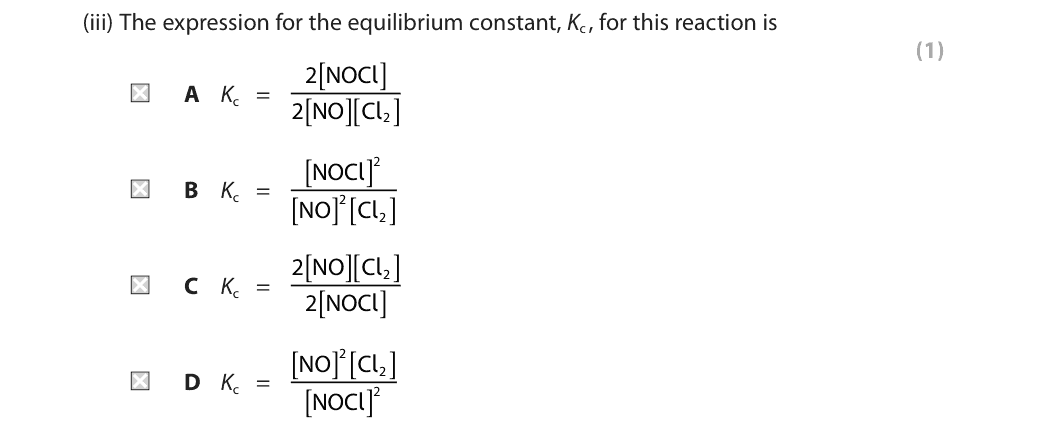
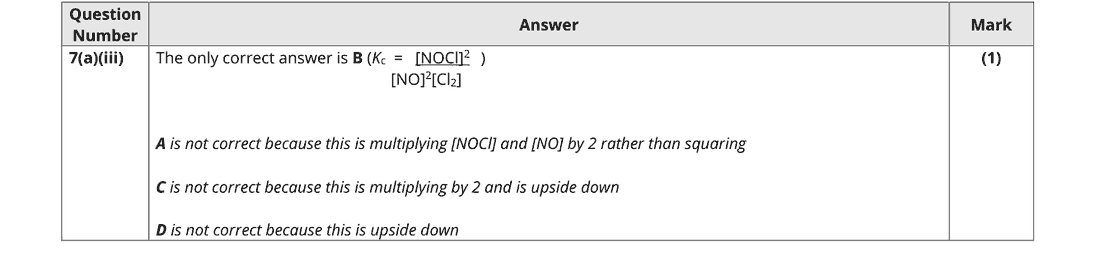
7(a)(iii) Equilibrium I 1Multiple choice
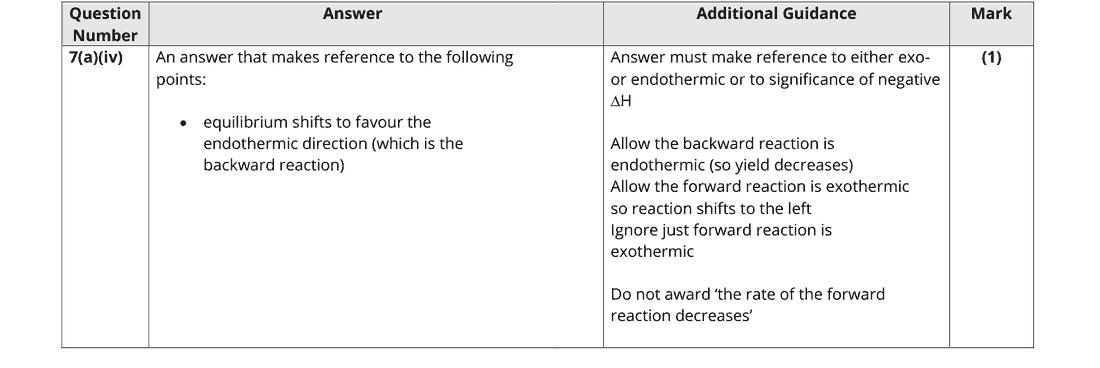
7(a)(iv) Equilibrium I 1Short answer
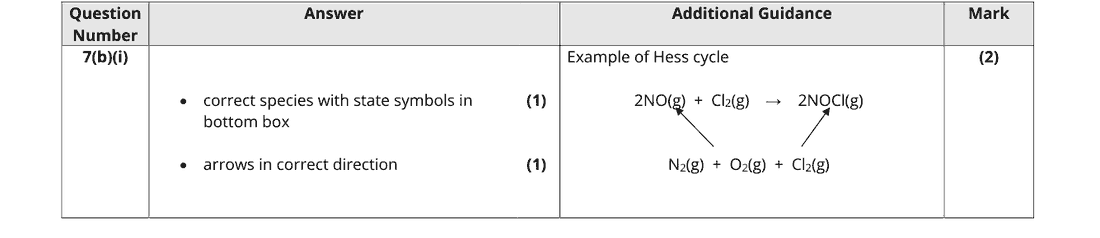
7(b)(i) Energetics I 2Diagram or structure
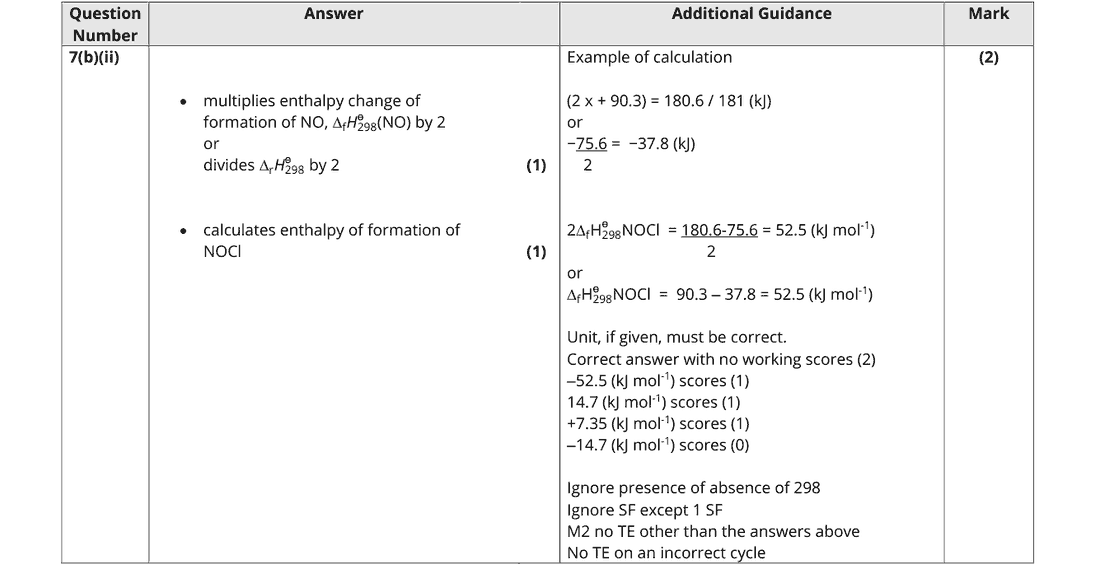
7(b)(ii) Energetics I 2Calculation

The questions

1(a)(i)1(a)(ii)1(a)(iii)1(b)(i)1(b)(ii)1(c)2(a)2(b)2(c)3(a)(i)3(a)(ii)3(b)(i)3(b)(ii)3(b)(iii)4(a)(i)4(a)(ii)4(a)(iii)4(a)(iv)4(b)(i)4(b)(ii)5(a)(i)5(a)(ii)5(b)(i)5(b)(ii)5(b)(iii)5(b)(iv)5(b)(v)5(b)(vi)6(a)6(b)6(c)(i)6(c)(ii)6(c)(iii)6(d)(i)6(d)(ii)6(e)6(f)(i)6(f)(ii)7(a)(i)7(a)(ii)7(a)(iii)7(a)(iv)7(b)(i)7(b)(ii)
June 2022 · AS Paper 2 · Q1(a)(i) 1 mark Multiple choice kinetics i
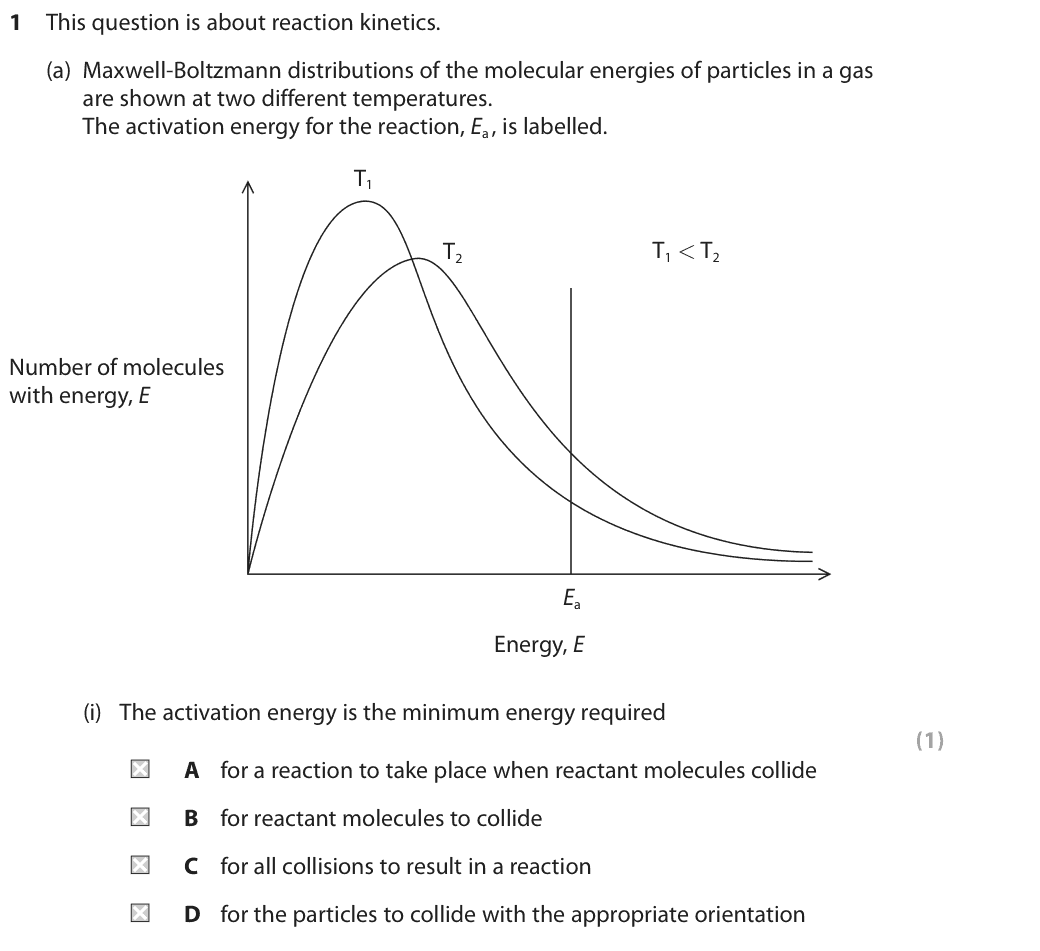
This question is about reaction kinetics.
Maxwell‑Boltzmann distributions of the molecular energies of particles in a gas
are shown at two different temperatures.
The activation energy for the reaction, Ea , is labelled.
T1
T1 < T2
T2
Number of molecules
with energy, E
Ea
Energy, E
The activation energy is the minimum energy required
A  for a reaction to take place when reactant molecules collide
B  for reactant molecules to collide
C  for all collisions to result in a reaction
D  for the particles to collide with the appropriate orientation
June 2022 · AS Paper 2 · Q1(a)(ii) 2 marks Explanation kinetics i
Earlier part of question 1 that this part usesEarlier part of June 2022 Paper 2 question 1
Explain, with reference to the gaseous particles, the differences in the
two distributions.
June 2022 · AS Paper 2 · Q1(a)(iii) 1 mark Multiple choice kinetics i
Earlier part of question 1 that this part usesEarlier part of June 2022 Paper 2 question 1
Which of the following is not an explanation of why increasing the
temperature increases the rate of a reaction?
A  the area under the curve to the right of Ea is larger at a
higher temperature
B  a greater percentage of collisions are successful at a
higher temperature
C  molecules move faster and collide more often at a
higher temperature
D  there are more collisions, all of which are successful, at a
higher temperature
June 2022 · AS Paper 2 · Q1(b)(i) 4 marks Diagram or structure kinetics i
Reaction profiles can be used to show the effect of the addition of a catalyst on
the energy changes during the course of a reaction.
Draw fully labelled reaction profiles for the reaction both with and without a
catalyst for an exothermic reaction.
Energy
Reaction progress
June 2022 · AS Paper 2 · Q1(b)(ii) 1 mark Short answer kinetics i
Earlier part of question 1 that this part usesEarlier part of June 2022 Paper 2 question 1
State how a catalyst increases the rate of a chemical reaction.
June 2022 · AS Paper 2 · Q1(c) 1 mark Multiple choice kinetics i
A heterogeneous catalyst is often added to a reaction between gases.
A heterogeneous catalyst
A  increases the rate without taking part in the reaction
B  increases the yield of the reaction at equilibrium
C  is in the same phase as the reaction mixture
D  is often a porous material, so increasing the surface area
June 2022 · AS Paper 2 · Q2(a) 2 marks Short answer alkenes
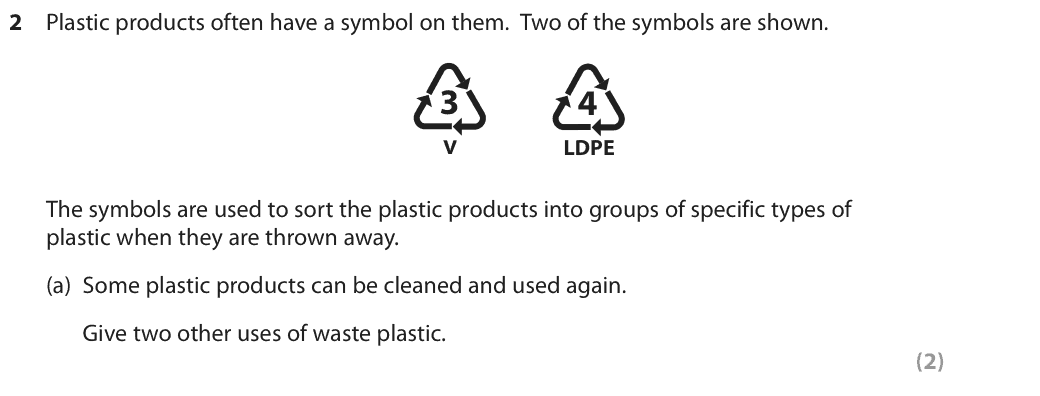
Plastic products often have a symbol on them.  Two of the symbols are shown.
3
4
v
LDPE
The symbols are used to sort the plastic products into groups of specific types of
plastic when they are thrown away.
Some plastic products can be cleaned and used again.
Give two other uses of waste plastic.
June 2022 · AS Paper 2 · Q2(b) 1 mark Short answer alkenes
Earlier part of question 2 that this part usesEarlier part of June 2022 Paper 2 question 2
The V on the symbol with the number 3 stands for vinyl or vinyl chloride.
The V is sometimes replaced by PVC, standing for polyvinyl chloride.
State the link between vinyl chloride and polyvinyl chloride.
June 2022 · AS Paper 2 · Q2(c) 1 mark Multiple choice alkenes
Earlier part of question 2 that this part usesEarlier part of June 2022 Paper 2 question 2
LDPE stands for low density poly(ethene).
Which of the diagrams shows exactly three repeat units of poly(ethene)?
H
H
A
C
C
H
H n
H
H
H
B
C
C
C
H
H
H
H
H
H
H
H
H
C
C
C
C
C
C
C
H
H
H
H
H
H
H
H
H
H
H
H
D
C
C
C
C
C
C
H
H
H
H
H
H
n
n
n
June 2022 · AS Paper 2 · Q3(a)(i) 3 marks Calculation energetics i
Decane, C10H22 , is an alkane present in petrol and kerosene.
It has the displayed formula
H
H
H
H
H
H
H
H
H
H
H
C
C
C
C
C
C
C
C
C
C
H
H
H
H
H
H
H
H
H
H
H
The enthalpy change of combustion, ΔcH , of decane can be estimated using
mean bond enthalpy values and the equation shown.
C10H22(l)   +   15.5O2(g)   →   10CO2(g)   +   11H2O(l)
Calculate the enthalpy change of combustion of decane, using the
mean bond enthalpy values in the table.
Mean bond enthalpy
Bond
/ kJ mol−1
C
C
347
C
H
413
O
O
498
C
O
805
O
H
464
June 2022 · AS Paper 2 · Q3(a)(ii) 2 marks Short answer energetics i
Earlier part of question 3 that this part usesEarlier part of June 2022 Paper 2 question 3
A data book value for the enthalpy change of combustion of decane
is  −6 778 kJ mol−1 .
Give two reasons for the difference between your answer to (a)(i) and
this value.
June 2022 · AS Paper 2 · Q3(b)(i) 1 mark Multiple choice alkanes
Earlier part of question 3 that this part usesEarlier part of June 2022 Paper 2 question 3
Catalytic converters in cars remove unwanted substances such as
nitrogen monoxide, carbon monoxide and unreacted hydrocarbons from the
exhaust fumes.
The formula of the nitrogen monoxide free radical can be written as NO•
Which is true for the NO• free radical ?
A  NO• is formed during thermal decomposition of LiNO3
B  NO• has a total of 15 protons, 15 neutrons and 16 electrons
C  NO• is a species with an unpaired electron
D  NO• is formed by heterolytic fission
June 2022 · AS Paper 2 · Q3(b)(ii) 2 marks Equation writing formulae equations and amounts of substance
Earlier parts of question 3 that this part usesEarlier part of June 2022 Paper 2 question 3Earlier part of June 2022 Paper 2 question 3
It has been suggested that unreacted hydrocarbons and nitrogen monoxide
are removed in a catalytic converter by reacting them together.
The reaction between decane and nitrogen monoxide produces
carbon dioxide, water and nitrogen as the only products.
Complete the balanced equation for this reaction.
State symbols are not required.
 C10H22   +    NO   →
June 2022 · AS Paper 2 · Q3(b)(iii) 1 mark Short answer alkanes
Earlier parts of question 3 that this part usesEarlier part of June 2022 Paper 2 question 3Earlier part of June 2022 Paper 2 question 3Earlier part of June 2022 Paper 2 question 3
Give a possible reason why this reaction might not proceed according to the

equation in (b)(ii).
June 2022 · AS Paper 2 · Q4(a)(i) 2 marks Diagram or structure energetics i
A thermometric titration is a method for finding the end‑point of a titration between
aqueous solutions of ammonia and ethanoic acid.
A thermometric titration was carried out using the following steps:
•
the temperatures of the aqueous ammonia and ethanoic acid solutions were
measured and found to be 20.1 °C
•
30 cm3 of the aqueous ammonia was placed in a polystyrene cup
•
a 10 cm3 portion of an ethanoic acid solution, concentration 1.10 mol dm−3 , was
added to the polystyrene cup, the mixture stirred and the temperature measured
•
further 10 cm3 portions of ethanoic acid solution were added, the mixture stirred,
and the temperature measured immediately after each addition, until a total of
80 cm3 had been added.
Results for this experiment are shown in the table.
Volume of
ethanoic acid added
0
10
20
30
40
50
60
70
80
/ cm3
Temperature
20.1
21.8
23.5
25.1
26.4
25.8
24.9
24.1
23.3
/ °C
Plot the results using the axes provided.
Include two straight lines of best fit, extrapolated until they meet.
27
26
25
24
23
22
21
20
0
10
20
30
40
50
60
70
80
Volume of added ethanoic acid solution / cm3
June 2022 · AS Paper 2 · Q4(a)(ii) 1 mark Calculation energetics i
Earlier part of question 4 that this part usesEarlier part of June 2022 Paper 2 question 4
Determine the maximum temperature rise from your graph.
June 2022 · AS Paper 2 · Q4(a)(iii) 2 marks Calculation formulae equations and amounts of substance
Earlier part of question 4 that this part usesEarlier part of June 2022 Paper 2 question 4
Calculate the number of moles of ethanoic acid, with a concentration of
1.10 mol dm−3 , added at the end‑point of the reaction.
June 2022 · AS Paper 2 · Q4(a)(iv) 3 marks Calculation energetics i
Earlier parts of question 4 that this part usesEarlier part of June 2022 Paper 2 question 4Earlier part of June 2022 Paper 2 question 4Earlier part of June 2022 Paper 2 question 4
The reaction that occurs is
NH3(aq)   +   CH3COOH(aq)   →   NH4
+(aq)   +   CH3COO−(aq)
Calculate the enthalpy change per mole for this reaction.
Include a sign and units in your answer.
[Assume:
specific heat capacity of the solution at the end‑point = 4.18 J g−1 °C−1
1.00 cm3 of the solution at the end‑point has a mass of 1.00 g]
June 2022 · AS Paper 2 · Q4(b)(i) 1 mark Multiple choice energetics i
Earlier part of question 4 that this part usesEarlier part of June 2022 Paper 2 question 4
The temperature of the reaction mixture initially increased because the
reaction is
A  endothermic so energy is absorbed by the water
B  endothermic so energy is released by the water
C  exothermic so energy is absorbed by the water
D  exothermic so energy is released by the water
June 2022 · AS Paper 2 · Q4(b)(ii) 1 mark Short answer Hard energetics i
Earlier parts of question 4 that this part usesEarlier part of June 2022 Paper 2 question 4Earlier part of June 2022 Paper 2 question 4
Give the main reason why, after the end‑point was reached, the temperature
of the solution decreased.
June 2022 · AS Paper 2 · Q5(a)(i) 1 mark Short answer alkenes
Chloroalkanes can be formed from both alkenes and alkanes.
Ethene can be converted into chloroethane.
Identify, by name or formula, the reagent for this conversion.
June 2022 · AS Paper 2 · Q5(a)(ii) 4 marks Mechanism alkenes
Earlier part of question 5 that this part usesEarlier part of June 2022 Paper 2 question 5
Draw the mechanism for the conversion of ethene into chloroethane.
Include curly arrows, and any relevant lone pairs and dipoles.
June 2022 · AS Paper 2 · Q5(b)(i) 1 mark Short answer alkanes
Ethane can also be converted into chloroethane.
Give the reagent and condition required to convert ethane into chloroethane.
Reagent
Condition
June 2022 · AS Paper 2 · Q5(b)(ii) 1 mark Multiple choice alkanes
Earlier part of question 5 that this part usesEarlier part of June 2022 Paper 2 question 5
What is the mechanism and type of reaction by which ethane is converted
into chloroethane?
A  electrophilic addition
B  free radical addition
C  free radical substitution
D  nucleophilic substitution
June 2022 · AS Paper 2 · Q5(b)(iii) 3 marks Equation writing Hard alkanes
Earlier part of question 5 that this part usesEarlier part of June 2022 Paper 2 question 5
Further reactions of chloroethane result in the formation of small amounts of
the isomers 1,1‑dichloroethane and 1,2‑dichloroethane.
Write equations to show the formation of these products.
Curly arrows are not required.
June 2022 · AS Paper 2 · Q5(b)(iv) 2 marks Short answer mass spectrometry and infrared spectroscopy
Earlier parts of question 5 that this part usesEarlier part of June 2022 Paper 2 question 5Earlier part of June 2022 Paper 2 question 5
The mass spectra of the two isomers of dichloroethane are shown.
100
100
80
80
60
60
Relative
Relative
intensity
intensity
40
40
20
20
0
0
60
80
100
60
80
100
m / z
m / z
Spectrum A
Spectrum B
Deduce the molecular formulae of the species responsible for
the molecular ion peaks at m / z 98, 100 and 102.
The molecular formulae for the species producing these peaks are the same in
both spectra.
June 2022 · AS Paper 2 · Q5(b)(v) 1 mark Short answer mass spectrometry and infrared spectroscopyatomic structure and the periodic table
Earlier parts of question 5 that this part usesEarlier part of June 2022 Paper 2 question 5Earlier part of June 2022 Paper 2 question 5
State why in both spectra the peaks at 98, 100 and 102 have different
relative intensities.
June 2022 · AS Paper 2 · Q5(b)(vi) 2 marks Explanation mass spectrometry and infrared spectroscopy
Earlier parts of question 5 that this part usesEarlier part of June 2022 Paper 2 question 5Earlier part of June 2022 Paper 2 question 5
Explain how the presence of the peaks at 83, 85 and 87 in Spectrum B allows
the identification of the isomer responsible for this spectrum.
June 2022 · AS Paper 2 · Q6(a) 1 mark Short answer alcohols
The preparation of 2‑chloro‑2‑methylpropane, (CH3)3CCl, involves the reaction
of concentrated hydrochloric acid with 2‑methylpropan‑2‑ol, (CH3)3COH,
a tertiary alcohol.
(CH3)3COH   +   HCl   →   (CH3)3CCl   +   H2O
Primary alcohols react very slowly with concentrated hydrochloric acid.
State a different reagent for the chlorination of primary alcohols.
June 2022 · AS Paper 2 · Q6(b) 2 marks Diagram or structure alcohols
Earlier part of question 6 that this part usesEarlier part of June 2022 Paper 2 question 6
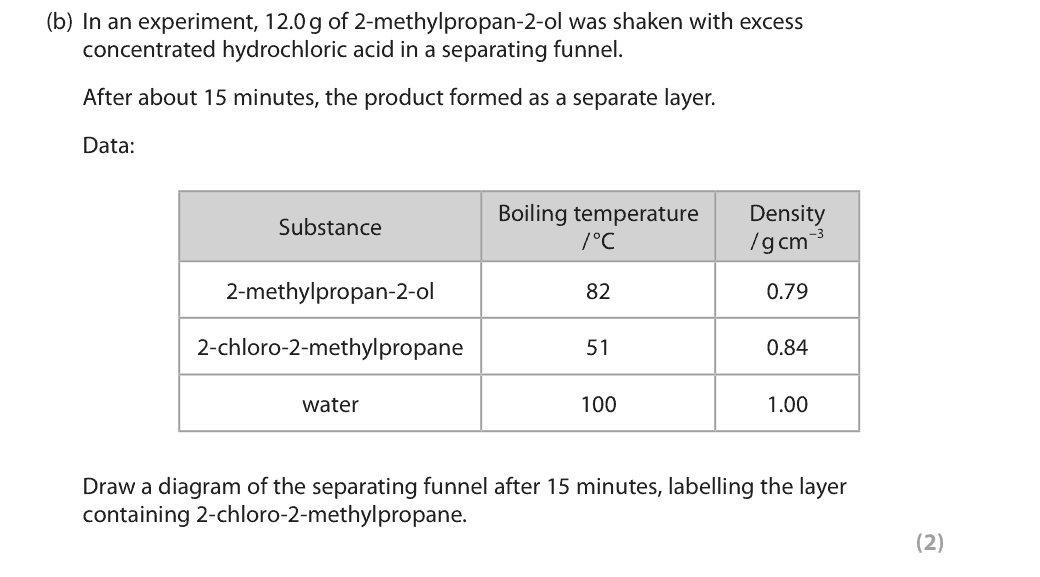
In an experiment, 12.0 g of 2‑methylpropan‑2‑ol was shaken with excess
concentrated hydrochloric acid in a separating funnel.
After about 15 minutes, the product formed as a separate layer.
Data:
Boiling temperature
Density
Substance
/ °C
/ g cm−3
2‑methylpropan‑2‑ol
82
0.79
2‑chloro‑2‑methylpropane
51
0.84
water
100
1.00
Draw a diagram of the separating funnel after 15 minutes, labelling the layer
containing 2‑chloro‑2‑methylpropane.
June 2022 · AS Paper 2 · Q6(c)(i) 1 mark Short answer formulae equations and amounts of substance
Earlier part of question 6 that this part usesEarlier part of June 2022 Paper 2 question 6
After separation, the organic layer was shaken with
sodium hydrogencarbonate solution. Fizzing was observed.
Identify, by name or formula, the gas that was given off.
June 2022 · AS Paper 2 · Q6(c)(ii) 1 mark Short answer formulae equations and amounts of substance
Earlier parts of question 6 that this part usesEarlier part of June 2022 Paper 2 question 6Earlier part of June 2022 Paper 2 question 6
Give the formula of the ion that reacted with the hydrogencarbonate ion to
form the gas.
June 2022 · AS Paper 2 · Q6(c)(iii) 2 marks Practical and data analysis alcohols
Earlier parts of question 6 that this part usesEarlier part of June 2022 Paper 2 question 6Earlier part of June 2022 Paper 2 question 6
Describe how to dry the organic layer to prepare it for distillation.
Include the name of a suitable drying agent.
June 2022 · AS Paper 2 · Q6(d)(i) 1 mark Practical and data analysis alcohols
Earlier part of question 6 that this part usesEarlier part of June 2022 Paper 2 question 6
The dried 2‑chloro‑2‑methylpropane was transferred to the distillation apparatus.
State the appropriate temperature range over which to collect the product.
June 2022 · AS Paper 2 · Q6(d)(ii) 6 marks 6-mark extended response alcohols
Earlier parts of question 6 that this part usesEarlier part of June 2022 Paper 2 question 6Earlier part of June 2022 Paper 2 question 6
A diagram of the distillation apparatus is shown.
thermometer
water to sink
pear‑shaped
flask
reaction mixture
heat using
pear‑shaped
water from tap
water bath
flask
ice‑water mixture
Discuss the improvements that should be made to the set‑up of the
apparatus. Include the likely effect of the errors identified on the yield or
purity of the product.
Assume the apparatus is suitably clamped.
June 2022 · AS Paper 2 · Q6(e) 4 marks Calculation formulae equations and amounts of substance
Earlier part of question 6 that this part usesEarlier part of June 2022 Paper 2 question 6
11.6 cm3 of 2‑chloro‑2‑methylpropane was collected from
12.0 g of 2‑methylpropan‑2‑ol.
Calculate the percentage yield using the data in the table.
Density
Molar mass
Substance
/g cm−3
/ g mol−1
2‑methylpropan‑2‑ol
0.79
74
2‑chloro‑2‑methylpropane
0.84
92.5
June 2022 · AS Paper 2 · Q6(f)(i) 1 mark Short answer mass spectrometry and infrared spectroscopy
Earlier part of question 6 that this part usesEarlier part of June 2022 Paper 2 question 6
Infrared spectroscopy can be used to determine the purity of a substance.
State how infrared spectroscopy could be used to show that no
2‑methylpropan‑2‑ol was present in the distillate.
June 2022 · AS Paper 2 · Q6(f)(ii) 2 marks Short answer mass spectrometry and infrared spectroscopy
Earlier parts of question 6 that this part usesEarlier part of June 2022 Paper 2 question 6Earlier part of June 2022 Paper 2 question 6
Give one advantage and one disadvantage of using a chemical test
rather than infrared spectroscopy to determine whether any of the
2‑methylpropan‑2‑ol remained.
June 2022 · AS Paper 2 · Q7(a)(i) 2 marks Calculation formulae equations and amounts of substance
Nitrogen monoxide and chlorine gases react together to form a single product,
nitrosyl chloride, NOCl.
Below 100 °C the yield of NOCl is almost 100 %, but as the temperature rises the yield
of NOCl decreases as the equilibrium position shifts to the left.
2NO(g)   +   Cl2(g)      2NOCl(g)            ∆rH    =   −75.6 kJ mol−1
A 1 dm3 reaction vessel, initially containing 2 mol of NO and 1 mol of Cl2 ,
was allowed to come to equilibrium at 225 °C to produce 1.82 mol of NOCl.
Calculate the number of moles of NO and Cl2 at equilibrium.
Moles of NO 
Moles of Cl2
June 2022 · AS Paper 2 · Q7(a)(ii) 3 marks Diagram or structure Hard equilibrium i
Earlier part of question 7 that this part usesEarlier part of June 2022 Paper 2 question 7
Sketch three lines showing the change in concentration over time of the three
components of the reaction using the axes given.
You should assume that the reaction reaches equilibrium at time Teq.
2.00
1.50
Concentration
/ mol dm−3
1.00
0.50
0.00
Teq
Time
June 2022 · AS Paper 2 · Q7(a)(iii) 1 mark Multiple choice equilibrium i
Earlier parts of question 7 that this part usesEarlier part of June 2022 Paper 2 question 7Earlier part of June 2022 Paper 2 question 7
The expression for the equilibrium constant, Kc , for this reaction is
[
]
A  Kc   =   2 NOC
l
[
][
]
2 NO C 2
l
[
]
2
NOC
l
B  Kc   =
[
] [
]
NO
2
C 2
l
[
][
]
C  Kc   =   2
NO C
l
2
[
]
2
NOC
l
[
] [
2
]
D  Kc   =   NO
C
l
2
[
]
NOC
l
2
June 2022 · AS Paper 2 · Q7(a)(iv) 1 mark Short answer equilibrium i
Earlier part of question 7 that this part usesEarlier part of June 2022 Paper 2 question 7
Give the reason why the equilibrium yield of NOCl decreases when the
temperature changes from 25 °C to 225 °C.
The enthalpy change for the reaction at 25 °C is −75.6 kJ mol−1 .
June 2022 · AS Paper 2 · Q7(b)(i) 2 marks Diagram or structure energetics i
Earlier part of question 7 that this part usesEarlier part of June 2022 Paper 2 question 7
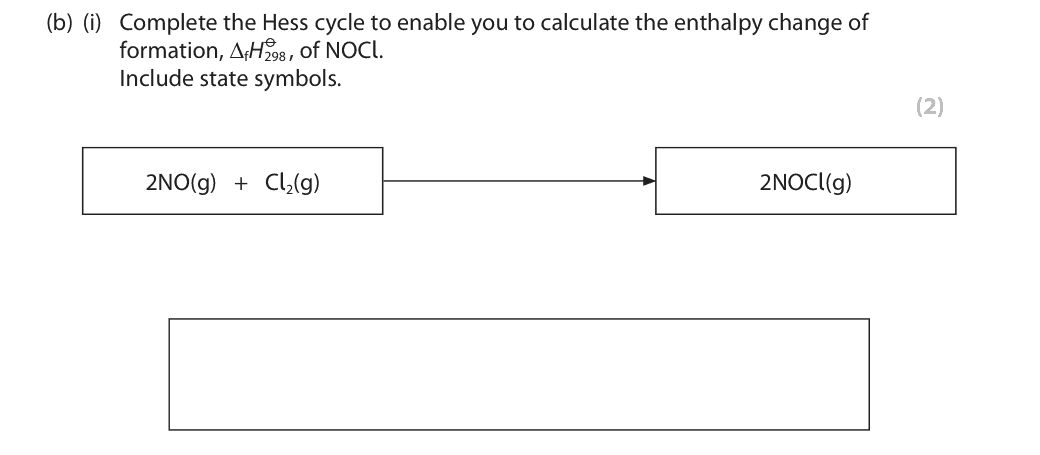
Complete the Hess cycle to enable you to calculate the enthalpy change of
formation, ∆fH 298 , of NOCl.
Include state symbols.
2NO(g)   +   Cl2(g)
2NOCl(g)
June 2022 · AS Paper 2 · Q7(b)(ii) 2 marks Calculation energetics i
Earlier parts of question 7 that this part usesEarlier part of June 2022 Paper 2 question 7Earlier part of June 2022 Paper 2 question 7
Calculate the enthalpy change of formation, ∆fH 298 , of NOCl given the data
2NO(g)   +   Cl2(g)      2NOCl(g)          ∆rH 298    =   −75.6 kJ mol−1
enthalpy change of formation of NO, ∆fH 298 ,   =   +90.3 kJ mol−1

Work with an A-level chemistry tutor

Want a paper marked and gone through with you? Message us.

Prefer email? Send an enquiry

If you are under 18, please include a parent's contact details. Enquiries go to enquiries@chemistryaleveltutor.com and are deleted once handled. All tutoring is online.