Mark scheme

Notes from the mark scheme and report
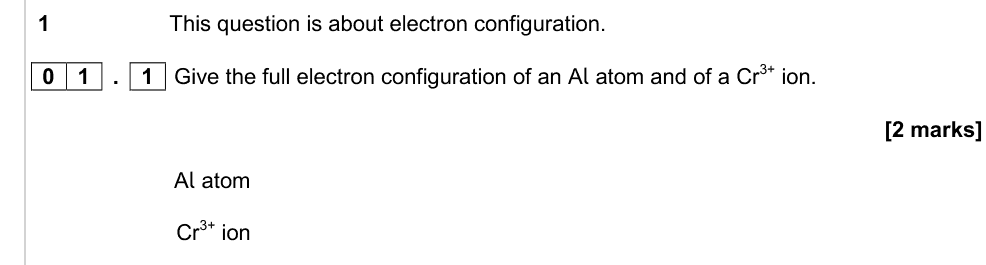
- Al: 1s2 2s2 2p6 3s2 3p1. Cr3+: 1s2 2s2 2p6 3s2 3p6 3d3 (ignore 4s0). Correct noble gas core used in both scores 1 only
80 marks · 41 question parts · Paper, mark scheme and report on AQA's site · Have the Data Booklet beside you


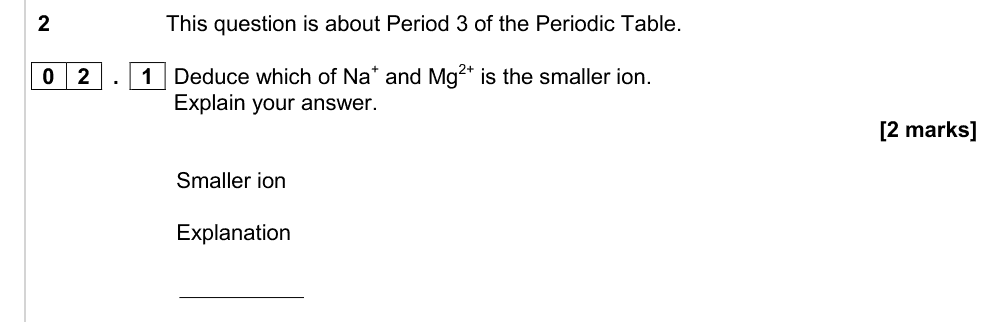
Most of this question was answered correctly but many students failed to appreciate that the ions compared in 2.1 had the same number of electrons therefore 1 mark was scored rather than 2.

Most of this question was answered correctly but many students failed to appreciate that the ions compared in 2.1 had the same number of electrons therefore 1 mark was scored rather than 2. It was pleasing to see over half the students scoring 3 or more marks on question 2.3
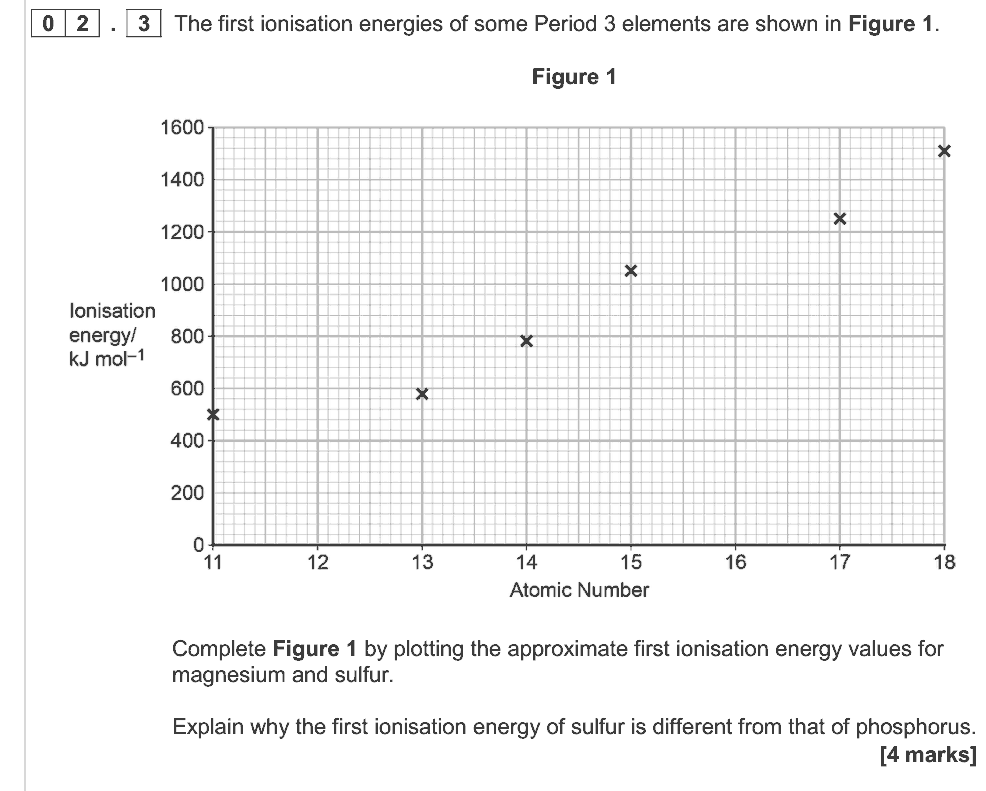
It was pleasing to see over half the students scoring 3 or more marks on question 2.3
Skills: MS3.2 Plot two variables from experimental or other data
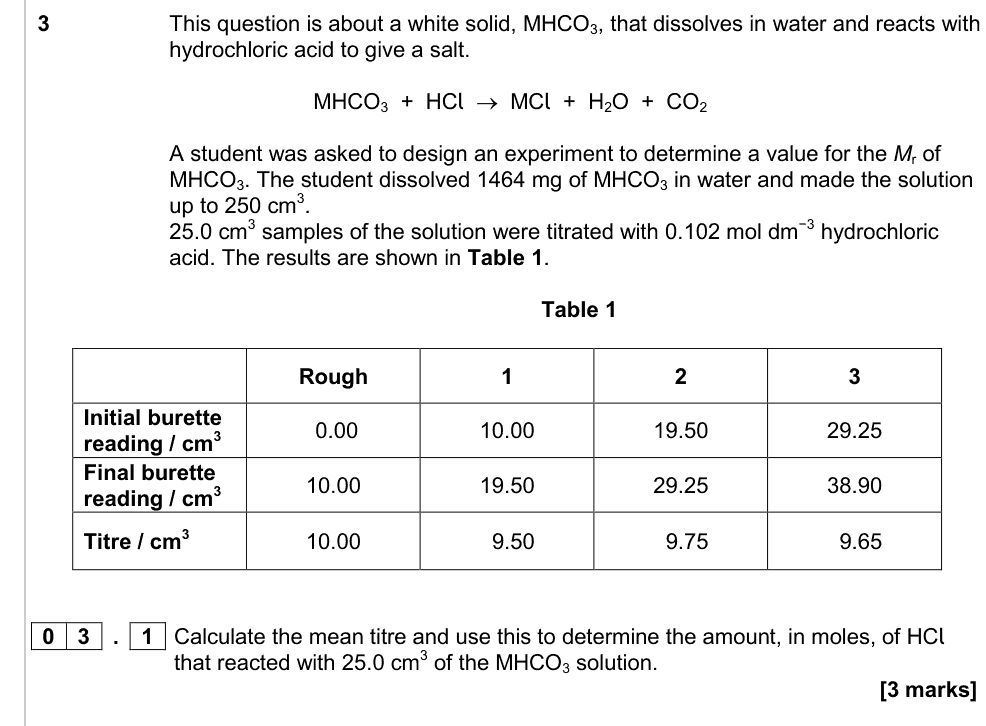
It was noted that many students selected incorrect titres in Q3.1 limiting them to 1 mark out of 3.
Skills: MS1.2 Find arithmetic means; MS0.0 Recognise and make use of appropriate units in calculation; PS3.2 Process and analyse data using appropriate mathematical skills as exemplified in the mathematical appendix for each science; RP1 Make up a volumetric solution and carry out a simple acid–base titration

Consequential marking allowed students to score full marks for Q3.2 but Q3.3 was answered poorly showing a lack of practical experience.
Skills: MS0.0 Recognise and make use of appropriate units in calculation; MS0.2 Use ratios, fractions and percentages; MS1.1 Use an appropriate number of significant figures; RP1 Make up a volumetric solution and carry out a simple acid–base titration
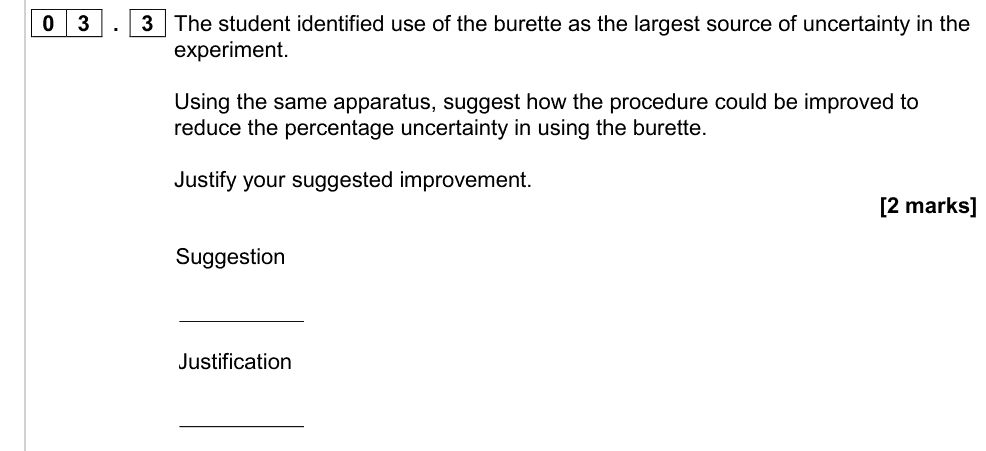
Consequential marking allowed students to score full marks for Q3.2 but Q3.3 was answered poorly showing a lack of practical experience.
Skills: MS1.3 Identify uncertainties in measurements and use simple techniques to determine uncertainty when data are combined; PS2.3 Evaluate results and draw conclusions with reference to measurement uncertainties and errors; PS3.3 Consider margins of error, accuracy and precision of data; ATd Use laboratory apparatus for a variety of experimental techniques including: titration, using burette and pipette; distillation and heating under reflux, including setting up glassware using retort stand and clamps; qualitative tests for ions and organic functional groups; filtration, including use of fluted filter paper, or filtration under reduced pressure; RP1 Make up a volumetric solution and carry out a simple acid–base titration
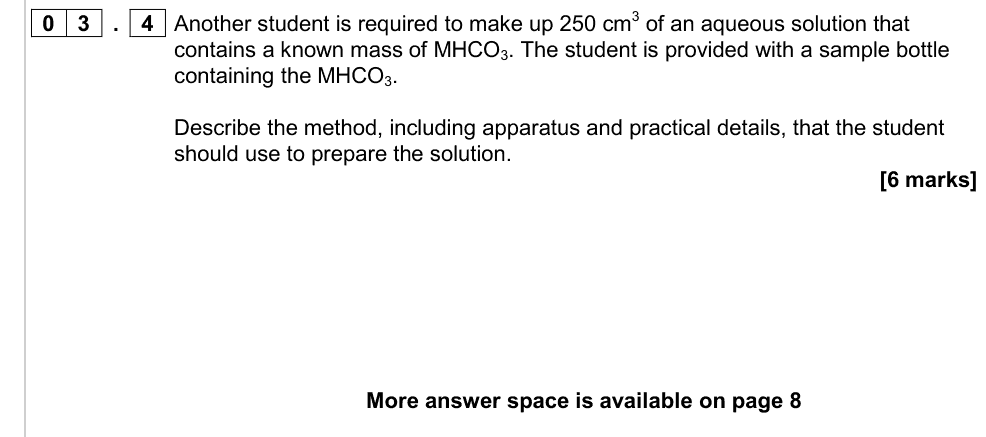
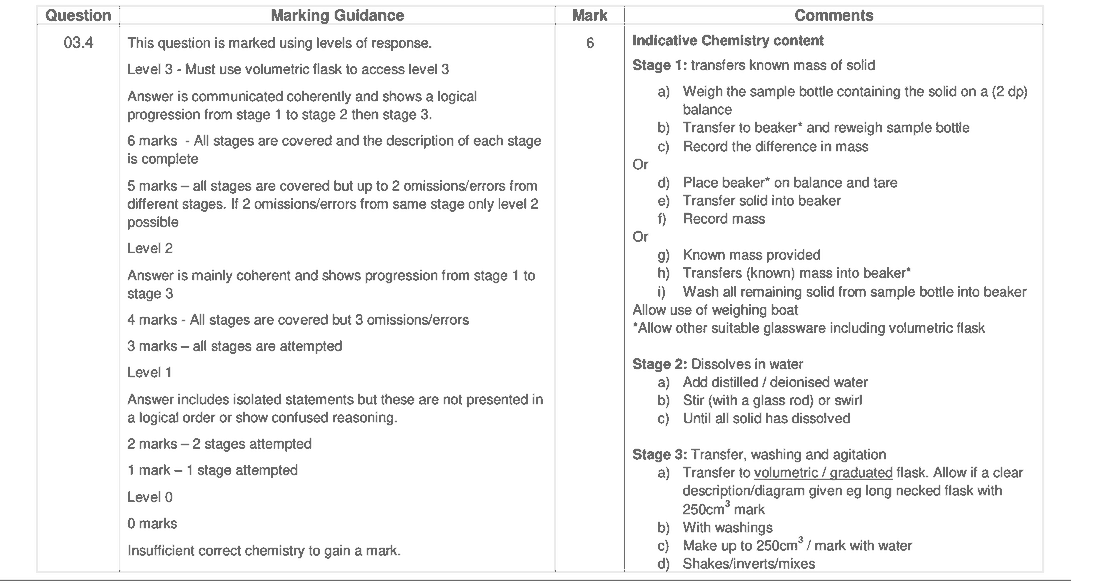
Question 3.4 was marked using a levels of response mark scheme that tested students’ ability to give a logical description of a common practical technique. Many students were able to access at least 3 marks but few scored the full 6. It was not uncommon to see some students describe the titration technique itself and in so doing fail to address the question asked.
Skills: ATa Use appropriate apparatus to record a range of measurements (to include mass, time, volume of liquids and gases, temperature); ATe Use volumetric flask, including accurate technique for making up a standard solution; ATk Safely and carefully handle solids and liquids, including corrosive, irritant, flammable and toxic substances; PS4.1 Know and understand how to use a wide range of experimental and practical instruments, equipment and techniques appropriate to the knowledge and understanding included in the specification; RP1 Make up a volumetric solution and carry out a simple acid–base titration
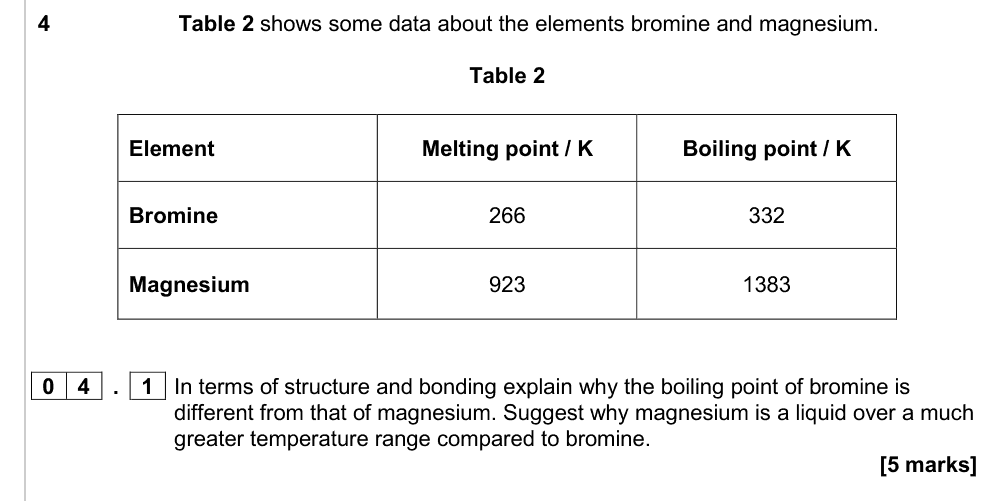
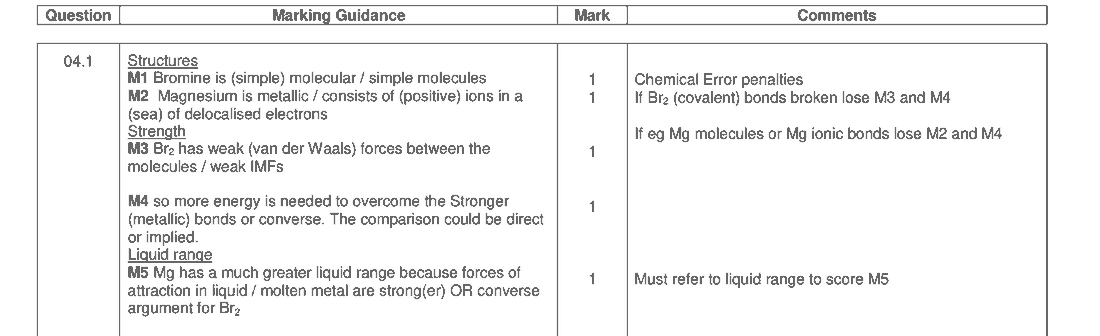
Most candis scored some marks here but many made chemical errors such as referring to the breaking of bonds when discussing the boiling of bromine or suggesting that magnesium is ionic. Often, the simple molecular structure point was absent for both weak and strong students showing poor exam technique in terms of addressing the question.
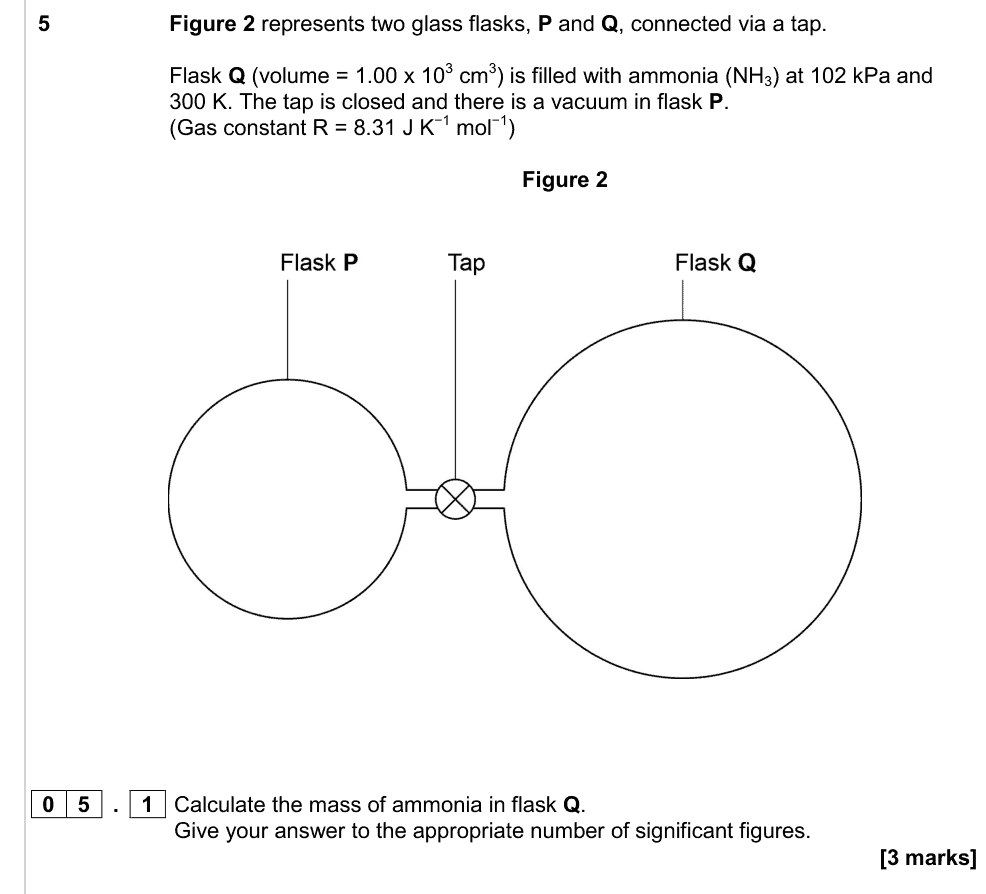
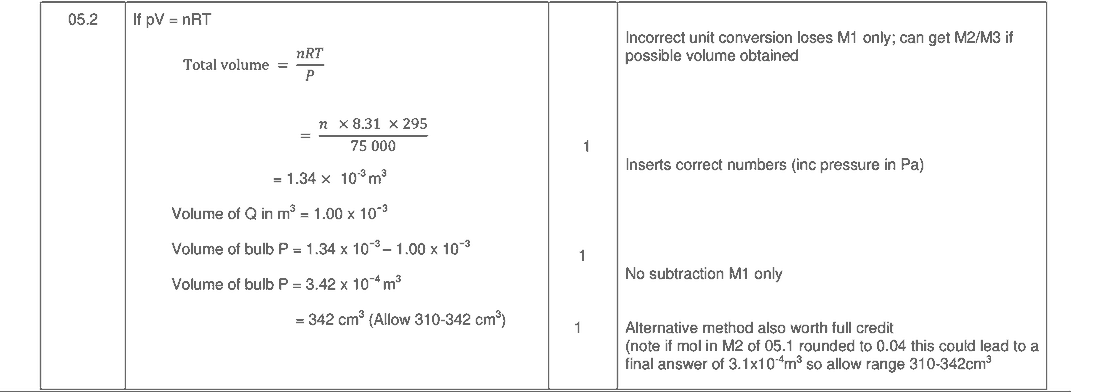
Perhaps because it was similar to questions asked in the previous specification, Question 5.1 was quite well answered but a common mistake was to use values with incorrect units for the variables in the pV=nRT calculation.
Skills: MS0.0 Recognise and make use of appropriate units in calculation; MS1.1 Use an appropriate number of significant figures; MS2.2 Change the subject of an equation; MS2.3 Substitute numerical values into algebraic equations using appropriate units for physical quantities

Question 5.2 was much less well answered with many studentss calculating the total volume of the two flasks but failing to answer the question and give the volume of flask P in cm3.
Skills: MS0.0 Recognise and make use of appropriate units in calculation; MS2.2 Change the subject of an equation; MS2.3 Substitute numerical values into algebraic equations using appropriate units for physical quantities

For Question 6.1 many students wrote a lot of unnecessary detail about aspects of a time of flight mass spectrometer but on the whole it was quite well answered.

Questions 6.2 and 6.3 proved mathematically difficult for many although consequential marking allowed large numbers to score on 6.3.
Skills: MS0.0 Recognise and make use of appropriate units in calculation; MS0.1 Recognise and use expressions in decimal and ordinary form
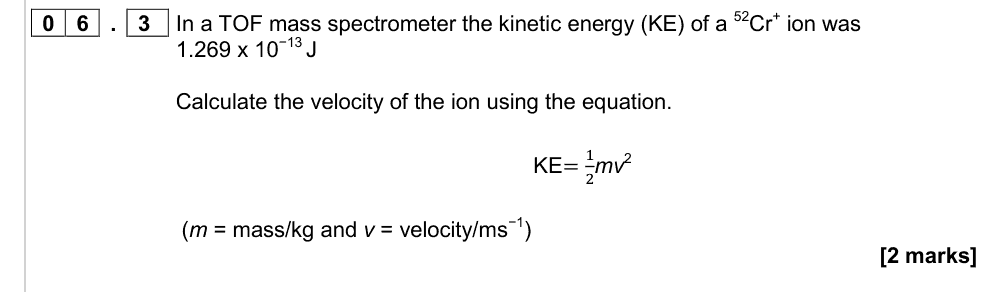
Questions 6.2 and 6.3 proved mathematically difficult for many although consequential marking allowed large numbers to score on 6.3.
Skills: MS0.1 Recognise and use expressions in decimal and ordinary form; MS2.2 Change the subject of an equation; MS2.3 Substitute numerical values into algebraic equations using appropriate units for physical quantities
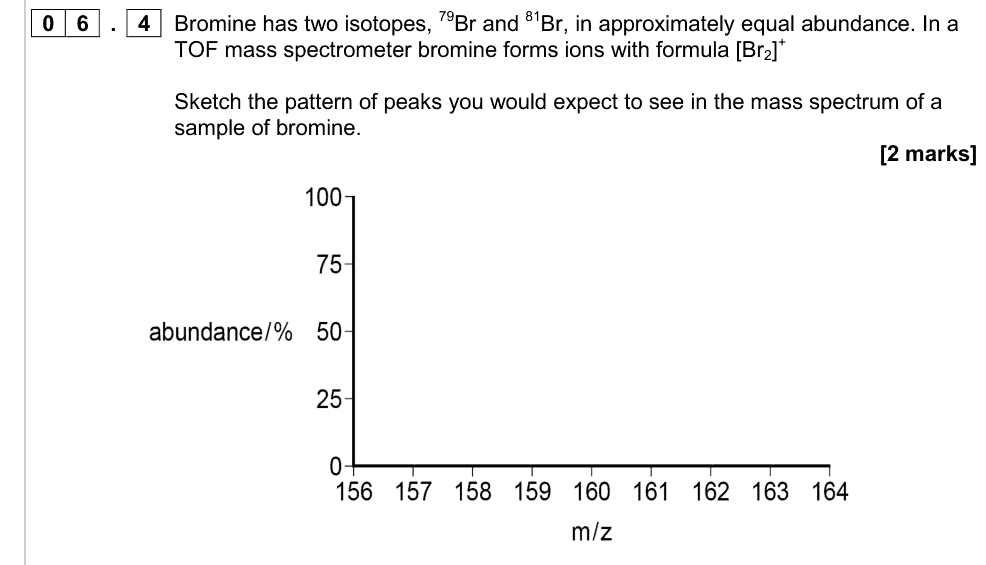
The use of probability to predict the ratio of peaks in question 6.4 proved very difficult for students. Some scored 1 mark for giving three peaks but the 1:2:1 ratio was only seen from 11.3% of students.
Skills: MS0.2 Use ratios, fractions and percentages; MS3.1 Translate information between graphical, numerical and algebraic forms
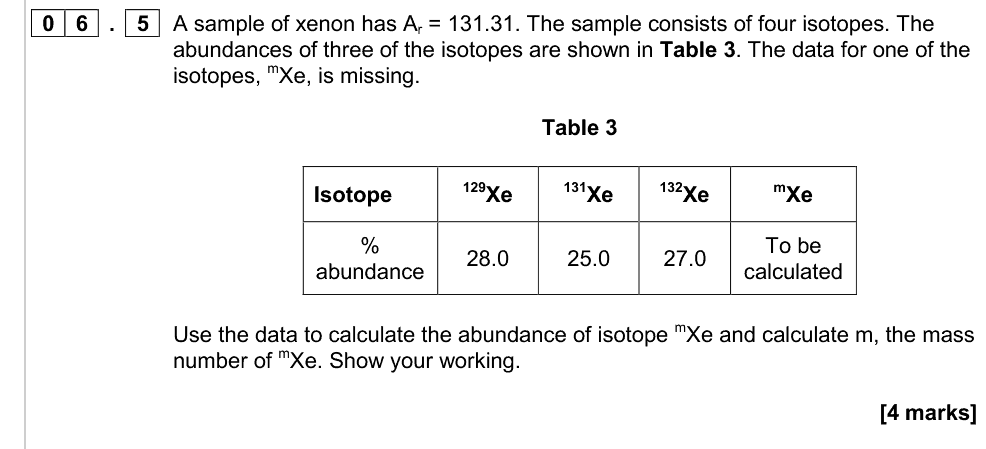
Question 6.5 was answered well with over 60% of students scoring all 4 marks.
Skills: MS0.2 Use ratios, fractions and percentages; MS1.2 Find arithmetic means; MS2.4 Solve algebraic equations
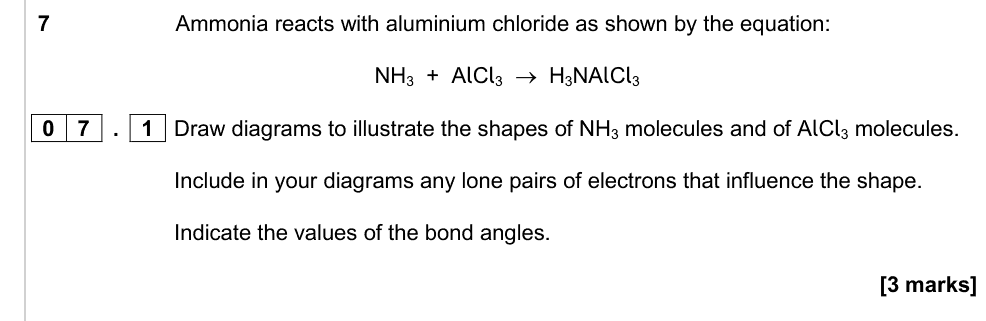
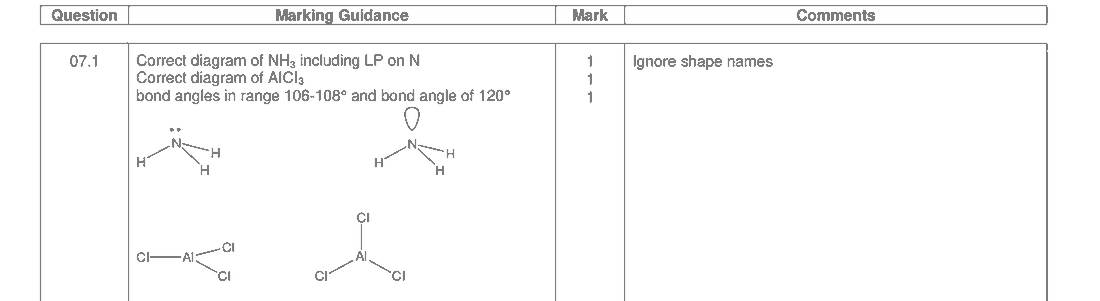
The fairly familiar shapes here proved quite easy for many students and the rest of the question also proved to be quite accessible except for Q7.3 where many were unable to explain the change in the Cl-Al-Cl bond angle.
Skills: MS4.1 Use angles and shapes in regular 2D and 3D structures; MS4.2 Visualise and represent 2D and 3D forms including two-dimensional representations of 3D objects
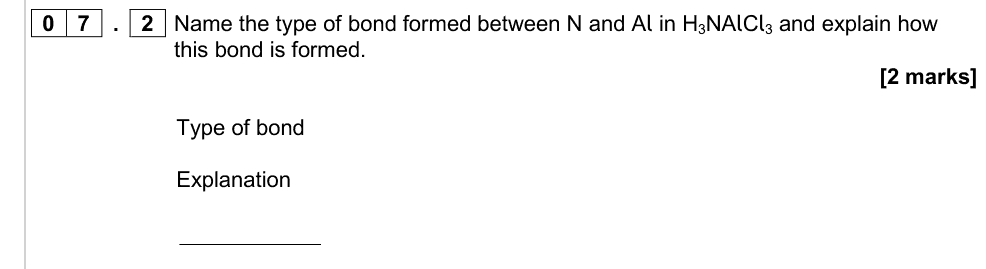
The fairly familiar shapes here proved quite easy for many students and the rest of the question also proved to be quite accessible except for Q7.3 where many were unable to explain the change in the Cl-Al-Cl bond angle.

The fairly familiar shapes here proved quite easy for many students and the rest of the question also proved to be quite accessible except for Q7.3 where many were unable to explain the change in the Cl-Al-Cl bond angle.
Skills: MS4.1 Use angles and shapes in regular 2D and 3D structures
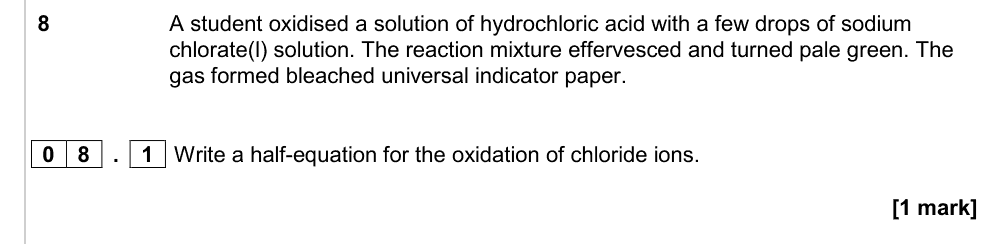
Even the half equation in 8.1 was usually not answered correctly and the more challenging equations in 8.2 and 8.3 were only seen from the better students.

Even the half equation in 8.1 was usually not answered correctly and the more challenging equations in 8.2 and 8.3 were only seen from the better students.

Even the half equation in 8.1 was usually not answered correctly and the more challenging equations in 8.2 and 8.3 were only seen from the better students.

In 8.4 the explanation that iodide ions are oxidised wasn’t seen very often but a reasonable proportion of students scored some marks on this question.
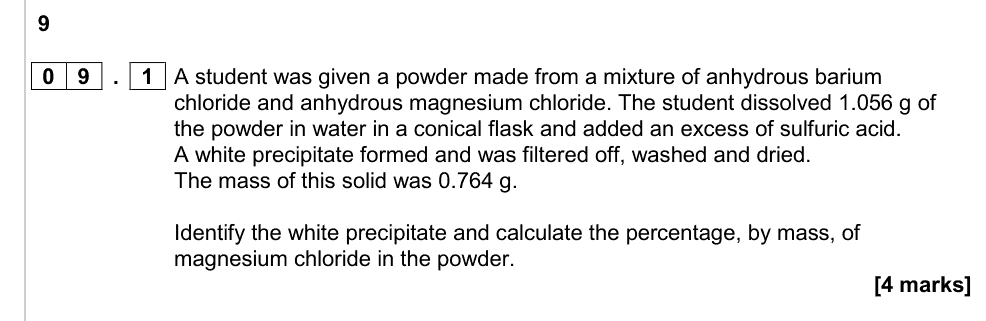
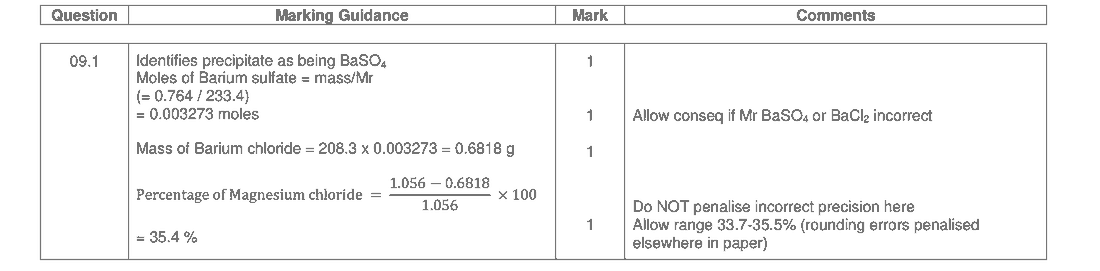
This question was very poorly answered with few getting to the correct overall answer. The unstructured nature of this calculation proved too difficult for most especially following the requirement to identify correctly BaSO4 as the precipitate formed. Only the very best students scored well here.
Skills: MS0.2 Use ratios, fractions and percentages
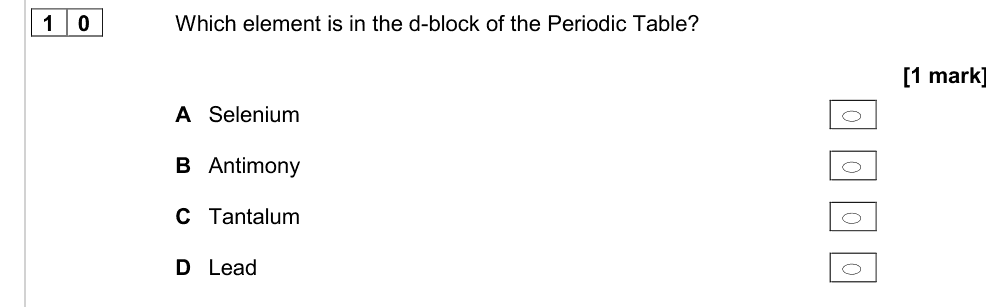
C
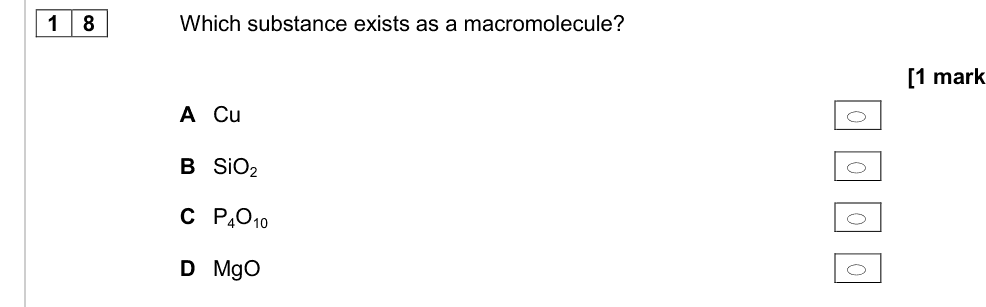
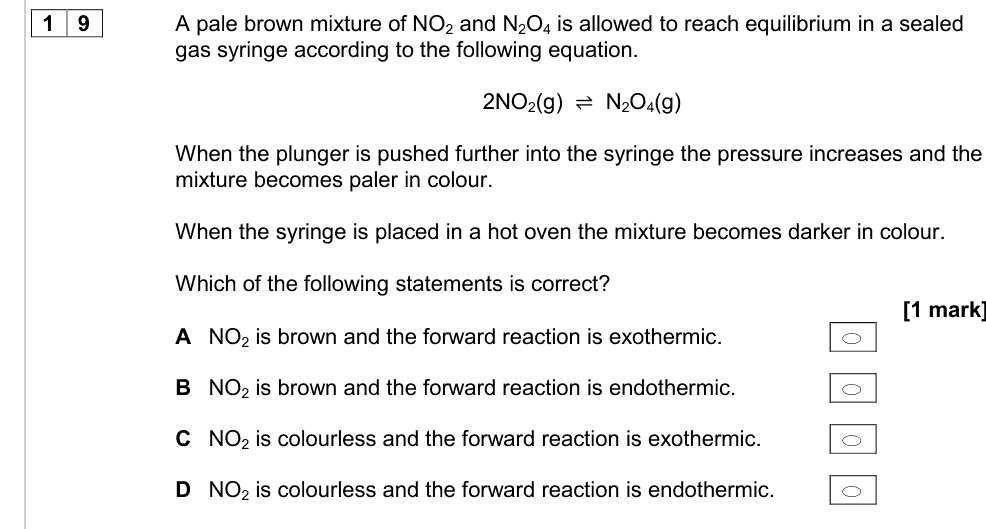
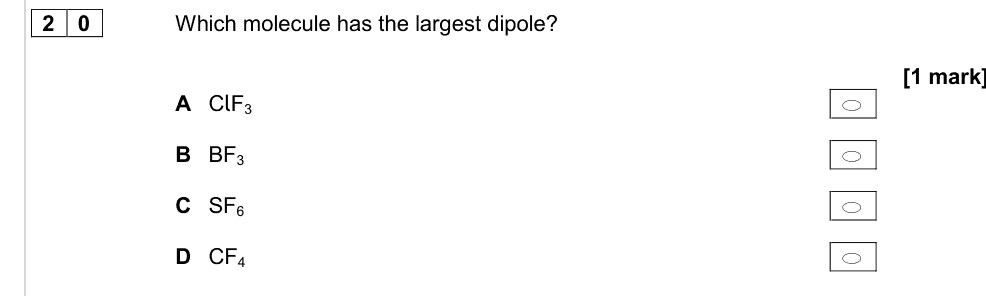
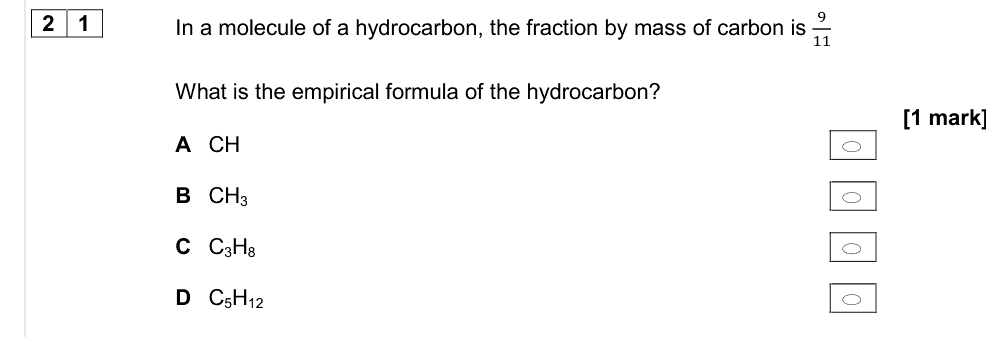
Questions 10-24 Multiple choice From this section of the paper items 10,11,15 and 18 were usually answered correctly. It was surprising to see that item 17 was answered poorly but it did give further evidence that redox ideas are not well understood by large numbers of students at this level. Item 20 proved difficult showing that the overall dipole possessed by a molecule clearly isn’t a well understood concept. Item 22 was also not answered correctly by most; this idea has not been tested often in the previous specification so students may not have had much prior experience of the type of question.
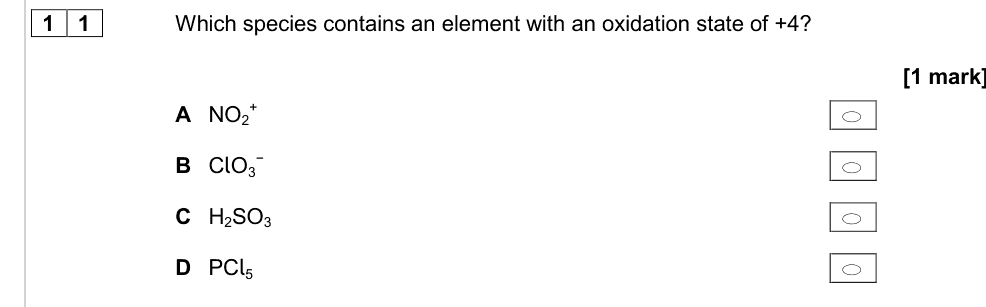
C
Questions 10-24 Multiple choice From this section of the paper items 10,11,15 and 18 were usually answered correctly. It was surprising to see that item 17 was answered poorly but it did give further evidence that redox ideas are not well understood by large numbers of students at this level. Item 20 proved difficult showing that the overall dipole possessed by a molecule clearly isn’t a well understood concept. Item 22 was also not answered correctly by most; this idea has not been tested often in the previous specification so students may not have had much prior experience of the type of question.
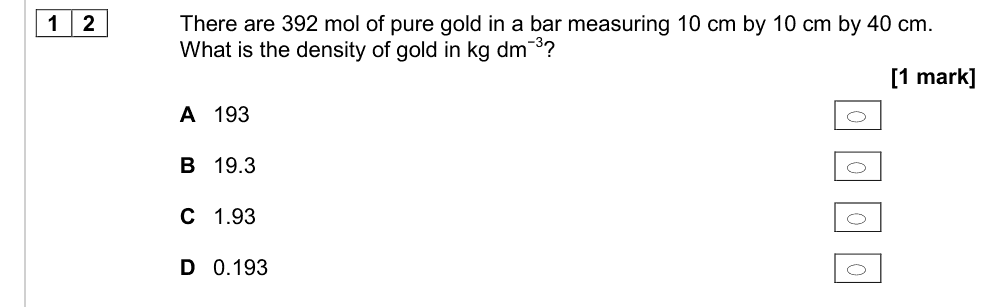
B
Skills: MS0.0 Recognise and make use of appropriate units in calculation; MS0.2 Use ratios, fractions and percentages
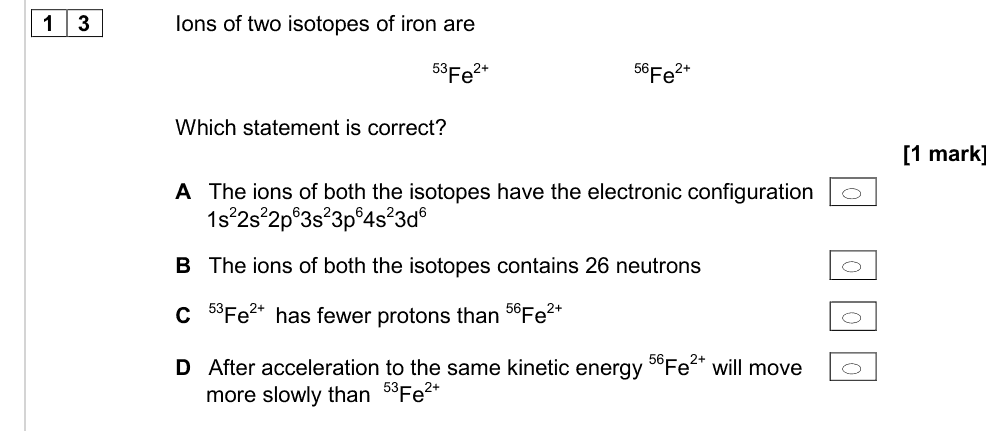
D
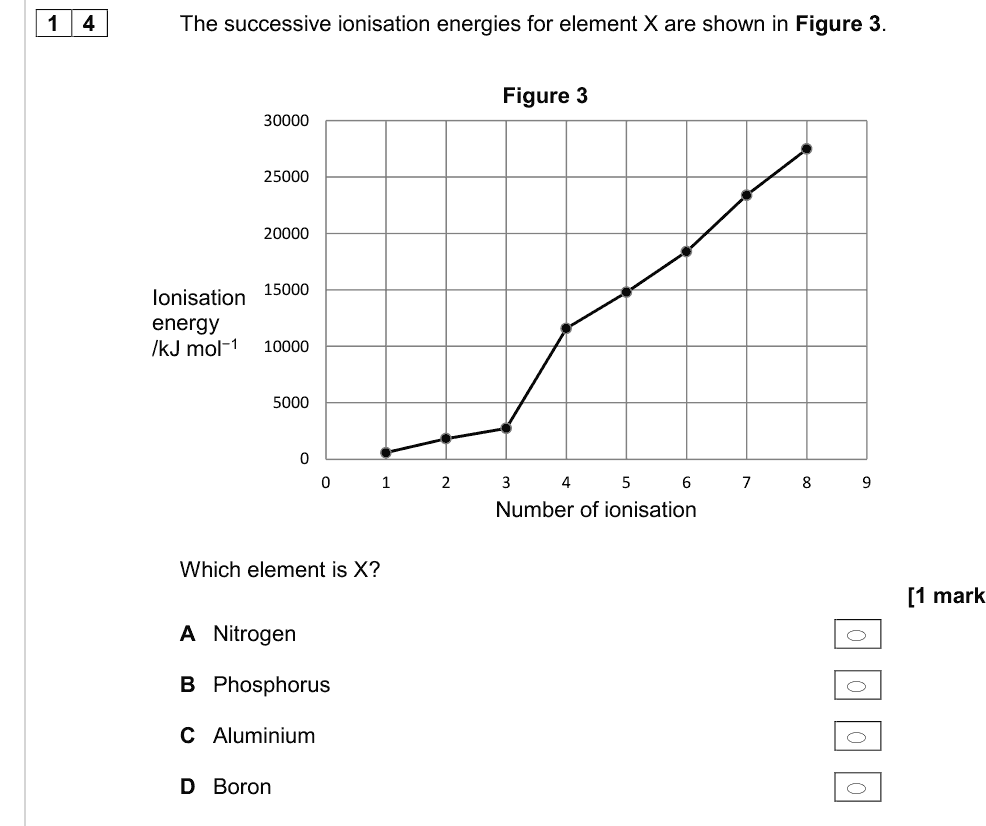
C
Skills: MS3.1 Translate information between graphical, numerical and algebraic forms
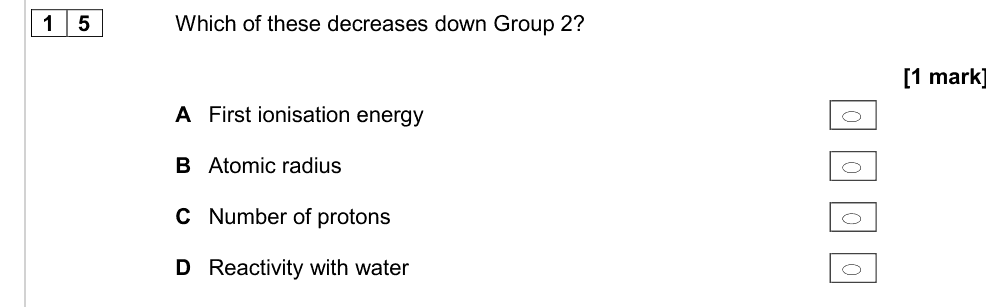
A
Questions 10-24 Multiple choice From this section of the paper items 10,11,15 and 18 were usually answered correctly. It was surprising to see that item 17 was answered poorly but it did give further evidence that redox ideas are not well understood by large numbers of students at this level. Item 20 proved difficult showing that the overall dipole possessed by a molecule clearly isn’t a well understood concept. Item 22 was also not answered correctly by most; this idea has not been tested often in the previous specification so students may not have had much prior experience of the type of question.
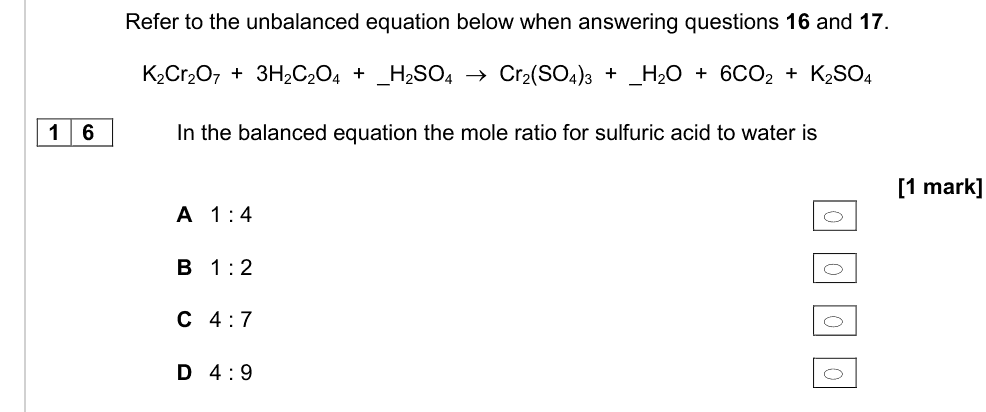
C
Skills: MS0.2 Use ratios, fractions and percentages
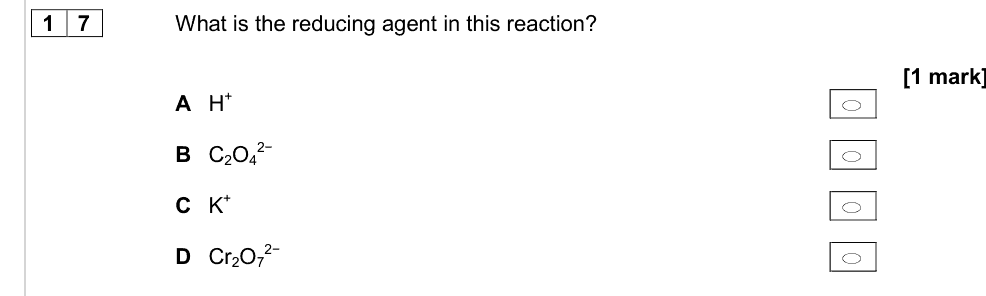
B
Questions 10-24 Multiple choice From this section of the paper items 10,11,15 and 18 were usually answered correctly. It was surprising to see that item 17 was answered poorly but it did give further evidence that redox ideas are not well understood by large numbers of students at this level. Item 20 proved difficult showing that the overall dipole possessed by a molecule clearly isn’t a well understood concept. Item 22 was also not answered correctly by most; this idea has not been tested often in the previous specification so students may not have had much prior experience of the type of question.
B
Questions 10-24 Multiple choice From this section of the paper items 10,11,15 and 18 were usually answered correctly. It was surprising to see that item 17 was answered poorly but it did give further evidence that redox ideas are not well understood by large numbers of students at this level. Item 20 proved difficult showing that the overall dipole possessed by a molecule clearly isn’t a well understood concept. Item 22 was also not answered correctly by most; this idea has not been tested often in the previous specification so students may not have had much prior experience of the type of question.
A
A
Questions 10-24 Multiple choice From this section of the paper items 10,11,15 and 18 were usually answered correctly. It was surprising to see that item 17 was answered poorly but it did give further evidence that redox ideas are not well understood by large numbers of students at this level. Item 20 proved difficult showing that the overall dipole possessed by a molecule clearly isn’t a well understood concept. Item 22 was also not answered correctly by most; this idea has not been tested often in the previous specification so students may not have had much prior experience of the type of question.
Skills: MS4.1 Use angles and shapes in regular 2D and 3D structures
C
Skills: MS0.2 Use ratios, fractions and percentages
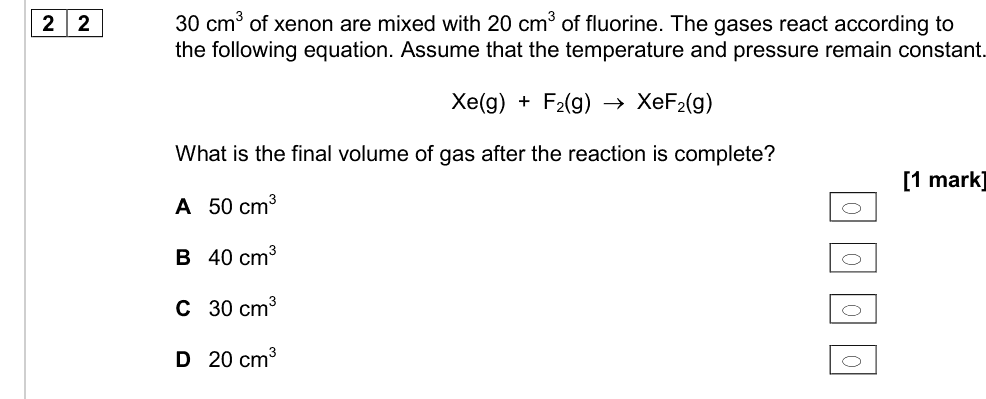
C
Questions 10-24 Multiple choice From this section of the paper items 10,11,15 and 18 were usually answered correctly. It was surprising to see that item 17 was answered poorly but it did give further evidence that redox ideas are not well understood by large numbers of students at this level. Item 20 proved difficult showing that the overall dipole possessed by a molecule clearly isn’t a well understood concept. Item 22 was also not answered correctly by most; this idea has not been tested often in the previous specification so students may not have had much prior experience of the type of question.
Skills: MS0.2 Use ratios, fractions and percentages
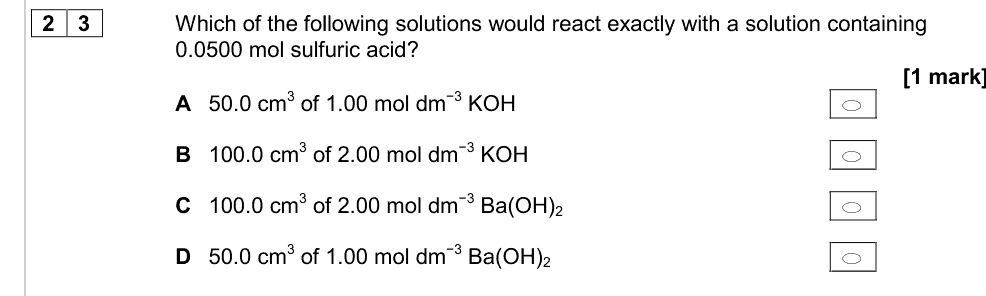
D
Skills: MS0.2 Use ratios, fractions and percentages
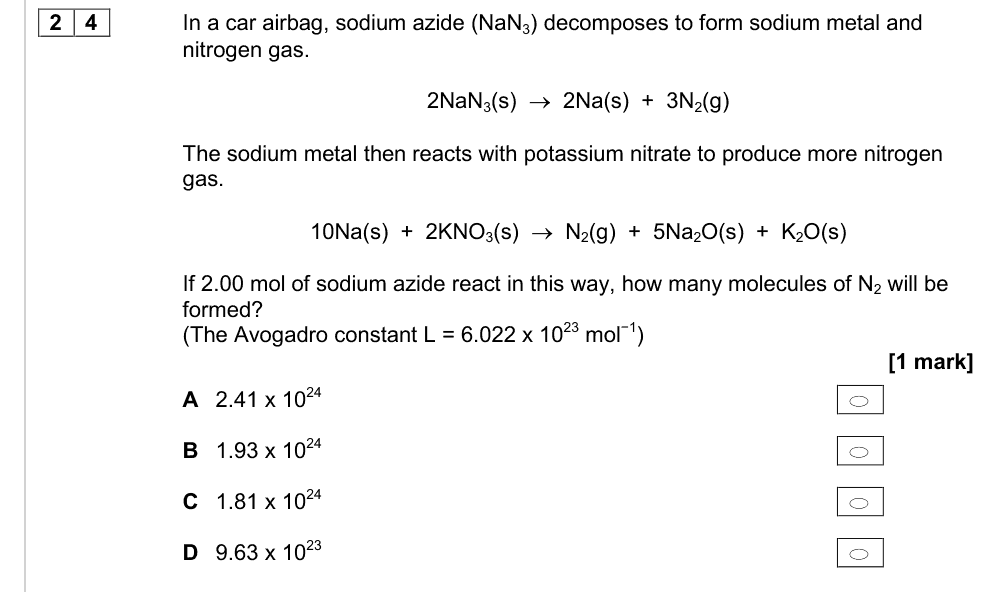
B
Skills: MS0.1 Recognise and use expressions in decimal and ordinary form; MS0.2 Use ratios, fractions and percentages
Want a paper marked and gone through with you? Message us.