
June 2024: AS Paper 2, Depth in chemistry

70 marks · 28 question parts · Paper, mark scheme and report on OCR's site · Have OCR's Data Sheet beside you

Question by question

QTopicMarksAOType
1(a) Bonding, structure and shapes of molecules 2Short answer
1(b)(i) Bonding, structure and shapes of molecules 2Complete table/diagram
1(b)(ii) Bonding, structure and shapes of molecules 1Short answer
1(b)(iii) Bonding, structure and shapes of molecules 1Short answer
1(c)(i) Bonding, structure and shapes of molecules 2Short answer
1(c)(ii) Bonding, structure and shapes of molecules 2Drawing / labelling
1(c)(iii) Qualitative analysis: tests for ions 2Short answer
1(d) Amount of substance (moles) 3Calculation
2(a)(i) Electron structure and orbitals, Periodicity and ionisation energy 3Complete table/diagram
2(a)(ii) Periodicity and ionisation energy 2Data interpretation
2(a)(iii) Group 2, The halogens 2Short answer
2(a)(iv) Group 2 1Equation writing
2(b)(i) Redox and oxidation numbers 2Short answer
2(b)(ii) Amount of substance (moles), Group 2 3Short answer
2(c)(i) Periodicity and ionisation energy 2Complete table/diagram
2(c)(ii) Periodicity and ionisation energy, Formulae and equations 2Equation writing
3(a) Enthalpy changes and Hess’ law 1Short answer
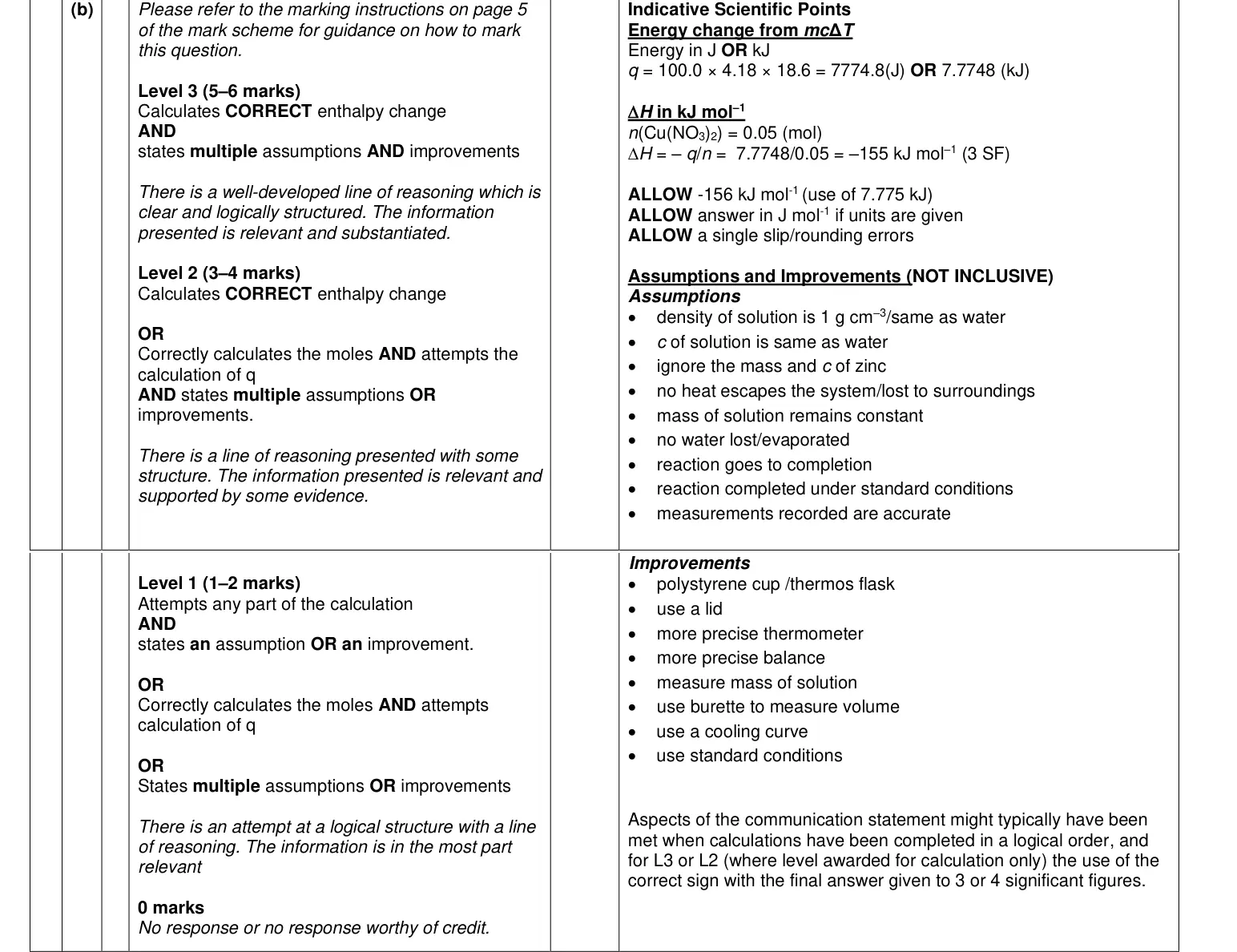
3(b) Enthalpy changes and Hess’ law, Practical skills: planning, analysis and evaluation, Amount of substance (moles) 6Level of response
3(c) Enthalpy changes and Hess’ law 2Short answer
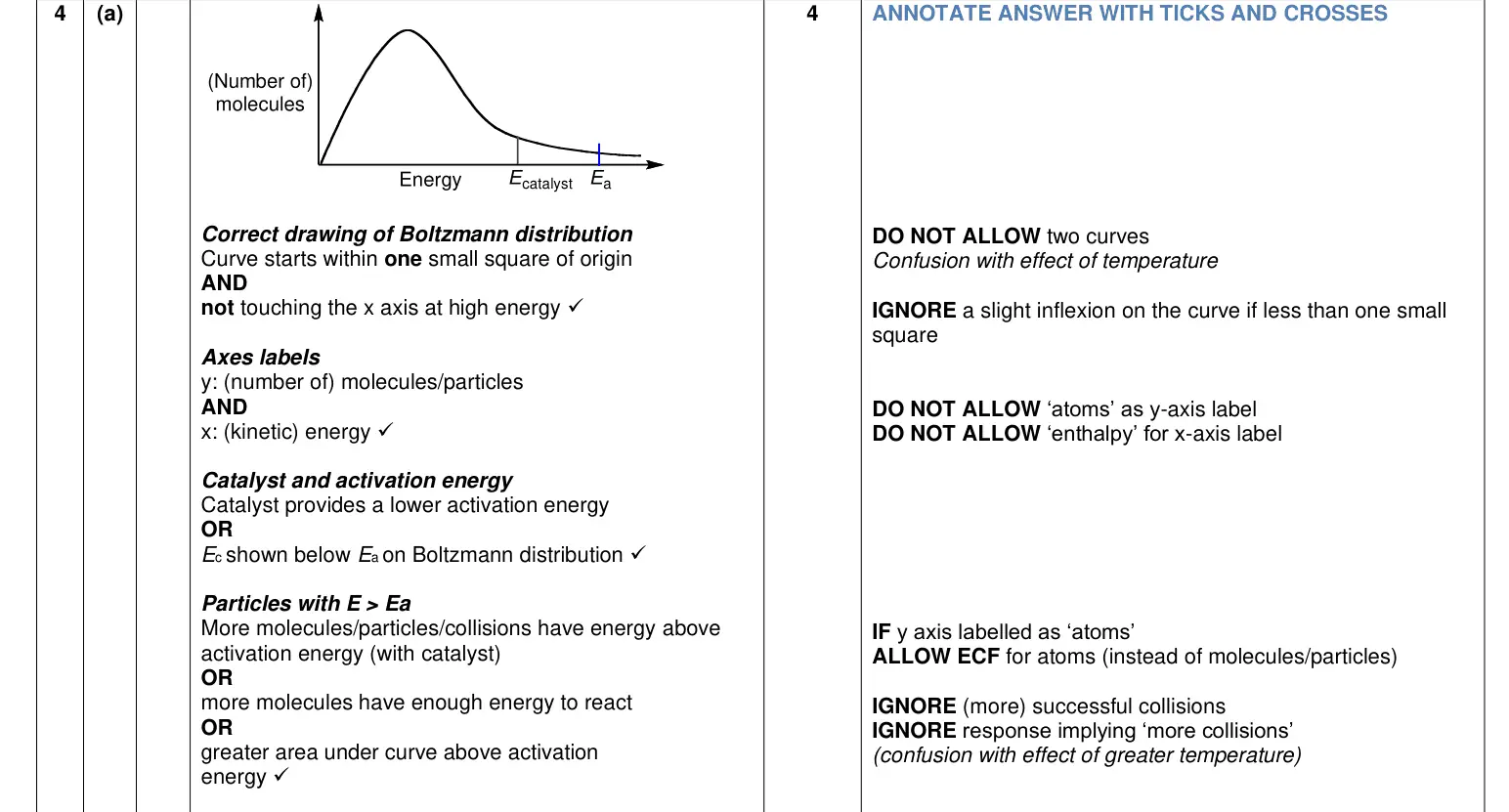
4(a) Reaction rates and the Boltzmann distribution 4Drawing / labelling
4(b)(i) Practical skills: planning, analysis and evaluation 2Drawing / labelling
4(b)(ii) Reaction rates and the Boltzmann distribution 2Calculation
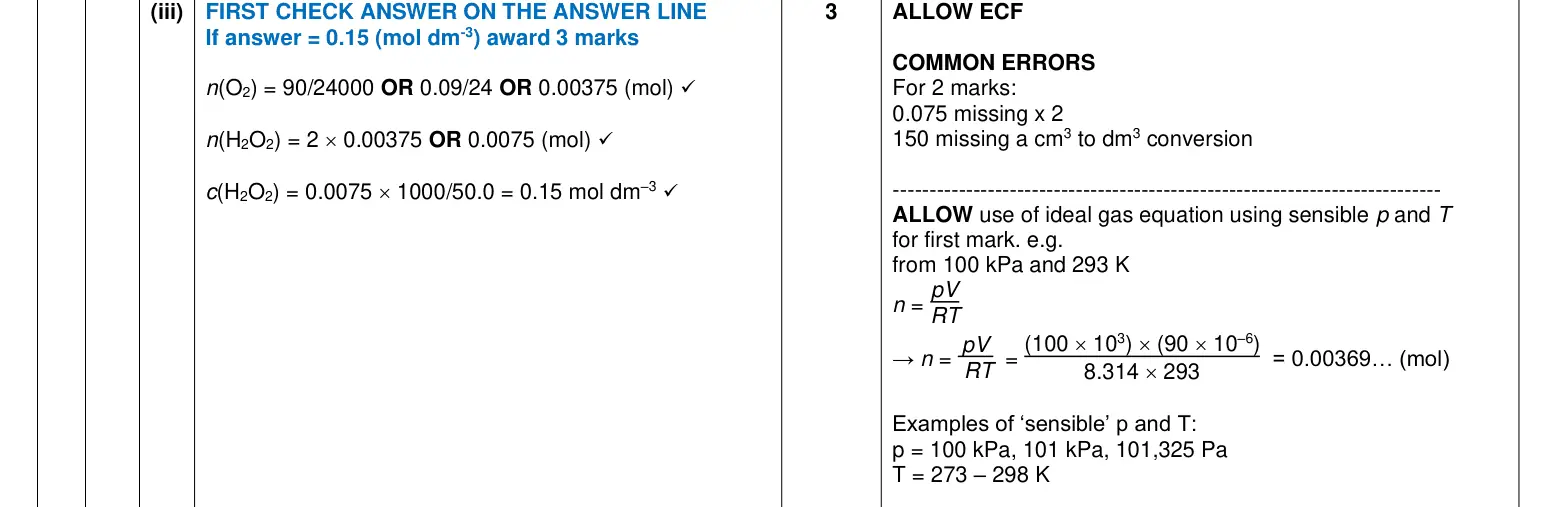
4(b)(iii) Amount of substance (moles) 3Calculation
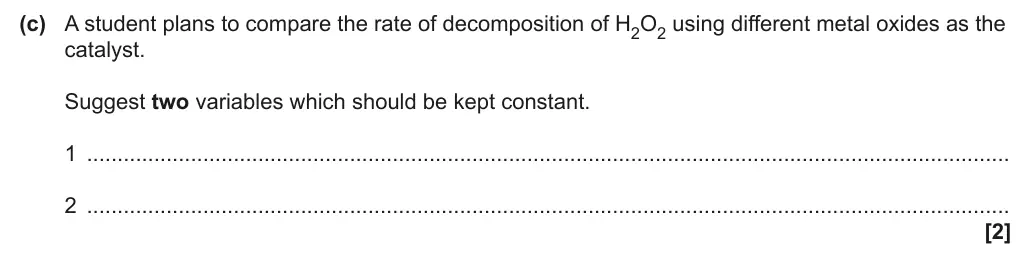
4(c) Practical skills: planning, analysis and evaluation 2Short answer
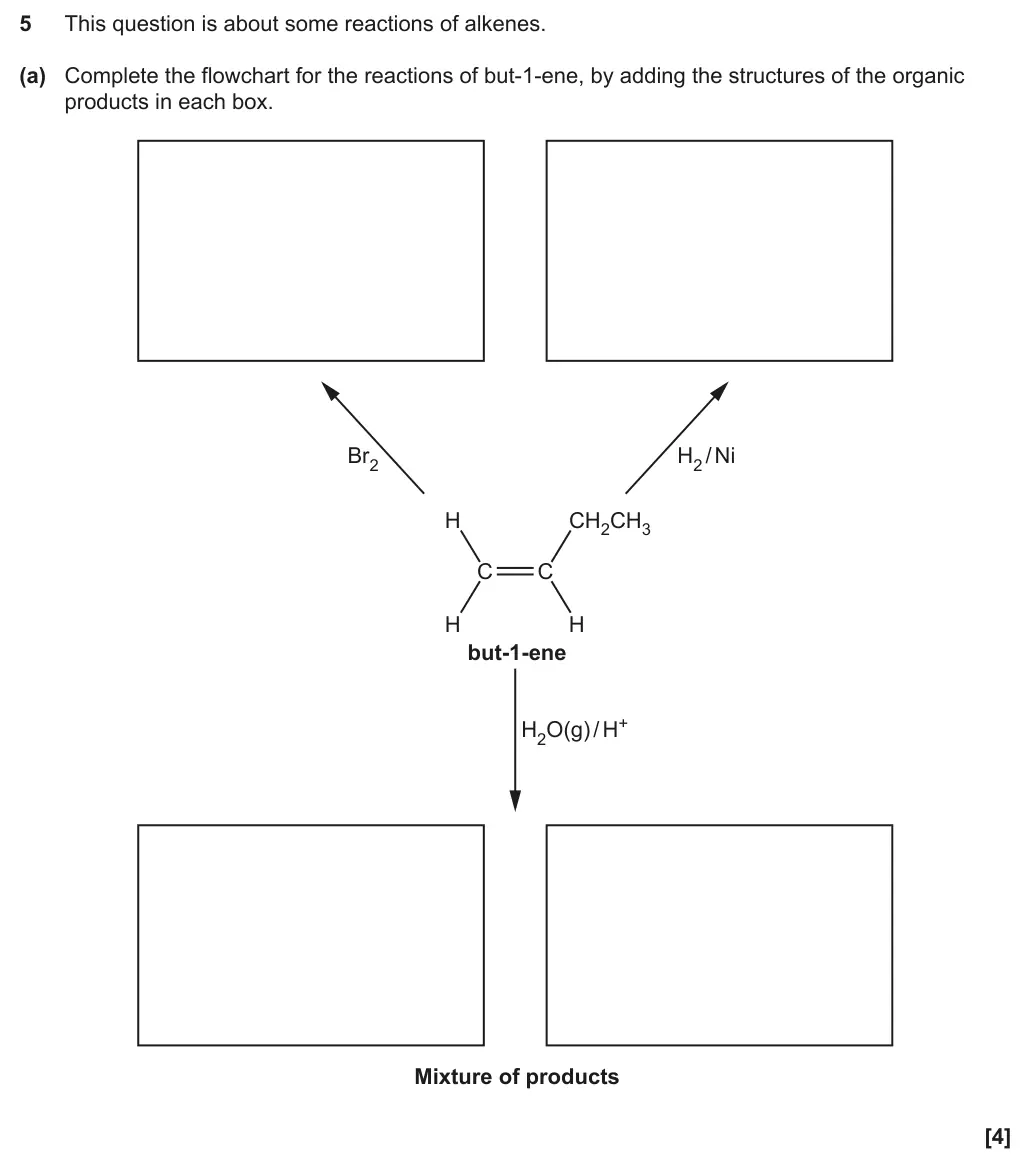
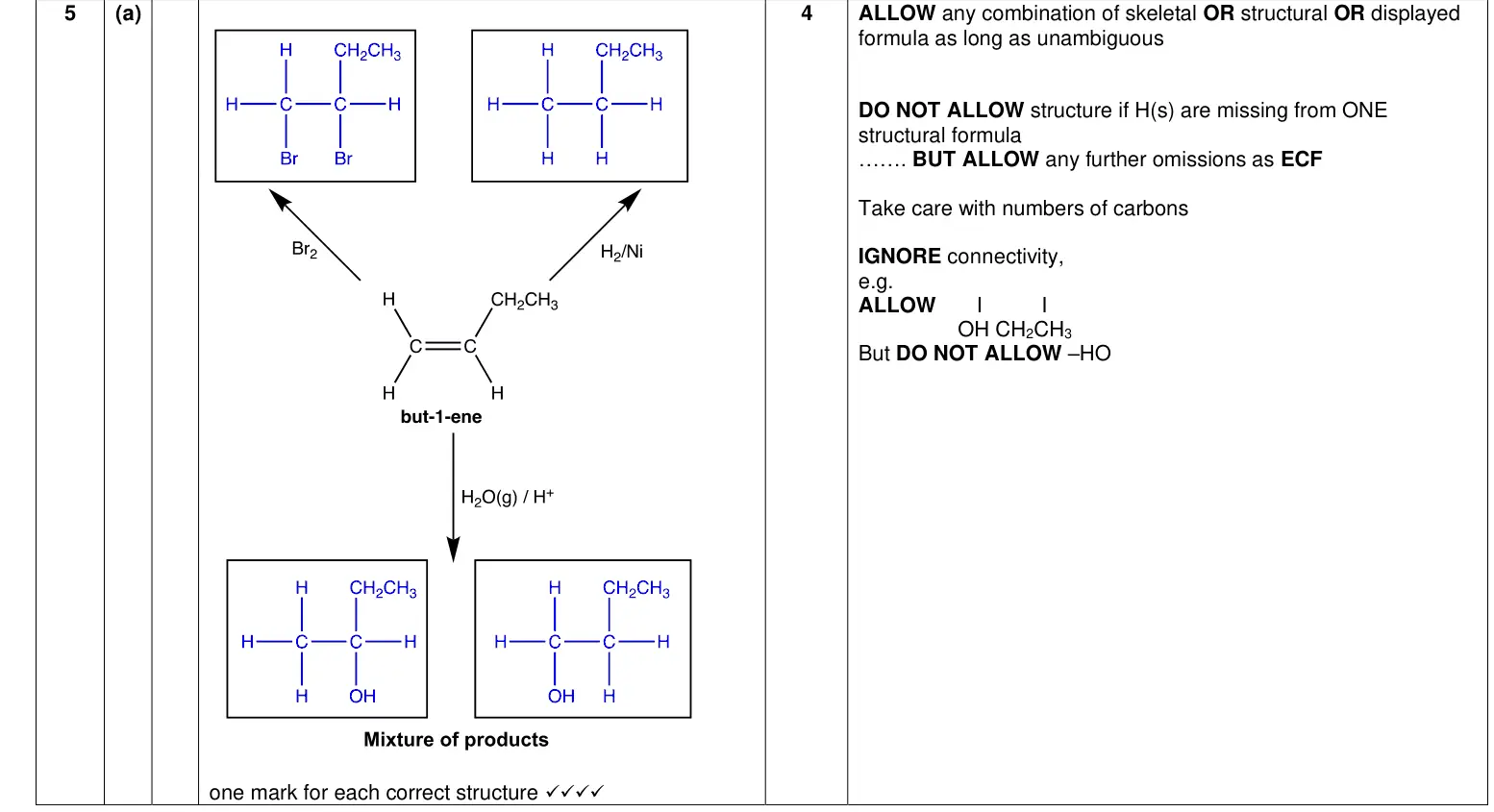
5(a) Alkenes 4Complete table/diagram
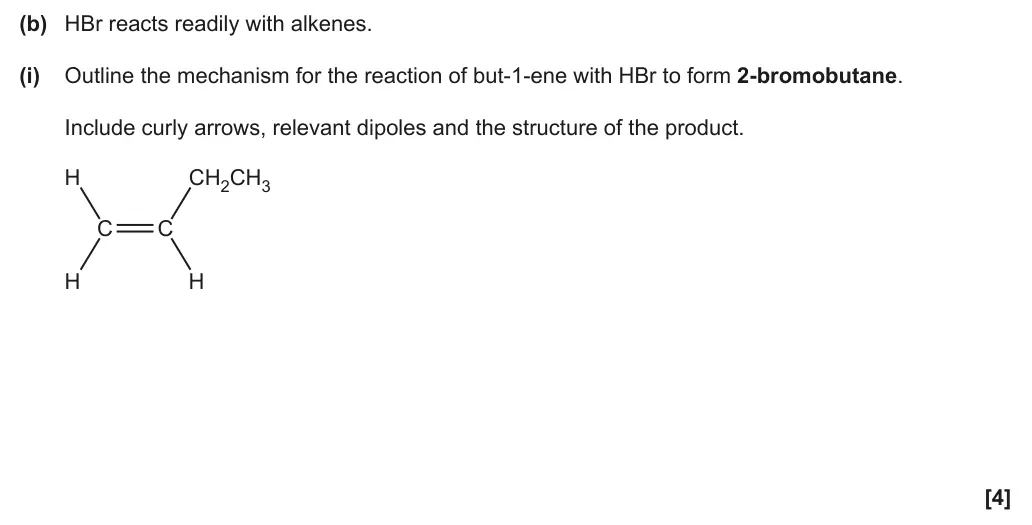
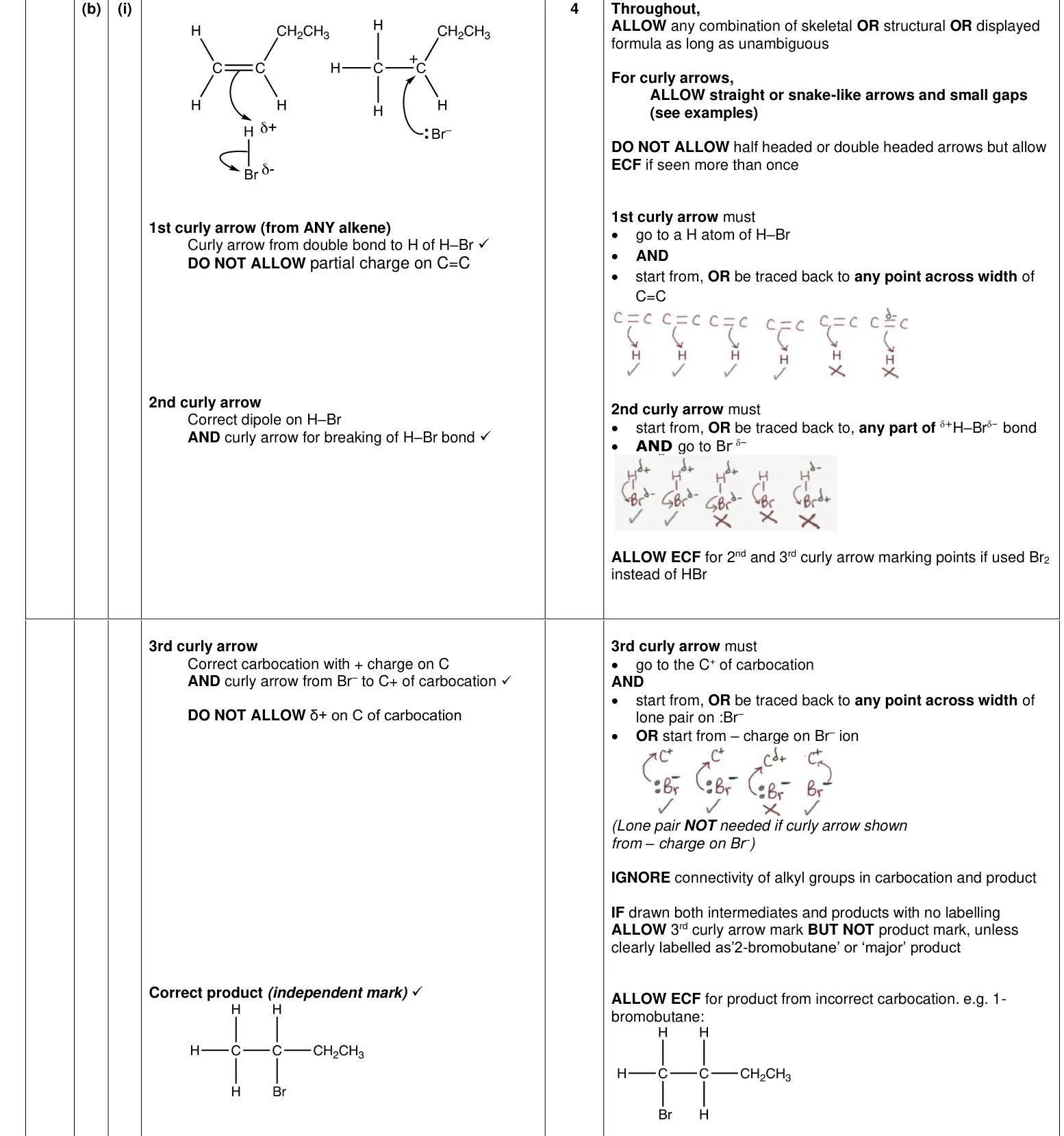
5(b)(i) Alkenes, Organic basics: naming, formulae and isomerism 4Mechanism
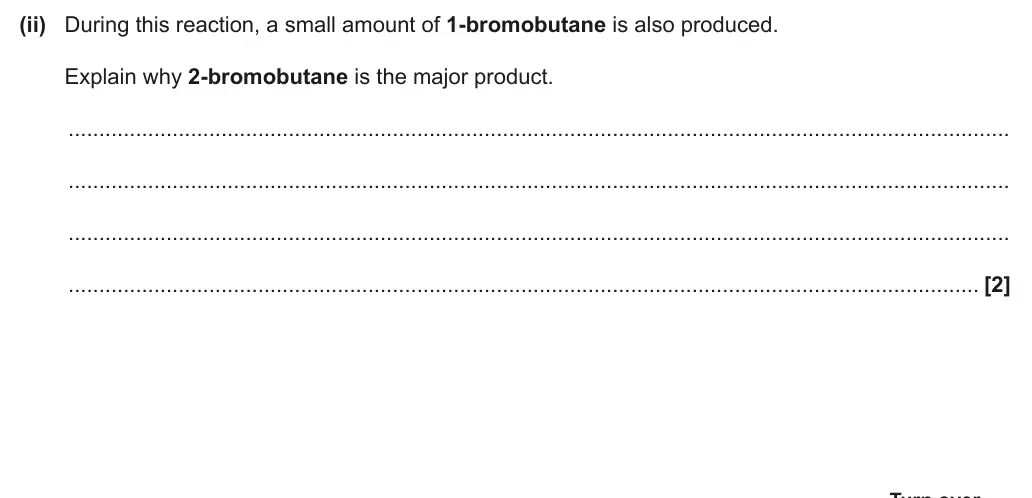
5(b)(ii) Alkenes 2Short answer
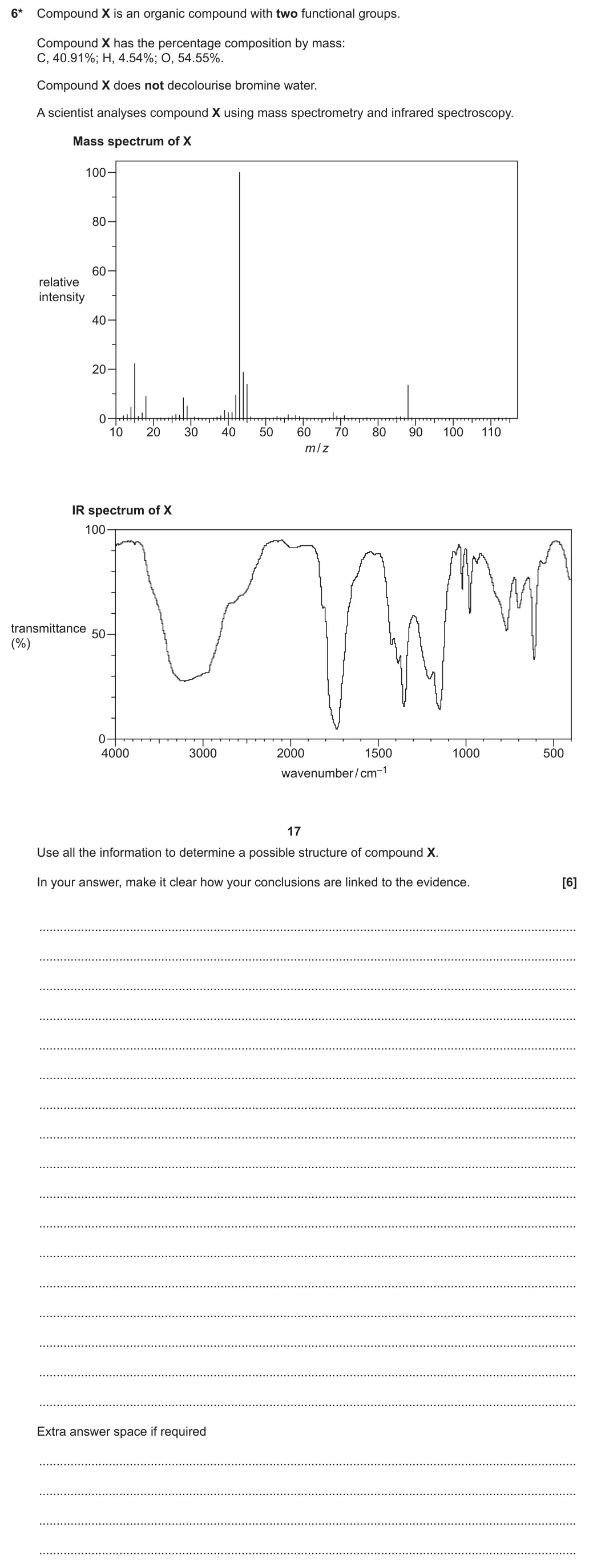
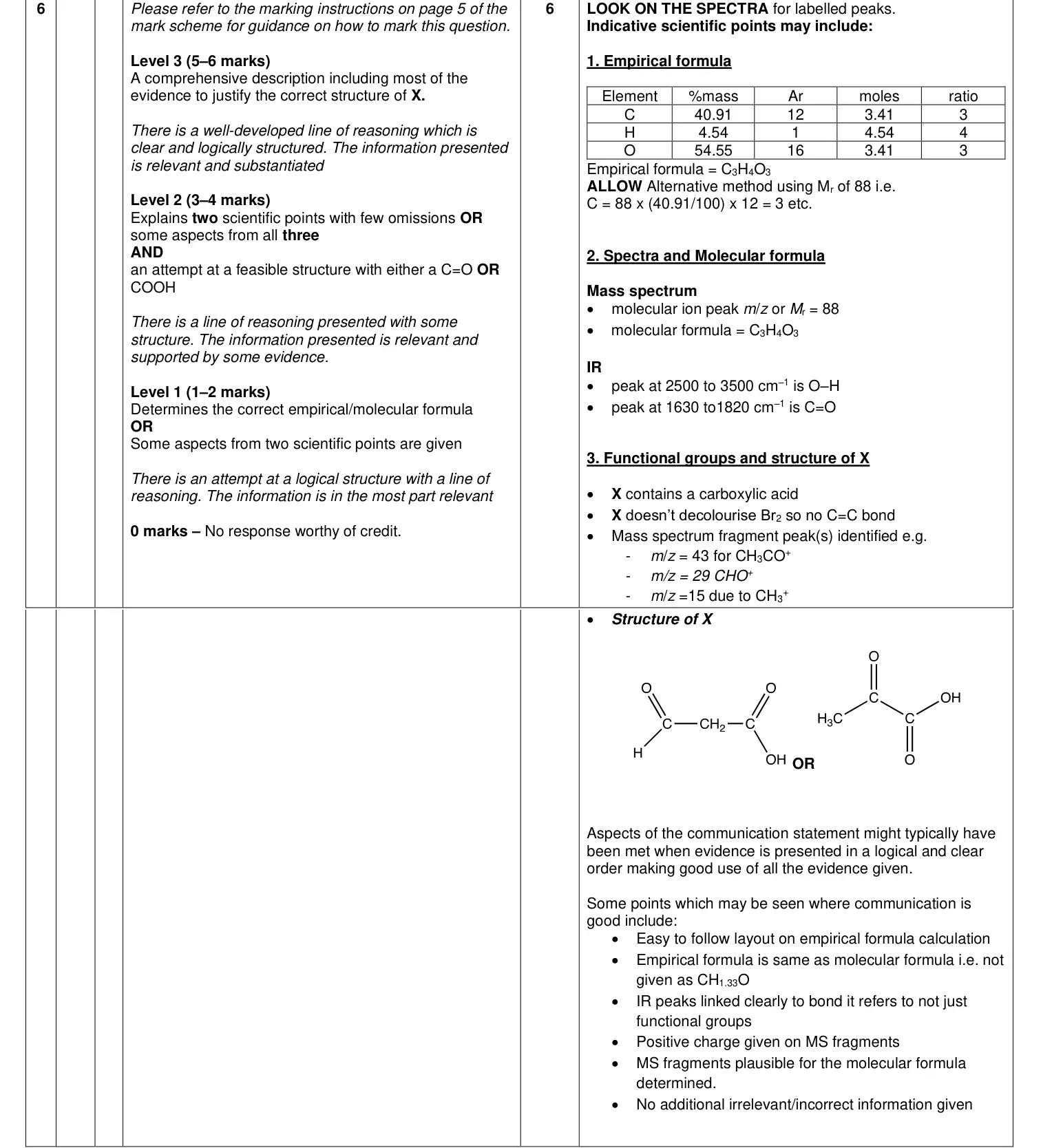
6 Infrared spectroscopy and mass spectrometry 6Level of response

The questions

1(a)1(b)(i)1(b)(ii)1(b)(iii)1(c)(i)1(c)(ii)1(c)(iii)1(d)2(a)(i)2(a)(ii)2(a)(iii)2(a)(iv)2(b)(i)2(b)(ii)2(c)(i)2(c)(ii)3(a)3(b)3(c)4(a)4(b)(i)4(b)(ii)4(b)(iii)4(c)5(a)5(b)(i)5(b)(ii)6
June 2024 · AS Paper 2 · Q1(a) 2 marks Short answer Hard bonding and structure
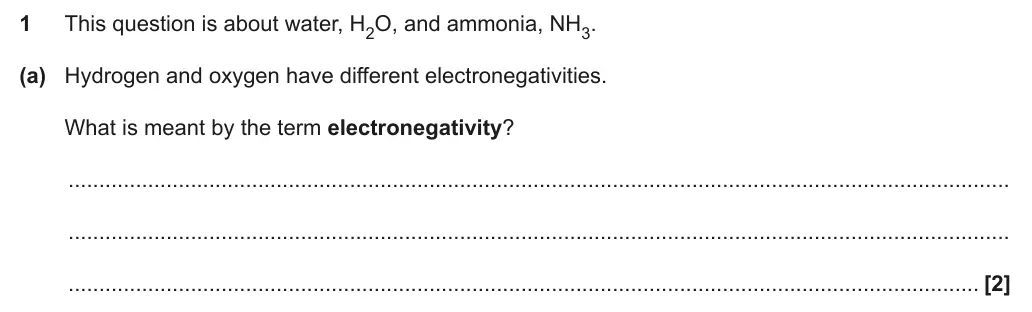
1 This question is about water, H2O, and ammonia, NH3.
(a) Hydrogen and oxygen have different electronegativities.
What is meant by the term electronegativity?
..........................................................................................................................................................
..........................................................................................................................................................
..................................................................................................................................................... [2]
June 2024 · AS Paper 2 · Q1(b)(i) 2 marks Complete table/diagram Hard bonding and structure
Earlier part of question 1 that this part usesEarlier part of June 2024 Paper 2 question 1
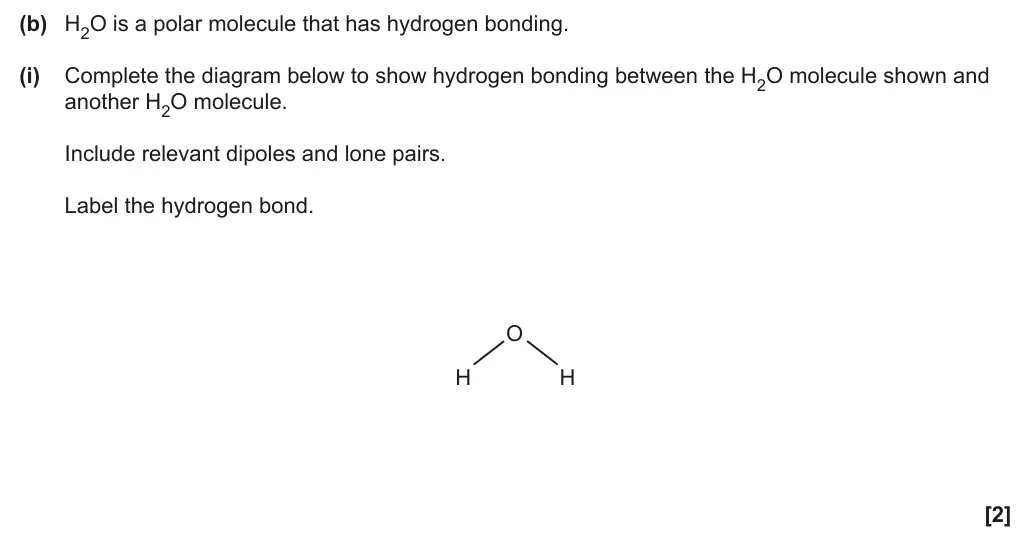
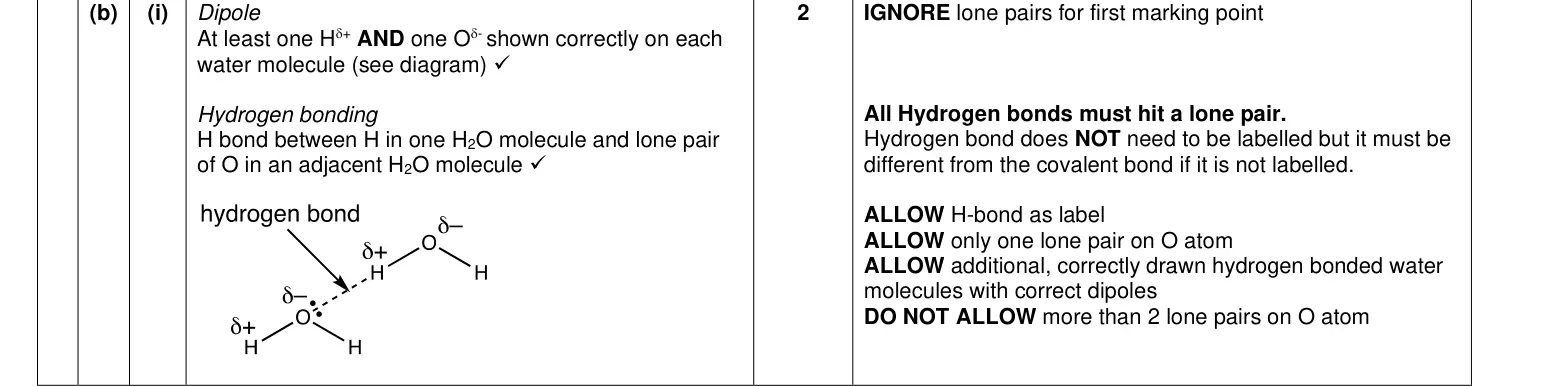
(b) H2O is a polar molecule that has hydrogen bonding.
(i) Complete the diagram below to show hydrogen bonding between the H2O molecule shown and
another H2O molecule.
Include relevant dipoles and lone pairs.
Label the hydrogen bond.
O
H H
[2]
June 2024 · AS Paper 2 · Q1(b)(ii) 1 mark Short answer Medium bonding and structure
Earlier part of question 1 that this part usesEarlier part of June 2024 Paper 2 question 1
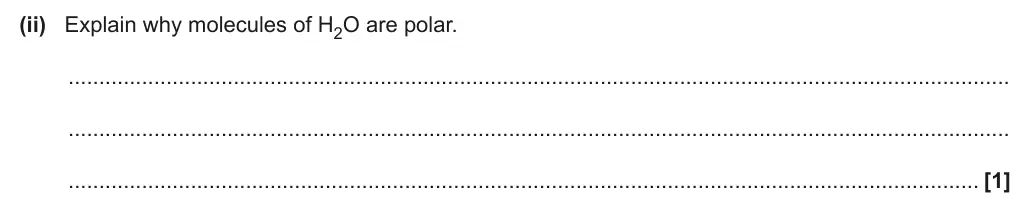
(ii) Explain why molecules of H2O are polar.
..........................................................................................................................................................
..........................................................................................................................................................
..................................................................................................................................................... [1]
June 2024 · AS Paper 2 · Q1(b)(iii) 1 mark Short answer Hard bonding and structure
Earlier part of question 1 that this part usesEarlier part of June 2024 Paper 2 question 1
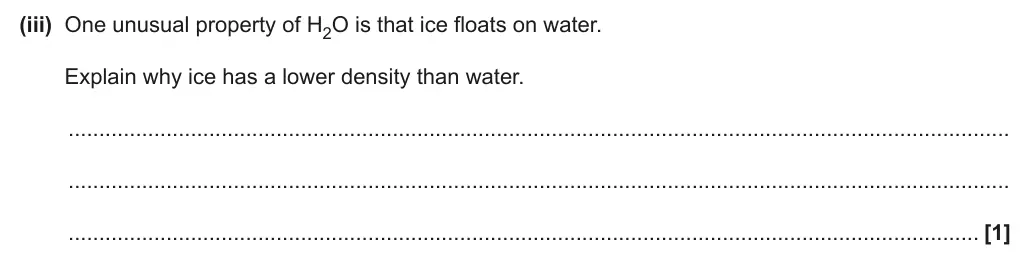
(iii) One unusual property of H2O is that ice floats on water.
Explain why ice has a lower density than water.
..........................................................................................................................................................
..........................................................................................................................................................
..................................................................................................................................................... [1]
June 2024 · AS Paper 2 · Q1(c)(i) 2 marks Short answer Hard bonding and structure
Earlier part of question 1 that this part usesEarlier part of June 2024 Paper 2 question 1
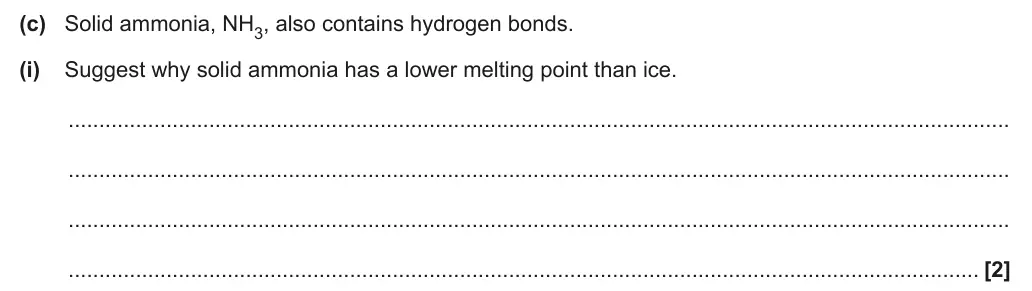
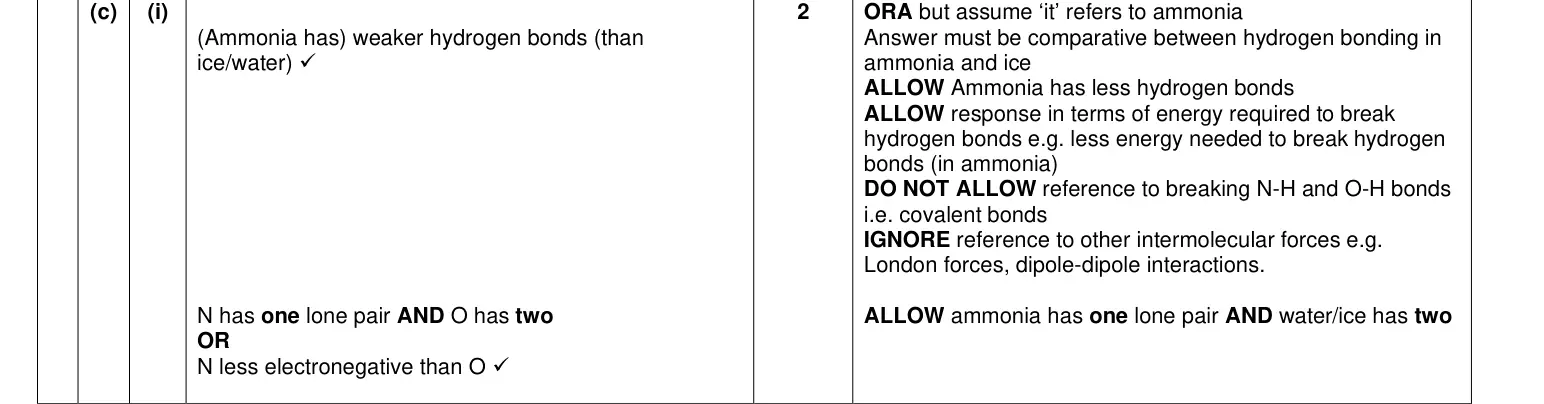
(c) Solid ammonia, NH3, also contains hydrogen bonds.
(i) Suggest why solid ammonia has a lower melting point than ice.
..........................................................................................................................................................
..........................................................................................................................................................
..........................................................................................................................................................
..................................................................................................................................................... [2]
June 2024 · AS Paper 2 · Q1(c)(ii) 2 marks Drawing / labelling Medium bonding and structure
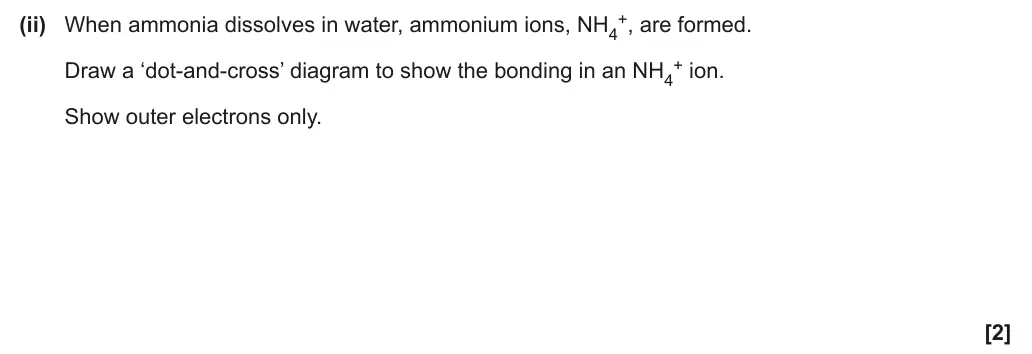
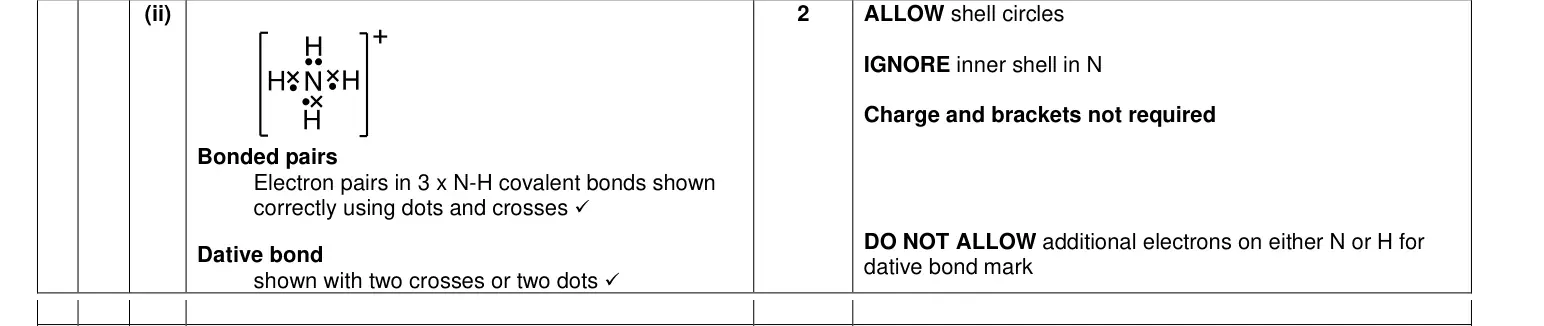
(ii) When ammonia dissolves in water, ammonium ions, NH4 +, are formed.
Draw a ‘dot-and-cross’ diagram to show the bonding in an NH4 + ion.
Show outer electrons only.
[2]
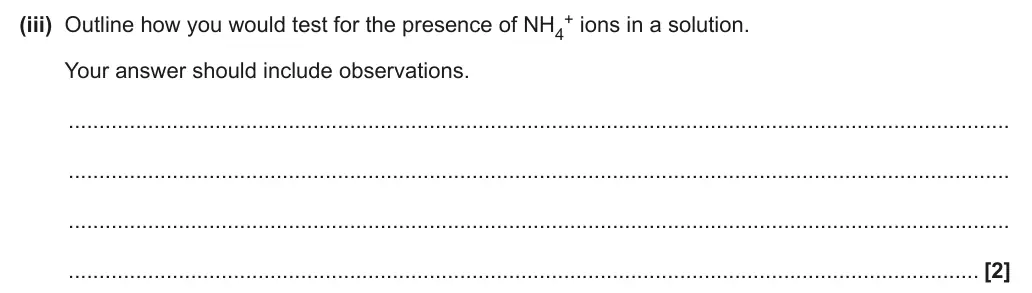
June 2024 · AS Paper 2 · Q1(c)(iii) 2 marks Short answer Medium qualitative analysis
(iii) Outline how you would test for the presence of NH4 + ions in a solution.
Your answer should include observations.
..........................................................................................................................................................
..........................................................................................................................................................
..........................................................................................................................................................
..................................................................................................................................................... [2]
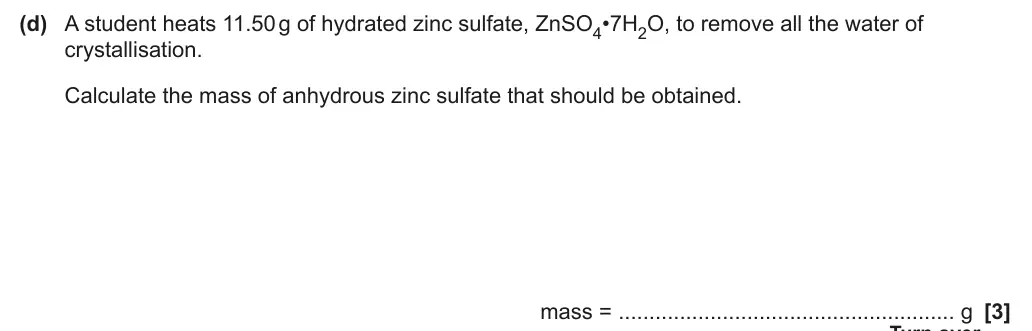
June 2024 · AS Paper 2 · Q1(d) 3 marks Calculation Hard amount of substance
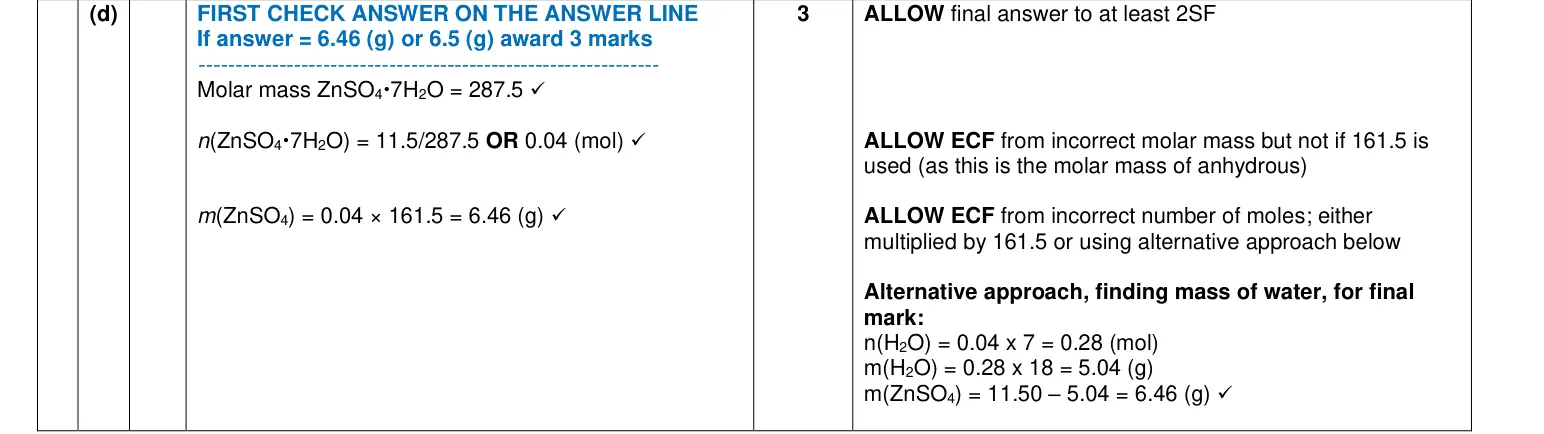
(d) A student heats 11.50 g of hydrated zinc sulfate, ZnSO4•7H2O, to remove all the water of
crystallisation.
Calculate the mass of anhydrous zinc sulfate that should be obtained.
mass =  ....................................................... g [3]
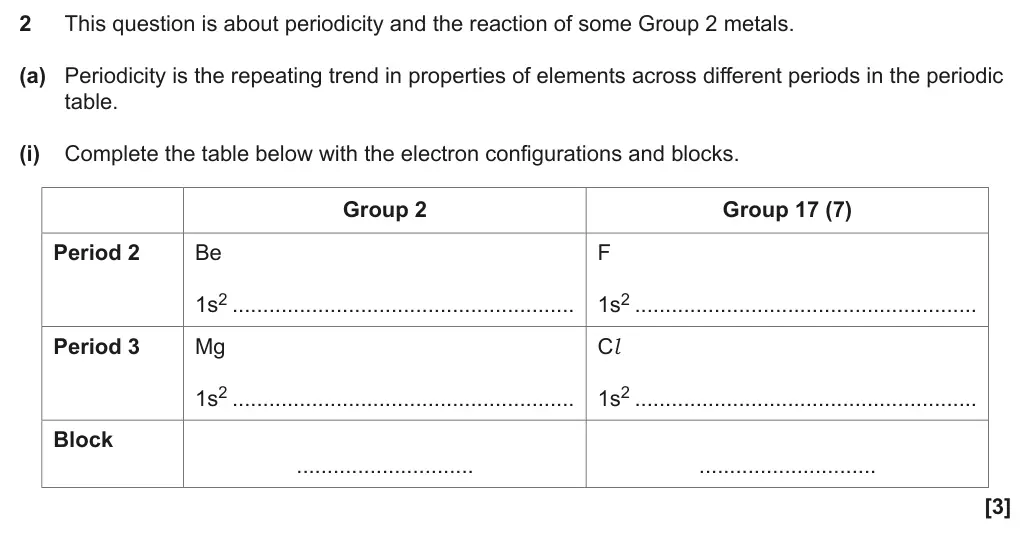
June 2024 · AS Paper 2 · Q2(a)(i) 3 marks Complete table/diagram Easy electron structureperiodicity
2 This question is about periodicity and the reaction of some Group 2 metals.
(a) Periodicity is the repeating trend in properties of elements across different periods in the periodic
table.
(i) Complete the table below with the electron configurations and blocks.
Group 2 Group 17 (7)
Period 2 Be F
1s2 ........................................................ 1s2 ........................................................
Period 3 Mg Cl
1s2 ........................................................ 1s2 ........................................................
Block
............................. .............................
[3]
June 2024 · AS Paper 2 · Q2(a)(ii) 2 marks Data interpretation Hard periodicity
Earlier part of question 2 that this part usesEarlier part of June 2024 Paper 2 question 2
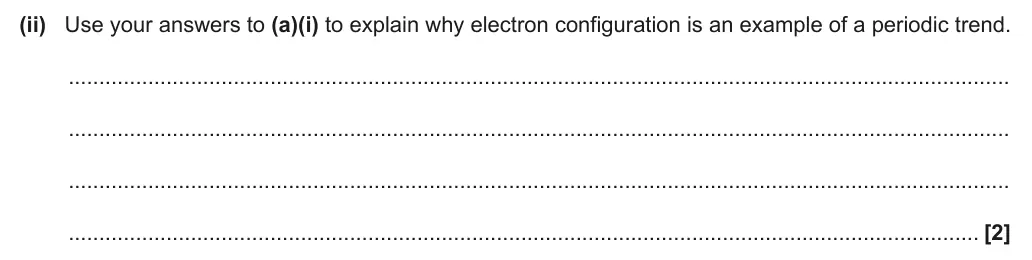
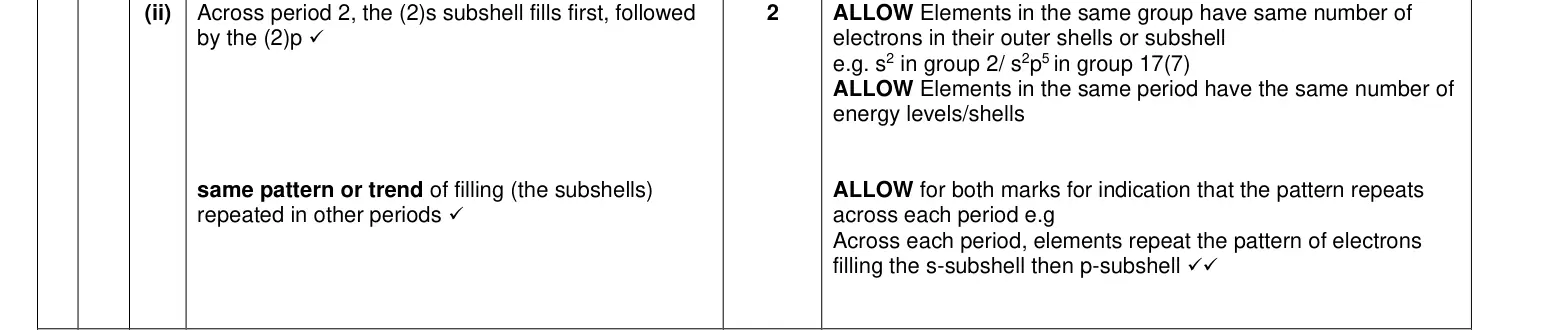
(ii) Use your answers to (a)(i) to explain why electron configuration is an example of a periodic trend.
..........................................................................................................................................................
..........................................................................................................................................................
..........................................................................................................................................................
..................................................................................................................................................... [2]
June 2024 · AS Paper 2 · Q2(a)(iii) 2 marks Short answer Easy group 2halogens
Earlier part of question 2 that this part usesEarlier part of June 2024 Paper 2 question 2
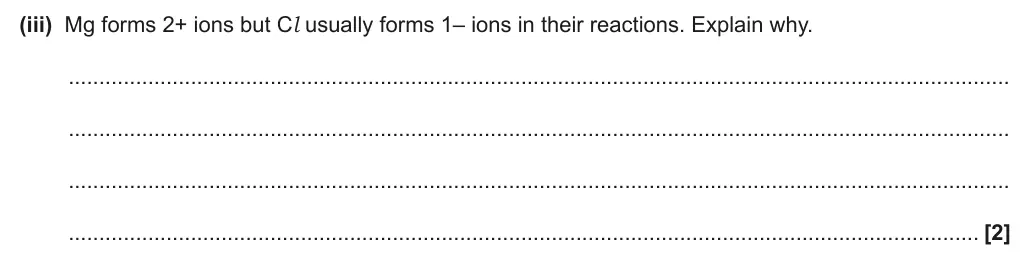
(iii) Mg forms 2+ ions but Cl usually forms 1– ions in their reactions. Explain why.
..........................................................................................................................................................
..........................................................................................................................................................
..........................................................................................................................................................
..................................................................................................................................................... [2]
June 2024 · AS Paper 2 · Q2(a)(iv) 1 mark Equation writing Medium group 2
(iv) Magnesium reacts with oxygen in the air.
Write the equation for this reaction.
..................................................................................................................................................... [1]
June 2024 · AS Paper 2 · Q2(b)(i) 2 marks Short answer Medium redox
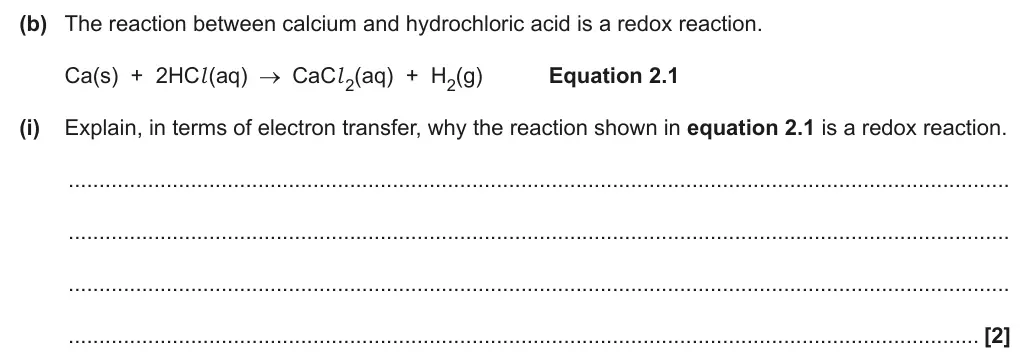
(b) The reaction between calcium and hydrochloric acid is a redox reaction.
Ca(s)  +  2HCl (aq) CaCl 2(aq)  +  H2(g)   Equation 2.1
(i) Explain, in terms of electron transfer, why the reaction shown in equation 2.1 is a redox reaction.
..........................................................................................................................................................
..........................................................................................................................................................
..........................................................................................................................................................
..................................................................................................................................................... [2]
June 2024 · AS Paper 2 · Q2(b)(ii) 3 marks Short answer Medium amount of substancegroup 2
Earlier part of question 2 that this part usesEarlier part of June 2024 Paper 2 question 2
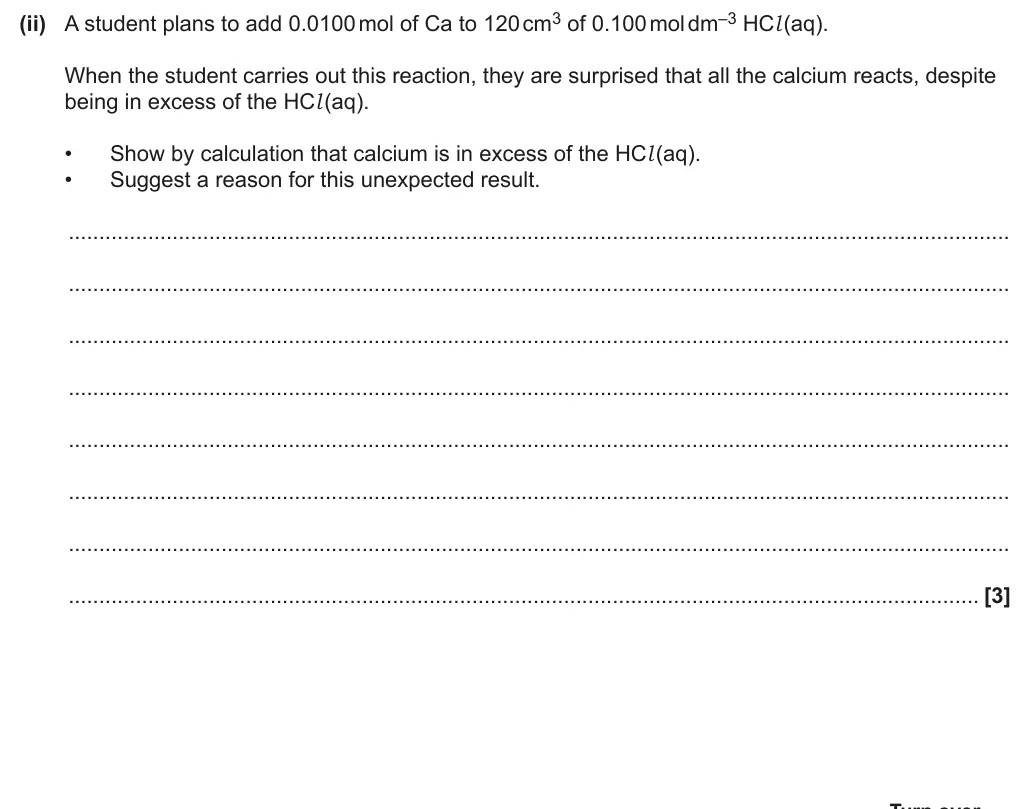
(ii) A student plans to add 0.0100 mol of Ca to 120 cm3 of 0.100 mol dm–3 HCl (aq).
When the student carries out this reaction, they are surprised that all the calcium reacts, despite
being in excess of the HCl (aq).
• Show by calculation that calcium is in excess of the HCl (aq).
• Suggest a reason for this unexpected result.
..........................................................................................................................................................
..........................................................................................................................................................
..........................................................................................................................................................
..........................................................................................................................................................
..........................................................................................................................................................
..........................................................................................................................................................
..........................................................................................................................................................
..................................................................................................................................................... [3]
June 2024 · AS Paper 2 · Q2(c)(i) 2 marks Complete table/diagram Medium periodicity
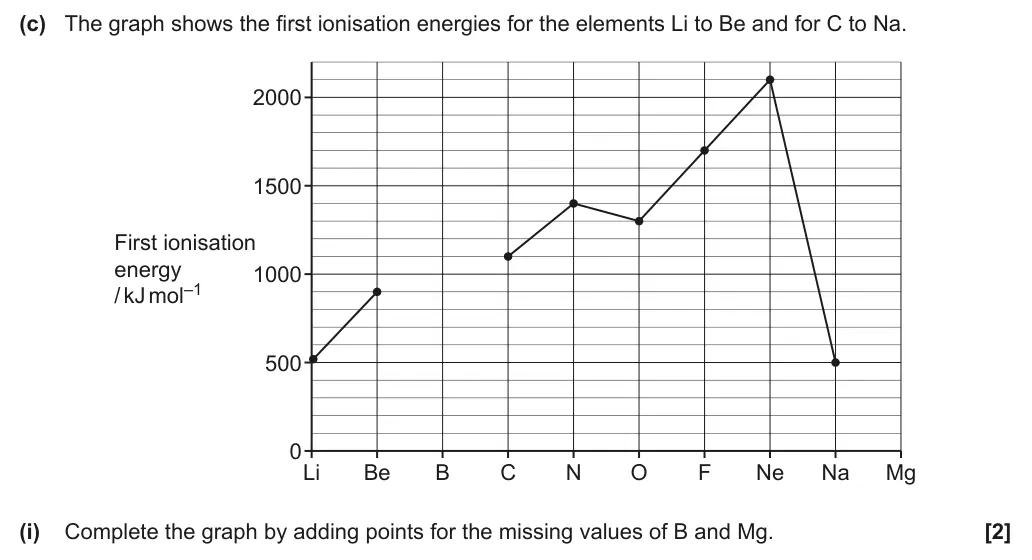
(c) The graph shows the first ionisation energies for the elements Li to Be and for C to Na.
2000
1500
First ionisation
energy 1000
/ kJ mol–1
500
0
Li Be B C N O F Ne Na Mg
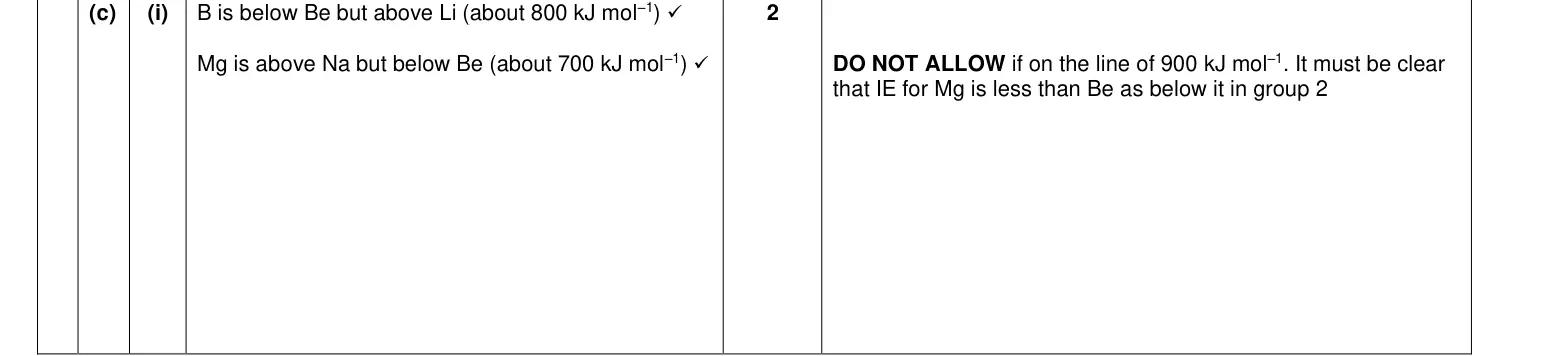
(i) Complete the graph by adding points for the missing values of B and Mg. [2]
June 2024 · AS Paper 2 · Q2(c)(ii) 2 marks Equation writing Medium periodicityformulae and equations
Earlier part of question 2 that this part usesEarlier part of June 2024 Paper 2 question 2
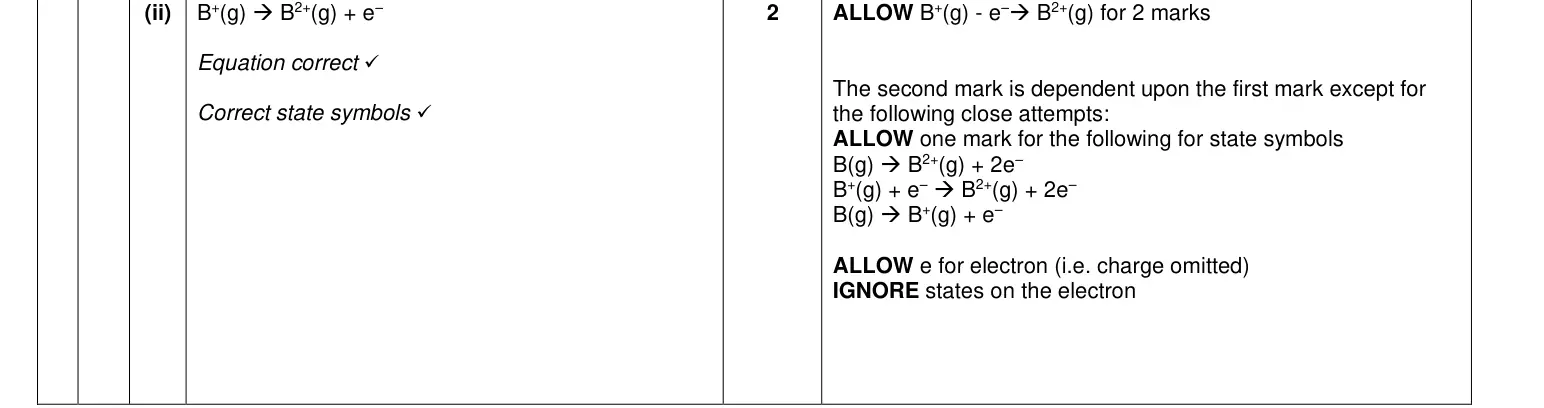
(ii) Write an equation, including state symbols, to represent the second ionisation energy of B.
..................................................................................................................................................... [2]
June 2024 · AS Paper 2 · Q3(a) 1 mark Short answer Hard enthalpy changes
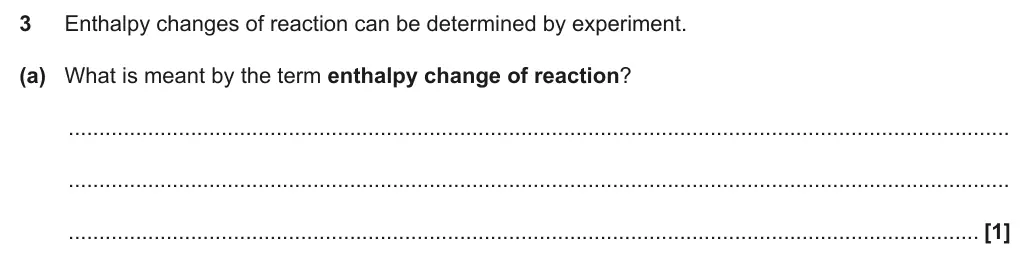
3 Enthalpy changes of reaction can be determined by experiment.
(a) What is meant by the term enthalpy change of reaction?
..........................................................................................................................................................
..........................................................................................................................................................
..................................................................................................................................................... [1]
June 2024 · AS Paper 2 · Q3(b) 6 marks 6-mark level of response Hard enthalpy changespractical skillsamount of substance
Earlier part of question 3 that this part usesEarlier part of June 2024 Paper 2 question 3
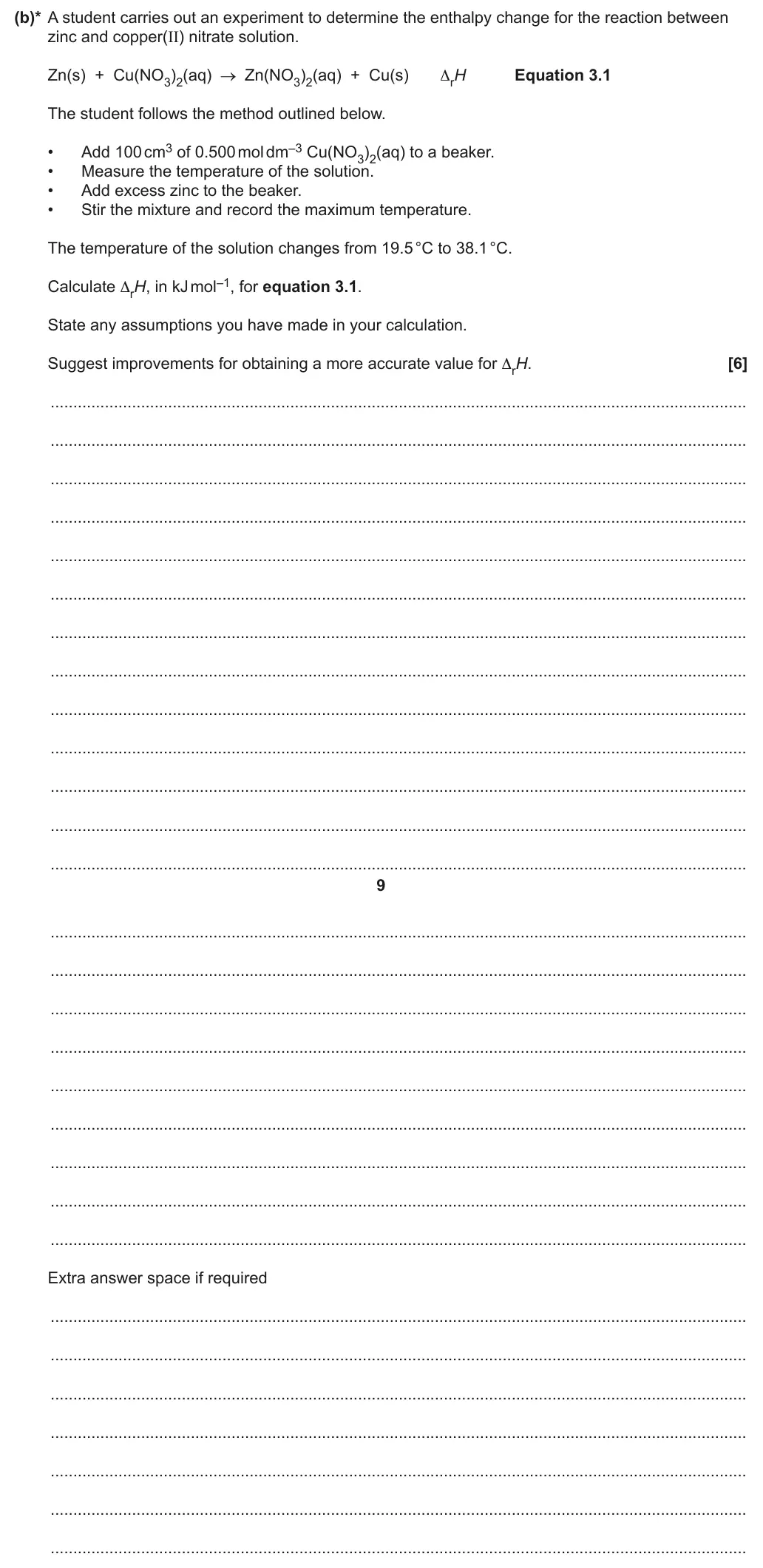
(b)* A student carries out an experiment to determine the enthalpy change for the reaction between
zinc and copper(II) nitrate solution.
Zn(s)  +  Cu(NO3)2(aq) Zn(NO3)2(aq)  +  Cu(s) ΔrH   Equation 3.1
The student follows the method outlined below.
• Add 100 cm3 of 0.500 mol dm–3 Cu(NO3)2(aq) to a beaker.
• Measure the temperature of the solution.
• Add excess zinc to the beaker.
• Stir the mixture and record the maximum temperature.
The temperature of the solution changes from 19.5 °C to 38.1 °C.
Calculate ΔrH, in kJ mol–1, for equation 3.1.
State any assumptions you have made in your calculation.
Suggest improvements for obtaining a more accurate value for ΔrH. [6]
..........................................................................................................................................................
..........................................................................................................................................................
..........................................................................................................................................................
..........................................................................................................................................................
..........................................................................................................................................................
..........................................................................................................................................................
..........................................................................................................................................................
..........................................................................................................................................................
..........................................................................................................................................................
..........................................................................................................................................................
..........................................................................................................................................................
..........................................................................................................................................................
..........................................................................................................................................................
..........................................................................................................................................................
..........................................................................................................................................................
..........................................................................................................................................................
..........................................................................................................................................................
..........................................................................................................................................................
..........................................................................................................................................................
..........................................................................................................................................................
..........................................................................................................................................................
..........................................................................................................................................................
Extra answer space if required
..........................................................................................................................................................
..........................................................................................................................................................
..........................................................................................................................................................
..........................................................................................................................................................
..........................................................................................................................................................
..........................................................................................................................................................
..........................................................................................................................................................
June 2024 · AS Paper 2 · Q3(c) 2 marks Short answer Medium enthalpy changes
Earlier part of question 3 that this part usesEarlier part of June 2024 Paper 2 question 3
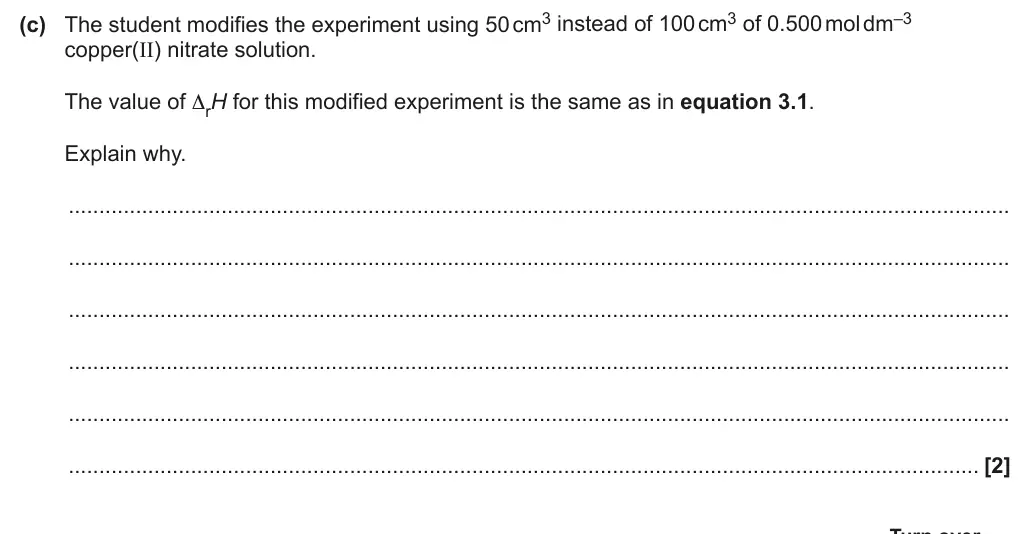
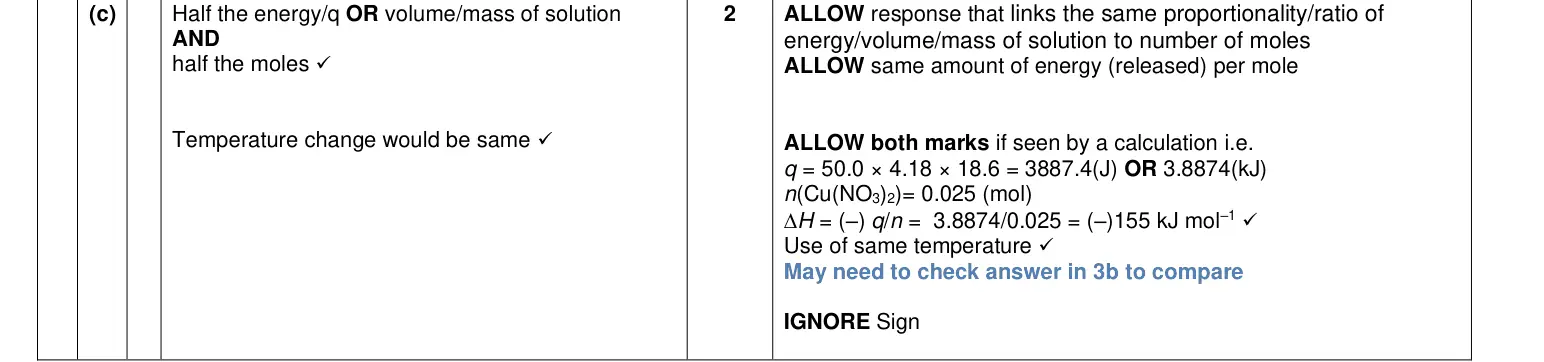
(c) The student modifies the experiment using 50 cm3 instead of 100 cm3 of 0.500 mol dm–3
copper(II) nitrate solution.
The value of ΔrH for this modified experiment is the same as in equation 3.1.
Explain why.
..........................................................................................................................................................
..........................................................................................................................................................
..........................................................................................................................................................
..........................................................................................................................................................
..........................................................................................................................................................
..................................................................................................................................................... [2]
June 2024 · AS Paper 2 · Q4(a) 4 marks Drawing / labelling Hard reaction rates
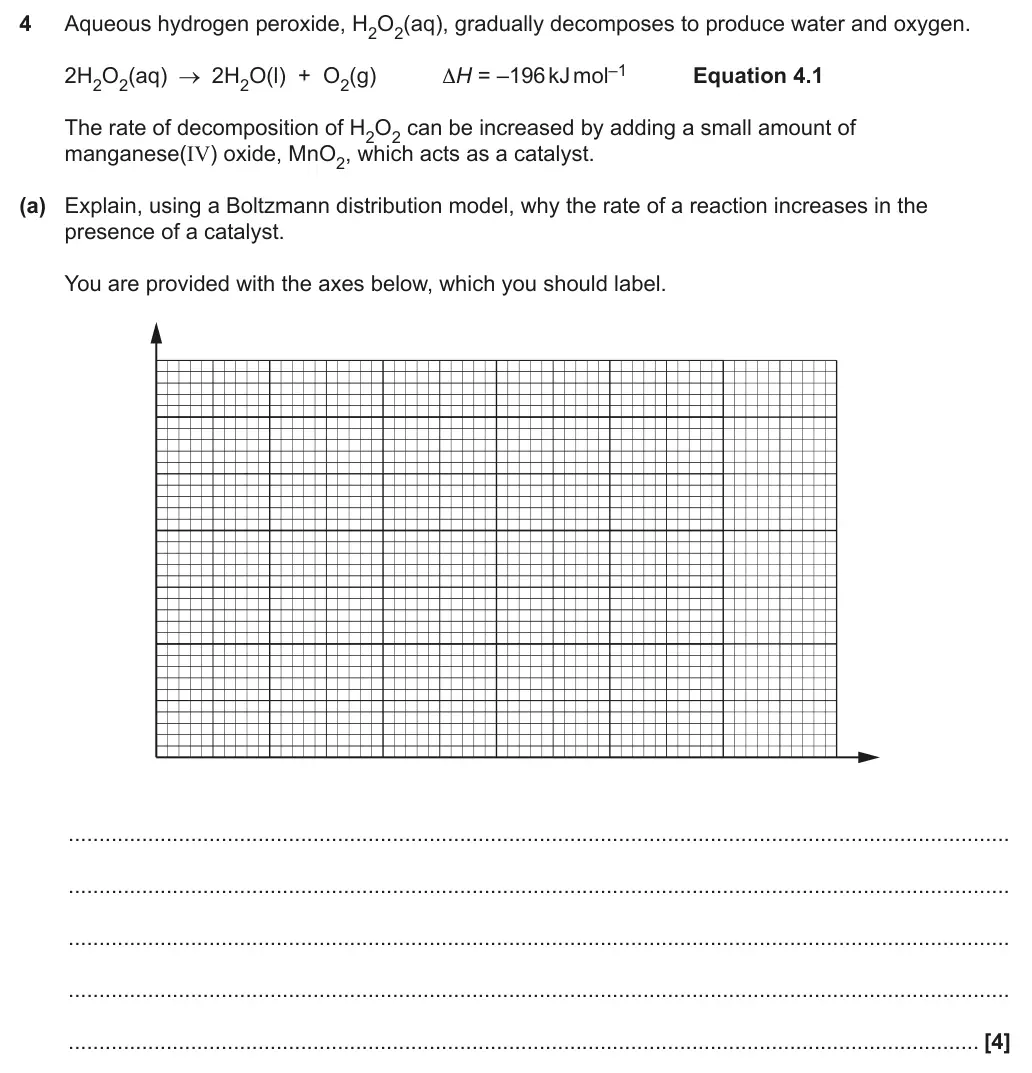
4 Aqueous hydrogen peroxide, H2O2(aq), gradually decomposes to produce water and oxygen.
2H2O2(aq) 2H2O(l)  +  O2(g)   ΔH = –196 kJ mol–1   Equation 4.1
The rate of decomposition of H2O2 can be increased by adding a small amount of
manganese(IV) oxide, MnO2, which acts as a catalyst.
(a) Explain, using a Boltzmann distribution model, why the rate of a reaction increases in the
presence of a catalyst.
You are provided with the axes below, which you should label.
..........................................................................................................................................................
..........................................................................................................................................................
..........................................................................................................................................................
..........................................................................................................................................................
..................................................................................................................................................... [4]
June 2024 · AS Paper 2 · Q4(b)(i) 2 marks Drawing / labelling Hard practical skills
Earlier part of question 4 that this part usesEarlier part of June 2024 Paper 2 question 4
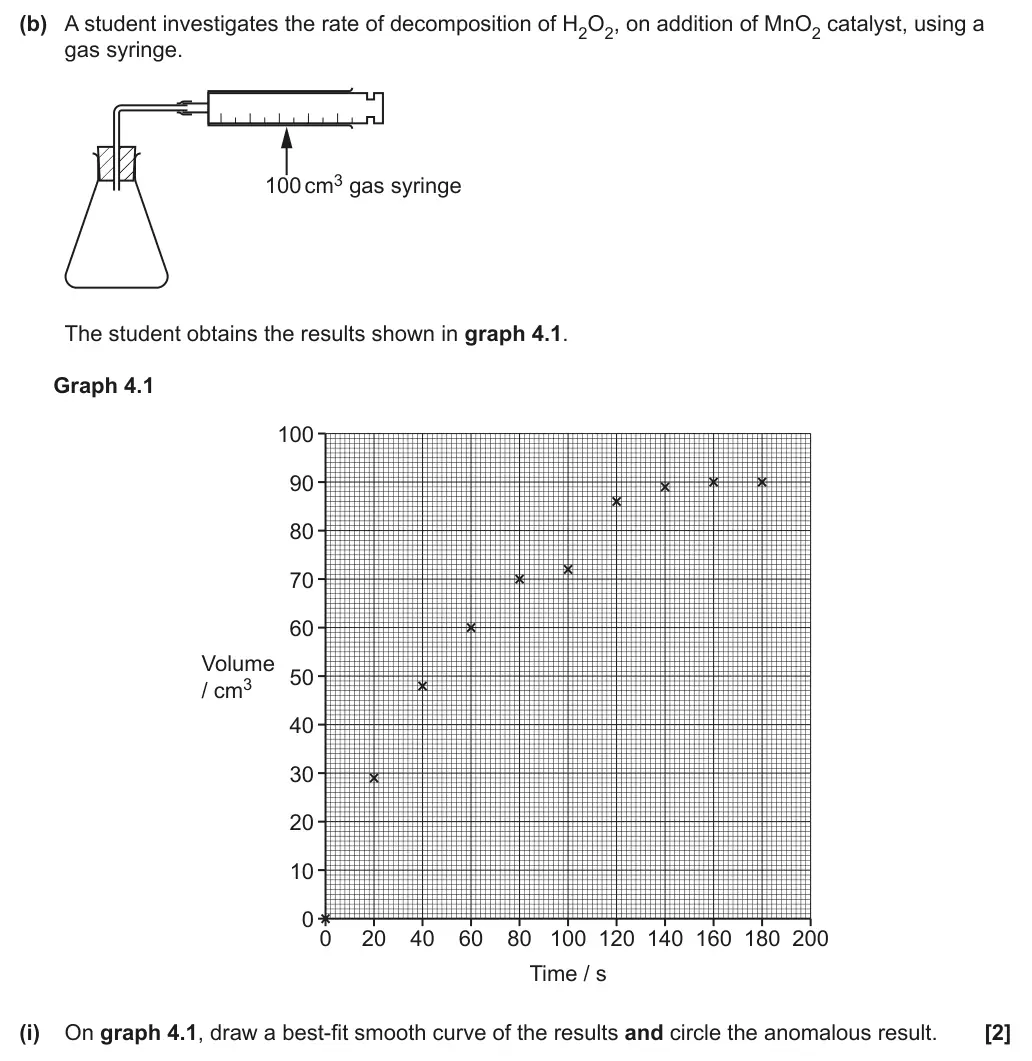
(b) A student investigates the rate of decomposition of H2O2, on addition of MnO2 catalyst, using a
gas syringe.
100 cm3 gas syringe
The student obtains the results shown in graph 4.1.
Graph 4.1
100
90
80
70
60
Volume
50
/ cm3
40
30
20
10
0
0 20 40 60 80 100 120 140 160 180 200
Time / s
(i) On graph 4.1, draw a best-fit smooth curve of the results and circle the anomalous result. [2]
June 2024 · AS Paper 2 · Q4(b)(ii) 2 marks Calculation Medium reaction rates
Earlier part of question 4 that this part usesEarlier part of June 2024 Paper 2 question 4
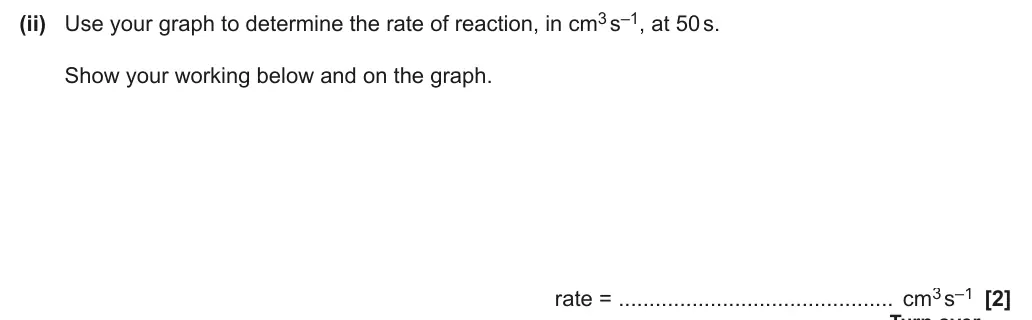
(ii) Use your graph to determine the rate of reaction, in cm3 s–1, at 50 s.
Show your working below and on the graph.
rate =  ............................................. cm3 s–1 [2]
June 2024 · AS Paper 2 · Q4(b)(iii) 3 marks Calculation Hard amount of substance
Earlier part of question 4 that this part usesEarlier part of June 2024 Paper 2 question 4
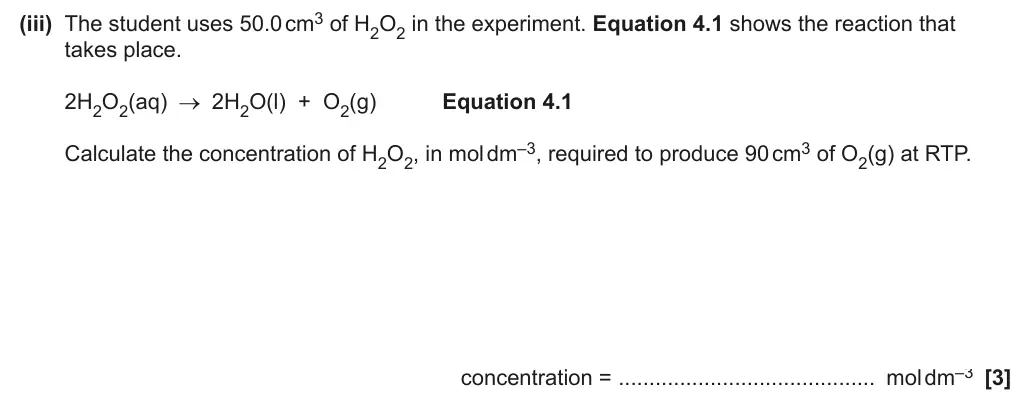
(iii) The student uses 50.0 cm3 of H2O2 in the experiment. Equation 4.1 shows the reaction that
takes place.
2H2O2(aq) 2H2O(l)  +  O2(g)   Equation 4.1
Calculate the concentration of H2O2, in mol dm–3, required to produce 90 cm3 of O2(g) at RTP.
concentration =  .......................................... mol dm–3 [3]
June 2024 · AS Paper 2 · Q4(c) 2 marks Short answer Medium practical skills
Earlier part of question 4 that this part usesEarlier part of June 2024 Paper 2 question 4
(c) A student plans to compare the rate of decomposition of H2O2 using different metal oxides as the
catalyst.
Suggest two variables which should be kept constant.
1  .......................................................................................................................................................
2  .......................................................................................................................................................
[2]
June 2024 · AS Paper 2 · Q5(a) 4 marks Complete table/diagram Easy alkenes
5 This question is about some reactions of alkenes.
(a) Complete the flowchart for the reactions of but-1-ene, by adding the structures of the organic
products in each box.
Br2 H2 / Ni
H CH2CH3
C C
H H
but-1-ene
H2O(g) / H+
Mixture of products
[4]
June 2024 · AS Paper 2 · Q5(b)(i) 4 marks Mechanism Hard alkenesorganic basics
Earlier part of question 5 that this part usesEarlier part of June 2024 Paper 2 question 5
(b) HBr reacts readily with alkenes.
(i) Outline the mechanism for the reaction of but-1-ene with HBr to form 2-bromobutane.
Include curly arrows, relevant dipoles and the structure of the product.
H CH2CH3
C C
H H
[4]
June 2024 · AS Paper 2 · Q5(b)(ii) 2 marks Short answer Medium alkenes
Earlier part of question 5 that this part usesEarlier part of June 2024 Paper 2 question 5
(ii) During this reaction, a small amount of 1-bromobutane is also produced.
Explain why 2-bromobutane is the major product.
..........................................................................................................................................................
..........................................................................................................................................................
..........................................................................................................................................................
..................................................................................................................................................... [2]
June 2024 · AS Paper 2 · Q6 6 marks 6-mark level of response Hard infrared and mass spectrometry
6* Compound X is an organic compound with two functional groups.
Compound X has the percentage composition by mass:
C, 40.91%; H, 4.54%; O, 54.55%.
Compound X does not decolourise bromine water.
A scientist analyses compound X using mass spectrometry and infrared spectroscopy.
Mass spectrum of X
100
80
60
relative
intensity
40
20
0
10 20 30 40 50 60 70 80 90 100 110
m / z
IR spectrum of X
100
transmittance
50
(%)
0
4000 3000 2000 1500 1000 500
wavenumber / cm–1
Use all the information to determine a possible structure of compound X.
In your answer, make it clear how your conclusions are linked to the evidence. [6]
..........................................................................................................................................................
..........................................................................................................................................................
..........................................................................................................................................................
..........................................................................................................................................................
..........................................................................................................................................................
..........................................................................................................................................................
..........................................................................................................................................................
..........................................................................................................................................................
..........................................................................................................................................................
..........................................................................................................................................................
..........................................................................................................................................................
..........................................................................................................................................................
..........................................................................................................................................................
..........................................................................................................................................................
..........................................................................................................................................................
..........................................................................................................................................................
..........................................................................................................................................................
Extra answer space if required
..........................................................................................................................................................
..........................................................................................................................................................
..........................................................................................................................................................
..........................................................................................................................................................

Work with an OCR chemistry tutor

Want a paper marked and gone through with you? Message us.

Prefer email? Send an enquiry

If you are under 18, please include a parent's contact details. Enquiries go to enquiries@chemistryaleveltutor.com and are deleted once handled. All tutoring is online.