Examiner's comment
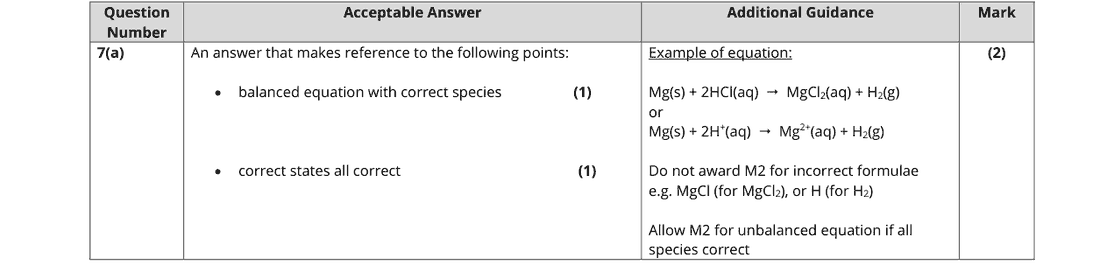
(a) The majority were able to write a balanced equation here. Common errors included:
an incorrect formula for magnesium chloride (e.g. MgCl), and an incorrect state for
magnesium chloride (often given as (s)).
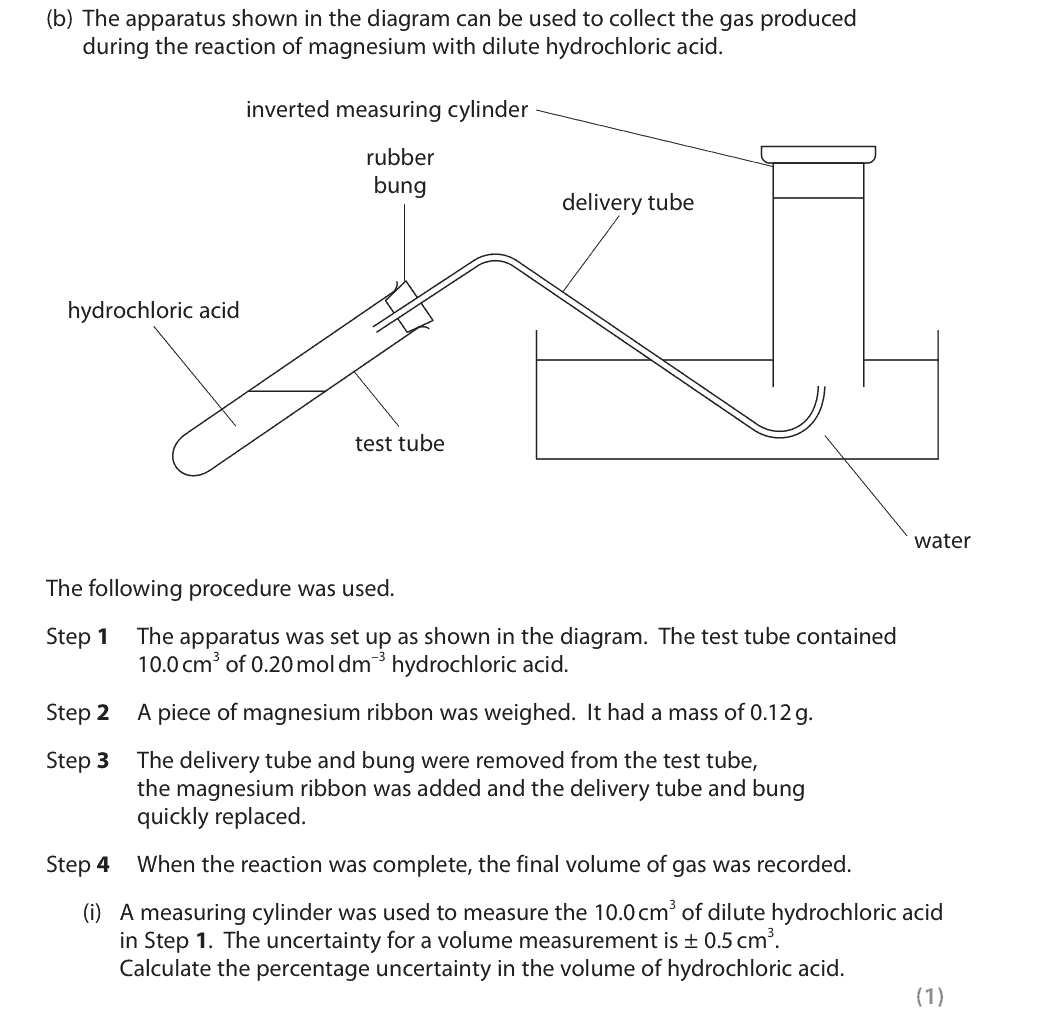
(b)(i) The calculation of uncertainty was, for the most part, completed correctly.
Common errors included:
1. Uncertainty given as 10% (incorrect in this instance, for equipment which is
only read once).
2. Failure to convert the uncertainty to a percentage.
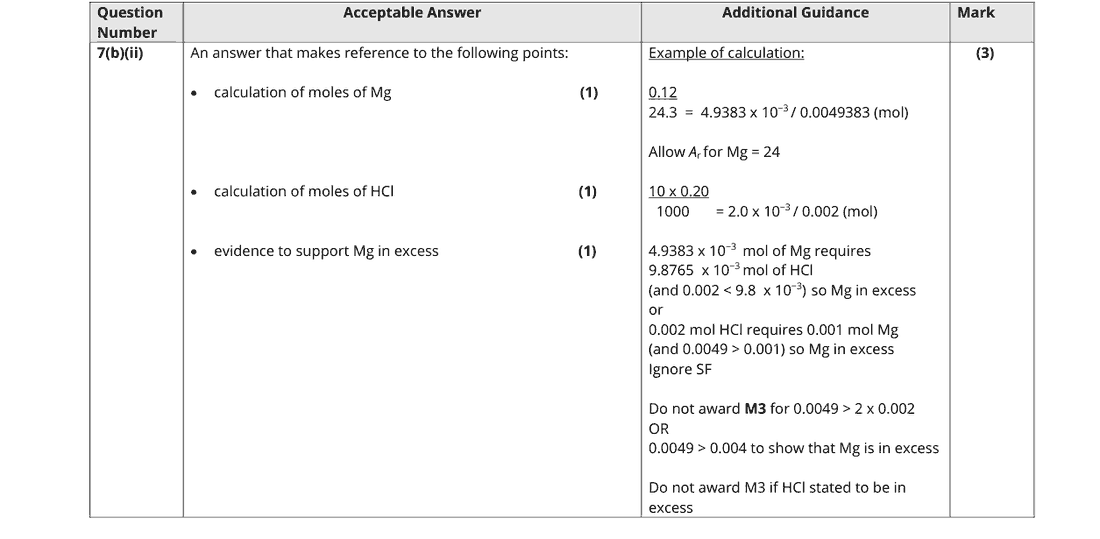
(b)(ii) The moles of hydrochloric acid (M2) were usually calculated correctly; the moles of
magnesium (M1) less so.
MP3 was scored relatively infrequently. In many answers, no evidence was supplied to
support the reactant in excess. Of those who did perform some kind of calculation,
many just compared the two molar quantities calculated for MP1 and MP2 (which still
gives Mg in excess).
A significant number of answers reversed the mole ratio and decided that 2 x 0.002 =
0.004 mol Mg would be required to react with the 0.002 mol acid.
Some answers to this question were so poorly presented that it was almost impossible
for markers to discern if transferred error marks could be awarded. (See example
below).
(b)(iii) The answer here depended on the answers to 7(a) and 7(b)(ii), with the possibility
of transferred errors from both previous answers. An incorrect decision about the
reagent in excess in 7(b)(ii) could mean an answer based on moles of Mg.
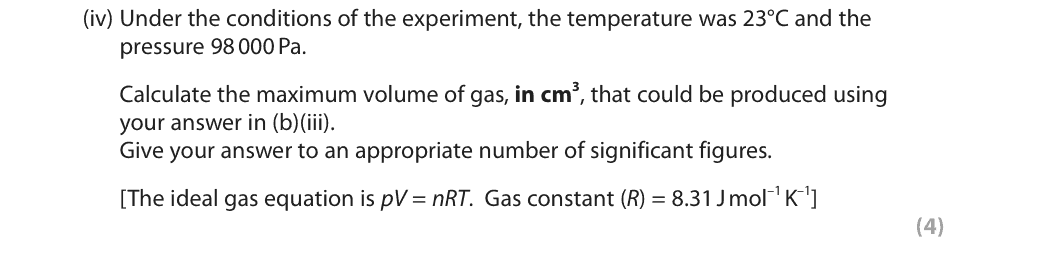
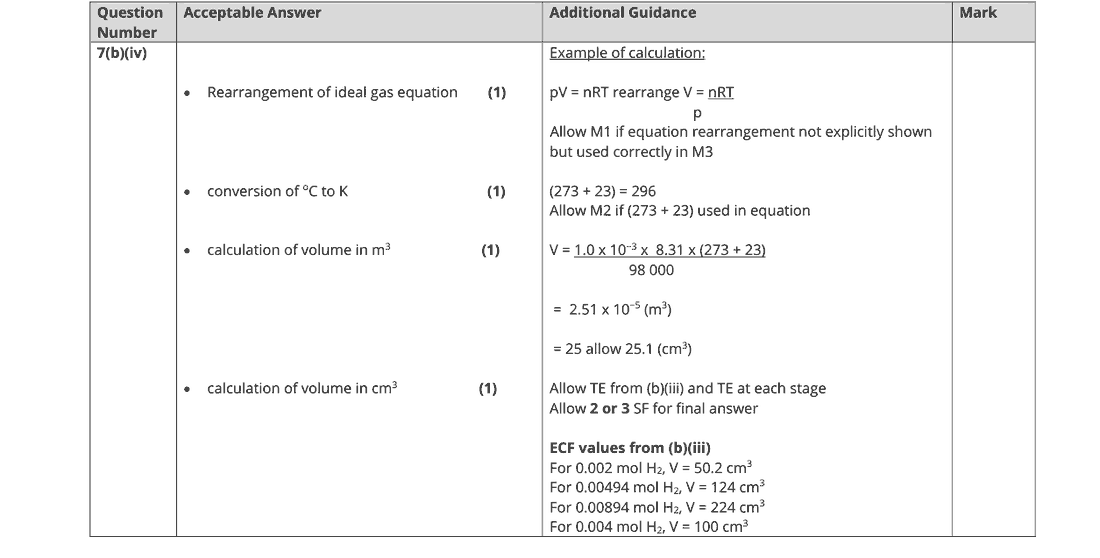
7(b)(iv) This calculation had clearly been taught very thoroughly (although not
necessarily understood by some candidates). It seemed that some centres might have
taught candidates to leave the pressure in kPa and convert the volume to dm3, this
produces the same answer as the (more technically correct) conversion to SI units.
Relatively few failed to correctly convert the temperature to K.
For MP1, reassuringly, most candidates wrote the ideal gas equation with V as the
subject, although provided the equation was used correctly, MP1 was awarded.
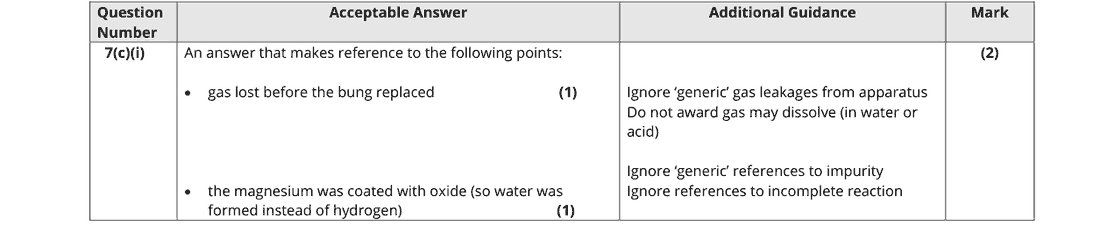
(c)(i) Most candidates recognised the loss of gas before the bung (and delivery tube)
were replaced. Occasionally, there were answers relating to leakage from the
apparatus. In general, it should be assumed that experimental incompetence, in this
example, allowing a leak, will not provide acceptable answers.
There were few answers relating to the presence of magnesium oxide. Of those who
gave this answer, even fewer recognised that water would be produced instead of
hydrogen.
A significant number thought that hydrogen would be appreciably soluble in water;
thinking perhaps of carbon dioxide. A surprising number of answers related to
production of carbon dioxide.
(c)(ii) To some extent, the answers in this question depended on recognition of the
reasons for lower volume of gas produced. See typical answer and comment below.
MP1 was awarded for any workable procedure that attempted to delay the start of the
reaction until the bung was replaced. The fine detail of such procedures was not
expected. Acceptable procedures included:
1. Placing the Mg inside a separate container in the acid, replacing the
bung, then shaking to mix reactants.
2. Suspending the Mg from the bung, above the acid then, after securing
the bung, dislodging the Mg into the acid.
MP2 was awarded for cleaning the Mg. Removal of magnesium oxide was recalled by
some candidates, including a few who had not registered the oxide layer as a source of
error in Q7(c)(i).
The use of a gas syringe does not enable more gas to be collected because most of the
gas is lost before the bung is replaced, and, in this account, part of the procedure has
not been modified.
This answer recognises the loss of gas before the bung is replaced but lacks any
practical detail about how this might be achieved.