June 2024: AS Paper 2, Core Organic and Physical Chemistry

80 marks · 44 question parts · Paper, mark scheme and report on Edexcel's site · Have the Data Booklet beside you

Question by question

QTopicMarksAOType
1(a) Formulae, equations and amounts of substance 1Multiple choice
1(b)(i) Formulae, equations and amounts of substance 1Multiple choice
1(b)(ii) Formulae, equations and amounts of substance 1Calculation
1(b)(iii) Formulae, equations and amounts of substance 1Practical and data analysis
1(c)(i) Formulae, equations and amounts of substance 1Calculation
1(c)(ii) Formulae, equations and amounts of substance 1Calculation
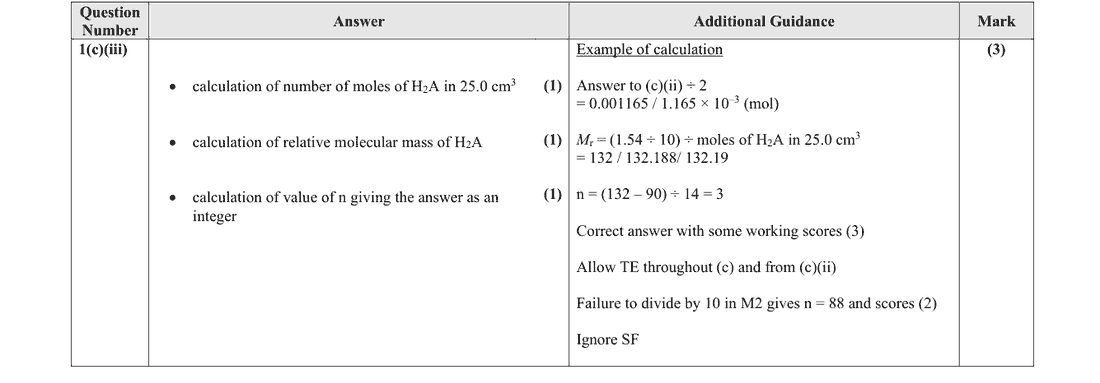
1(c)(iii) Formulae, equations and amounts of substance 3Calculation
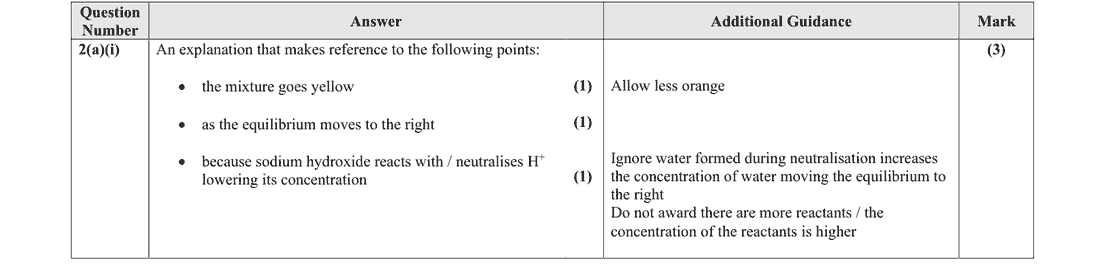
2(a)(i) Equilibrium I 3Explanation
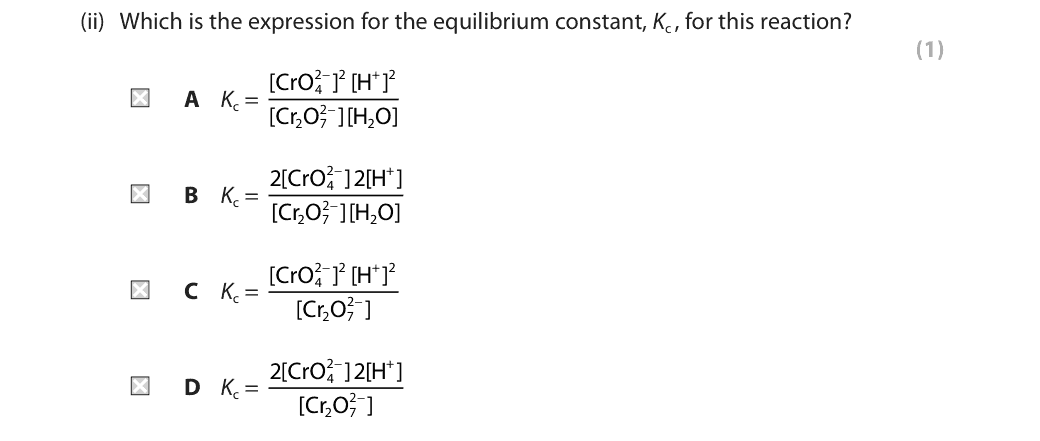
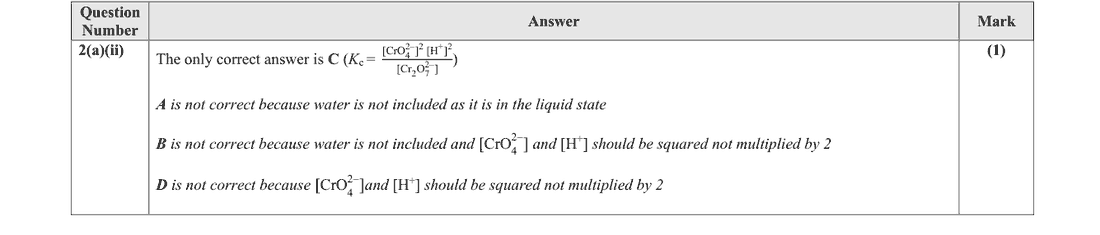
2(a)(ii) Equilibrium I 1Multiple choice
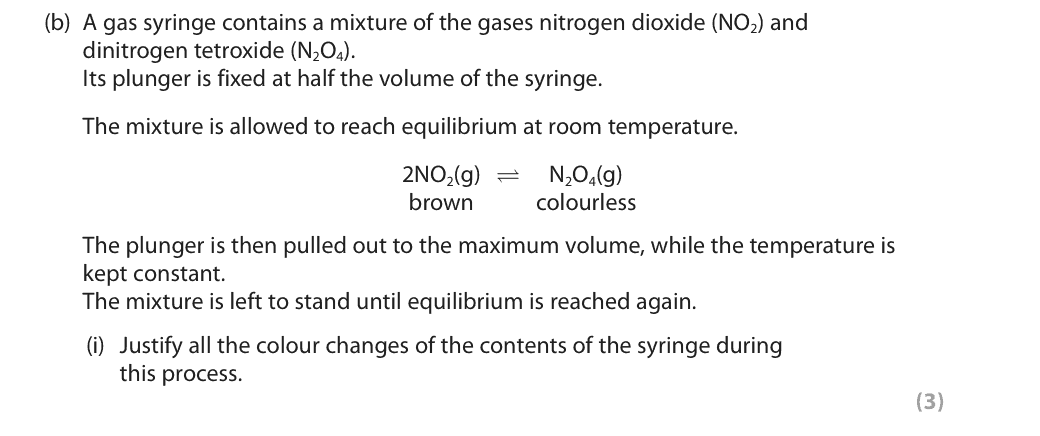
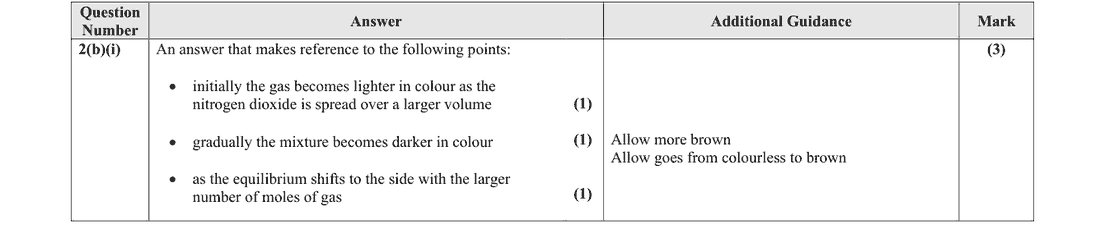
2(b)(i) Equilibrium I 3Explanation
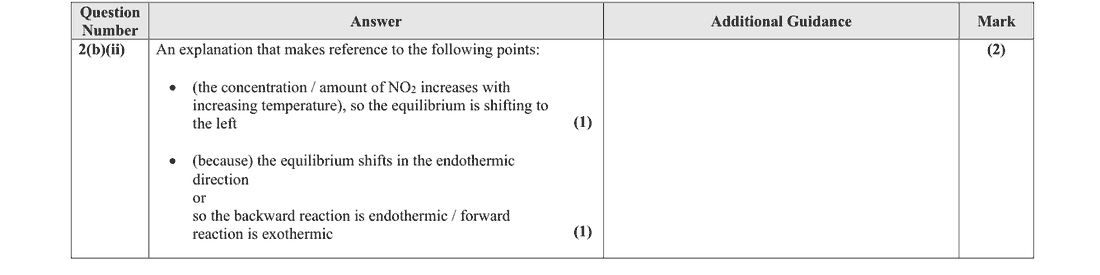
2(b)(ii) Equilibrium I 2Explanation
3(a) Introduction to organic chemistry, Formulae, equations and amounts of substance 1Short answer
3(b)(i) Alkenes, Introduction to organic chemistry 1Multiple choice
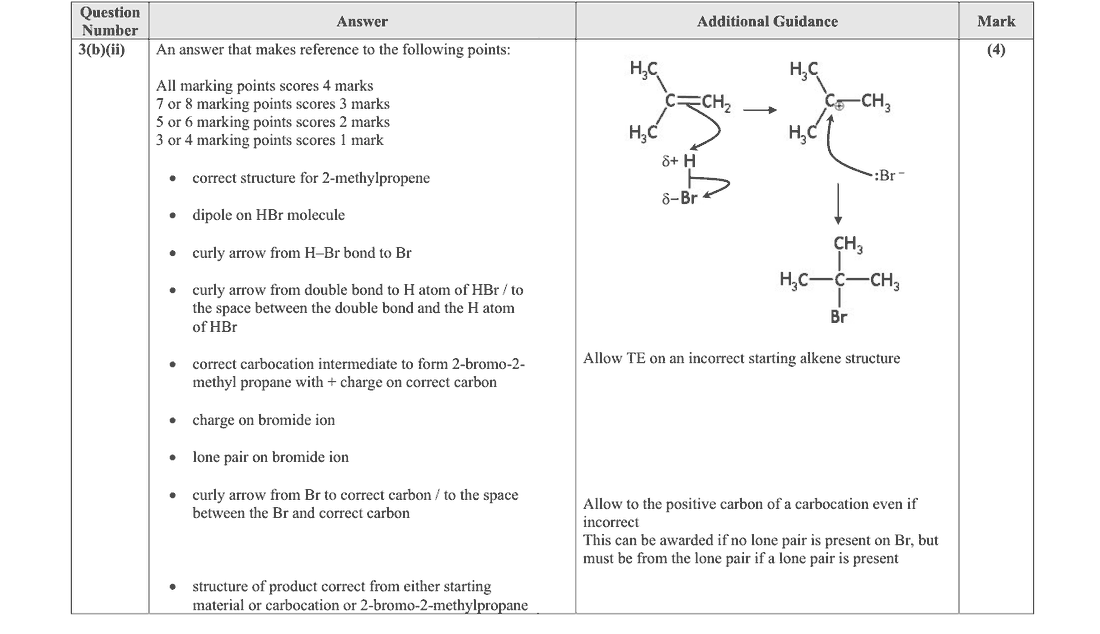
3(b)(ii) Alkenes 4Mechanism
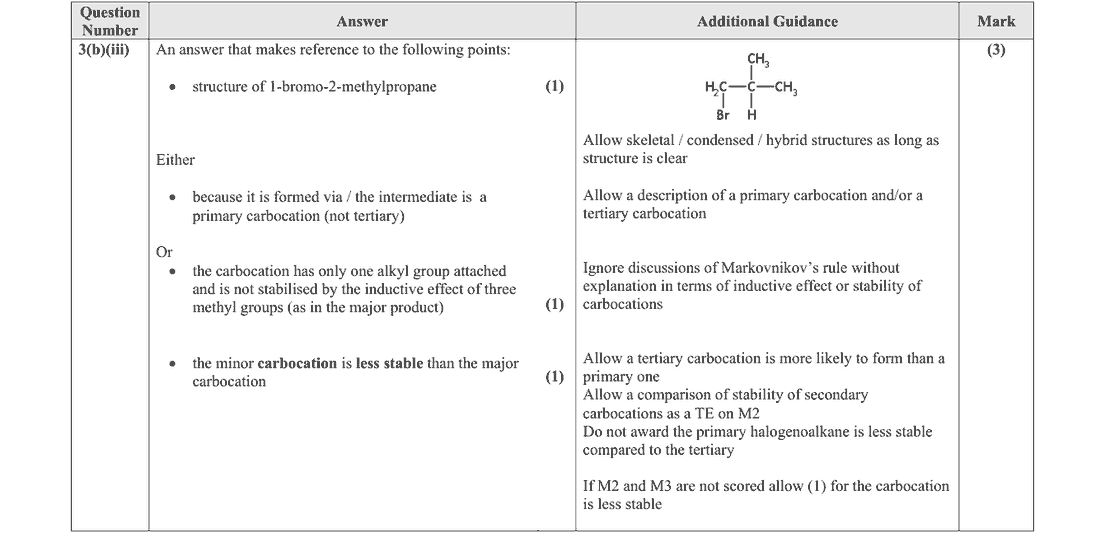
3(b)(iii) Alkenes 3Explanation

3(b)(iv) Alkenes 1Short answer
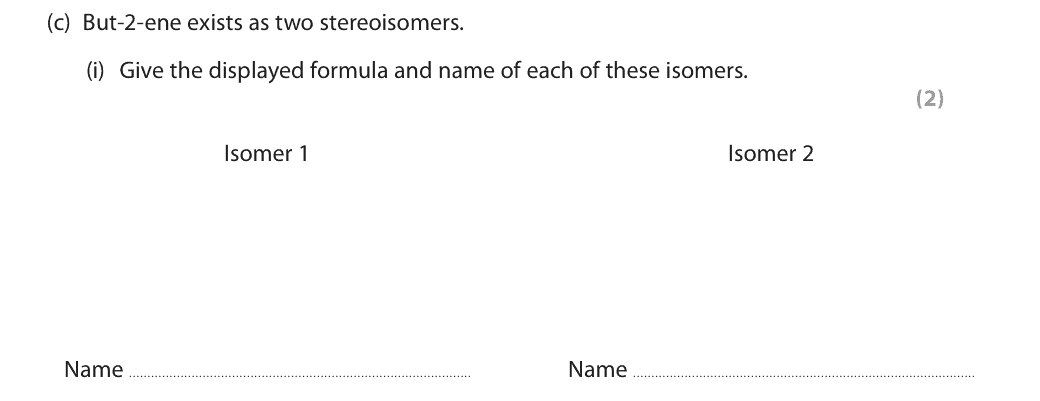
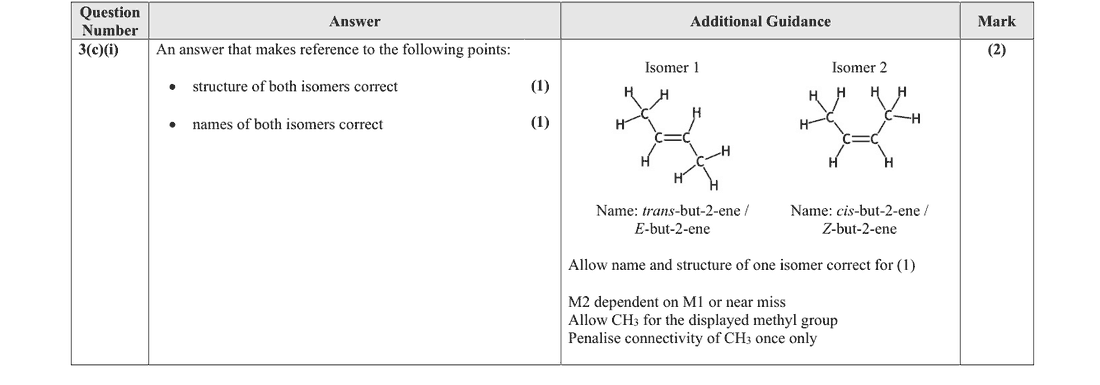
3(c)(i) Introduction to organic chemistry 2Diagram or structure
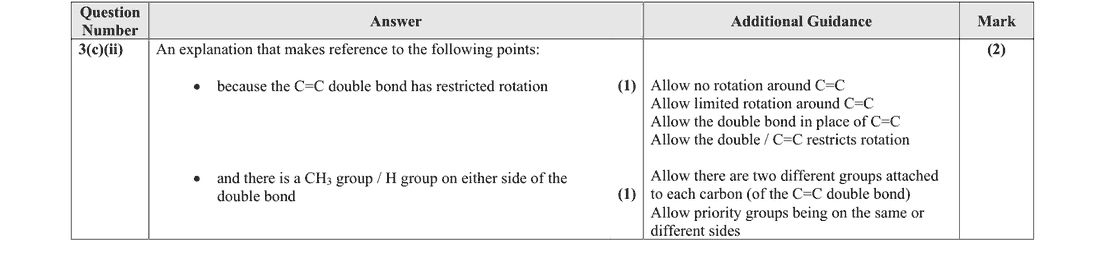
3(c)(ii) Introduction to organic chemistry 2Explanation
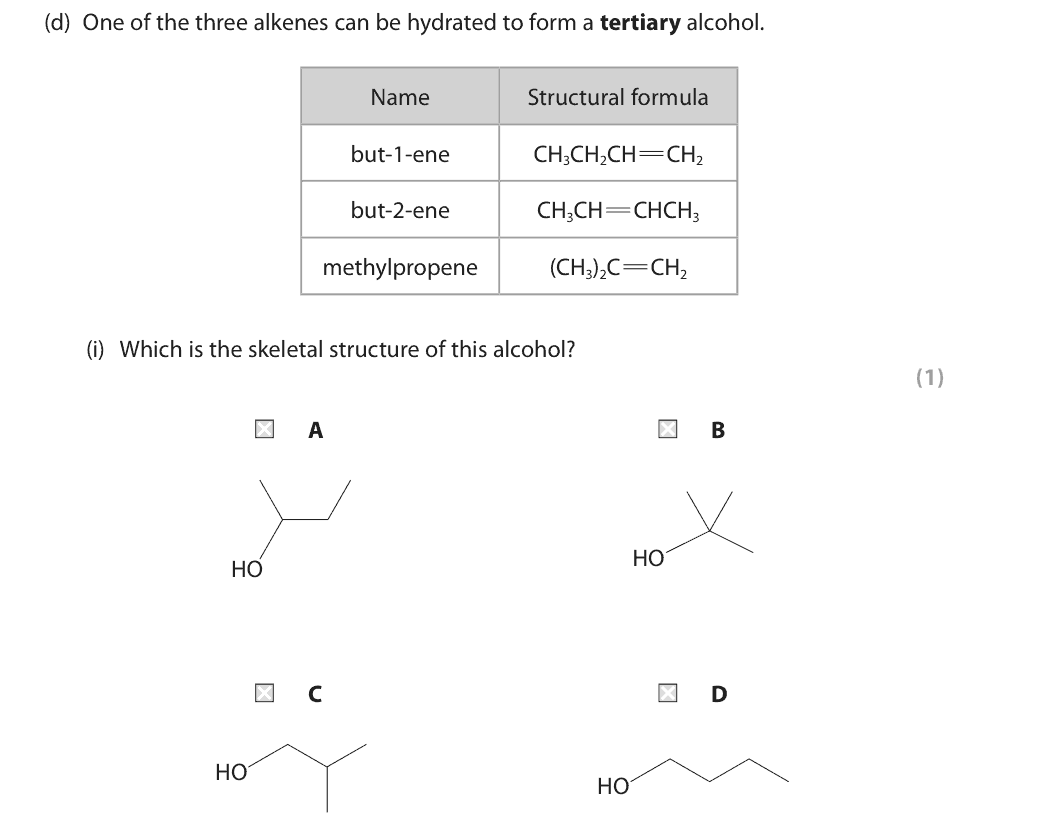
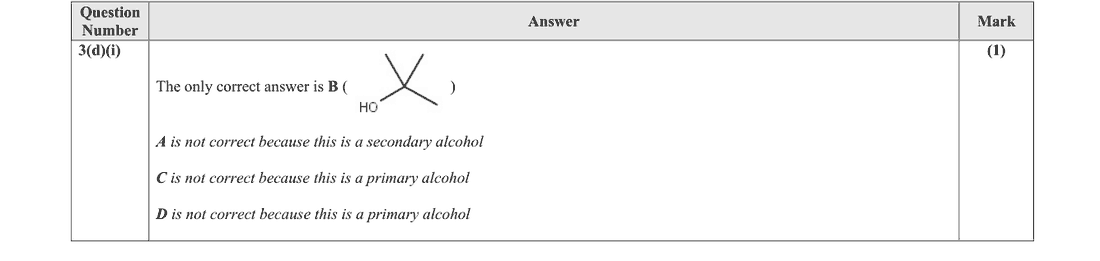
3(d)(i) Alkenes, Alcohols 1Multiple choice
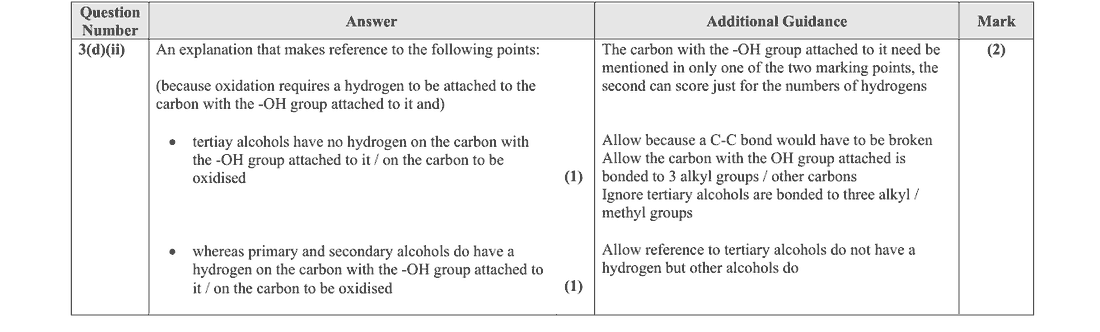
3(d)(ii) Alcohols 2Explanation
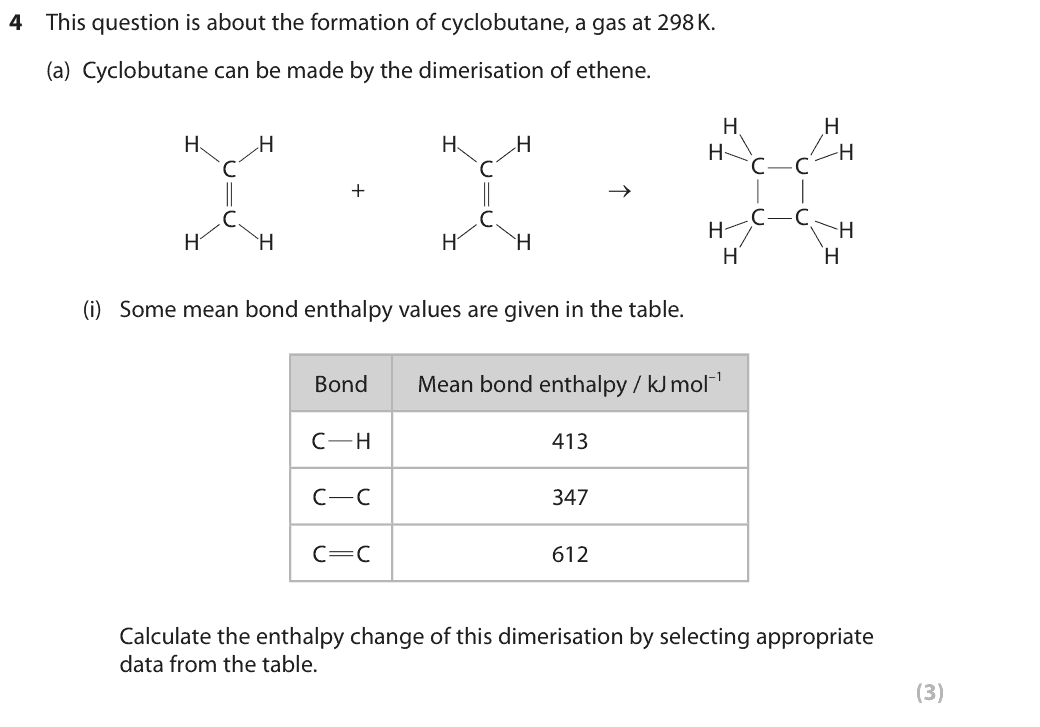
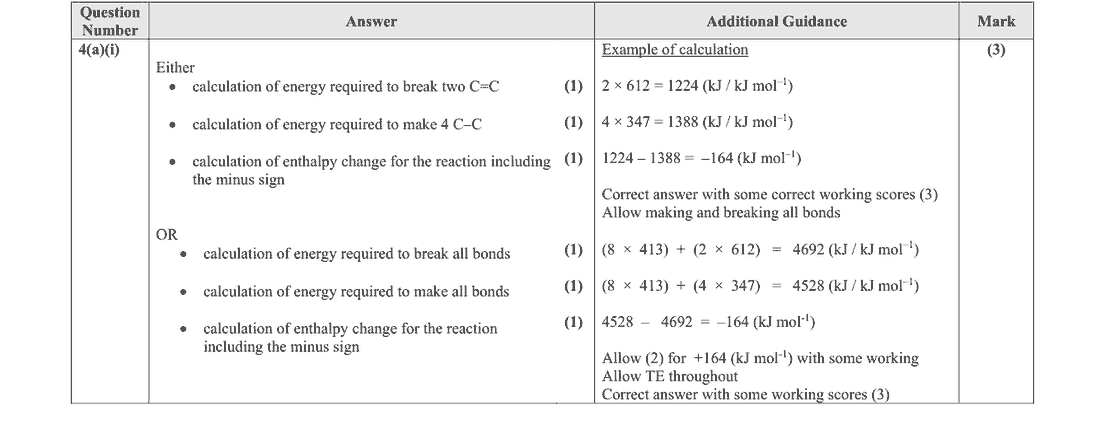
4(a)(i) Energetics I 3Calculation
4(a)(ii) Energetics I 2Explanation
4(b)(i) Energetics I 4Diagram or structure
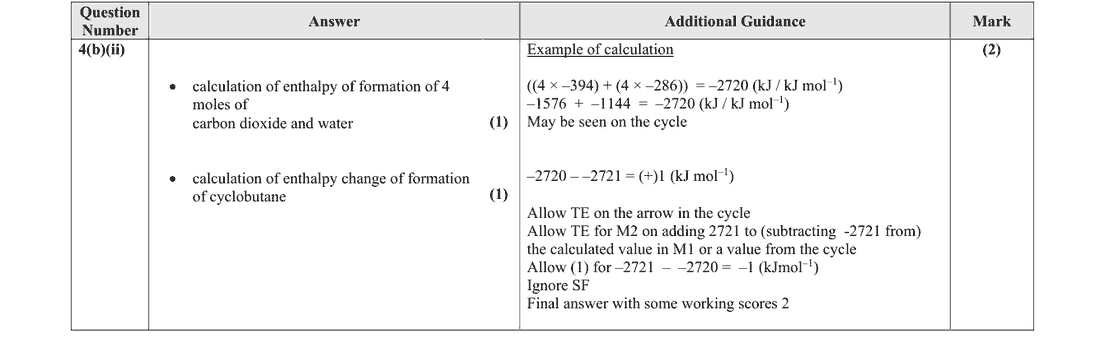
4(b)(ii) Energetics I 2Calculation
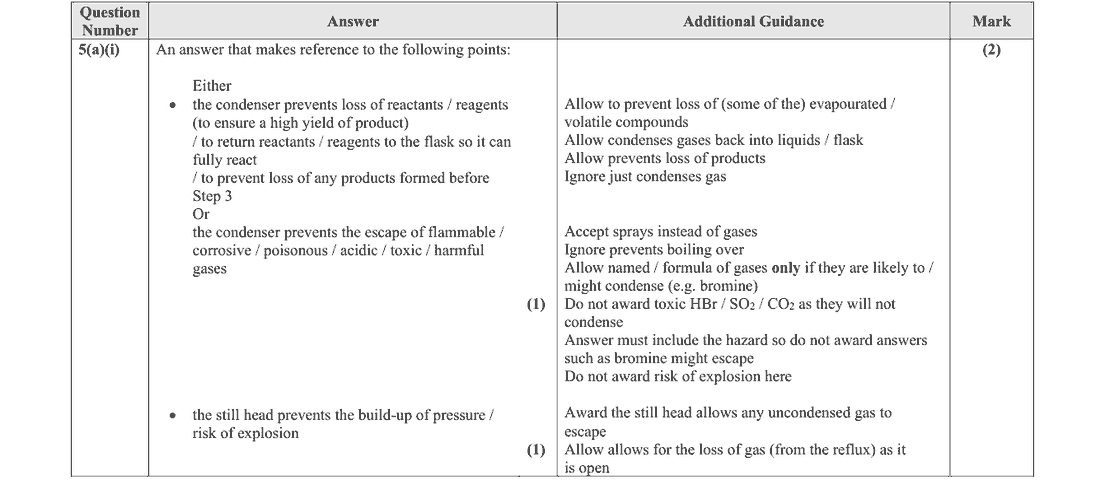
5(a)(i) Alcohols 2Practical and data analysis
5(a)(ii) Alcohols 1Short answer
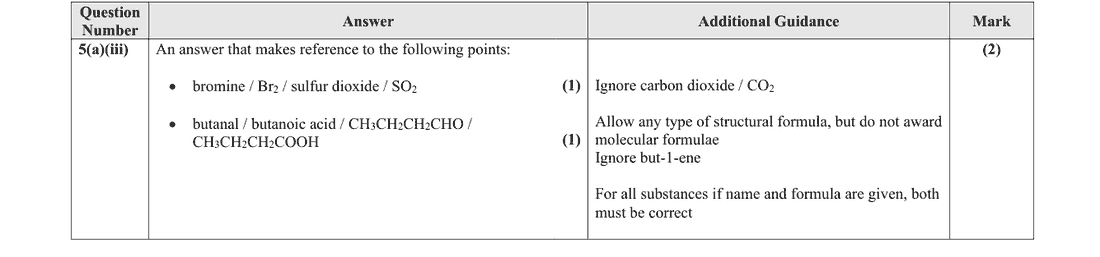
5(a)(iii) Alcohols 2Short answer
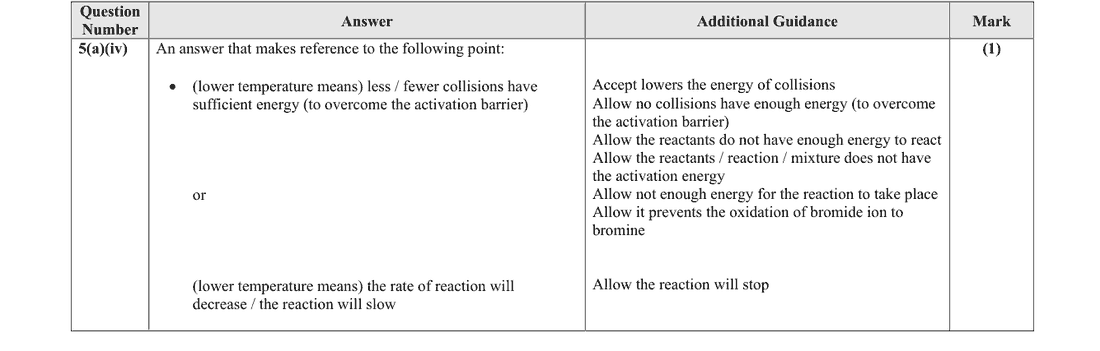
5(a)(iv) Kinetics I 1Short answer
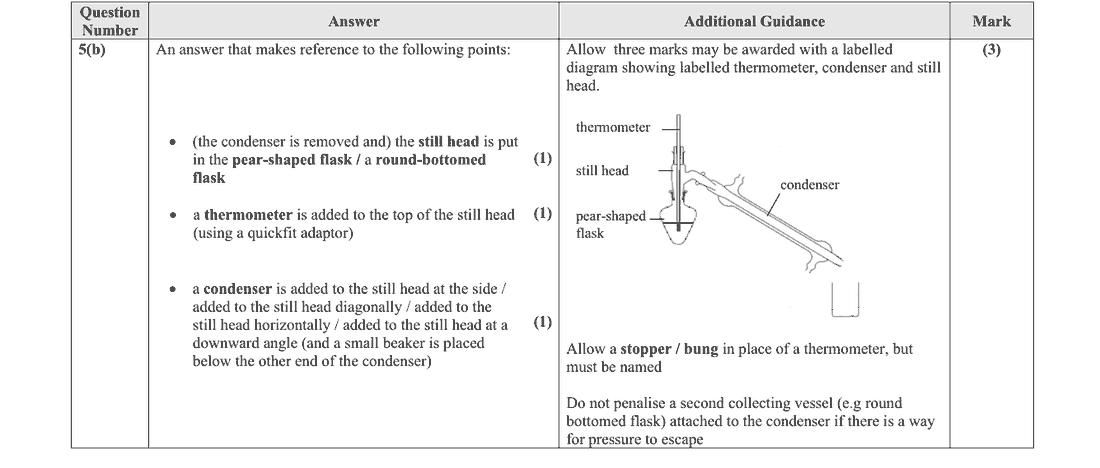
5(b) Alcohols 3Practical and data analysis
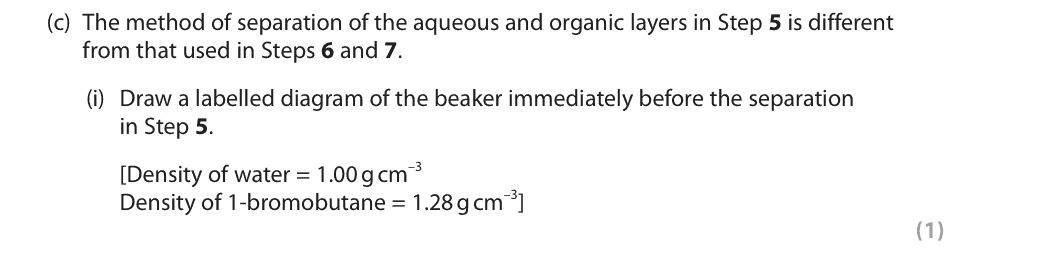
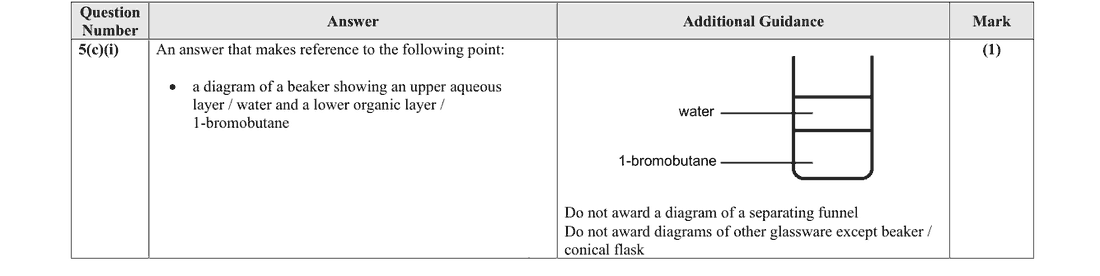
5(c)(i) Alcohols 1Diagram or structure
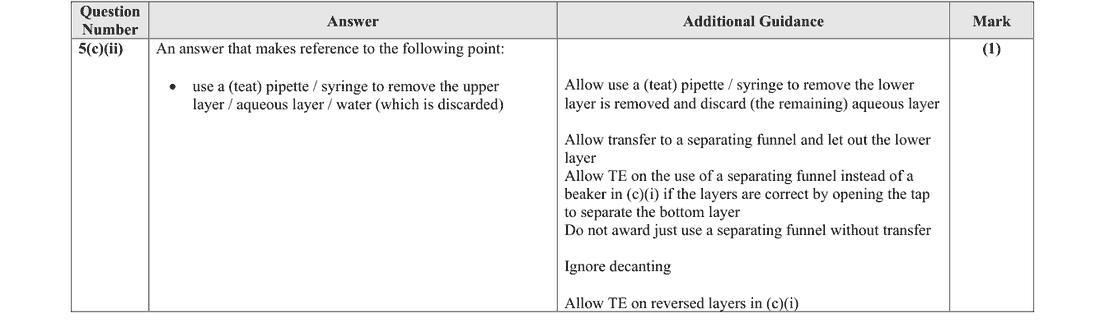
5(c)(ii) Alcohols 1Practical and data analysis
5(c)(iii) Alcohols 1Practical and data analysis
6(a) Formulae, equations and amounts of substance 1Practical and data analysis
6(b)(i) Formulae, equations and amounts of substance 1Multiple choice
6(b)(ii) Kinetics I 1Practical and data analysis
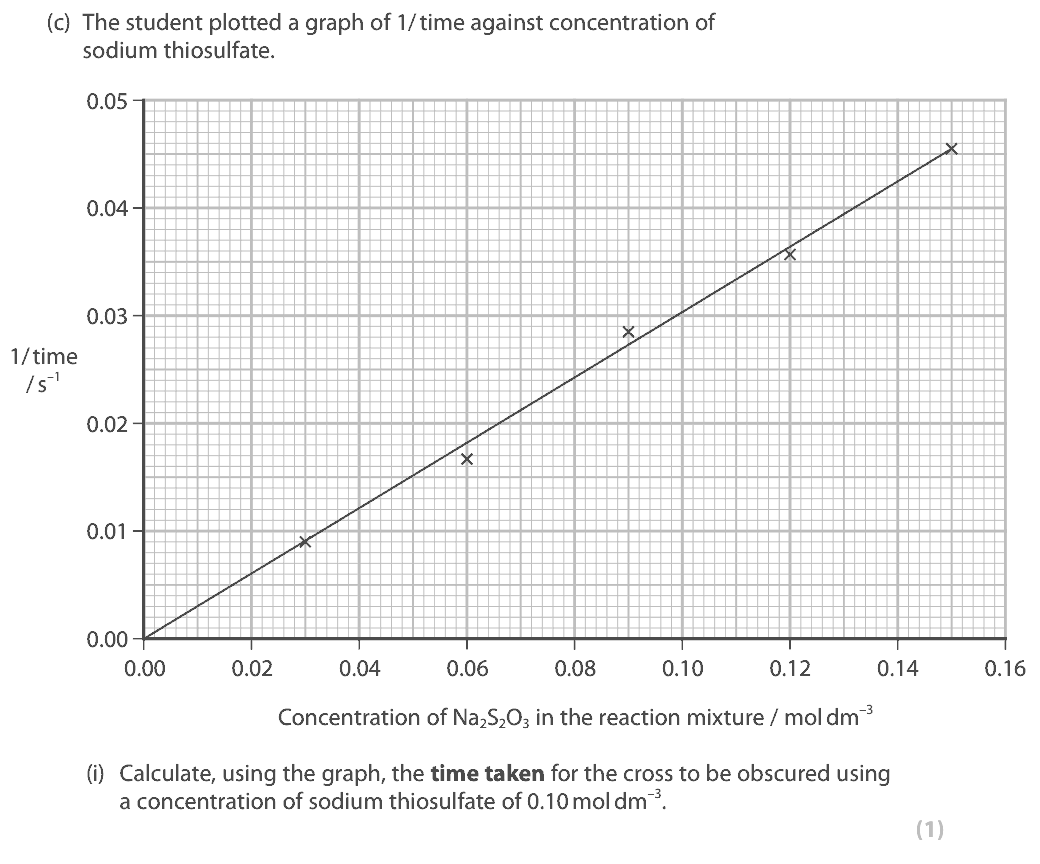
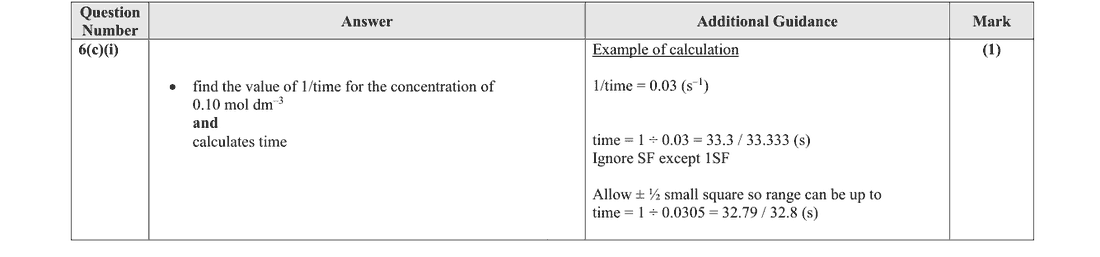
6(c)(i) Kinetics I 1Calculation
6(c)(ii) Kinetics I 1Short answer
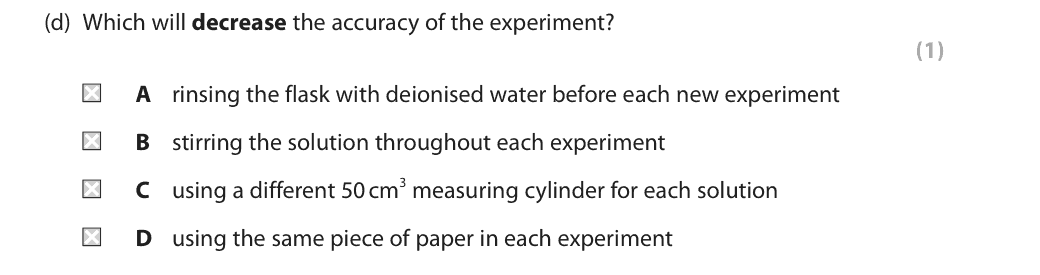
6(d) Formulae, equations and amounts of substance 1Multiple choice
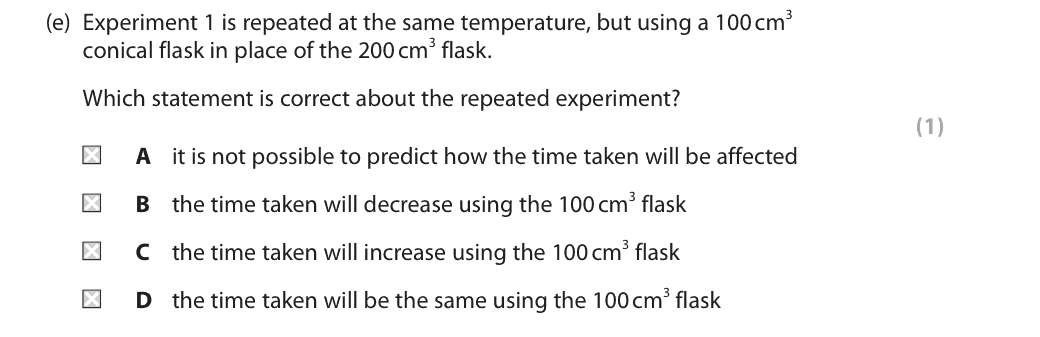
6(e) Kinetics I 1Multiple choice
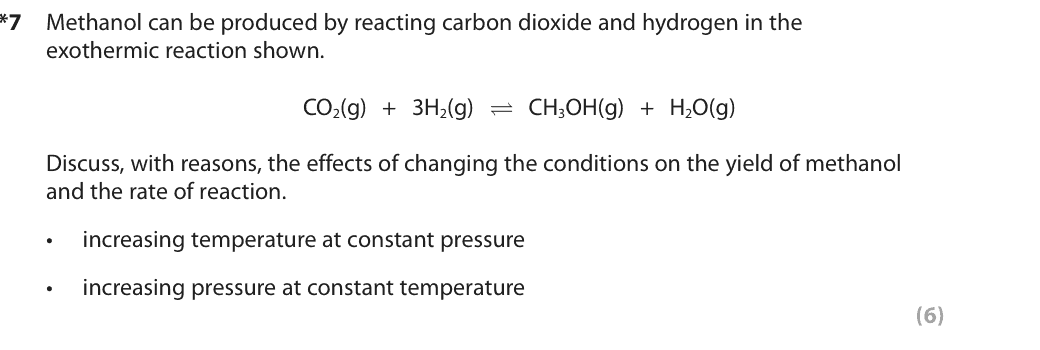
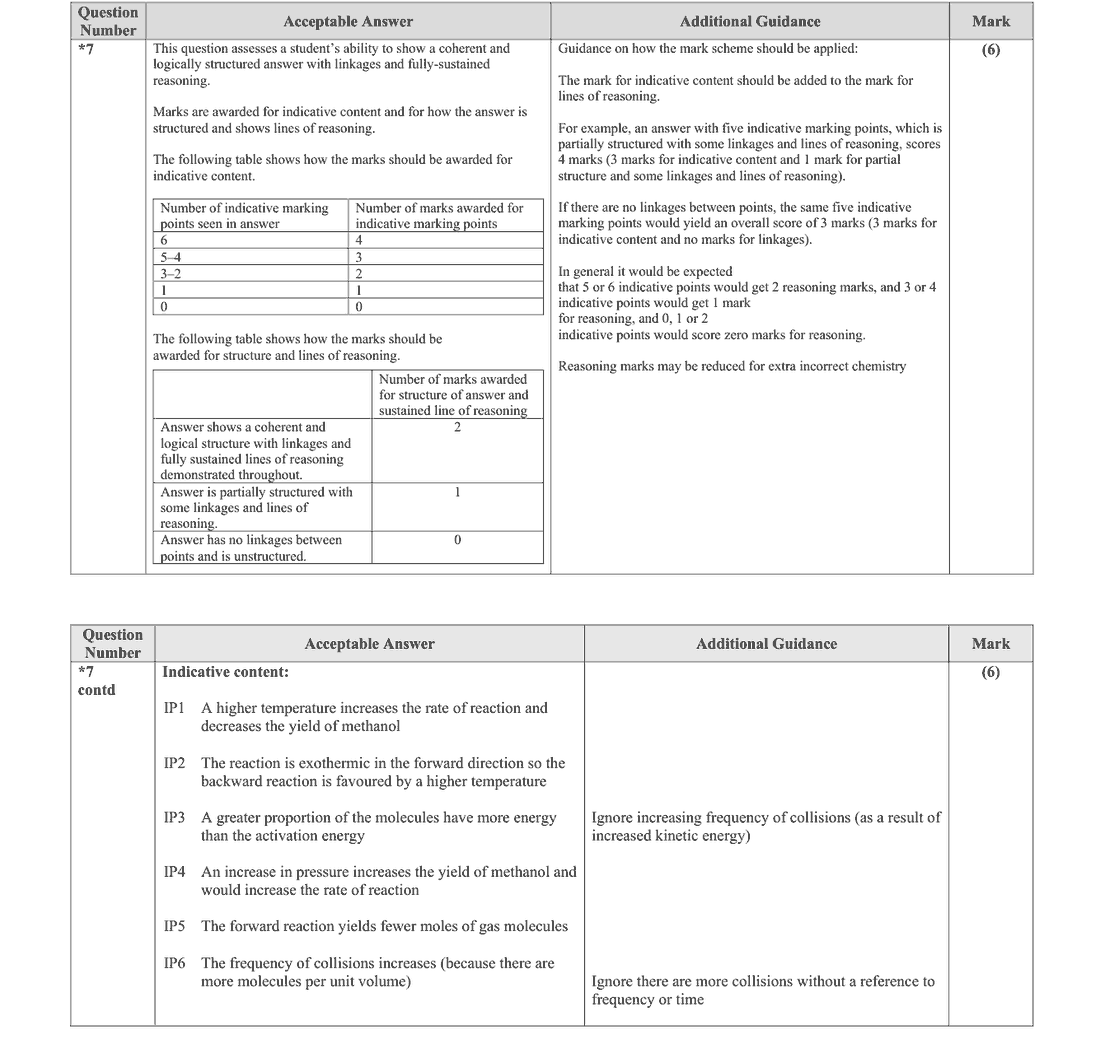
7 Equilibrium I, Kinetics I 6Extended response
8(a)(i) Energetics I, Formulae, equations and amounts of substance 2Equation writing
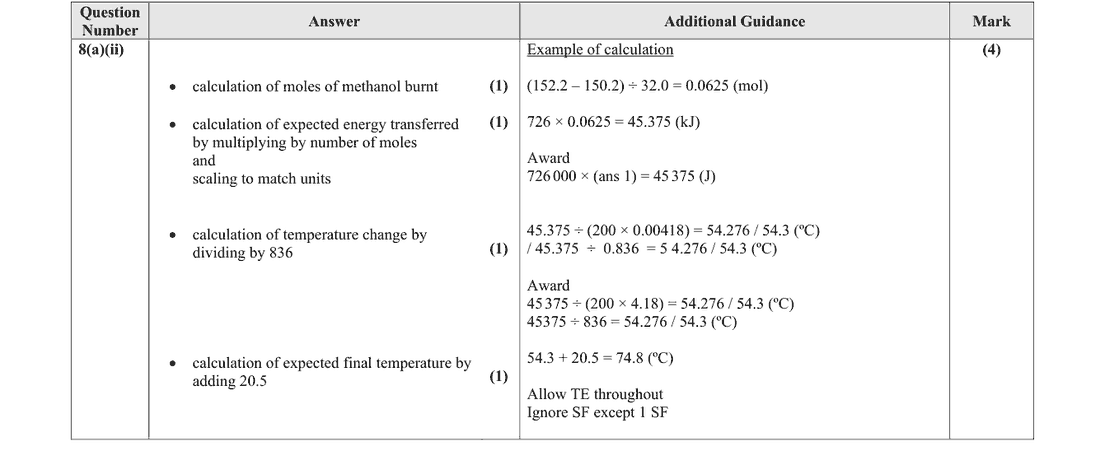
8(a)(ii) Energetics I 4Calculation
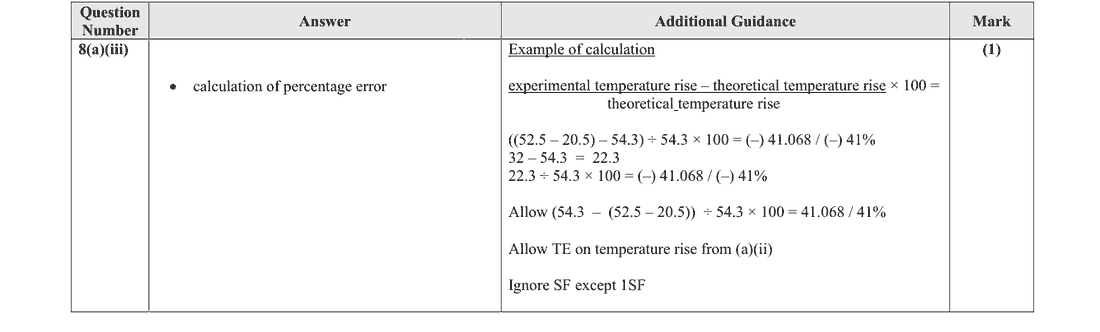
8(a)(iii) Formulae, equations and amounts of substance 1Calculation
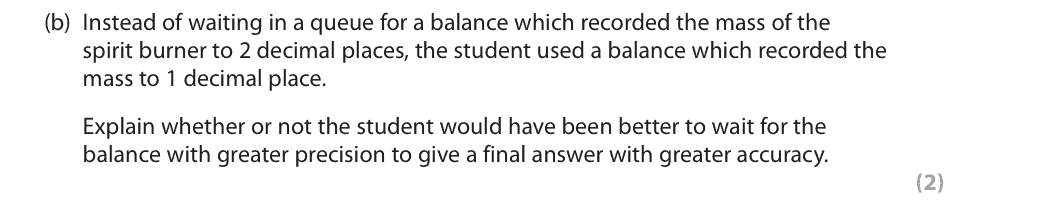
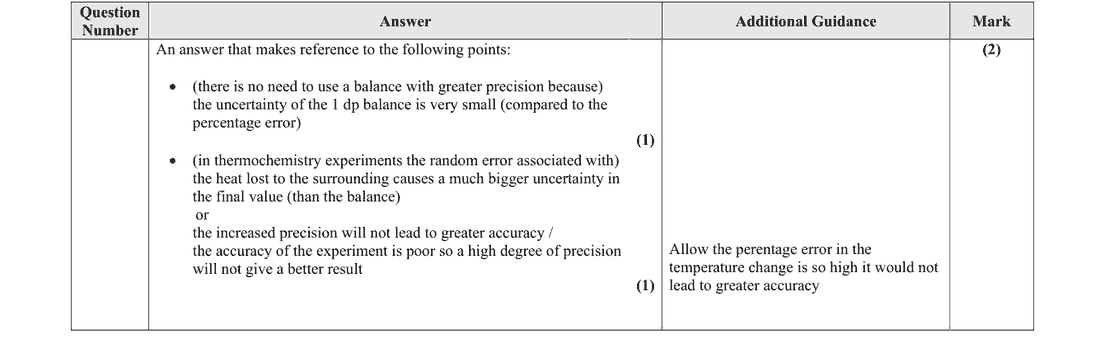
8(b) Energetics I, Formulae, equations and amounts of substance 2Explanation

The questions

1(a)1(b)(i)1(b)(ii)1(b)(iii)1(c)(i)1(c)(ii)1(c)(iii)2(a)(i)2(a)(ii)2(b)(i)2(b)(ii)3(a)3(b)(i)3(b)(ii)3(b)(iii)3(b)(iv)3(c)(i)3(c)(ii)3(d)(i)3(d)(ii)4(a)(i)4(a)(ii)4(b)(i)4(b)(ii)5(a)(i)5(a)(ii)5(a)(iii)5(a)(iv)5(b)5(c)(i)5(c)(ii)5(c)(iii)6(a)6(b)(i)6(b)(ii)6(c)(i)6(c)(ii)6(d)6(e)78(a)(i)8(a)(ii)8(a)(iii)8(b)
June 2024 · AS Paper 2 · Q1(a) 1 mark Multiple choice formulae equations and amounts of substance
The relative molecular mass of a solid dicarboxylic acid, HOOC(CH2)nCOOH, can be
found using a titration. The acid, which can be represented as H2A, was dissolved in
deionised water and the solution made up to 250 cm3.
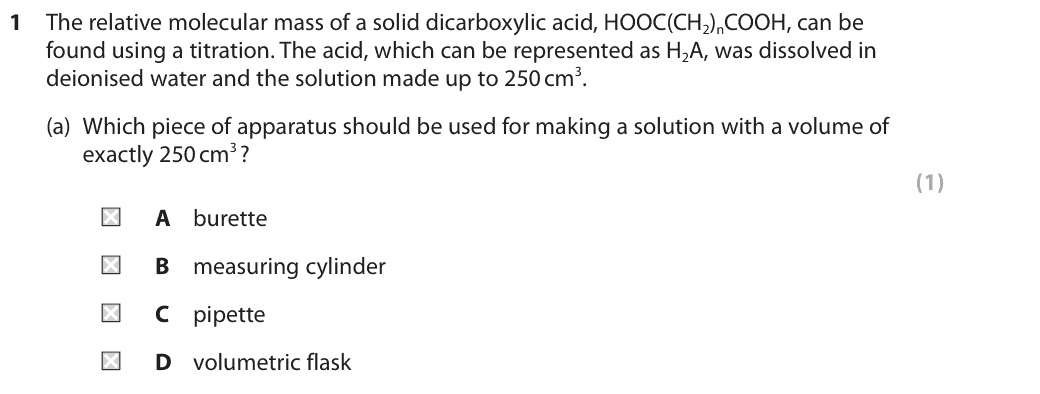
Which piece of apparatus should be used for making a solution with a volume of
exactly 250 cm3 ?
A  burette
B  measuring cylinder
C  pipette
D  volumetric flask
June 2024 · AS Paper 2 · Q1(b)(i) 1 mark Multiple choice formulae equations and amounts of substance
Earlier part of question 1 that this part usesEarlier part of June 2024 Paper 2 question 1
A solution of 0.100 mol dm–3 sodium hydroxide solution was added to a burette.
A rough titration was carried out on a 25.0 cm3 portion of the acid solution.
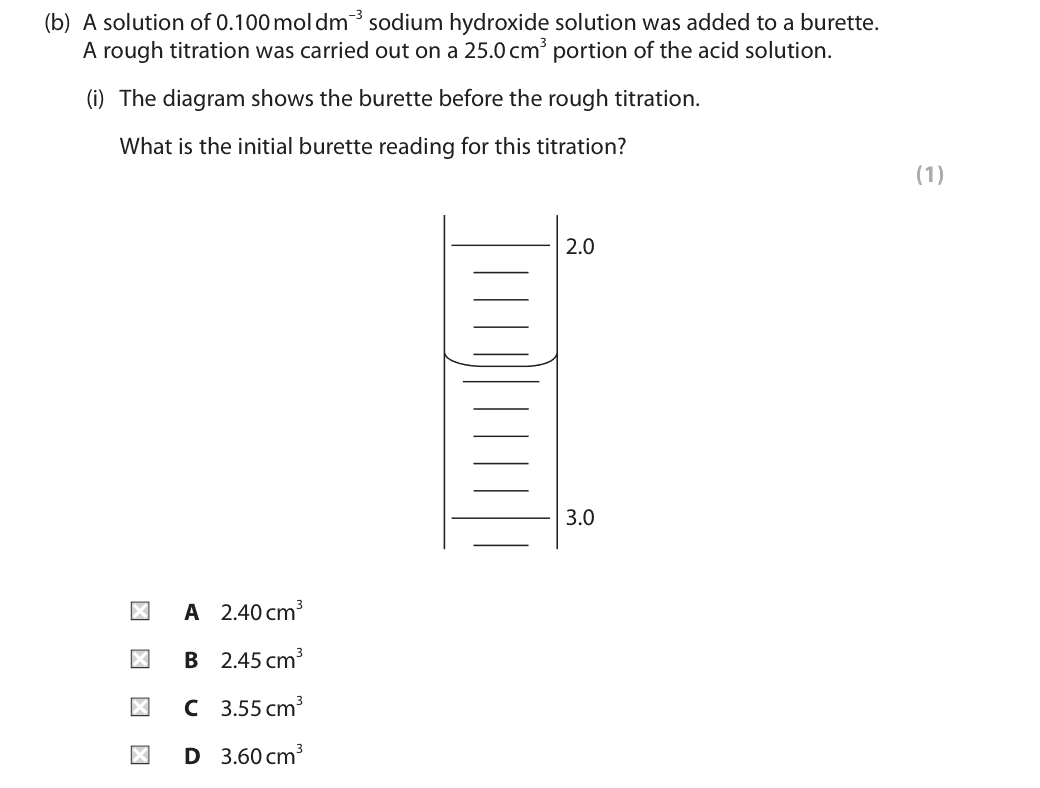
The diagram shows the burette before the rough titration.
What is the initial burette reading for this titration?
2.0
3.0
A  2.40 cm3
B  2.45 cm3
C  3.55 cm3
D  3.60 cm3
June 2024 · AS Paper 2 · Q1(b)(ii) 1 mark Calculation formulae equations and amounts of substance
Earlier parts of question 1 that this part usesEarlier part of June 2024 Paper 2 question 1Earlier part of June 2024 Paper 2 question 1
The final burette reading for the rough titration was 26.50 cm3.
Calculate the volume of sodium hydroxide solution added in the
rough titration, using your answer to (b)(i).
June 2024 · AS Paper 2 · Q1(b)(iii) 1 mark Practical and data analysis Hard formulae equations and amounts of substance
Earlier parts of question 1 that this part usesEarlier part of June 2024 Paper 2 question 1Earlier part of June 2024 Paper 2 question 1
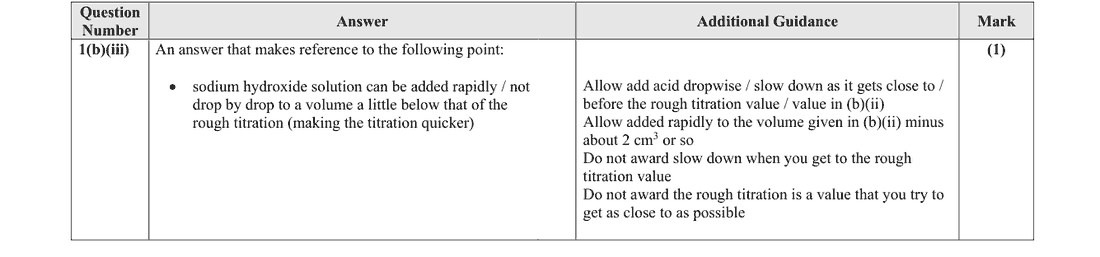
Describe how you would use the rough titration value when carrying out the
accurate titrations.
June 2024 · AS Paper 2 · Q1(c)(i) 1 mark Calculation formulae equations and amounts of substance
Earlier part of question 1 that this part usesEarlier part of June 2024 Paper 2 question 1
25.0 cm3 portions of the acid solution were titrated with
0.100 mol dm–3 sodium hydroxide solution.
The equation for the reaction is shown.
H2A(aq)   +   2NaOH(aq)   →   Na2A(aq)   +   2H2O(l)
The acid solution was pipetted into a conical flask and titrated.
The accurate titrations were carried out three times.
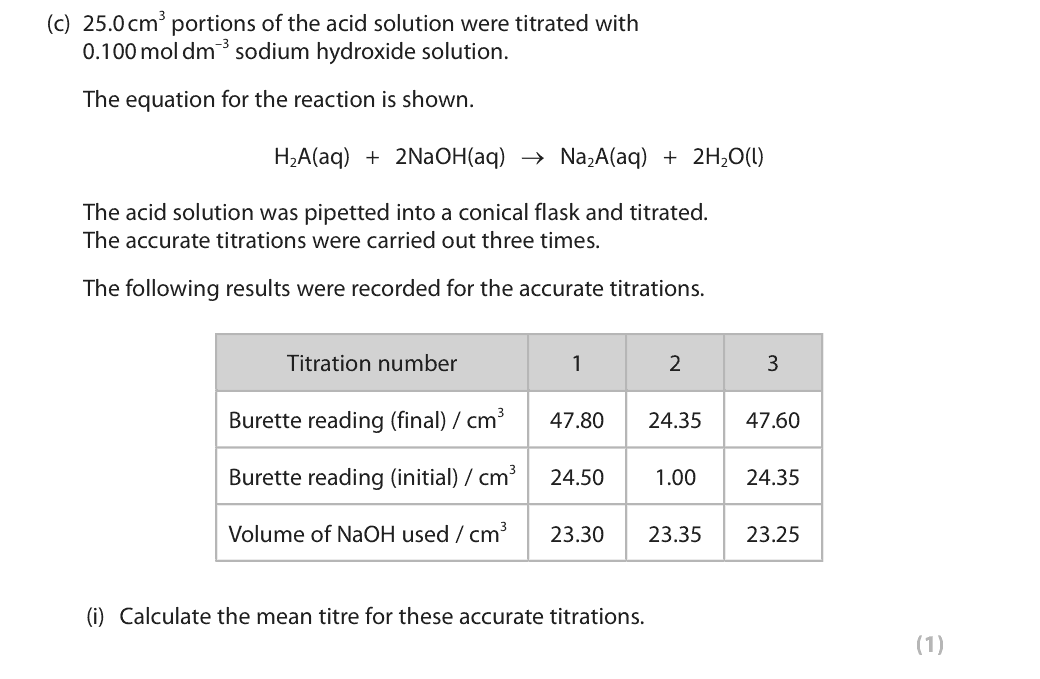
The following results were recorded for the accurate titrations.
Titration number
1
2
3
Burette reading (final) / cm3
47.80
24.35
47.60
Burette reading (initial) / cm3
24.50
1.00
24.35
Volume of NaOH used / cm3
23.30
23.35
23.25
Calculate the mean titre for these accurate titrations.
June 2024 · AS Paper 2 · Q1(c)(ii) 1 mark Calculation formulae equations and amounts of substance
Earlier parts of question 1 that this part usesEarlier part of June 2024 Paper 2 question 1Earlier part of June 2024 Paper 2 question 1
Calculate the number of moles of sodium hydroxide in the mean titre.
June 2024 · AS Paper 2 · Q1(c)(iii) 3 marks Calculation formulae equations and amounts of substance
Earlier parts of question 1 that this part usesEarlier part of June 2024 Paper 2 question 1Earlier part of June 2024 Paper 2 question 1
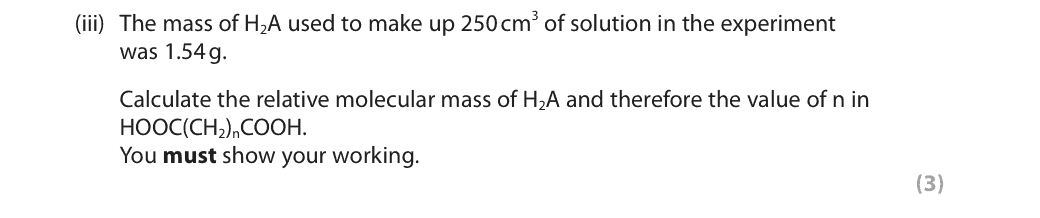
The mass of H2A used to make up 250 cm3 of solution in the experiment
was 1.54 g.
Calculate the relative molecular mass of H2A and therefore the value of n in
HOOC(CH2)nCOOH.
You must show your working.
June 2024 · AS Paper 2 · Q2(a)(i) 3 marks Explanation Hard equilibrium i
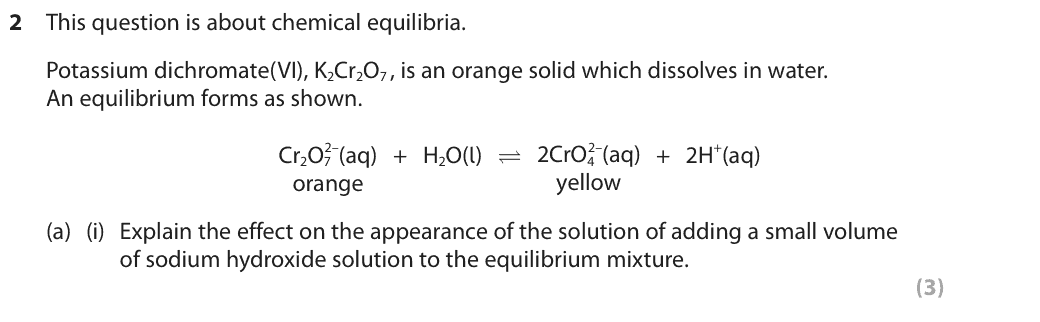
This question is about chemical equilibria.
Potassium dichromate(VI), K2Cr2O7 , is an orange solid which dissolves in water.
An equilibrium forms as shown.
Cr2O7
2–(aq)
+   H2O(l)      2CrO4
2–(aq)
+   2H+(aq)
orange
yellow
Explain the effect on the appearance of the solution of adding a small volume
of sodium hydroxide solution to the equilibrium mixture.
June 2024 · AS Paper 2 · Q2(a)(ii) 1 mark Multiple choice equilibrium i
Earlier part of question 2 that this part usesEarlier part of June 2024 Paper 2 question 2
Which is the expression for the equilibrium constant, Kc , for this reaction?
A  Kc = [
CrO
2
−
] [
2
H
+
]
2
4
[
Cr O
2
−
][
H O
]
2
7
2
B  Kc = 2
[
CrO
2
−
] [
2
H
+
]
4
[
Cr O
2
−
][
H O
]
2
7
2
C  Kc = [
CrO
2
−
] [
2
H
+
]
2
4
[
Cr O
2
−
]
2
7
D  Kc = 2
[
CrO
2
−
] [
2
H
+
]
4
[
Cr O
2
−
]
2
7
June 2024 · AS Paper 2 · Q2(b)(i) 3 marks Explanation equilibrium i
Earlier part of question 2 that this part usesEarlier part of June 2024 Paper 2 question 2
A gas syringe contains a mixture of the gases nitrogen dioxide (NO2) and
dinitrogen tetroxide (N2O4).
Its plunger is fixed at half the volume of the syringe.
The mixture is allowed to reach equilibrium at room temperature.
2NO2(g)
   N2O4(g)
brown
colourless
The plunger is then pulled out to the maximum volume, while the temperature is
kept constant.
The mixture is left to stand until equilibrium is reached again.
Justify all the colour changes of the contents of the syringe during
this process.
June 2024 · AS Paper 2 · Q2(b)(ii) 2 marks Explanation equilibrium i
Earlier parts of question 2 that this part usesEarlier part of June 2024 Paper 2 question 2Earlier part of June 2024 Paper 2 question 2
The syringe is placed into hot water.
The contents of the syringe become a darker brown.
Explain what can be deduced about the reaction from this change.
June 2024 · AS Paper 2 · Q3(a) 1 mark Short answer Easy introduction to organic chemistryformulae equations and amounts of substance
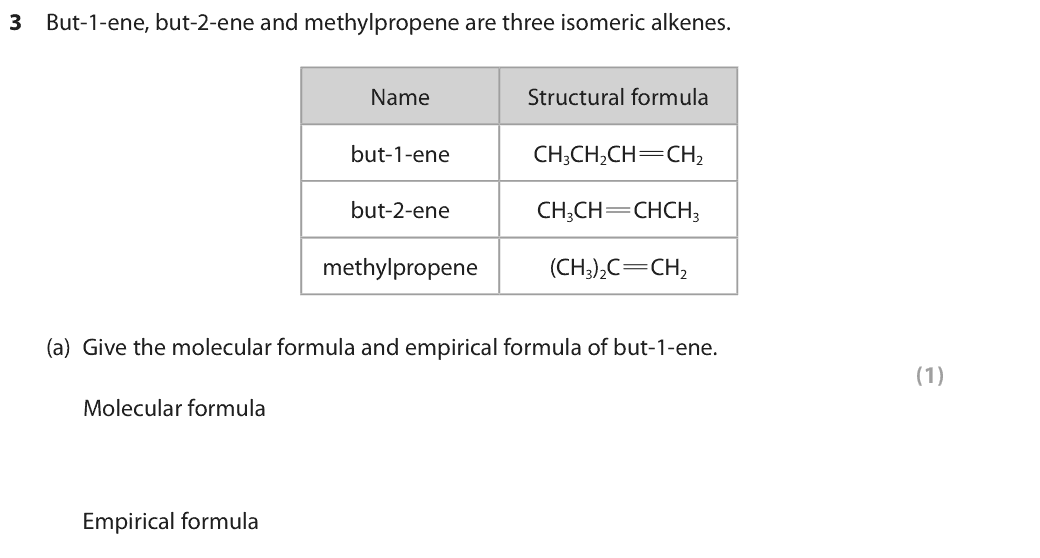
But‑1‑ene, but‑2‑ene and methylpropene are three isomeric alkenes.
Name
Structural formula
but‑1‑ene
CH3CH2CH
CH2
but‑2‑ene
CH3CH
CHCH3
methylpropene
(CH3)2C
CH2
Give the molecular formula and empirical formula of but‑1‑ene.
Molecular formula
Empirical formula
June 2024 · AS Paper 2 · Q3(b)(i) 1 mark Multiple choice alkenesintroduction to organic chemistry
Earlier part of question 3 that this part usesEarlier part of June 2024 Paper 2 question 3
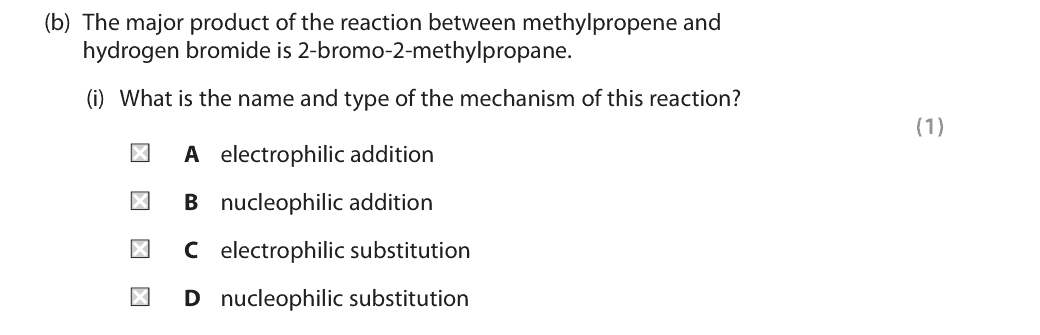
The major product of the reaction between methylpropene and
hydrogen bromide is 2‑bromo‑2‑methylpropane.
What is the name and type of the mechanism of this reaction?
A  electrophilic addition
B  nucleophilic addition
C  electrophilic substitution
D  nucleophilic substitution
June 2024 · AS Paper 2 · Q3(b)(ii) 4 marks Mechanism Easy alkenes
Earlier parts of question 3 that this part usesEarlier part of June 2024 Paper 2 question 3Earlier part of June 2024 Paper 2 question 3
Draw the mechanism for the formation of 2‑bromo‑2‑methylpropane.
Include curly arrows, and any relevant charges, dipoles and lone pairs.
June 2024 · AS Paper 2 · Q3(b)(iii) 3 marks Explanation alkenes
Earlier parts of question 3 that this part usesEarlier part of June 2024 Paper 2 question 3Earlier part of June 2024 Paper 2 question 3Earlier part of June 2024 Paper 2 question 3
A minor organic product is also formed in this reaction.
Justify why this minor product is formed in smaller amounts.
Include the structure of the minor organic product.
June 2024 · AS Paper 2 · Q3(b)(iv) 1 mark Short answer alkenes
Earlier parts of question 3 that this part usesEarlier part of June 2024 Paper 2 question 3Earlier part of June 2024 Paper 2 question 3Earlier part of June 2024 Paper 2 question 3
State what a curly arrow represents in your diagram of the mechanism
in (b)(ii).
June 2024 · AS Paper 2 · Q3(c)(i) 2 marks Diagram or structure introduction to organic chemistry
Earlier part of question 3 that this part usesEarlier part of June 2024 Paper 2 question 3
But‑2‑ene exists as two stereoisomers.
Give the displayed formula and name of each of these isomers.
Isomer 1
Isomer 2
Name 
Name
June 2024 · AS Paper 2 · Q3(c)(ii) 2 marks Explanation introduction to organic chemistry
Earlier parts of question 3 that this part usesEarlier part of June 2024 Paper 2 question 3Earlier part of June 2024 Paper 2 question 3
Explain how the presence of the double bond in but‑2‑ene results in these
two isomers.
June 2024 · AS Paper 2 · Q3(d)(i) 1 mark Multiple choice alkenesalcohols
Earlier part of question 3 that this part usesEarlier part of June 2024 Paper 2 question 3
One of the three alkenes can be hydrated to form a tertiary alcohol.
Name
Structural formula
but‑1‑ene
CH3CH2CH
CH2
but‑2‑ene
CH3CH
CHCH3
methylpropene
(CH3)2C
CH2
Which is the skeletal structure of this alcohol?
A
B
HO
HO
C
D
HO
HO
June 2024 · AS Paper 2 · Q3(d)(ii) 2 marks Explanation alcohols
Earlier parts of question 3 that this part usesEarlier part of June 2024 Paper 2 question 3Earlier part of June 2024 Paper 2 question 3
Explain why tertiary alcohols resist oxidation, but primary or secondary
alcohols are readily oxidised.
June 2024 · AS Paper 2 · Q4(a)(i) 3 marks Calculation Easy energetics i
This question is about the formation of cyclobutane, a gas at 298 K.
Cyclobutane can be made by the dimerisation of ethene.
H
H
H
H
H
H
H
H
C
C
C
C
+
→
C
C
C
C
H
H
H
H
H
H
H
H
Some mean bond enthalpy values are given in the table.
Bond
Mean bond enthalpy / kJ mol–1
C
H
413
C
C
347
C
C
612
Calculate the enthalpy change of this dimerisation by selecting appropriate
data from the table.
June 2024 · AS Paper 2 · Q4(a)(ii) 2 marks Explanation energetics i
Earlier part of question 4 that this part usesEarlier part of June 2024 Paper 2 question 4
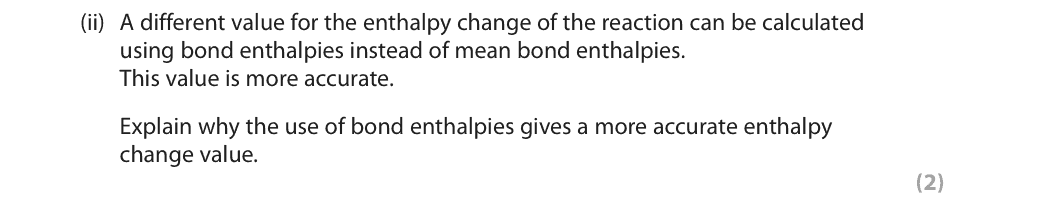
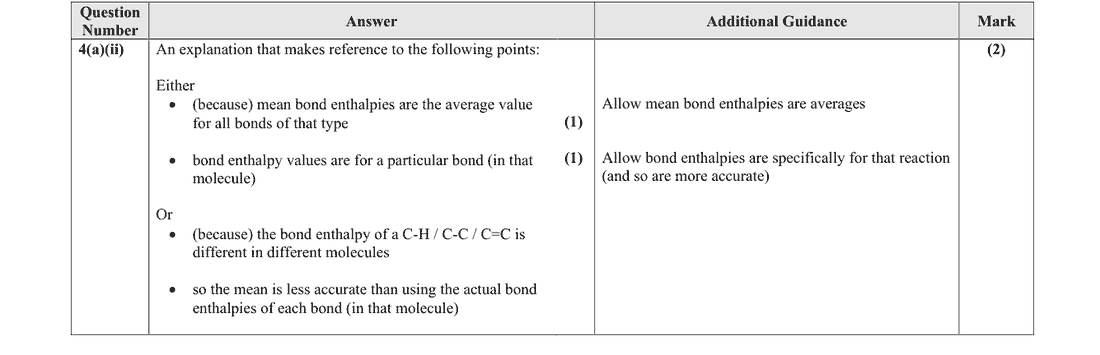
A different value for the enthalpy change of the reaction can be calculated
using bond enthalpies instead of mean bond enthalpies.
This value is more accurate.
Explain why the use of bond enthalpies gives a more accurate enthalpy
change value.
June 2024 · AS Paper 2 · Q4(b)(i) 4 marks Diagram or structure energetics i
Earlier part of question 4 that this part usesEarlier part of June 2024 Paper 2 question 4
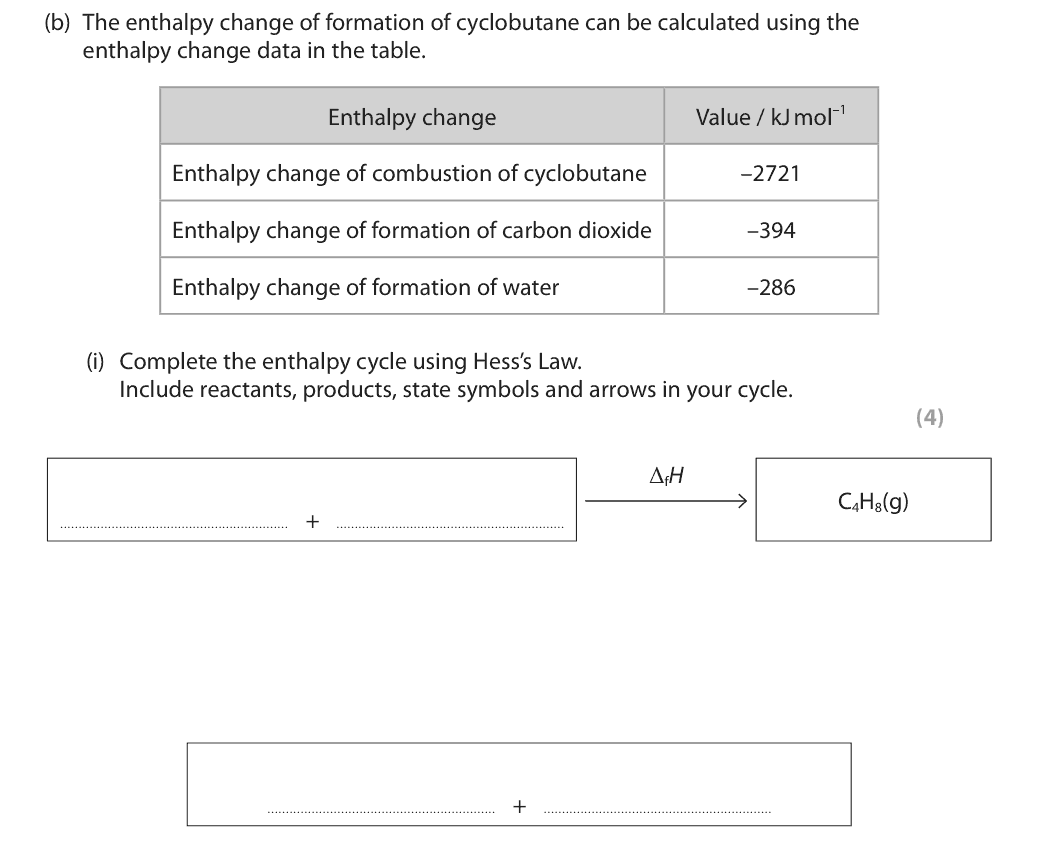
The enthalpy change of formation of cyclobutane can be calculated using the
enthalpy change data in the table.
Enthalpy change
Value / kJ mol–1
Enthalpy change of combustion of cyclobutane
–2721
Enthalpy change of formation of carbon dioxide
–394
Enthalpy change of formation of water
–286
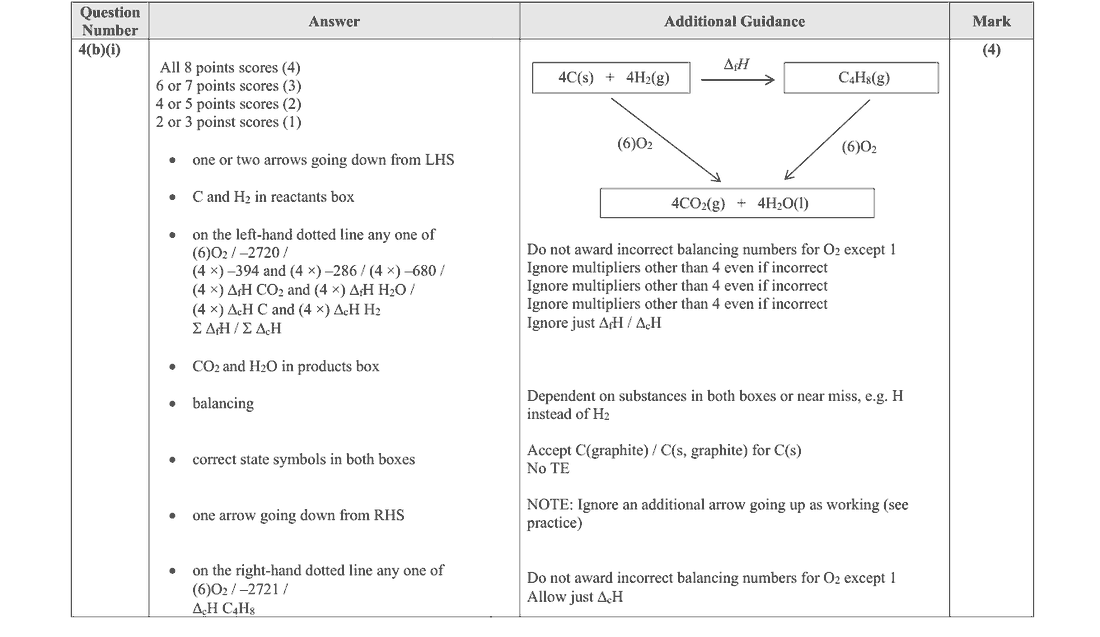
Complete the enthalpy cycle using Hess’s Law.
Include reactants, products, state symbols and arrows in your cycle.
ΔfH
C4H8(g)
   +   
   +
June 2024 · AS Paper 2 · Q4(b)(ii) 2 marks Calculation energetics i
Earlier parts of question 4 that this part usesEarlier part of June 2024 Paper 2 question 4Earlier part of June 2024 Paper 2 question 4
Calculate the enthalpy change of formation of cyclobutane.
June 2024 · AS Paper 2 · Q5(a)(i) 2 marks Practical and data analysis alcohols
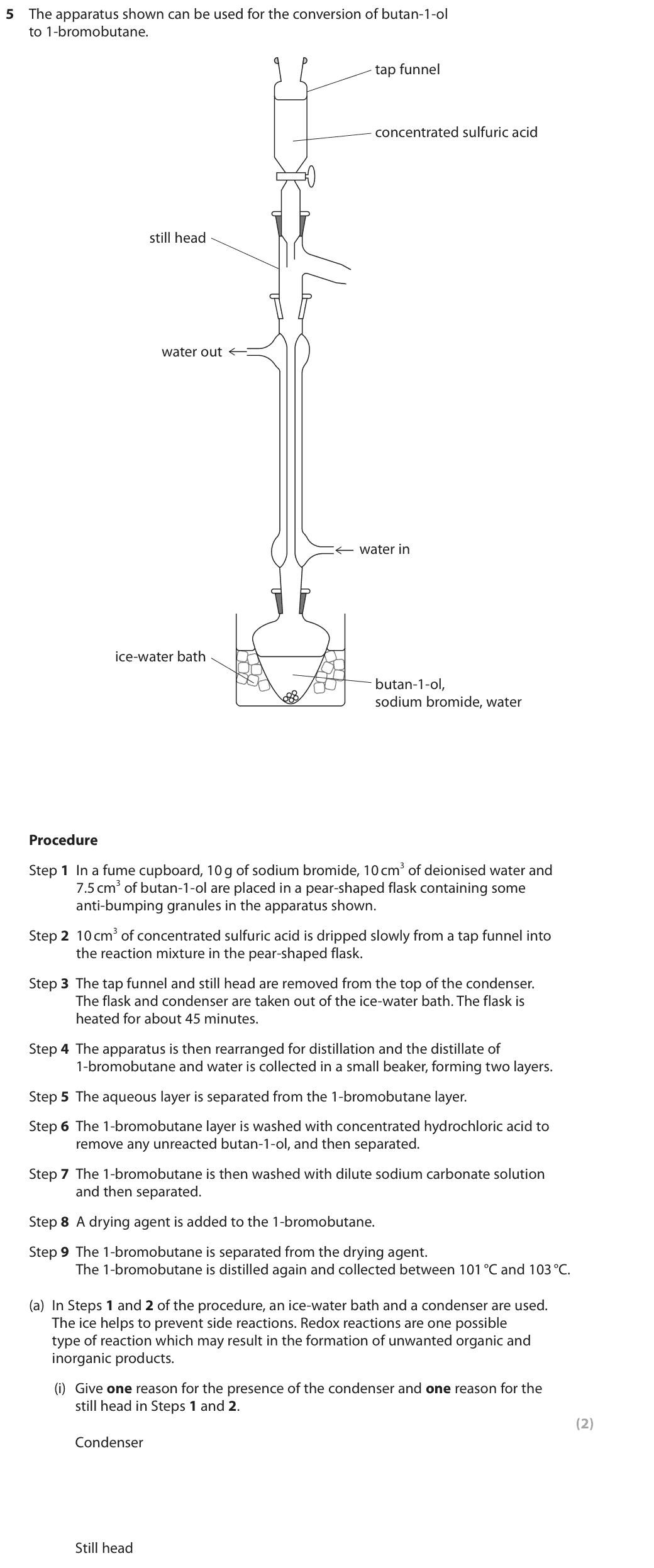
The apparatus shown can be used for the conversion of butan‑1‑ol
to 1‑bromobutane.
tap funnel
concentrated sulfuric acid
still head
water out
water in
ice‑water bath
butan‑1‑ol,
sodium bromide, water
Procedure
Step 1  In a fume cupboard, 10 g of sodium bromide, 10 cm3 of deionised water and
7.5 cm3 of butan‑1‑ol are placed in a pear‑shaped flask containing some
anti‑bumping granules in the apparatus shown.
Step 2  10 cm3 of concentrated sulfuric acid is dripped slowly from a tap funnel into
the reaction mixture in the pear‑shaped flask.
Step 3  The tap funnel and still head are removed from the top of the condenser.
The flask and condenser are taken out of the ice‑water bath. The flask is
heated for about 45 minutes.
Step 4  The apparatus is then rearranged for distillation and the distillate of
1‑bromobutane and water is collected in a small beaker, forming two layers.
Step 5  The aqueous layer is separated from the 1‑bromobutane layer.
Step 6  The 1‑bromobutane layer is washed with concentrated hydrochloric acid to
remove any unreacted butan‑1‑ol, and then separated.
Step 7  The 1‑bromobutane is then washed with dilute sodium carbonate solution
and then separated.
Step 8  A drying agent is added to the 1‑bromobutane.
Step 9  The 1‑bromobutane is separated from the drying agent.
The 1‑bromobutane is distilled again and collected between 101 °C and 103 °C.
In Steps 1 and 2 of the procedure, an ice‑water bath and a condenser are used.
The ice helps to prevent side reactions. Redox reactions are one possible
type of reaction which may result in the formation of unwanted organic and
inorganic products.
Give one reason for the presence of the condenser and one reason for the
still head in Steps 1 and 2.
Condenser
Still head
June 2024 · AS Paper 2 · Q5(a)(ii) 1 mark Short answer Hard alcohols
Earlier part of question 5 that this part usesEarlier part of June 2024 Paper 2 question 5
Give the name or formula of the oxidising agent responsible for the unwanted
redox reactions.
June 2024 · AS Paper 2 · Q5(a)(iii) 2 marks Short answer Hard alcohols
Earlier part of question 5 that this part usesEarlier part of June 2024 Paper 2 question 5
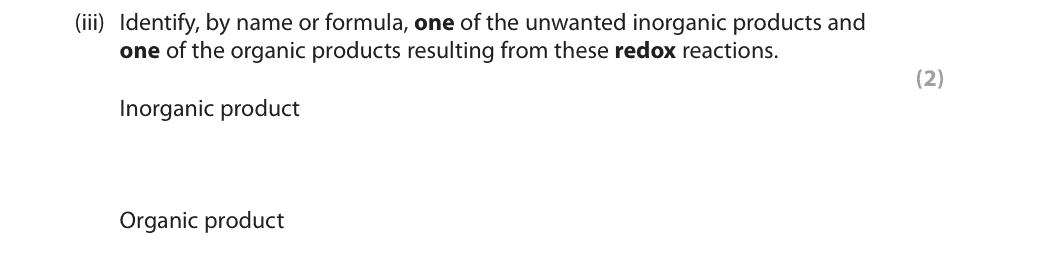
Identify, by name or formula, one of the unwanted inorganic products and
one of the organic products resulting from these redox reactions.
Inorganic product
Organic product
June 2024 · AS Paper 2 · Q5(a)(iv) 1 mark Short answer kinetics i
Earlier part of question 5 that this part usesEarlier part of June 2024 Paper 2 question 5
Give a reason why ice helps to prevent the formation of these redox products.
June 2024 · AS Paper 2 · Q5(b) 3 marks Practical and data analysis alcohols
Earlier part of question 5 that this part usesEarlier part of June 2024 Paper 2 question 5
Describe how the apparatus is rearranged for distillation, including the name of
any additional apparatus required.
June 2024 · AS Paper 2 · Q5(c)(i) 1 mark Diagram or structure alcohols
Earlier part of question 5 that this part usesEarlier part of June 2024 Paper 2 question 5
The method of separation of the aqueous and organic layers in Step 5 is different
from that used in Steps 6 and 7.
Draw a labelled diagram of the beaker immediately before the separation
in Step 5.
[Density of water = 1.00 g cm–3
Density of 1‑bromobutane = 1.28 g cm–3]
June 2024 · AS Paper 2 · Q5(c)(ii) 1 mark Practical and data analysis alcohols
Earlier parts of question 5 that this part usesEarlier part of June 2024 Paper 2 question 5Earlier part of June 2024 Paper 2 question 5
Describe how the aqueous layer can be removed from the beaker in Step 5.
June 2024 · AS Paper 2 · Q5(c)(iii) 1 mark Practical and data analysis alcohols
Earlier parts of question 5 that this part usesEarlier part of June 2024 Paper 2 question 5Earlier part of June 2024 Paper 2 question 5
Name the piece of apparatus used to separate the organic layer in
Steps 6 and 7.
June 2024 · AS Paper 2 · Q6(a) 1 mark Practical and data analysis formulae equations and amounts of substance
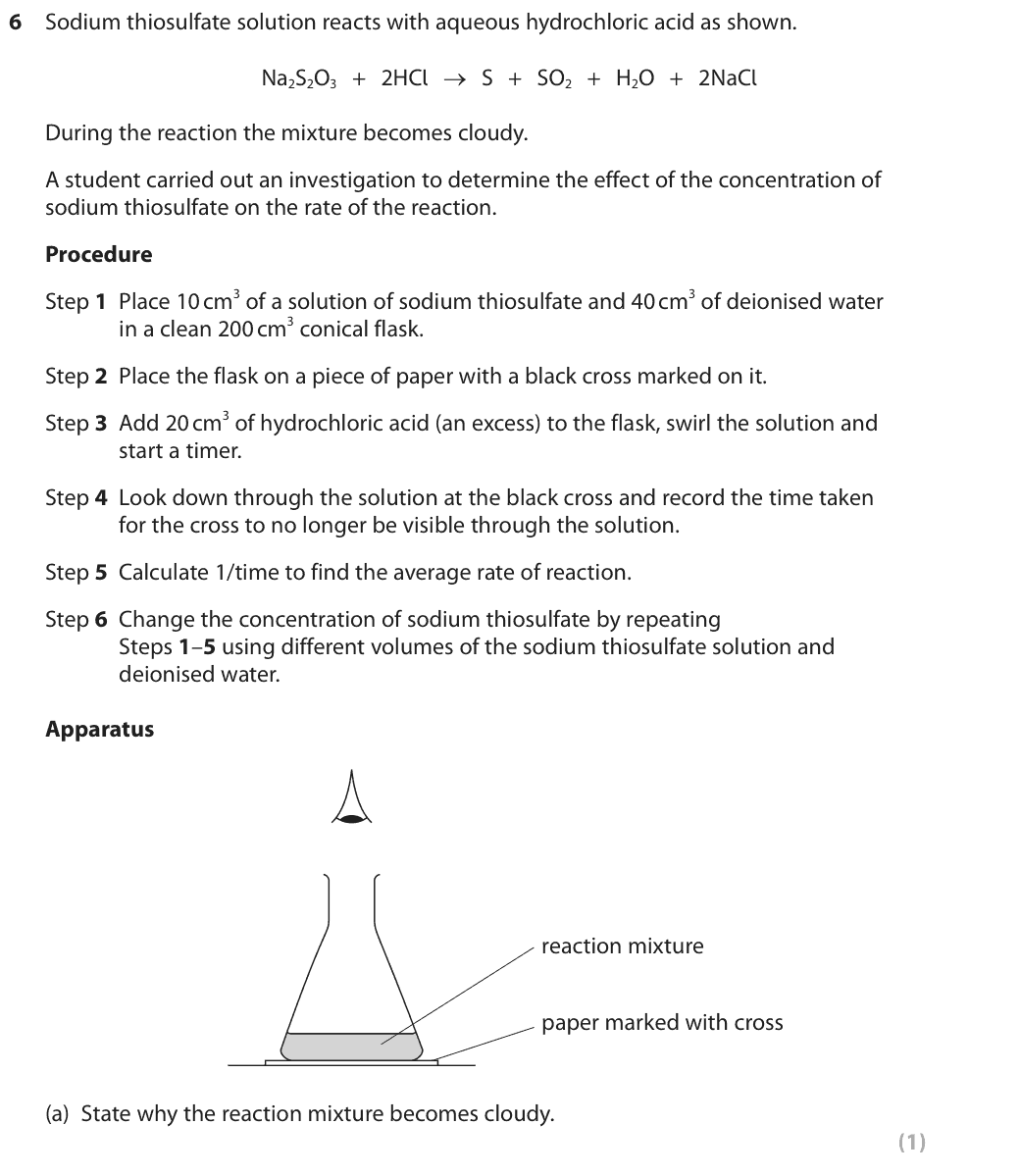
Sodium thiosulfate solution reacts with aqueous hydrochloric acid as shown.
Na2S2O3   +   2HCl   →   S   +   SO2   +   H2O   +   2NaCl
During the reaction the mixture becomes cloudy.
A student carried out an investigation to determine the effect of the concentration of
sodium thiosulfate on the rate of the reaction.
Procedure
Step 1  Place 10 cm3 of a solution of sodium thiosulfate and 40 cm3 of deionised water
in a clean 200 cm3 conical flask.
Step 2  Place the flask on a piece of paper with a black cross marked on it.
Step 3  Add 20 cm3 of hydrochloric acid (an excess) to the flask, swirl the solution and
start a timer.
Step 4  Look down through the solution at the black cross and record the time taken
for the cross to no longer be visible through the solution.
Step 5  Calculate 1/time to find the average rate of reaction.
Step 6  Change the concentration of sodium thiosulfate by repeating
Steps 1–5 using different volumes of the sodium thiosulfate solution and
deionised water.
Apparatus
reaction mixture
paper marked with cross
State why the reaction mixture becomes cloudy.
June 2024 · AS Paper 2 · Q6(b)(i) 1 mark Multiple choice formulae equations and amounts of substance
Earlier part of question 6 that this part usesEarlier part of June 2024 Paper 2 question 6
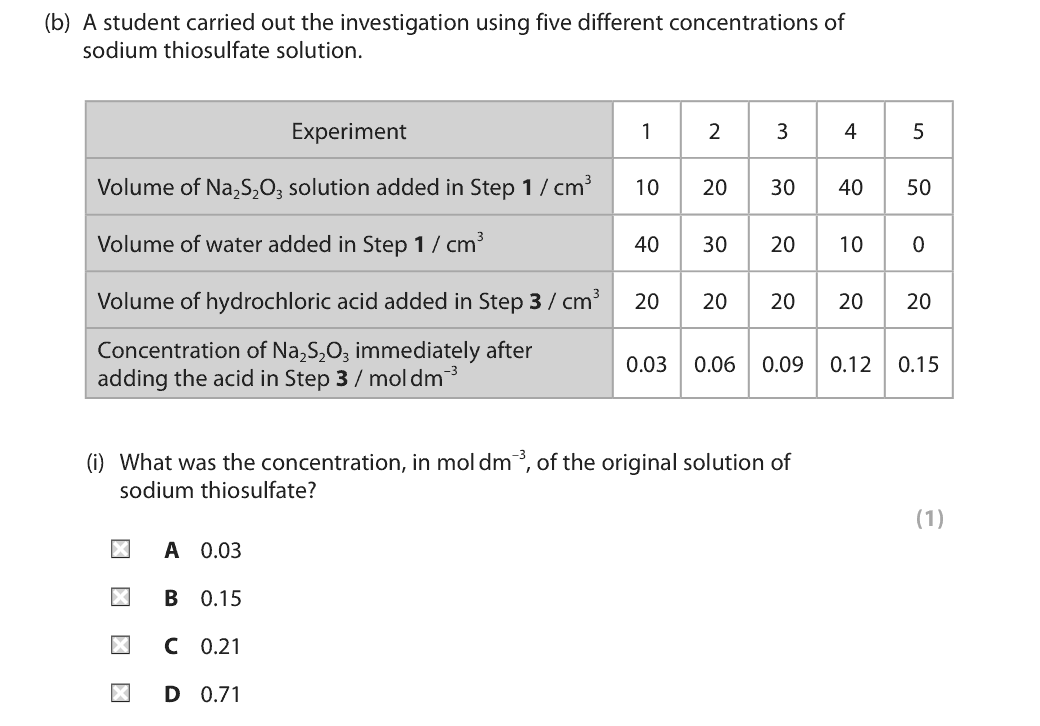
A student carried out the investigation using five different concentrations of
sodium thiosulfate solution.
Experiment
1
2
3
4
5
Volume of Na2S2O3 solution added in Step 1 / cm3
10
20
30
40
50
Volume of water added in Step 1 / cm3
40
30
20
10
0
Volume of hydrochloric acid added in Step 3 / cm3
20
20
20
20
20
Concentration of Na2S2O3 immediately after
0.03
0.06
0.09
0.12
0.15
adding the acid in Step 3 / mol dm–3
What was the concentration, in mol dm–3, of the original solution of
sodium thiosulfate?
A  0.03
B  0.15
C  0.21
D  0.71
June 2024 · AS Paper 2 · Q6(b)(ii) 1 mark Practical and data analysis Hard kinetics i
Earlier parts of question 6 that this part usesEarlier part of June 2024 Paper 2 question 6Earlier part of June 2024 Paper 2 question 6
State why water is added in Experiments 1 to 4, but not in Experiment 5.
June 2024 · AS Paper 2 · Q6(c)(i) 1 mark Calculation kinetics i
Earlier part of question 6 that this part usesEarlier part of June 2024 Paper 2 question 6
The student plotted a graph of 1/ time against concentration of
sodium thiosulfate.
0.05
0.04
0.03
1/ time
/ s–1
0.02
0.01
0.00
0.00
0.02
0.04
0.06
0.08
0.10
0.12
0.14
0.16
Concentration of Na2S2O3 in the reaction mixture / mol dm–3
Calculate, using the graph, the time taken for the cross to be obscured using
a concentration of sodium thiosulfate of 0.10 mol dm–3.
June 2024 · AS Paper 2 · Q6(c)(ii) 1 mark Short answer Hard kinetics i
Earlier parts of question 6 that this part usesEarlier part of June 2024 Paper 2 question 6Earlier part of June 2024 Paper 2 question 6
State and justify the relationship between the rate of reaction and the
concentration of sodium thiosulfate as shown by the graph.
June 2024 · AS Paper 2 · Q6(d) 1 mark Multiple choice formulae equations and amounts of substance
Earlier part of question 6 that this part usesEarlier part of June 2024 Paper 2 question 6
Which will decrease the accuracy of the experiment?
A  rinsing the flask with deionised water before each new experiment
B  stirring the solution throughout each experiment
C  using a different 50 cm3 measuring cylinder for each solution
D  using the same piece of paper in each experiment
June 2024 · AS Paper 2 · Q6(e) 1 mark Multiple choice kinetics i
Earlier part of question 6 that this part usesEarlier part of June 2024 Paper 2 question 6
Experiment 1 is repeated at the same temperature, but using a 100 cm3
conical flask in place of the 200 cm3 flask.
Which statement is correct about the repeated experiment?
A  it is not possible to predict how the time taken will be affected
B  the time taken will decrease using the 100 cm3 flask
C  the time taken will increase using the 100 cm3 flask
D  the time taken will be the same using the 100 cm3 flask
June 2024 · AS Paper 2 · Q7 6 marks 6-mark extended response equilibrium ikinetics i
Methanol can be produced by reacting carbon dioxide and hydrogen in the
exothermic reaction shown.
CO2(g)   +   3H2(g)      CH3OH(g)   +   H2O(g)
Discuss, with reasons, the effects of changing the conditions on the yield of methanol
and the rate of reaction.
•
increasing temperature at constant pressure
•
increasing pressure at constant temperature
June 2024 · AS Paper 2 · Q8(a)(i) 2 marks Equation writing Hard energetics iformulae equations and amounts of substance
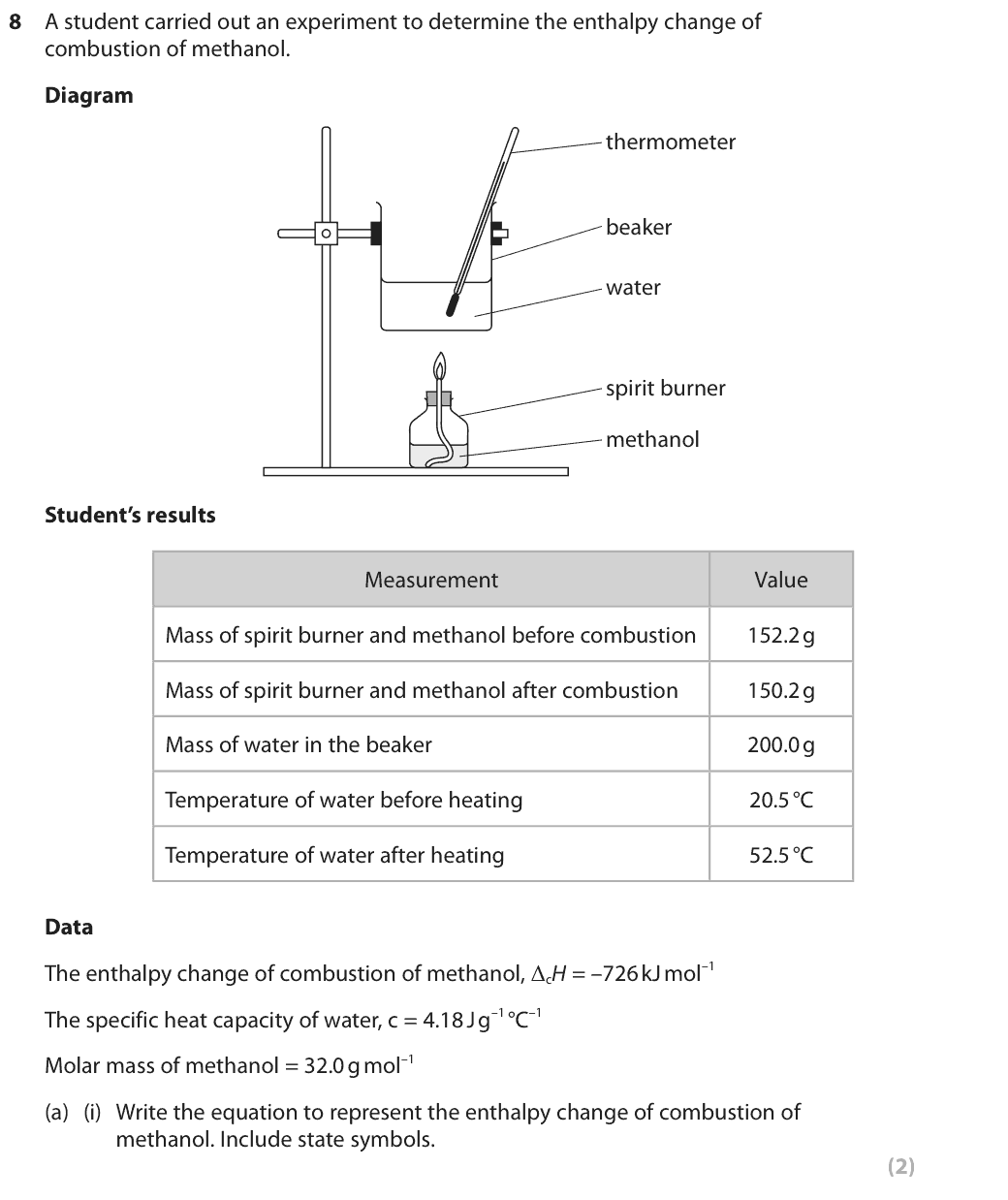
A student carried out an experiment to determine the enthalpy change of
combustion of methanol.
Diagram
thermometer
beaker
water
spirit burner
methanol
Student’s results
Measurement
Value
Mass of spirit burner and methanol before combustion
152.2 g
Mass of spirit burner and methanol after combustion
150.2 g
Mass of water in the beaker
200.0 g
Temperature of water before heating
20.5 °C
Temperature of water after heating
52.5 °C
Data
The enthalpy change of combustion of methanol, ΔcH = –726 kJ mol–1
The specific heat capacity of water, c = 4.18 J g–1 °C–1
Molar mass of methanol = 32.0 g mol–1
Write the equation to represent the enthalpy change of combustion of
methanol. Include state symbols.
June 2024 · AS Paper 2 · Q8(a)(ii) 4 marks Calculation Hard energetics i
Earlier part of question 8 that this part usesEarlier part of June 2024 Paper 2 question 8
Calculate the expected final temperature of the water in the student’s
experiment, assuming no experimental errors.
June 2024 · AS Paper 2 · Q8(a)(iii) 1 mark Calculation Hard formulae equations and amounts of substance
Earlier part of question 8 that this part usesEarlier part of June 2024 Paper 2 question 8
Calculate the percentage error in the experimental temperature rise
compared to the theoretical temperature rise from your calculation.
June 2024 · AS Paper 2 · Q8(b) 2 marks Explanation energetics iformulae equations and amounts of substance
Earlier part of question 8 that this part usesEarlier part of June 2024 Paper 2 question 8
Instead of waiting in a queue for a balance which recorded the mass of the
spirit burner to 2 decimal places, the student used a balance which recorded the
mass to 1 decimal place.
Explain whether or not the student would have been better to wait for the
balance with greater precision to give a final answer with greater accuracy.

Work with an A-level chemistry tutor

Want a paper marked and gone through with you? Message us.

Prefer email? Send an enquiry

If you are under 18, please include a parent's contact details. Enquiries go to enquiries@chemistryaleveltutor.com and are deleted once handled. All tutoring is online.