June 2018: AS Paper 1, Core Inorganic and Physical Chemistry

80 marks · 42 question parts · Paper, mark scheme and report on Edexcel's site · Have the Data Booklet beside you

Question by question

QTopicMarksAOType
1(a) Bonding 2Short answer
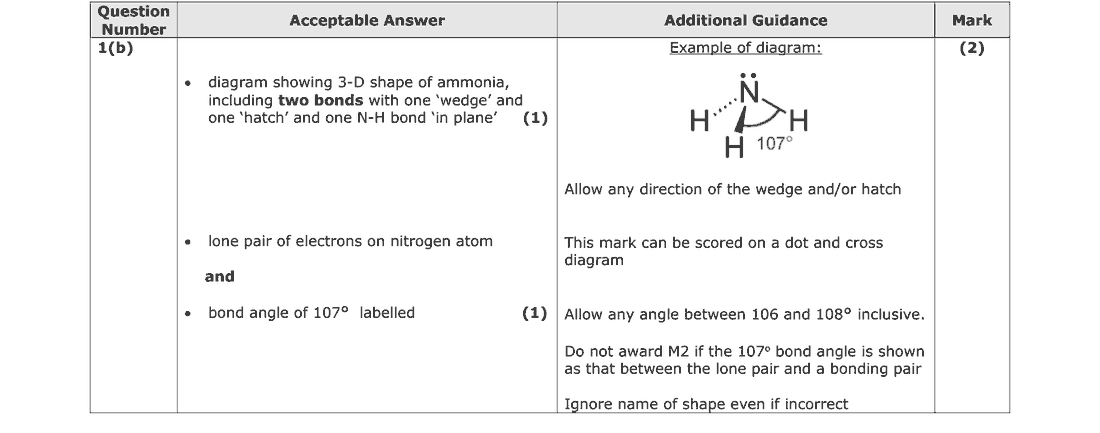
1(b) Bonding 2Diagram or structure
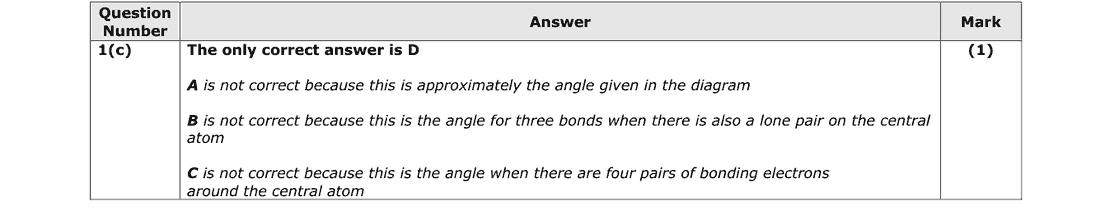
1(c) Bonding 1Multiple choice
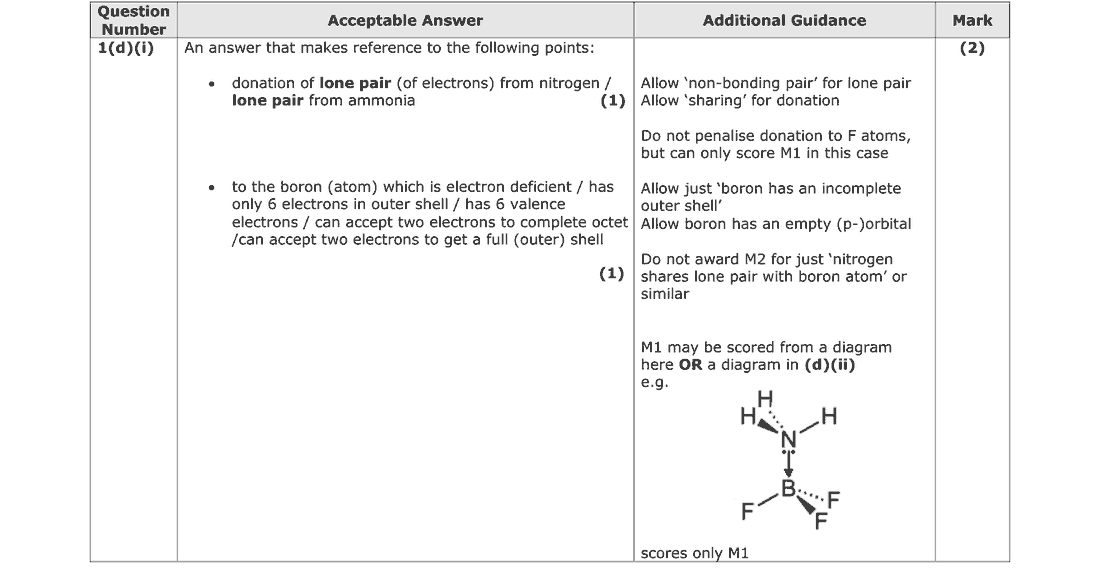
1(d)(i) Bonding 2Explanation
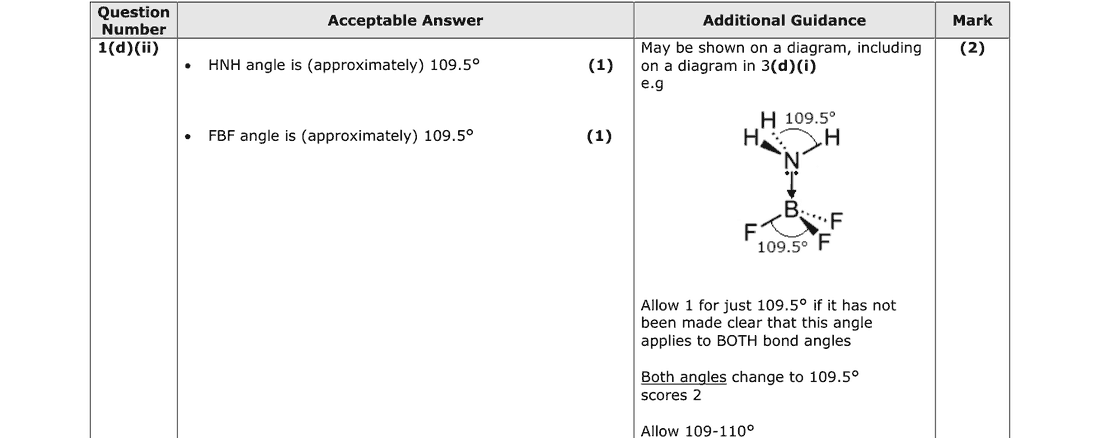
1(d)(ii) Bonding 2Short answer
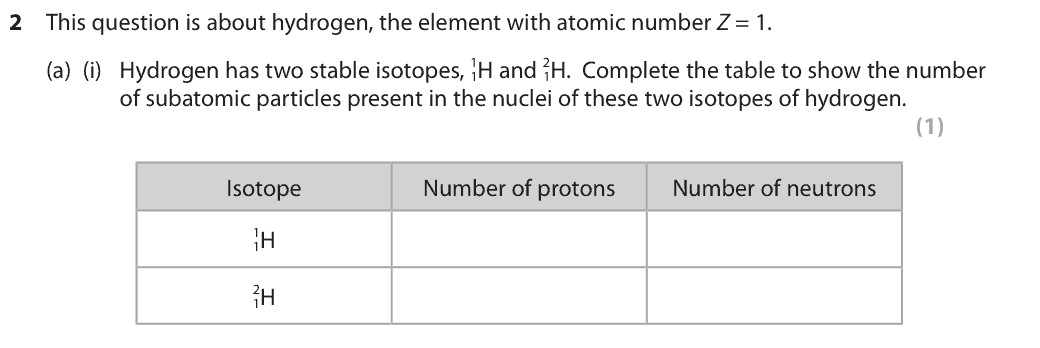
2(a)(i) Atomic structure and the Periodic Table 1Short answer
2(a)(ii) Atomic structure and the Periodic Table 2Explanation
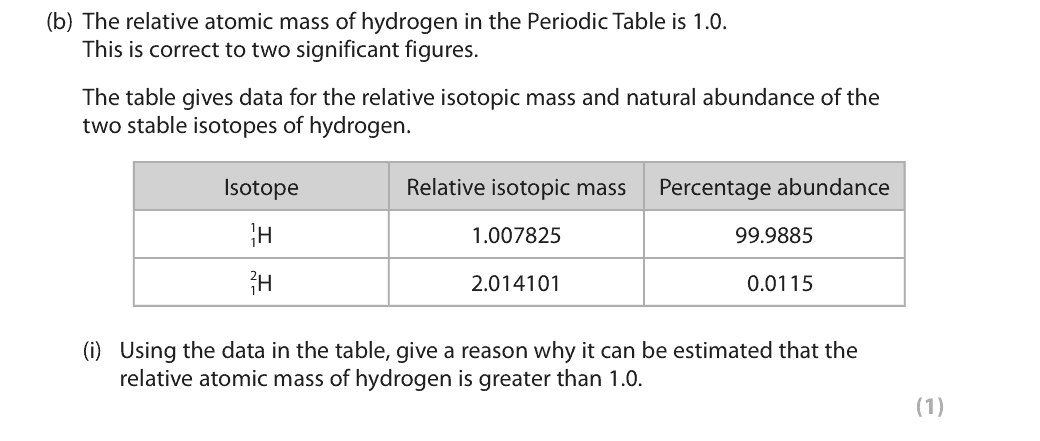
2(b)(i) Atomic structure and the Periodic Table 1Short answer
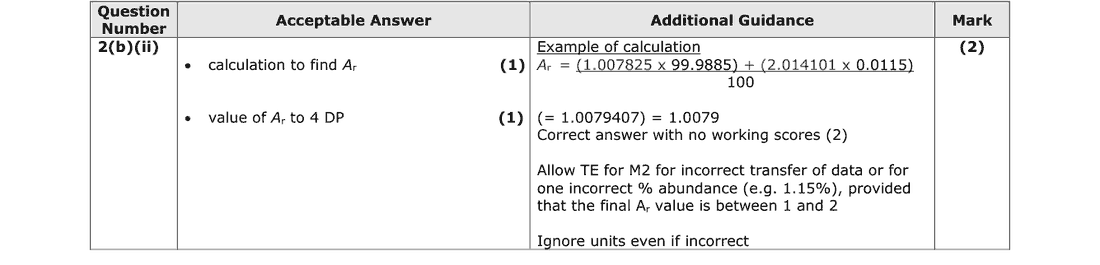
2(b)(ii) Atomic structure and the Periodic Table 2Calculation
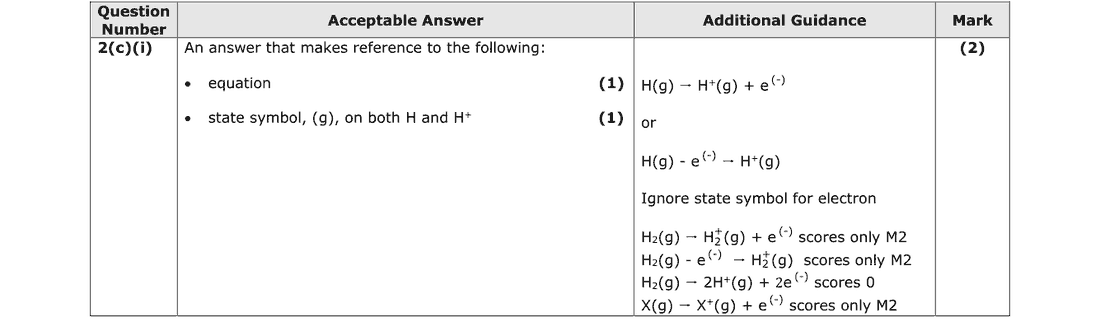
2(c)(i) Atomic structure and the Periodic Table 2Equation writing
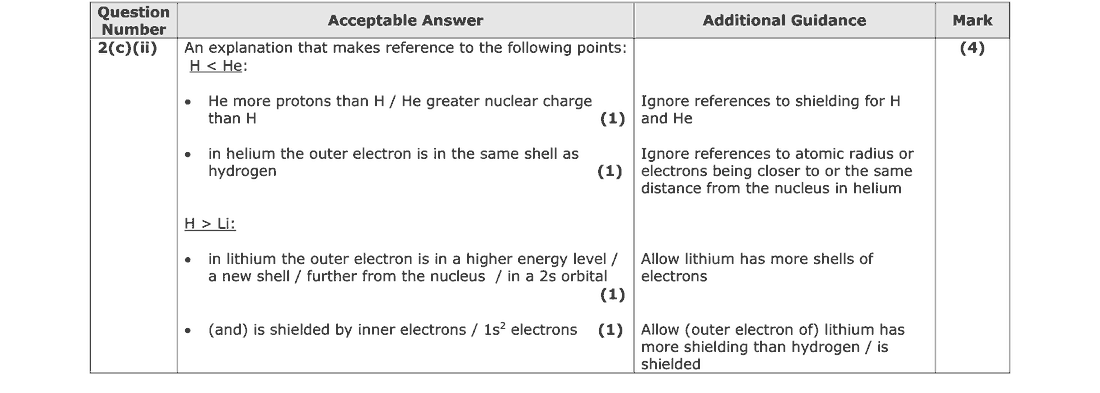
2(c)(ii) Atomic structure and the Periodic Table 4Explanation
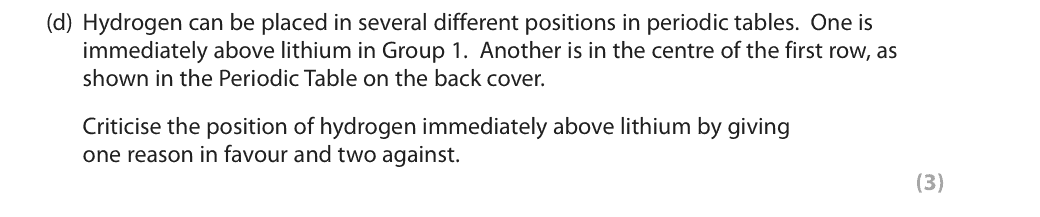
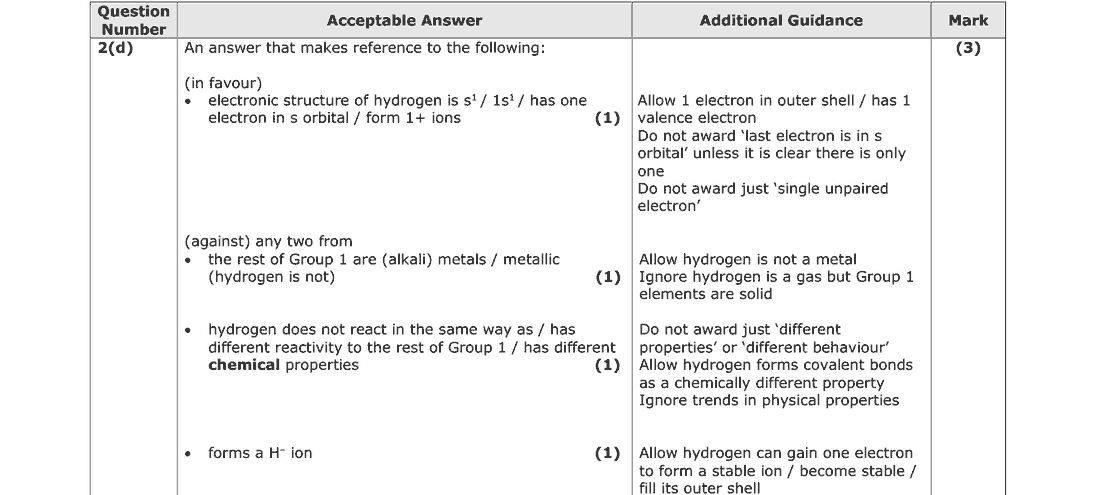
2(d) Atomic structure and the Periodic Table 3Short answer
3(a) Formulae, equations and amounts of substance 1Multiple choice
3(b) Formulae, equations and amounts of substance 1Multiple choice
3(c)(i) Formulae, equations and amounts of substance 2Practical and data analysis
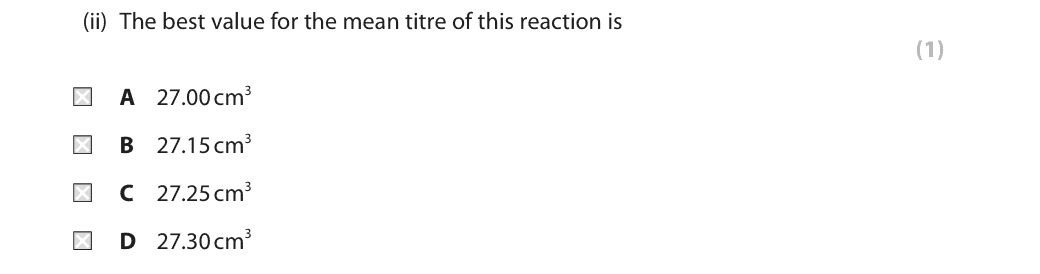
3(c)(ii) Formulae, equations and amounts of substance 1Multiple choice
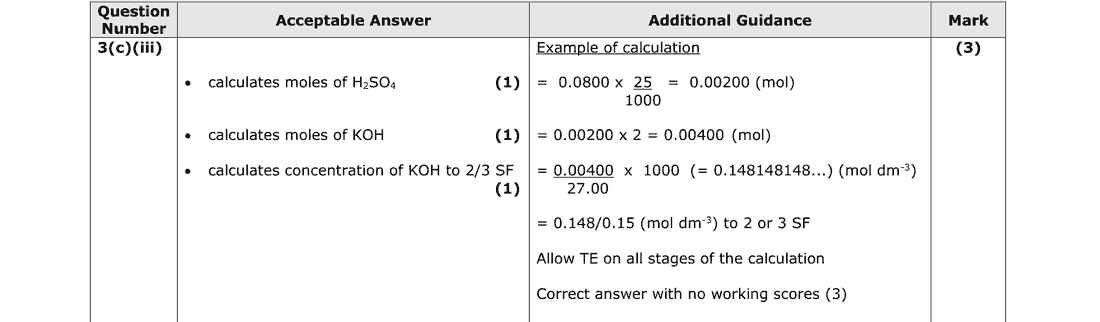
3(c)(iii) Formulae, equations and amounts of substance 3Calculation
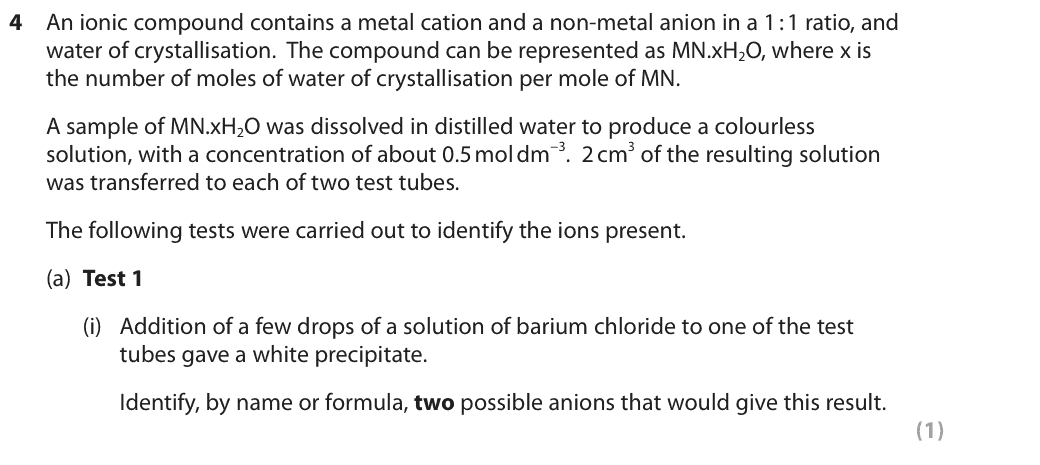
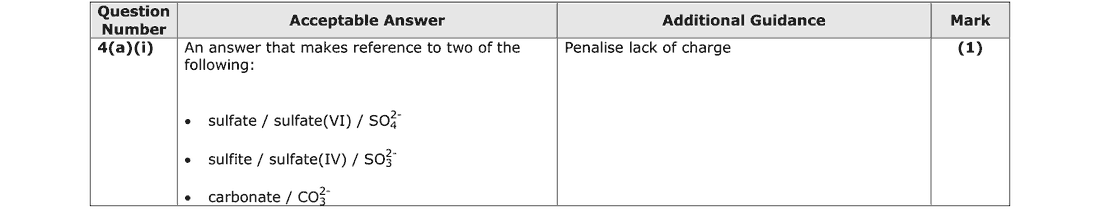
4(a)(i) Analysis of inorganic compounds 1Practical and data analysis
4(a)(ii) Analysis of inorganic compounds 1Practical and data analysis
4(a)(iii) Bonding 1Multiple choice
4(b) The elements of Groups 1 and 2 1Practical and data analysis
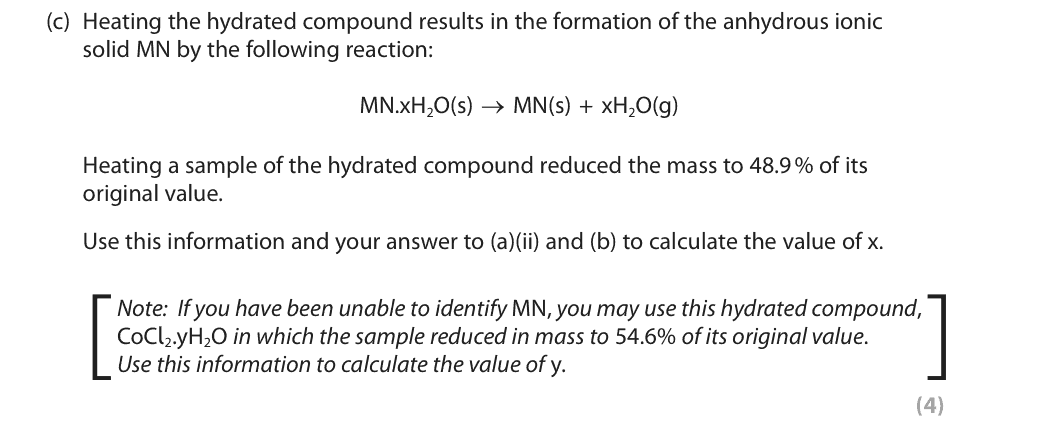
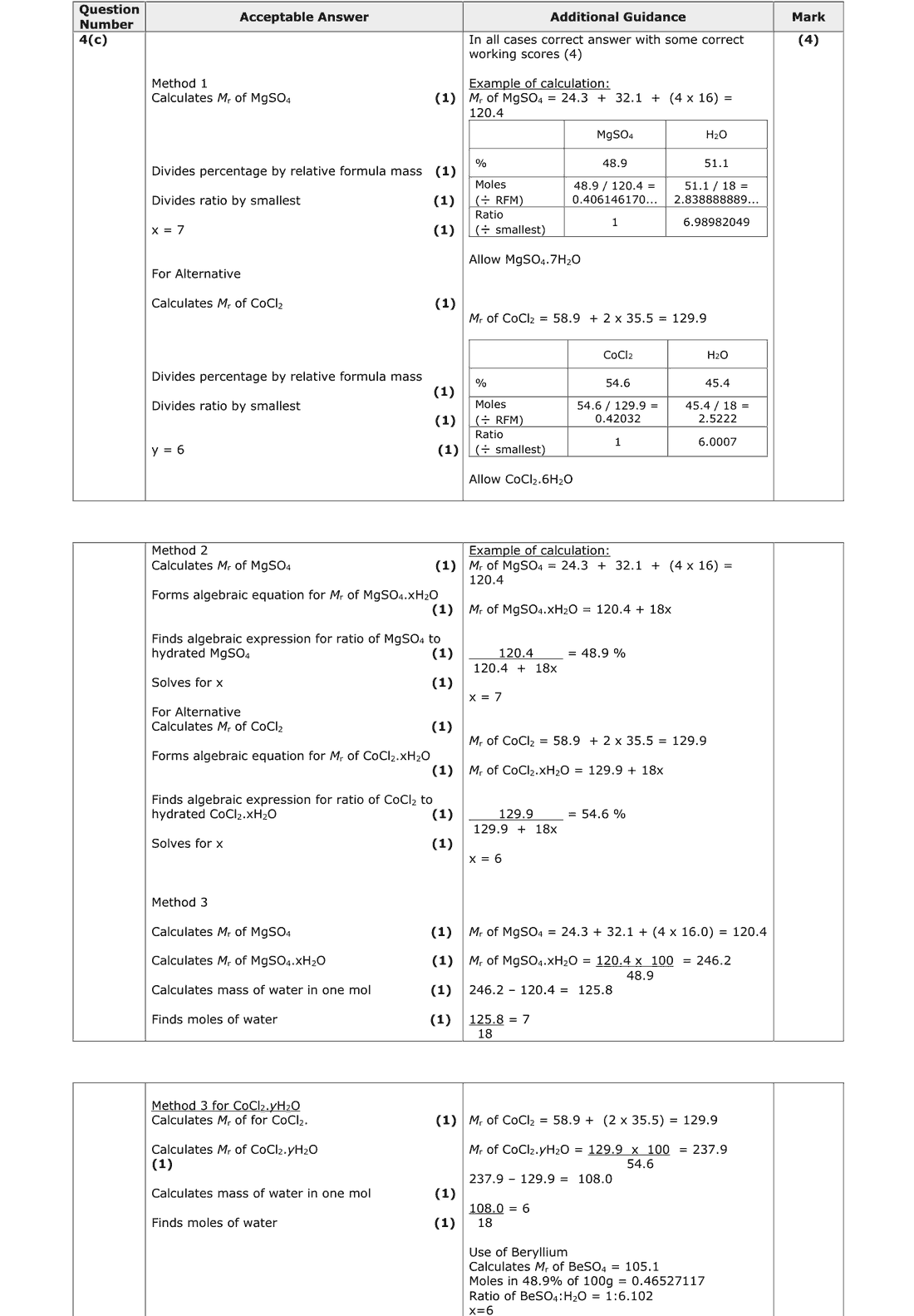
4(c) Formulae, equations and amounts of substance 4Calculation
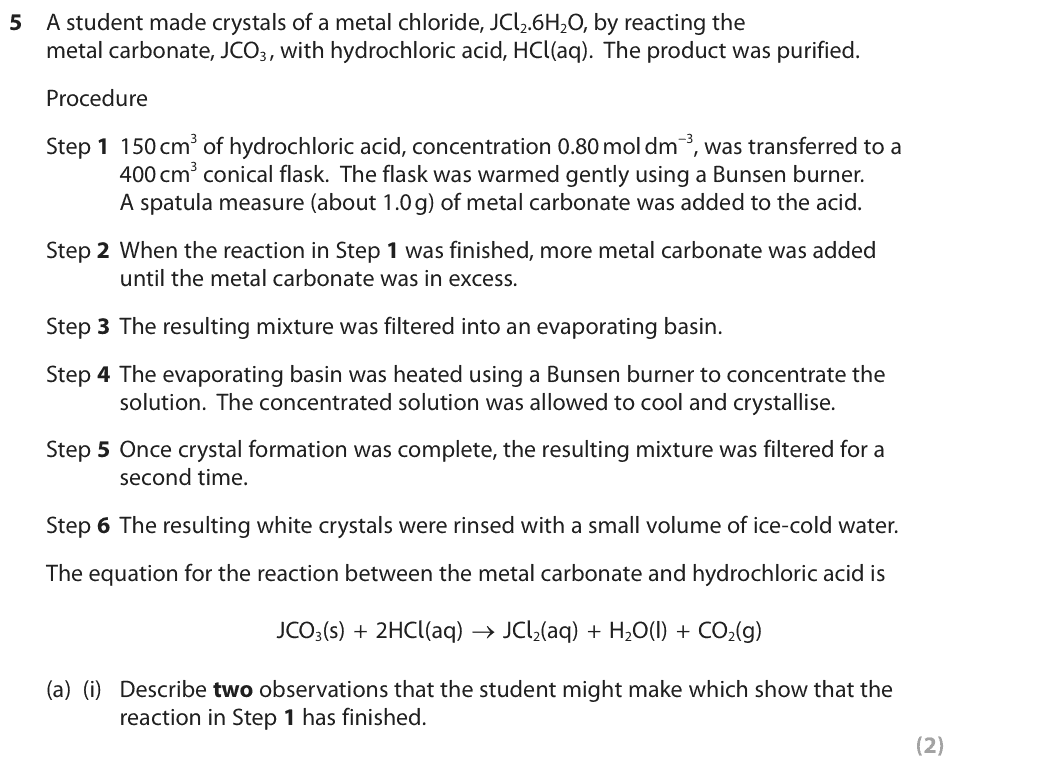
5(a)(i) Formulae, equations and amounts of substance 2Practical and data analysis
5(a)(ii) Formulae, equations and amounts of substance 1Practical and data analysis
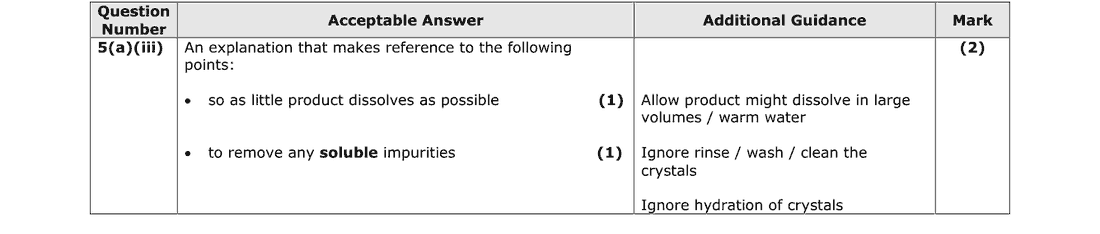
5(a)(iii) Formulae, equations and amounts of substance 2Practical and data analysis
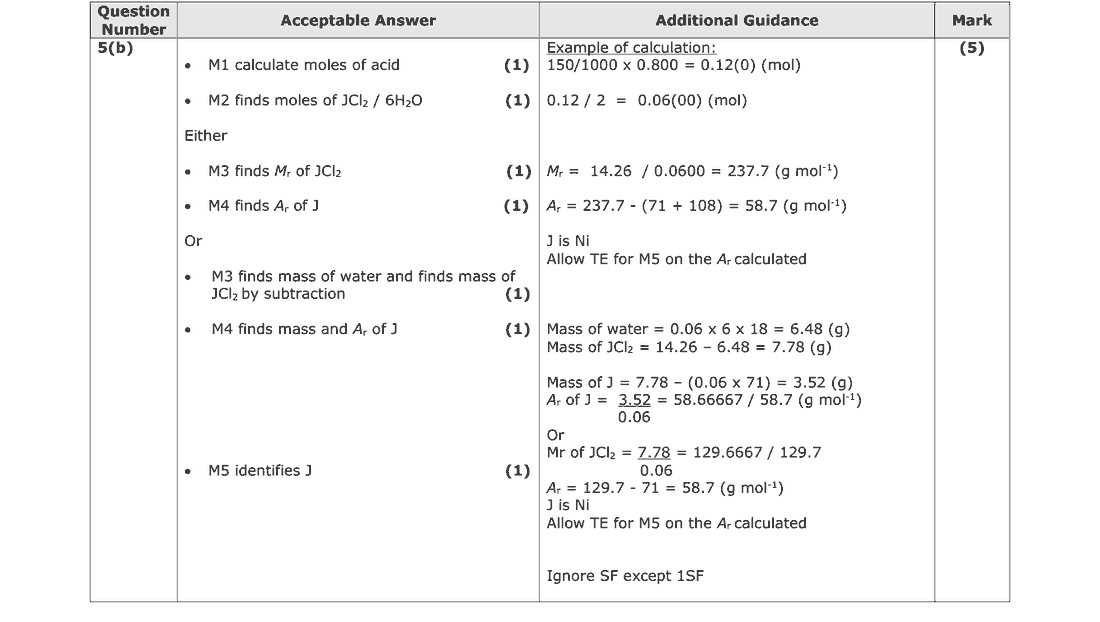
5(b) Formulae, equations and amounts of substance 5Calculation
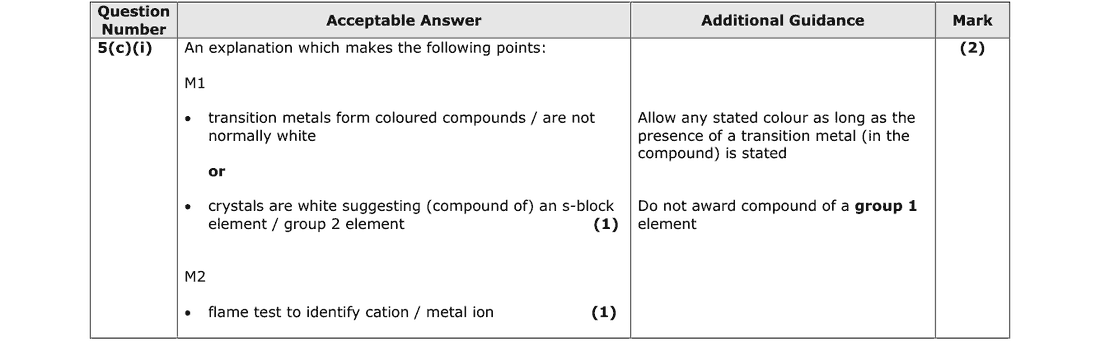
5(c)(i) The elements of Groups 1 and 2, Atomic structure and the Periodic Table 2Explanation
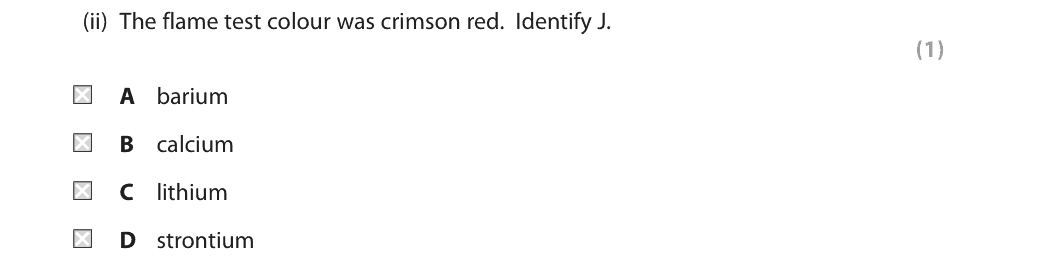
5(c)(ii) The elements of Groups 1 and 2 1Multiple choice
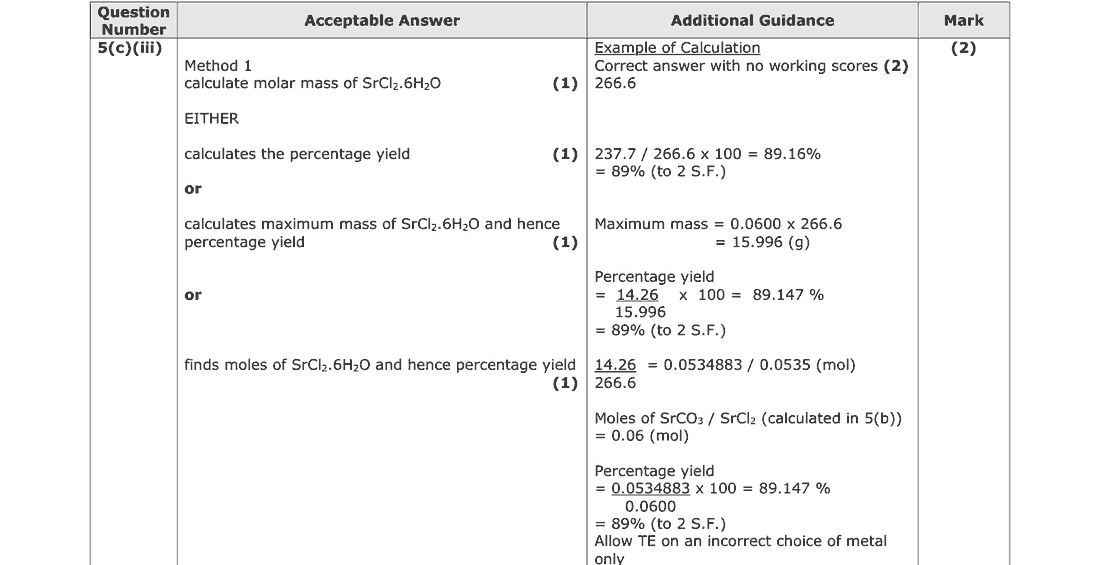
5(c)(iii) Formulae, equations and amounts of substance 2Calculation
6(a)(i) Atomic structure and the Periodic Table 1Short answer
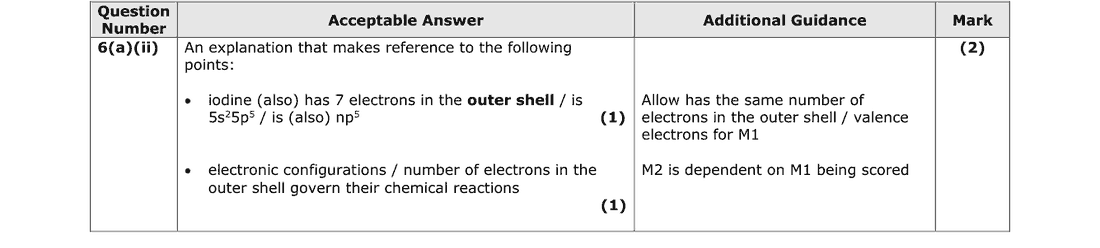
6(a)(ii) Atomic structure and the Periodic Table 2Explanation
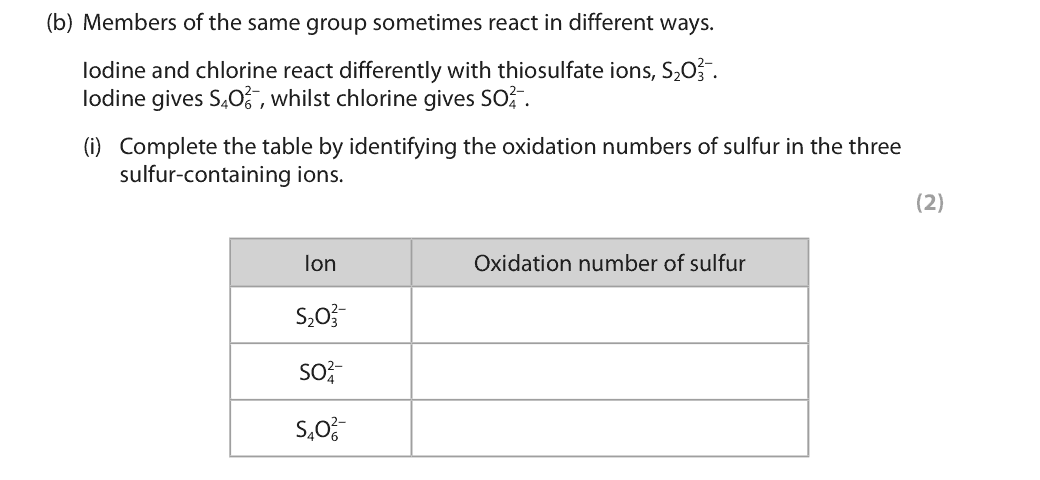
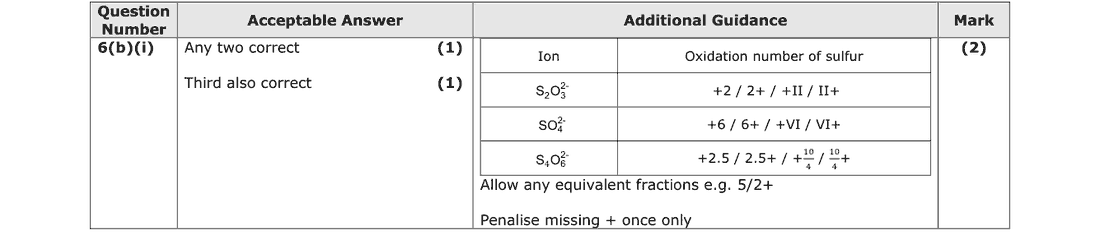
6(b)(i) Redox I 2Short answer
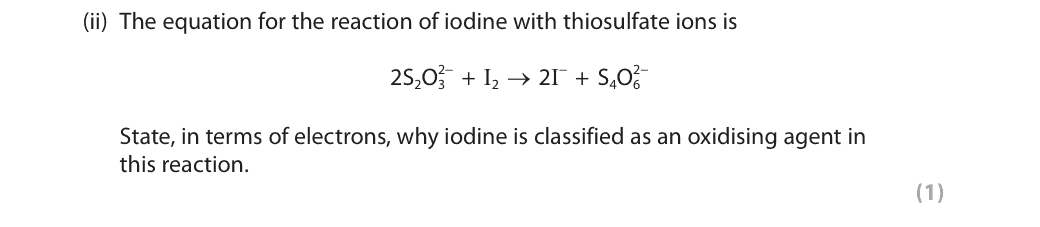
6(b)(ii) Redox I 1Short answer
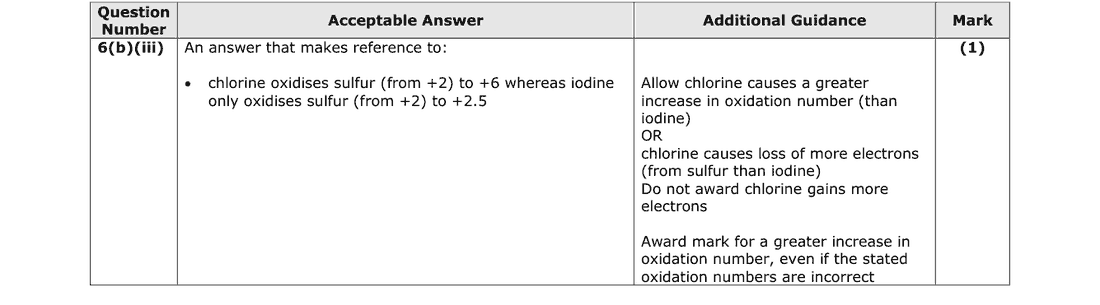
6(b)(iii) Redox I 1Short answer
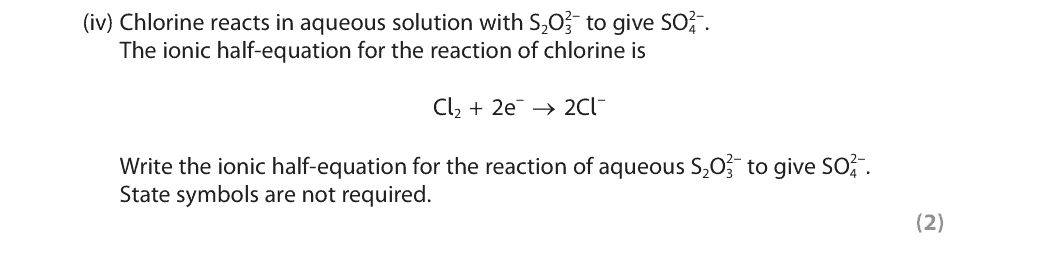
6(b)(iv) Redox I 2Equation writing
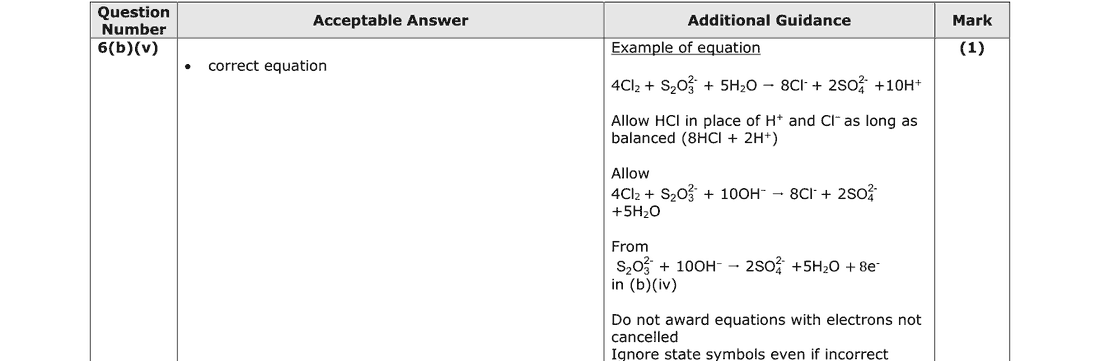
6(b)(v) Redox I, Formulae, equations and amounts of substance 1Equation writing
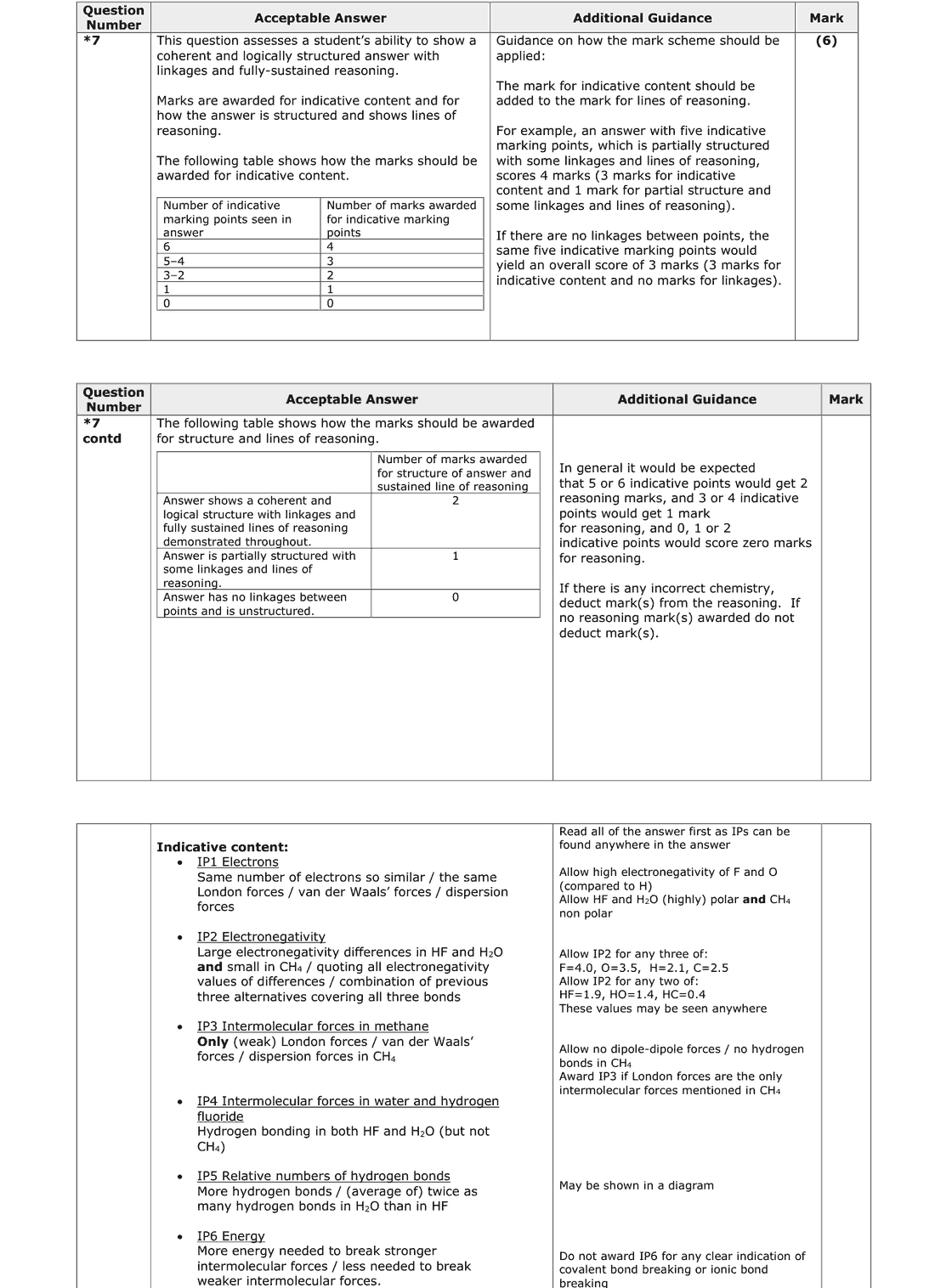
7 Bonding 6Extended response
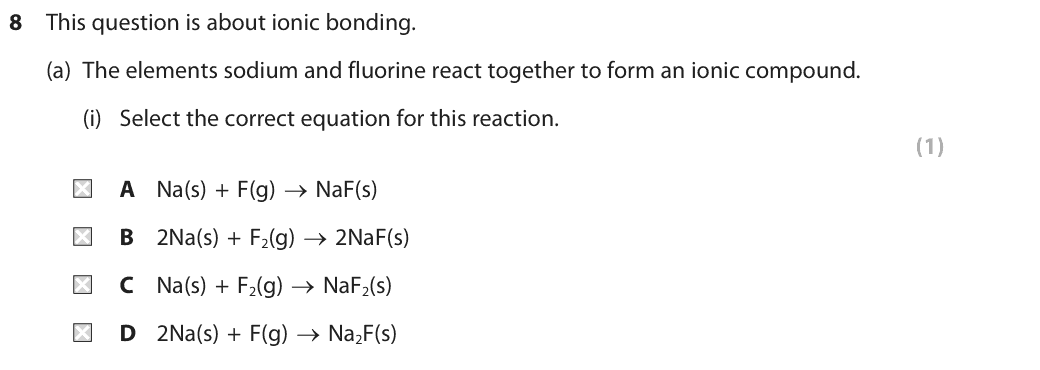
8(a)(i) Formulae, equations and amounts of substance 1Multiple choice
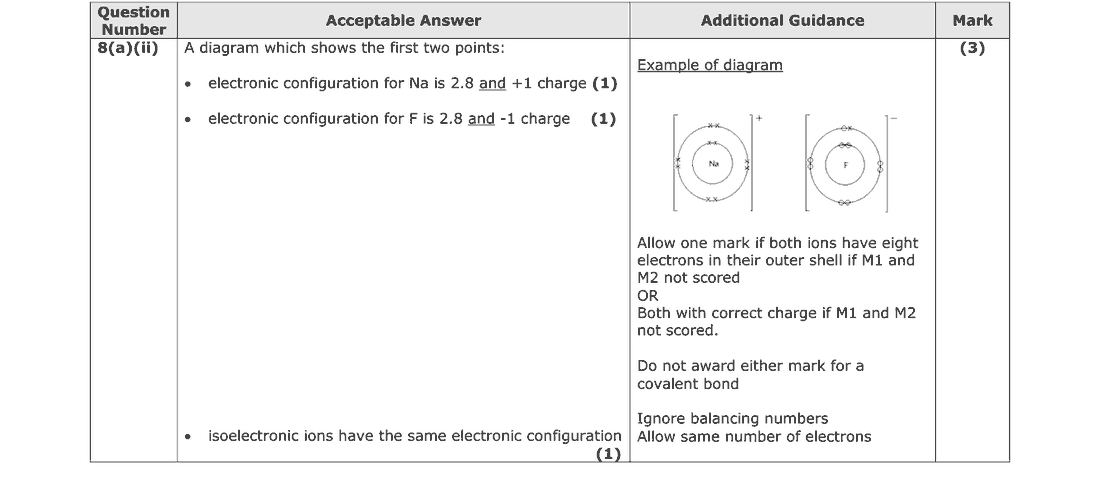
8(a)(ii) Bonding 3Diagram or structure
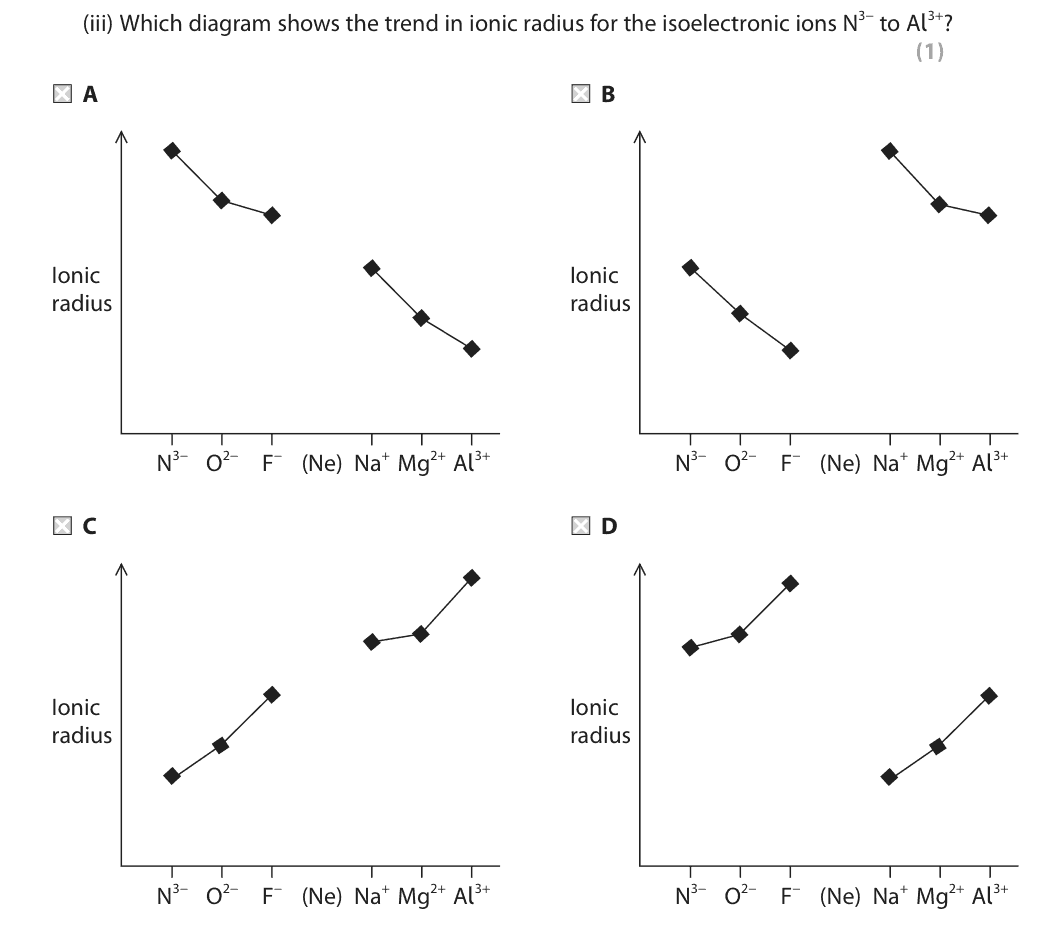
8(a)(iii) Bonding 1Multiple choice
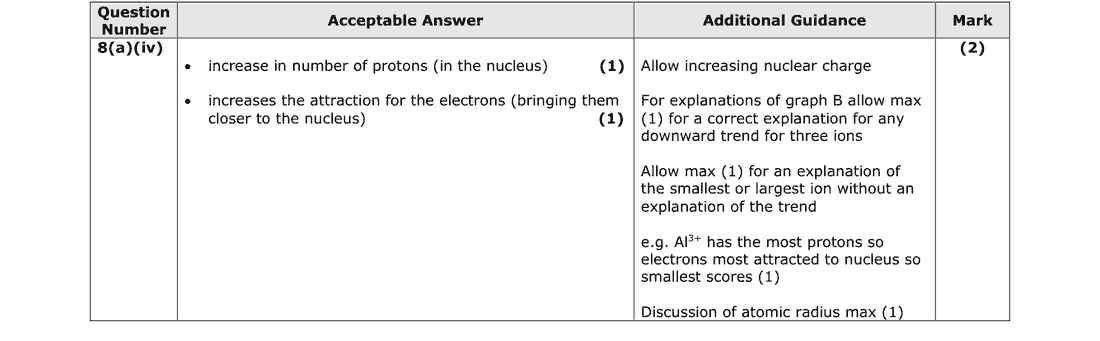
8(a)(iv) Bonding 2Explanation
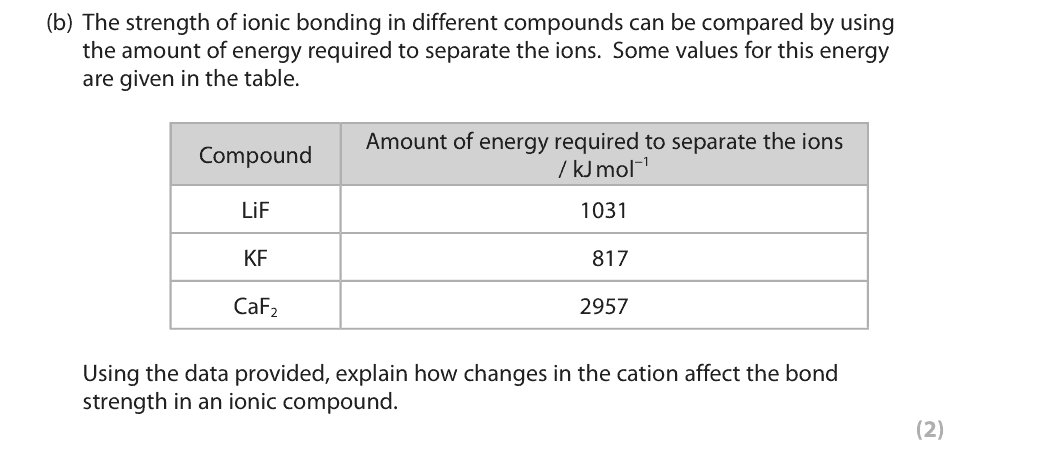
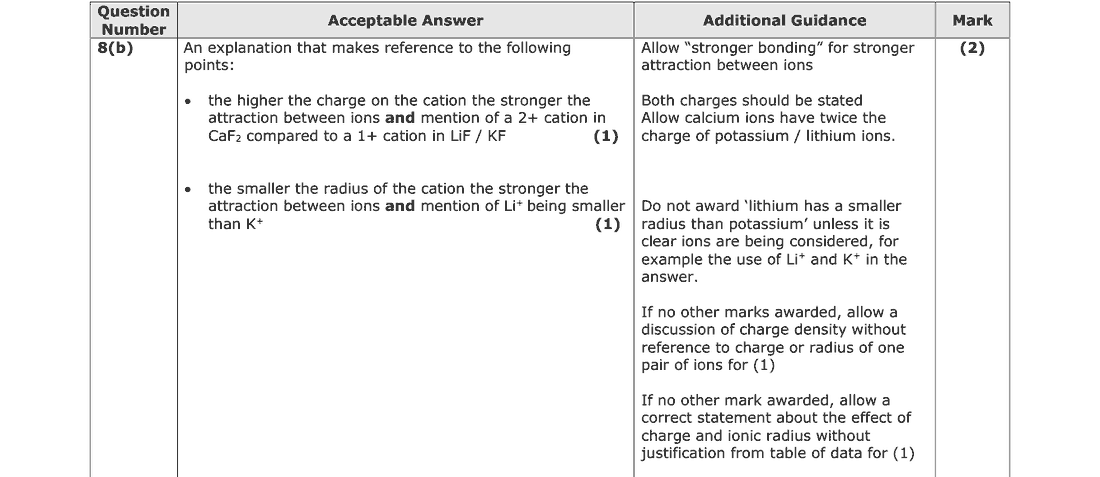
8(b) Bonding 2Explanation

The questions

1(a)1(b)1(c)1(d)(i)1(d)(ii)2(a)(i)2(a)(ii)2(b)(i)2(b)(ii)2(c)(i)2(c)(ii)2(d)3(a)3(b)3(c)(i)3(c)(ii)3(c)(iii)4(a)(i)4(a)(ii)4(a)(iii)4(b)4(c)5(a)(i)5(a)(ii)5(a)(iii)5(b)5(c)(i)5(c)(ii)5(c)(iii)6(a)(i)6(a)(ii)6(b)(i)6(b)(ii)6(b)(iii)6(b)(iv)6(b)(v)78(a)(i)8(a)(ii)8(a)(iii)8(a)(iv)8(b)
June 2018 · AS Paper 1 · Q1(a) 2 marks Short answer bonding
This question is about covalent bonds.
State what is meant by the term covalent bond.
June 2018 · AS Paper 1 · Q1(b) 2 marks Diagram or structure bonding
Draw a diagram of the ammonia molecule, clearly showing its shape.
Include any lone pairs of electrons and the value of the bond angle.
June 2018 · AS Paper 1 · Q1(c) 1 mark Multiple choice bonding
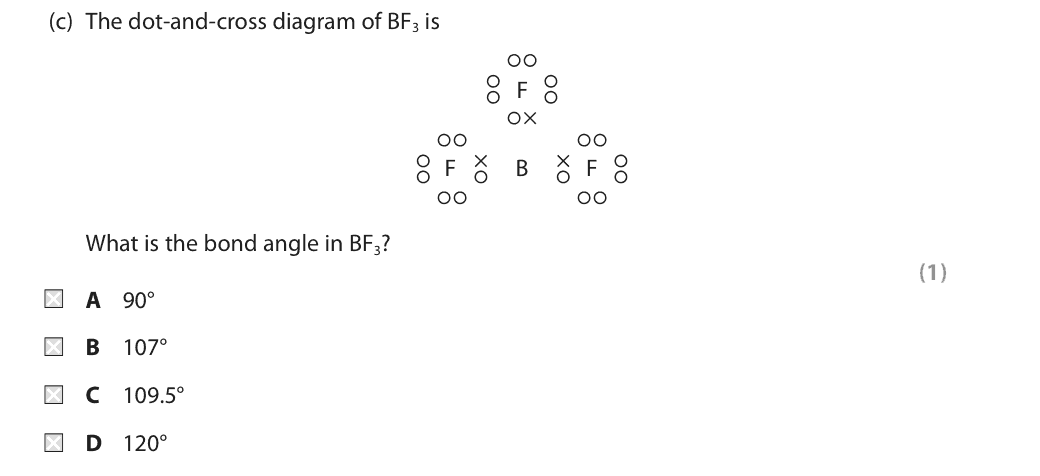
The dot-and-cross diagram of BF3 is
F
F
B
F
What is the bond angle in BF3?
A  90°
B  107°
C  109.5°
D  120°
June 2018 · AS Paper 1 · Q1(d)(i) 2 marks Explanation bonding
Earlier part of question 1 that this part usesEarlier part of June 2018 Paper 1 question 1
Ammonia and boron trifluoride react to form a compound NH3BF3 which
contains a dative covalent bond.  Each of the molecules, NH3 and BF3, has a
different feature of its electronic structure that allows this to happen.
Use these two different features to explain how a dative covalent bond is formed.
June 2018 · AS Paper 1 · Q1(d)(ii) 2 marks Short answer bonding
Earlier parts of question 1 that this part usesEarlier part of June 2018 Paper 1 question 1Earlier part of June 2018 Paper 1 question 1
During this reaction, the bond angles about the nitrogen atom and the
boron atom change.
State the new H
N
H and F
B
F bond angles.
June 2018 · AS Paper 1 · Q2(a)(i) 1 mark Short answer Easy atomic structure and the periodic table
This question is about hydrogen, the element with atomic number Z = 1.
Hydrogen has two stable isotopes, 1
1H and 2
1H.  Complete the table to show the number
of subatomic particles present in the nuclei of these two isotopes of hydrogen.
Isotope
Number of protons
Number of neutrons
1
1H
1H
2
June 2018 · AS Paper 1 · Q2(a)(ii) 2 marks Explanation Easy atomic structure and the periodic table
Earlier part of question 2 that this part usesEarlier part of June 2018 Paper 1 question 2
Use the data in the table to explain the term isotopes.
June 2018 · AS Paper 1 · Q2(b)(i) 1 mark Short answer atomic structure and the periodic table
Earlier part of question 2 that this part usesEarlier part of June 2018 Paper 1 question 2
The relative atomic mass of hydrogen in the Periodic Table is 1.0.
This is correct to two significant figures.
The table gives data for the relative isotopic mass and natural abundance of the
two stable isotopes of hydrogen.
Isotope
Relative isotopic mass
Percentage abundance
1
1H
1.007825
99.9885
1H
2
2.014101
0.0115
Using the data in the table, give a reason why it can be estimated that the

relative atomic mass of hydrogen is greater than 1.0.
June 2018 · AS Paper 1 · Q2(b)(ii) 2 marks Calculation atomic structure and the periodic table

Earlier parts of question 2 that this part usesEarlier part of June 2018 Paper 1 question 2Earlier part of June 2018 Paper 1 question 2
Calculate the relative atomic mass of hydrogen from these data, giving your
answer to four decimal places.
June 2018 · AS Paper 1 · Q2(c)(i) 2 marks Equation writing atomic structure and the periodic table
Write an equation to represent the first ionisation energy of hydrogen.
Include state symbols.
June 2018 · AS Paper 1 · Q2(c)(ii) 4 marks Explanation atomic structure and the periodic table
Earlier part of question 2 that this part usesEarlier part of June 2018 Paper 1 question 2
The sequence of the first three elements in the Periodic Table is hydrogen,
helium and then lithium.
Explain why the first ionisation energy of hydrogen is less than that of helium,
but greater than that of lithium.
June 2018 · AS Paper 1 · Q2(d) 3 marks Short answer atomic structure and the periodic table
Hydrogen can be placed in several different positions in periodic tables.  One is
immediately above lithium in Group 1.  Another is in the centre of the first row, as
shown in the Periodic Table on the back cover.
Criticise the position of hydrogen immediately above lithium by giving
one reason in favour and two against.
June 2018 · AS Paper 1 · Q3(a) 1 mark Multiple choice formulae equations and amounts of substance
The reaction of sulfuric acid with potassium hydroxide is a neutralisation.
The equation for this reaction is
H2SO4(aq) + 2KOH(aq) → K2SO4(aq) + 2H2O(l)
A titration was carried out using the following method.
1.  Potassium hydroxide solution of unknown concentration was placed in a burette
and the initial reading was recorded.
2.  25.0 cm3 of sulfuric acid solution, concentration 0.0800 mol dm−3, was transferred
to a conical flask.
3.  Three drops of phenolphthalein indicator were added to the sulfuric acid.
4.  Potassium hydroxide was added from the burette until the solution just changed
colour and then the burette reading was recorded.
5.  Repeat titrations were carried out until concordant titres were obtained.
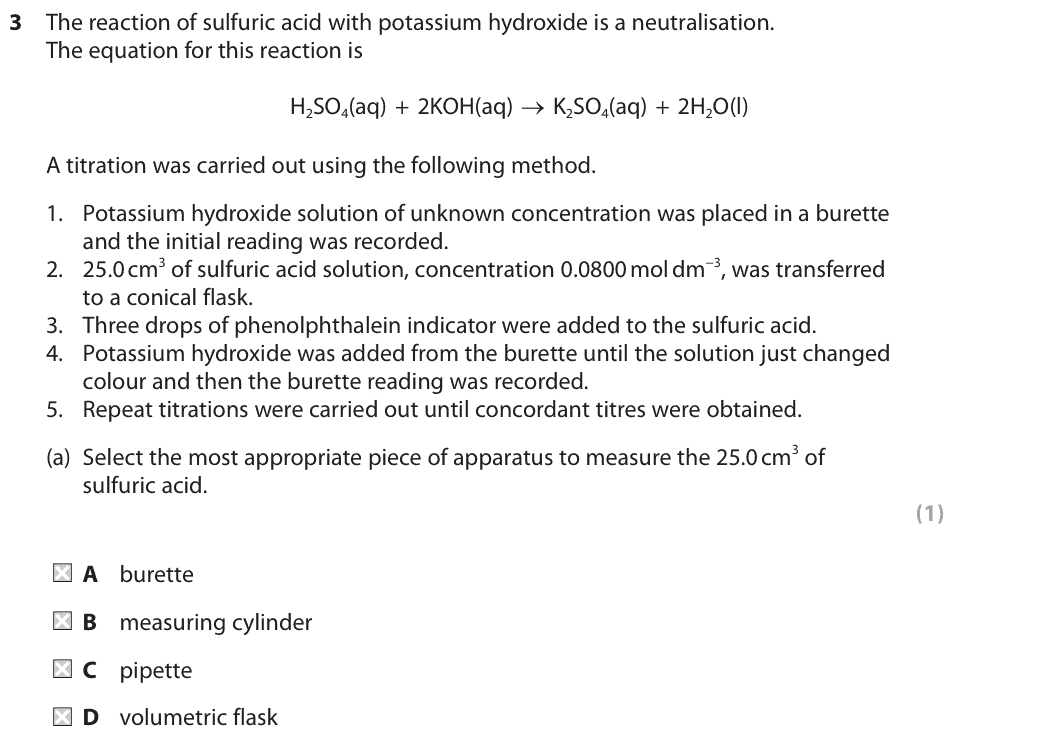
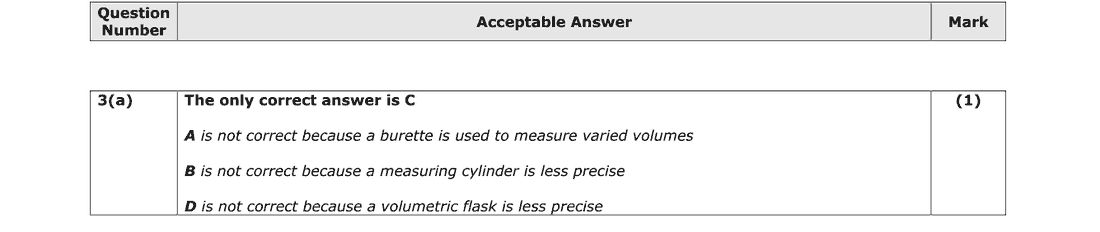
Select the most appropriate piece of apparatus to measure the 25.0 cm3 of
sulfuric acid.
A  burette
B  measuring cylinder
C  pipette
D  volumetric flask
June 2018 · AS Paper 1 · Q3(b) 1 mark Multiple choice formulae equations and amounts of substance
Earlier part of question 3 that this part usesEarlier part of June 2018 Paper 1 question 3
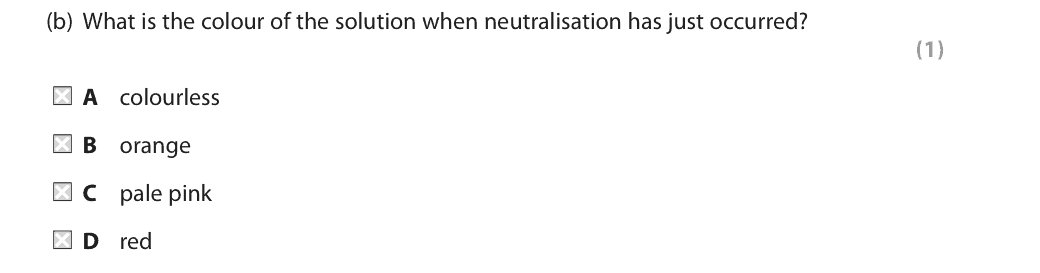
What is the colour of the solution when neutralisation has just occurred?
A  colourless
B  orange
C  pale pink
D  red
June 2018 · AS Paper 1 · Q3(c)(i) 2 marks Practical and data analysis Easy formulae equations and amounts of substance
Earlier part of question 3 that this part usesEarlier part of June 2018 Paper 1 question 3
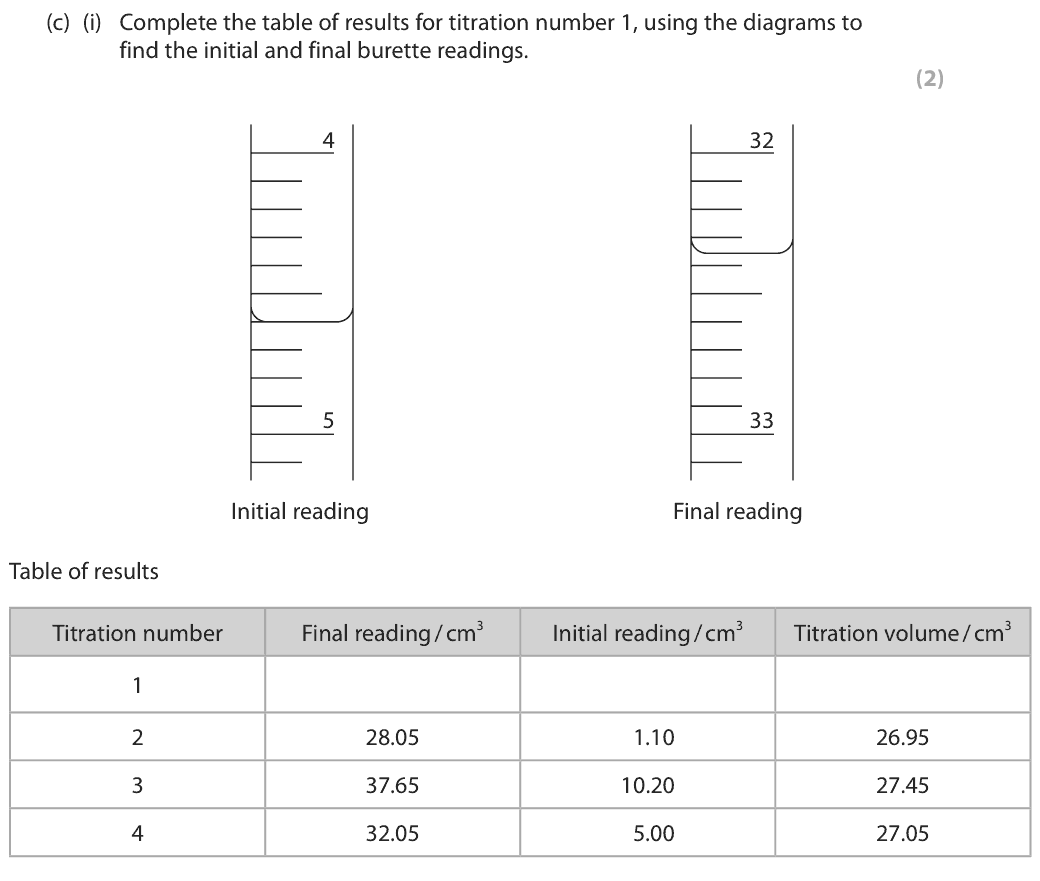
Complete the table of results for titration number 1, using the diagrams to
find the initial and final burette readings.
4
32
5
33
Initial reading
Final reading
Table of results
Titration number
Final reading / cm3
Initial reading / cm3
Titration volume / cm3
1
2
28.05
1.10
26.95
3
37.65
10.20
27.45
4
32.05
5.00
27.05
June 2018 · AS Paper 1 · Q3(c)(ii) 1 mark Multiple choice formulae equations and amounts of substance
Earlier parts of question 3 that this part usesEarlier part of June 2018 Paper 1 question 3Earlier part of June 2018 Paper 1 question 3
The best value for the mean titre of this reaction is
A  27.00 cm3
B  27.15 cm3
C  27.25 cm3
D  27.30 cm3
June 2018 · AS Paper 1 · Q3(c)(iii) 3 marks Calculation formulae equations and amounts of substance
Earlier parts of question 3 that this part usesEarlier part of June 2018 Paper 1 question 3Earlier part of June 2018 Paper 1 question 3Earlier part of June 2018 Paper 1 question 3
Calculate the concentration, in mol dm−3, of the potassium hydroxide solution,
giving your answer to an appropriate number of significant figures.
June 2018 · AS Paper 1 · Q4(a)(i) 1 mark Practical and data analysis analysis of inorganic compounds
An ionic compound contains a metal cation and a non-metal anion in a 1 : 1 ratio, and
water of crystallisation.  The compound can be represented as MN.xH2O, where x is
the number of moles of water of crystallisation per mole of MN.
A sample of MN.xH2O was dissolved in distilled water to produce a colourless
solution, with a concentration of about 0.5 mol dm−3.  2 cm3 of the resulting solution
was transferred to each of two test tubes.
The following tests were carried out to identify the ions present.
Test 1
Addition of a few drops of a solution of barium chloride to one of the test
tubes gave a white precipitate.
Identify, by name or formula, two possible anions that would give this result.
June 2018 · AS Paper 1 · Q4(a)(ii) 1 mark Practical and data analysis analysis of inorganic compounds
Earlier part of question 4 that this part usesEarlier part of June 2018 Paper 1 question 4
Addition of 1 cm3 of dilute hydrochloric acid to the test tube in (a)(i) resulted
in no further change.
Give the formula of the anion.
June 2018 · AS Paper 1 · Q4(a)(iii) 1 mark Multiple choice bonding
Earlier part of question 4 that this part usesEarlier part of June 2018 Paper 1 question 4
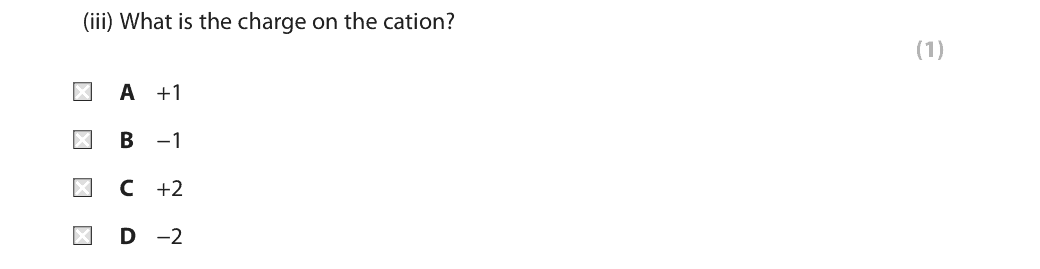
What is the charge on the cation?
A  +1
B  −1
C  +2
D  −2
June 2018 · AS Paper 1 · Q4(b) 1 mark Practical and data analysis groups 1 and 2
Earlier part of question 4 that this part usesEarlier part of June 2018 Paper 1 question 4
Test 2
A flame test on a sample of solid MN.xH2O gave no change in the flame colour.
Give a possible identity of the cation, M.
June 2018 · AS Paper 1 · Q4(c) 4 marks Calculation formulae equations and amounts of substance
Earlier parts of question 4 that this part usesEarlier part of June 2018 Paper 1 question 4Earlier part of June 2018 Paper 1 question 4Earlier part of June 2018 Paper 1 question 4
Heating the hydrated compound results in the formation of the anhydrous ionic
solid MN by the following reaction:
MN.xH2O(s) → MN(s) + xH2O(g)
Heating a sample of the hydrated compound reduced the mass to 48.9 % of its
original value.
Use this information and your answer to (a)(ii) and (b) to calculate the value of x.
[
]
Note:  If you have been unable to identify MN, you may use this hydrated compound,
CoCl2.yH2O in which the sample reduced in mass to 54.6% of its original value.
Use this information to calculate the value of y.
June 2018 · AS Paper 1 · Q5(a)(i) 2 marks Practical and data analysis formulae equations and amounts of substance
A student made crystals of a metal chloride, JCl2.6H2O, by reacting the
metal carbonate, JCO3, with hydrochloric acid, HCl(aq).  The product was purified.
Procedure
Step 1  150 cm3 of hydrochloric acid, concentration 0.80 mol dm−3, was transferred to a
400 cm3 conical flask.  The flask was warmed gently using a Bunsen burner.
A spatula measure (about 1.0 g) of metal carbonate was added to the acid.
Step 2  When the reaction in Step 1 was finished, more metal carbonate was added
until the metal carbonate was in excess.
Step 3  The resulting mixture was filtered into an evaporating basin.
Step 4  The evaporating basin was heated using a Bunsen burner to concentrate the
solution.  The concentrated solution was allowed to cool and crystallise.
Step 5  Once crystal formation was complete, the resulting mixture was filtered for a
second time.
Step 6  The resulting white crystals were rinsed with a small volume of ice-cold water.
The equation for the reaction between the metal carbonate and hydrochloric acid is
JCO3(s) + 2HCl(aq) → JCl2(aq) + H2O(l) + CO2(g)
Describe two observations that the student might make which show that the
reaction in Step 1 has finished.
June 2018 · AS Paper 1 · Q5(a)(ii) 1 mark Practical and data analysis formulae equations and amounts of substance
Earlier part of question 5 that this part usesEarlier part of June 2018 Paper 1 question 5
State the purpose of the filtration in Step 3.
June 2018 · AS Paper 1 · Q5(a)(iii) 2 marks Practical and data analysis formulae equations and amounts of substance
Earlier part of question 5 that this part usesEarlier part of June 2018 Paper 1 question 5
Explain the use of a small volume of ice-cold water in Step 6.
June 2018 · AS Paper 1 · Q5(b) 5 marks Calculation formulae equations and amounts of substance
Earlier part of question 5 that this part usesEarlier part of June 2018 Paper 1 question 5
The student obtained a mass of 14.26 g of hydrated crystals.
Assuming that the percentage yield is 100%, use the information in the procedure
to give a possible identity of J.
June 2018 · AS Paper 1 · Q5(c)(i) 2 marks Explanation groups 1 and 2atomic structure and the periodic table
Earlier parts of question 5 that this part usesEarlier part of June 2018 Paper 1 question 5Earlier part of June 2018 Paper 1 question 5
The student was surprised by the white colour of the crystals of JCl2.6H2O in Step 6.
This did not agree with the possible identity for J from the calculation in (b).
The student decided to perform a flame test on the crystals.
Explain why the student was surprised and decided to carry out a flame test.
June 2018 · AS Paper 1 · Q5(c)(ii) 1 mark Multiple choice groups 1 and 2
Earlier parts of question 5 that this part usesEarlier part of June 2018 Paper 1 question 5Earlier part of June 2018 Paper 1 question 5
The flame test colour was crimson red.  Identify J.
A  barium
B  calcium
C  lithium
D  strontium
June 2018 · AS Paper 1 · Q5(c)(iii) 2 marks Calculation formulae equations and amounts of substance
Earlier parts of question 5 that this part usesEarlier part of June 2018 Paper 1 question 5Earlier part of June 2018 Paper 1 question 5Earlier part of June 2018 Paper 1 question 5
Calculate the actual percentage yield of the reaction, which produced 14.26 g
of crystals.
Give your answer to two significant figures.
June 2018 · AS Paper 1 · Q6(a)(i) 1 mark Short answer Easy atomic structure and the periodic table
Chlorine and iodine are in the same group in the Periodic Table.
Complete the electronic configuration of chlorine using the s, p, d notation.
1s2
June 2018 · AS Paper 1 · Q6(a)(ii) 2 marks Explanation atomic structure and the periodic table
Earlier part of question 6 that this part usesEarlier part of June 2018 Paper 1 question 6
Explain why iodine and chlorine have many similar chemical reactions.
June 2018 · AS Paper 1 · Q6(b)(i) 2 marks Short answer redox i
Earlier part of question 6 that this part usesEarlier part of June 2018 Paper 1 question 6
Members of the same group sometimes react in different ways.
2−.
Iodine and chlorine react differently with thiosulfate ions, S2O3
Iodine gives S4O6
2−, whilst chlorine gives SO4
2−.
Complete the table by identifying the oxidation numbers of sulfur in the three
sulfur-containing ions.
Ion
Oxidation number of sulfur
2−
S2O3
SO4
2−
2−
S4O6
June 2018 · AS Paper 1 · Q6(b)(ii) 1 mark Short answer redox i
Earlier parts of question 6 that this part usesEarlier part of June 2018 Paper 1 question 6Earlier part of June 2018 Paper 1 question 6
The equation for the reaction of iodine with thiosulfate ions is
2S2O3
2− + I2 → 2I− + S4O6
2−
State, in terms of electrons, why iodine is classified as an oxidising agent in
this reaction.
June 2018 · AS Paper 1 · Q6(b)(iii) 1 mark Short answer redox i
Earlier parts of question 6 that this part usesEarlier part of June 2018 Paper 1 question 6Earlier part of June 2018 Paper 1 question 6Earlier part of June 2018 Paper 1 question 6
Use your answer to b(i) to show that chlorine is a stronger oxidising agent
than iodine.
June 2018 · AS Paper 1 · Q6(b)(iv) 2 marks Equation writing redox i
Earlier parts of question 6 that this part usesEarlier part of June 2018 Paper 1 question 6Earlier part of June 2018 Paper 1 question 6
Chlorine reacts in aqueous solution with S2O3
2− to give SO4
2−.
The ionic half-equation for the reaction of chlorine is
Cl2 + 2e− → 2Cl−
Write the ionic half-equation for the reaction of aqueous S2O3
2− to give SO4
2−.
State symbols are not required.
June 2018 · AS Paper 1 · Q6(b)(v) 1 mark Equation writing Hard redox iformulae equations and amounts of substance
Earlier parts of question 6 that this part usesEarlier part of June 2018 Paper 1 question 6Earlier part of June 2018 Paper 1 question 6Earlier part of June 2018 Paper 1 question 6Earlier part of June 2018 Paper 1 question 6Earlier part of June 2018 Paper 1 question 6
Use your answer to (b)(iv) and the half-equation for chlorine, to write the
overall ionic equation for the reaction between chlorine and thiosulfate ions.
State symbols are not required.
June 2018 · AS Paper 1 · Q7 6 marks 6-mark extended response bonding
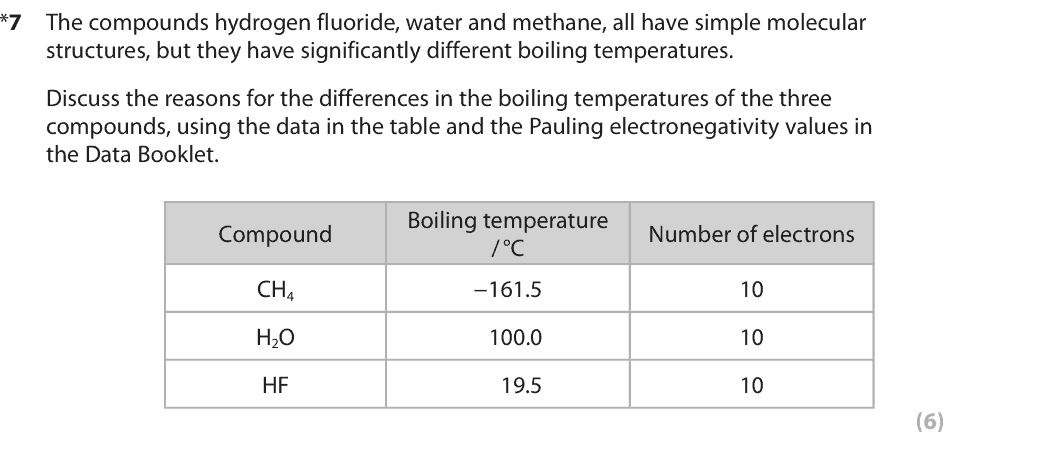
The compounds hydrogen fluoride, water and methane, all have simple molecular
structures, but they have significantly different boiling temperatures.
Discuss the reasons for the differences in the boiling temperatures of the three
compounds, using the data in the table and the Pauling electronegativity values in
the Data Booklet.
Boiling temperature
Compound
Number of electrons
/ °C
CH4
−161.5
10
H2O
100.0
10
HF
19.5
10
June 2018 · AS Paper 1 · Q8(a)(i) 1 mark Multiple choice formulae equations and amounts of substance
This question is about ionic bonding.
The elements sodium and fluorine react together to form an ionic compound.
Select the correct equation for this reaction.
A  Na(s) + F(g) → NaF(s)
B  2Na(s) + F2(g) → 2NaF(s)
C  Na(s) + F2(g) → NaF2(s)
D  2Na(s) + F(g) → Na2F(s)
June 2018 · AS Paper 1 · Q8(a)(ii) 3 marks Diagram or structure bonding
Earlier part of question 8 that this part usesEarlier part of June 2018 Paper 1 question 8
Draw dot-and-cross diagrams of the ions in sodium fluoride, showing all the electrons.
Use your diagram to explain why the ions are described as isoelectronic.
June 2018 · AS Paper 1 · Q8(a)(iii) 1 mark Multiple choice bonding
Earlier part of question 8 that this part usesEarlier part of June 2018 Paper 1 question 8
Which diagram shows the trend in ionic radius for the isoelectronic ions N3− to Al3+?
A
B
Ionic
Ionic
radius
radius
F−(Ne) Na+ Mg2+ Al3+
N3−O2−
N3−O2−
C
D
Ionic
Ionic
radius
radius
F−(Ne) Na+ Mg2+ Al3+
N3−O2−
N3−O2−
June 2018 · AS Paper 1 · Q8(a)(iv) 2 marks Explanation bonding
Earlier parts of question 8 that this part usesEarlier part of June 2018 Paper 1 question 8Earlier part of June 2018 Paper 1 question 8Earlier part of June 2018 Paper 1 question 8
Explain your answer to (a)(iii) in terms of the structure of the ions.
June 2018 · AS Paper 1 · Q8(b) 2 marks Explanation bonding
Earlier part of question 8 that this part usesEarlier part of June 2018 Paper 1 question 8
The strength of ionic bonding in different compounds can be compared by using
the amount of energy required to separate the ions.  Some values for this energy
are given in the table.
Amount of energy required to separate the ions
Compound
/ kJ mol−1
LiF
1031
KF
817
CaF2
2957
Using the data provided, explain how changes in the cation affect the bond
strength in an ionic compound.

Work with an A-level chemistry tutor

Want a paper marked and gone through with you? Message us.

Prefer email? Send an enquiry

If you are under 18, please include a parent's contact details. Enquiries go to enquiries@chemistryaleveltutor.com and are deleted once handled. All tutoring is online.